
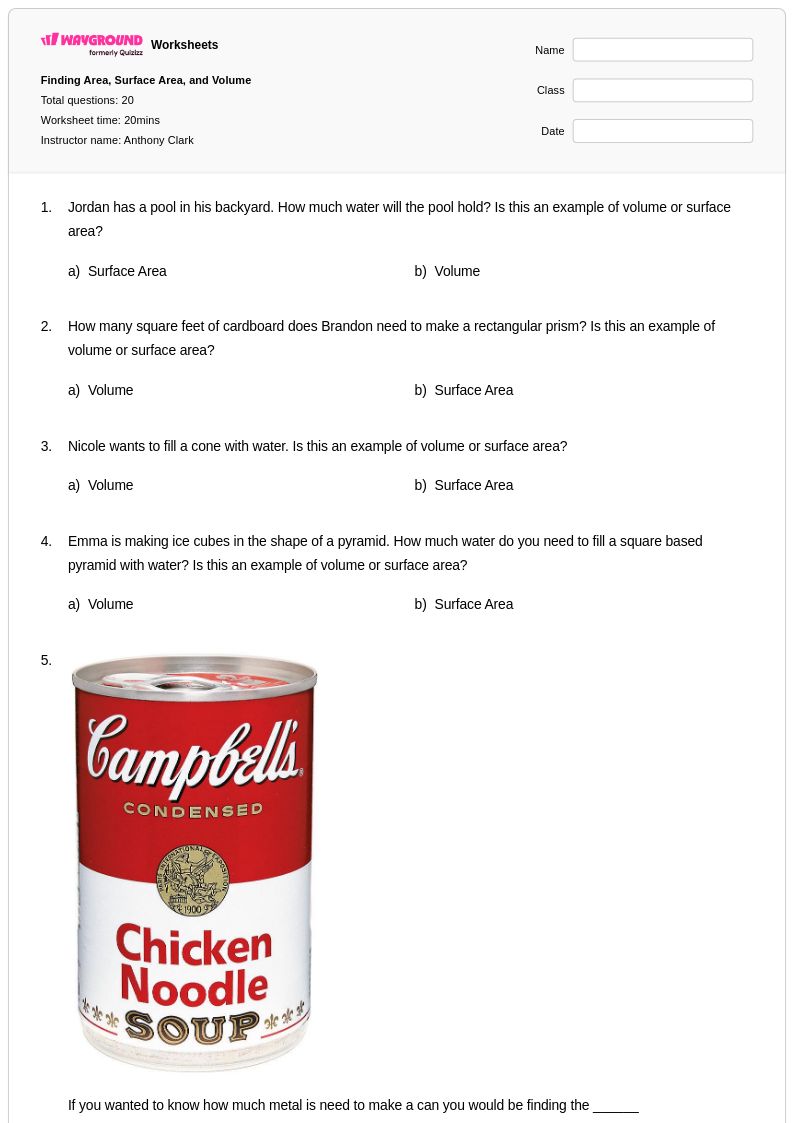
20Q
6th - Uni
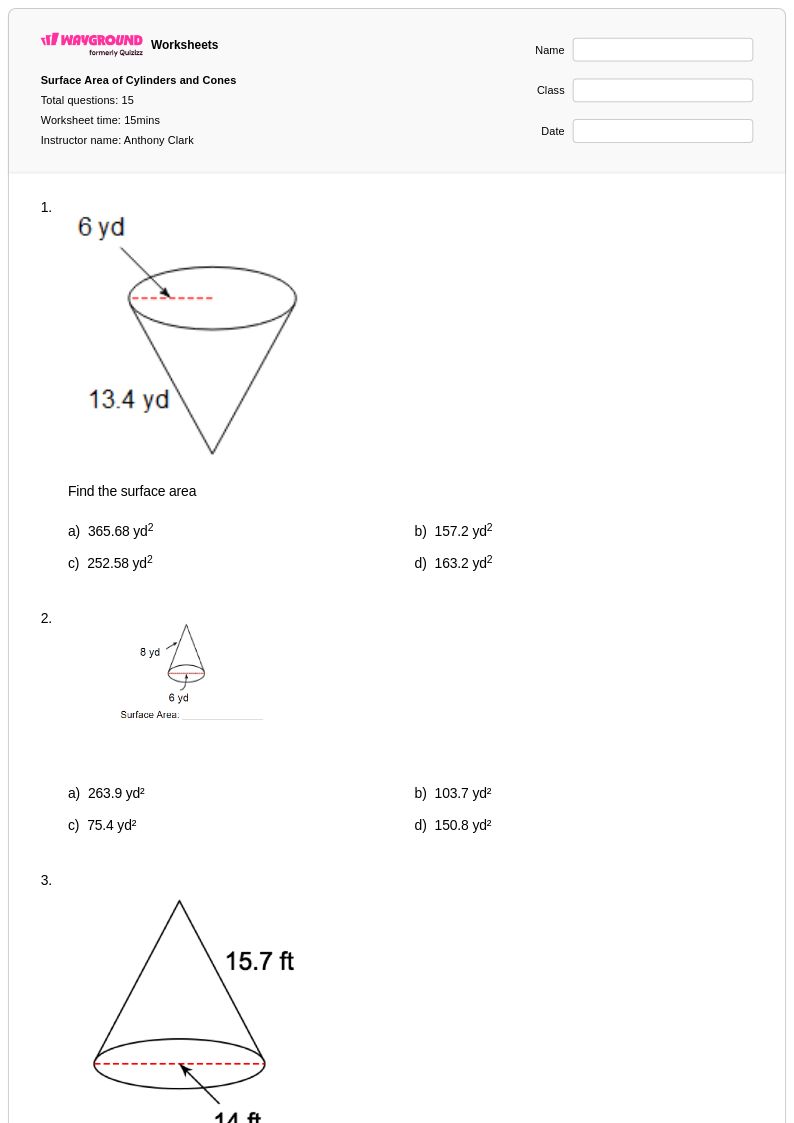
15Q
8th - Uni
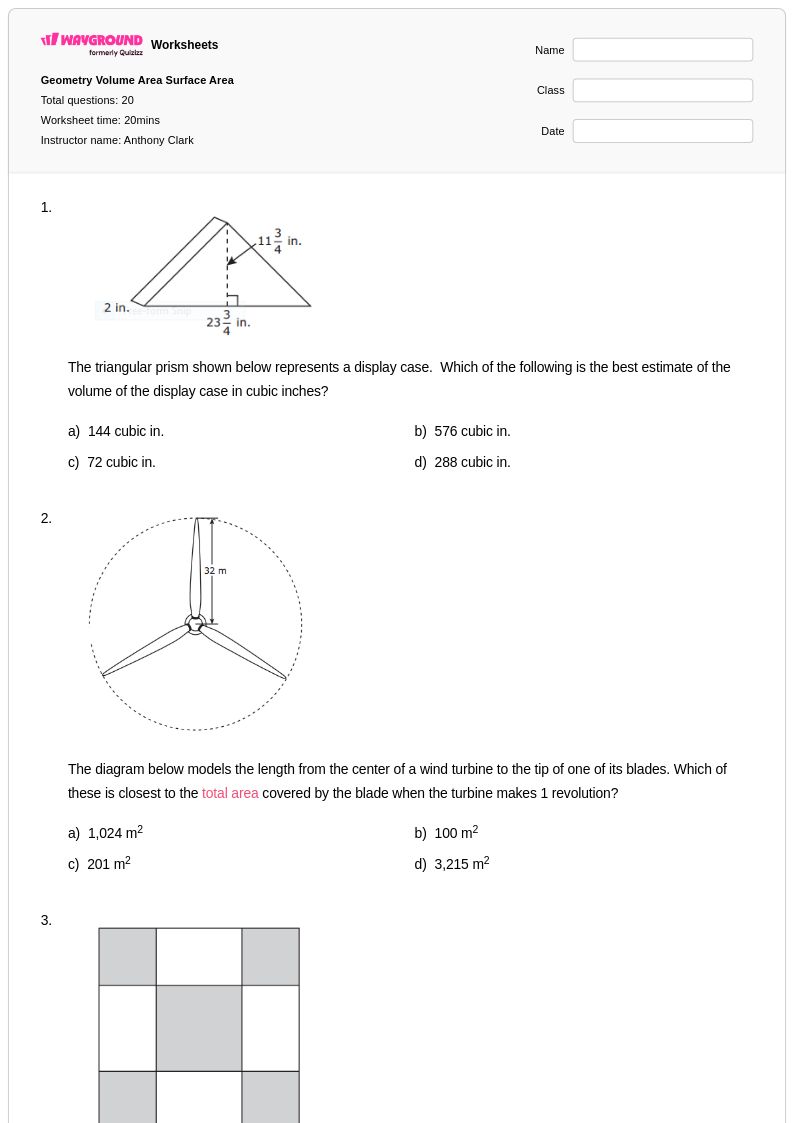
20Q
8th - Uni
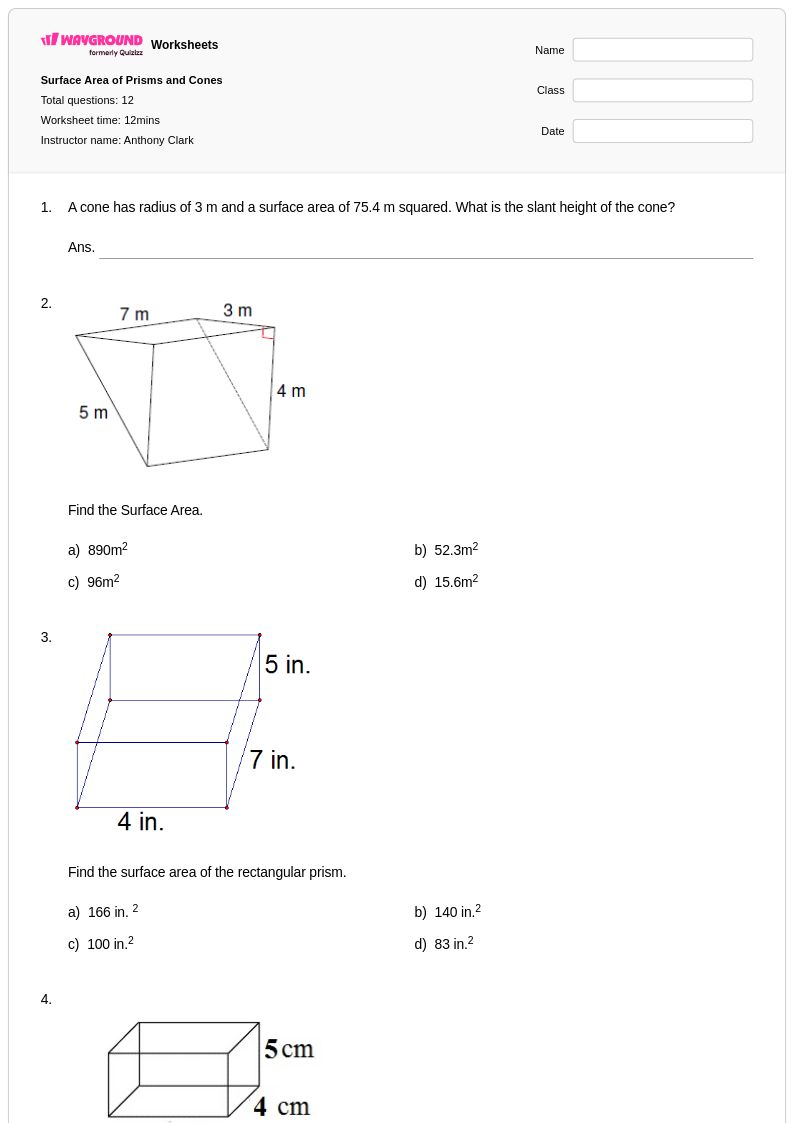
12Q
8th - Uni
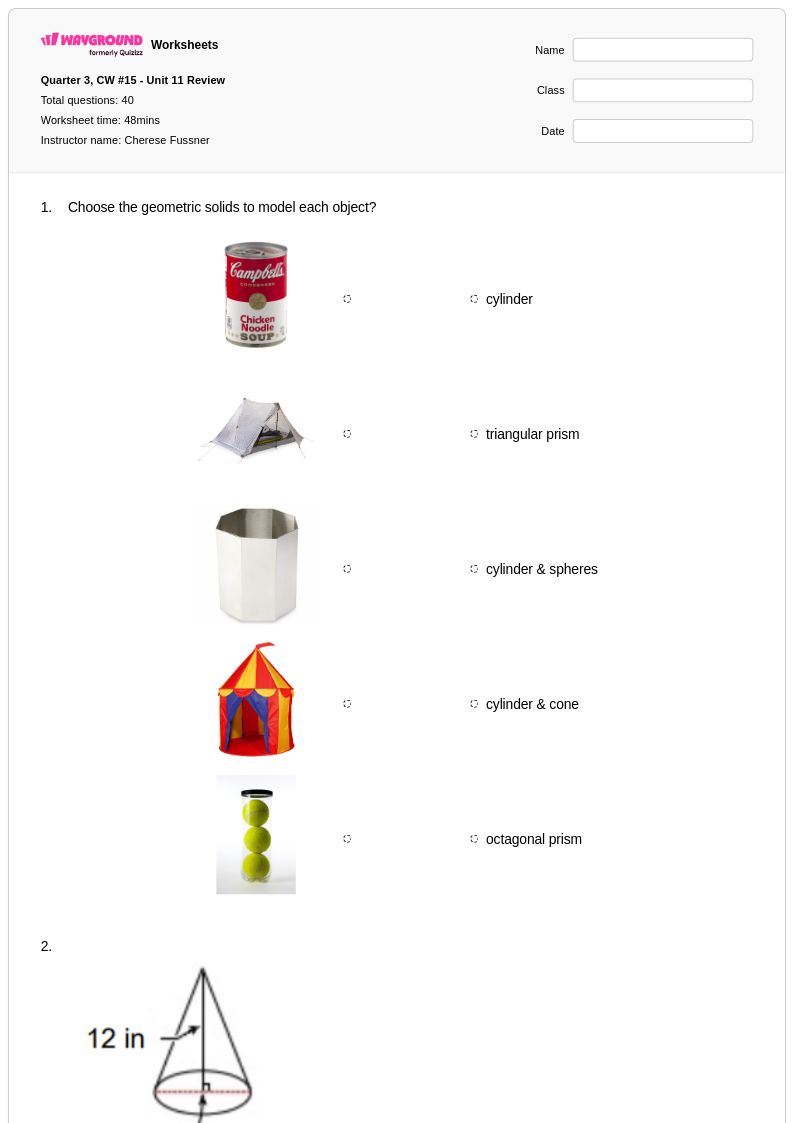
40Q
9th - 12th
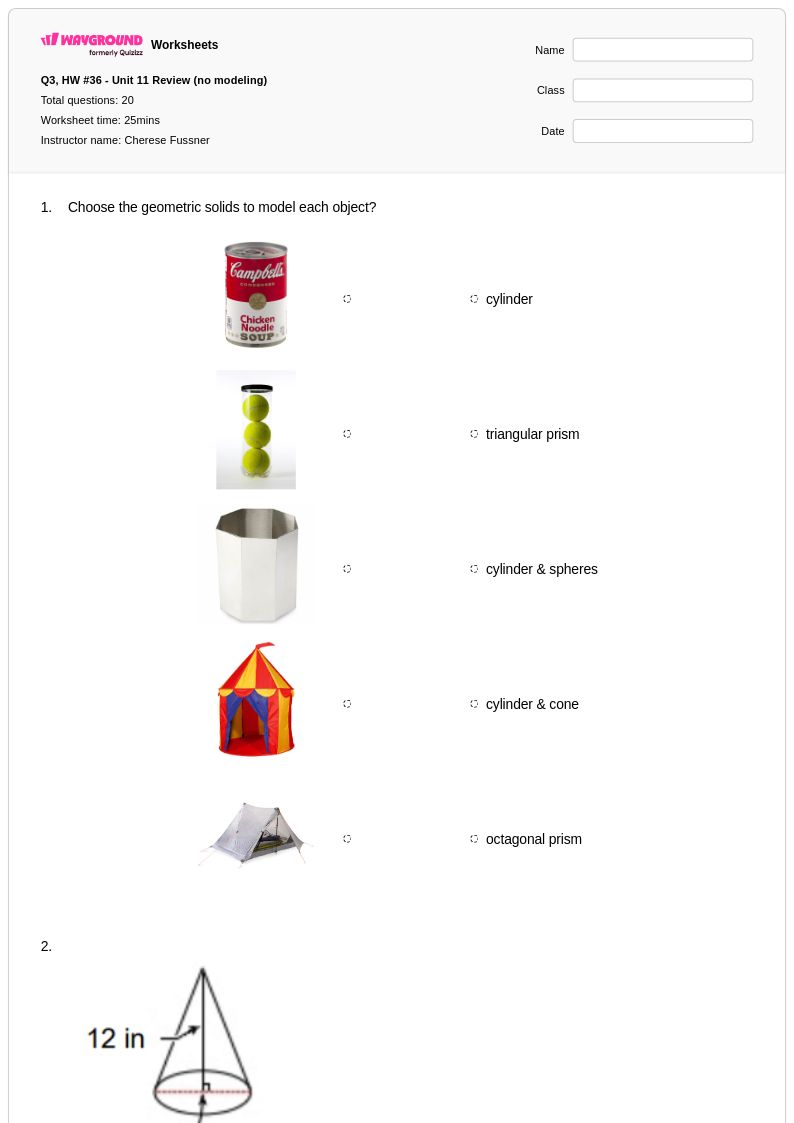
20Q
9th - 12th
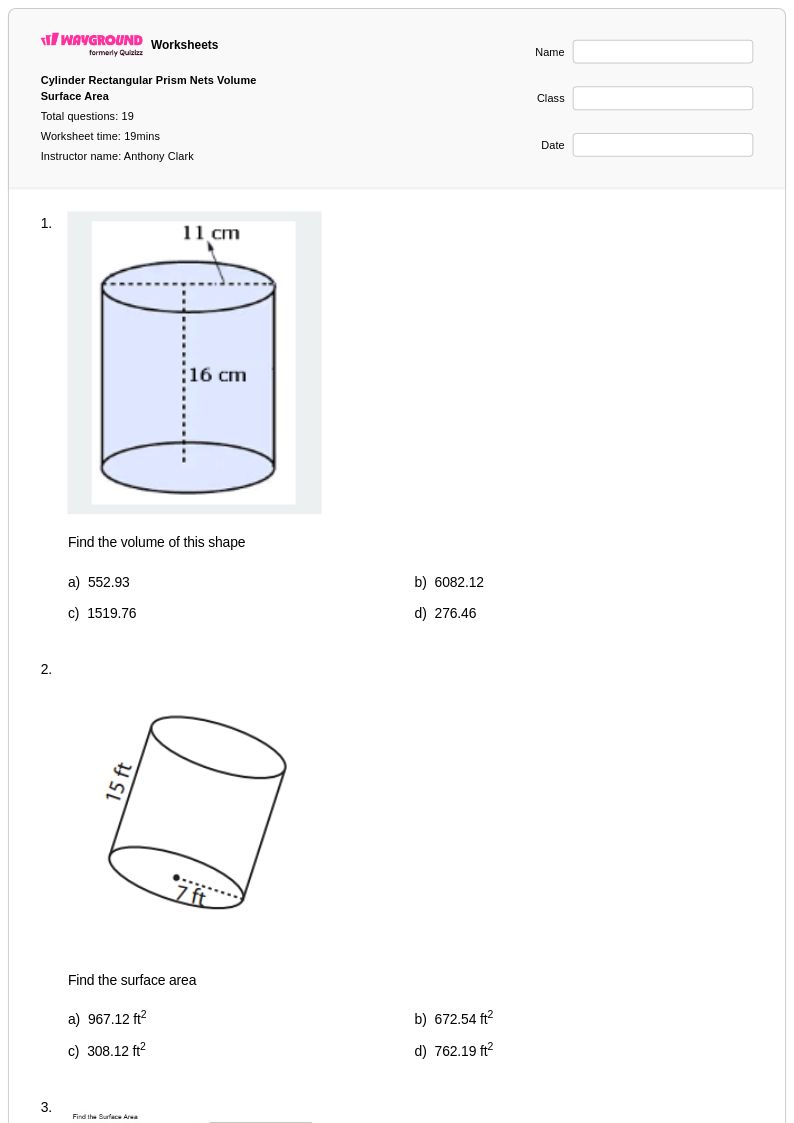
19Q
8th - Uni
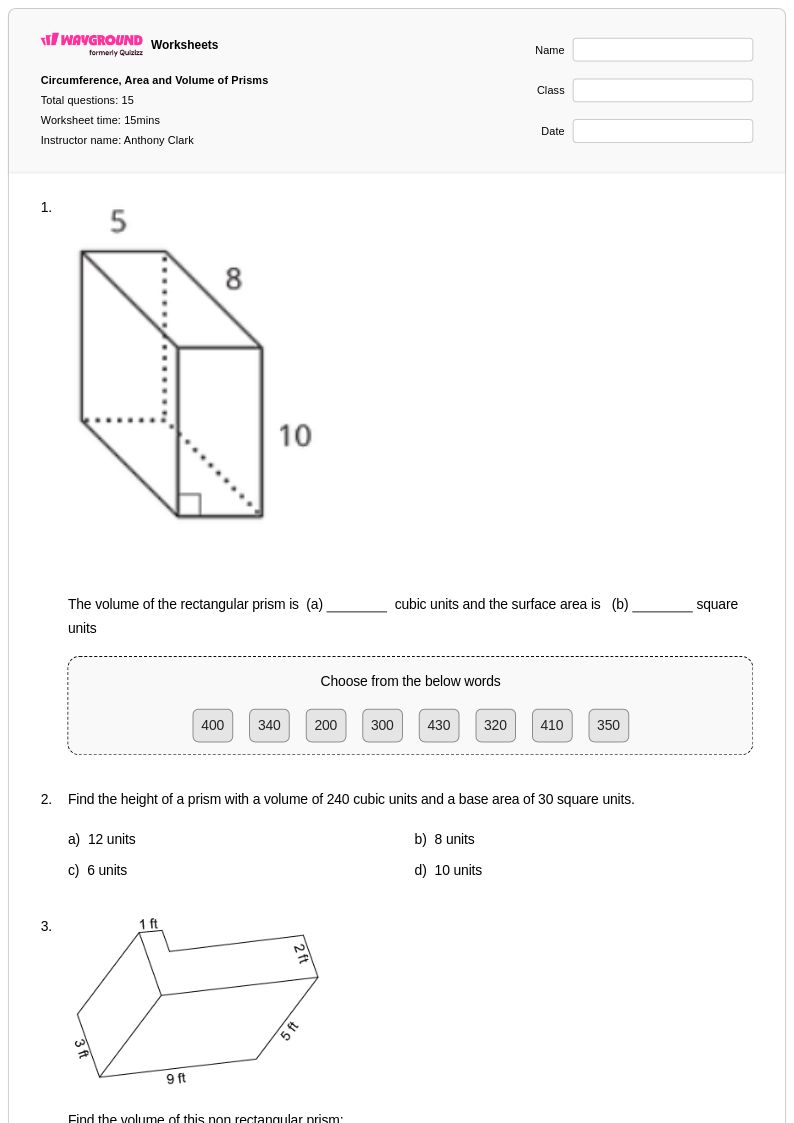
15Q
8th - Uni
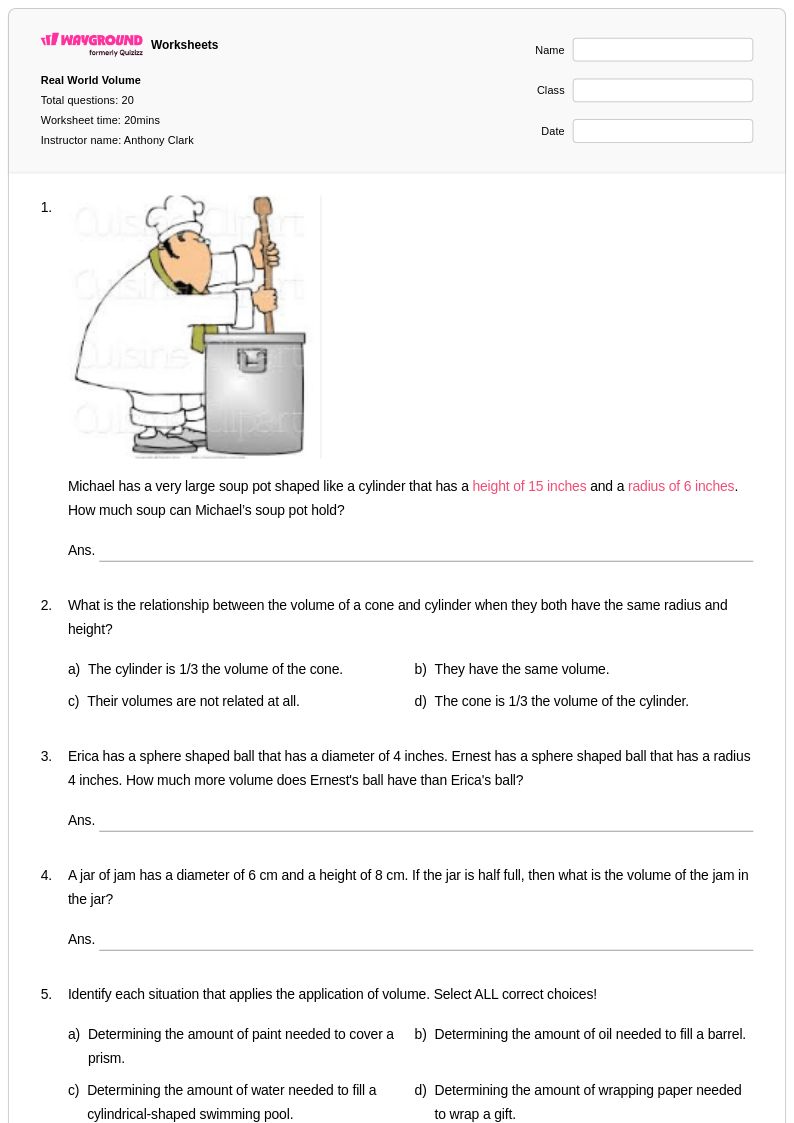
20Q
8th - Uni
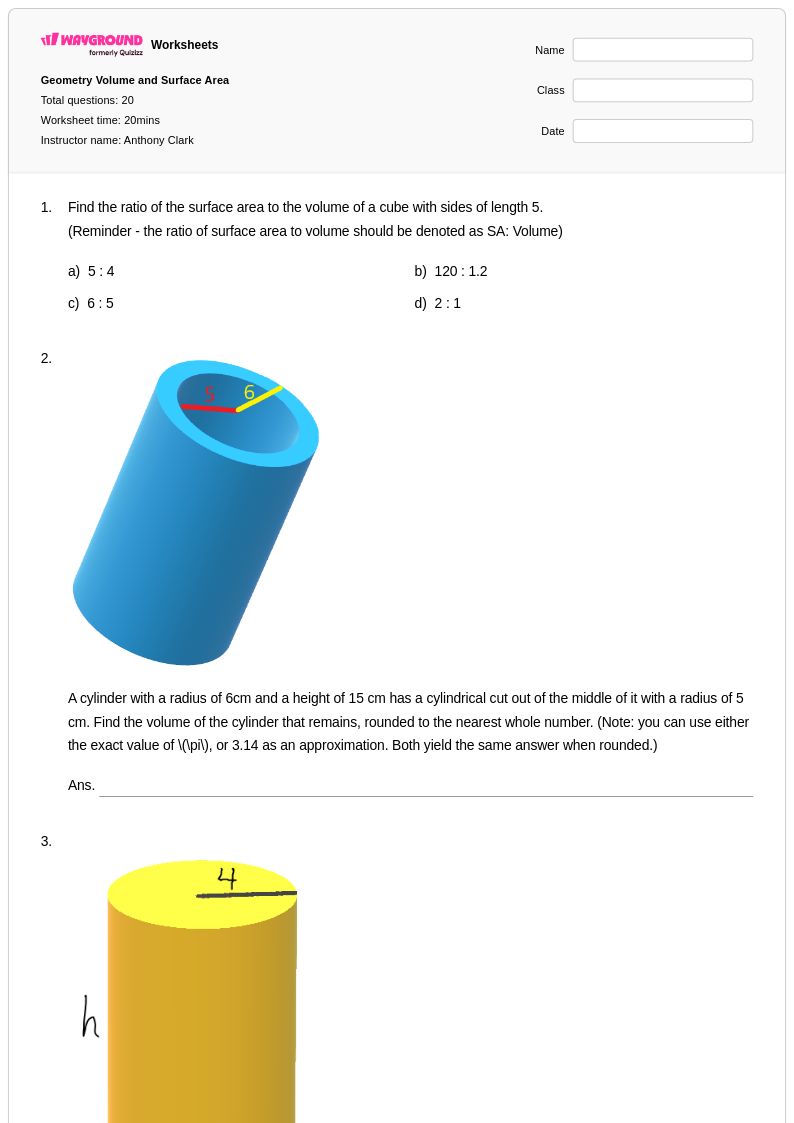
20Q
7th - Uni
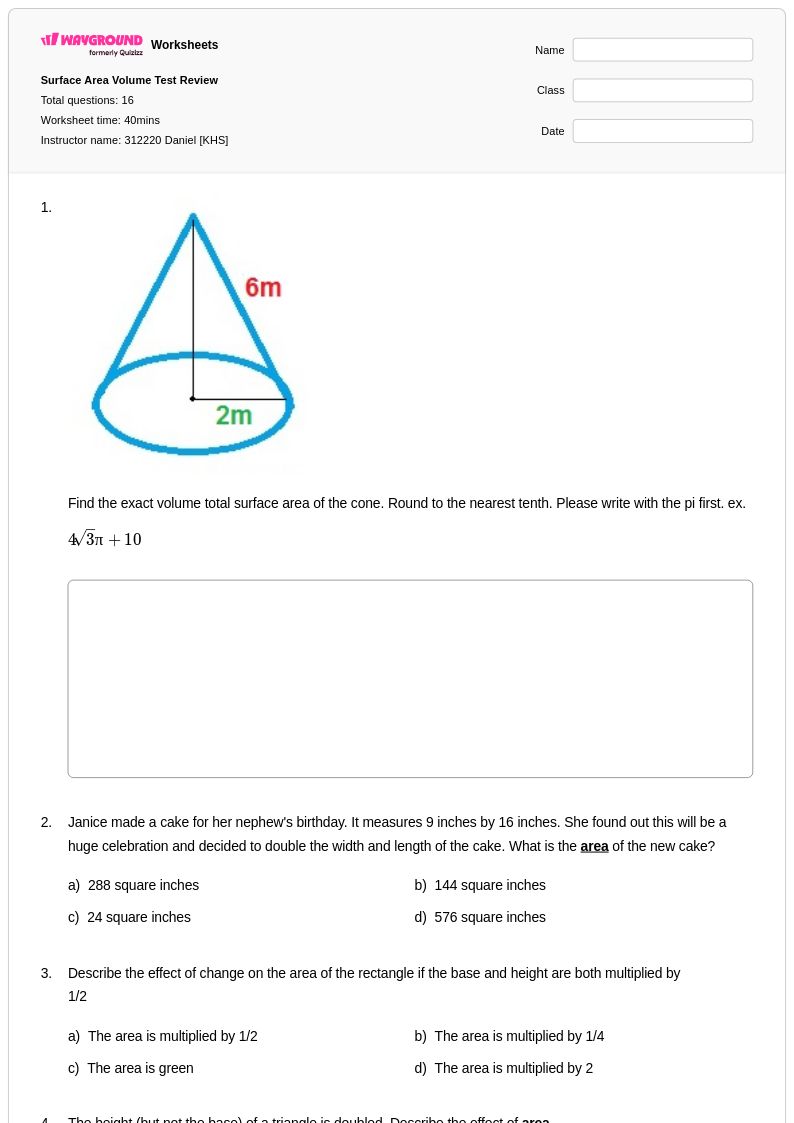
16Q
9th - 12th
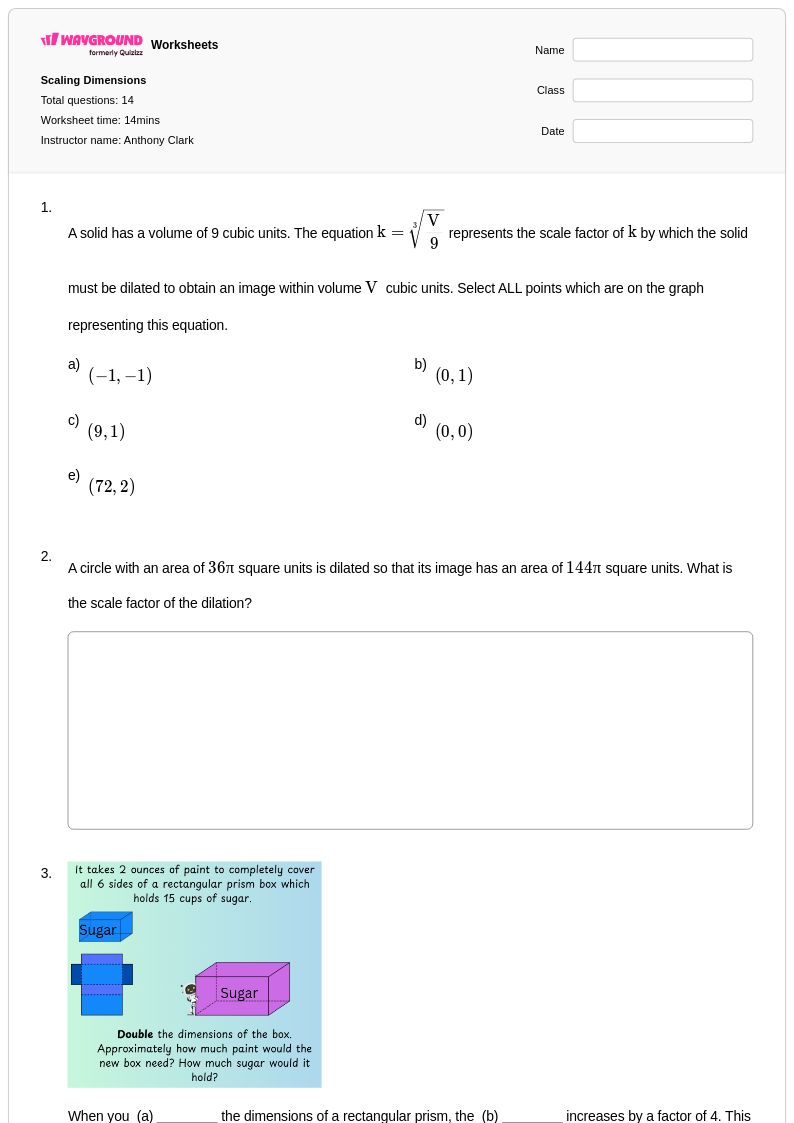
14Q
10th - Uni
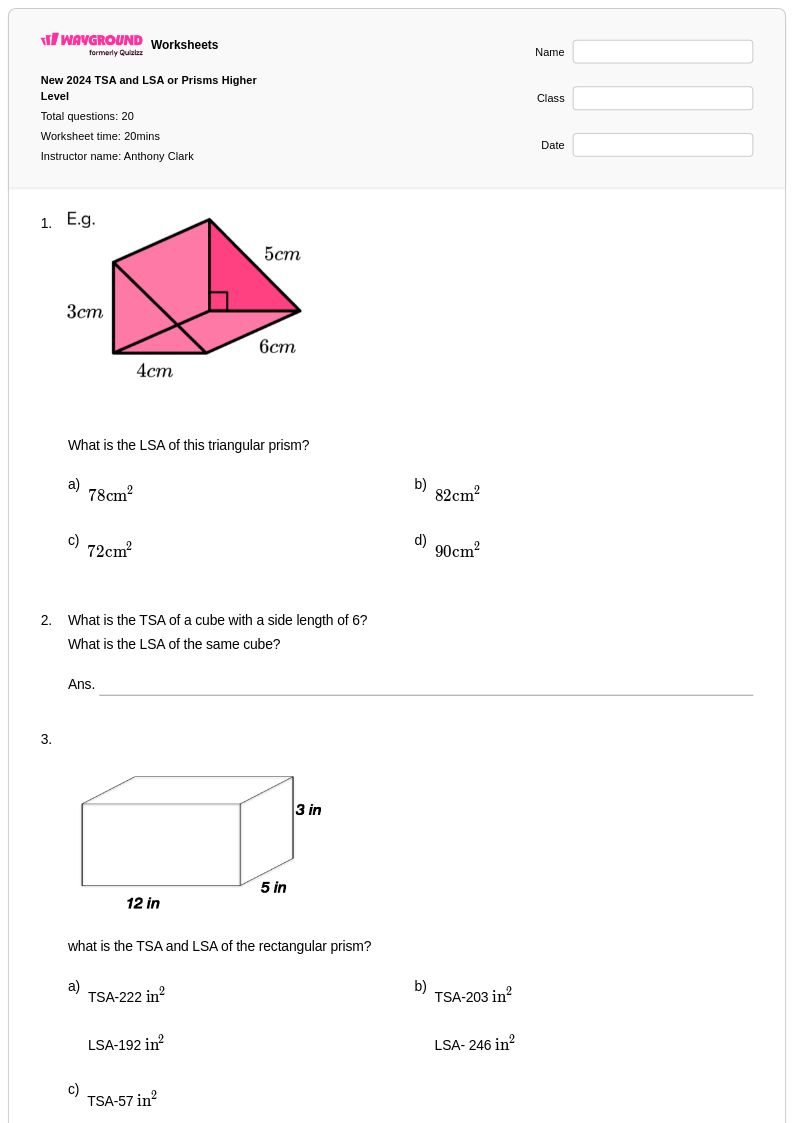
20Q
8th - Uni
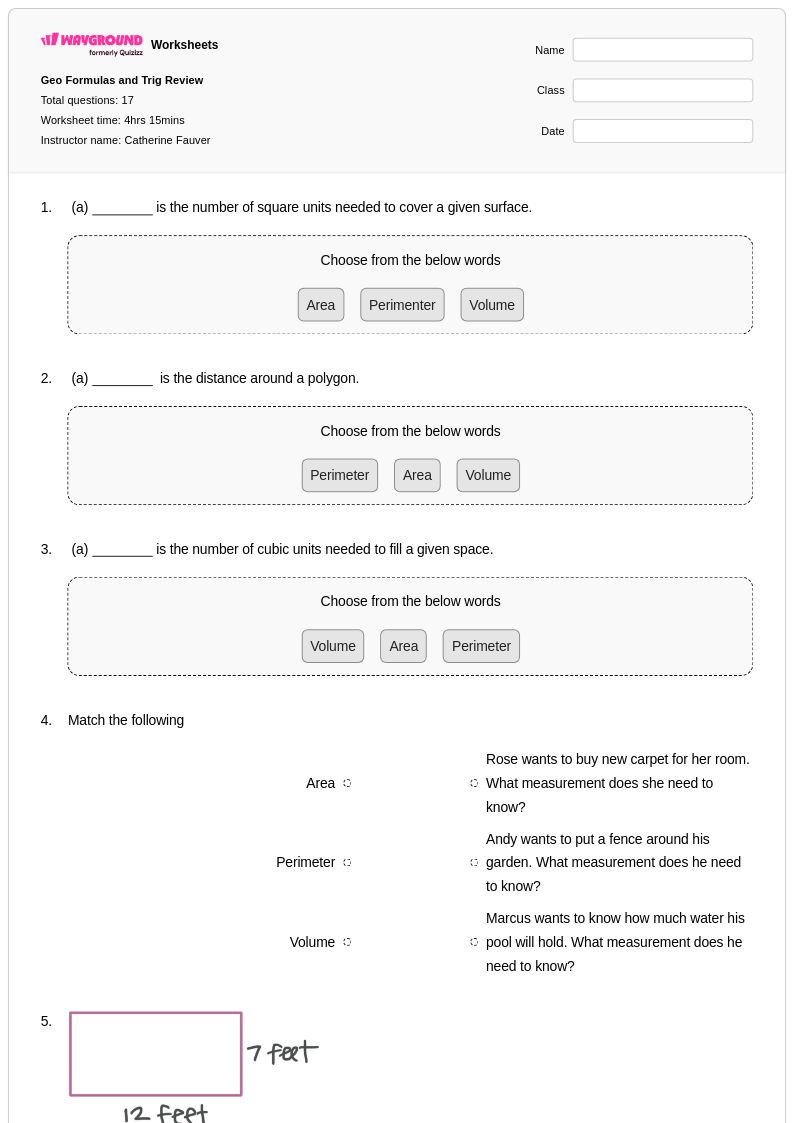
17Q
12th
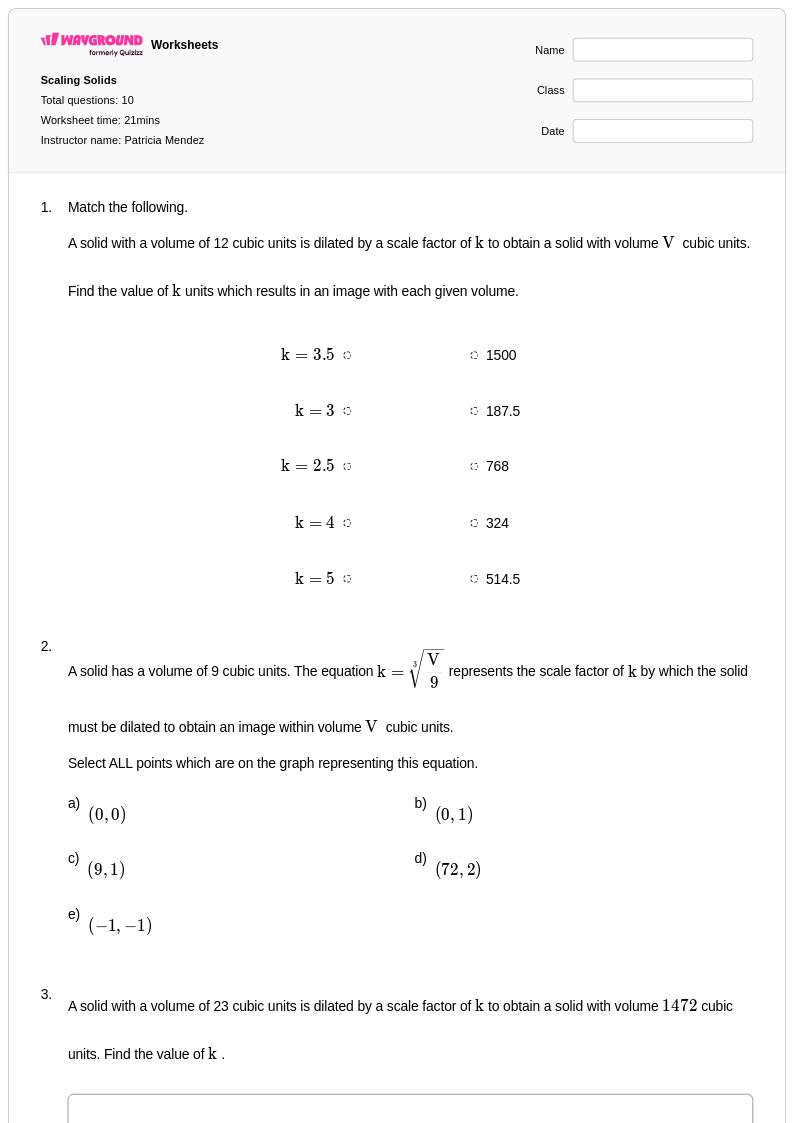
10Q
9th - 12th
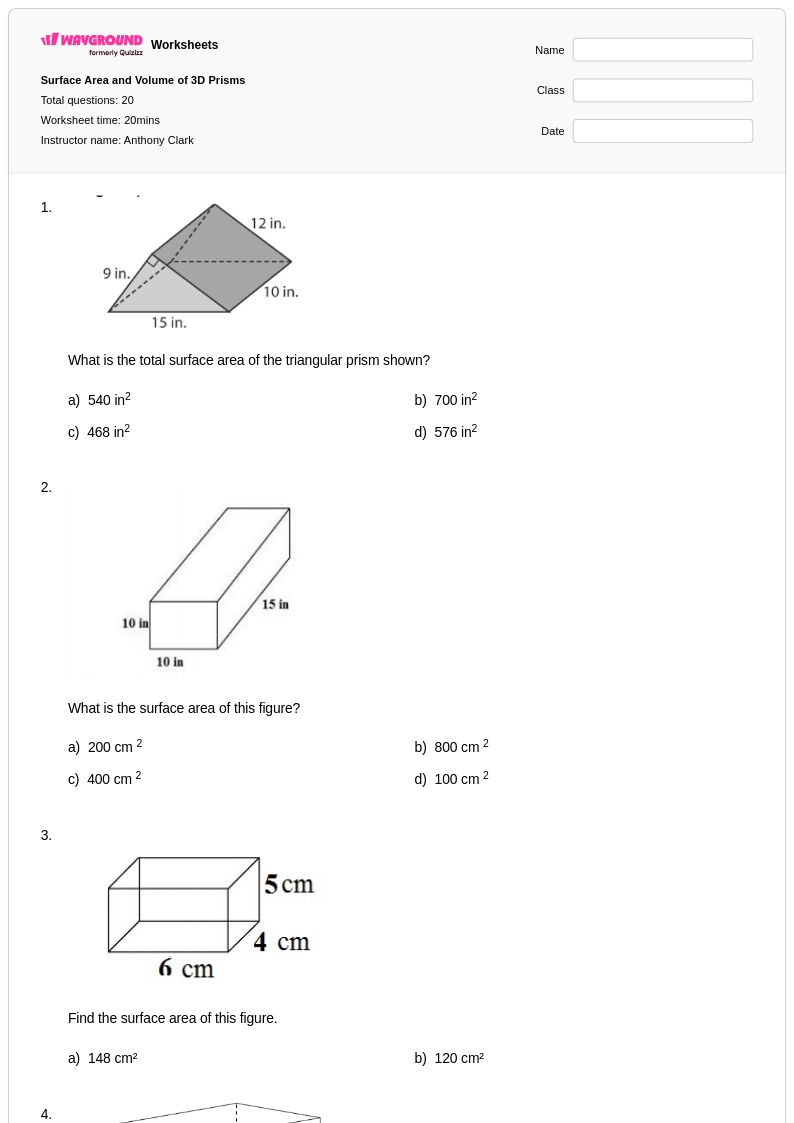
20Q
6th - Uni
10Q
9th - 12th
13Q
9th - Uni
20Q
10th - Uni
10Q
9th - 12th
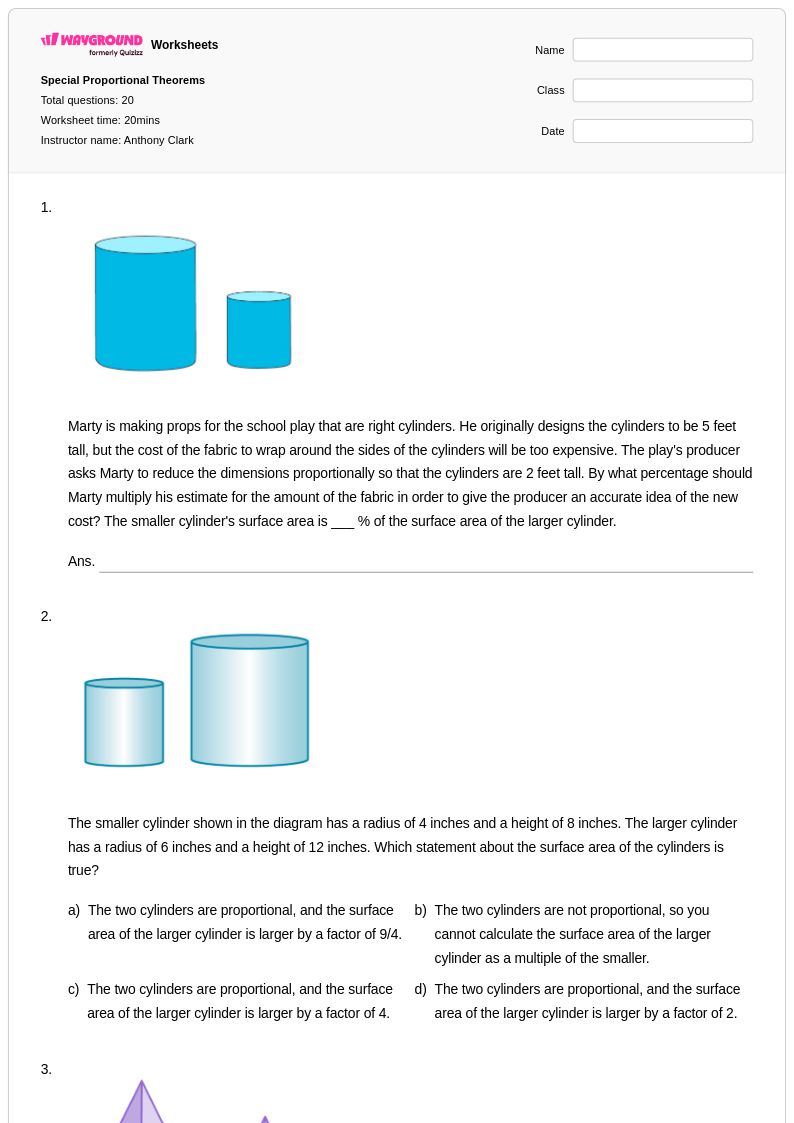
20Q
10th - Uni
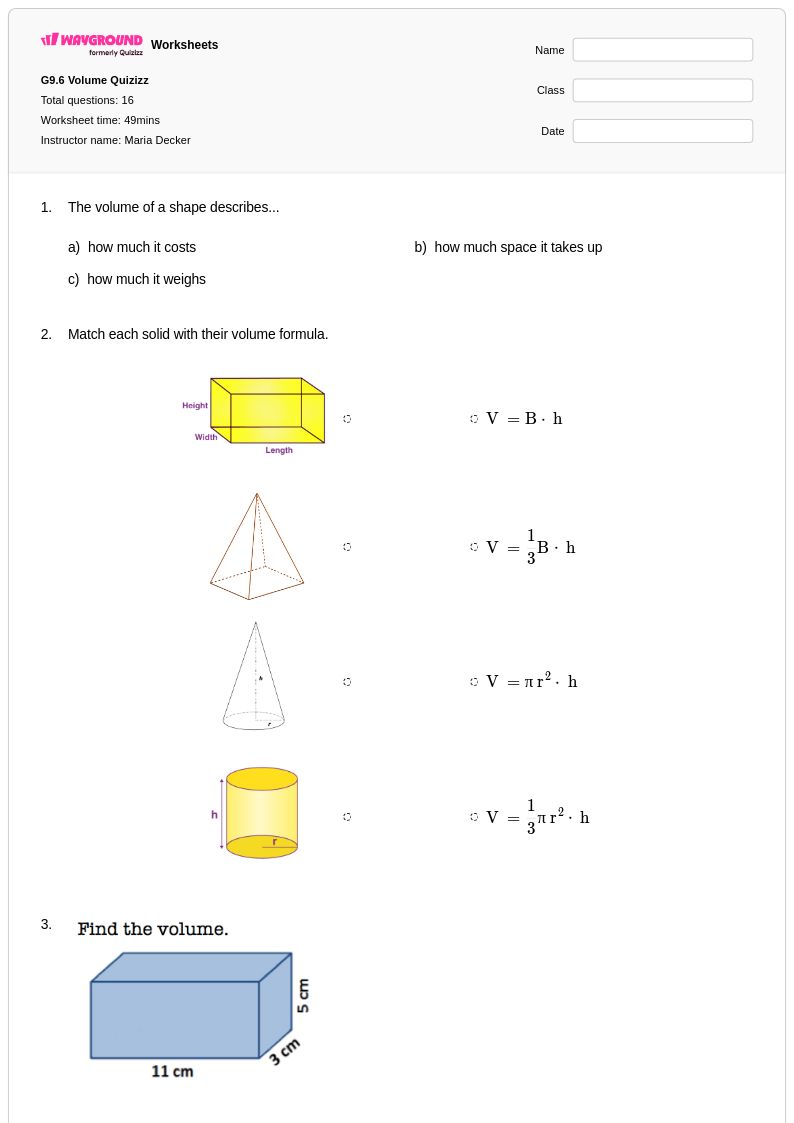
16Q
9th - 12th
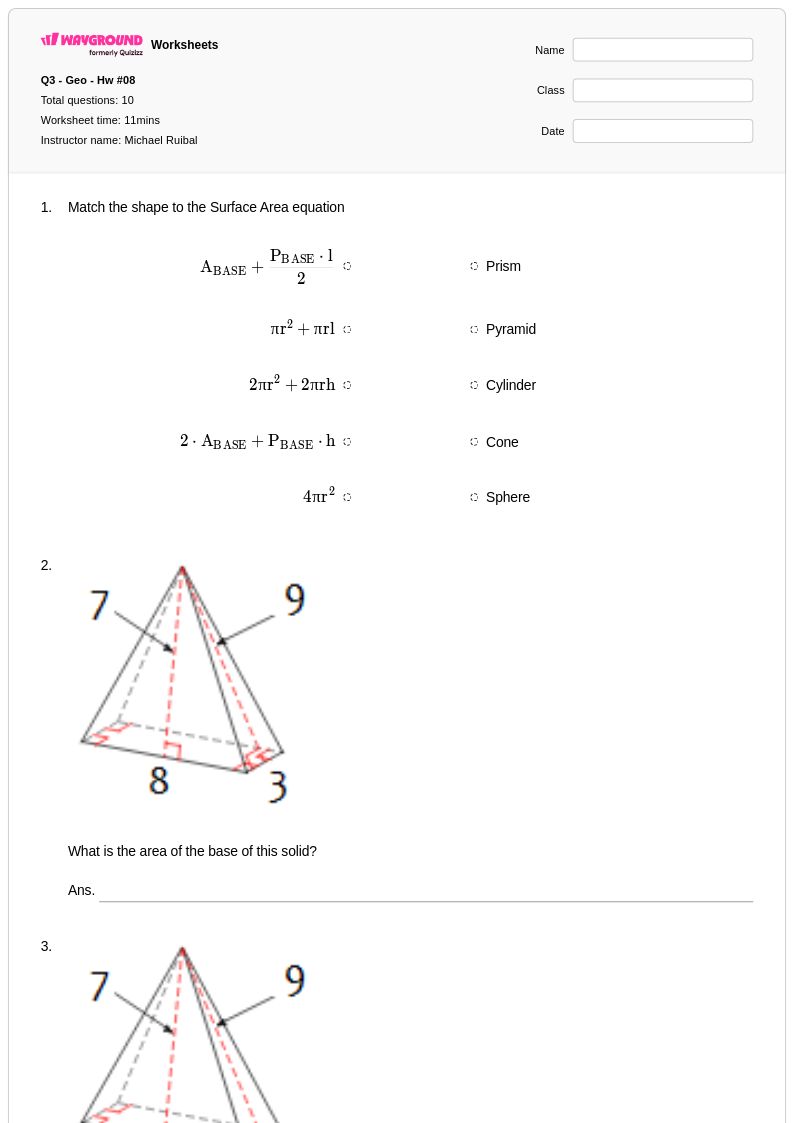
10Q
9th - 12th
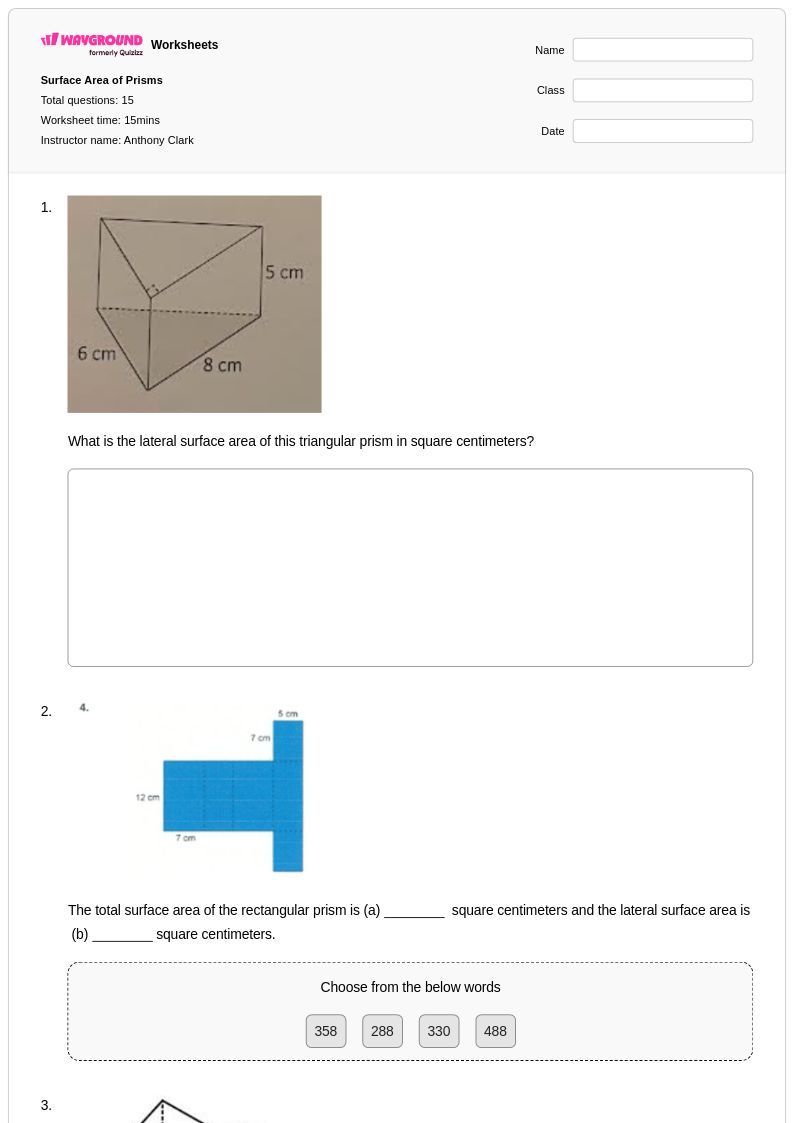
15Q
7th - Uni
Explorar Volume and Surface Area of Cones hojas de trabajo por grados
Explore otras hojas de trabajo de materias para class 12
Explore printable Volume and Surface Area of Cones worksheets for Class 12
Volume and Surface Area of Cones worksheets available through Wayground (formerly Quizizz) provide Class 12 students with comprehensive practice opportunities to master these essential three-dimensional geometry concepts. These expertly designed resources strengthen critical mathematical skills including applying volume formulas involving one-third pi times radius squared times height, calculating surface areas by combining base areas with lateral surface areas, and solving complex real-world problems involving conical shapes. Students work through carefully scaffolded practice problems that progress from basic formula application to multi-step scenarios requiring critical thinking and mathematical reasoning. Each worksheet collection includes detailed answer keys that support independent learning and self-assessment, with free printable options available in convenient pdf format for classroom distribution and homework assignments.
Wayground (formerly Quizizz) empowers mathematics teachers with access to millions of educator-created resources specifically focused on cone geometry and other advanced mathematical topics. The platform's robust search and filtering capabilities enable teachers to quickly locate worksheets that align with state standards and match their specific instructional needs for Class 12 geometry curricula. Advanced differentiation tools allow educators to customize difficulty levels and problem types to support diverse learners, from students requiring remediation with basic cone calculations to those ready for enrichment through complex applications involving truncated cones and composite figures. Teachers can seamlessly integrate these resources into their lesson planning workflow, utilizing both digital formats for interactive classroom activities and printable pdf versions for traditional paper-based assessments, ensuring flexible implementation that supports varied teaching styles and classroom technology environments.