Free Printable Weathering, Erosion, and Deposition Worksheets for Class 7
Enhance Class 7 students' understanding of weathering, erosion, and deposition with Wayground's comprehensive collection of free worksheets, printables, and practice problems that include detailed answer keys to reinforce Earth science concepts.
Explore printable Weathering, Erosion, and Deposition worksheets for Class 7
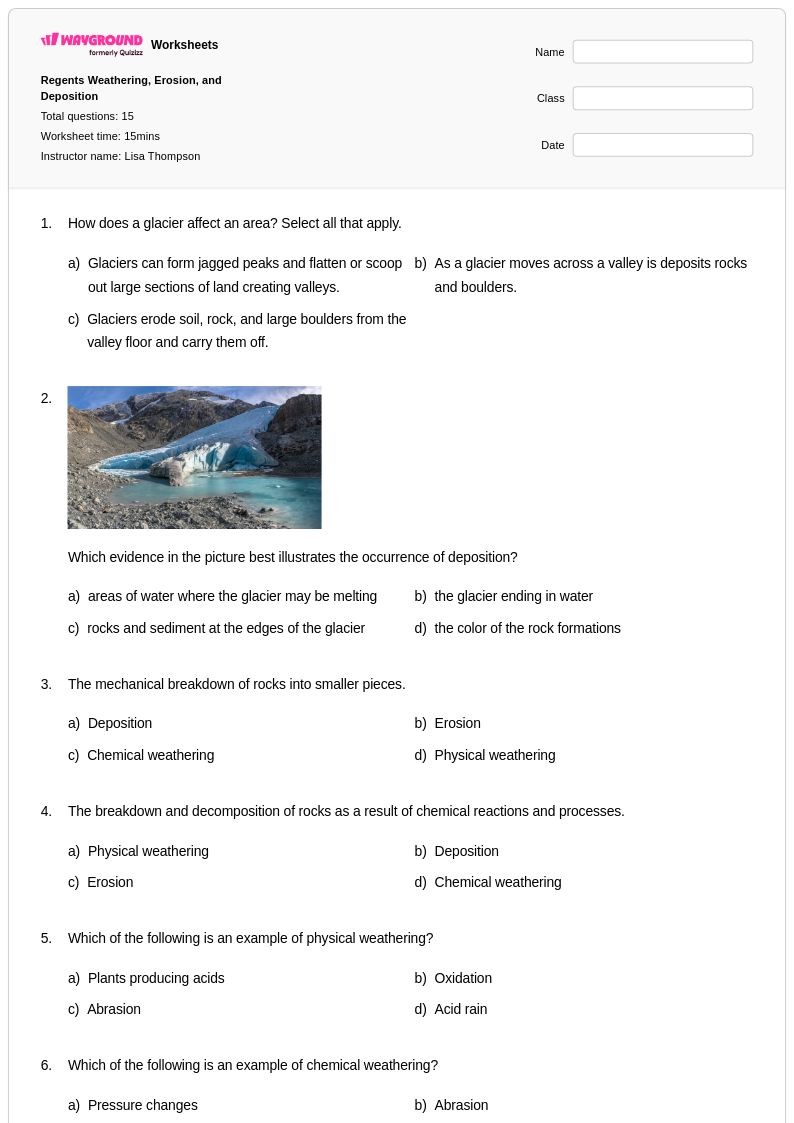
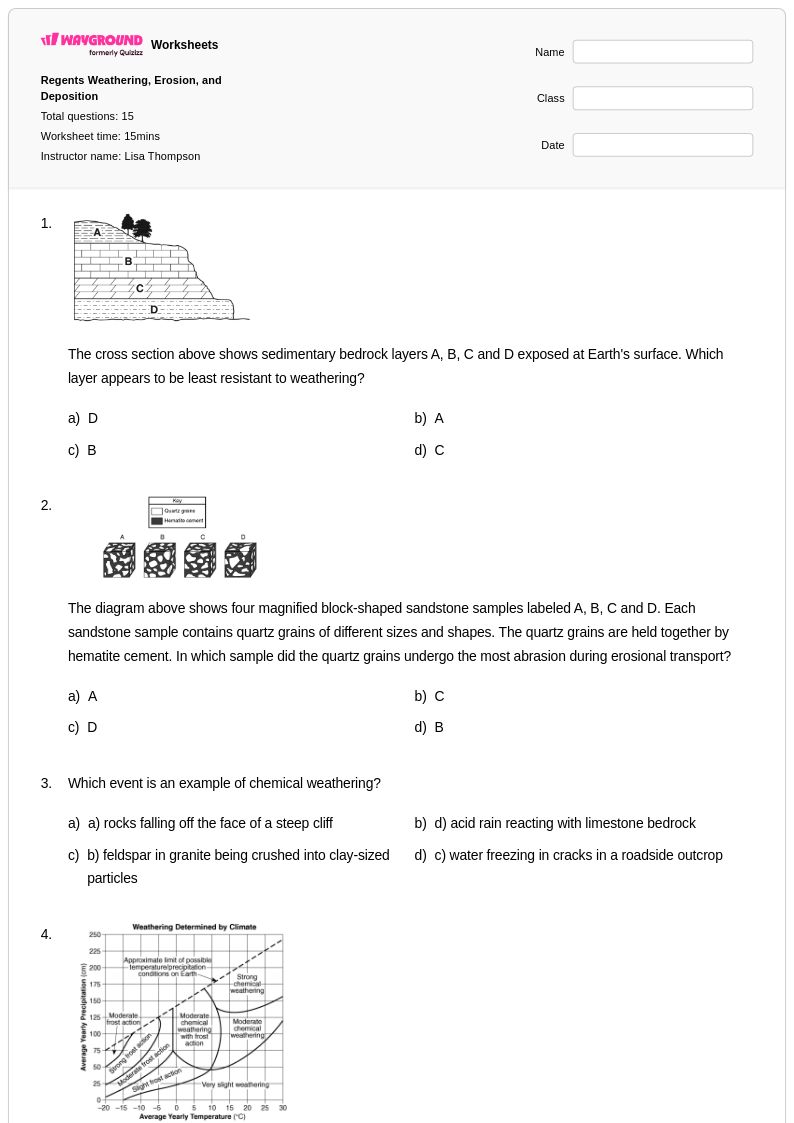
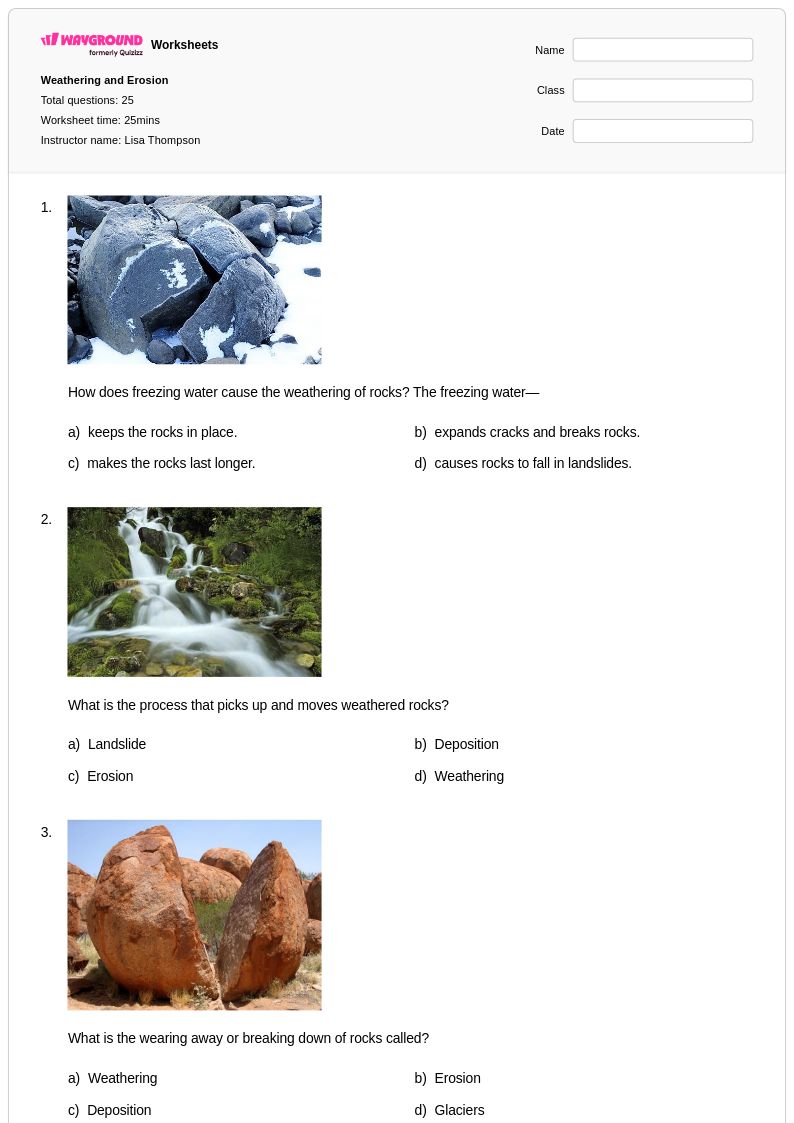
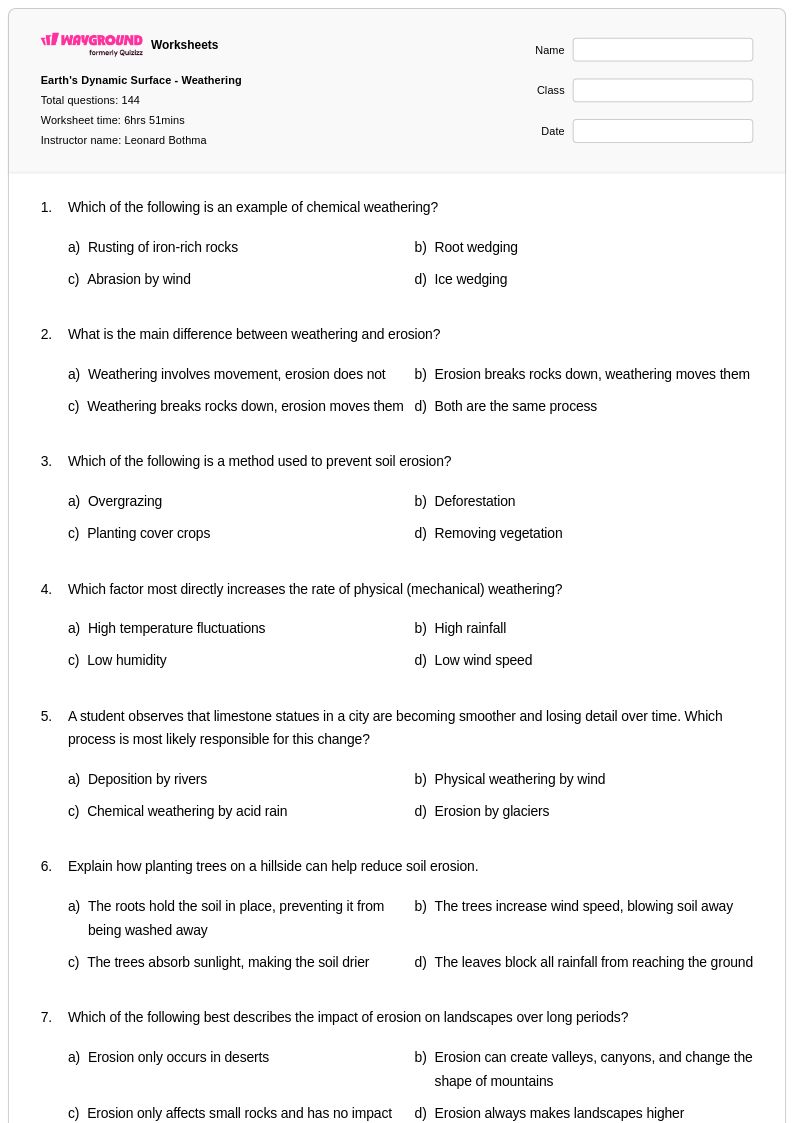
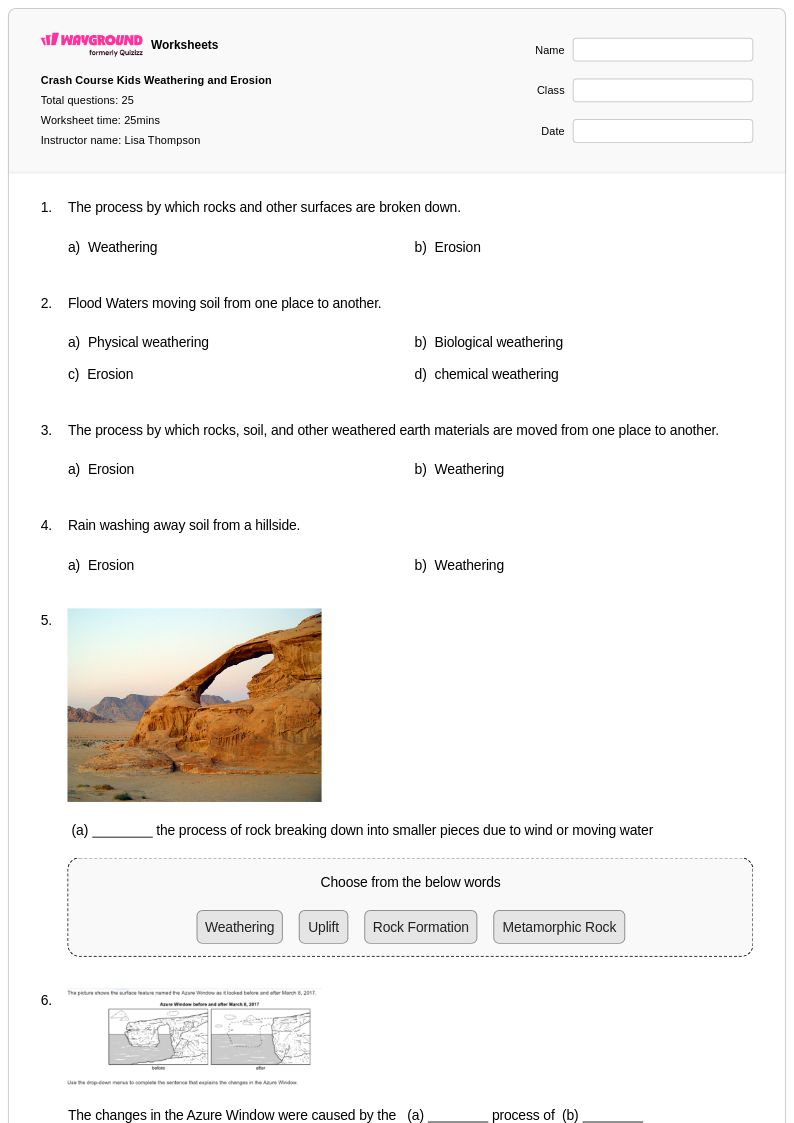
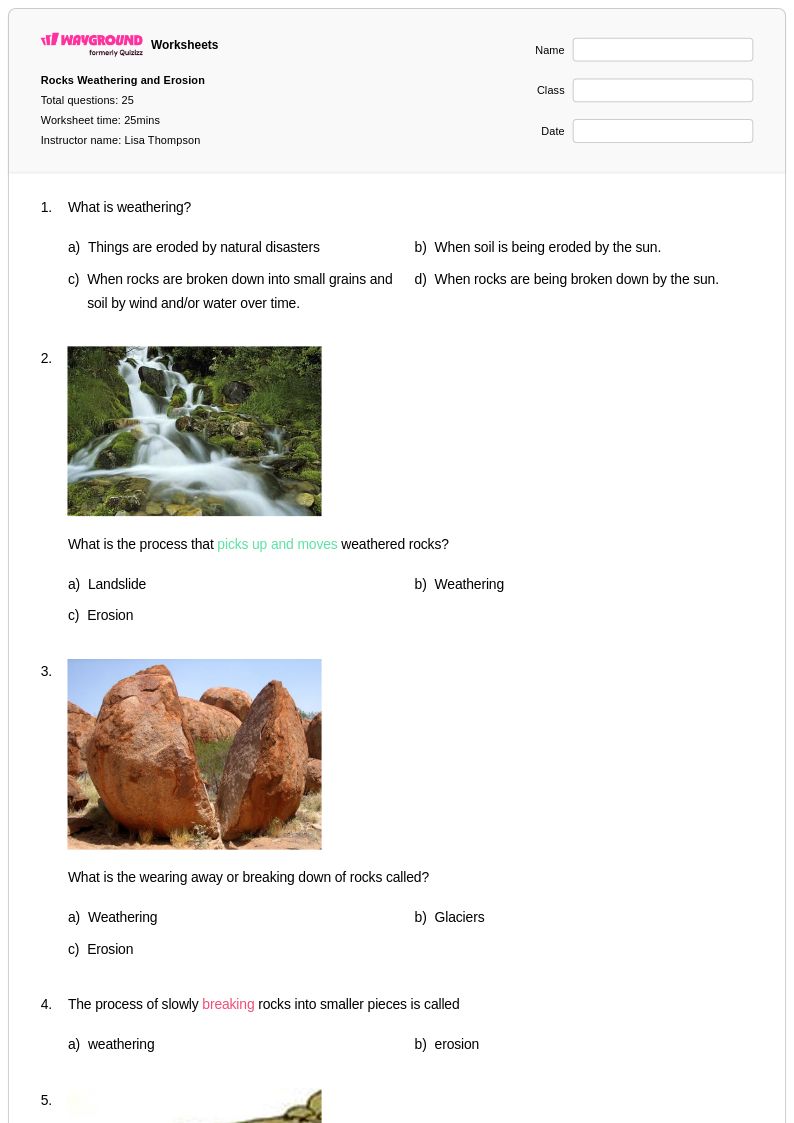
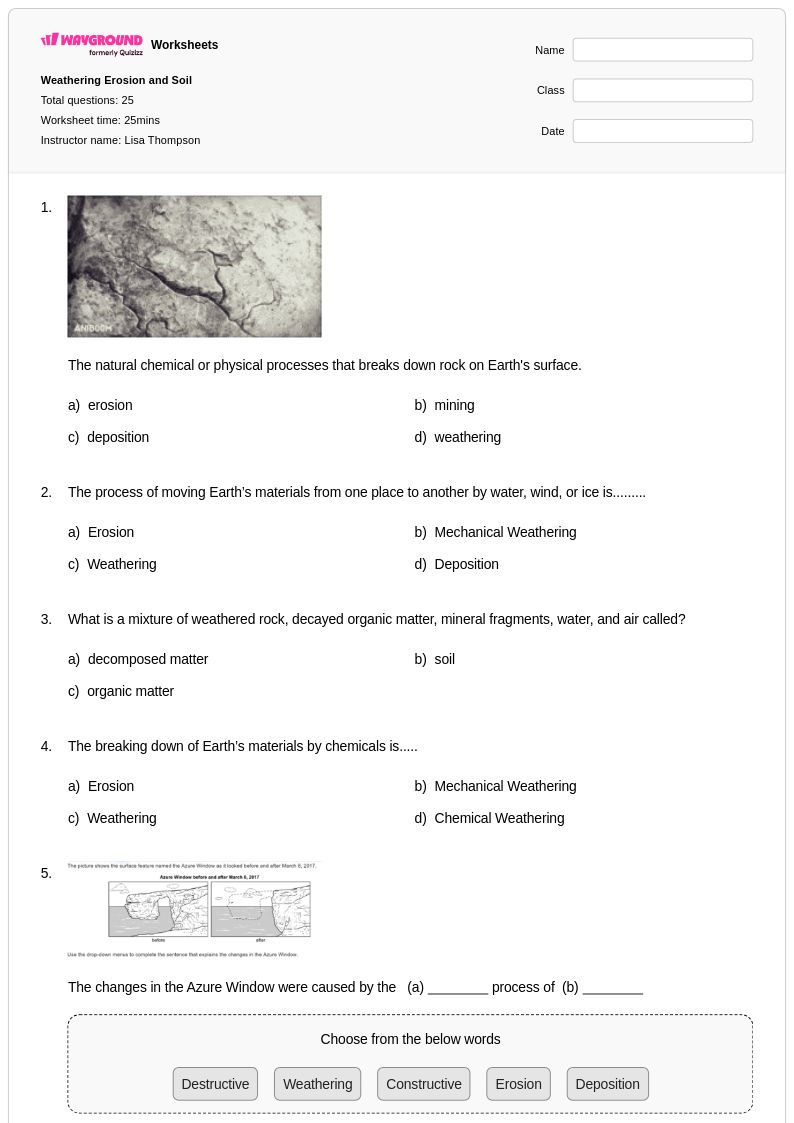
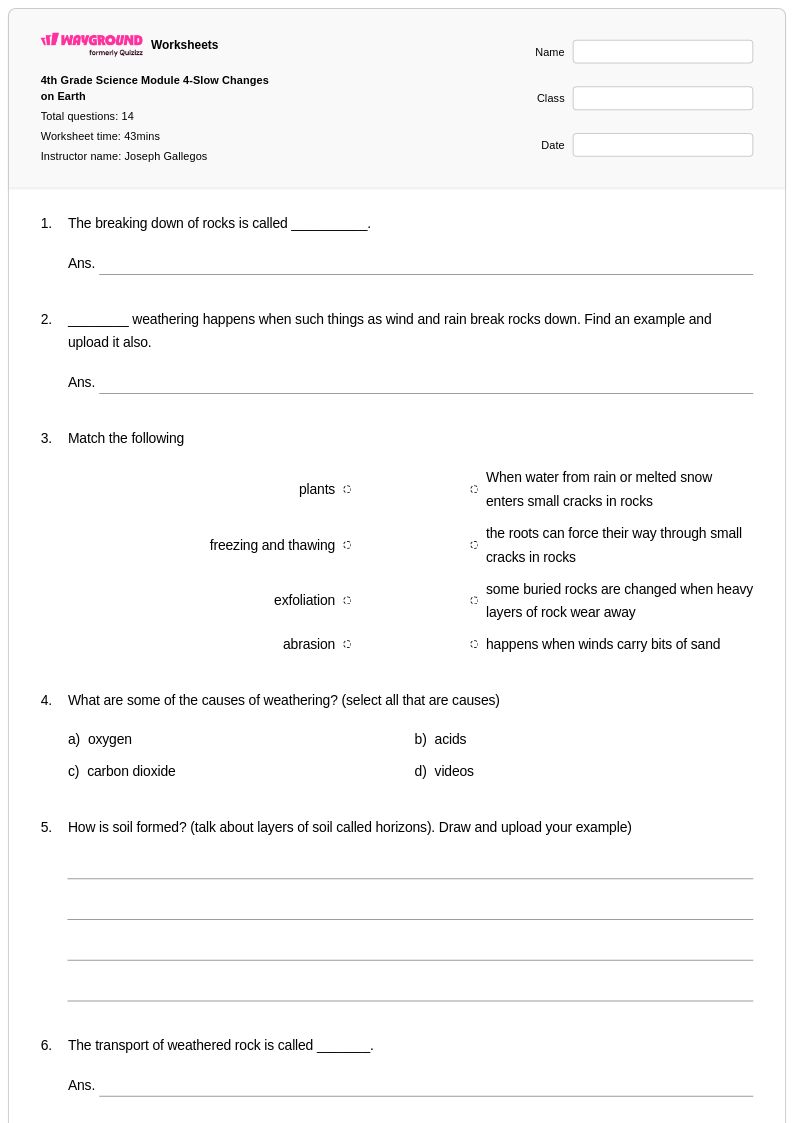
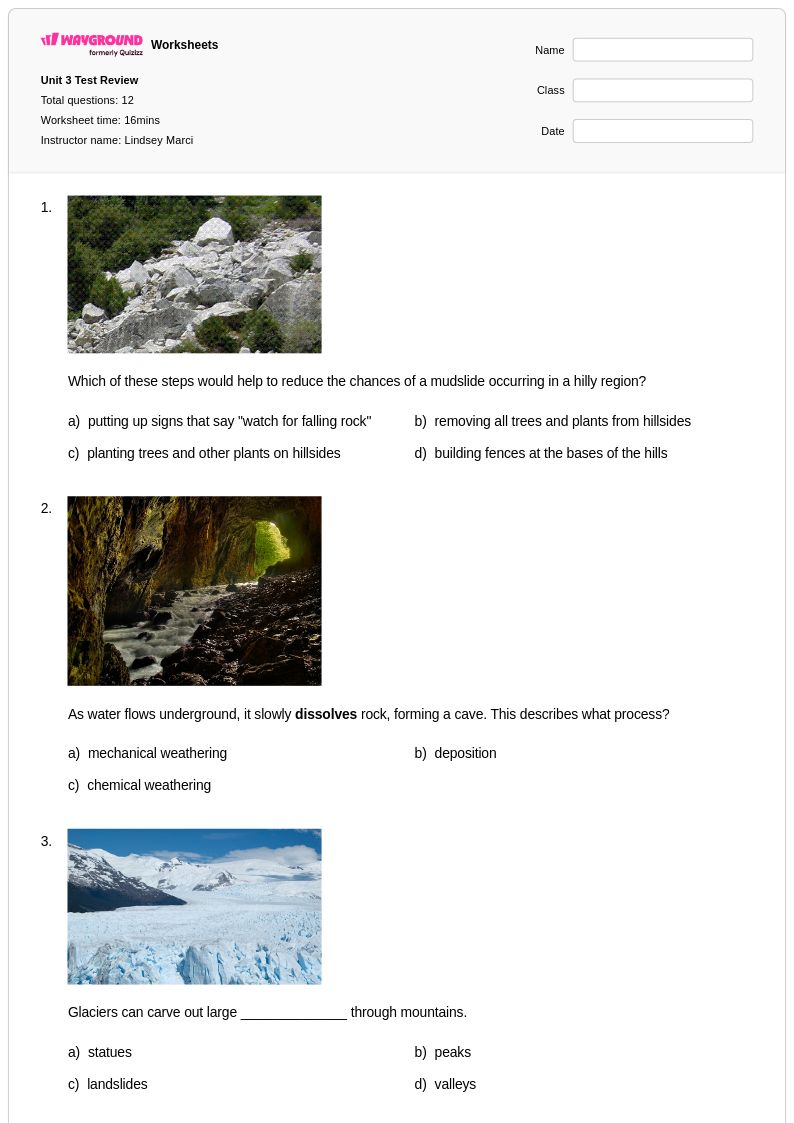
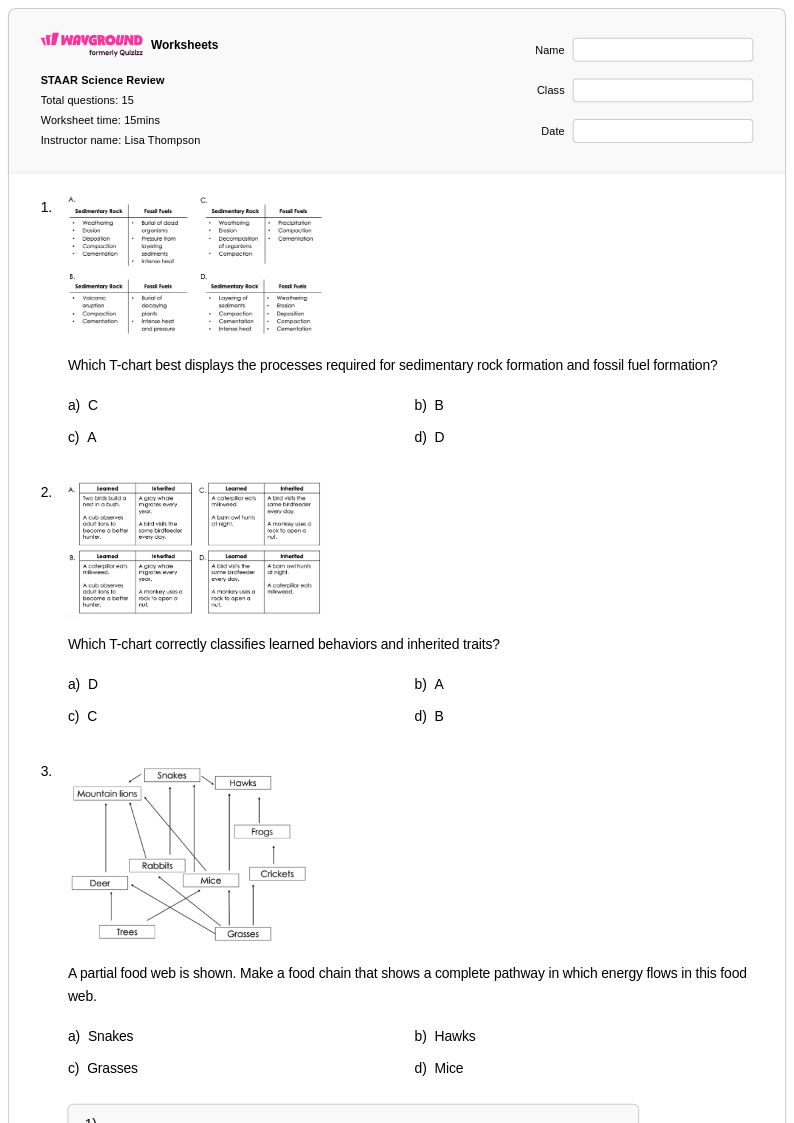
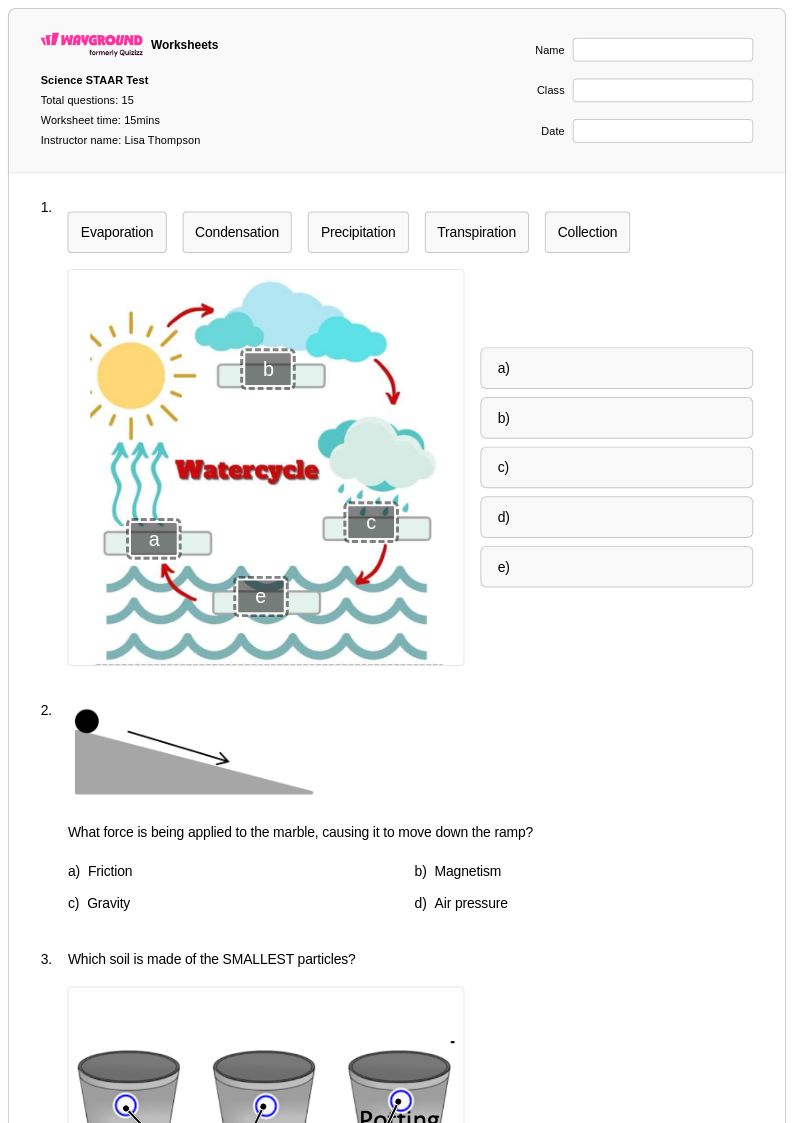
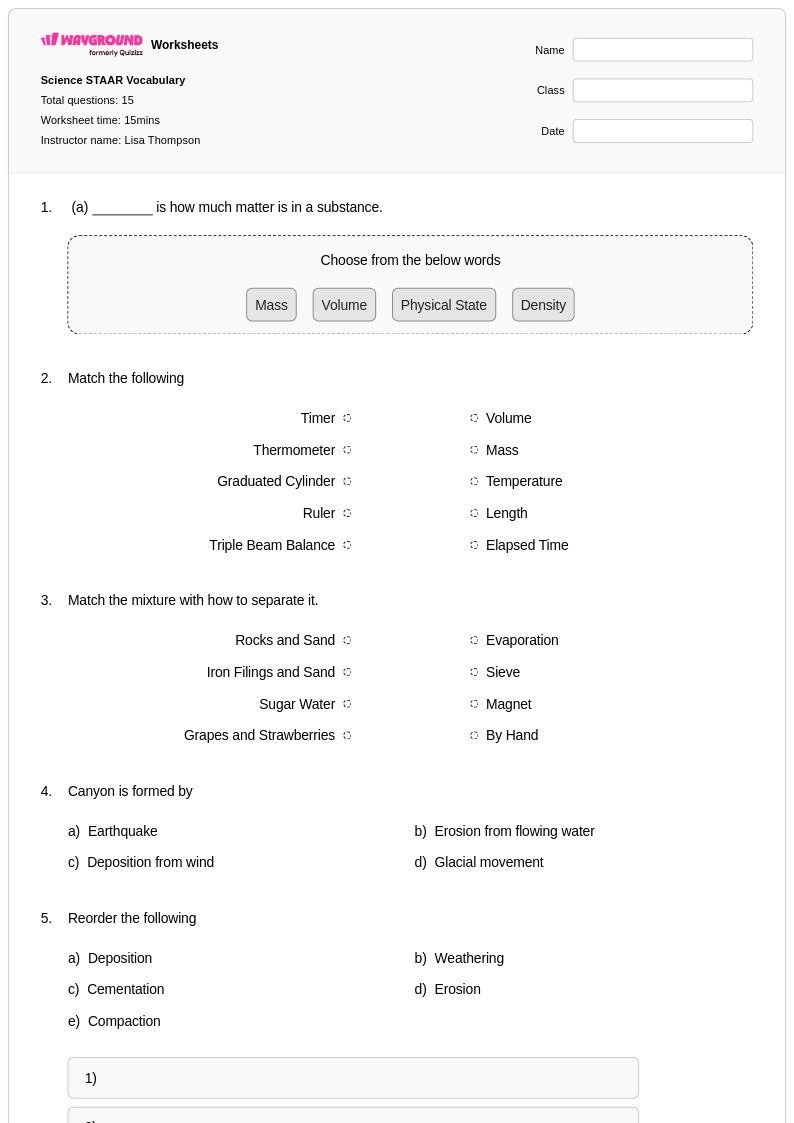
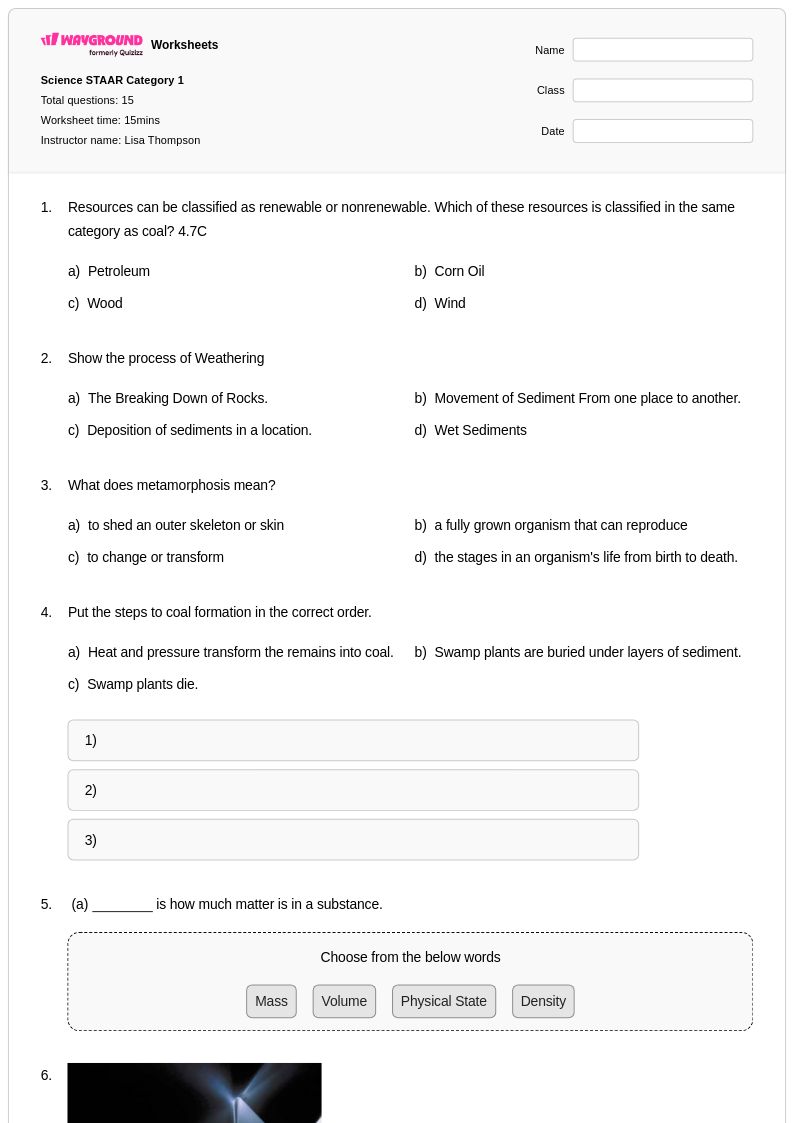
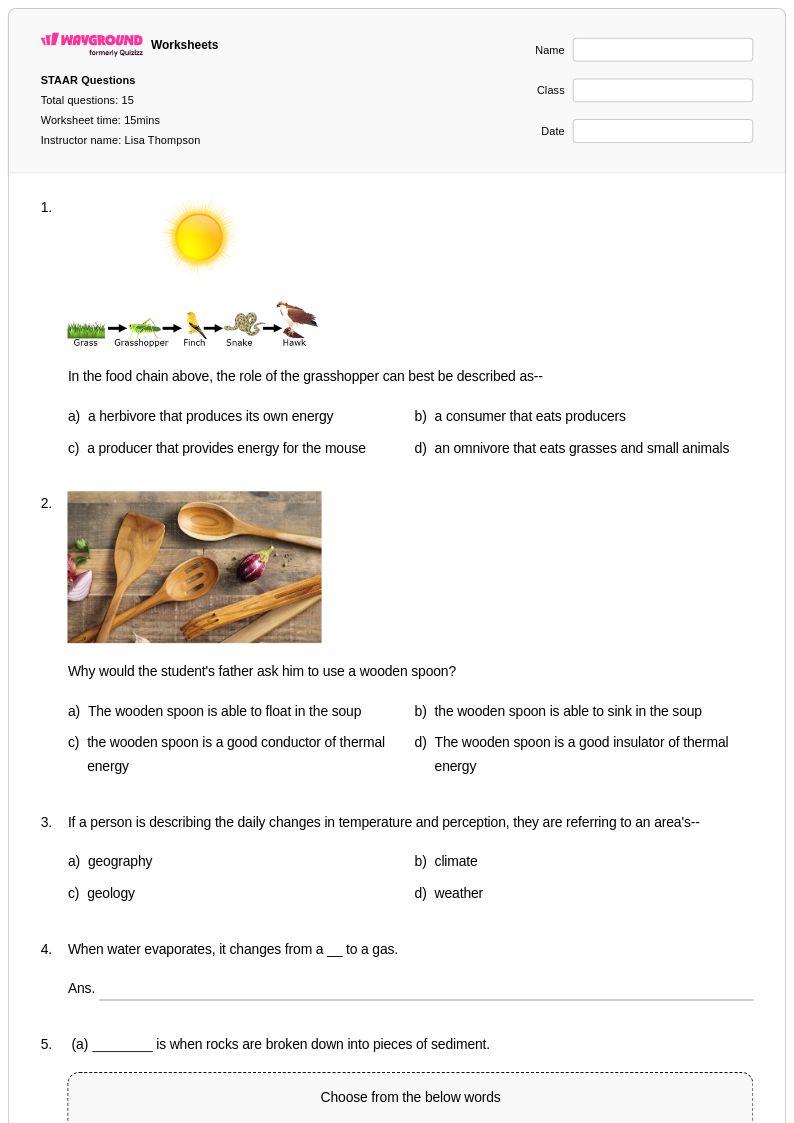
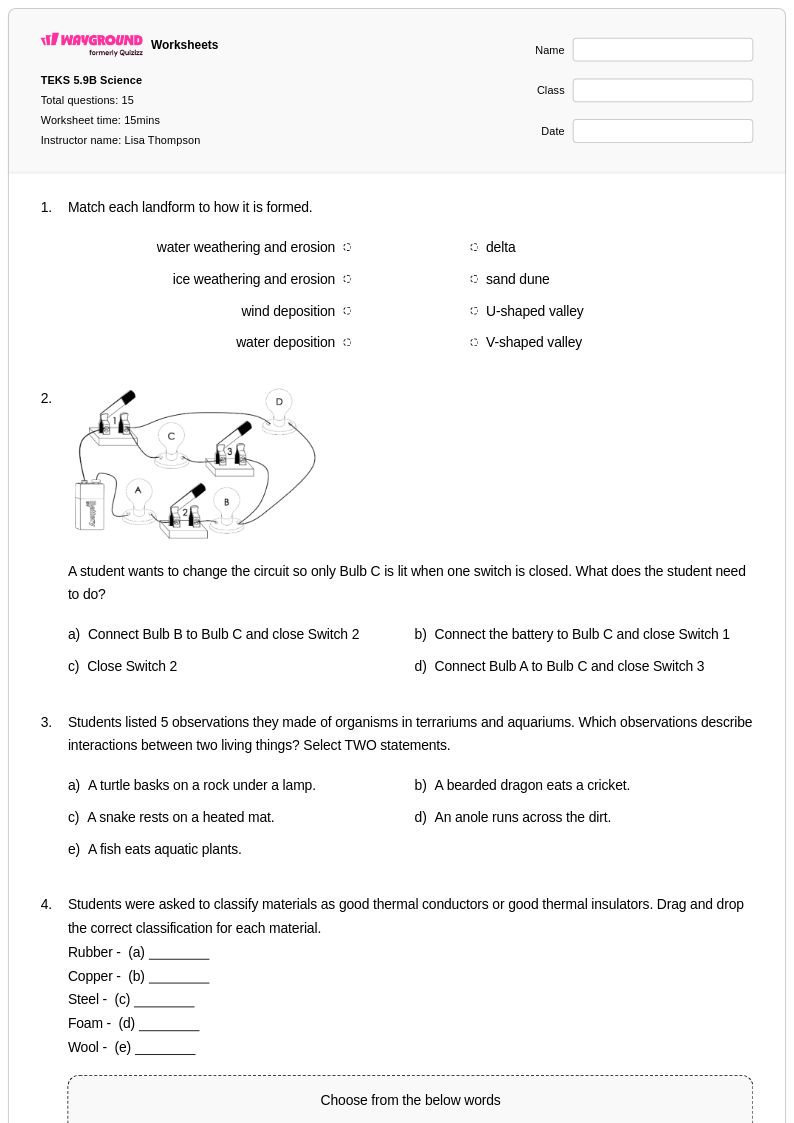
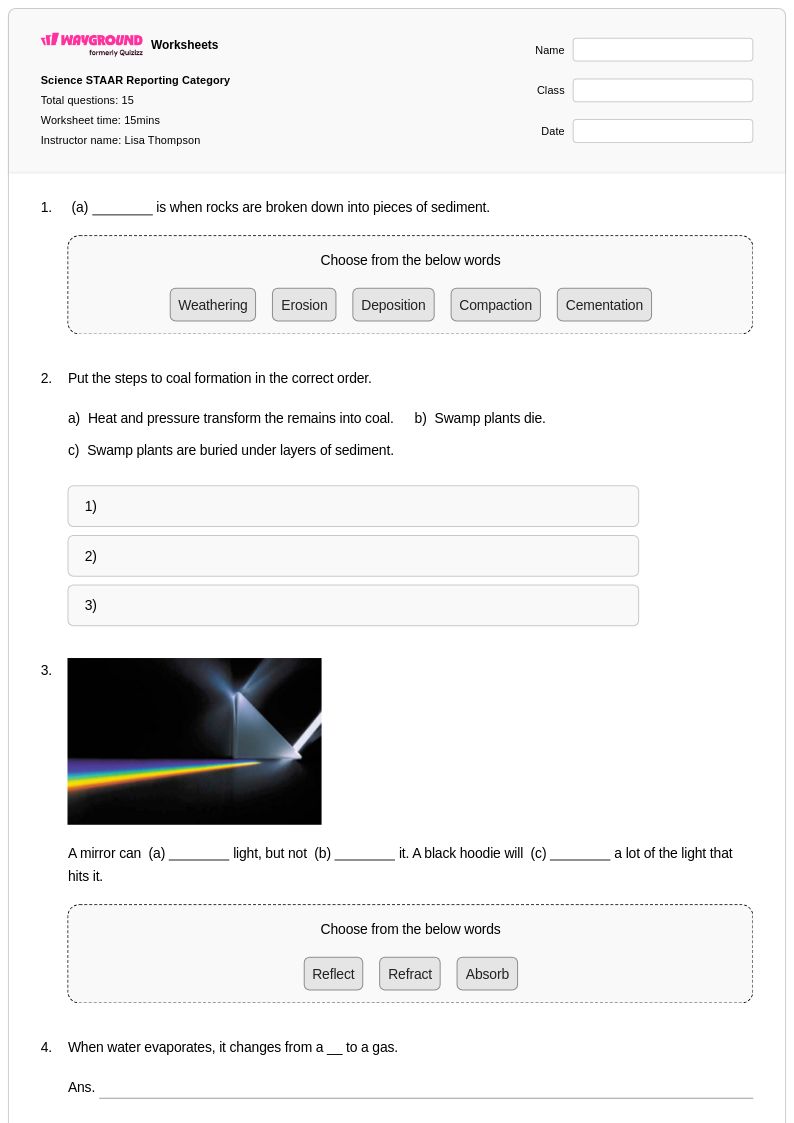
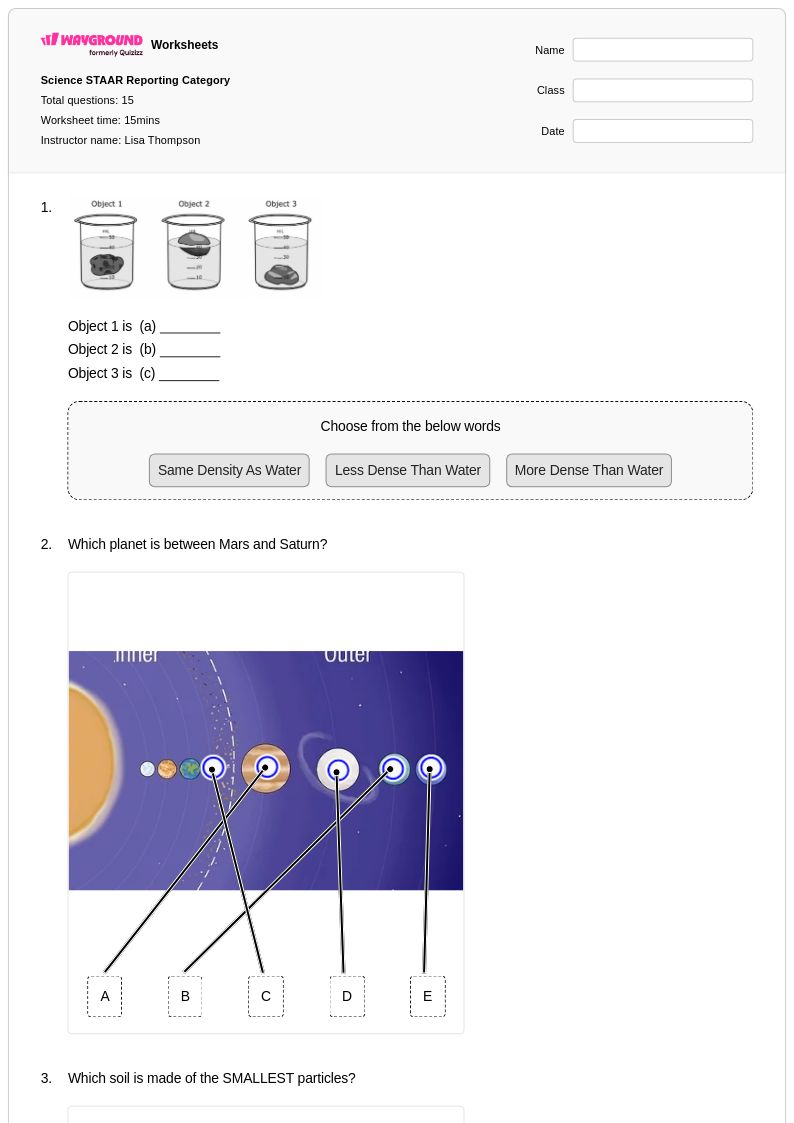
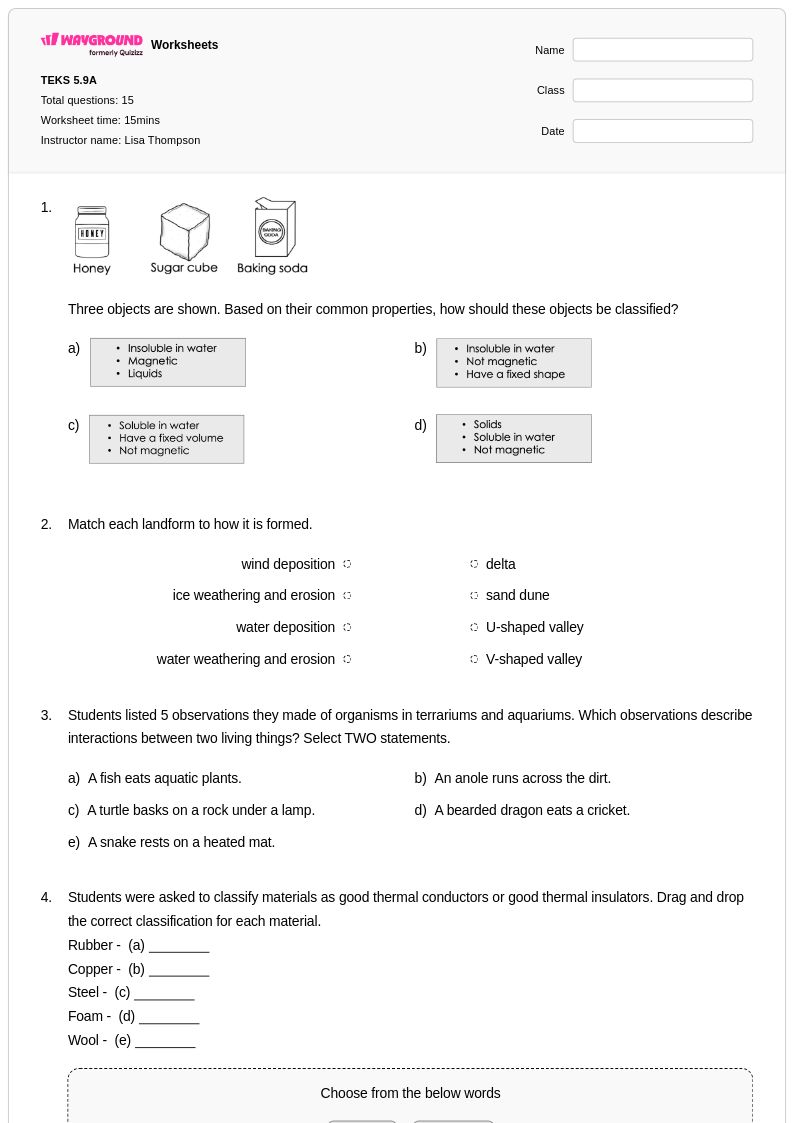
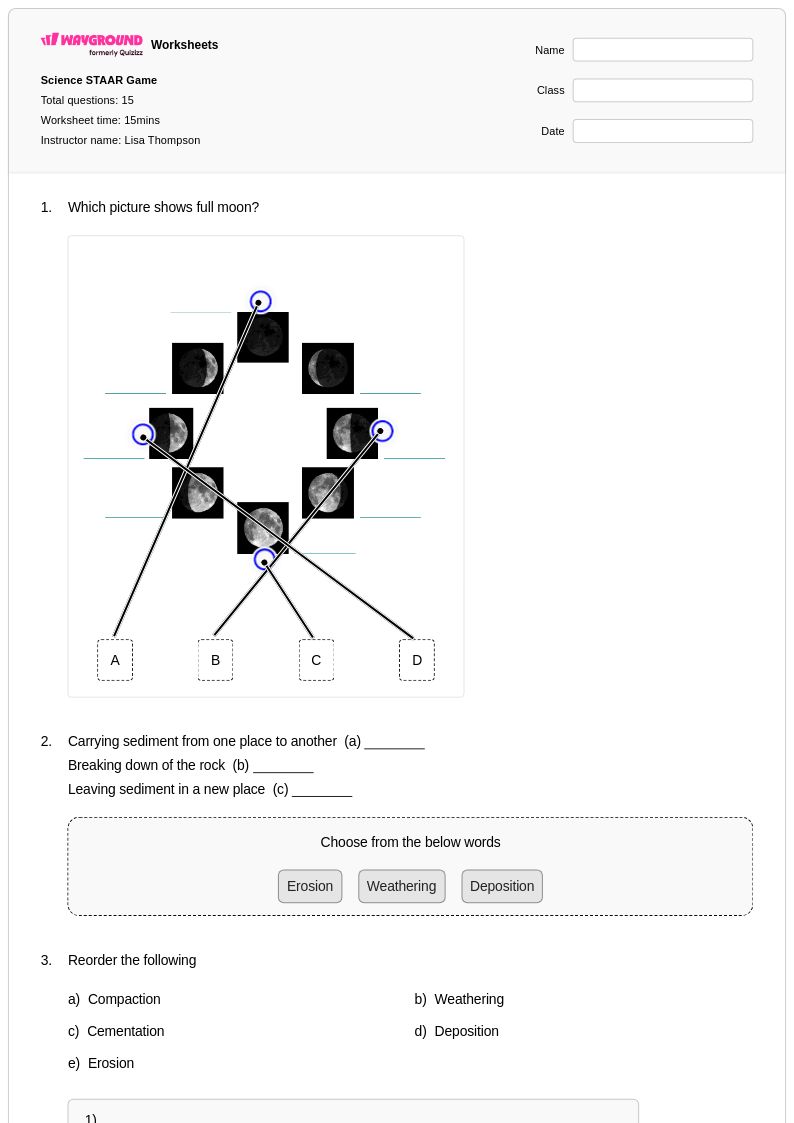
Weathering, erosion, and deposition worksheets for Class 7 students available through Wayground (formerly Quizizz) provide comprehensive practice opportunities that strengthen understanding of Earth's dynamic surface processes. These carefully designed worksheets help seventh-grade students master fundamental concepts including mechanical and chemical weathering mechanisms, various erosion agents like wind and water, and the depositional processes that create landforms such as deltas and alluvial fans. The collection includes practice problems that challenge students to identify weathering types in real-world scenarios, analyze erosion patterns, and predict deposition outcomes based on environmental conditions. Each worksheet comes with a detailed answer key that supports both independent study and classroom instruction, while the free printables in pdf format ensure accessible learning materials for diverse educational settings.
Wayground (formerly Quizizz) empowers teachers with millions of educator-created worksheet resources specifically focused on weathering, erosion, and deposition concepts that align with Class 7 Earth and Space Science standards. The platform's robust search and filtering capabilities allow instructors to quickly locate materials that match their specific curriculum requirements and student needs, whether for initial concept introduction, skill remediation, or advanced enrichment activities. Teachers can customize these digital and printable worksheets to differentiate instruction, adjusting complexity levels and question formats to accommodate diverse learning styles and academic abilities. The comprehensive collection supports flexible lesson planning by providing ready-to-use materials in both pdf and interactive digital formats, enabling seamless integration into classroom instruction, homework assignments, and assessment preparation while ensuring students develop mastery of these essential geological processes.
FAQs
How do I teach weathering, erosion, and deposition to middle school students?
Start by distinguishing the three processes clearly before connecting them as a sequence: weathering breaks rock down, erosion moves the material, and deposition drops it somewhere new. Use real-world examples like river deltas, beach shorelines, and canyon walls to anchor each concept visually. Once students can identify each process independently, introduce scenarios where all three occur in sequence, such as a mountain stream carrying sediment to a floodplain, to build systems-level thinking.
What practice exercises help students understand the difference between physical and chemical weathering?
Exercises that ask students to classify weathering examples by mechanism are especially effective — for instance, distinguishing frost wedging (physical) from acid rain dissolving limestone (chemical). Worksheet problems that present real-world scenarios and ask students to identify the weathering type and the agent responsible reinforce both recall and application. Including visual diagrams of rock surfaces or landforms for students to annotate further deepens conceptual understanding.
What common mistakes do students make when learning about weathering, erosion, and deposition?
The most frequent error is treating weathering and erosion as synonymous — students often say a rock was 'eroded' when it was actually broken down in place through weathering. Another common misconception is assuming erosion always involves water; wind and ice are equally valid agents that students frequently overlook. Students also tend to view deposition as a random or passive event rather than understanding that it occurs when a transporting agent loses energy, which is a testable and predictable process.
How can I use weathering, erosion, and deposition worksheets to differentiate instruction?
Worksheets that include scenario-based problems at varying complexity levels allow teachers to assign different tasks to students based on readiness without singling anyone out. On Wayground, teachers can apply individual accommodations such as read aloud support, reduced answer choices, and extended time to specific students, while the rest of the class receives standard settings. These accommodations are saved per student and carry over to future sessions, reducing setup time for recurring differentiation needs.
How do I use Wayground's weathering, erosion, and deposition worksheets in my classroom?
Wayground's weathering, erosion, and deposition worksheets are available as printable PDFs for traditional classroom use and in digital formats for technology-integrated learning environments. Teachers can also host them as a live or assigned quiz directly on Wayground, making them suitable for in-class review sessions, homework, or formative assessment. Each worksheet includes a complete answer key, so grading and feedback can be handled efficiently without additional preparation.
How do I help students understand how deposition creates landforms like deltas and beaches?
The key is connecting deposition to energy loss in the transporting medium — when a river slows as it meets a larger body of water, it can no longer carry its sediment load, so material drops and accumulates into a delta. Having students trace the full sequence from source rock to deposited landform on a diagram makes this cause-and-effect relationship explicit. Practice problems that ask students to predict where deposition will occur given changes in water speed or wind direction are particularly effective at building this predictive reasoning.