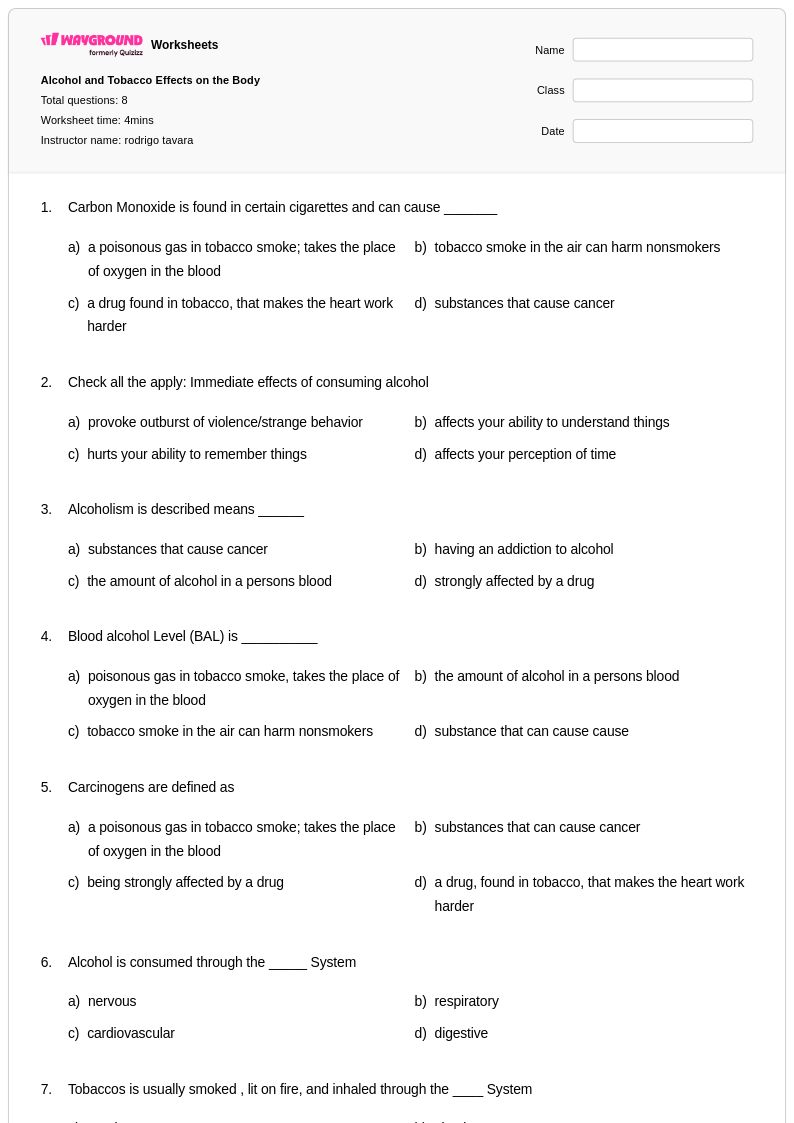
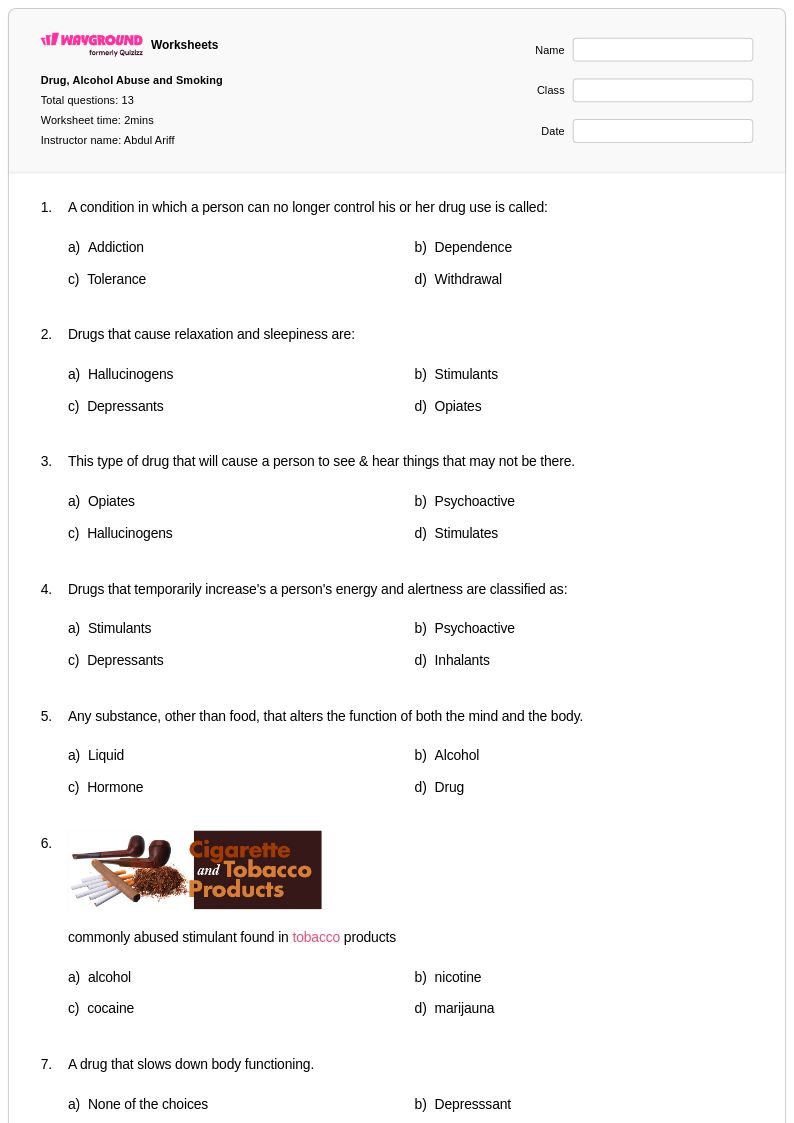
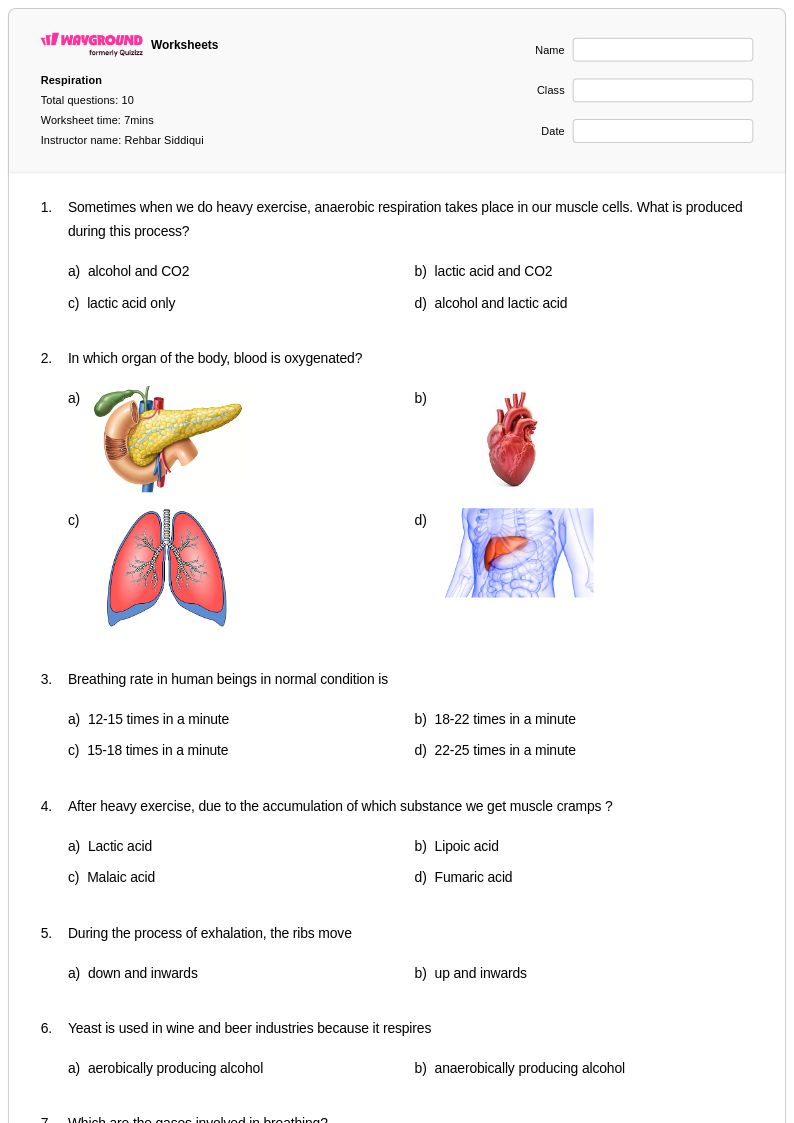
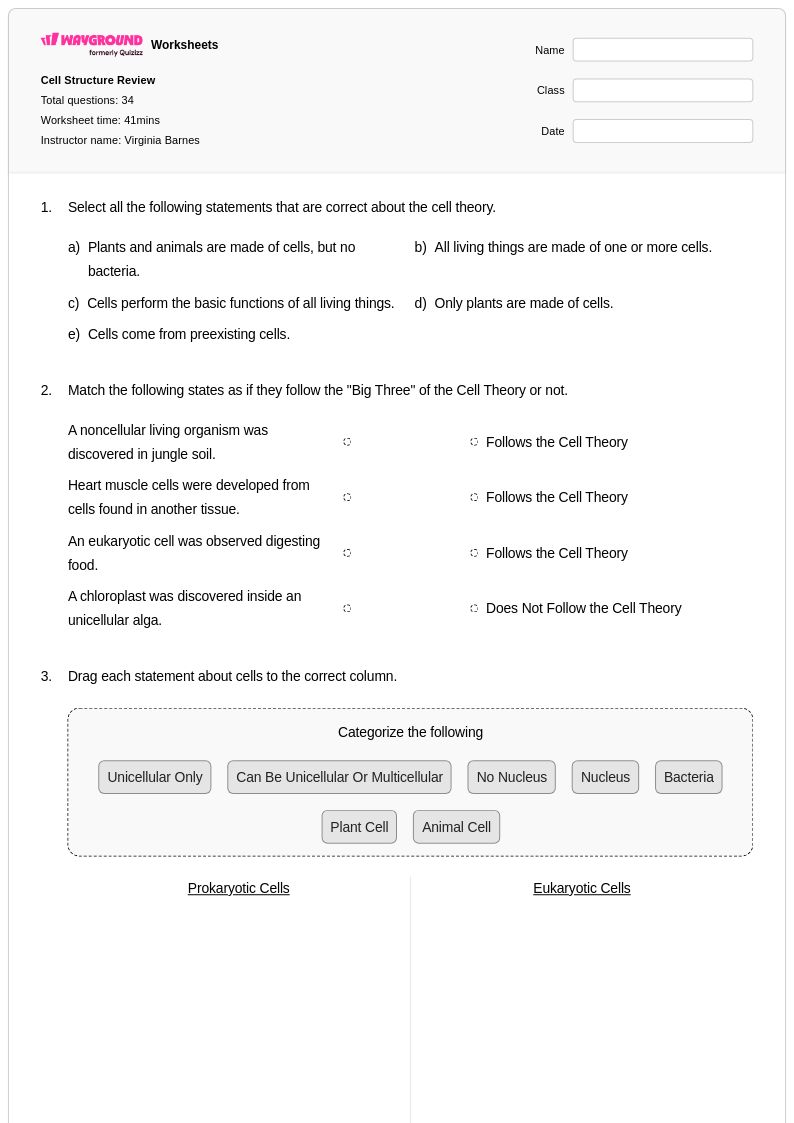
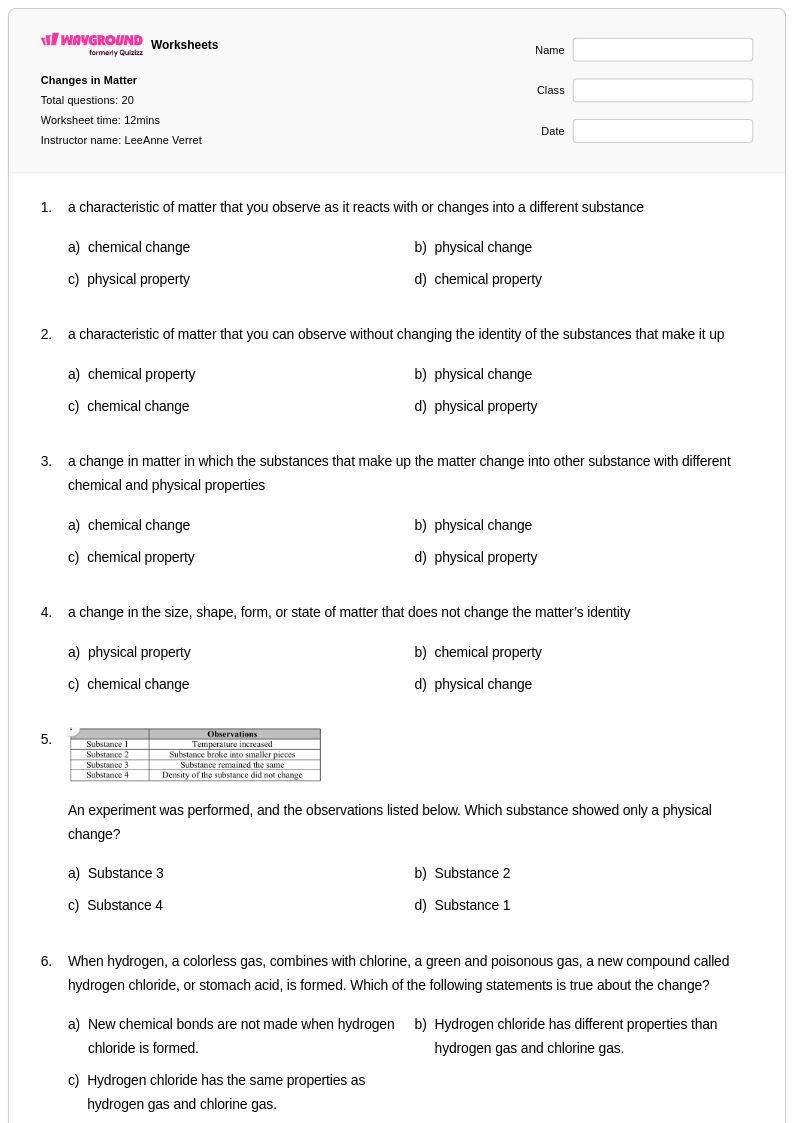
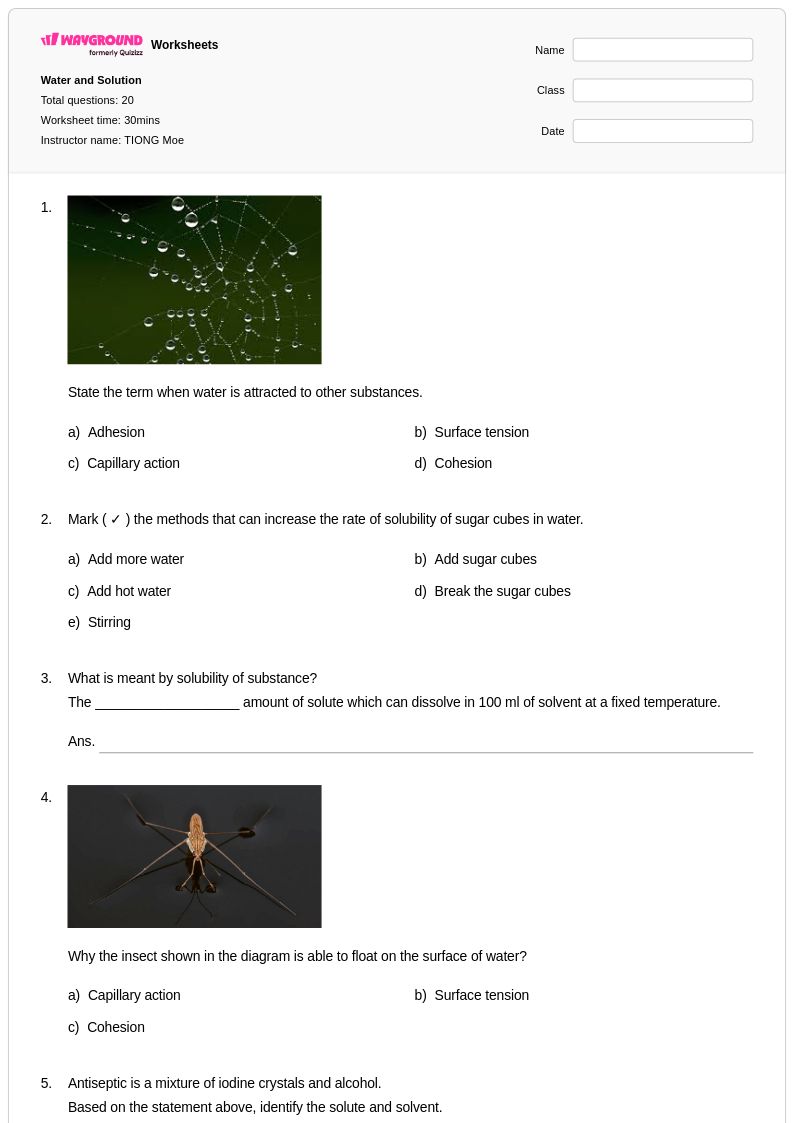
Explore Wayground's free Grade 7 alcohol chemistry worksheets and printables that help students learn about alcohols' properties, structures, and reactions through engaging practice problems with complete answer keys in PDF format.
Alcohol worksheets for Grade 7 students available through Wayground (formerly Quizizz) provide comprehensive coverage of this fundamental chemistry concept, helping young learners understand the properties, structure, and applications of alcohols in scientific contexts. These educational resources strengthen critical thinking skills as students explore the molecular composition of alcohols, their physical and chemical characteristics, and their role in everyday life and industrial processes. The carefully designed practice problems guide seventh-grade students through identifying different types of alcohols, understanding their naming conventions, and recognizing their uses in various chemical reactions. Each worksheet includes detailed answer keys that support both independent study and classroom instruction, while the free printable format ensures accessibility for all learning environments.
Wayground (formerly Quizizz) empowers educators with millions of teacher-created alcohol chemistry resources specifically tailored for Grade 7 instruction, featuring robust search and filtering capabilities that allow teachers to quickly locate materials aligned with their curriculum standards and learning objectives. The platform's differentiation tools enable instructors to customize worksheets based on individual student needs, supporting both remediation for struggling learners and enrichment opportunities for advanced students. Available in both printable pdf format and interactive digital versions, these resources streamline lesson planning while providing flexible options for skill practice, formative assessment, and reinforcement activities. Teachers can efficiently modify content difficulty, adjust problem complexity, and create targeted practice sessions that address specific learning gaps or extend student understanding of alcohol chemistry concepts.
FAQs
How do I teach alcohol nomenclature and classification to chemistry students?
Start by grounding students in the hydroxyl functional group (-OH) as the defining feature of alcohols, then build toward IUPAC naming rules by identifying the longest carbon chain and the position of the -OH group. Introduce the classification of primary, secondary, and tertiary alcohols by having students count the carbon atoms directly bonded to the carbon bearing the -OH group. Visual structural formulas are especially effective here, as they make the classification logic concrete before students move on to naming reactions or predicting chemical behavior.
What exercises help students practice identifying alcohol functional groups and structural formulas?
Exercises that ask students to draw or interpret structural formulas and circle the hydroxyl group are highly effective for building functional group recognition. Practice problems that require students to classify a given alcohol as primary, secondary, or tertiary, and then apply IUPAC nomenclature, reinforce both identification and naming skills simultaneously. Adding problems that involve oxidation products, such as converting a primary alcohol to an aldehyde or carboxylic acid, extends practice into reaction prediction and deepens conceptual understanding.
What common mistakes do students make when learning about alcohol chemistry?
A frequent error is confusing the classification of alcohols: students often miscount the carbons attached to the carbon bearing the -OH group, leading to incorrect primary, secondary, or tertiary labels. Another common misconception is assuming that all alcohols behave the same way in oxidation reactions, when in fact tertiary alcohols resist oxidation under typical conditions. Students also frequently struggle with esterification, sometimes confusing it with simple acid-base neutralization rather than recognizing it as a condensation reaction that produces water.
How do I use alcohol chemistry worksheets in my classroom?
Alcohol chemistry worksheets work well as structured practice following direct instruction on nomenclature, functional groups, or specific reaction types such as oxidation or dehydration. Each worksheet includes a detailed answer key, supporting independent practice, peer review, or self-assessment without requiring additional teacher preparation. The worksheets are available as printable PDFs for traditional classroom use and in digital formats for technology-integrated environments, and teachers can also host them as a quiz directly on Wayground to collect student responses and monitor progress.
How can I differentiate alcohol chemistry worksheets for students at different skill levels?
For students who need additional support, Wayground allows teachers to enable reduced answer choices, which lowers cognitive load for struggling learners without alerting other students. Read Aloud support can be activated for students who benefit from audio delivery of question text, and extended time can be configured individually so that each student receives an appropriate pacing accommodation. Advanced learners can be assigned problems focused on multi-step reactions such as esterification or dehydration, while students still developing foundational skills work through classification and naming exercises at their own level.
What key alcohol chemistry concepts should students master before moving to more advanced organic chemistry topics?
Before progressing to more complex organic chemistry, students should be able to identify the hydroxyl functional group, apply IUPAC nomenclature to name alcohols accurately, and classify alcohols as primary, secondary, or tertiary based on molecular structure. A solid understanding of how alcohols participate in oxidation, dehydration, and esterification reactions is also essential, as these reaction types recur throughout organic chemistry. Students who can predict reaction products and write structural formulas confidently are well-positioned to tackle more advanced topics such as ethers, carbonyl compounds, and carboxylic acid derivatives.