
10 Q
4th - 6th
26 Q
6th - 8th
20 Q
6th - 8th
20 Q
5th - Uni
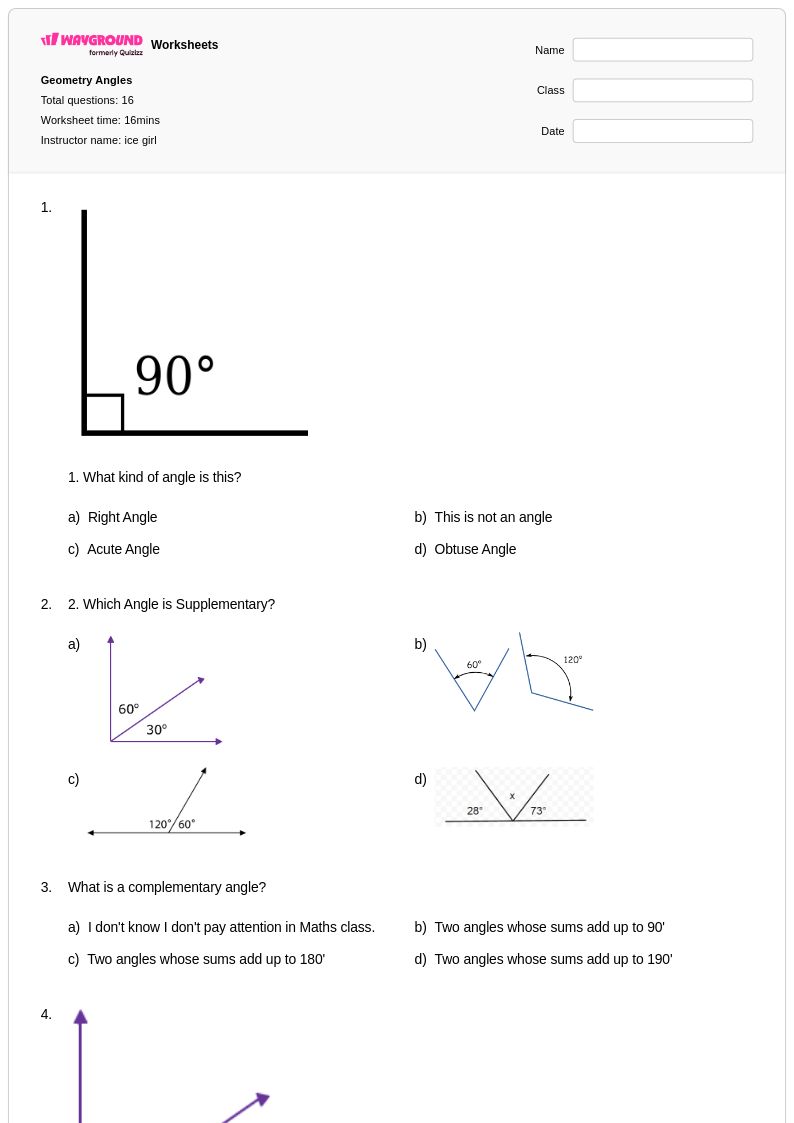
16 Q
5th - 6th
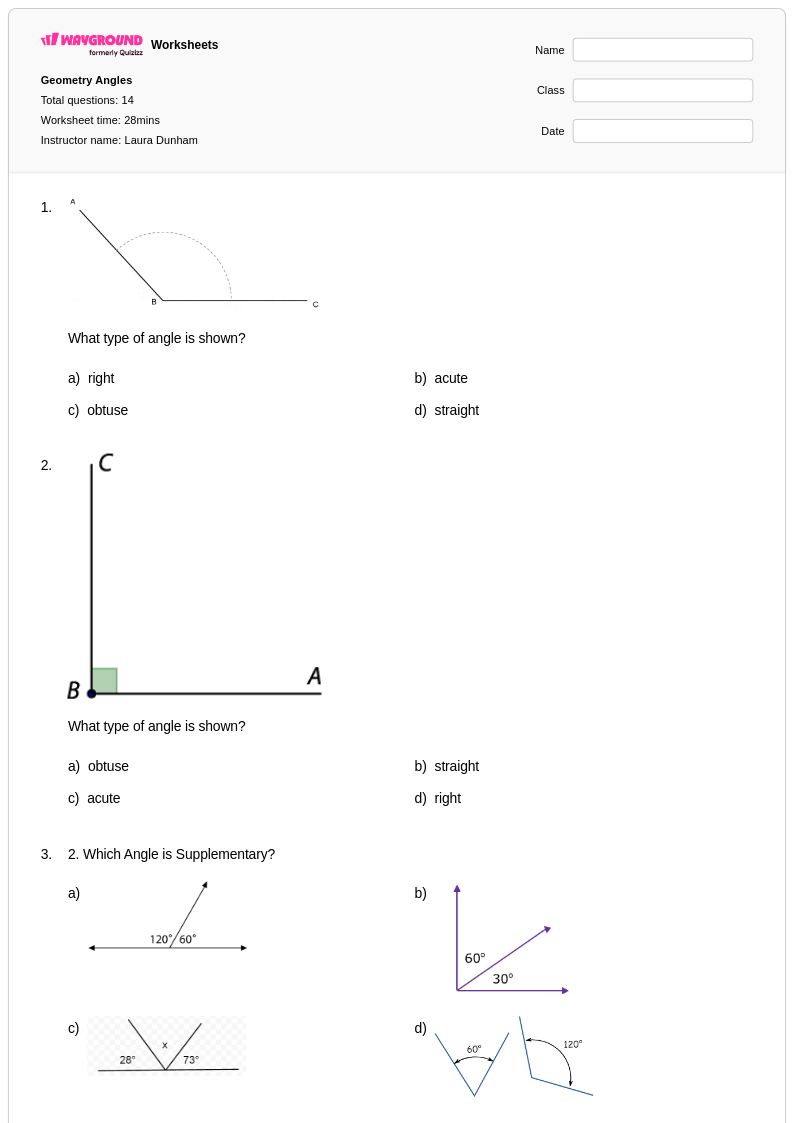
14 Q
6th - 8th
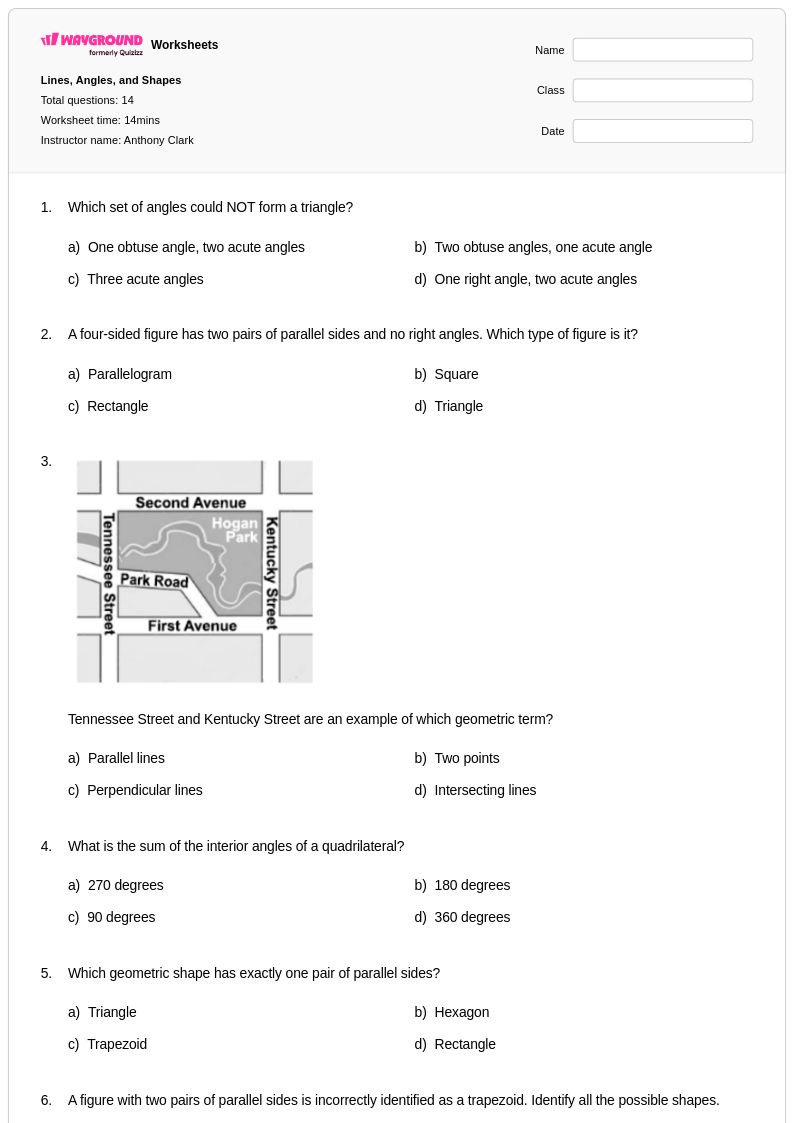
14 Q
4th - Uni
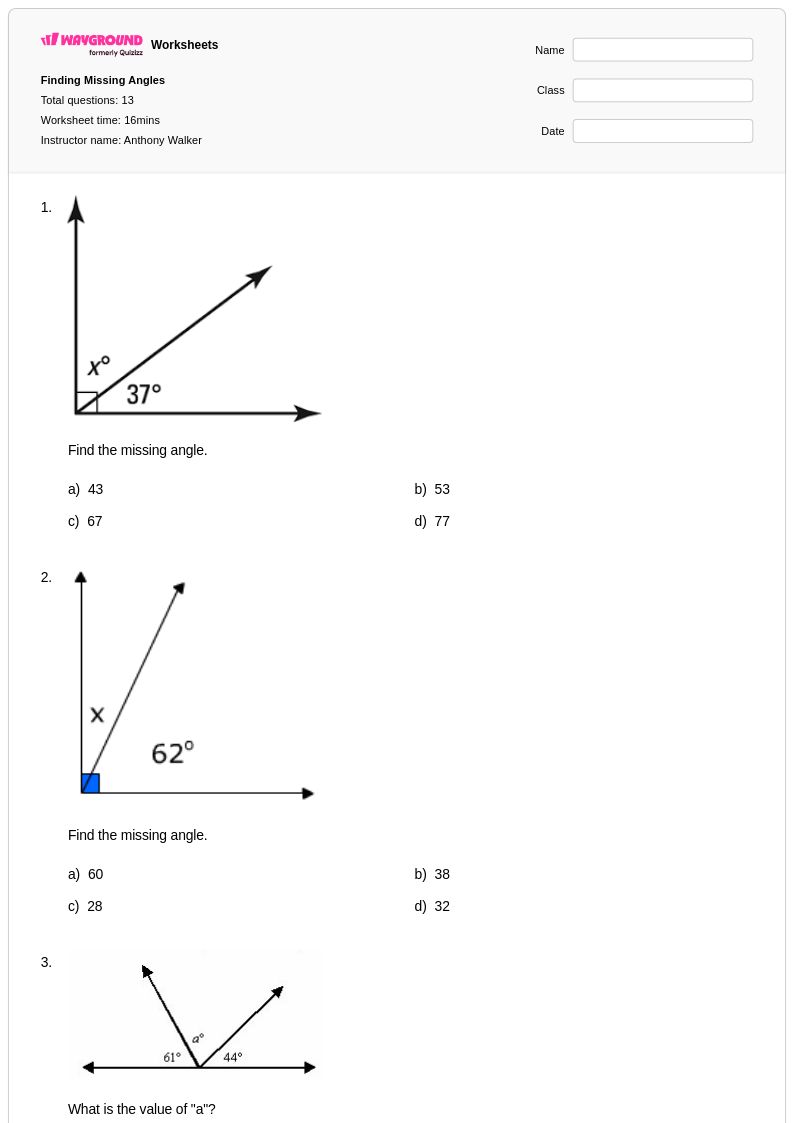
13 Q
6th - 12th
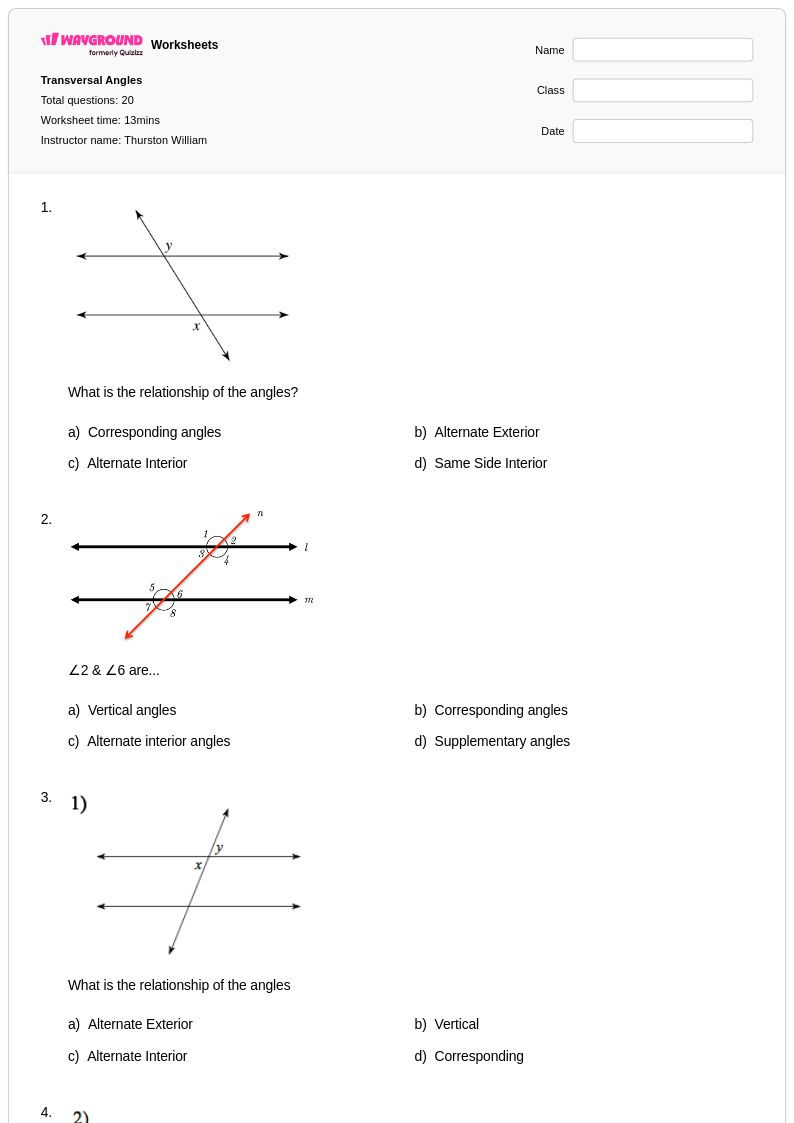
20 Q
6th - 8th
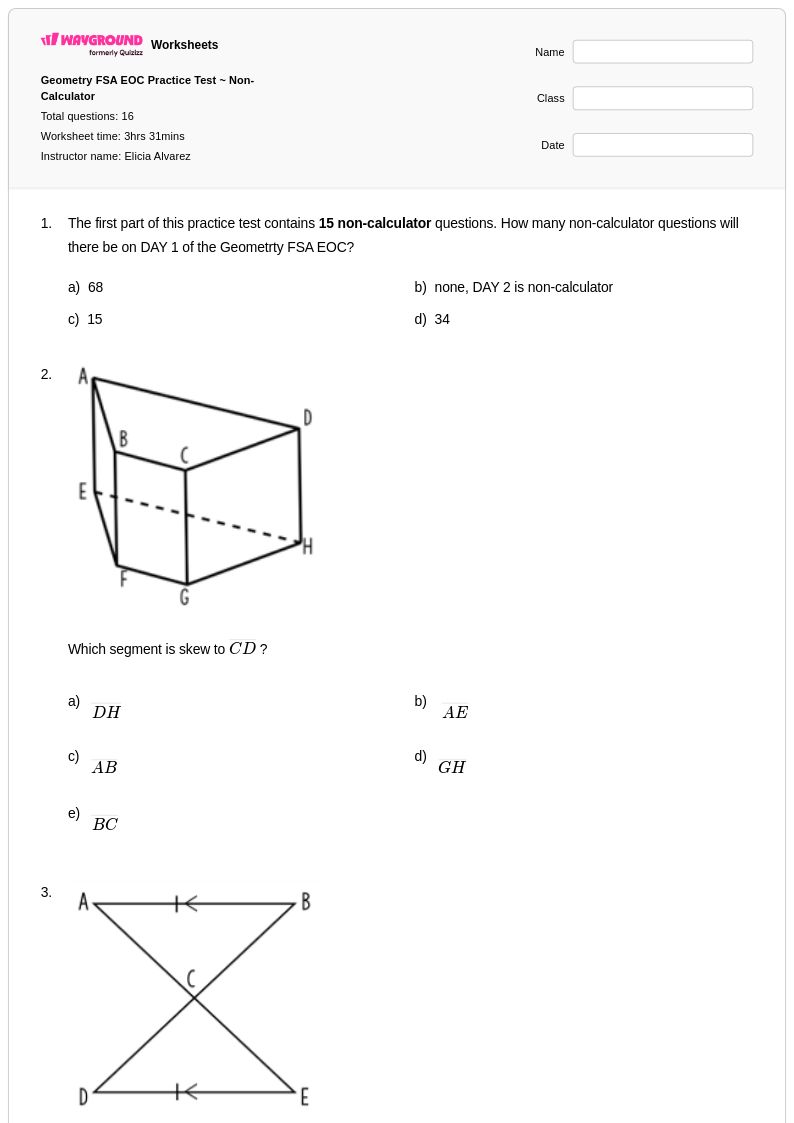
16 Q
6th - 12th
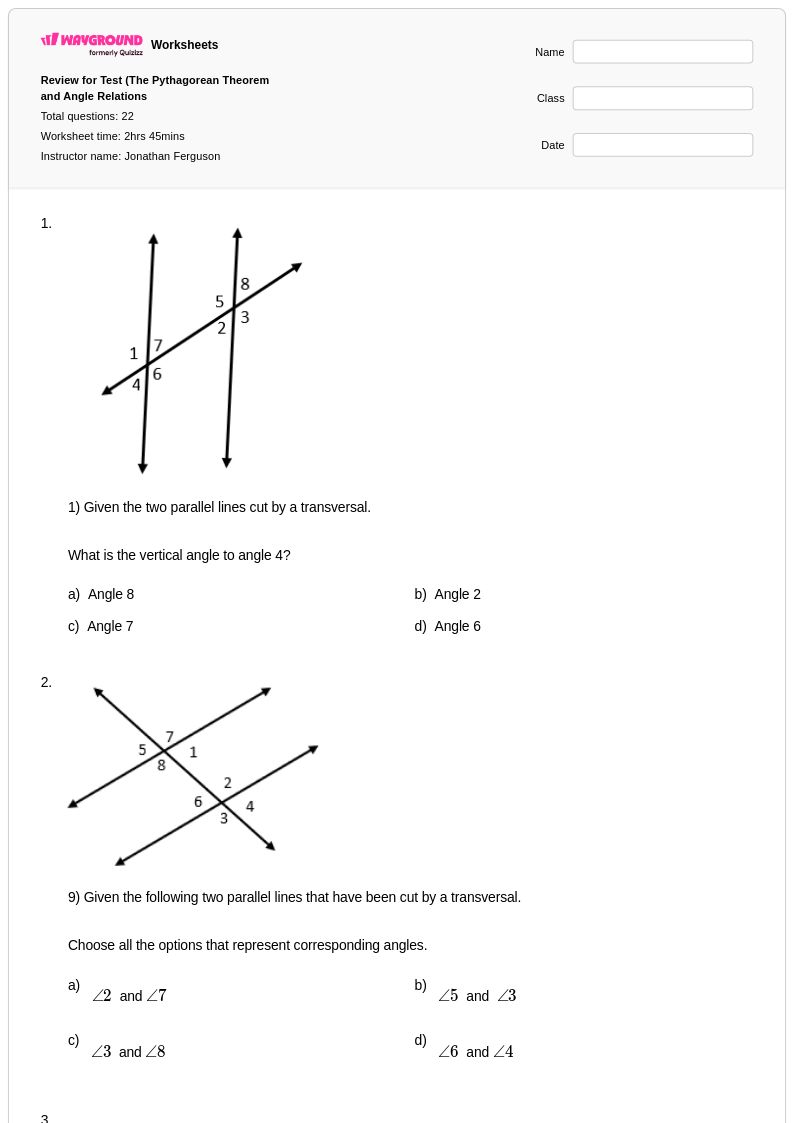
22 Q
6th - 10th
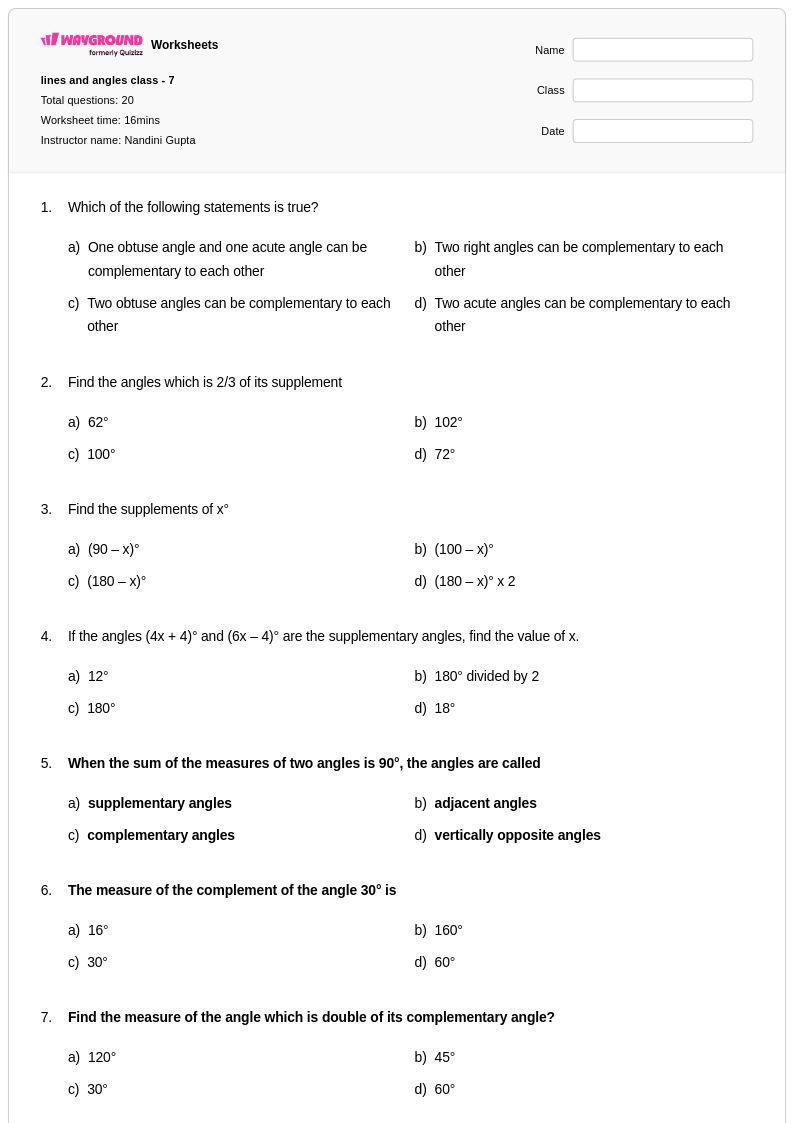
20 Q
5th - 8th
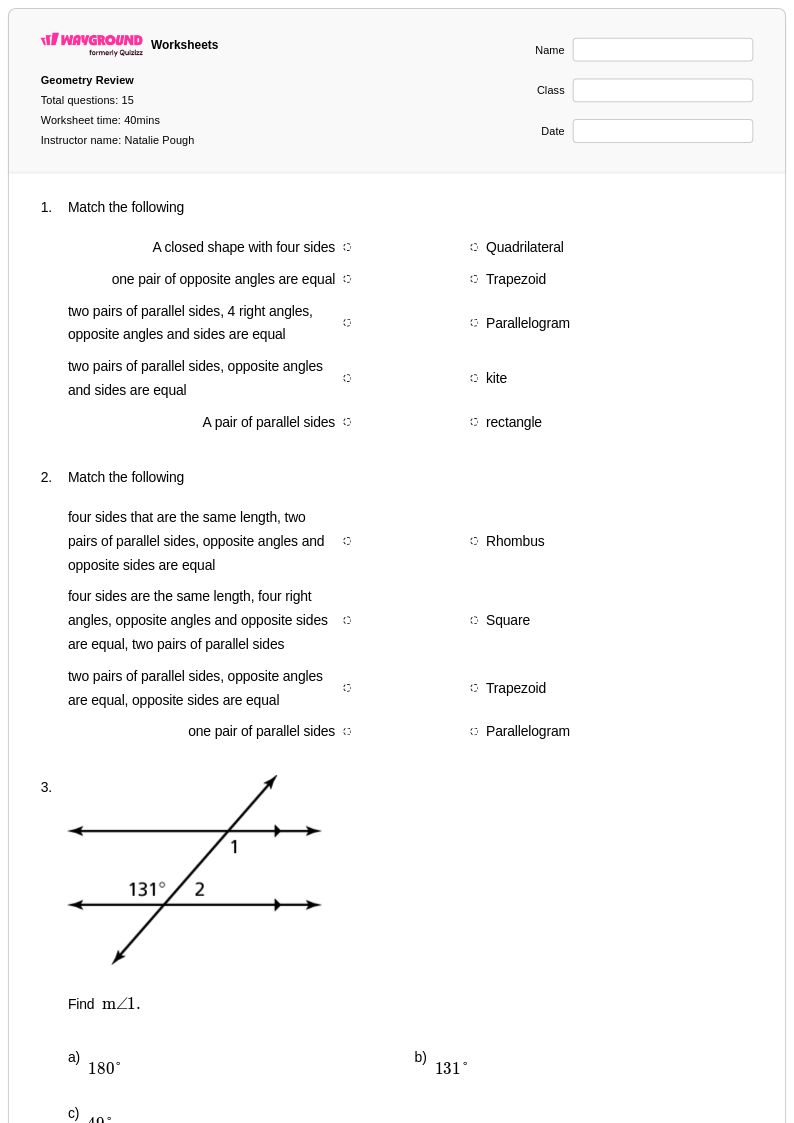
15 Q
6th - 8th
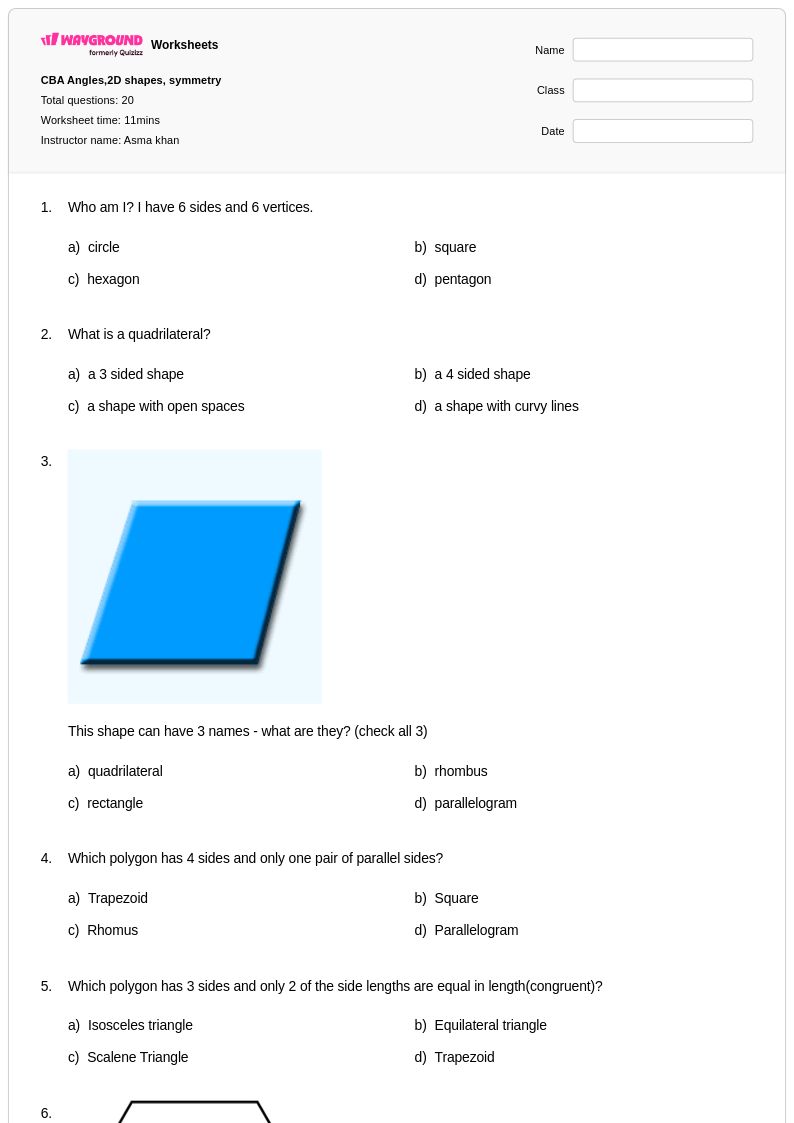
20 Q
6th
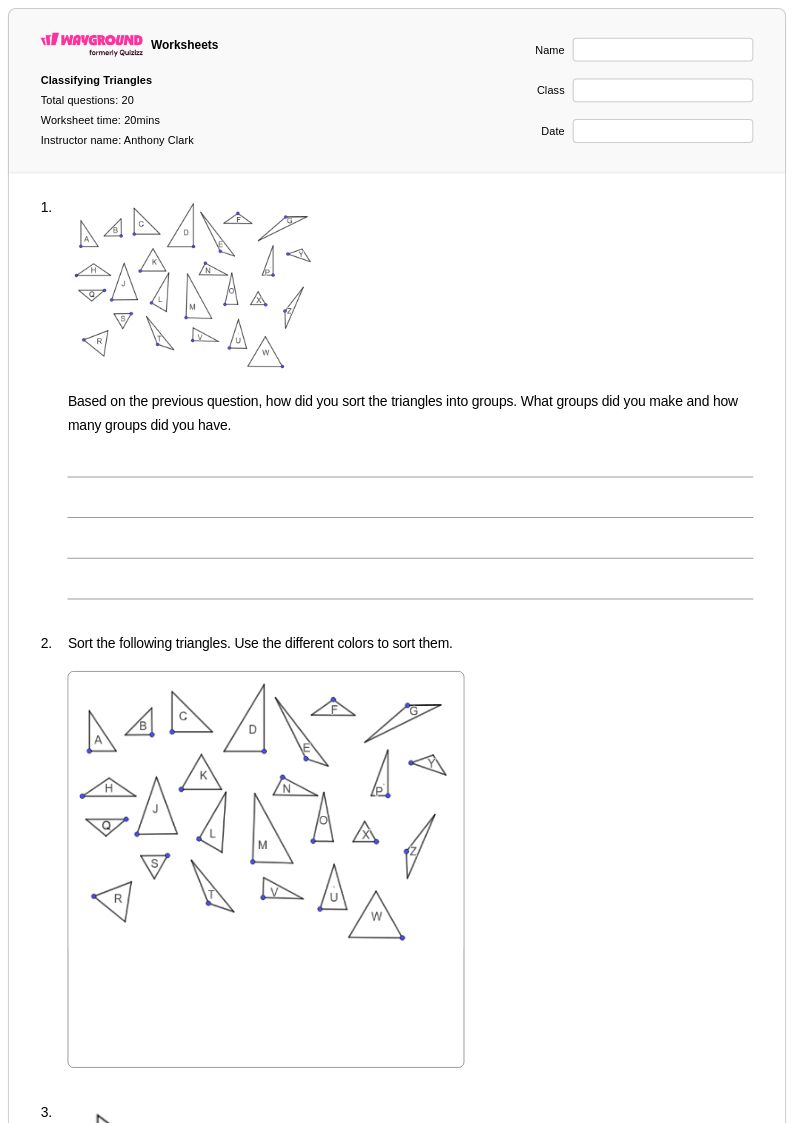
20 Q
5th - Uni
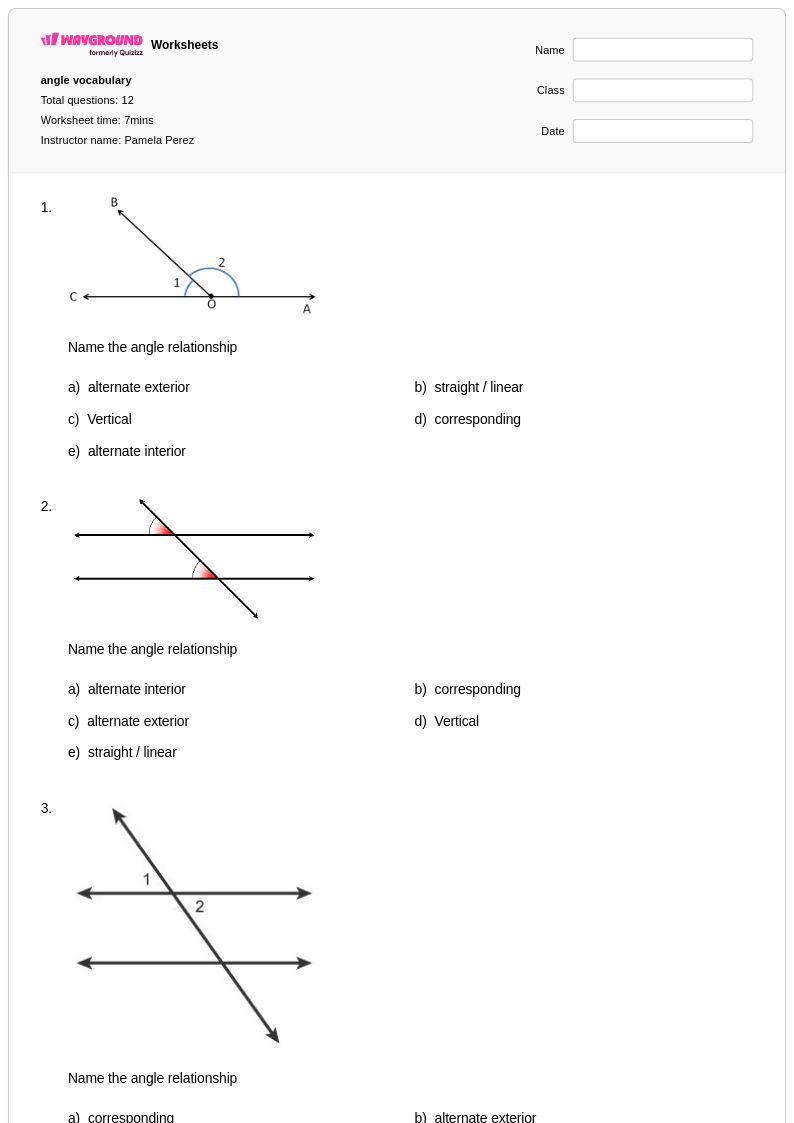
12 Q
6th - 10th
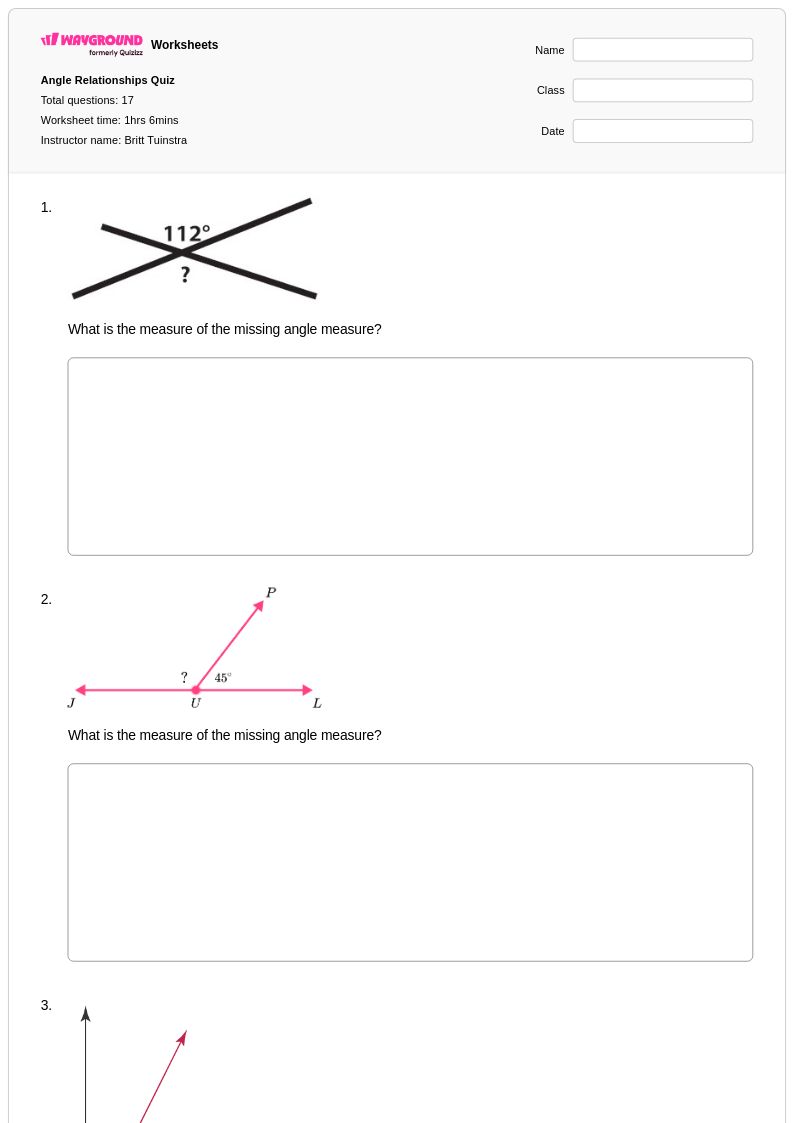
17 Q
6th - 8th
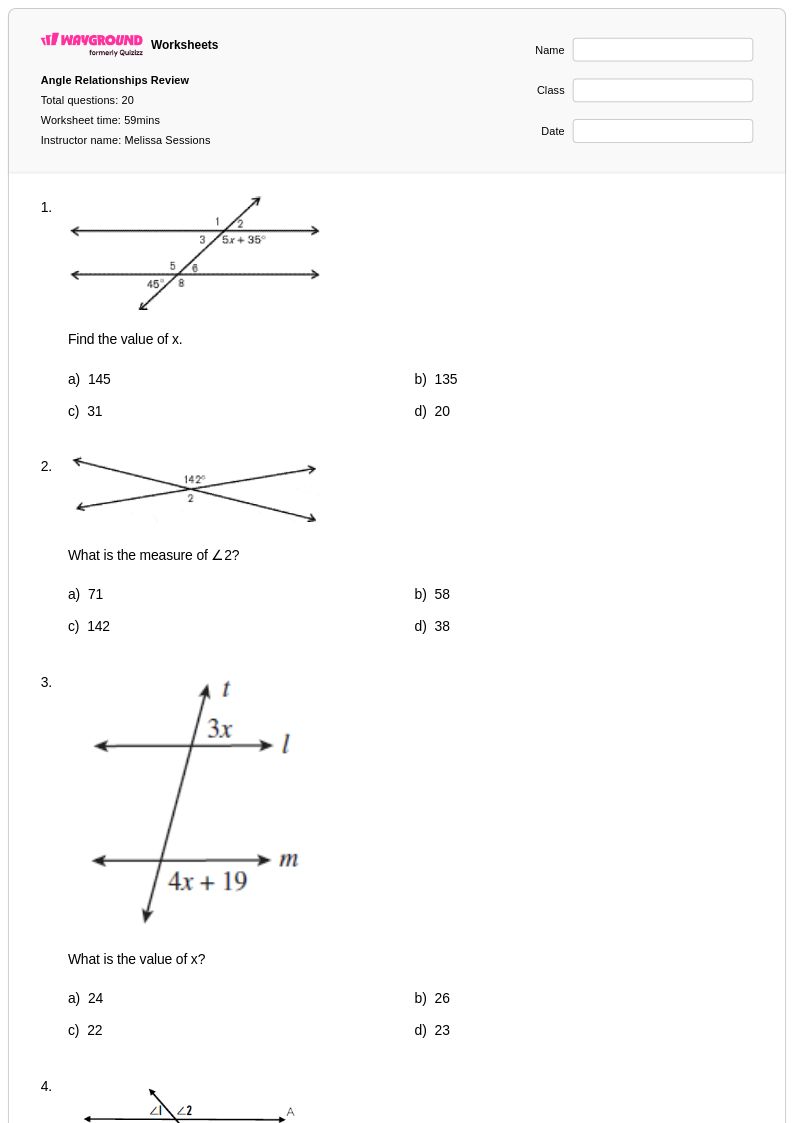
20 Q
6th - 8th
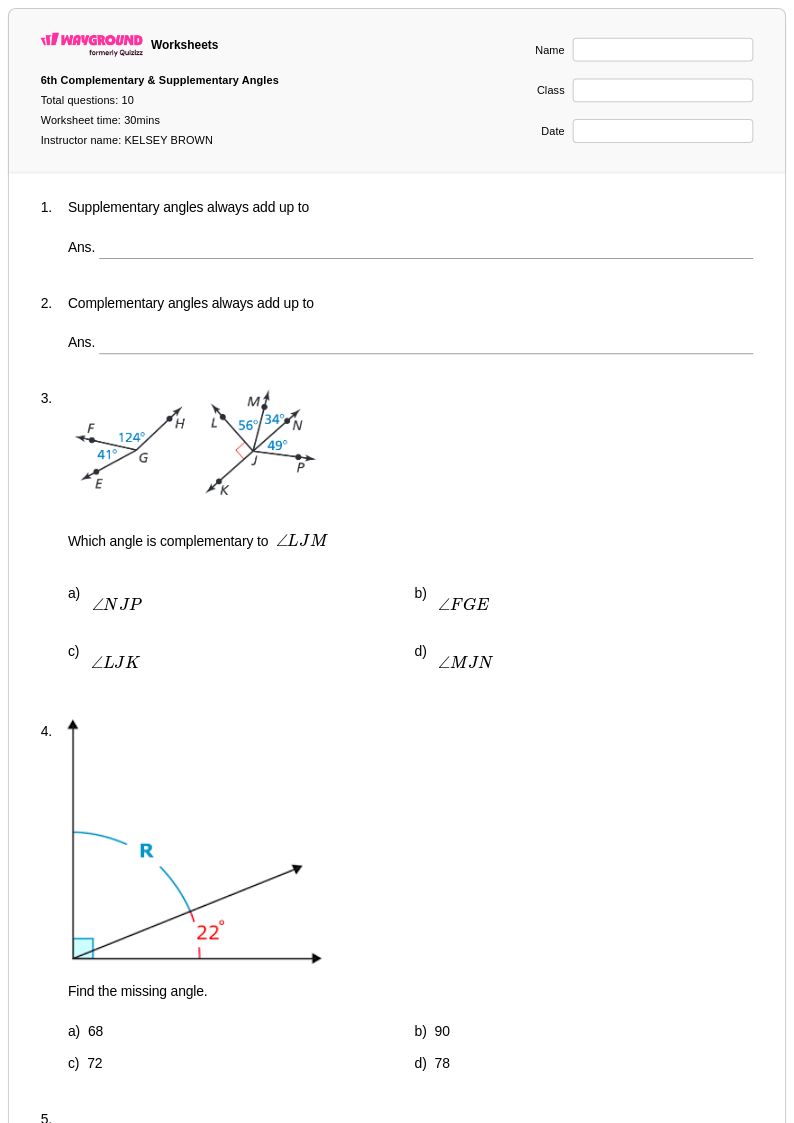
10 Q
6th - 7th
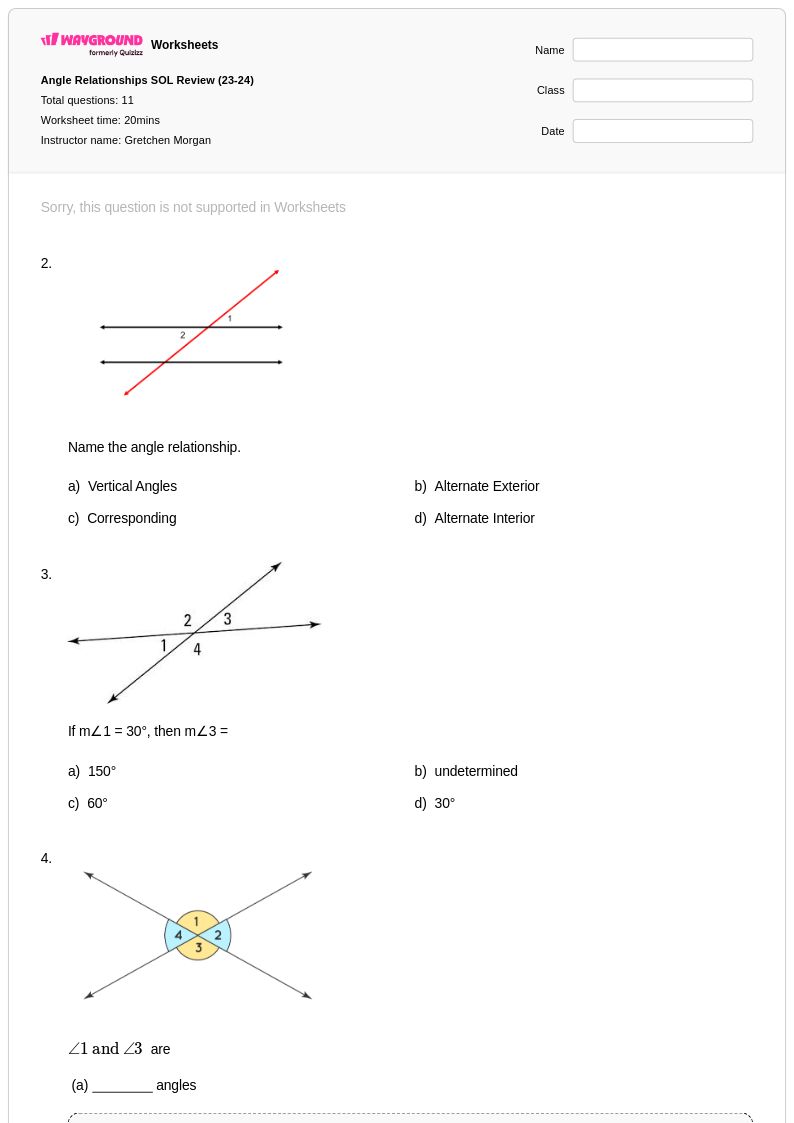
21 Q
6th - 8th
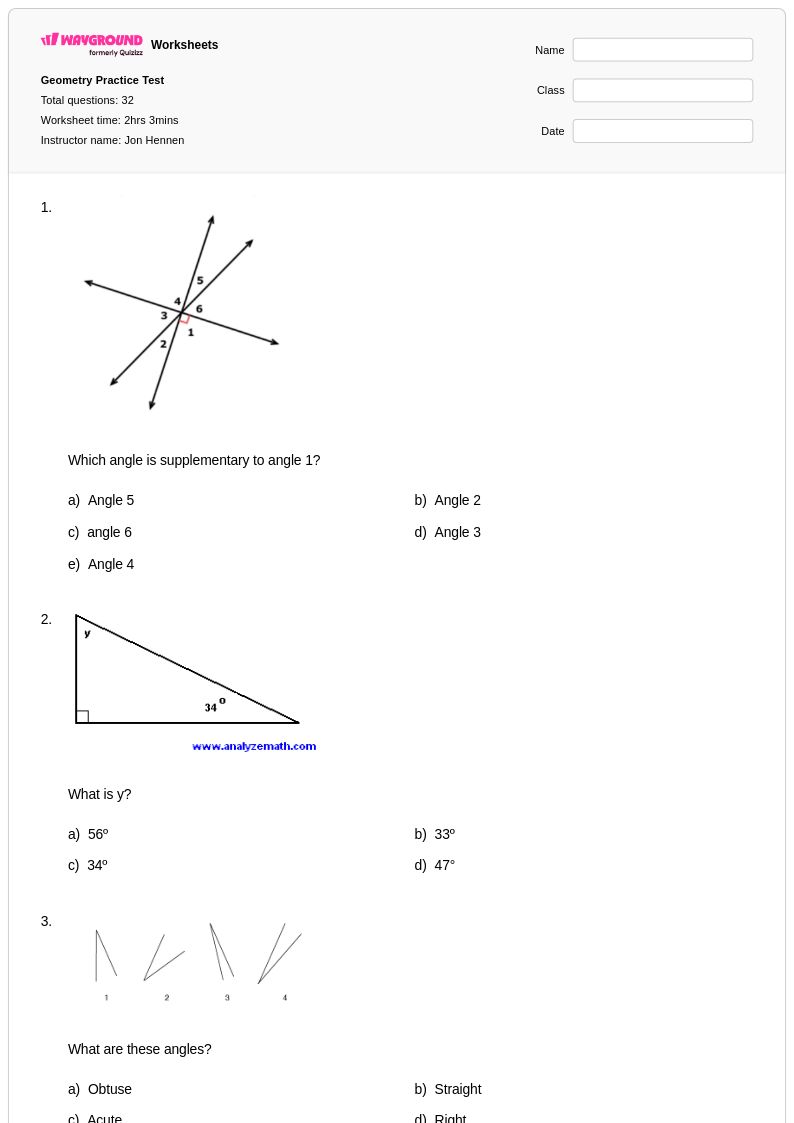
32 Q
6th
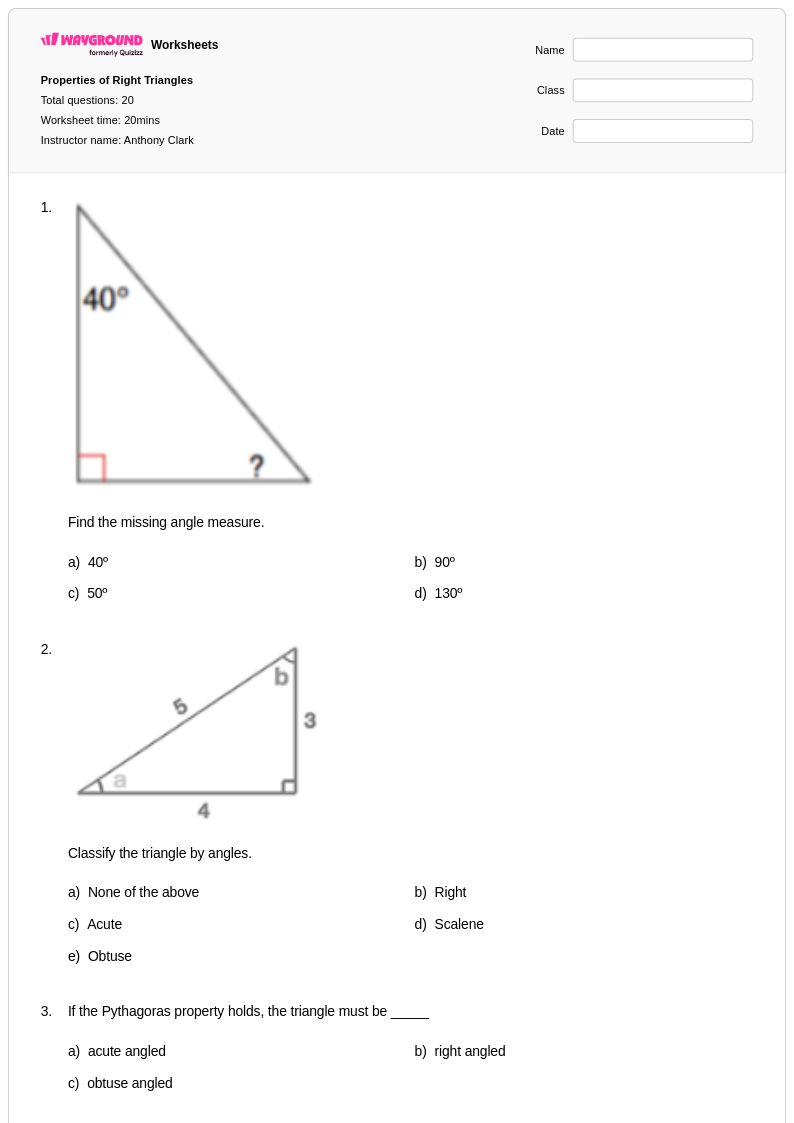
20 Q
6th - Uni
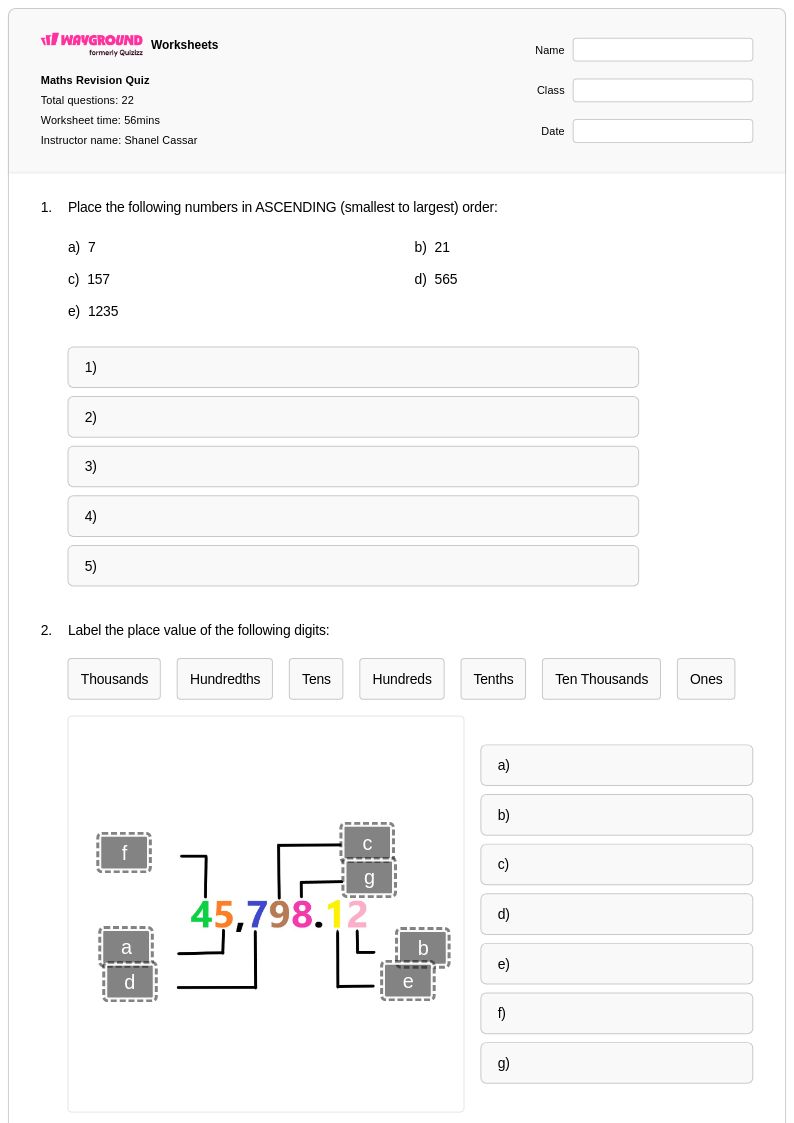
22 Q
6th
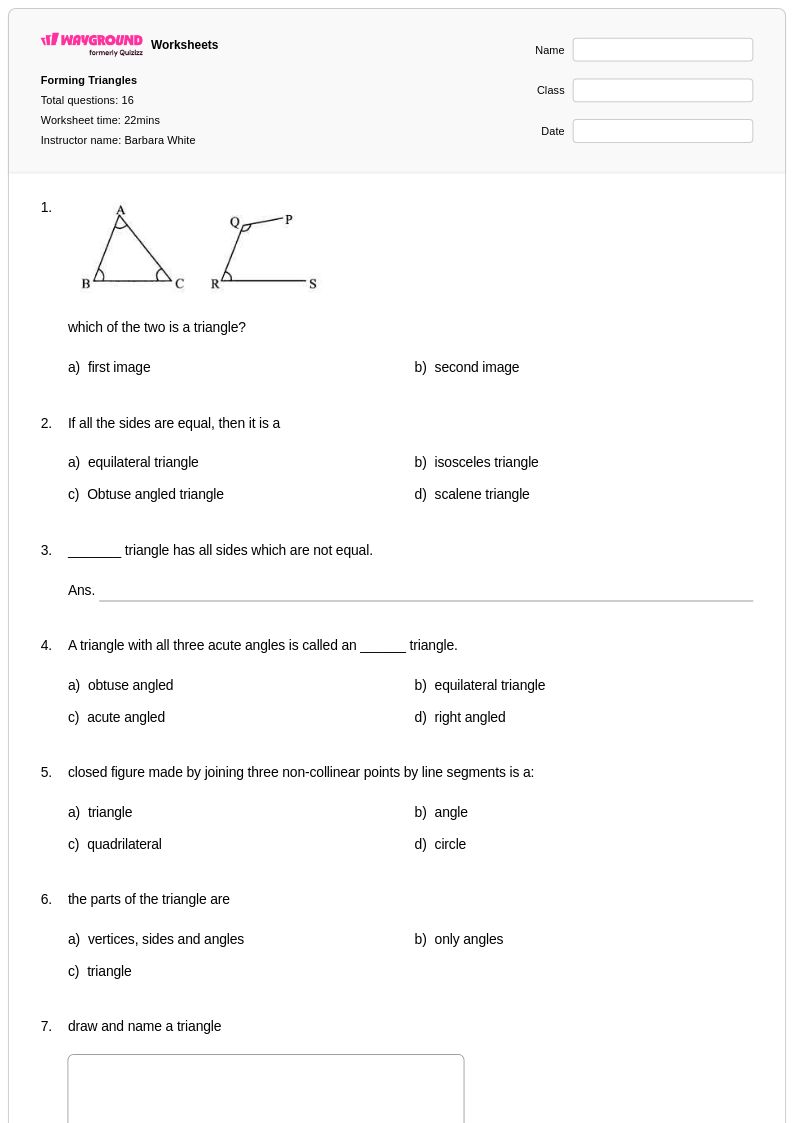
16 Q
6th
Explore Other Subject Worksheets for grade 6
Explore printable Angle Sums worksheets for Grade 6
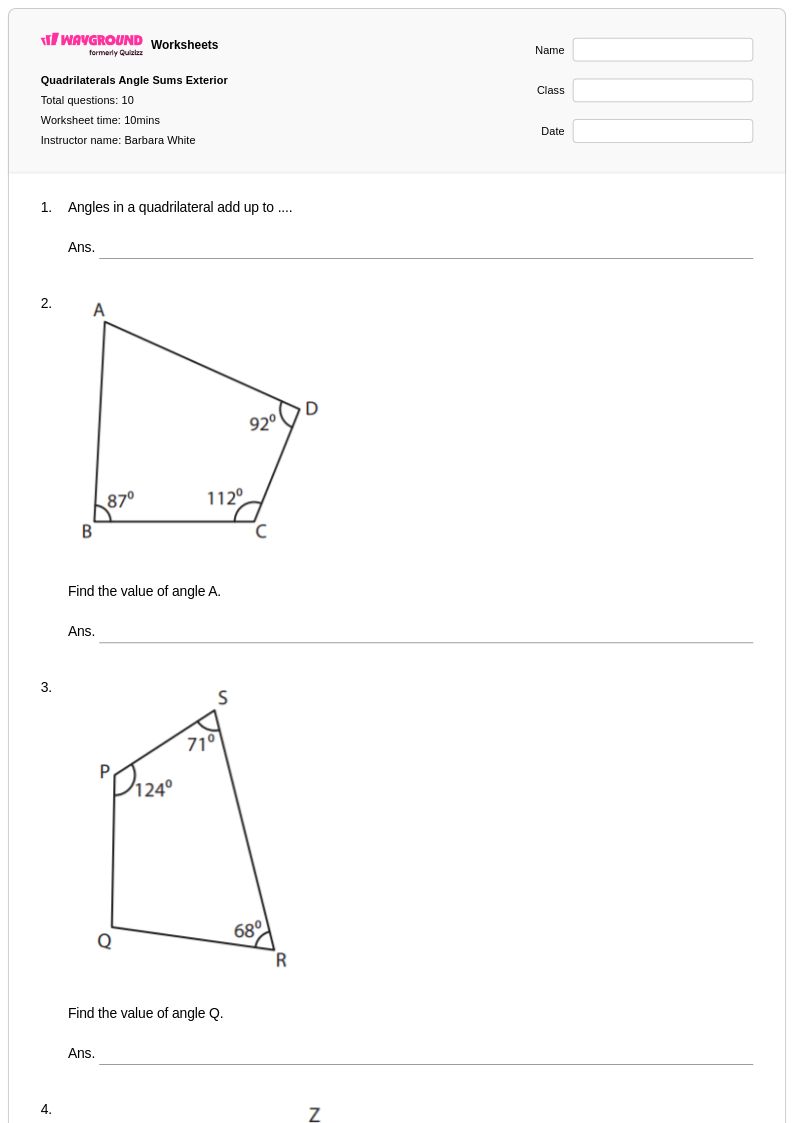
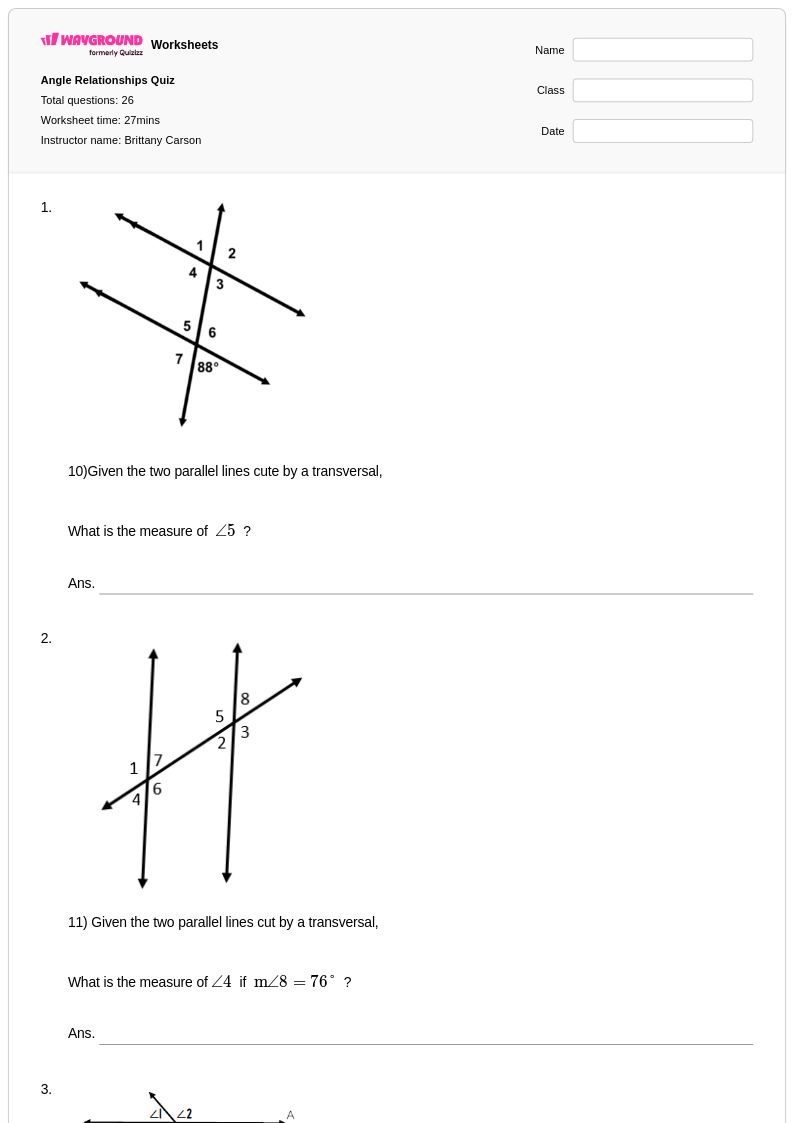
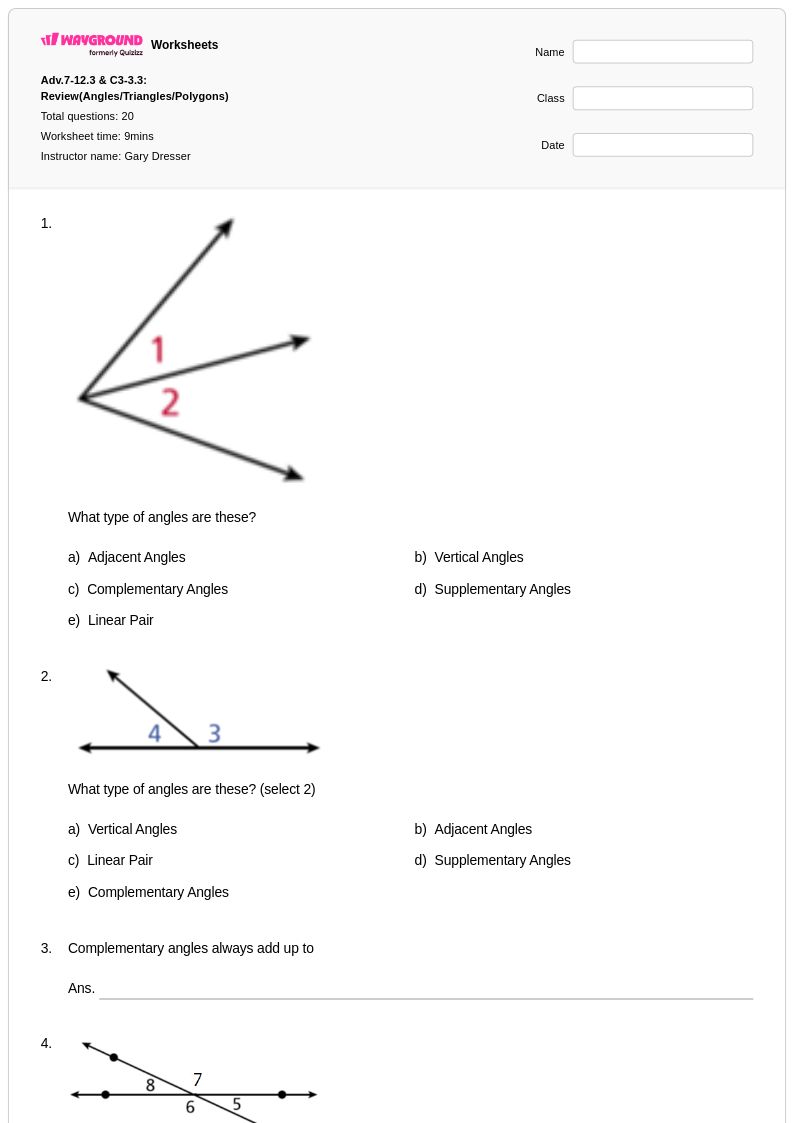
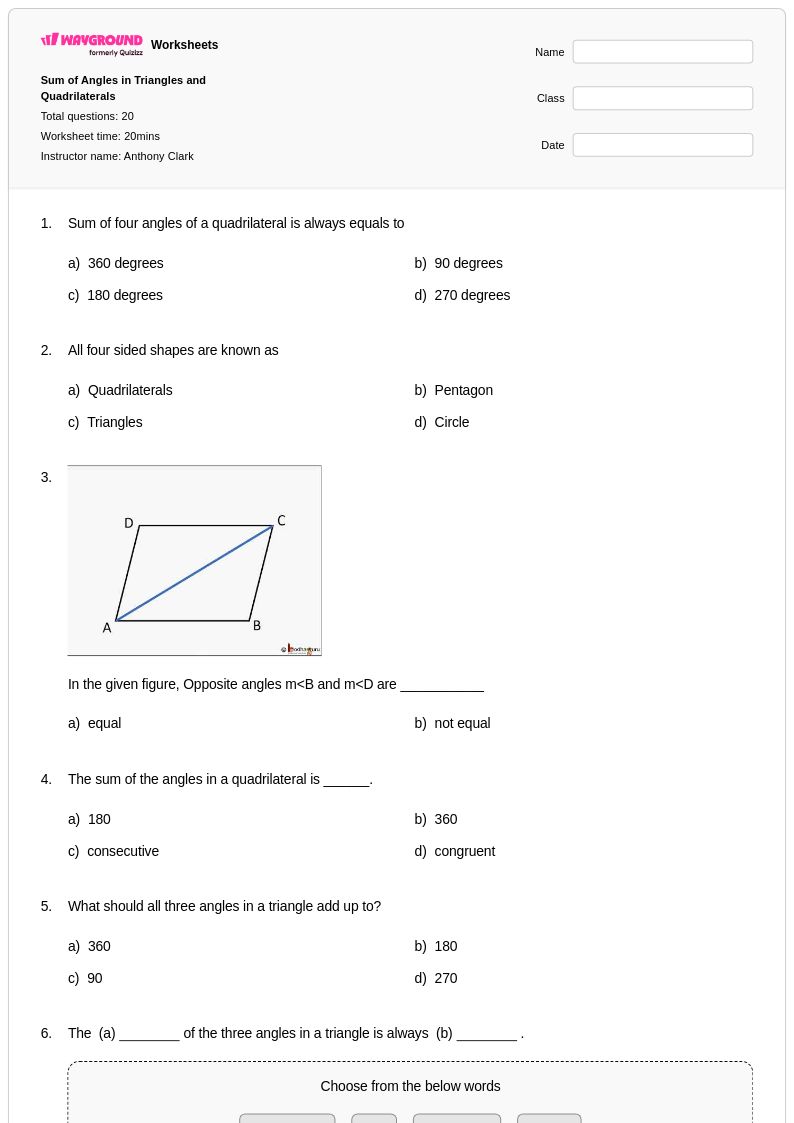
Angle sums worksheets for Grade 6 students available through Wayground (formerly Quizizz) provide comprehensive practice with fundamental geometric concepts that form the foundation for advanced mathematical reasoning. These carefully designed resources help students master essential skills including calculating interior angles of triangles, understanding the 180-degree rule, finding missing angles in polygons, and applying angle relationships in complex geometric figures. The worksheets feature progressively challenging practice problems that guide students from basic angle identification to multi-step problem solving, with each resource including detailed answer keys to support independent learning and immediate feedback. Teachers can access these materials as free printables in convenient PDF format, making it easy to incorporate targeted angle sum practice into classroom instruction, homework assignments, or assessment preparation.
Wayground (formerly Quizizz) empowers educators with access to millions of teacher-created angle sum resources that can be seamlessly integrated into Grade 6 mathematics curricula. The platform's robust search and filtering capabilities allow teachers to quickly locate worksheets aligned with specific educational standards, while differentiation tools enable customization based on individual student needs and learning objectives. These comprehensive collections are available in both printable and digital formats, including downloadable PDFs, providing flexibility for various classroom environments and teaching styles. Teachers can efficiently plan targeted interventions for students struggling with angle concepts, create enrichment activities for advanced learners, or develop systematic skill-building sequences that reinforce geometric reasoning abilities, all while drawing from a vast library of expertly crafted materials that support effective mathematics instruction.
FAQs
How do I teach angle sums to sixth graders?
What exercises help Grade 6 students practice angle sums?
What mistakes do students make when finding missing angles?
How can I use these Grade 6 angle sums worksheets in class?
How do angle sums fit into the Grade 6 Common Core math progression?
How can I differentiate angle-sum practice for a mixed-ability class?
Is this angle sums worksheet appropriate for Grade 6?