
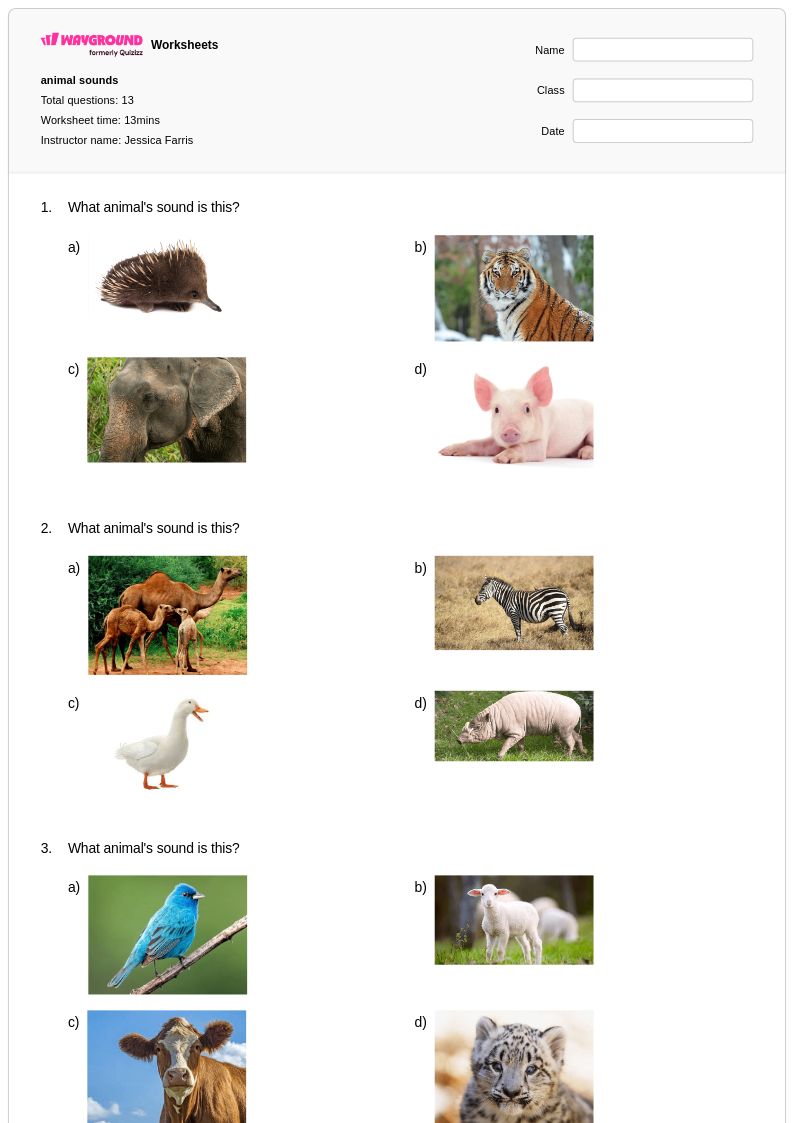
13Q
KG - 1st
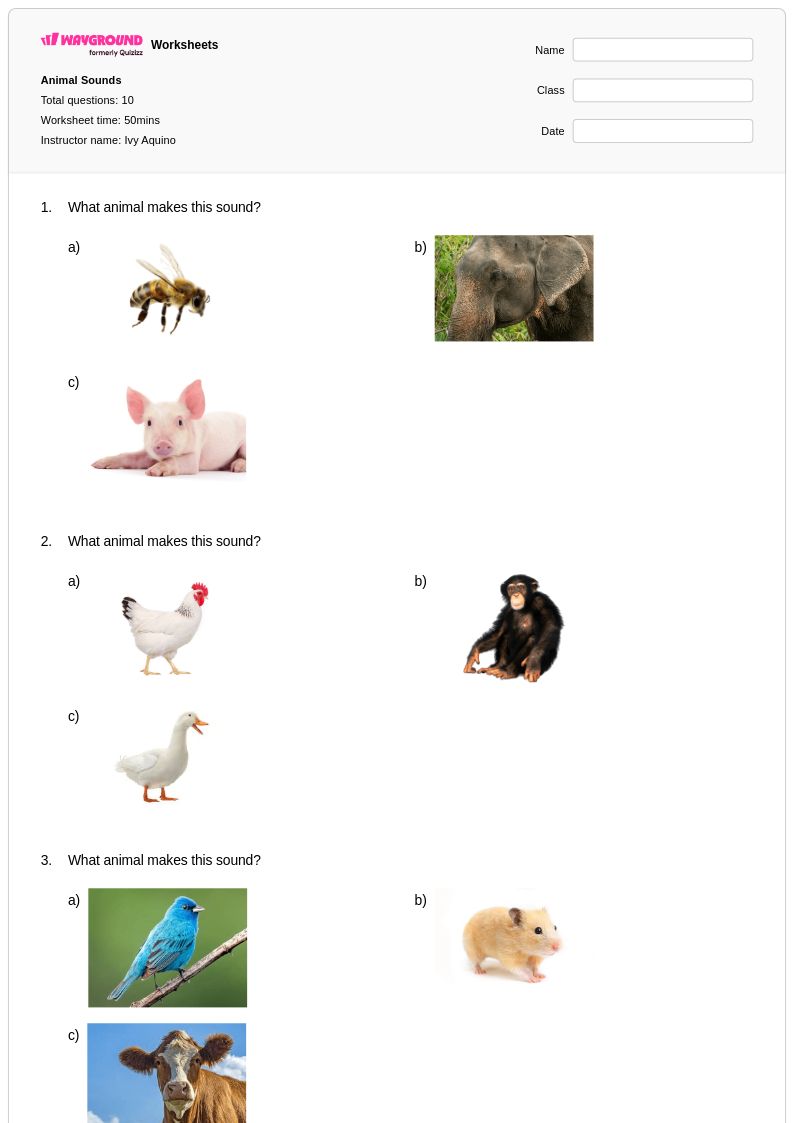
10Q
KG - 1st
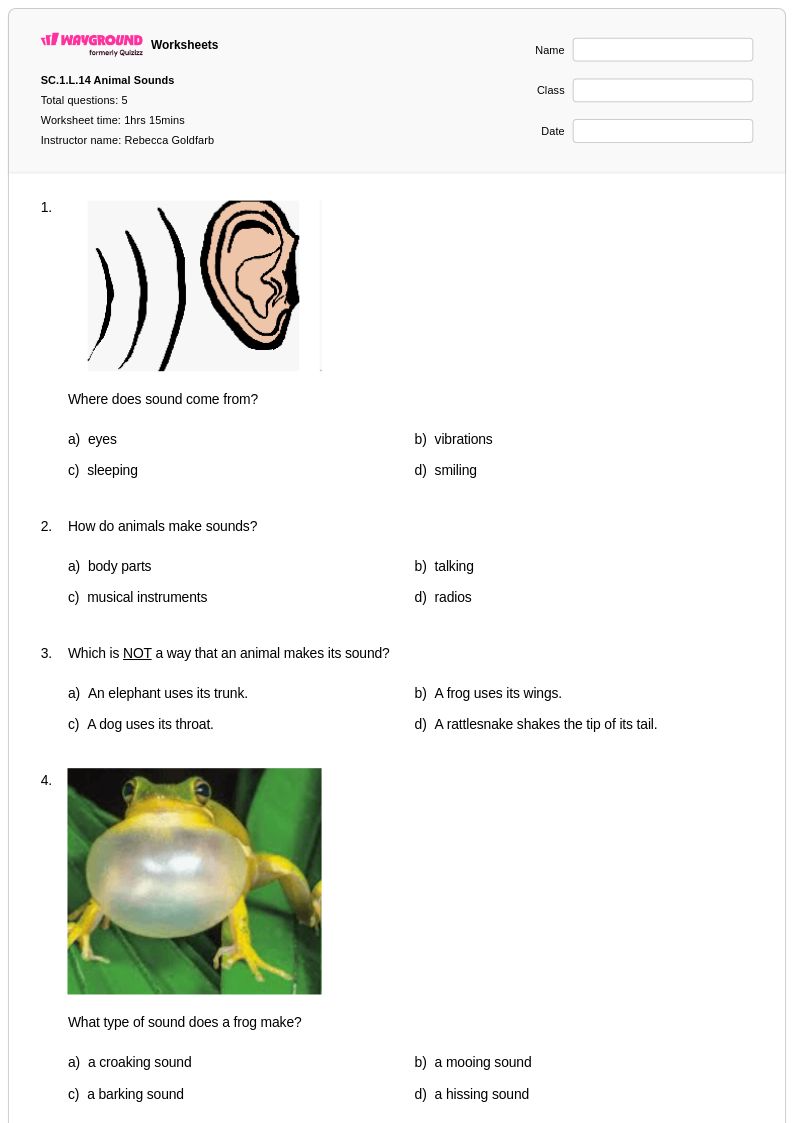
5Q
1st
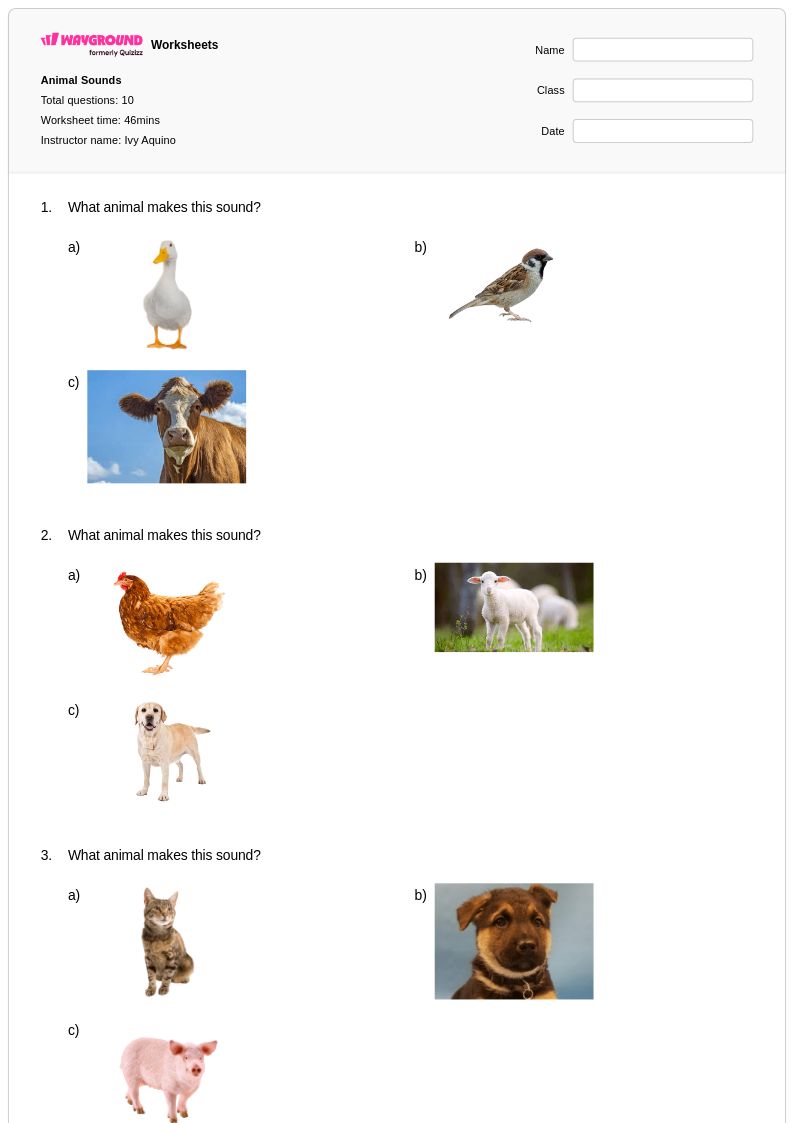
10Q
KG - 1st
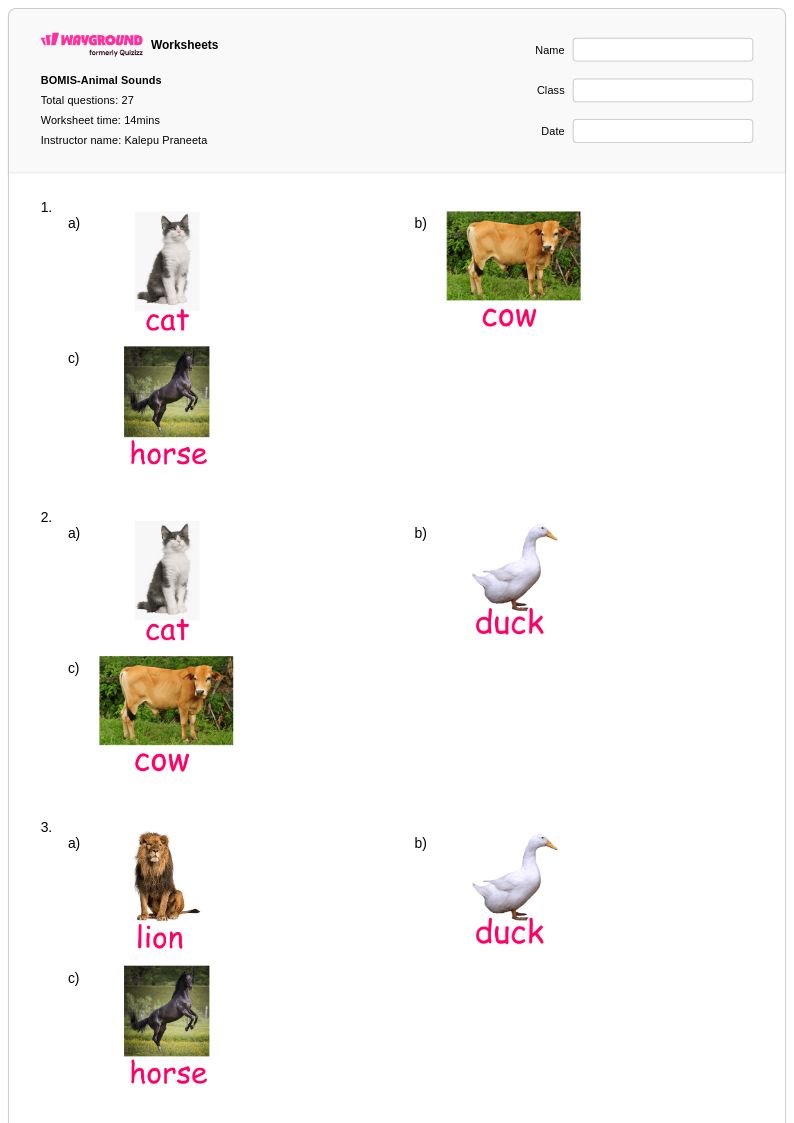
27Q
KG - 2nd
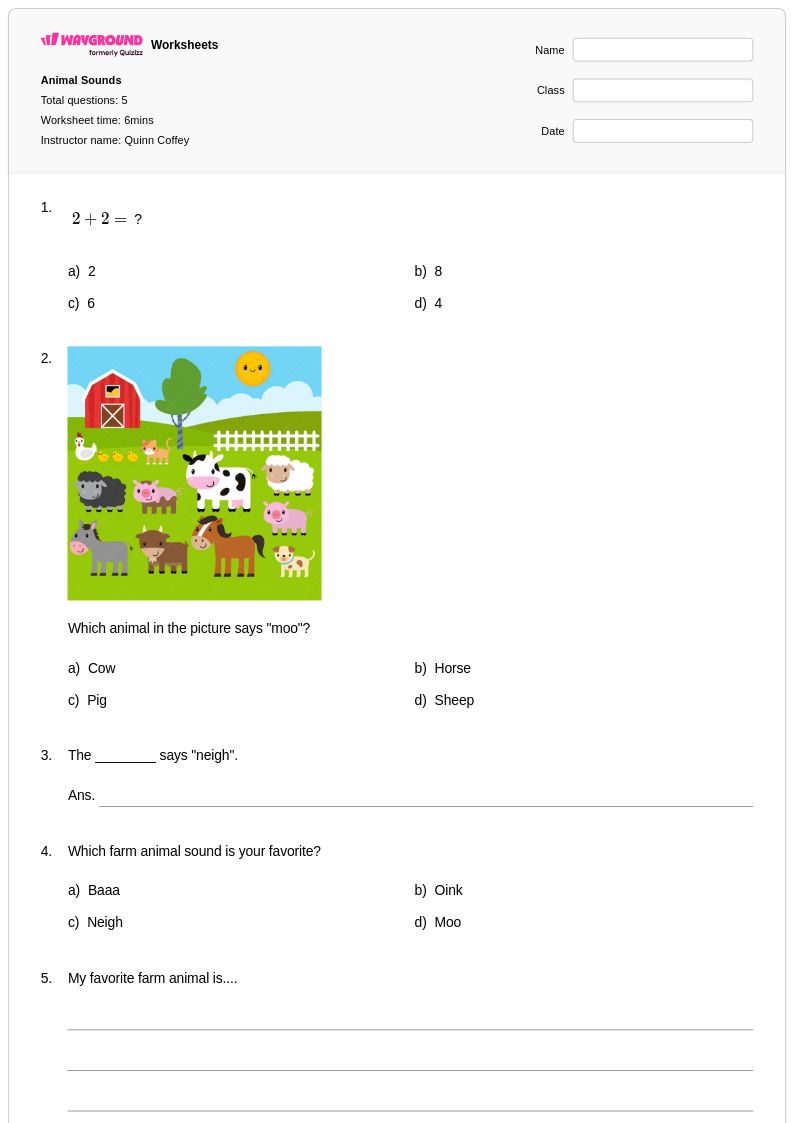
5Q
KG - 2nd
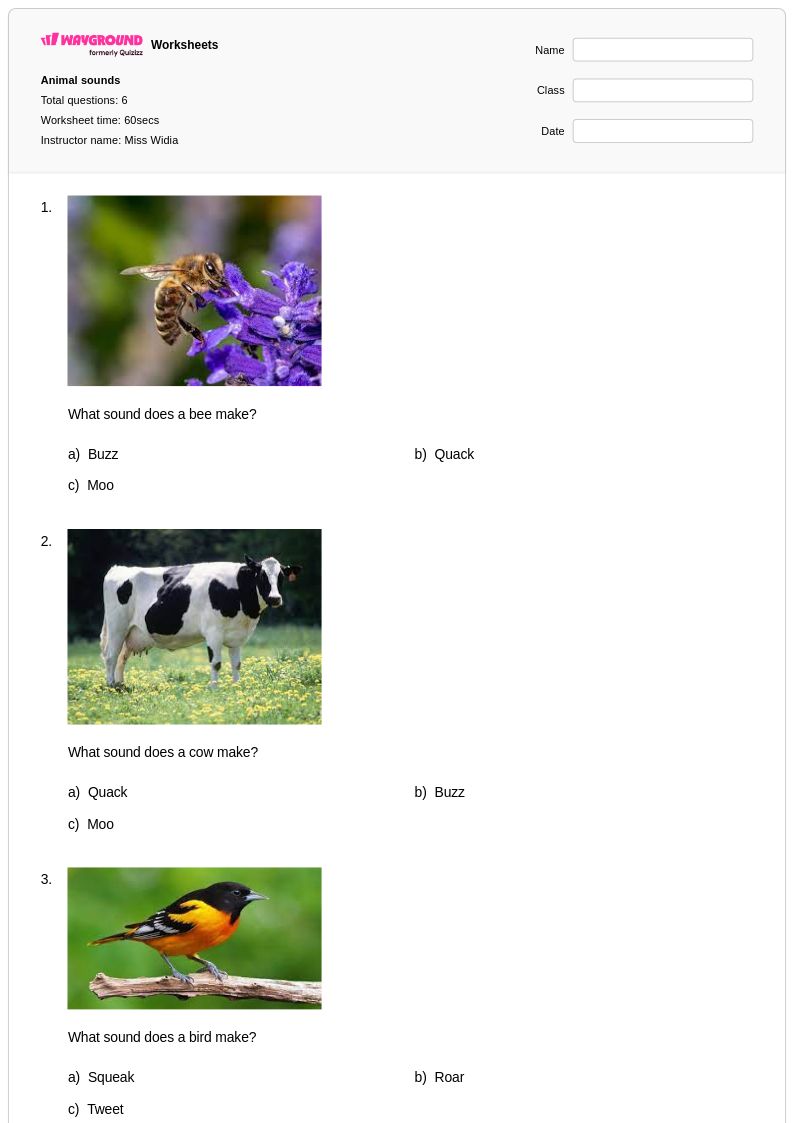
6Q
1st
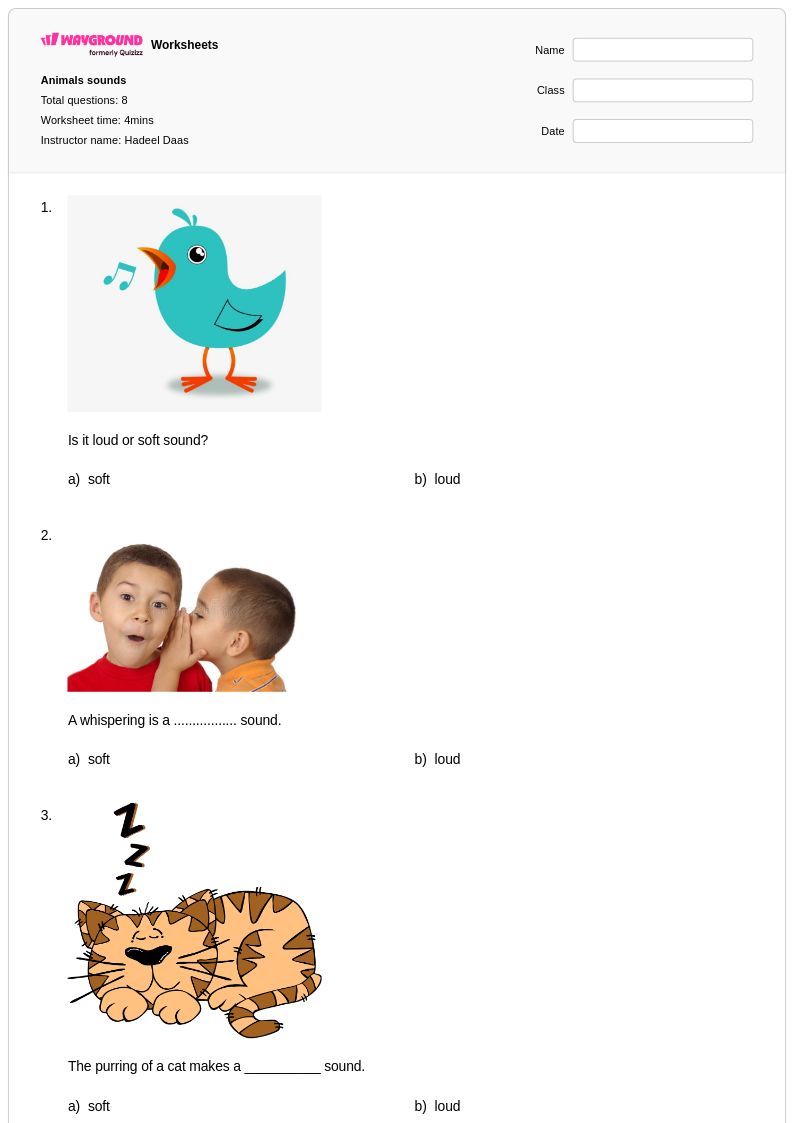
8Q
1st
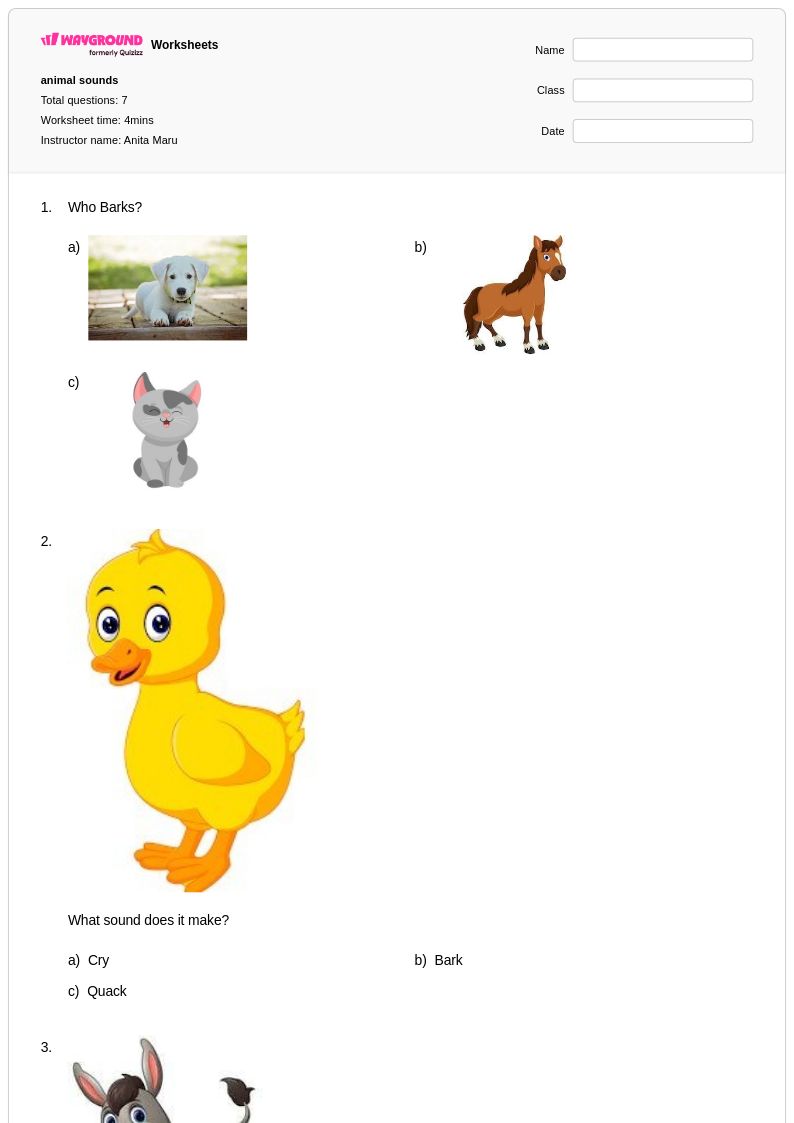
7Q
1st
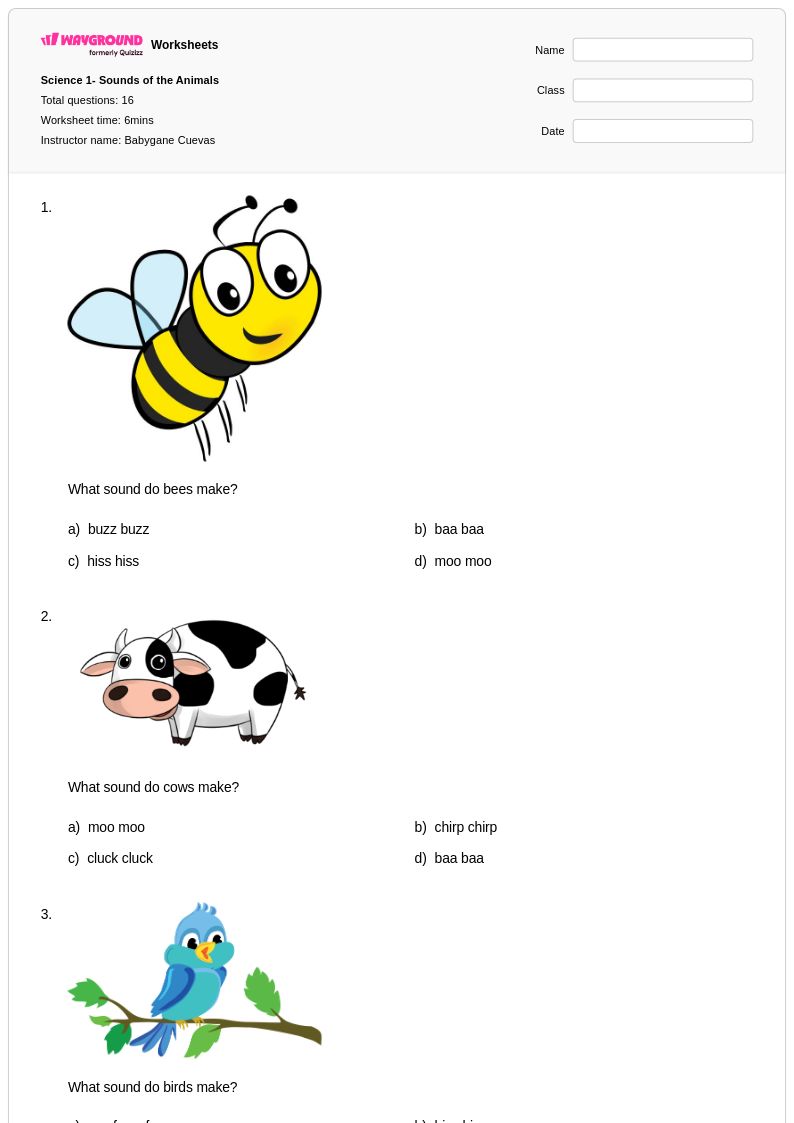
16Q
1st
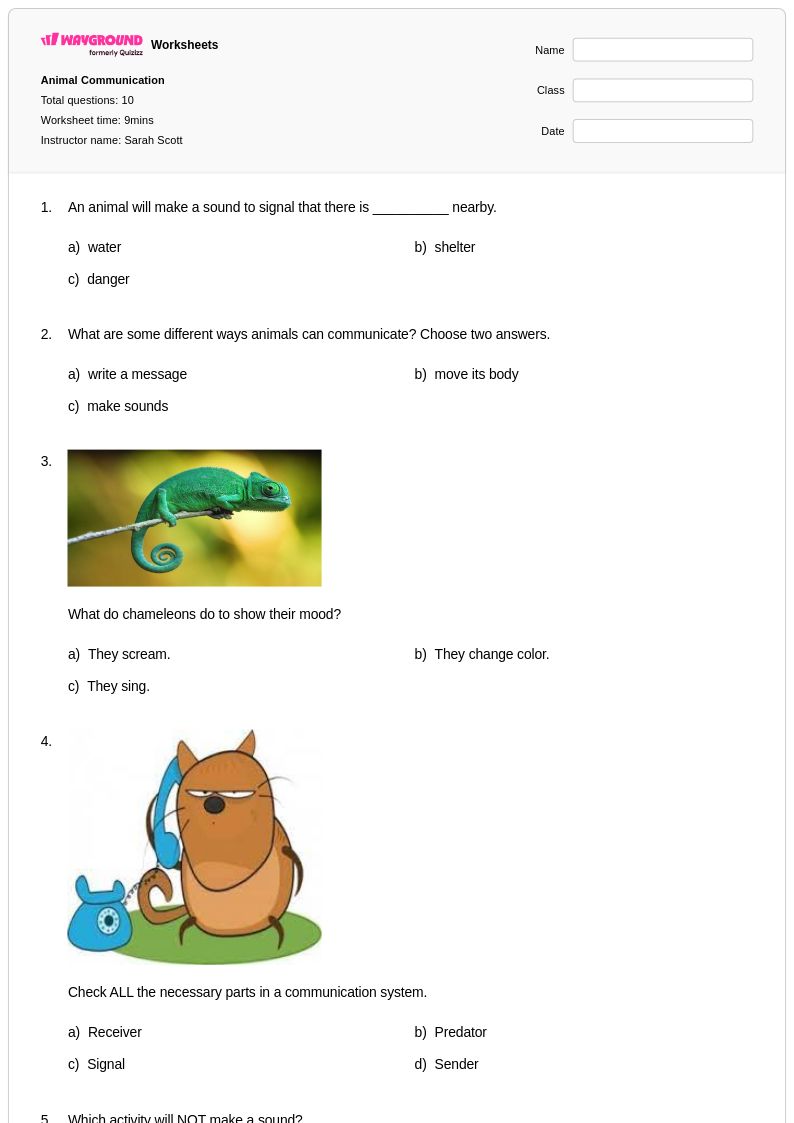
10Q
1st
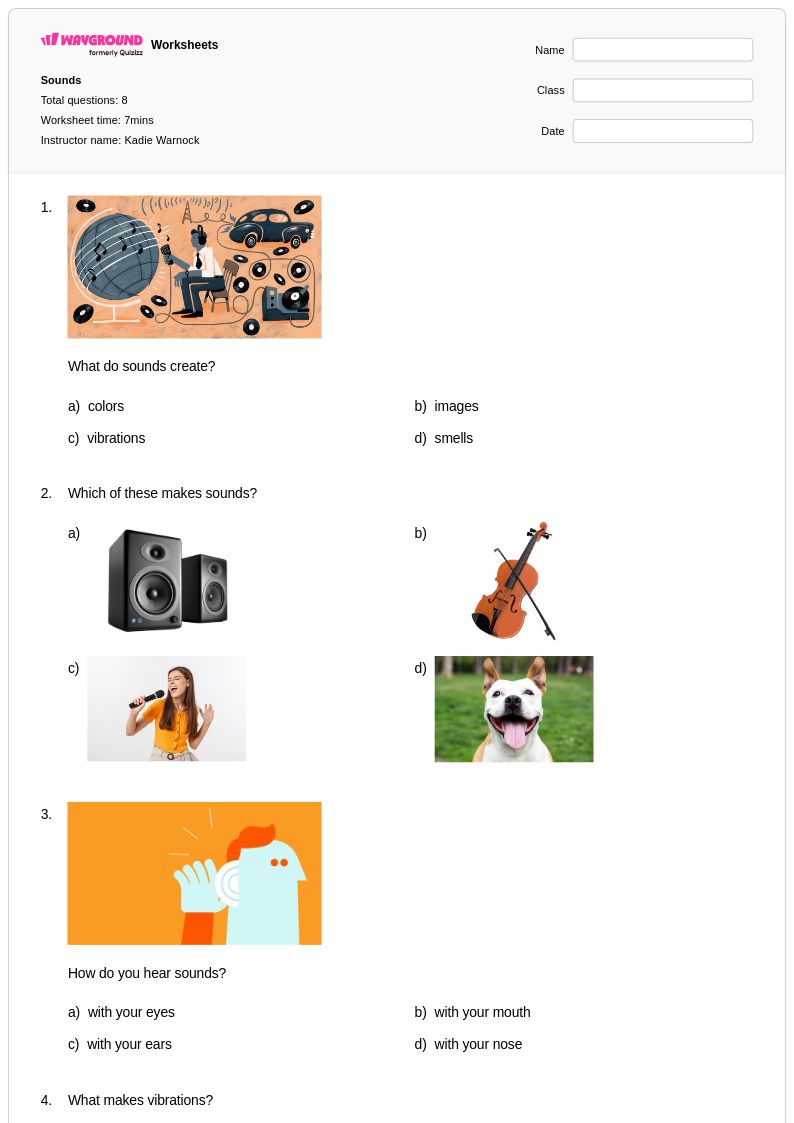
8Q
1st
5Q
1st
7Q
1st - 3rd
8Q
1st
10Q
1st
11Q
1st
10Q
1st
13Q
1st
20Q
1st
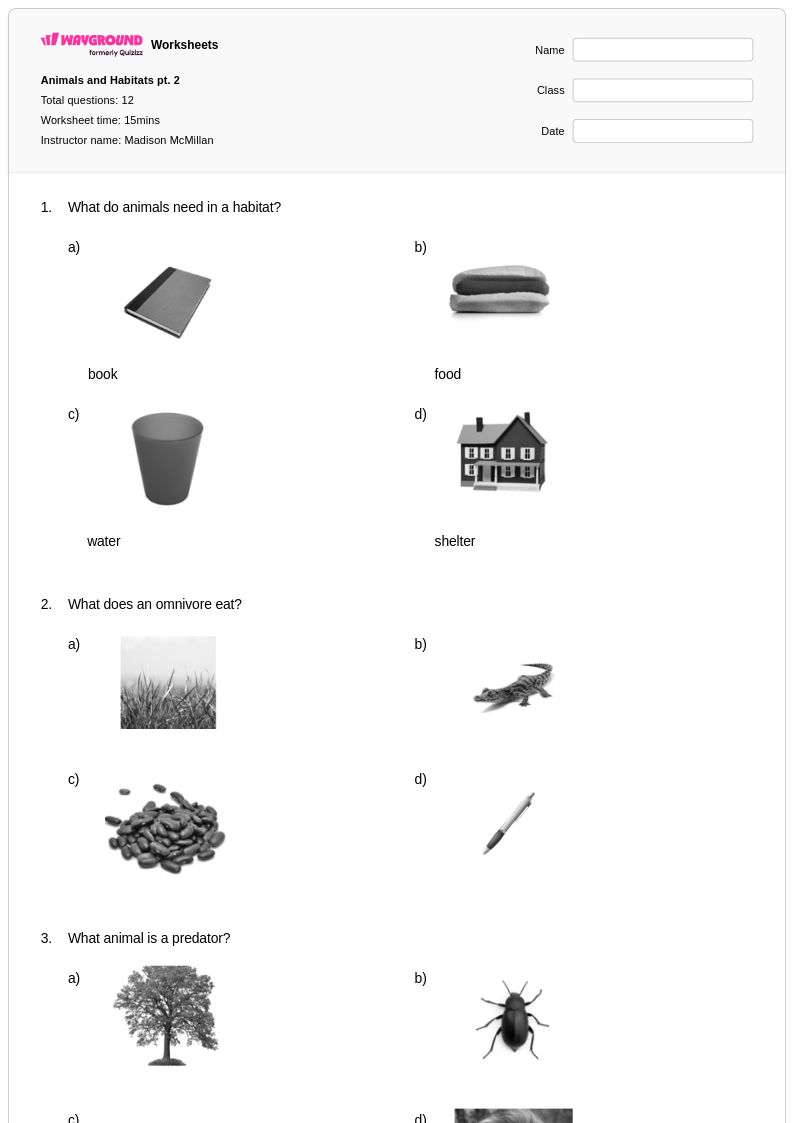
12Q
1st
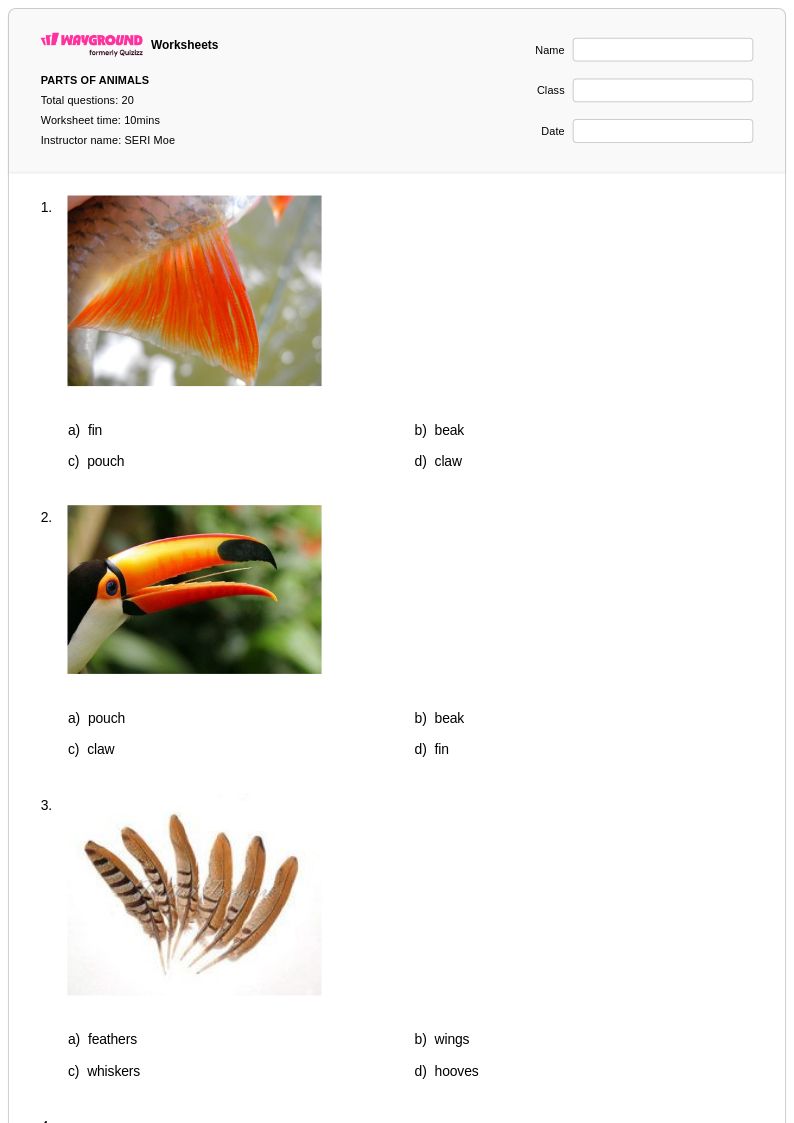
20Q
1st - 2nd
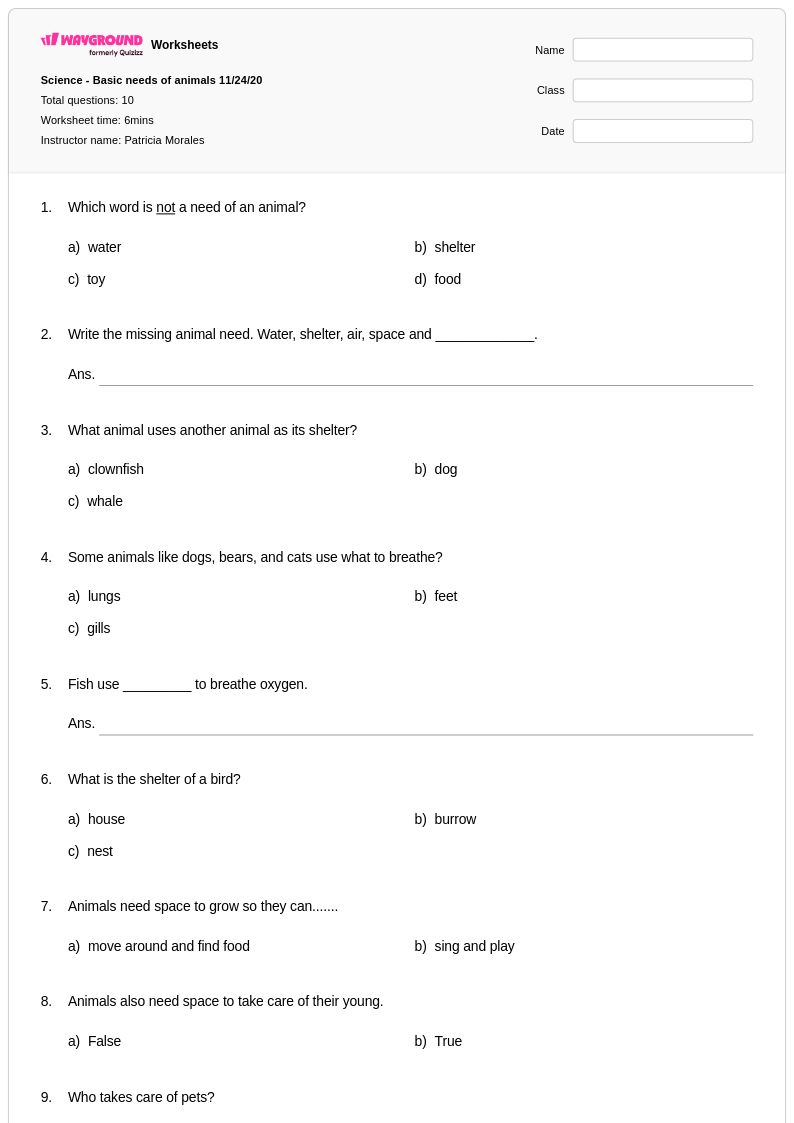
10Q
1st
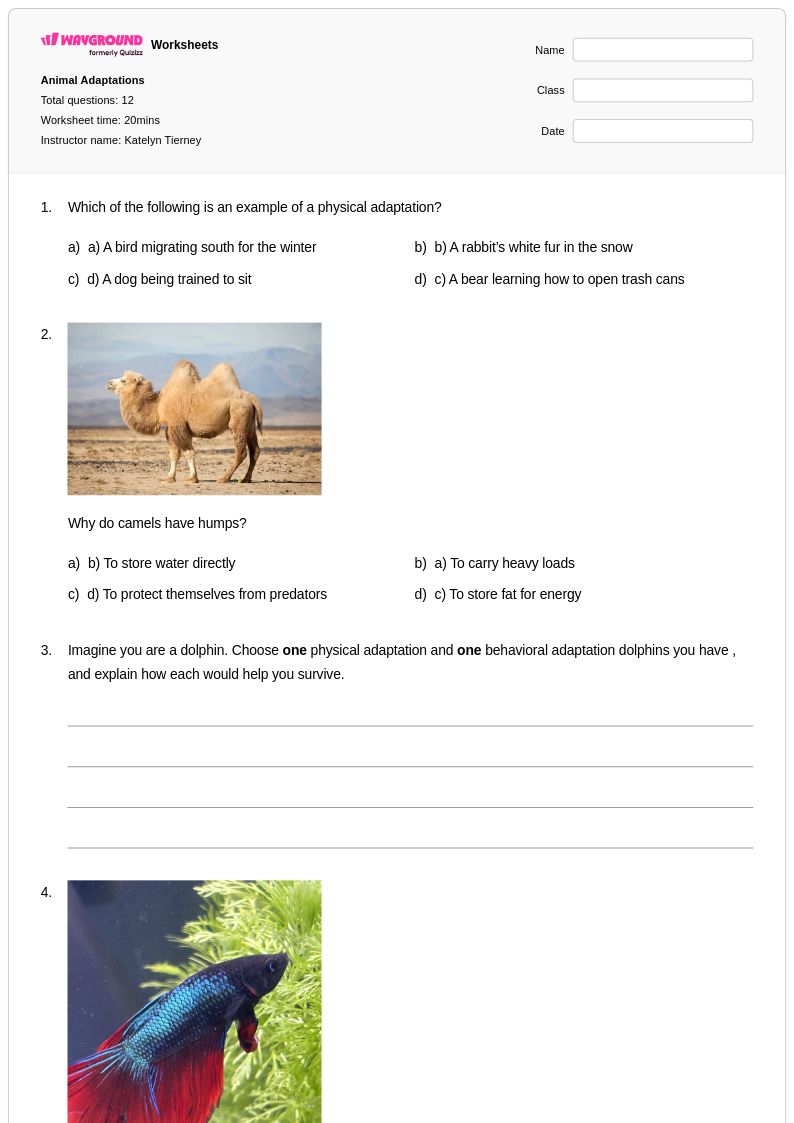
13Q
1st - 5th
Explore otras hojas de trabajo de materias para grade 1
Explore printable Animal Sounds worksheets for Grade 1
Animal sounds worksheets for Grade 1 students through Wayground (formerly Quizizz) provide an engaging foundation for early life science learning by connecting young learners with the diverse ways animals communicate in their natural environments. These comprehensive printables strengthen essential scientific observation skills while building vocabulary related to animal habitats, behaviors, and adaptations. Students develop critical thinking abilities as they match animals to their corresponding sounds, identify which creatures make specific noises, and explore the reasons behind different animal vocalizations. Each worksheet includes a detailed answer key to support independent learning and provides free access to practice problems that reinforce concepts through repetition and application. The pdf format ensures easy distribution and consistent formatting across different devices and printing methods.
Wayground (formerly Quizizz) empowers educators with millions of teacher-created animal sounds resources that streamline lesson planning and accommodate diverse learning needs in Grade 1 classrooms. The platform's robust search and filtering capabilities allow teachers to quickly locate worksheets aligned with specific learning standards while accessing differentiation tools that support both remediation for struggling students and enrichment opportunities for advanced learners. Teachers can customize existing materials or create entirely new worksheets tailored to their classroom's unique requirements, with flexible options available in both printable and digital formats including downloadable pdf files. This extensive collection facilitates targeted skill practice sessions, formative assessment opportunities, and hands-on science exploration that helps young students build confidence in their understanding of animal communication and basic life science principles.
FAQs
How do I teach animal sounds to early learners?
What kinds of exercises help students practice identifying animal sounds?
What common mistakes do students make when learning about animal sounds?
How can animal sounds worksheets support different learning levels in the same classroom?
How do I use animal sounds worksheets on Wayground in my classroom?