Discover free Grade 1 honey bee worksheets and printables that help young students explore bee life cycles, habitats, and importance through engaging practice problems with answer keys.
Explore printable Honey Bee worksheets for Grade 1
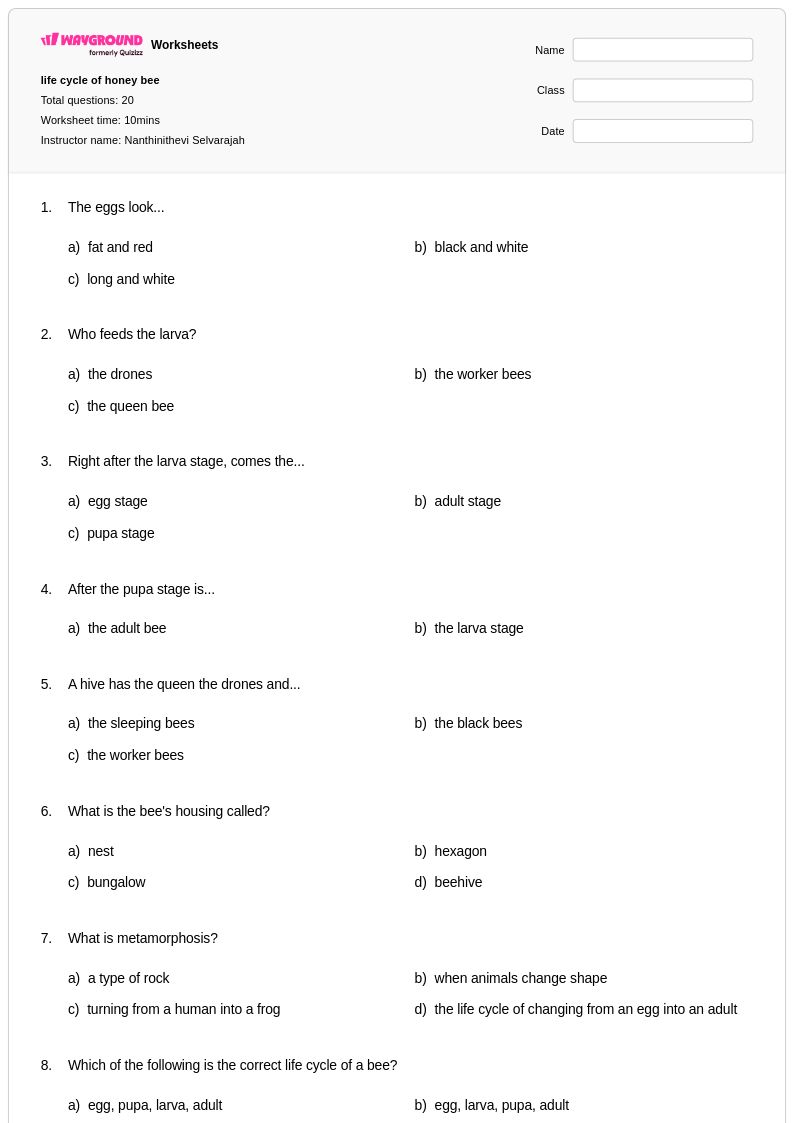
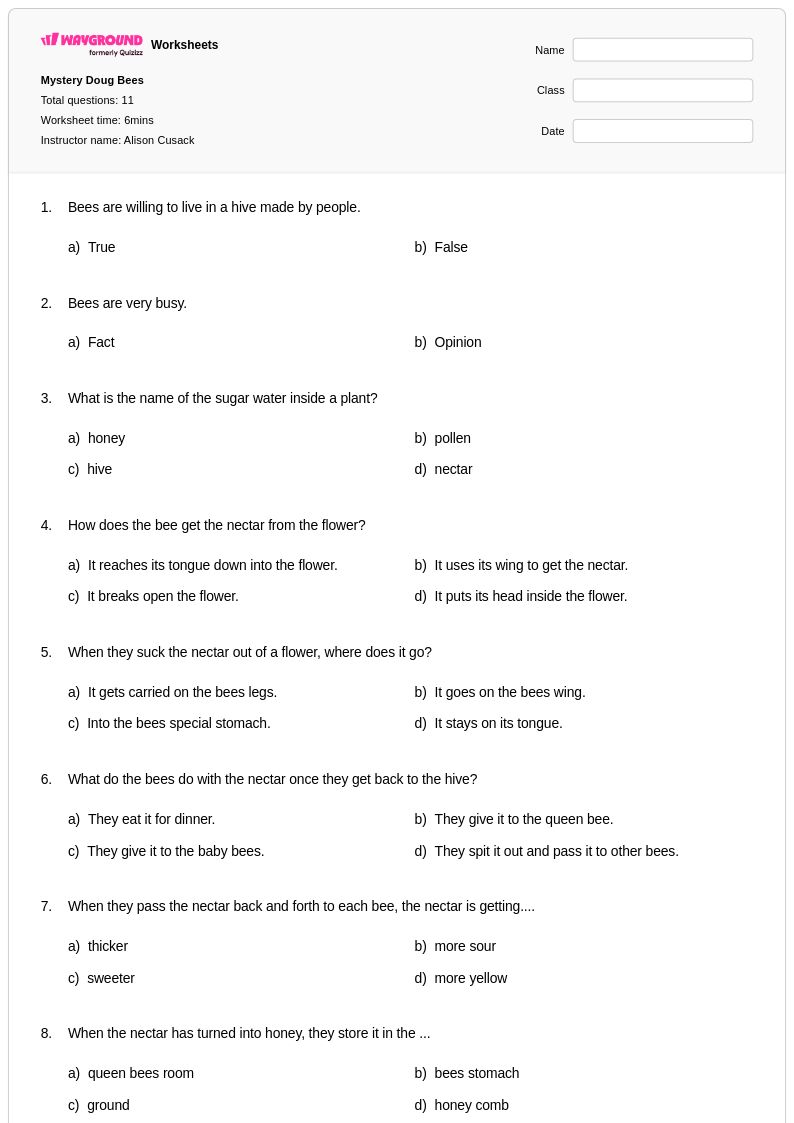
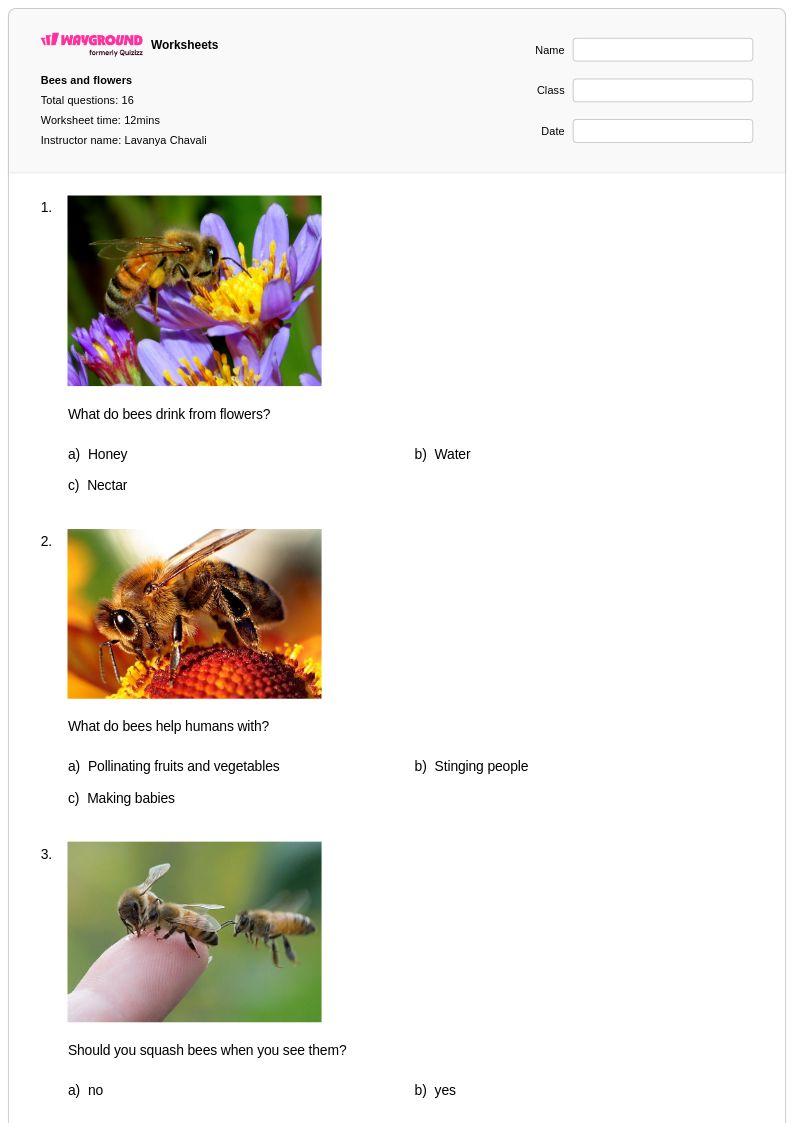
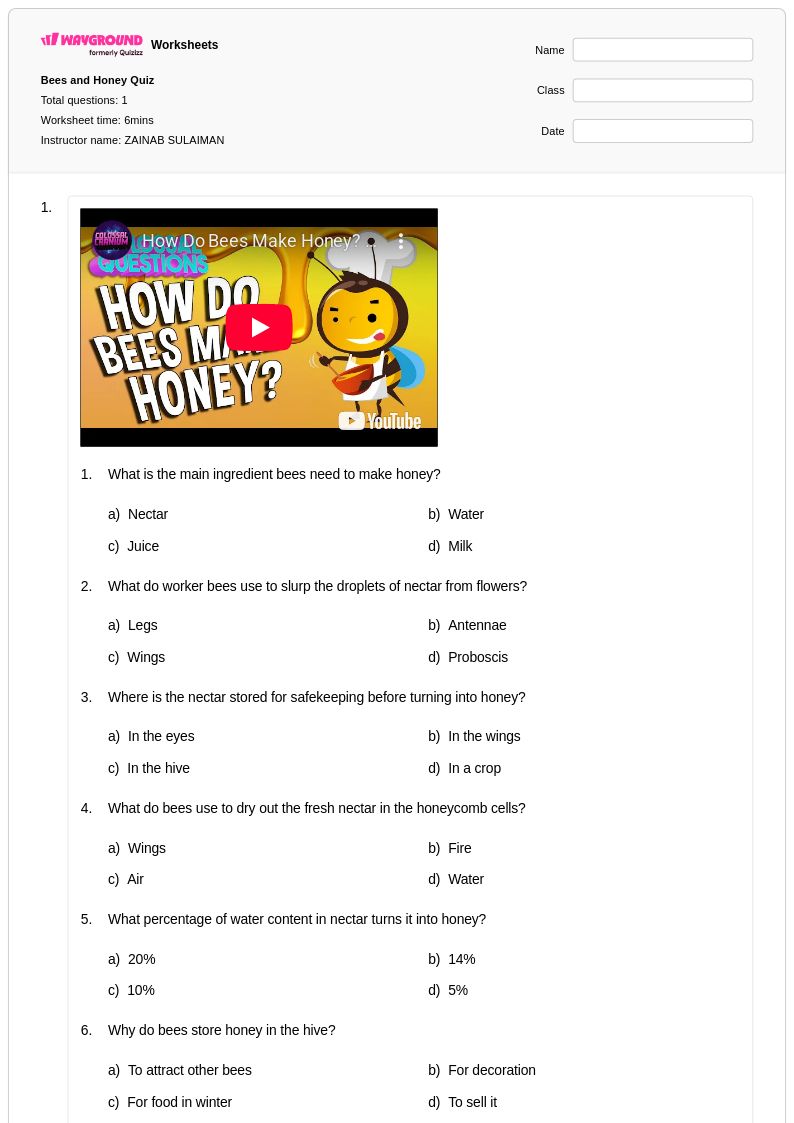
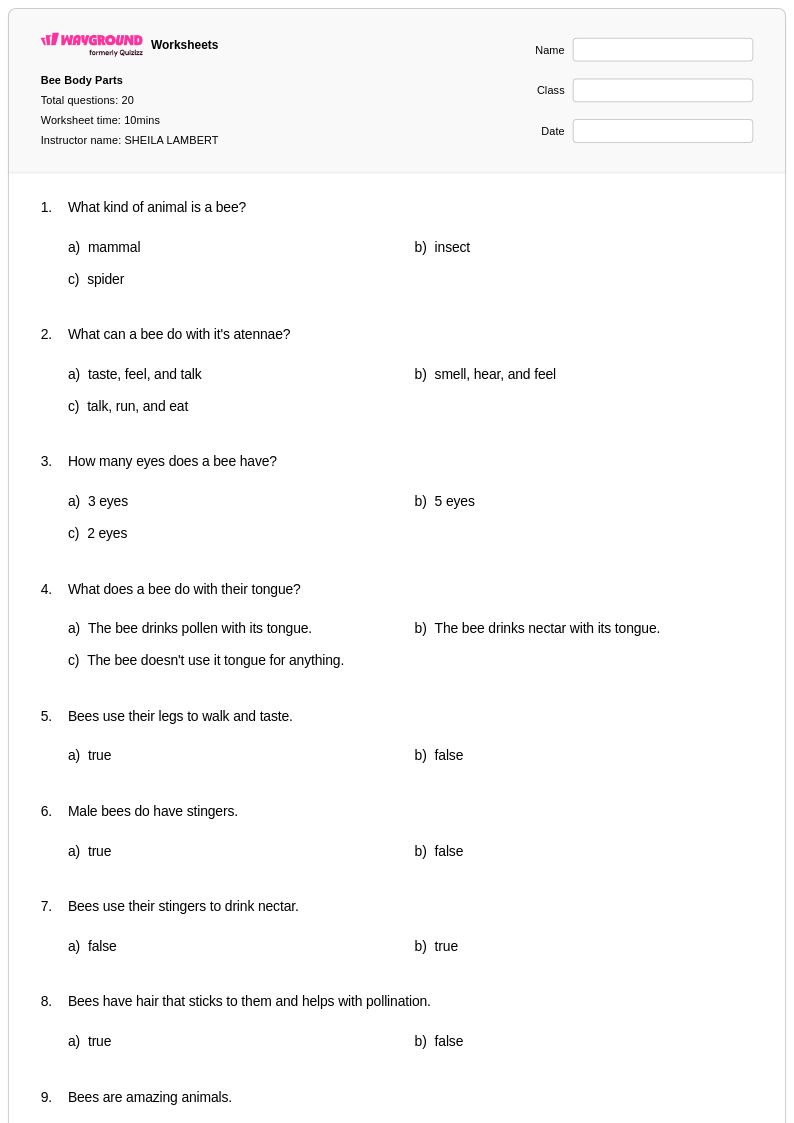
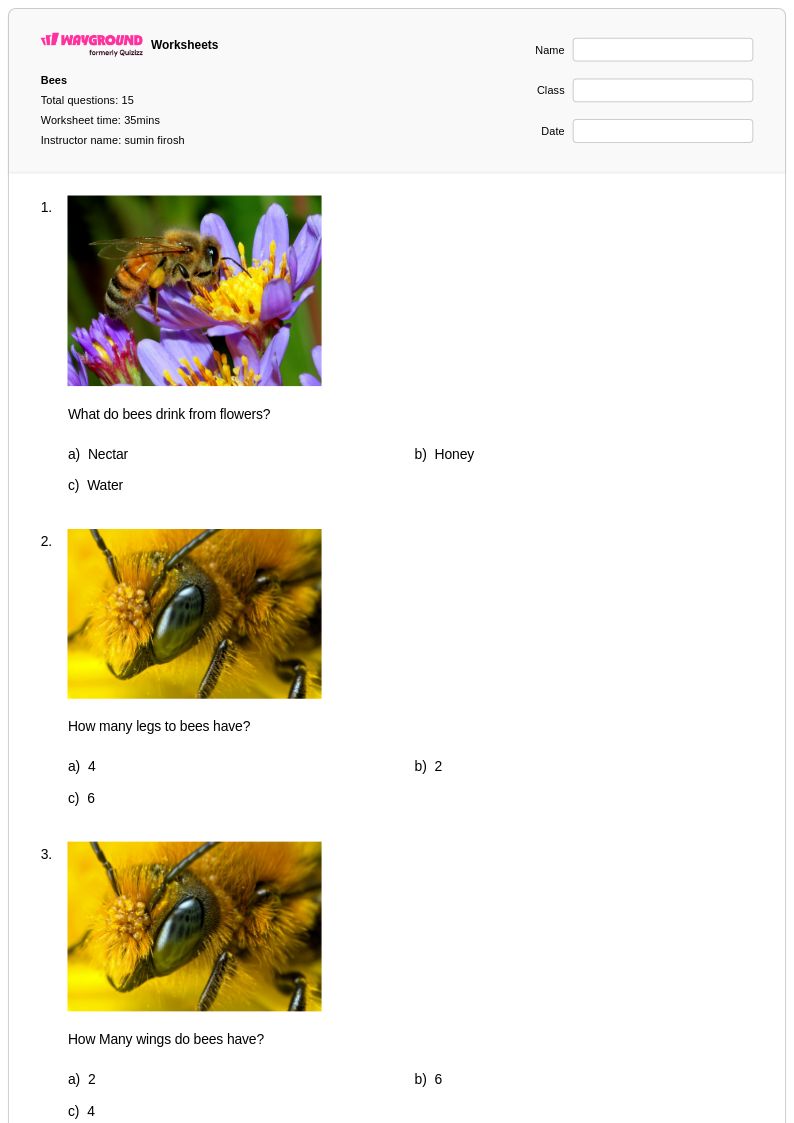
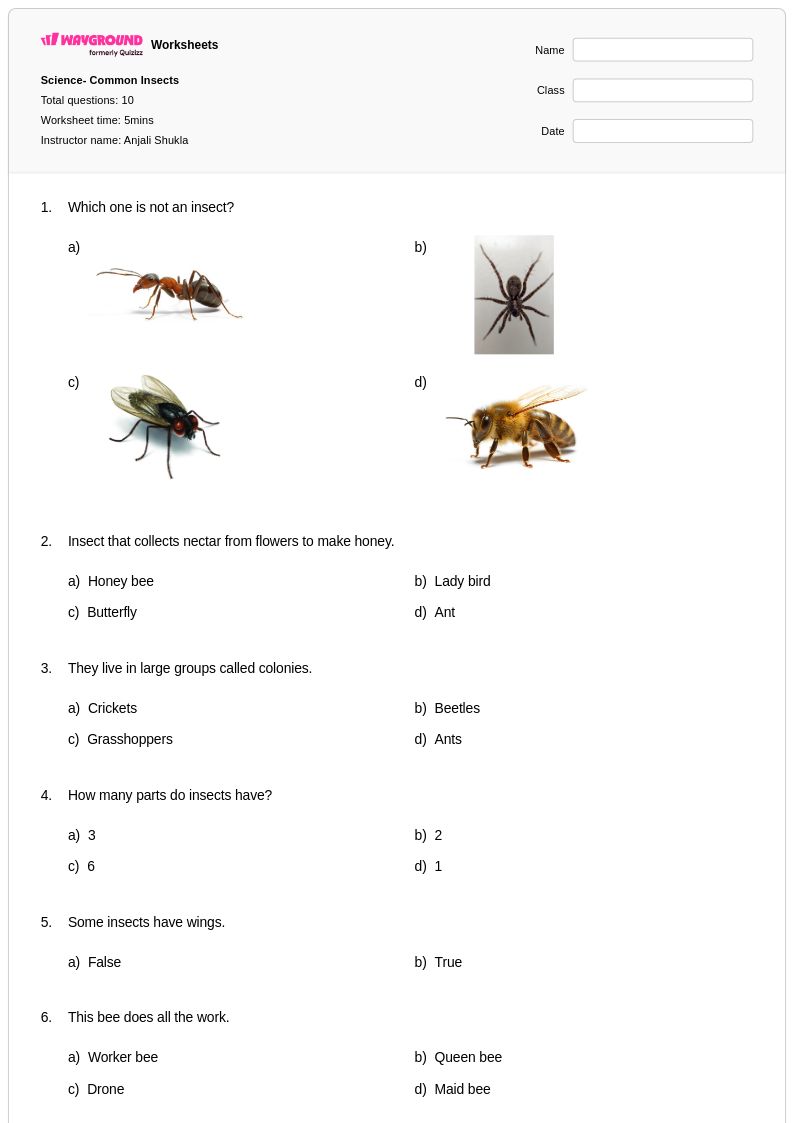
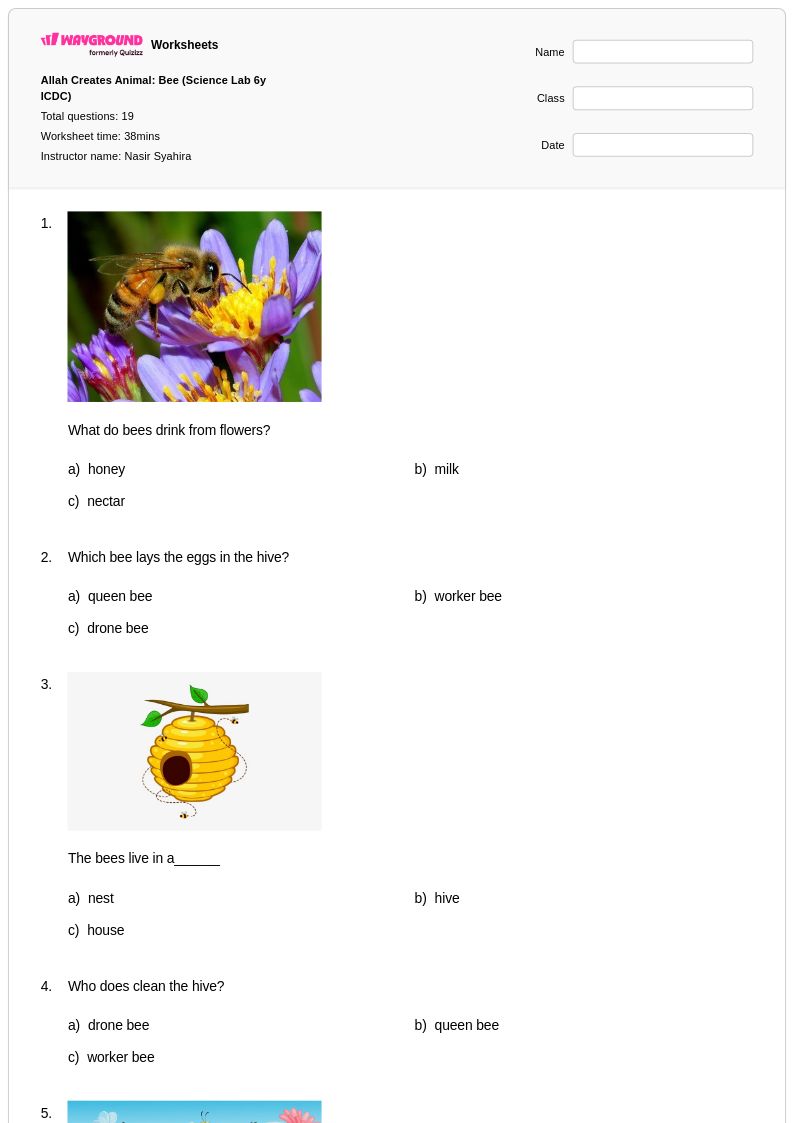
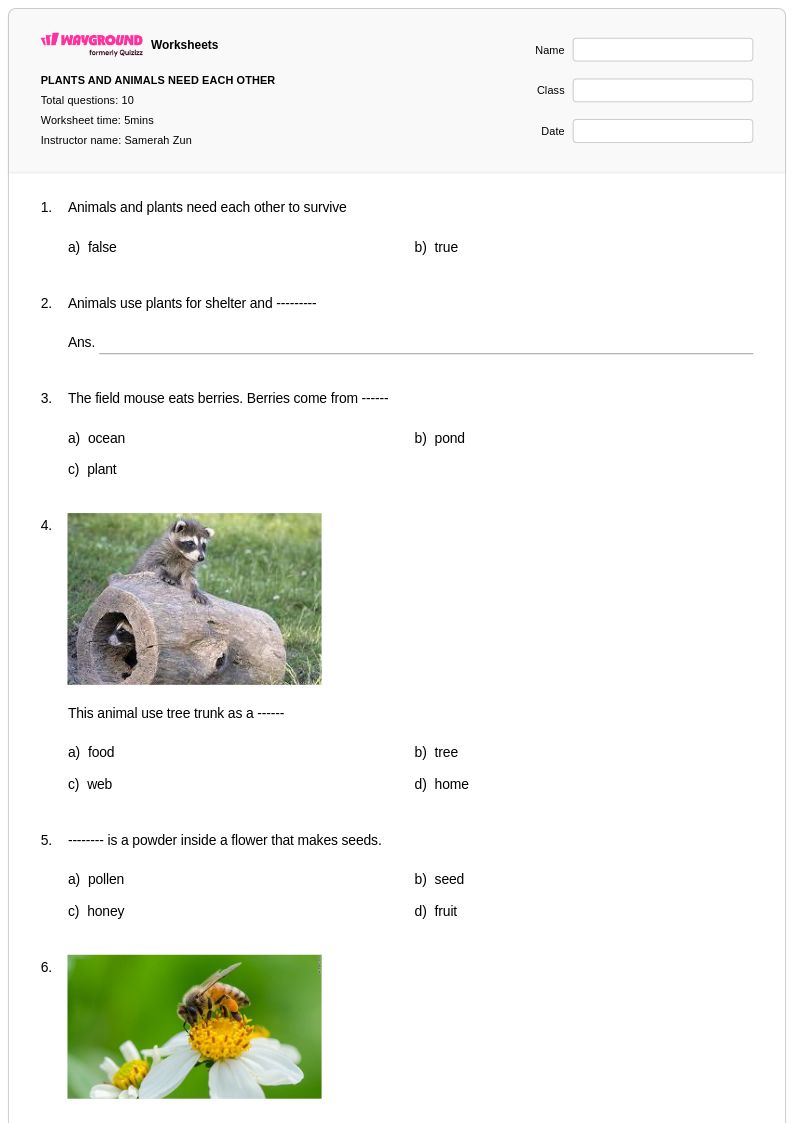
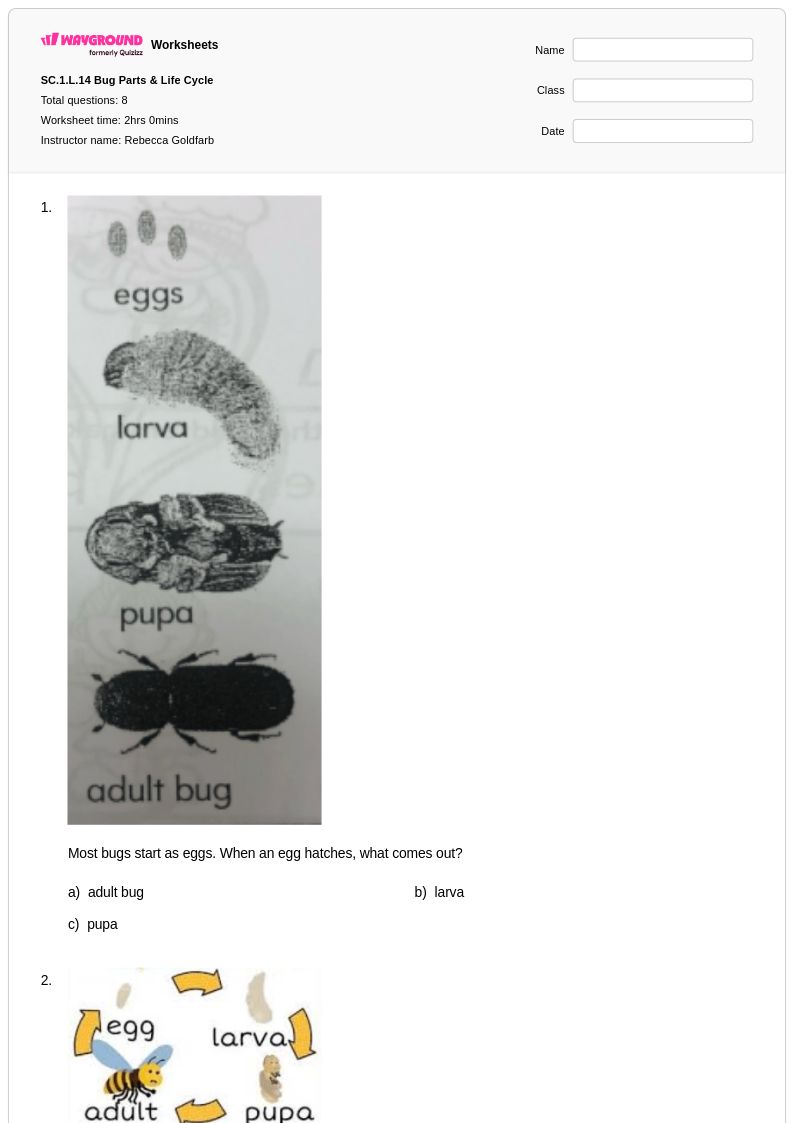
Honey bee worksheets for Grade 1 students available through Wayground (formerly Quizizz) introduce young learners to the fascinating world of these essential pollinators through age-appropriate activities and observations. These educational resources help first-grade students develop foundational life science skills by exploring honey bee anatomy, behavior, lifecycle stages, and their crucial role in pollination and food production. The worksheets strengthen scientific observation abilities, vocabulary development, and basic understanding of insect characteristics through engaging practice problems that encourage students to identify bee body parts, sequence lifecycle stages, and connect bees to the plants and flowers in their environment. Teachers can access comprehensive answer keys and free printable materials that support structured learning while making complex biological concepts accessible to early elementary students.
Wayground's extensive collection of teacher-created honey bee resources provides educators with millions of carefully curated worksheets that support differentiated instruction and flexible lesson planning. The platform's robust search and filtering capabilities allow teachers to quickly locate materials aligned with life science standards while offering both printable pdf formats and interactive digital versions to accommodate diverse classroom needs. These comprehensive tools enable educators to seamlessly integrate honey bee studies into broader pollination and ecosystem units, providing targeted practice for skill development, remediation support for struggling learners, and enrichment opportunities for advanced students. The customizable nature of these resources empowers teachers to adapt content complexity, modify assessment formats, and create cohesive learning experiences that build students' appreciation for the vital ecological relationships between insects and plant life.
FAQs
How do I teach honey bee biology to elementary and middle school students?
Start with honey bee anatomy and life cycle before moving into colony structure and ecological roles. Connecting bee biology to real-world topics like pollination and food production helps students grasp why honey bees matter beyond the hive. Hands-on activities such as labeling bee anatomy diagrams and mapping foraging patterns make abstract concepts tangible and support retention.
What topics should honey bee worksheets cover?
Effective honey bee worksheets should cover bee anatomy, the complete life cycle from egg to adult, colony organization including the roles of queen, worker, and drone bees, and the waggle dance as a communication method. Worksheets that incorporate the hexagonal geometry of honeycomb construction give students an interdisciplinary bridge between life science and math. Coverage of honey bees' role in pollination and agriculture connects the biology to broader environmental and food system concepts.
What common misconceptions do students have about honey bees?
Students often assume all bees make honey or that any bee they encounter is a honey bee, which can be corrected by comparing honey bee characteristics to other bee species. Many students also underestimate colony complexity, viewing the hive as a simple group rather than a highly organized social structure with division of labor. Another frequent error is misunderstanding pollination as incidental rather than recognizing it as the primary ecological service honey bees provide to flowering plants and crops.
How can I use honey bee worksheets to support different learning levels in my classroom?
Honey bee worksheets can be differentiated by adjusting task complexity, such as providing labeled diagrams for struggling learners while asking advanced students to construct their own from memory. On Wayground, teachers can apply individual accommodations including read aloud support for students who need audio access to questions, reduced answer choices to lower cognitive load, and extended time settings configurable per student. These accommodations are saved and reusable across sessions, so differentiation is built into the workflow rather than added on.
How do I use Wayground's honey bee worksheets in my classroom?
Wayground's honey bee worksheets are available as printable PDFs for traditional classroom use and in digital formats for technology-integrated learning environments, including the option to host them as an interactive quiz on the Wayground platform. Teachers can use these materials for concept introduction, guided practice, or assessment depending on where students are in the unit. The included answer keys make grading straightforward, whether worksheets are completed on paper or digitally.
How do honey bees communicate, and how can I teach the waggle dance to students?
Honey bees communicate the location of food sources through the waggle dance, a figure-eight movement pattern in which the angle and duration of the waggle run encode direction relative to the sun and distance from the hive. Teaching this concept works well with kinesthetic activities where students physically act out the dance using a simplified model. Pairing this with a worksheet that asks students to interpret or construct waggle dance diagrams reinforces both the biology and spatial reasoning involved.