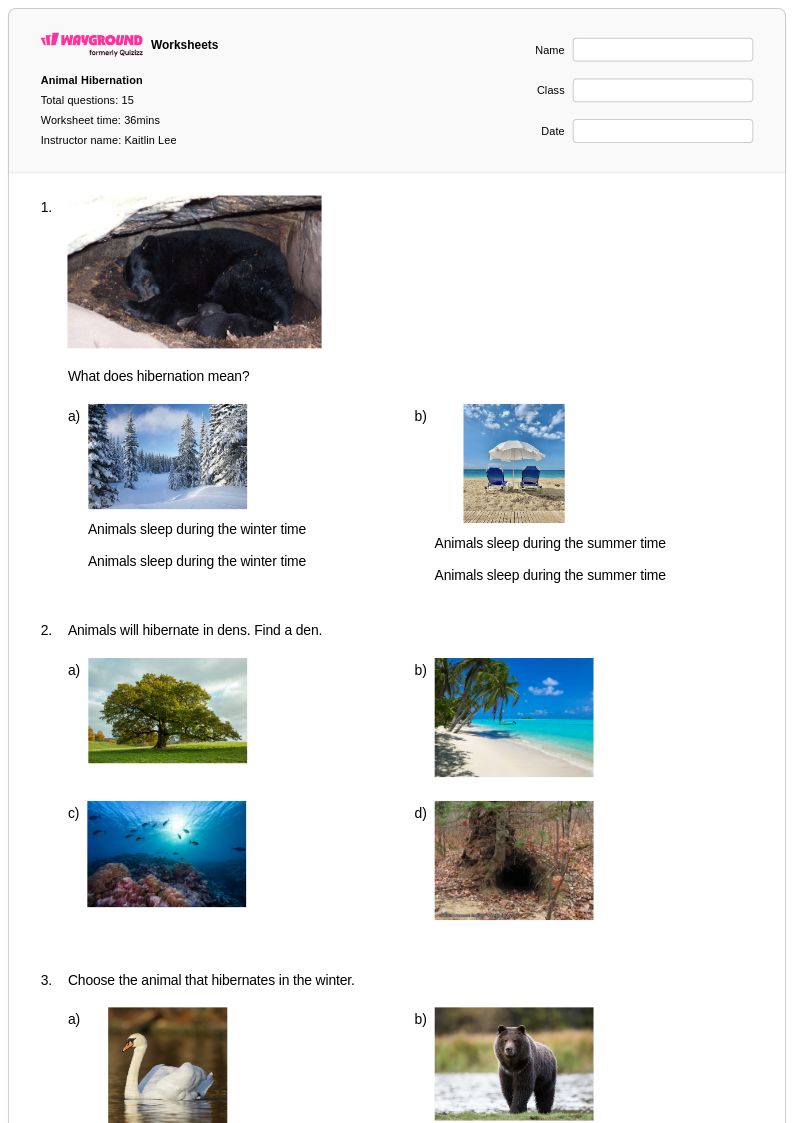
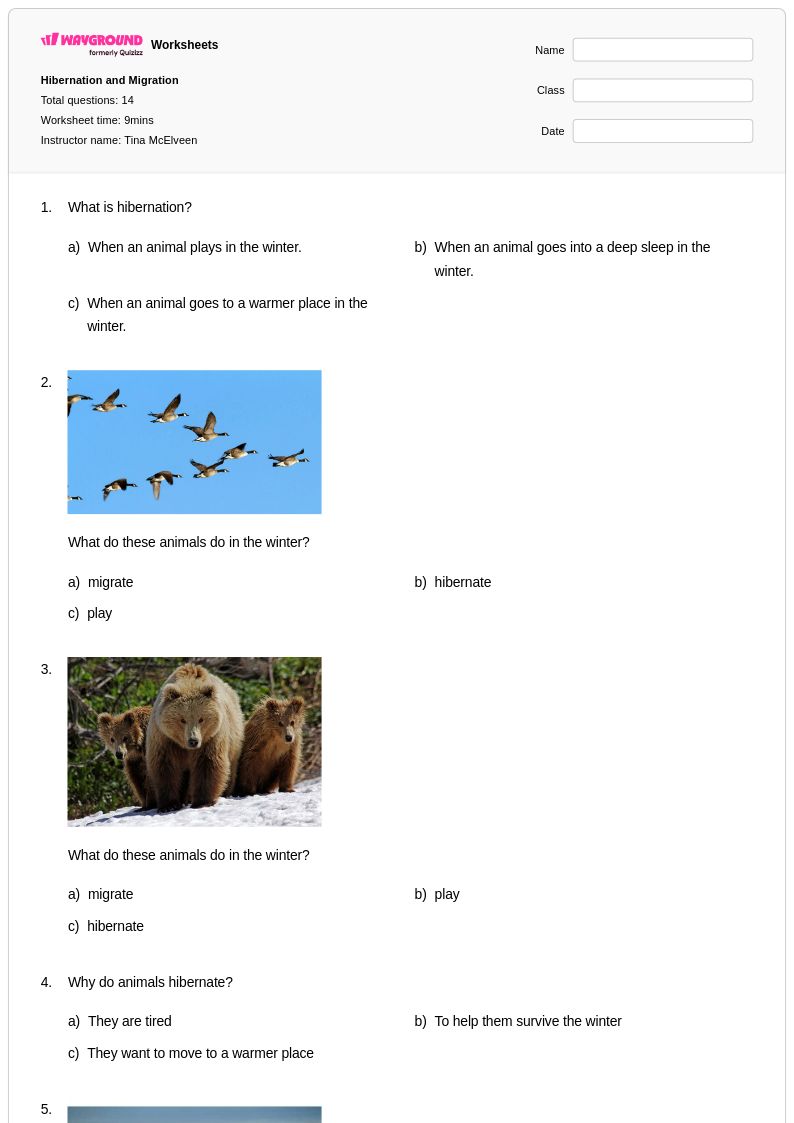
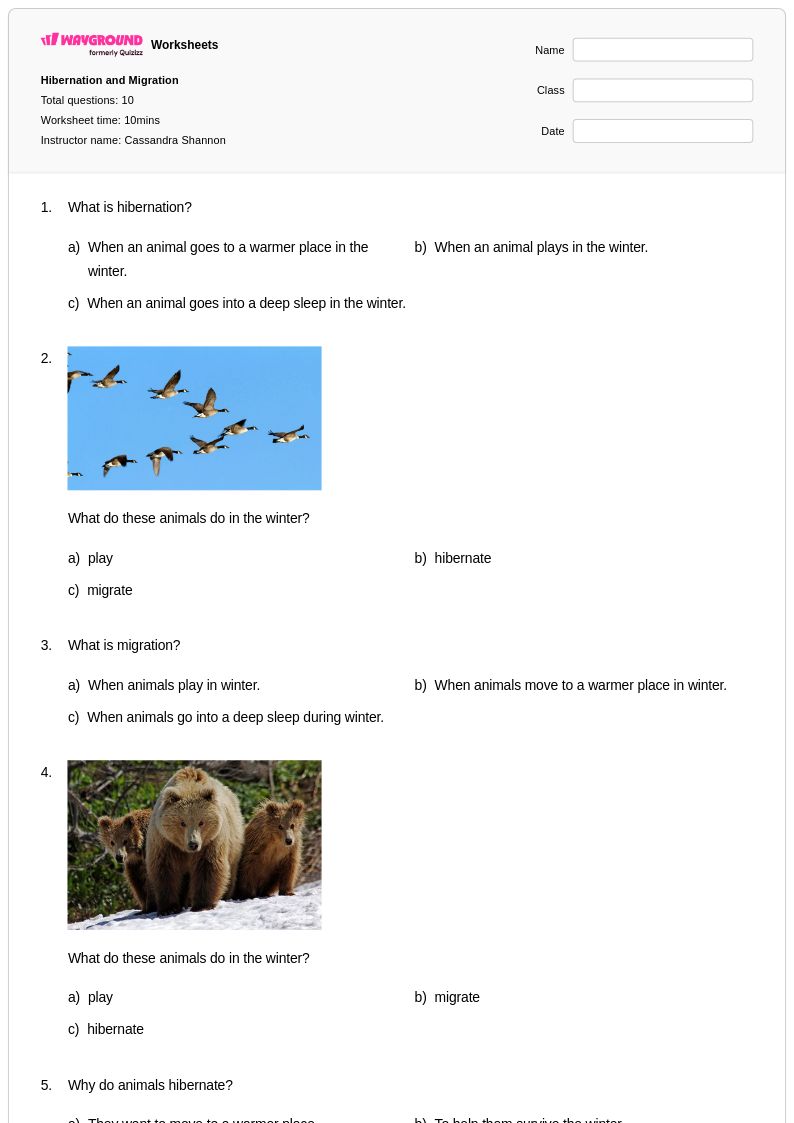
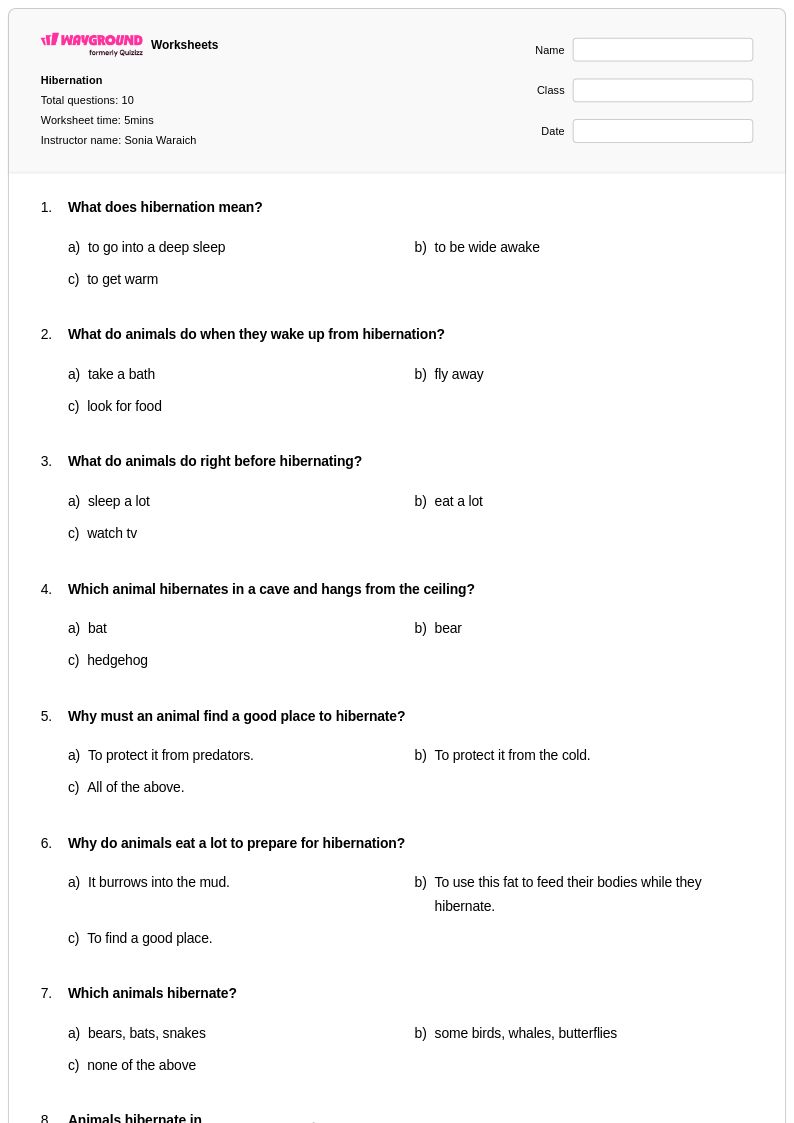
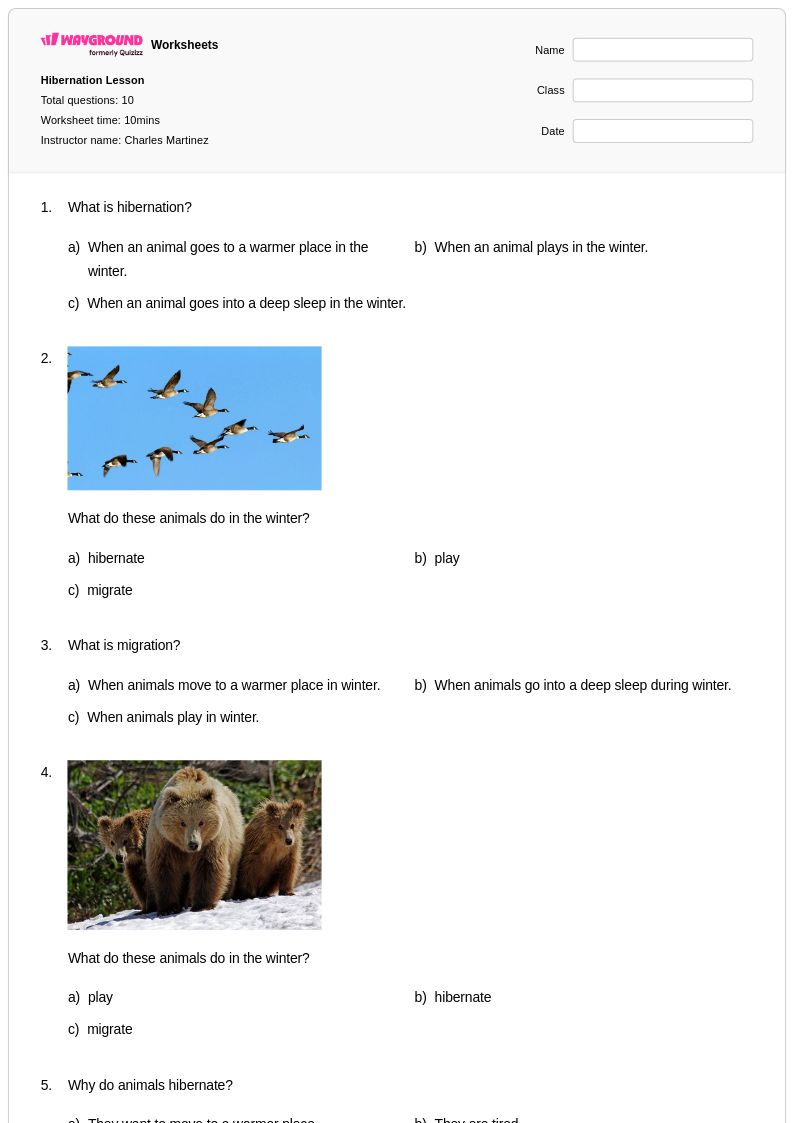
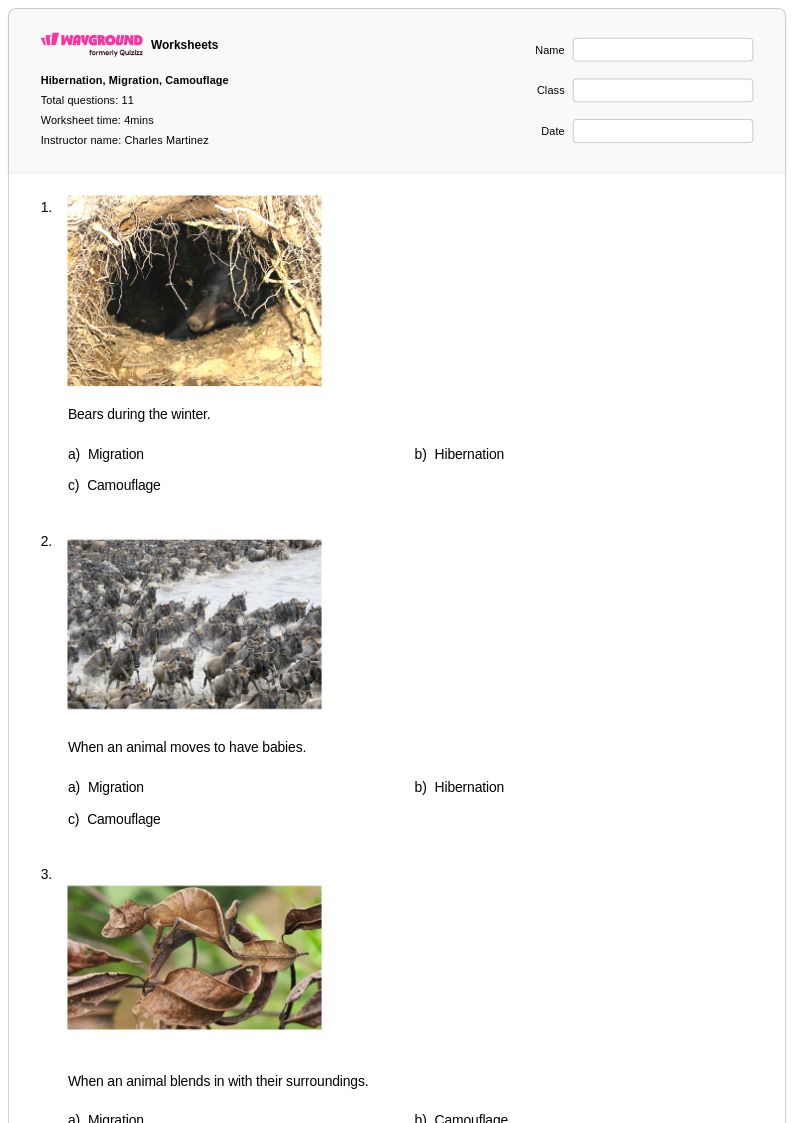
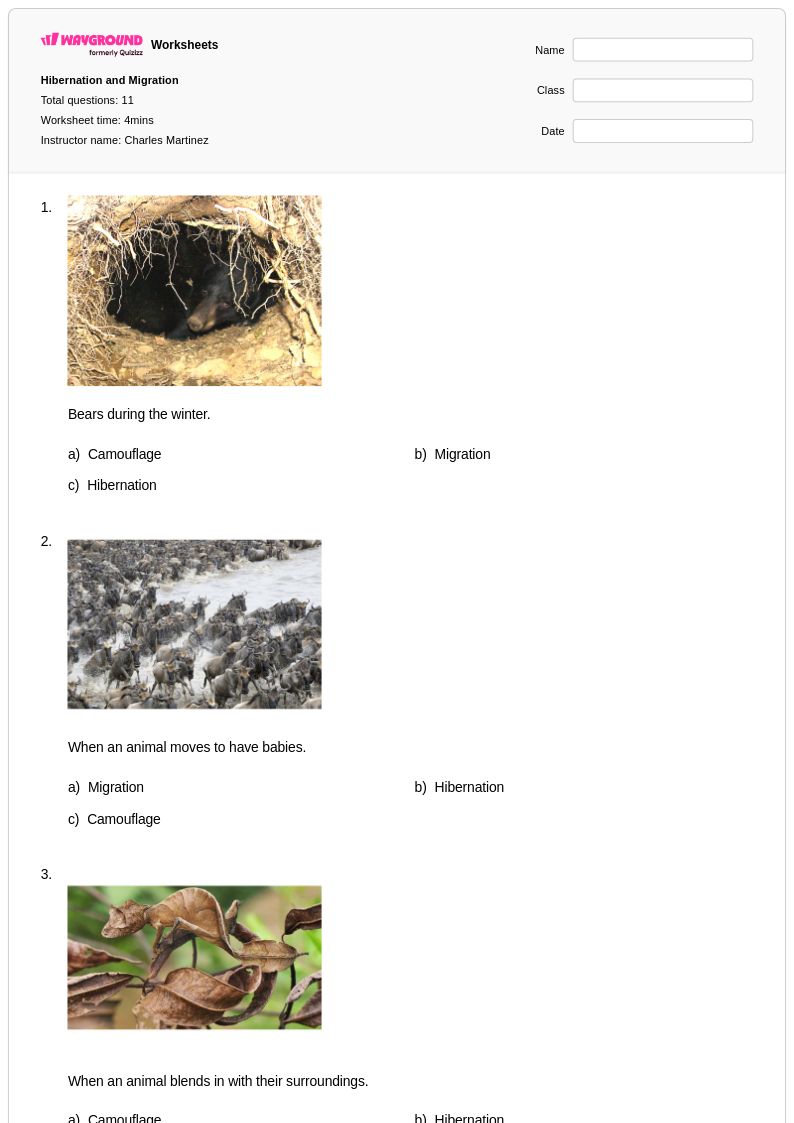
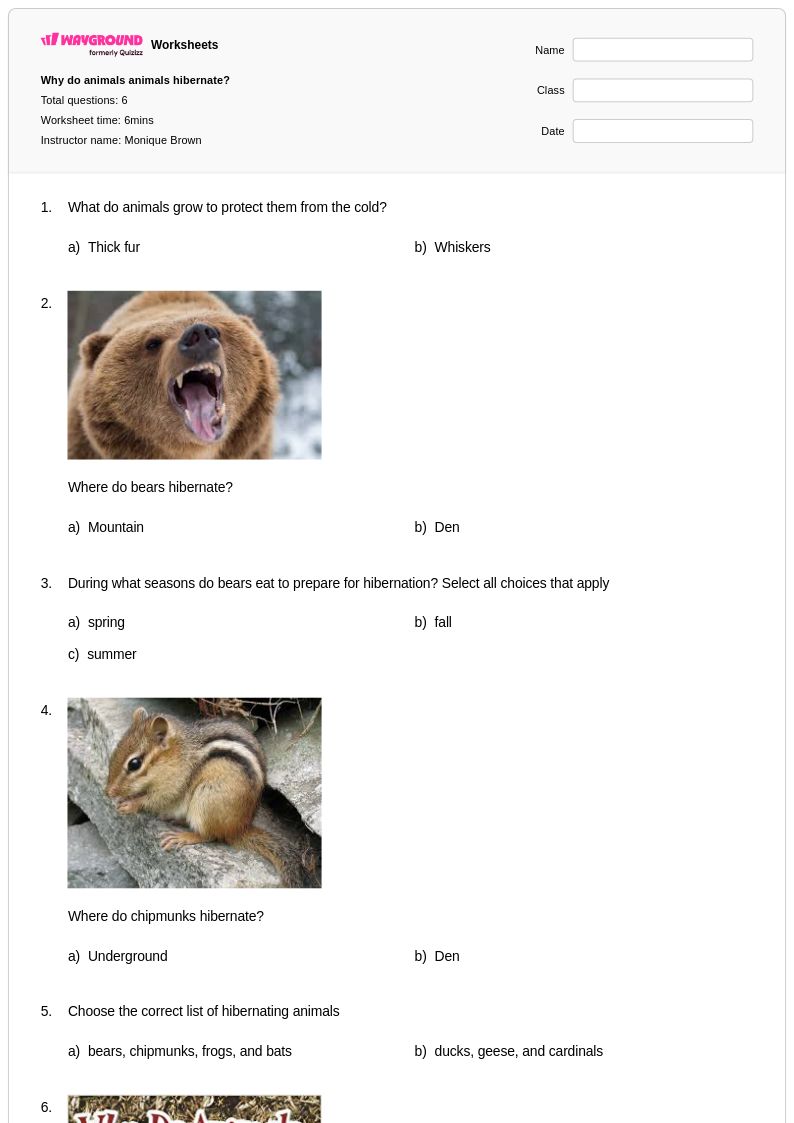
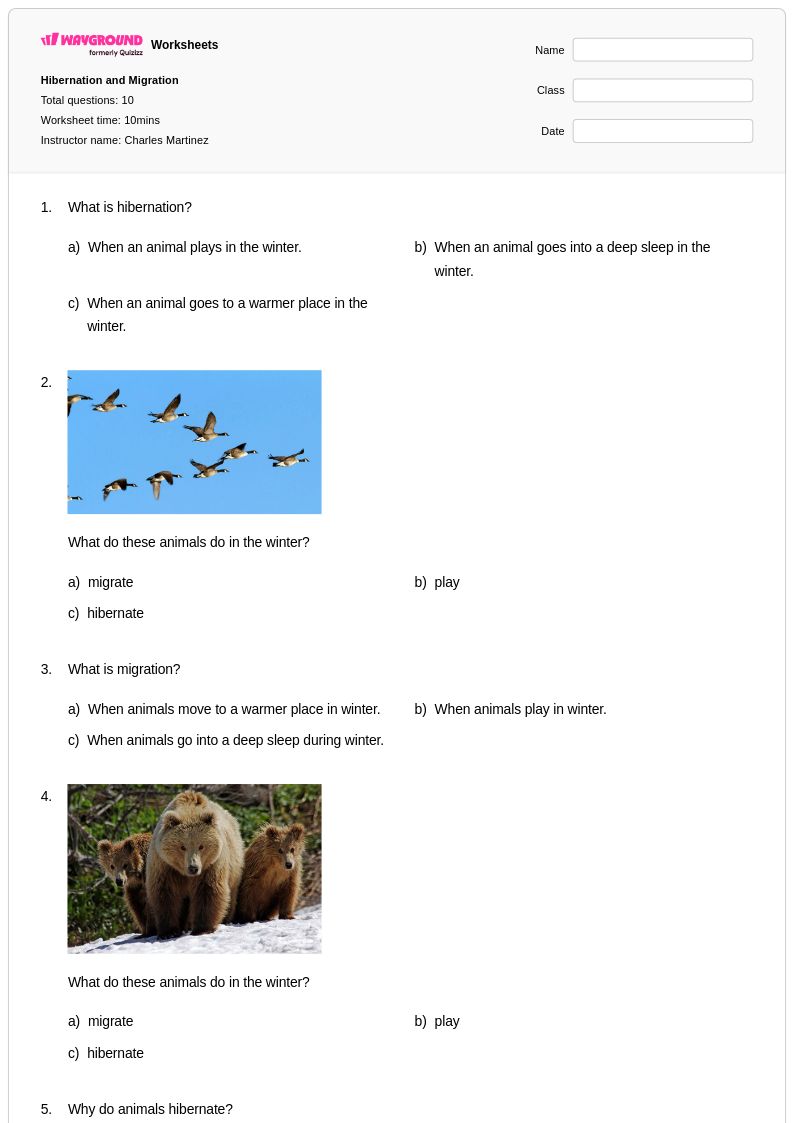
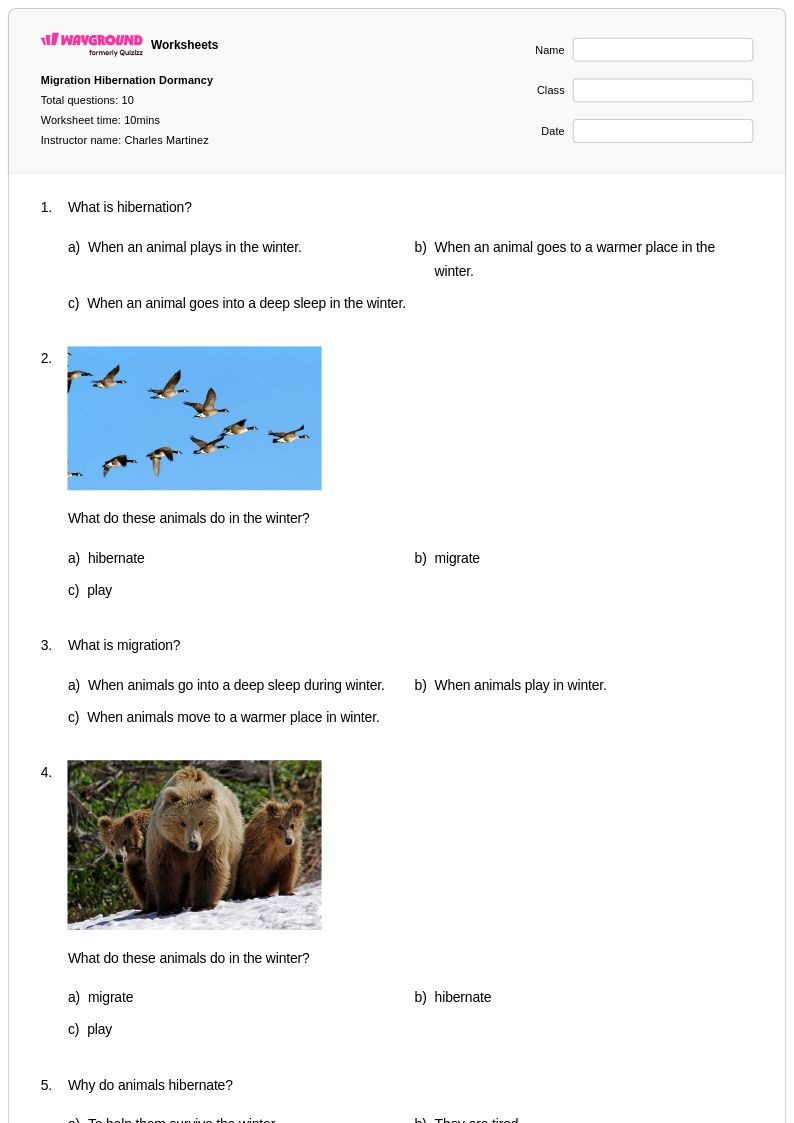
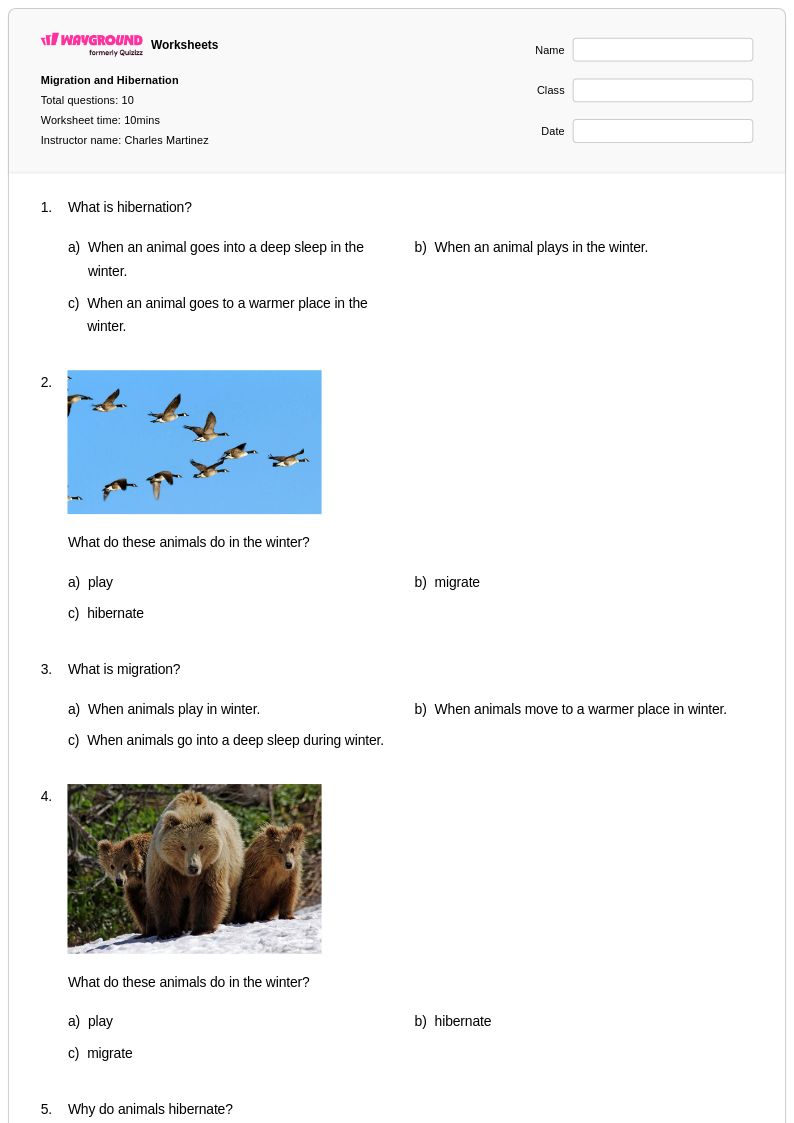
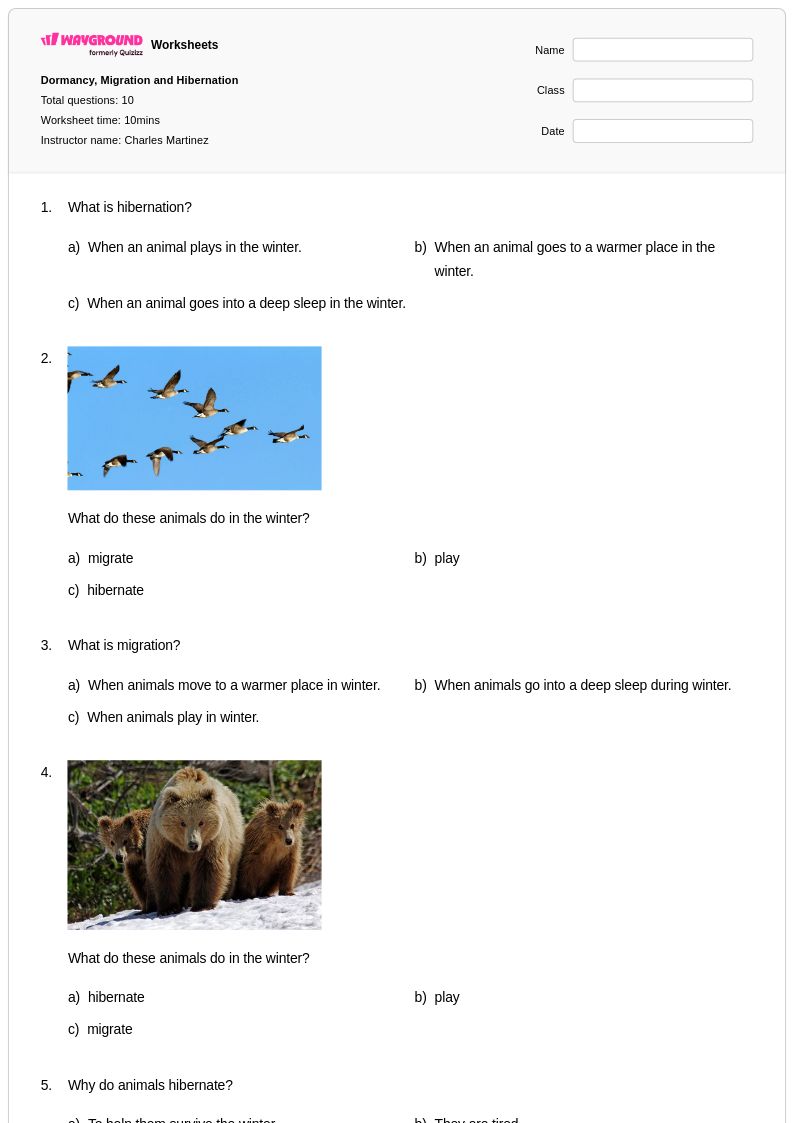
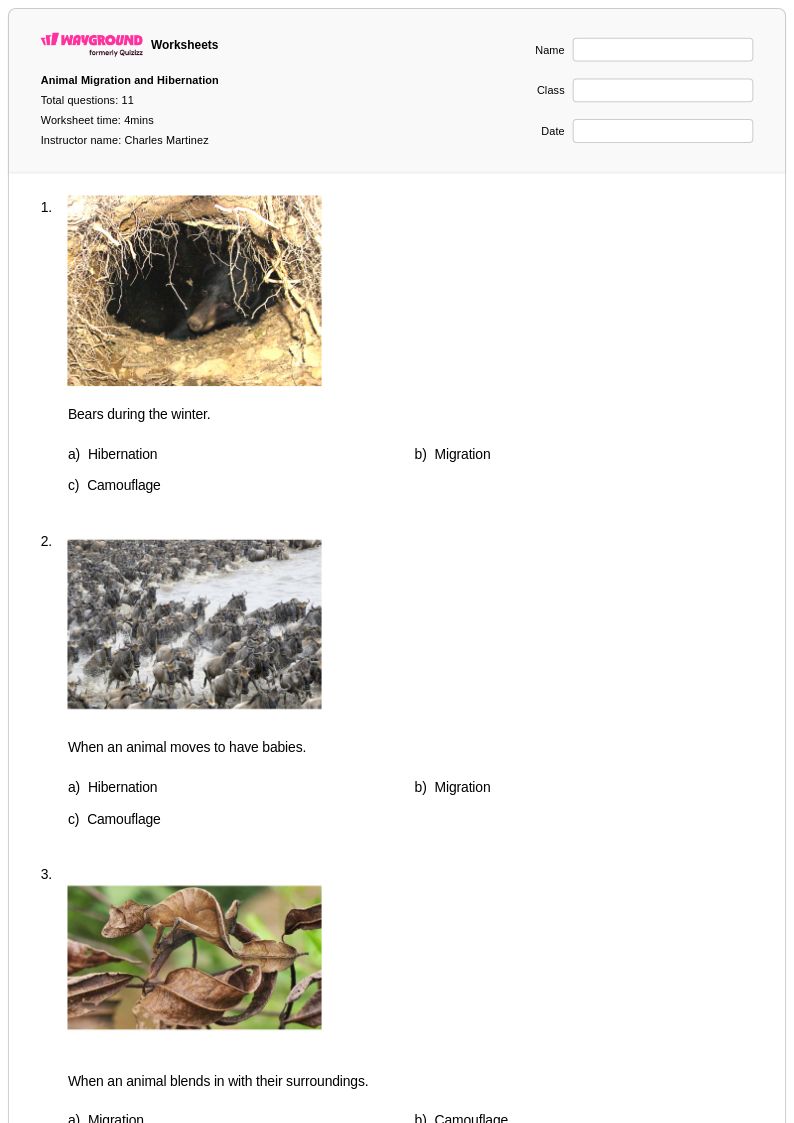
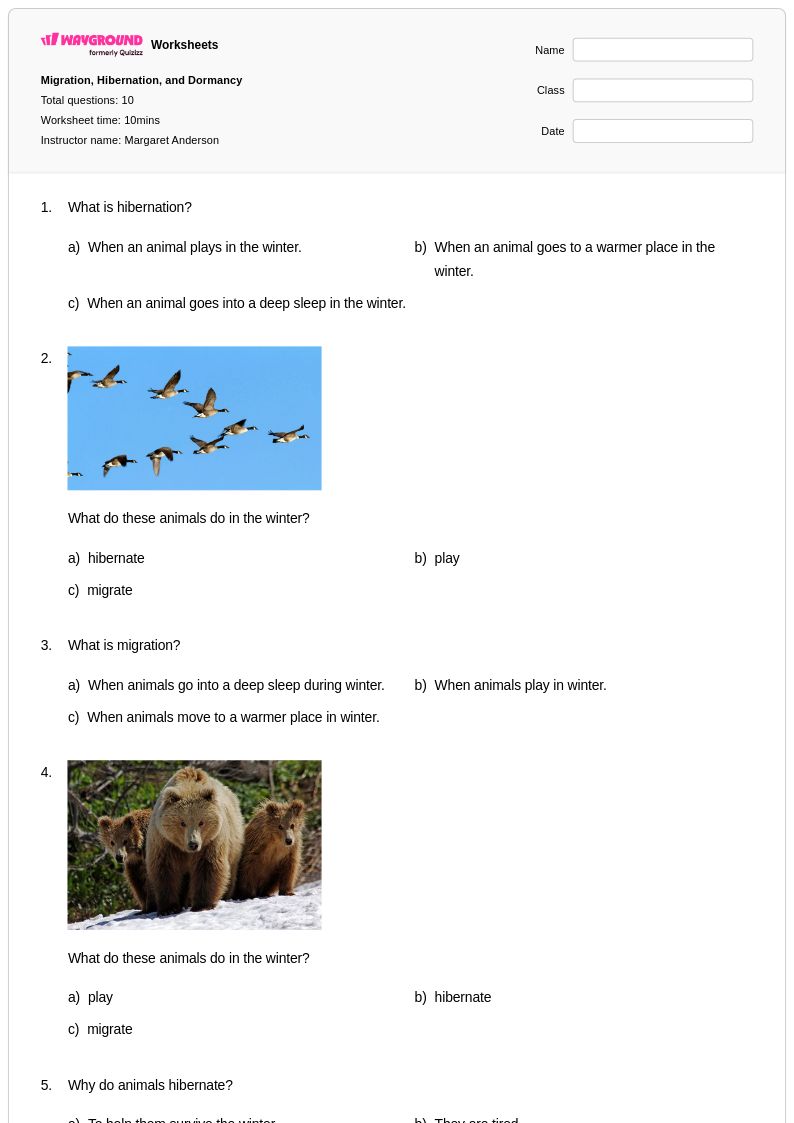
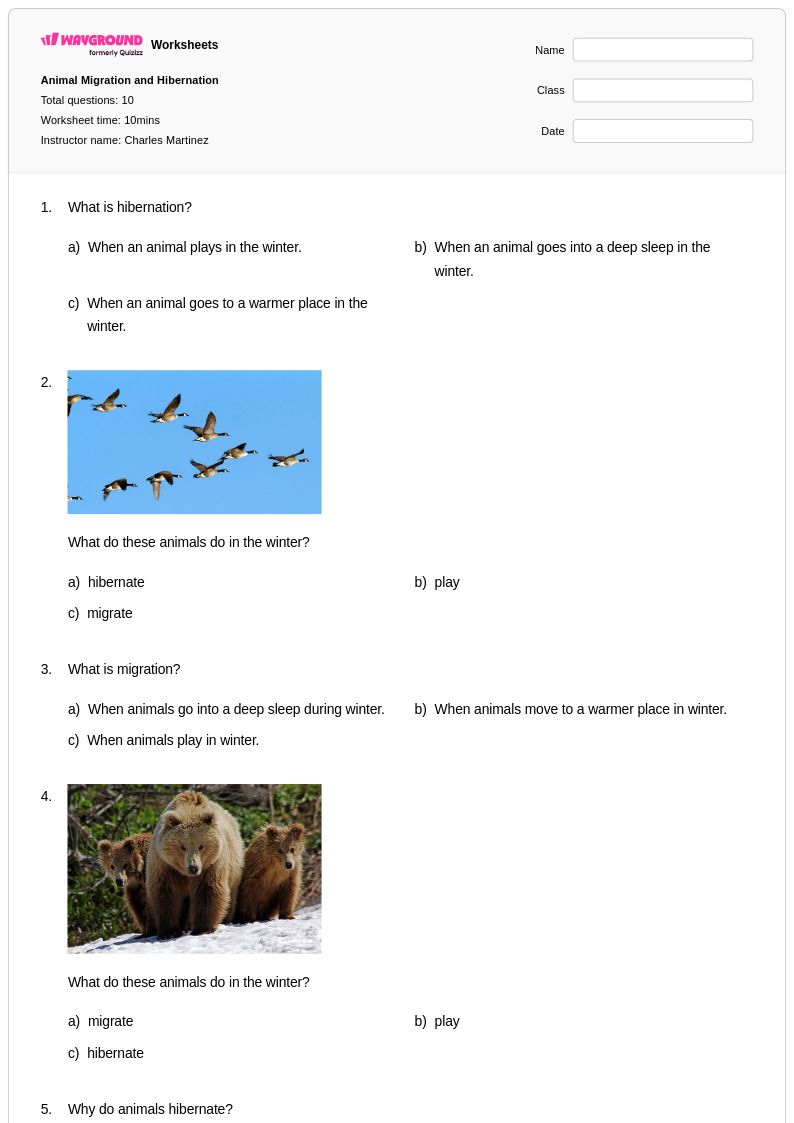
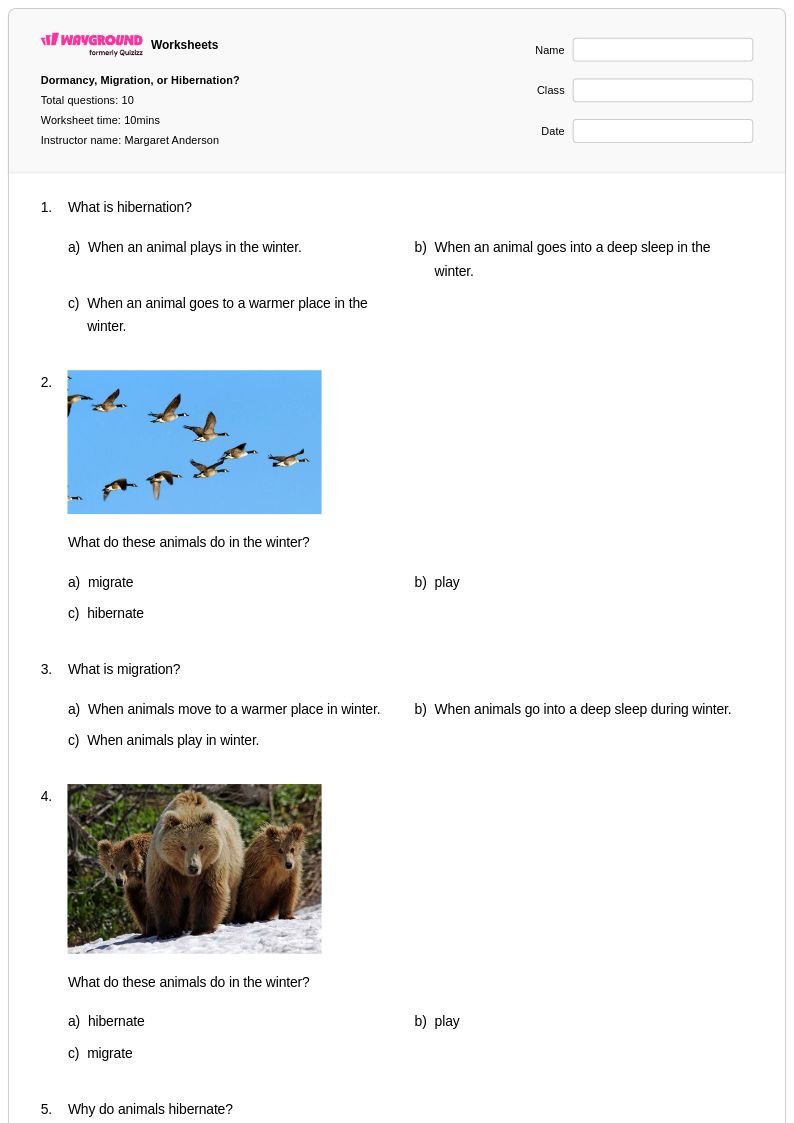
Discover free Grade 1 hibernation worksheets and printables that help young students explore how animals survive winter through engaging practice problems and activities with complete answer keys.
Explore printable Hibernation worksheets for Grade 1
Hibernation worksheets for Grade 1 students available through Wayground (formerly Quizizz) introduce young learners to the fascinating world of animal adaptations and seasonal survival strategies. These carefully designed educational resources help first-grade students understand how certain animals prepare for and survive winter months by entering a state of deep sleep. The worksheets strengthen foundational life science skills including animal classification, seasonal changes observation, and basic ecological relationships through age-appropriate activities, illustrations, and practice problems. Teachers can access comprehensive materials that include detailed answer keys, free printable options in convenient pdf formats, and engaging exercises that make complex biological concepts accessible to early elementary students.
Wayground (formerly Quizizz) empowers educators with an extensive collection of millions of teacher-created hibernation resources specifically curated for Grade 1 life science instruction. The platform's robust search and filtering capabilities allow teachers to quickly locate materials aligned with curriculum standards while offering powerful differentiation tools to accommodate diverse learning needs and abilities. These flexible worksheet collections are available in both printable pdf formats for traditional classroom use and interactive digital versions for technology-enhanced learning environments. Teachers can seamlessly customize content for targeted skill practice, utilize resources for remediation support, and implement enrichment activities that deepen student understanding of hibernation concepts, making lesson planning more efficient while ensuring comprehensive coverage of essential life science learning objectives.
FAQs
How do I teach hibernation to elementary students?
Start by distinguishing hibernation from regular sleep, emphasizing that hibernating animals experience dramatic drops in body temperature, heart rate, and metabolism. Use concrete examples like bears, groundhogs, and hedgehogs to illustrate how animals build fat reserves in fall and enter dormancy to survive food scarcity in winter. Visual comparisons of active versus hibernating animal body states help younger learners grasp the physiological changes involved. Connecting the concept to seasonal change gives students an accessible anchor for understanding why hibernation is an adaptive survival strategy.
What exercises help students practice understanding hibernation?
Effective practice exercises include comparing and contrasting hibernation across different animal groups such as mammals, reptiles, and amphibians, which reinforces classification and biological diversity skills. Students also benefit from sequencing activities that trace an animal's preparation for hibernation, from fat storage through torpor, building their understanding of cause-and-effect relationships. Diagram labeling tasks focused on metabolic changes during dormancy and short-answer questions about seasonal triggers deepen comprehension beyond surface-level recall.
What misconceptions do students commonly have about hibernation?
The most common misconception is that hibernation is simply deep sleep, when in fact it involves dramatic physiological changes including severe drops in core body temperature and metabolic rate that ordinary sleep does not. Students also frequently assume all bears hibernate fully, when many species experience torpor, a lighter form of dormancy from which animals can rouse more easily. Another common error is confusing hibernation with migration or estivation, so explicitly contrasting these survival strategies during instruction helps students build accurate conceptual distinctions.
How can I differentiate hibernation lessons for students at different skill levels?
For struggling learners, focus on concrete examples with visual supports and simplified vocabulary around key terms like torpor and dormancy before introducing comparative analysis. Advanced students can be challenged to examine hibernation at a physiological level, analyzing metabolic slowdown, hormonal triggers, and cross-species comparisons. On Wayground, teachers can apply accommodations such as read aloud support and reduced answer choices for individual students, while other students receive standard settings, allowing differentiation without disrupting the classroom workflow.
How do I use Wayground's hibernation worksheets in my classroom?
Wayground's hibernation worksheets are available as printable PDFs for traditional classroom use and in digital formats for technology-integrated learning environments, giving teachers flexibility regardless of their classroom setup. Teachers can also host worksheets as a quiz directly on Wayground, enabling real-time student responses and streamlined review. All worksheets include complete answer keys, which reduces teacher prep time and supports efficient formative assessment after practice sessions.
What key vocabulary should students know before completing a hibernation worksheet?
Students should be familiar with terms including hibernation, torpor, dormancy, metabolism, and fat storage before engaging with worksheet activities, as these concepts underpin most analytical questions. Understanding the difference between true hibernation and torpor is particularly important for avoiding common errors on comparative tasks. Pre-teaching these terms with brief definitions and animal-specific examples ensures students can access higher-order questions on the worksheet rather than getting stuck on terminology.