
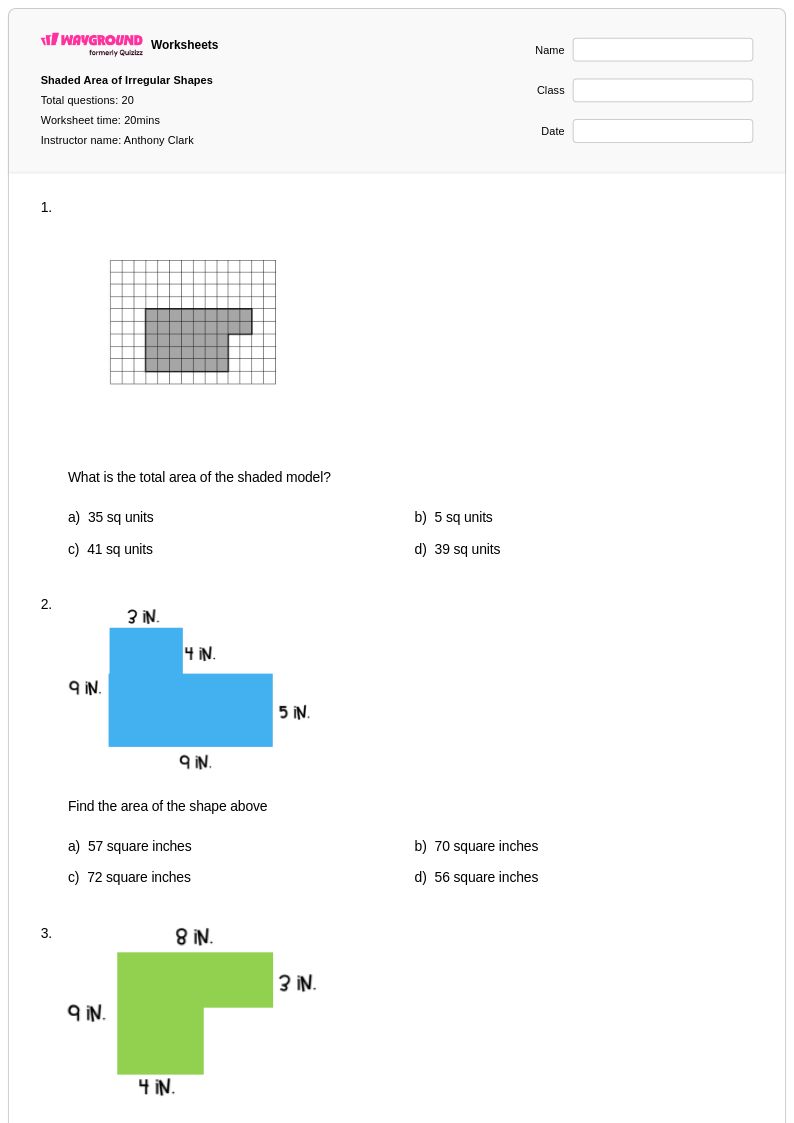
20 Q
3rd - Uni
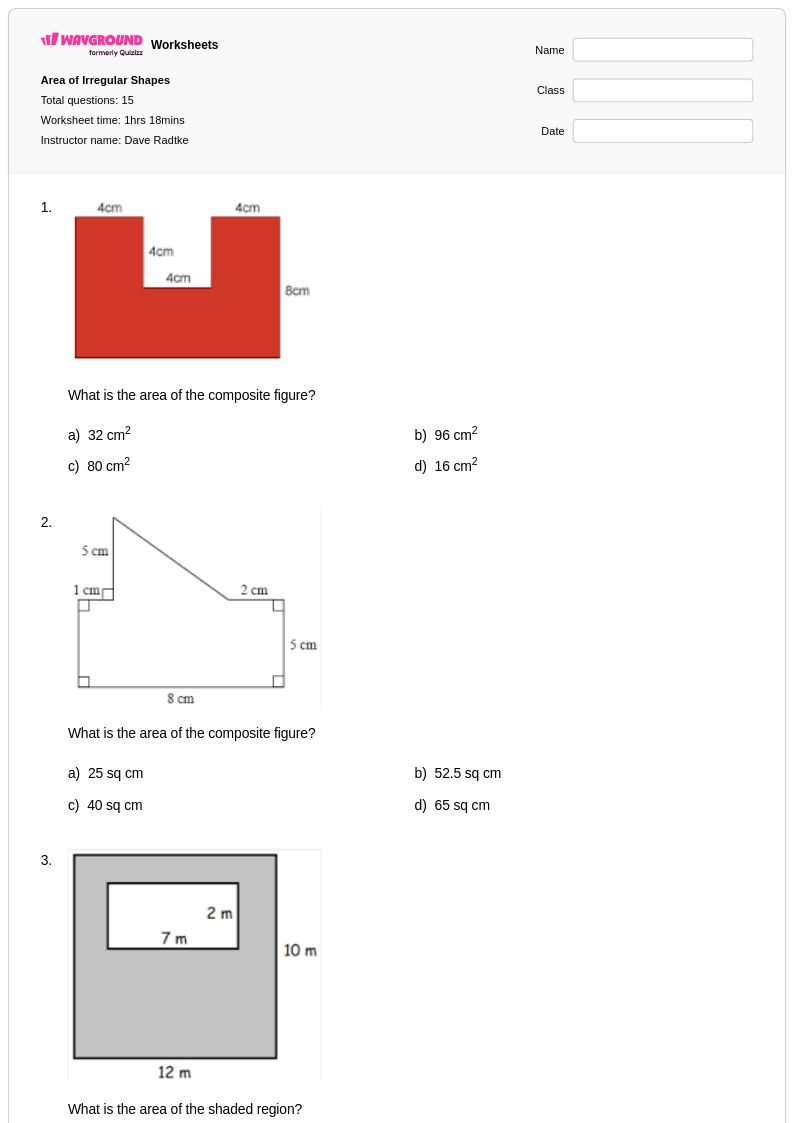
15 Q
6th
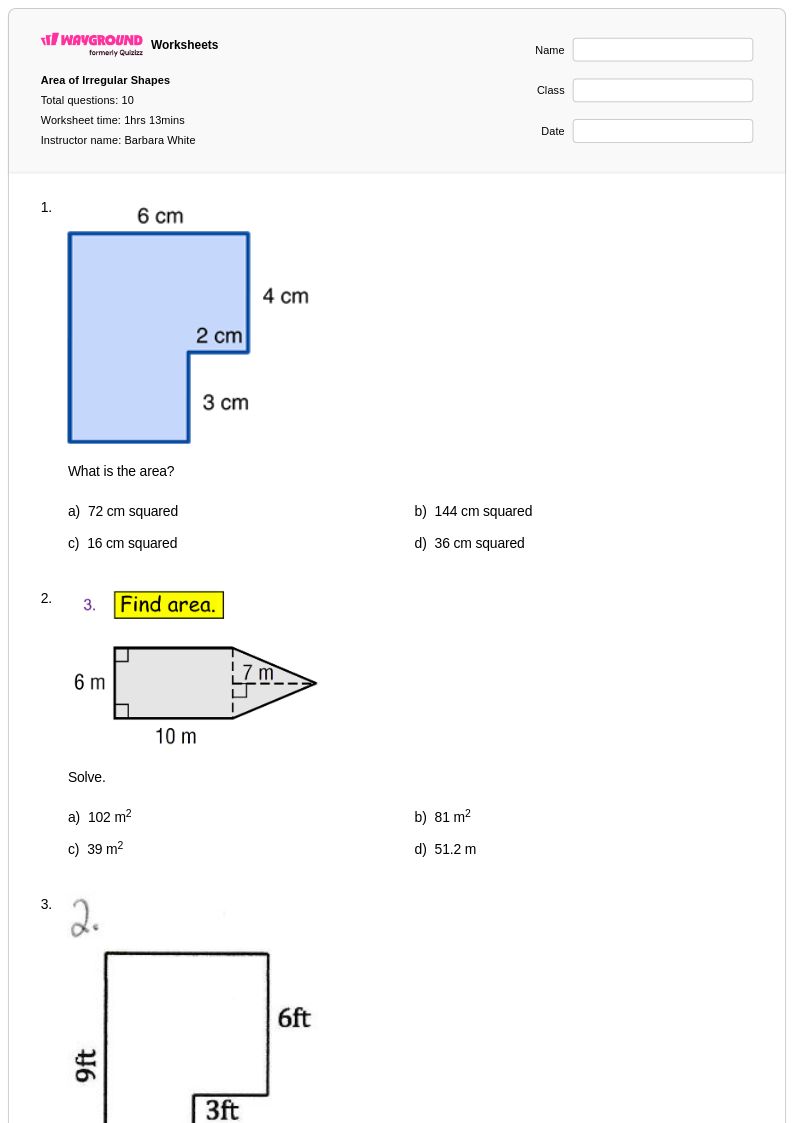
10 Q
3rd - 8th
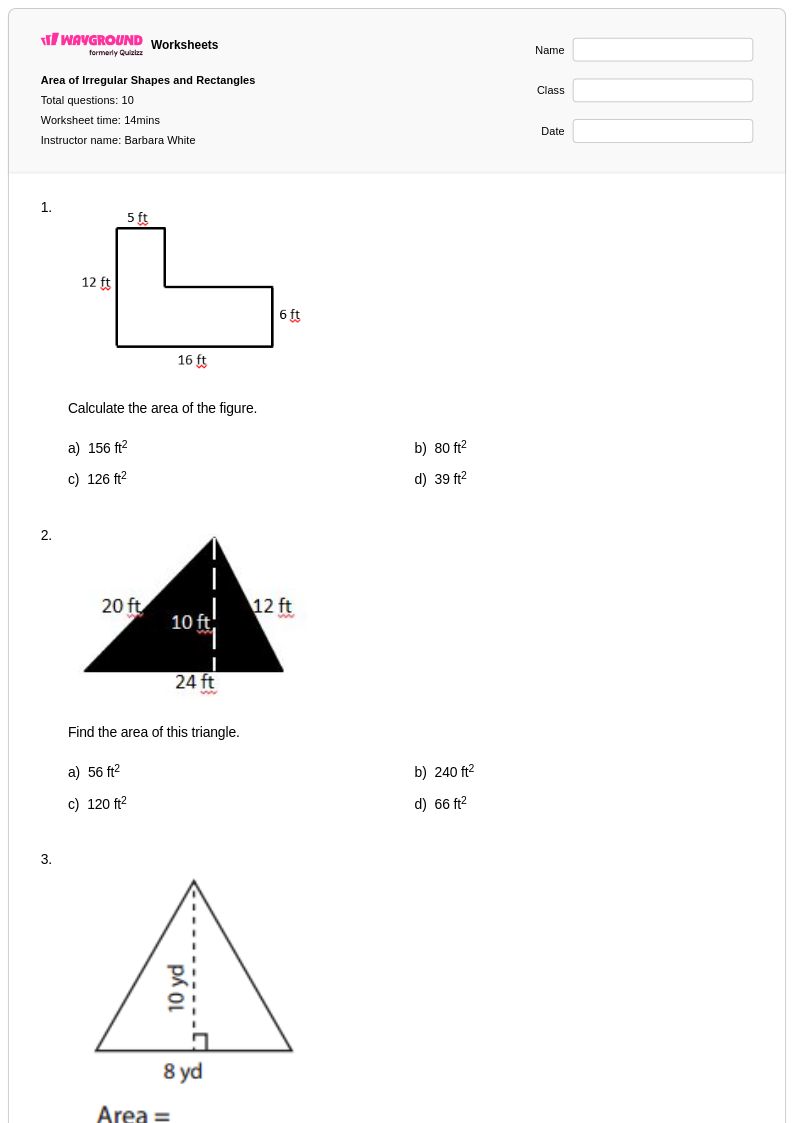
10 Q
6th
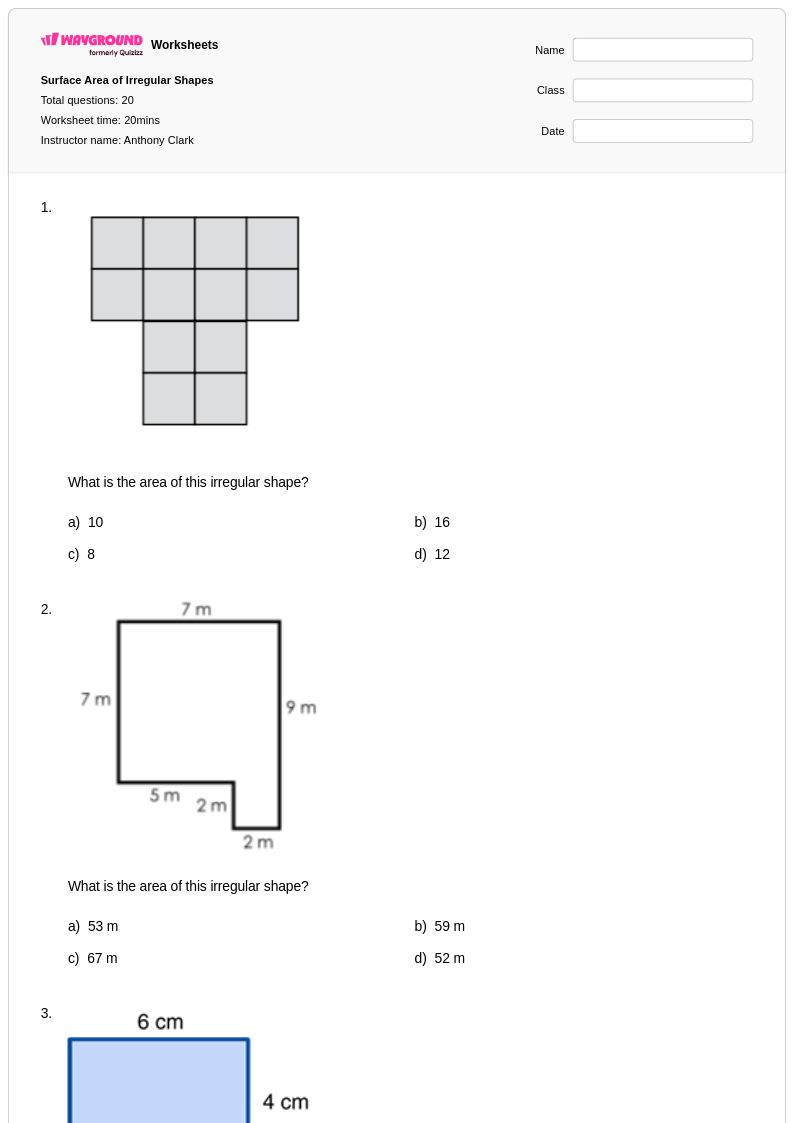
20 Q
6th - Uni
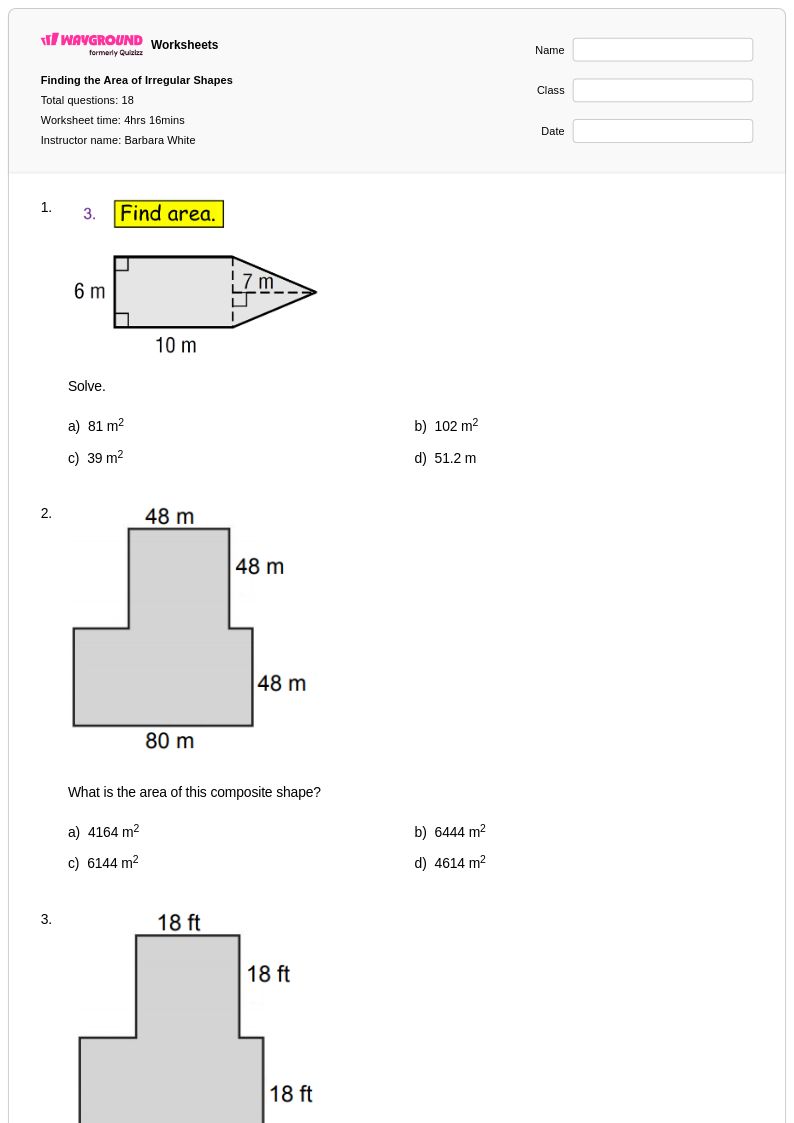
18 Q
6th
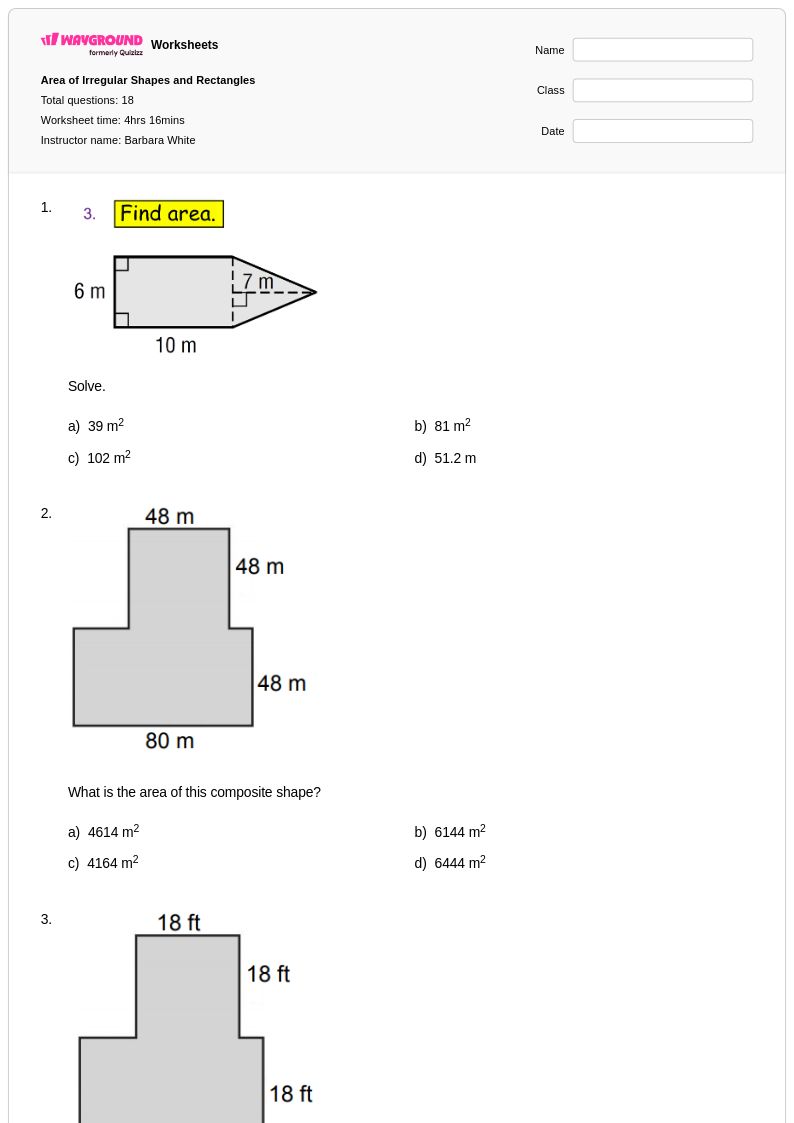
18 Q
6th
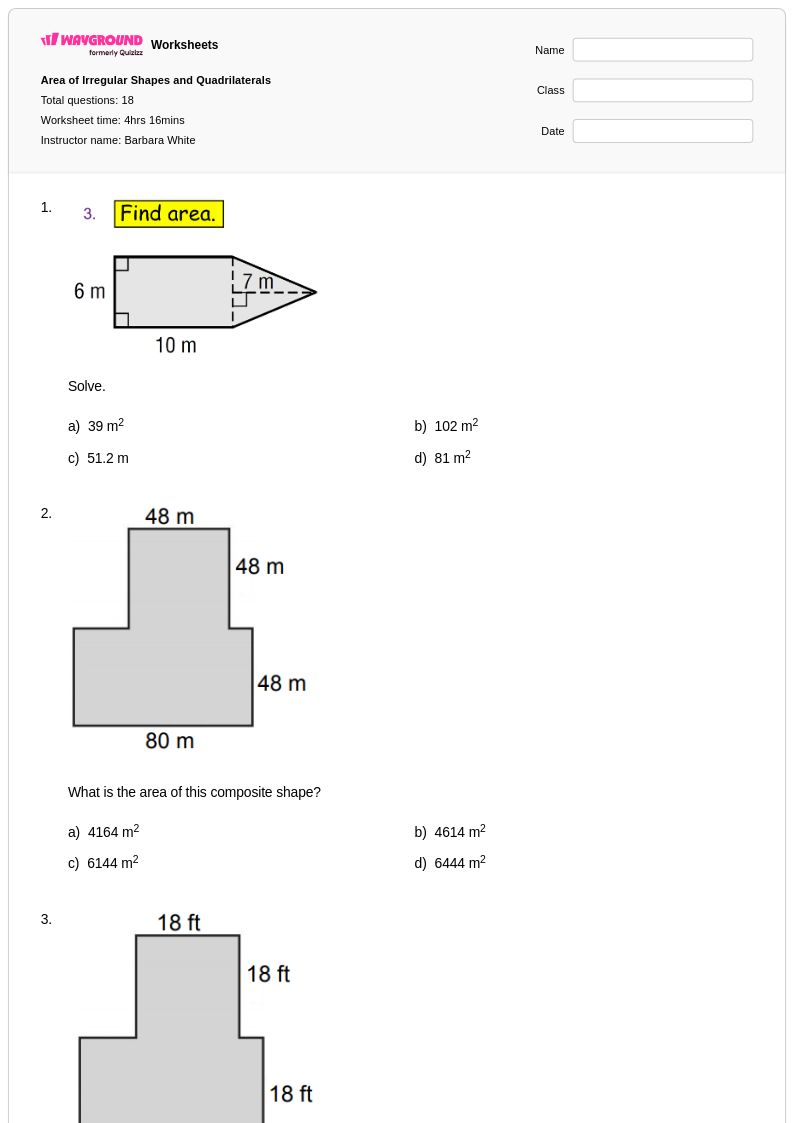
18 Q
6th
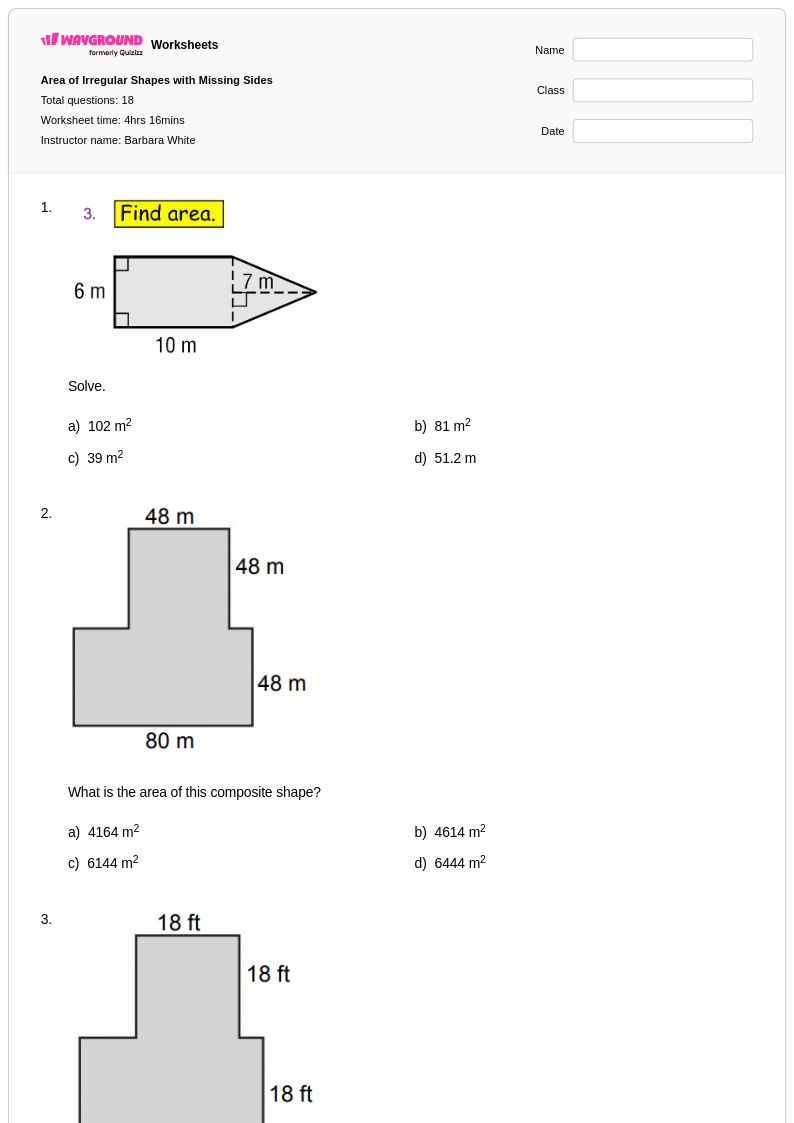
18 Q
6th
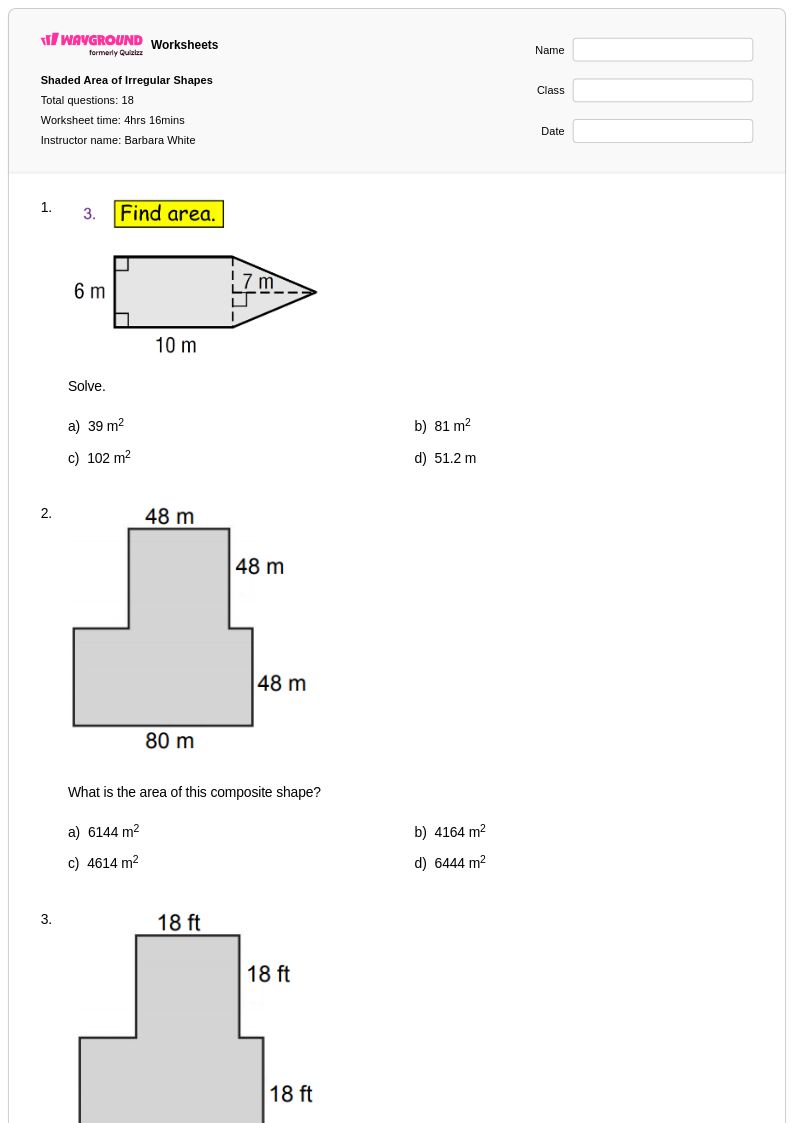
18 Q
6th
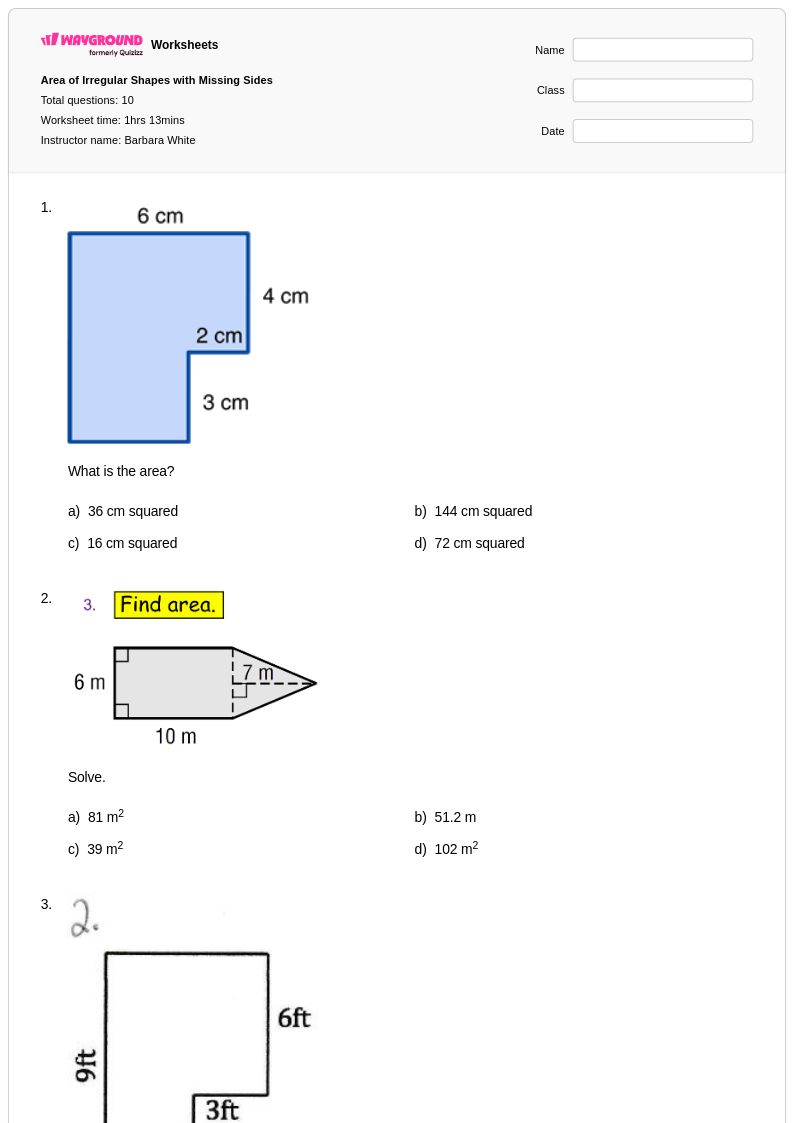
10 Q
3rd - 8th
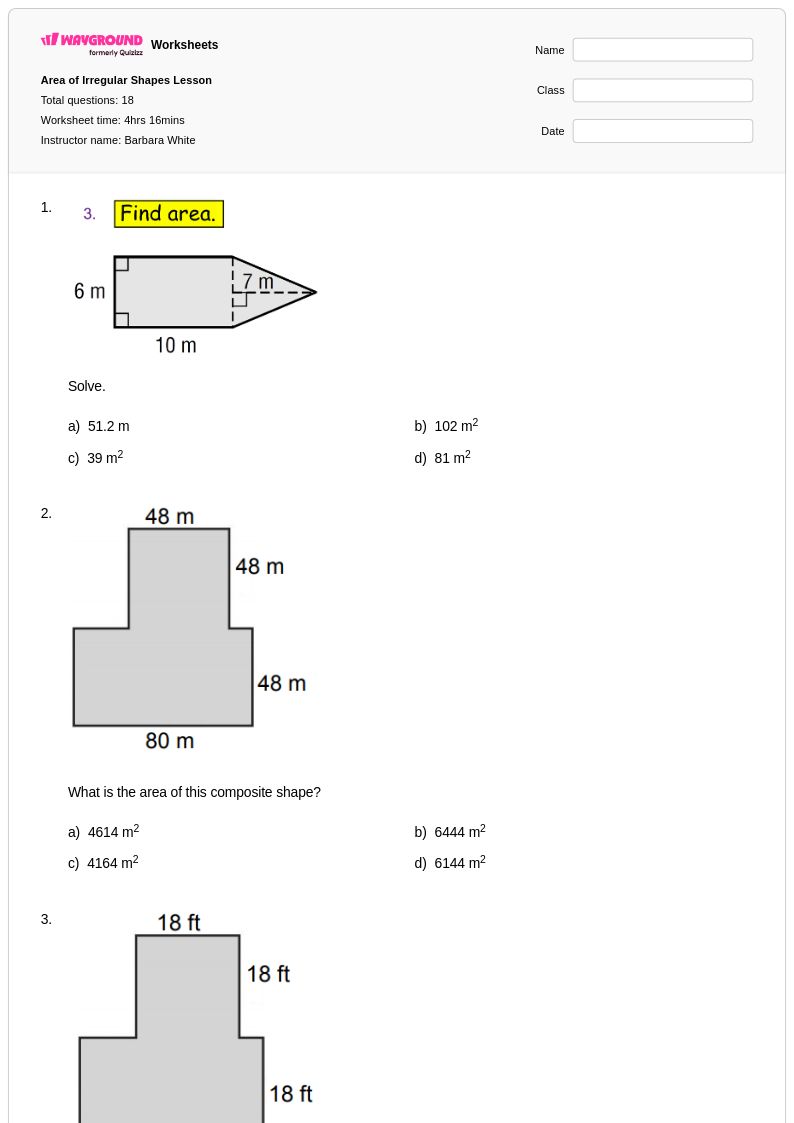
18 Q
6th
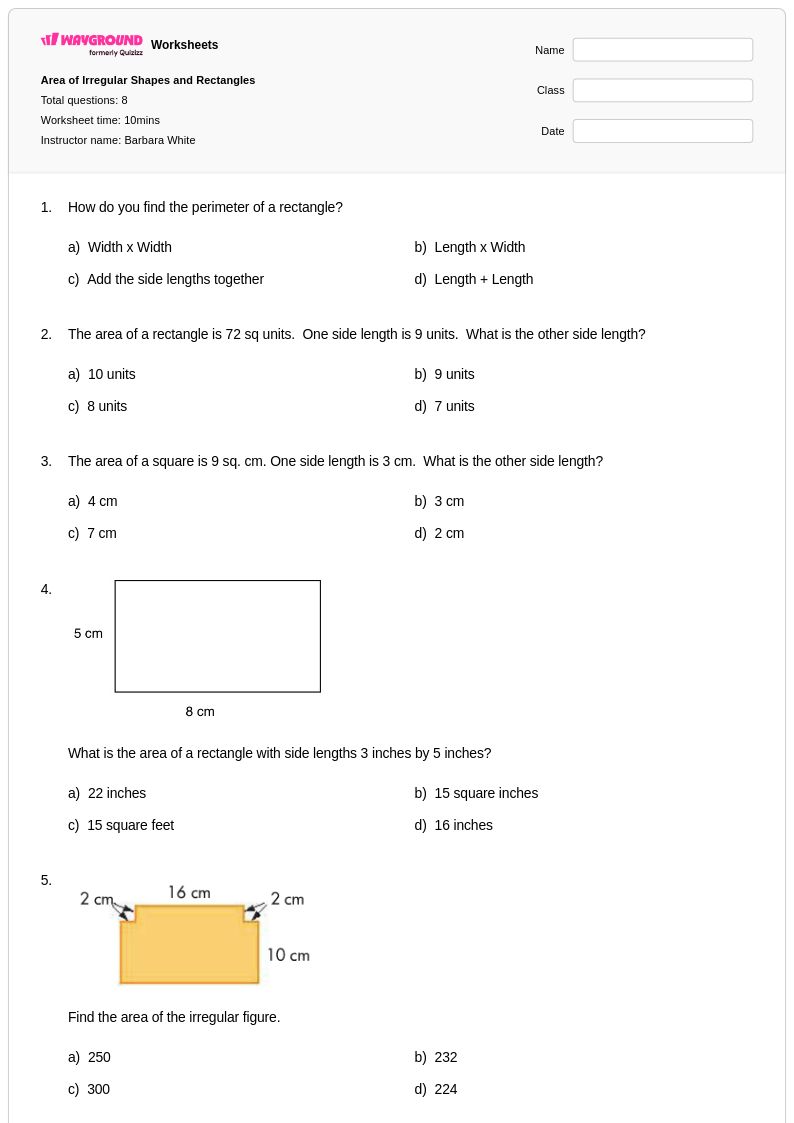
8 Q
6th
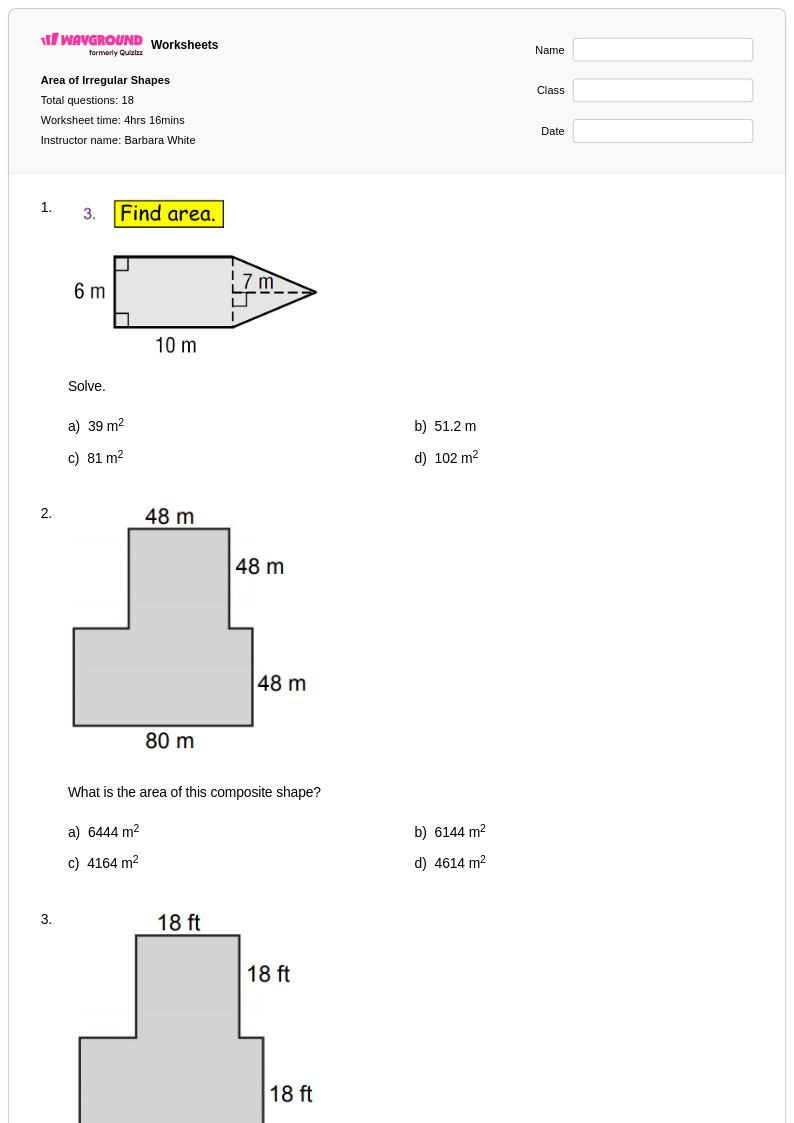
18 Q
6th
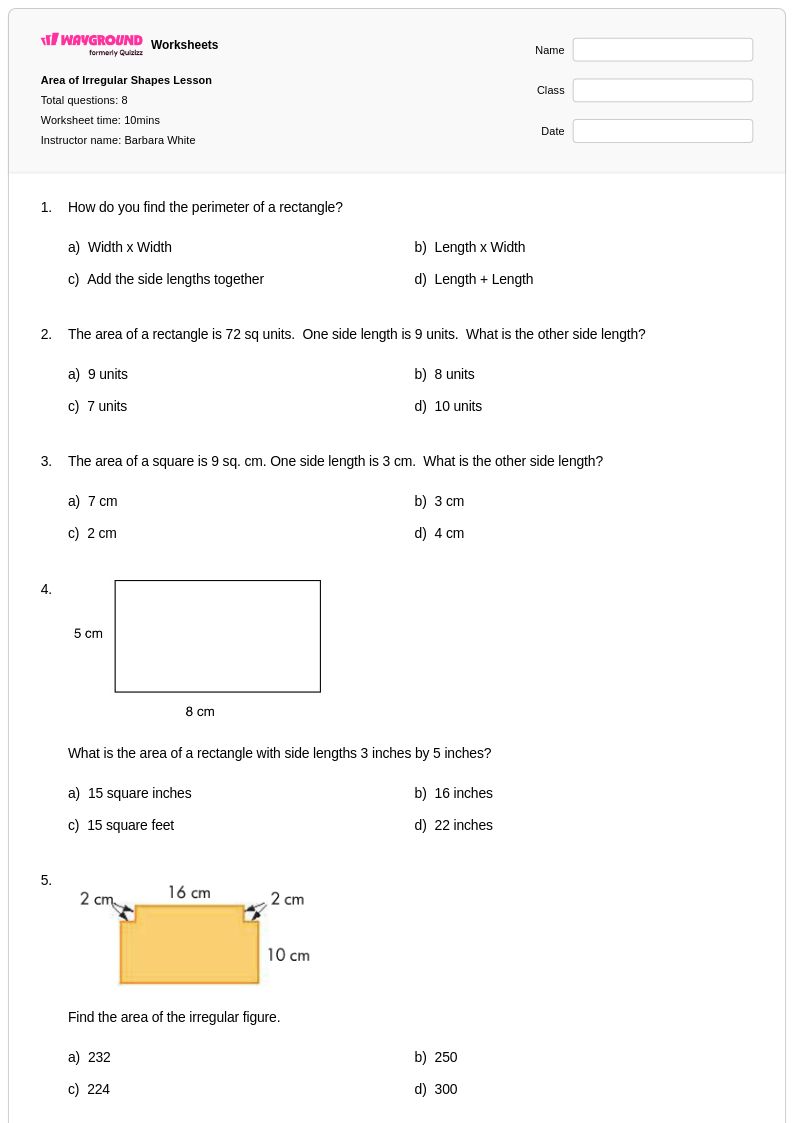
8 Q
6th
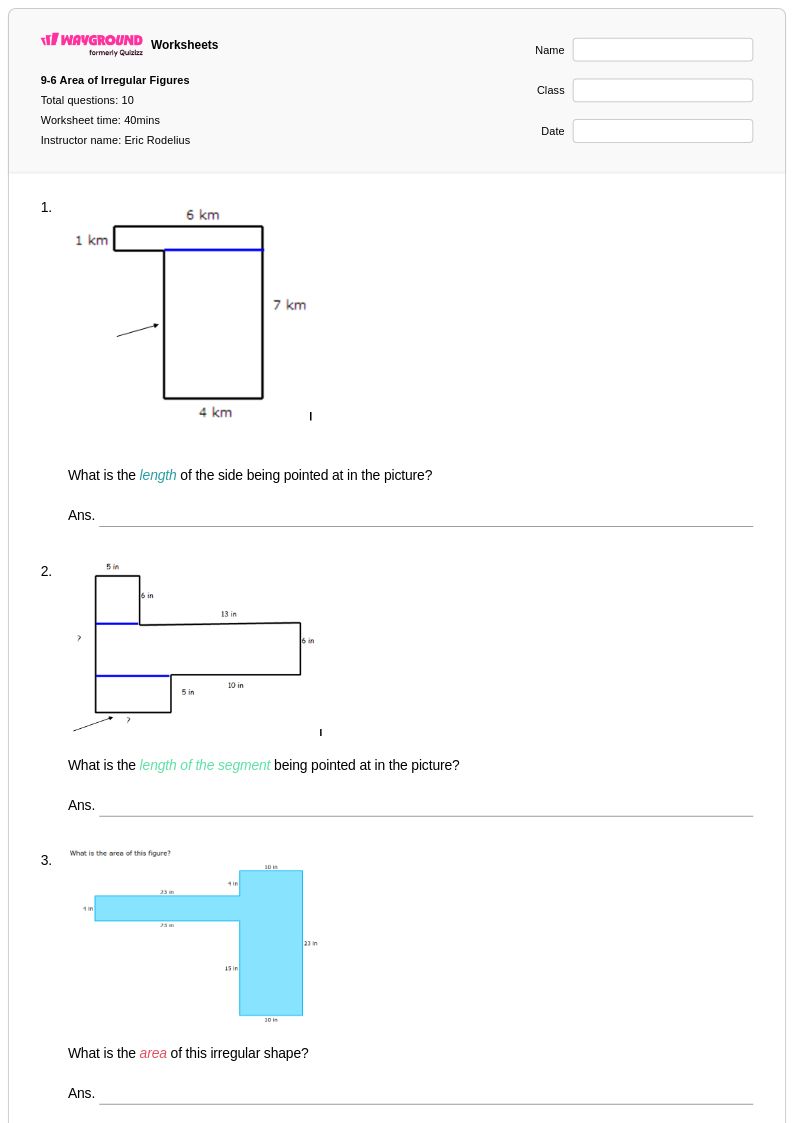
10 Q
6th - 7th
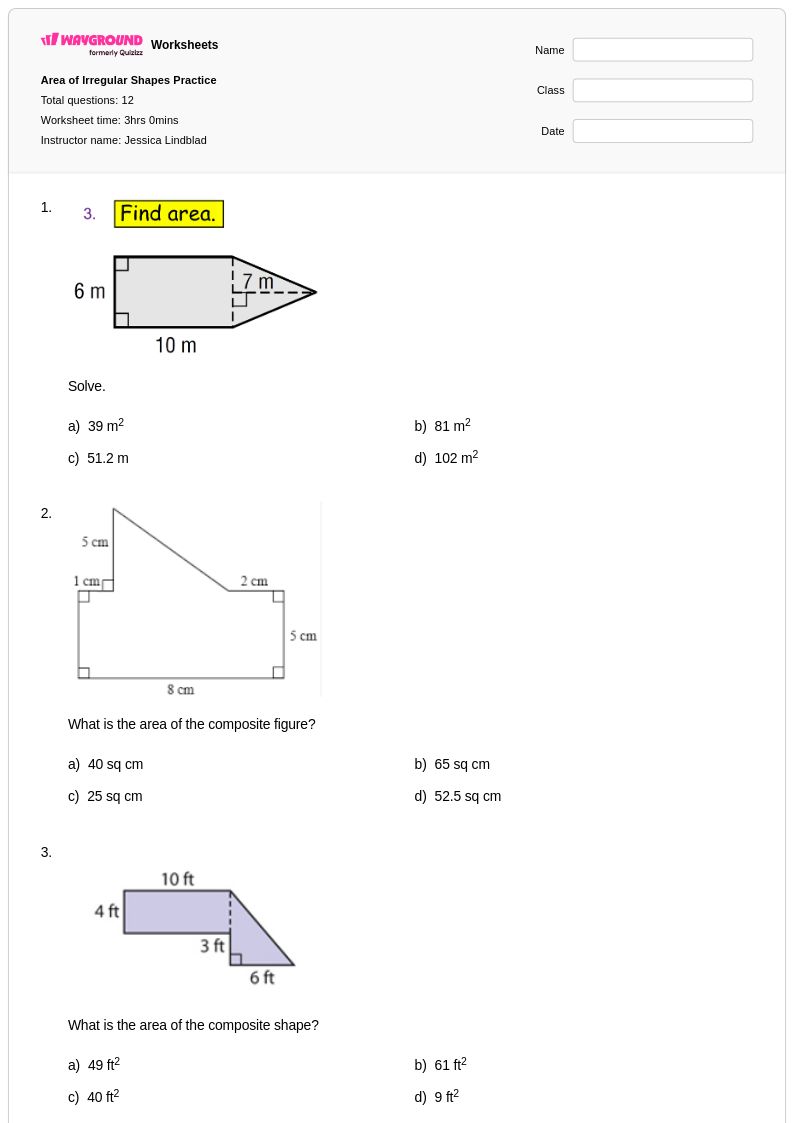
12 Q
6th - 8th
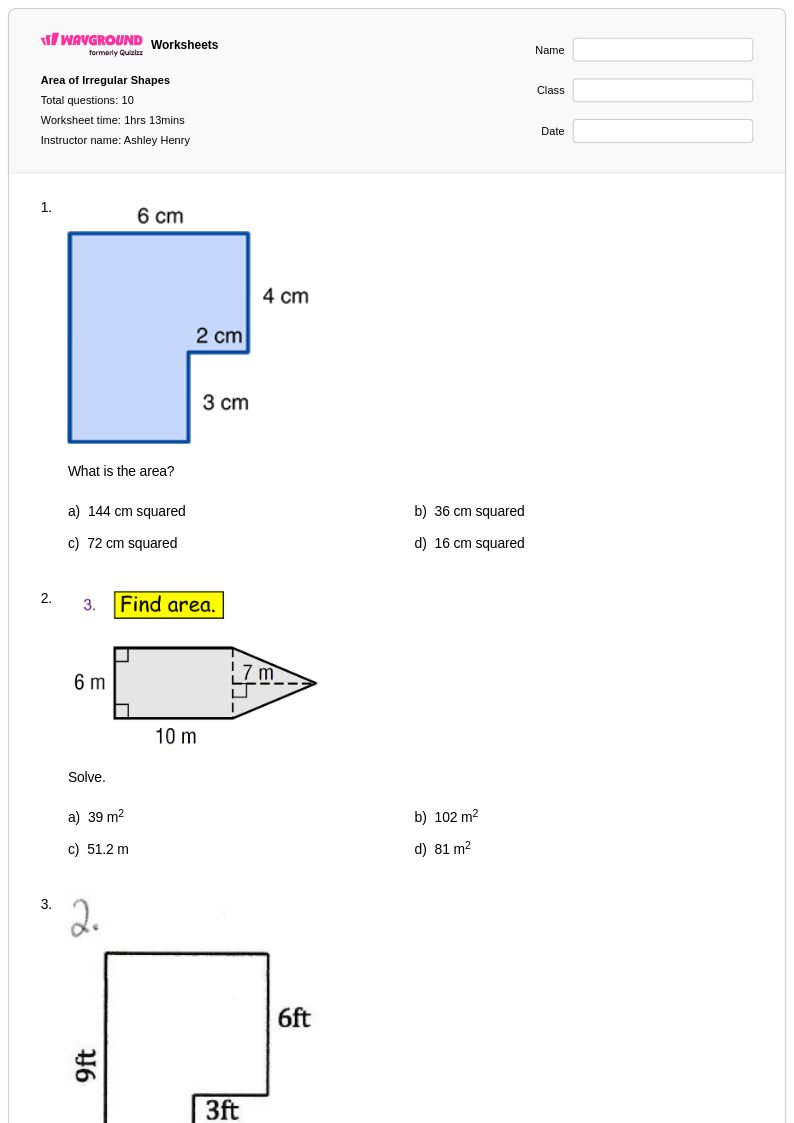
10 Q
3rd - 8th
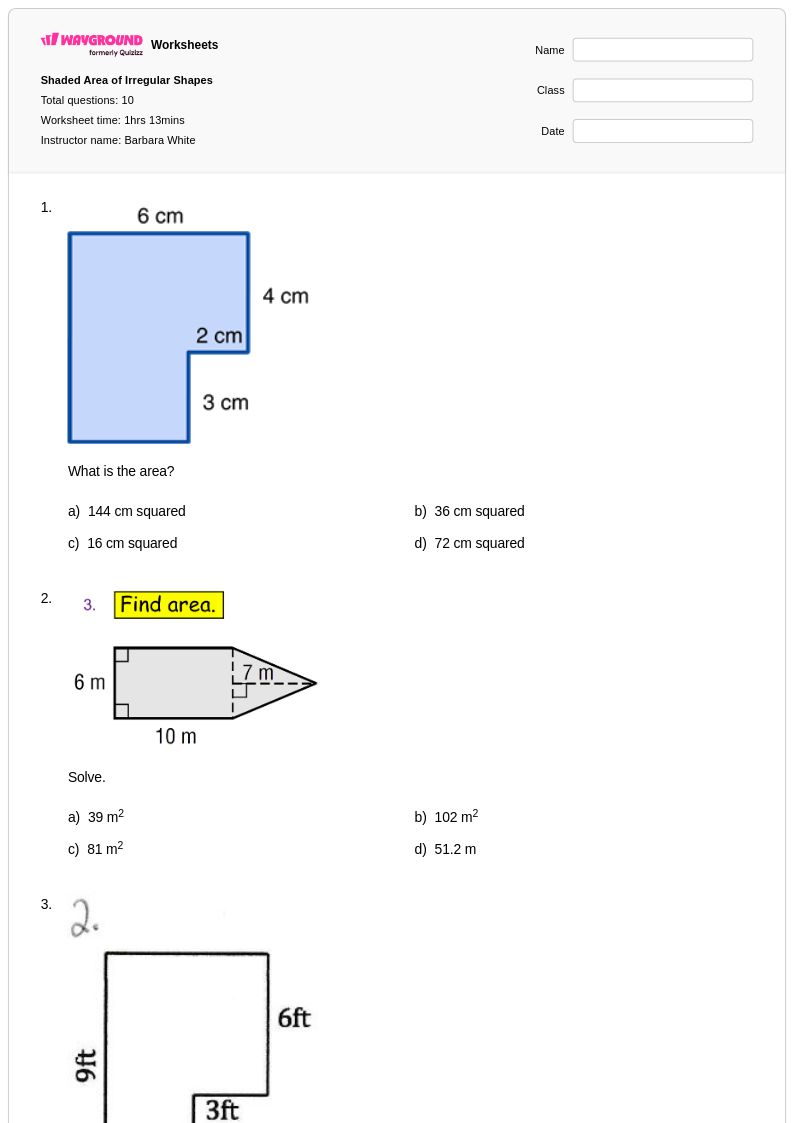
10 Q
3rd - 8th
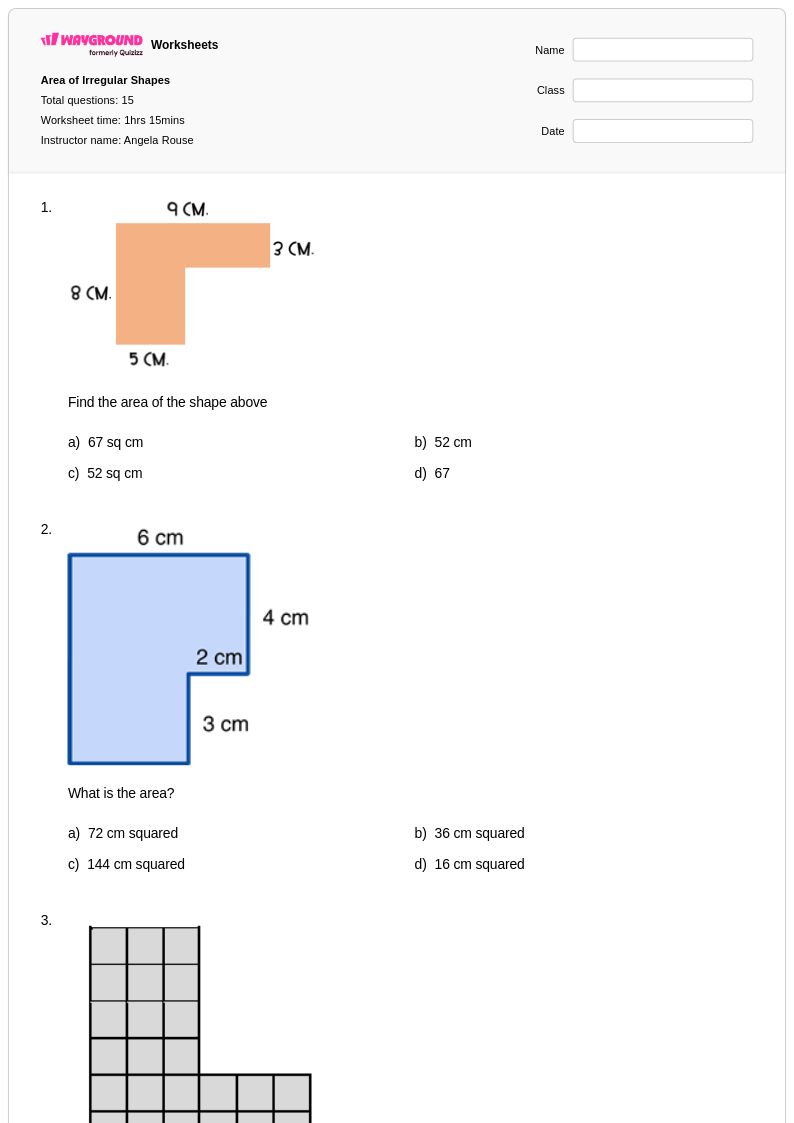
15 Q
6th
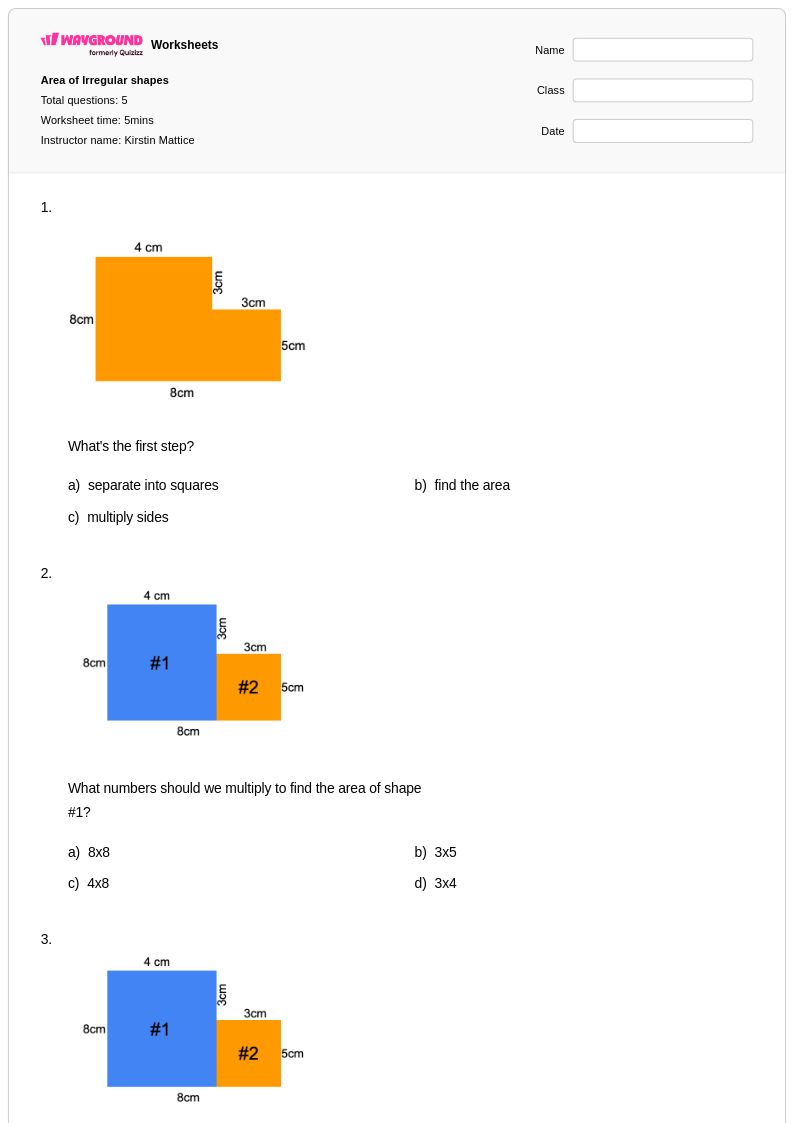
5 Q
1st - Uni
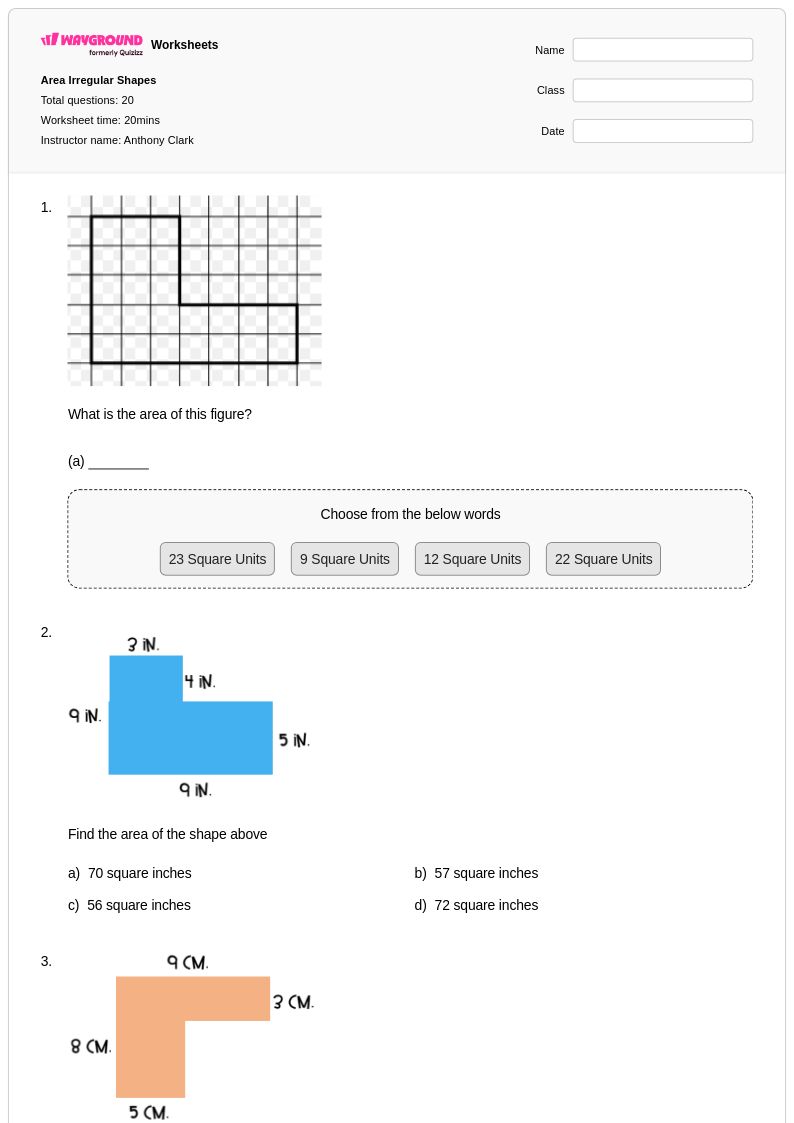
20 Q
3rd - Uni
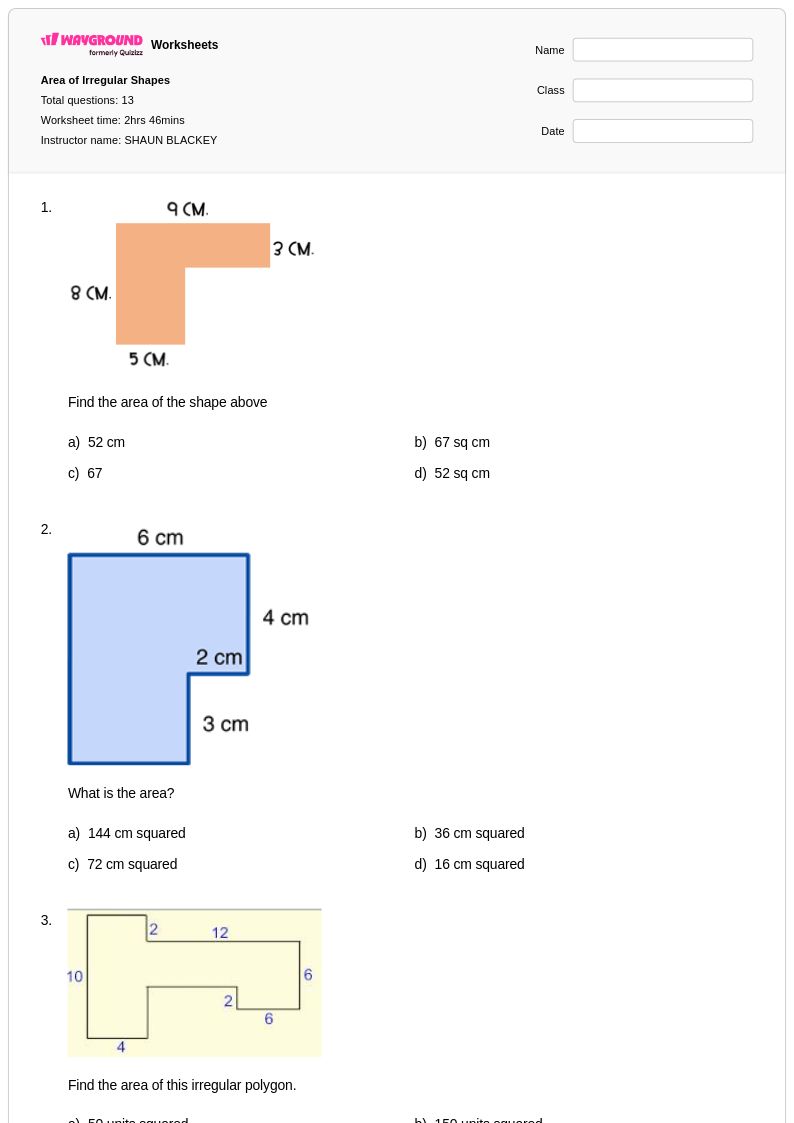
13 Q
6th - 8th
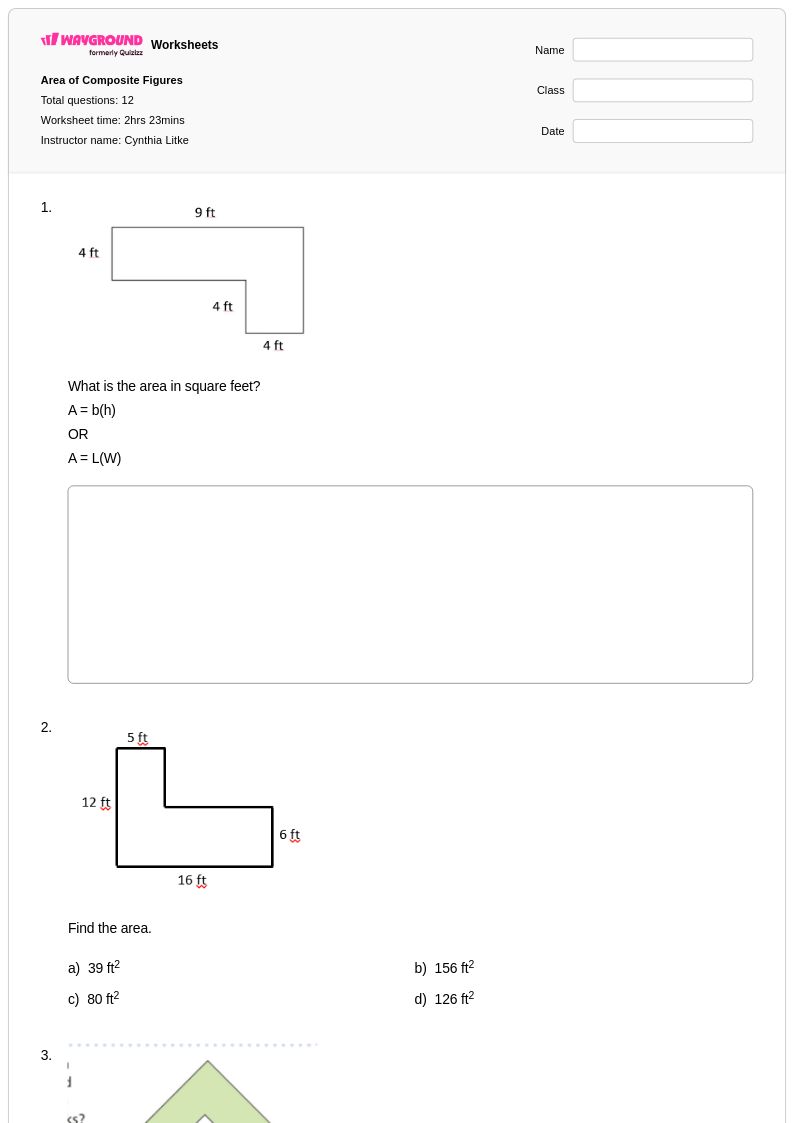
12 Q
6th
Explore Area of Irregular Shapes Worksheets by Grades
Explore Other Subject Worksheets for grade 6
Explore printable Area of Irregular Shapes worksheets for Grade 6
Area of irregular shapes worksheets available through Wayground (formerly Quizizz) provide Grade 6 students with comprehensive practice in calculating the area of complex geometric figures that cannot be measured using standard formulas. These carefully designed worksheets strengthen essential mathematical skills by teaching students to decompose irregular shapes into familiar rectangles, triangles, and other basic polygons, then systematically calculate and combine their individual areas. Each worksheet includes detailed answer keys and step-by-step solutions that help students understand the logical reasoning behind area calculations for composite figures. The free printable resources feature varied practice problems ranging from simple L-shaped figures to more complex multi-sided polygons, ensuring students develop confidence in applying area concepts to real-world scenarios where shapes don't conform to standard geometric patterns.
Wayground (formerly Quizizz) supports mathematics educators with millions of teacher-created worksheet collections specifically focused on area of irregular shapes and other Grade 6 geometry concepts. The platform's robust search and filtering capabilities allow teachers to quickly locate resources aligned with specific curriculum standards, while differentiation tools enable customization based on individual student needs and learning levels. Teachers can access these materials in both printable PDF formats for traditional classroom use and digital formats for interactive learning experiences. This flexibility proves invaluable for lesson planning, targeted remediation for struggling learners, enrichment activities for advanced students, and consistent skill practice throughout the academic year, helping educators address the diverse learning requirements inherent in teaching complex geometric concepts to sixth-grade students.
FAQs
How do I teach sixth graders to find the area of irregular shapes?
What exercises help Grade 6 students practice the area of irregular shapes?
What mistakes do students make when finding the area of irregular shapes?
How can I use these area of irregular shapes worksheets in class?
How does area of irregular shapes fit into the Common Core math progression?
How can I differentiate irregular-shape area practice for mixed-ability students?
What grade do students learn to find the area of irregular shapes?