
20 Q
8th - Uni
11 Q
4th - Uni
10 Q
8th - Uni
10 Q
11th
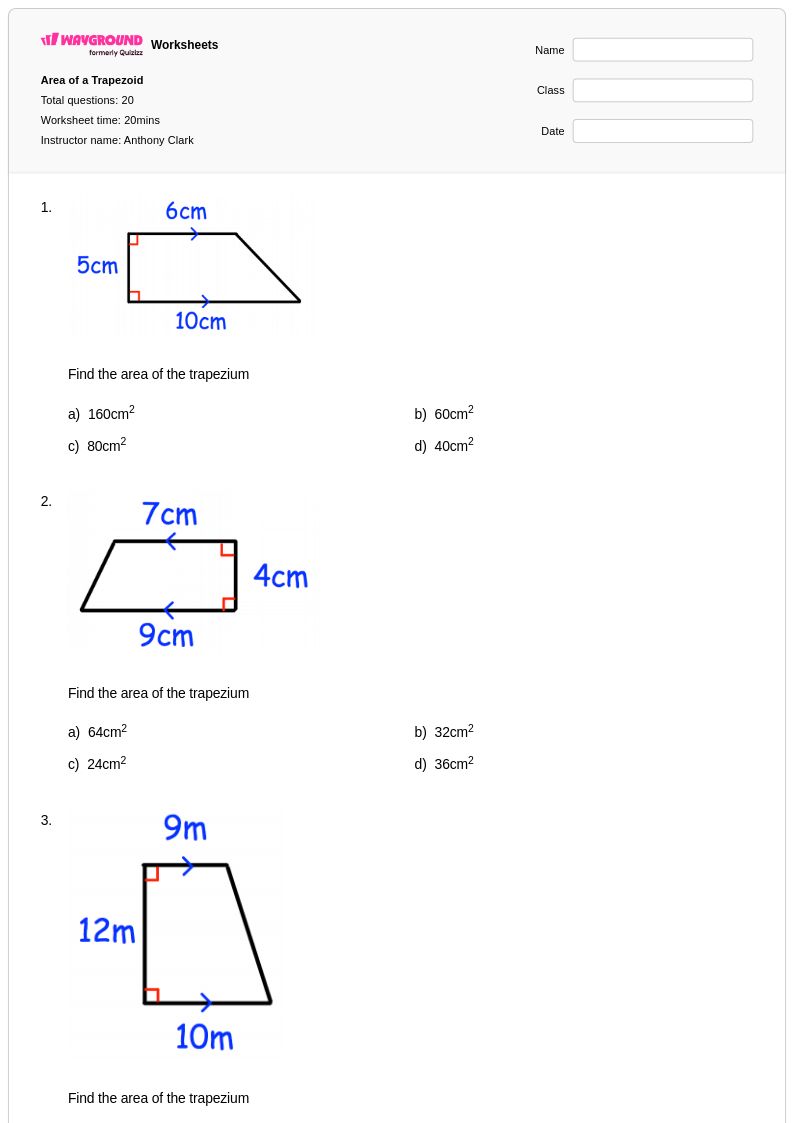
20 Q
6th - Uni
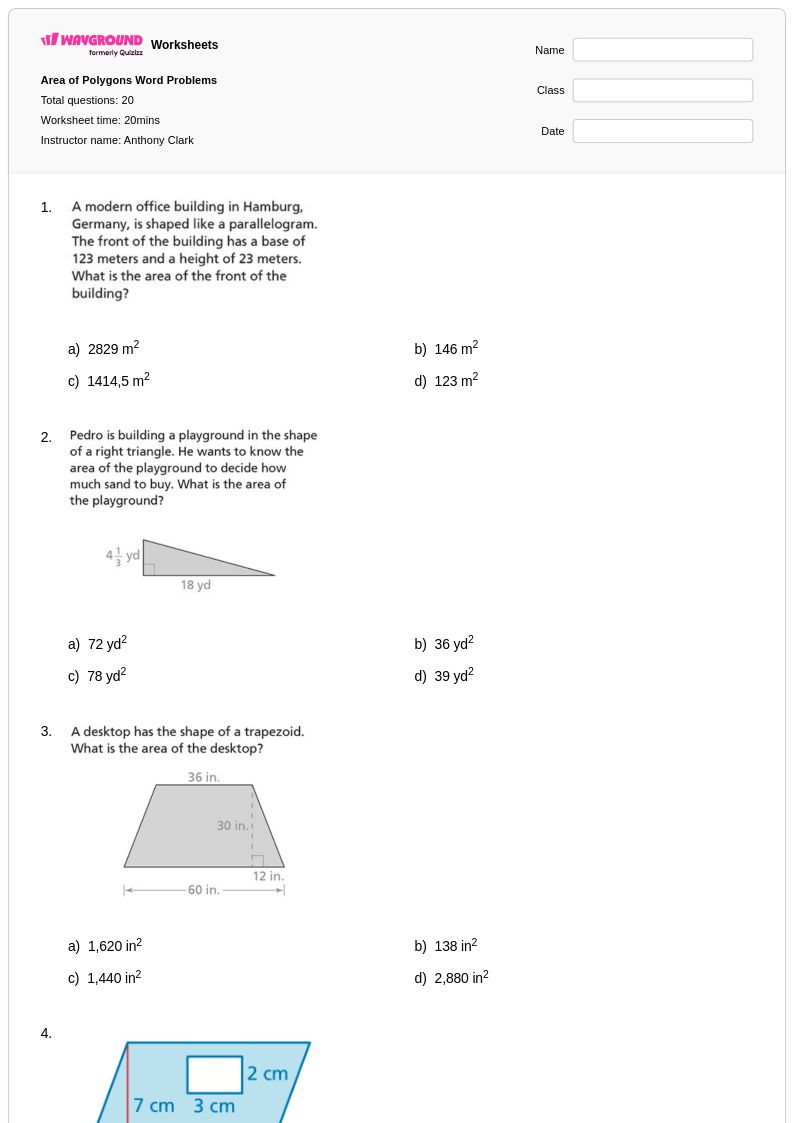
20 Q
6th - Uni
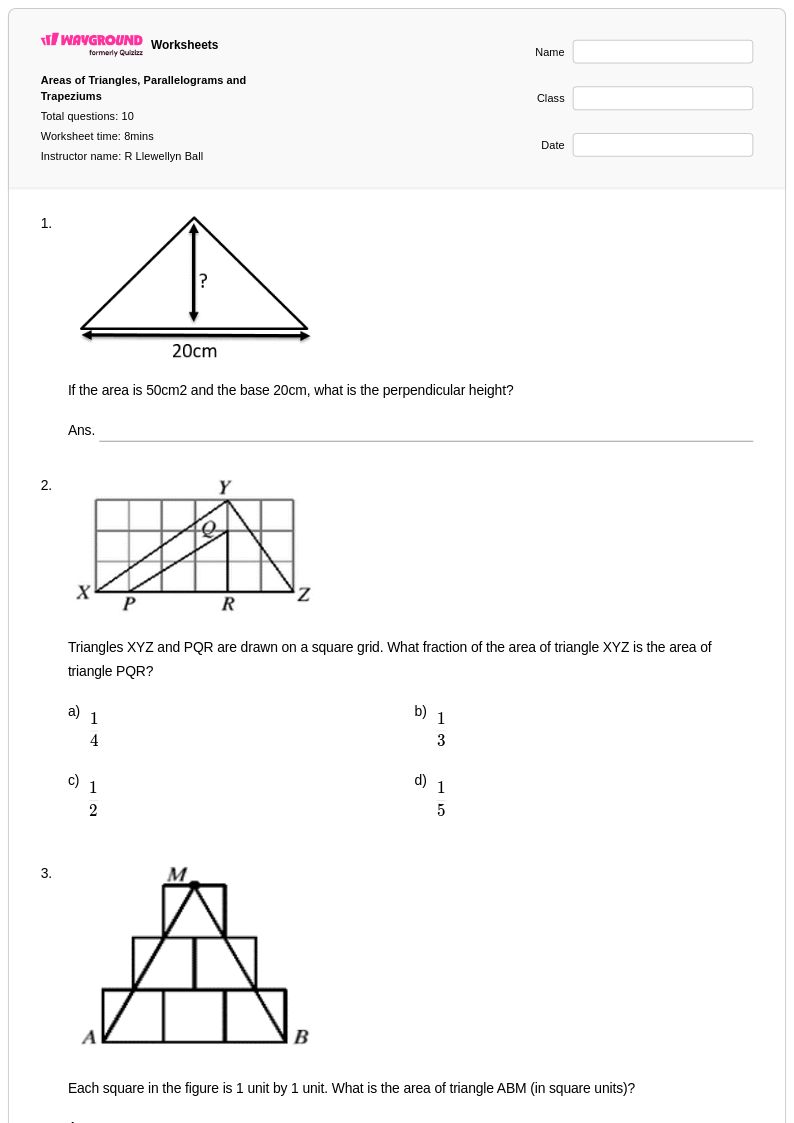
10 Q
7th - 11th
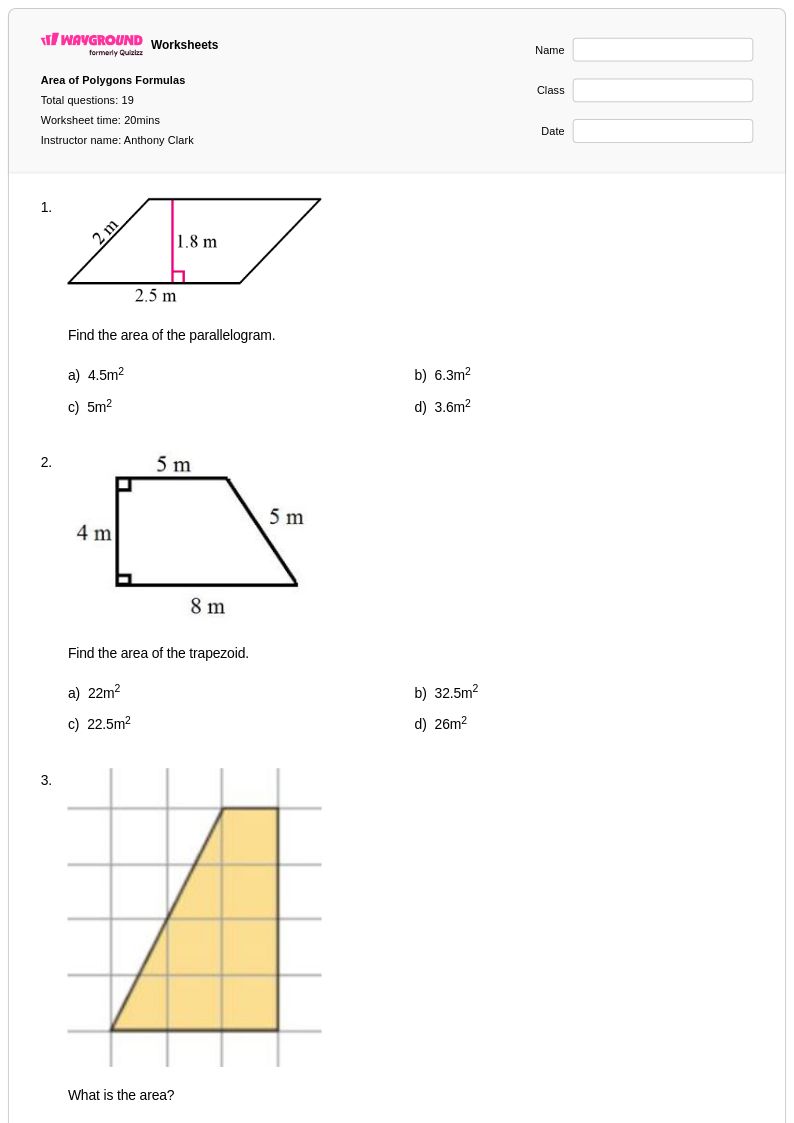
20 Q
6th - Uni
10 Q
6th - Uni
17 Q
9th - 12th
20 Q
9th - Uni
37 Q
11th
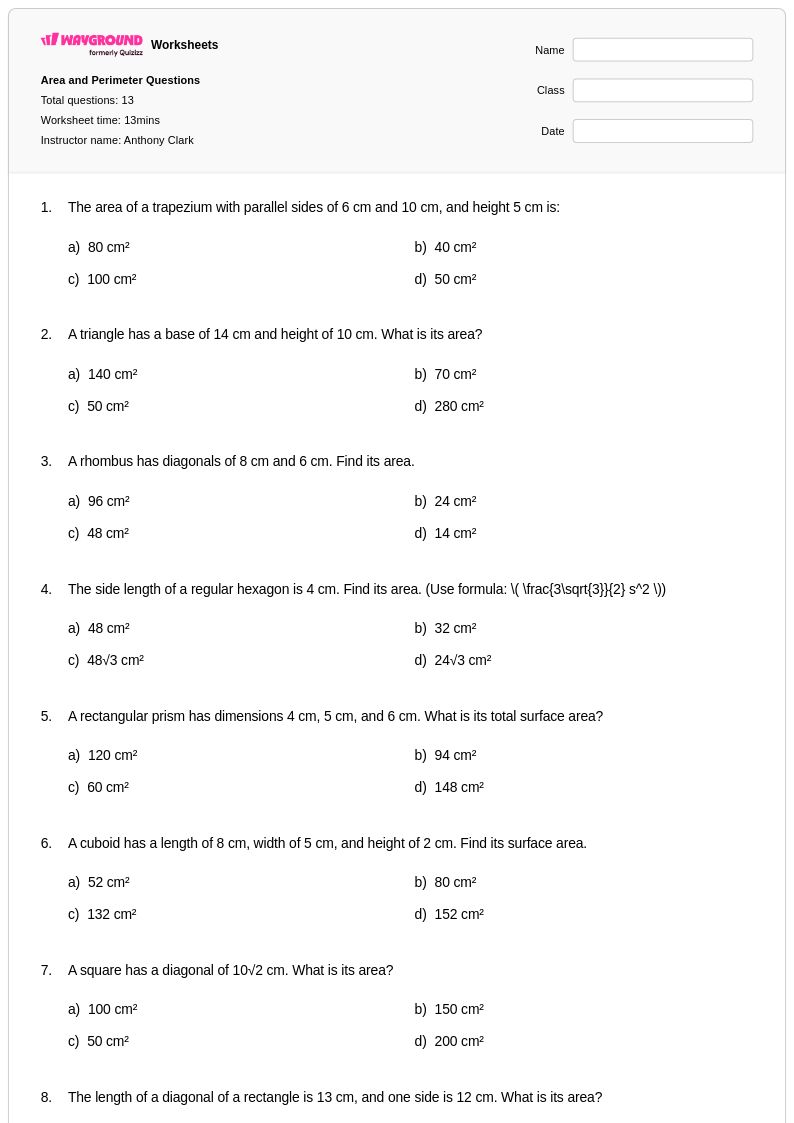
13 Q
8th - Uni
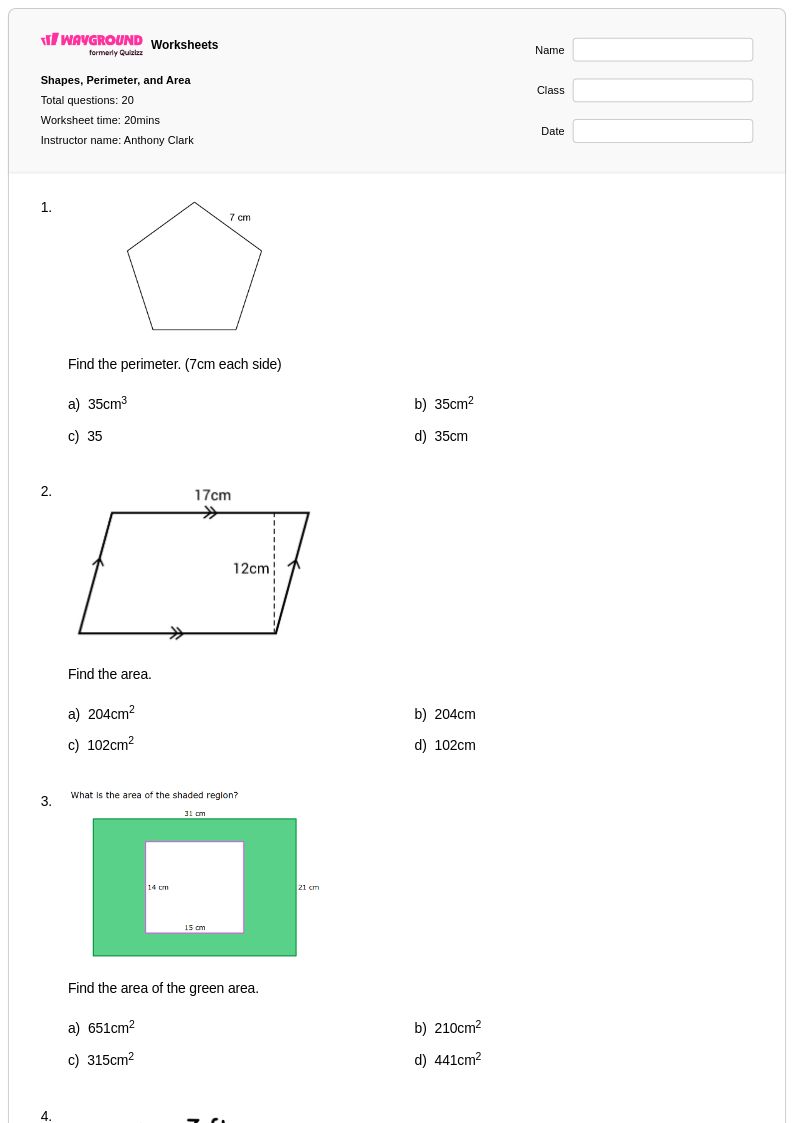
20 Q
7th - Uni
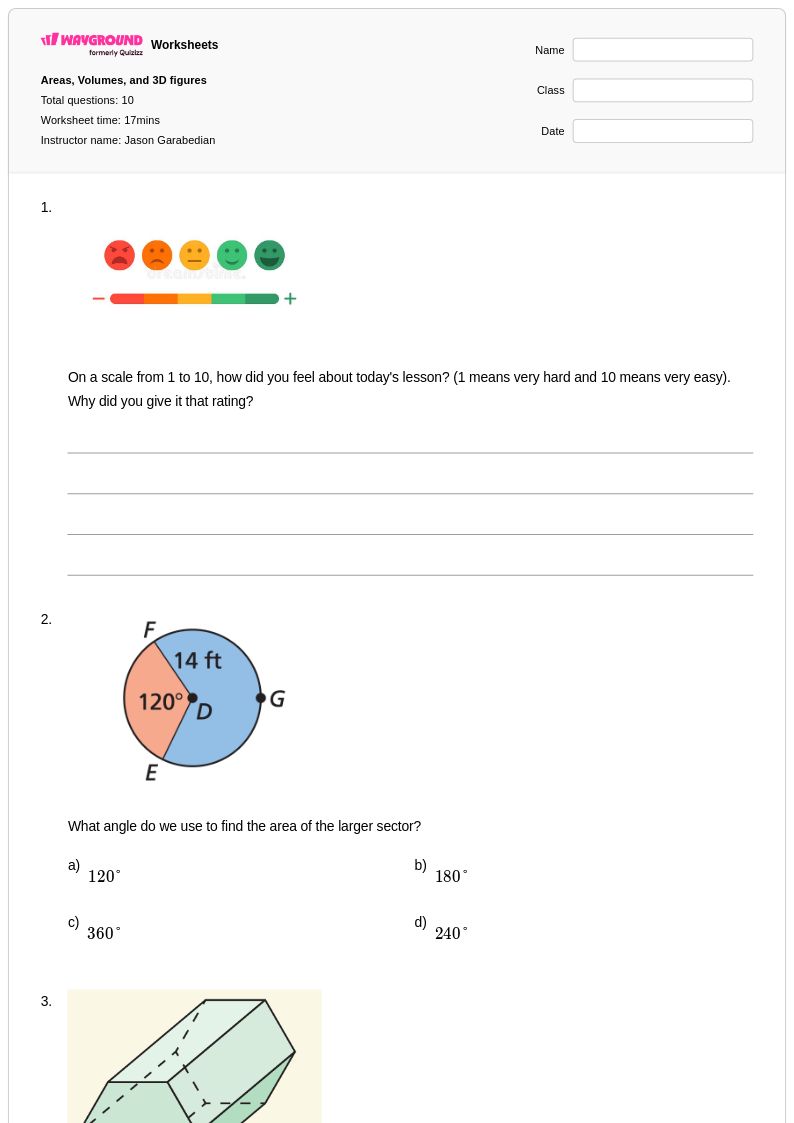
10 Q
9th - 11th
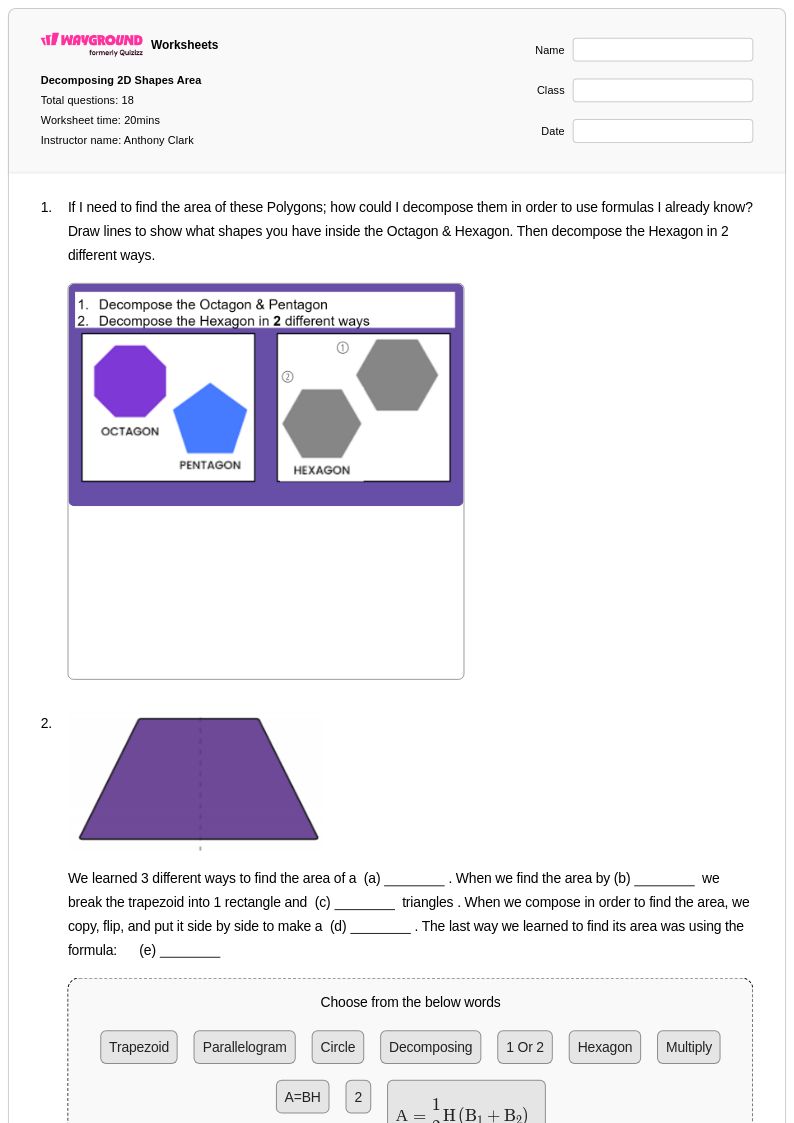
20 Q
6th - Uni
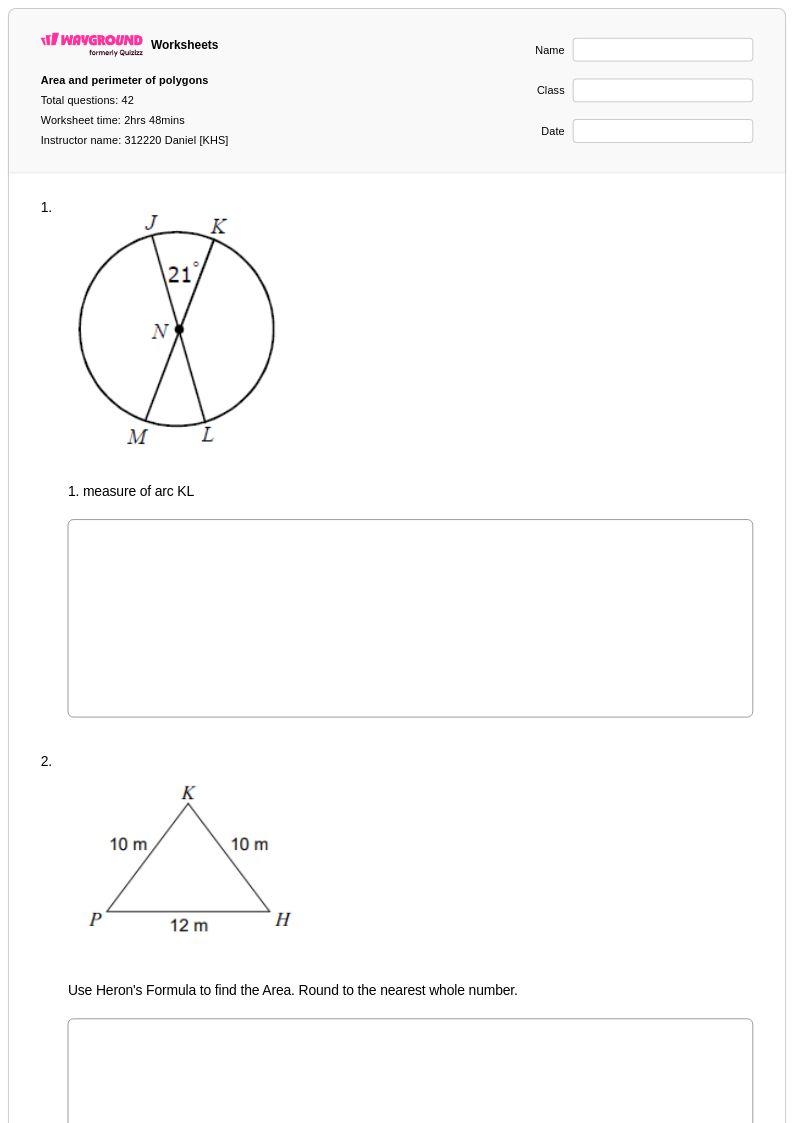
42 Q
9th - 12th
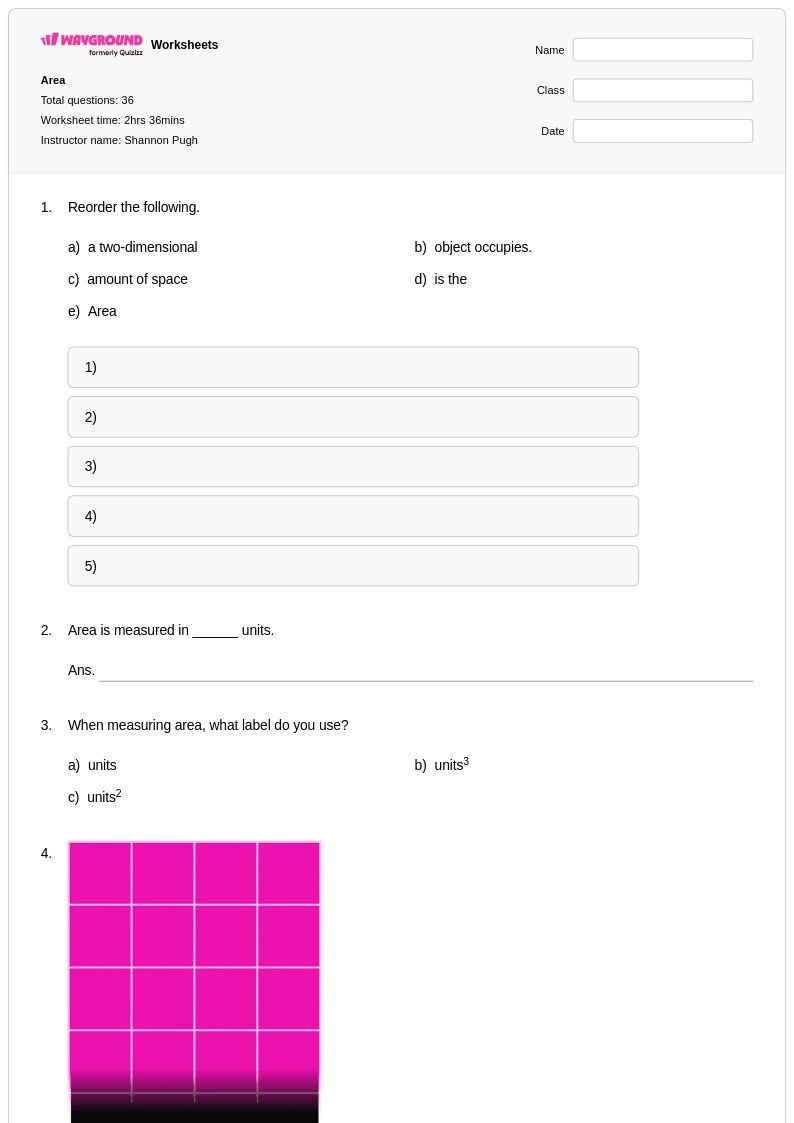
36 Q
9th - 12th
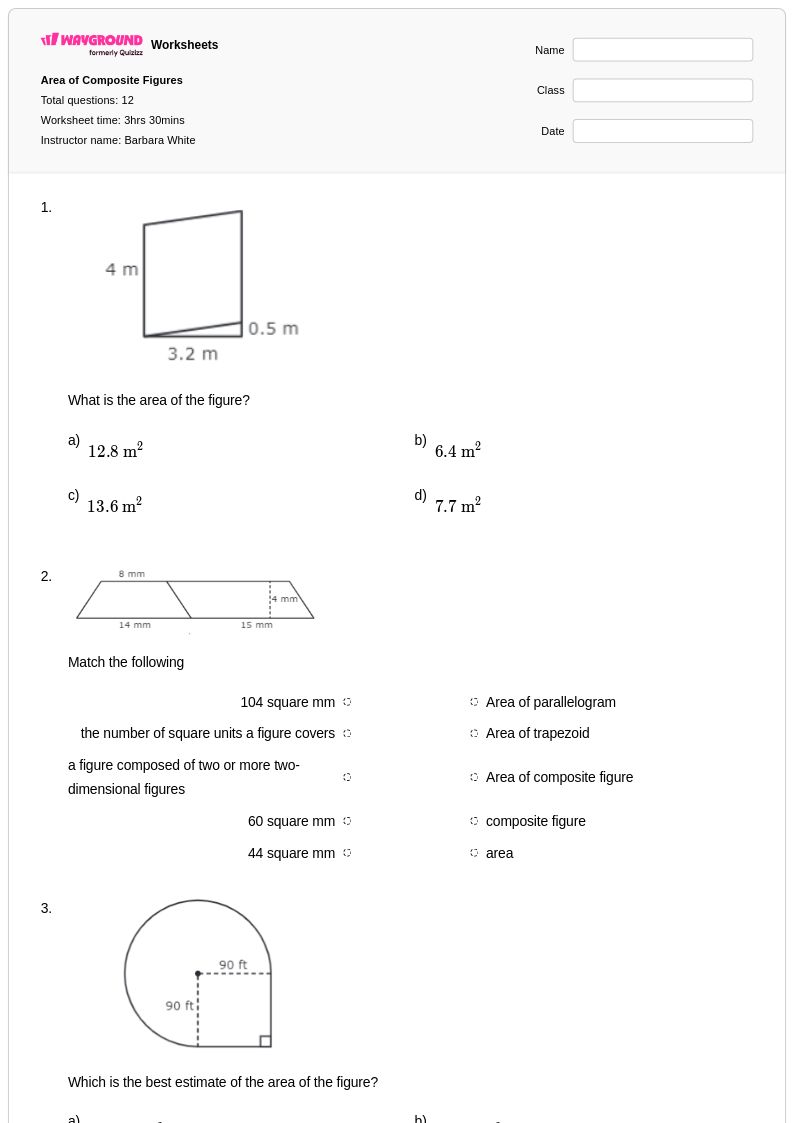
12 Q
11th
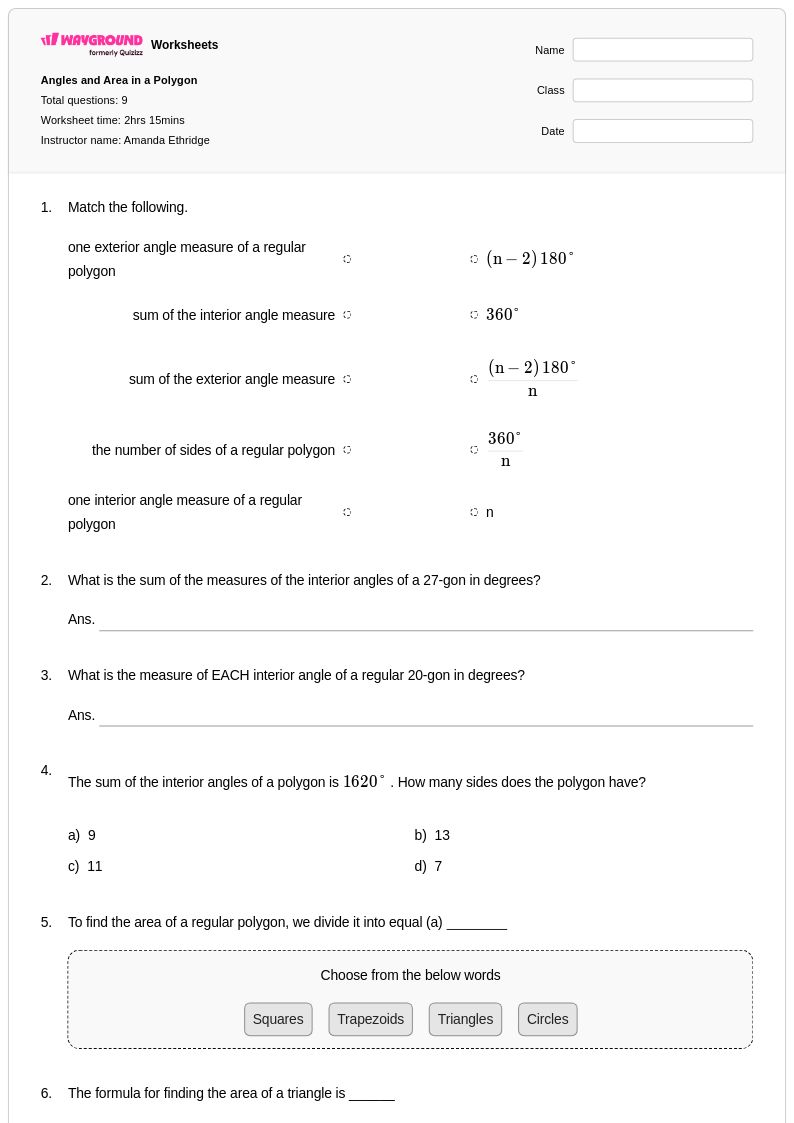
9 Q
9th - 12th
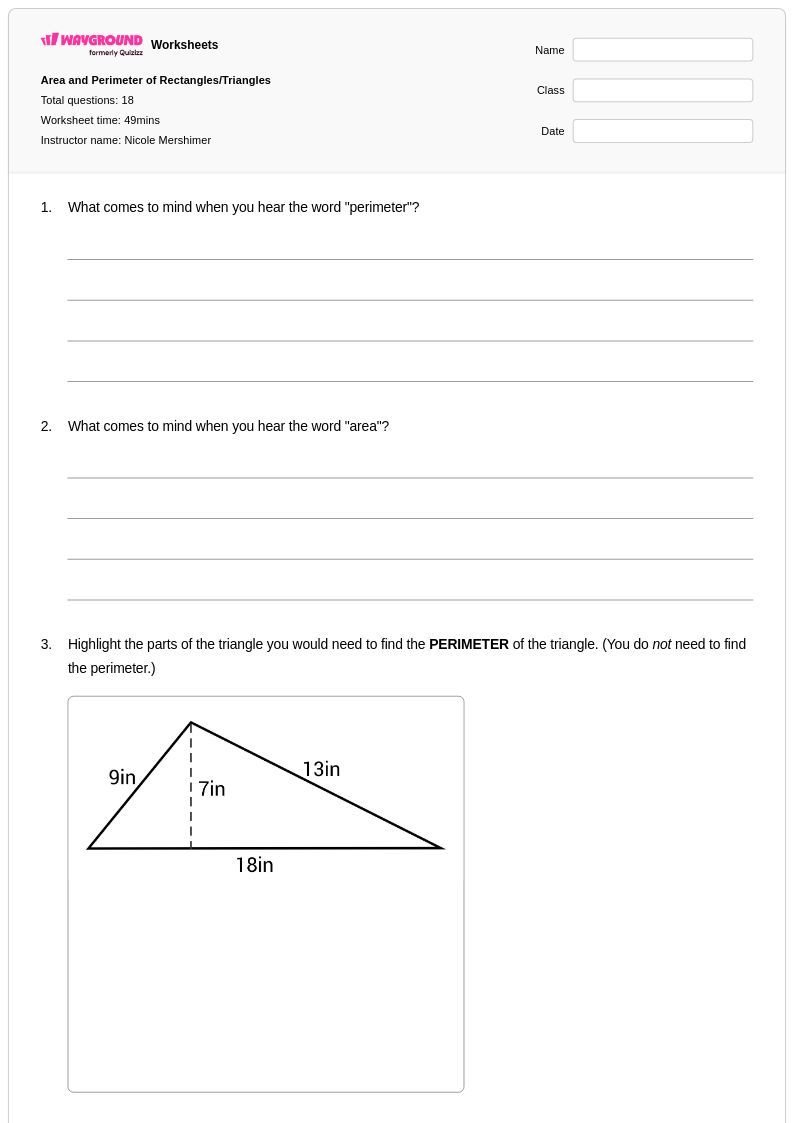
18 Q
9th - 12th
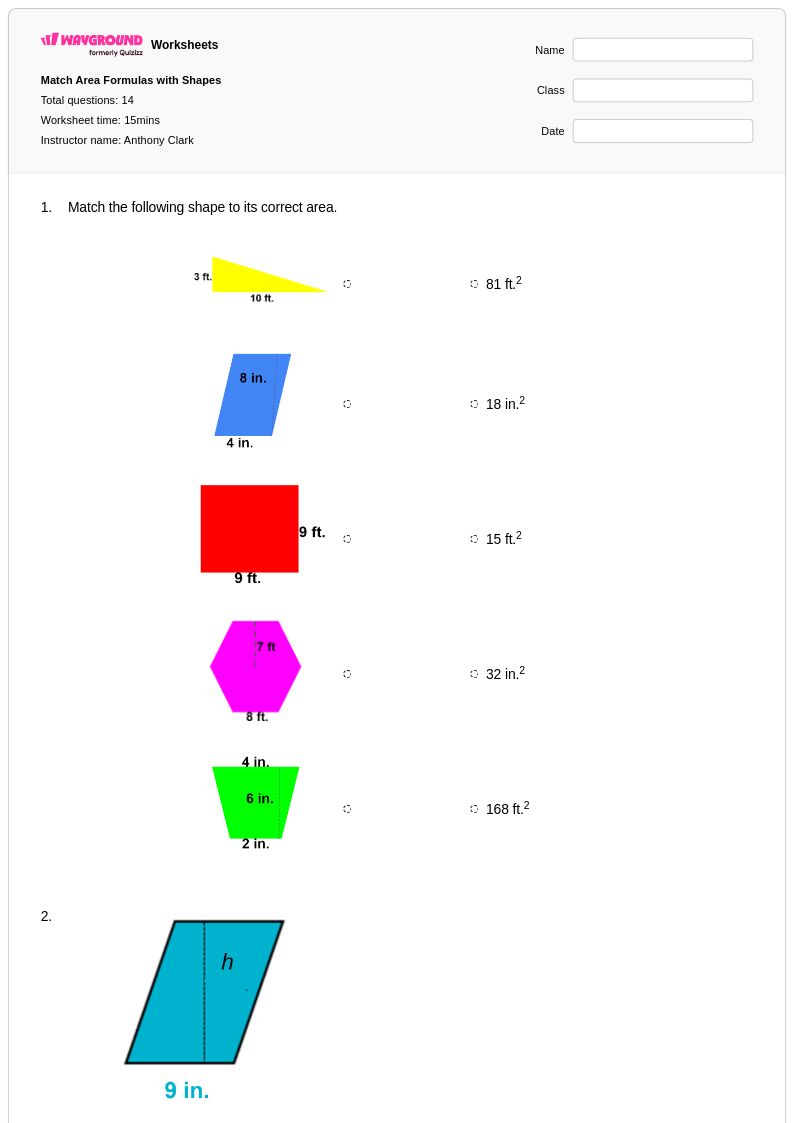
15 Q
6th - Uni
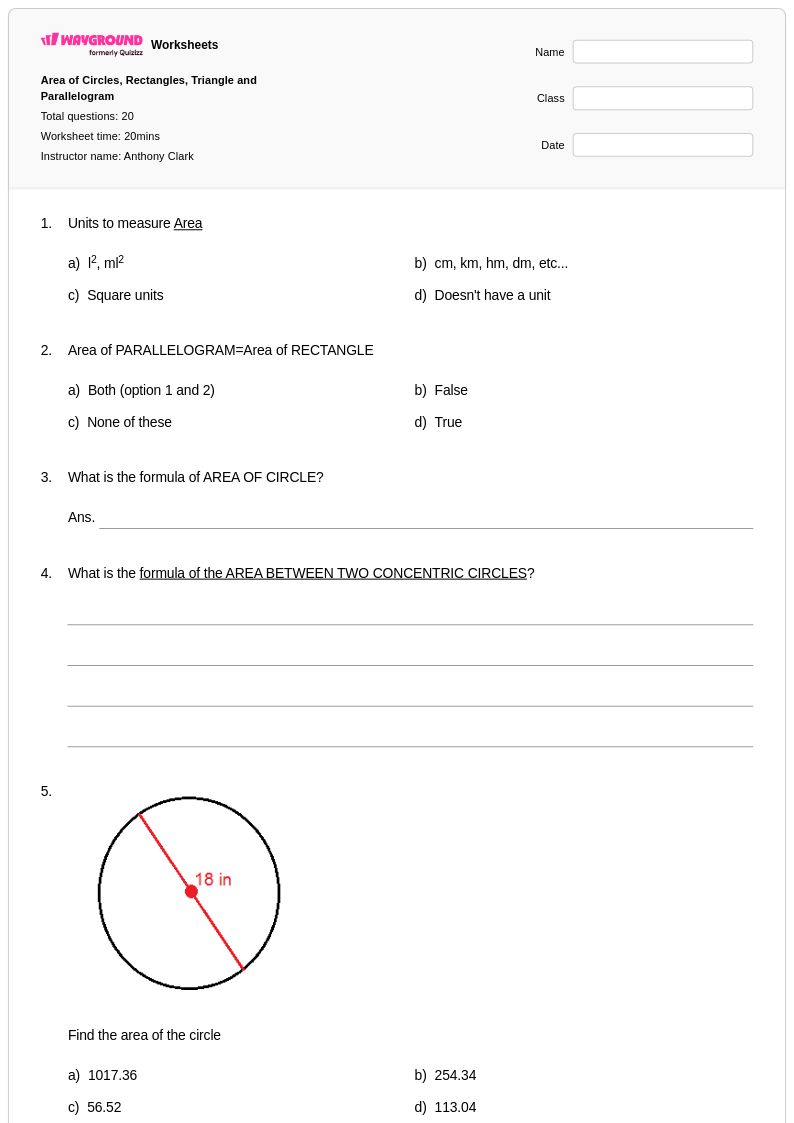
20 Q
7th - Uni
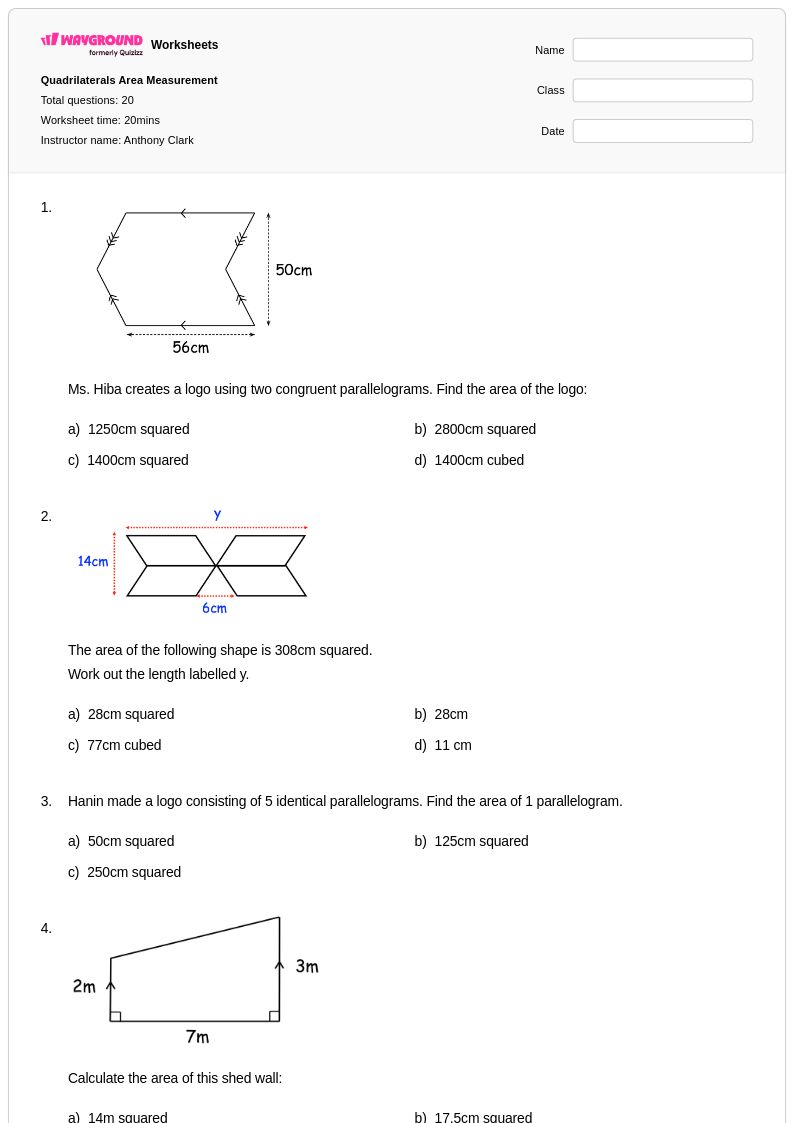
20 Q
7th - Uni
Explore Other Subject Worksheets for grade 11
Explore printable Area of Trapezium worksheets for Grade 11
Area of trapezium worksheets for Grade 11 students available through Wayground provide comprehensive practice with calculating the area of these four-sided geometric figures using the standard formula A = ½(a + b)h, where a and b represent the parallel sides and h represents the height. These mathematics resources strengthen essential geometric reasoning skills by guiding students through systematic problem-solving approaches that include identifying parallel bases, measuring perpendicular height, and applying algebraic manipulation when variables are present in trapezium problems. Each worksheet collection includes detailed answer keys and step-by-step solutions, with free printable pdf formats that allow students to work through practice problems involving both numerical calculations and algebraic expressions, ensuring mastery of this fundamental geometry concept before advancing to more complex polygon area calculations.
Wayground supports mathematics educators with an extensive library of teacher-created trapezium area worksheets that includes millions of resources specifically designed for Grade 11 geometry instruction. The platform's advanced search and filtering capabilities enable teachers to quickly locate materials that align with curriculum standards and match their students' specific learning needs, while built-in differentiation tools allow for seamless customization of problem difficulty levels and mathematical complexity. These worksheet collections are available in both printable pdf format and interactive digital versions, providing flexibility for classroom instruction, homework assignments, and independent study sessions that support lesson planning, targeted remediation for struggling learners, enrichment opportunities for advanced students, and systematic skill practice that builds confidence with geometric area calculations.
FAQs
How should I teach the area of a trapezium to Grade 11 students?
What exercises help Grade 11 students practice the area of a trapezium?
What mistakes do students make when finding the area of a trapezium?
How can I use a Wayground area of trapezium worksheet in class?
How can I differentiate area of trapezium practice for mixed-ability students?
What grade level are these area of trapezium worksheets designed for?