
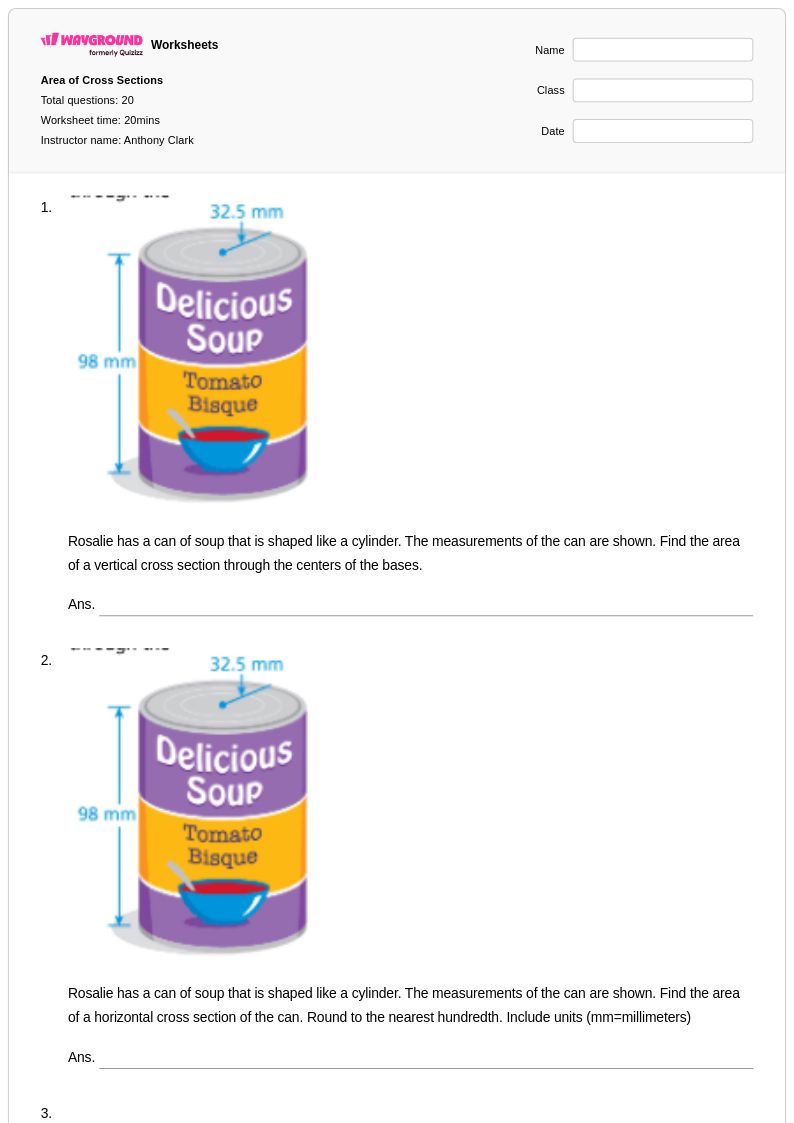
20 Q
7th - Uni
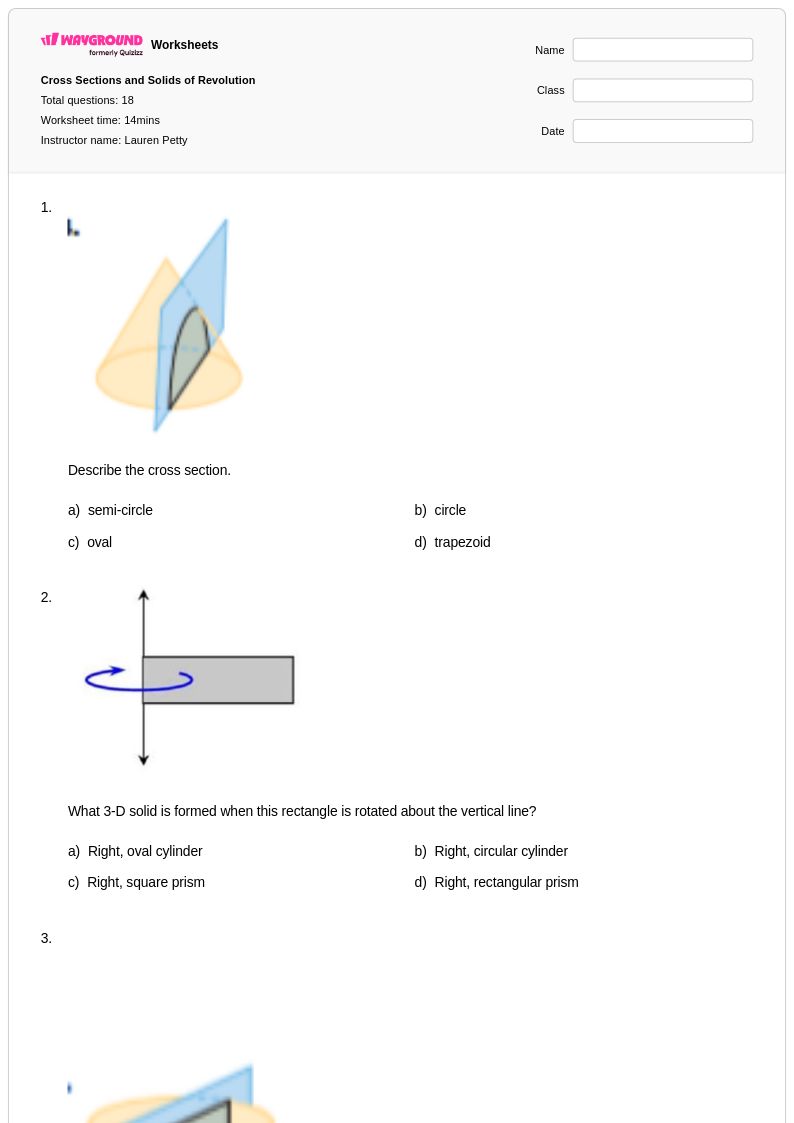
18 Q
10th - 11th
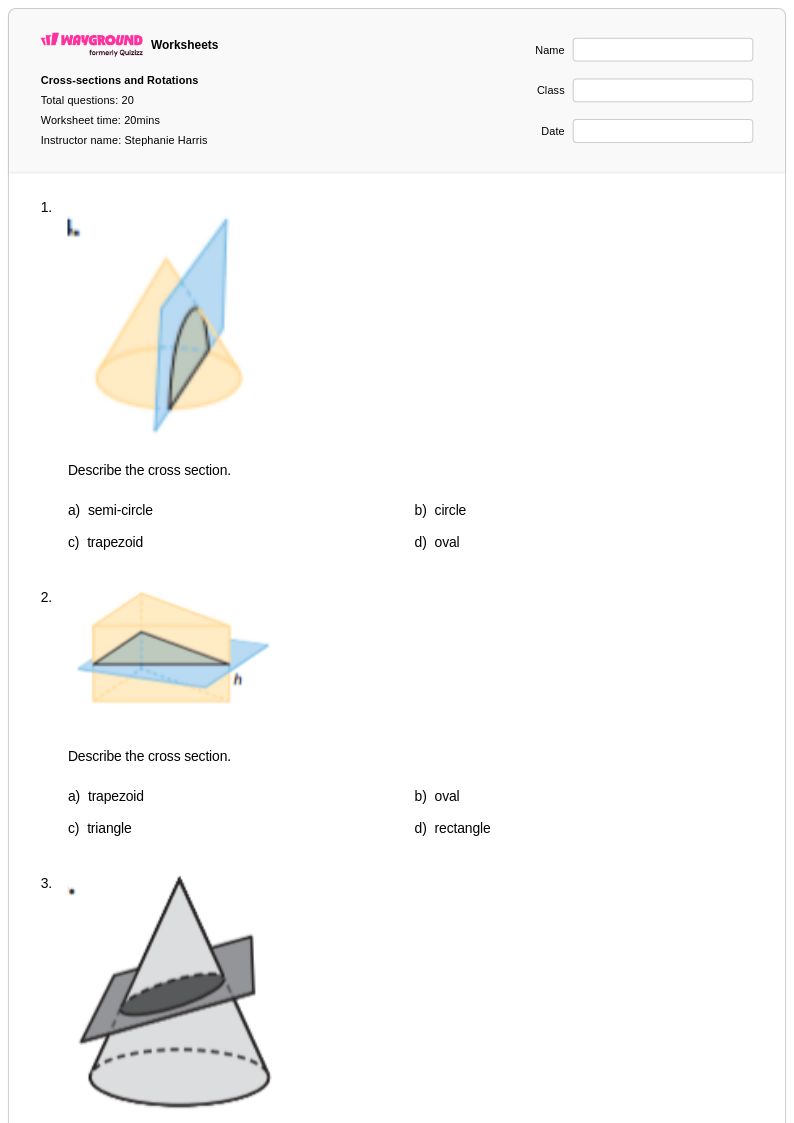
20 Q
9th - 12th
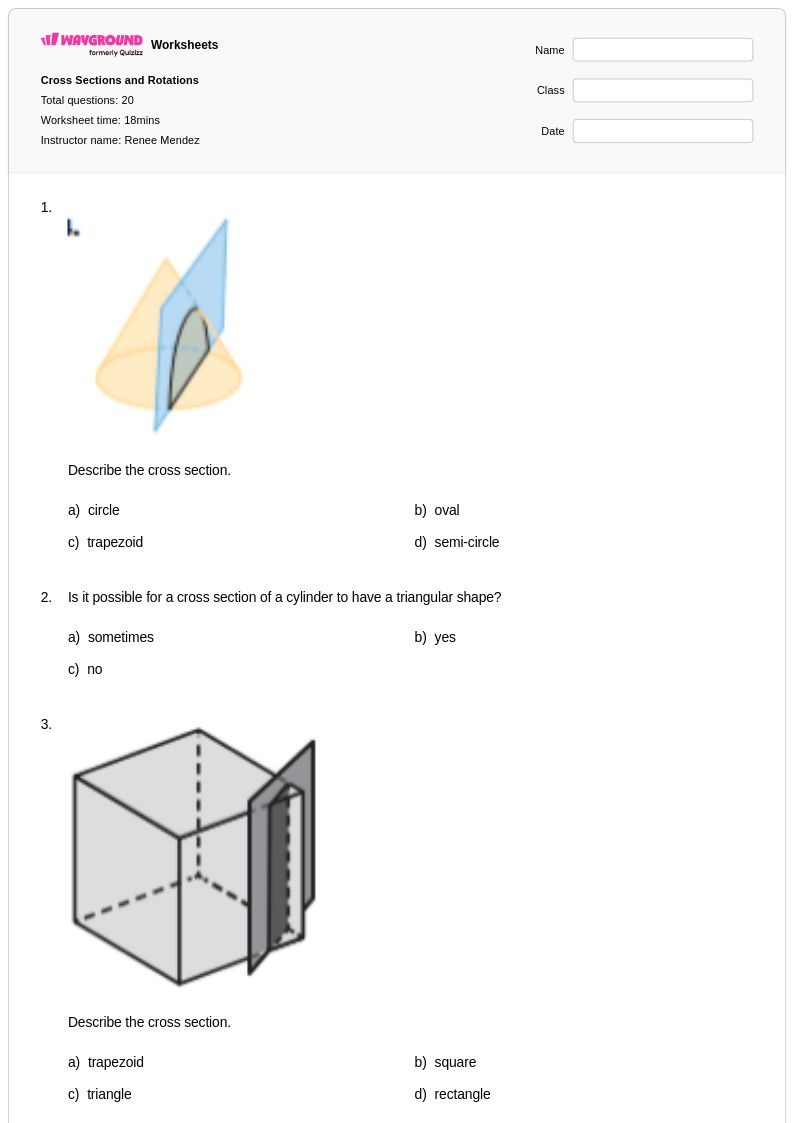
20 Q
9th - 12th
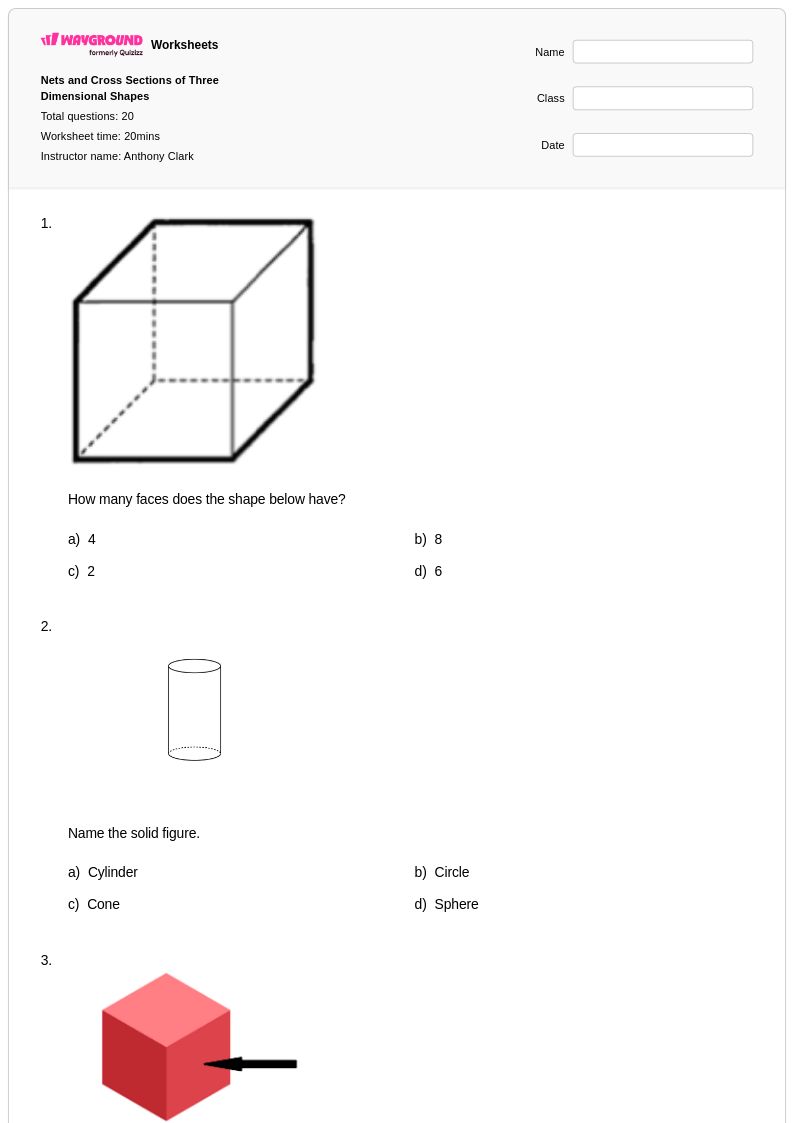
20 Q
3rd - Uni
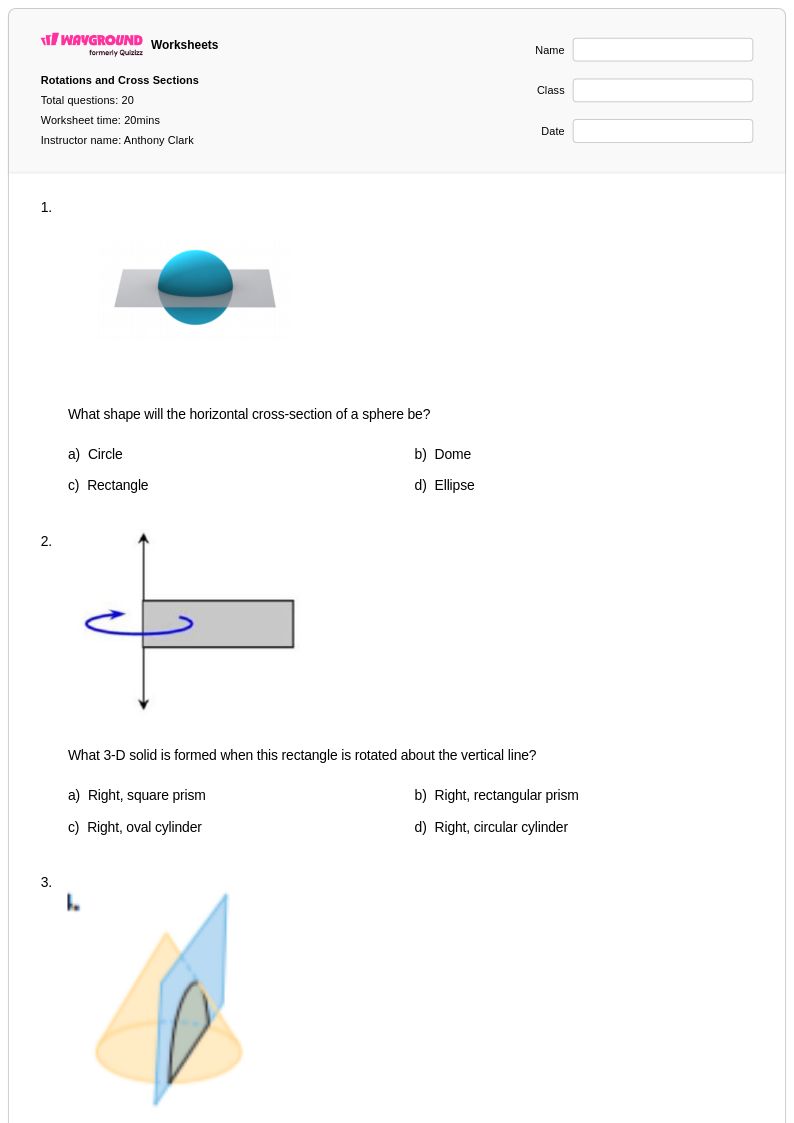
20 Q
10th - Uni
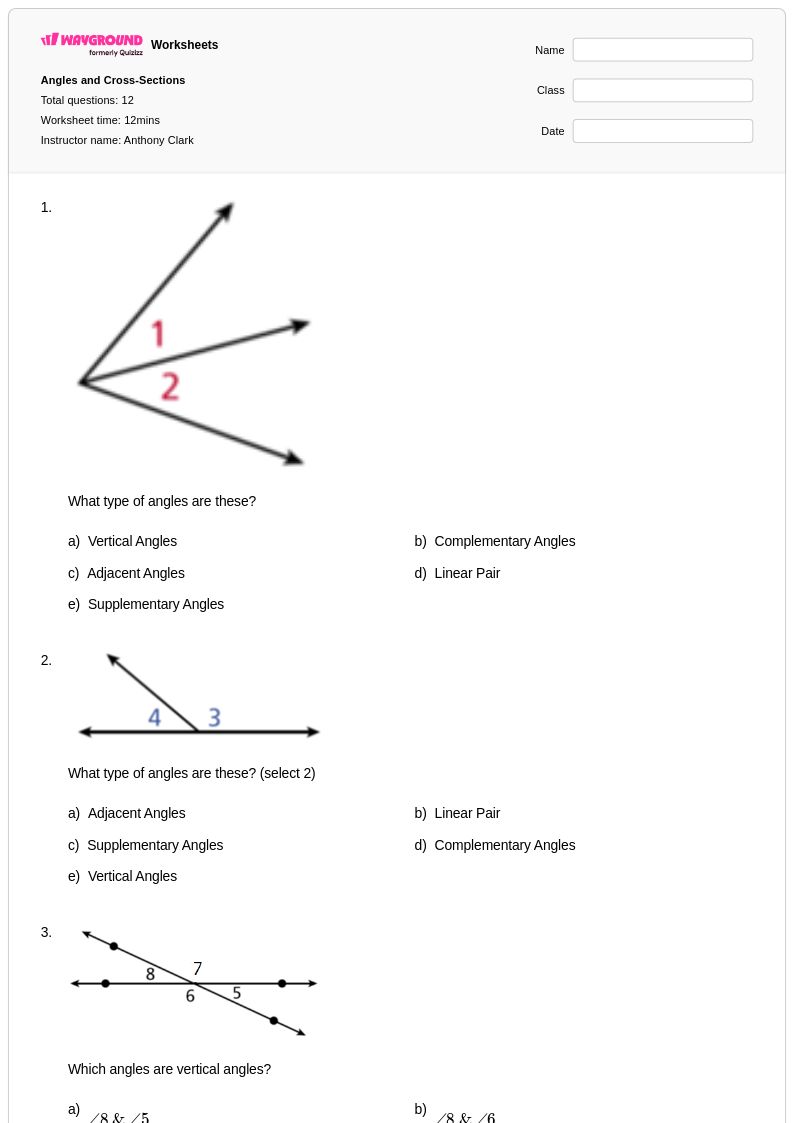
12 Q
10th - Uni
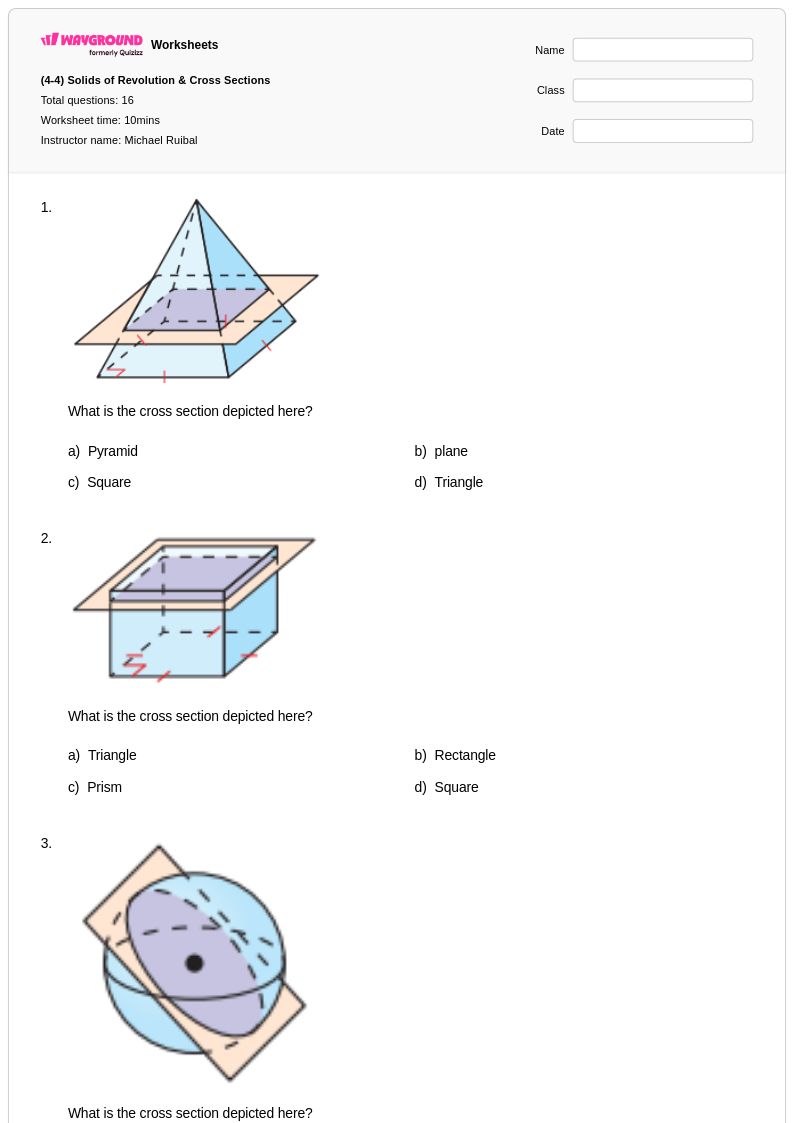
16 Q
10th - 12th
14 Q
9th - 12th
20 Q
10th - Uni
29 Q
11th
20 Q
10th - Uni
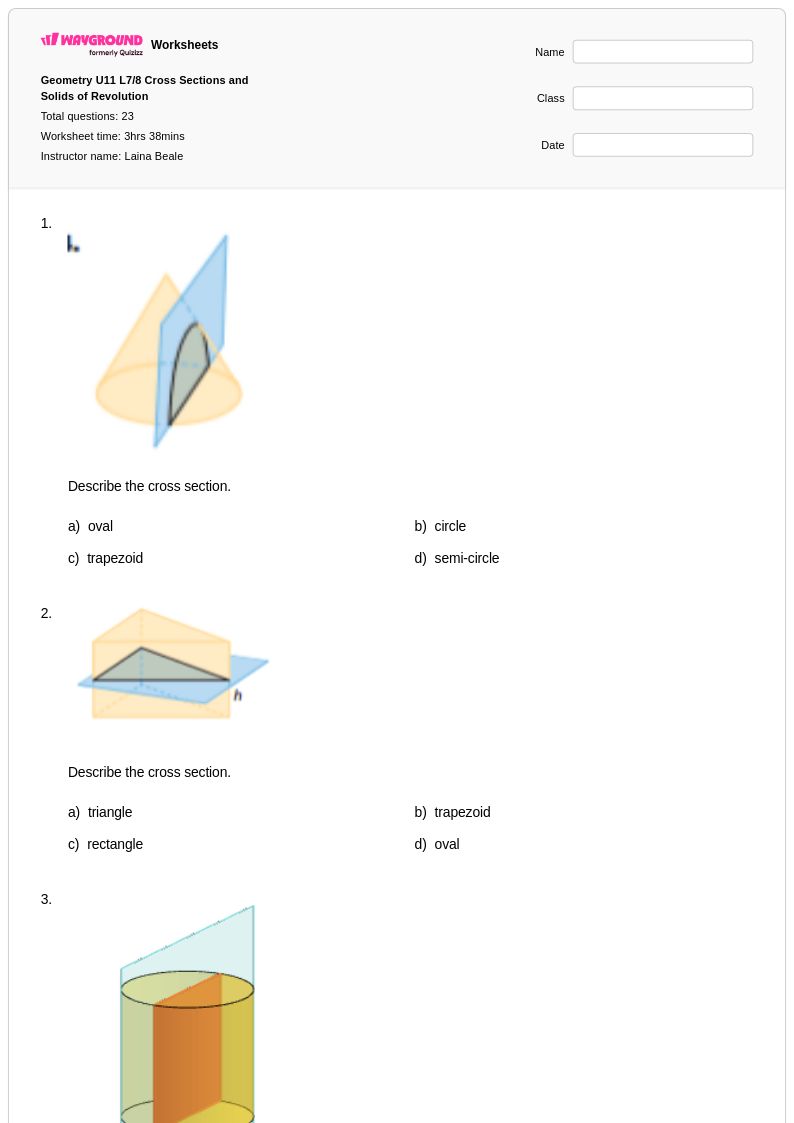
23 Q
9th - 12th
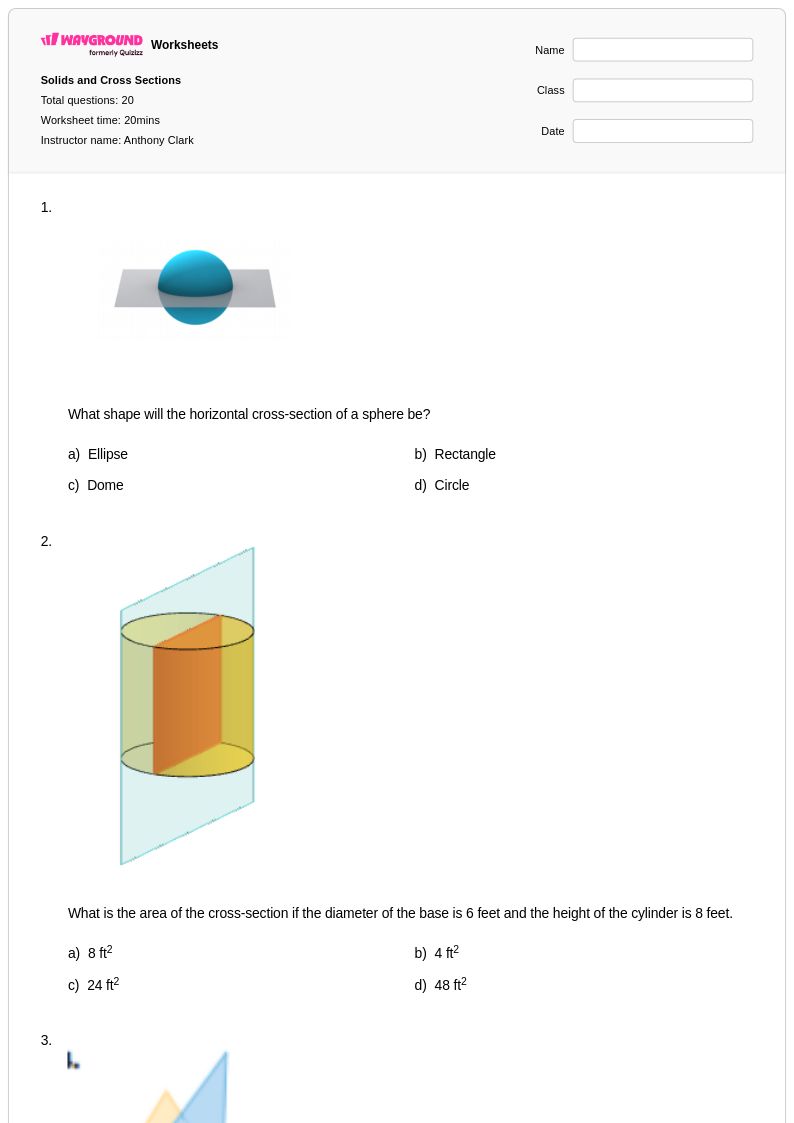
20 Q
10th - Uni
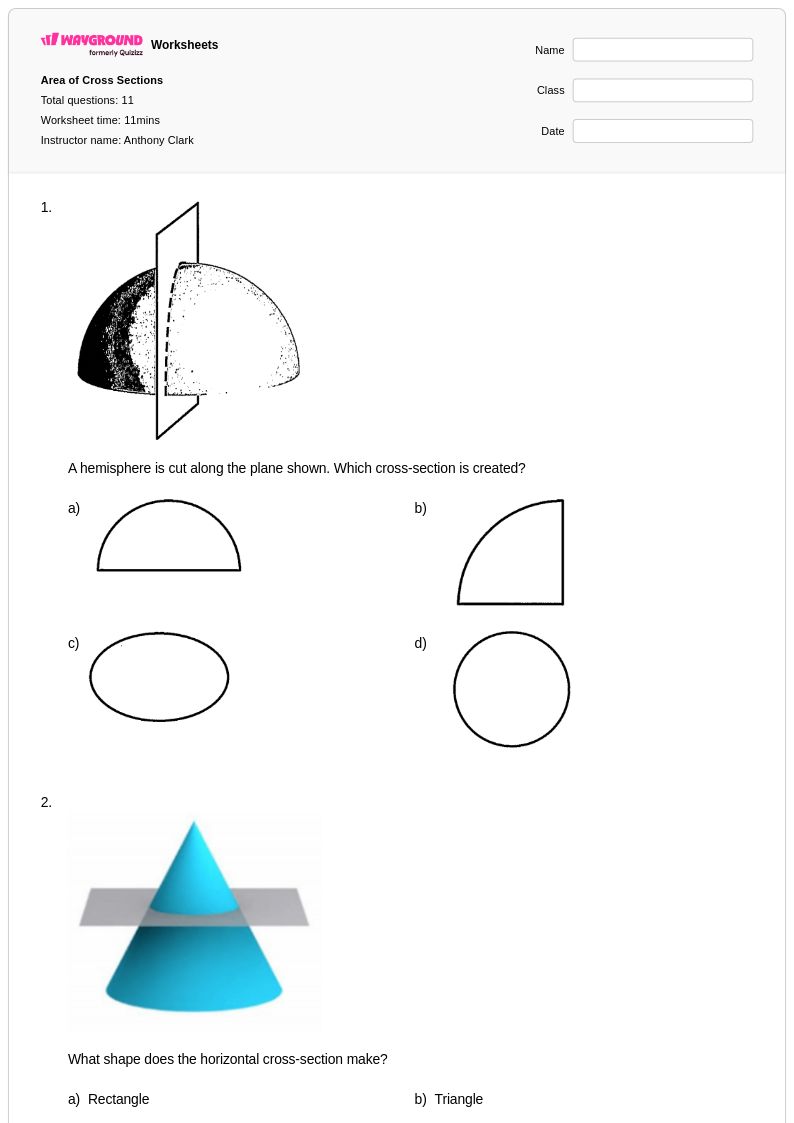
11 Q
7th - Uni
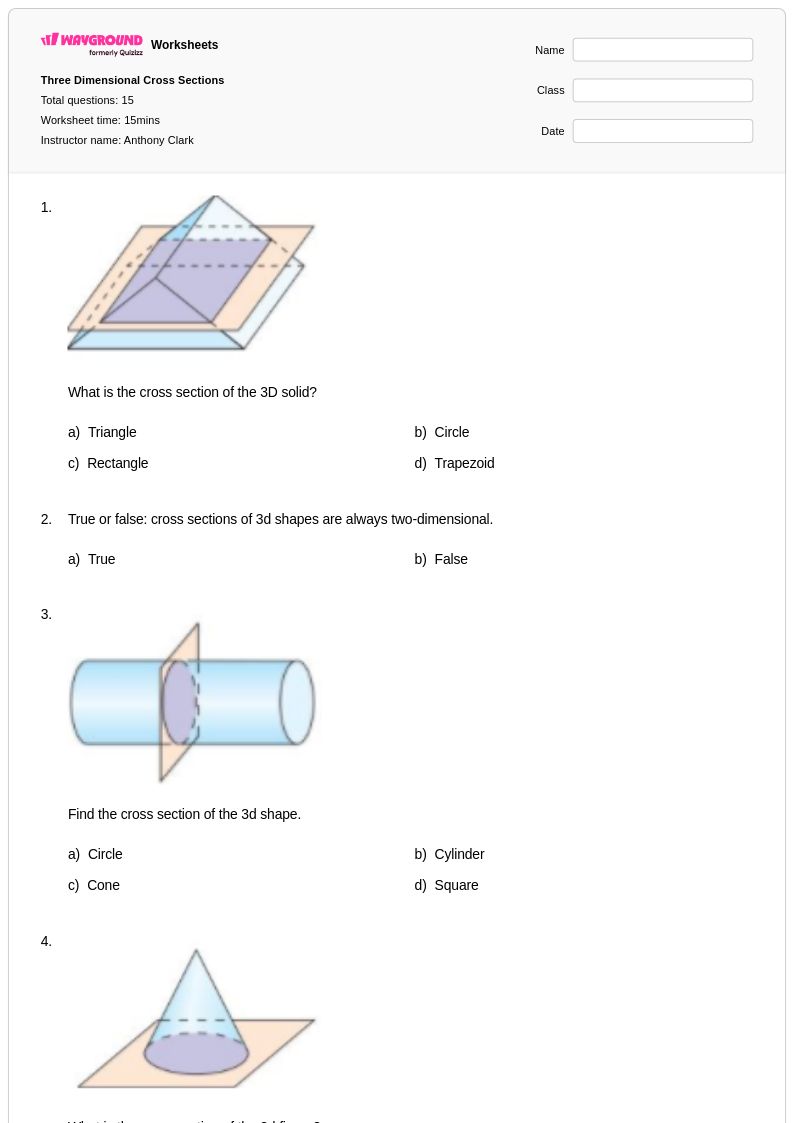
15 Q
10th - Uni
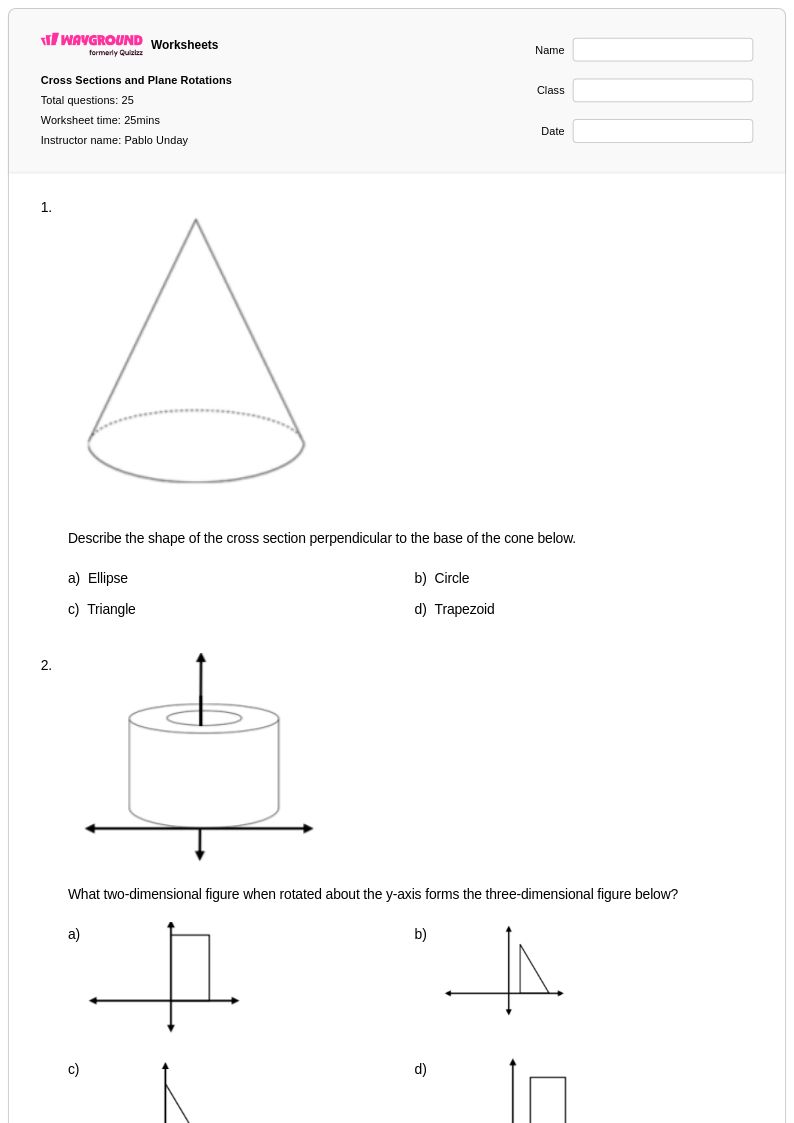
25 Q
9th - 12th
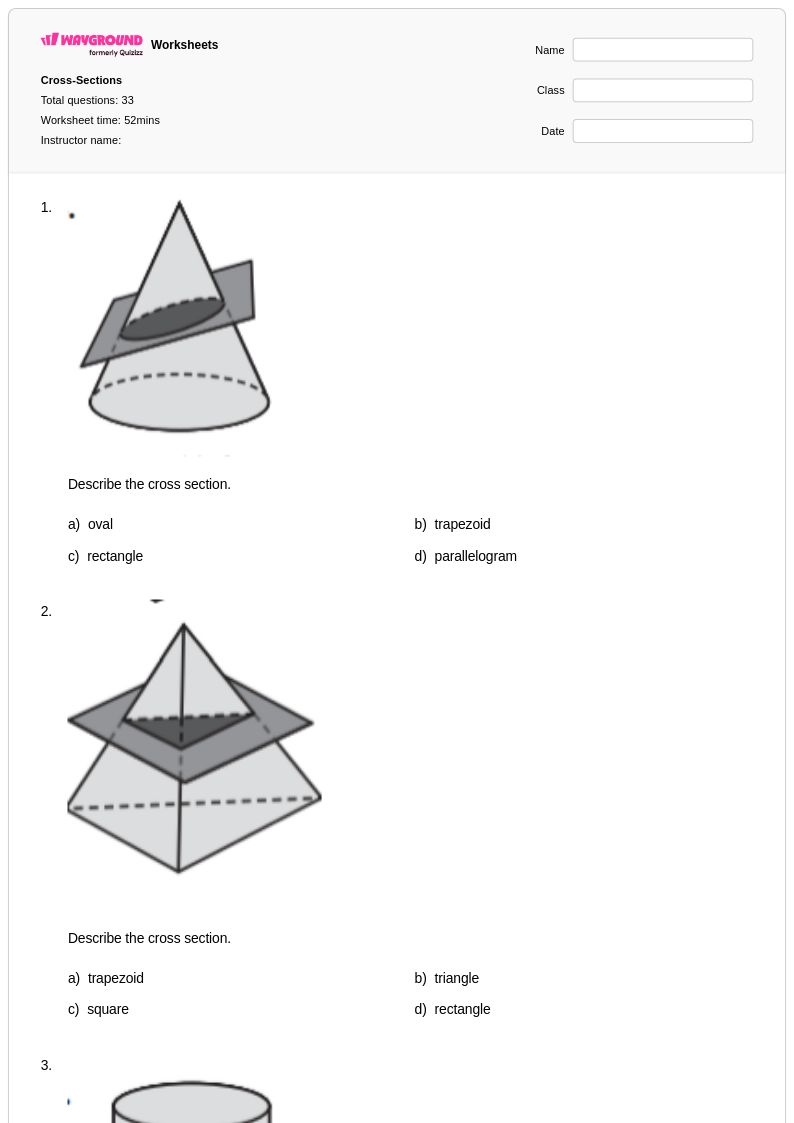
33 Q
11th
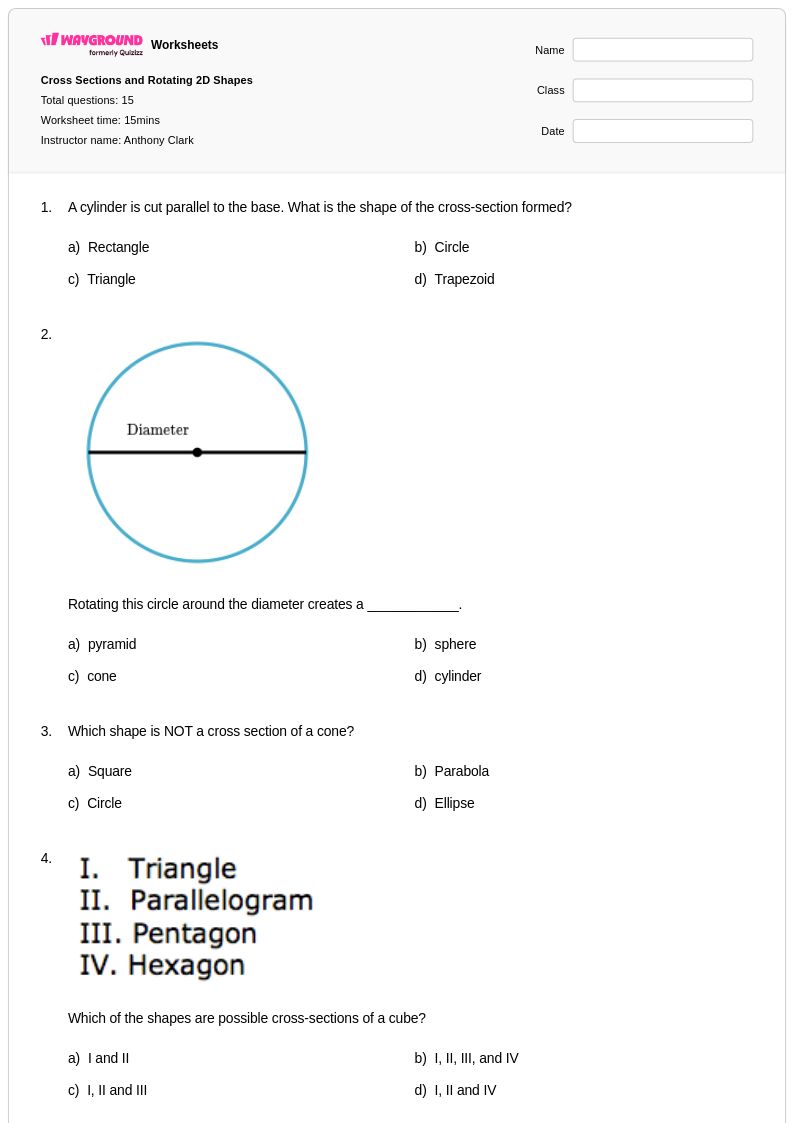
15 Q
7th - Uni
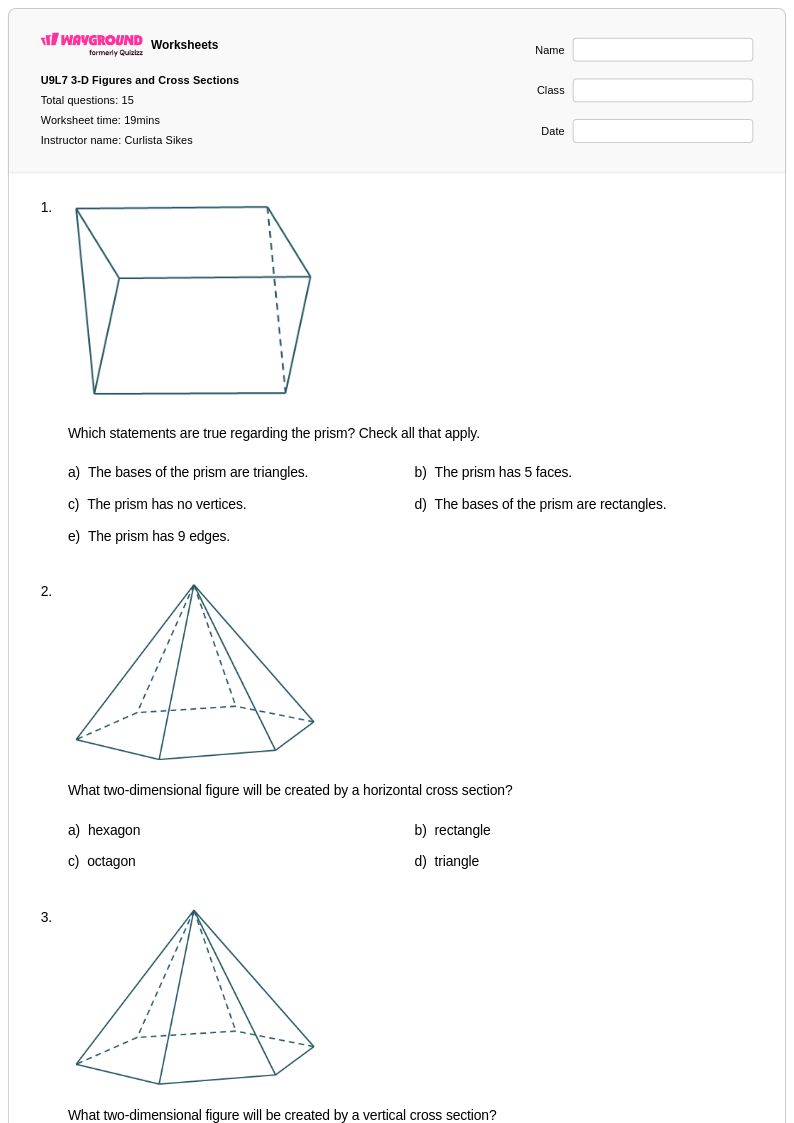
15 Q
9th - 12th
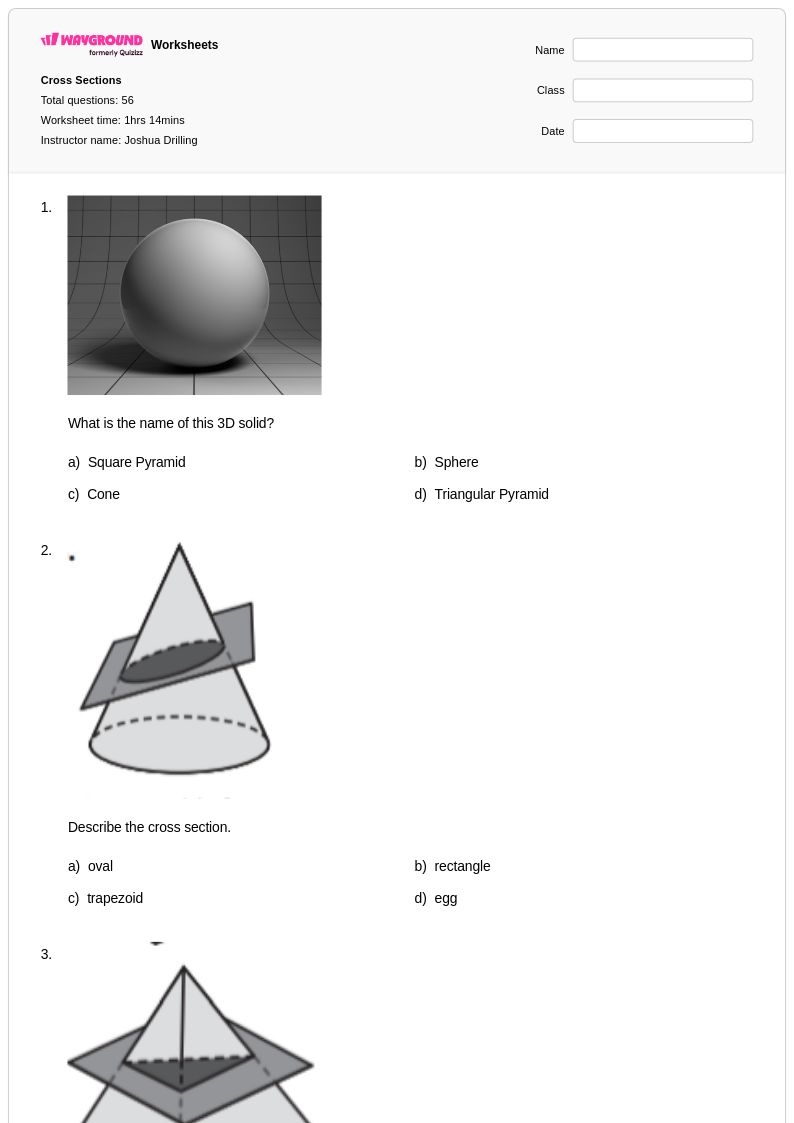
56 Q
9th - 12th
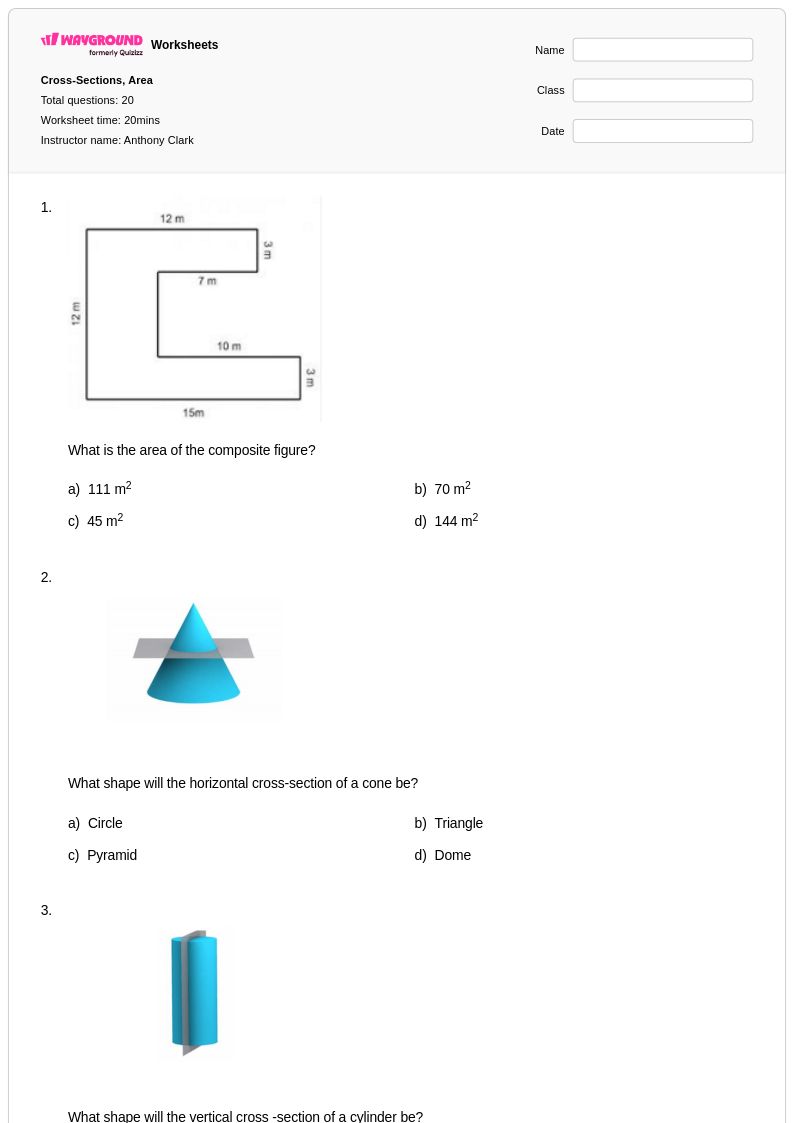
20 Q
7th - Uni
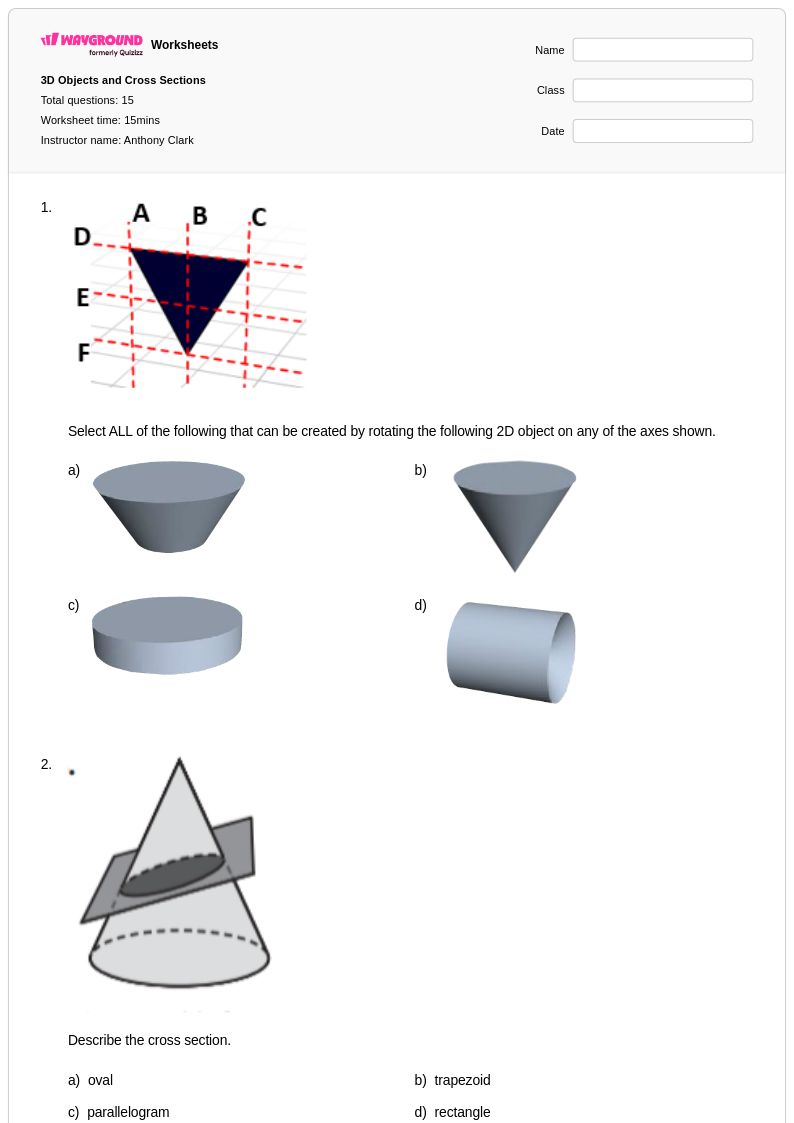
15 Q
10th - Uni
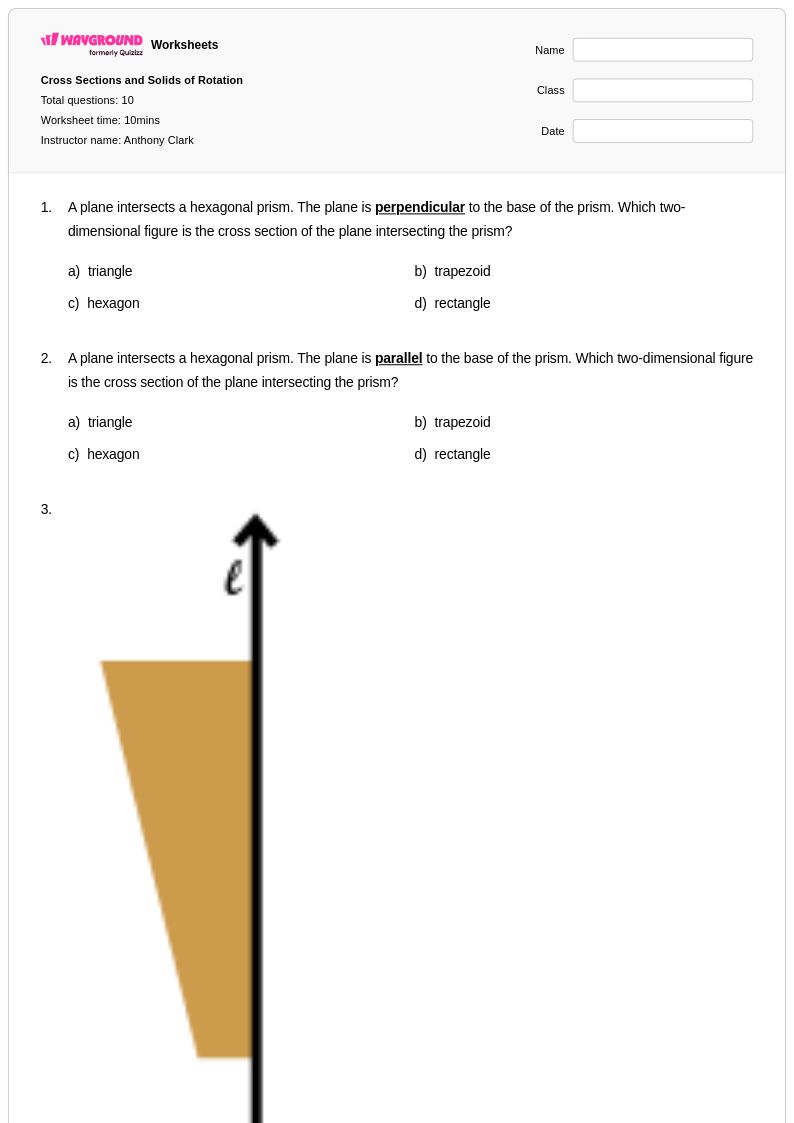
10 Q
10th - Uni
Explore Other Subject Worksheets for grade 11
Explore printable Cross Sections worksheets for Grade 11
Cross sections in Grade 11 geometry represent a critical three-dimensional spatial reasoning concept that bridges algebraic thinking with advanced geometric visualization. Wayground's comprehensive cross sections worksheets provide students with systematic practice in identifying, sketching, and analyzing the two-dimensional shapes formed when planes intersect three-dimensional solids. These carefully designed practice problems strengthen students' ability to mentally rotate objects, predict geometric outcomes, and understand the relationship between 2D and 3D forms. Each worksheet collection includes detailed answer keys and is available as free printable pdf resources, enabling students to work through progressively challenging scenarios involving cylinders, cones, prisms, pyramids, and spheres to develop mastery of this foundational skill.
Wayground's extensive library of millions of teacher-created cross sections worksheets offers educators unprecedented flexibility in delivering differentiated geometry instruction for Grade 11 students. The platform's robust search and filtering capabilities allow teachers to quickly locate resources aligned with specific curriculum standards, while built-in customization tools enable seamless adaptation of materials to meet diverse learning needs. These cross sections worksheet collections are available in both printable and digital formats, including downloadable pdf versions, making them ideal for classroom instruction, homework assignments, remediation sessions, and enrichment activities. Teachers can efficiently plan comprehensive geometry units by accessing worksheets that progress from basic cross-sectional identification to complex problem-solving scenarios, ensuring students develop both procedural fluency and conceptual understanding of three-dimensional geometric relationships.
FAQs
How do I teach cross sections in Grade 11 geometry?
What exercises help Grade 11 students master cross sections?
What misconceptions arise in Grade 11 cross-section problems?
How can I use a Grade 11 cross sections worksheet on Wayground?
How do Grade 11 cross sections support Common Core geometry?
How can I accommodate different learners during Grade 11 cross-section practice?
Is cross-sectional geometry appropriate for Grade 11?