
20 Q
6th - Uni
20 Q
5th - Uni
20 Q
7th - Uni
20 Q
5th - Uni
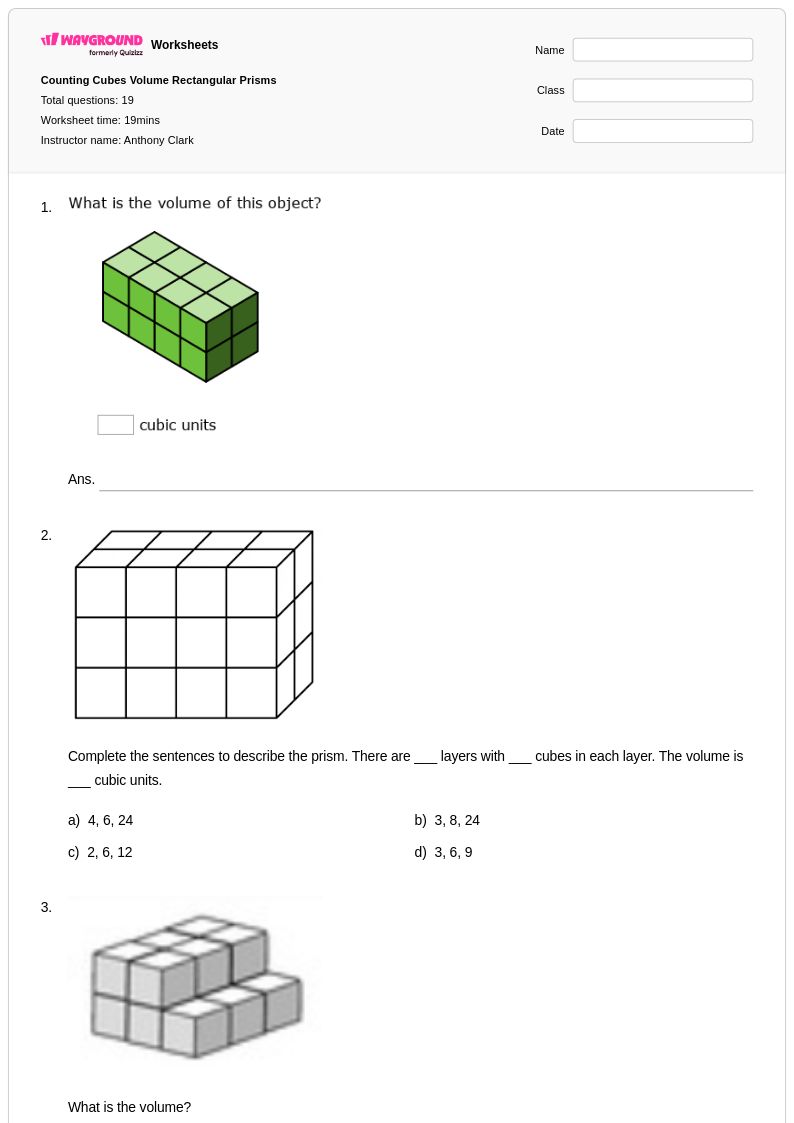
19 Q
5th - Uni
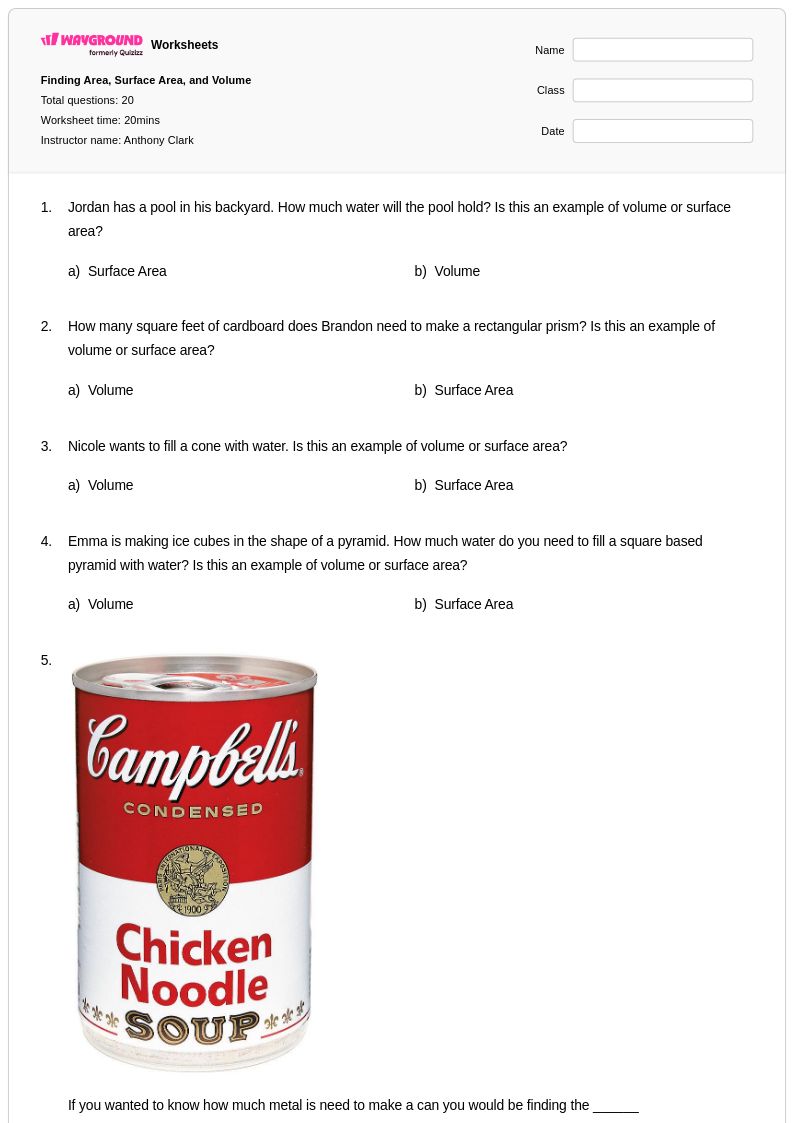
20 Q
6th - Uni
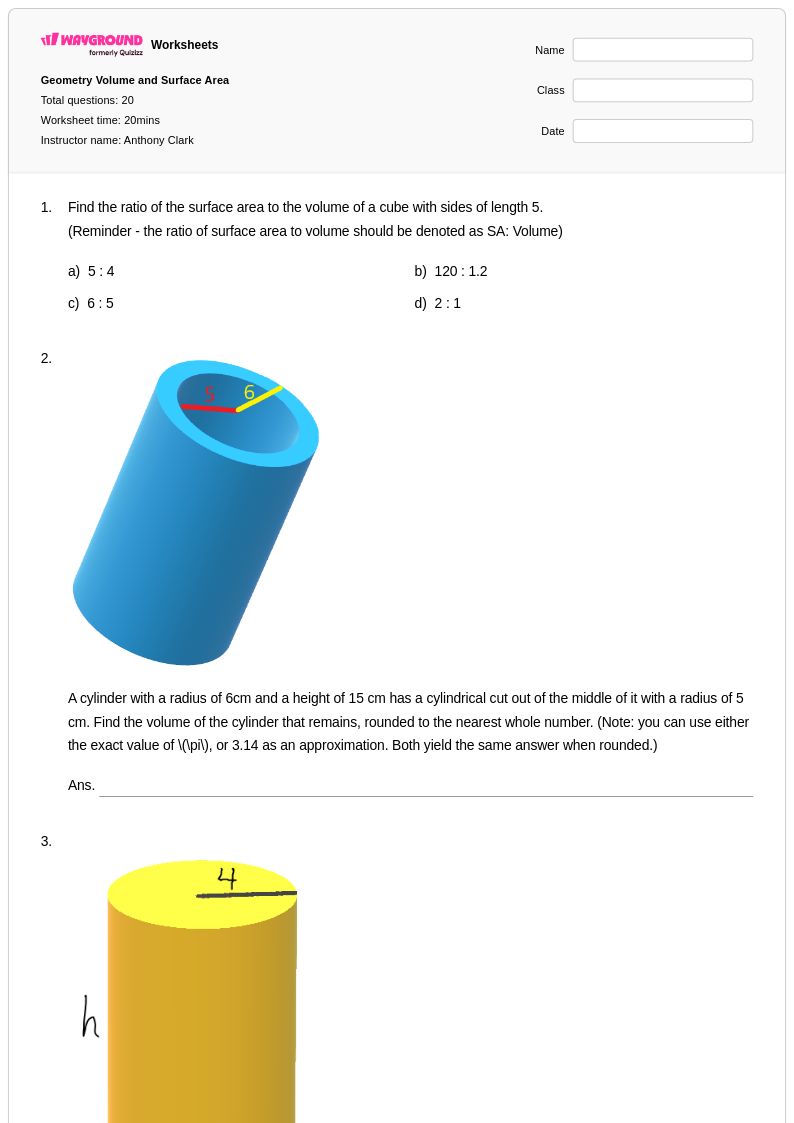
20 Q
7th - Uni
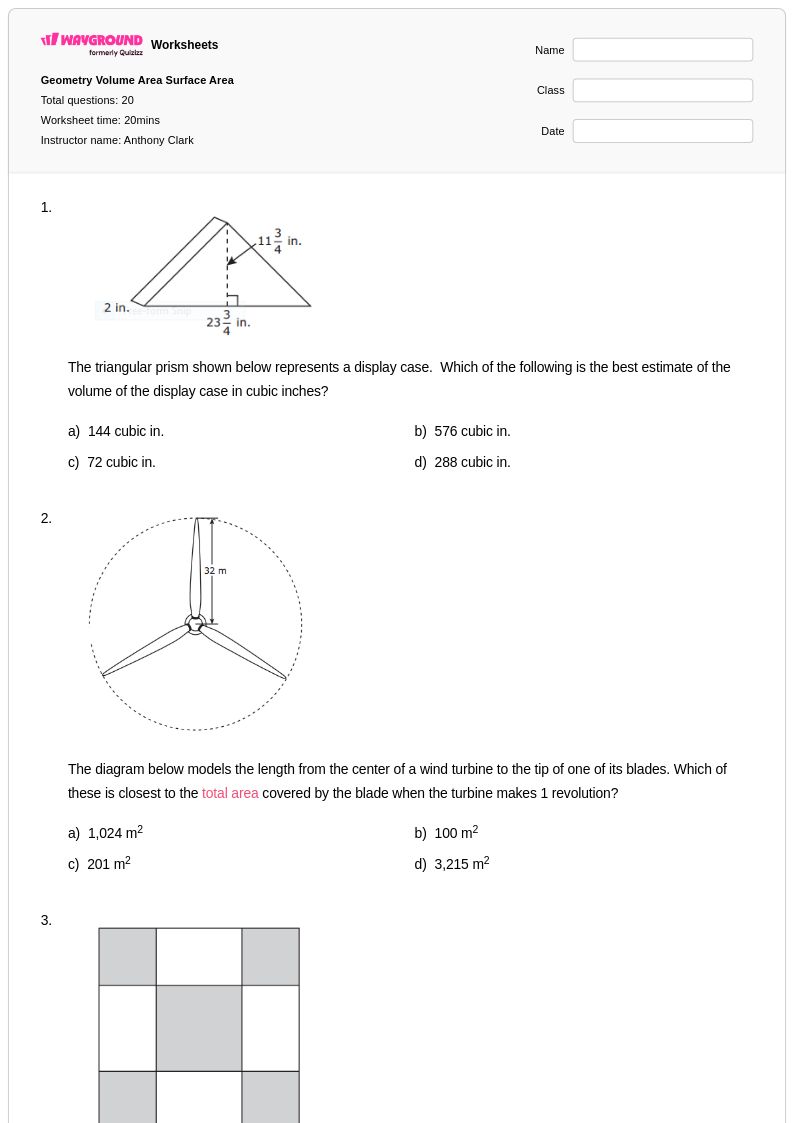
20 Q
8th - Uni
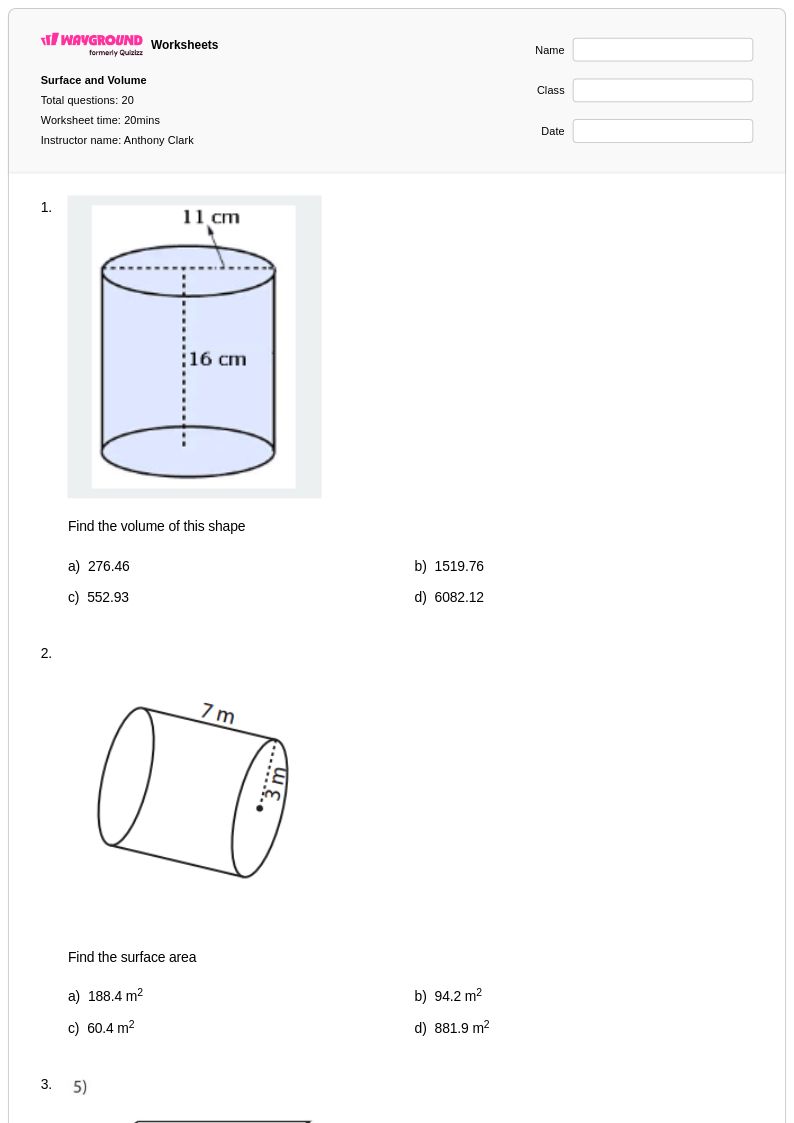
20 Q
7th - Uni
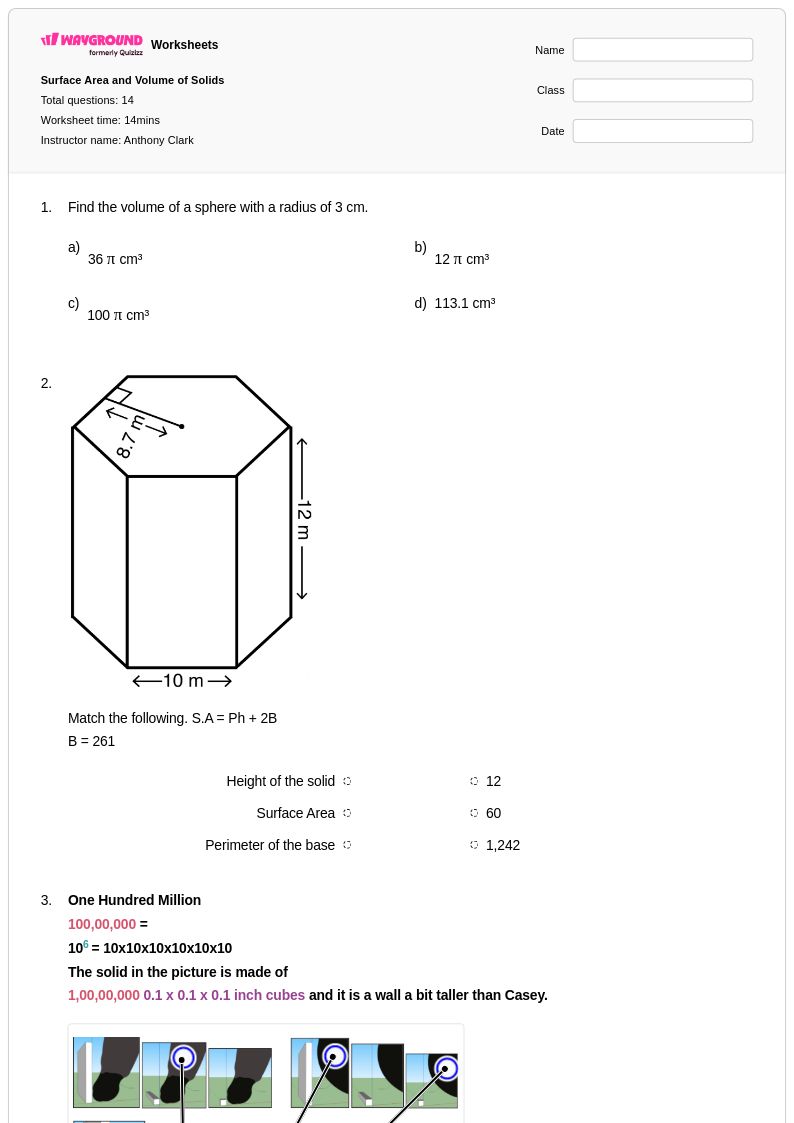
14 Q
8th - Uni
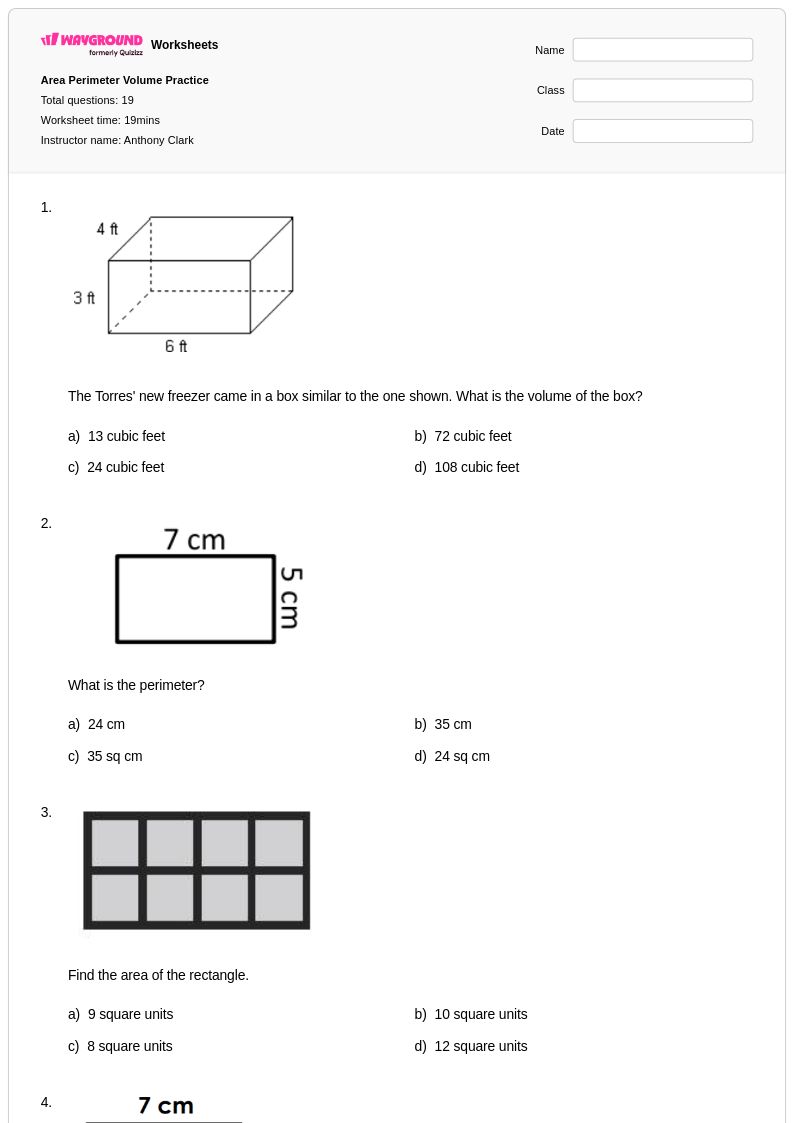
19 Q
5th - Uni
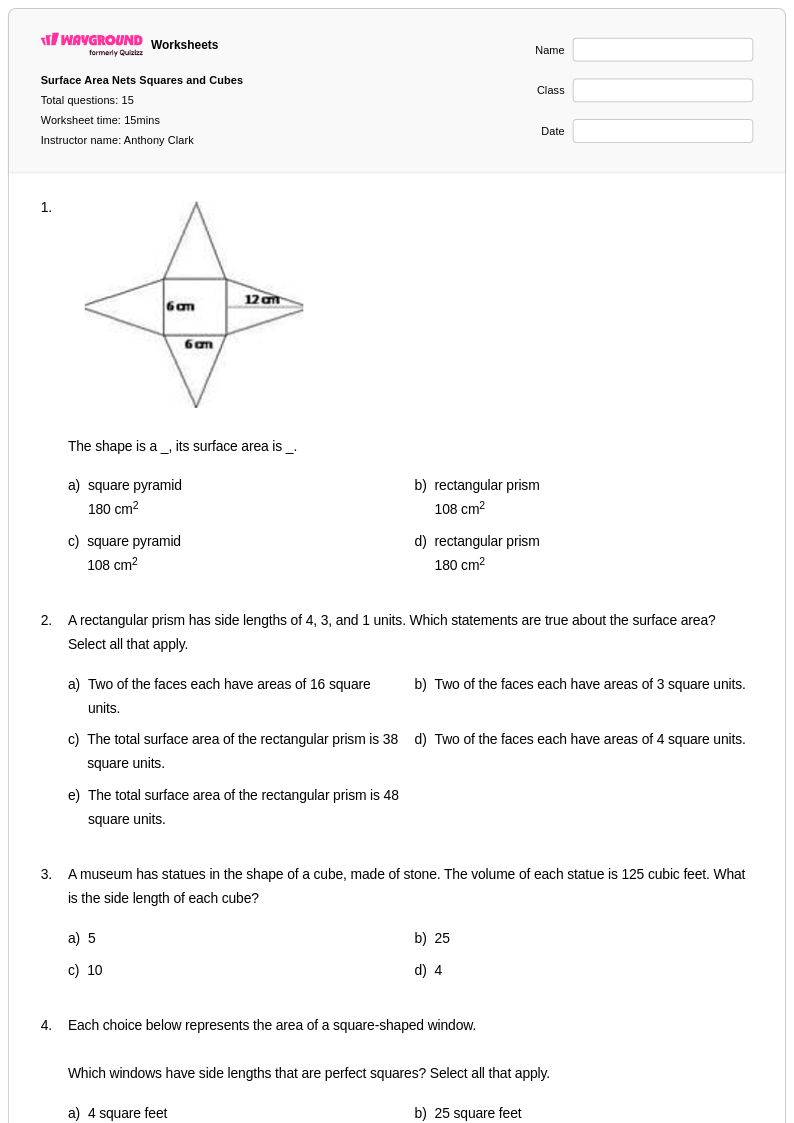
15 Q
6th - Uni
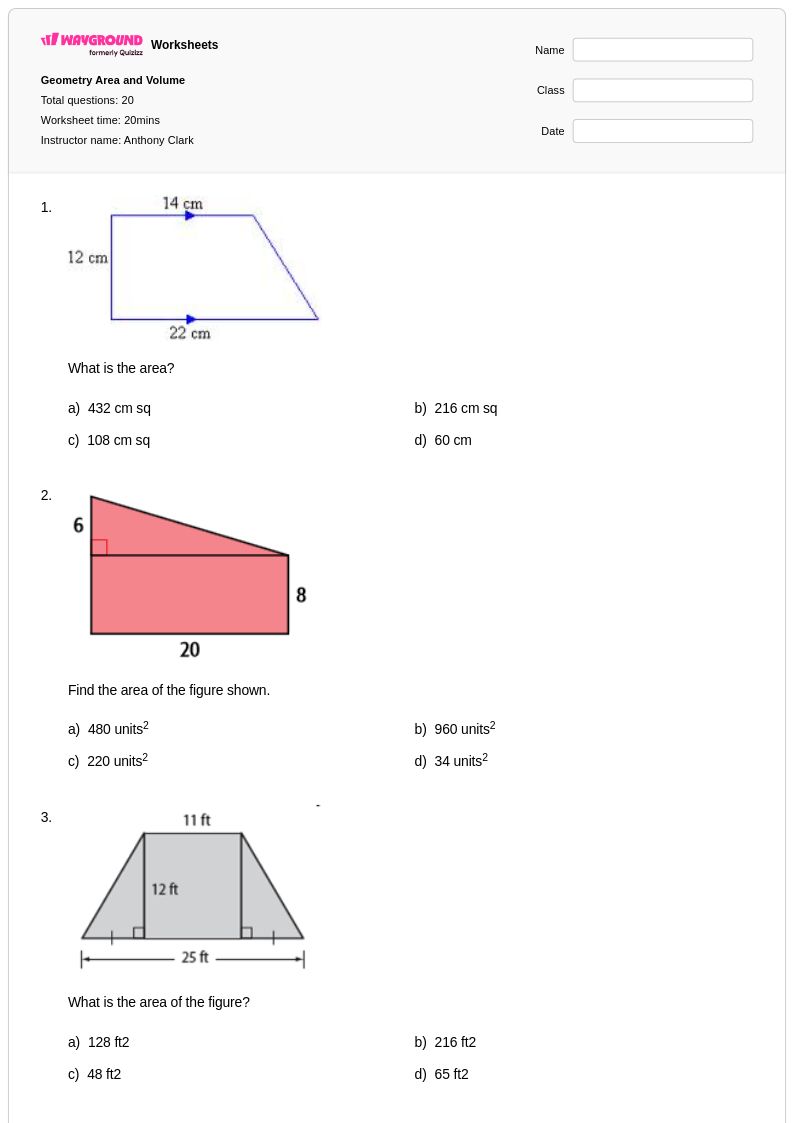
20 Q
6th - Uni
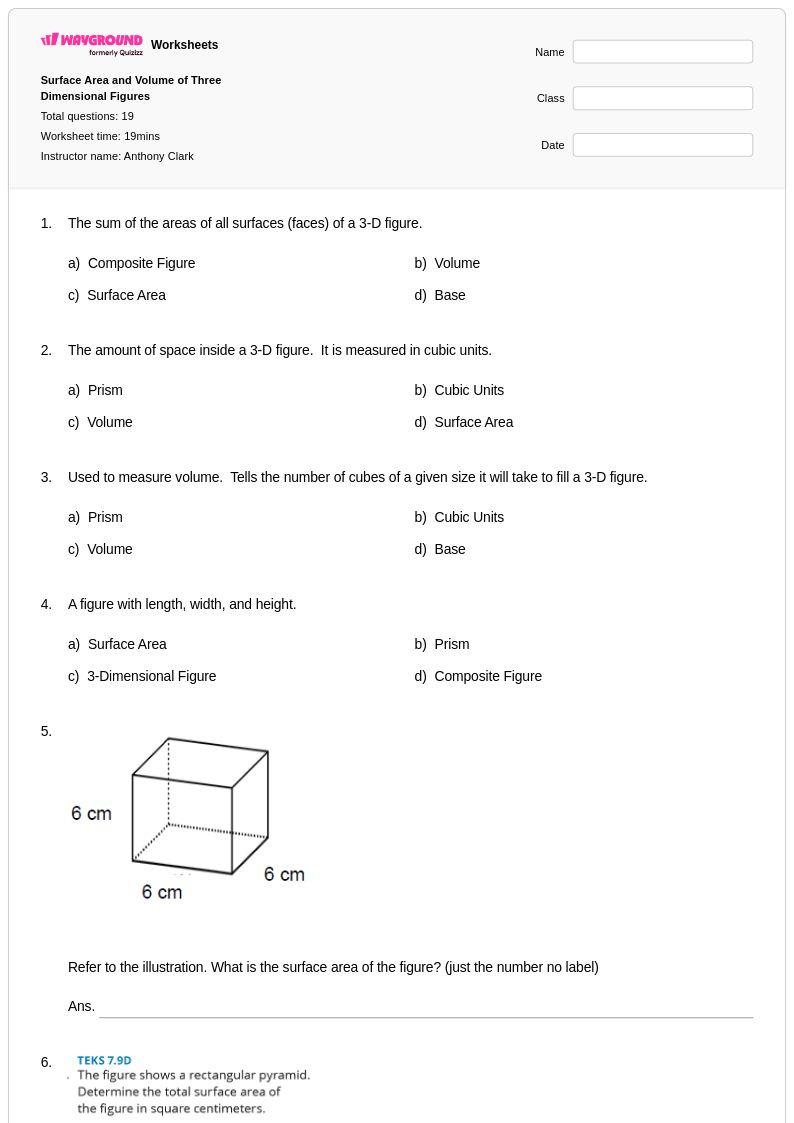
19 Q
6th - Uni
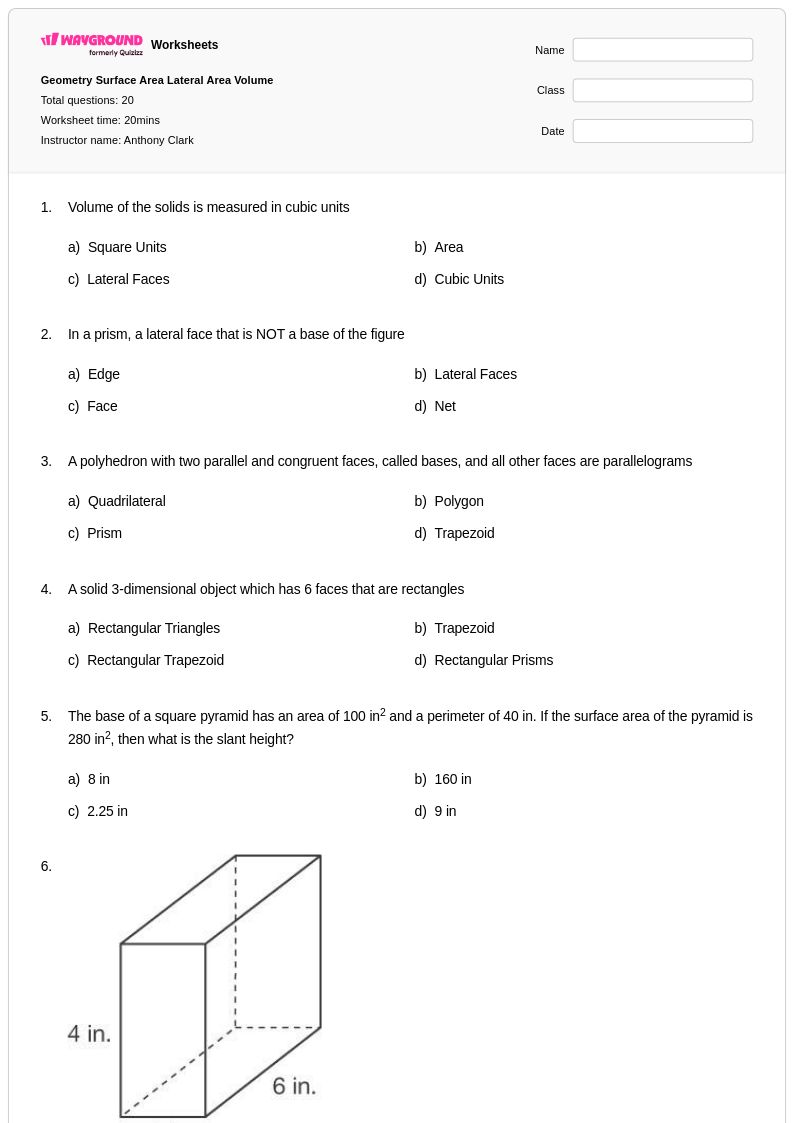
20 Q
8th - Uni
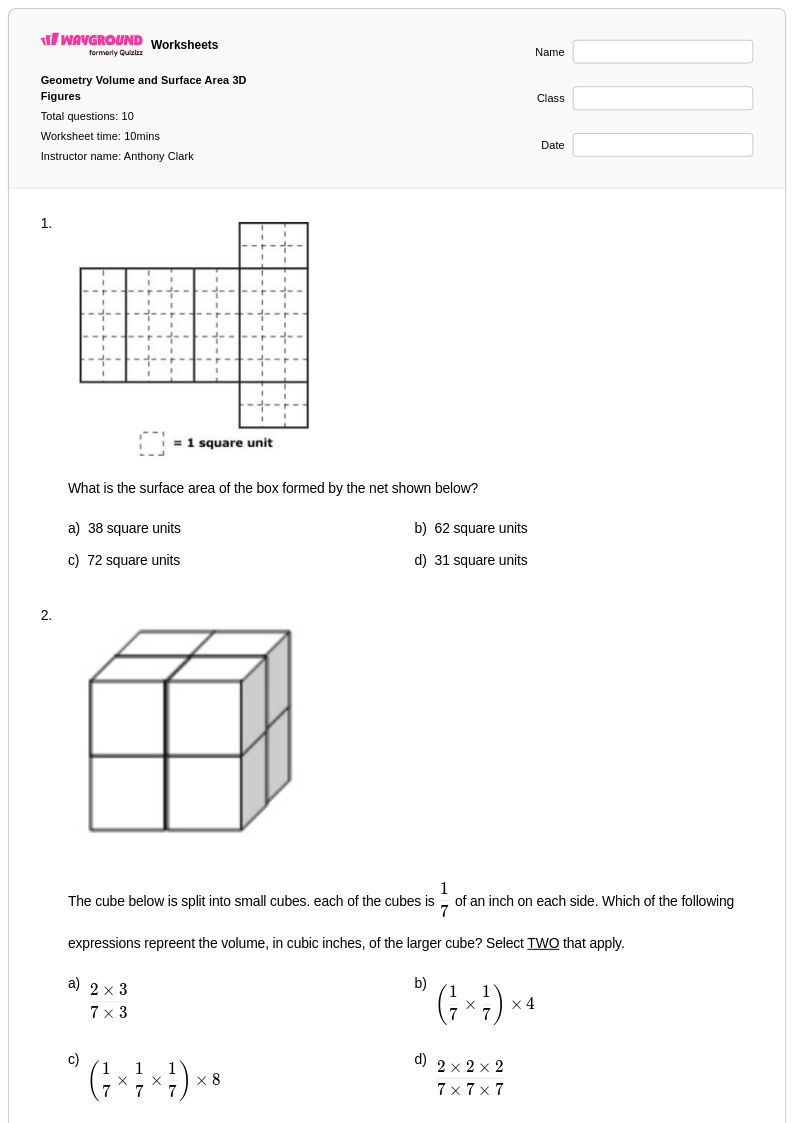
10 Q
6th - Uni
14 Q
6th - Uni
15 Q
9th - 12th
20 Q
6th - Uni
15 Q
5th - Uni
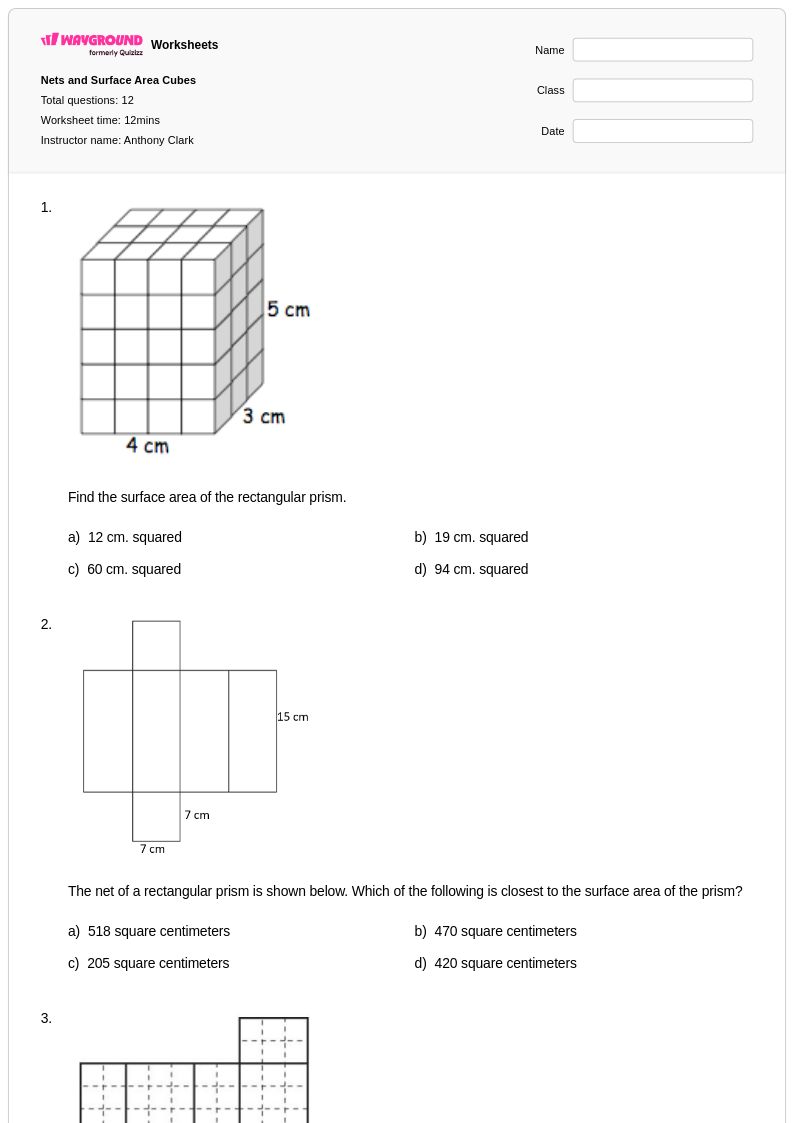
12 Q
6th - Uni
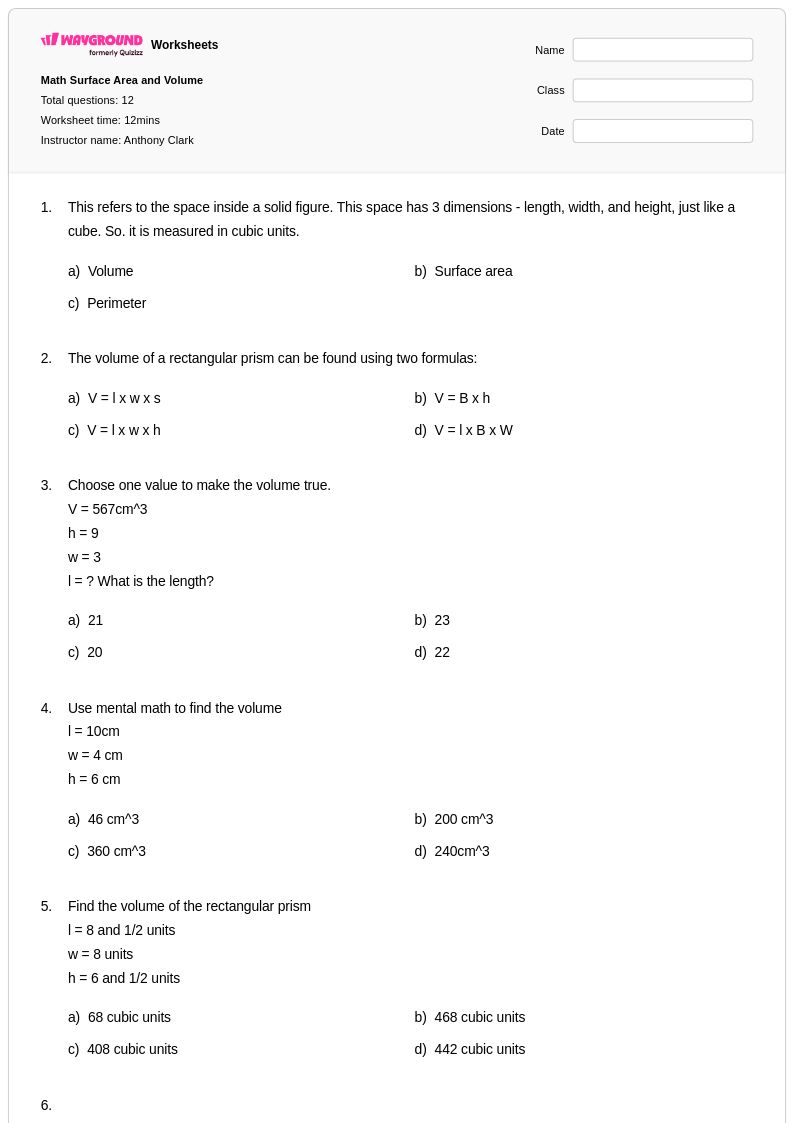
12 Q
6th - Uni
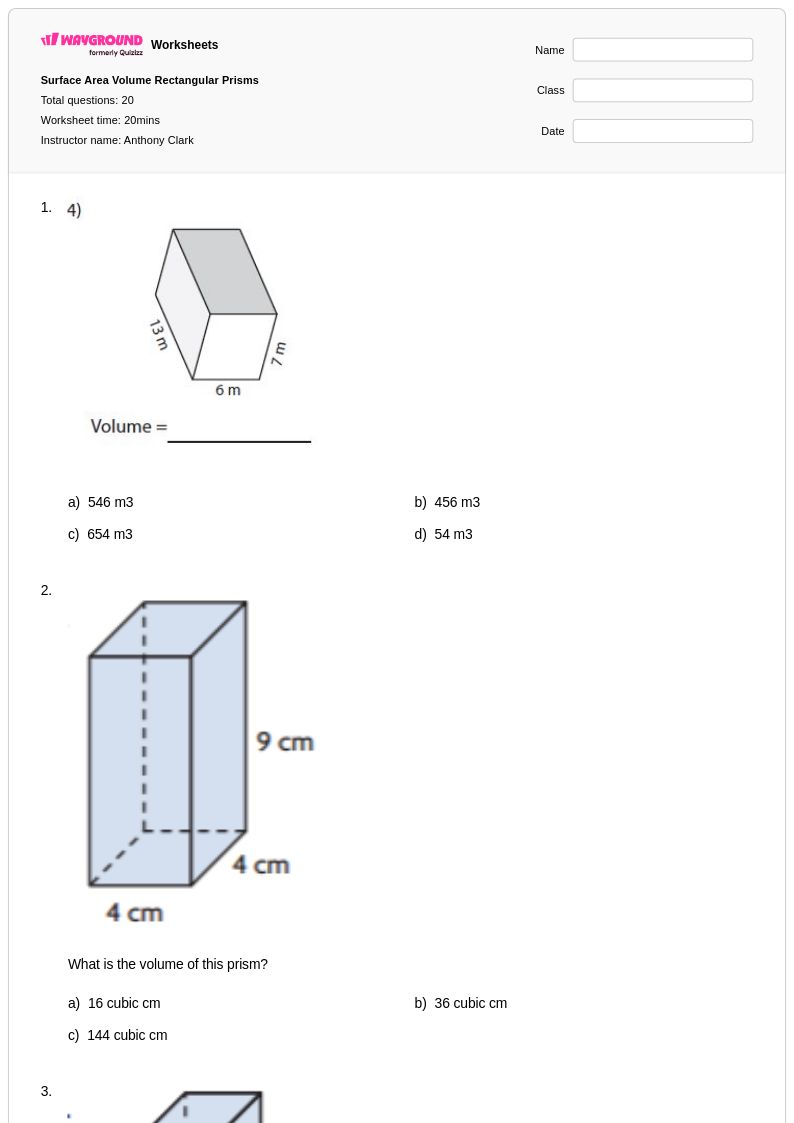
20 Q
7th - Uni
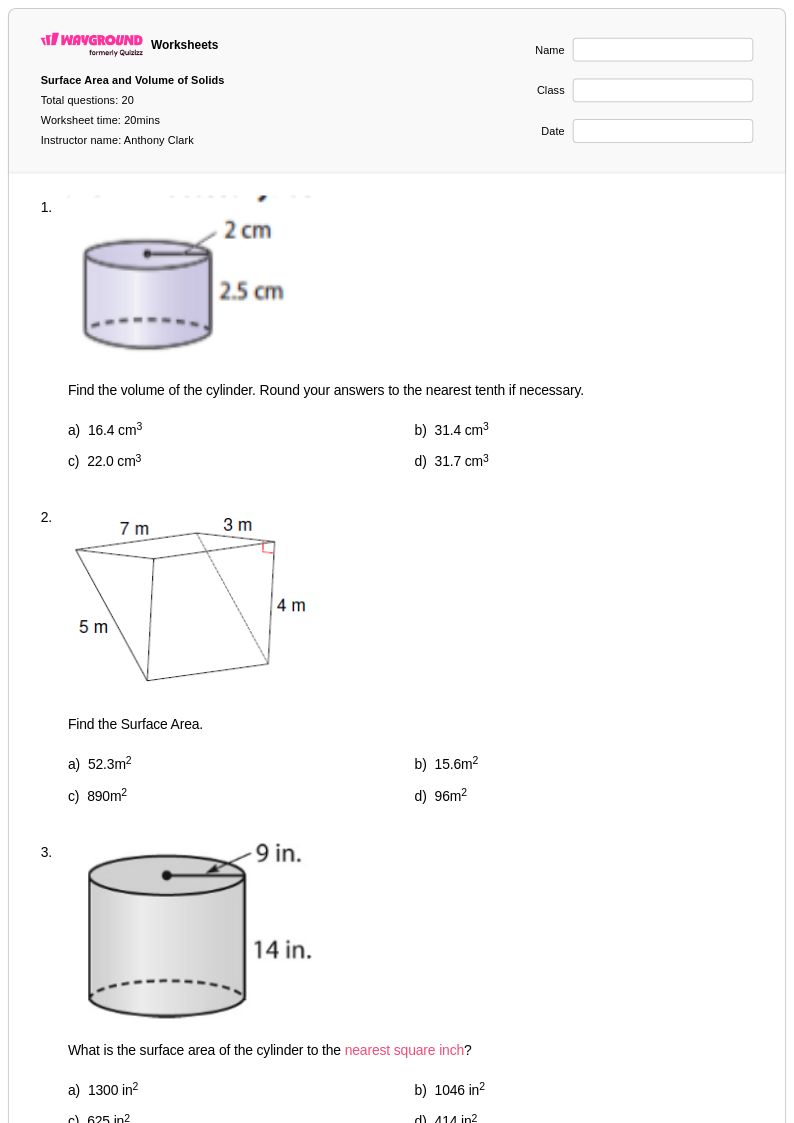
20 Q
8th - Uni
Explore Volume and Surface Area of Cubes Worksheets by Grades
Explore Other Subject Worksheets for grade 11
Explore printable Volume and Surface Area of Cubes worksheets for Grade 11
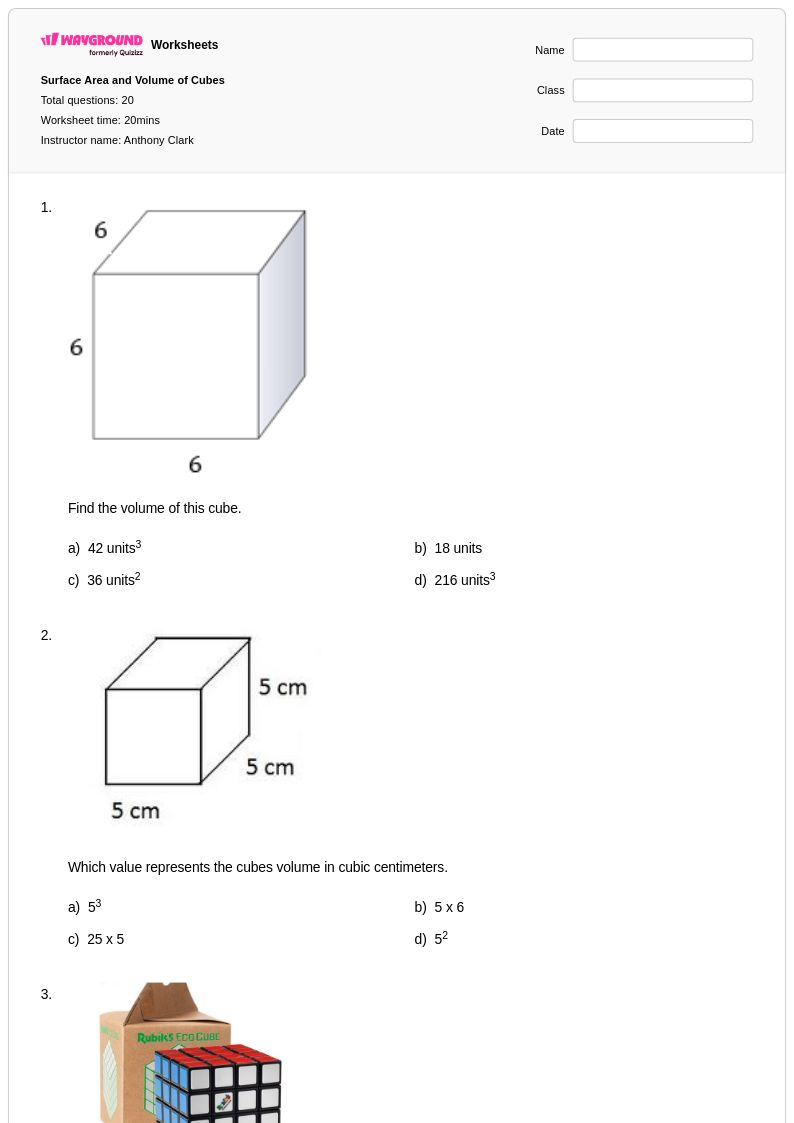
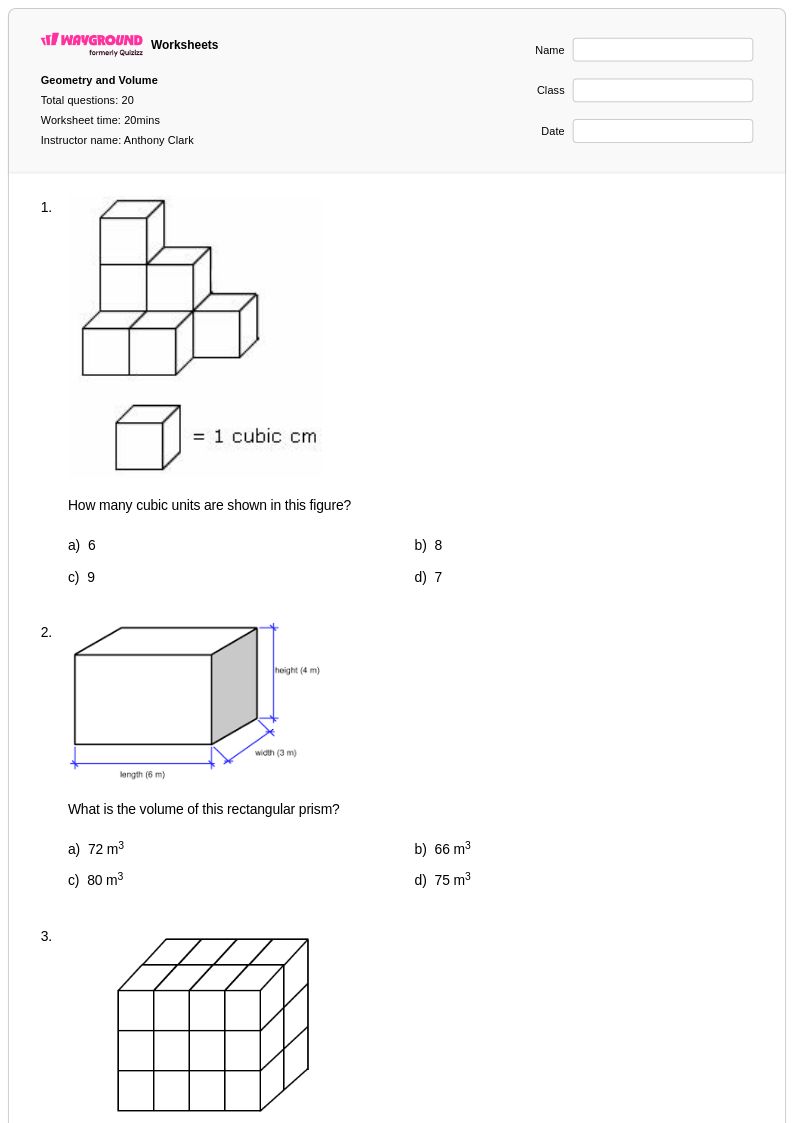
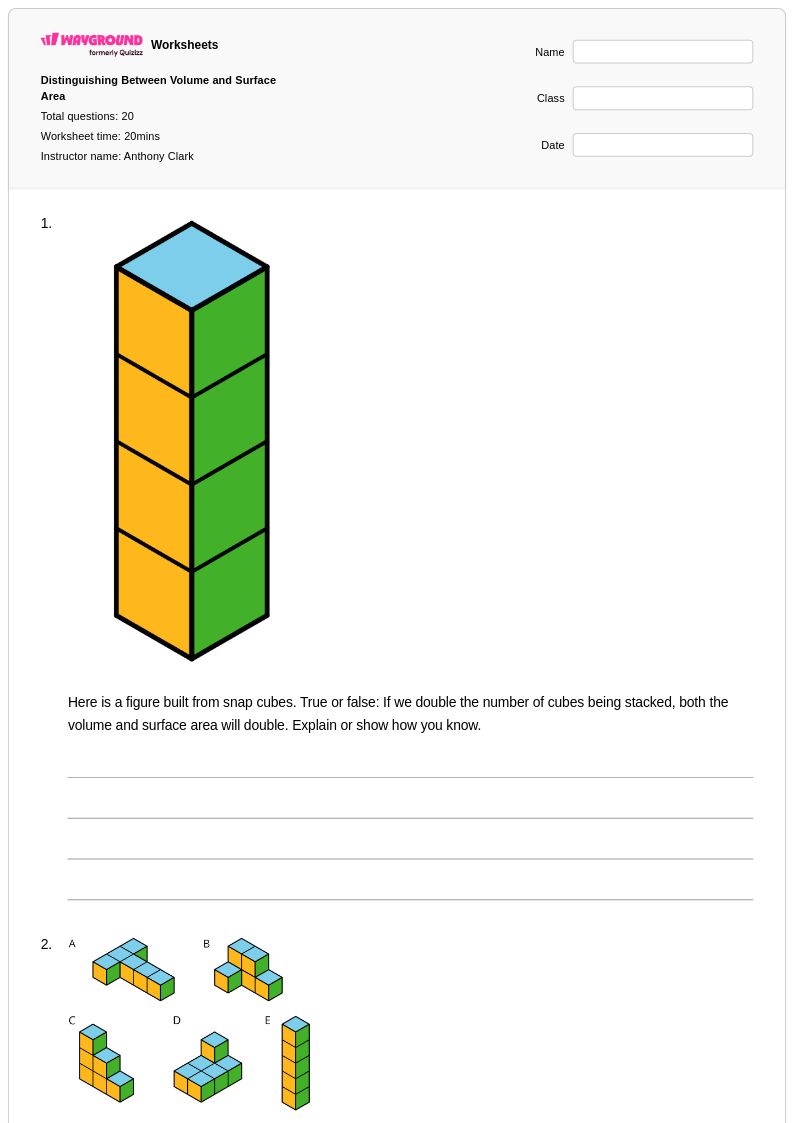
Volume and surface area of cubes worksheets for Grade 11 students through Wayground provide comprehensive practice with three-dimensional geometric calculations that form the foundation of advanced spatial reasoning skills. These mathematics resources strengthen students' ability to apply cube formulas accurately, visualize geometric relationships in three dimensions, and solve complex problems involving cubic measurements. The worksheet collection includes varied practice problems that progress from basic volume calculations using V = s³ to more challenging surface area applications using SA = 6s², with complete answer keys provided to support independent learning. Available as free printable pdf resources, these materials help students master the relationship between edge length and both volume and surface area while building confidence with exponential relationships and geometric problem-solving strategies.
Wayground's extensive collection of volume and surface area of cubes worksheets draws from millions of teacher-created resources, offering educators powerful search and filtering capabilities to locate materials perfectly matched to their Grade 11 geometry curriculum needs. The platform's standards alignment ensures worksheets support specific learning objectives while differentiation tools allow teachers to customize problems for varying skill levels within their classrooms. These flexible resources are available in both printable and digital pdf formats, making them ideal for classroom instruction, homework assignments, remediation support, and enrichment activities. Teachers can efficiently plan lessons using the platform's organizational features, quickly identify students who need additional practice through built-in assessment tools, and provide targeted skill practice that addresses individual learning gaps in three-dimensional geometry concepts.