
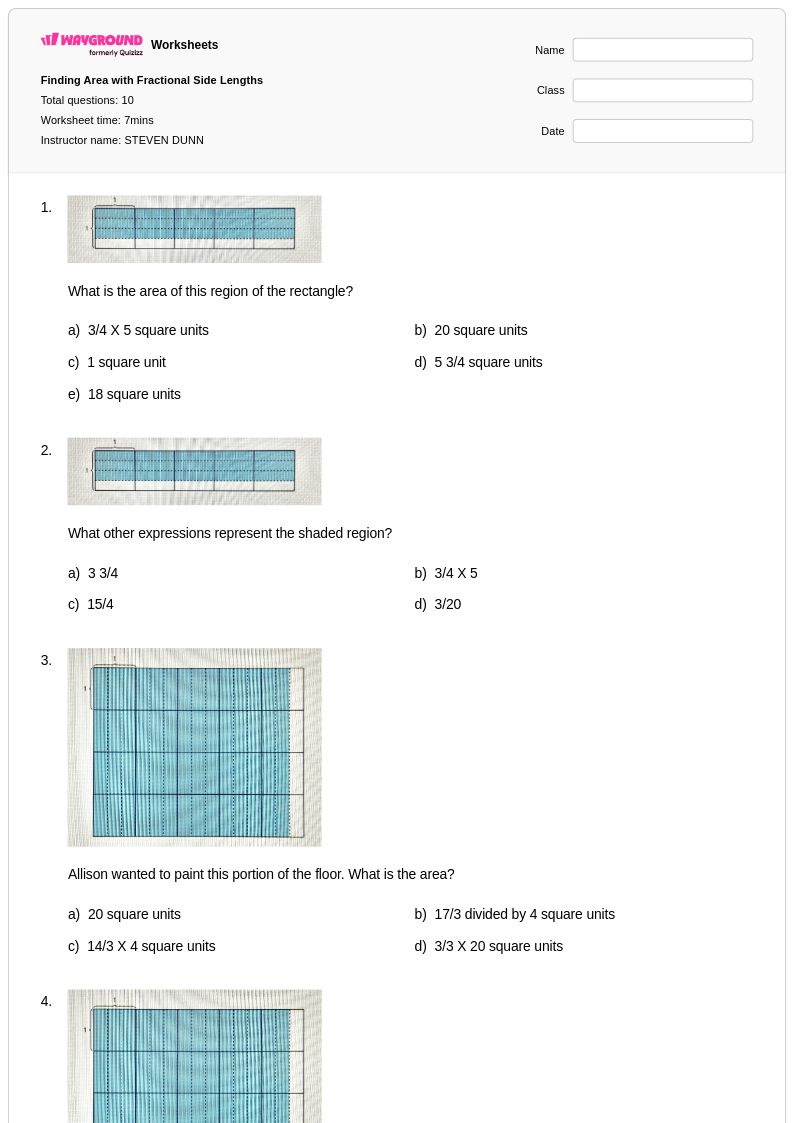
10 Q
5th
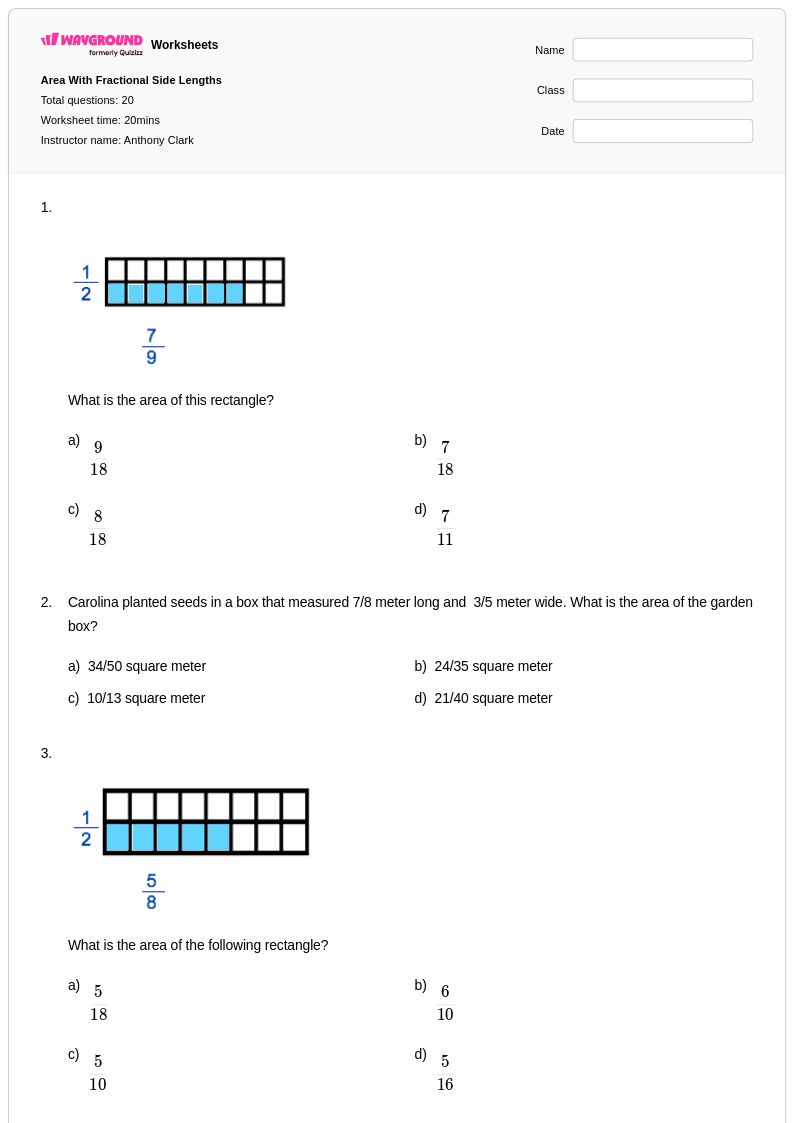
20 Q
5th - Uni
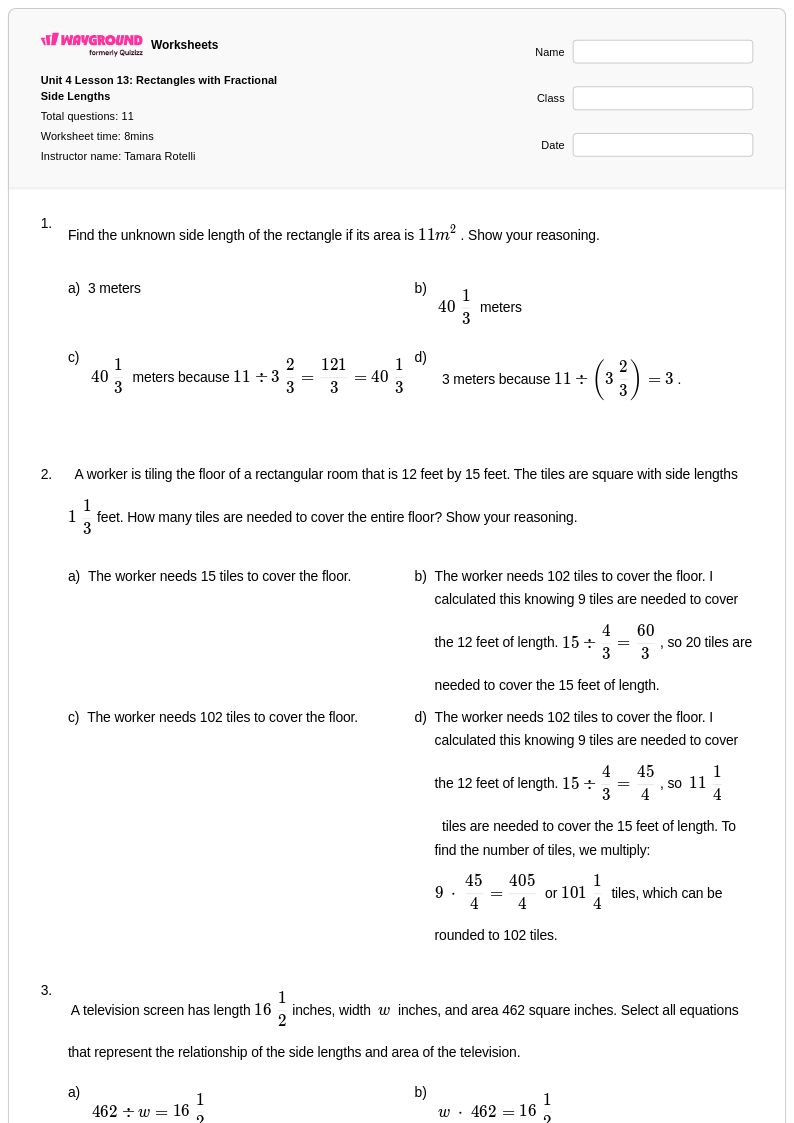
11 Q
6th
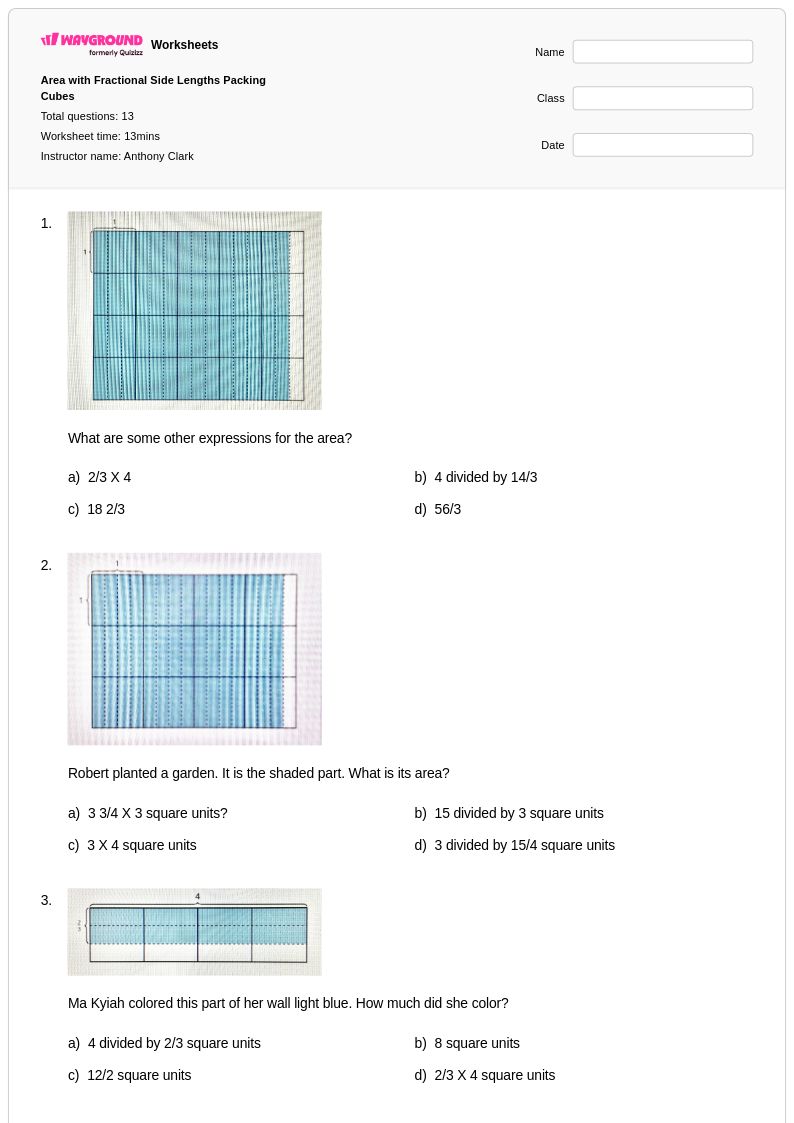
13 Q
5th - Uni
15 Q
5th - Uni
20 Q
5th - Uni
24 Q
5th
12 Q
5th
20 Q
5th - Uni
21 Q
5th
20 Q
5th - Uni
20 Q
6th - Uni
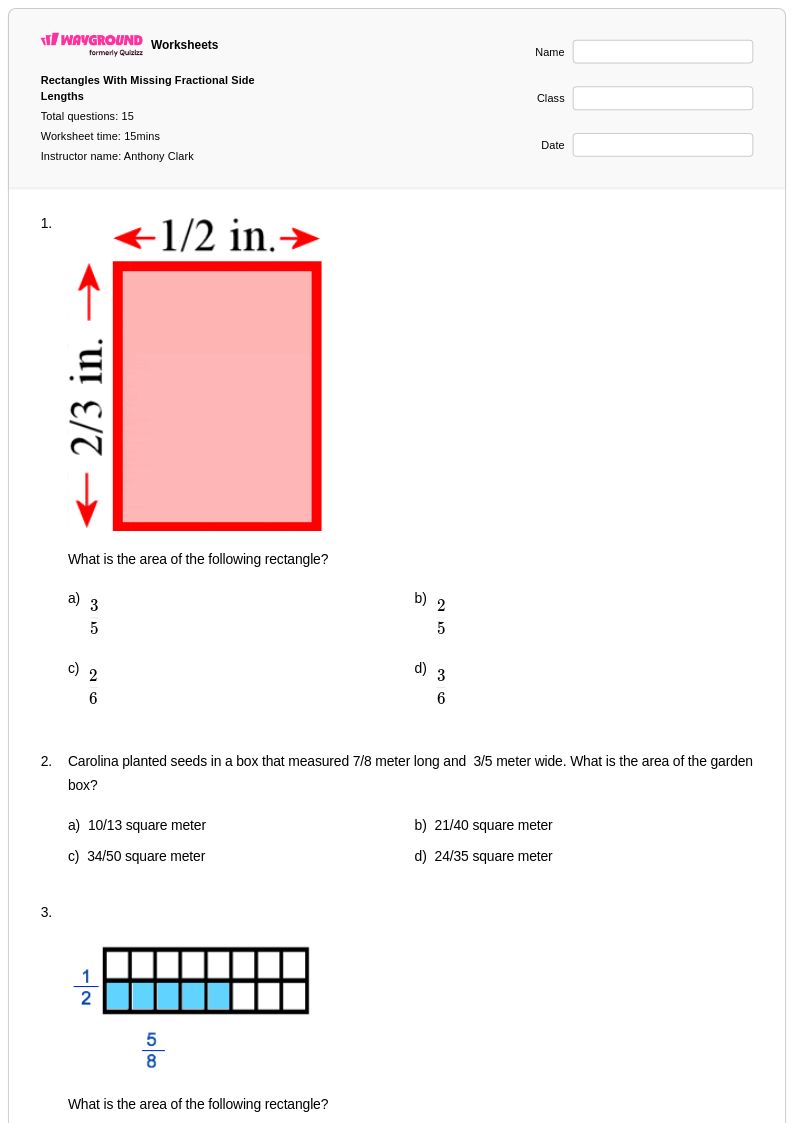
15 Q
5th - Uni
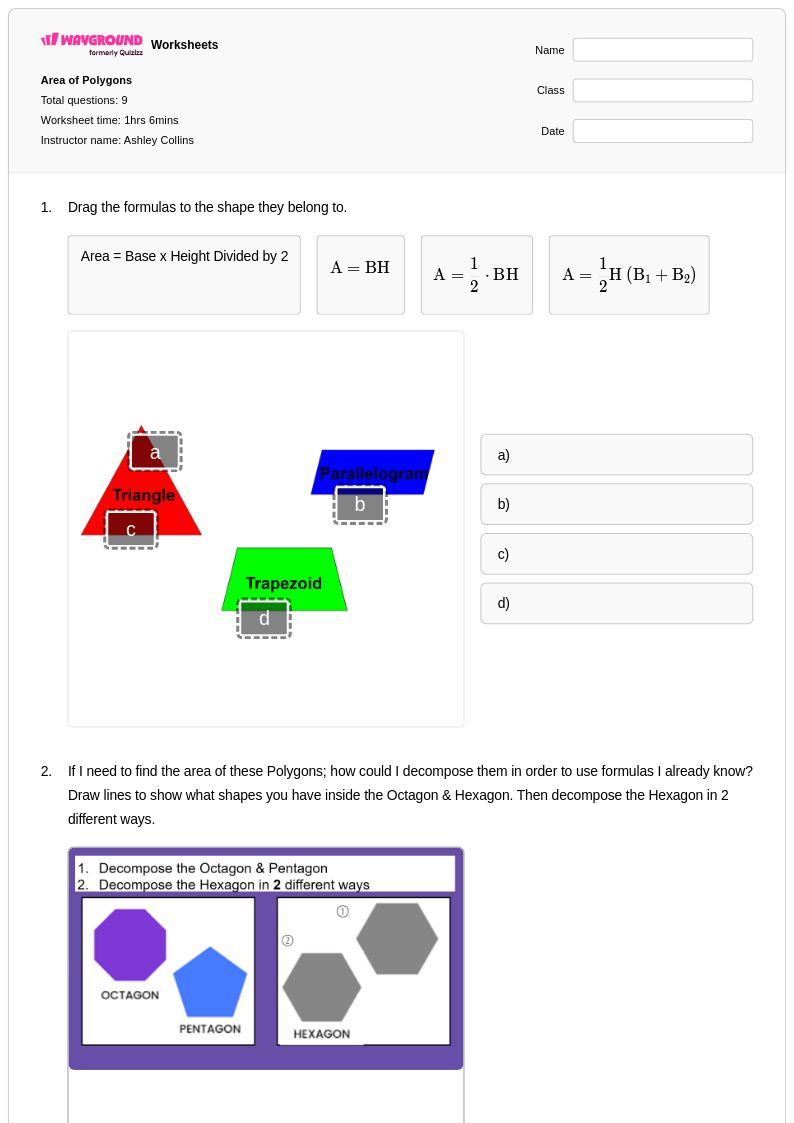
16 Q
6th
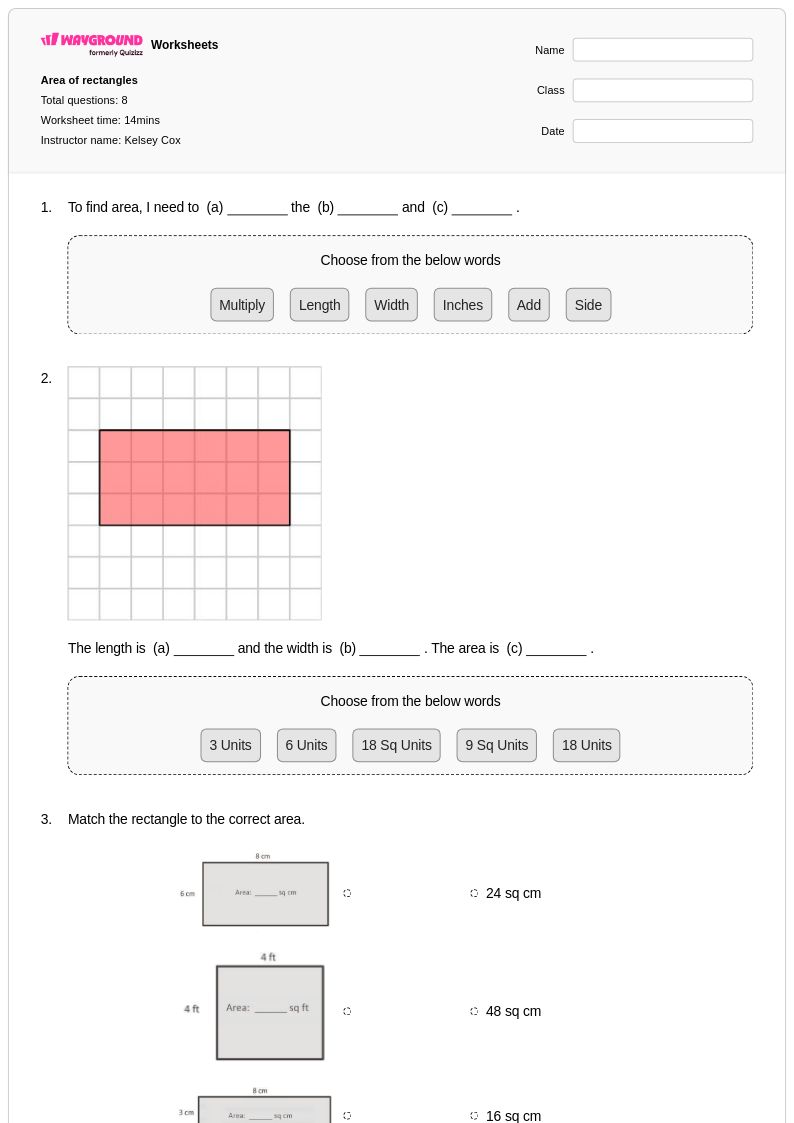
8 Q
3rd
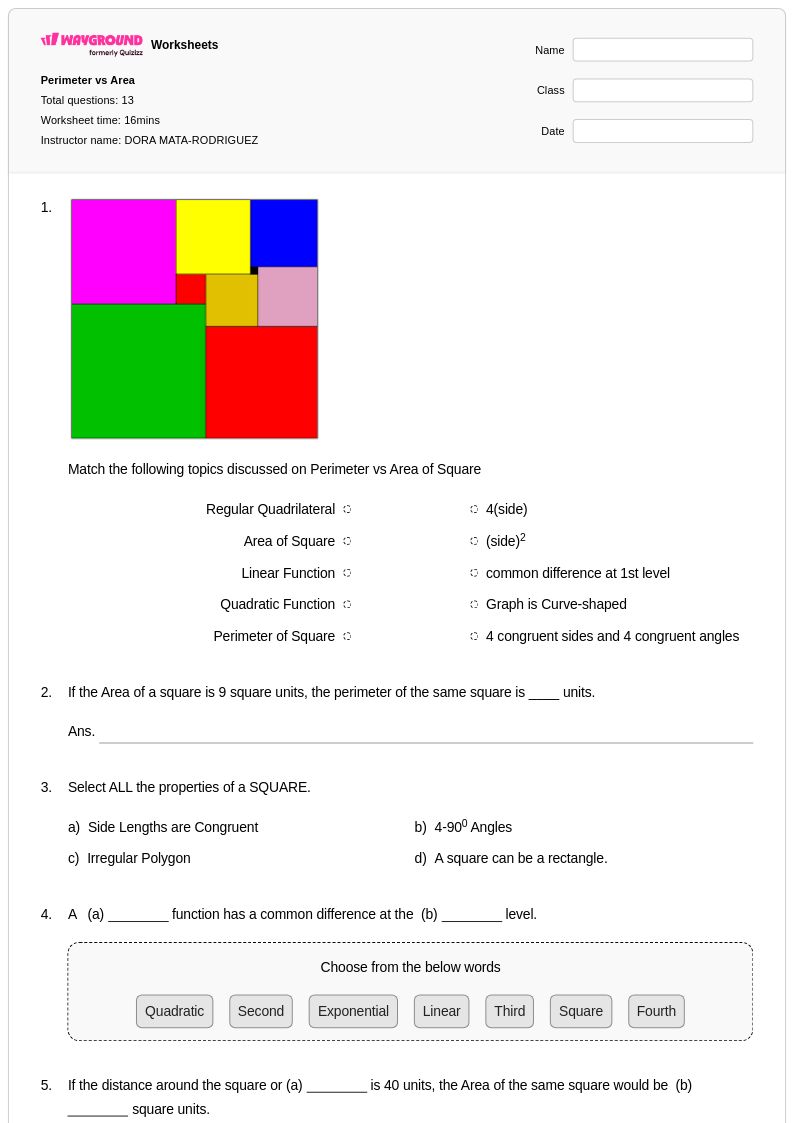
13 Q
8th
20 Q
3rd
20 Q
4th
18 Q
3rd
20 Q
10th
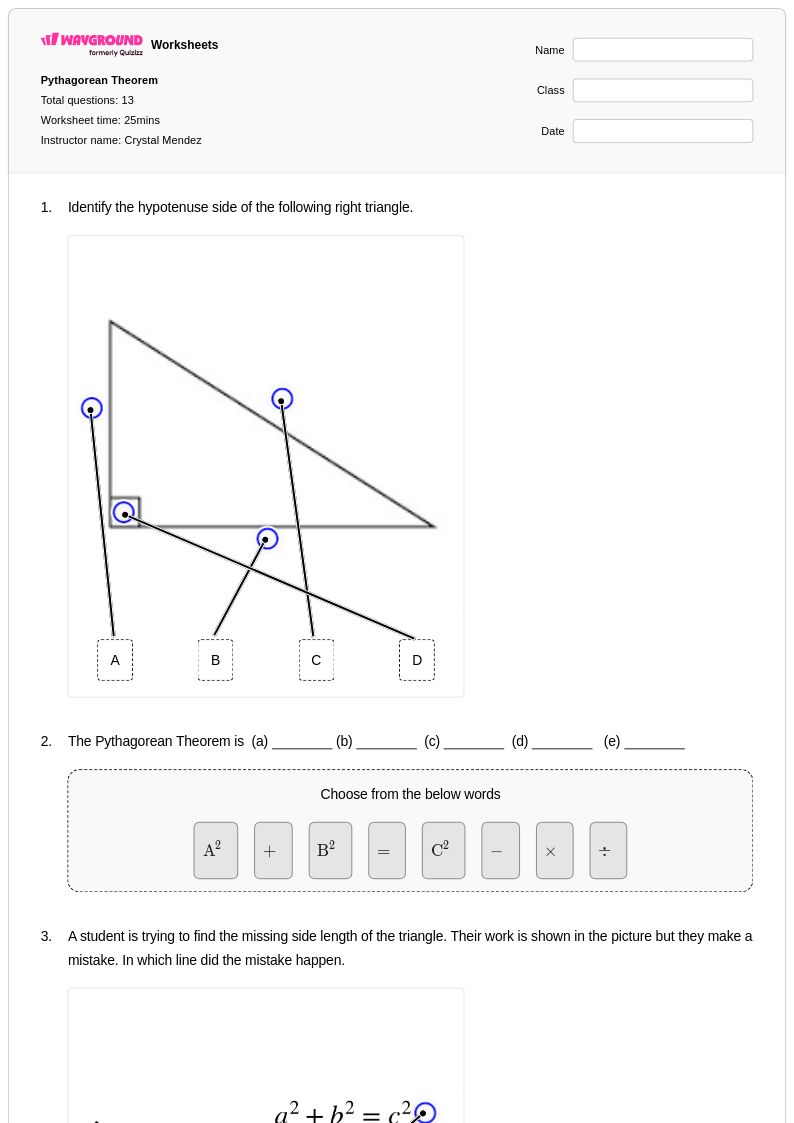
13 Q
10th
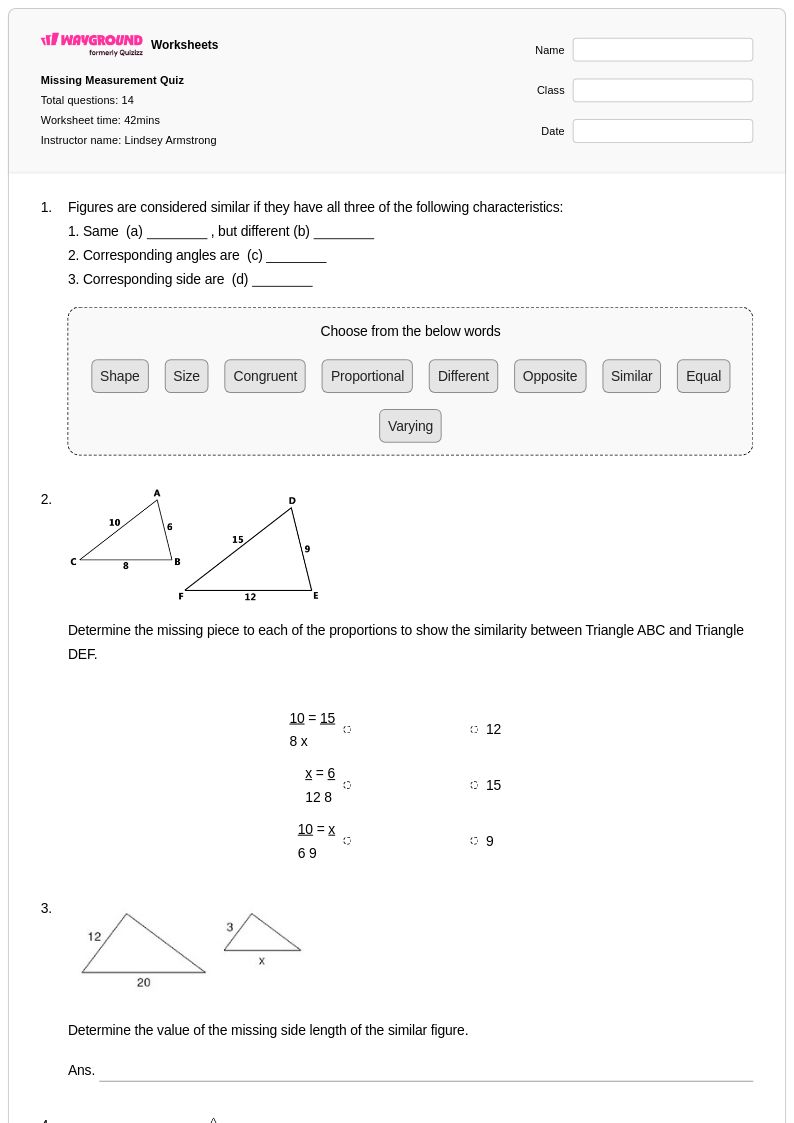
14 Q
7th
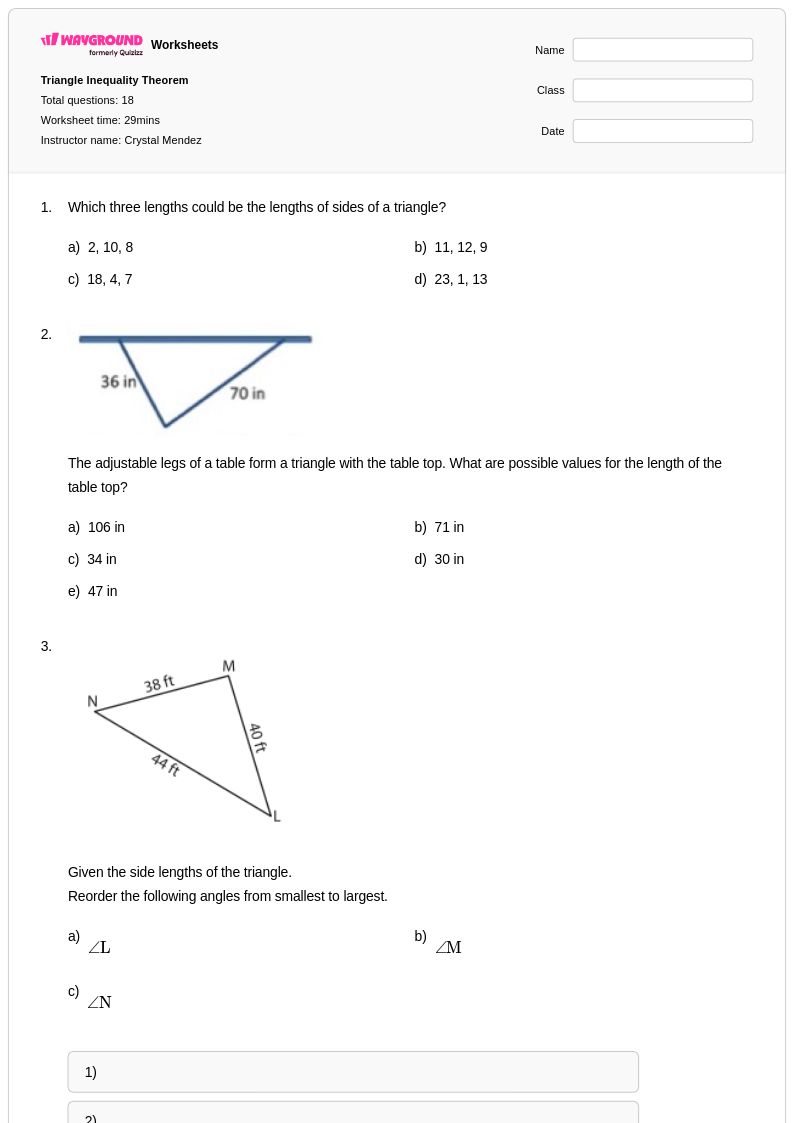
18 Q
10th

21 Q
6th
Explore Area with Fractional Side Lengths Worksheets by Grades
Explore Other Subject Worksheets for kindergarten
Explore printable Area with Fractional Side Lengths worksheets for Kindergarten
Area with fractional side lengths worksheets available through Wayground (formerly Quizizz) provide kindergarten students with foundational exposure to spatial reasoning concepts that bridge basic geometric understanding with early fraction awareness. These carefully designed practice problems introduce young learners to the concept that shapes can have measurements expressed in parts of a whole, building essential visual-spatial skills through hands-on activities and manipulative-based exercises. The worksheet collections feature age-appropriate illustrations and concrete examples that help kindergarteners begin to understand how areas can be measured using fractional units, with comprehensive answer keys and free printable pdf formats that make implementation seamless for both classroom instruction and home practice.
Wayground (formerly Quizizz) empowers kindergarten teachers with access to millions of educator-created resources specifically designed for introducing complex mathematical concepts like area measurement to young learners. The platform's robust search and filtering capabilities allow teachers to quickly locate worksheets that align with early childhood mathematics standards while providing differentiation tools to accommodate varying developmental levels within the kindergarten classroom. These customizable resources are available in both printable and digital pdf formats, enabling flexible lesson planning that supports remediation for students needing additional concrete experiences with spatial concepts, enrichment for advanced learners ready to explore measurement relationships, and targeted skill practice that builds the foundational understanding necessary for future geometric learning.
FAQs
How do I introduce area with fractional side lengths in kindergarten?
What activities help kindergarten students practice fractional measurements and area?
What mistakes do kindergarteners make when exploring fractional side lengths?
How can I use these kindergarten area worksheets in class?
How does this topic fit into the Common Core math progression?
How can I differentiate fractional-area activities for kindergarteners?
Are area with fractional side lengths worksheets appropriate for kindergarten?