
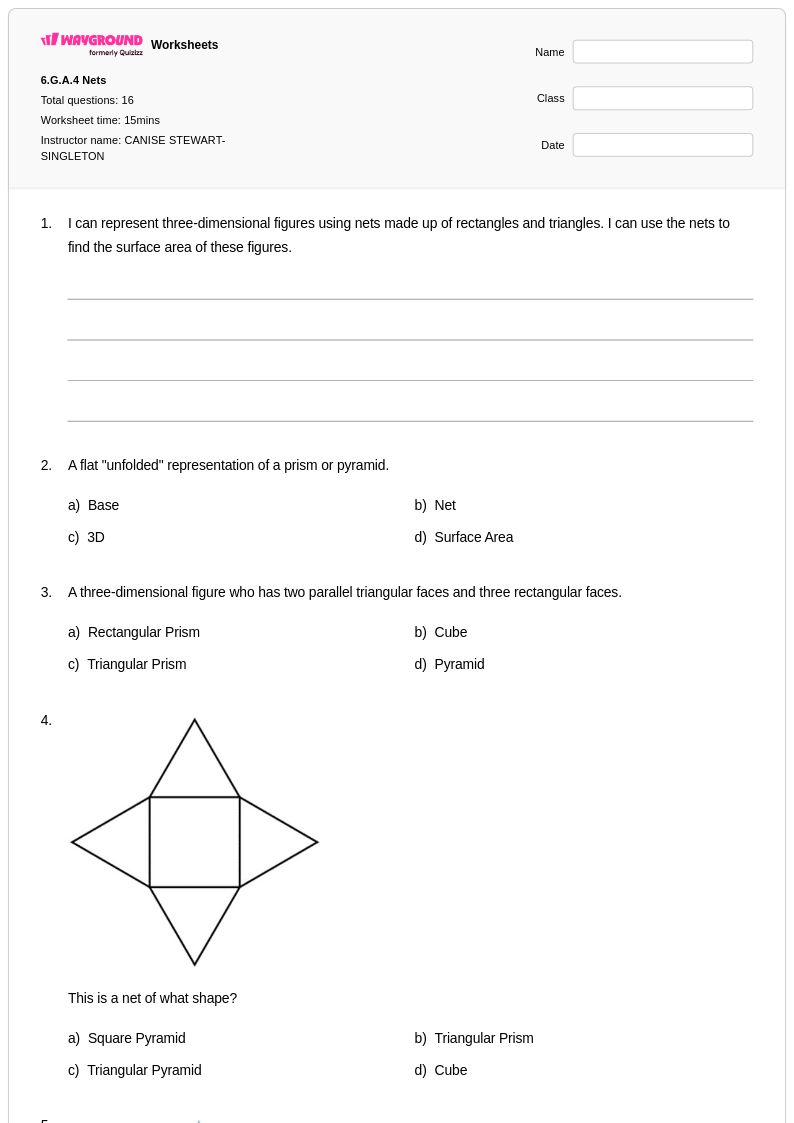
16Q
6th
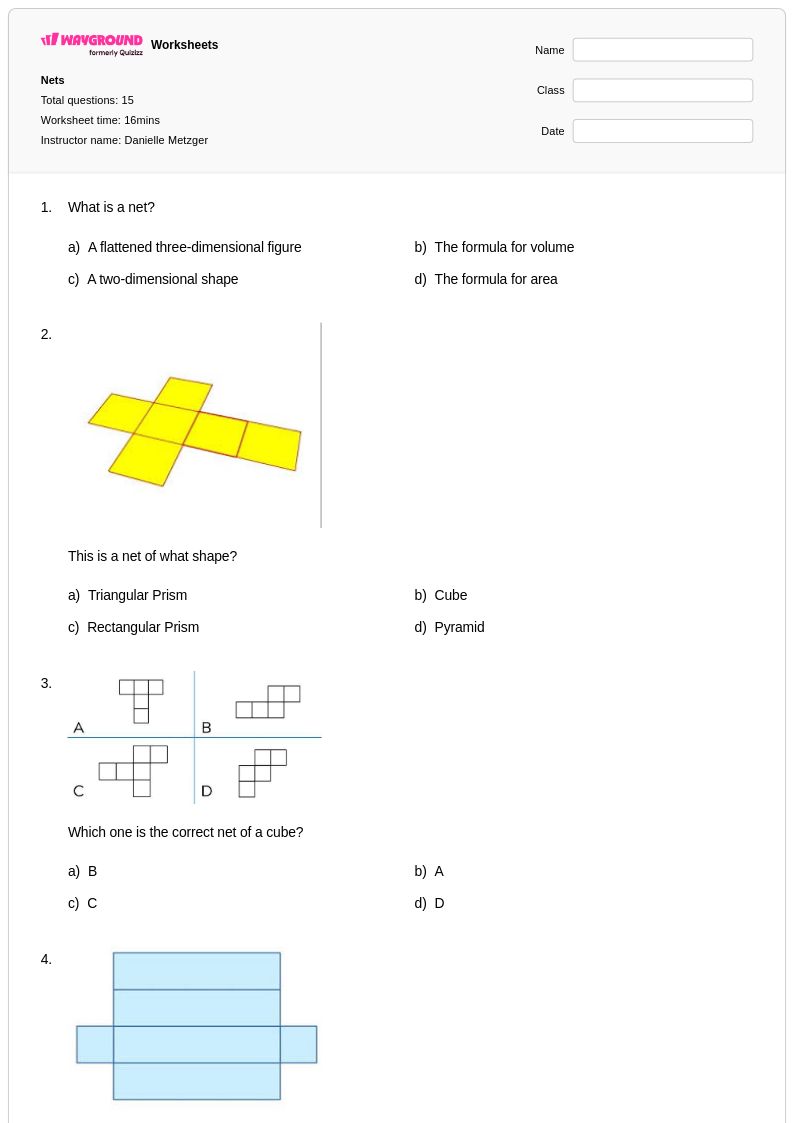
15Q
6th
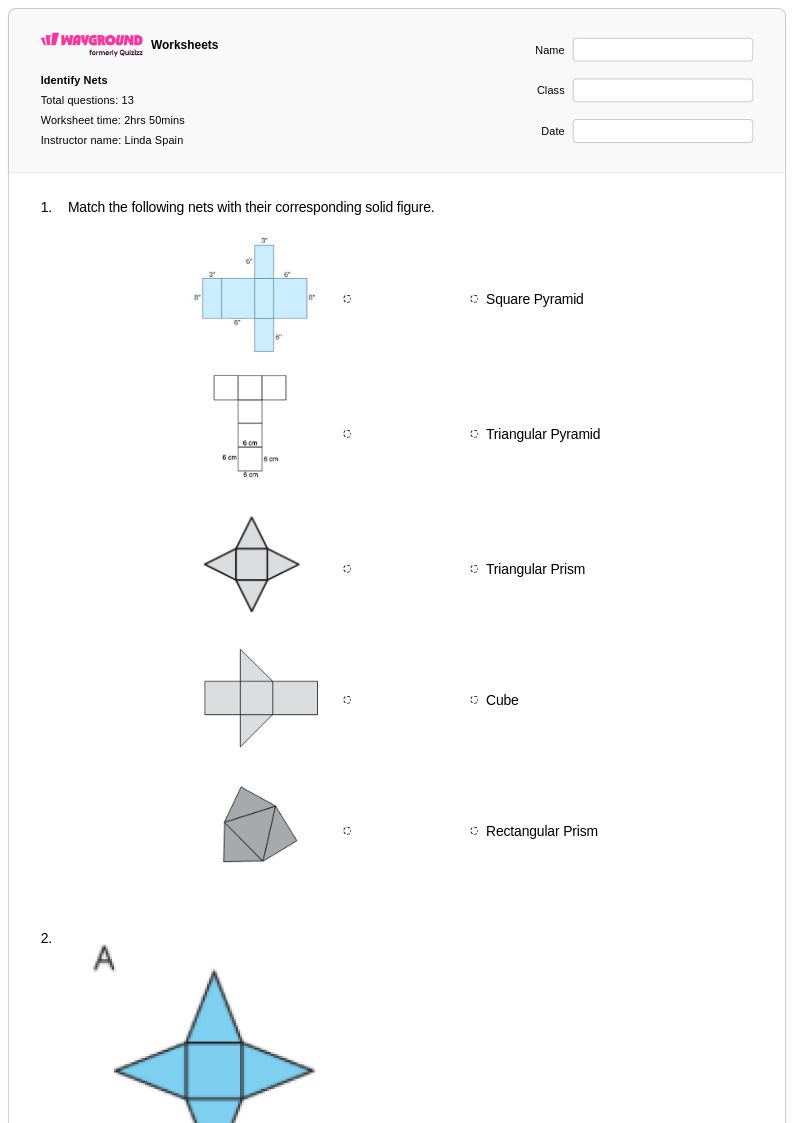
13Q
6th
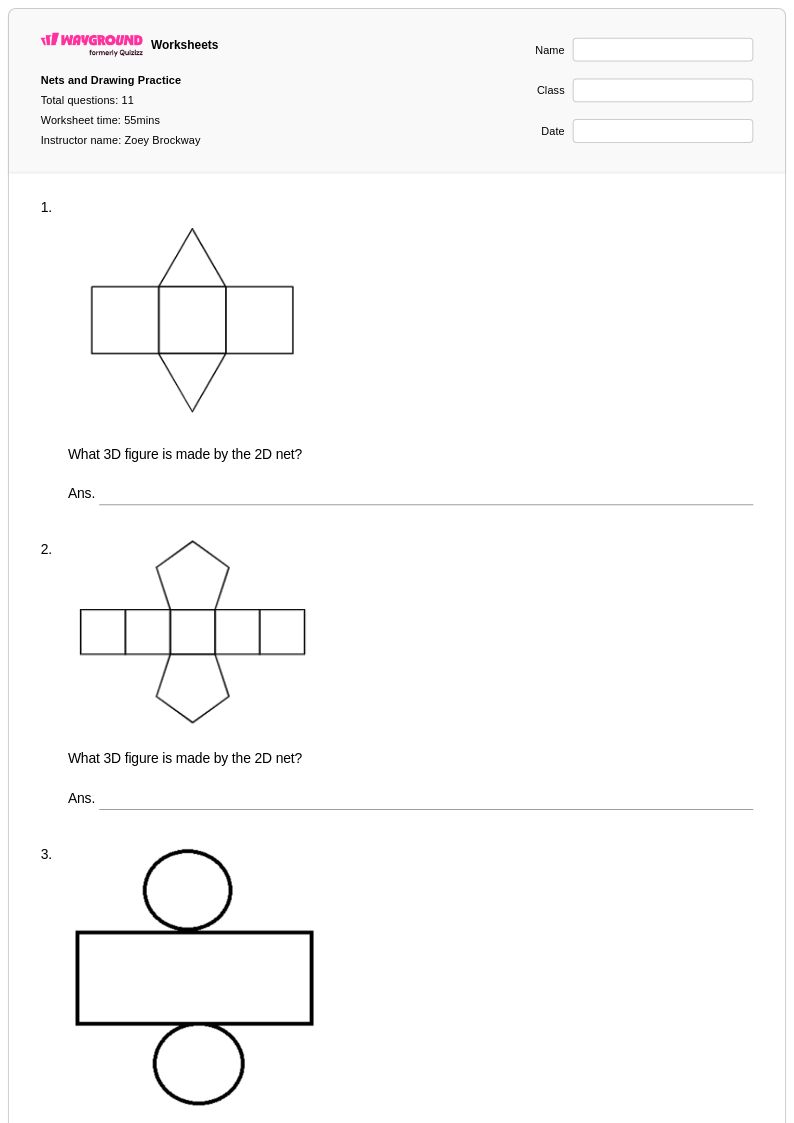
11Q
7th
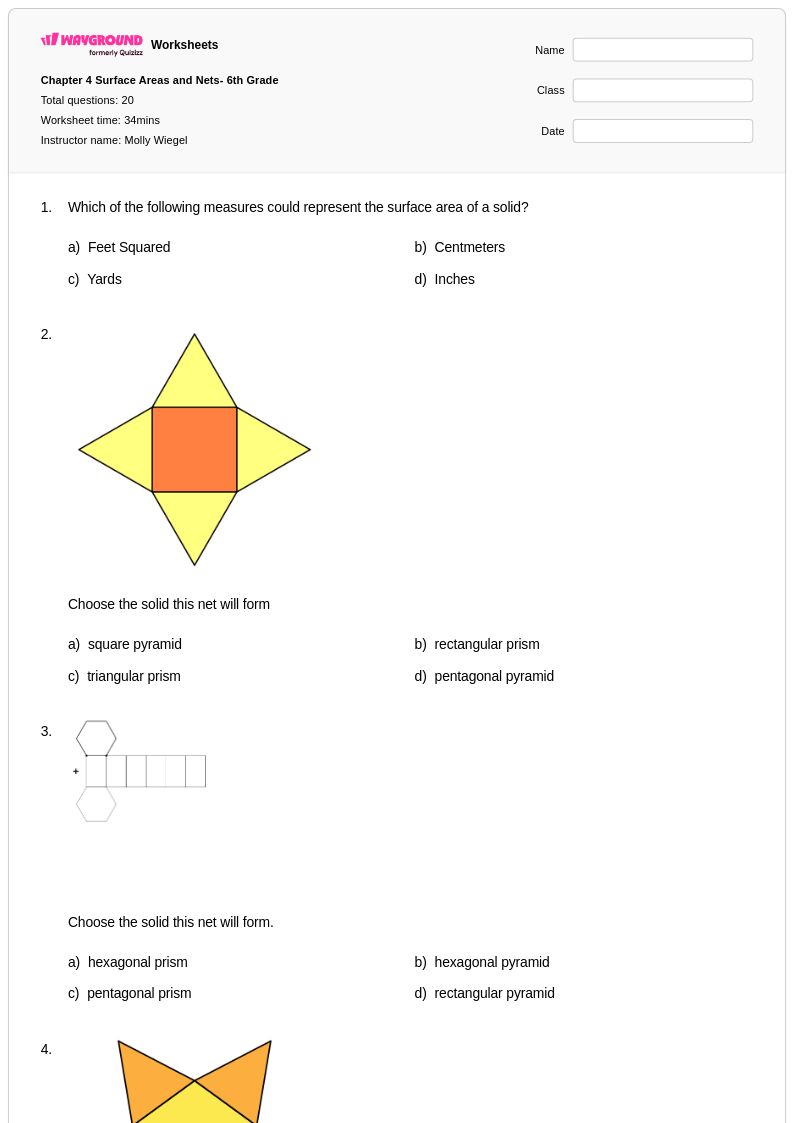
20Q
6th - 8th
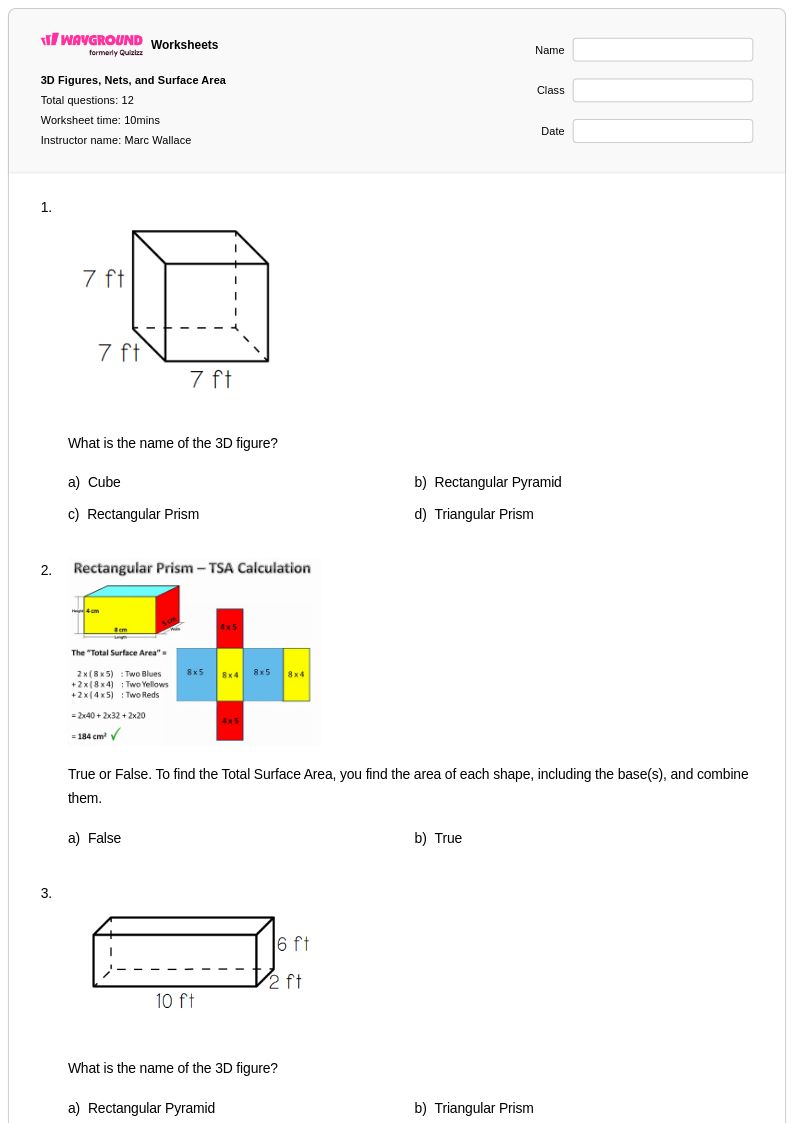
12Q
7th
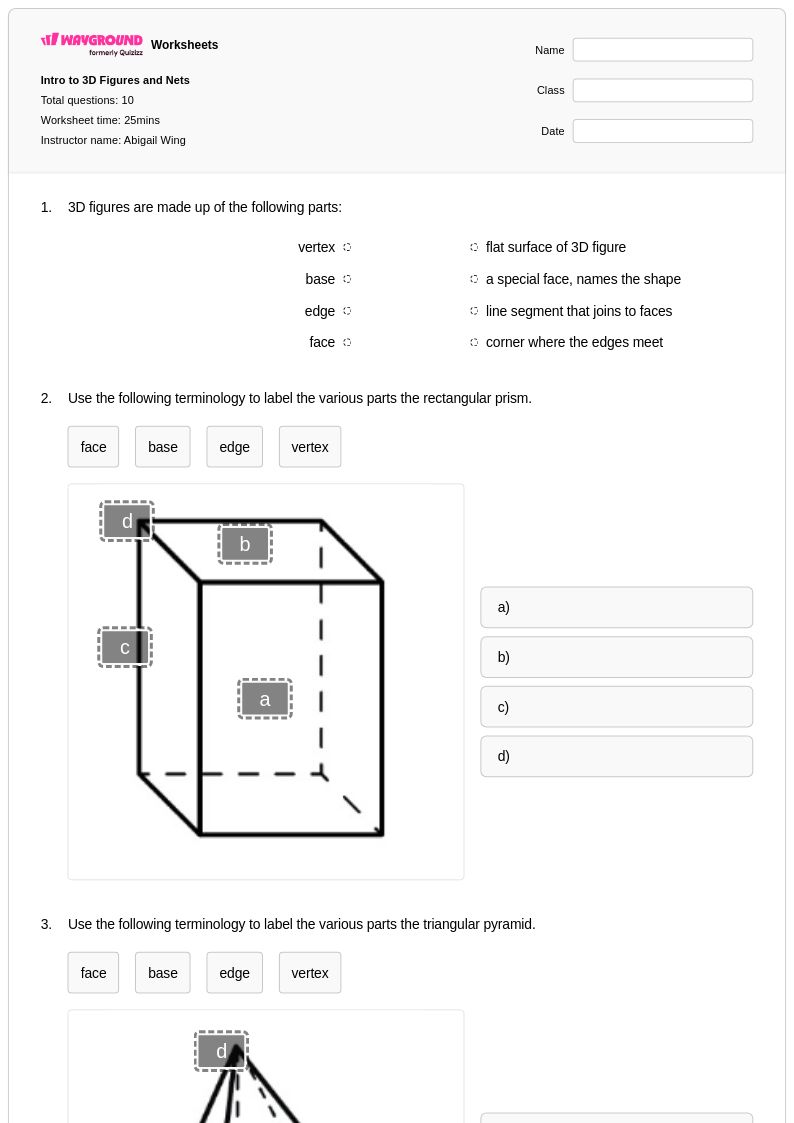
10Q
7th
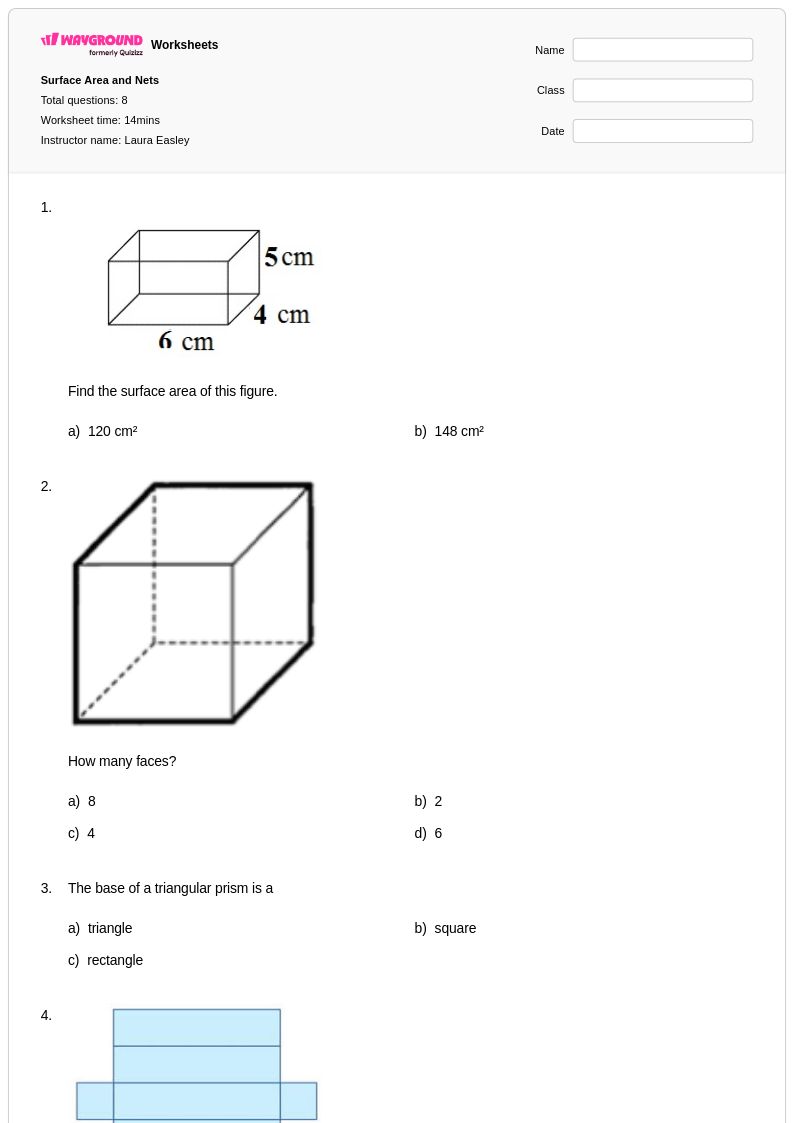
21Q
6th
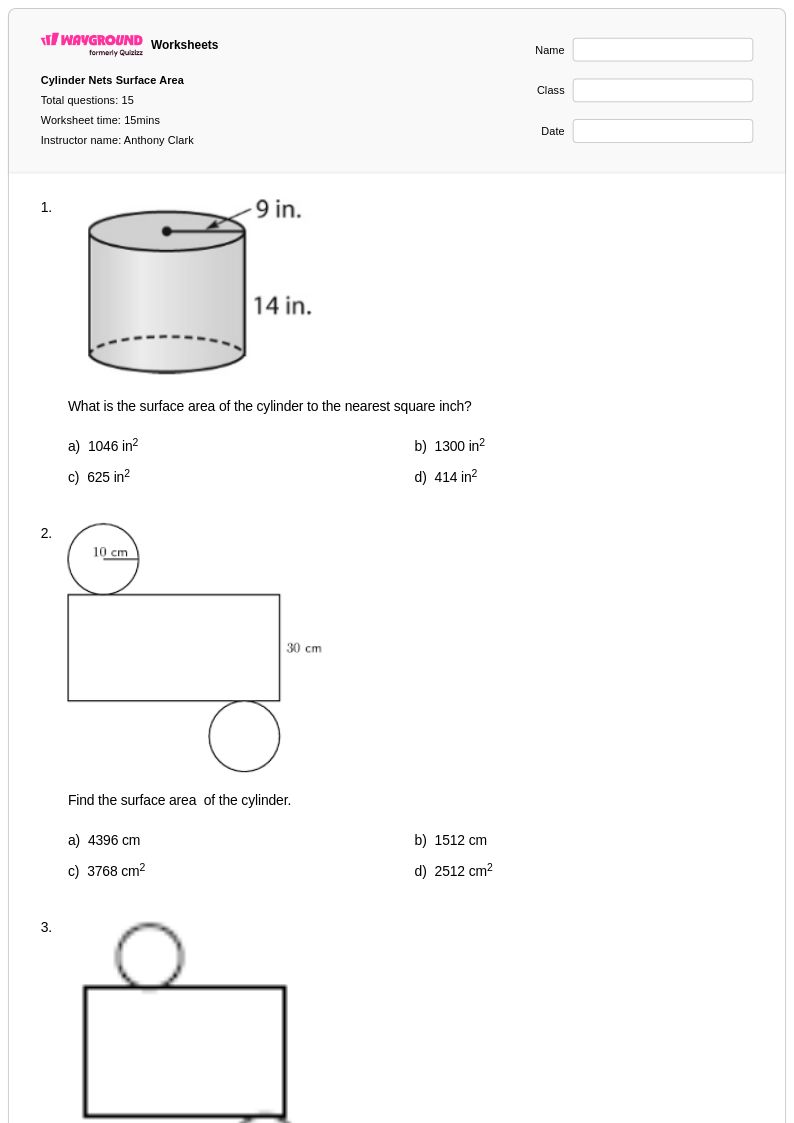
15Q
6th - Uni
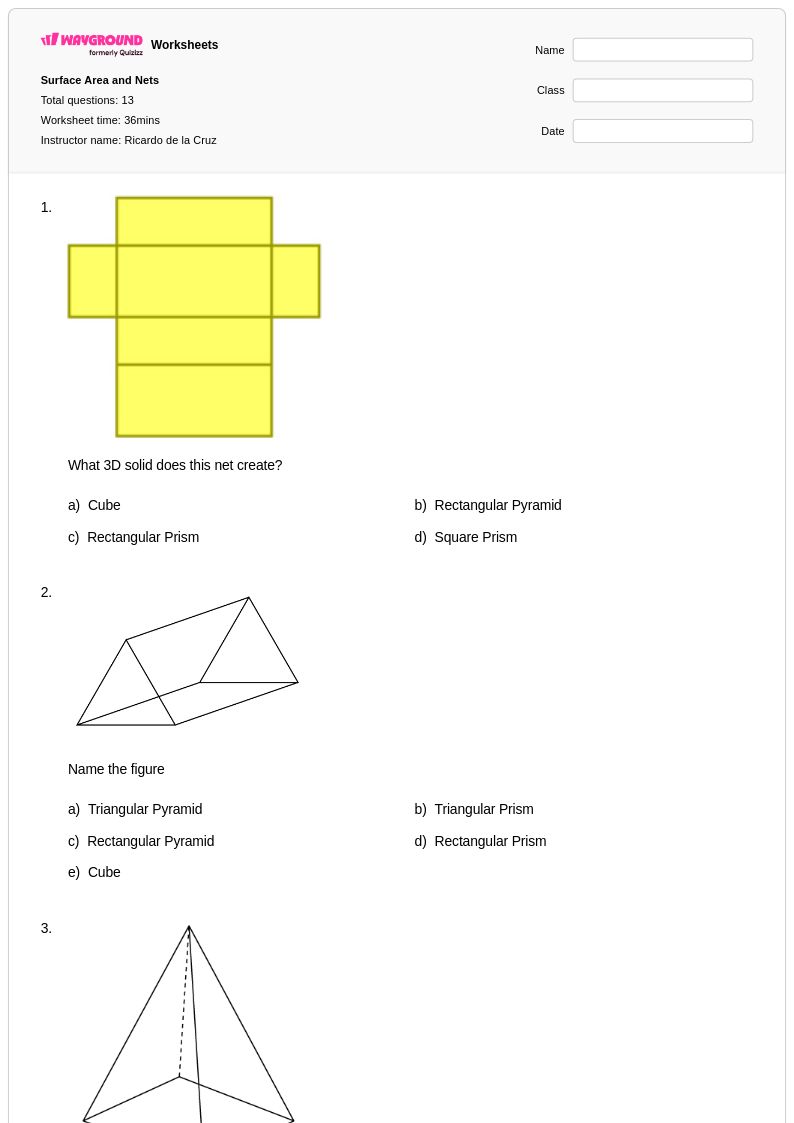
13Q
6th
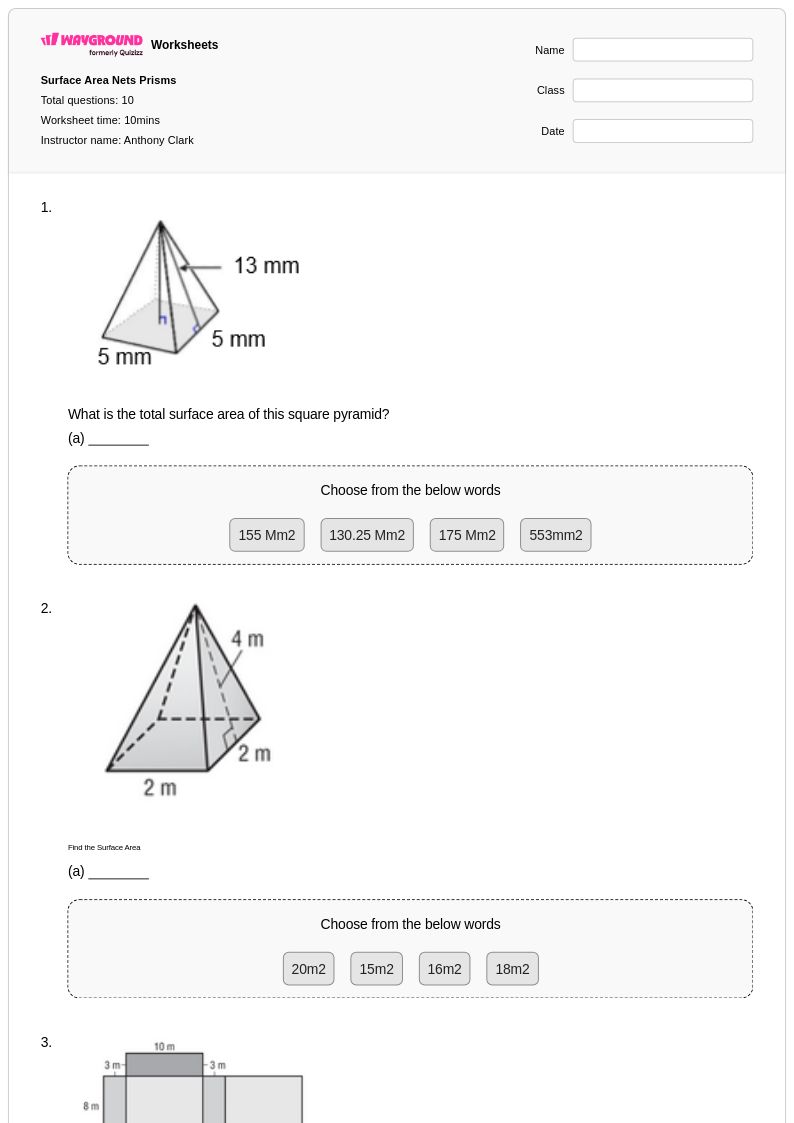
10Q
7th - Uni
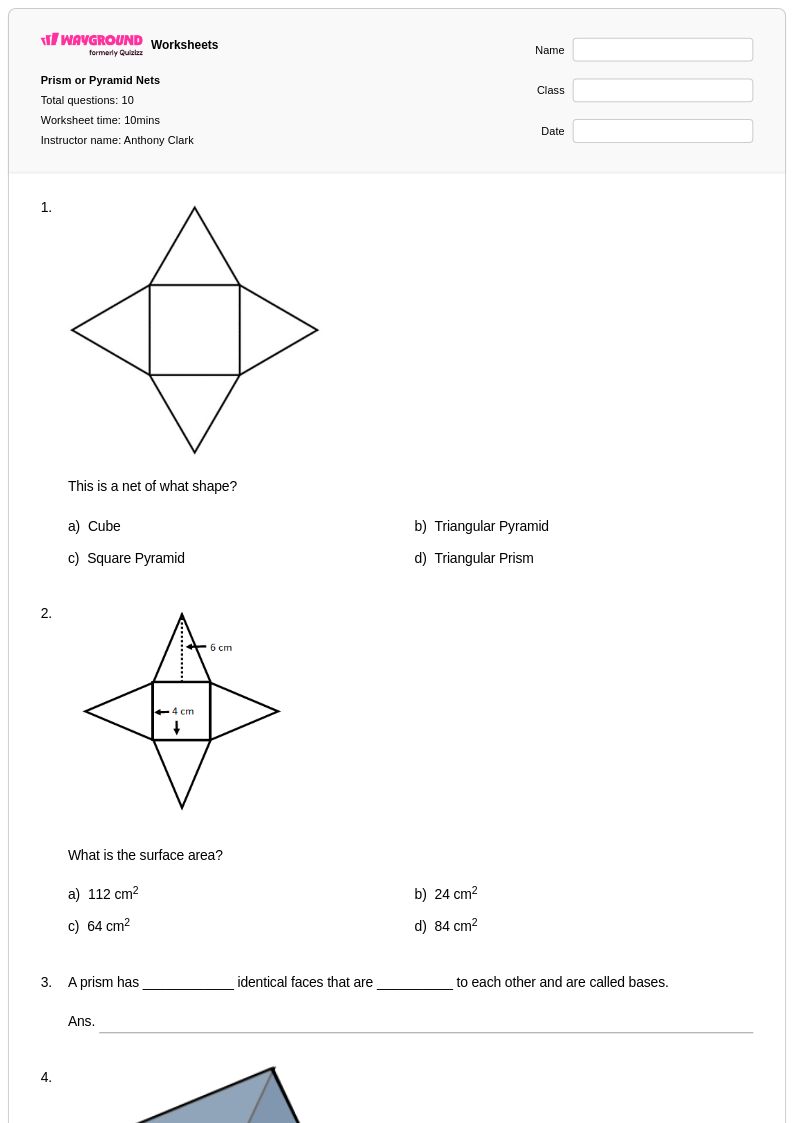
10Q
6th - Uni
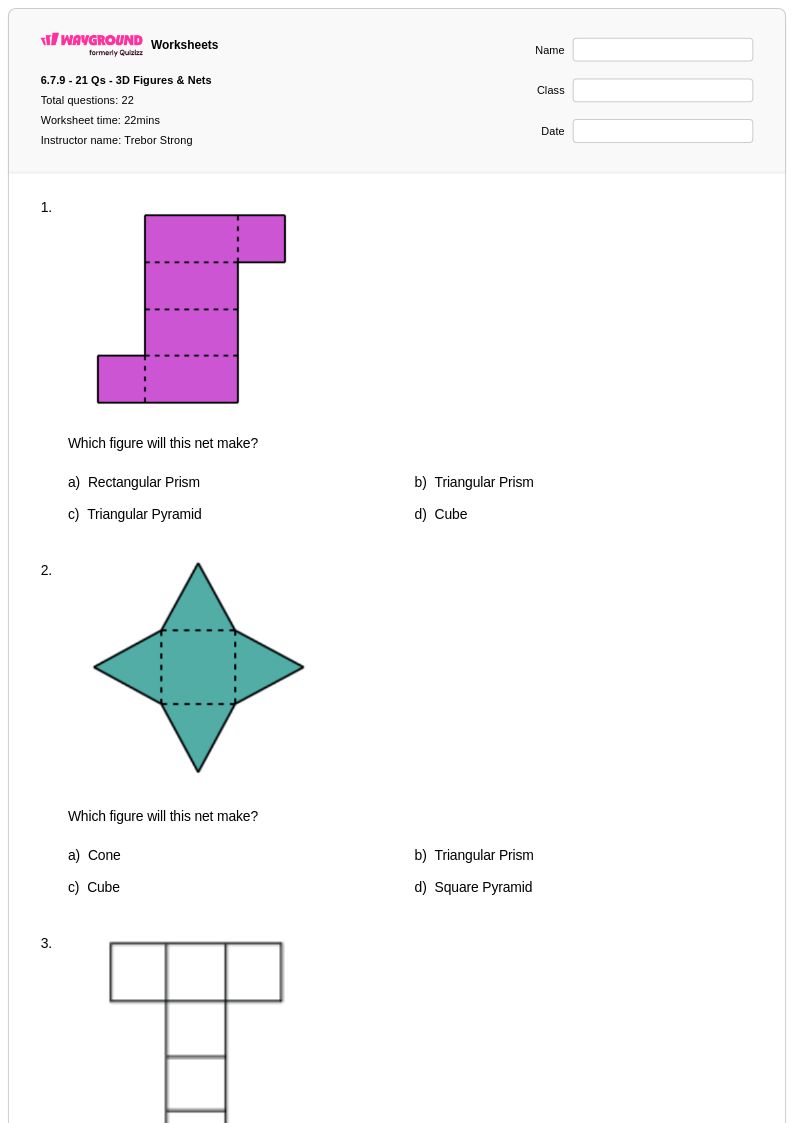
22Q
6th
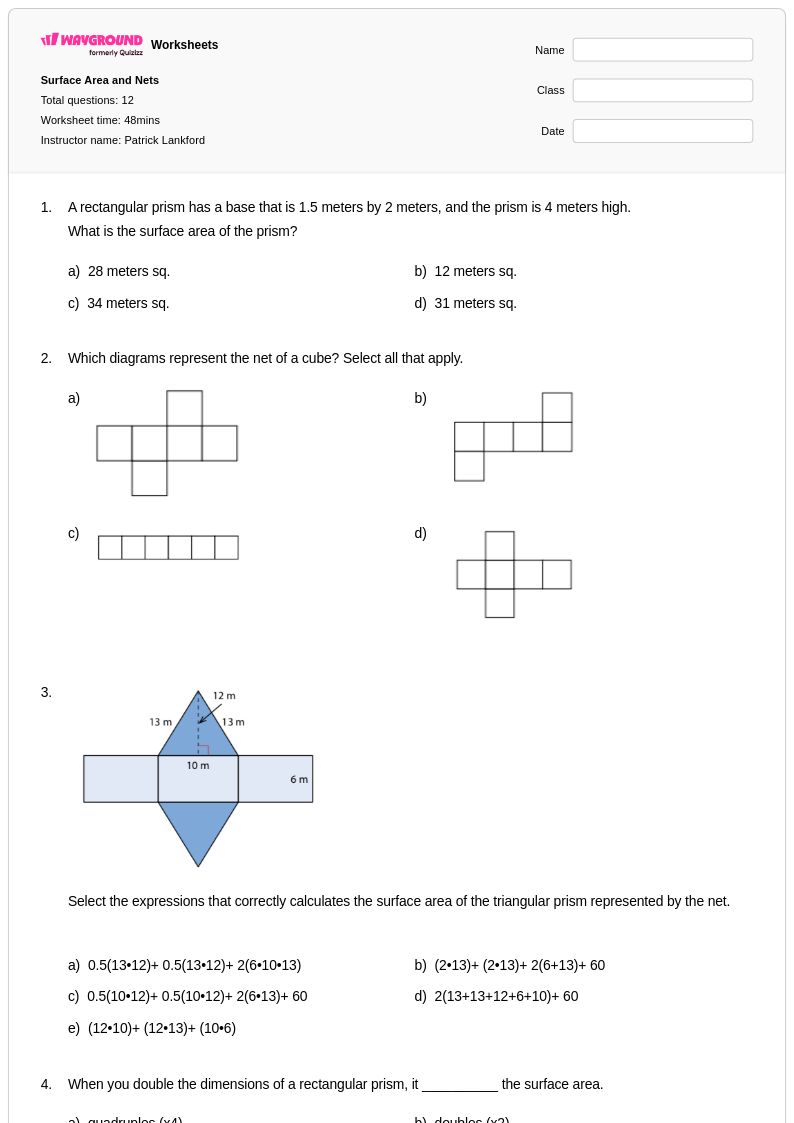
12Q
6th
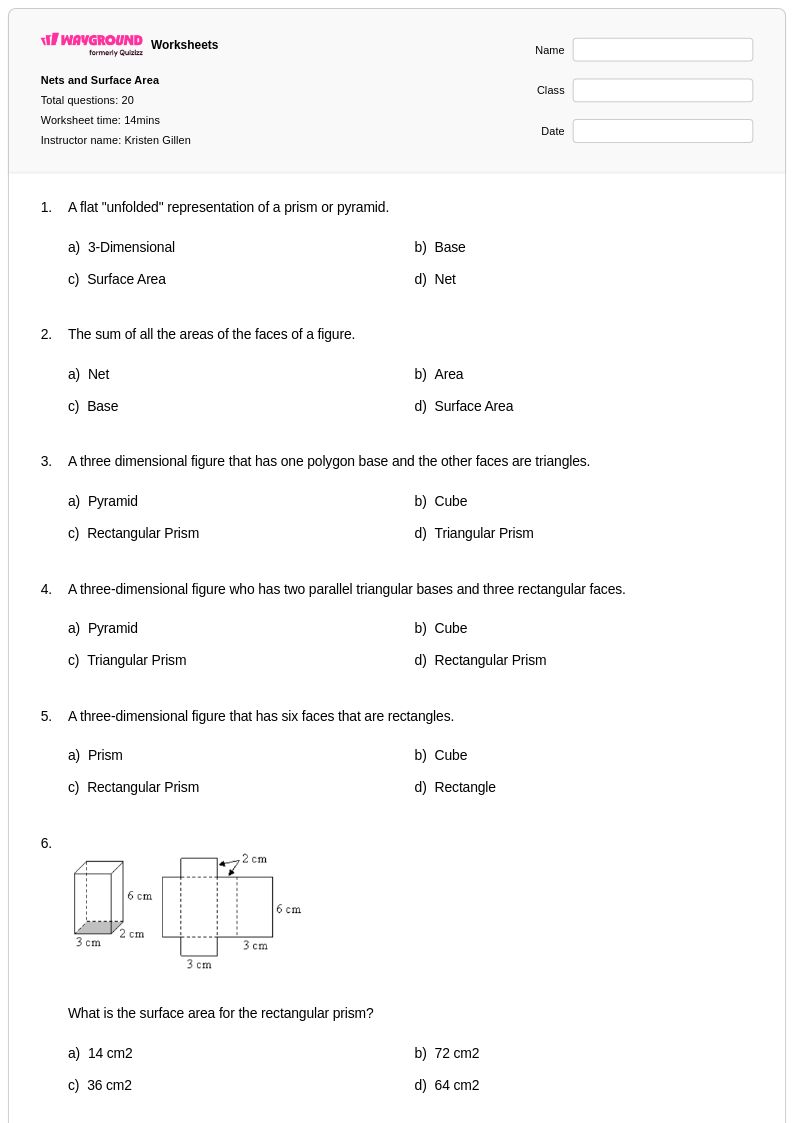
20Q
6th
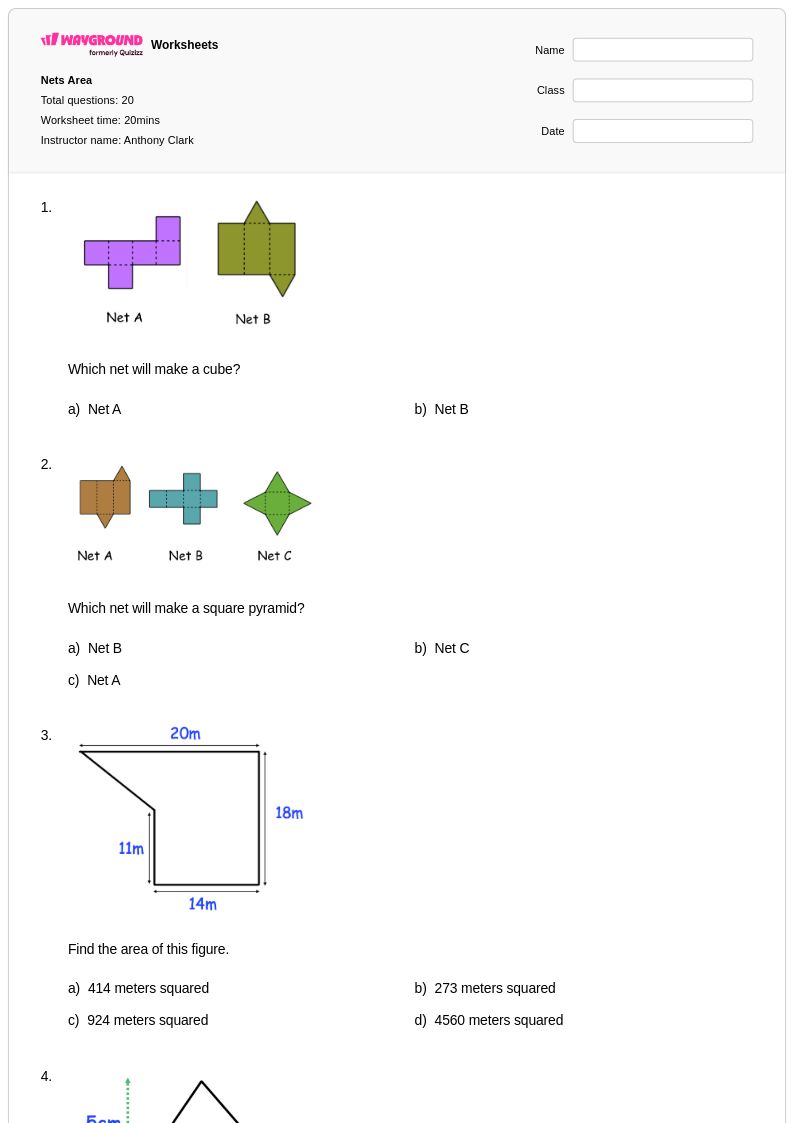
20Q
6th - Uni
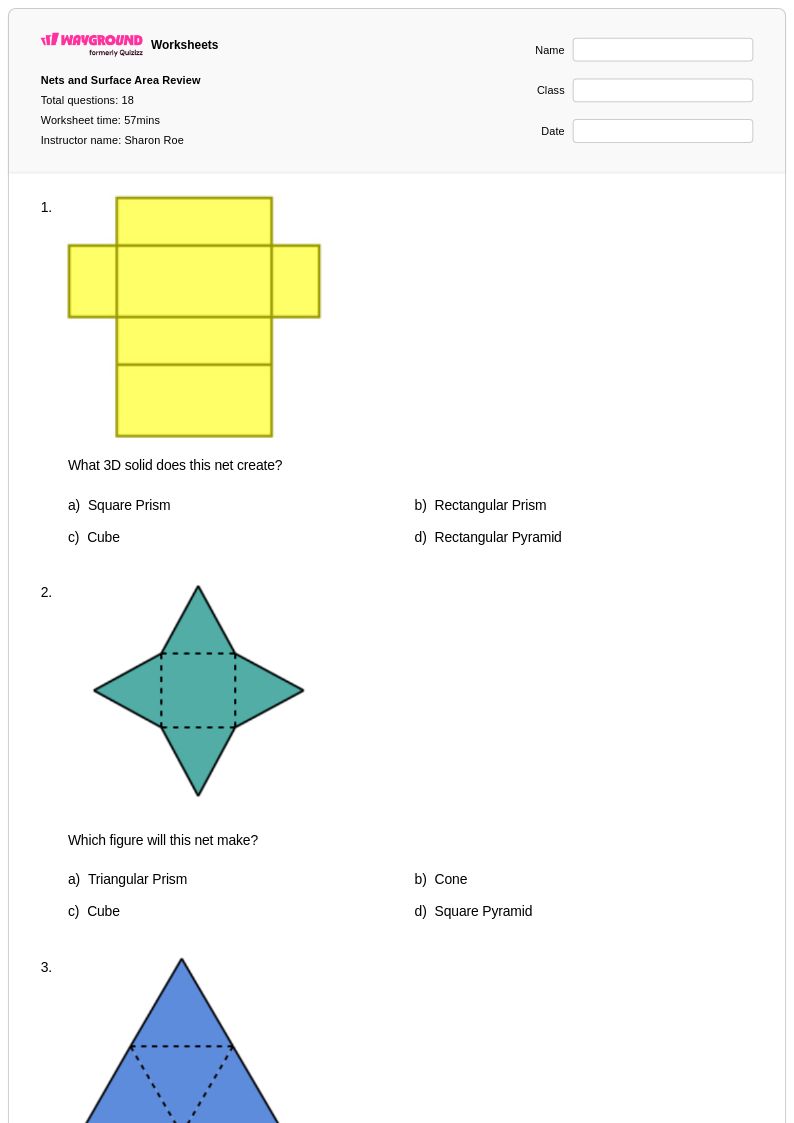
18Q
6th
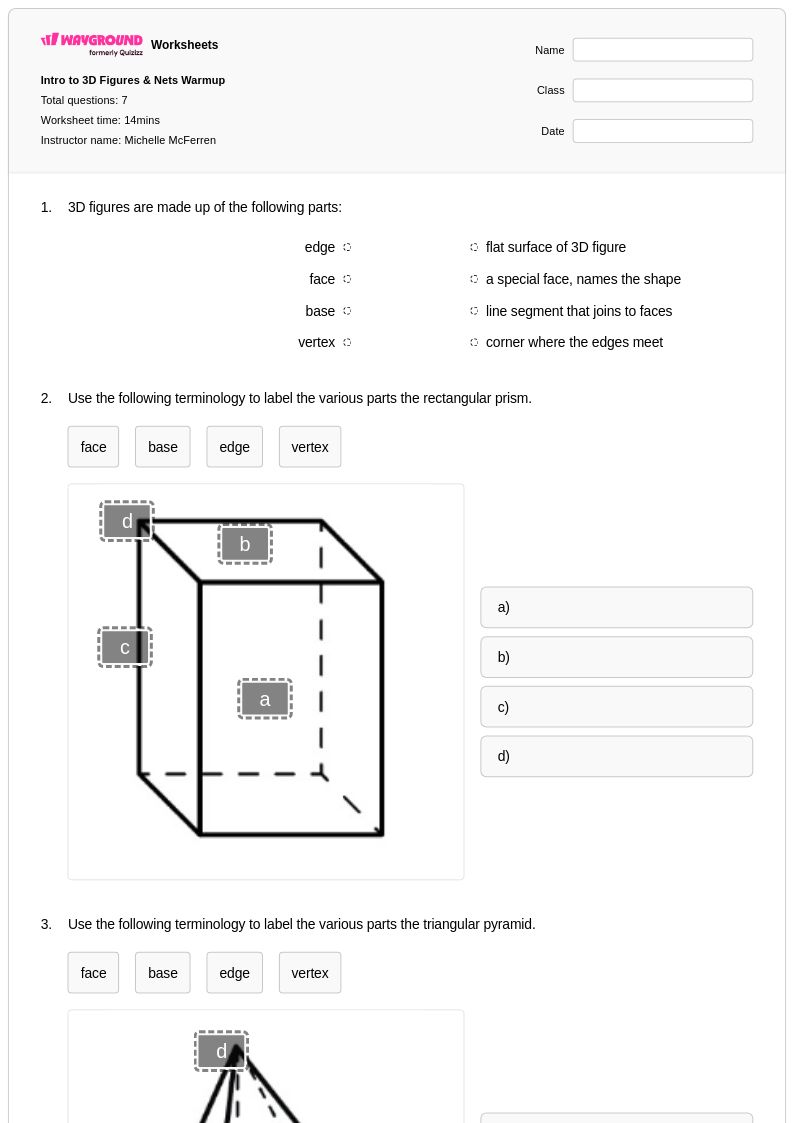
7Q
7th
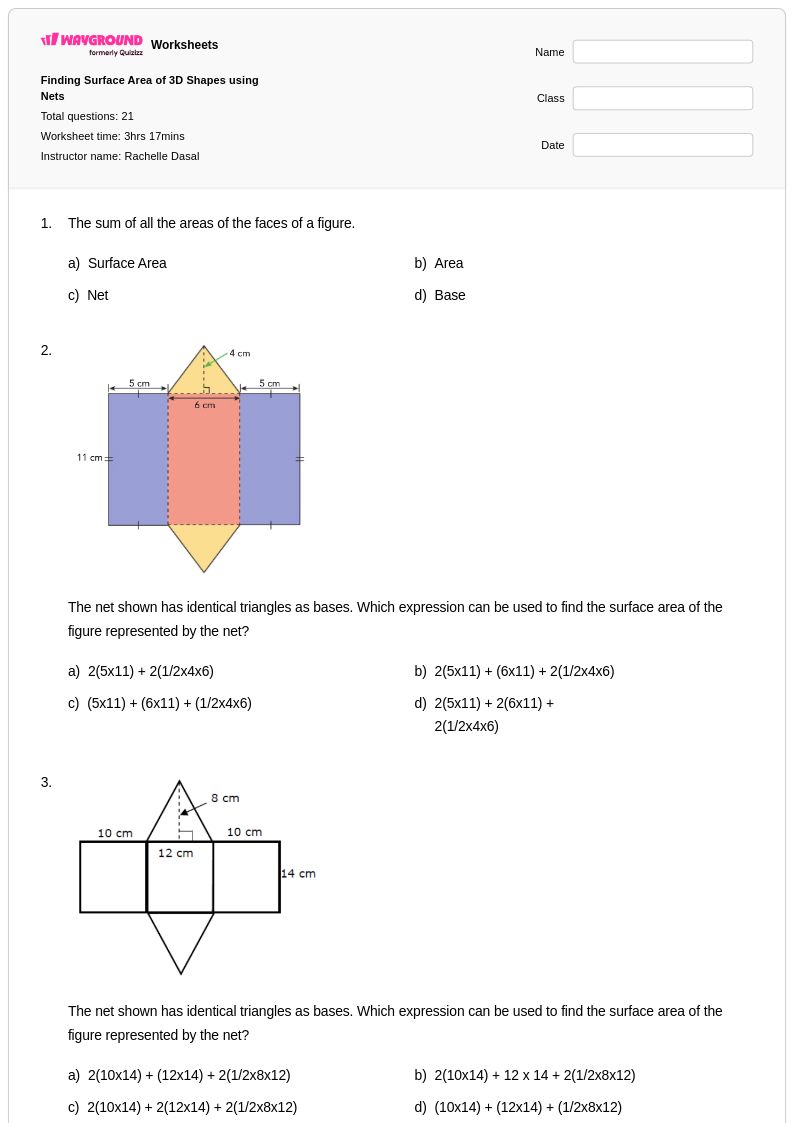
21Q
6th
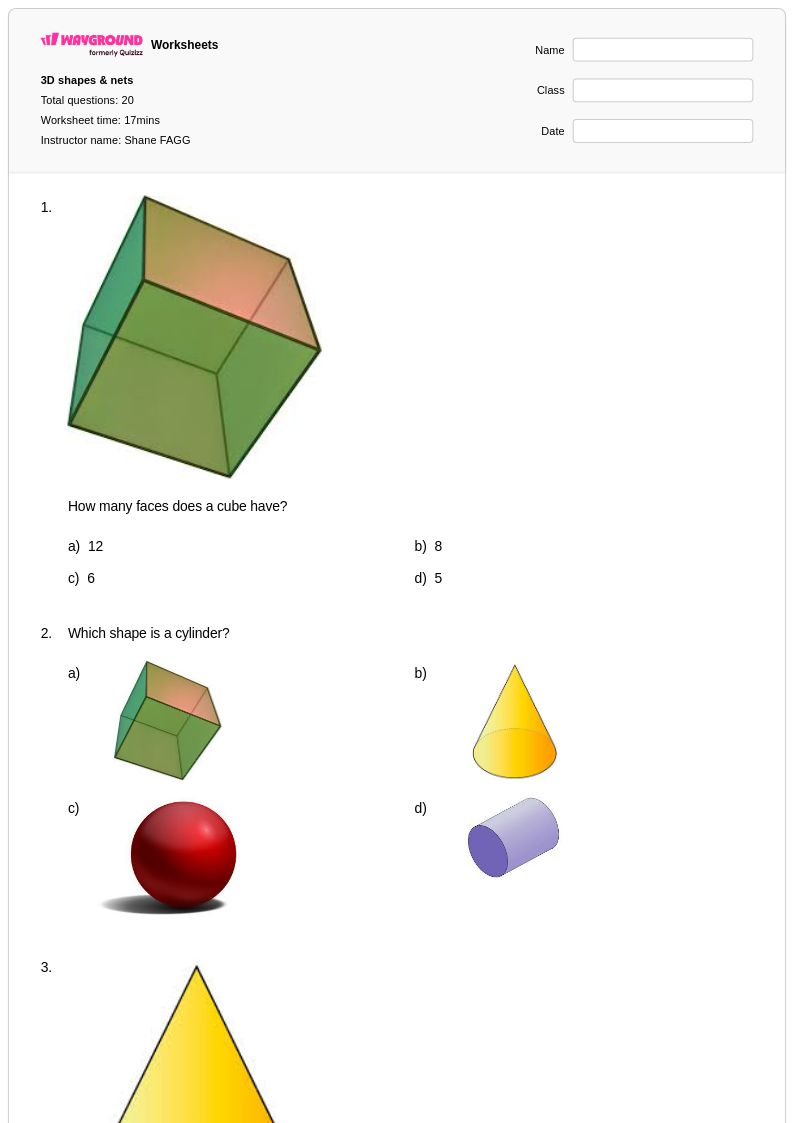
20Q
5th
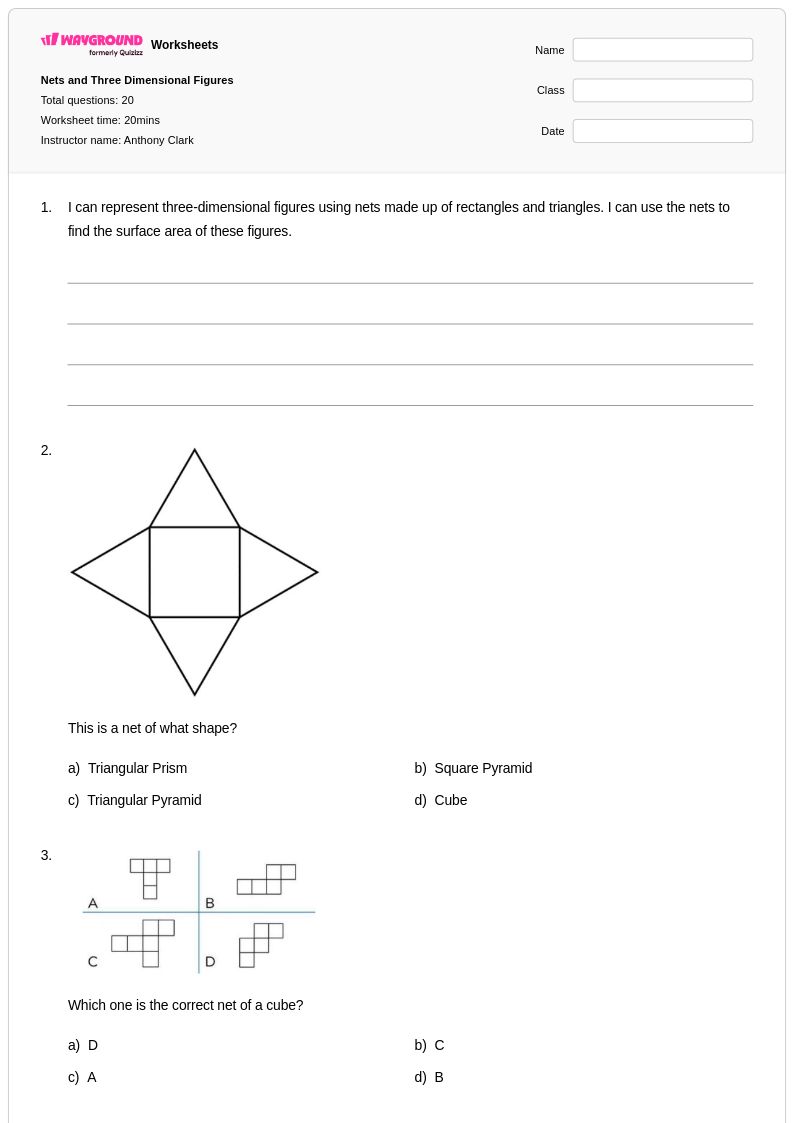
20Q
6th - Uni
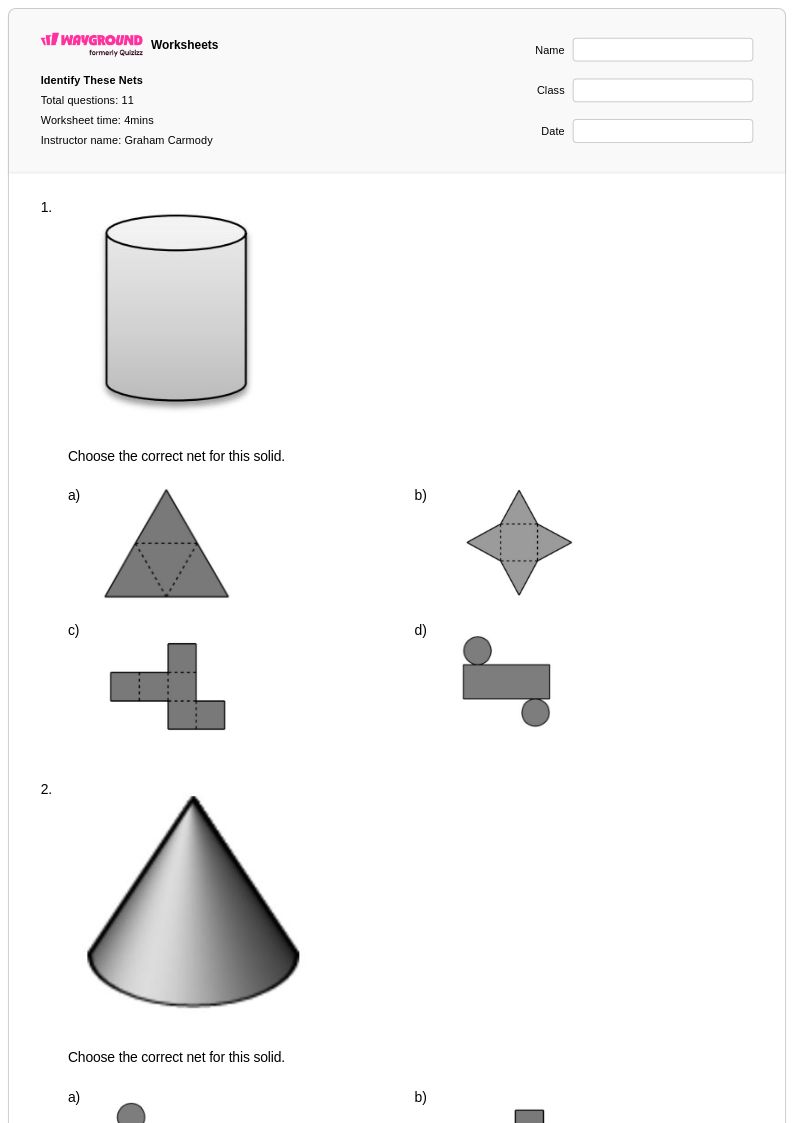
11Q
9th - 12th
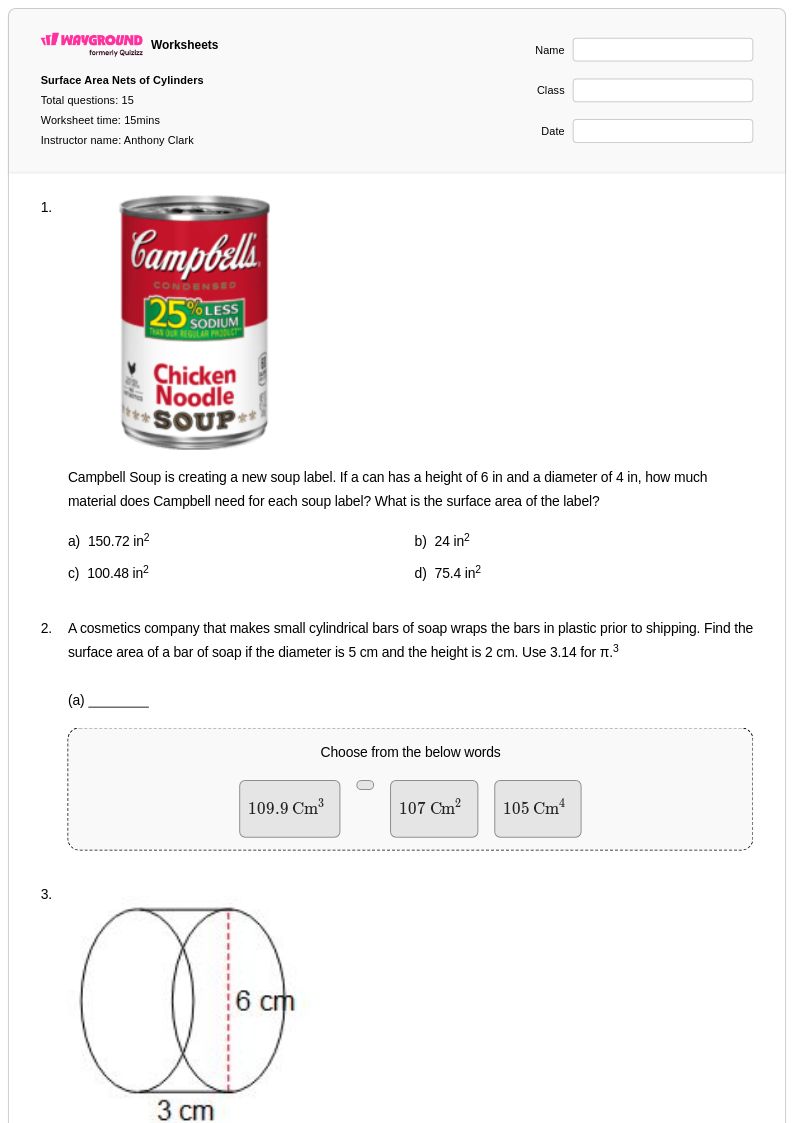
15Q
8th - Uni
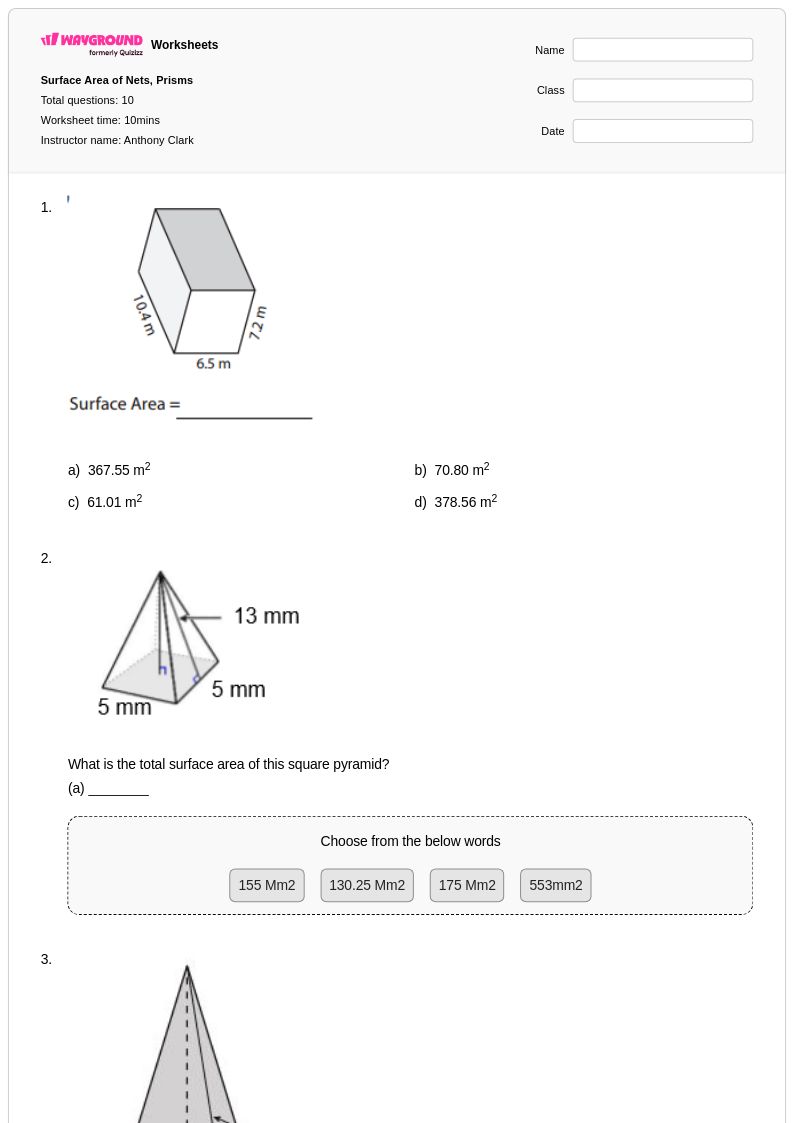
10Q
7th - Uni
Explore otras hojas de trabajo de materias para kindergarten
Explore printable Nets worksheets for Kindergarten
Nets worksheets for kindergarten mathematics provide young learners with foundational experiences in three-dimensional shape recognition and spatial reasoning through age-appropriate visual activities. These educational resources focus on helping kindergarten students understand how flat shapes can be folded to create three-dimensional objects, building essential geometric thinking skills through hands-on exploration and practice problems. The worksheets feature colorful, engaging activities where children identify which flat patterns could fold into familiar objects like boxes, cubes, and simple containers, strengthening their ability to visualize spatial relationships. Teachers can access comprehensive collections that include printable pdf formats with answer keys, making classroom implementation seamless while providing free resources that support early geometric concept development through structured practice and discovery-based learning experiences.
Wayground, formerly Quizizz, empowers educators with extensive collections of kindergarten nets worksheets drawn from millions of teacher-created resources specifically designed for early childhood mathematics instruction. The platform's robust search and filtering capabilities allow teachers to quickly locate age-appropriate materials that align with curriculum standards and support differentiated instruction for diverse learning needs in the kindergarten classroom. These versatile worksheet collections are available in both printable and digital pdf formats, enabling flexible lesson planning whether for individual practice, small group activities, or whole-class instruction. The customization tools help educators adapt content for remediation and enrichment purposes, ensuring that all kindergarten students can engage meaningfully with fundamental geometric concepts while developing the spatial reasoning skills that form the foundation for more advanced mathematical thinking in later grades.
FAQs
Are kindergarteners ready to learn about geometric nets?
How can I teach the concept of nets to kindergarten students?
What kind of activities help kindergarteners practice with nets?
How can I use this kindergarten nets worksheet in my classroom?
How can I support diverse learners with this worksheet?