
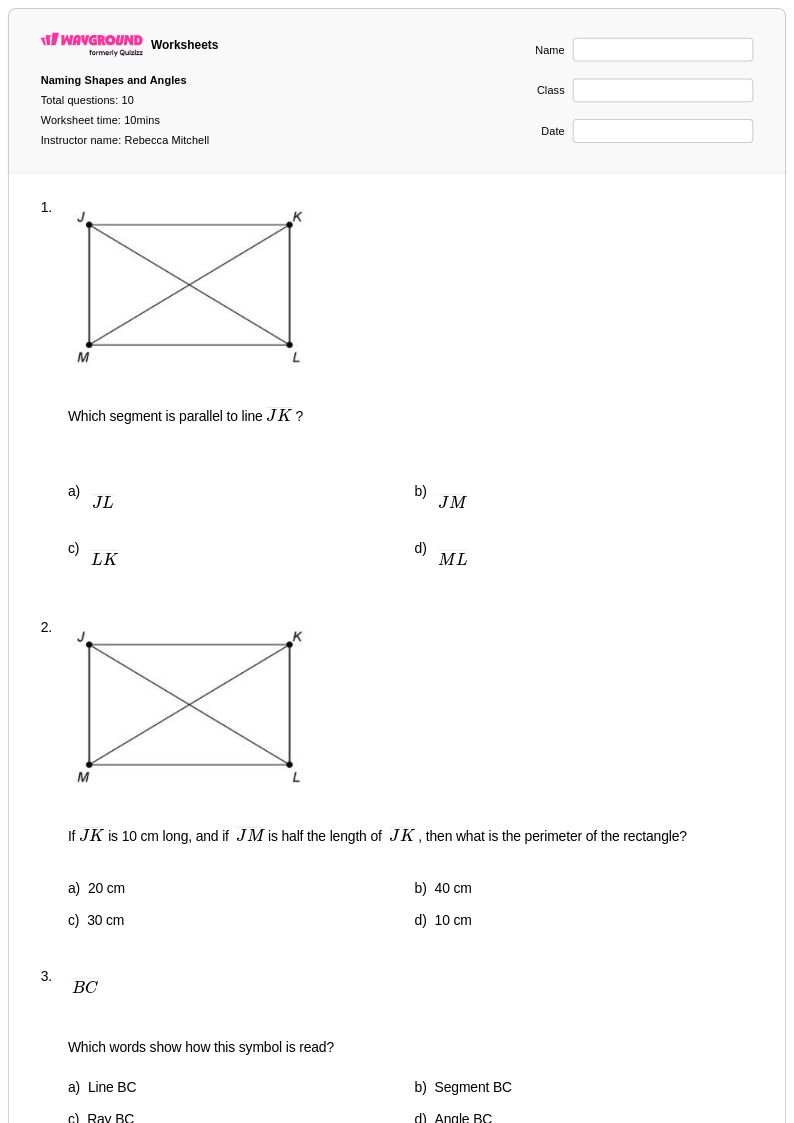
10 Q
5th
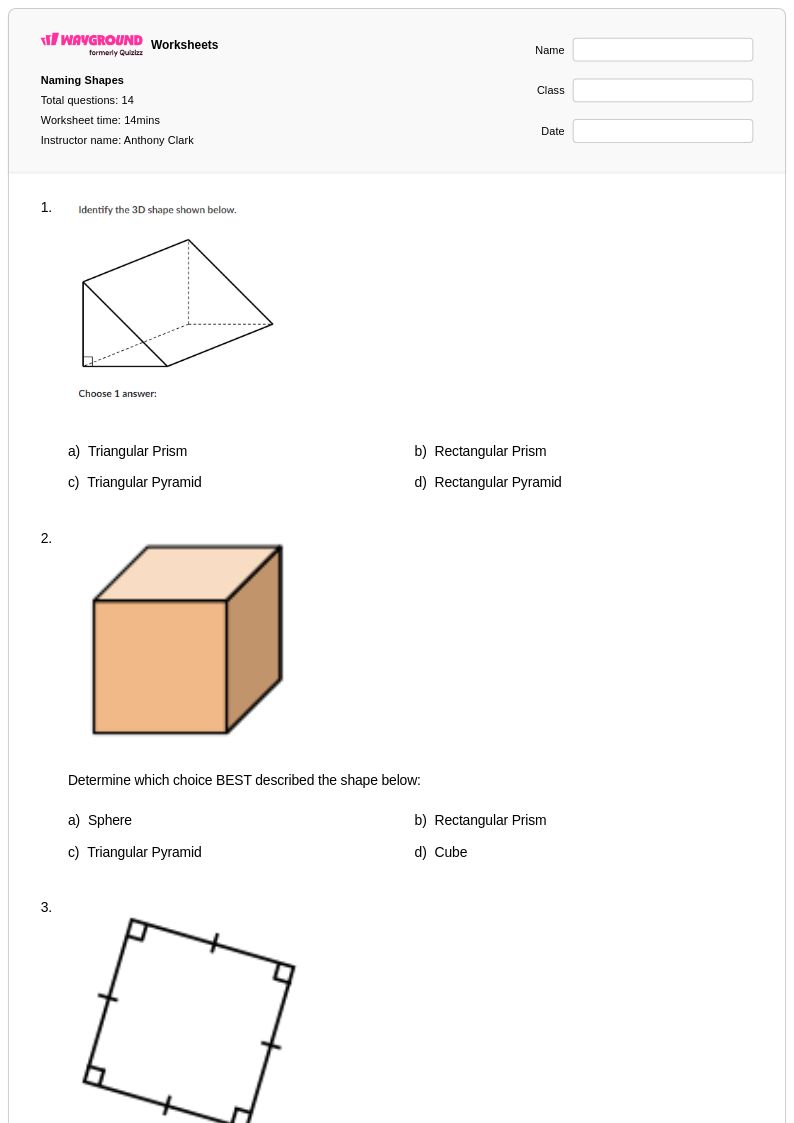
14 Q
8th - Uni
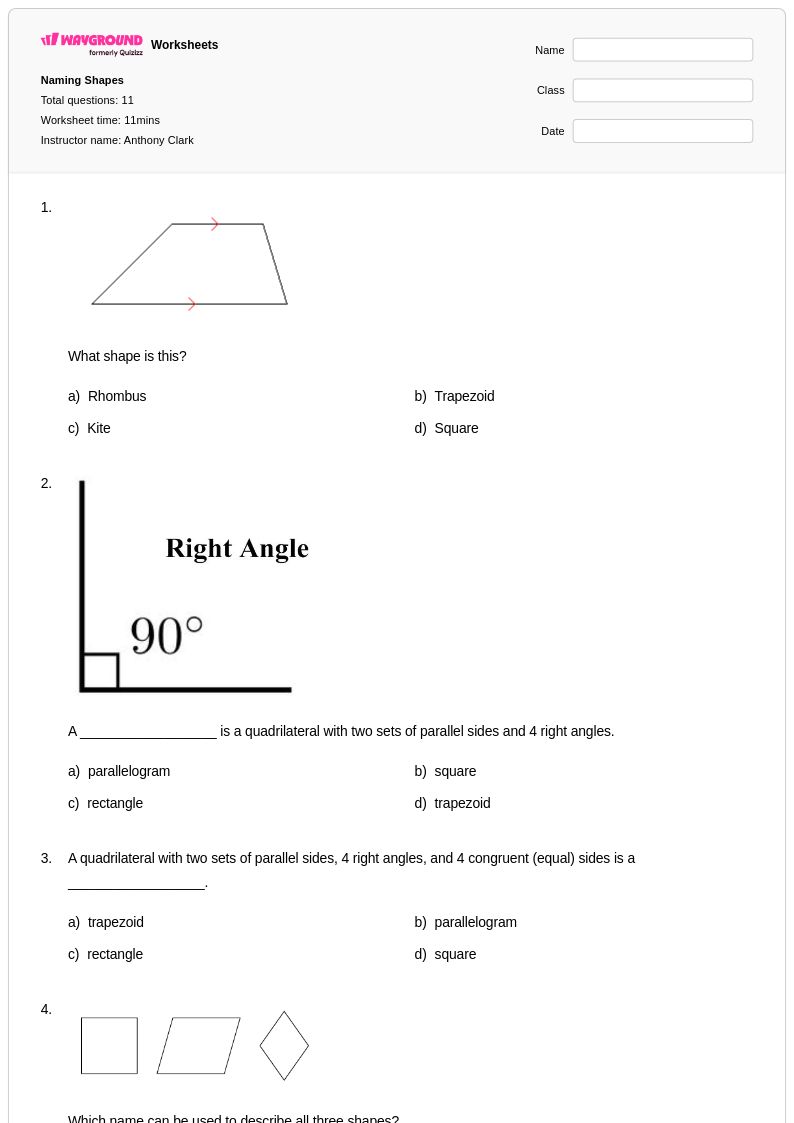
11 Q
2nd - Uni
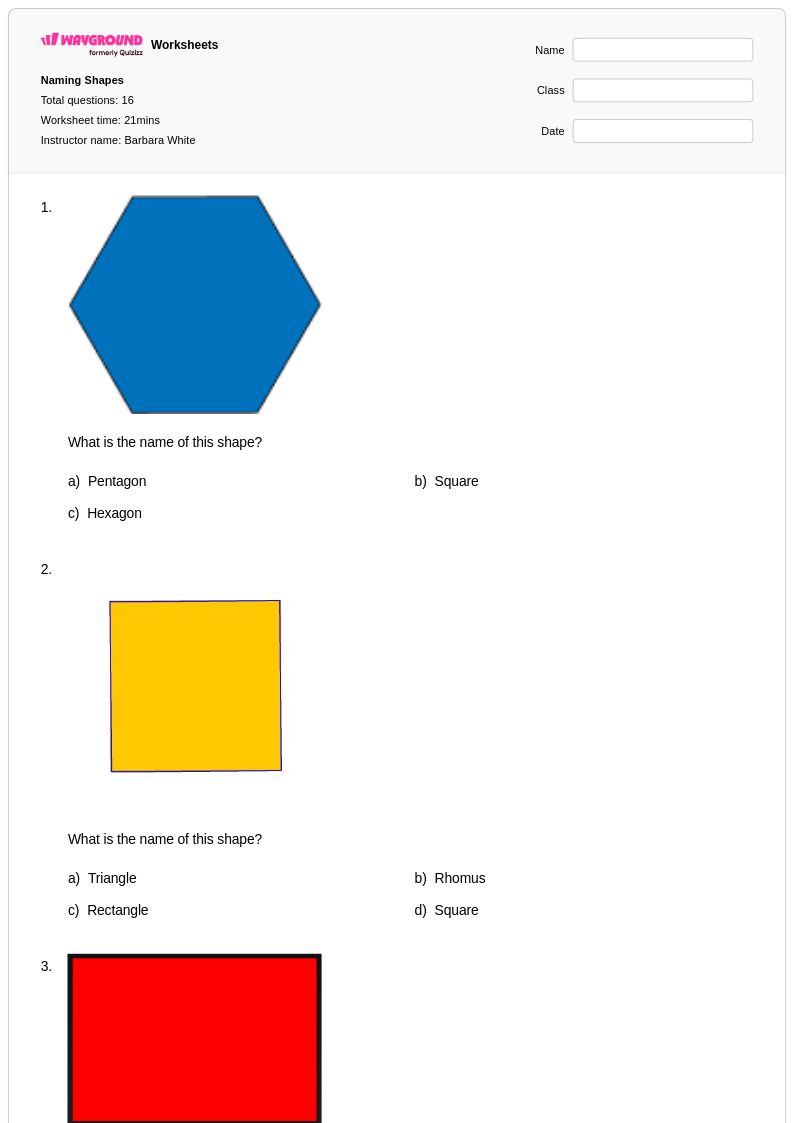
16 Q
2nd

20 Q
8th
10 Q
KG
15 Q
2nd
15 Q
8th - Uni
10 Q
2nd - Uni
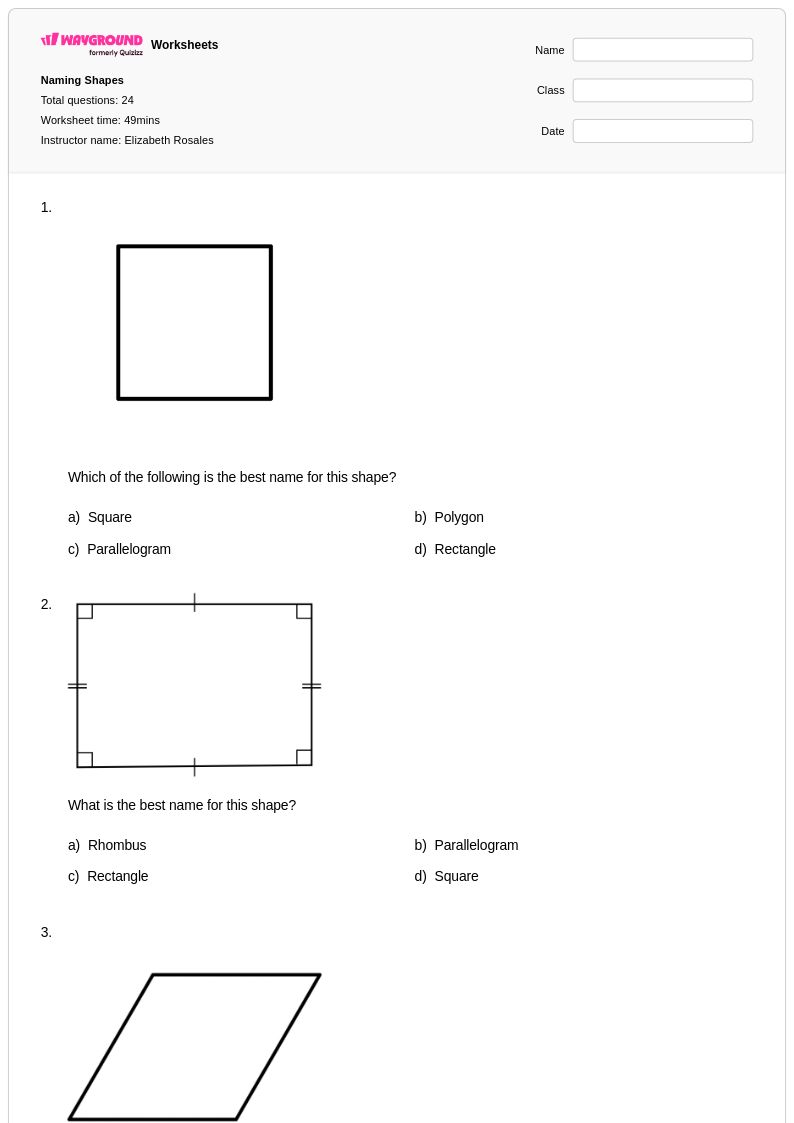
24 Q
3rd - 4th
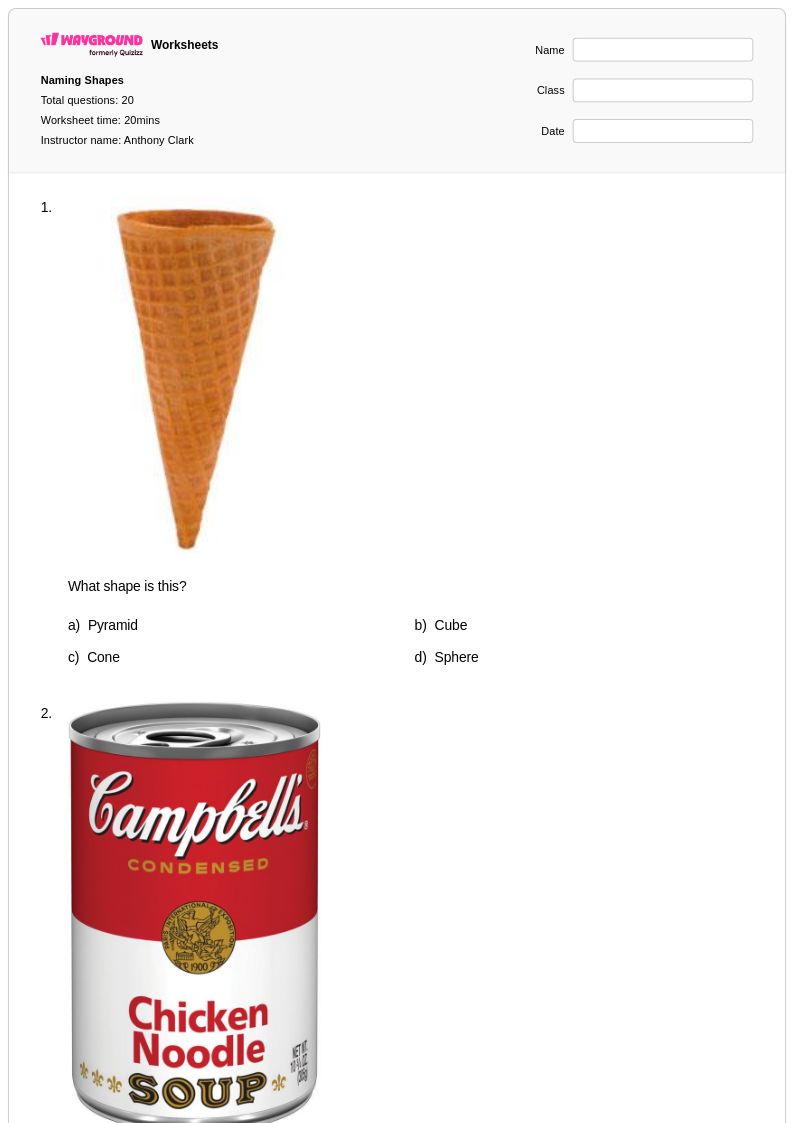
20 Q
8th - Uni
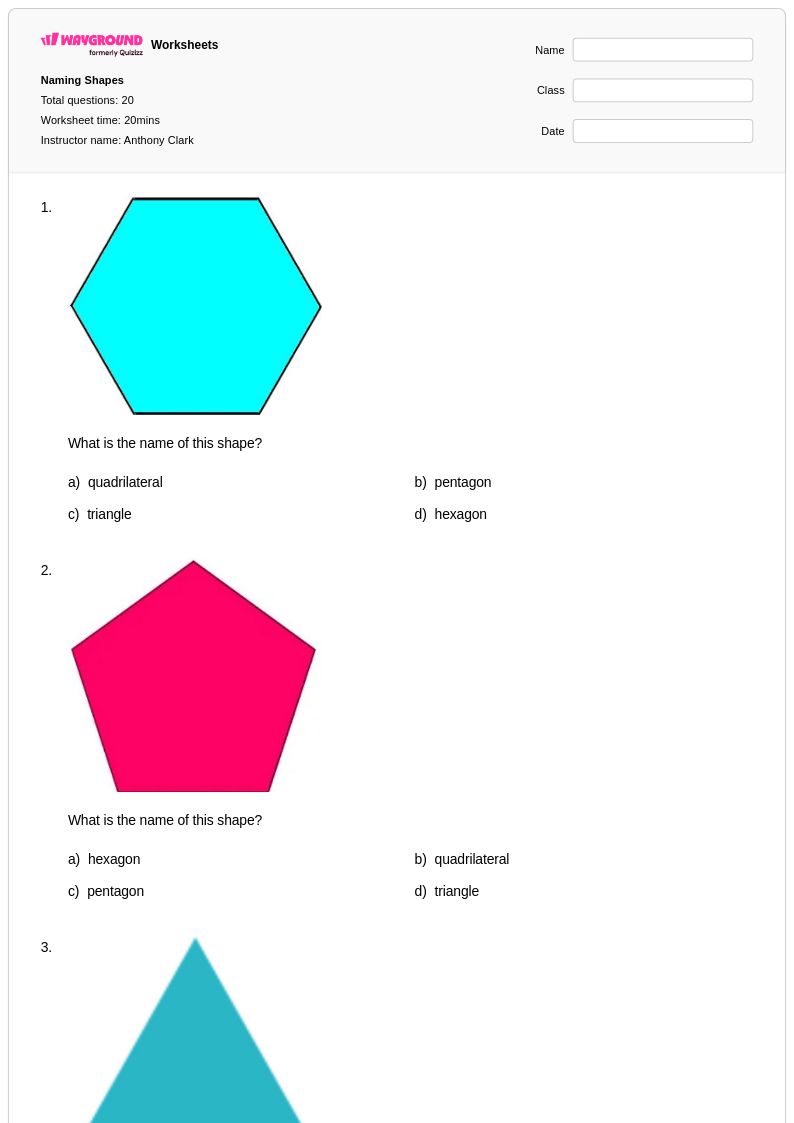
20 Q
2nd - Uni
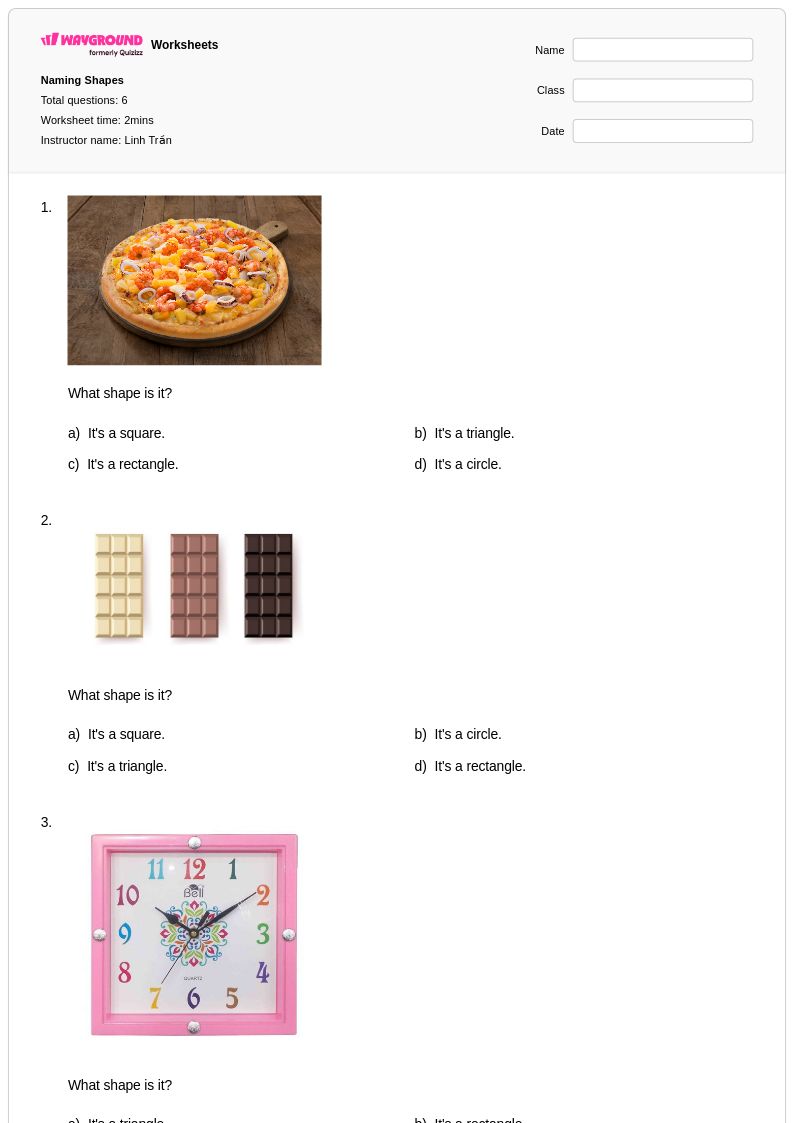
6 Q
2nd
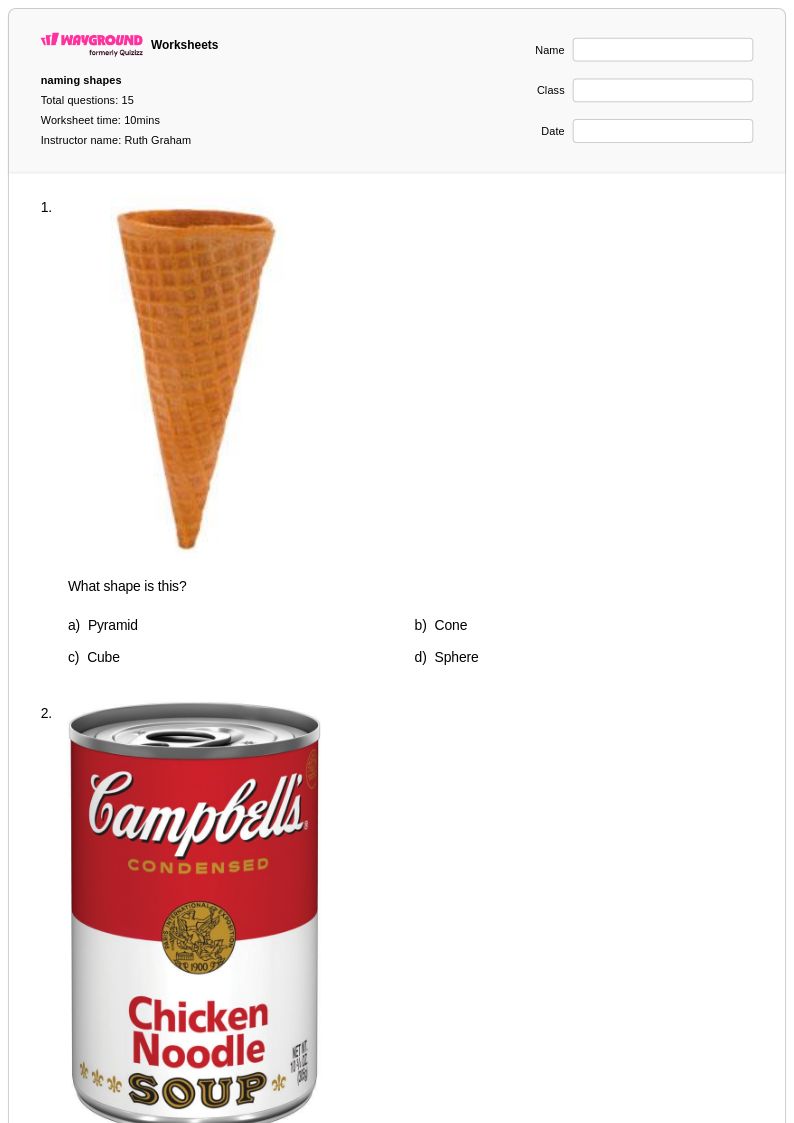
15 Q
9th - 12th
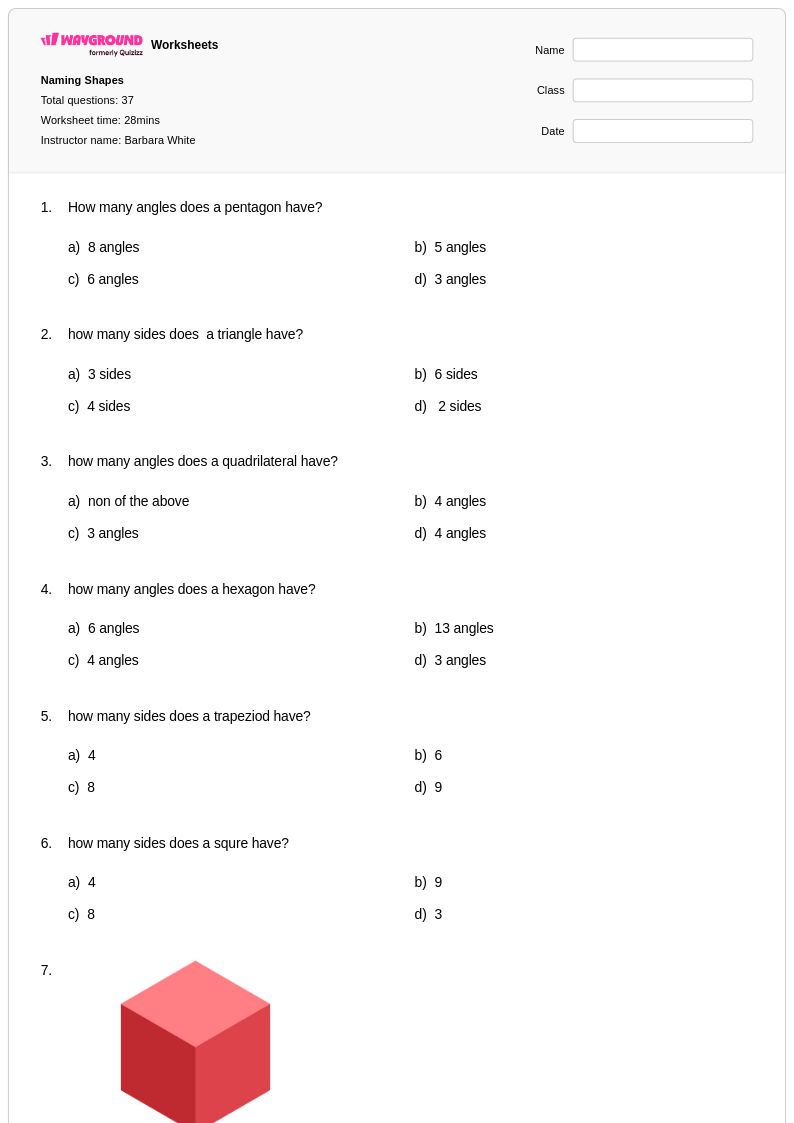
37 Q
2nd
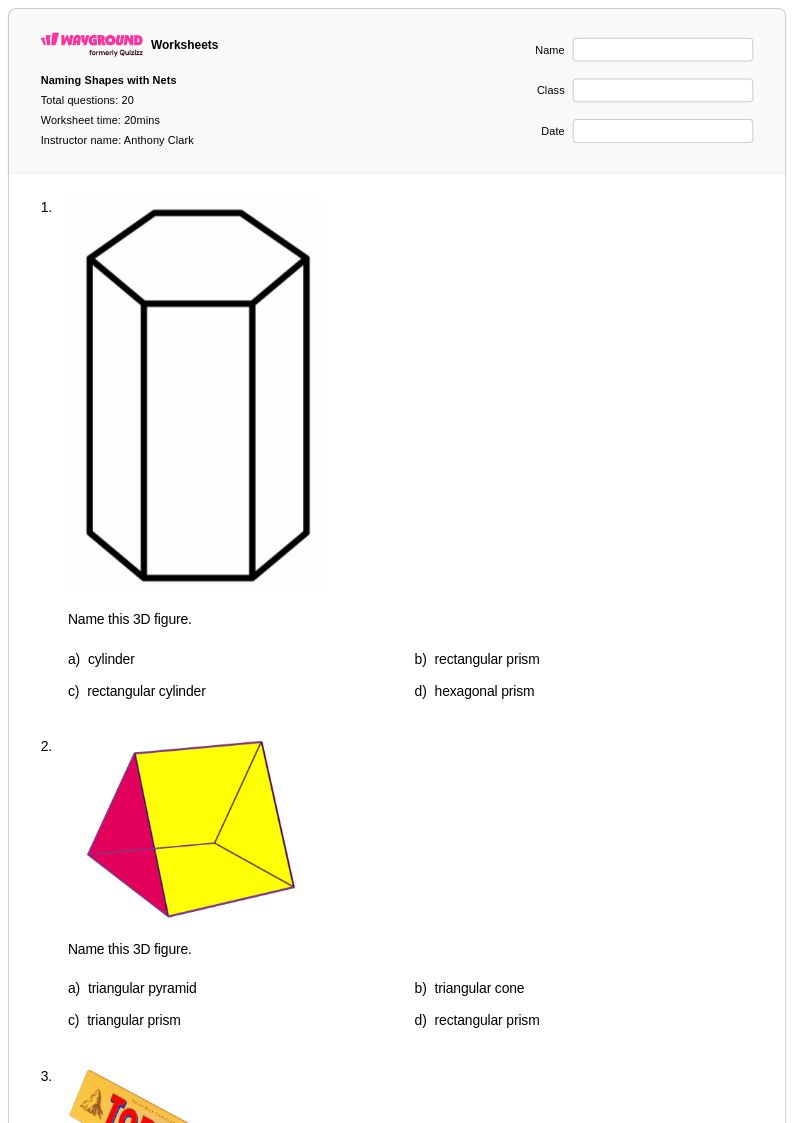
20 Q
6th - Uni
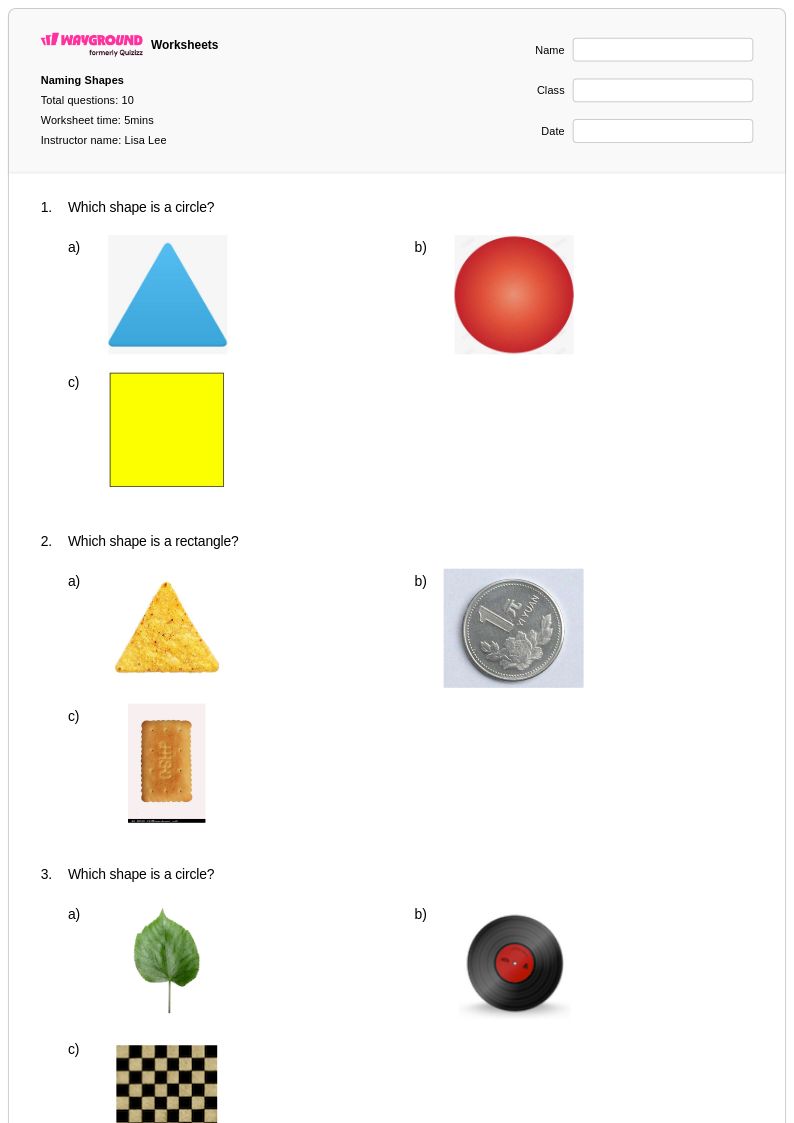
10 Q
1st
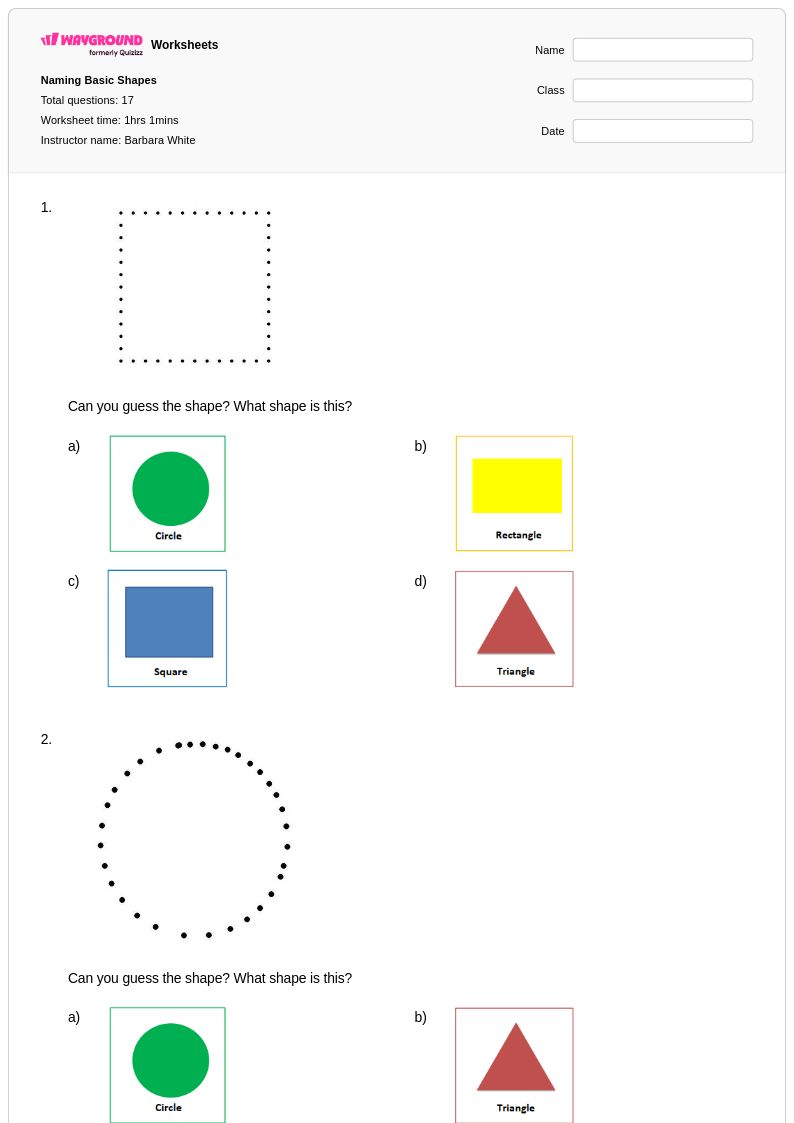
17 Q
KG - 1st
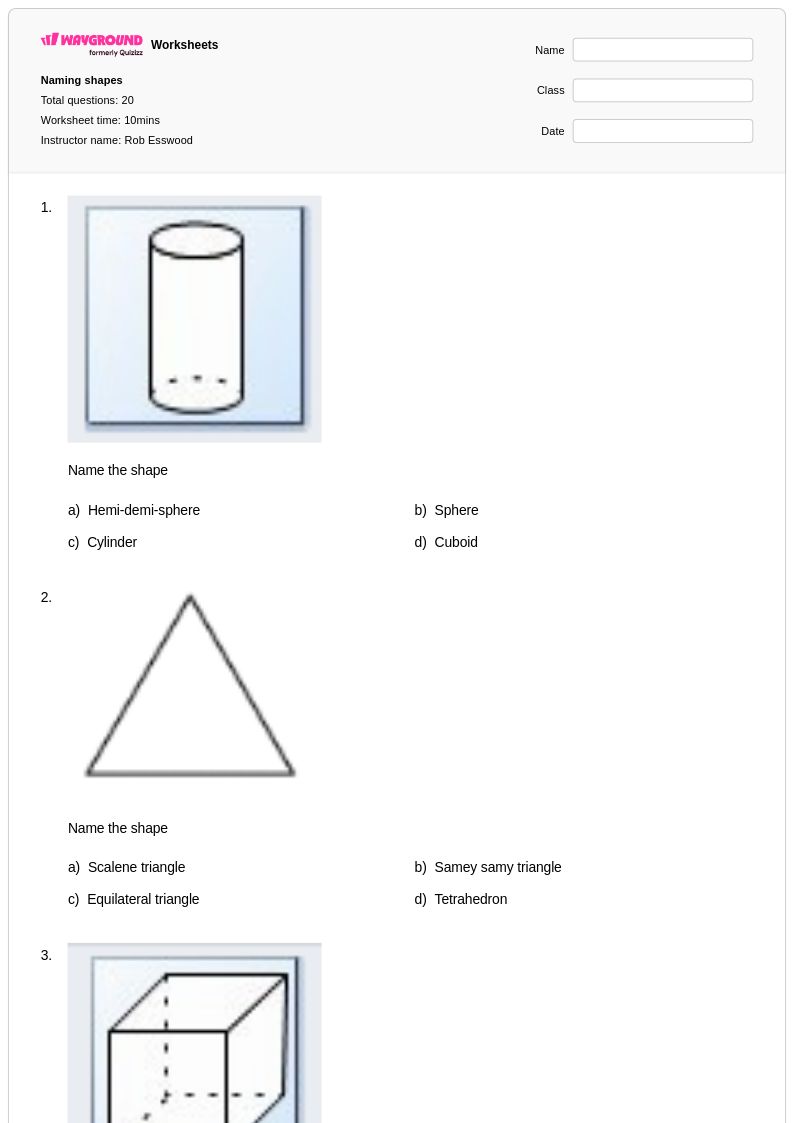
20 Q
6th - 9th
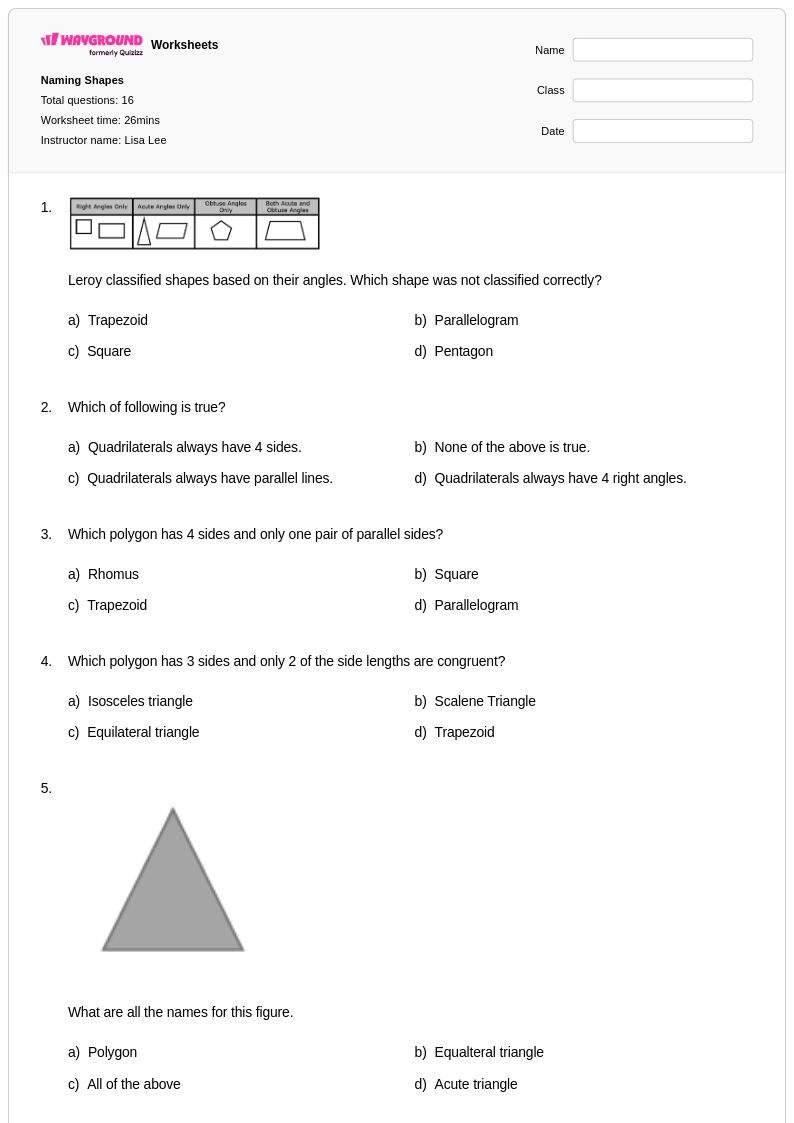
16 Q
6th - 8th
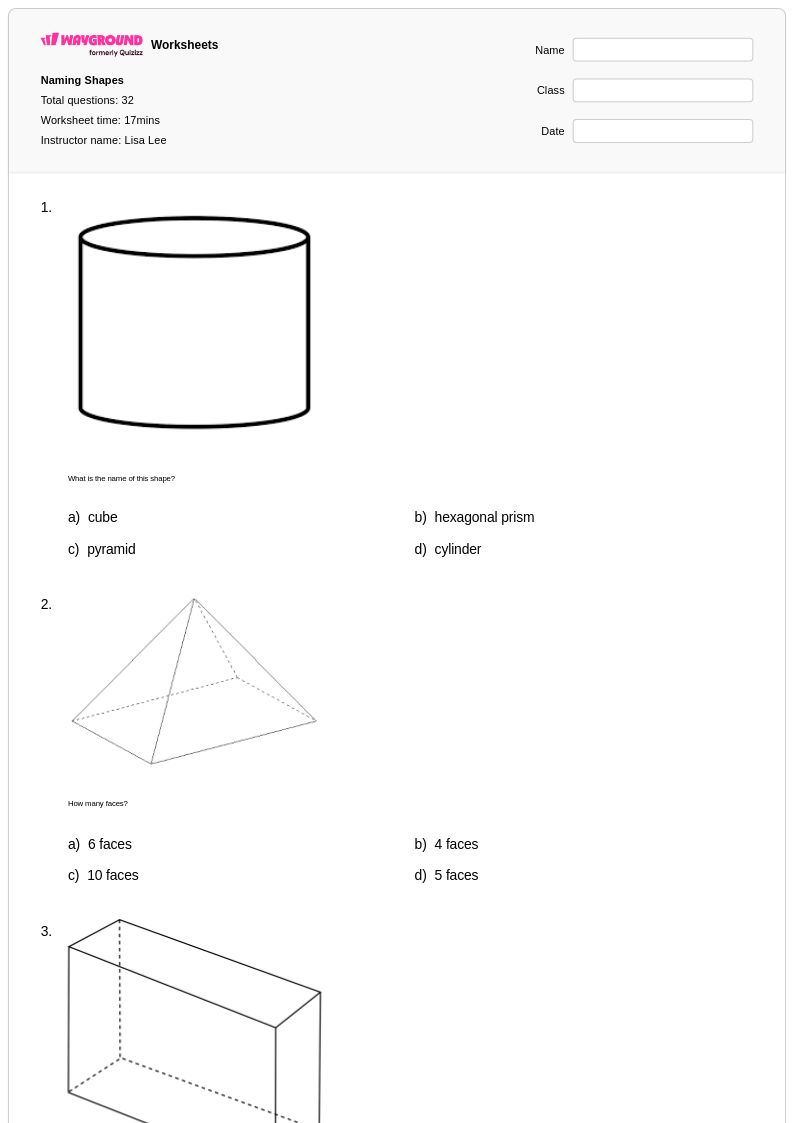
32 Q
7th
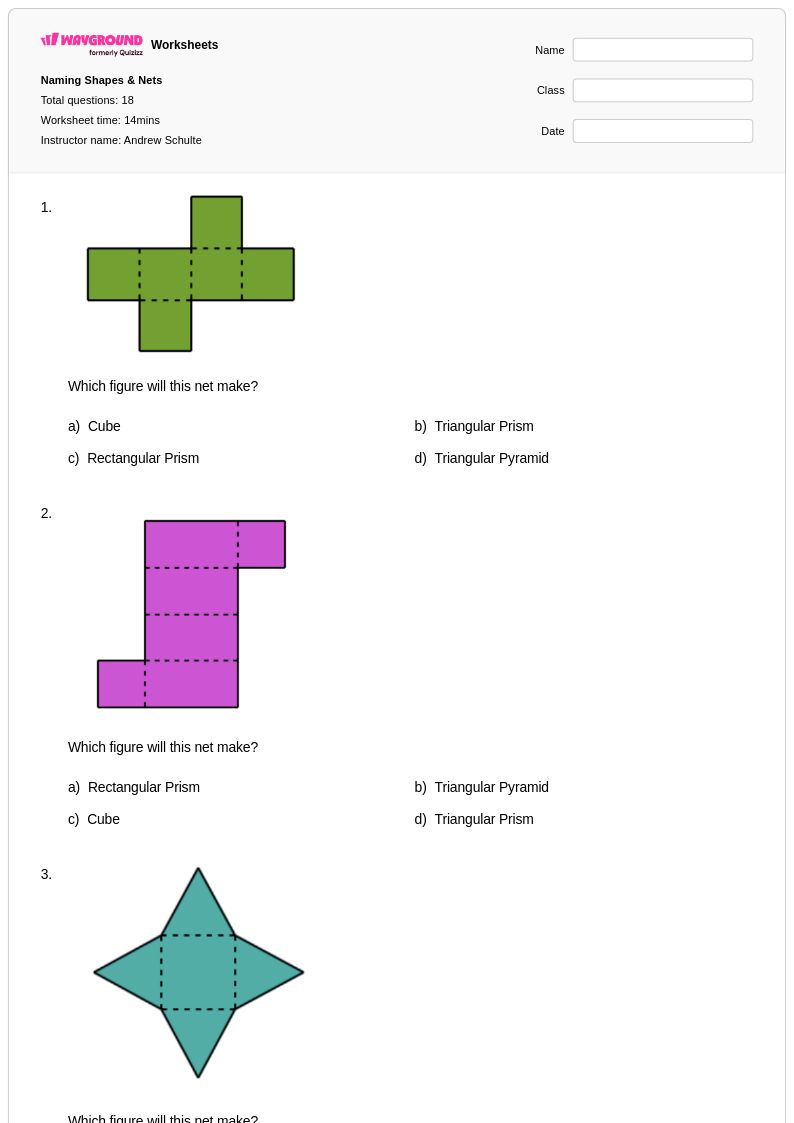
18 Q
6th
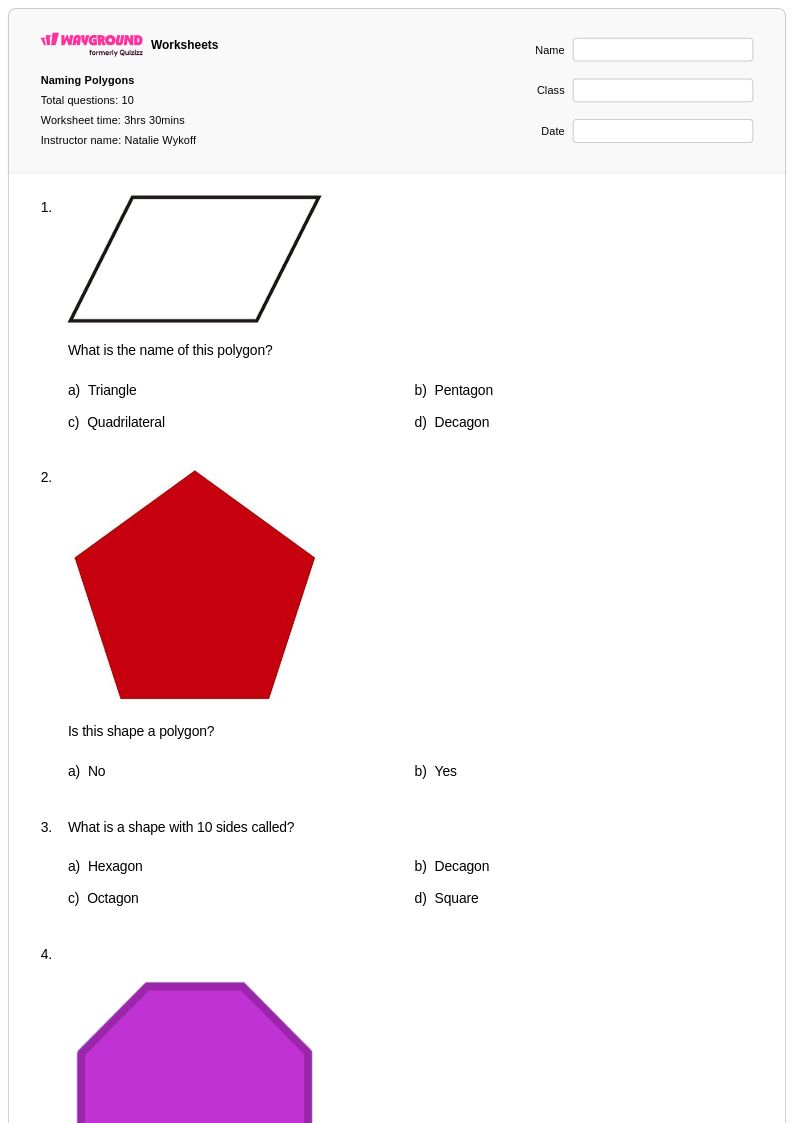
10 Q
3rd
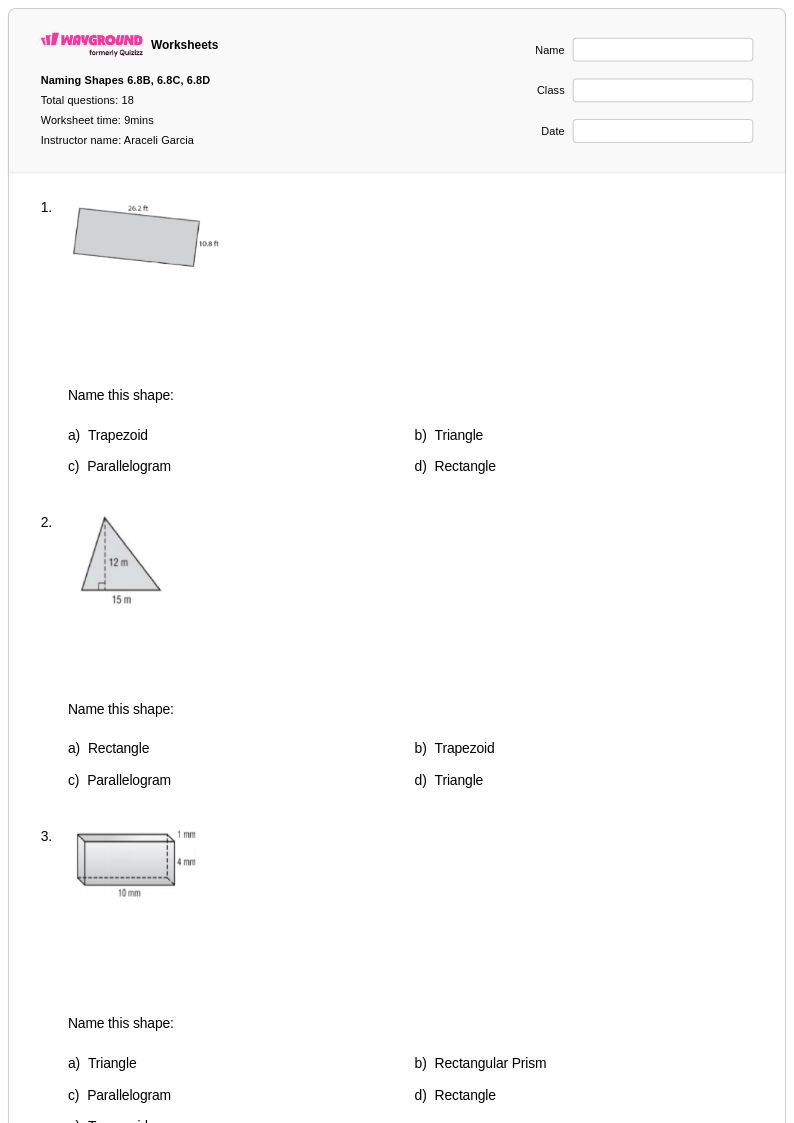
18 Q
6th
Explore Naming Shapes Worksheets by Grades
Explore Other Subject Worksheets for kindergarten
Explore printable Naming Shapes worksheets for Kindergarten
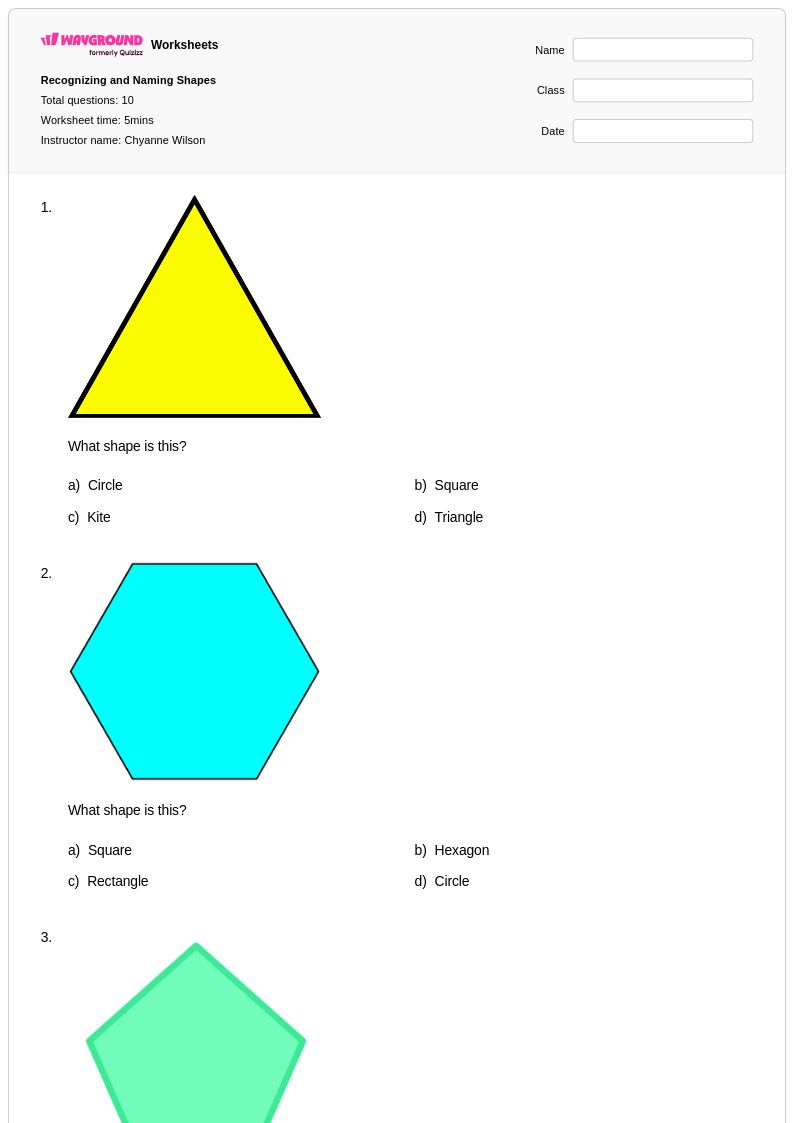
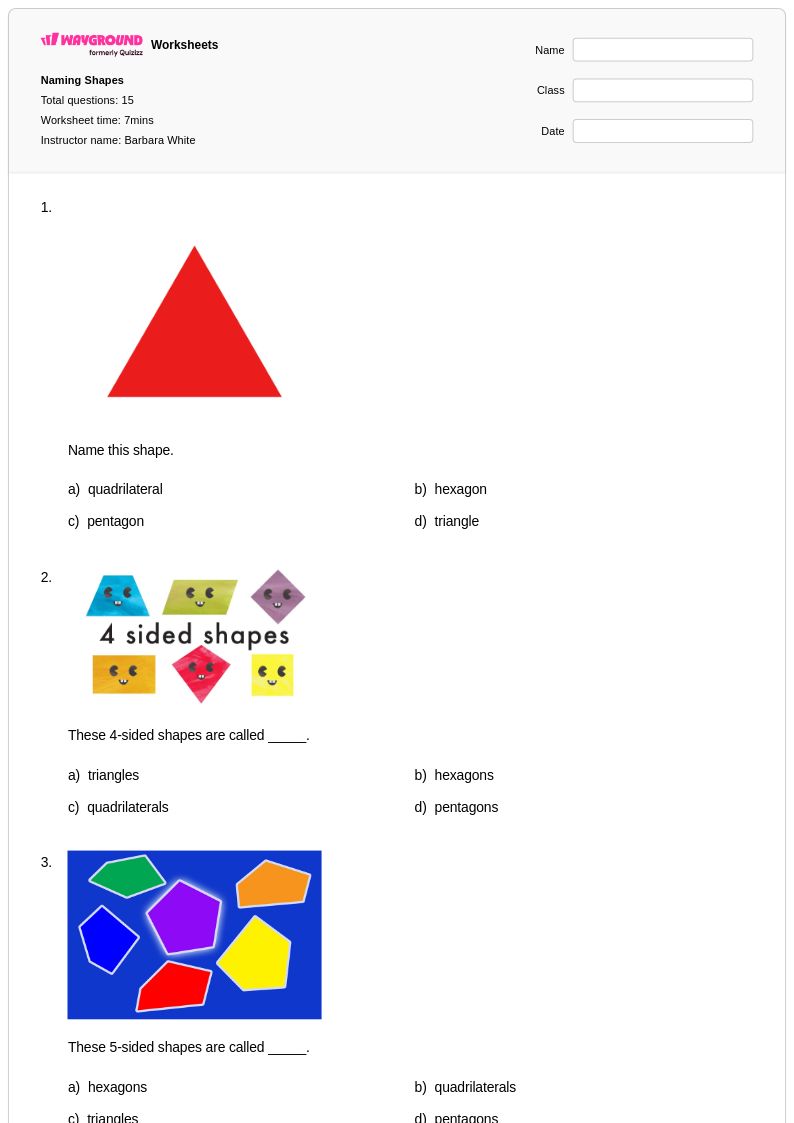
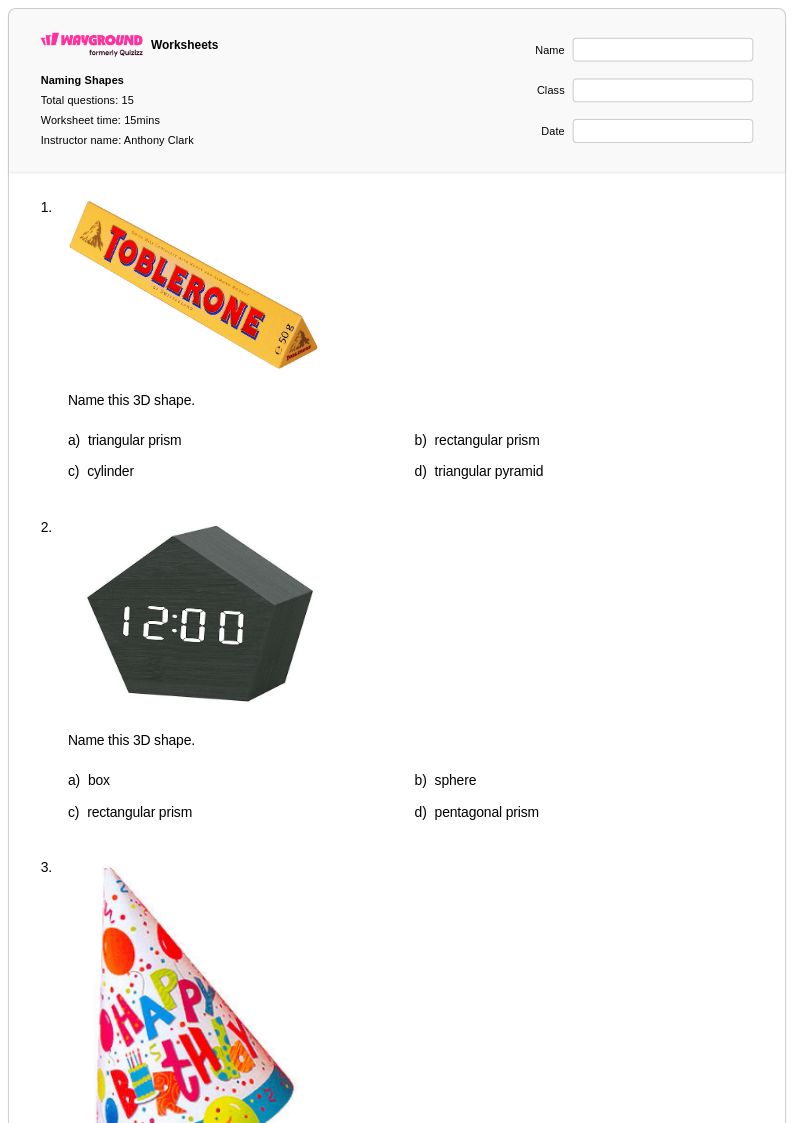
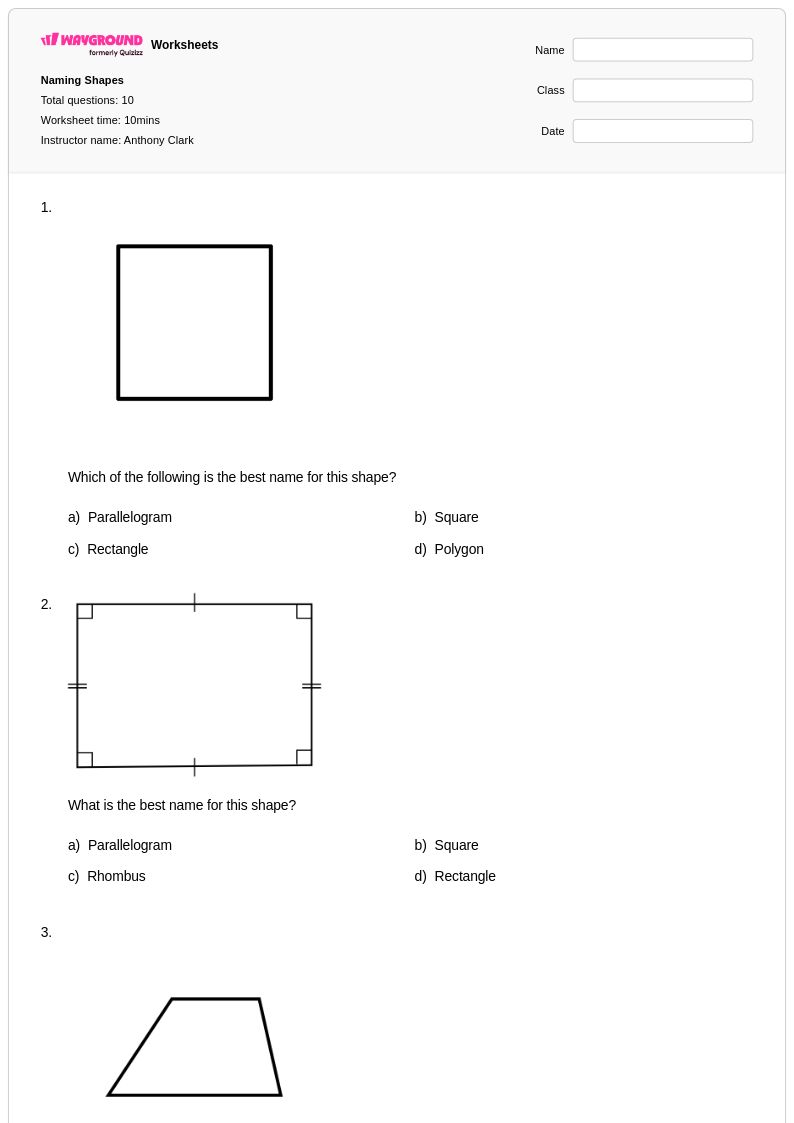
Naming shapes worksheets for kindergarten provide essential foundational geometry practice that helps young learners identify, recognize, and categorize basic two-dimensional and three-dimensional shapes in their environment. These carefully designed printables from Wayground focus on developing visual discrimination skills as students learn to distinguish between circles, squares, triangles, rectangles, and other fundamental geometric forms. Each worksheet includes engaging activities such as shape sorting, matching exercises, and real-world object identification that strengthen spatial reasoning abilities while building mathematical vocabulary. These free pdf resources come with comprehensive answer keys and offer varied practice problems that accommodate different learning paces, ensuring kindergarten students develop confidence in shape recognition through repetitive, meaningful exposure to geometric concepts.
Wayground's extensive collection of kindergarten naming shapes worksheets draws from millions of teacher-created resources that have been carefully curated and organized with robust search and filtering capabilities to help educators quickly locate materials that match their specific instructional needs. The platform's standards-aligned content supports differentiation through customizable difficulty levels and formats, allowing teachers to modify worksheets for remediation or enrichment based on individual student requirements. These versatile resources are available in both printable pdf format for traditional classroom use and digital formats for interactive learning experiences, giving educators the flexibility to adapt their geometry instruction across various teaching environments. The comprehensive organization and accessibility of these materials streamline lesson planning while providing consistent skill practice opportunities that reinforce shape identification concepts through multiple learning modalities.
FAQs
What grade do students learn to name shapes?
How do I introduce basic shapes to kindergarteners?
What are good practice activities for naming shapes in kindergarten?
What are common difficulties for kindergarteners learning shapes?
How can I use these kindergarten shape worksheets?
How does naming shapes align with kindergarten math standards?