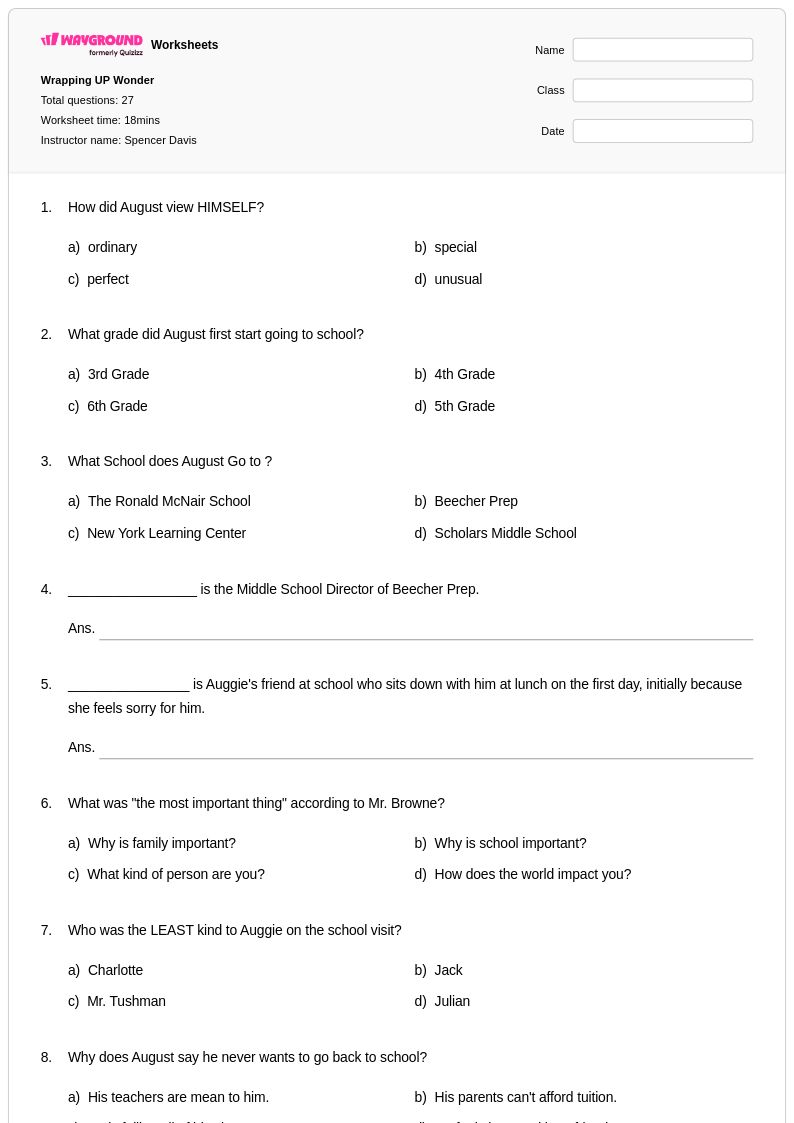
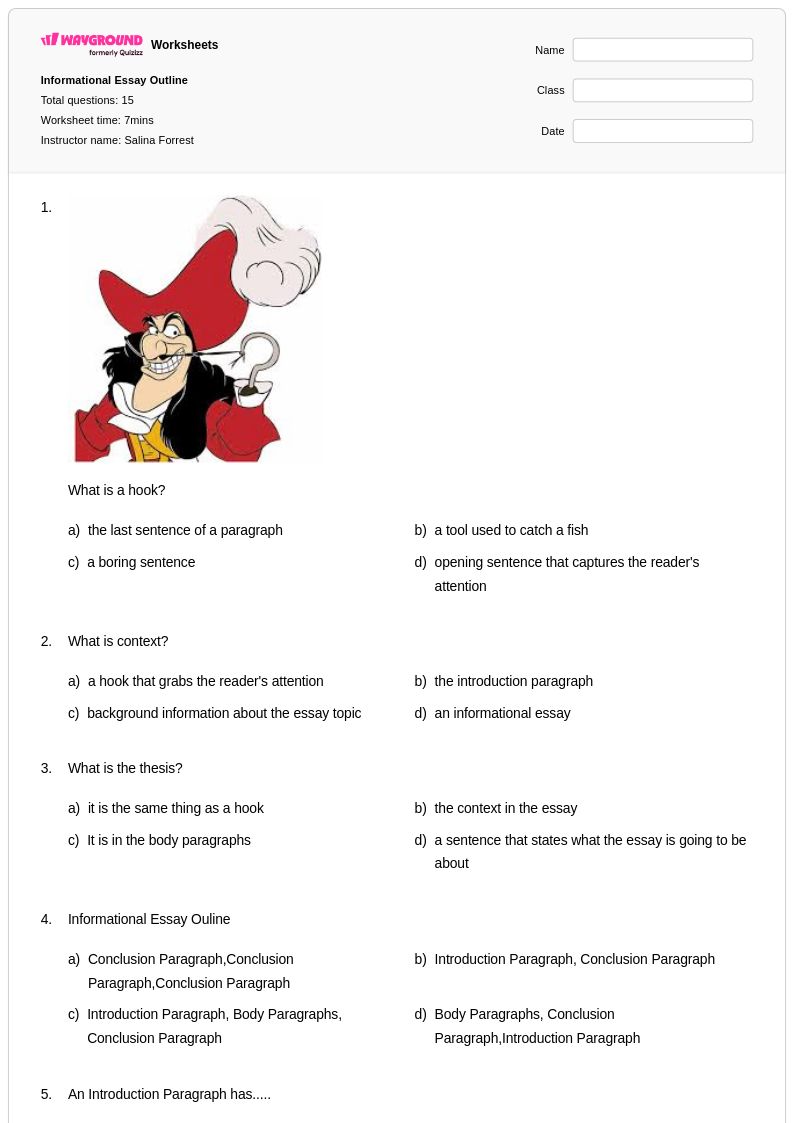
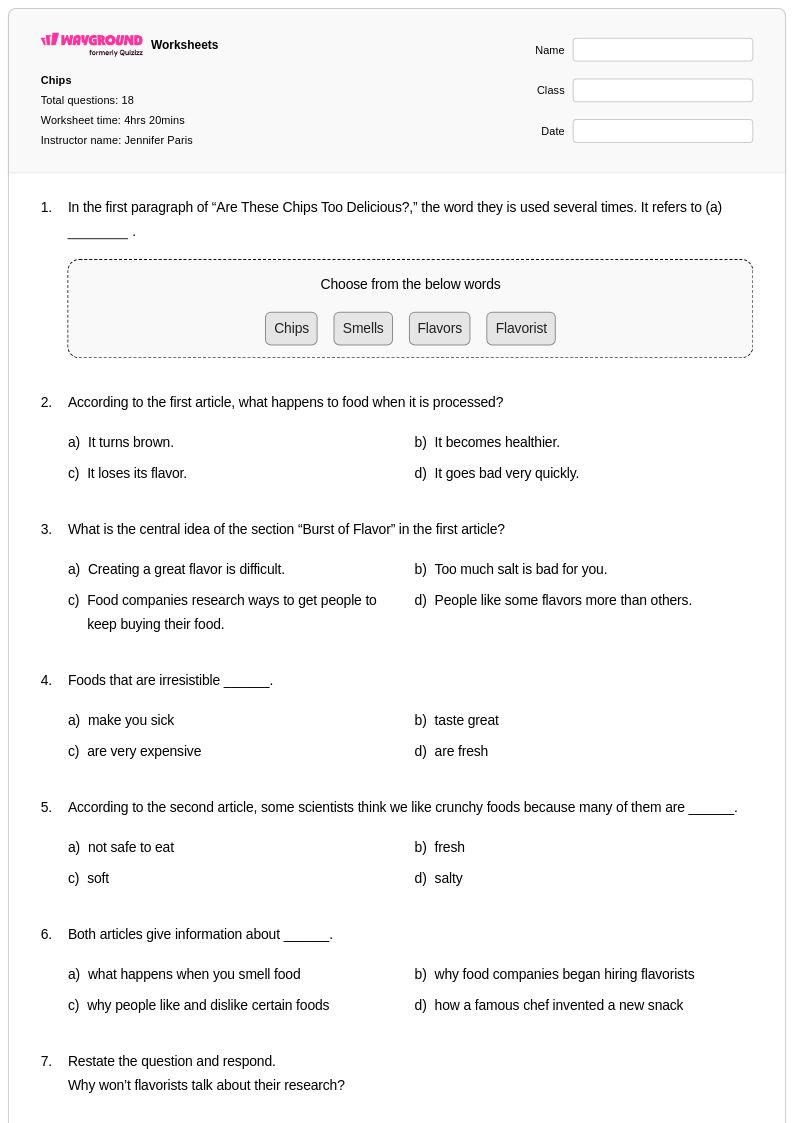
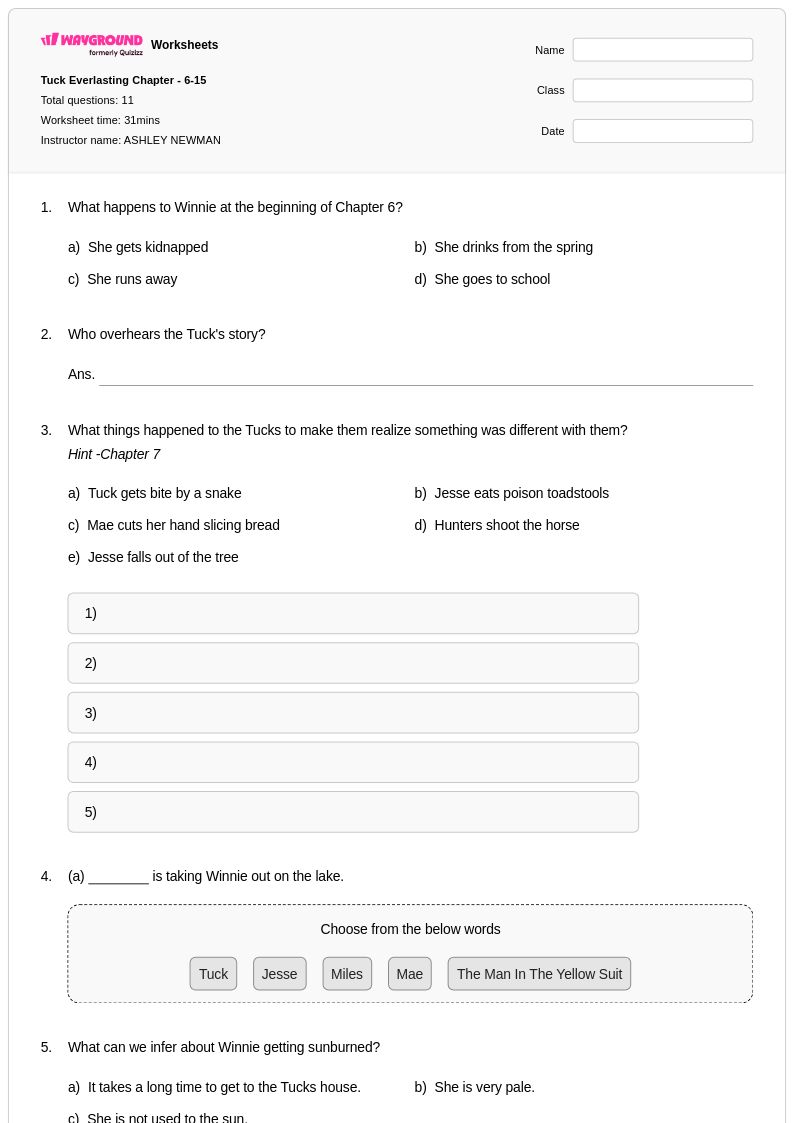
Free Printable Article Analysis Worksheets for Grade 6
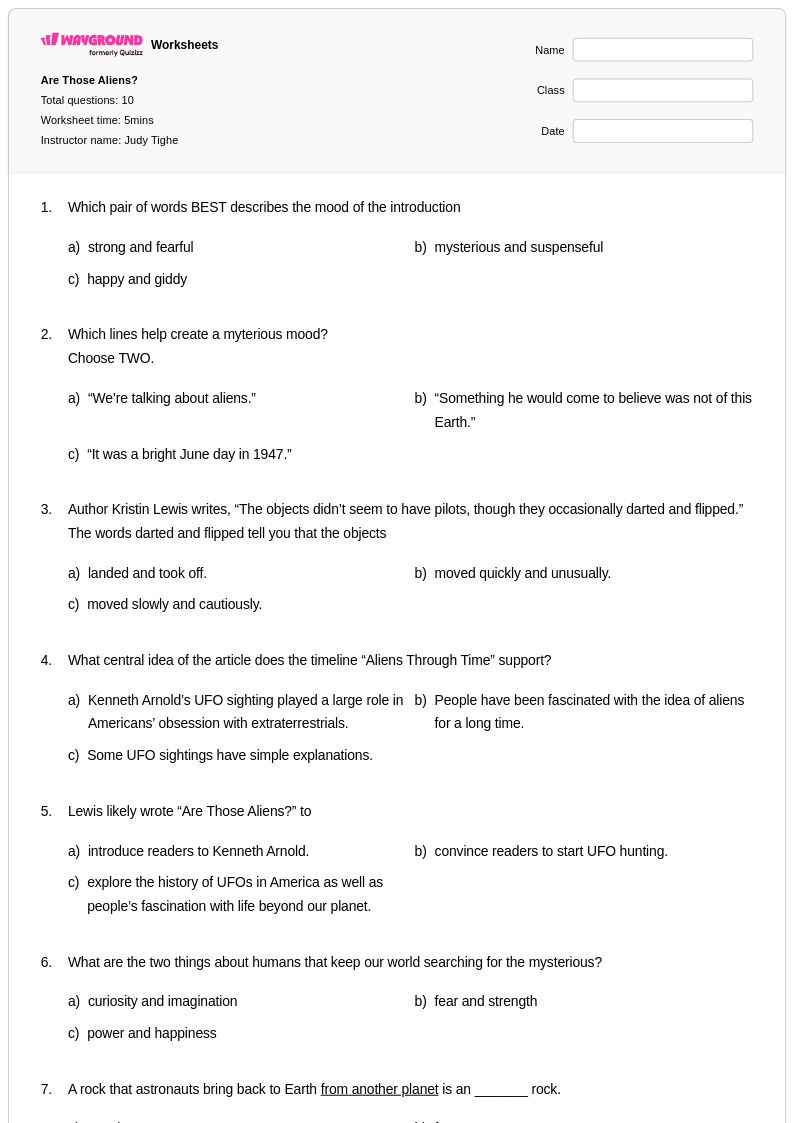
Grade 6 article analysis worksheets from Wayground help students develop critical reading skills through printable PDF exercises that break down text structure, author purpose, and evidence evaluation with comprehensive answer keys.
Explore printable Article Analysis worksheets for Grade 6
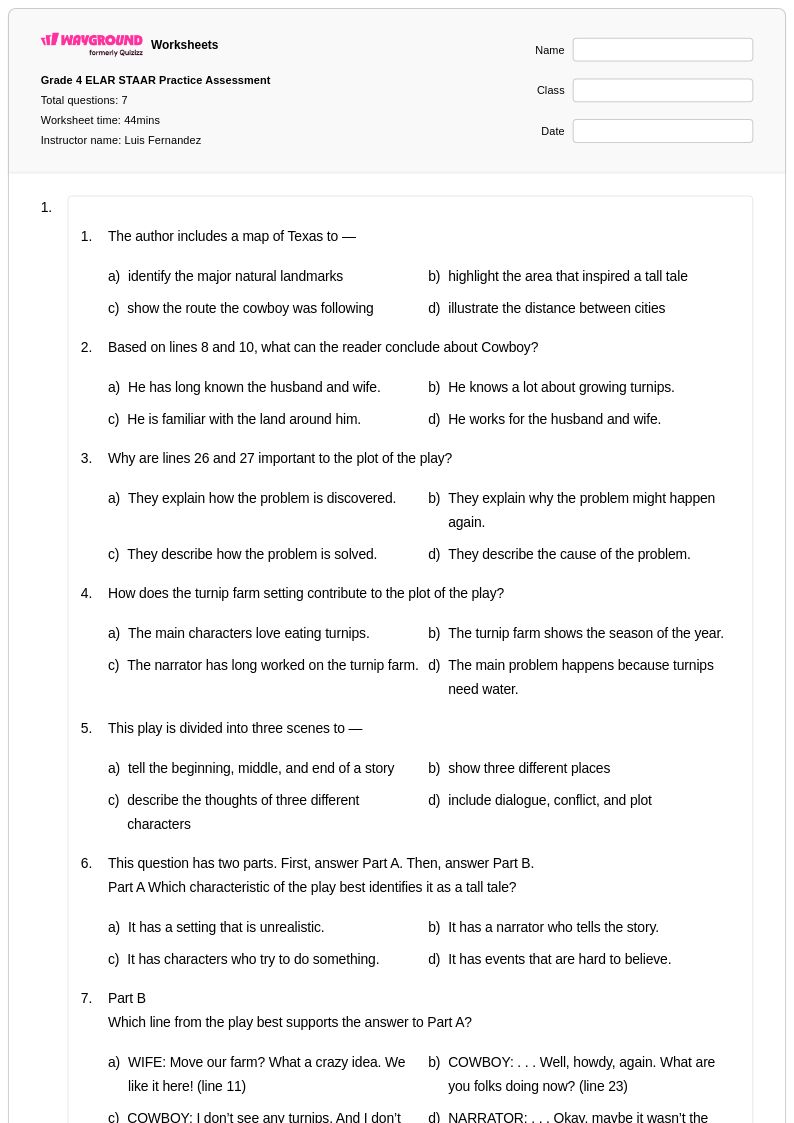
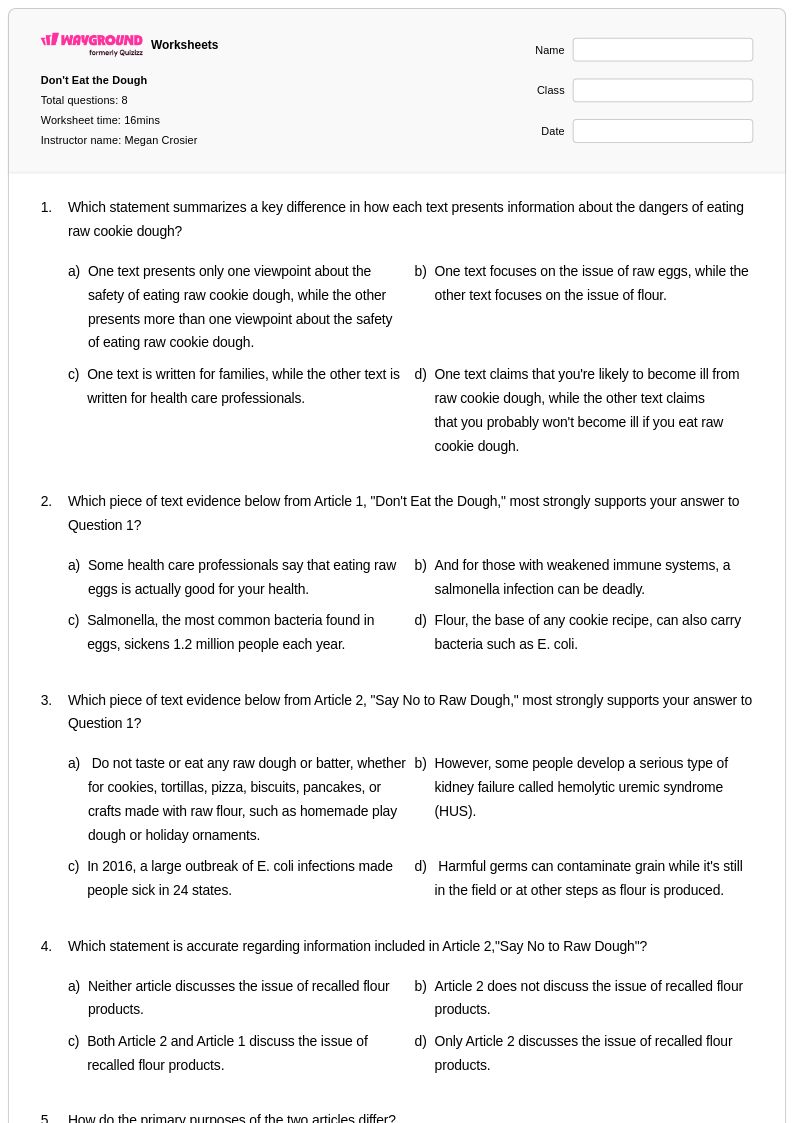
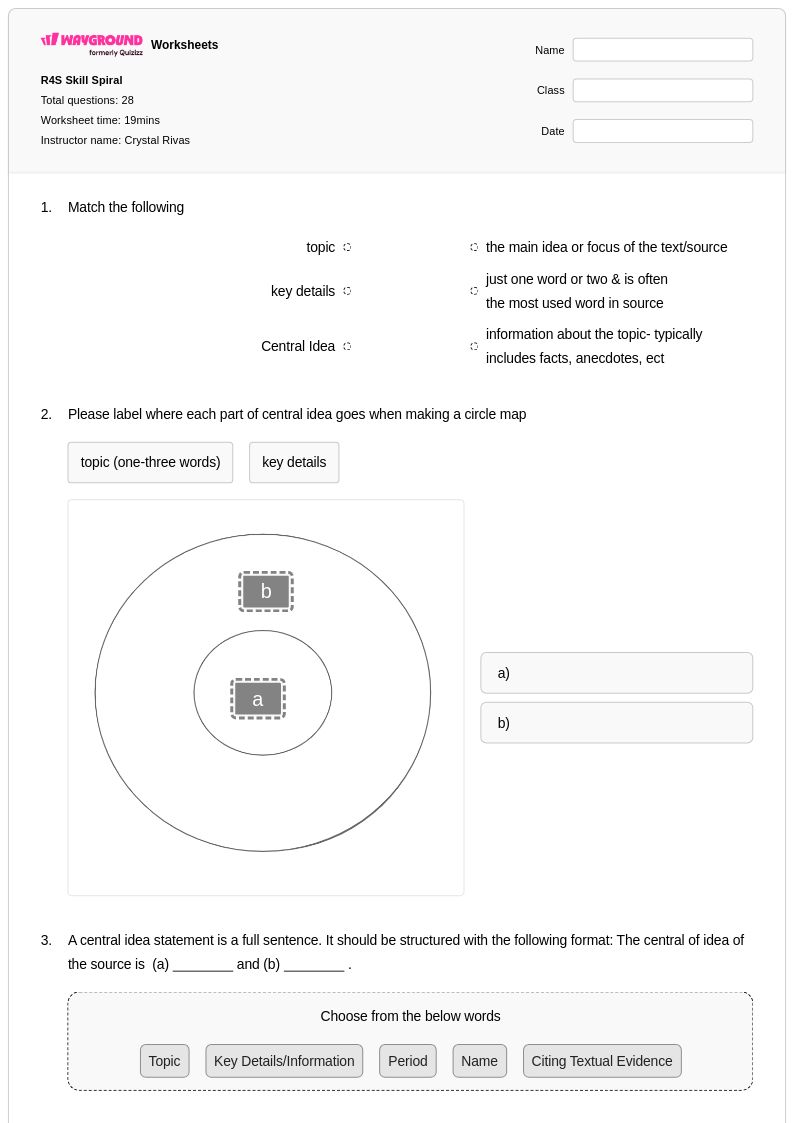
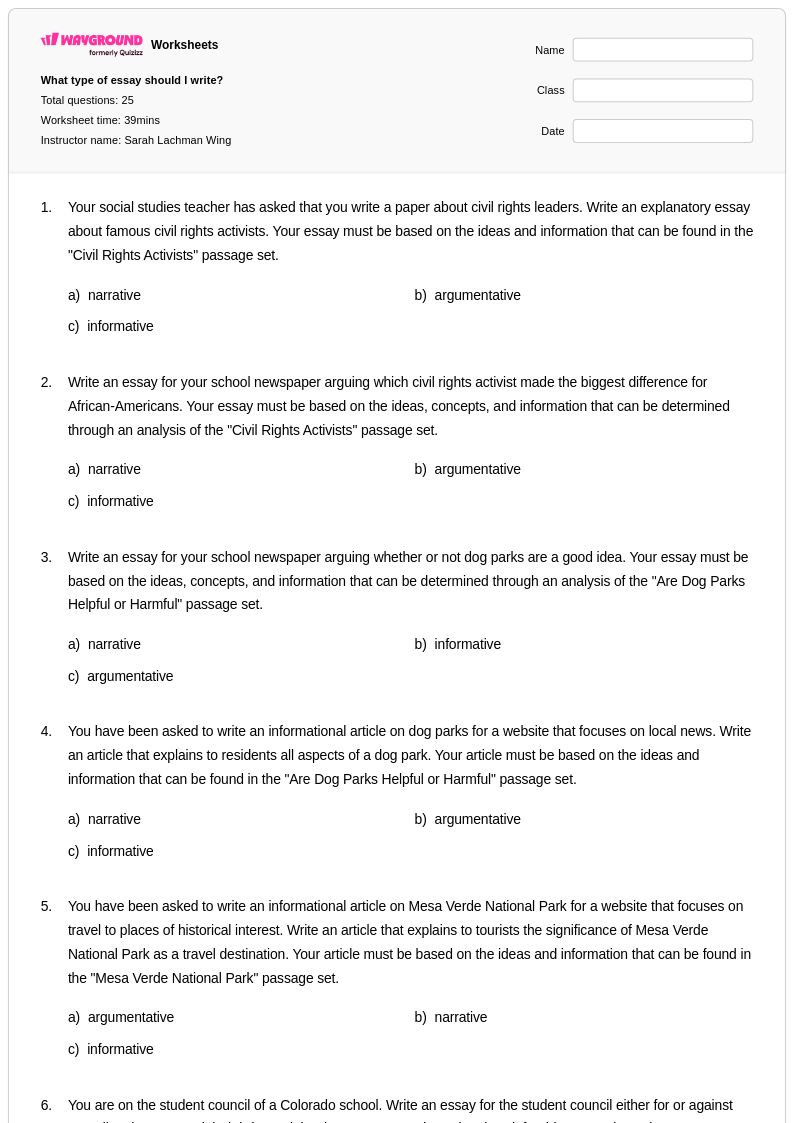
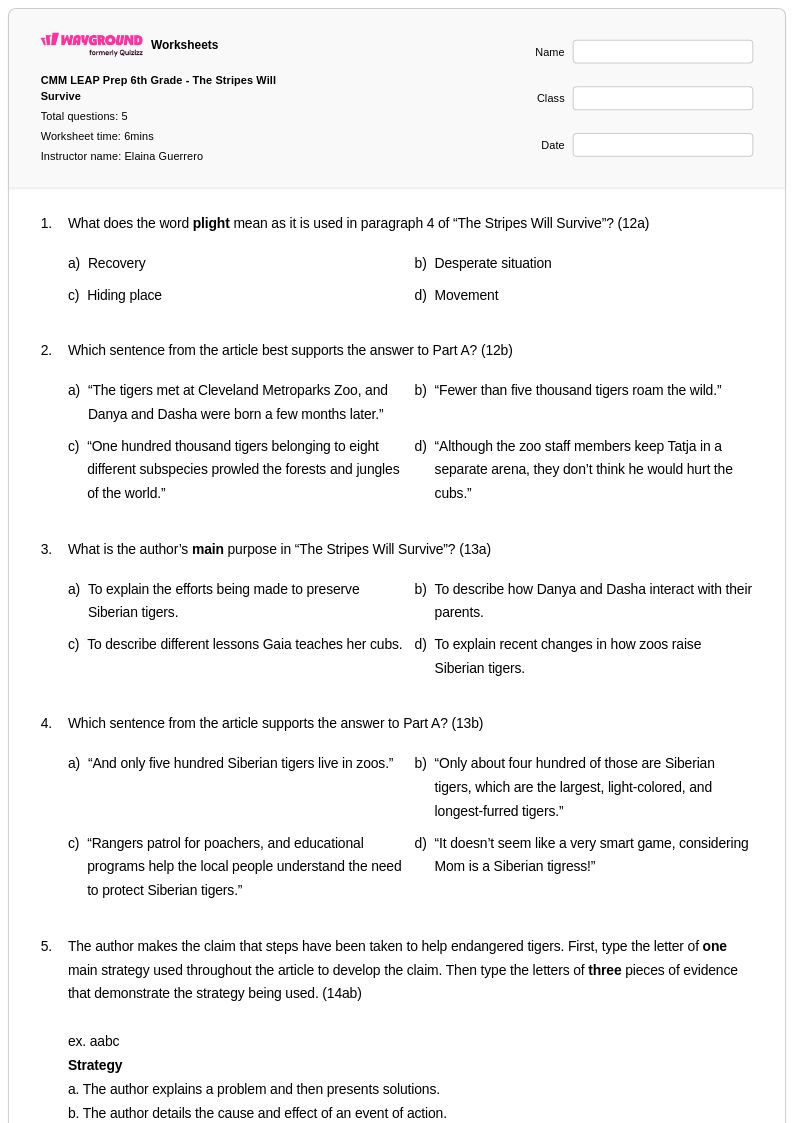
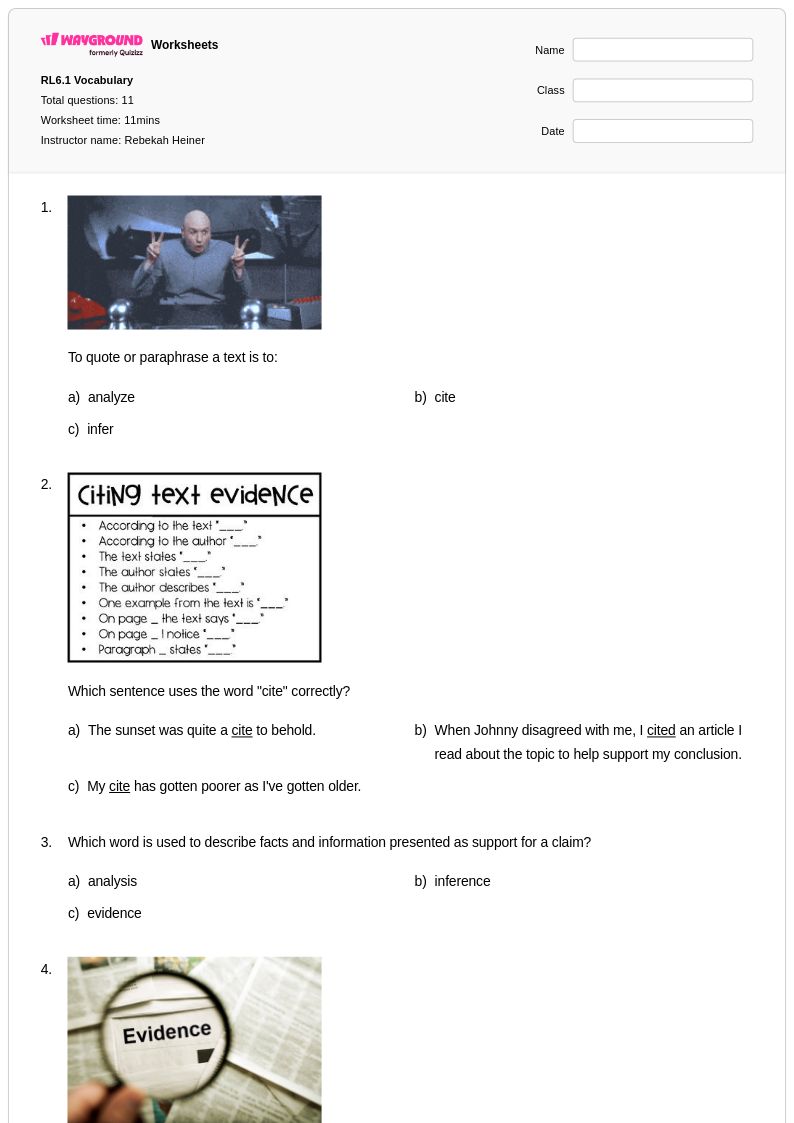
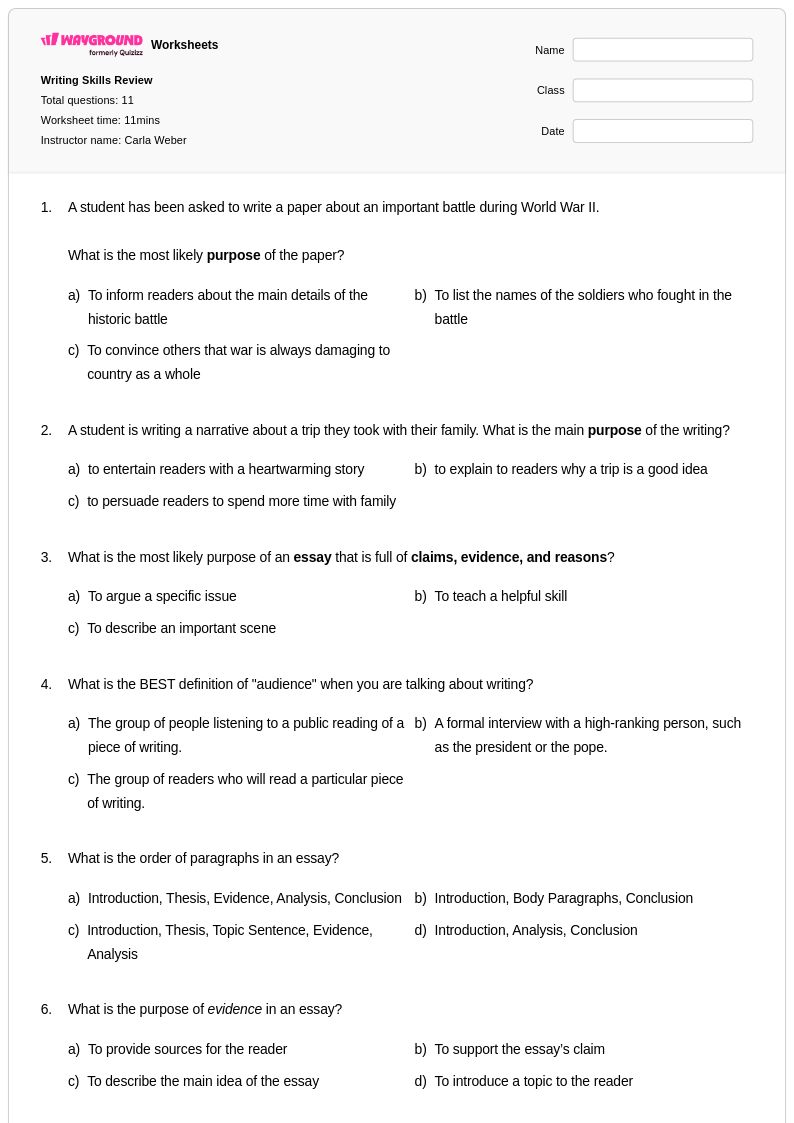
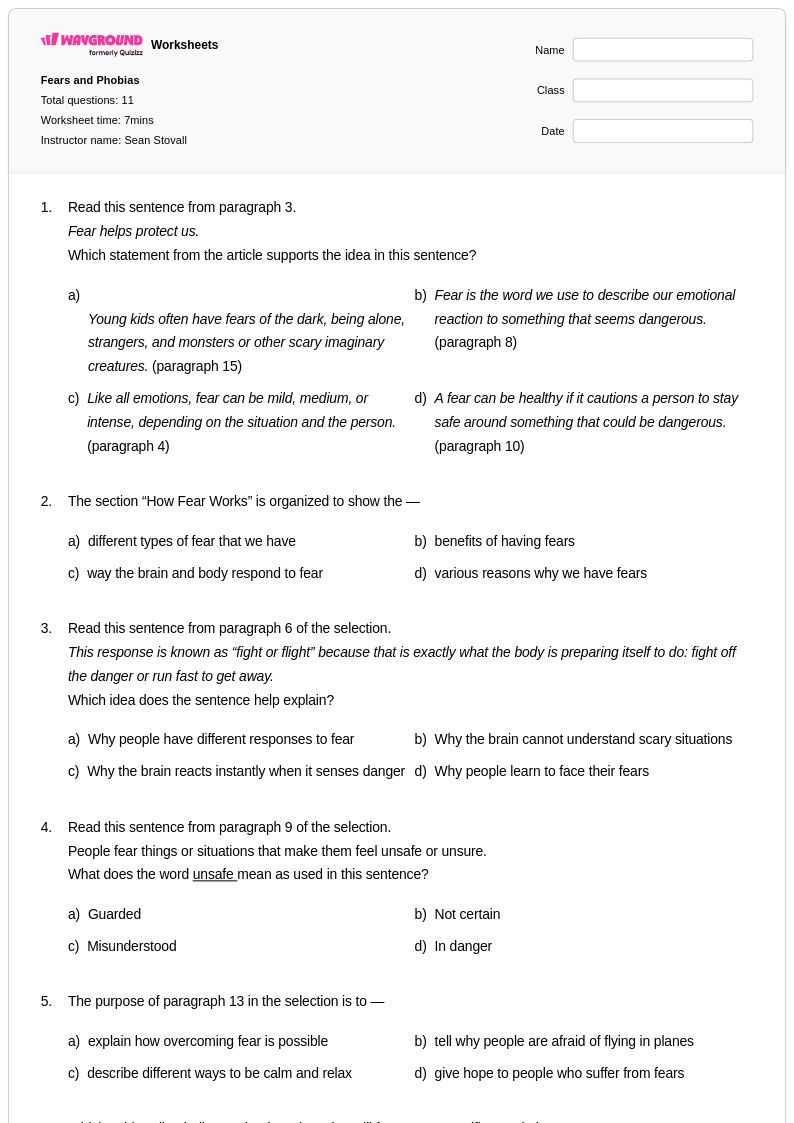
Article analysis worksheets for Grade 6 students available through Wayground (formerly Quizizz) provide comprehensive practice in examining and evaluating written texts across multiple genres and formats. These carefully designed resources strengthen critical reading skills by guiding students through systematic approaches to identifying main ideas, supporting details, author's purpose, and text structure while developing their ability to make inferences and draw evidence-based conclusions. Each worksheet collection includes practice problems that challenge students to analyze articles from various perspectives, complete with answer keys that support both independent study and classroom instruction. The printable pdf format ensures accessibility for diverse learning environments, while the free resources enable teachers to supplement their curriculum with high-quality materials that build analytical thinking skills essential for academic success.
Wayground's extensive library supports educators with millions of teacher-created article analysis worksheets specifically curated for Grade 6 reading comprehension instruction. The platform's robust search and filtering capabilities allow teachers to locate materials aligned with specific standards and learning objectives, while differentiation tools enable customization based on individual student needs and reading levels. These flexible resources are available in both printable and digital pdf formats, making them ideal for classroom instruction, homework assignments, remediation sessions, and enrichment activities. Teachers can efficiently plan lessons knowing that comprehensive answer keys accompany each worksheet set, and the vast collection ensures access to varied article types and complexity levels that support ongoing skill development and assessment throughout the academic year.
FAQs
How do I teach article analysis to students who struggle with complex texts?
Start by modeling the process explicitly using a short, accessible article and thinking aloud as you identify the main idea, author's purpose, and supporting evidence. Break the analysis into discrete steps — reading for gist, annotating for structure, then evaluating claims — so students practice each skill before combining them. Scaffolded worksheets that guide students through these steps in sequence are especially effective for building independence over time.
What exercises help students practice article analysis skills?
Effective practice exercises include identifying the main idea and distinguishing it from supporting details, labeling rhetorical strategies the author uses, and answering inference questions that require students to read between the lines. Exercises that ask students to evaluate the strength of an author's evidence are particularly valuable because they push beyond surface comprehension into genuine critical reading. Structured worksheets with targeted prompts ensure students practice each component of analysis rather than reading passively.
What mistakes do students commonly make when analyzing articles?
The most common error is confusing the topic of an article with its main idea — students often state what the article is about rather than what the author is arguing or explaining. Students also frequently accept claims at face value without evaluating the quality of the supporting evidence, and they tend to overlook how an author's word choice and tone signal purpose. Drawing attention to these patterns through targeted practice problems helps students develop the habit of reading critically rather than receptively.
How do I help students identify an author's purpose in an article?
Teach students to look for signals in tone, word choice, and structure that indicate whether the author intends to inform, persuade, entertain, or explain. A useful classroom strategy is to have students restate the author's central claim in their own words and then ask, 'Why would someone write this?' Repeated exposure to articles with different purposes, paired with guided analysis questions, builds students' ability to make this judgment independently.
How do I use article analysis worksheets in my classroom?
Article analysis worksheets on Wayground are available as printable PDFs for traditional classroom use and in digital formats for technology-integrated or remote learning environments, including the option to host them as a quiz directly on Wayground. Teachers can use them for whole-class instruction, independent practice, homework assignments, or targeted remediation sessions. Each worksheet includes a complete answer key, so they work equally well for self-paced independent study as they do for teacher-led review.
How can I differentiate article analysis worksheets for students at different reading levels?
Differentiation for article analysis can include providing shorter or less complex source texts for students who need support, while offering longer or multi-source tasks for students who are ready for a challenge. On Wayground, teachers can also apply individual student accommodations such as read aloud support, extended time, and reduced answer choices, which reduce barriers for struggling readers without altering the core analytical task for the rest of the class. These settings are saved per student and apply automatically in future sessions.