Free Printable Balance in Nature Worksheets for Grade 4
Explore Wayground's free Grade 4 balance in nature worksheets and printables that help students understand ecosystems, food chains, and environmental relationships through engaging practice problems with answer keys.
Explore printable Balance in Nature worksheets for Grade 4
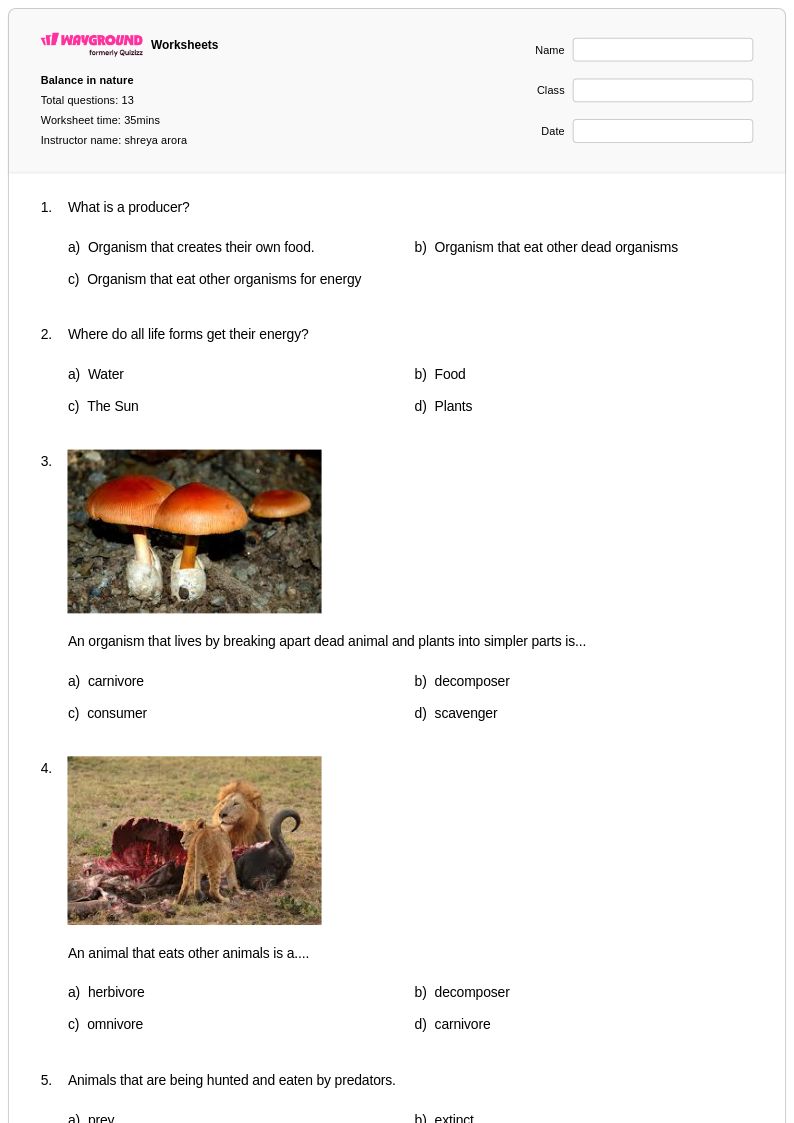
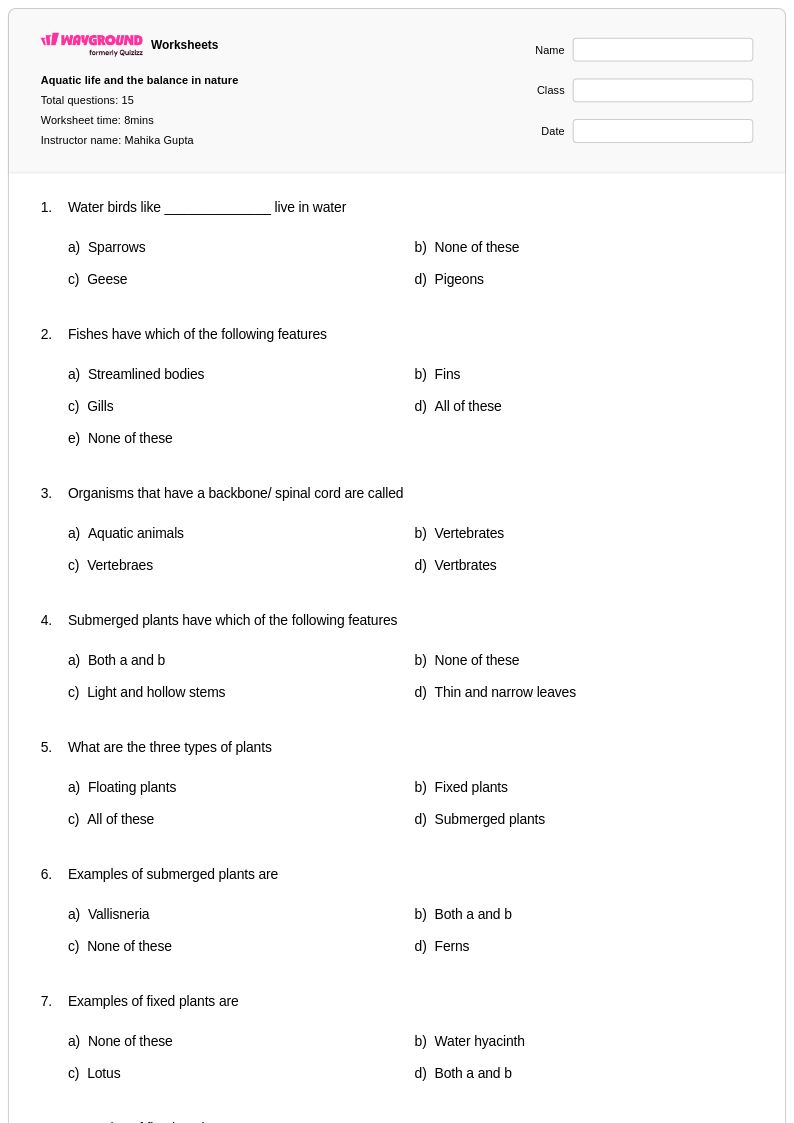
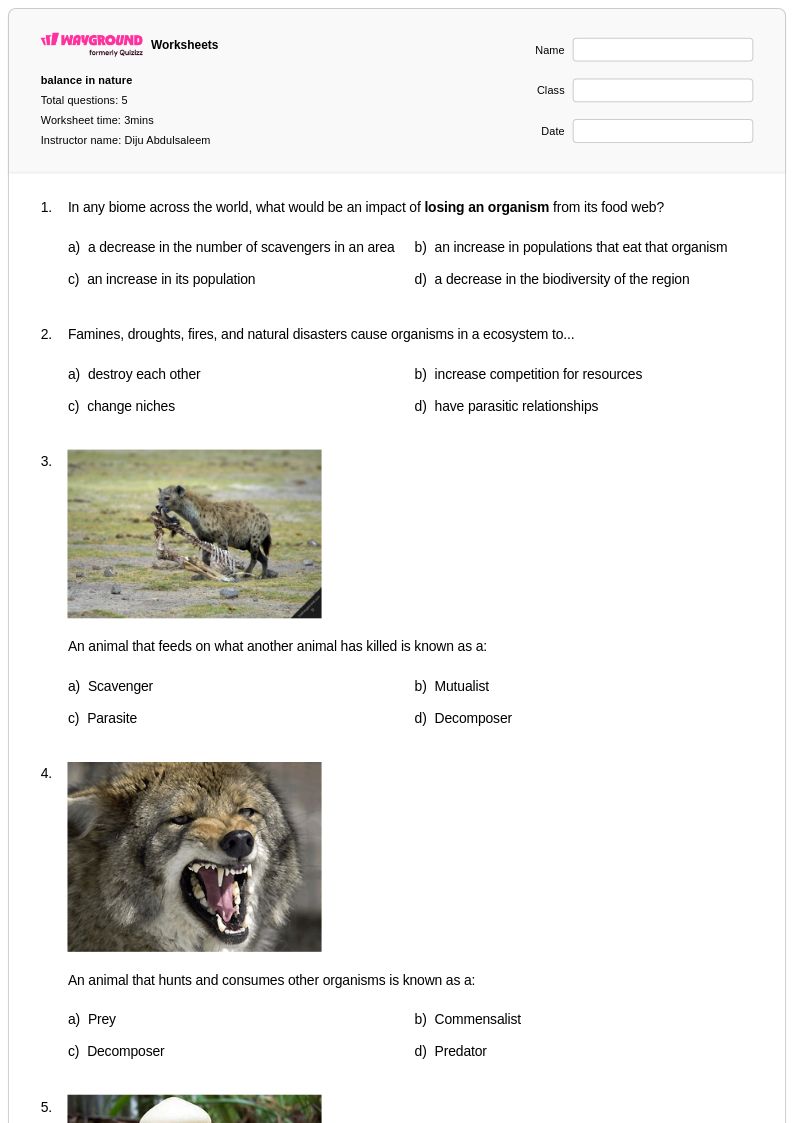
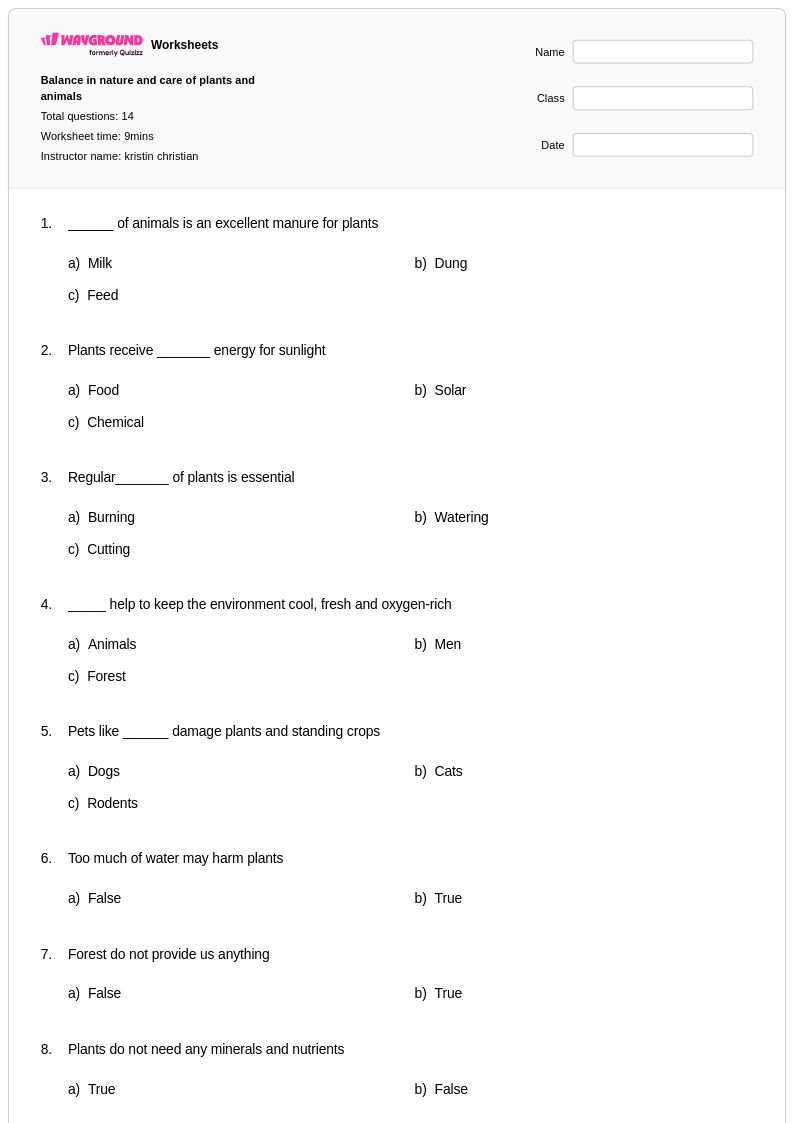
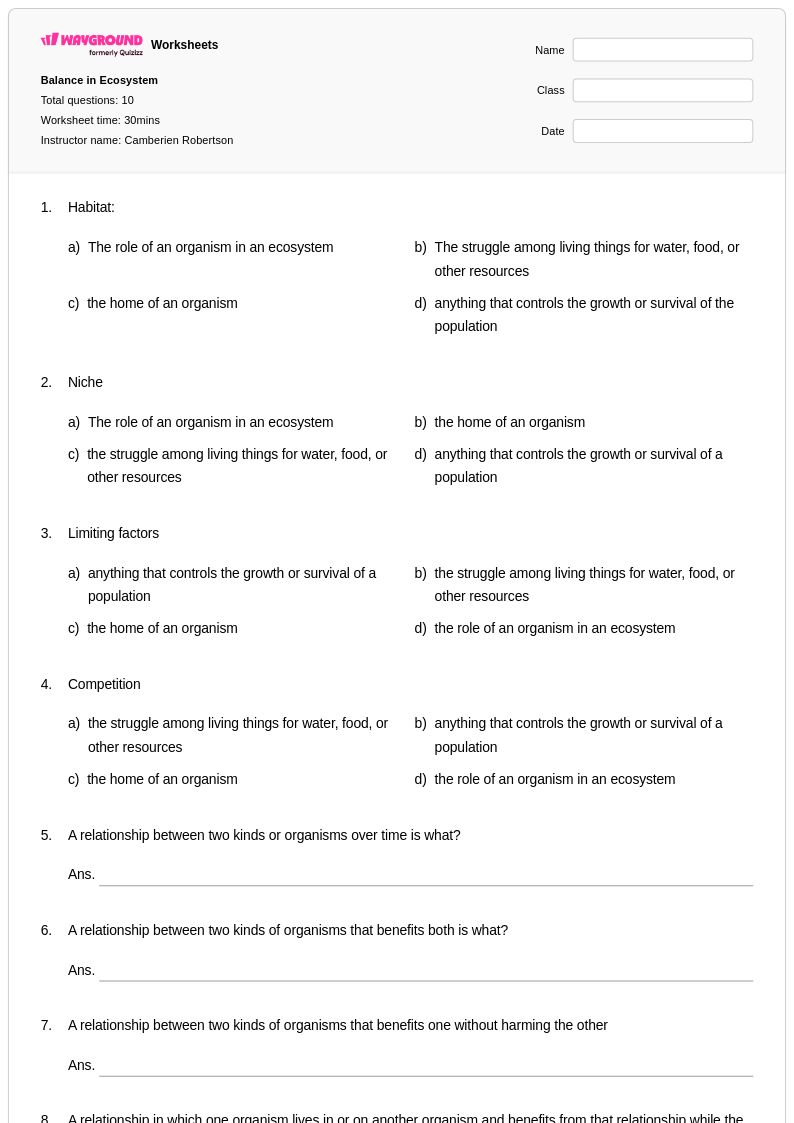
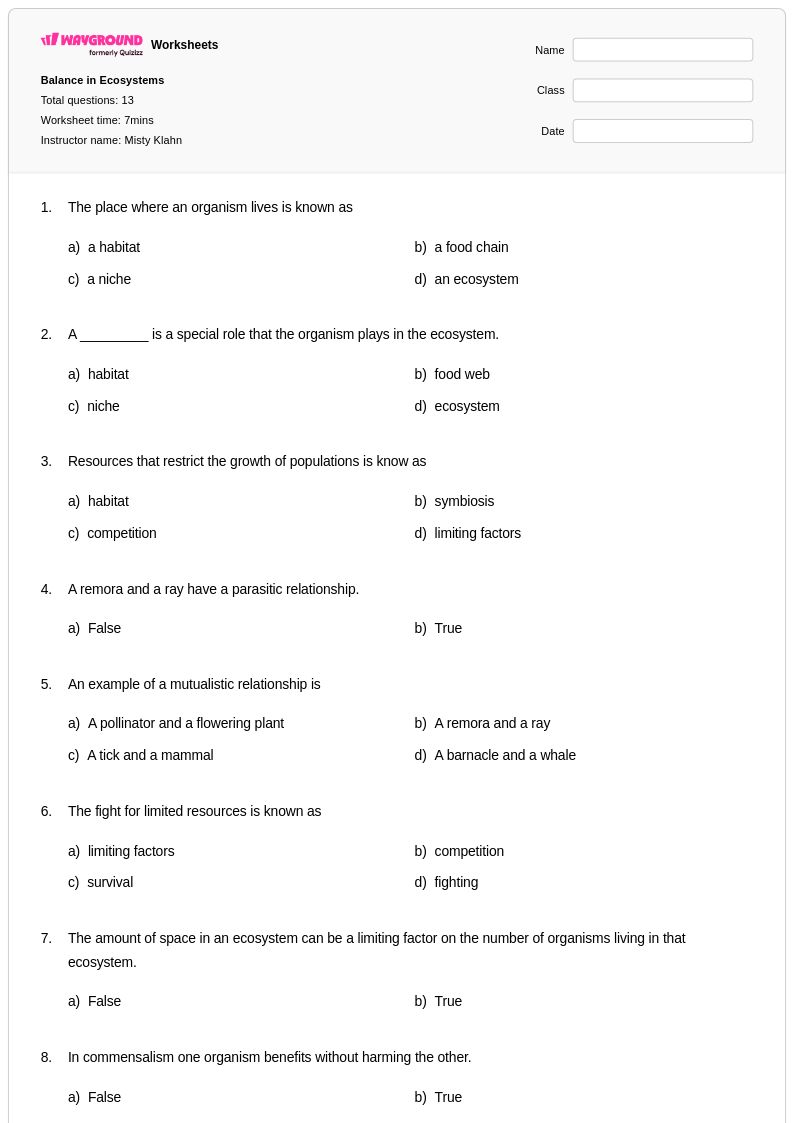
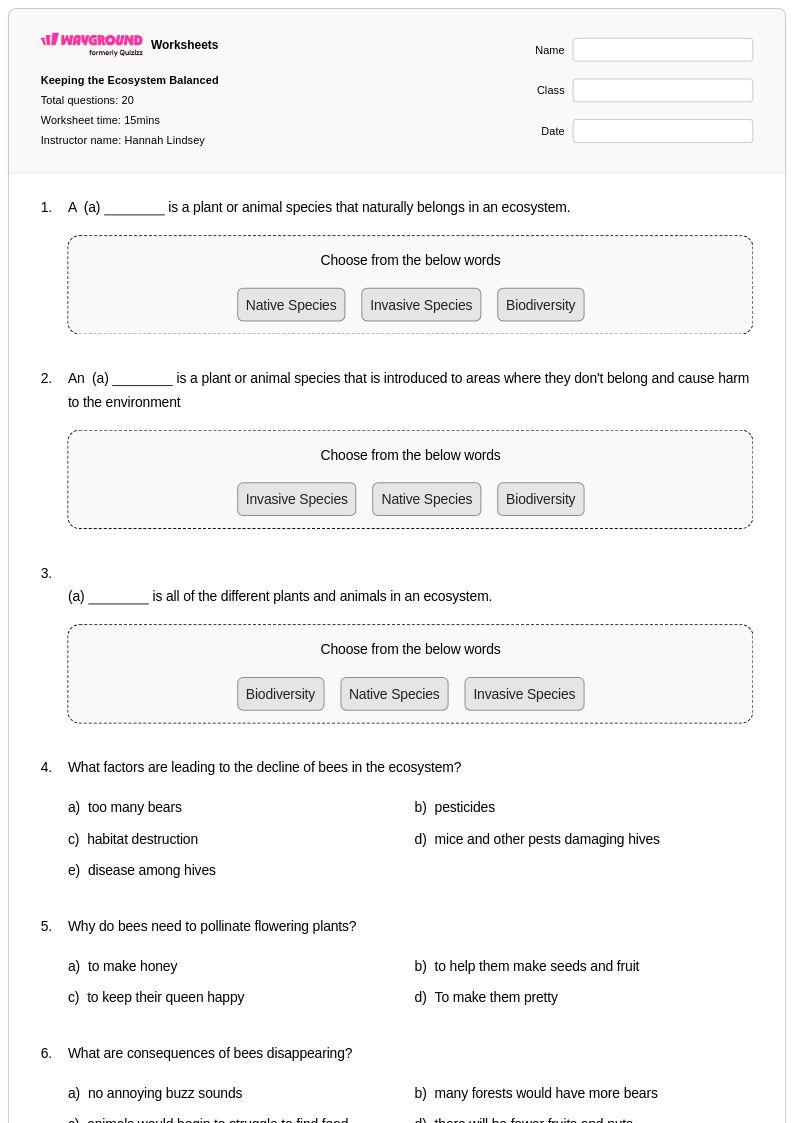
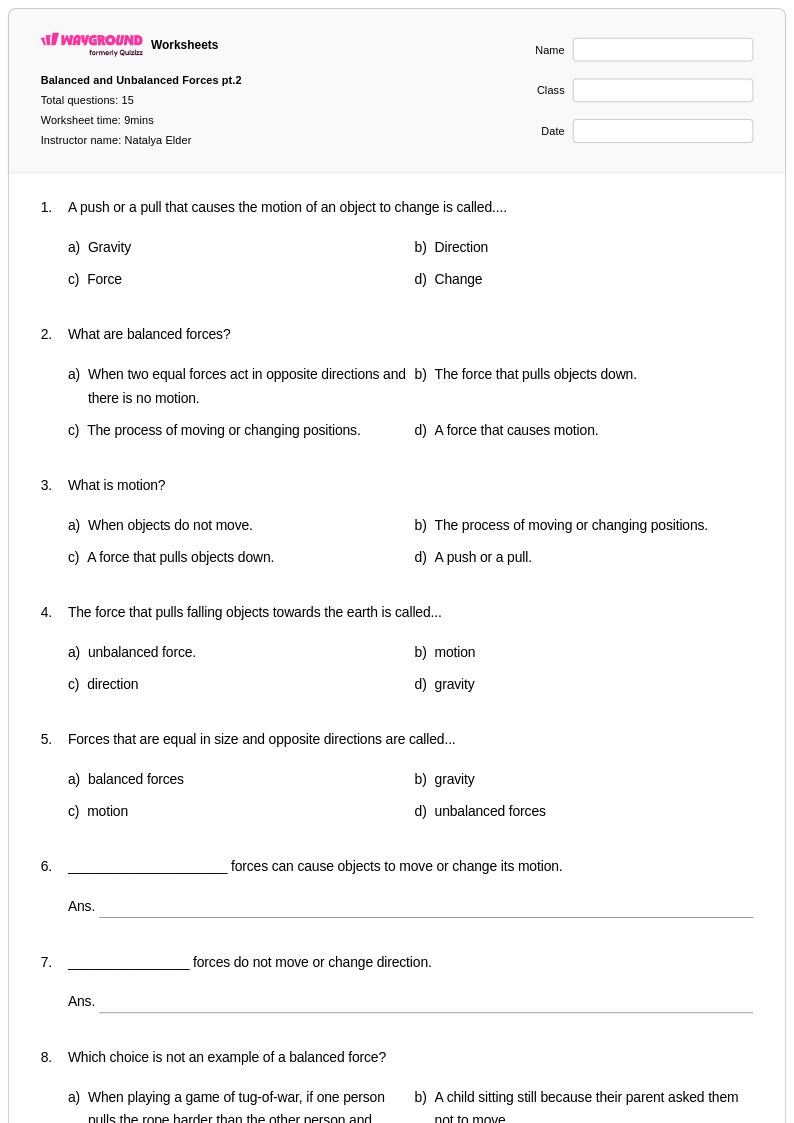
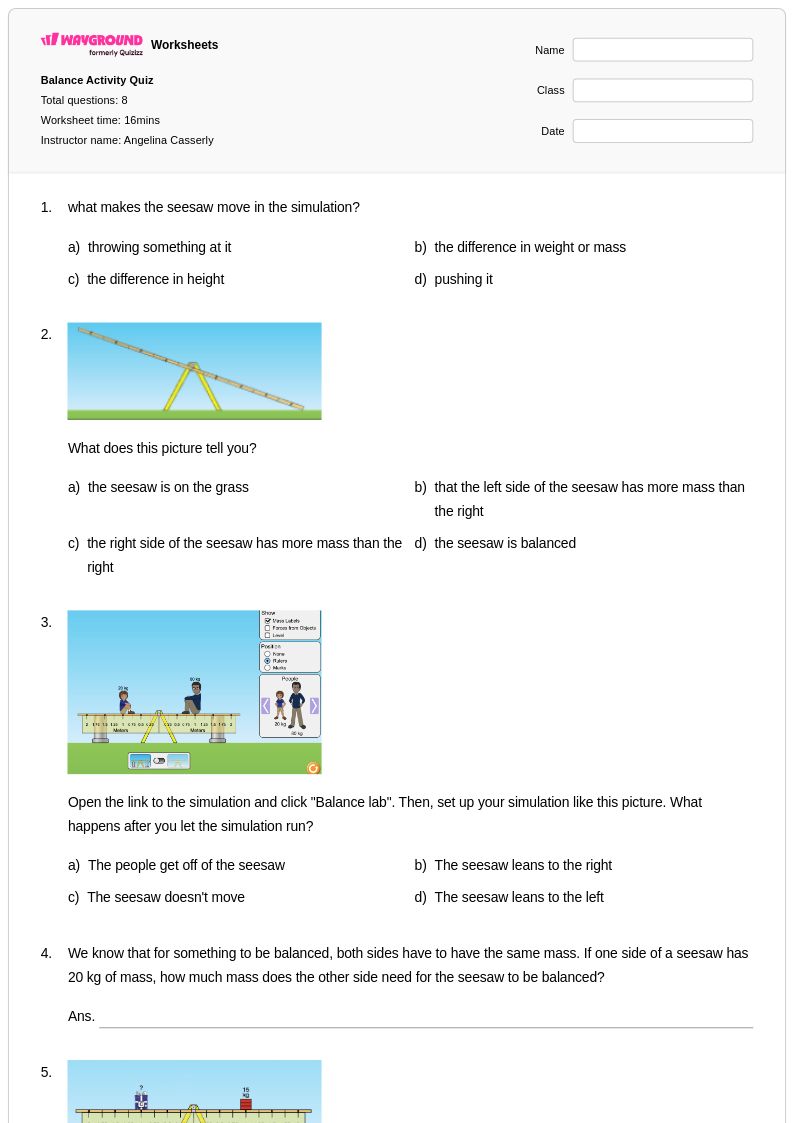
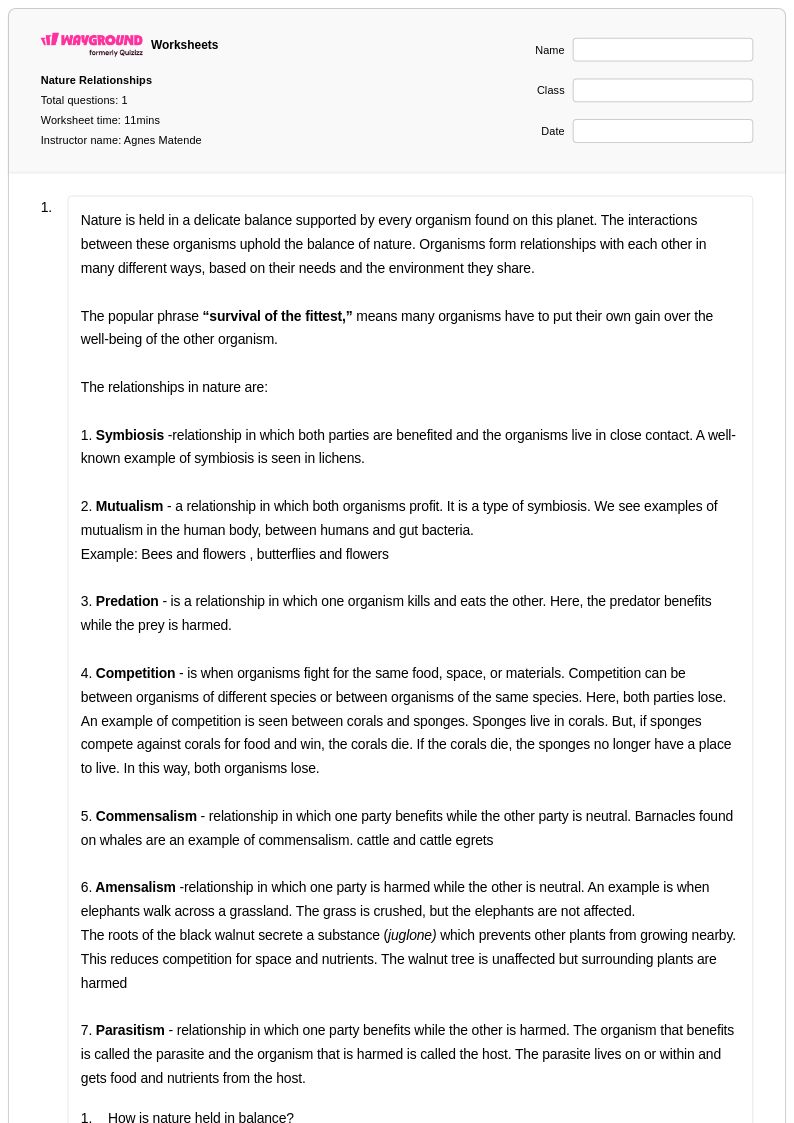
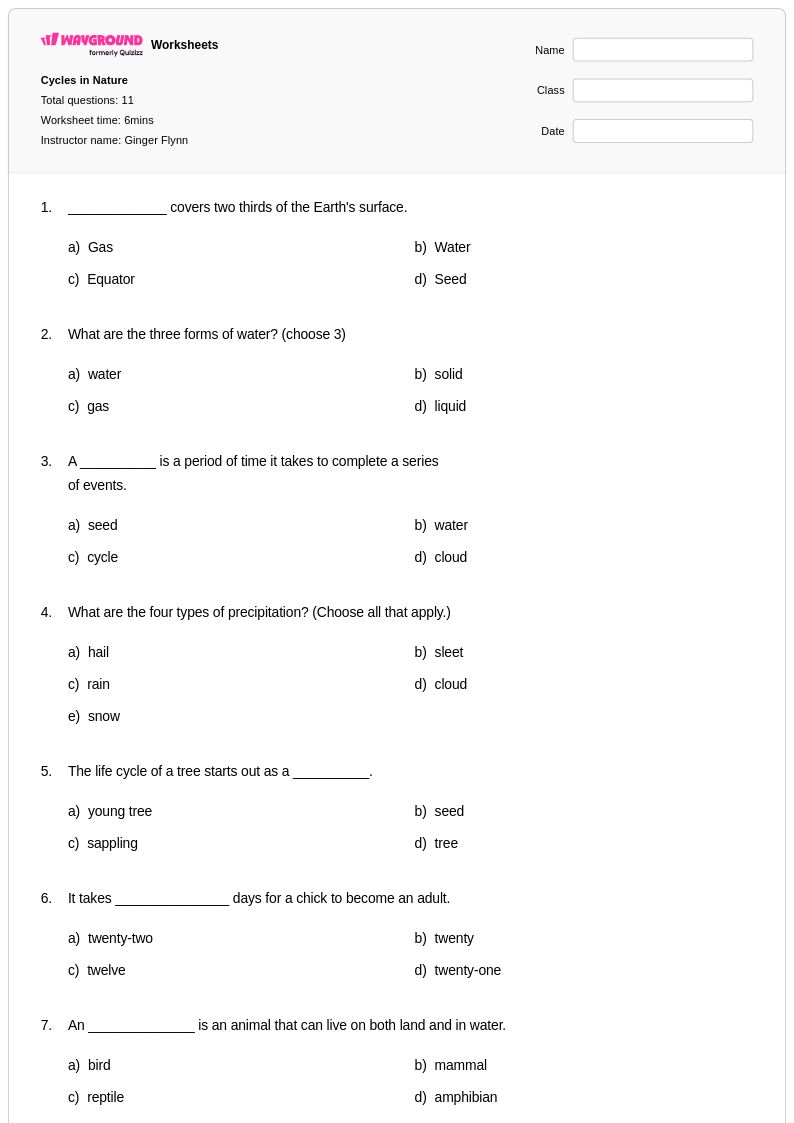
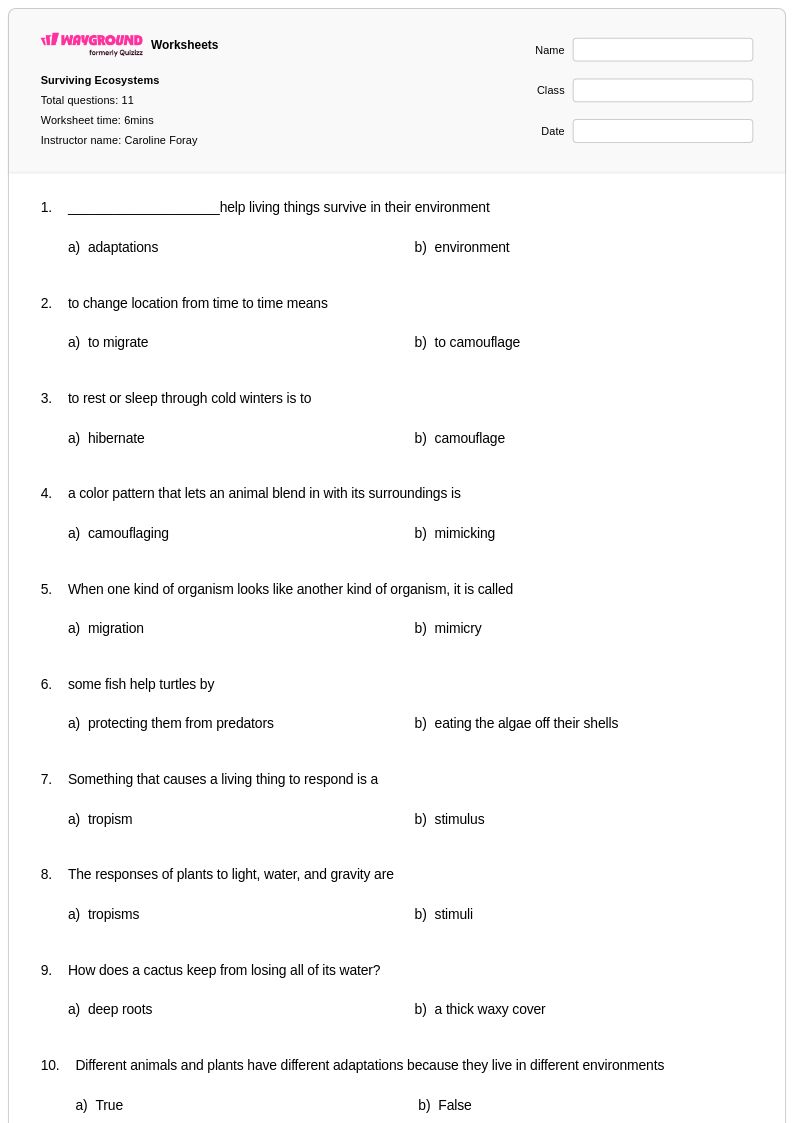
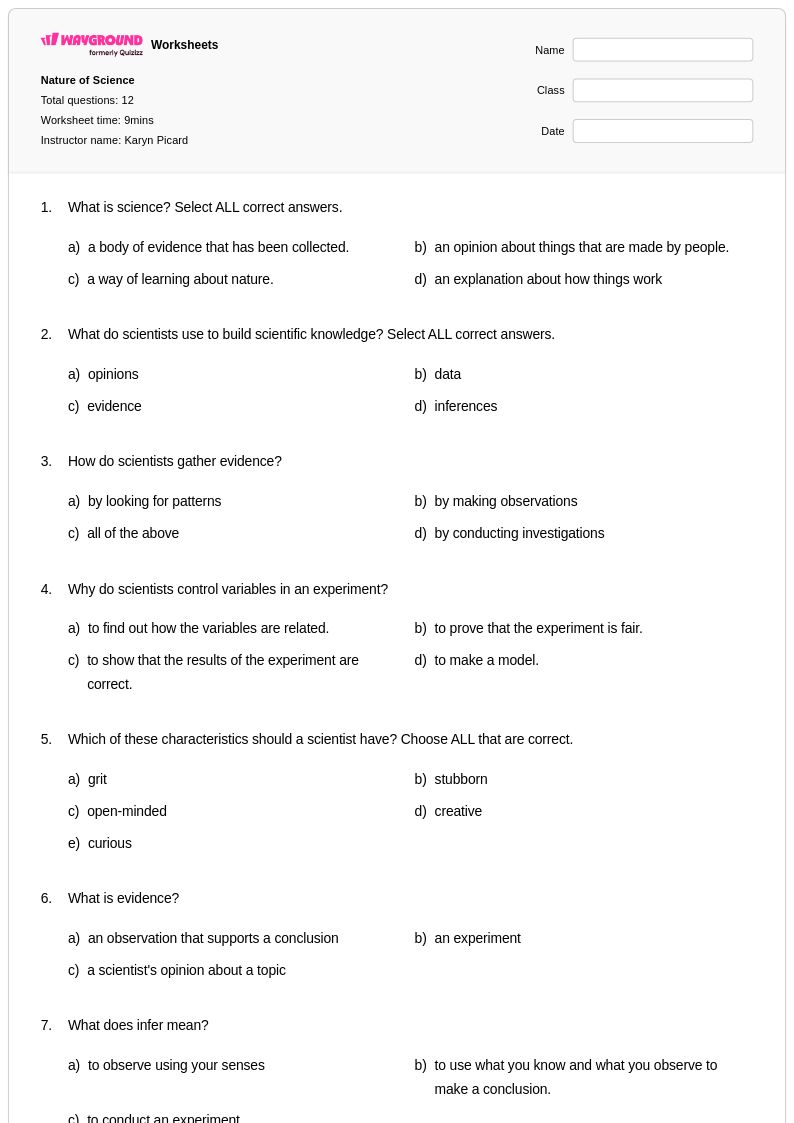
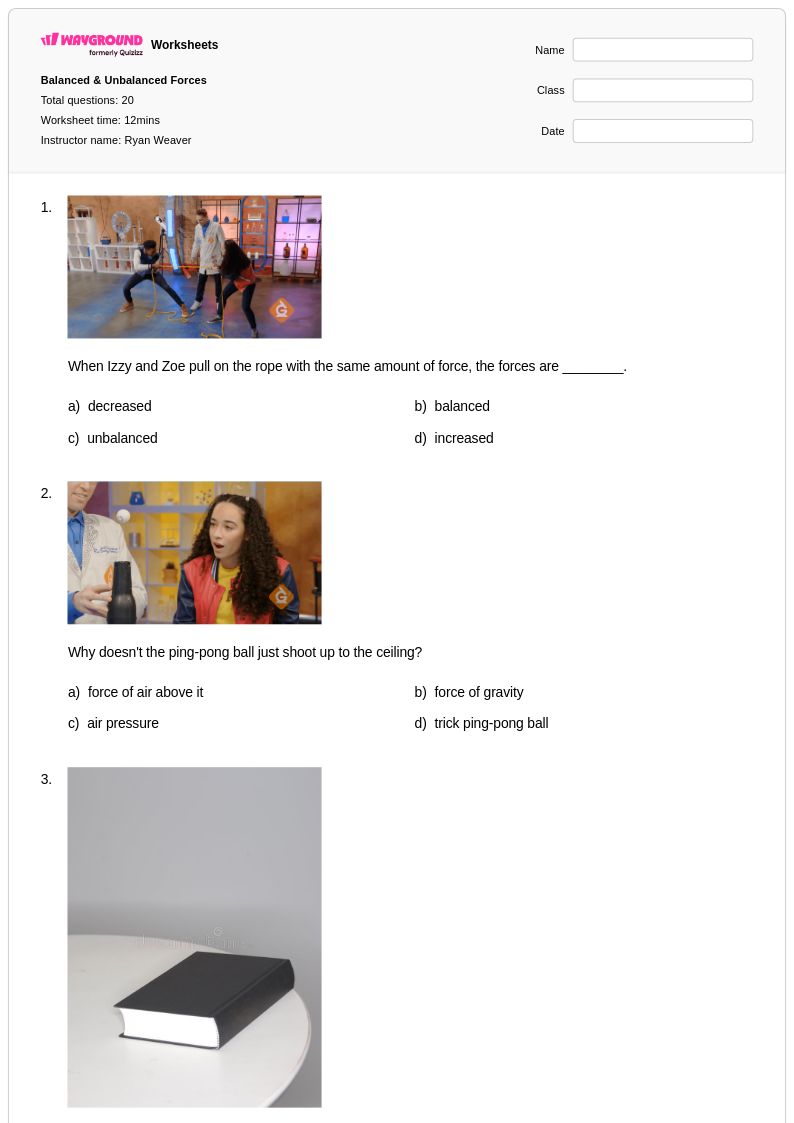
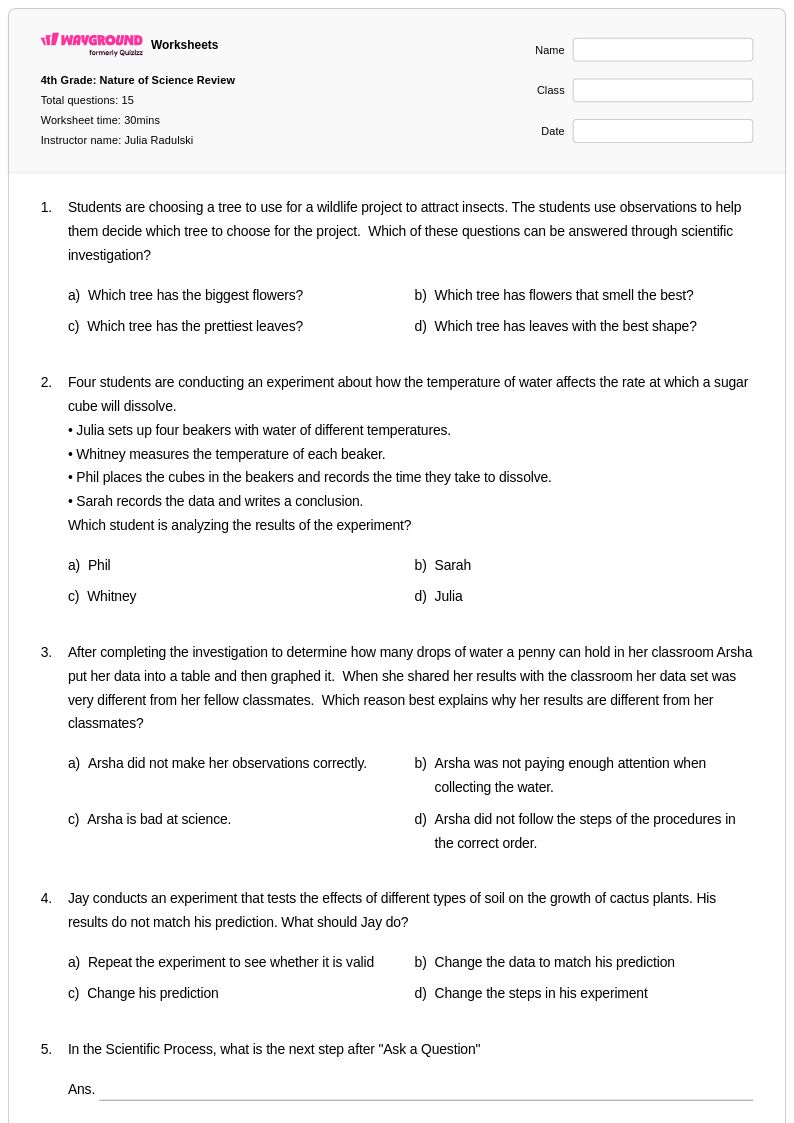
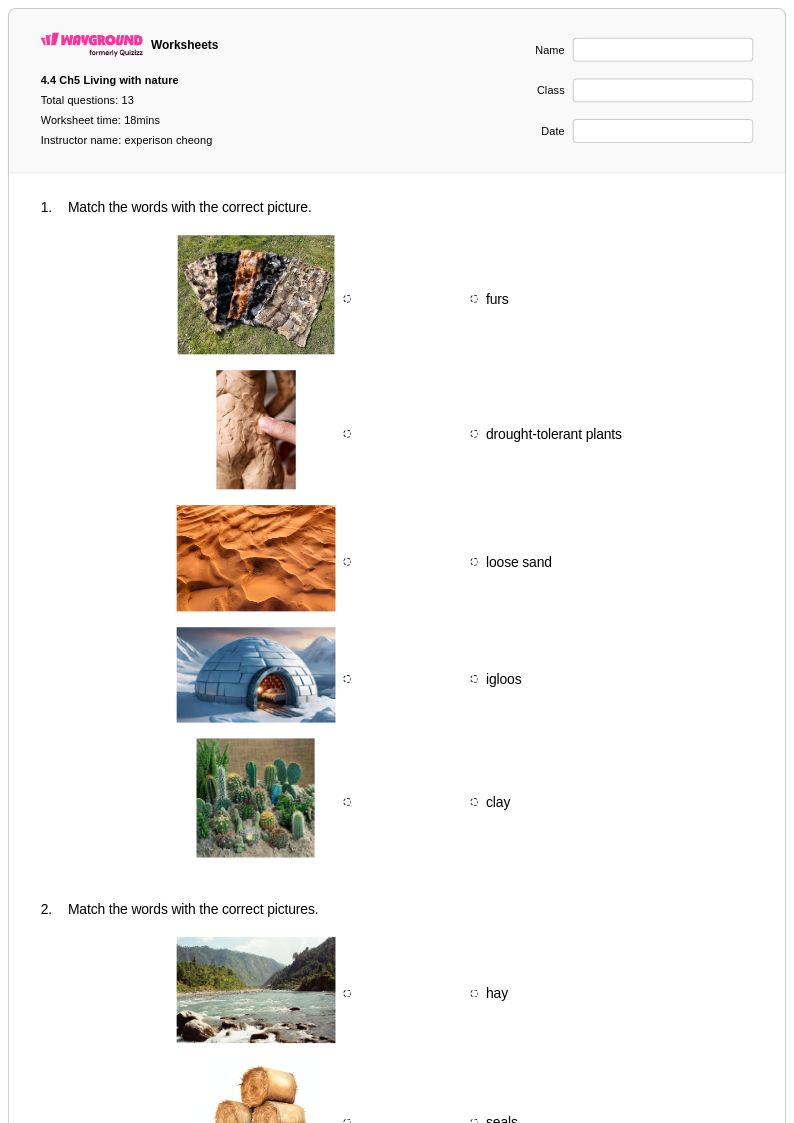
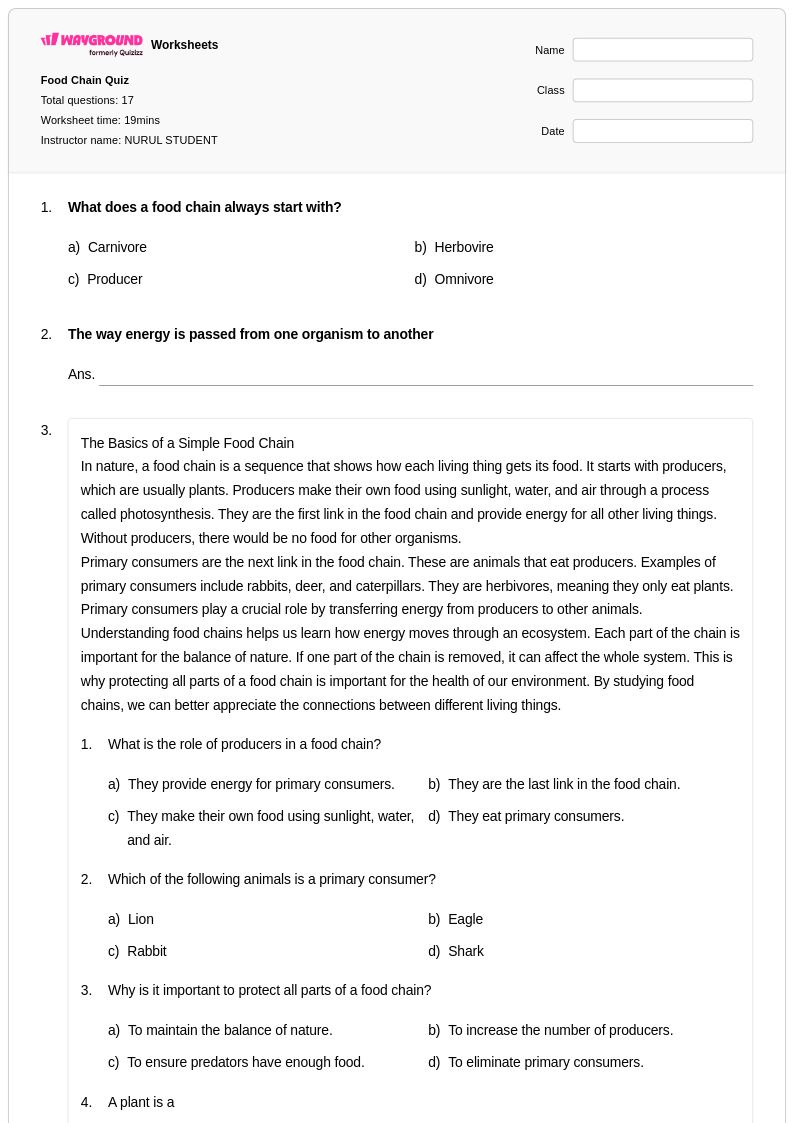
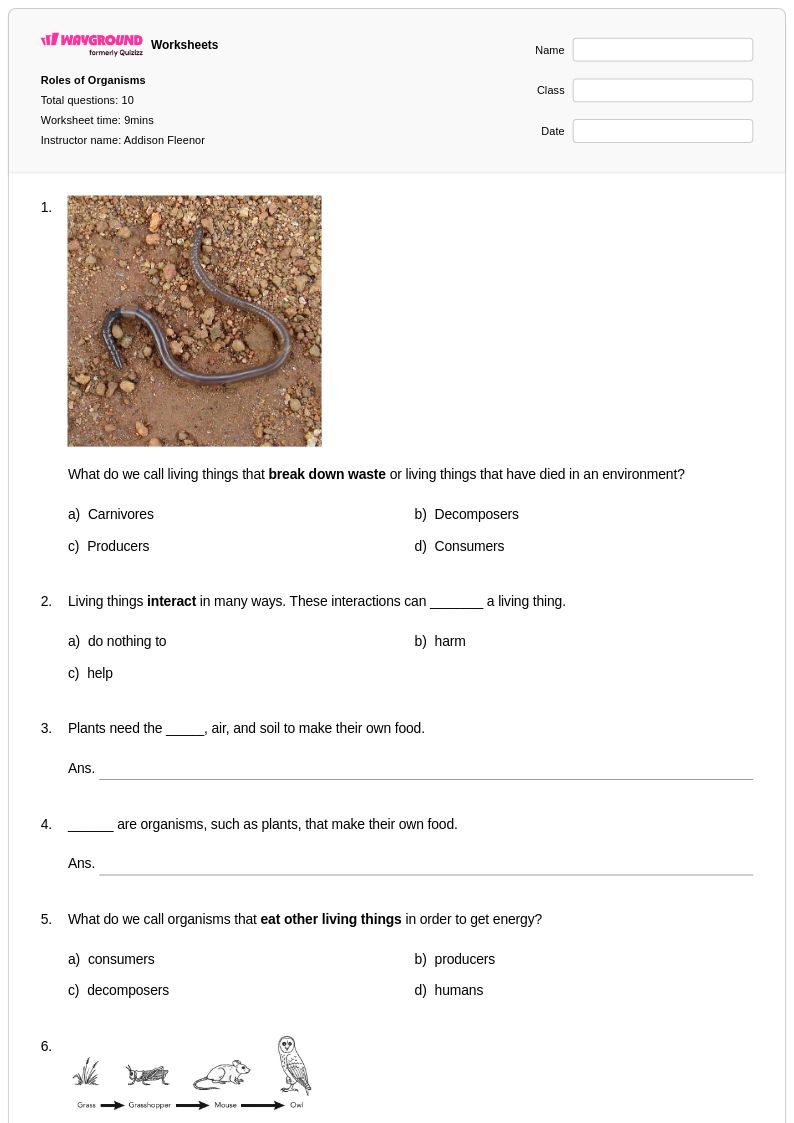
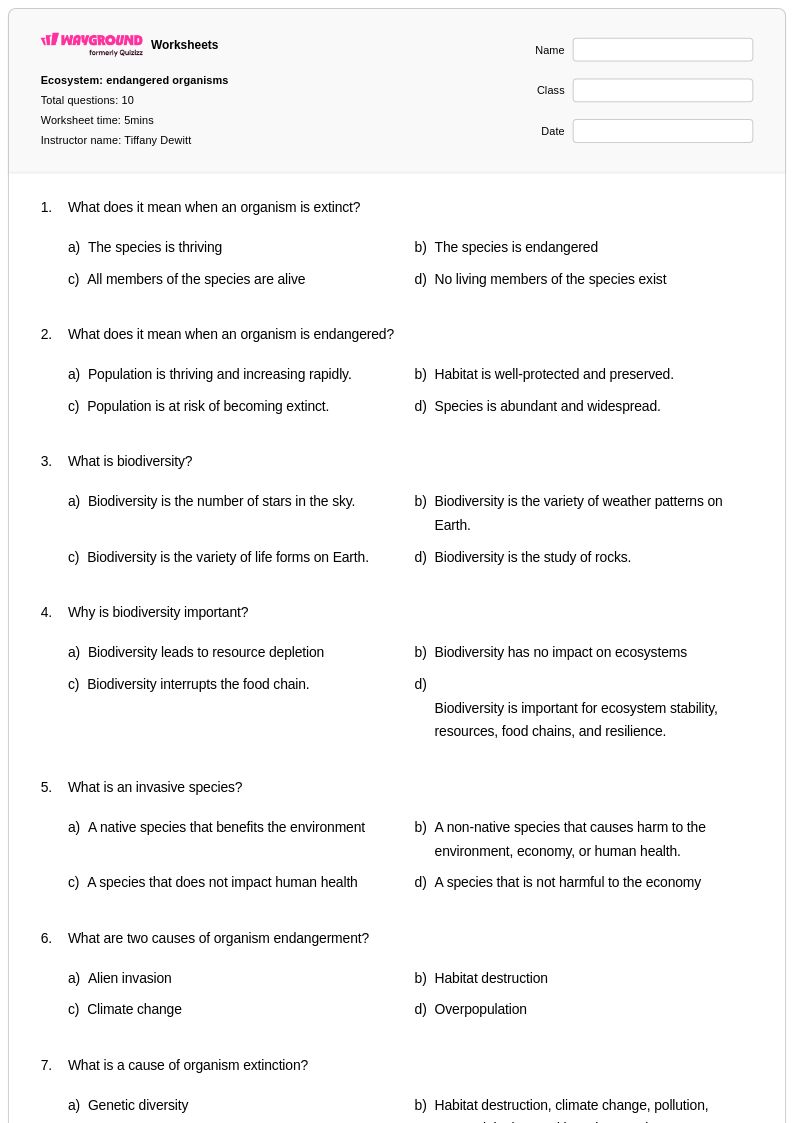
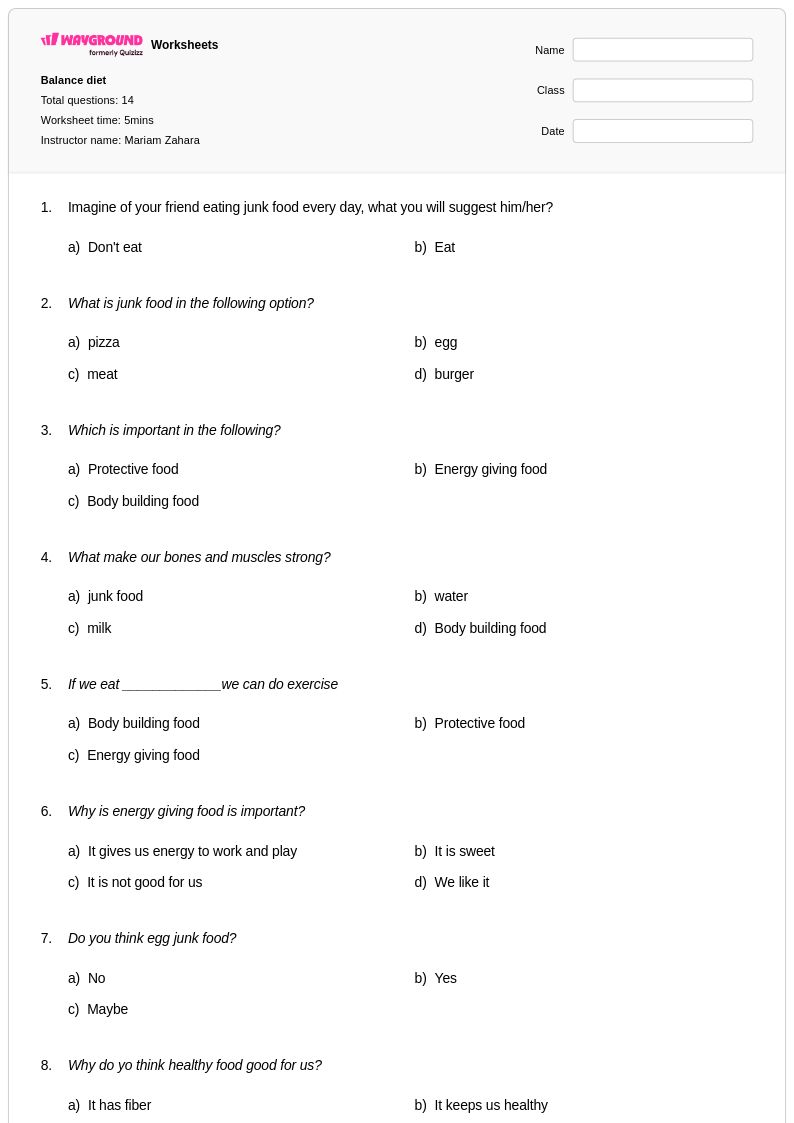
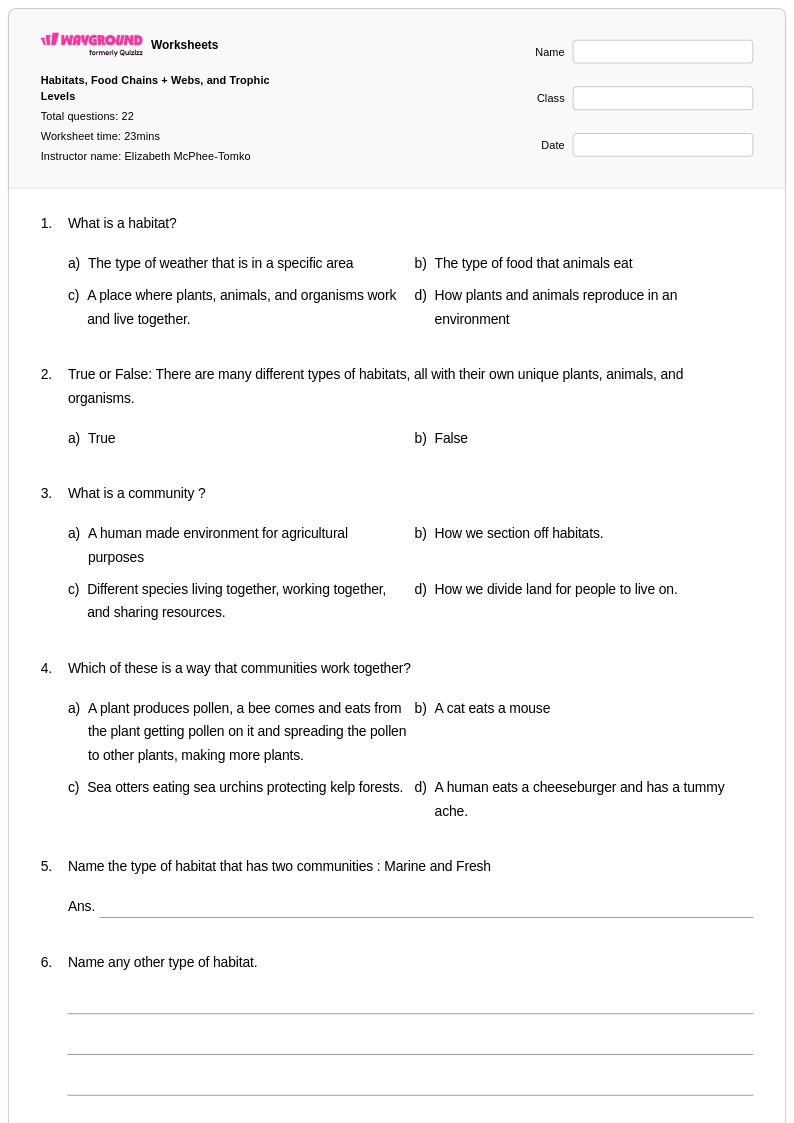
Balance in Nature worksheets for Grade 4 students available through Wayground (formerly Quizizz) provide comprehensive exploration of ecological relationships and environmental interdependence that fourth graders need to understand. These educational resources strengthen critical thinking skills as students examine food chains, predator-prey relationships, and the delicate connections between living organisms and their habitats. The printable worksheets feature engaging practice problems that challenge students to identify how changes in one part of an ecosystem affect other components, while free pdf resources include detailed answer keys that support both independent learning and guided instruction. Students develop scientific reasoning abilities as they analyze scenarios involving population changes, habitat disruption, and natural cycles that maintain ecological stability.
Wayground (formerly Quizizz) empowers educators with millions of teacher-created Balance in Nature resources specifically designed for Grade 4 science instruction, featuring robust search and filtering capabilities that allow quick identification of materials aligned with specific learning standards. The platform's differentiation tools enable teachers to customize worksheets for diverse learning needs, while flexible formatting options provide both printable and digital pdf versions for seamless classroom integration. These comprehensive worksheet collections support effective lesson planning by offering varied approaches to teaching ecological concepts, facilitate targeted remediation for students struggling with environmental science principles, and provide enrichment opportunities for advanced learners ready to explore complex ecosystem interactions. Teachers can efficiently locate resources that match their specific curriculum requirements while accessing materials that promote hands-on skill practice in observing, predicting, and explaining natural balance phenomena.
FAQs
How do I teach balance in nature to middle or high school students?
Start by grounding students in concrete examples of interdependence, such as predator-prey relationships and food webs, before introducing more abstract concepts like nutrient cycles and population dynamics. Use case studies of real ecosystem disruptions, such as the removal of a keystone species, to show how imbalance cascades through an entire system. Visual tools like food web diagrams and energy pyramid models help students map these relationships before moving into analysis and evaluation tasks.
What types of practice problems help students understand ecosystem balance?
Effective practice problems for balance in nature include analyzing food webs to predict the effects of removing one species, interpreting population graphs to identify predator-prey cycles, and tracing nutrient cycles through diagrams. Scenario-based problems that ask students to evaluate how human activity or environmental change disrupts equilibrium are especially valuable because they require application of multiple ecological concepts simultaneously. Worksheets that scaffold from identification tasks to open-ended analysis build the depth of understanding this topic demands.
What misconceptions do students commonly have about ecosystem balance?
A common misconception is that ecosystems naturally return to a fixed, stable state after any disruption, when in reality balance is dynamic and some disruptions cause permanent shifts. Students also frequently confuse food chains with food webs, underestimating the complexity of real ecological relationships. Another error is treating balance in nature as a binary condition rather than a spectrum, which leads to oversimplified conclusions when analyzing environmental scenarios.
How can I use balance in nature worksheets to assess student understanding?
Balance in nature worksheets work well as formative assessments when they include scenario-based questions that require students to explain cause-and-effect relationships within ecosystems, not just recall definitions. Look for persistent errors such as students identifying only direct relationships while missing indirect effects, which signals incomplete understanding of interdependence. Answer keys make it efficient to identify these patterns quickly and target reteaching toward specific gaps.
How do I use Wayground's balance in nature worksheets in my classroom?
Wayground's balance in nature worksheets are available as printable PDFs for traditional classroom use and in digital formats for technology-integrated environments, giving you flexibility depending on your instructional setup. You can also host them as a quiz directly on Wayground, which allows for streamlined delivery and review. Each worksheet includes a complete answer key, supporting both teacher-led instruction and independent or small-group practice.
How can I differentiate balance in nature instruction for students at different levels?
For students who need additional support, reduce cognitive load by starting with simple linear food chains before introducing multi-level food webs, and use labeled diagrams rather than blank recall tasks. Advanced learners benefit from open-ended analysis, such as predicting the long-term effects of invasive species introduction or modeling population dynamics mathematically. On Wayground, teachers can apply accommodations including reduced answer choices and read-aloud features to individual students, allowing the rest of the class to work with default settings simultaneously.