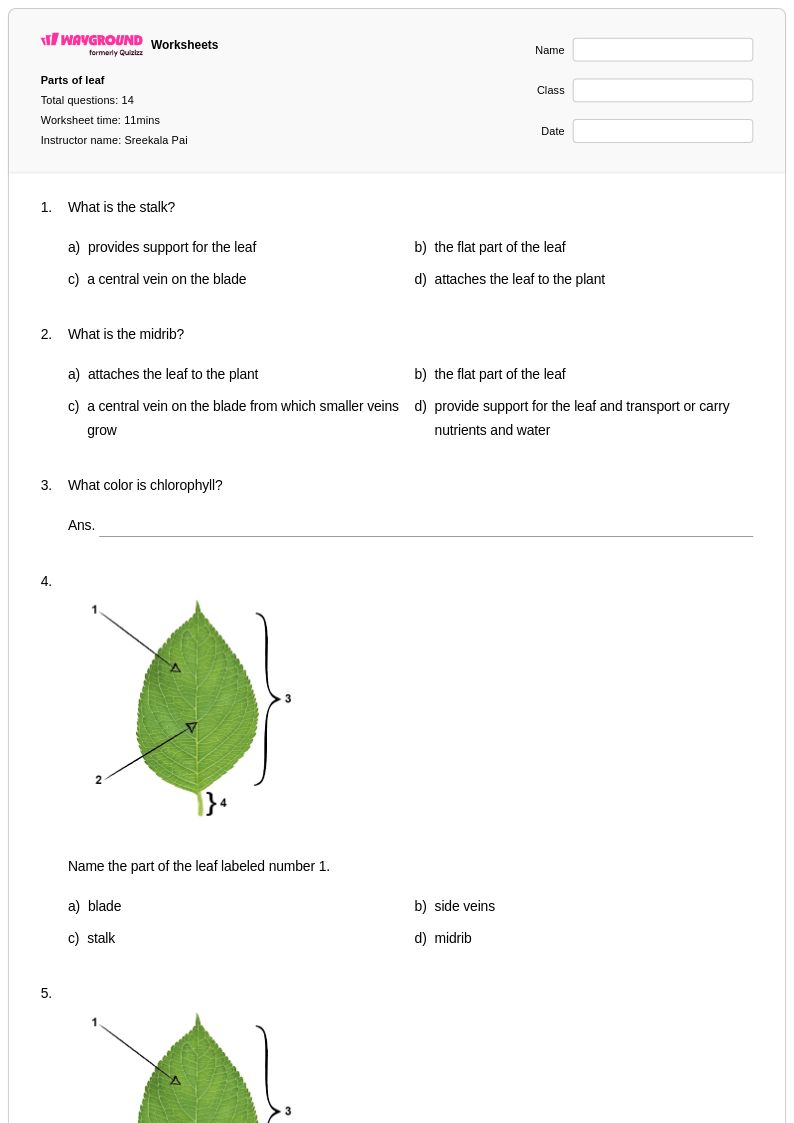
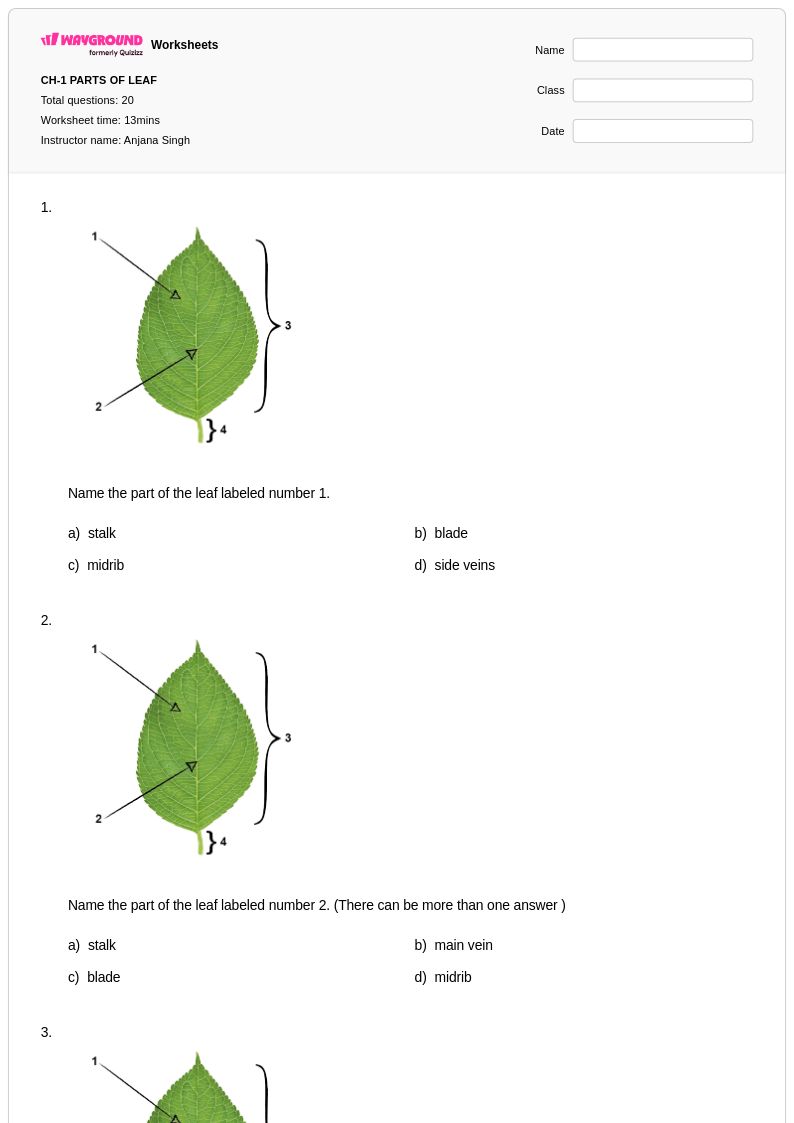
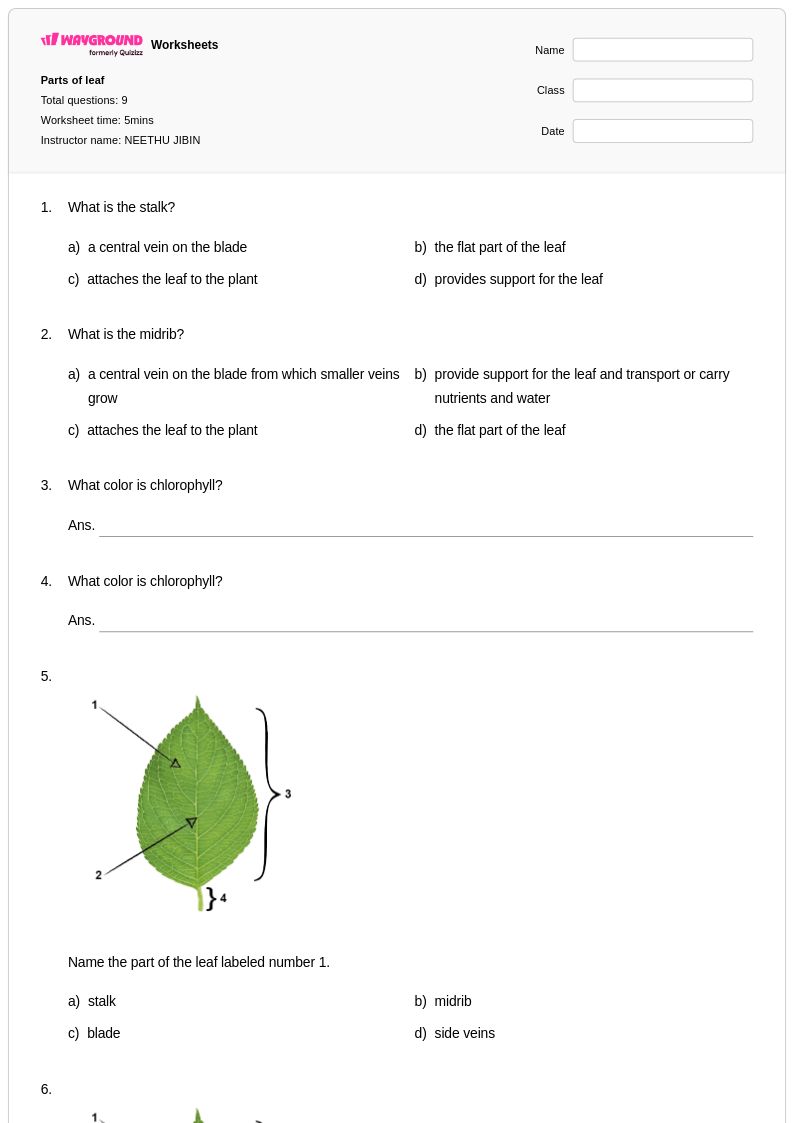
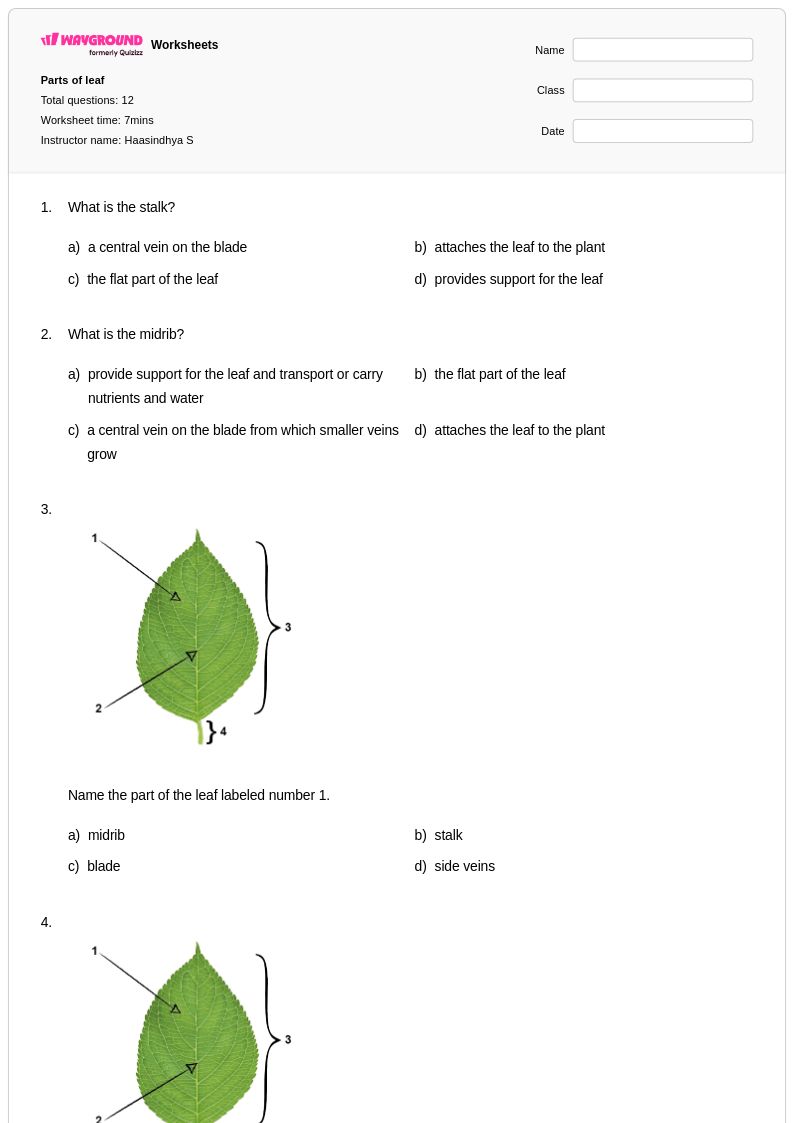
Free Printable Parts of Leaf Worksheets for Grade 4
Explore Grade 4 parts of leaf worksheets and printables that help students identify and understand leaf structures through engaging practice problems, complete with answer keys and free PDF downloads.
Explore printable Parts of Leaf worksheets for Grade 4
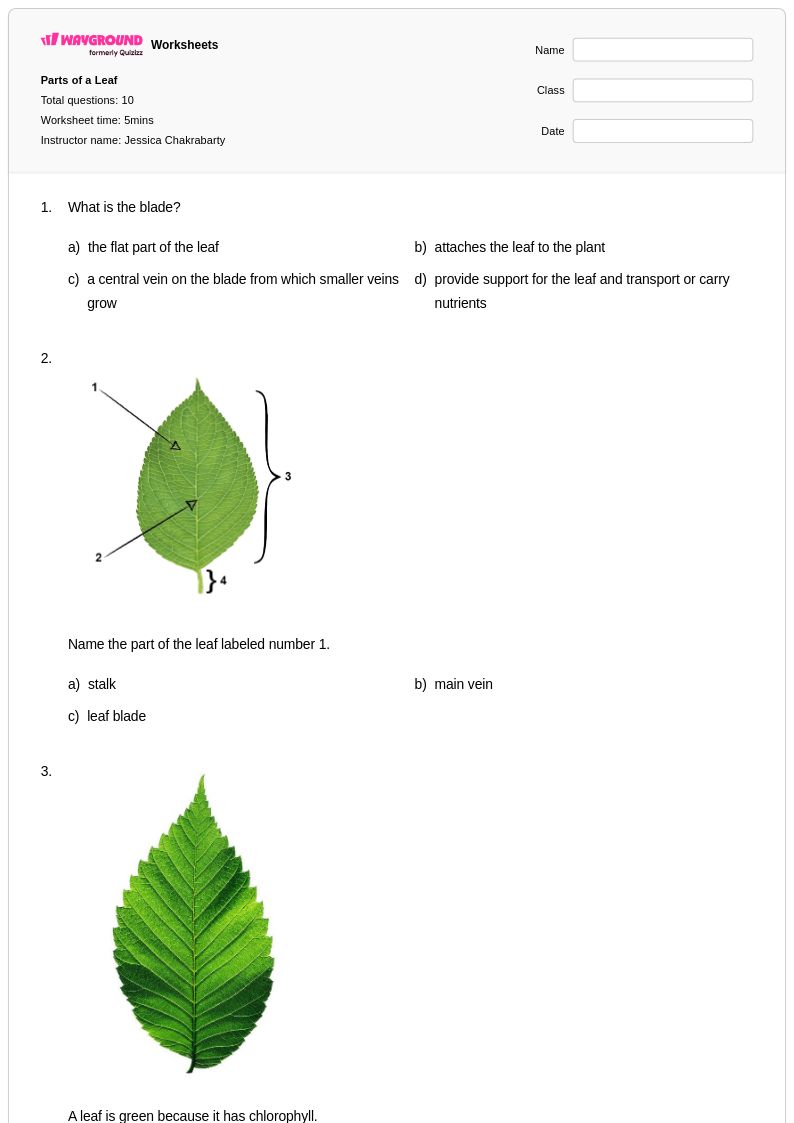
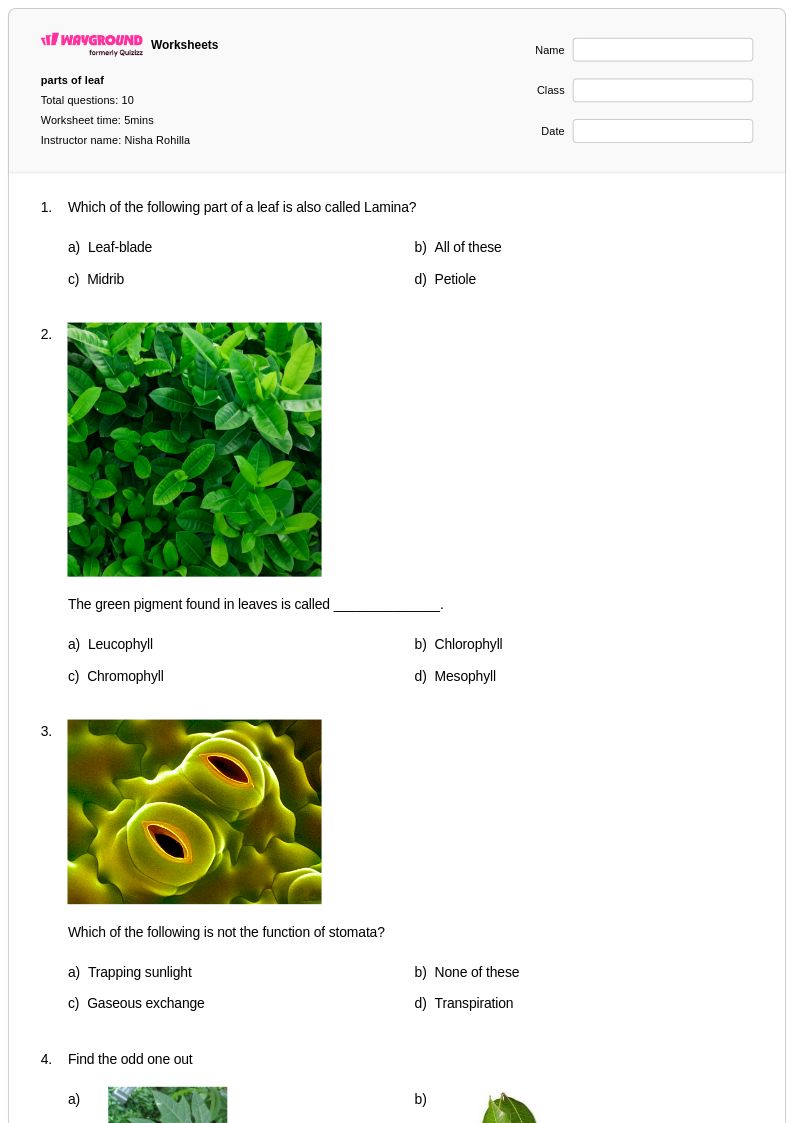
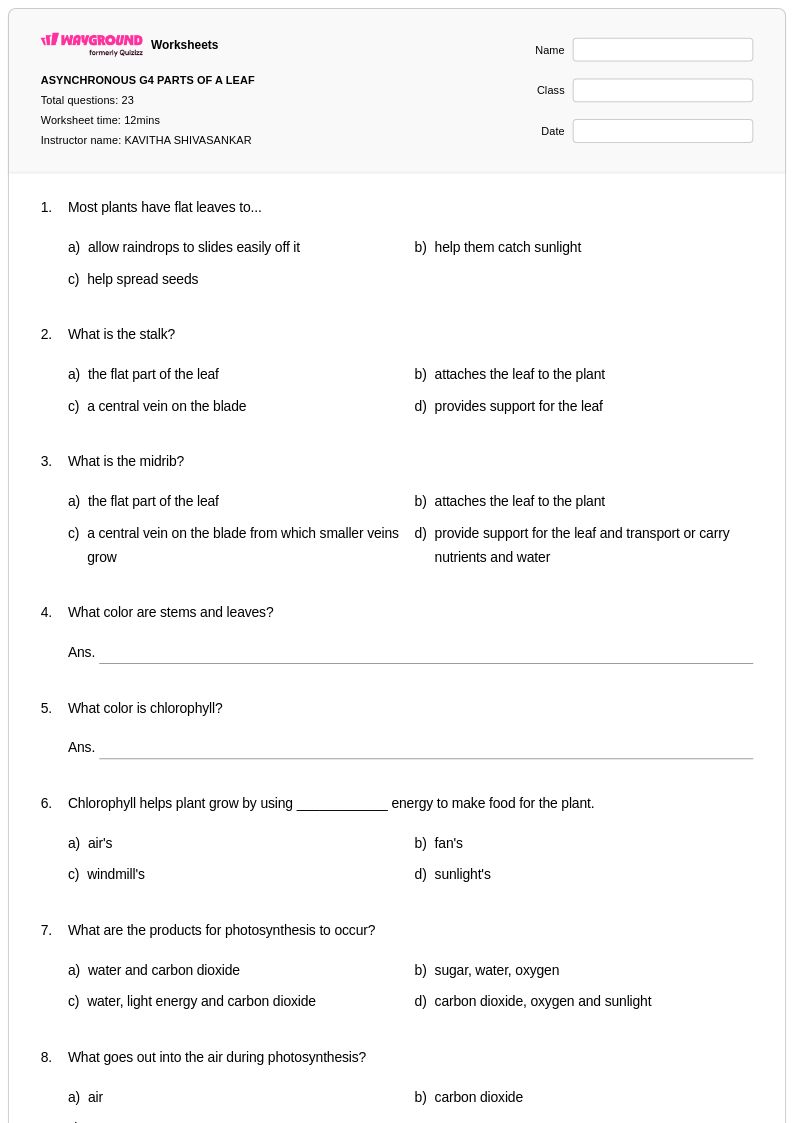
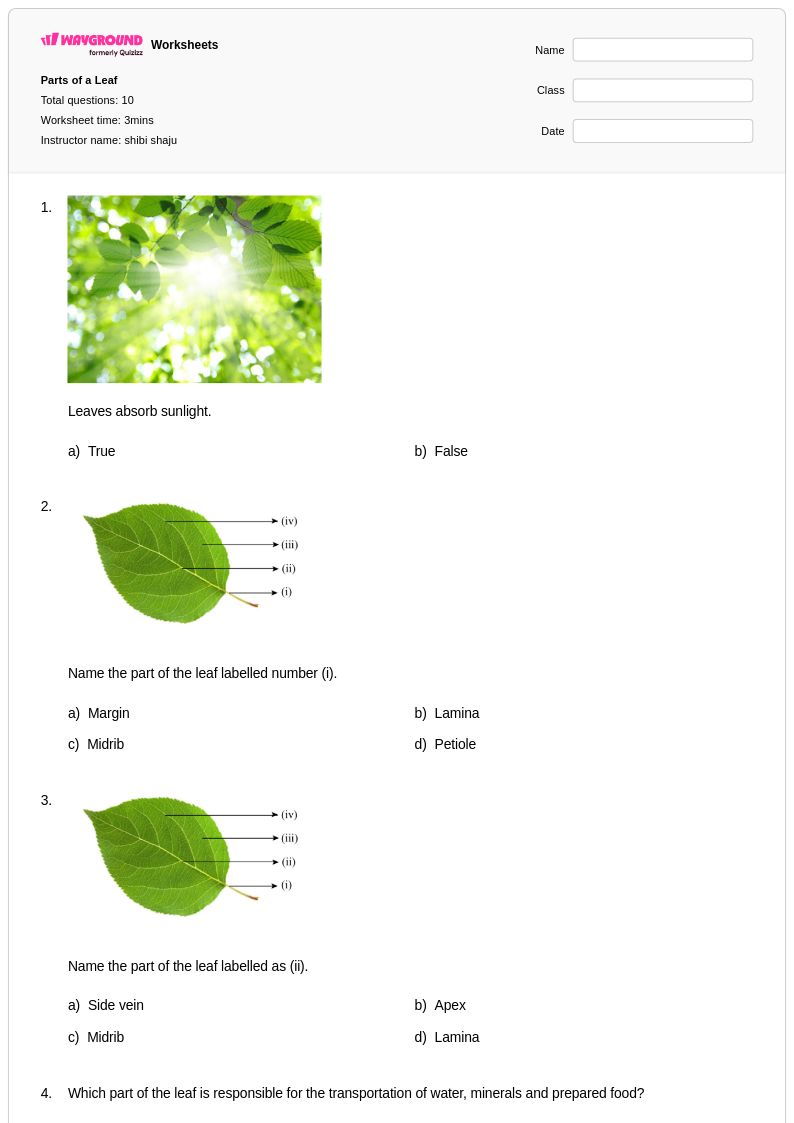
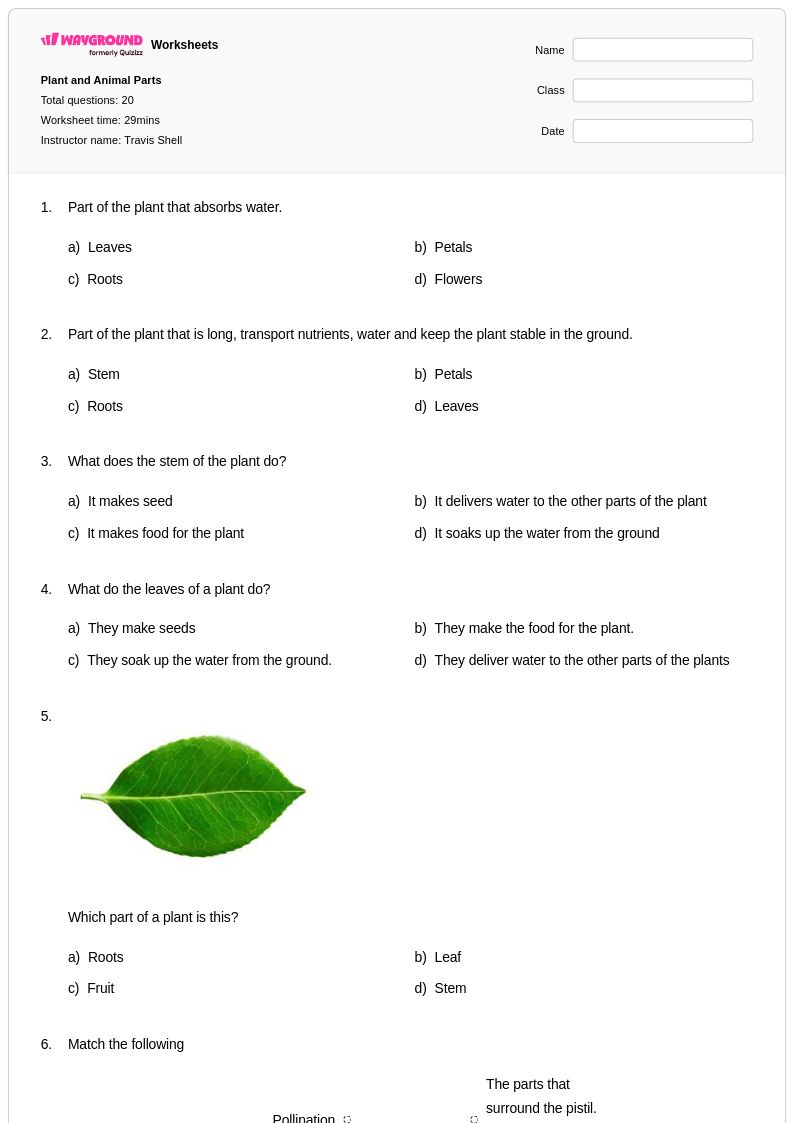
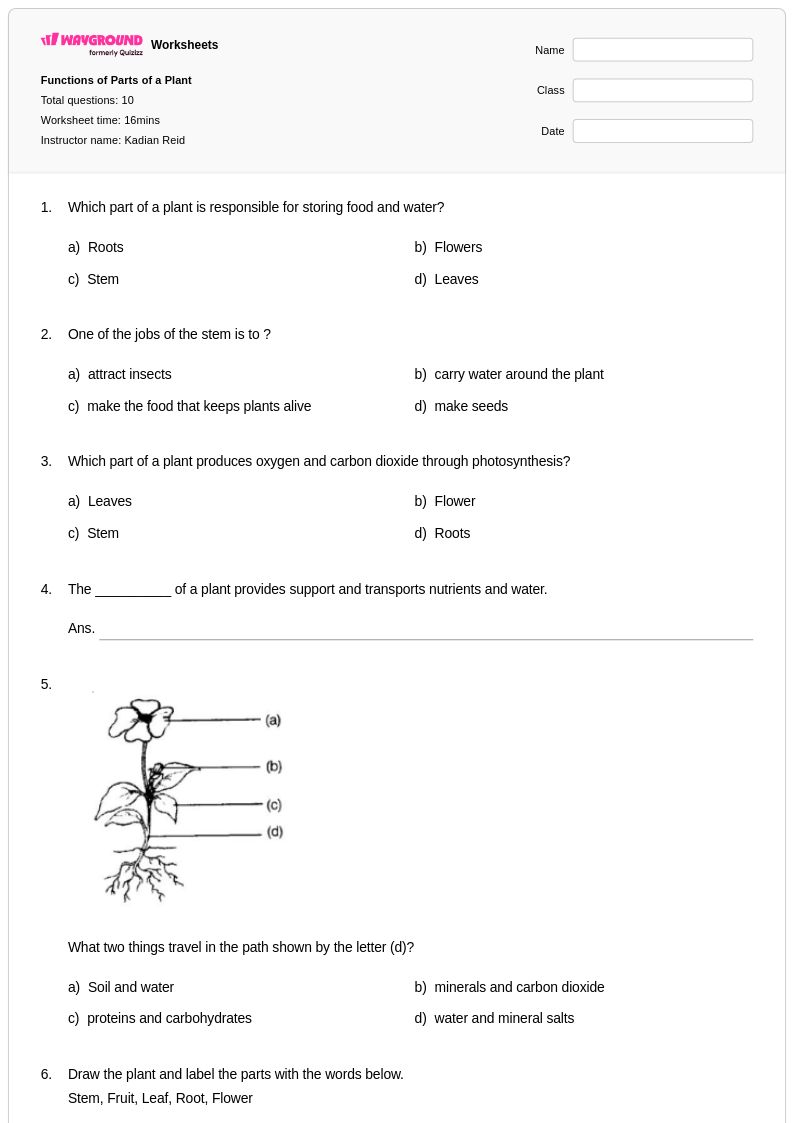
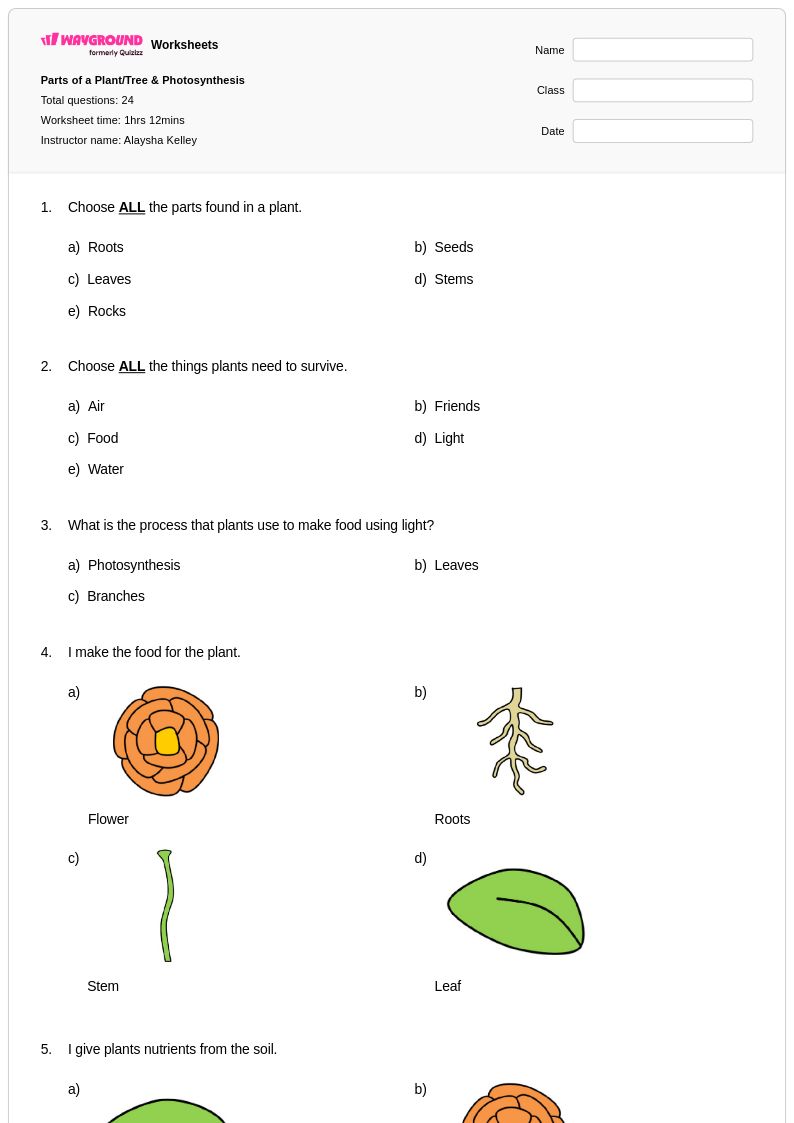
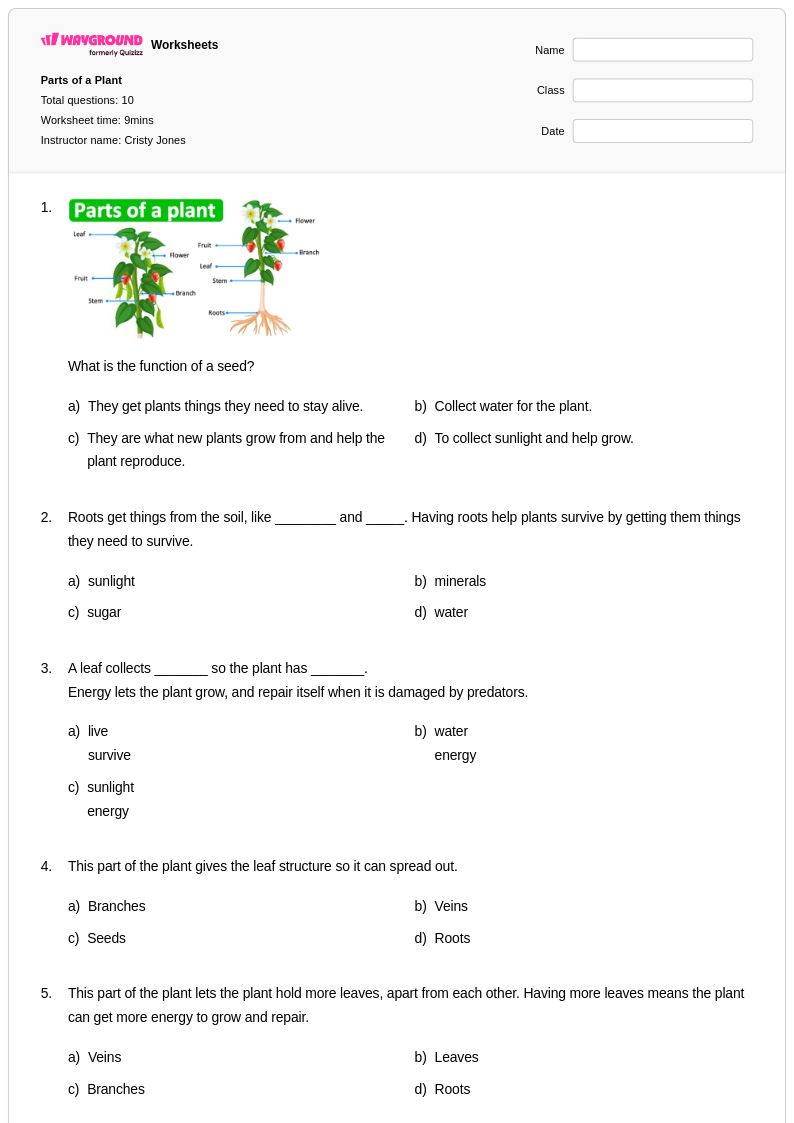
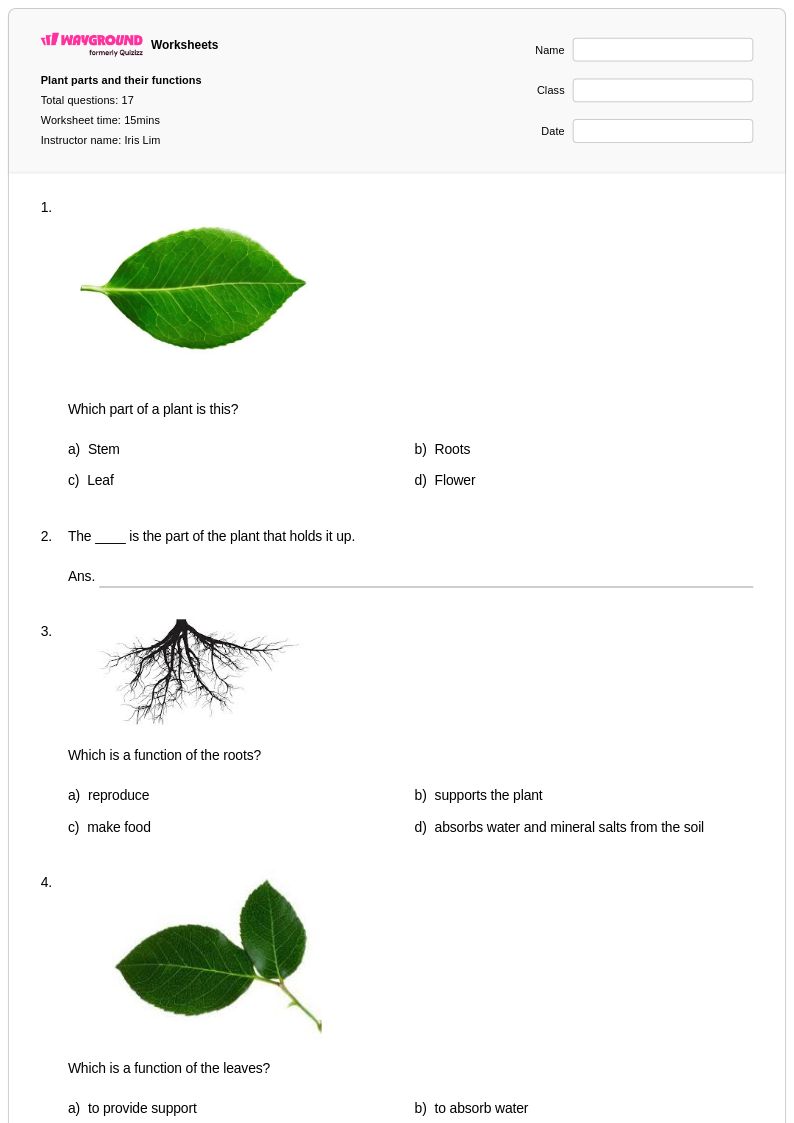
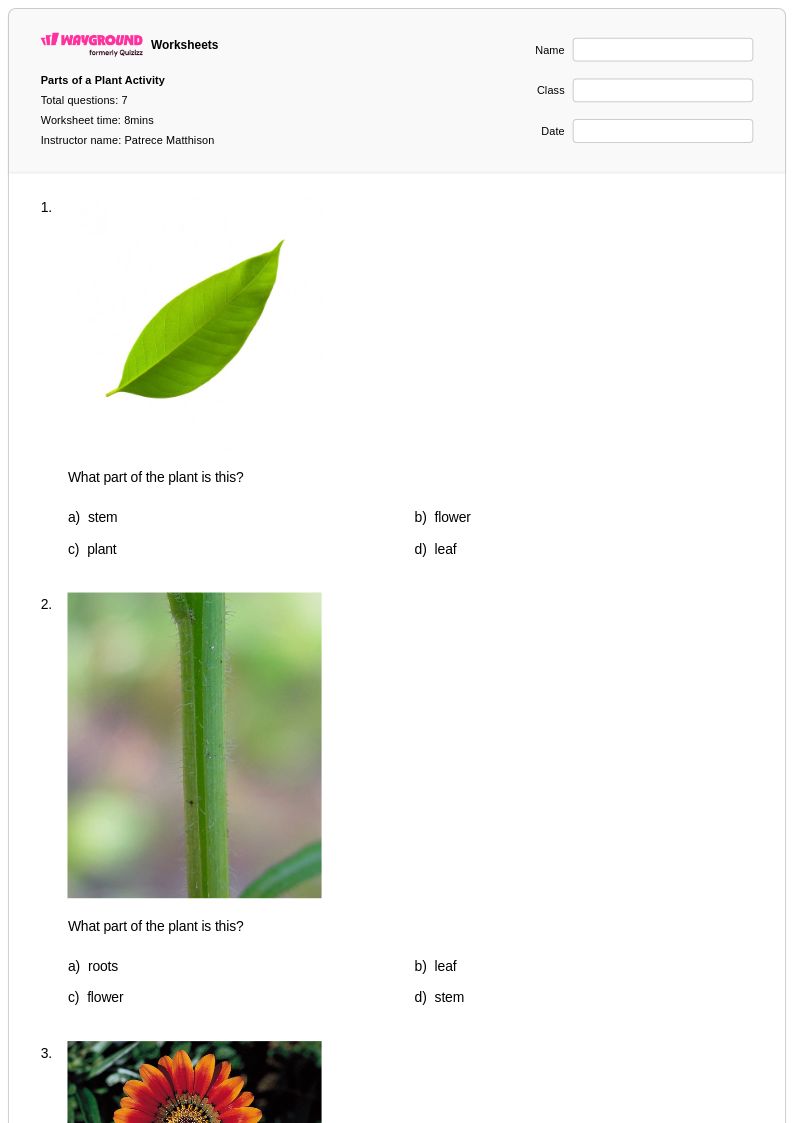
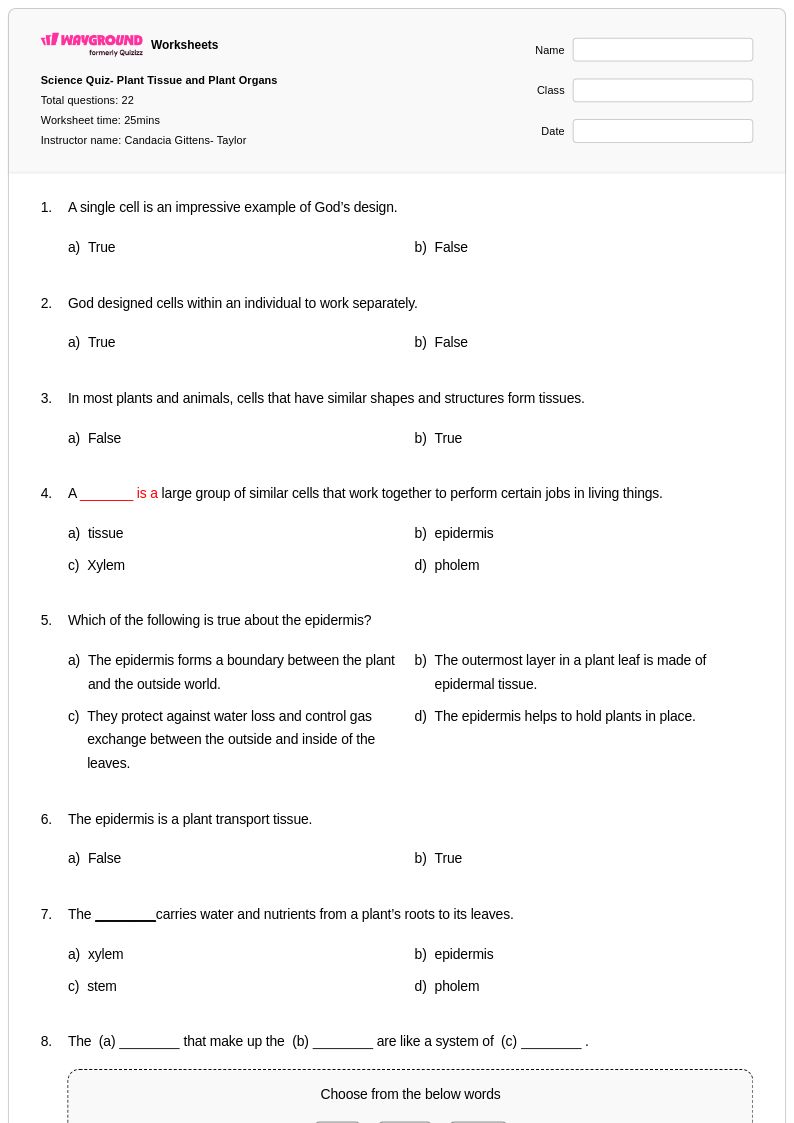
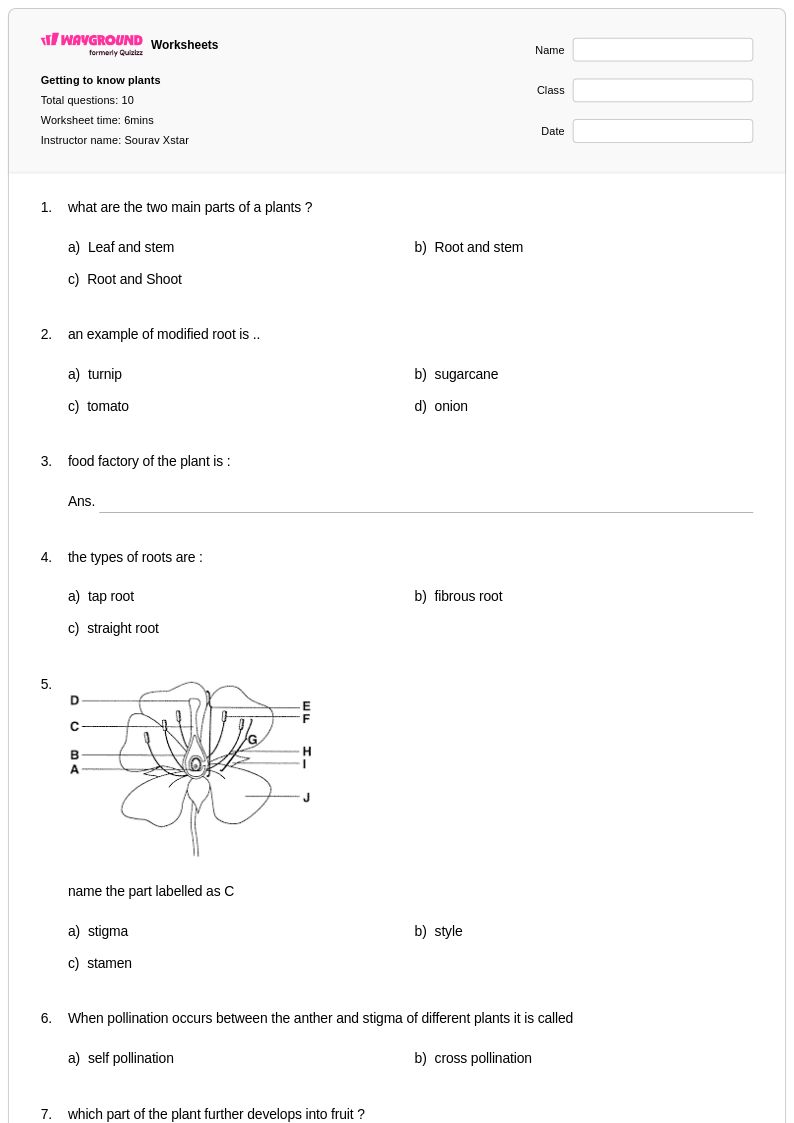
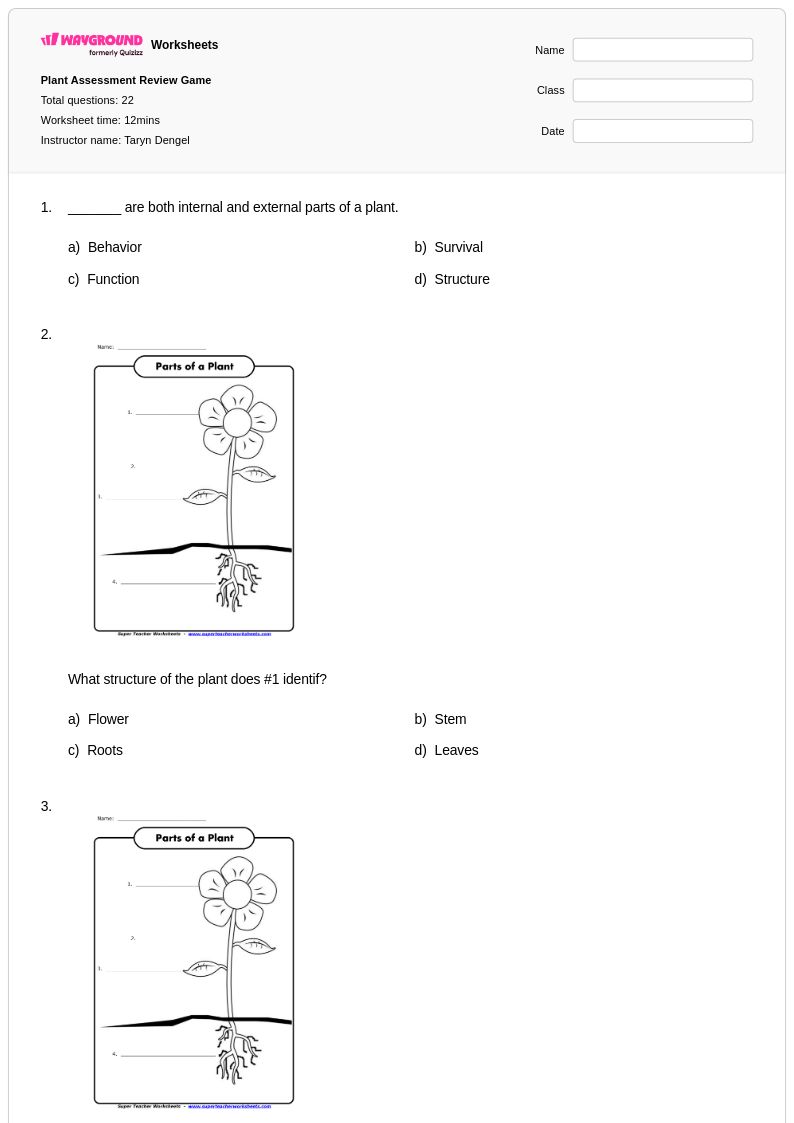
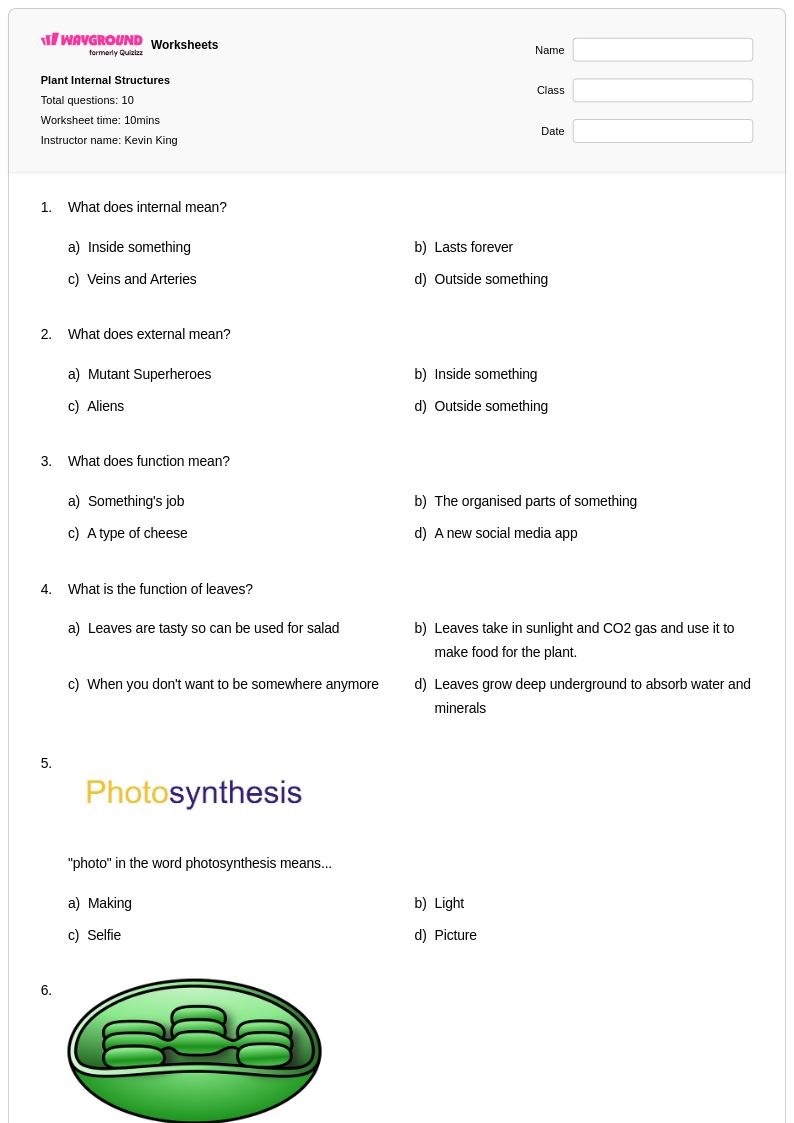
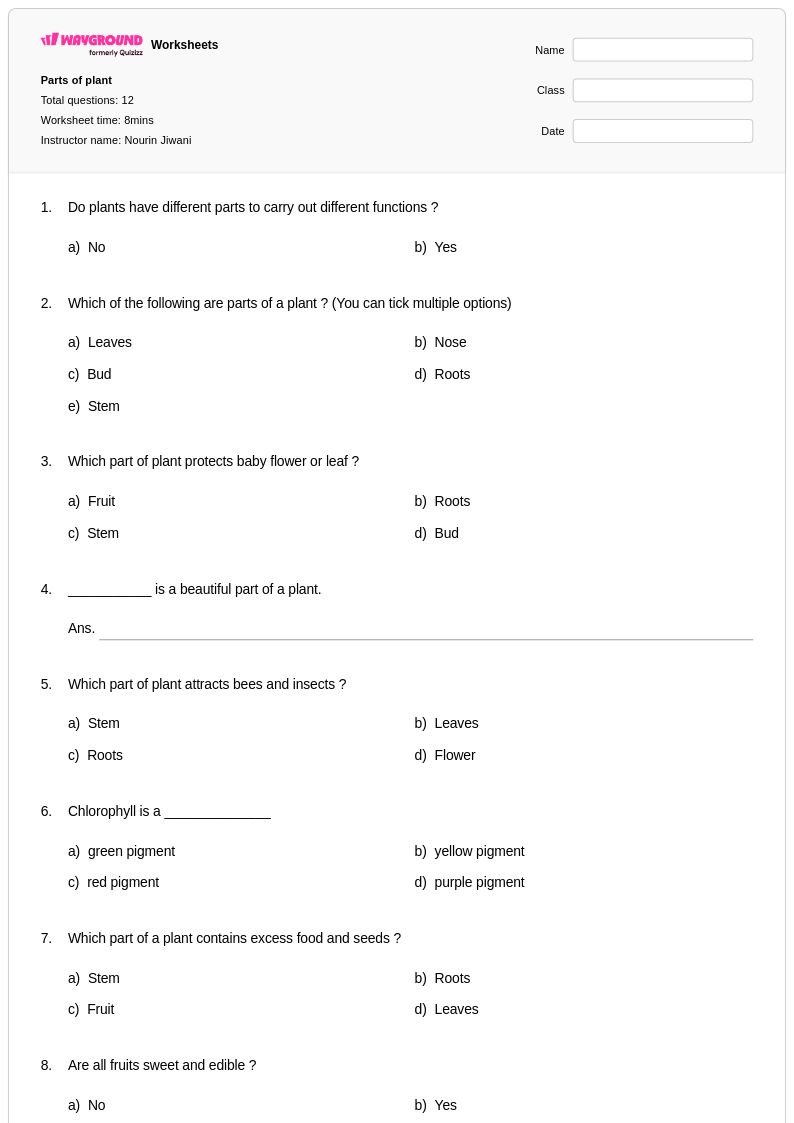
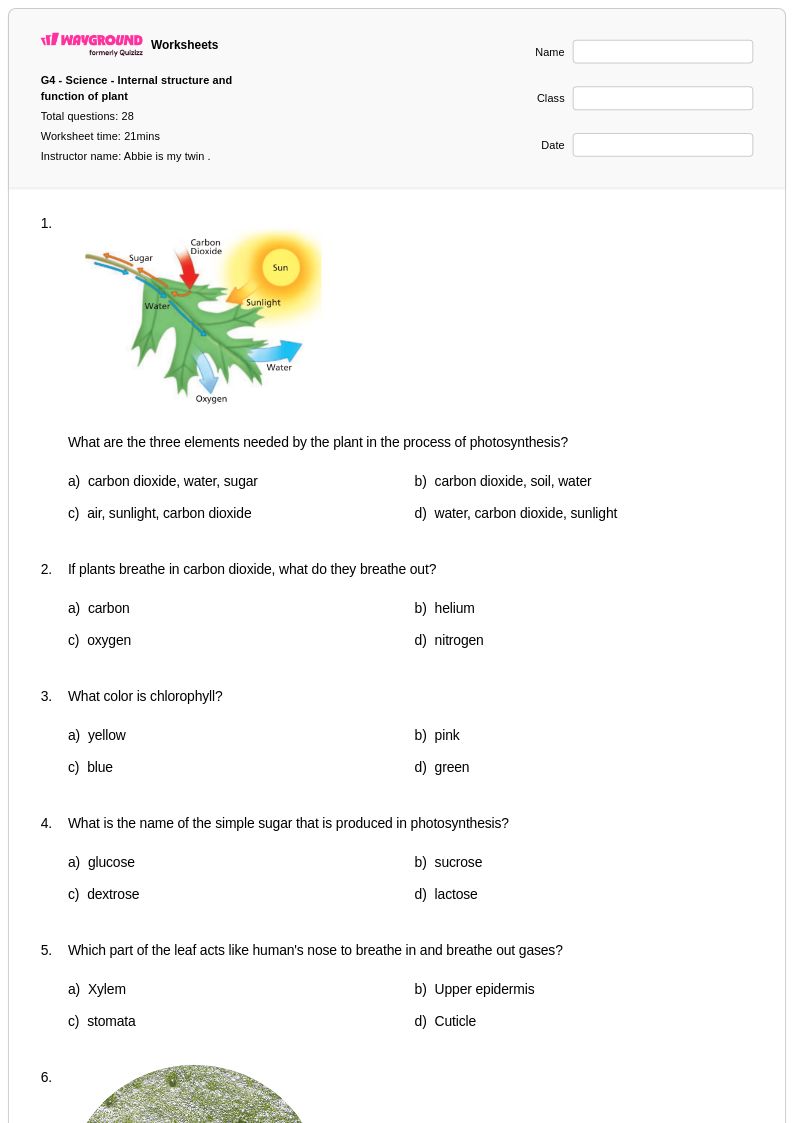
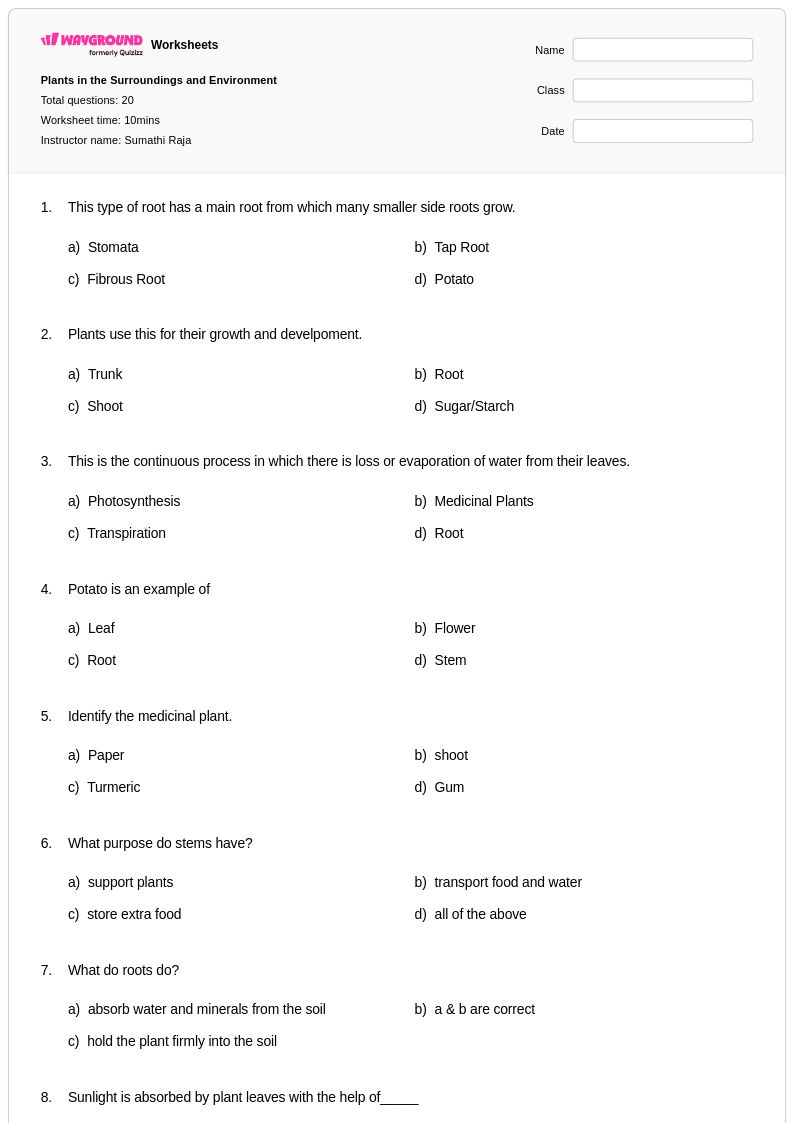
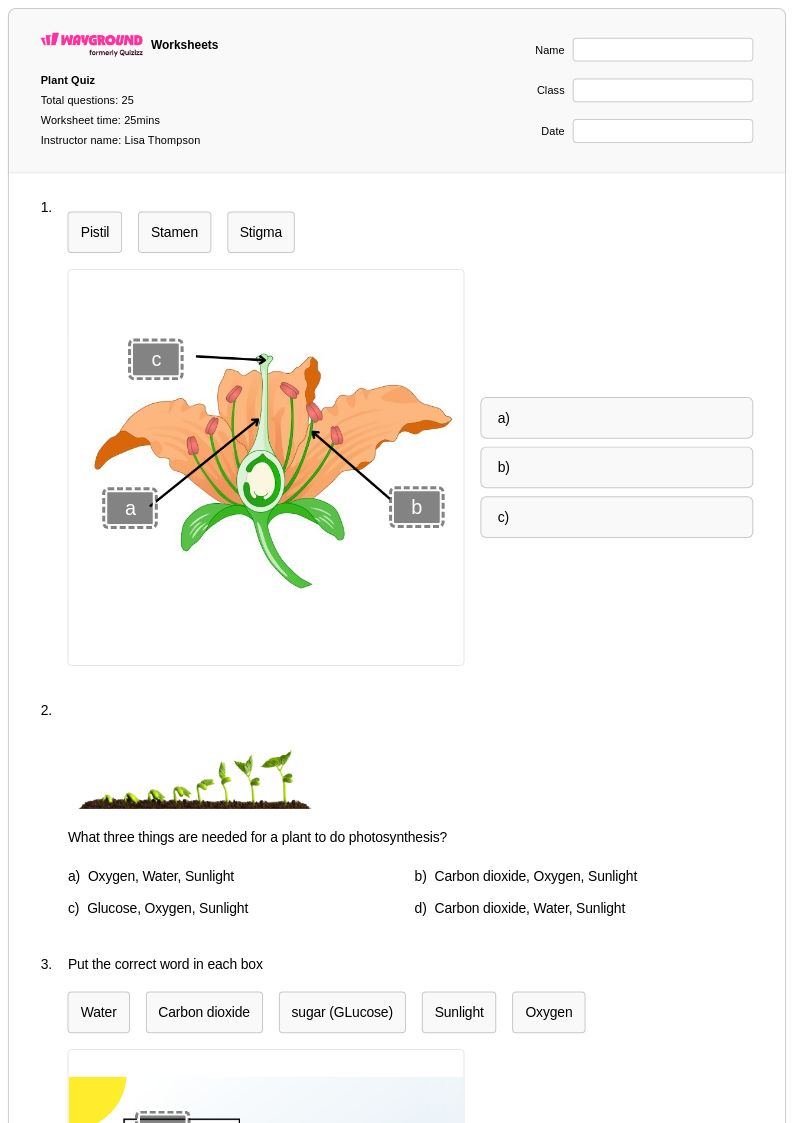
Parts of leaf worksheets for Grade 4 students available through Wayground (formerly Quizizz) provide comprehensive coverage of leaf anatomy and structure, helping young learners identify and understand the essential components that enable photosynthesis and plant survival. These educational resources focus on key leaf parts including the blade, petiole, veins, midrib, and leaf margins, while building foundational scientific observation and vocabulary skills that are crucial for elementary biology education. The collection features diverse practice problems that challenge students to label diagrams, match terms with definitions, and analyze the functions of different leaf structures, with each worksheet including a detailed answer key to support independent learning and self-assessment. Available as free printables in convenient pdf format, these worksheets strengthen critical thinking abilities while introducing students to plant biology concepts through hands-on activities and visual learning opportunities.
Wayground (formerly Quizizz) empowers educators with millions of teacher-created resources specifically designed for parts of leaf instruction, offering robust search and filtering capabilities that allow teachers to quickly locate age-appropriate materials aligned with Grade 4 science standards and curriculum requirements. The platform's differentiation tools and flexible customization options enable instructors to modify worksheets for diverse learning needs, supporting both remediation for struggling students and enrichment activities for advanced learners. Teachers can access these resources in both printable and digital formats, including downloadable pdf versions, making lesson planning more efficient while providing multiple options for skill practice, formative assessment, and reinforcement of leaf anatomy concepts. The comprehensive collection supports various instructional approaches, from guided practice sessions to independent homework assignments, ensuring that educators have the tools necessary to help students master fundamental botanical knowledge.
FAQs
How do I teach the parts of a leaf to students?
Start with a labeled diagram of a whole leaf before zooming into cross-sectional anatomy, so students build spatial understanding before tackling cell-level structures like the mesophyll and epidermis. Use real leaves alongside diagrams to ground abstract vocabulary in observable features. Connecting each structure to its function, for example linking stomata and guard cells to gas exchange, helps students retain terminology because it gives each term a purpose rather than a definition to memorize.
What exercises help students practice identifying leaf structures?
Labeling exercises using unlabeled diagrams are the most effective practice format for leaf anatomy because they require active recall rather than recognition. Cross-sectional illustration activities are especially useful for reinforcing internal structures like the mesophyll tissue, chloroplasts, and vascular bundles that students cannot observe from a whole leaf. Pairing diagram labeling with short written prompts asking students to describe each structure's function adds a second layer of retrieval practice.
What mistakes do students commonly make when learning leaf anatomy?
Students frequently confuse the epidermis with the mesophyll, treating the outer layer as simply a boundary rather than a tissue with its own role in protection and gas regulation. Another common error is conflating veins with the petiole, since both are visible structures that run through the leaf. Students also tend to misattribute photosynthesis broadly to 'the leaf' without connecting it specifically to the chloroplasts within the mesophyll cells, which can create gaps when they move on to cell biology topics.
How can I use parts of a leaf worksheets to assess student understanding?
Blank diagram labeling tasks work well as low-stakes formative checks because they reveal exactly which structures a student cannot yet name or locate. For summative assessment, asking students to annotate a cross-sectional diagram with both the name and function of each structure raises the cognitive demand and exposes gaps in conceptual understanding, not just vocabulary recall. Including questions about processes such as photosynthesis and water transport alongside structural questions ensures you are assessing comprehension of function, not just memorization of labels.
How do I use Wayground's parts of a leaf worksheets in my classroom?
Wayground's parts of a leaf worksheets are available as printable PDFs, making them easy to use as in-class activities, homework assignments, or assessment preparation with no additional setup. They are also available in digital formats, which suits technology-integrated classrooms, and teachers can host any worksheet directly as a quiz on Wayground for live or asynchronous student practice. Each worksheet includes a complete answer key, so teachers can use them for independent student work without needing to prepare a separate grading guide.
How can I differentiate leaf anatomy instruction for students at different levels?
For students who need additional support, start with whole-leaf labeling before introducing cross-sectional diagrams, and reduce the number of structures students are responsible for in a single session. On Wayground, teachers can apply accommodations such as reduced answer choices for individual students to lower cognitive load, or enable Read Aloud so that question text is read to students who benefit from audio support. Advanced students can be extended with function-based prompts that ask them to explain how leaf structures support photosynthesis, gas exchange, and water transport as interconnected systems.