
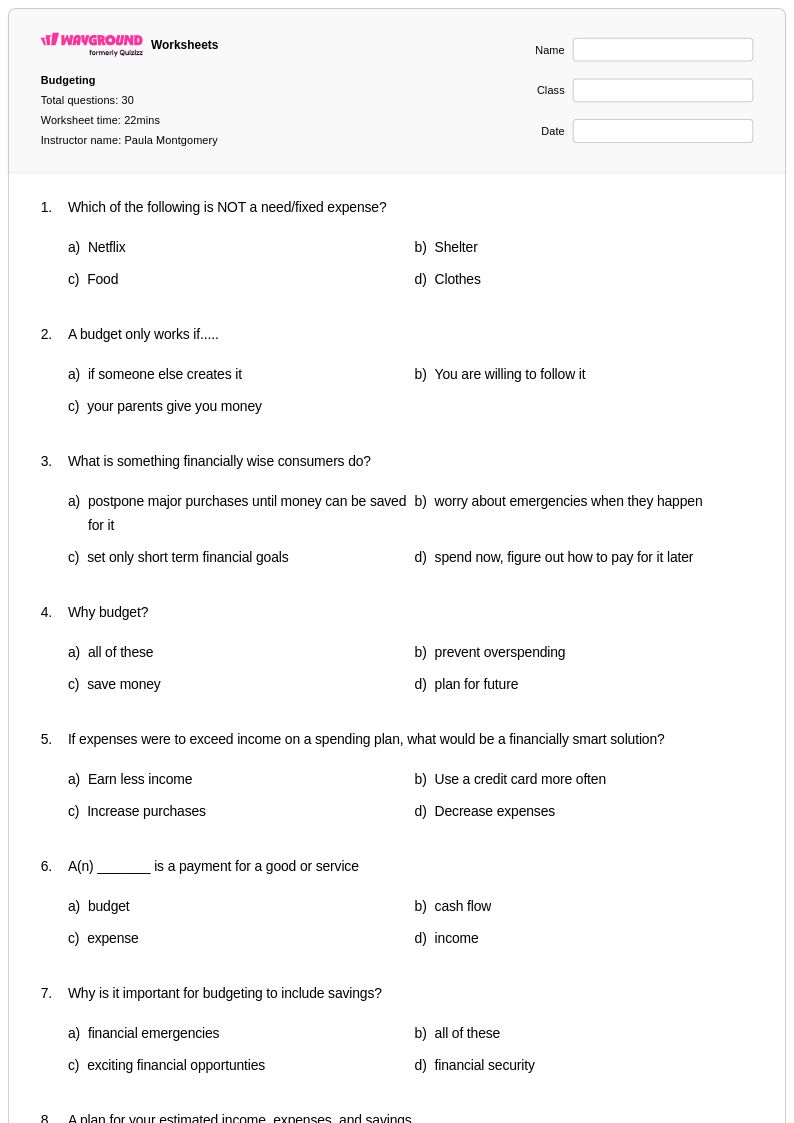
30 Q
8th
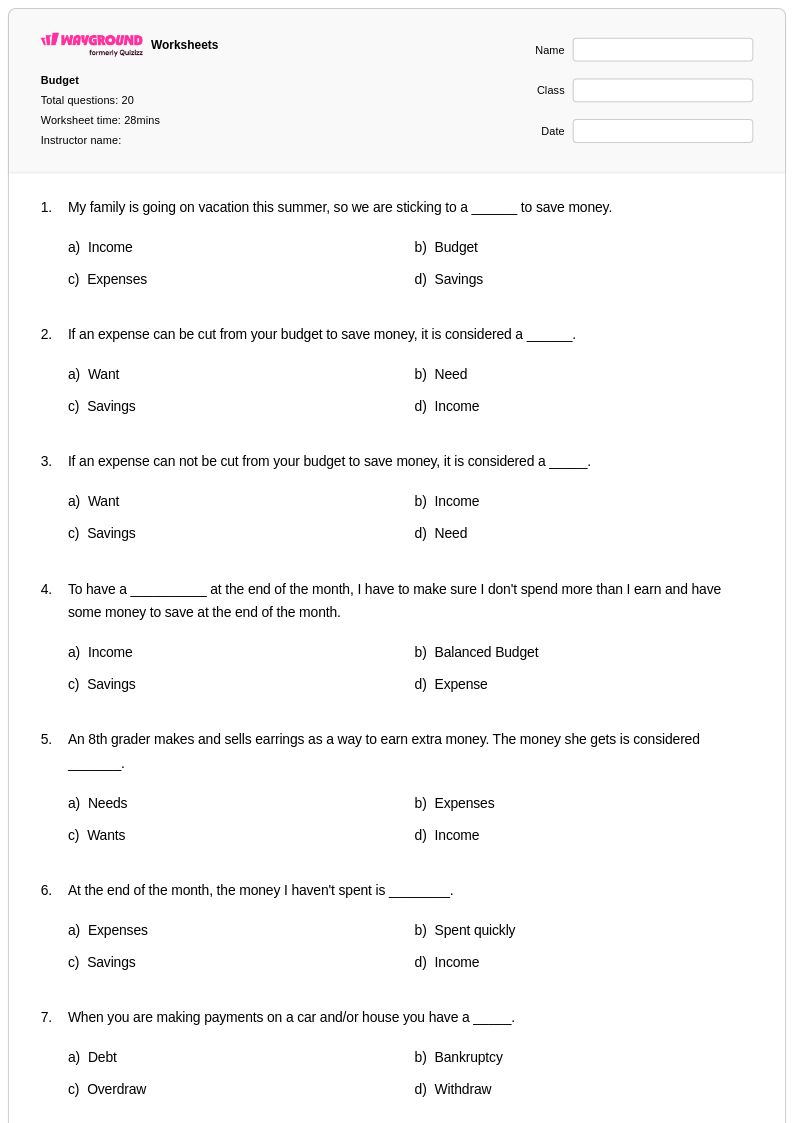
20 Q
7th - 8th
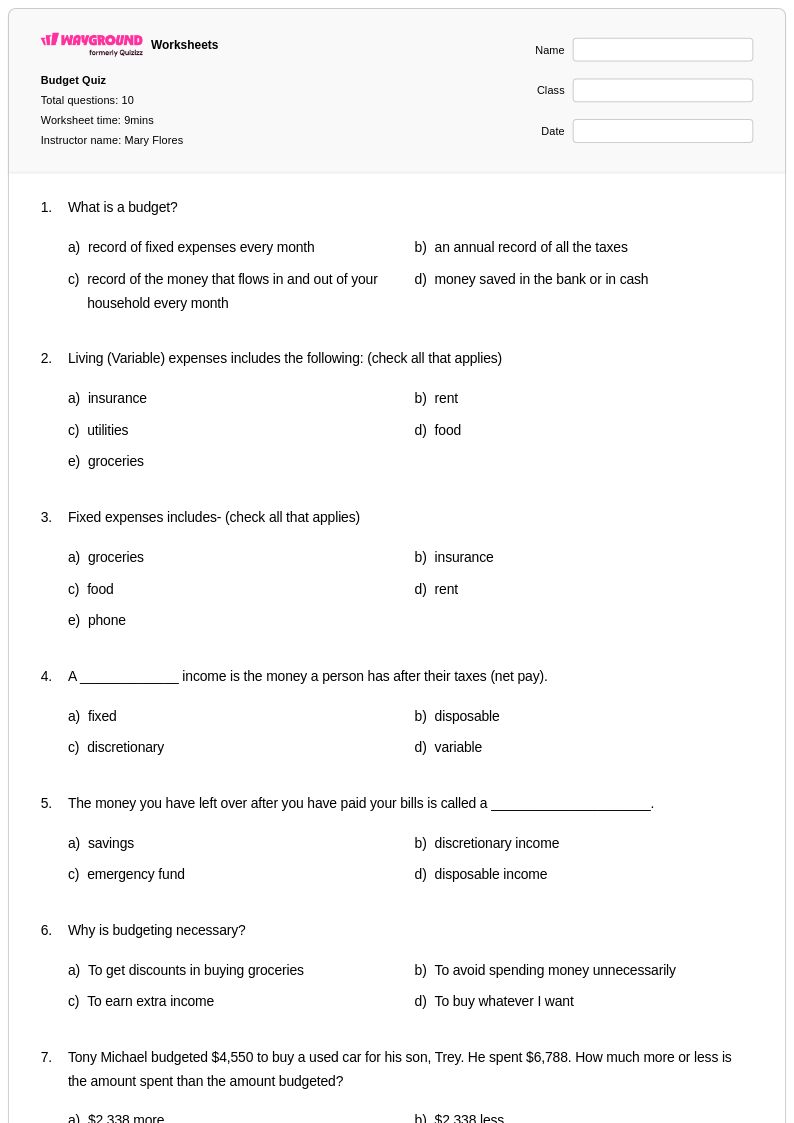
10 Q
8th - 12th
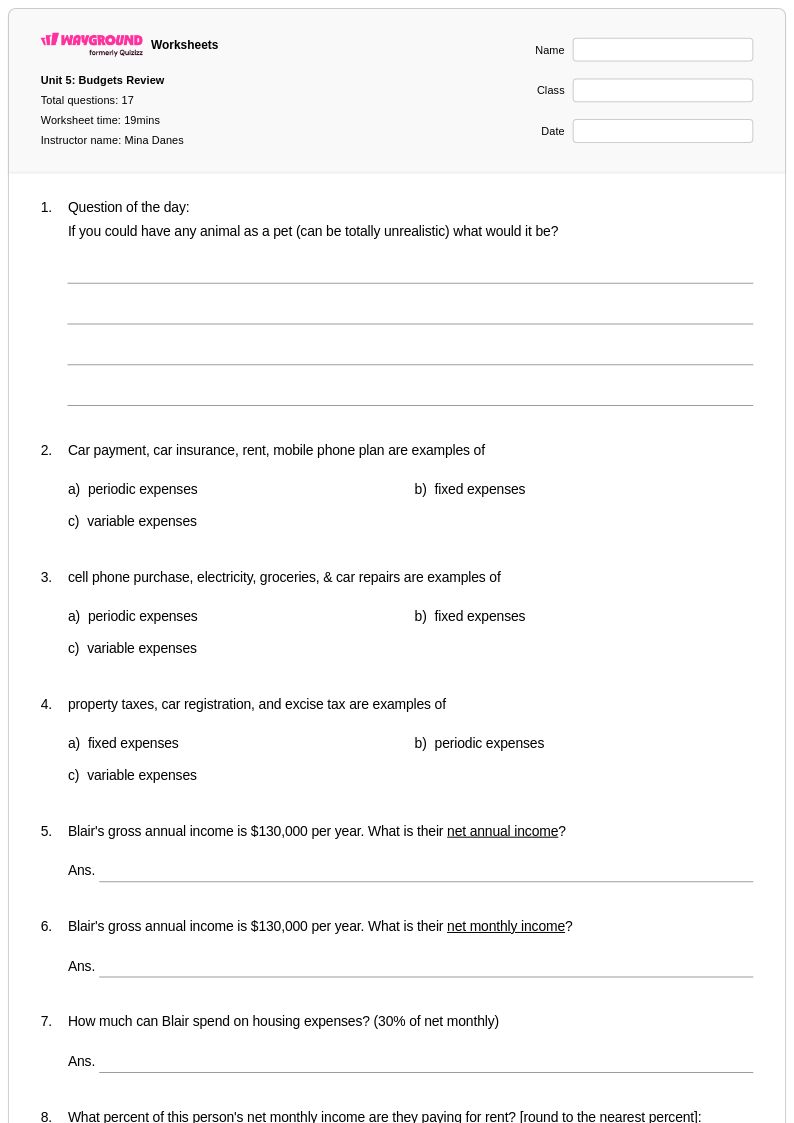
17 Q
6th - PD
23 Q
7th - Uni
10 Q
6th - 12th
20 Q
8th
10 Q
6th - 8th
12 Q
7th - 12th
12 Q
8th - 10th
10 Q
7th - 8th
32 Q
8th
10 Q
8th
10 Q
5th - 12th
15 Q
8th
12 Q
6th - 12th
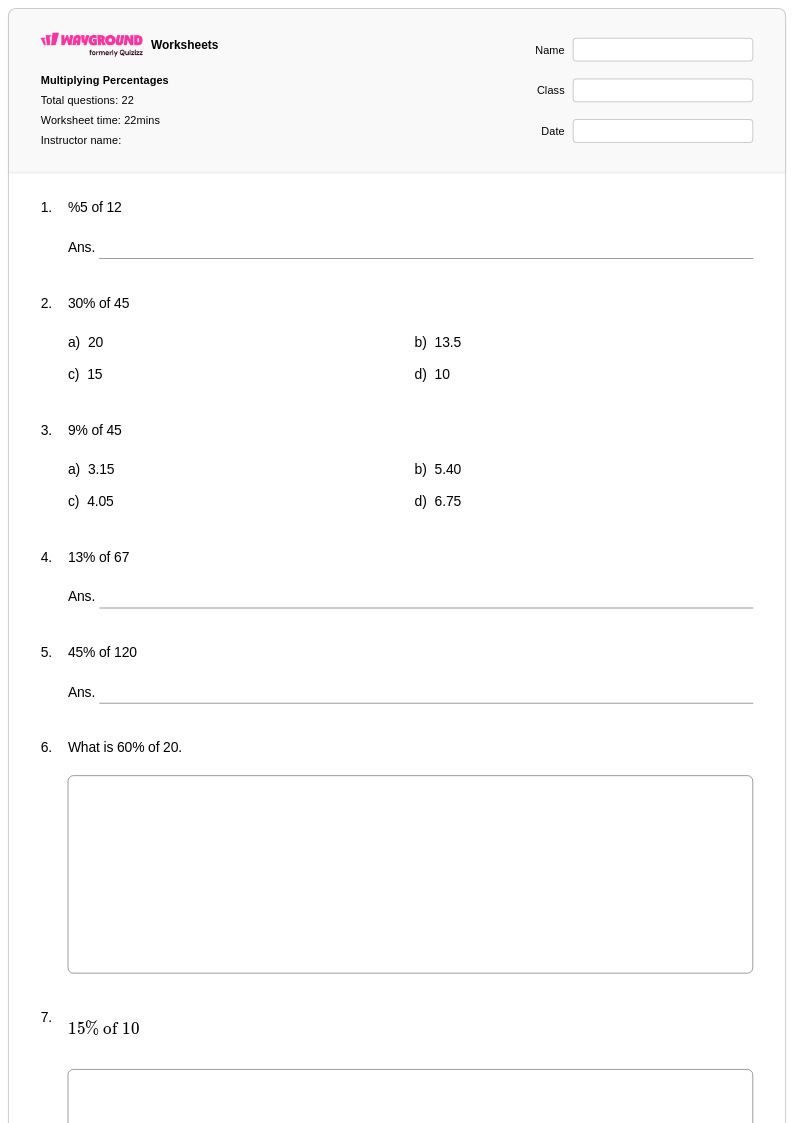
22 Q
6th - 8th
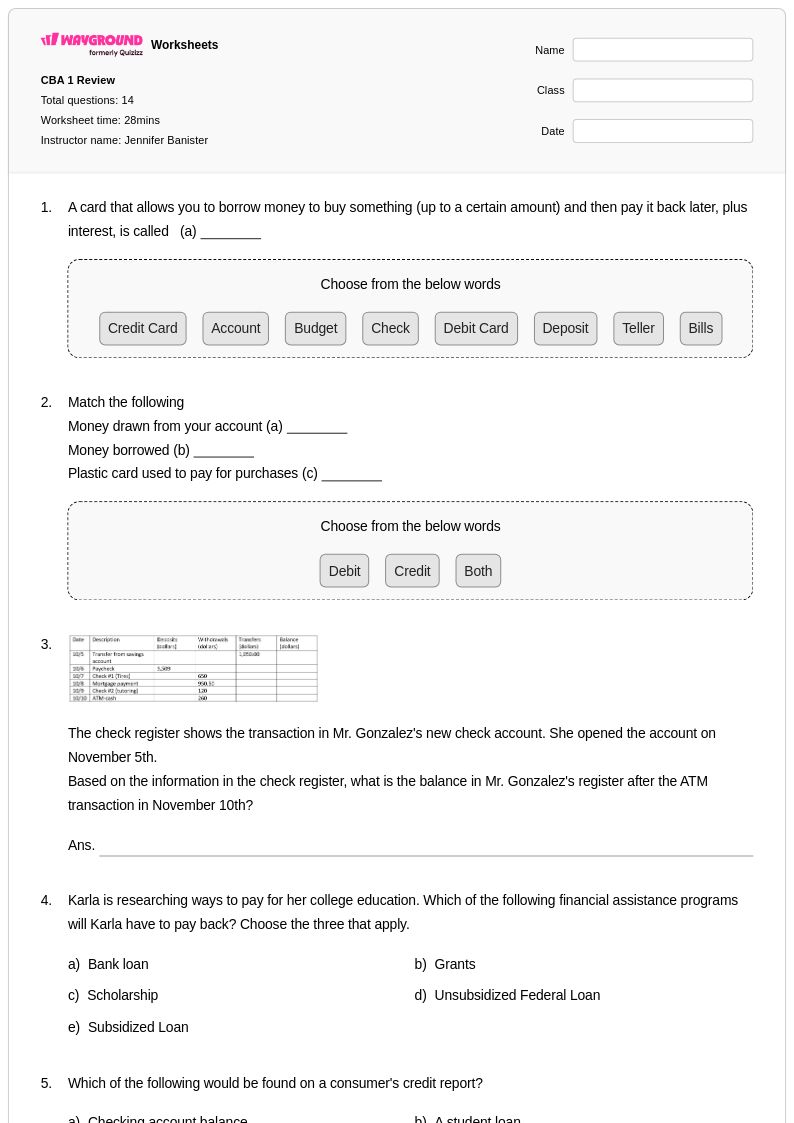
14 Q
6th - 8th
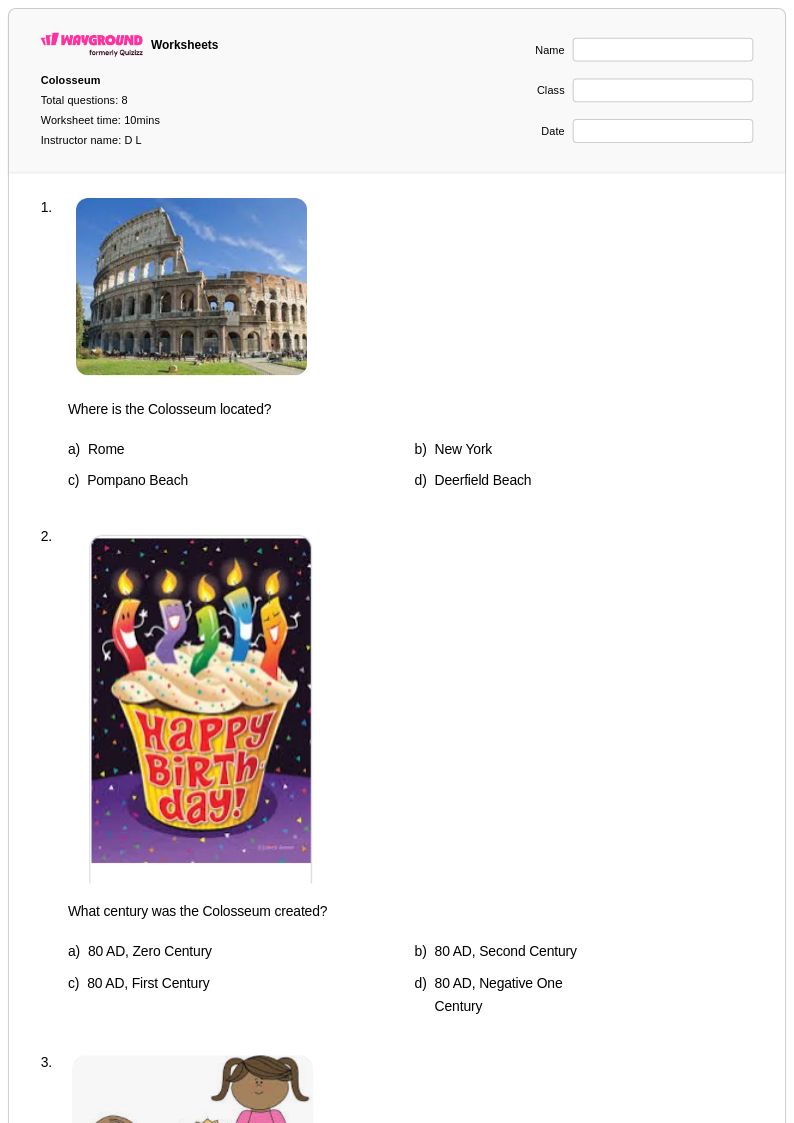
8 Q
6th - 8th
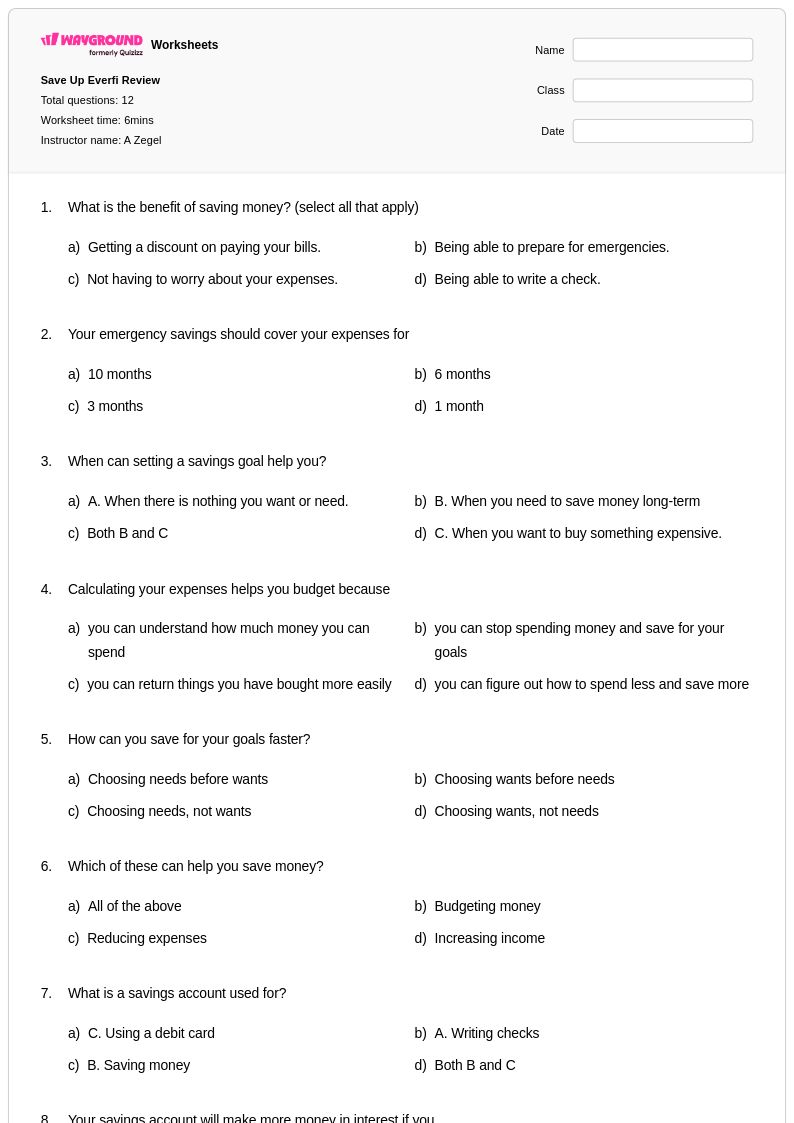
12 Q
8th
25 Q
4th - 8th
35 Q
8th - Uni
20 Q
7th - Uni
15 Q
8th - Uni
Explore Other Subject Worksheets for grade 8
Explore printable Budget Planning worksheets for Grade 8
Budget planning worksheets for Grade 8 students available through Wayground (formerly Quizizz) provide comprehensive practice in essential personal finance skills that form the foundation of lifelong financial literacy. These carefully designed resources guide eighth-grade learners through the fundamental concepts of creating, analyzing, and managing personal budgets, including income tracking, expense categorization, and spending prioritization. Students develop critical mathematical reasoning skills as they work through practice problems involving percentage calculations, ratio comparisons, and real-world scenarios that require balancing wants versus needs. Each worksheet collection includes detailed answer keys that enable independent learning and self-assessment, while the free printable format ensures accessibility for diverse classroom environments and home study situations.
Wayground (formerly Quizizz) empowers educators with millions of teacher-created budget planning resources specifically aligned with Grade 8 mathematics and financial literacy standards, offering robust search and filtering capabilities that streamline lesson planning and curriculum integration. Teachers can easily differentiate instruction by selecting from worksheets that range from basic budget creation exercises to complex financial decision-making scenarios, with flexible customization tools that allow modifications to meet individual student needs. The platform's comprehensive collection is available in both printable pdf formats and interactive digital versions, supporting varied teaching approaches and enabling seamless transitions between classroom instruction, independent practice, and homework assignments. These versatile resources prove invaluable for targeted skill remediation, enrichment activities for advanced learners, and ongoing assessment of student progress in financial literacy concepts.
FAQs
How do I teach budget planning to eighth-grade students?
What exercises give Grade 8 students meaningful budget practice?
What misconceptions do Grade 8 students have about budgeting?
What is the best way to use a Grade 8 budget planning worksheet?
How does budget planning fit into the Grade 8 Common Core math progression?
Can I differentiate a Grade 8 budget worksheet for mixed skill levels?
What budget planning skills are appropriate for Grade 8?