

11 Q
6th - 10th
15 Q
6th - 10th
5 Q
8th - 12th
22 Q
8th
10 Q
7th - 8th
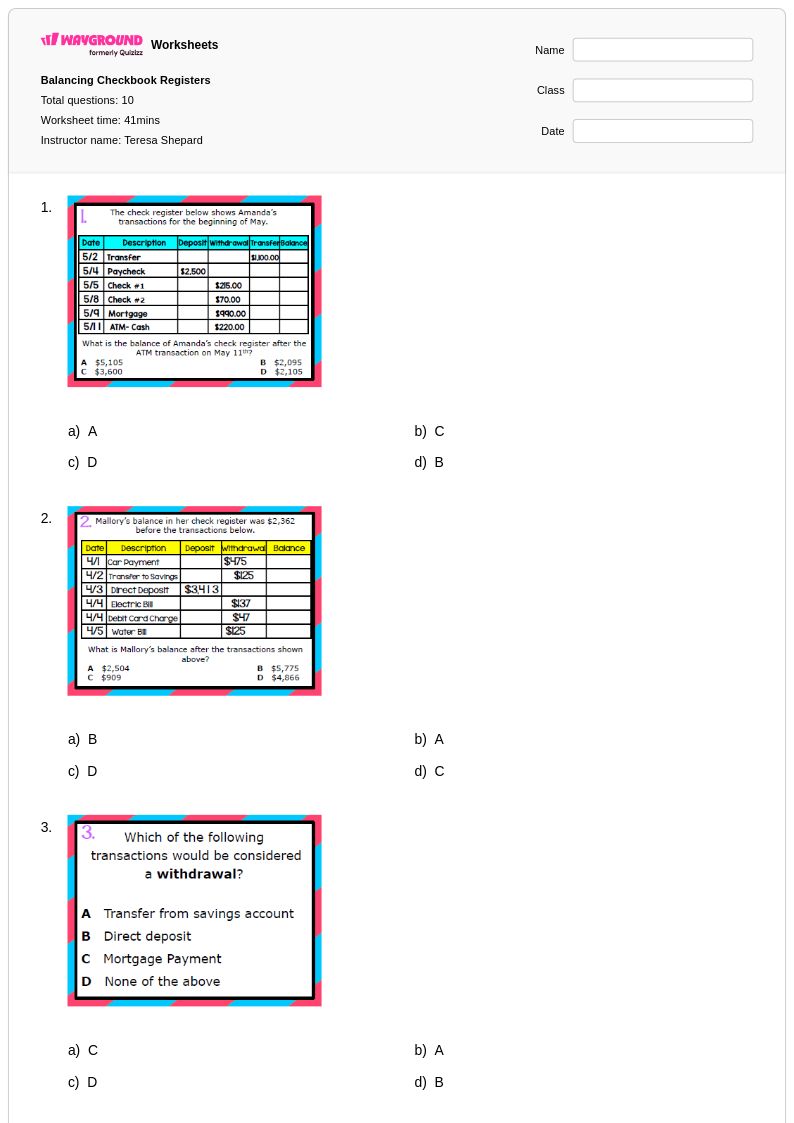
10 Q
8th
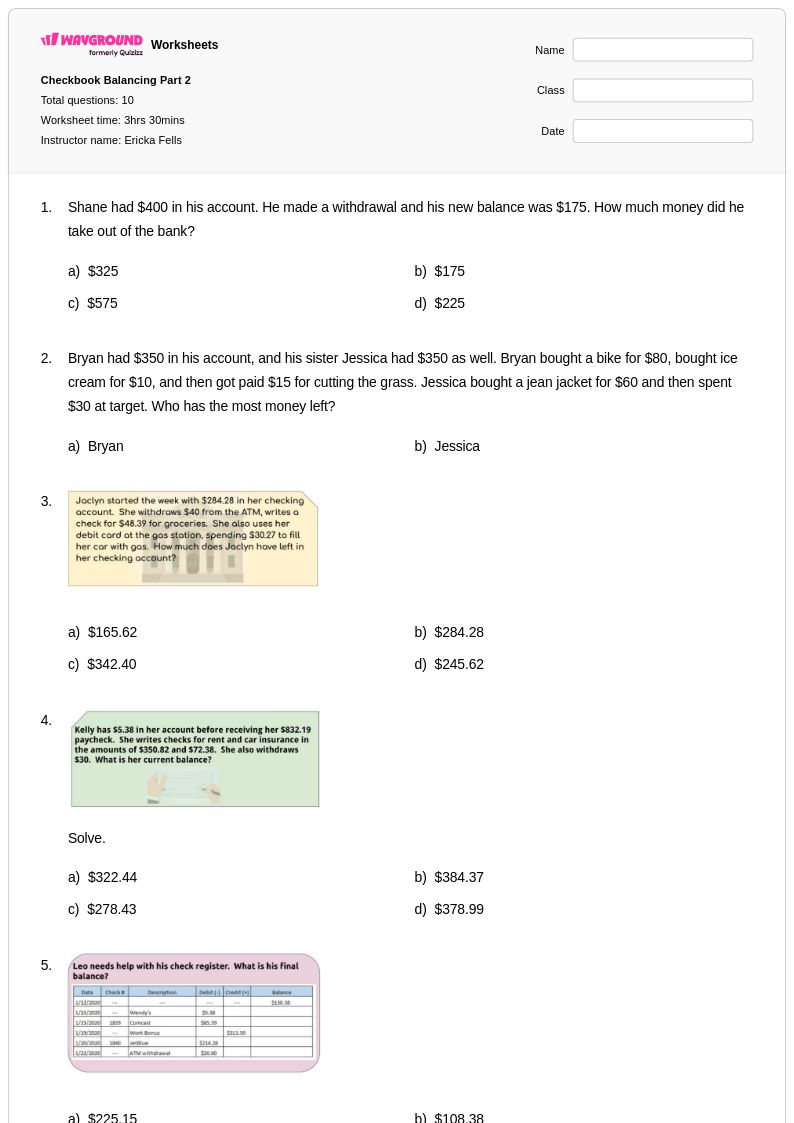
10 Q
8th - 12th
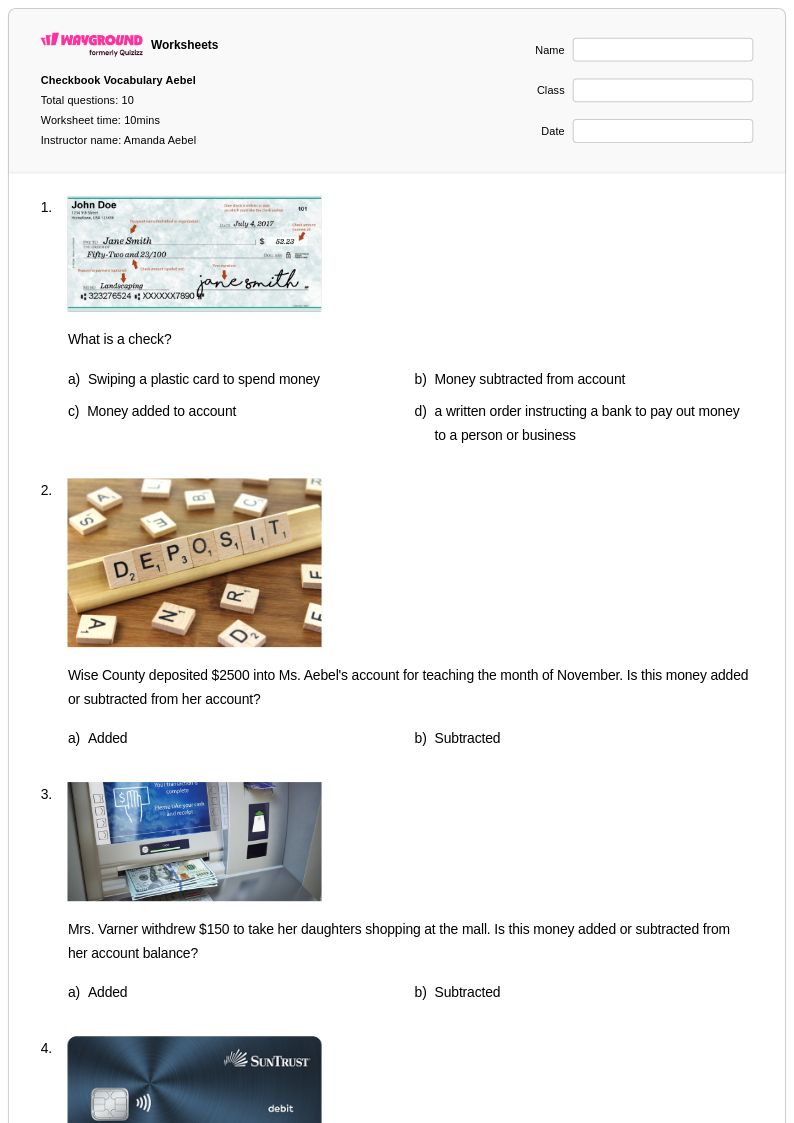
10 Q
8th - 12th
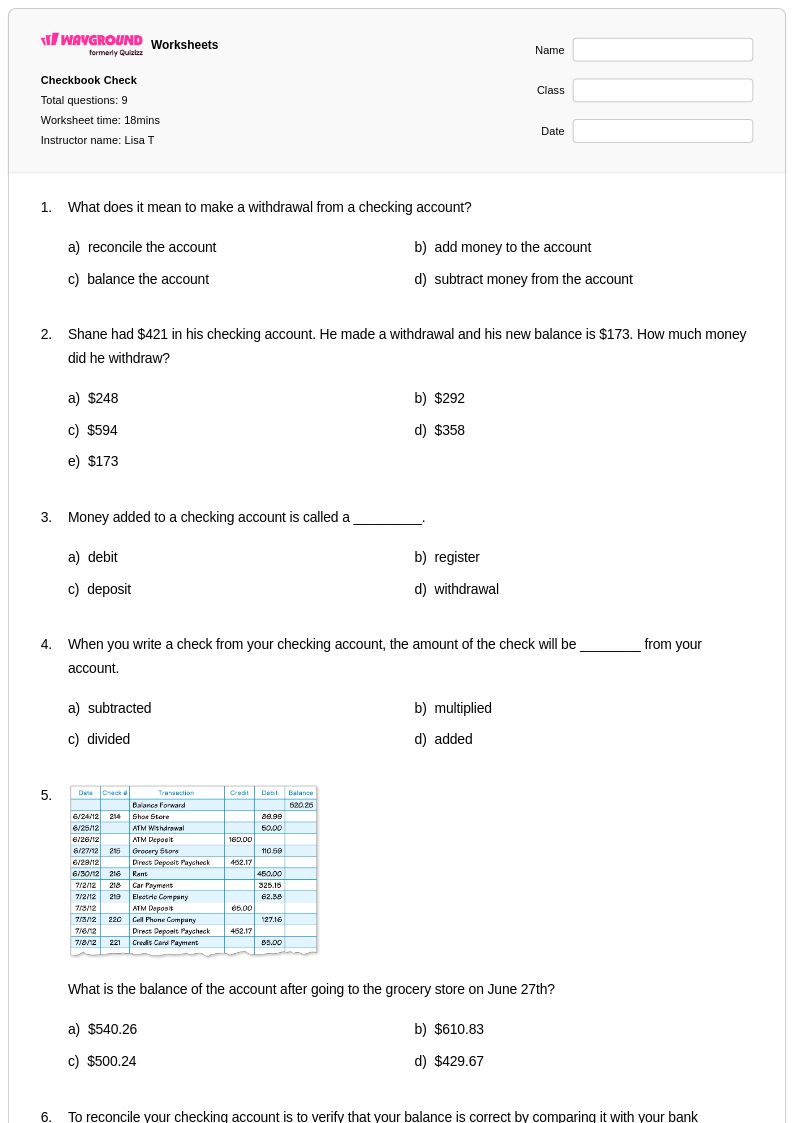
9 Q
8th
16 Q
6th - Uni
10 Q
8th
20 Q
6th - Uni
17 Q
7th - 8th
20 Q
6th - Uni
21 Q
8th
19 Q
6th - Uni
15 Q
8th
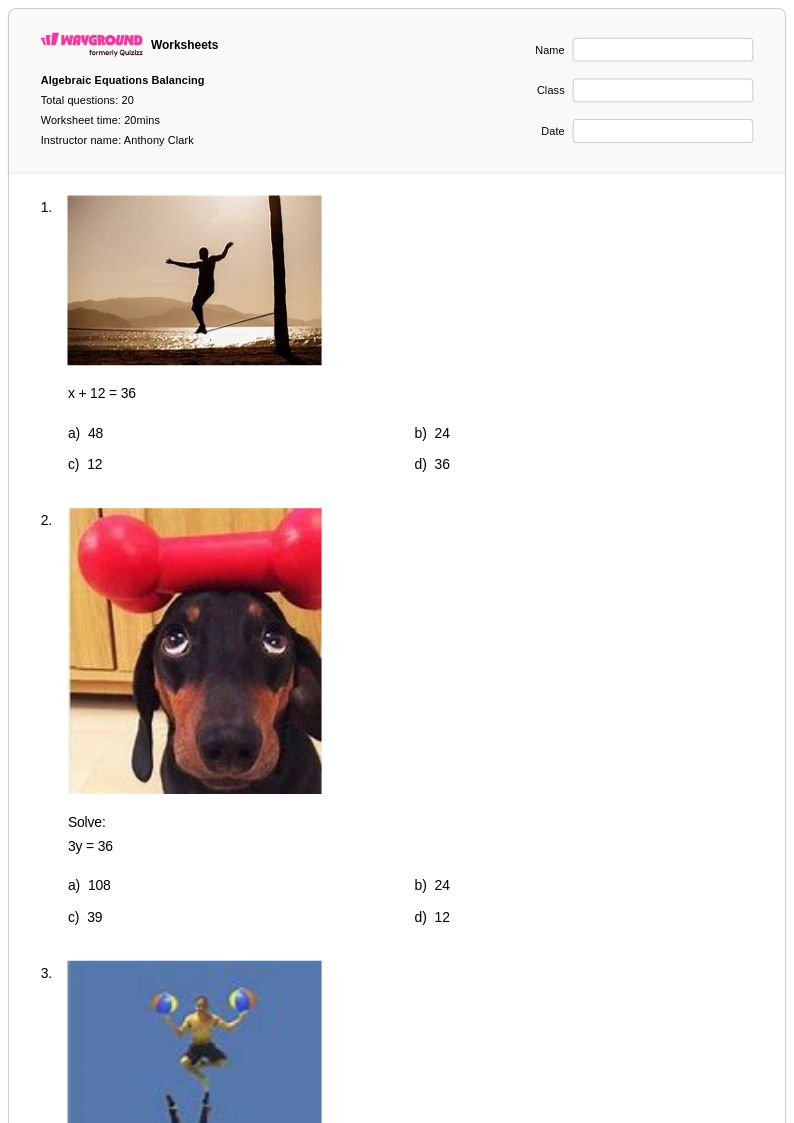
20 Q
6th - Uni
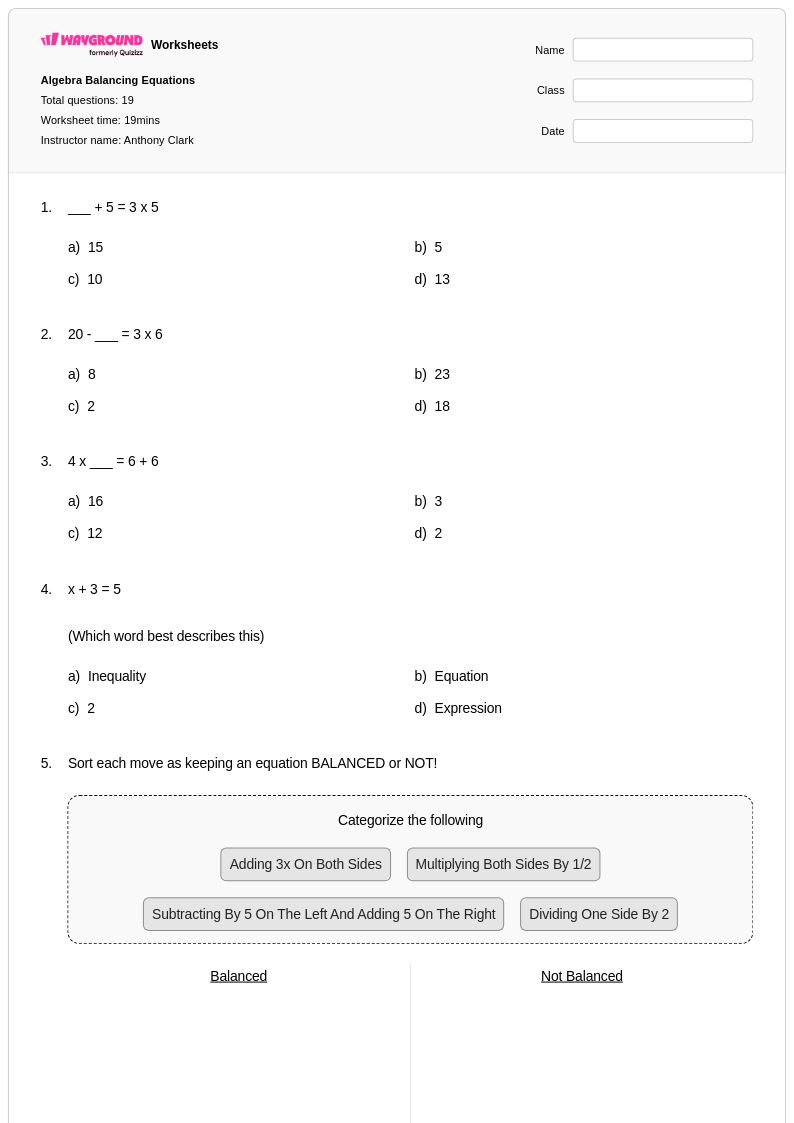
19 Q
6th - Uni

20 Q
8th - Uni
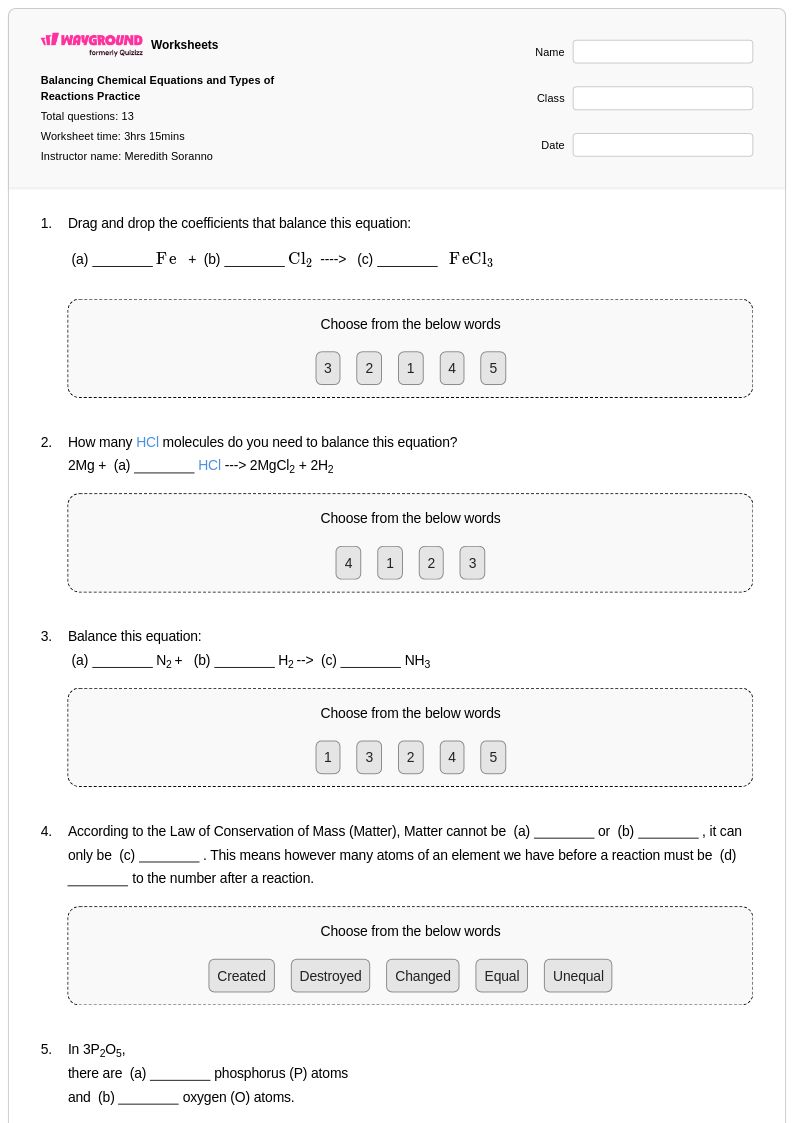
13 Q
8th
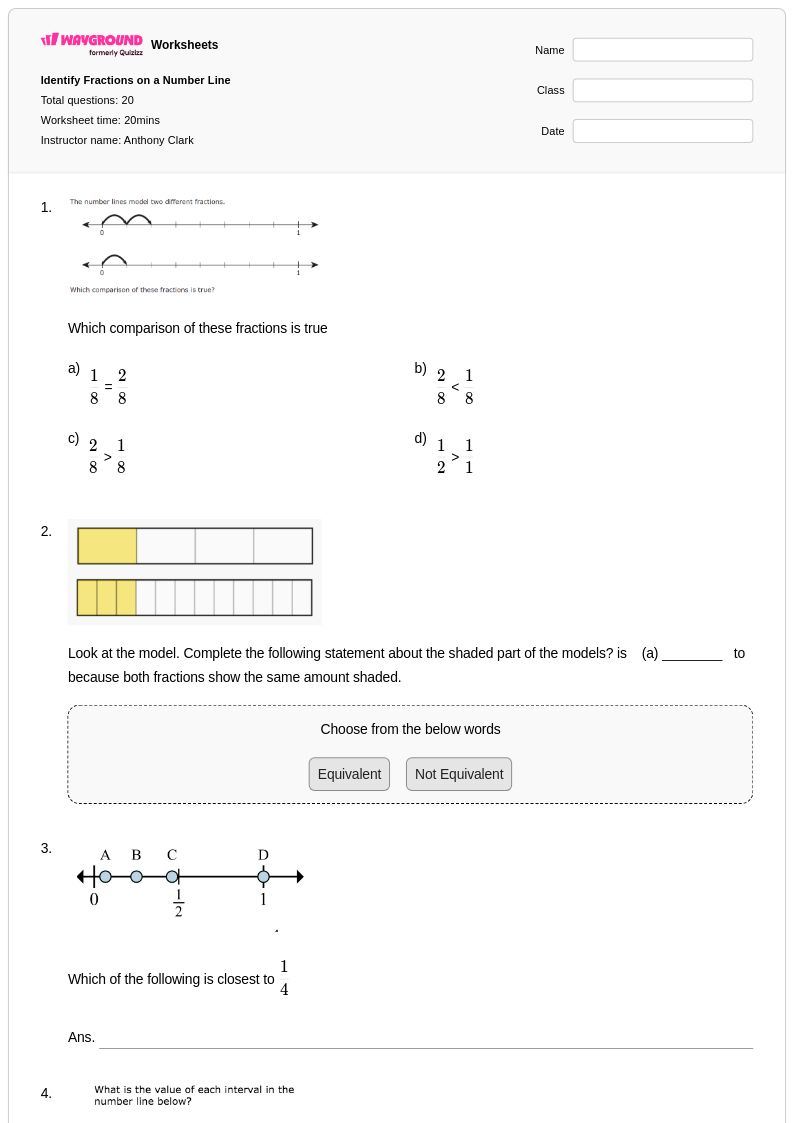
20 Q
3rd - Uni
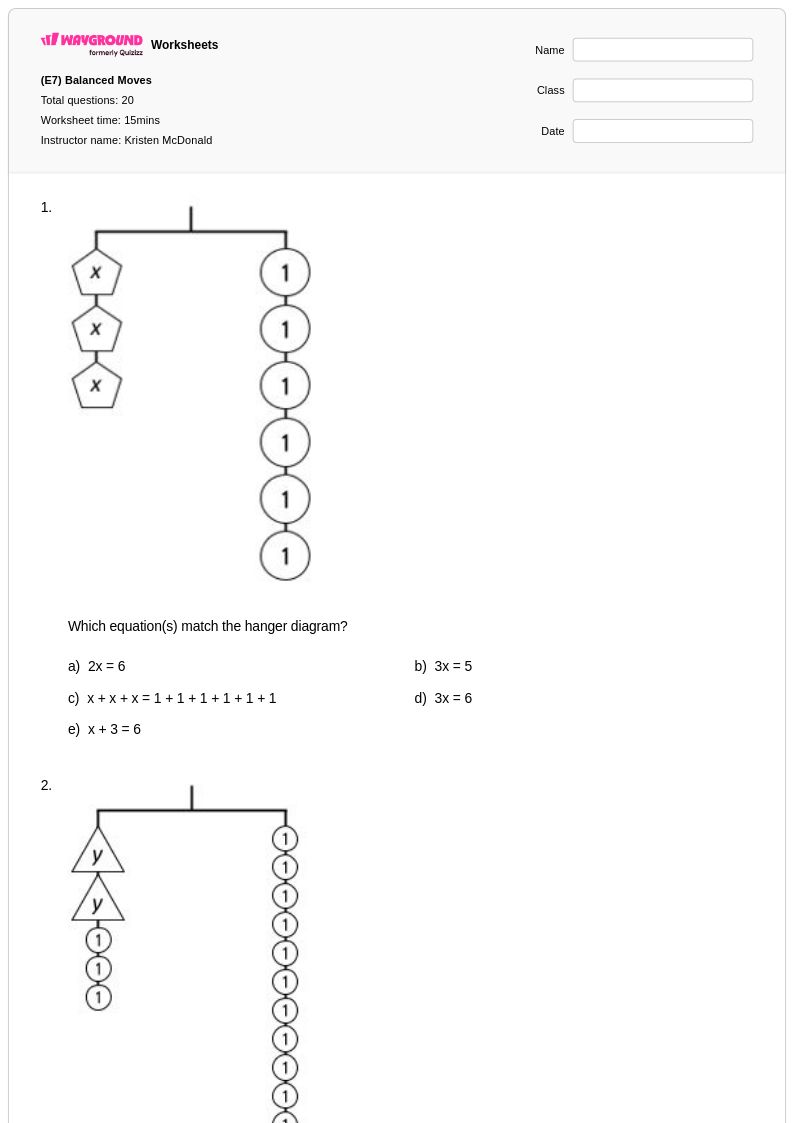
20 Q
8th
Explore Balancing a Checkbook Worksheets by Grades
Explore Other Subject Worksheets for grade 8
Explore printable Balancing a Checkbook worksheets for Grade 8
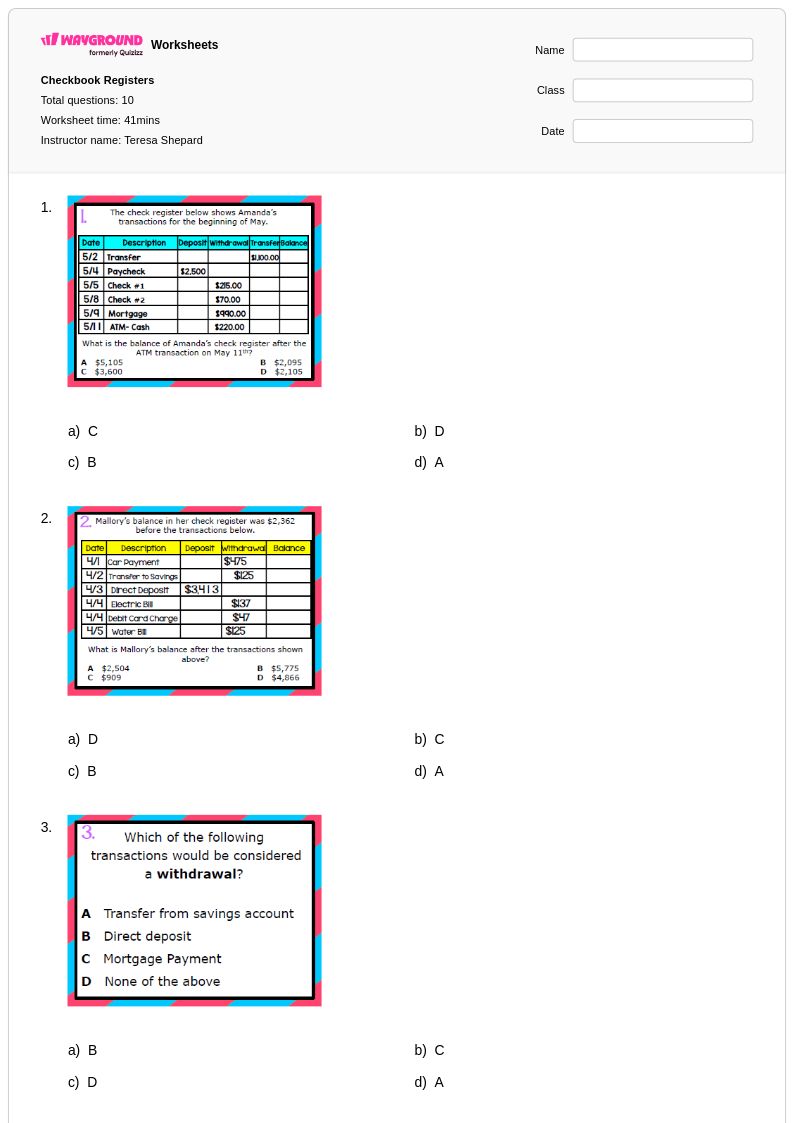
Balancing a checkbook worksheets for Grade 8 students provide essential practice in fundamental money management skills that bridge mathematical concepts with real-world financial responsibilities. These comprehensive worksheets guide students through the systematic process of tracking deposits, withdrawals, and running balances while reinforcing decimal operations, addition, and subtraction within practical contexts. Students work through realistic scenarios involving bank statements, check registers, and transaction records, developing proficiency in reconciling accounts and identifying discrepancies. The practice problems incorporate common banking terminology and procedures, helping students understand concepts like overdraft fees, interest earnings, and account maintenance. With detailed answer keys provided, these free printable resources enable both independent study and guided instruction, ensuring students master the mathematical precision required for accurate financial record-keeping.
Wayground, formerly Quizizz, empowers educators with millions of teacher-created balancing checkbook worksheets specifically designed for Grade 8 mathematics and financial literacy instruction. The platform's robust search and filtering capabilities allow teachers to quickly locate resources that align with specific curriculum standards and learning objectives, whether focusing on basic transaction recording or more complex reconciliation scenarios. These digital and printable pdf worksheets offer flexible customization options, enabling educators to modify problems, adjust difficulty levels, and differentiate instruction to meet diverse student needs. Teachers can seamlessly integrate these materials into lesson planning for initial skill introduction, targeted remediation for struggling learners, or enrichment activities for advanced students, creating a comprehensive approach to financial literacy education that prepares students for responsible money management throughout their lives.
FAQs
What is the best way to teach checkbook balancing in Grade 8?
What should Grade 8 checkbook-balancing practice include?
What misconceptions should I watch for when students balance a checkbook?
Can these Grade 8 worksheets be used digitally and on paper?
Does checkbook balancing connect to Common Core Grade 8 math?
How can I differentiate a checkbook-balancing worksheet for diverse learners?
Is balancing a checkbook a Grade 8 skill?