
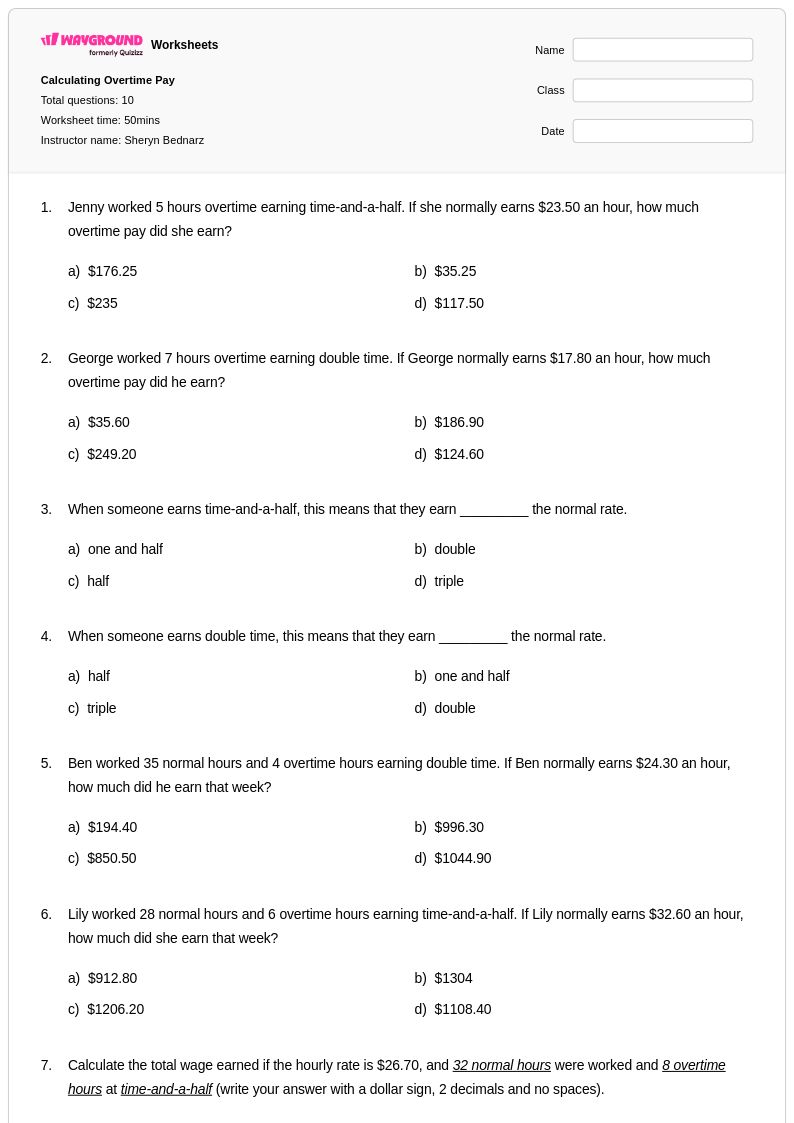
10Q
7th - 9th
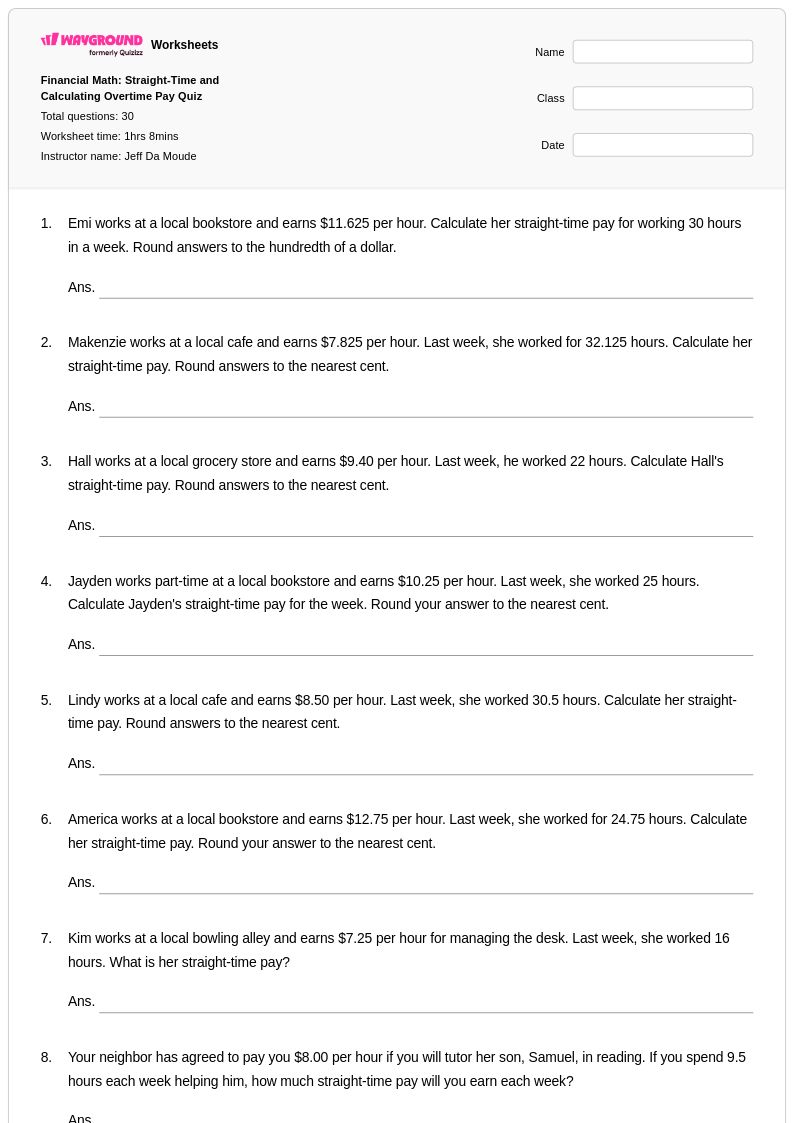
30Q
12th
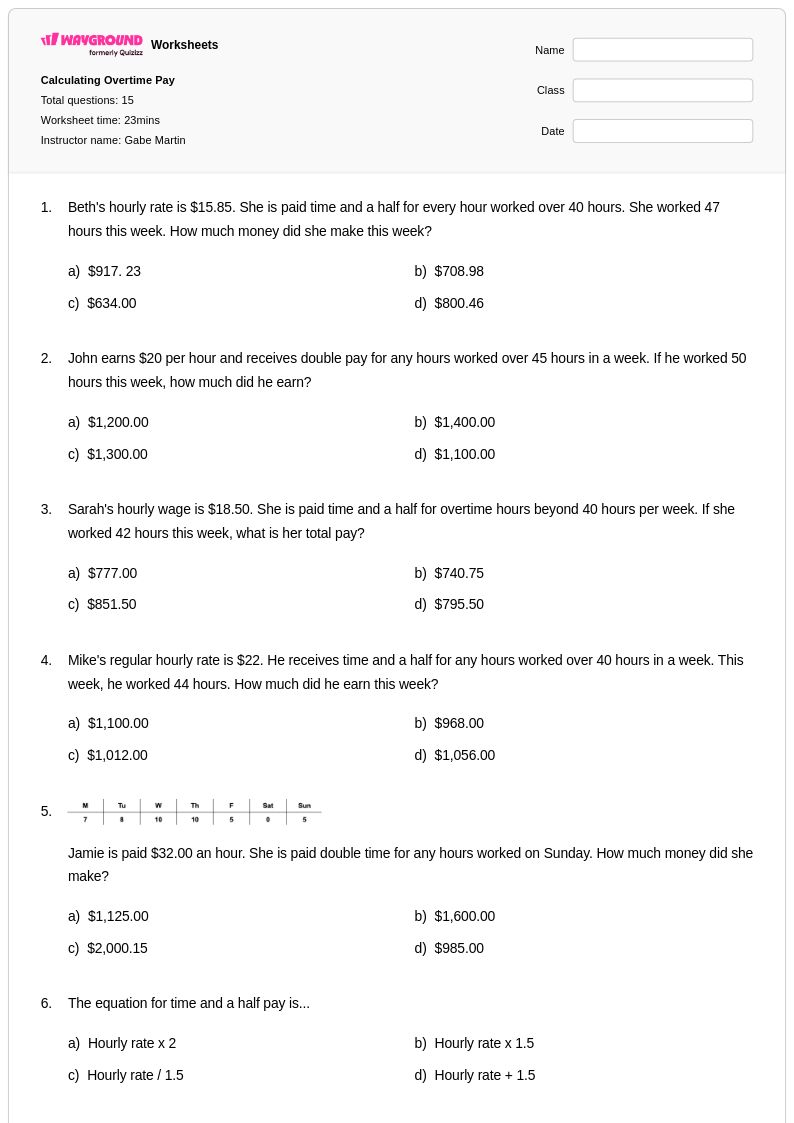
15Q
12th
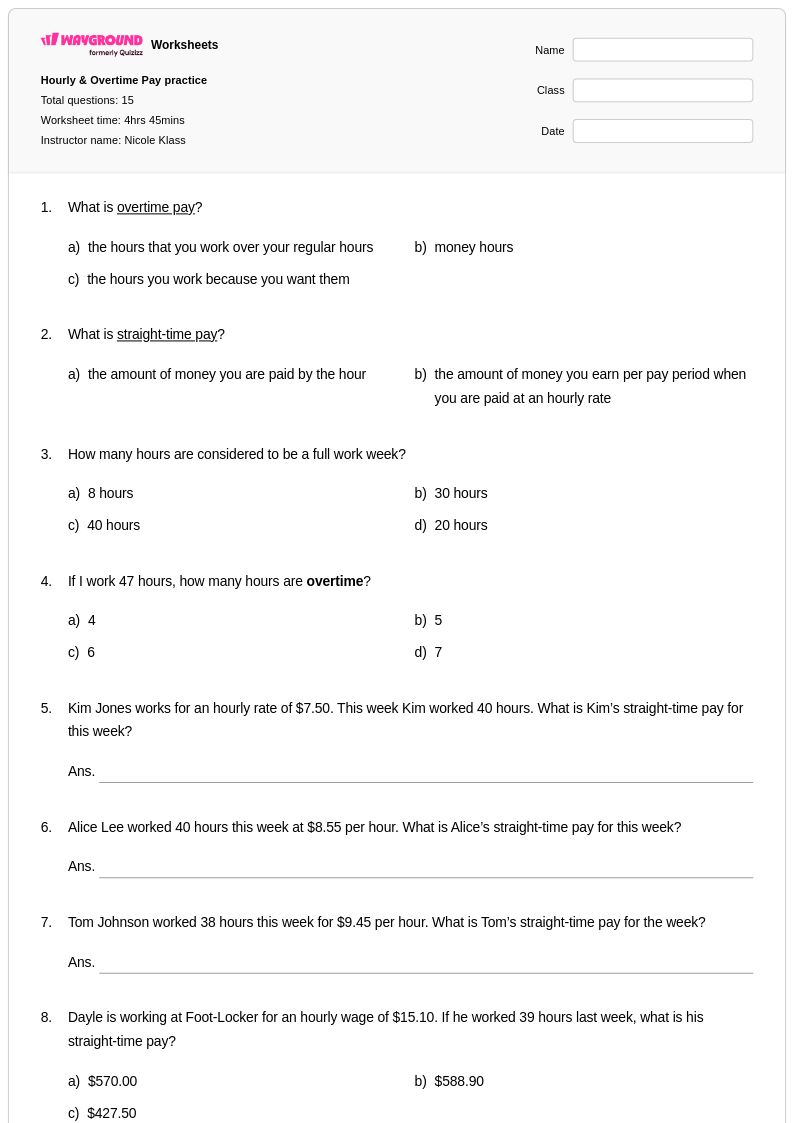
15Q
12th
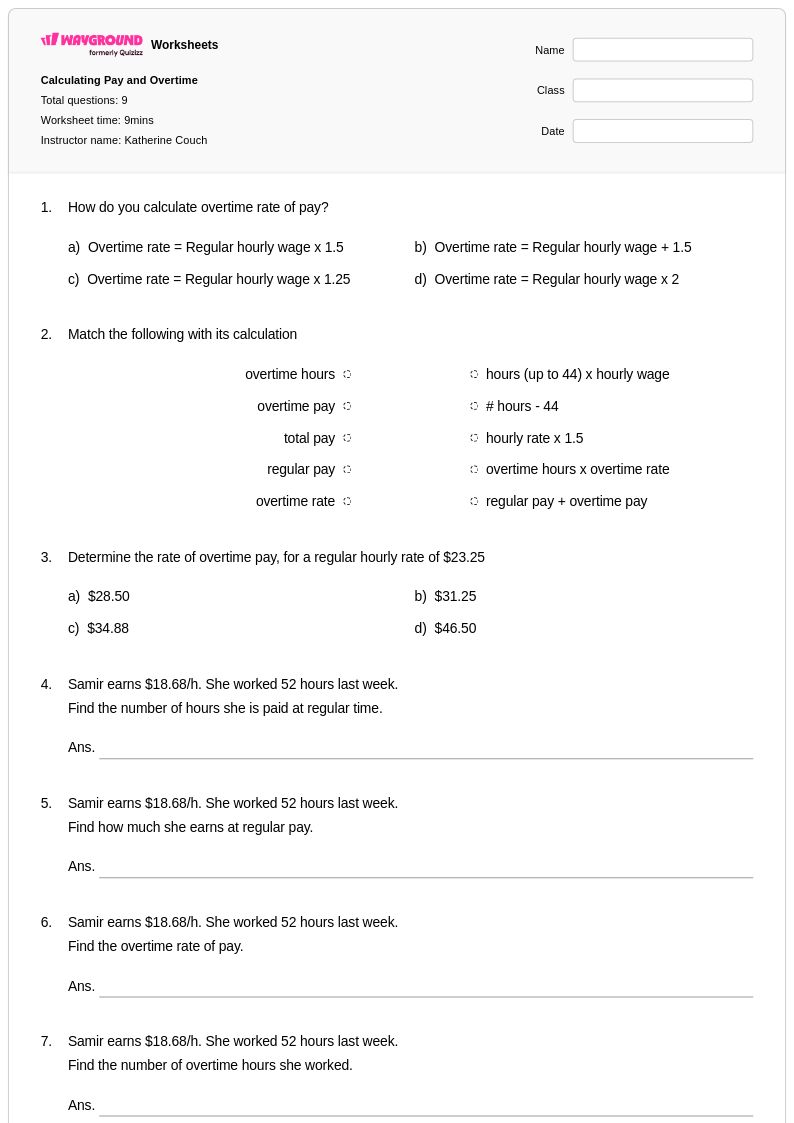
9Q
11th
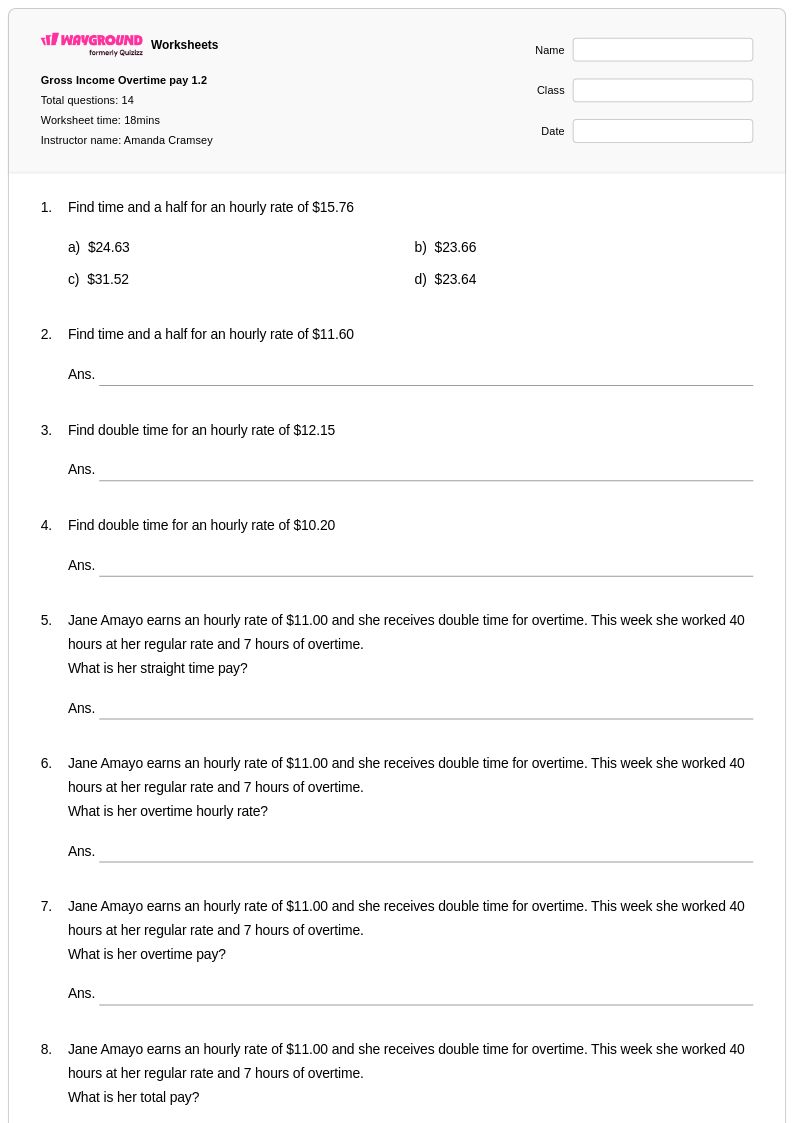
14Q
9th - 12th
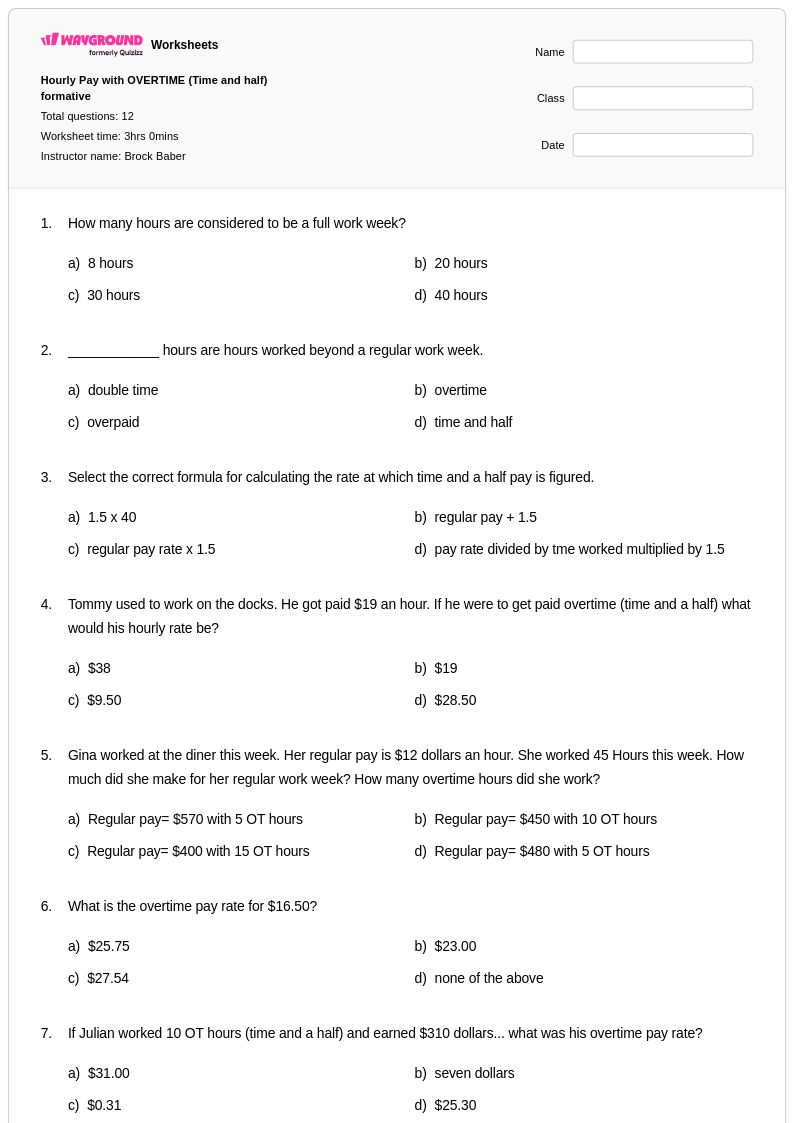
12Q
9th - 12th
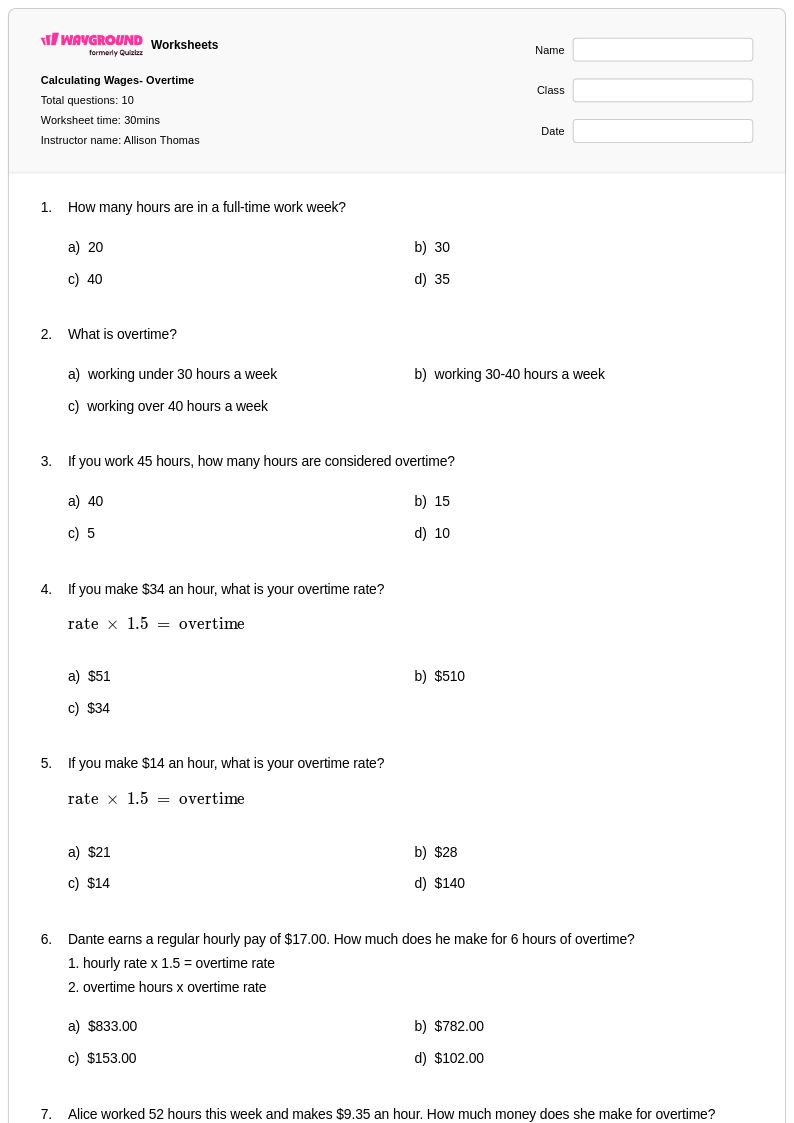
10Q
9th - 12th
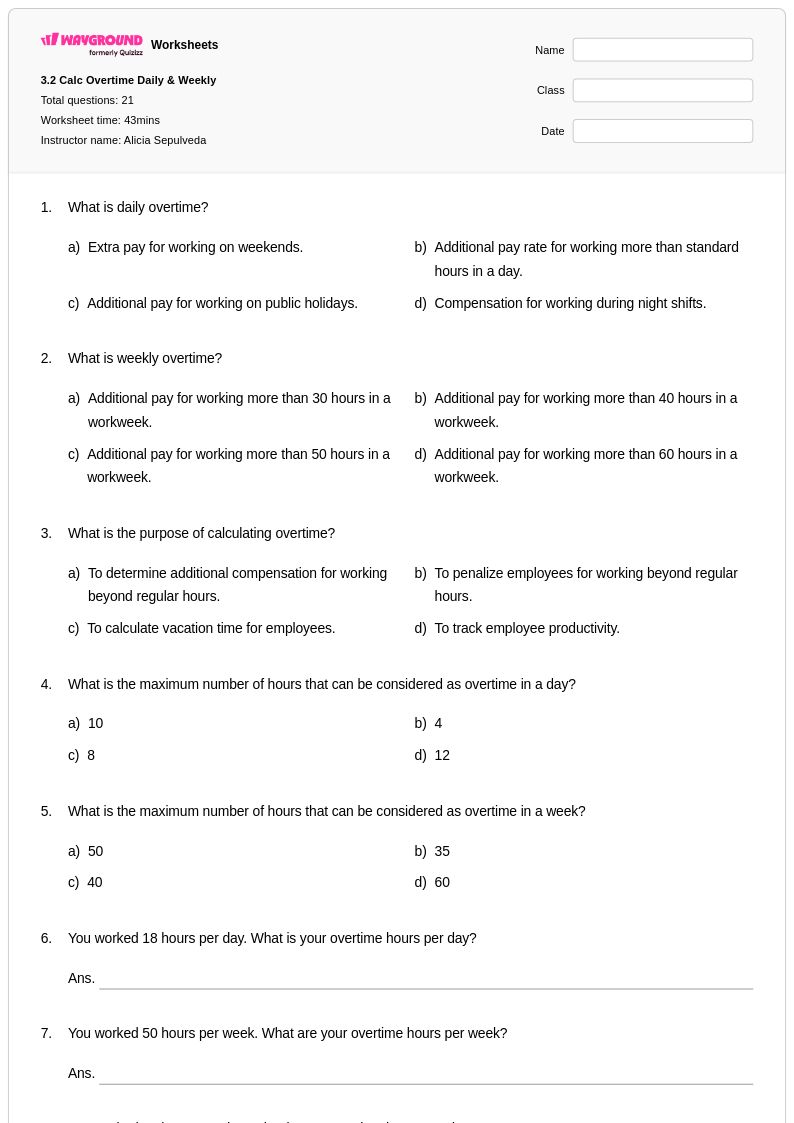
21Q
11th
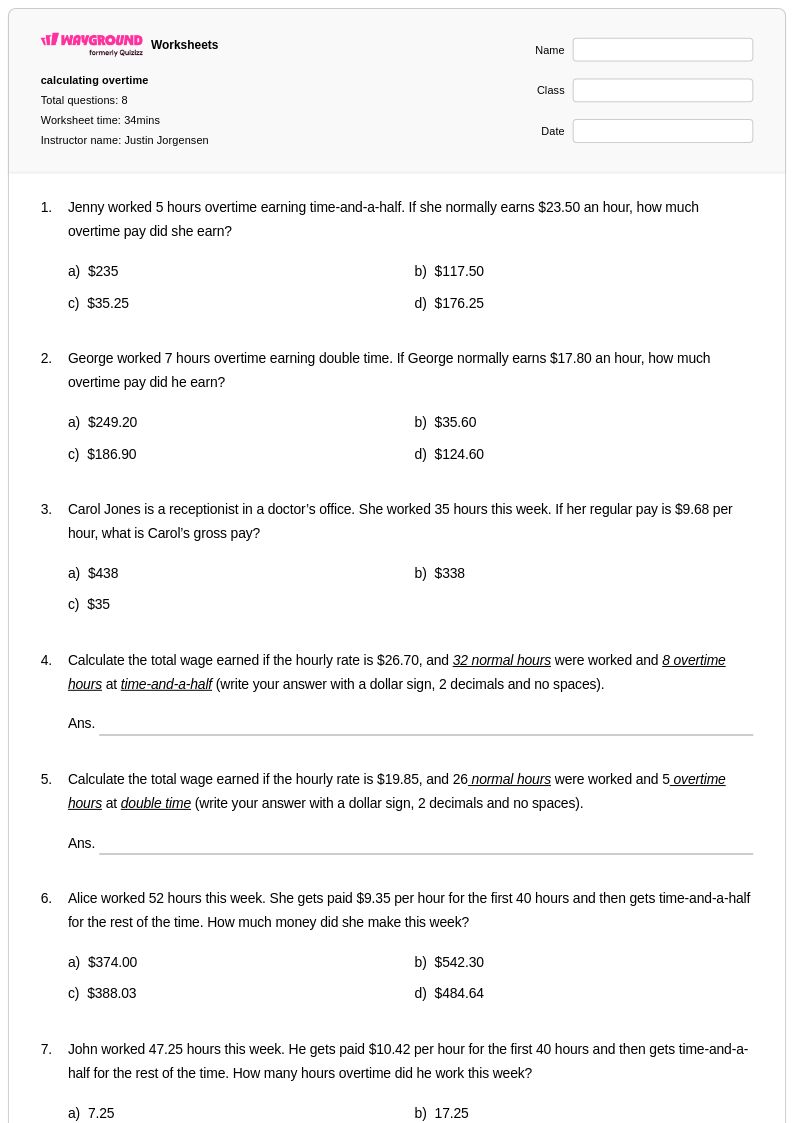
8Q
11th
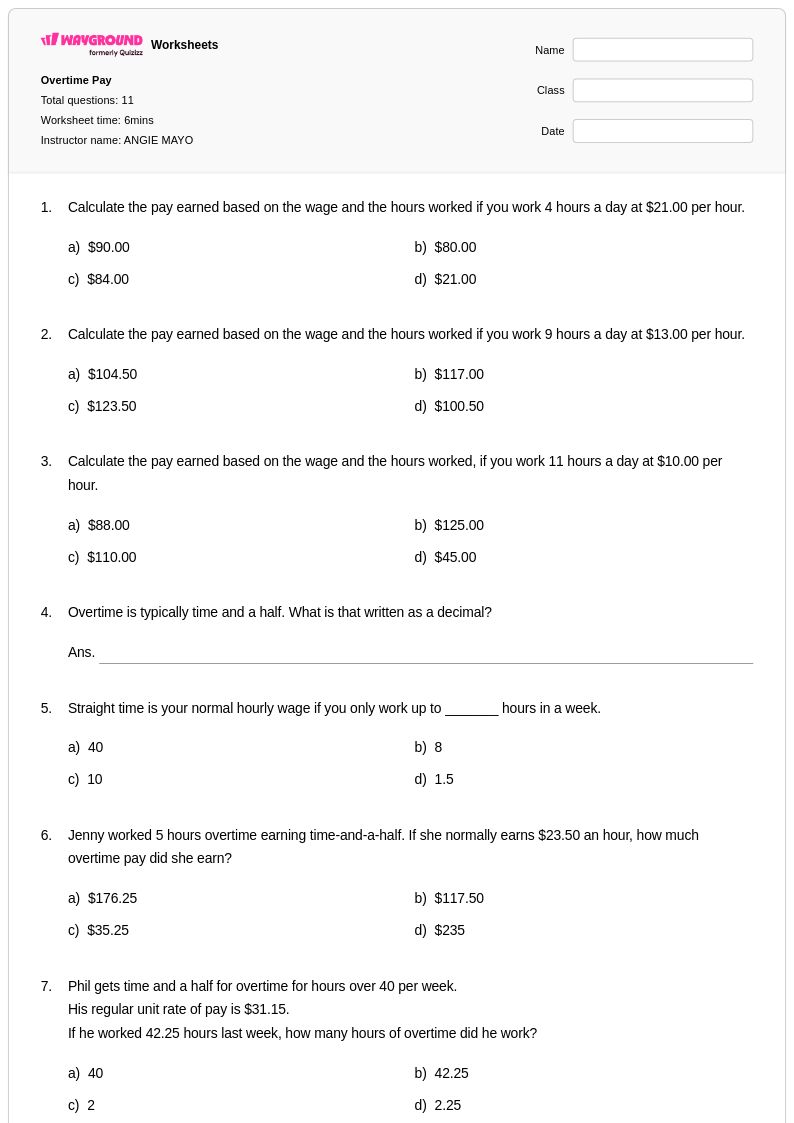
11Q
5th - 12th
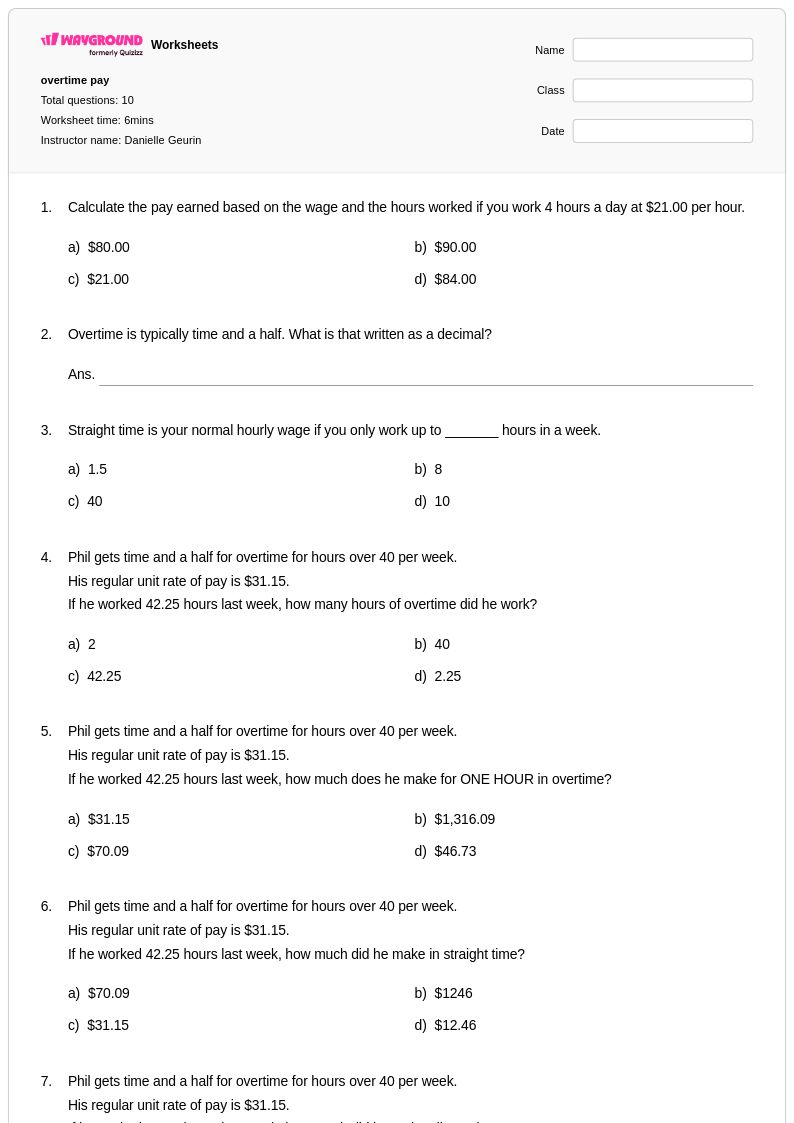
10Q
12th
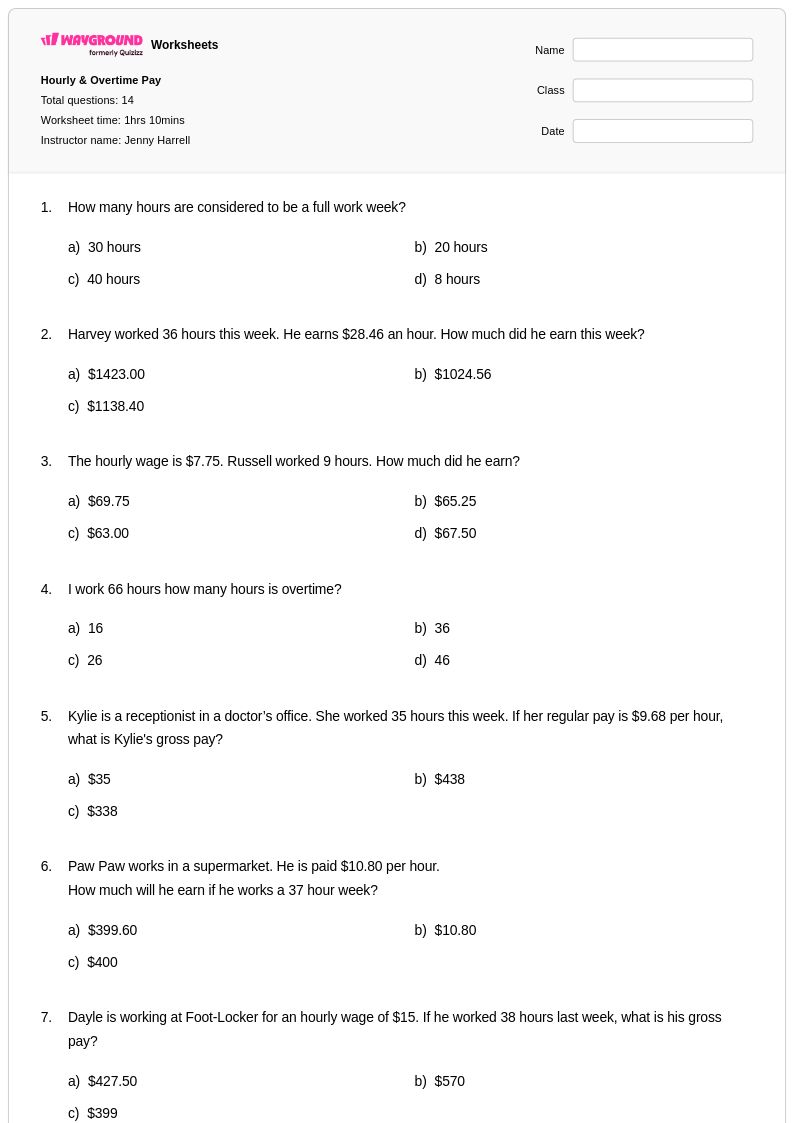
14Q
12th
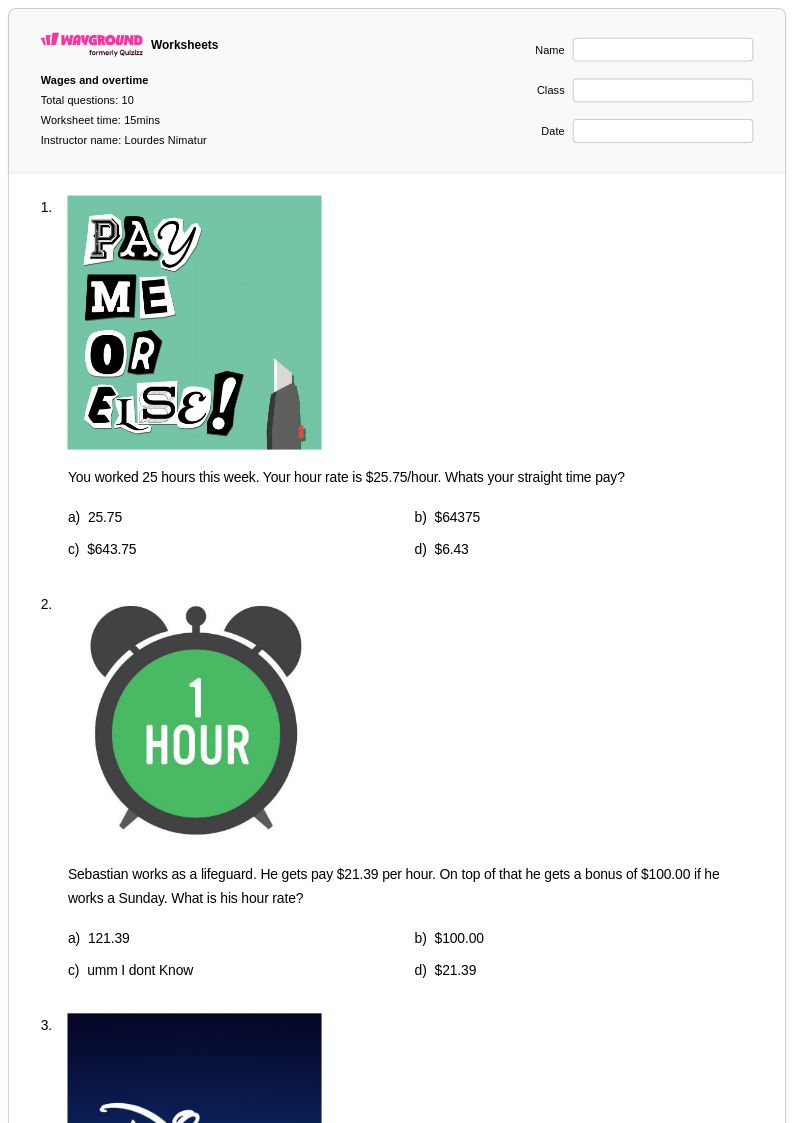
10Q
11th - 12th
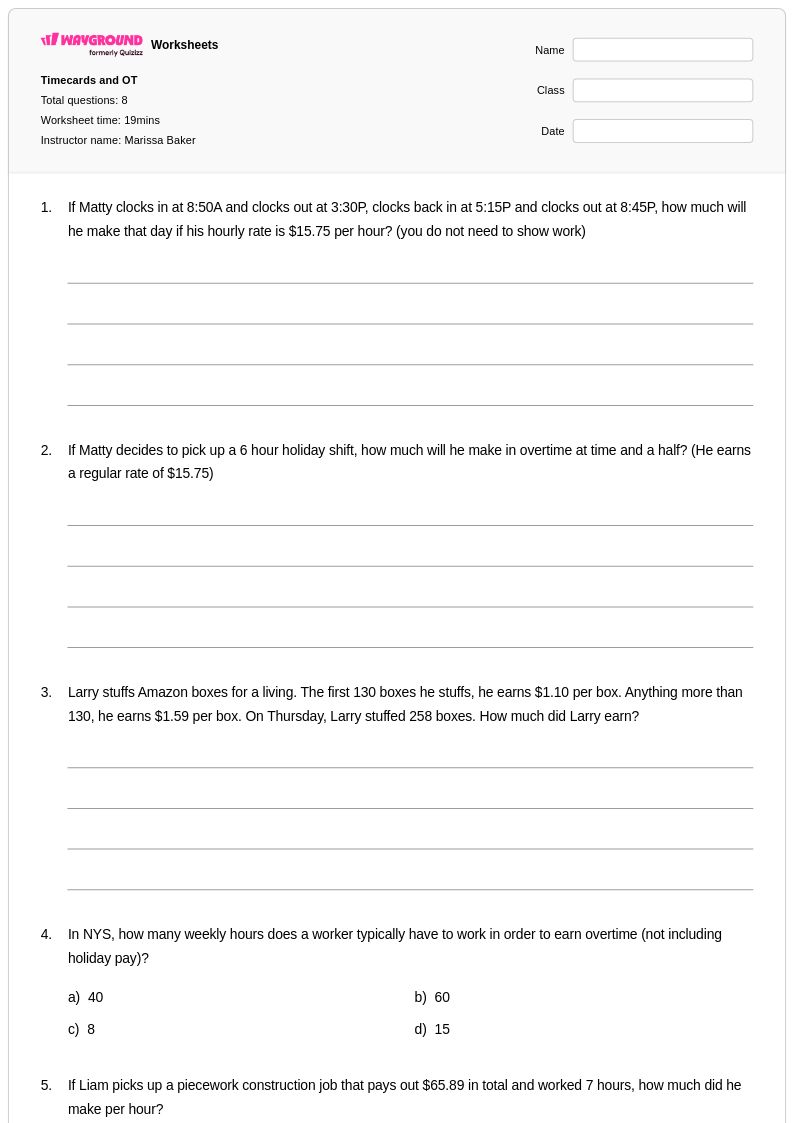
8Q
12th
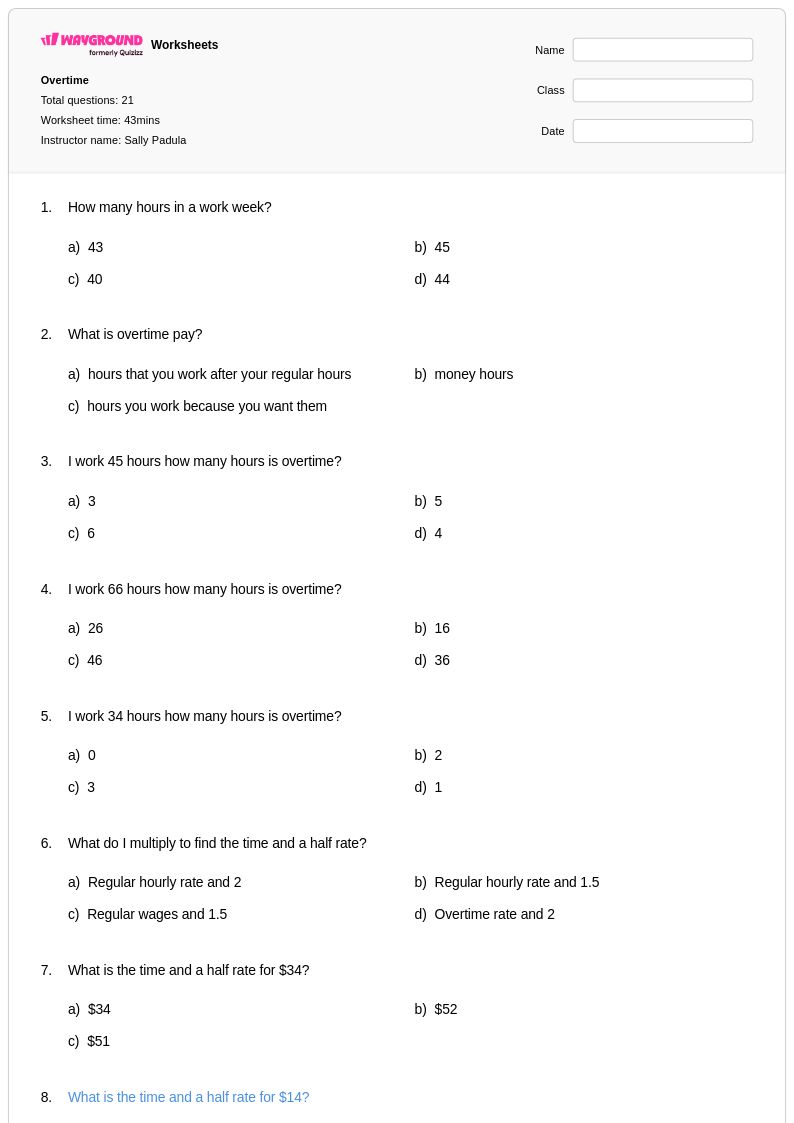
21Q
11th
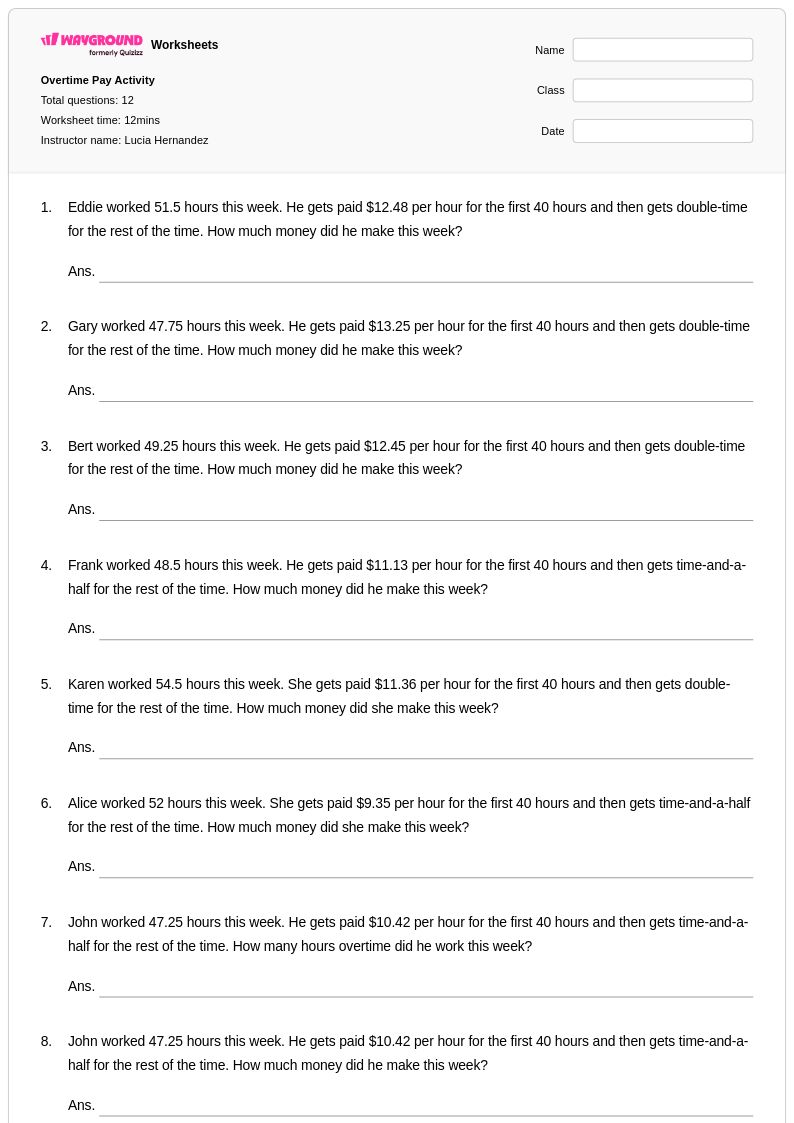
12Q
12th
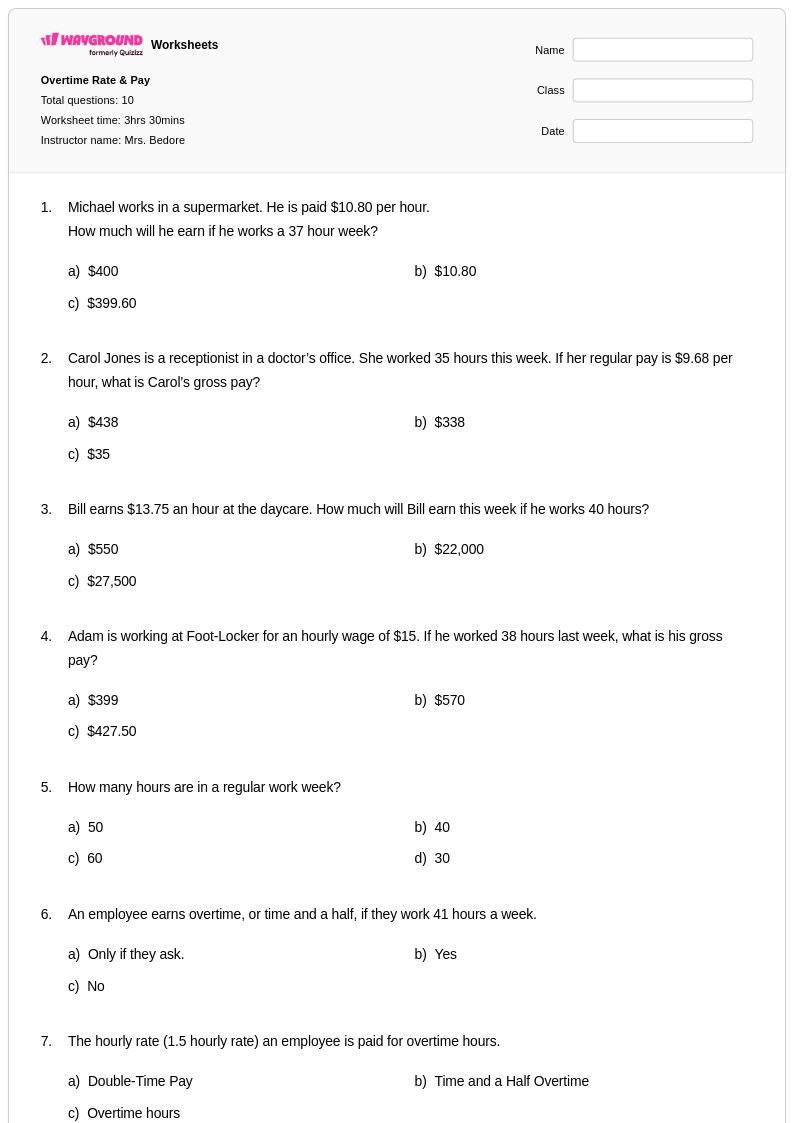
10Q
11th
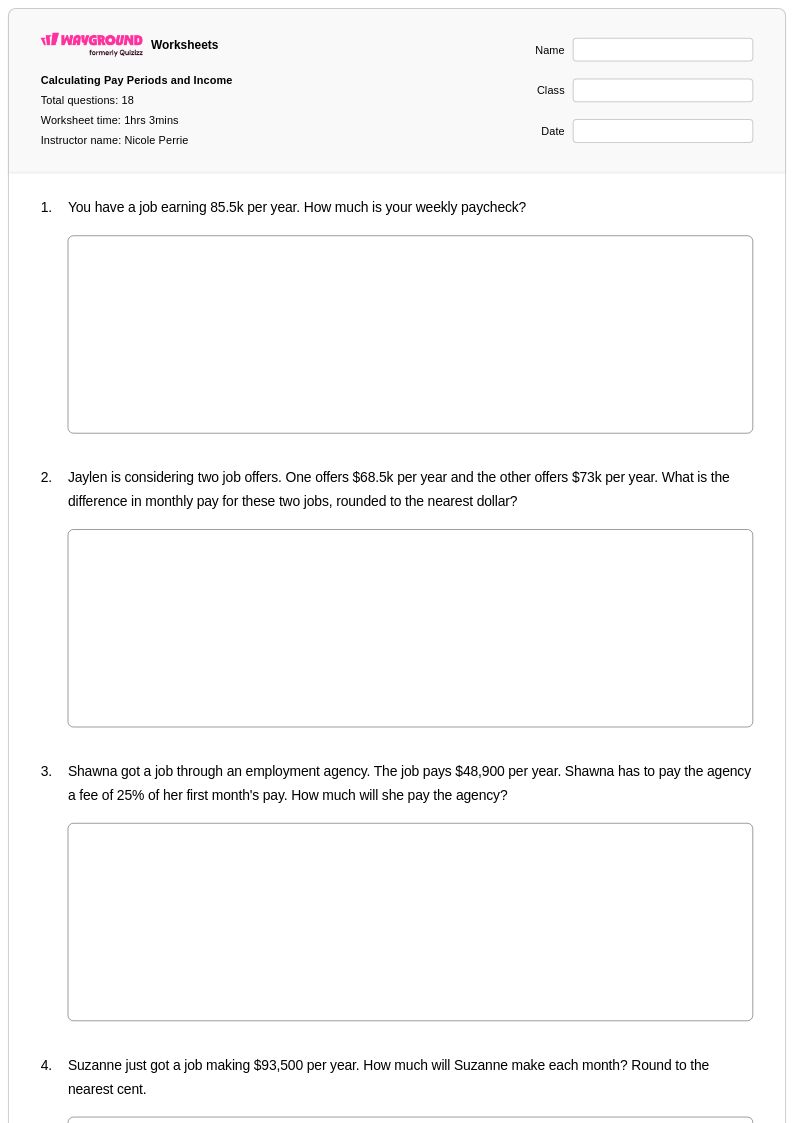
18Q
9th - Uni
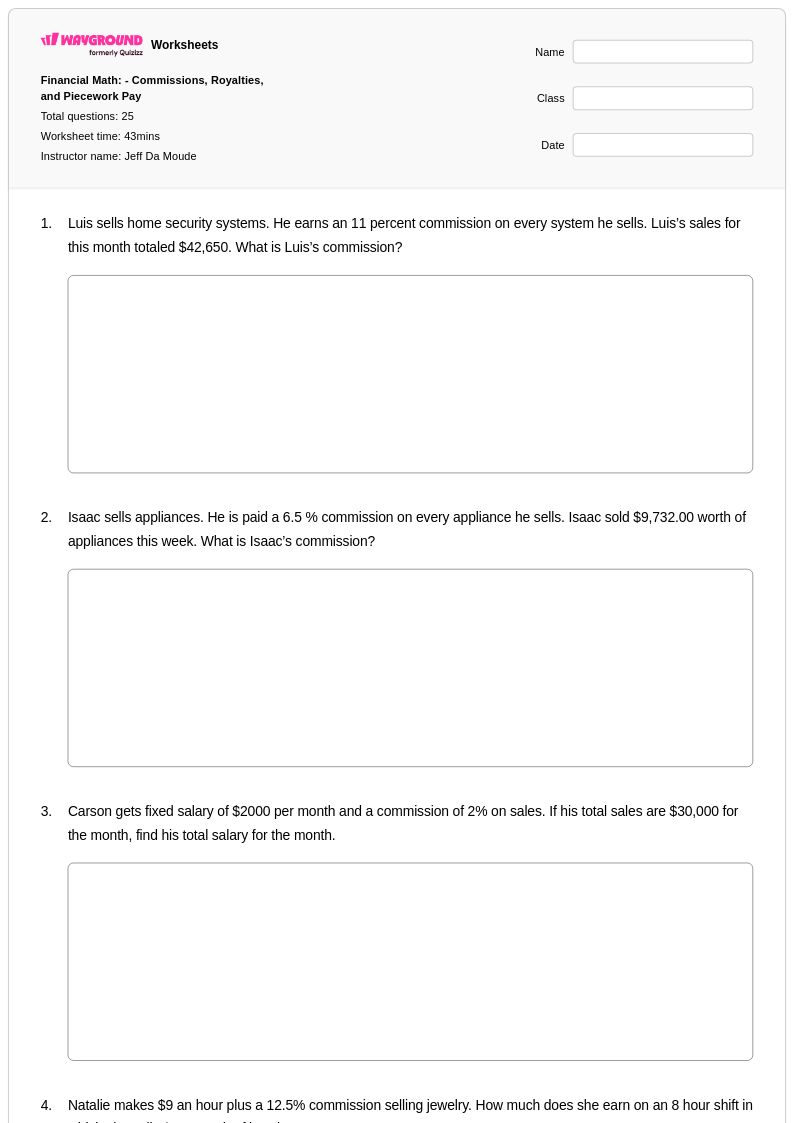
25Q
9th - 12th
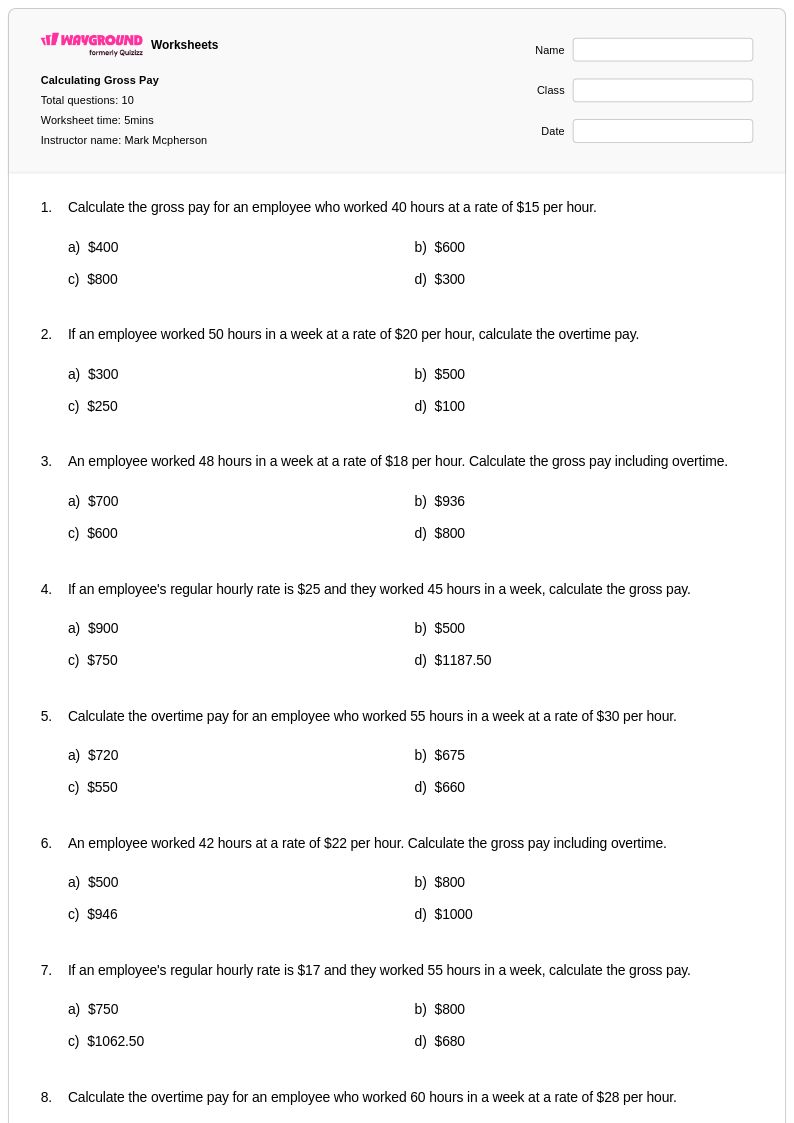
10Q
12th
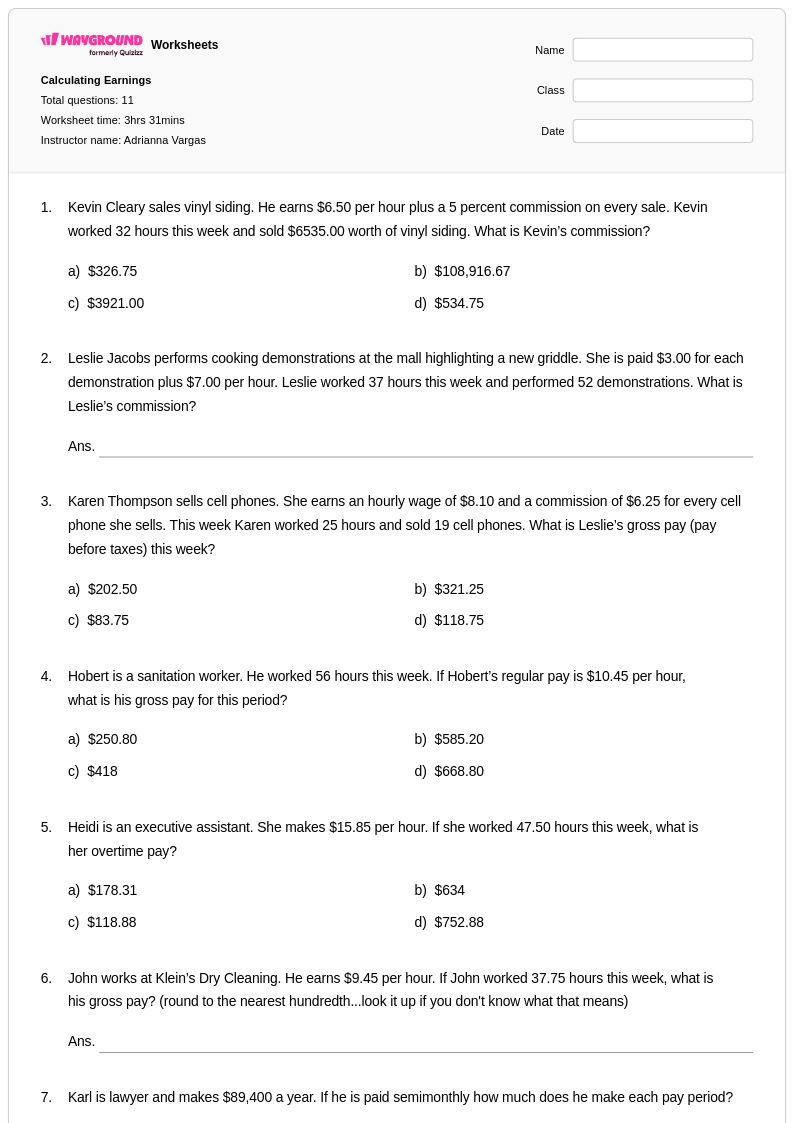
11Q
9th - 12th
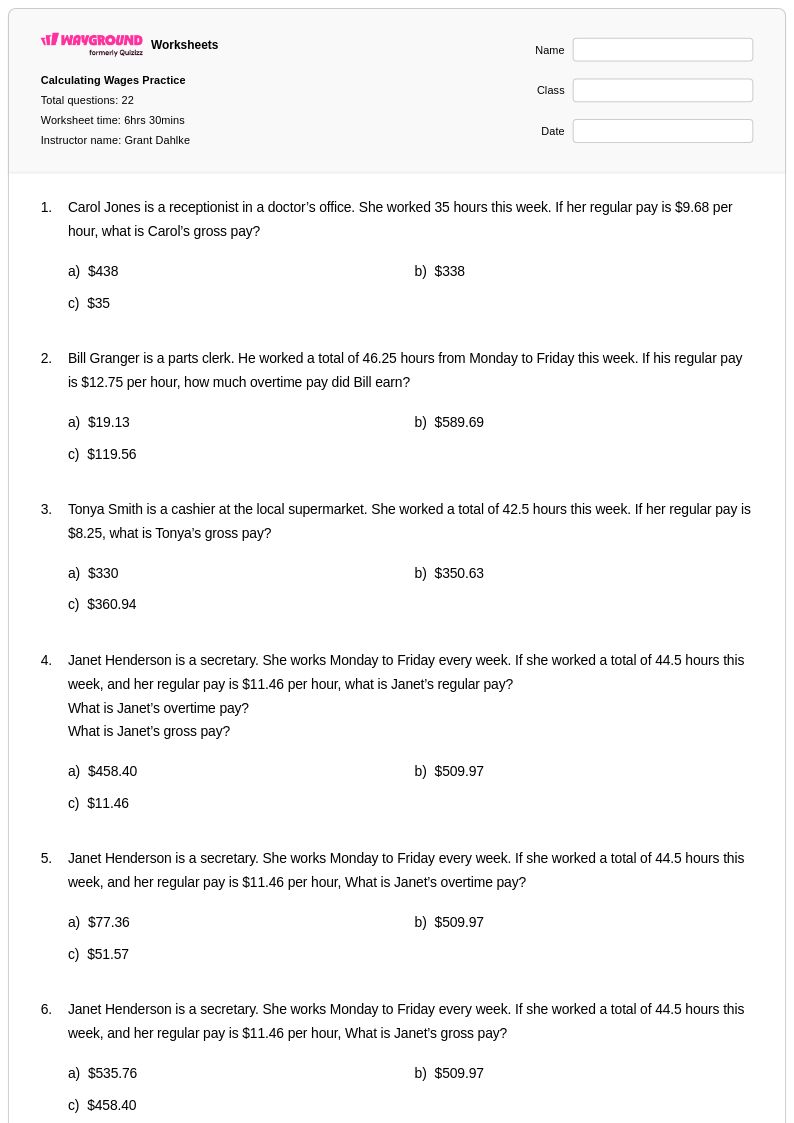
22Q
9th - 12th
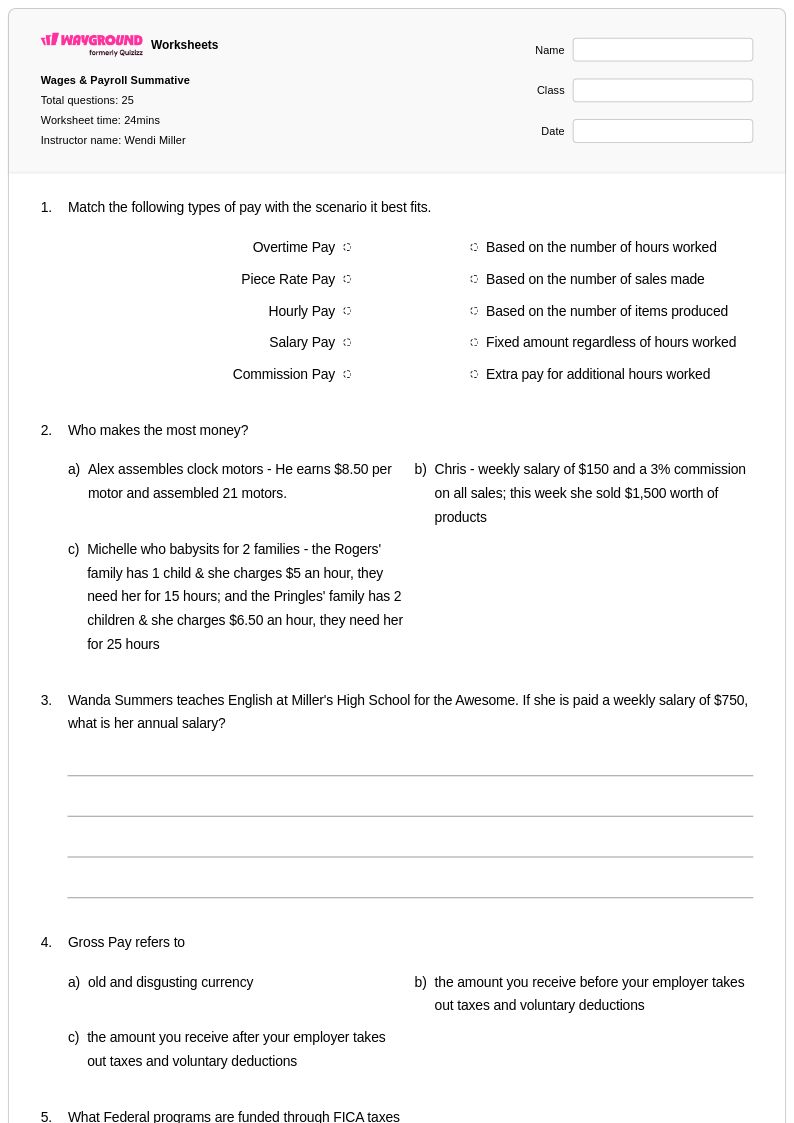
25Q
12th
Explorar hojas de trabajo por materias
Explore printable Calculating Overtime Pay worksheets
Calculating overtime pay worksheets available through Wayground (formerly Quizizz) provide students with essential practice in understanding wage calculations that extend beyond standard work hours. These comprehensive resources focus on the mathematical concepts underlying overtime compensation, including time-and-a-half calculations, double-time scenarios, and complex pay period computations that reflect real-world employment situations. Students develop critical financial literacy skills by working through practice problems that involve calculating gross pay when regular hours exceed 40 per week, determining the difference between regular and overtime rates, and computing total earnings across various pay structures. Each worksheet includes detailed answer keys and step-by-step solutions, making these free printables valuable for both independent study and classroom instruction, while reinforcing the mathematical foundations necessary for personal financial management.
Wayground (formerly Quizizz) supports educators with millions of teacher-created resources specifically designed for financial literacy instruction, including extensive collections of overtime pay calculation materials. The platform's robust search and filtering capabilities allow teachers to quickly locate worksheets that align with their curriculum standards and match their students' skill levels, whether they need basic introductory problems or more advanced scenarios involving salary conversions and complex pay schedules. These differentiation tools enable seamless customization of content for diverse learning needs, while the availability of both printable PDF formats and interactive digital versions provides flexibility for various classroom environments. Teachers can efficiently incorporate these resources into lesson planning for skill practice, use them for targeted remediation when students struggle with wage calculation concepts, or deploy them for enrichment activities that connect mathematical computation to practical career readiness and financial decision-making.
FAQs
How do I teach students to calculate overtime pay?
What exercises help students practice calculating overtime pay?
What mistakes do students commonly make when calculating overtime pay?
How can I use Wayground calculating overtime pay worksheets?
How does calculating overtime pay connect to Common Core math?
How can I differentiate overtime pay practice?