
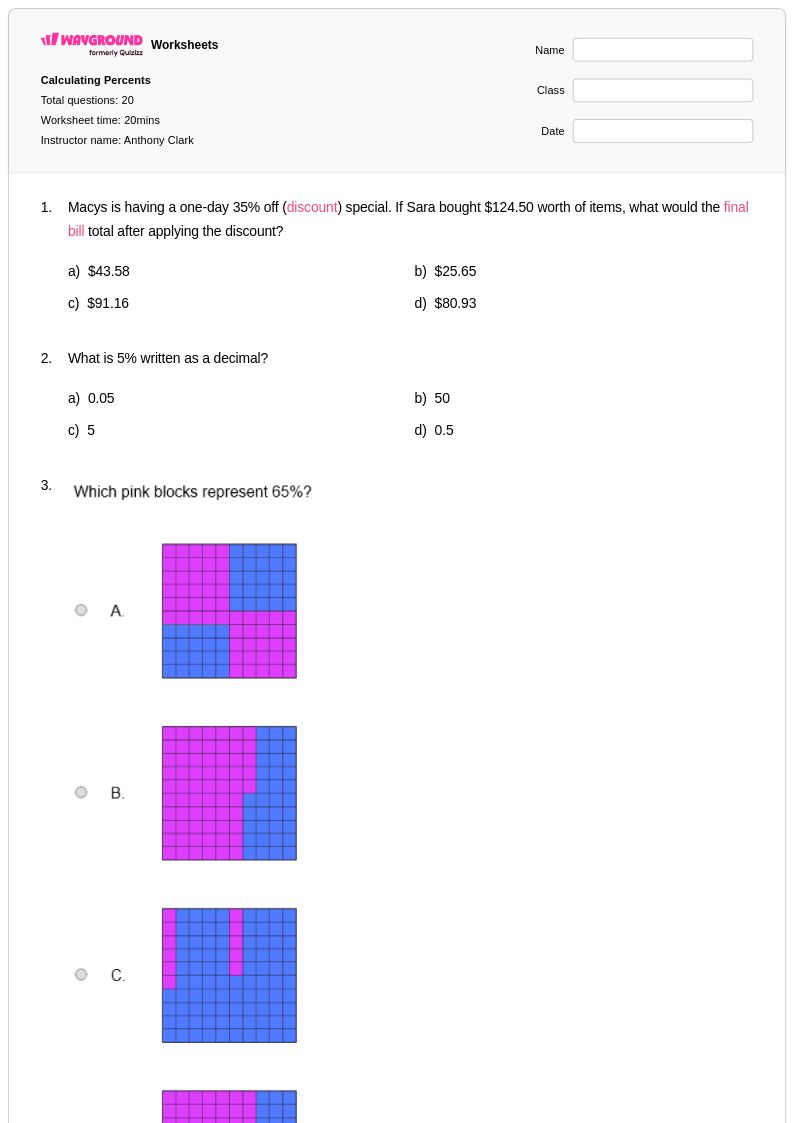
20 Q
6th - Uni
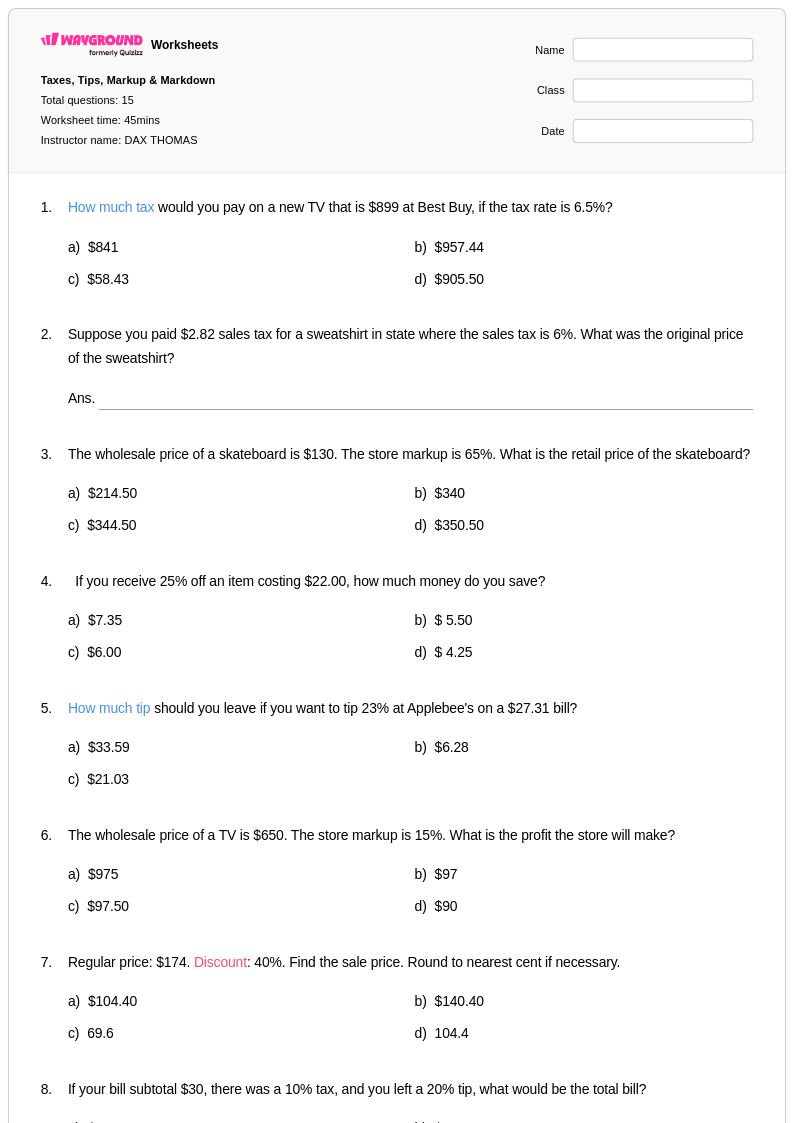
15 Q
6th - 8th
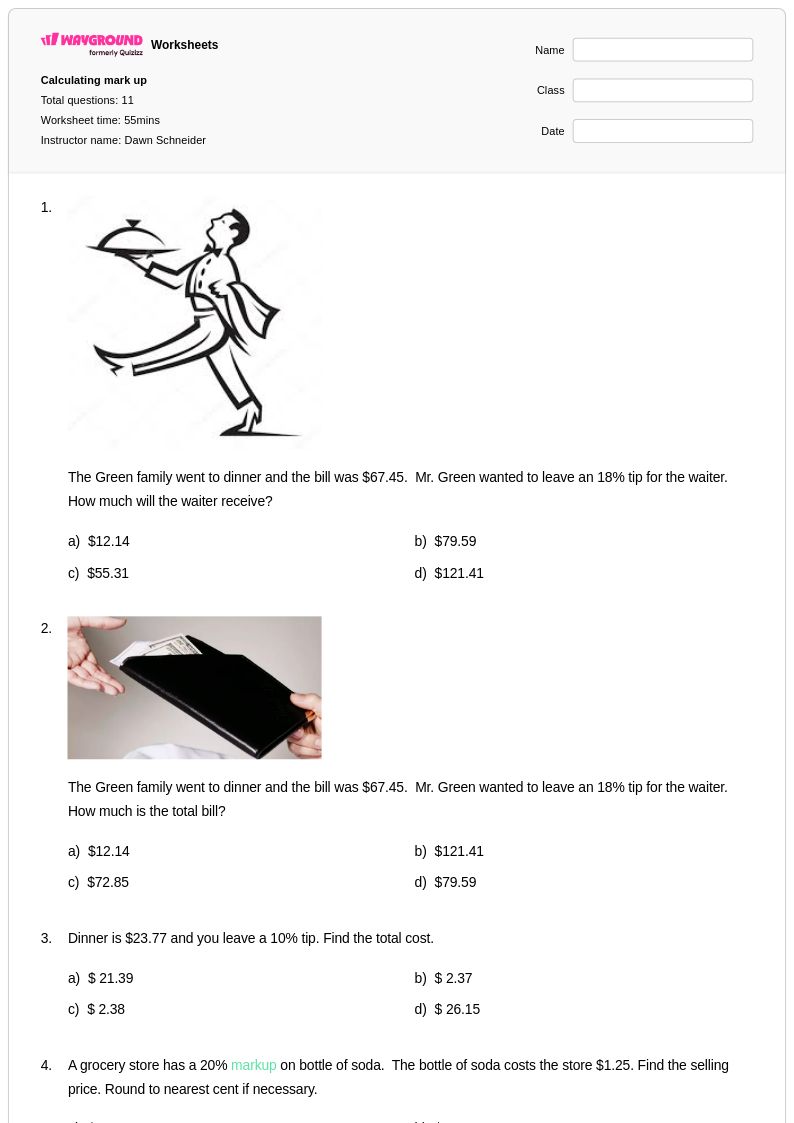
11 Q
6th
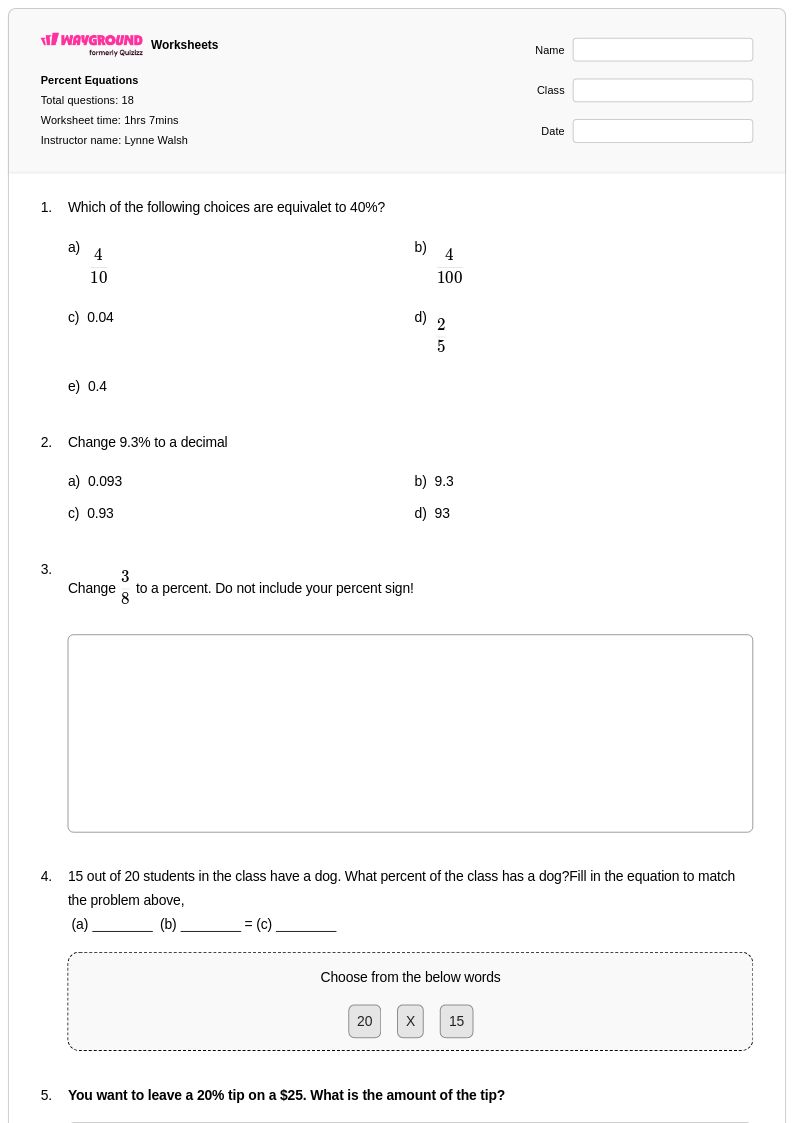
18 Q
6th - 8th
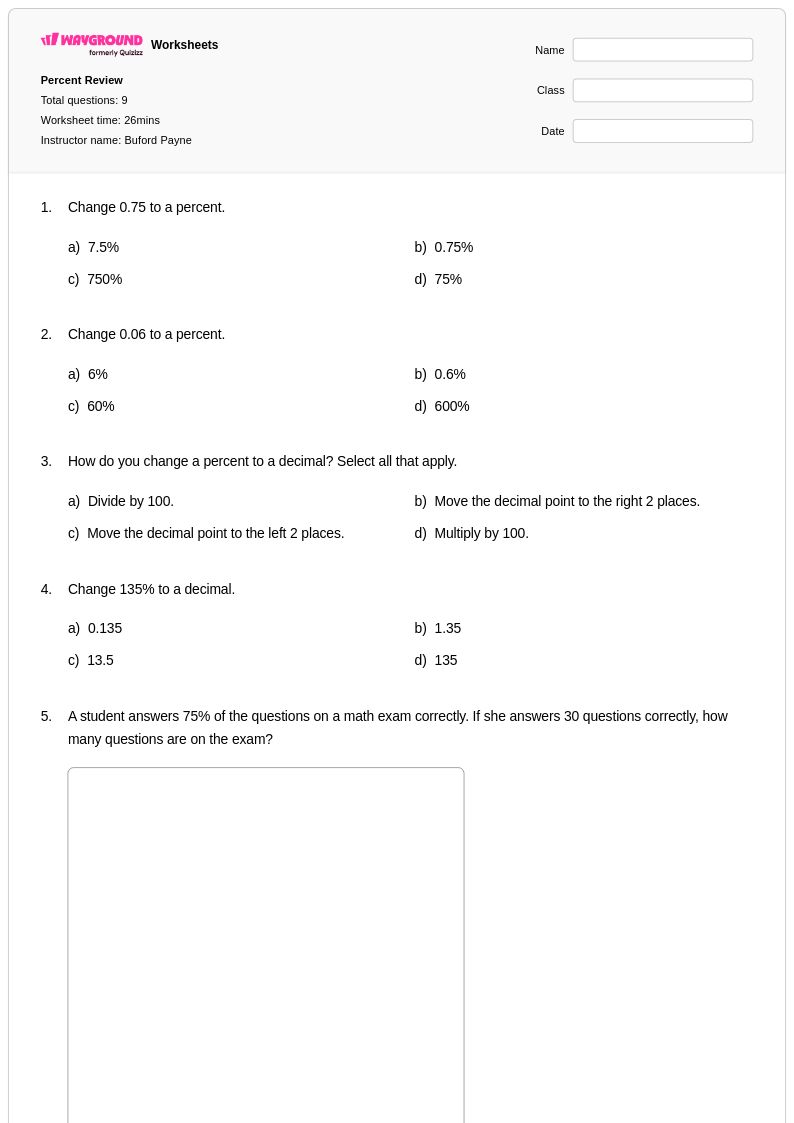
9 Q
6th - 8th
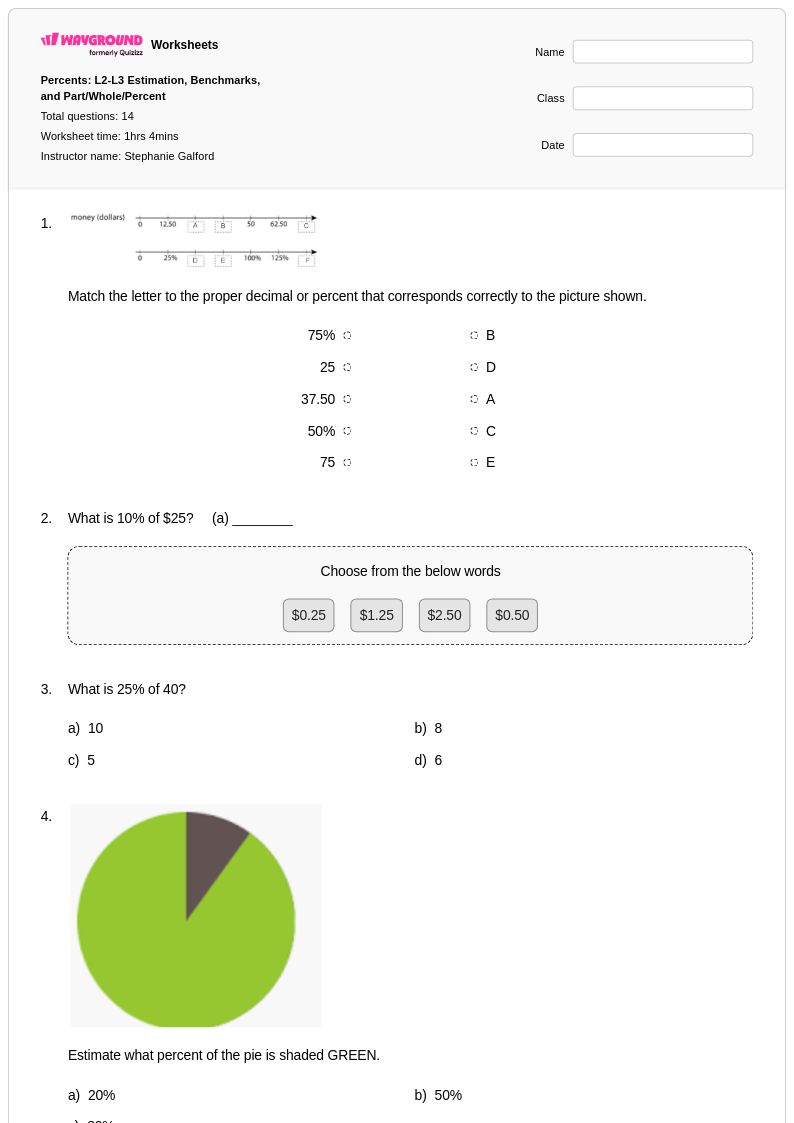
14 Q
6th
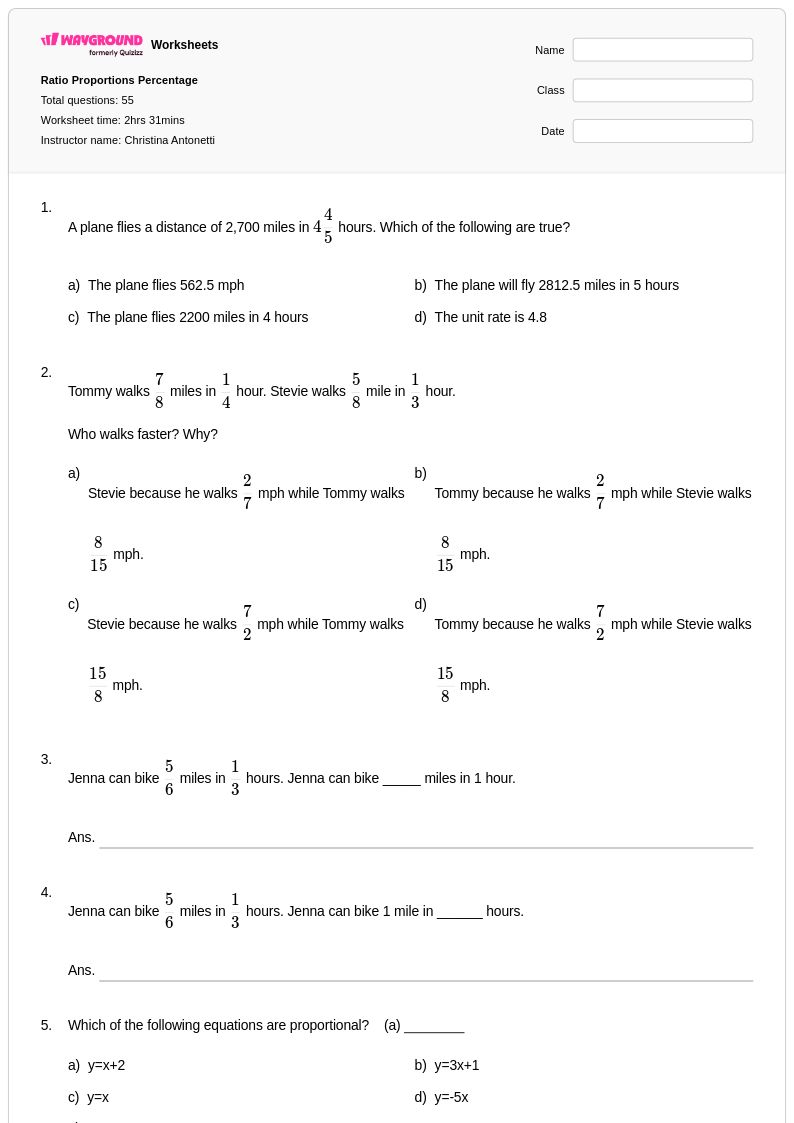
55 Q
6th
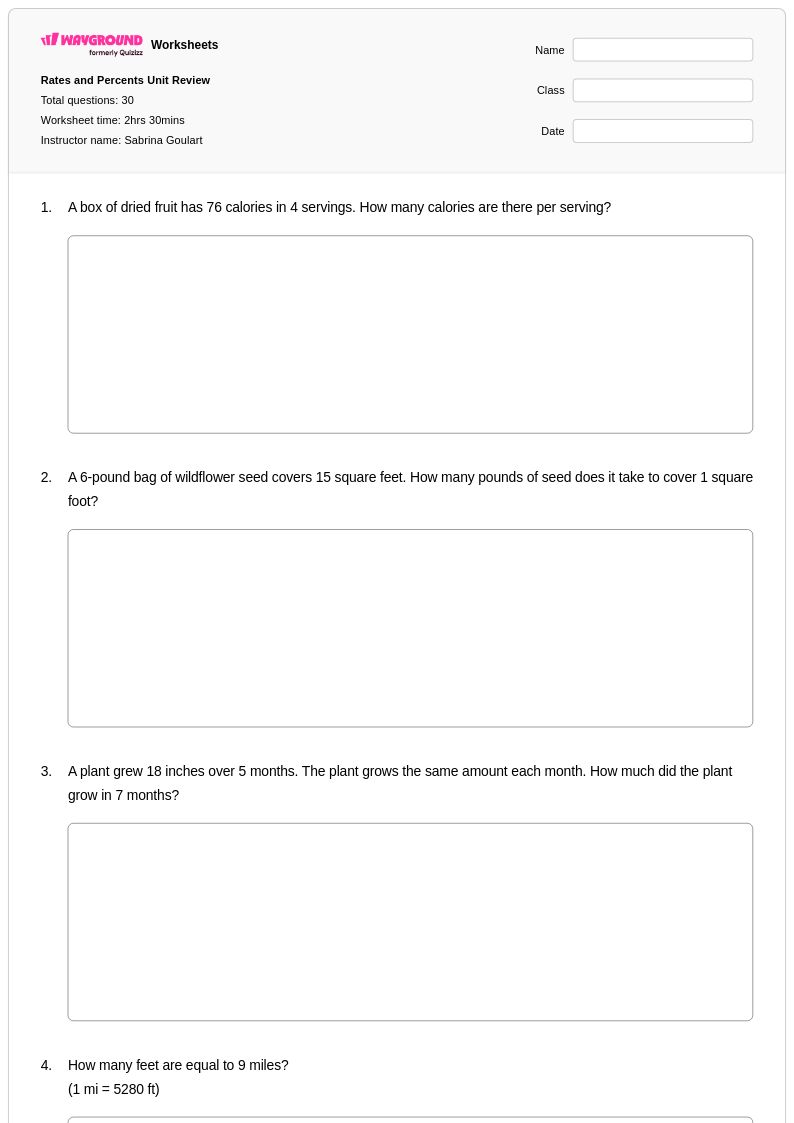
30 Q
6th
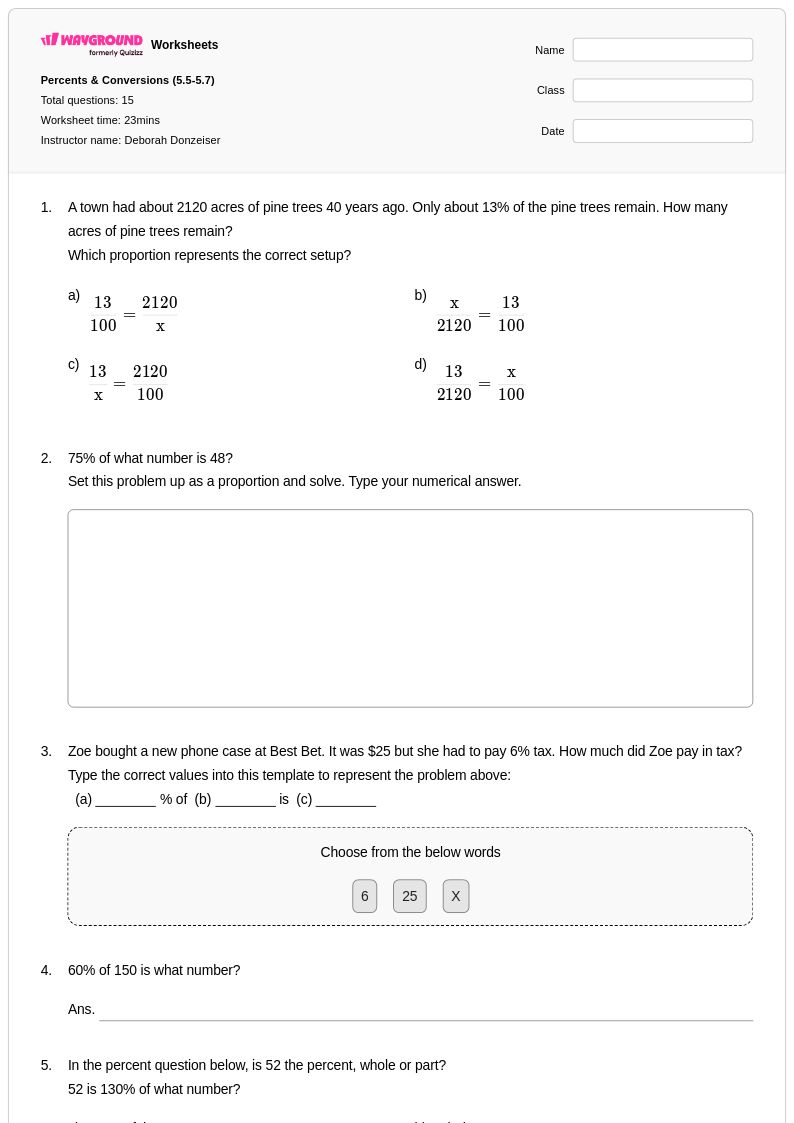
15 Q
6th
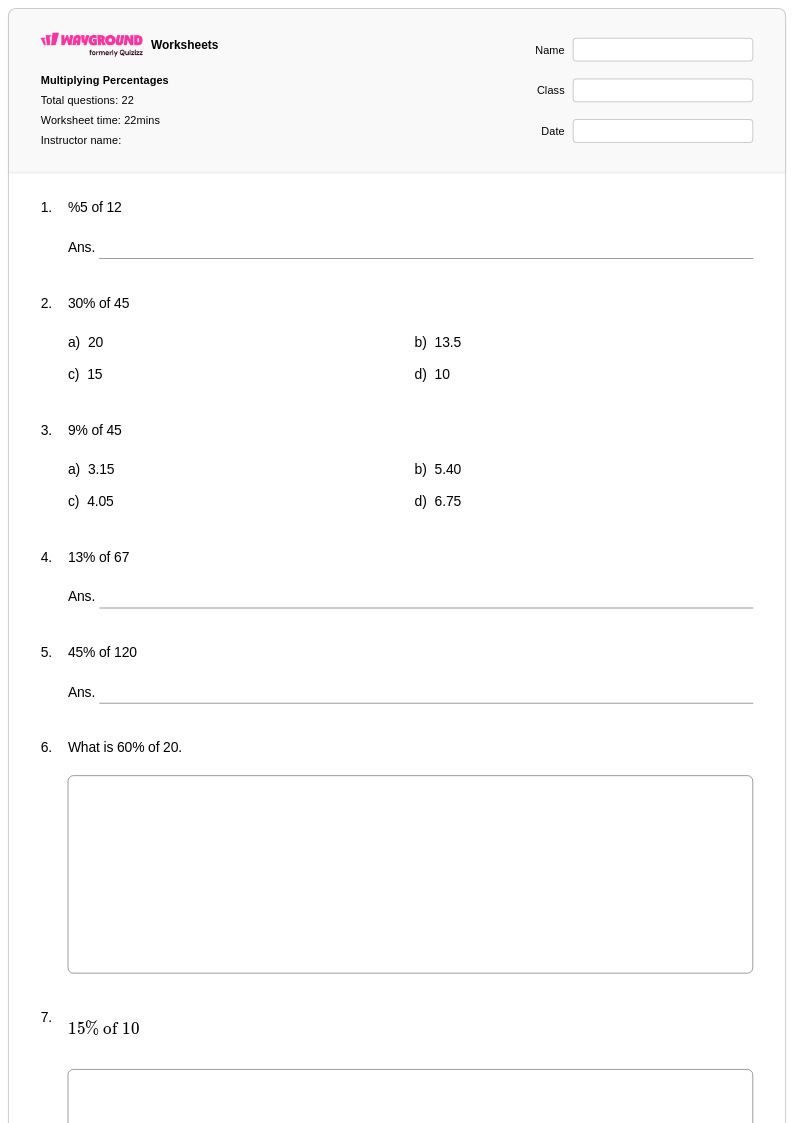
22 Q
6th - 8th
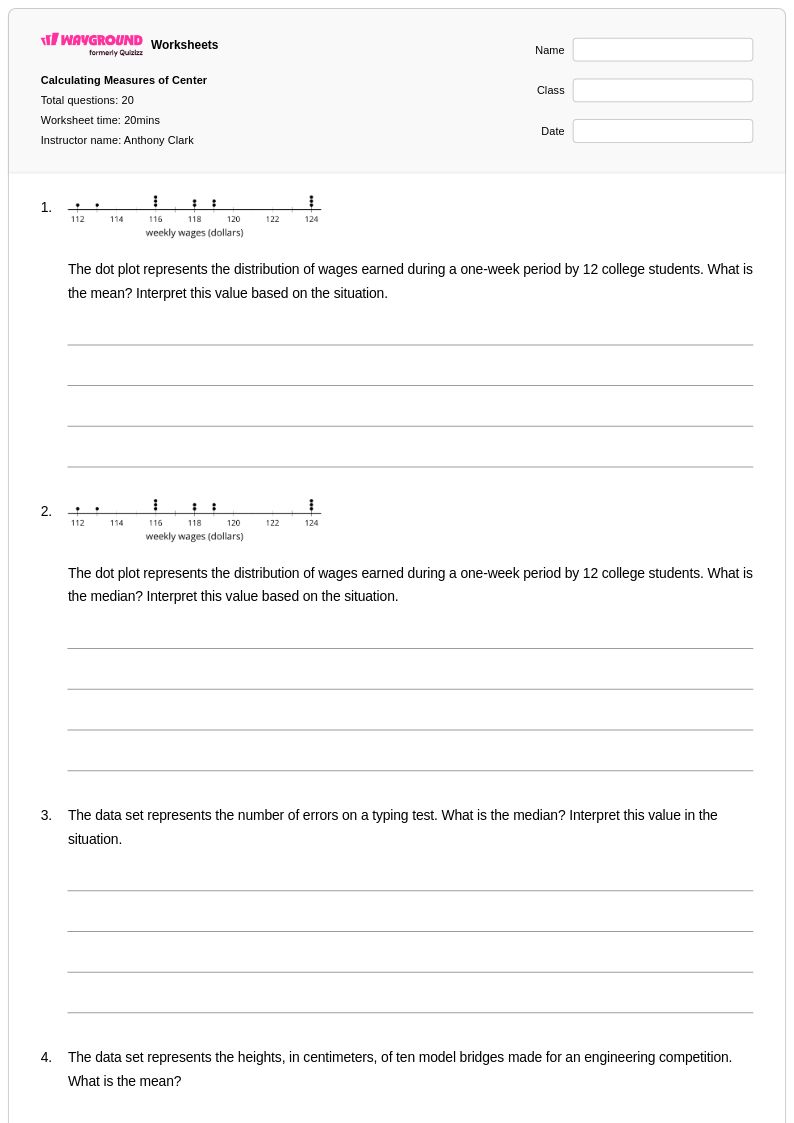
20 Q
6th - Uni
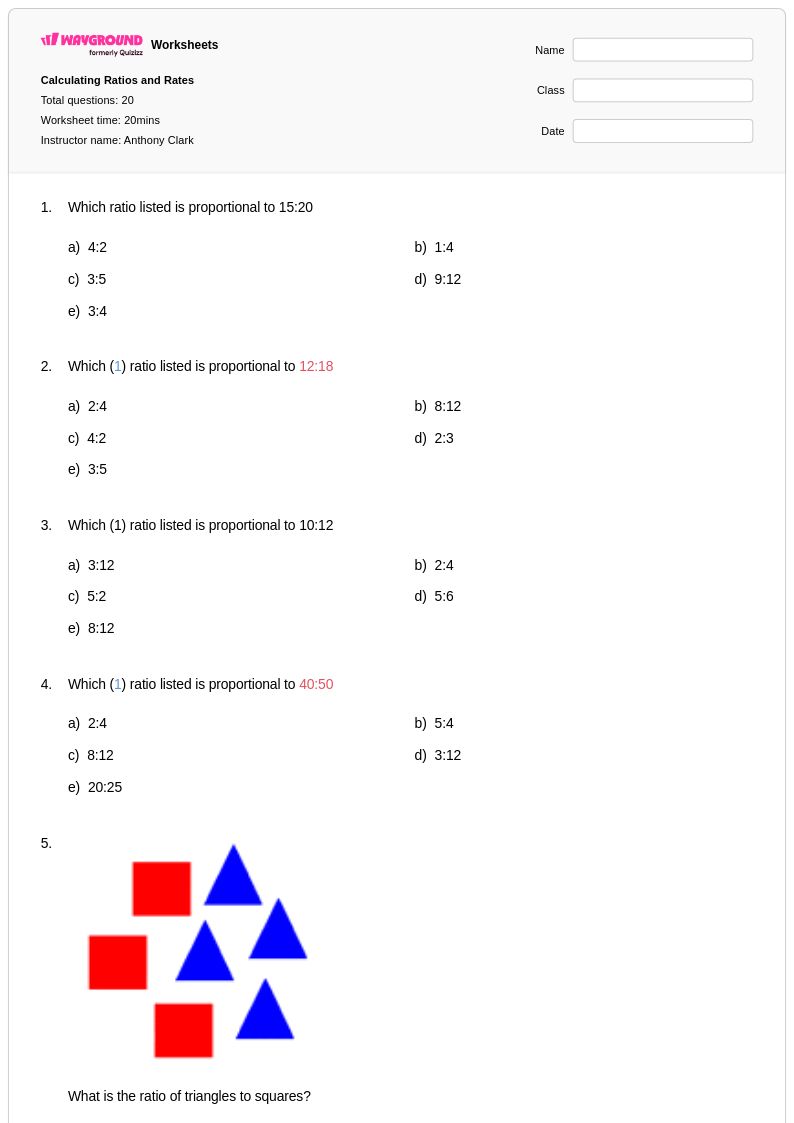
20 Q
6th - Uni
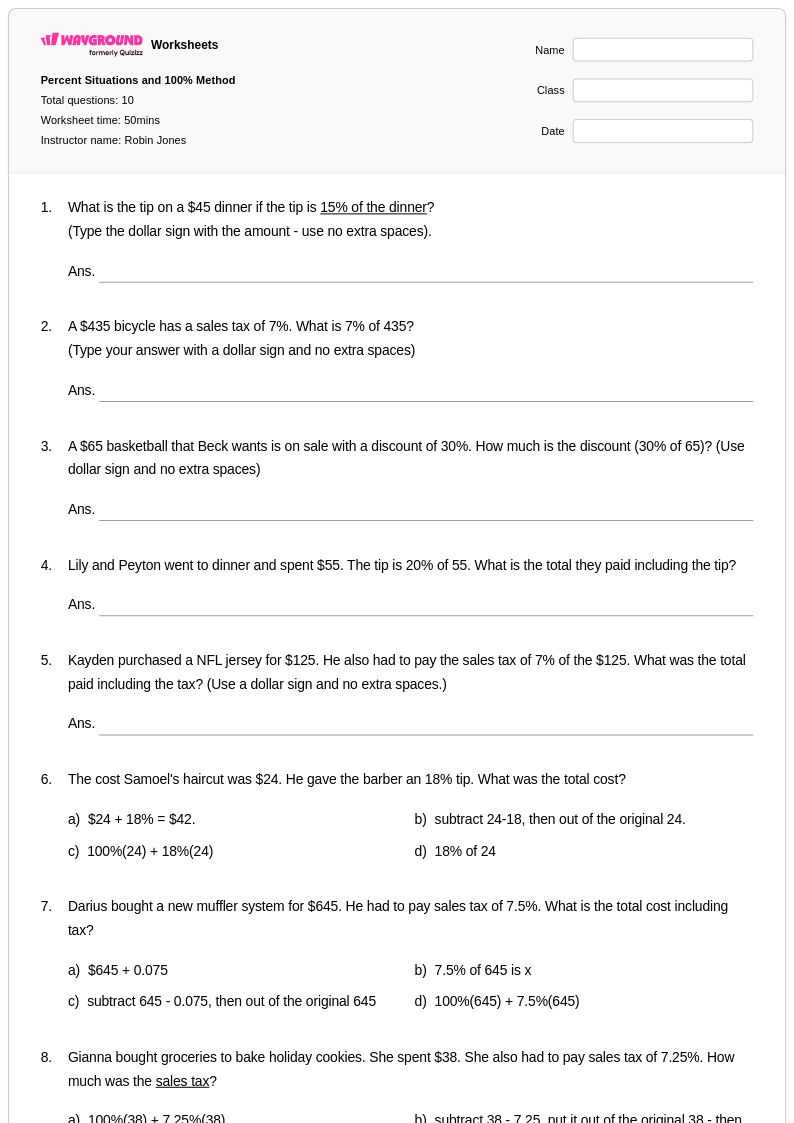
10 Q
6th
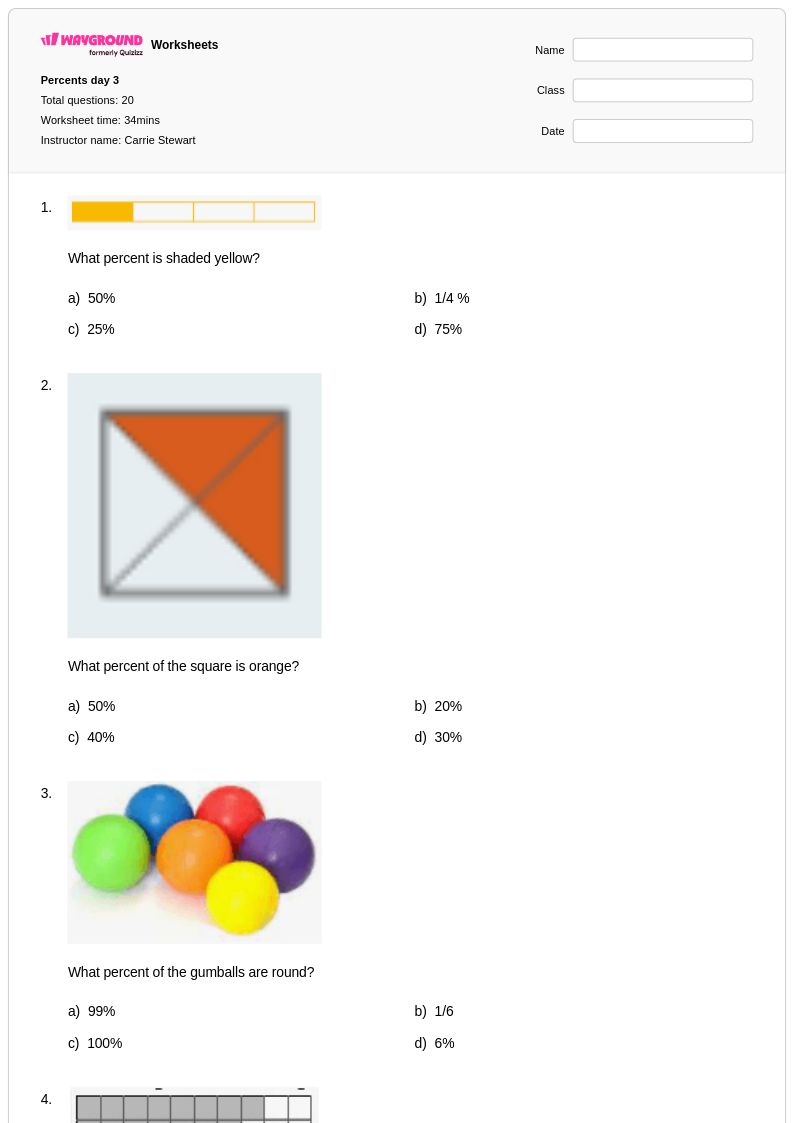
20 Q
6th
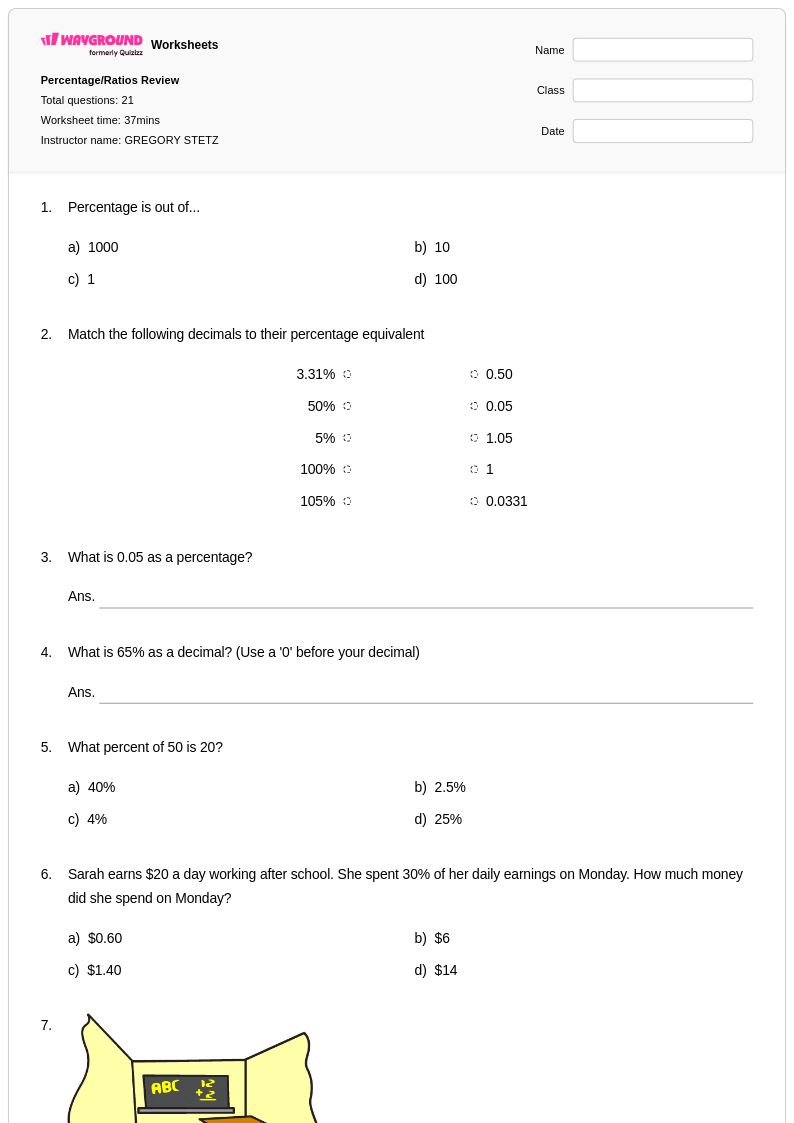
21 Q
6th
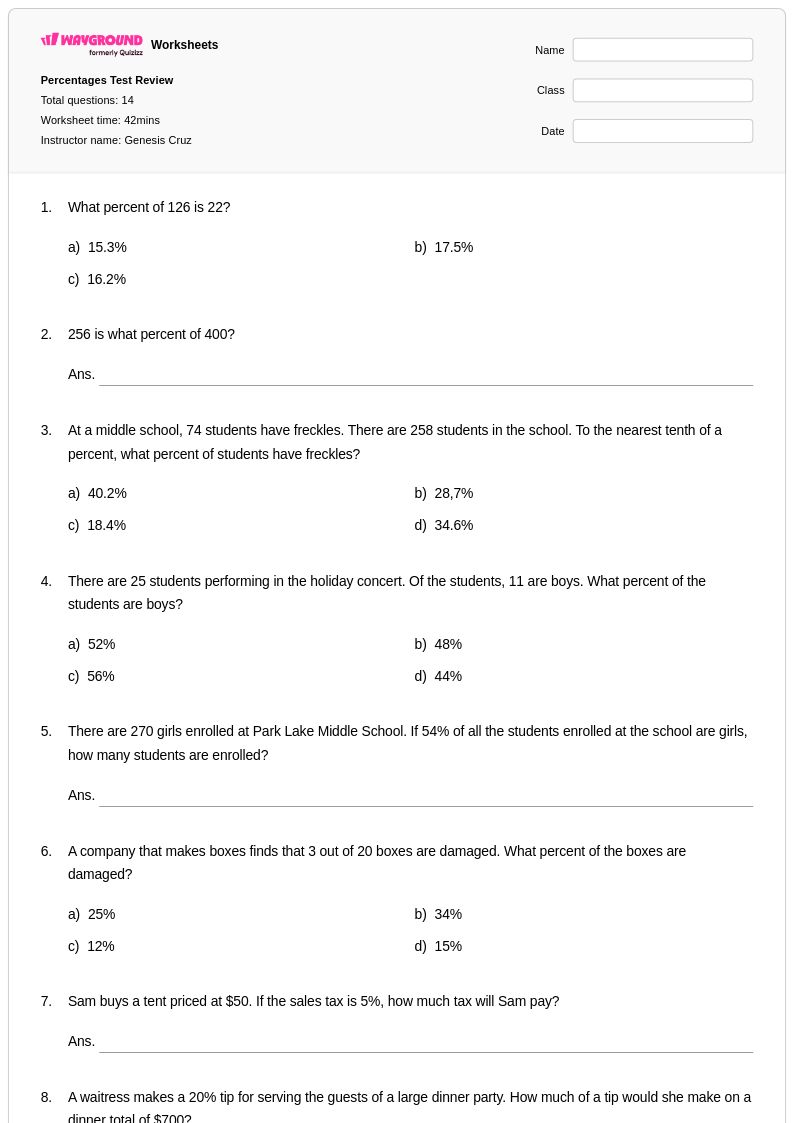
14 Q
6th
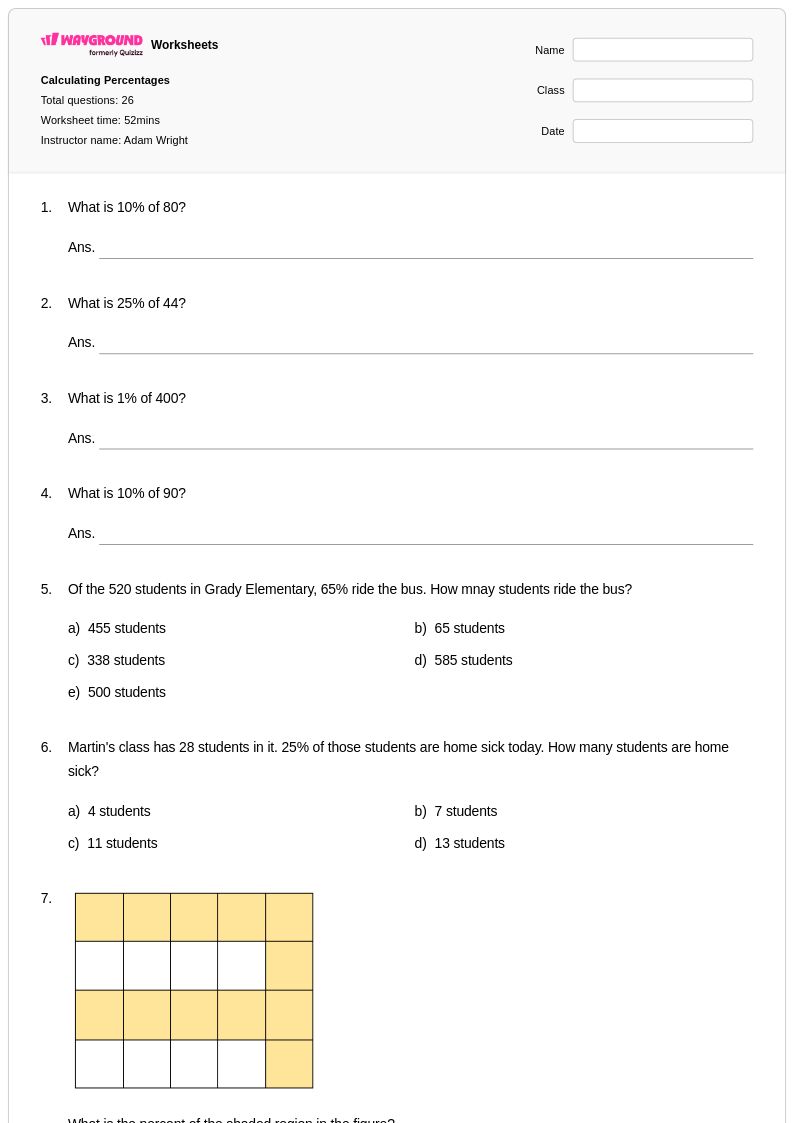
26 Q
6th
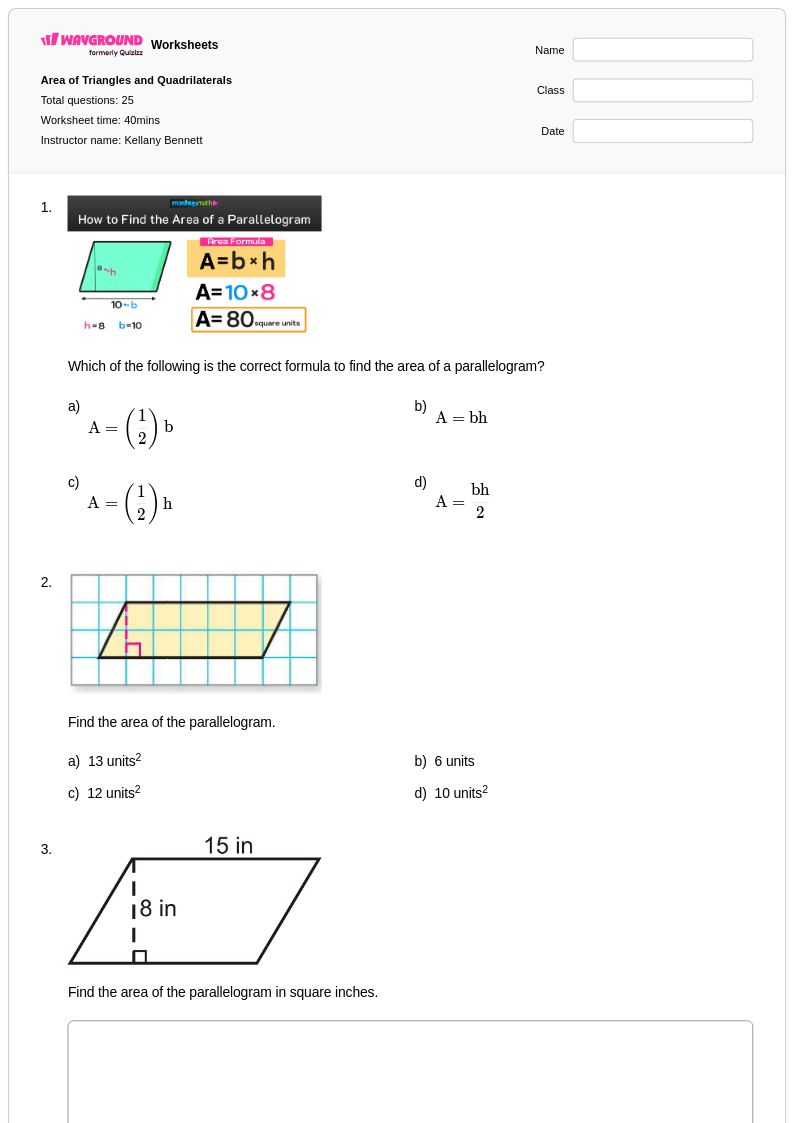
25 Q
6th
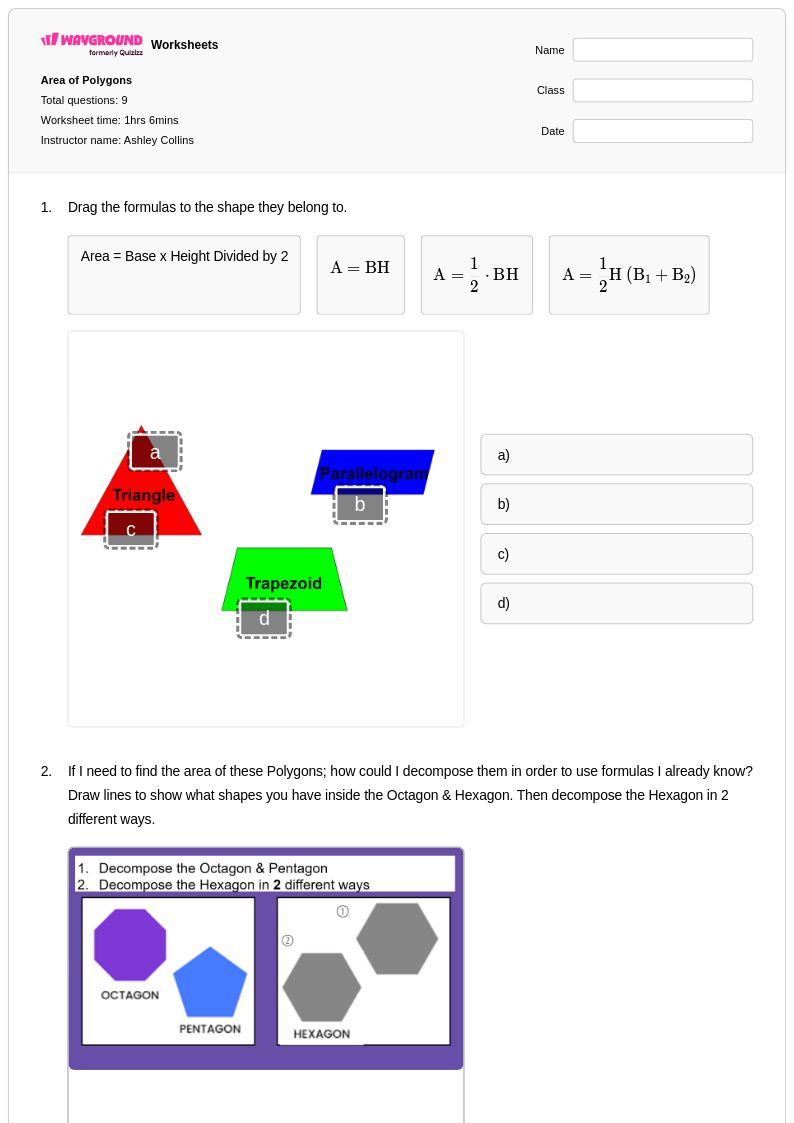
16 Q
6th
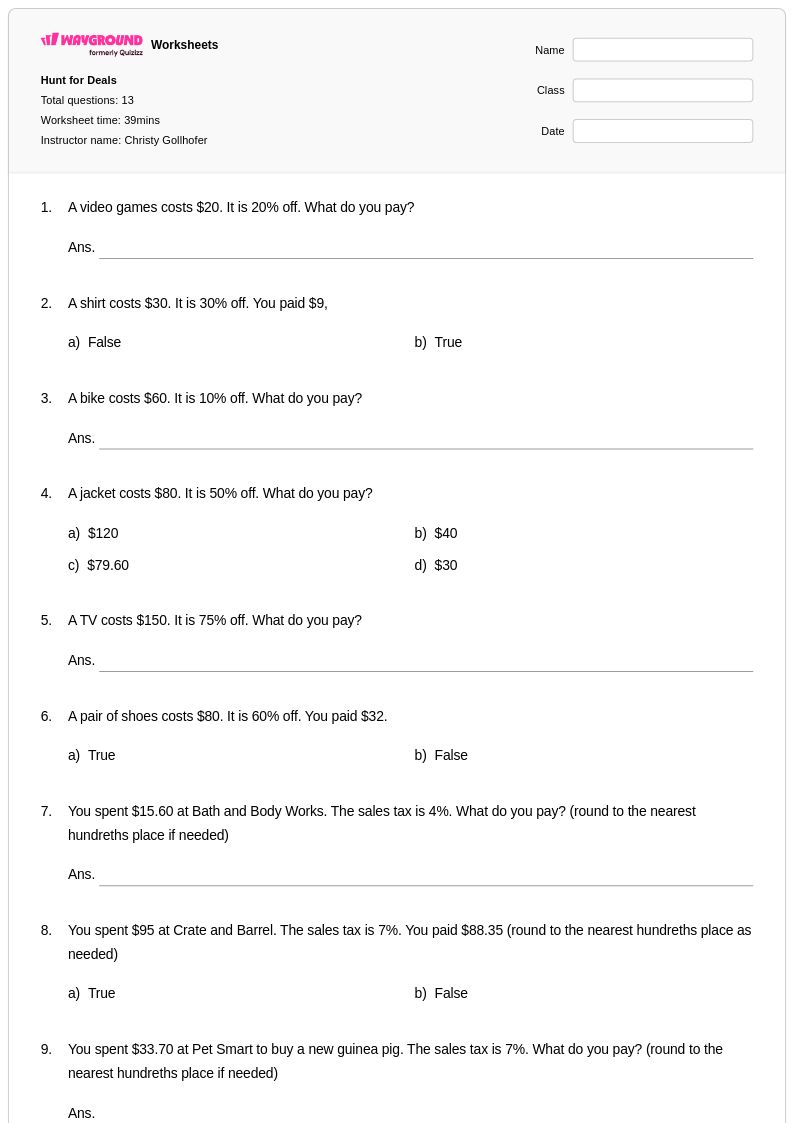
13 Q
6th - 7th
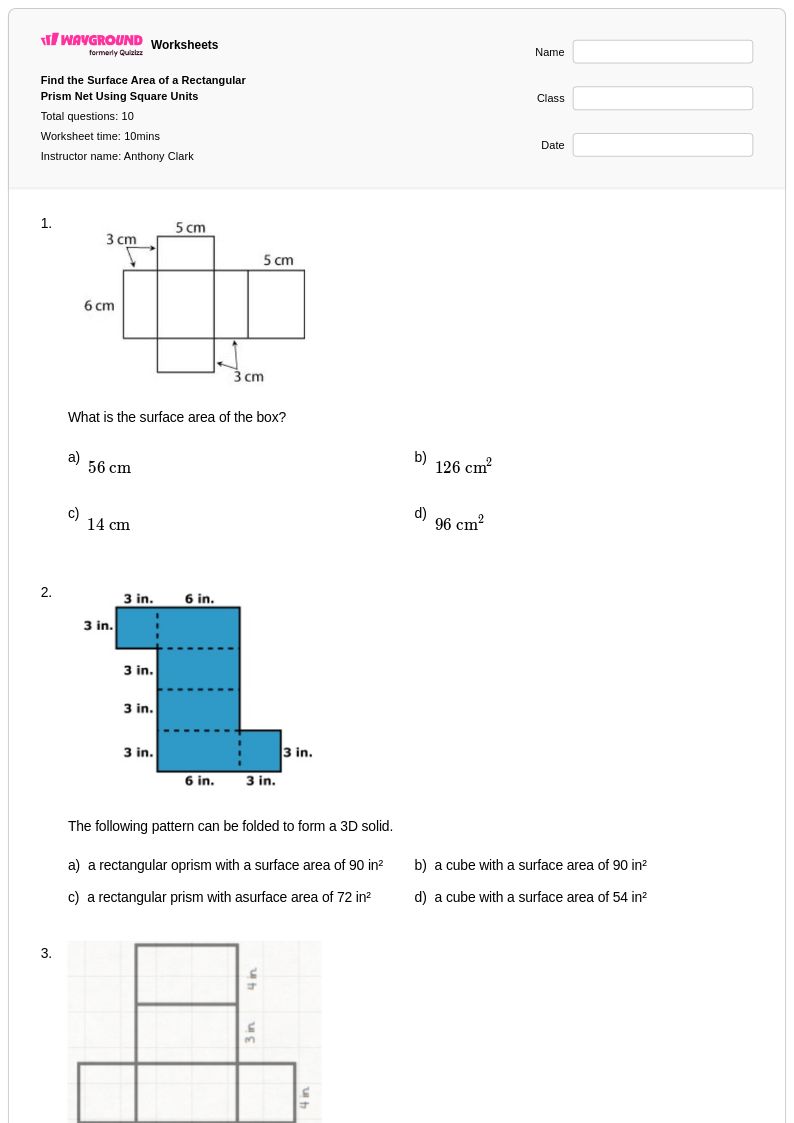
10 Q
6th - Uni
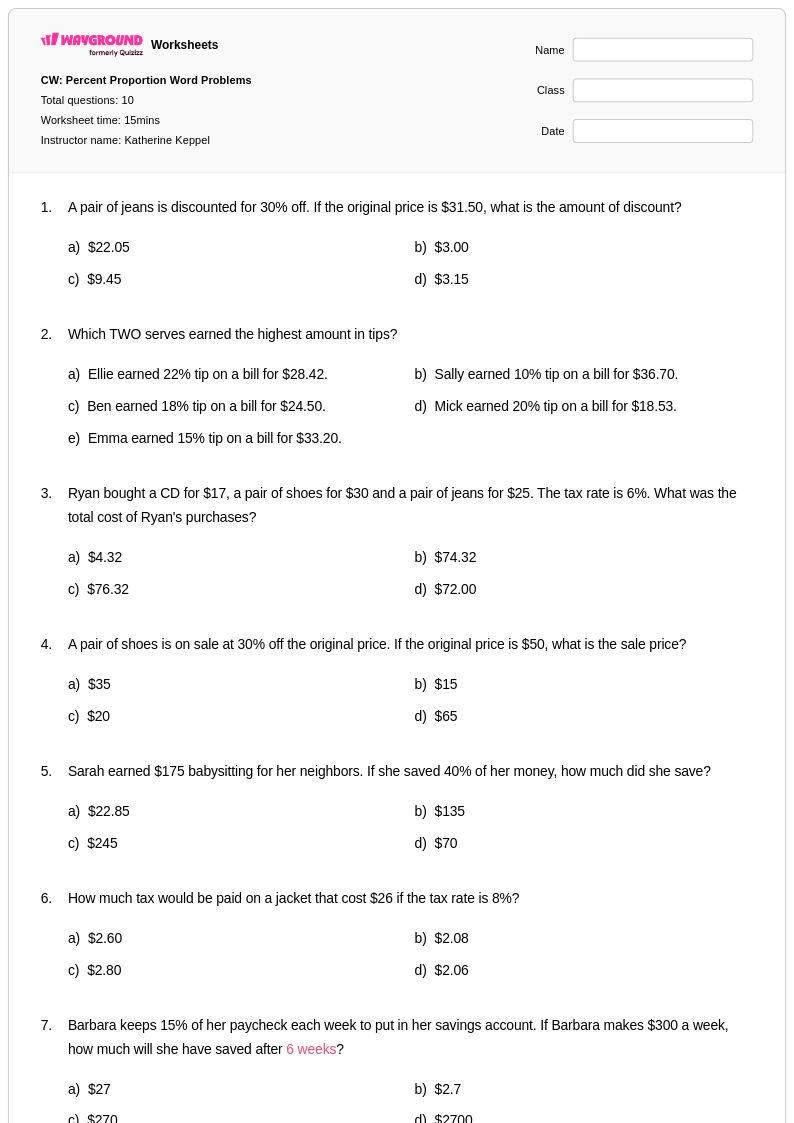
10 Q
6th - 8th
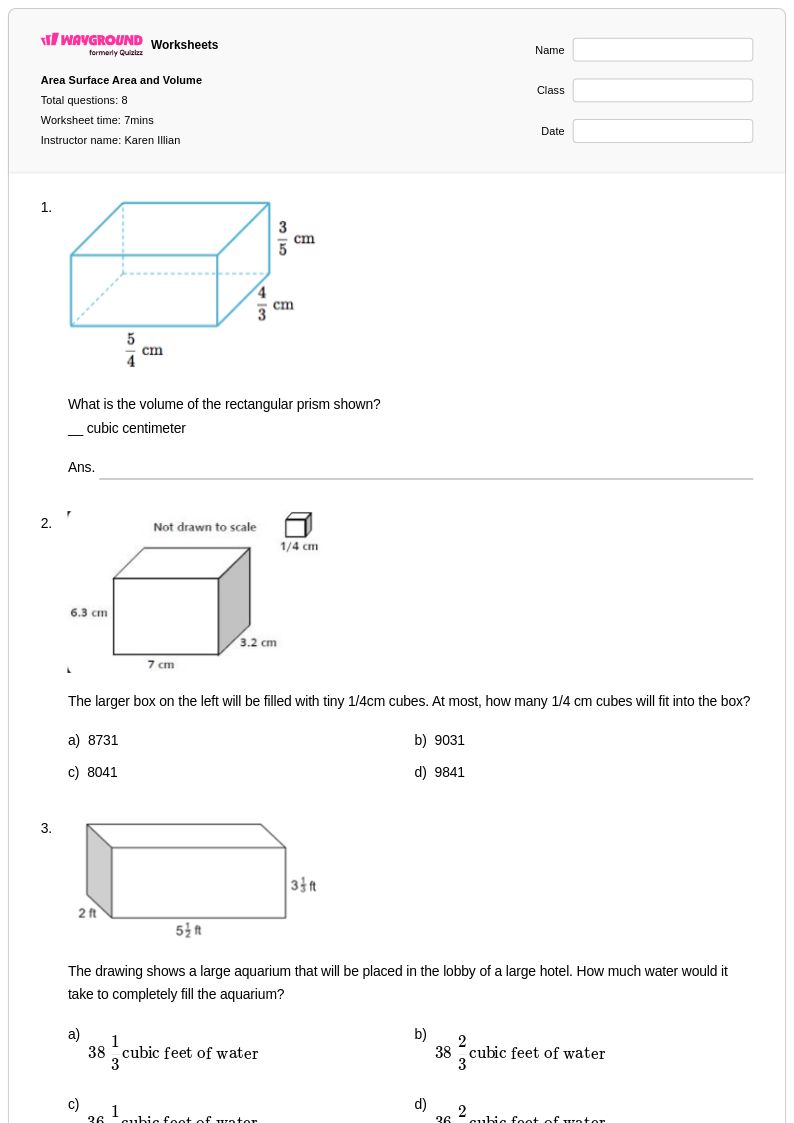
8 Q
6th
Explore Other Subject Worksheets for grade 6
Explore printable Calculating Tip worksheets for Grade 6
Calculating tip worksheets for Grade 6 students provide essential practice in applying percent concepts to real-world scenarios that students will encounter throughout their lives. These comprehensive worksheets available through Wayground (formerly Quizizz) strengthen students' ability to convert percentages to decimals, perform multi-step calculations, and understand the practical applications of mathematical concepts in everyday situations like dining and service industries. The practice problems progress from basic tip calculations using common percentages like 15% and 20% to more complex scenarios involving bill splitting, tax considerations, and custom tip amounts. Each worksheet includes detailed answer keys that allow students to check their work independently, and the free printables are available in convenient PDF format for seamless classroom integration and homework assignments.
Wayground (formerly Quizizz) empowers educators with an extensive collection of teacher-created resources, featuring millions of carefully curated worksheets that support Grade 6 mathematics instruction in calculating tips and related percent applications. The platform's robust search and filtering capabilities enable teachers to quickly locate materials that align with specific learning standards and match their students' diverse skill levels. These differentiation tools prove invaluable for planning targeted remediation sessions for struggling learners while simultaneously providing enrichment opportunities for advanced students ready for more challenging tip calculation scenarios. The flexible customization options allow educators to modify worksheets to suit their classroom needs, whether delivering instruction through printable materials or digital formats, ensuring that every student receives appropriate skill practice regardless of their learning environment or technological resources.
FAQs
How do I teach sixth graders to calculate a tip?
What exercises help Grade 6 students practice calculating tips?
What mistakes do students make when calculating tips?
How can I use a calculating tip worksheet in class?
How does calculating tips fit into the Grade 6 math curriculum?
What grade do students learn to calculate tips?
How can I differentiate calculating tip practice for mixed-ability students?