Free Printable Cell Transport Worksheets for Grade 7
Explore Wayground's comprehensive collection of Grade 7 cell transport worksheets featuring free printables, practice problems, and answer keys to help students master passive and active transport mechanisms in biological systems.
Explore printable Cell Transport worksheets for Grade 7
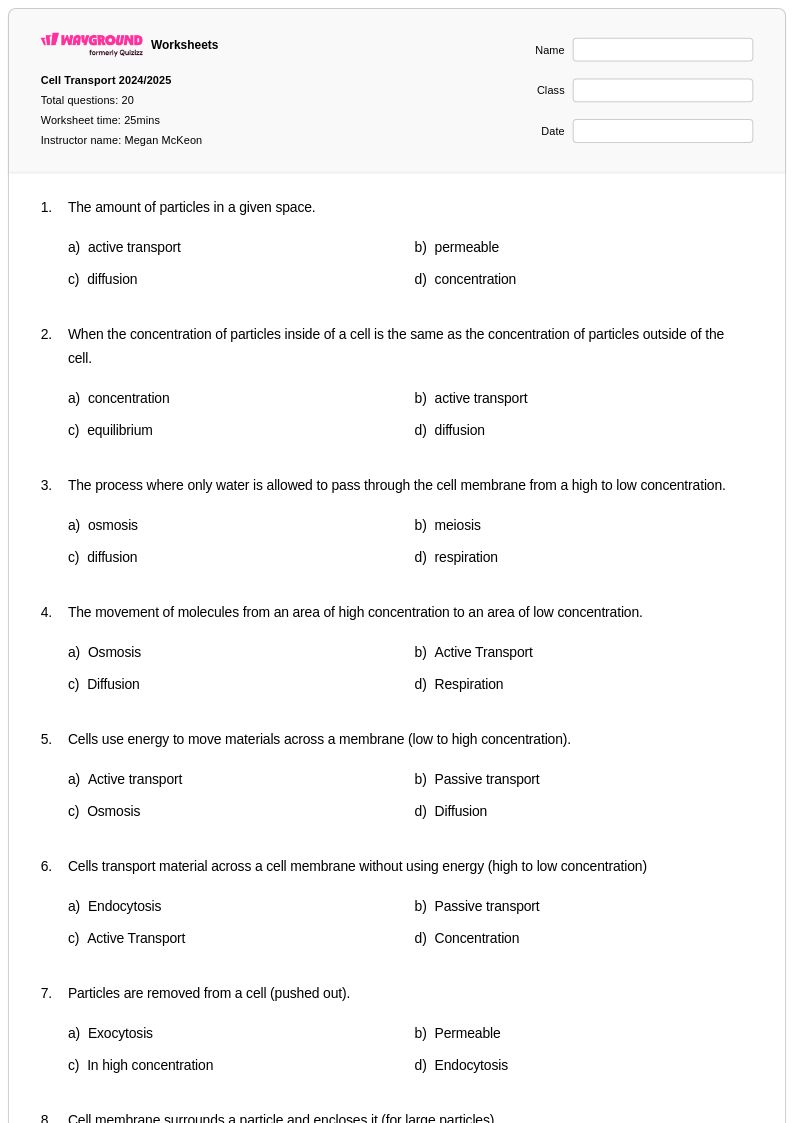
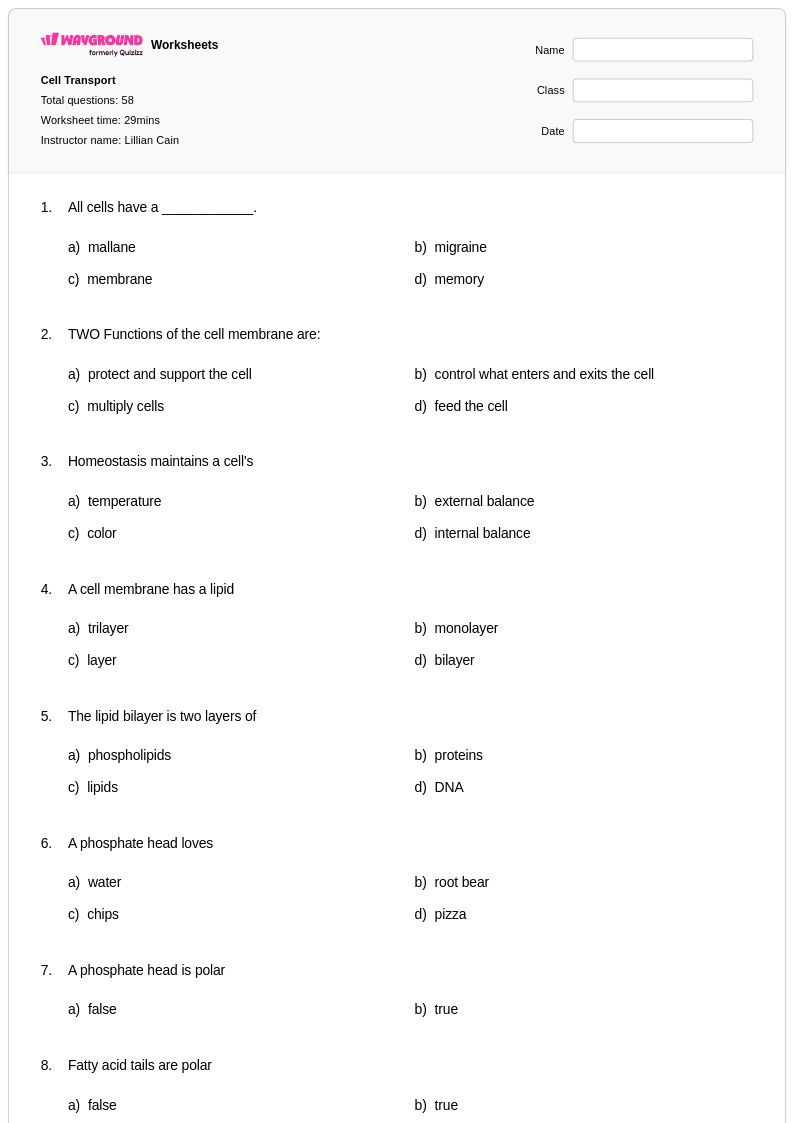
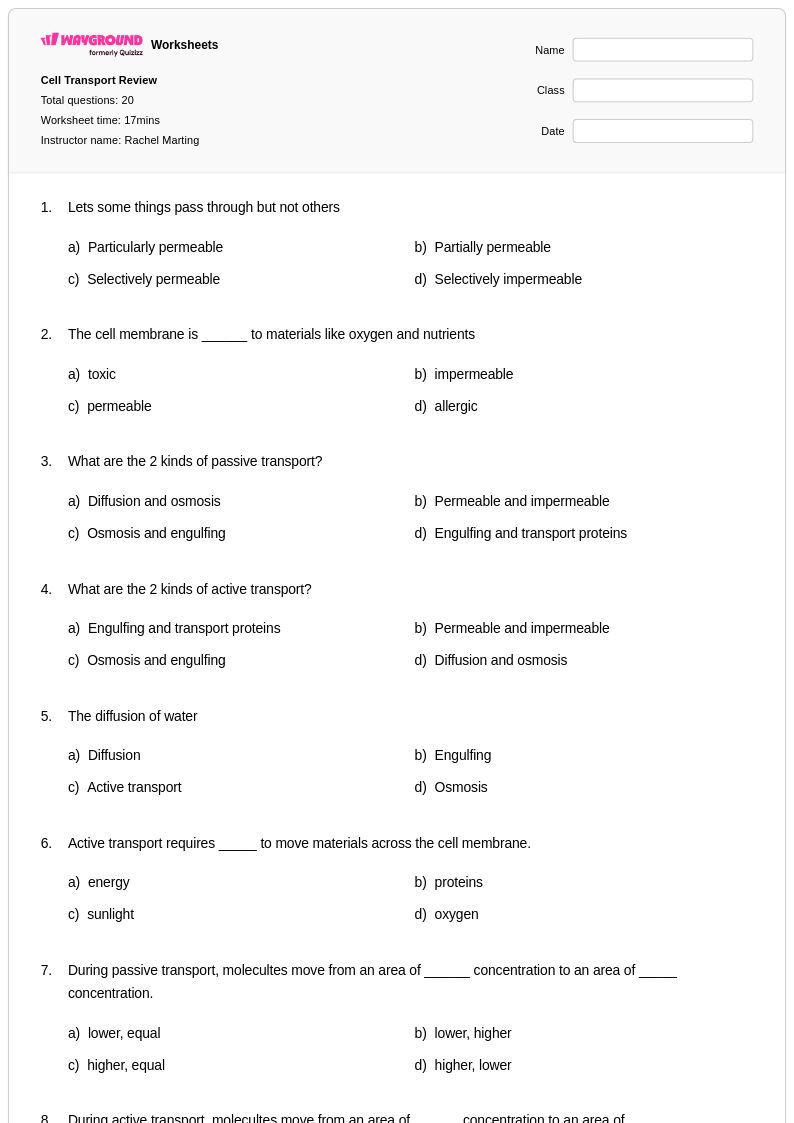
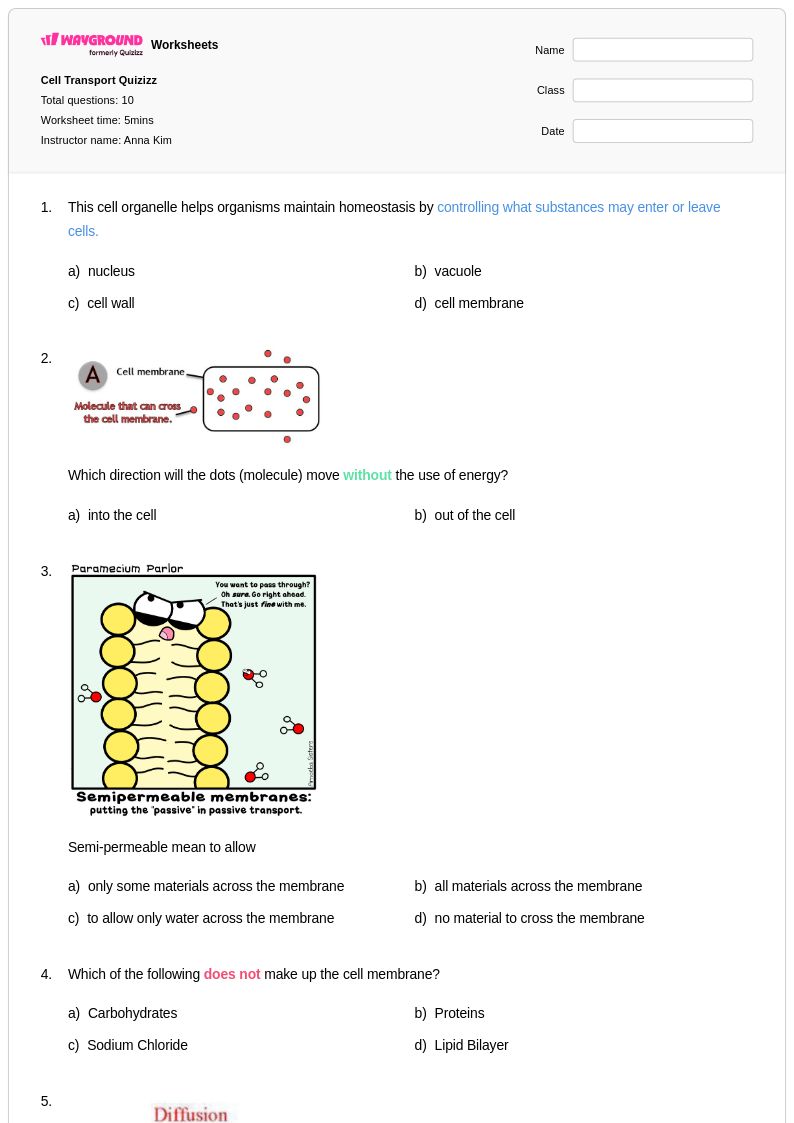
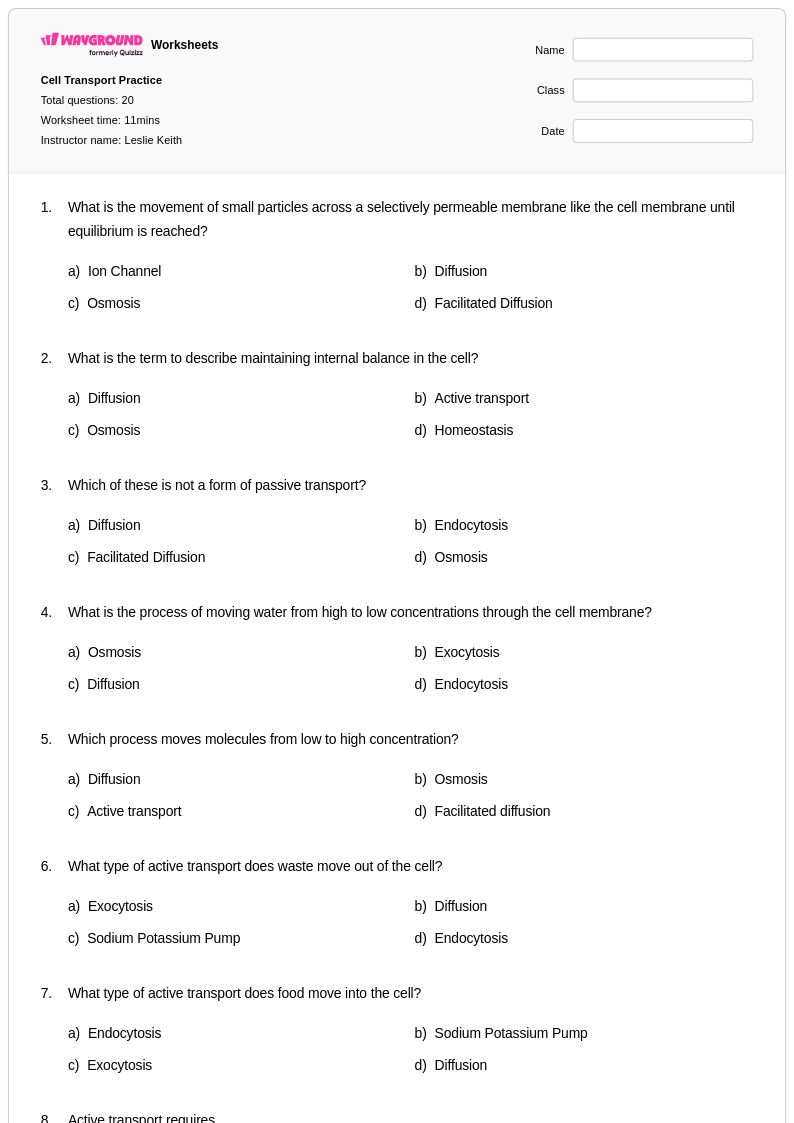
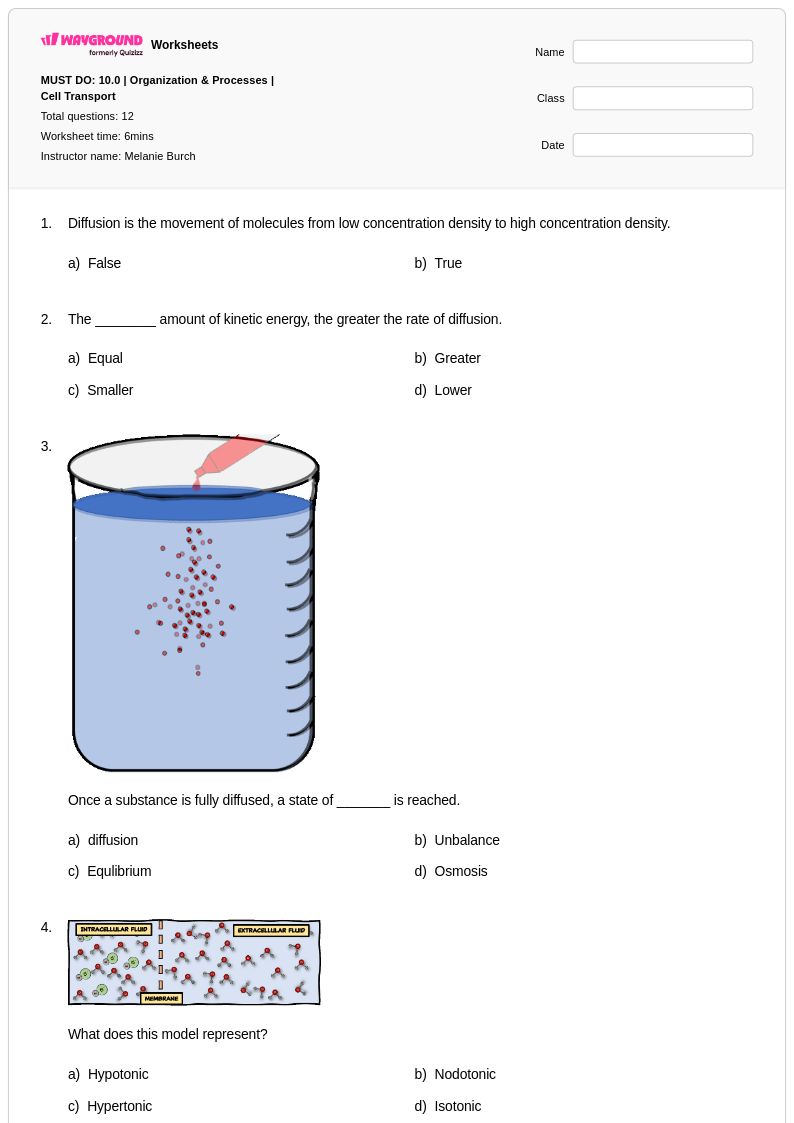
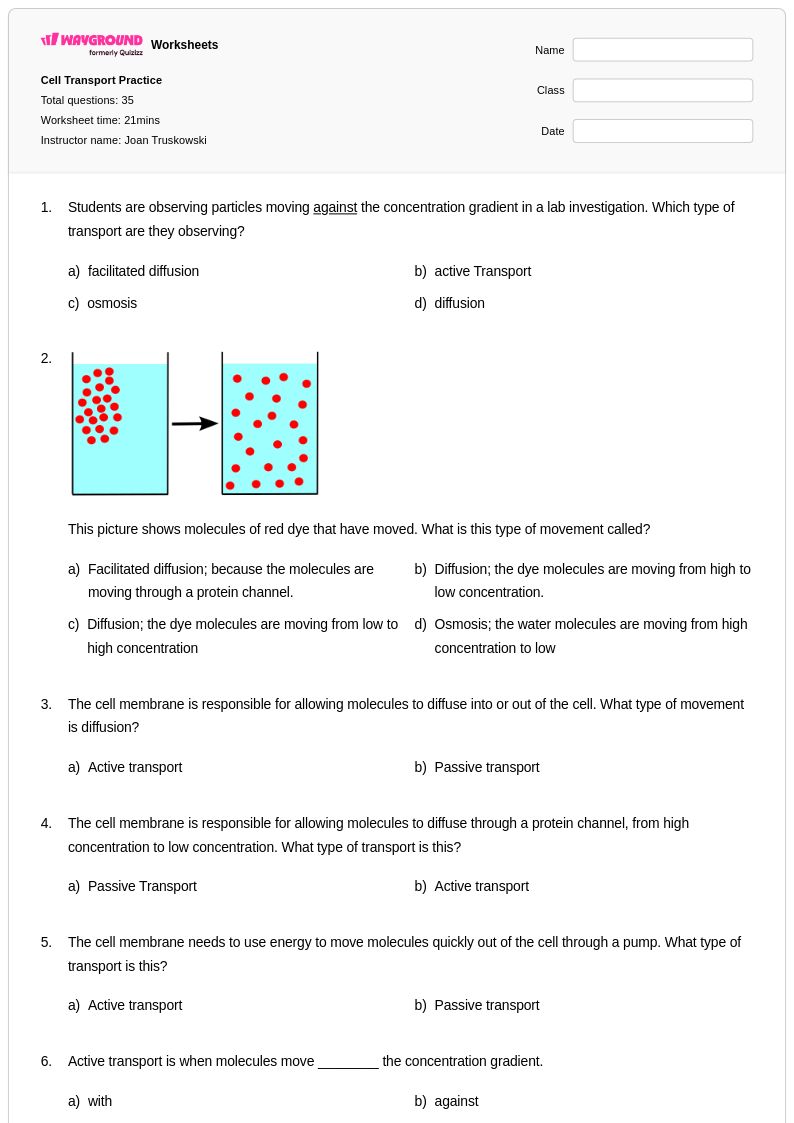
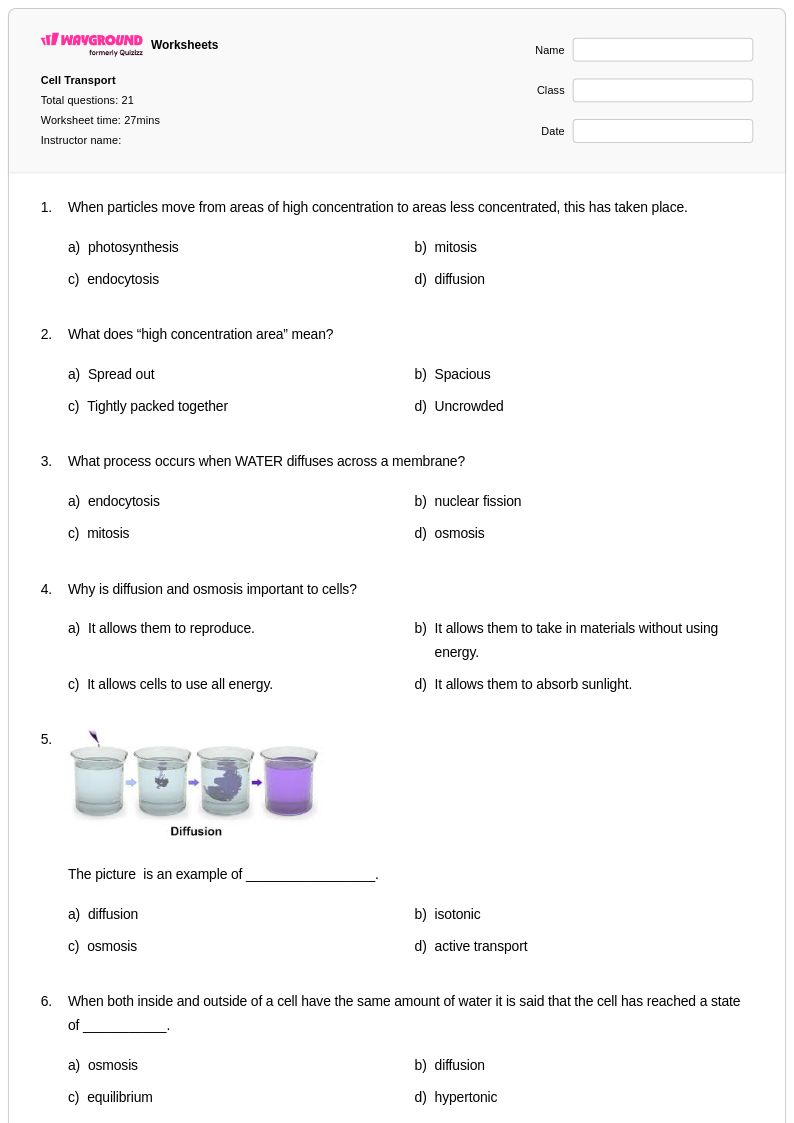
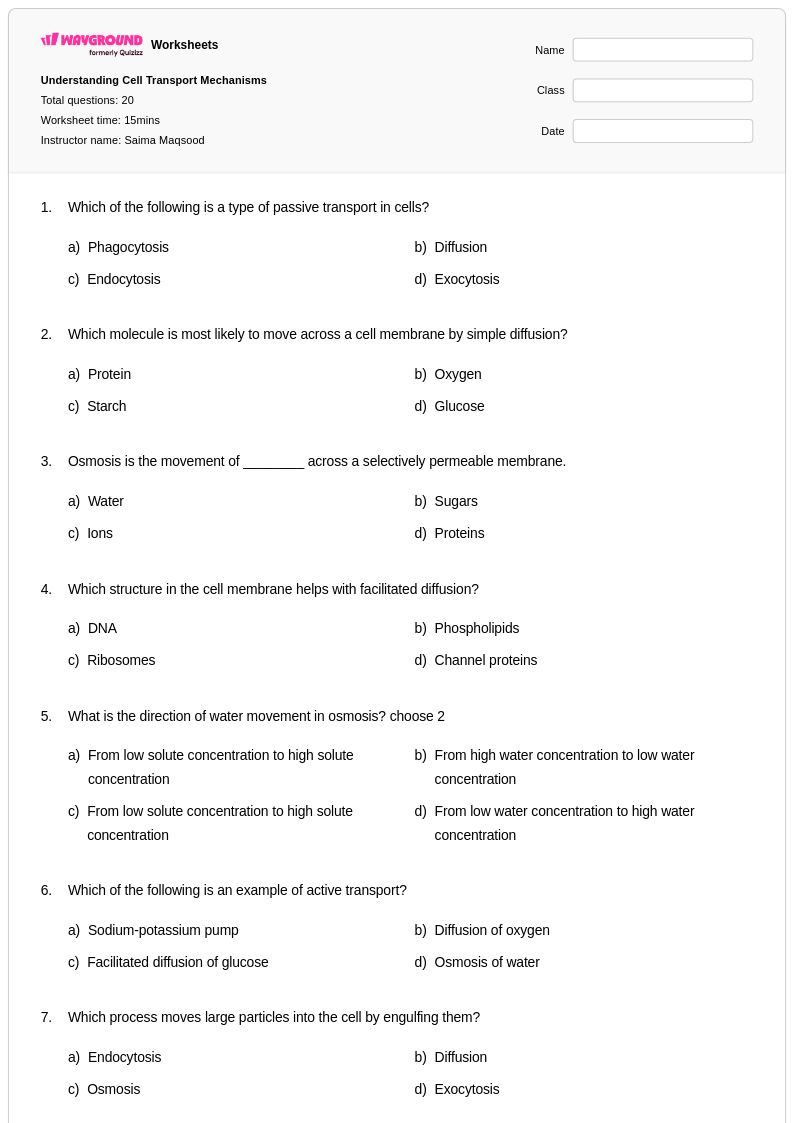
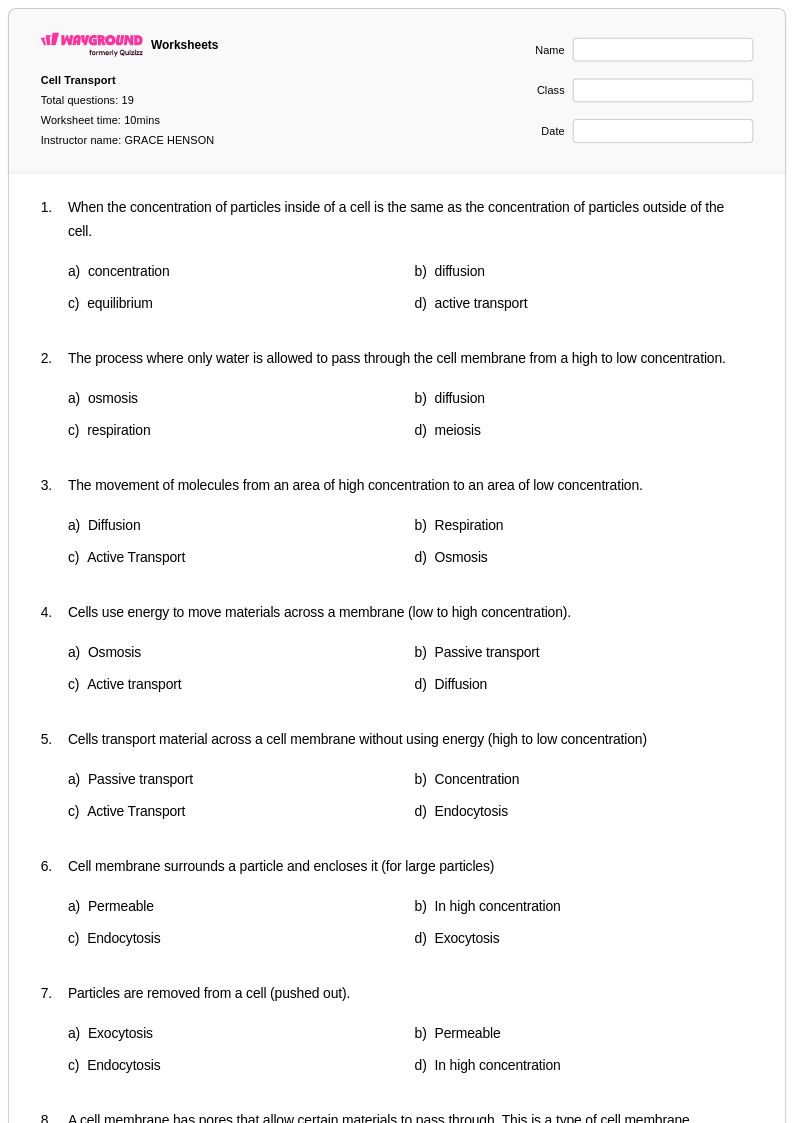
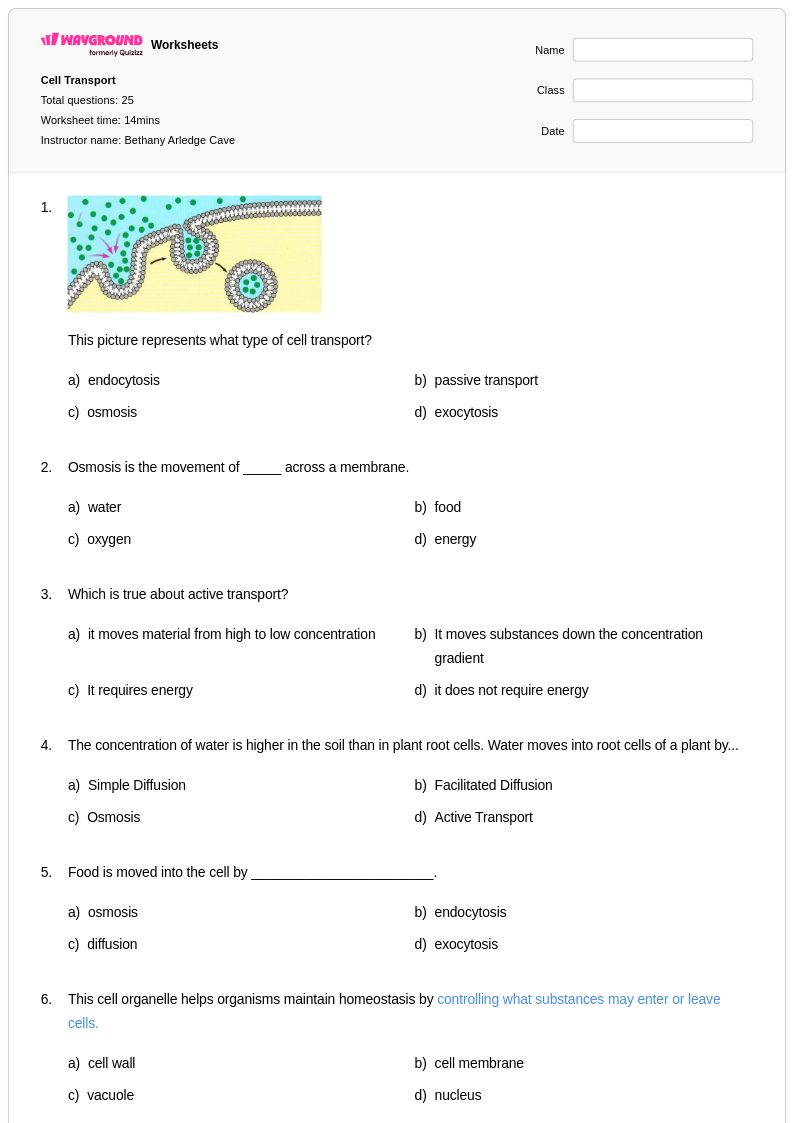
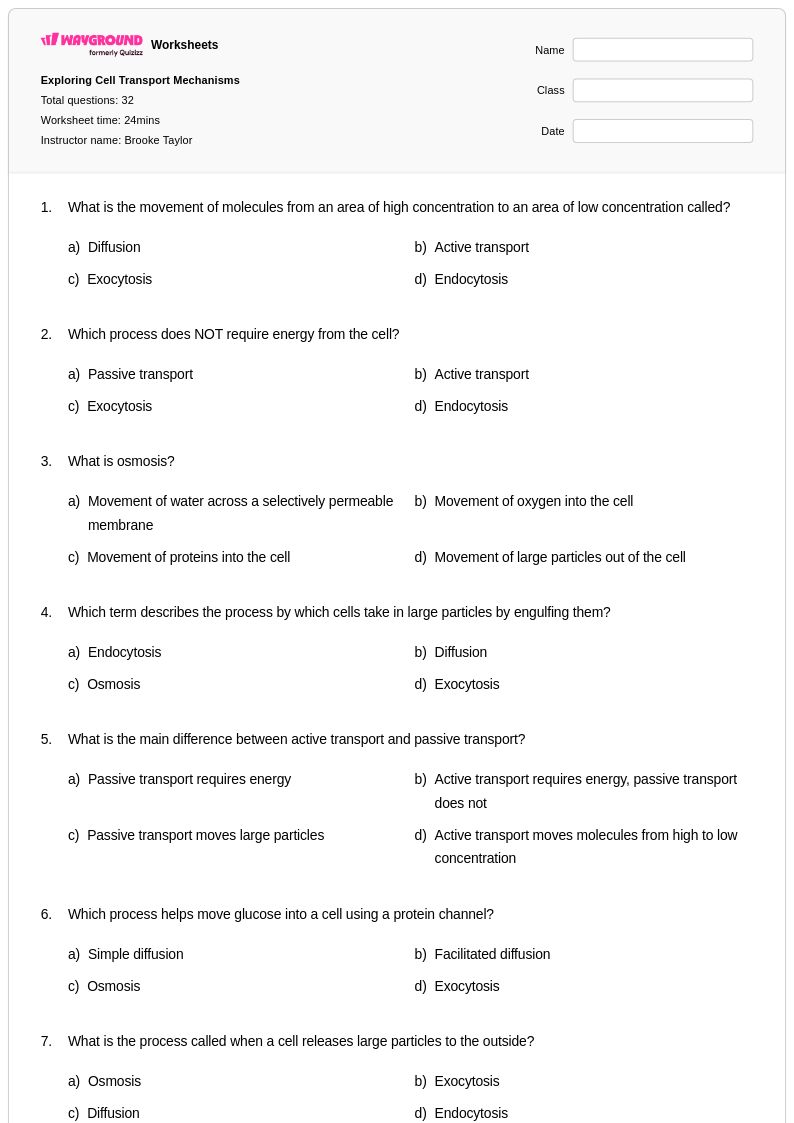
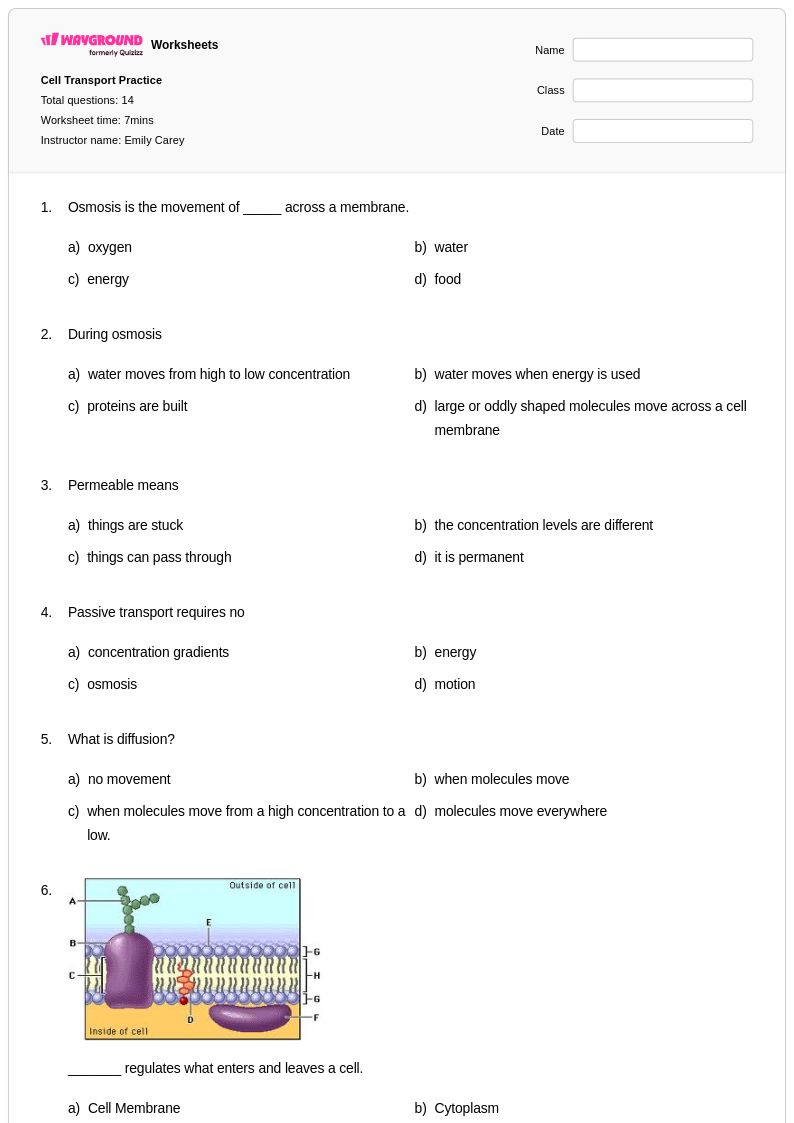
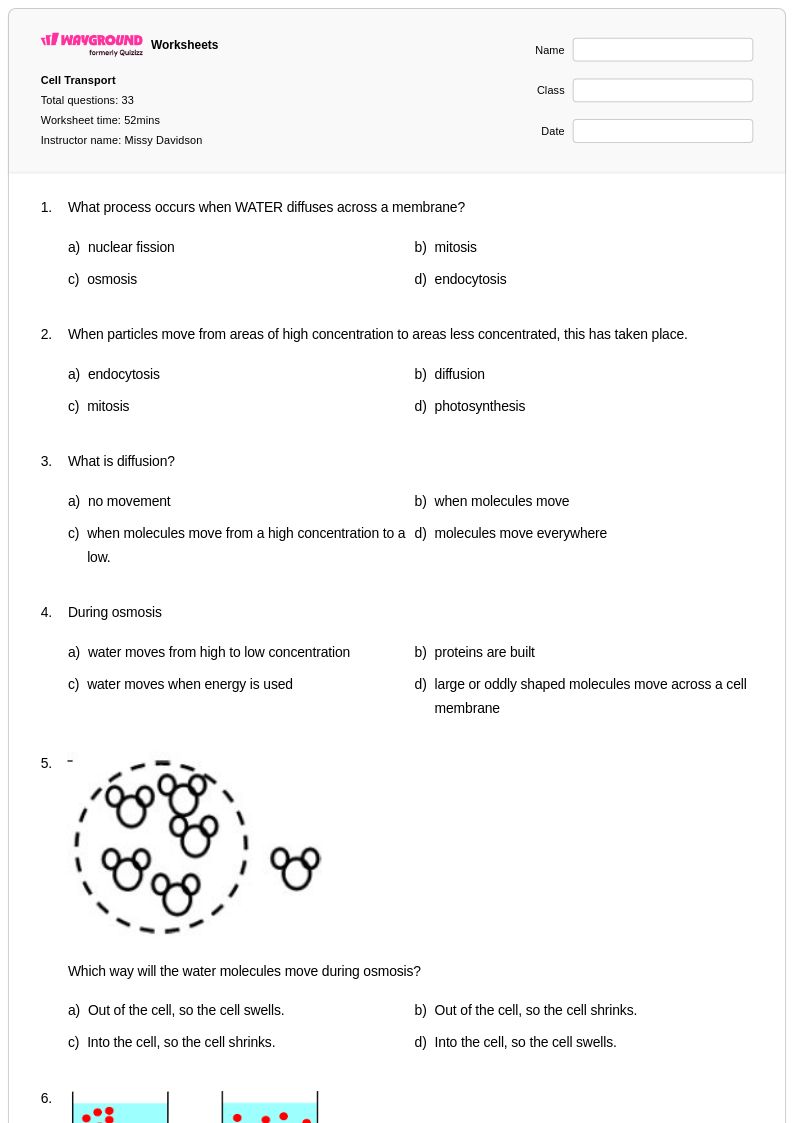
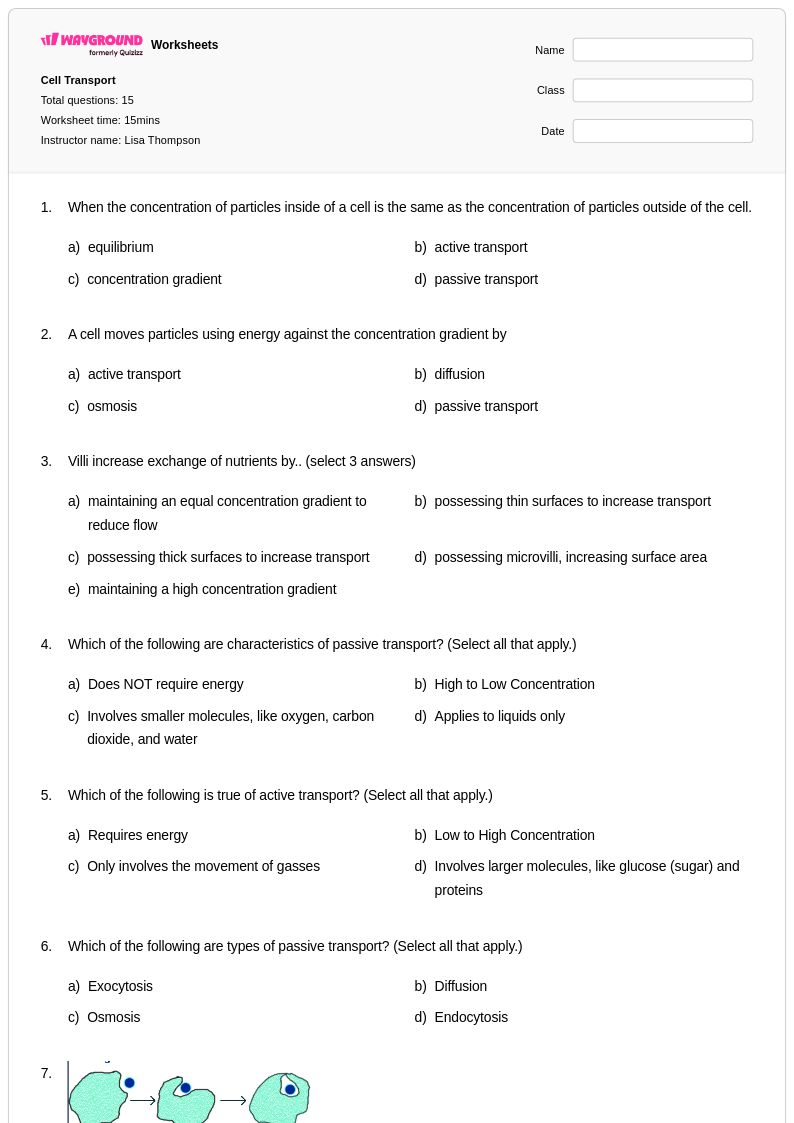
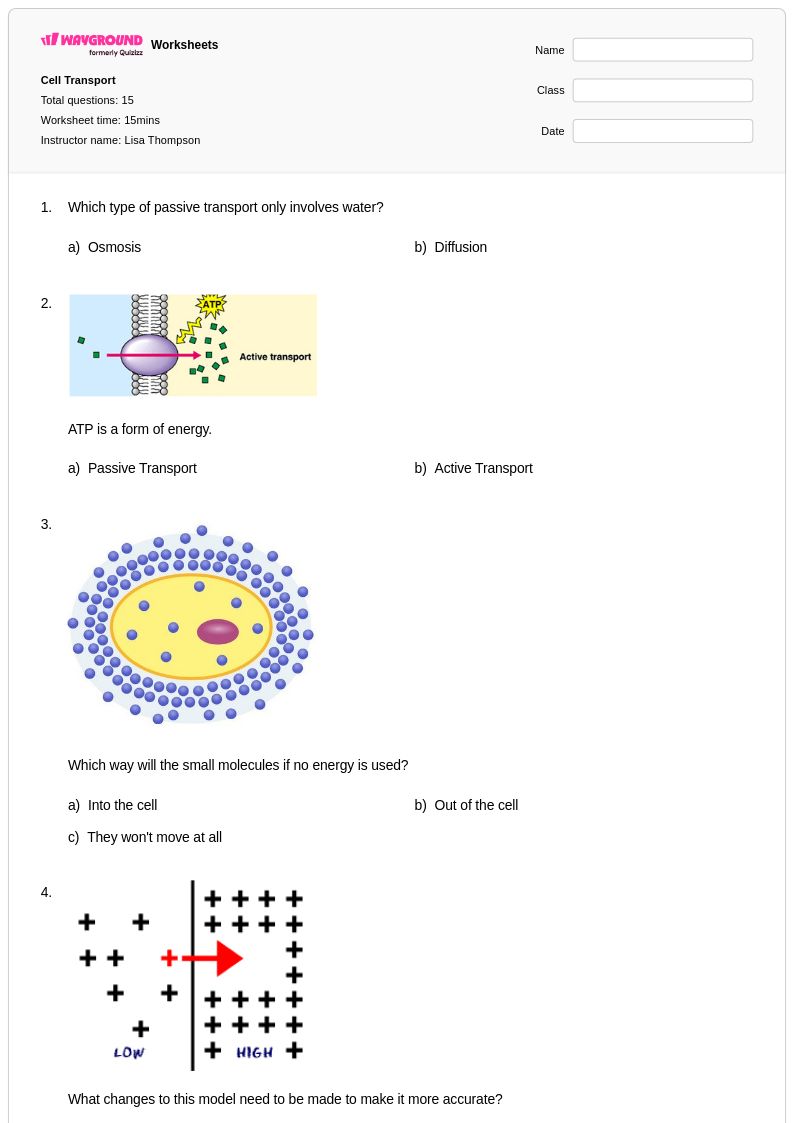
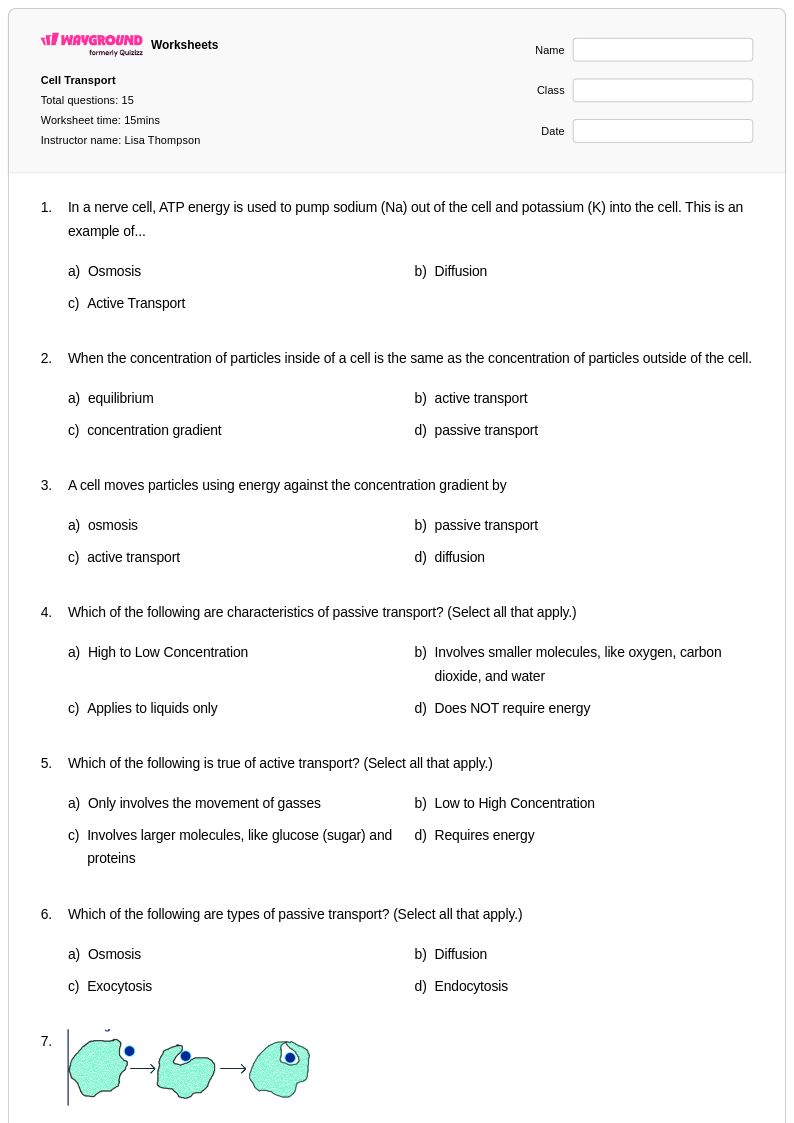
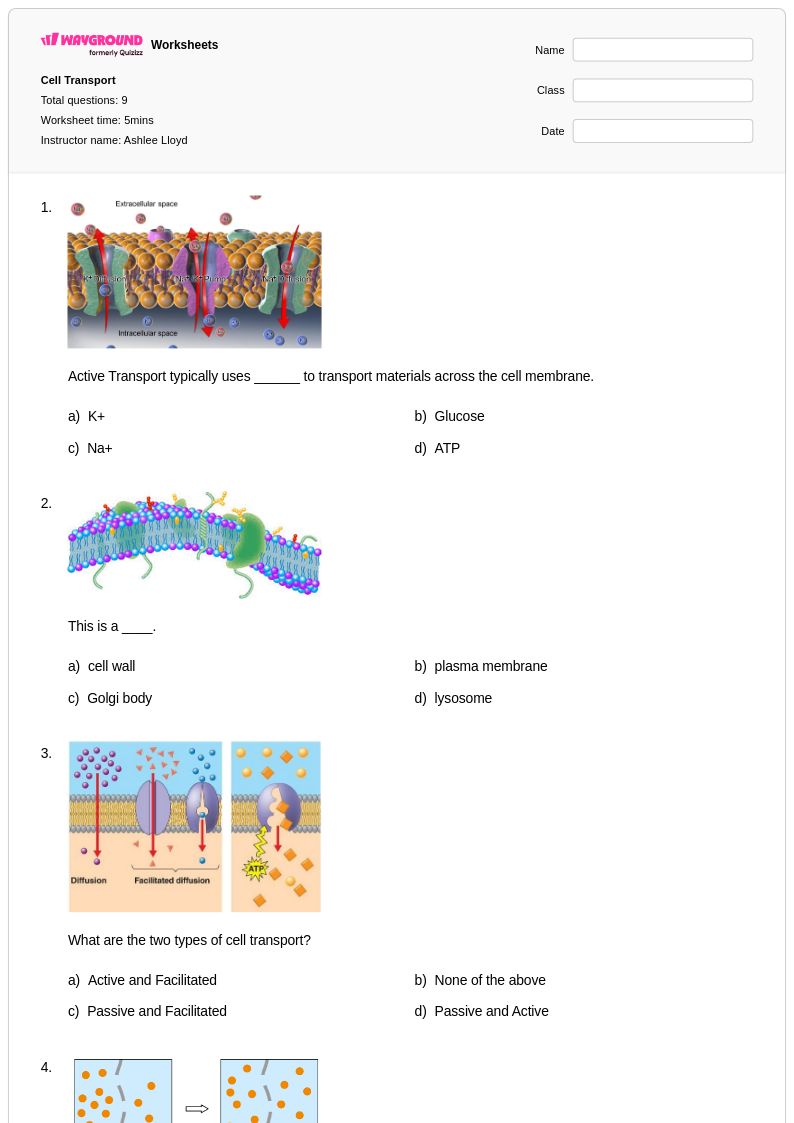
Cell transport worksheets for Grade 7 students through Wayground (formerly Quizizz) provide comprehensive coverage of how materials move across cell membranes, including passive transport processes like diffusion and osmosis, as well as active transport mechanisms. These expertly designed worksheets strengthen students' understanding of concentration gradients, membrane permeability, and the energy requirements for different transport methods through engaging practice problems that progress from basic vocabulary identification to complex scenario analysis. Each worksheet collection includes detailed answer keys and is available as free printables in convenient pdf format, allowing educators to seamlessly integrate cell transport concepts into their biology curriculum while providing students with varied opportunities to master this fundamental cellular process.
Wayground (formerly Quizizz) supports teachers with an extensive library of millions of teacher-created cell transport resources that can be easily located through robust search and filtering capabilities designed specifically for Grade 7 biology standards alignment. The platform's differentiation tools enable educators to customize worksheets based on individual student needs, whether for remediation of struggling learners or enrichment for advanced students, while maintaining focus on essential cell transport mechanisms. These versatile resources are available in both printable and digital formats, including downloadable pdf versions, giving teachers the flexibility to adapt materials for in-class activities, homework assignments, or independent practice sessions that reinforce critical thinking about cellular processes and prepare students for more advanced biology concepts.
FAQs
How do I teach cell transport to biology students?
Teaching cell transport effectively starts with establishing a clear contrast between passive and active transport before introducing specific mechanisms. Use concentration gradient diagrams to help students visualize why molecules move from high to low concentration in diffusion and osmosis, then build to facilitated diffusion and active transport to show how membrane proteins and energy expenditure change the equation. Connecting transport mechanisms to real cellular functions, such as how the sodium-potassium pump maintains homeostasis, helps students see why these processes matter beyond the vocabulary.
What are common mistakes students make when learning about cell transport?
The most frequent misconception is that cells actively control all movement across the membrane, when in fact passive transport requires no energy and is driven entirely by concentration gradients. Students also frequently confuse osmosis with diffusion, not recognizing that osmosis refers specifically to the movement of water across a selectively permeable membrane. A third common error is misidentifying facilitated diffusion as active transport because it involves membrane proteins, when it still moves substances down their concentration gradient without energy input.
What practice problems help students understand passive vs. active transport?
Scenario-based problems that require students to determine whether a given substance would move into or out of a cell based on its concentration gradient are highly effective for building conceptual understanding. Problems that ask students to predict the direction of osmosis in cells placed in hypotonic, hypertonic, or isotonic solutions reinforce membrane permeability and water potential. Including questions that ask students to identify energy requirements for each transport type ensures they can distinguish passive processes like diffusion from active ones like the sodium-potassium pump.
How do I use Wayground's cell transport worksheets in my classroom?
Wayground's cell transport worksheets are available as printable PDFs for traditional classroom use and in digital formats for technology-integrated environments, giving teachers flexibility depending on their setup. The digital versions can also be hosted as a quiz directly on Wayground, allowing for immediate student submission and feedback. Each worksheet includes a complete answer key, so teachers can use them for guided practice, independent work, or formative assessment without additional preparation.
How can I differentiate cell transport instruction for students at different levels?
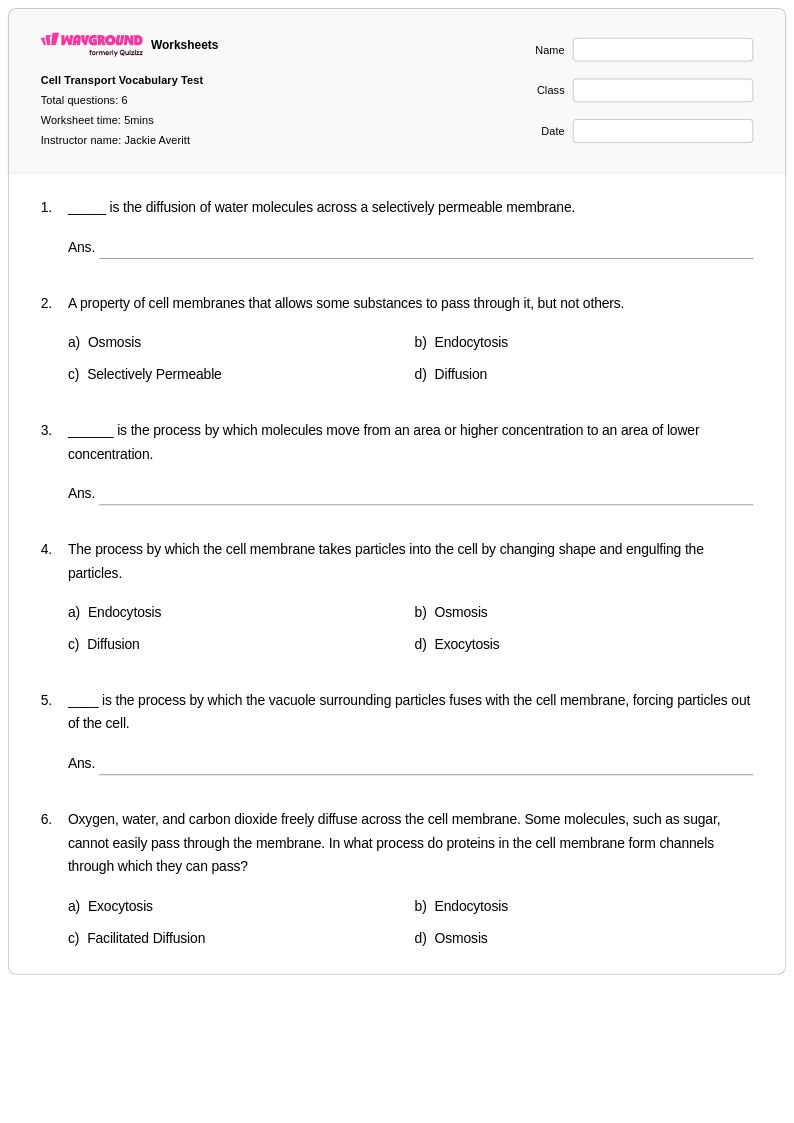
For students who are still building foundational understanding, start with vocabulary-focused problems around diffusion and osmosis before introducing concentration gradients and energy requirements. Advanced students benefit from complex scenario-based analysis, such as predicting how disrupting a membrane protein would affect transport or comparing energy costs across multiple transport mechanisms. On Wayground, teachers can also apply individual accommodations such as read aloud support or reduced answer choices to specific students, ensuring accessible practice without altering the experience for the rest of the class.
What types of questions appear on cell transport worksheets?
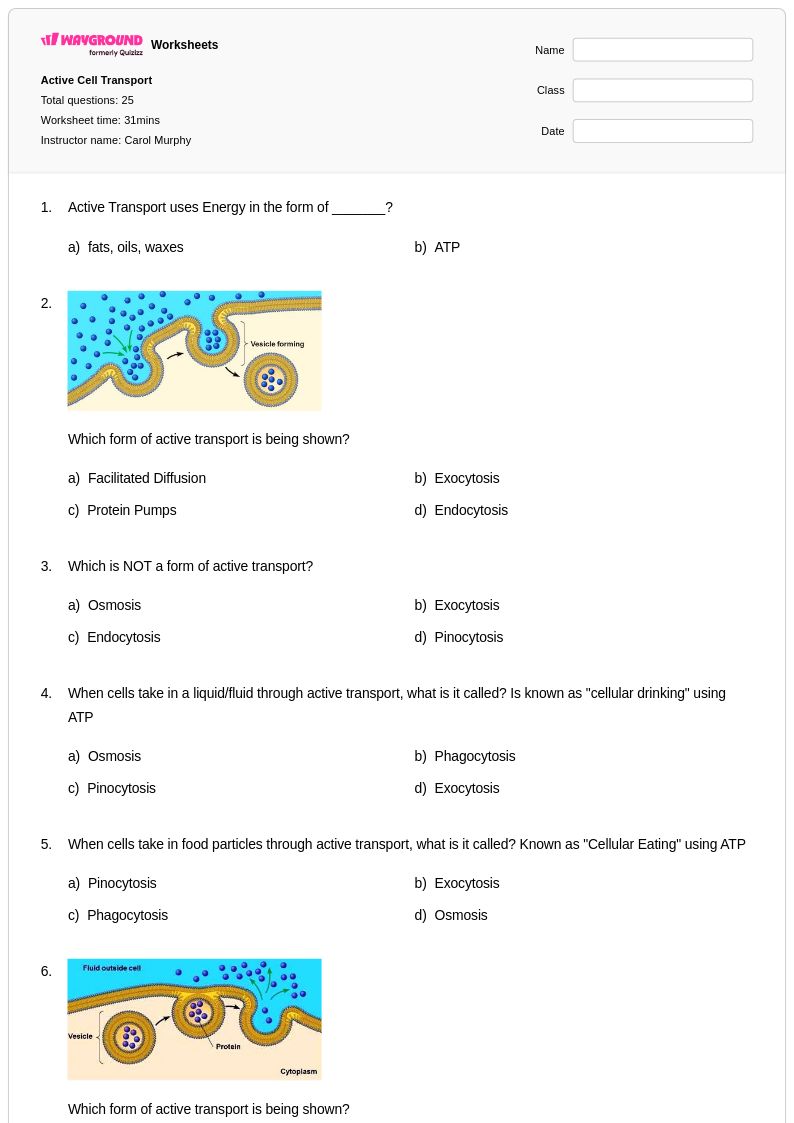
Cell transport worksheets typically include a range of question types, from vocabulary matching and labeling diagrams of membrane proteins to multi-step analysis problems involving concentration gradients and energy requirements. Scenario-based questions, such as predicting cellular response when a cell is placed in a saltwater solution, build higher-order thinking by requiring students to apply transport concepts to novel situations. Including both recall and application questions in a single worksheet allows teachers to assess foundational knowledge and conceptual understanding at the same time.