Free Printable Muscular System Worksheets for Grade 7
Grade 7 Biology worksheets on the muscular system help students master muscle anatomy and function through engaging printables, practice problems, and comprehensive answer keys available as free PDF downloads.
Explore printable Muscular System worksheets for Grade 7
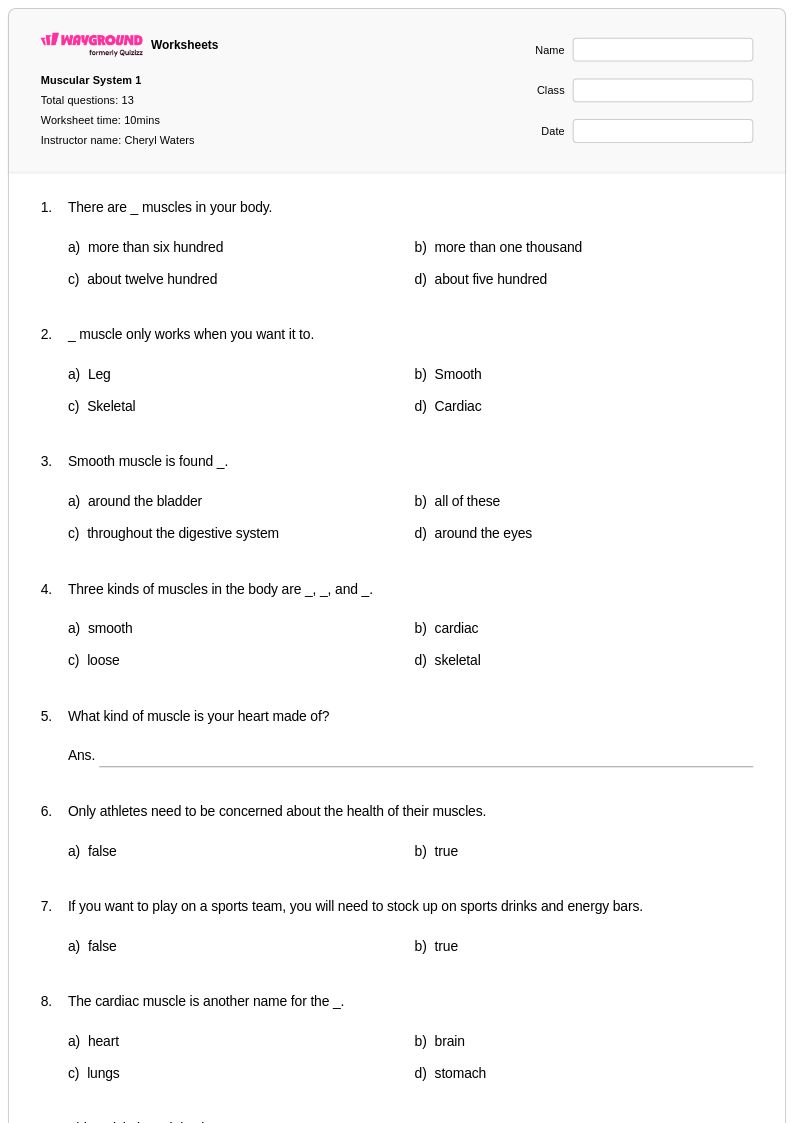
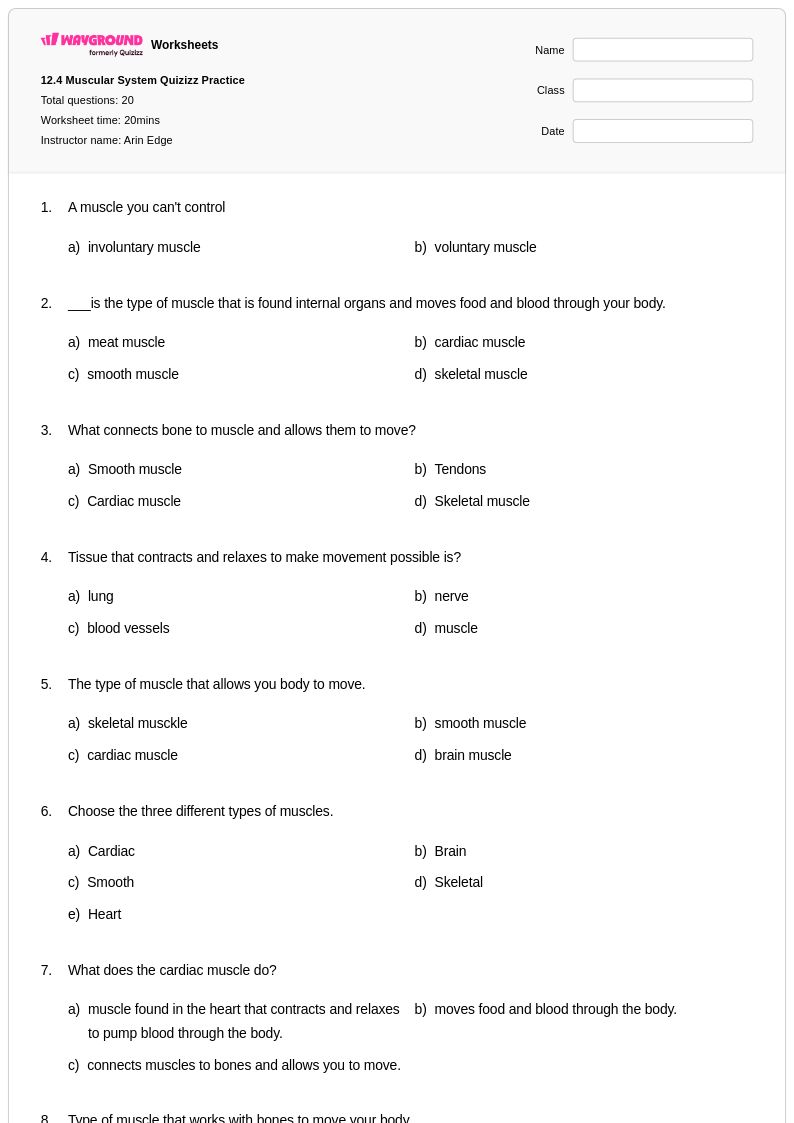
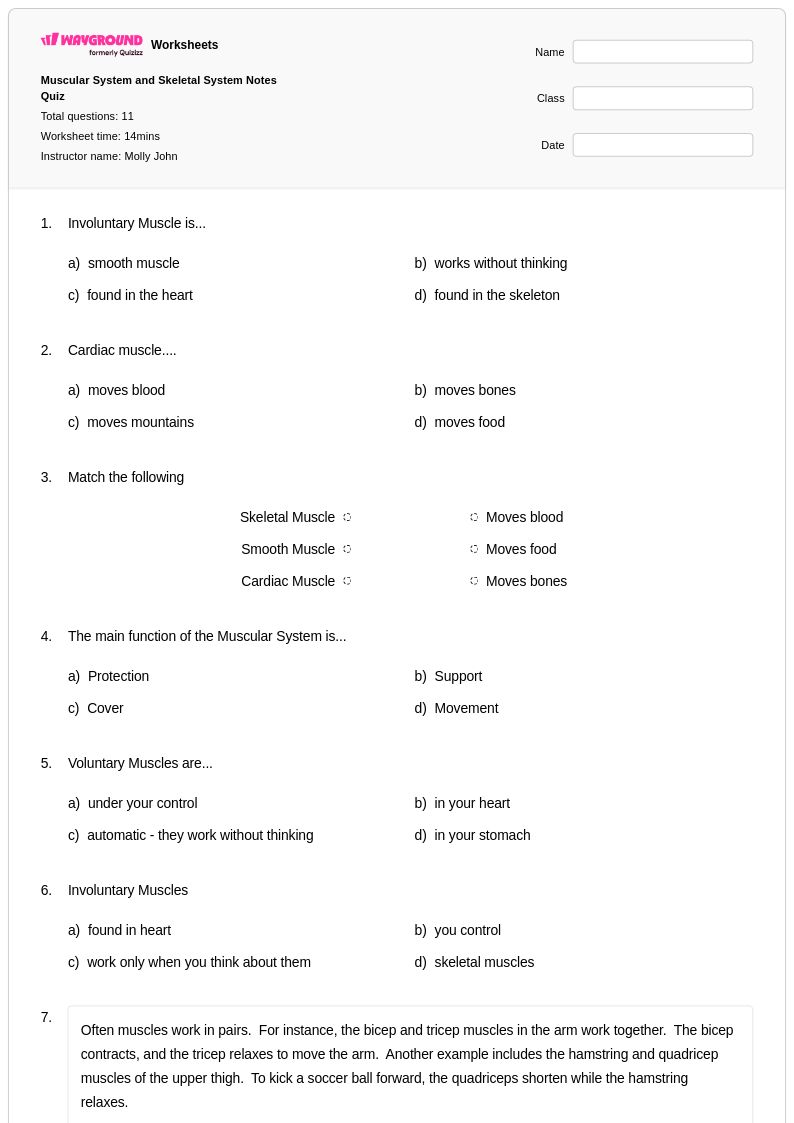
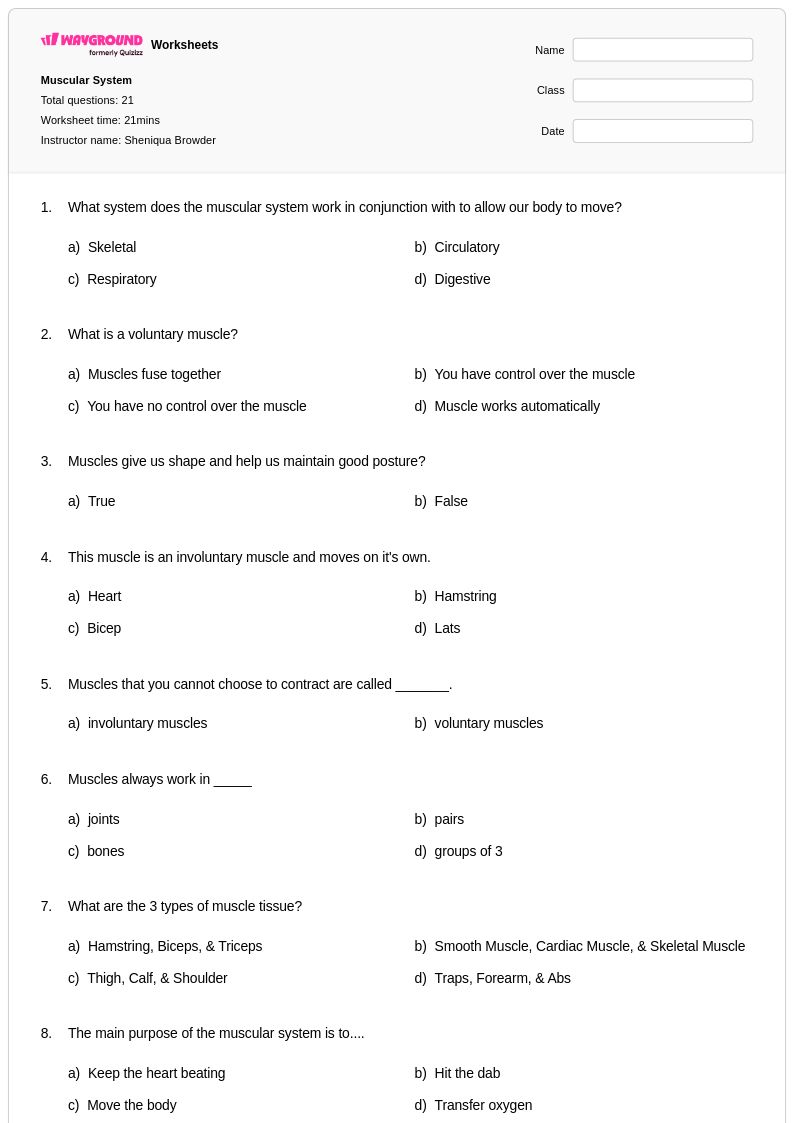
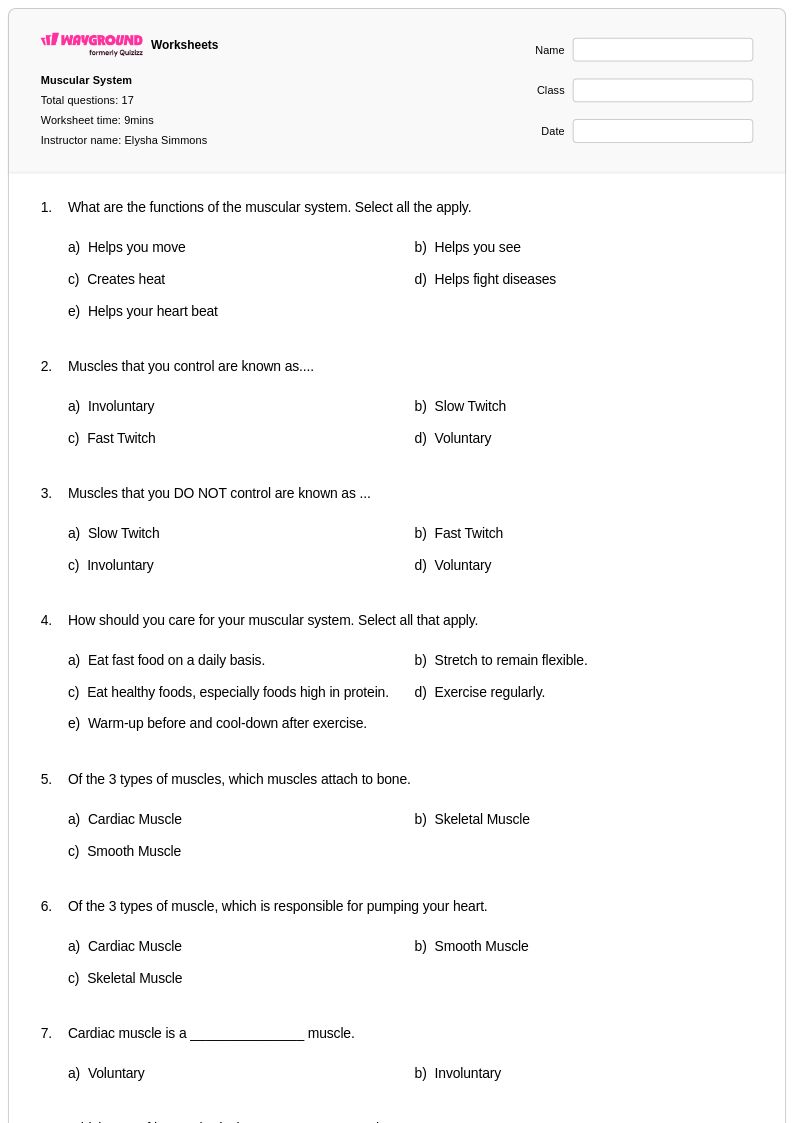
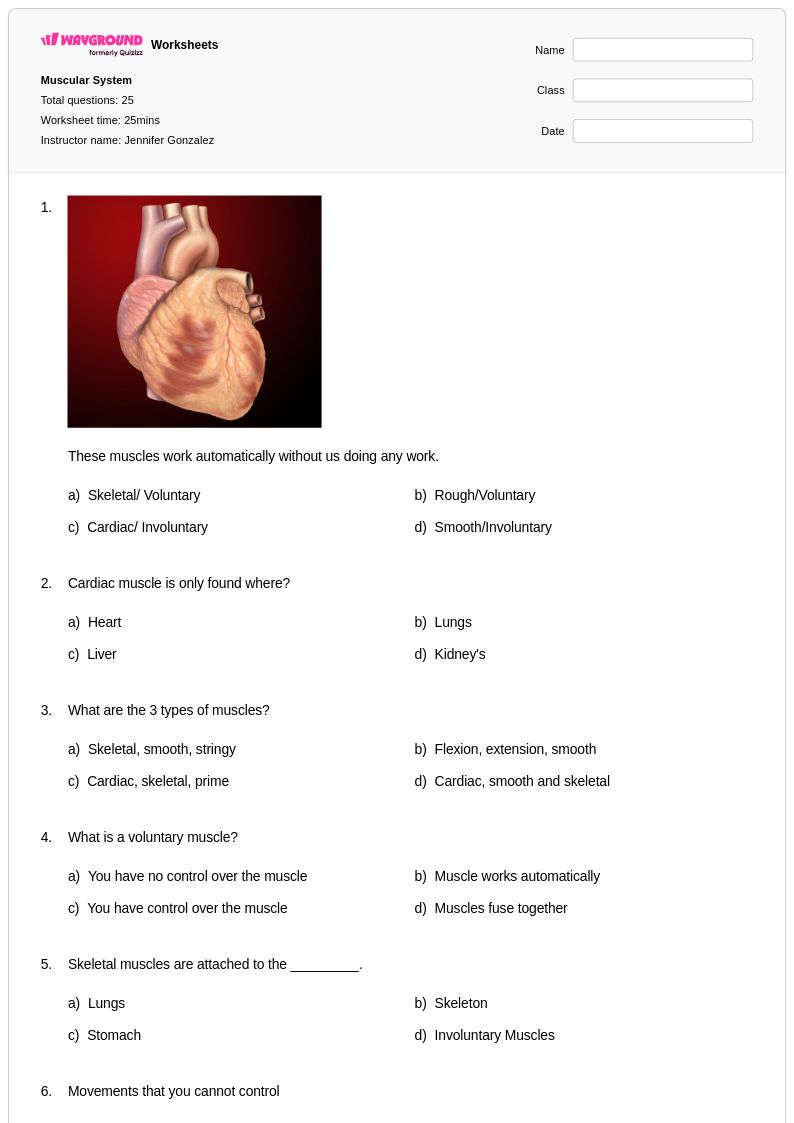
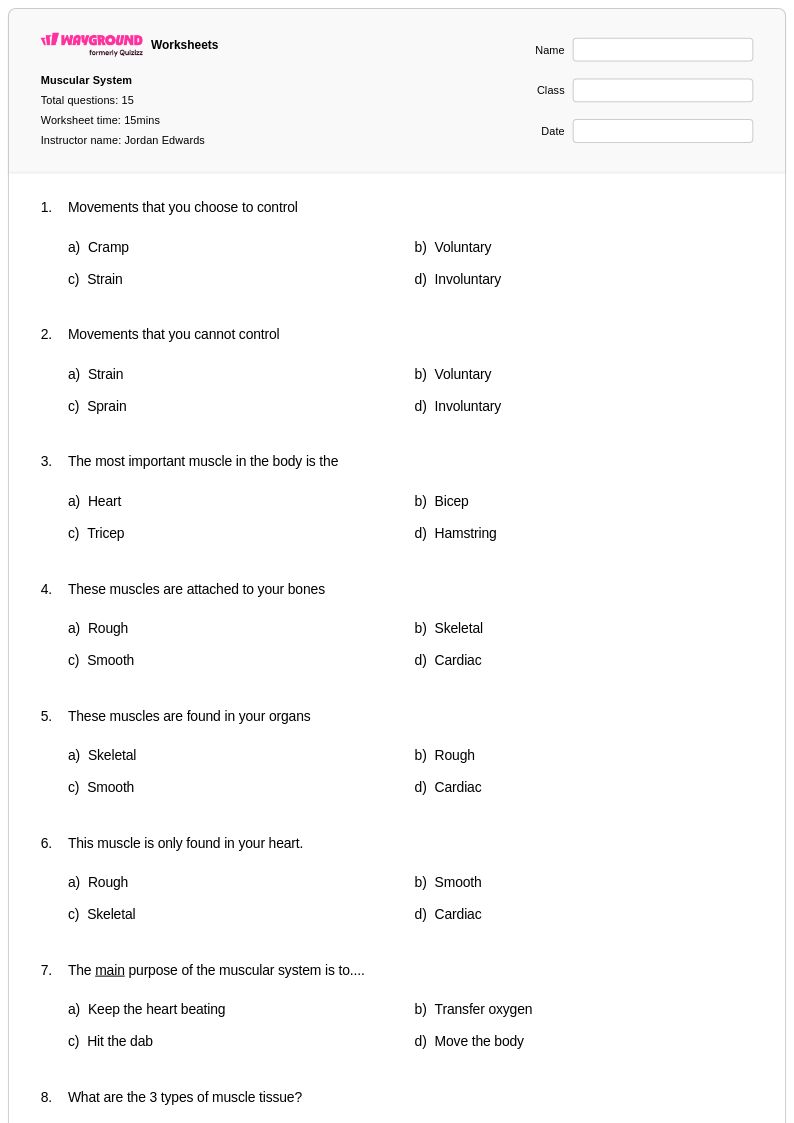
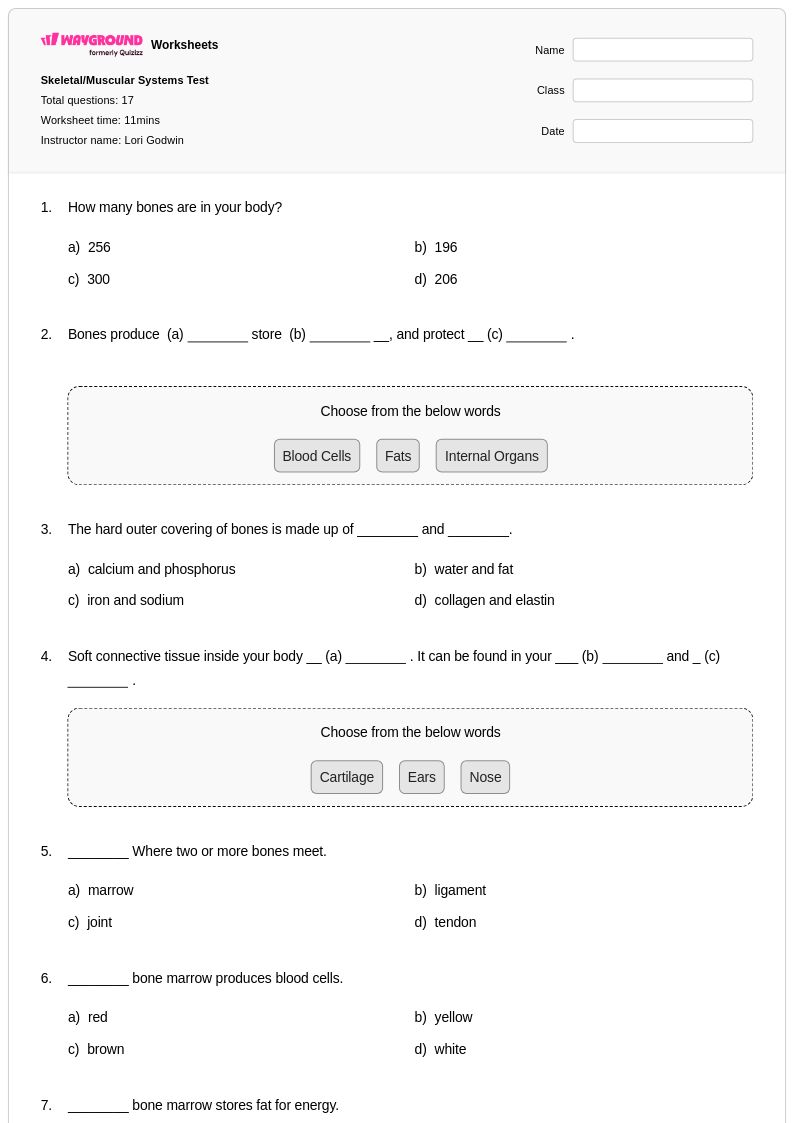
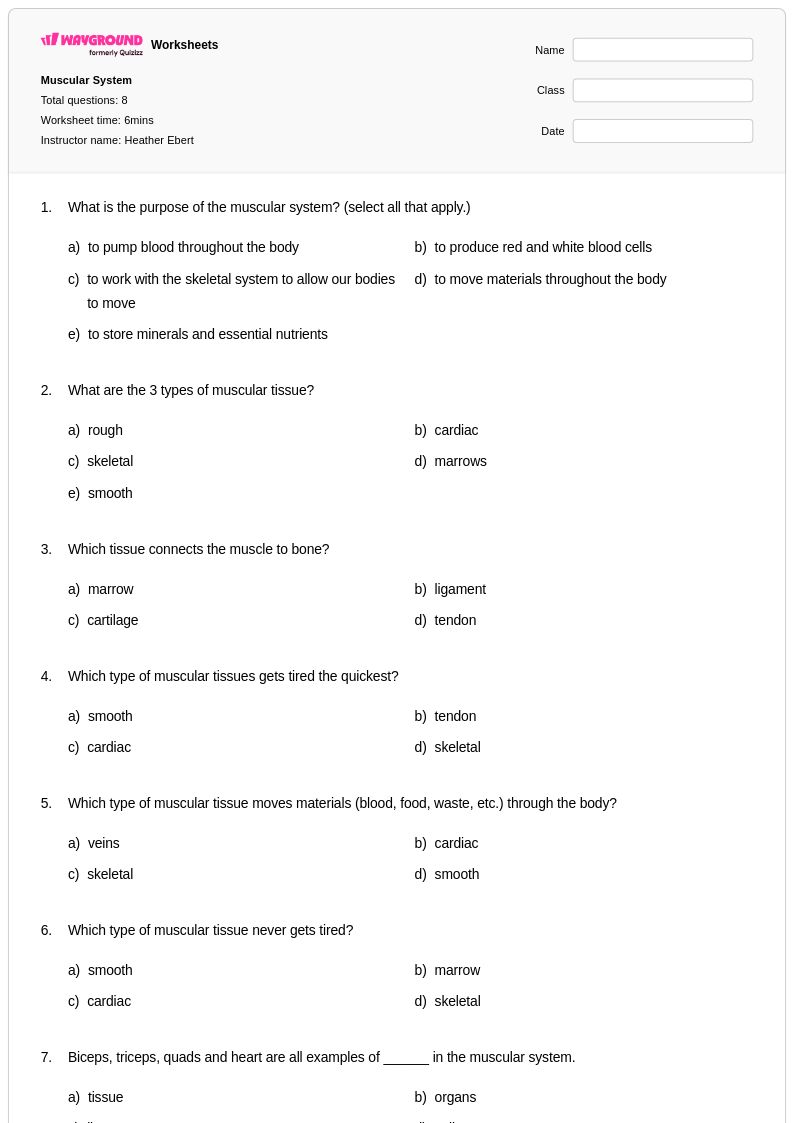
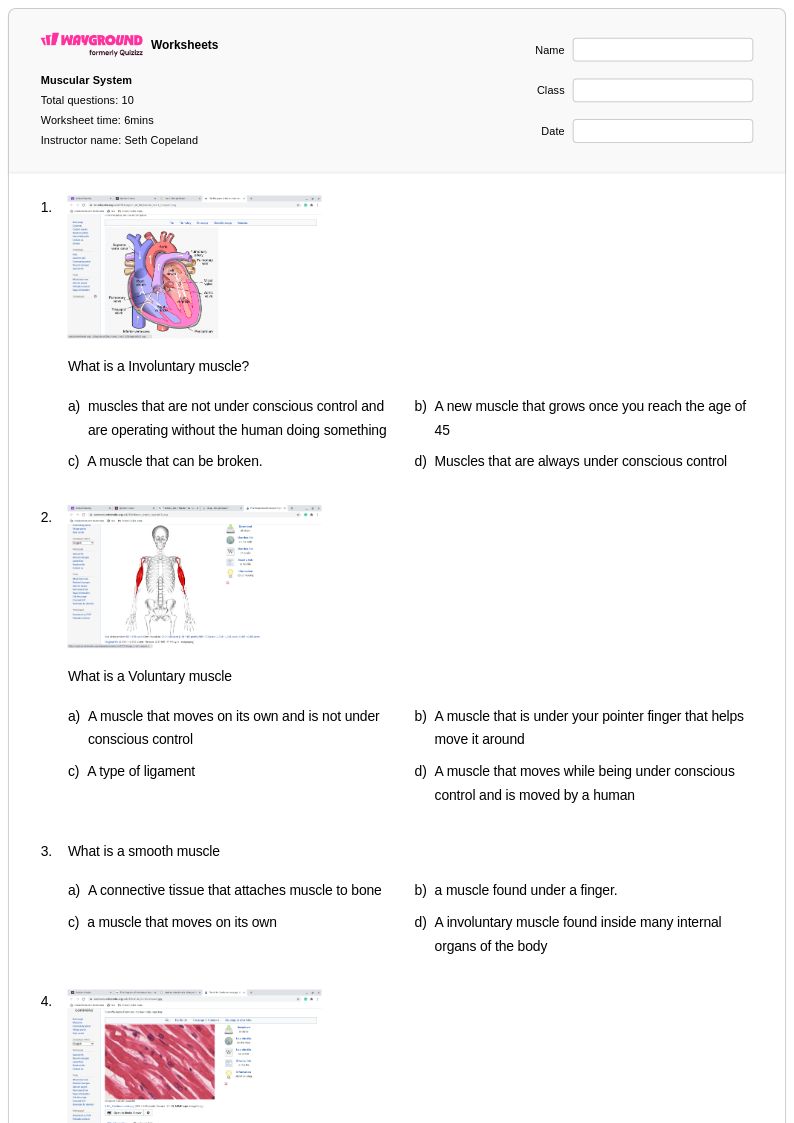
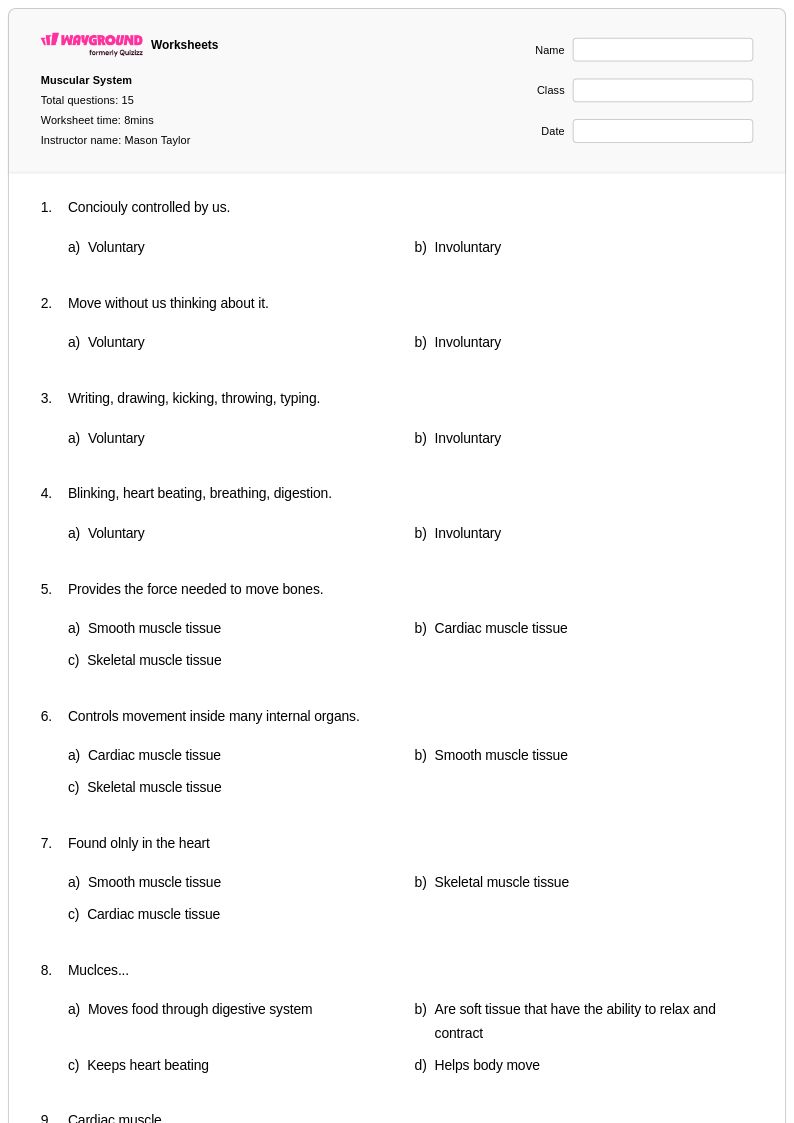
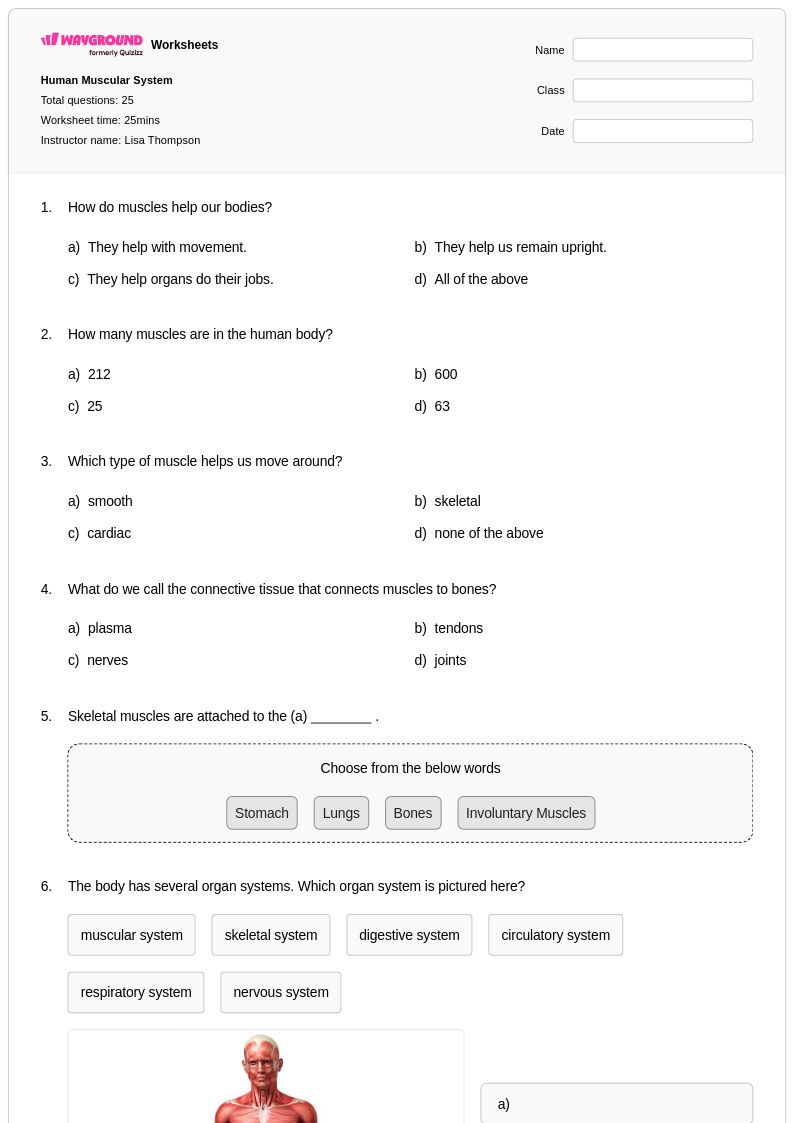
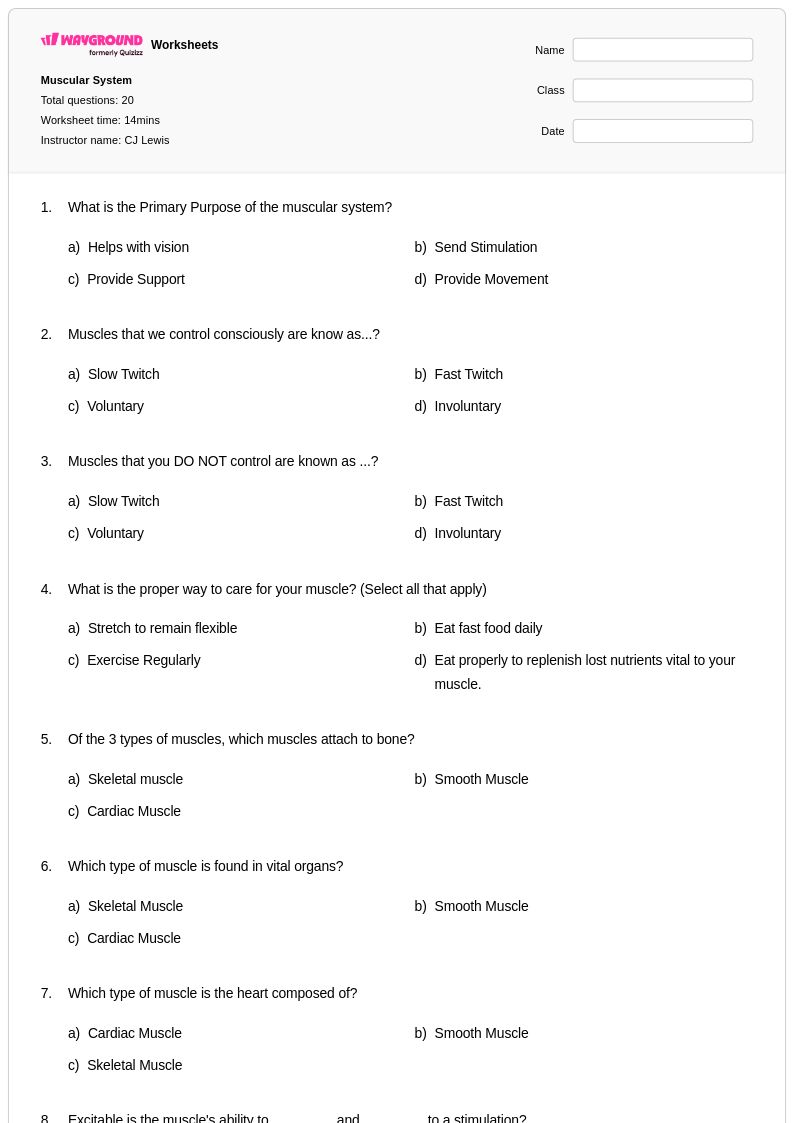
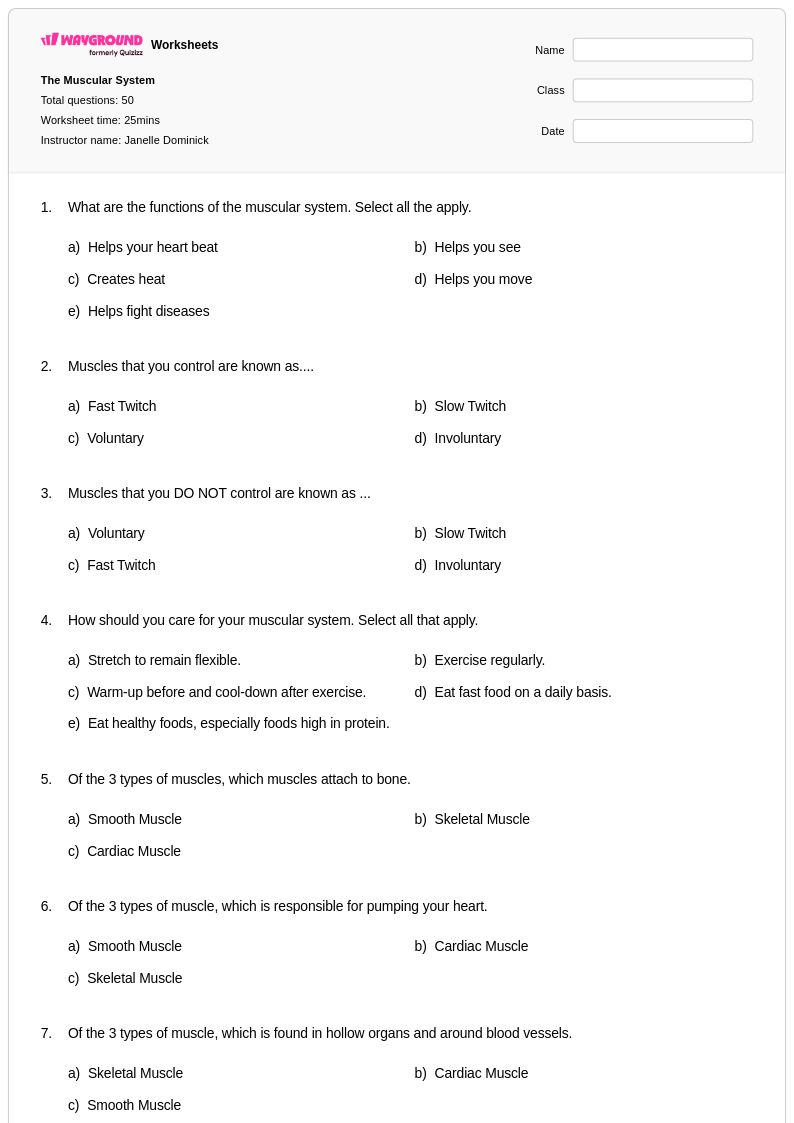
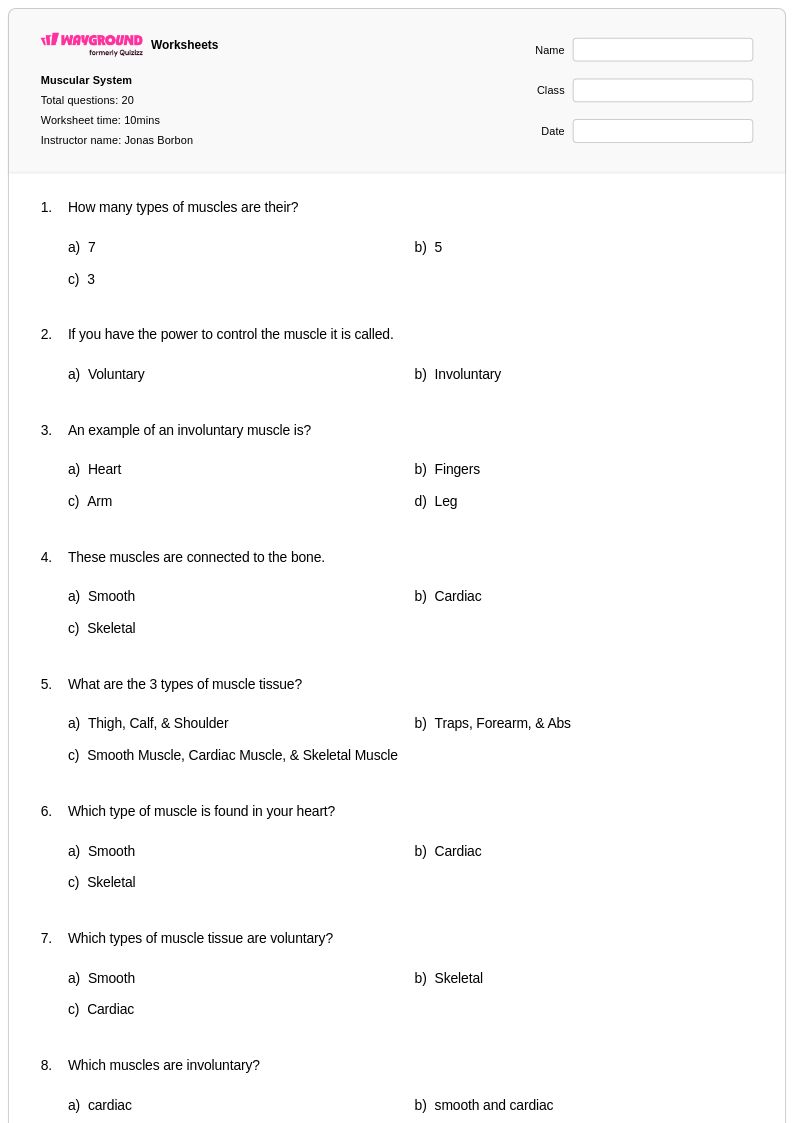
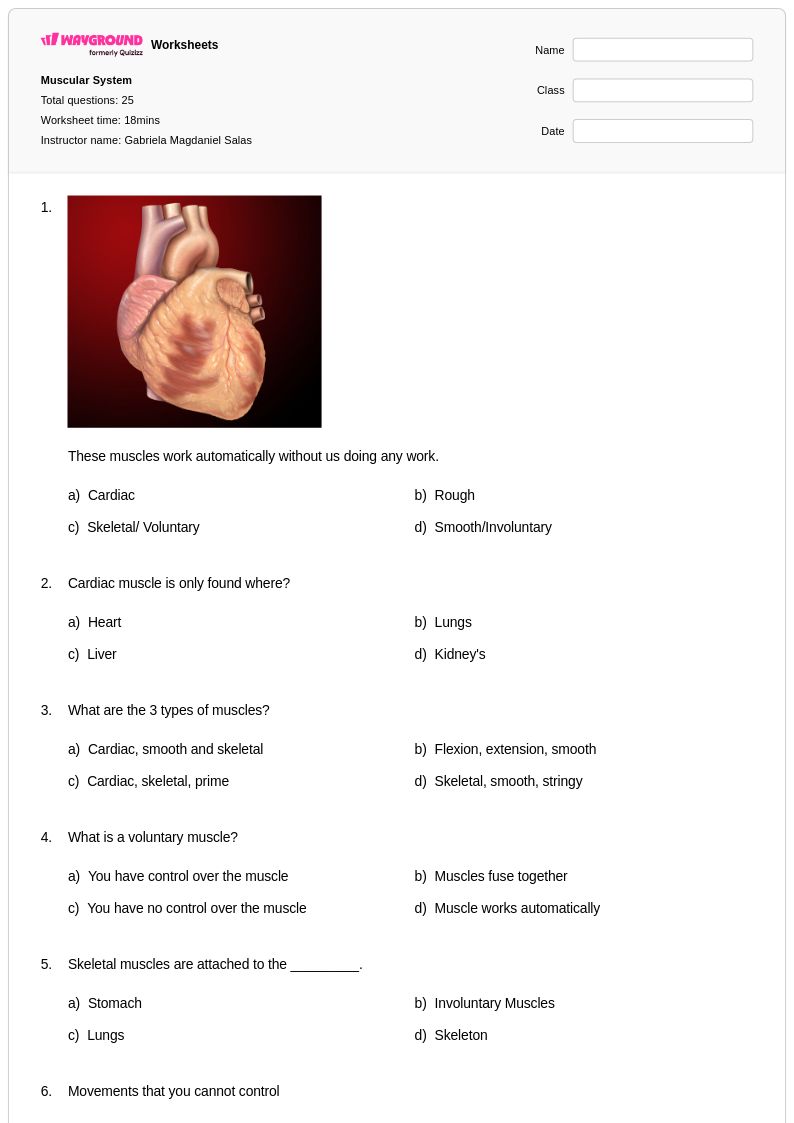
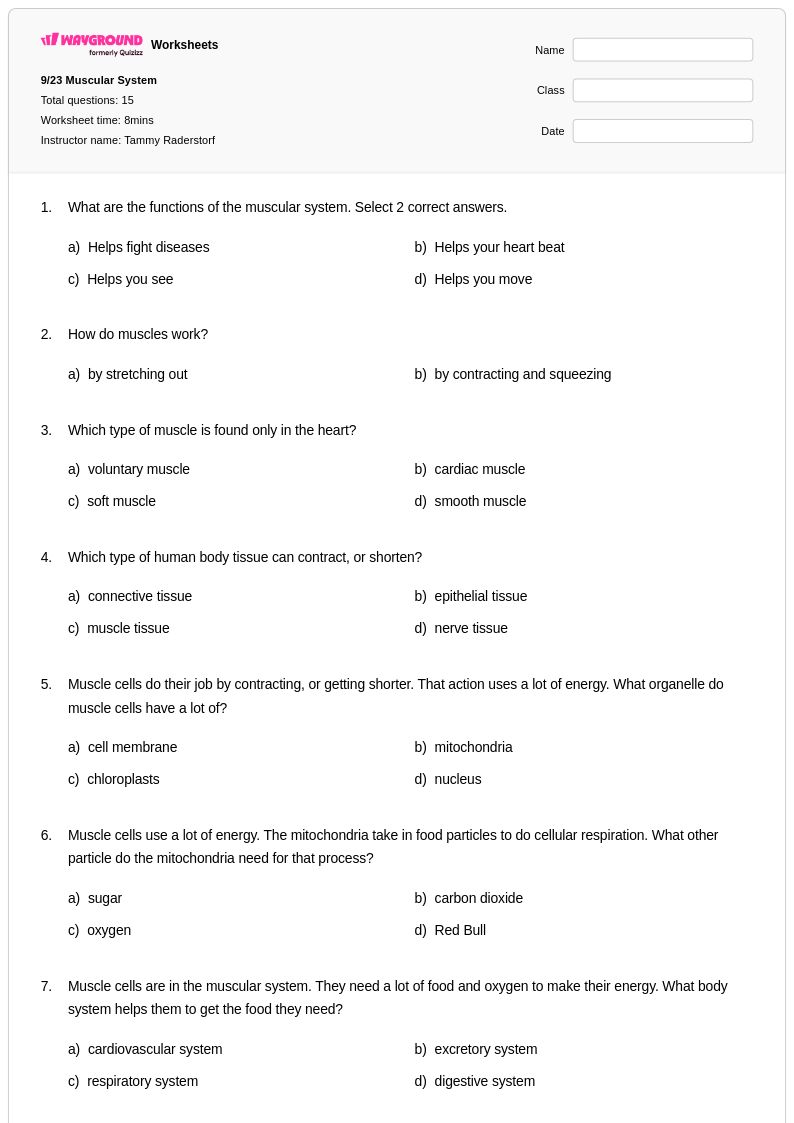
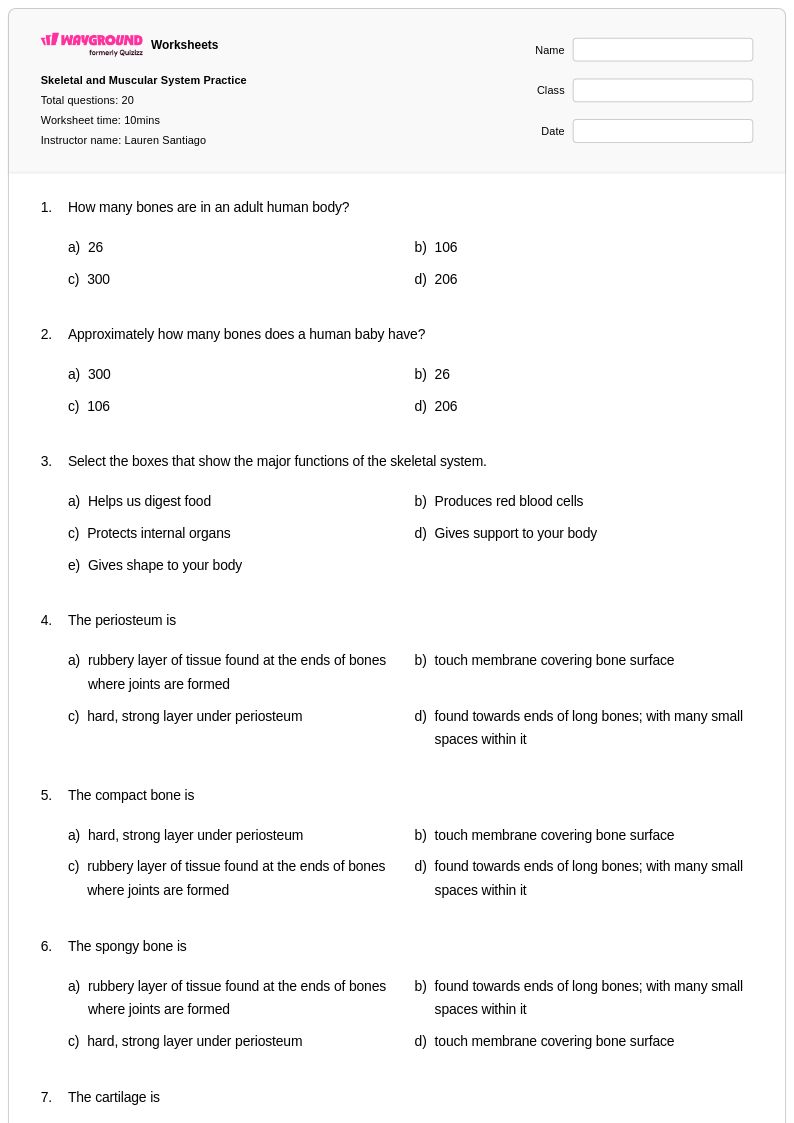
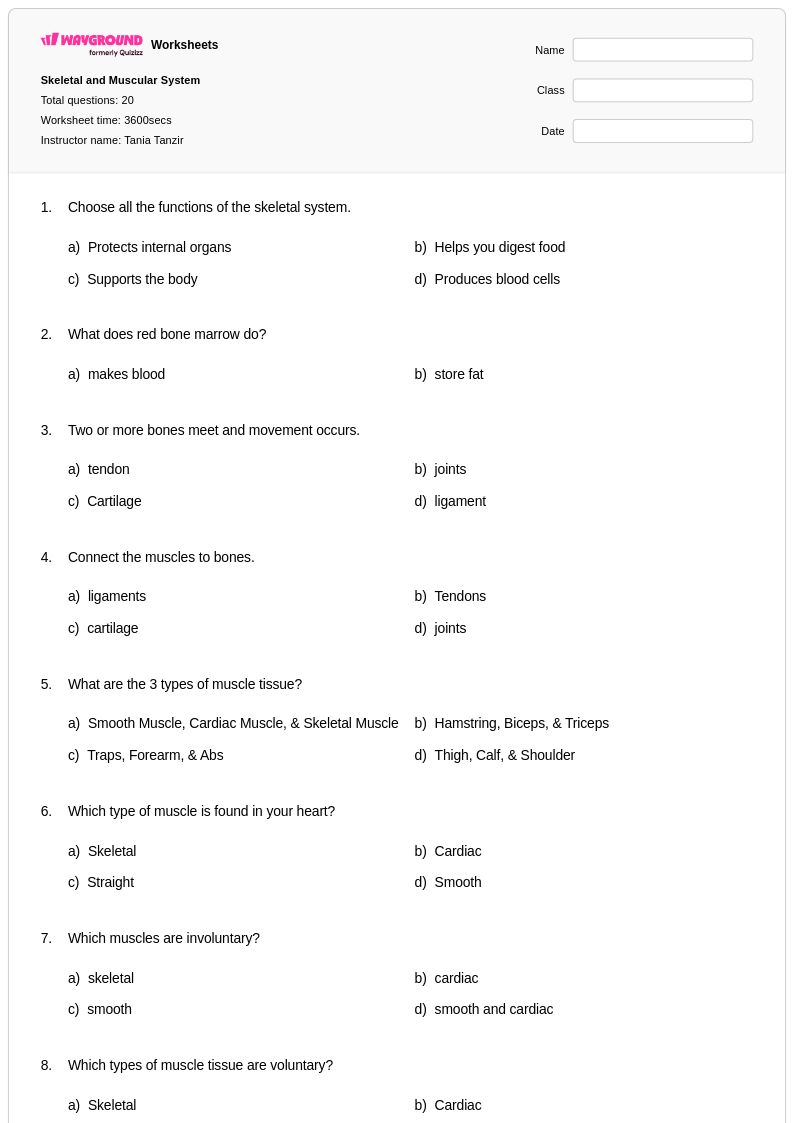
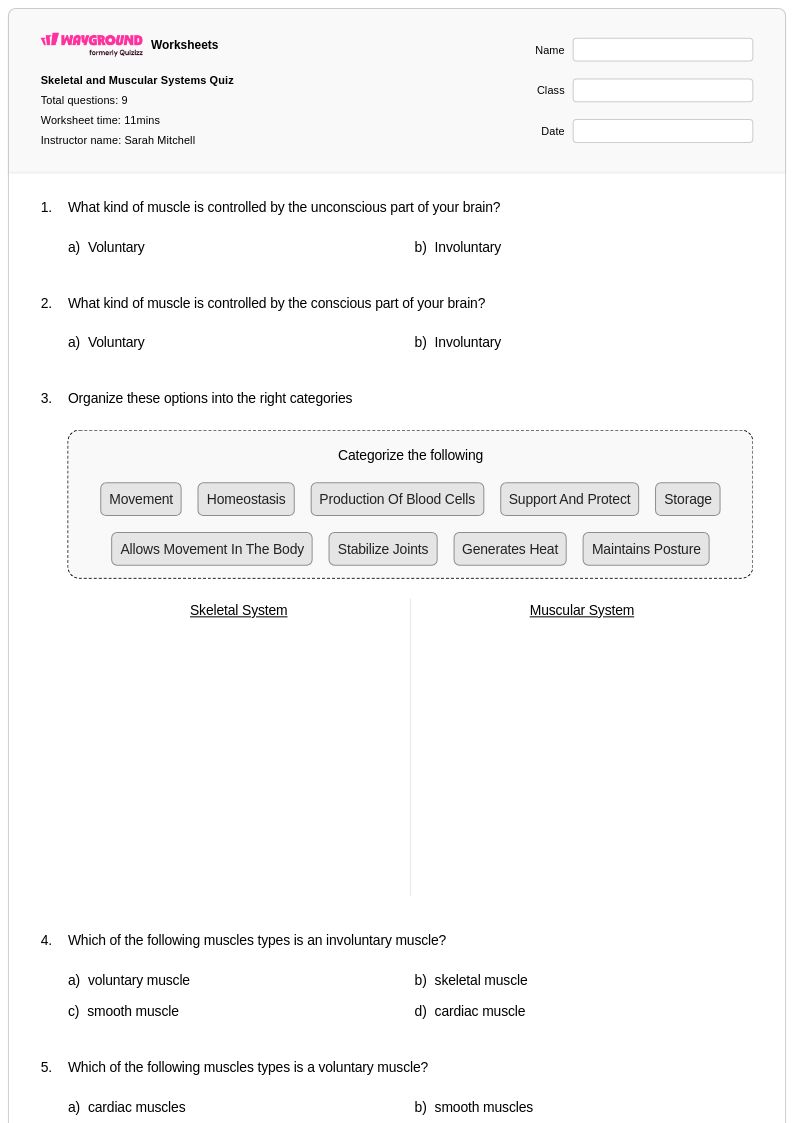
Muscular system worksheets for Grade 7 students available through Wayground (formerly Quizizz) provide comprehensive coverage of how muscles function, their anatomical structure, and their role in human movement and daily activities. These educational resources strengthen students' understanding of the three types of muscle tissue—skeletal, cardiac, and smooth—while developing their ability to identify major muscle groups, explain muscle contraction mechanisms, and analyze the relationship between muscles and bones in the musculoskeletal system. The collection includes practice problems that challenge students to apply their knowledge of muscle physiology, from understanding how muscles work in pairs to examining the role of tendons and ligaments in body movement. Teachers can access answer keys and printable pdf versions of these free worksheets to support both classroom instruction and independent study, ensuring students master essential concepts about voluntary and involuntary muscle functions.
Wayground (formerly Quizizz) empowers educators with millions of teacher-created muscular system resources that feature robust search and filtering capabilities, allowing instructors to quickly locate materials aligned with specific learning standards and grade-level expectations. The platform's differentiation tools enable teachers to customize worksheets based on individual student needs, providing options for remediation support for struggling learners and enrichment activities for advanced students. These flexible resources are available in both printable and digital formats, including downloadable pdf versions that facilitate seamless integration into lesson planning and homework assignments. Teachers can efficiently organize skill practice sessions, create targeted review materials, and develop assessment tools that accurately measure student comprehension of muscular system concepts, from basic muscle identification to complex physiological processes that govern human movement and athletic performance.
FAQs
How do I teach the muscular system to middle or high school students?
Start by distinguishing the three types of muscle tissue — skeletal, smooth, and cardiac — before moving into structure and function. Use labeled diagrams to help students locate major muscle groups, then connect muscular anatomy to movement by pairing muscle identification with analysis of flexion, extension, and other motion patterns. Anchoring abstract concepts like sarcomere contraction to observable actions (such as a bicep curl) significantly improves retention.
What are the best exercises for helping students practice muscular system concepts?
Labeling diagrams of major muscle groups, matching muscle names to their functions, and completing fill-in-the-blank exercises on contraction mechanisms are among the most effective practice formats. Students also benefit from analyzing the relationship between the muscular and skeletal systems through guided questions that require them to explain how muscles generate force and produce movement. Repeated exposure across these formats reinforces both vocabulary and conceptual understanding.
What misconceptions do students commonly have about how muscles work?
A frequent misconception is that muscles push as well as pull — in reality, muscles only contract and pull, which is why they work in antagonistic pairs. Students also commonly confuse smooth and cardiac muscle, assuming cardiac muscle is voluntary because it is striated like skeletal muscle. Addressing these errors explicitly during instruction, and including questions that target them directly in practice materials, helps students build accurate mental models.
How can I differentiate muscular system instruction for students at different skill levels?
For struggling students, reducing the number of muscle groups covered at once and providing partially completed diagrams lowers cognitive load while keeping content accessible. Advanced learners benefit from deeper analysis tasks, such as explaining the sliding filament theory or comparing muscle fiber types. On Wayground, teachers can apply accommodations like reduced answer choices or read-aloud support to individual students without disrupting the experience of the rest of the class.
How do I use Wayground's muscular system worksheets in my classroom?
Wayground's muscular system worksheets are available as printable PDFs for traditional classroom use and in digital formats for technology-integrated environments, including the option to host them as a quiz directly on Wayground. Teachers can use them for direct instruction support, independent practice, homework assignments, or formative assessment. Answer keys are included with each worksheet, making them practical for both teacher-led and self-directed learning.
How do I help students understand the difference between the three types of muscle tissue?
Frame the three types — skeletal, smooth, and cardiac — around the concepts of location, control, and appearance. Skeletal muscle is voluntary and striated, smooth muscle is involuntary and found in organs like the stomach and blood vessels, and cardiac muscle is involuntary but striated like skeletal muscle. Using a comparison chart during initial instruction and following up with identification practice in worksheet exercises reinforces the distinctions effectively.