
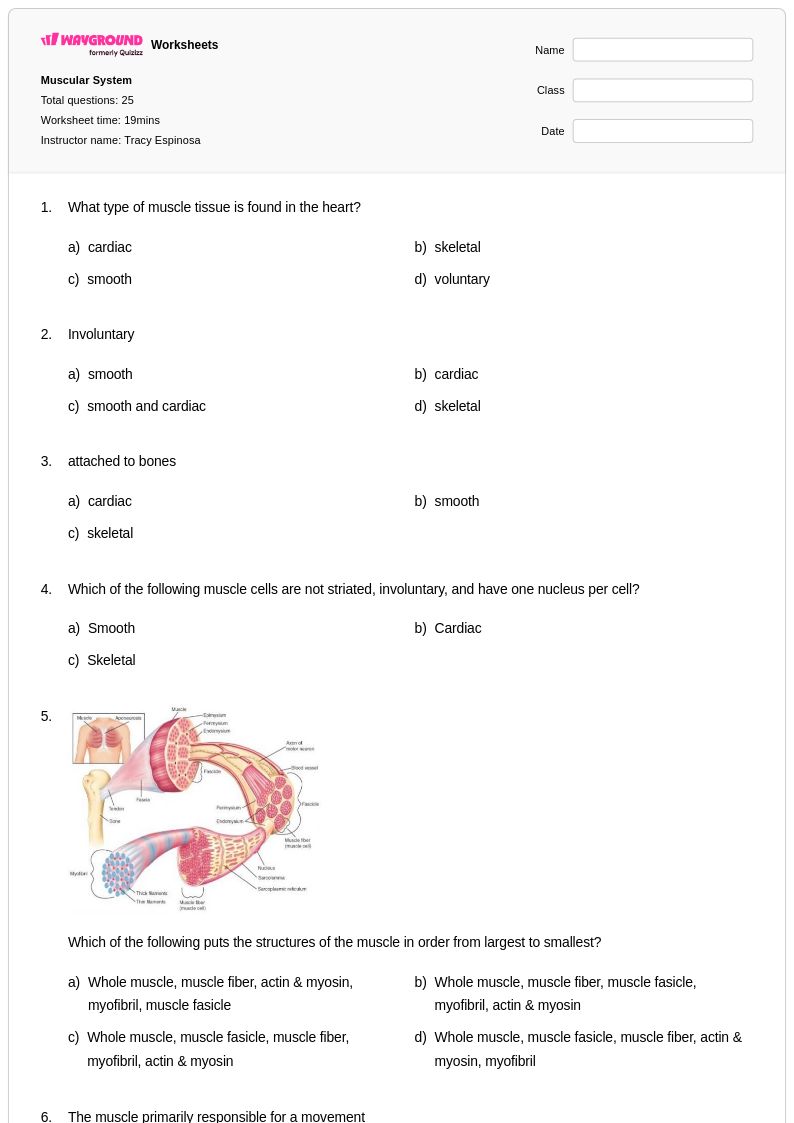
25 Q
11th
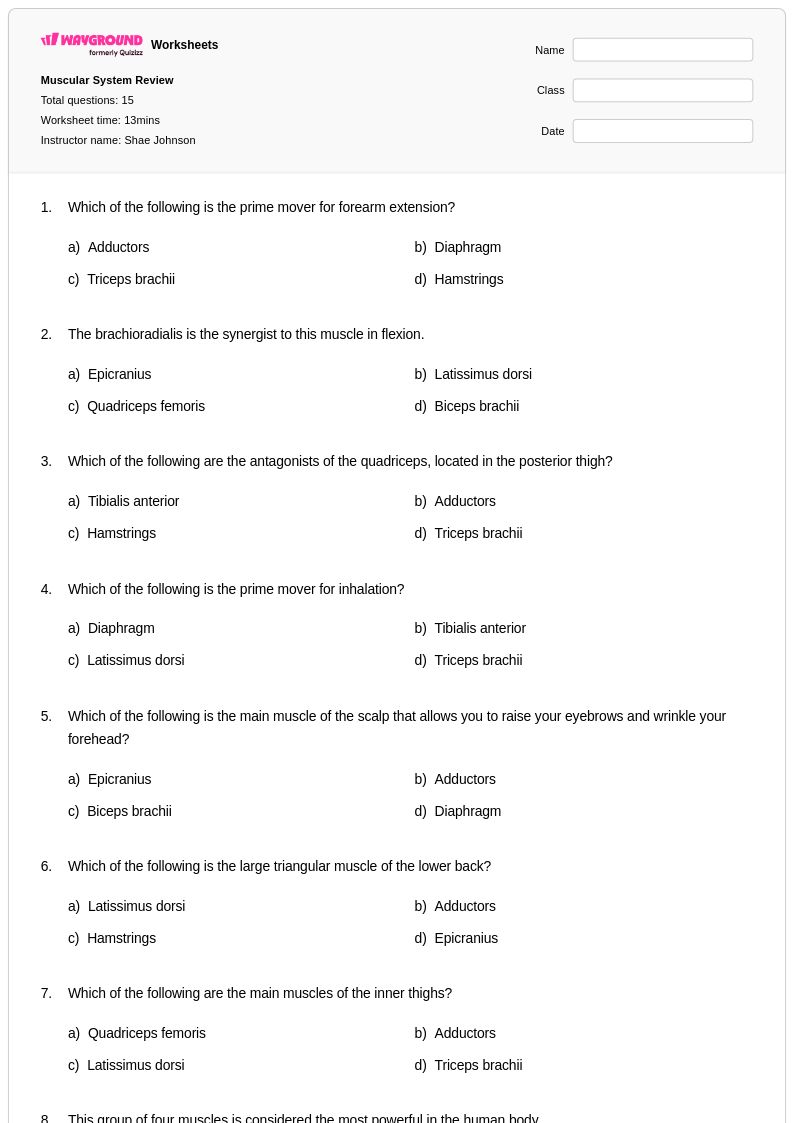
15 Q
11th - 12th
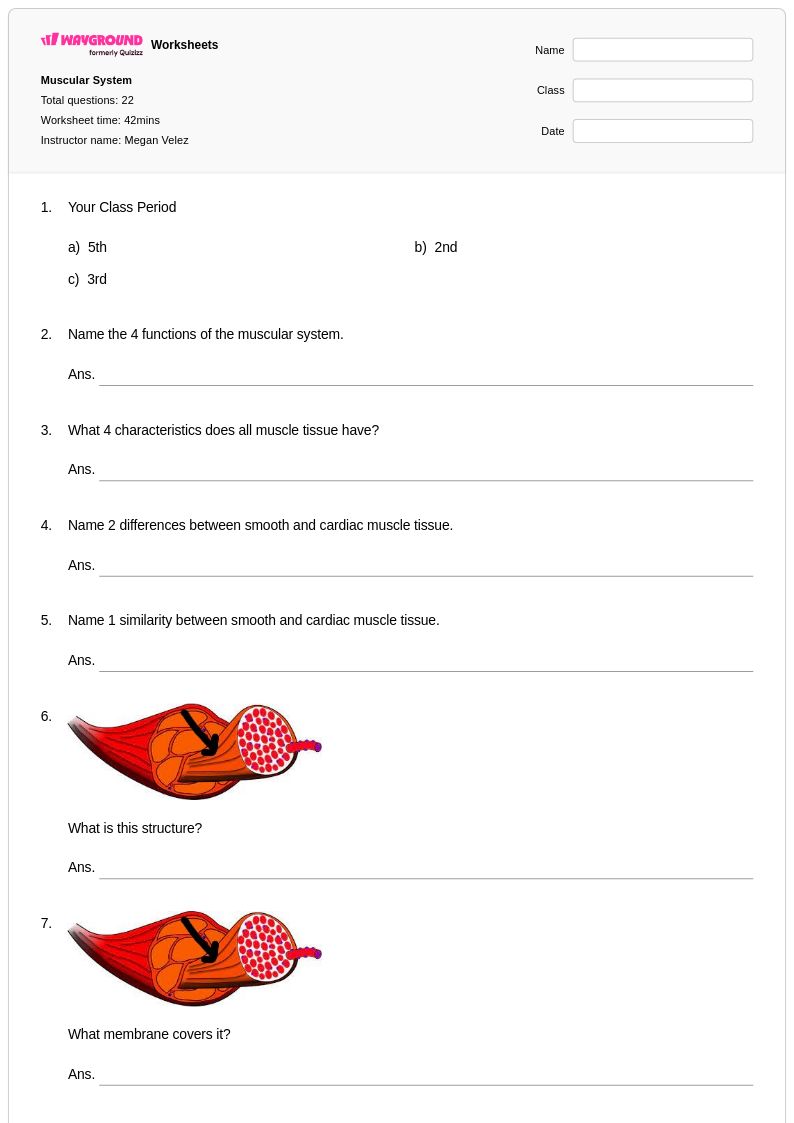
22 Q
11th
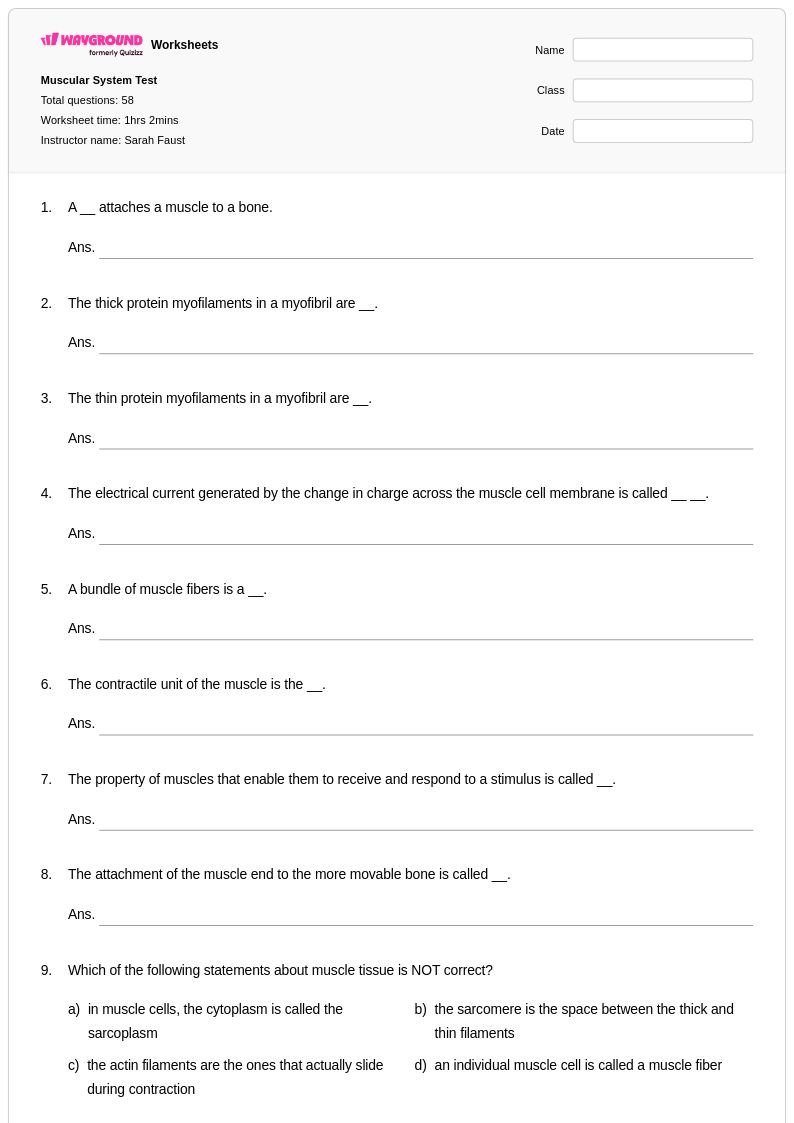
58 Q
9th - 12th
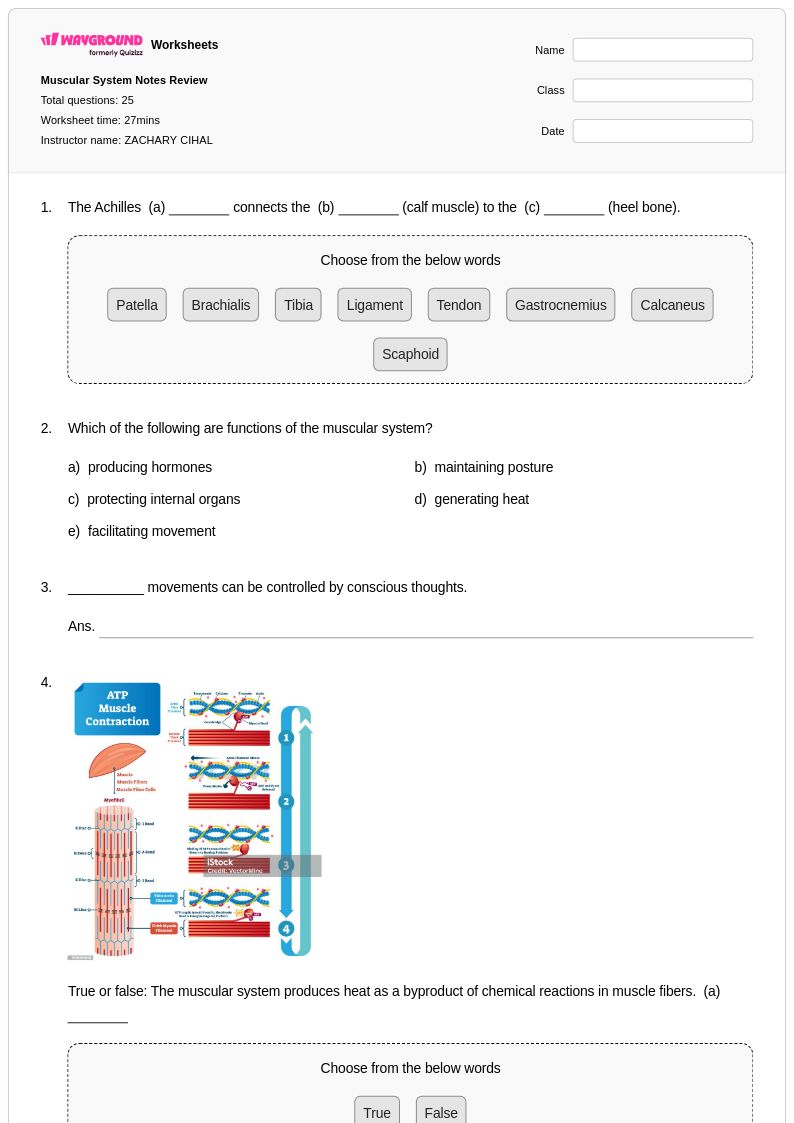
25 Q
9th - 12th
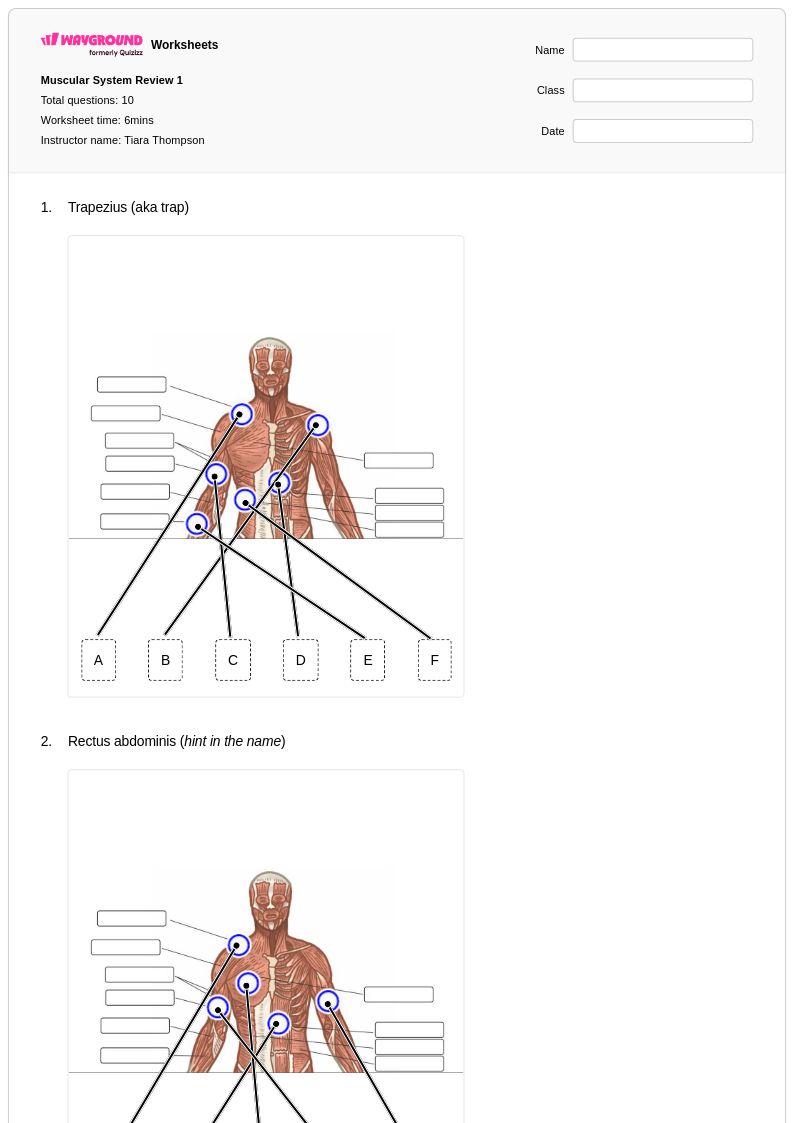
10 Q
10th - 12th
25 Q
11th
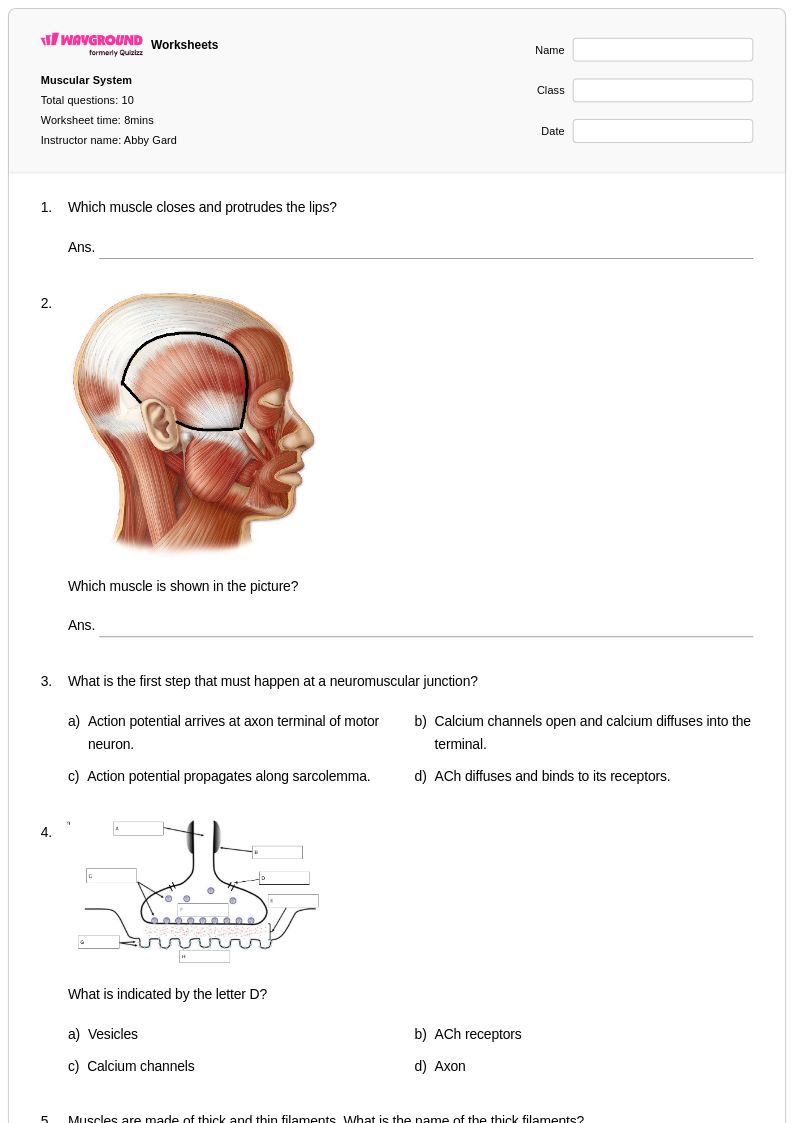
10 Q
10th - 12th
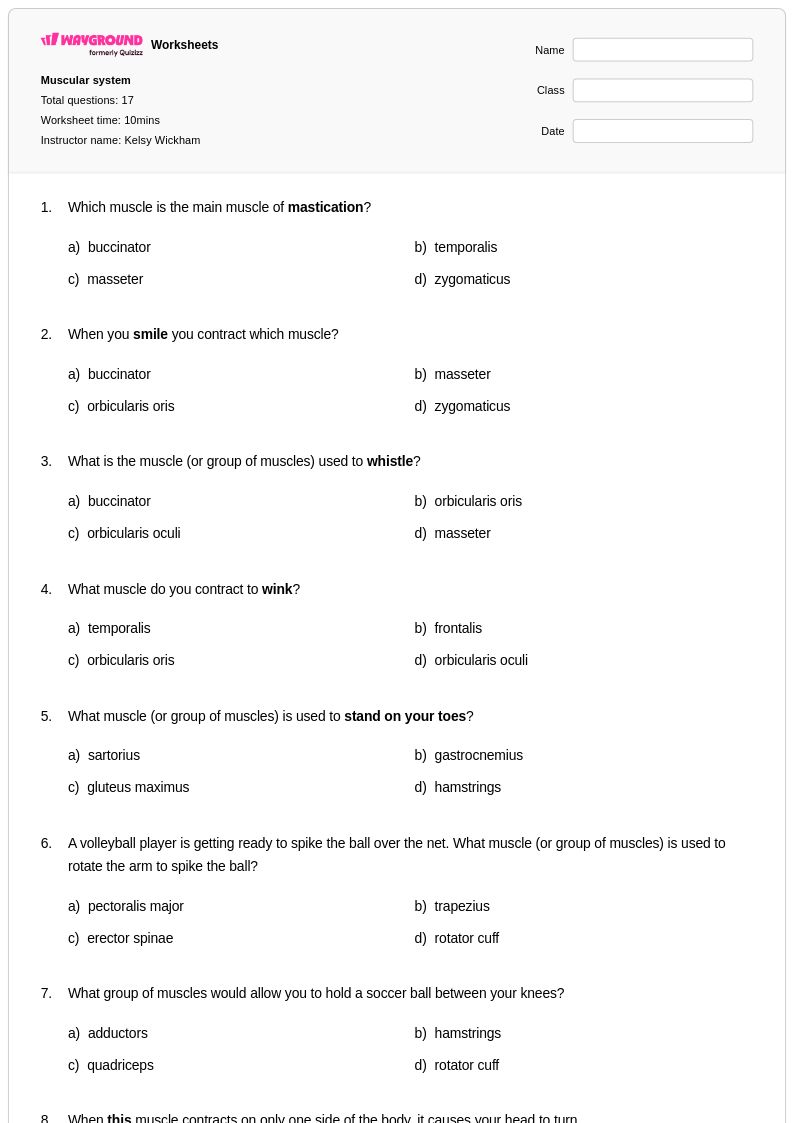
17 Q
9th - 12th
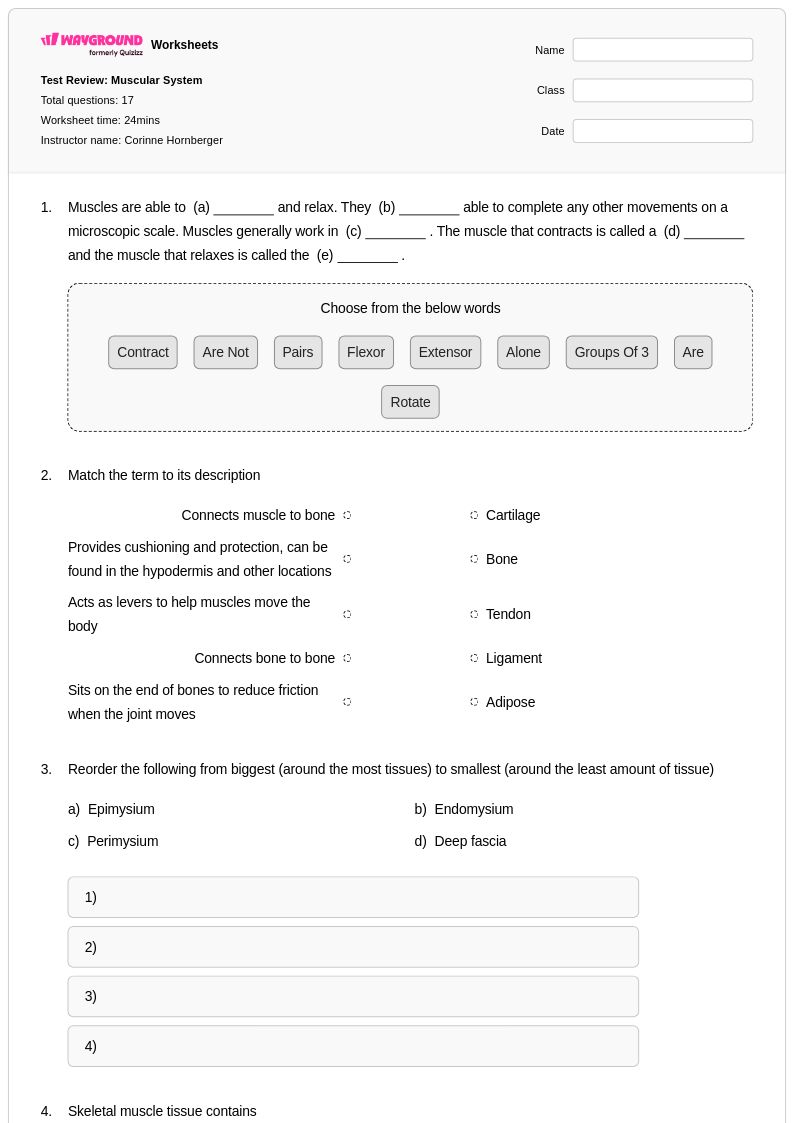
17 Q
11th
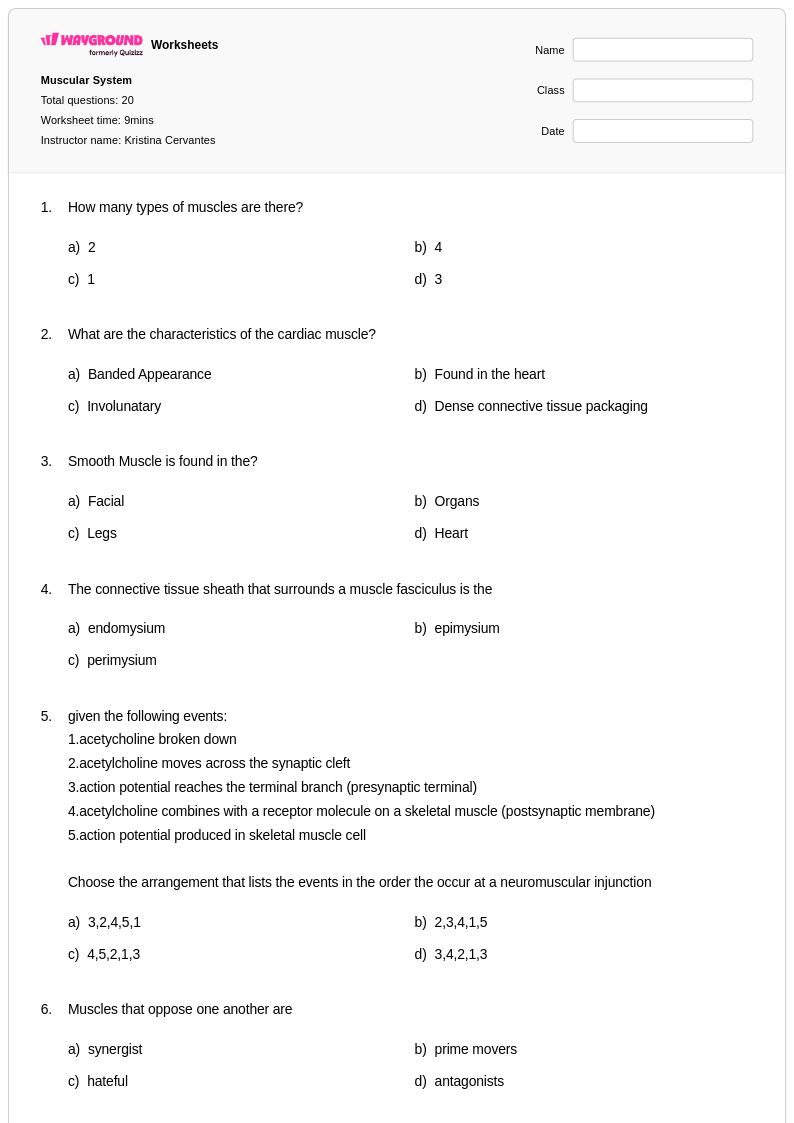
20 Q
11th - 12th
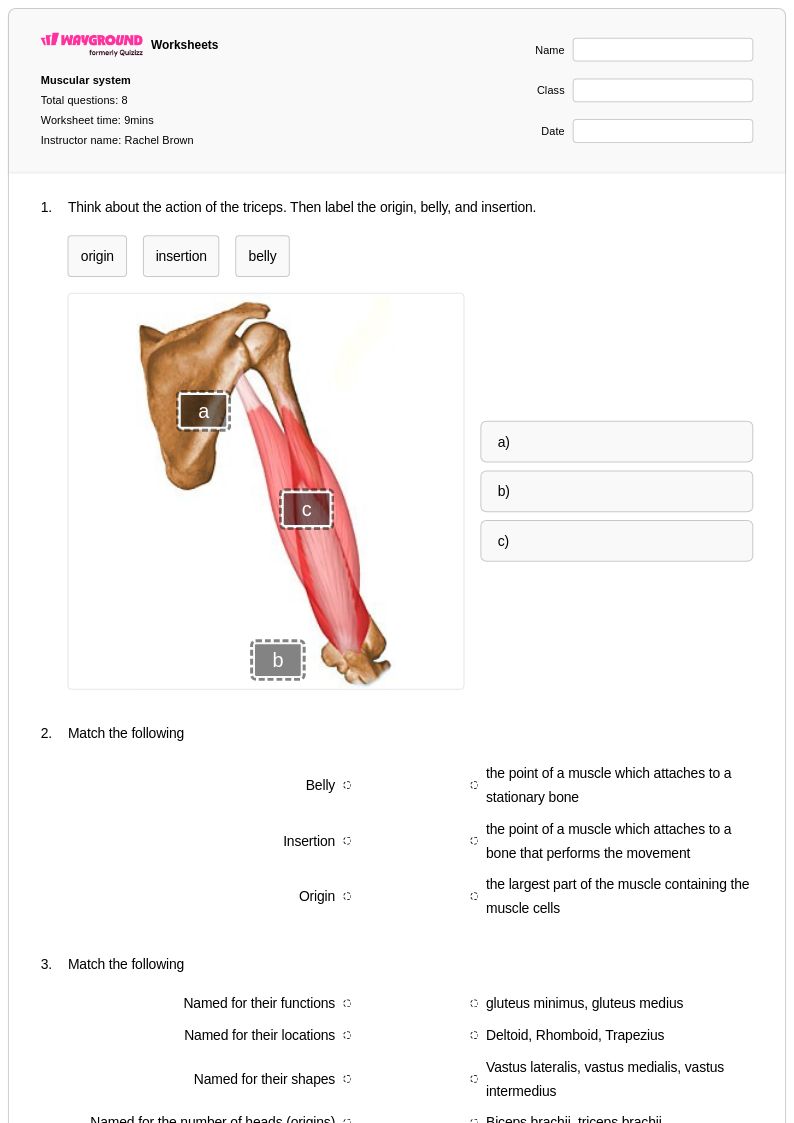
8 Q
9th - 12th
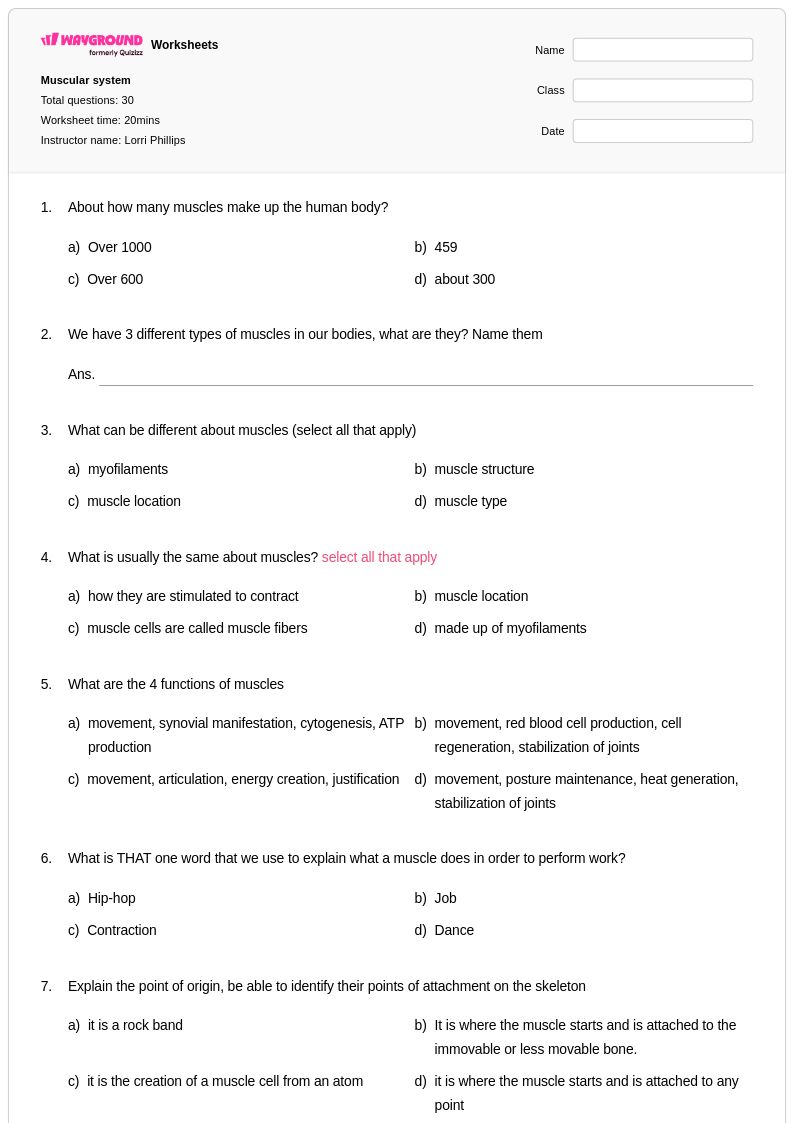
30 Q
9th - 12th
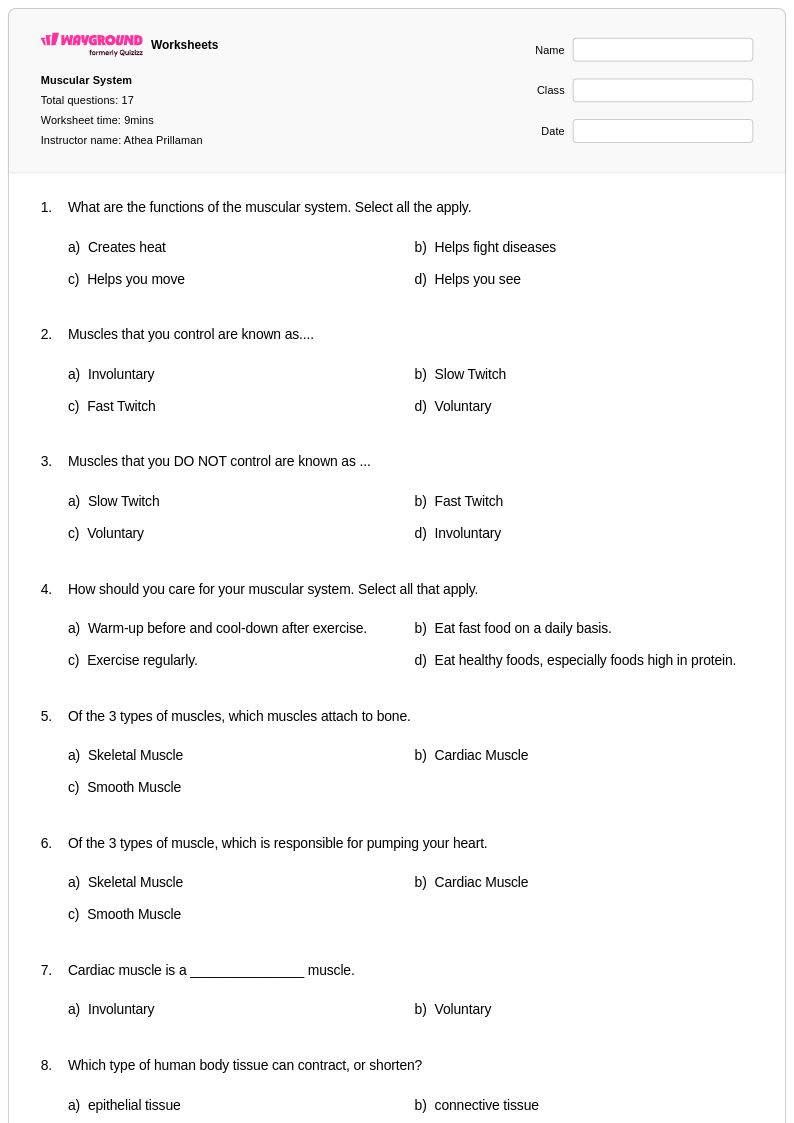
17 Q
11th
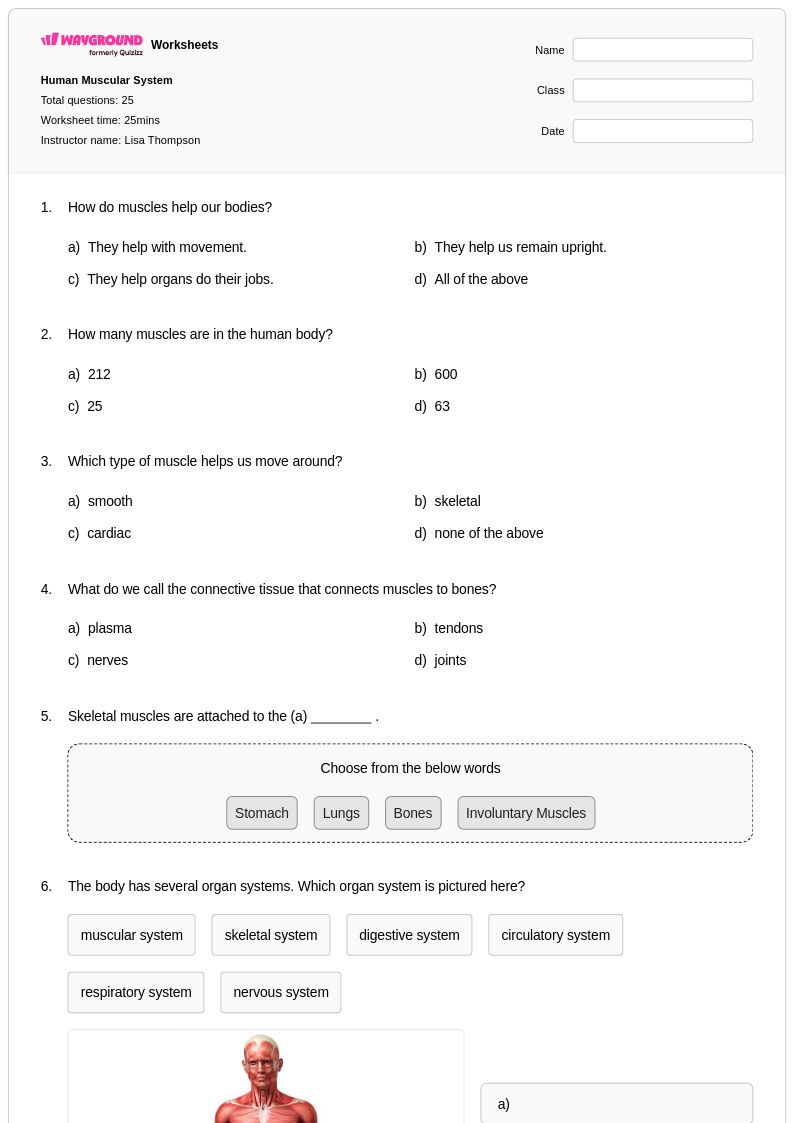
25 Q
5th - Uni
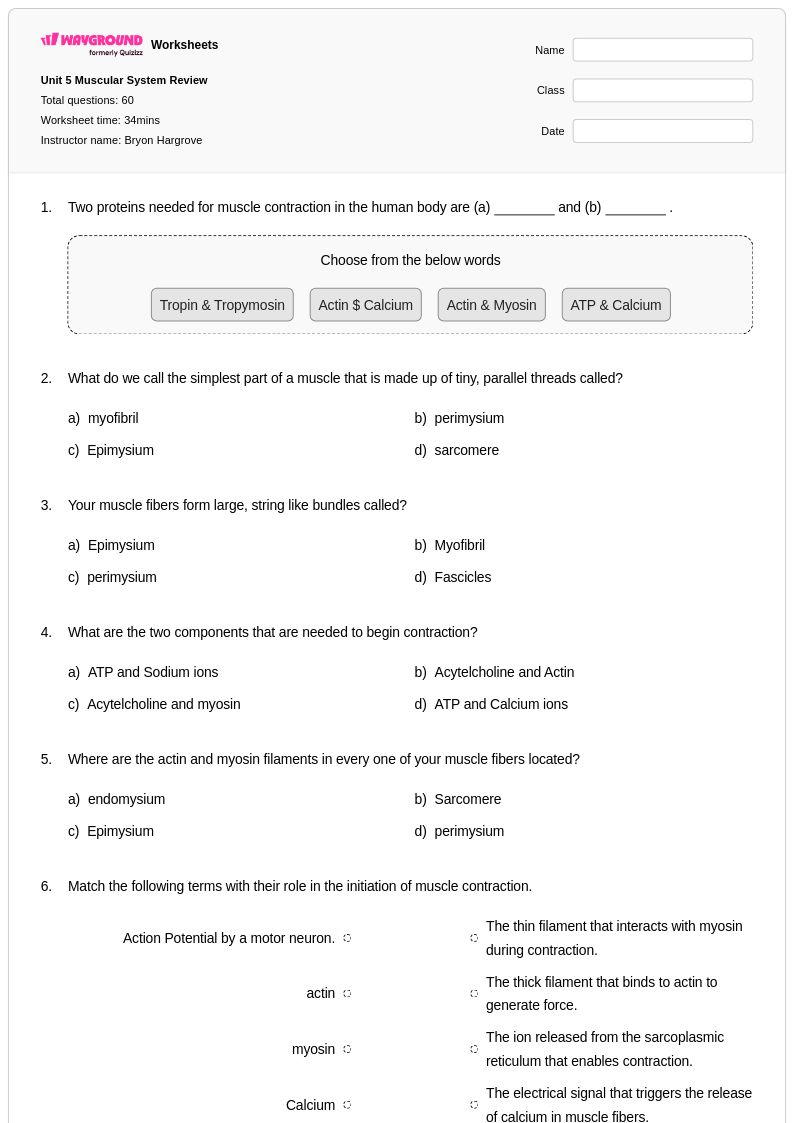
60 Q
9th - 12th
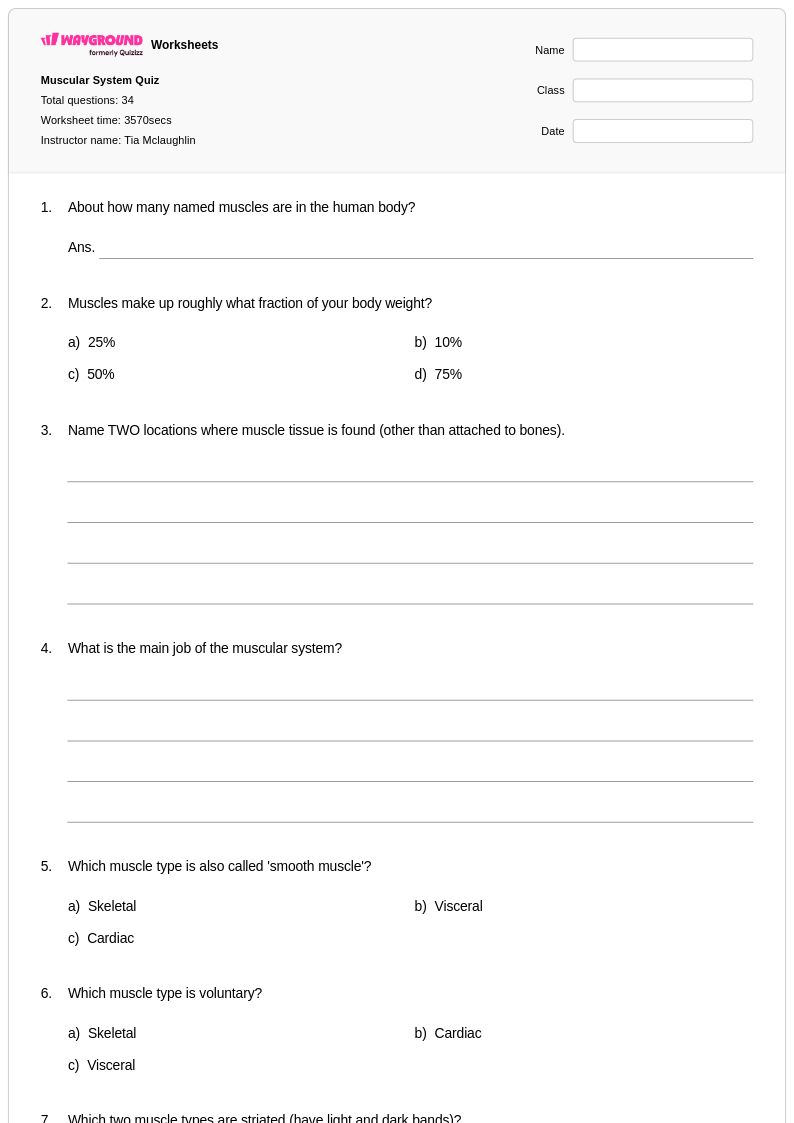
34 Q
9th - 12th
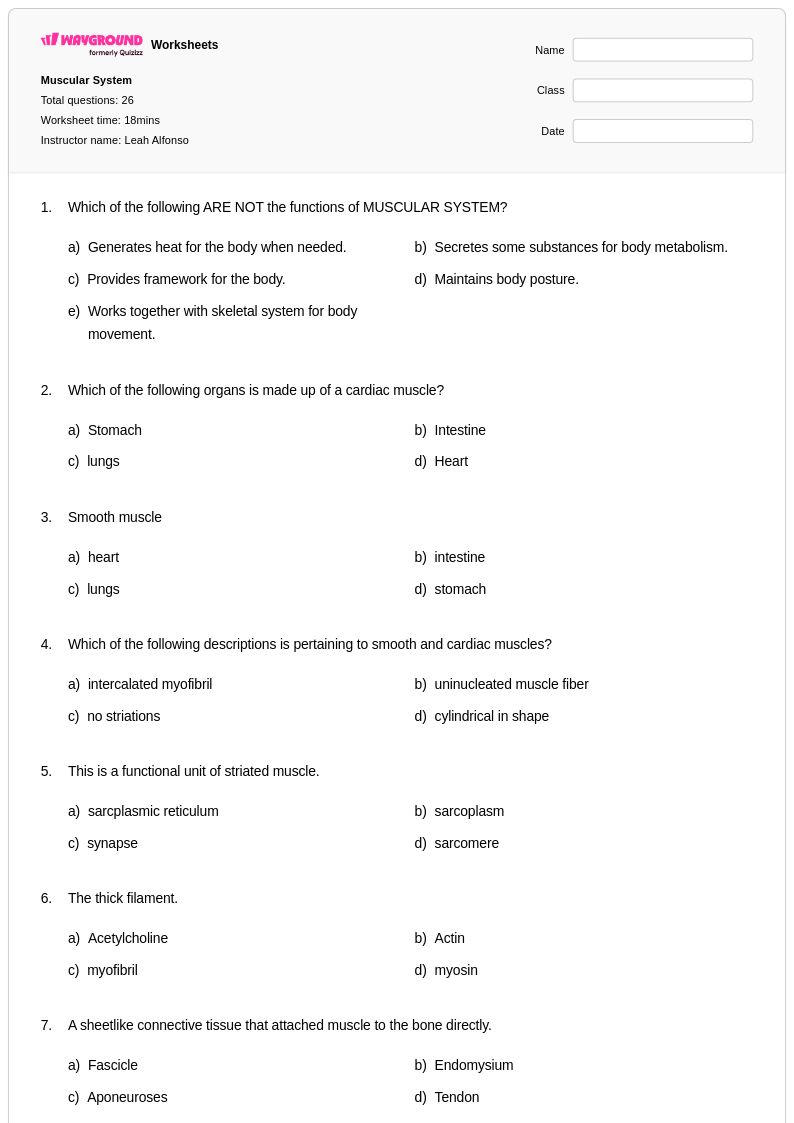
26 Q
10th - 12th
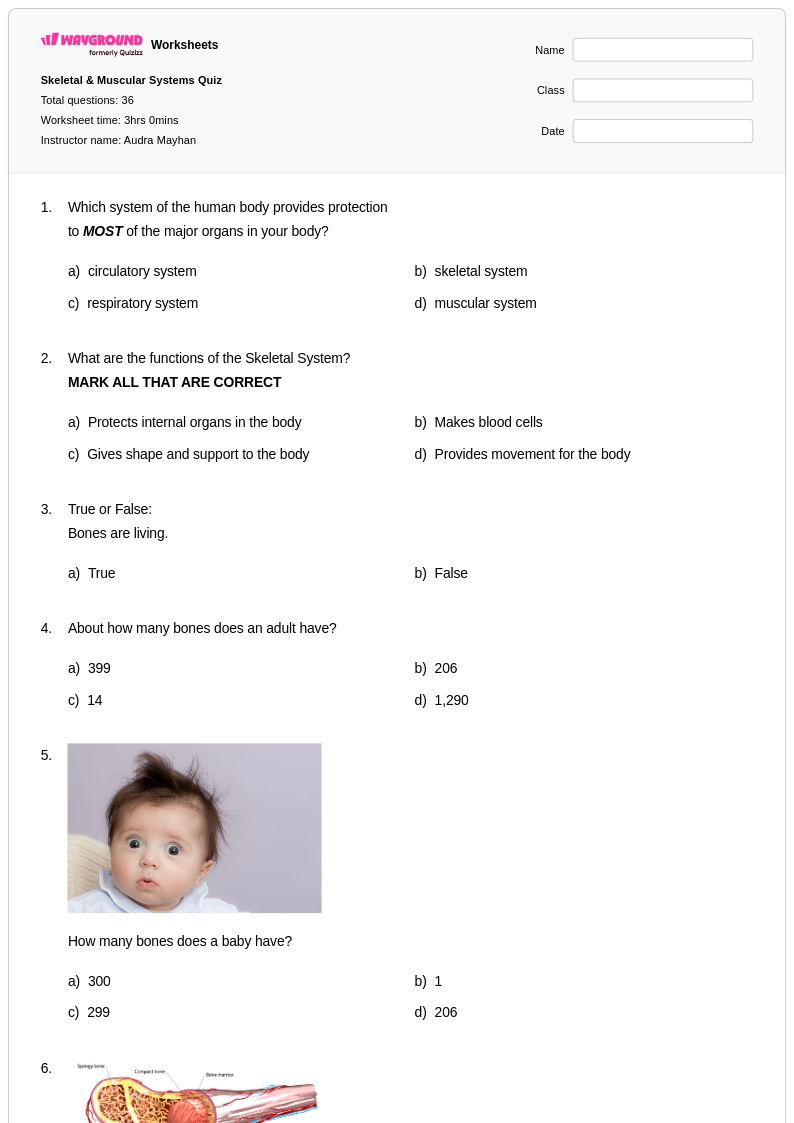
36 Q
6th - Uni
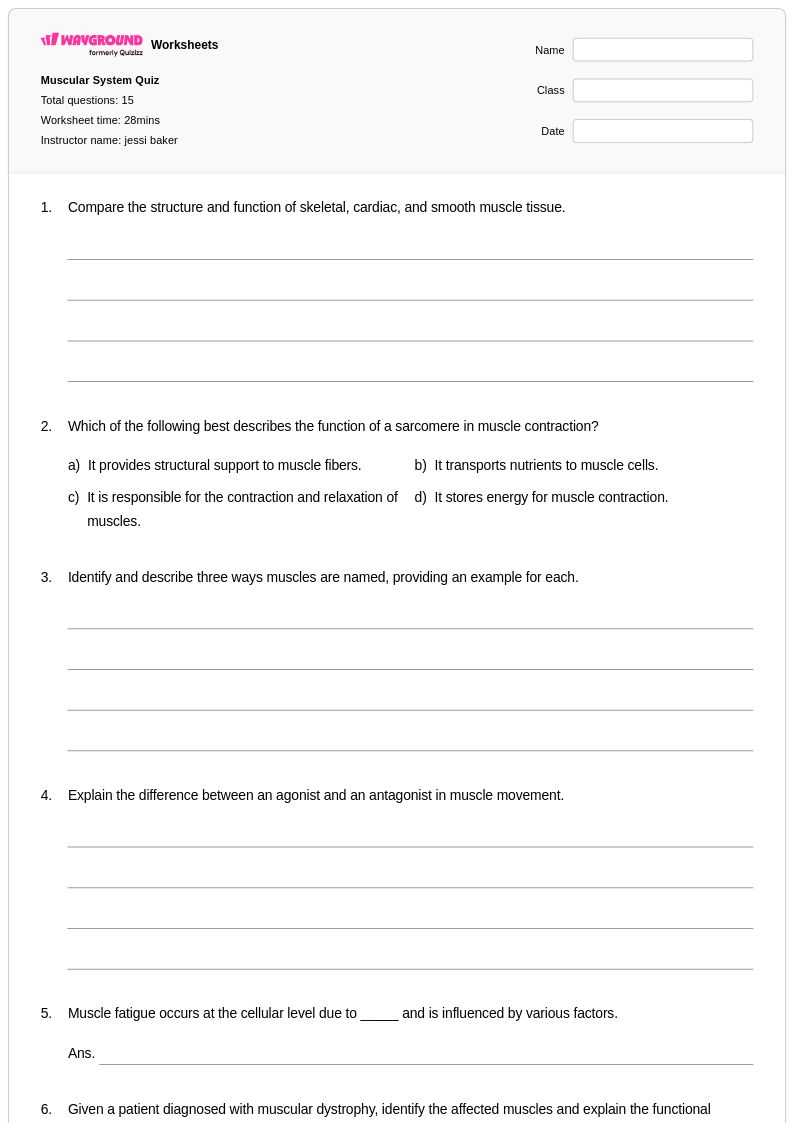
15 Q
11th
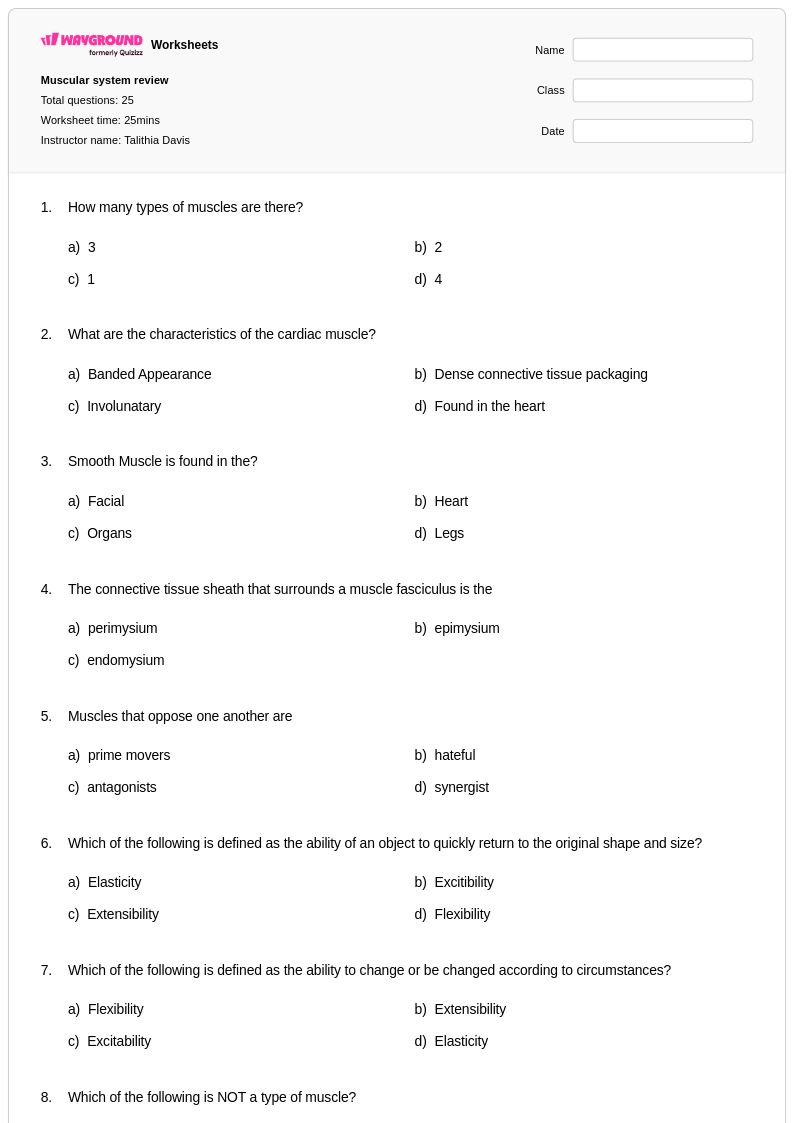
25 Q
9th - 12th
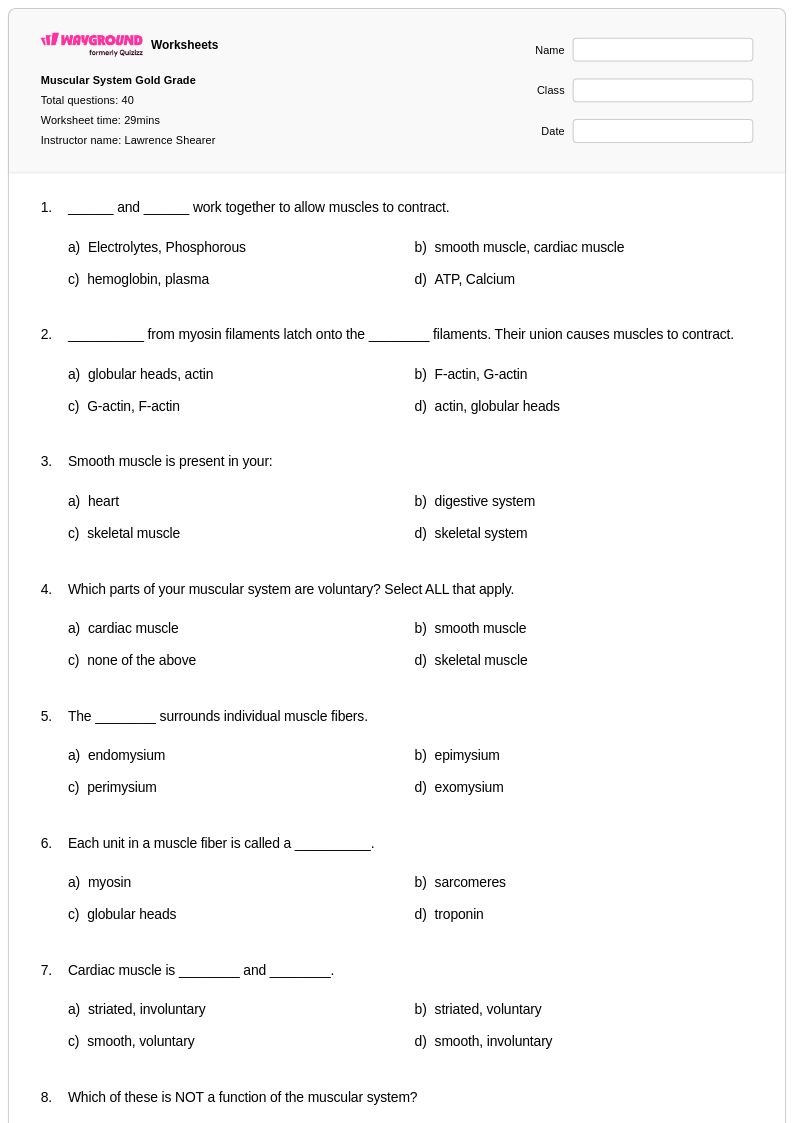
40 Q
11th
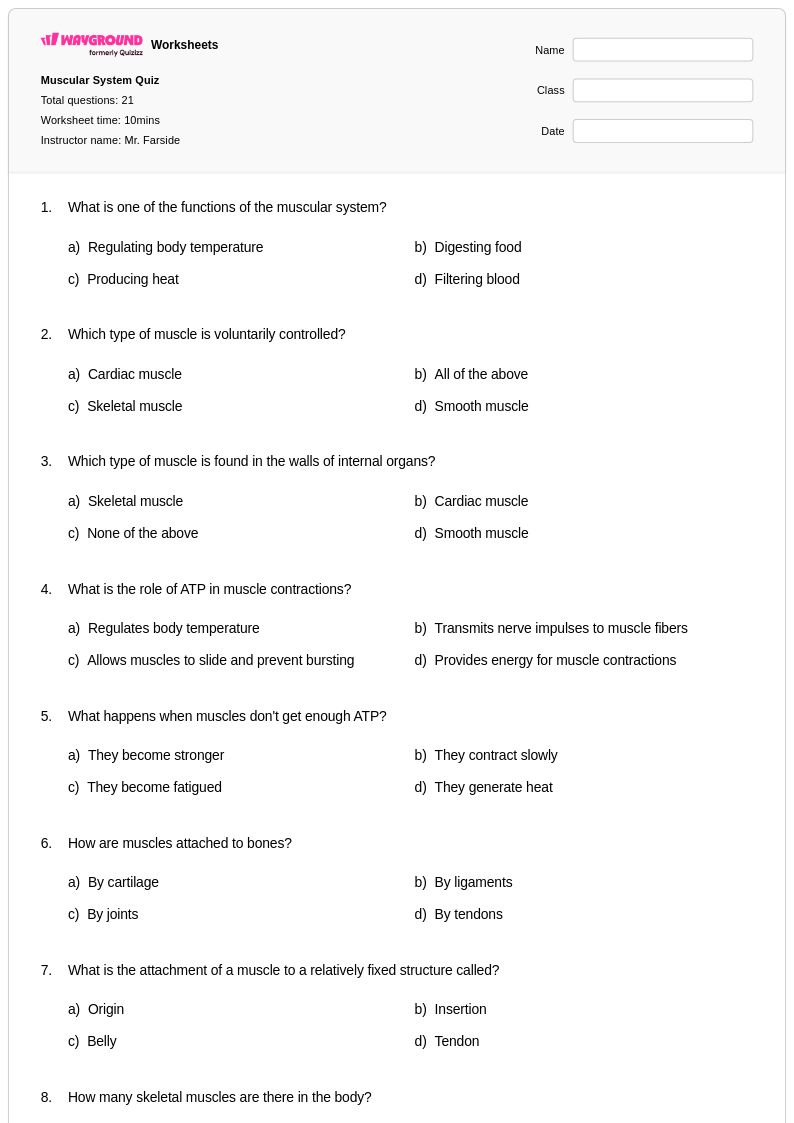
21 Q
11th
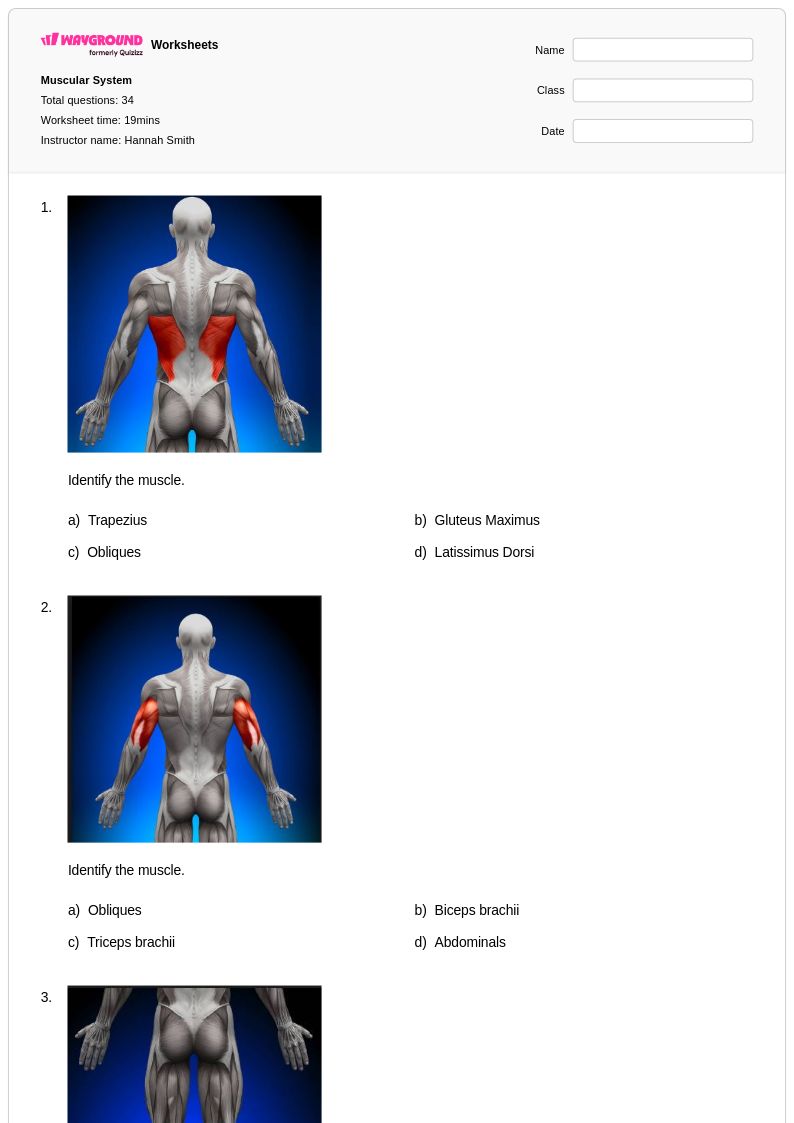
34 Q
11th - 12th
Explore Other Subject Worksheets for grade 11
Explore printable Muscular System worksheets for Grade 11
Grade 11 muscular system worksheets available through Wayground (formerly Quizizz) provide comprehensive coverage of advanced muscle anatomy, physiology, and function concepts essential for upper-level biology students. These expertly designed resources strengthen critical skills including identifying muscle fiber types, analyzing contraction mechanisms at the molecular level, understanding neuromuscular junction processes, and evaluating how different muscle groups coordinate movement patterns throughout the human body. Students engage with detailed practice problems that explore muscle metabolism, fatigue mechanisms, and the relationship between muscle structure and specialized functions, while teachers benefit from complete answer keys and professionally formatted printables that seamlessly integrate into existing curriculum frameworks. The free pdf resources encompass everything from microscopic muscle tissue analysis to whole-body movement studies, ensuring students develop both foundational knowledge and advanced analytical skills required for success in upper-level biology coursework.
Wayground (formerly Quizizz) supports biology educators with millions of teacher-created muscular system resources that feature robust search and filtering capabilities, comprehensive standards alignment, and sophisticated differentiation tools designed for diverse Grade 11 learning needs. Teachers can easily customize worksheets to match specific instructional objectives, whether focusing on remediation of basic muscle concepts or enrichment activities involving complex physiological processes like excitation-contraction coupling and energy system utilization. The platform's flexible format options, including both printable and digital pdf versions, accommodate various classroom environments and teaching styles while streamlining lesson planning through organized collections of skill-specific practice materials. These comprehensive tools enable educators to efficiently address individual student needs, reinforce challenging concepts through targeted practice, and assess mastery of sophisticated muscular system principles that form the foundation for advanced study in human physiology and related biological sciences.
FAQs
How do I teach the muscular system to middle or high school students?
What are the best exercises for helping students practice muscular system concepts?
What misconceptions do students commonly have about how muscles work?
How can I differentiate muscular system instruction for students at different skill levels?
How do I use Wayground's muscular system worksheets in my classroom?
How do I help students understand the difference between the three types of muscle tissue?