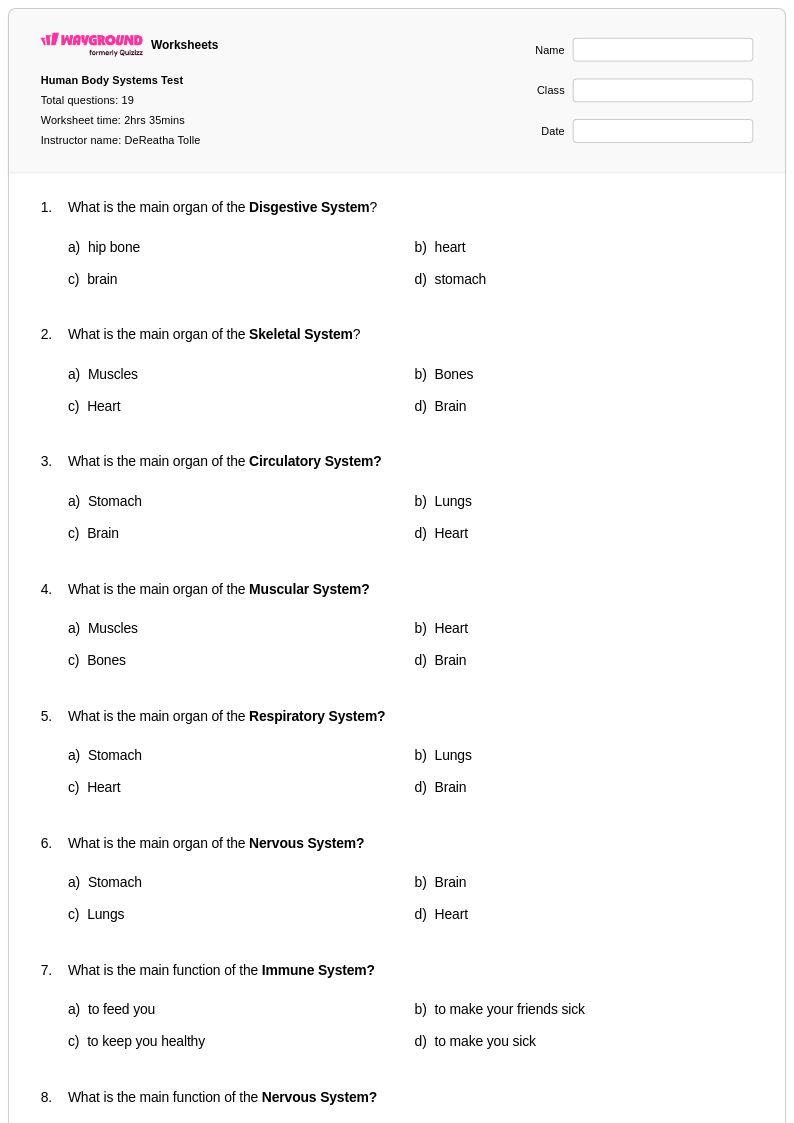
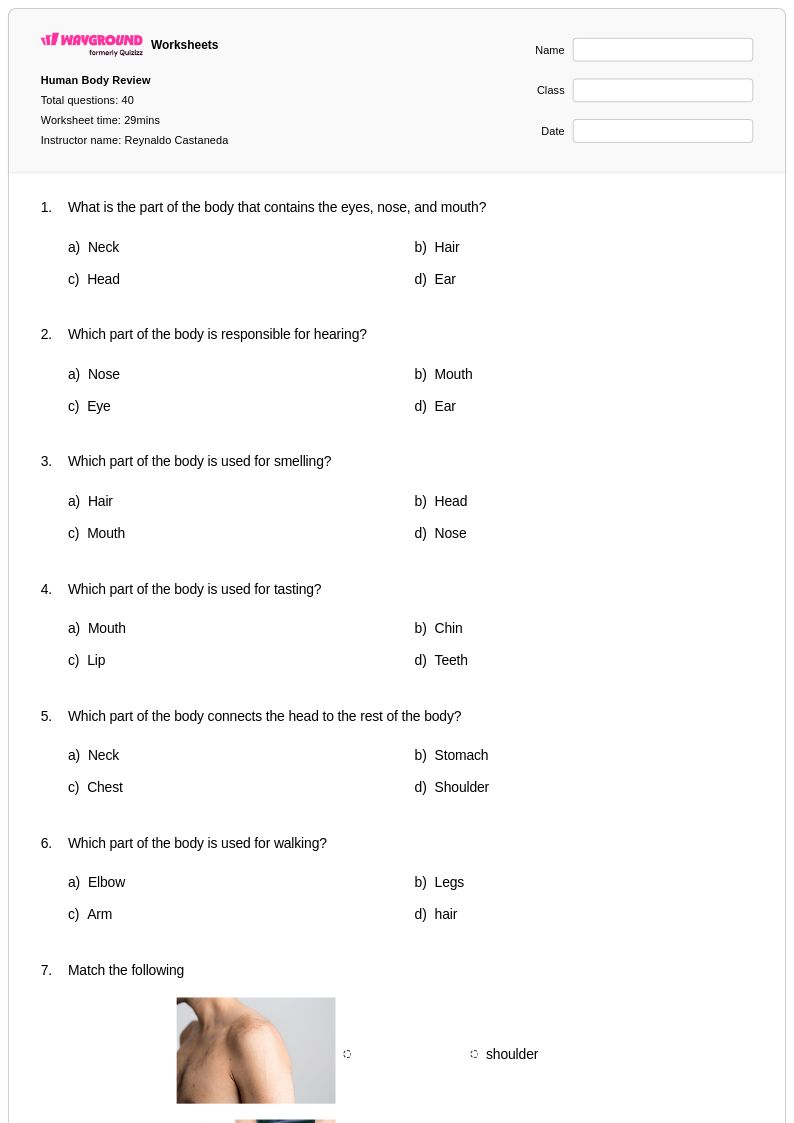
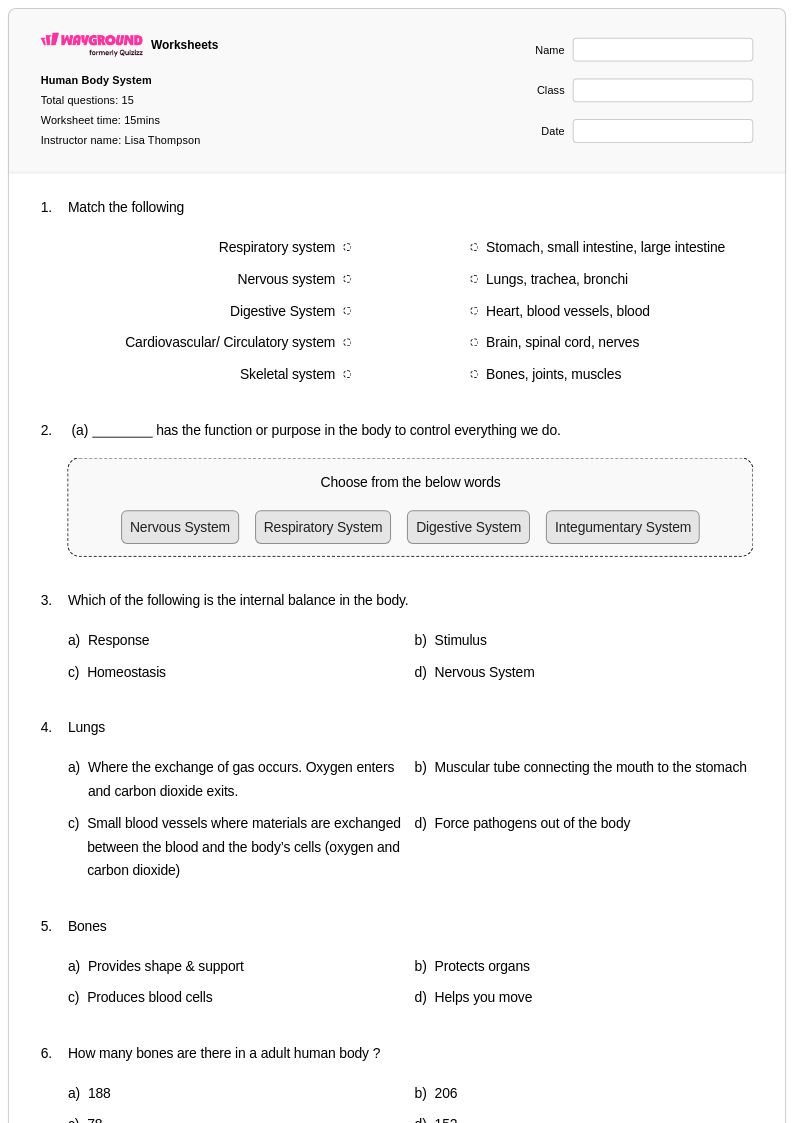
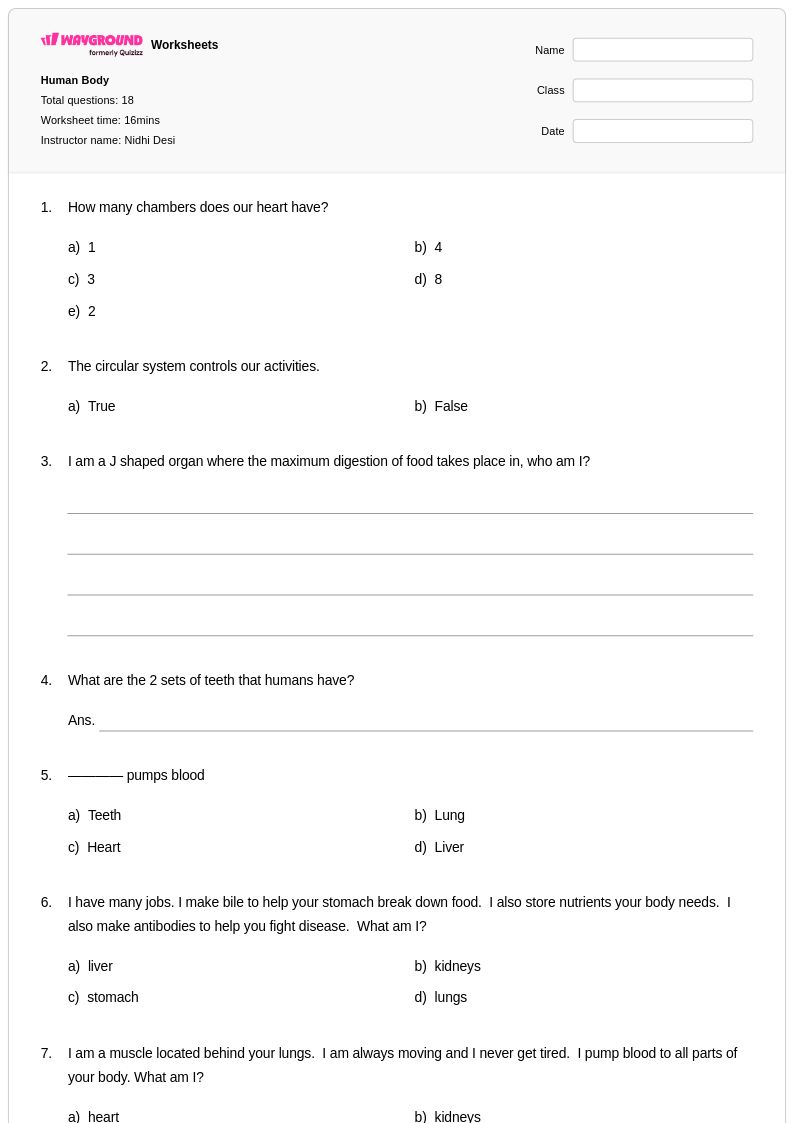
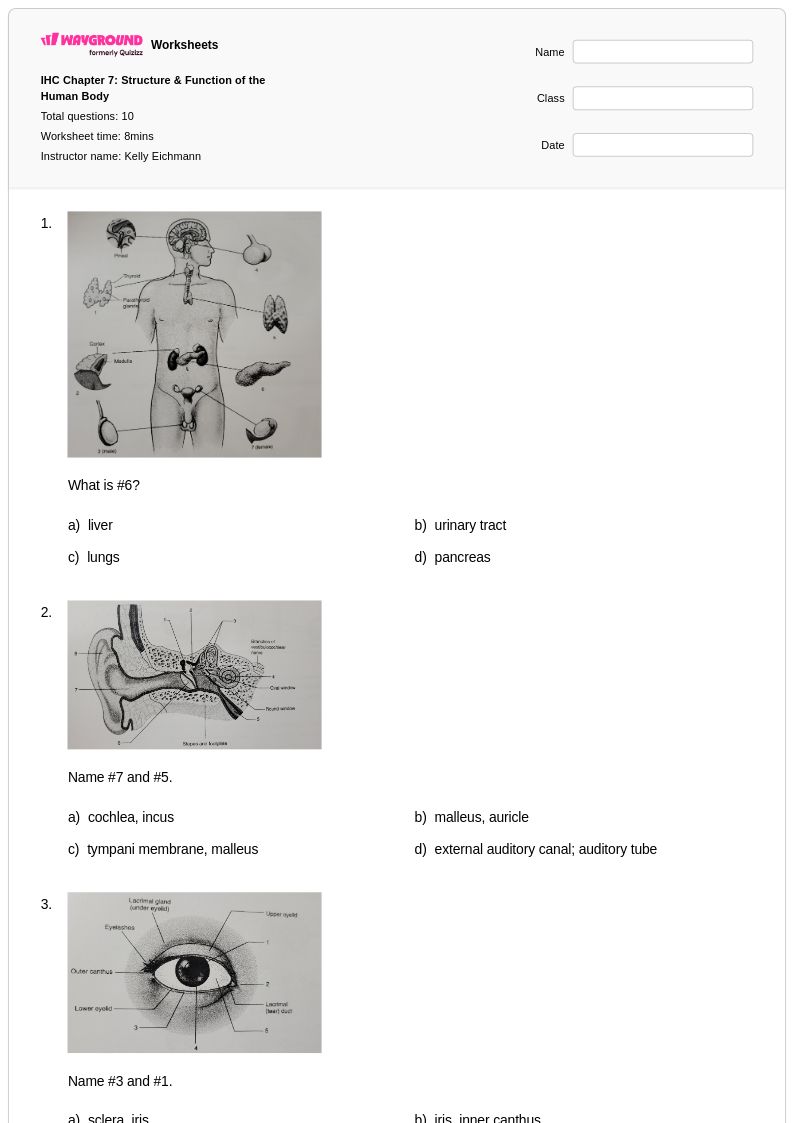
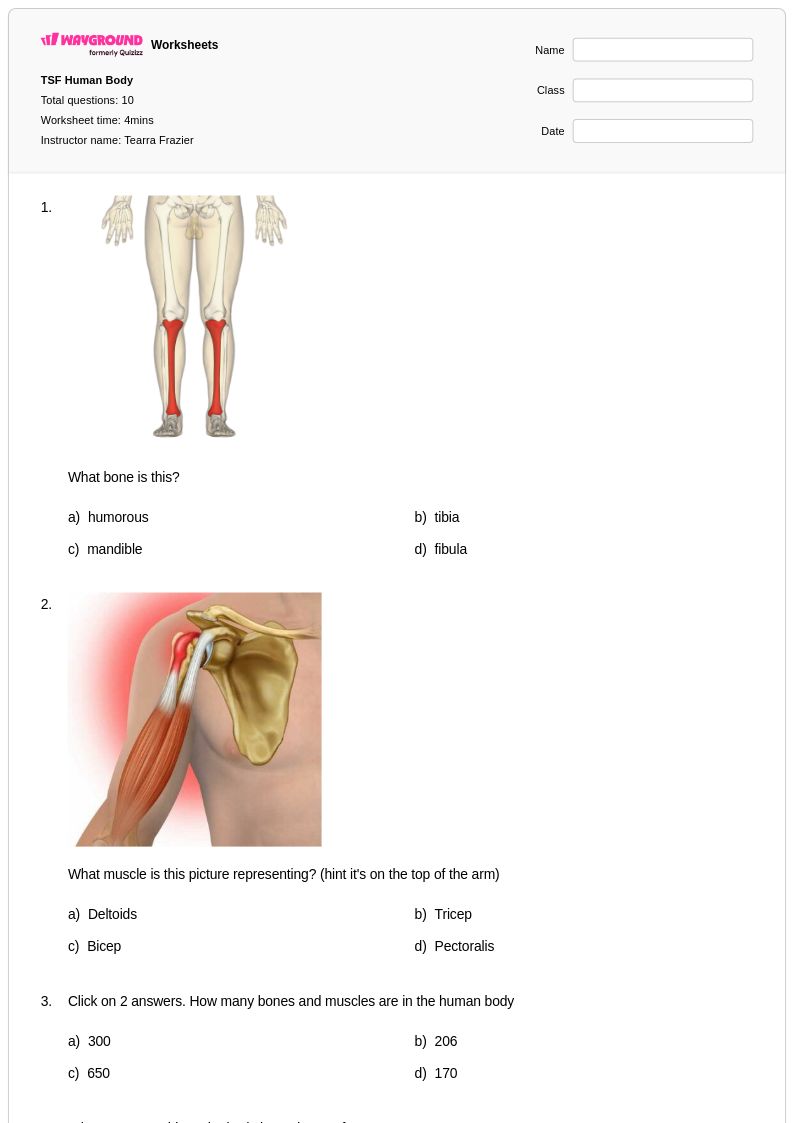
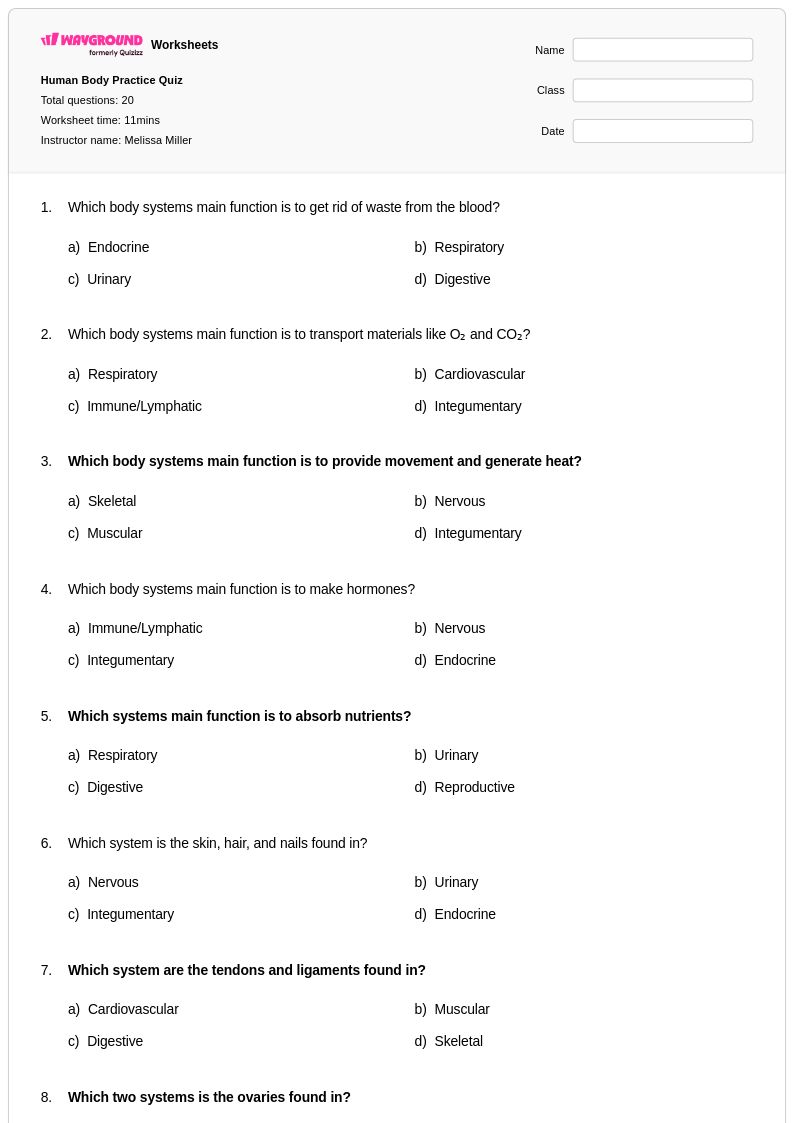
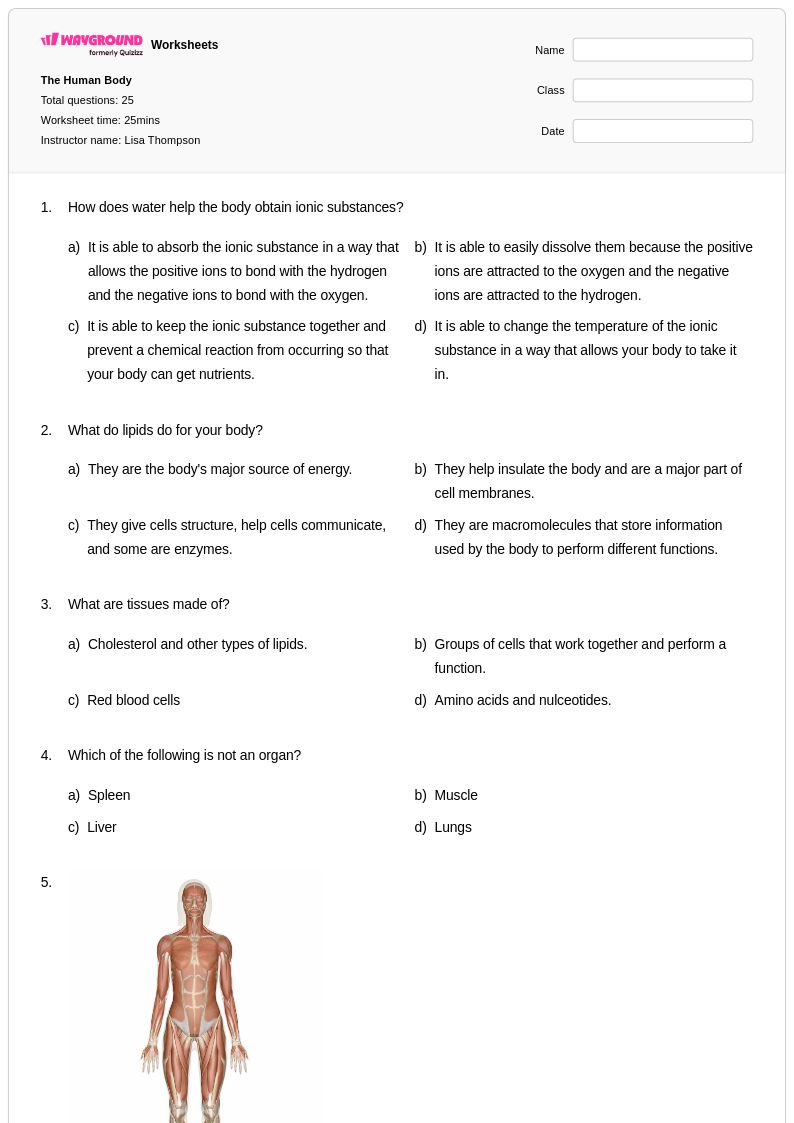
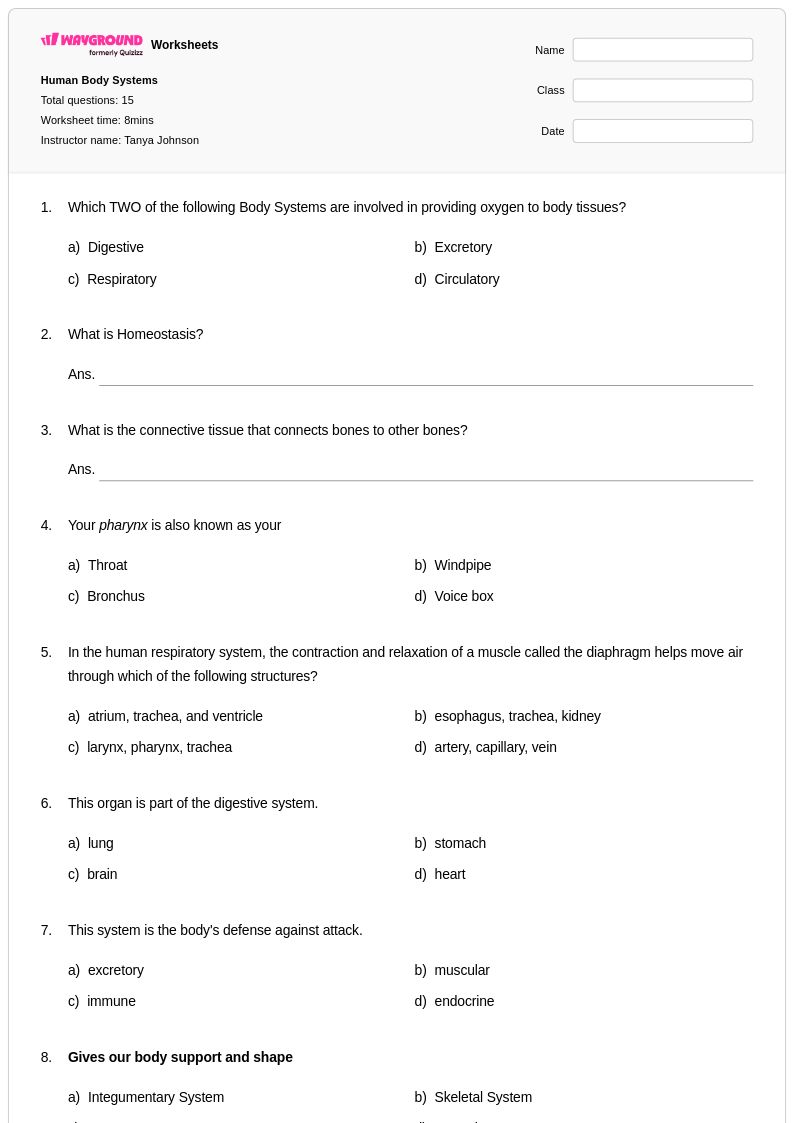
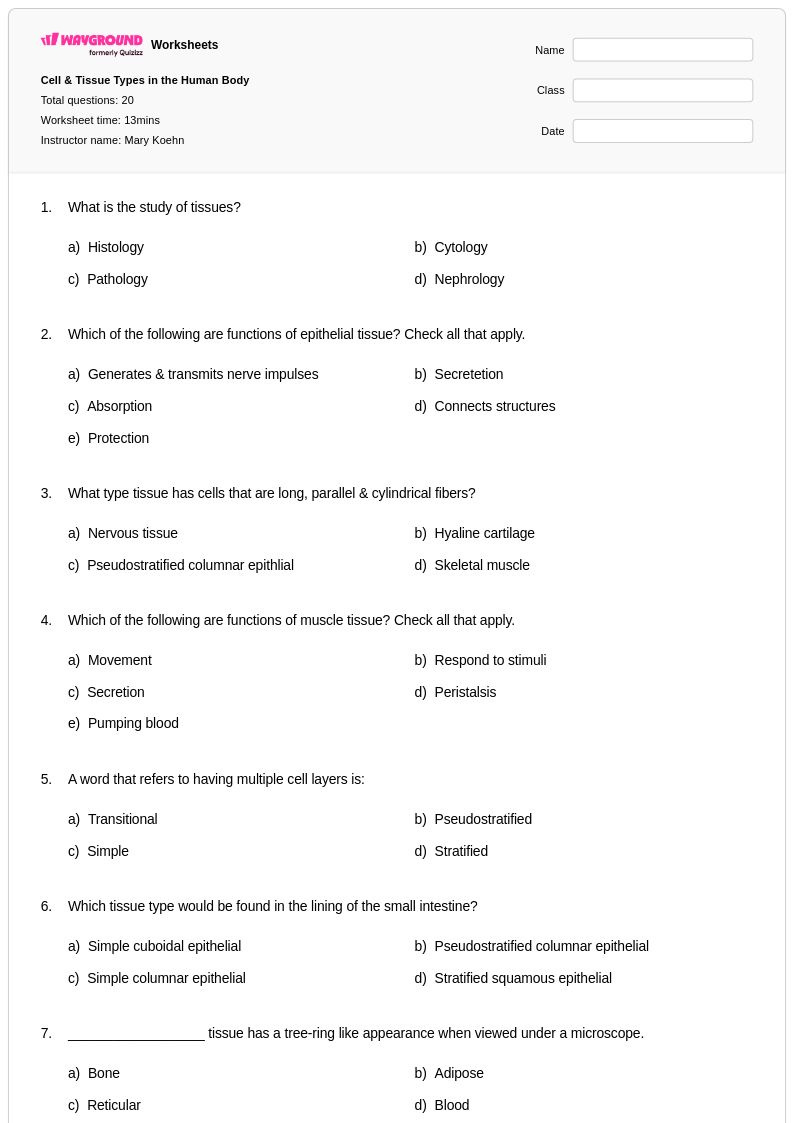
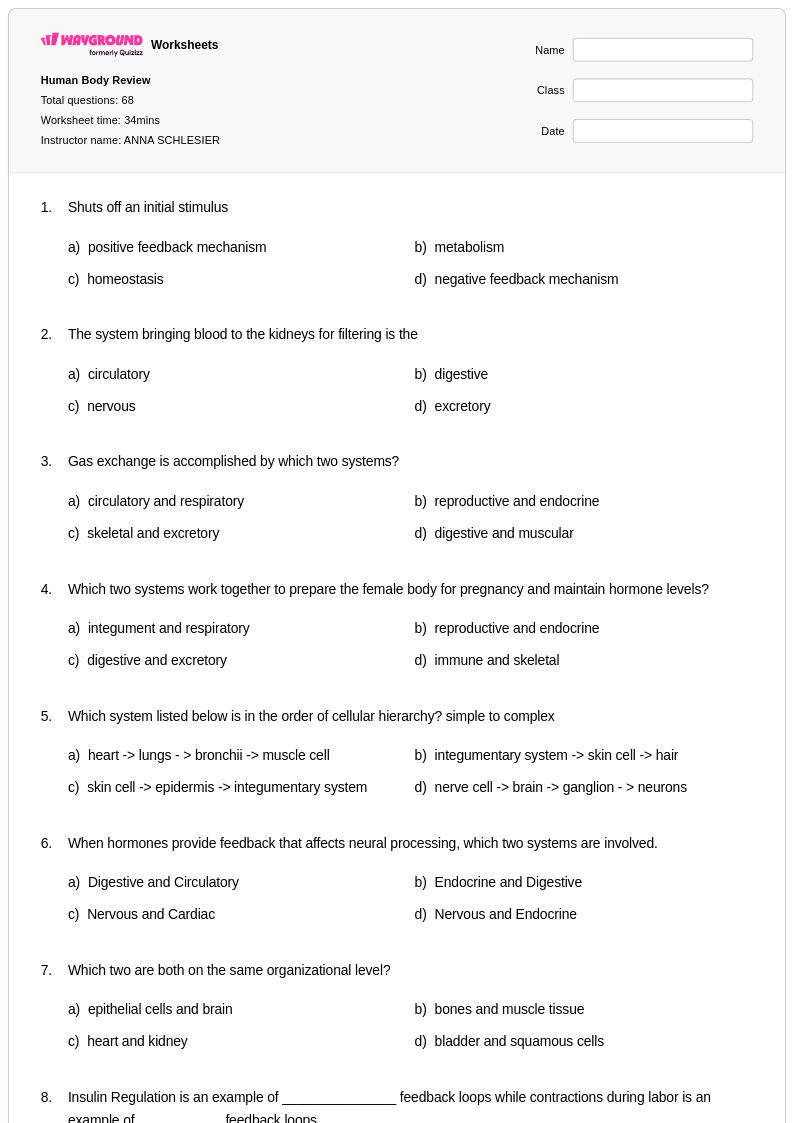
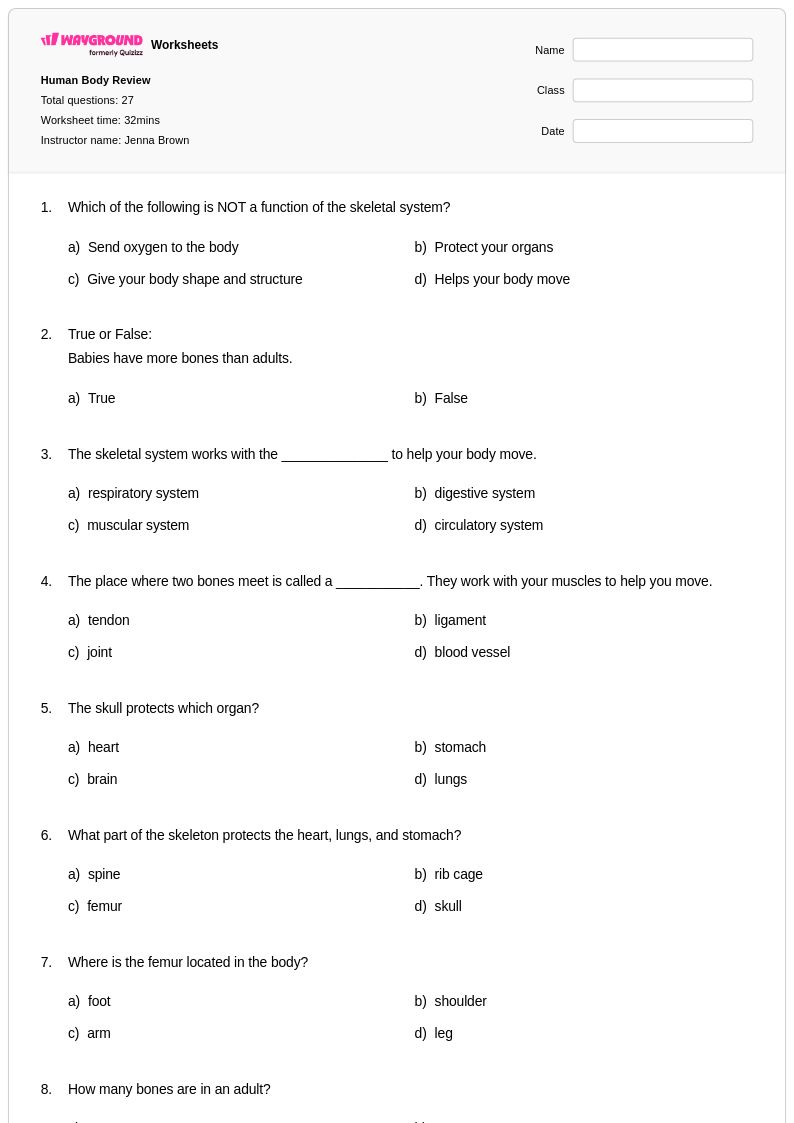
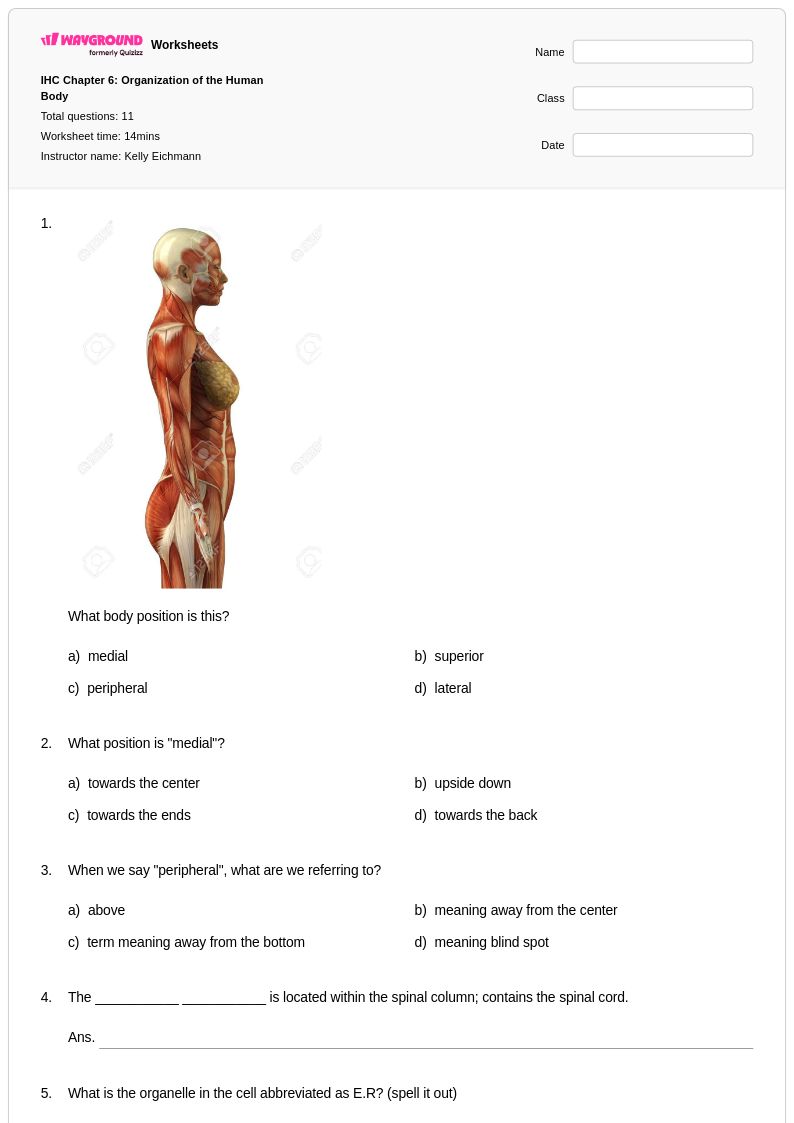
Explore Grade 11 human body worksheets and printables from Wayground that help students master anatomy, physiology, and body systems through engaging practice problems and comprehensive answer keys.
Explore printable Human Body worksheets for Grade 11
Grade 11 human body worksheets available through Wayground (formerly Quizizz) provide comprehensive coverage of advanced anatomical and physiological concepts essential for upper-level biology students. These expertly crafted resources strengthen critical thinking skills through detailed practice problems that explore complex body systems, including cardiovascular dynamics, neural pathways, endocrine regulation, and metabolic processes. Students engage with challenging content that builds upon foundational knowledge while developing the analytical abilities necessary for advanced scientific study. Each worksheet includes a complete answer key and is available as a free printable pdf, allowing educators to seamlessly integrate these materials into their curriculum while providing students with structured opportunities to master intricate biological concepts through targeted practice.
Wayground (formerly Quizizz) empowers educators with an extensive collection of millions of teacher-created resources specifically designed to support comprehensive human body instruction at the Grade 11 level. The platform's robust search and filtering capabilities enable teachers to quickly locate worksheets aligned with specific learning standards and curriculum requirements, while built-in differentiation tools allow for seamless customization to meet diverse student needs. These versatile materials are available in both printable and digital formats, including downloadable pdf versions, making them ideal for classroom instruction, homework assignments, remediation sessions, and enrichment activities. Teachers can efficiently plan engaging lessons, provide targeted skill practice, and support student mastery of complex physiological concepts through this comprehensive worksheet library that adapts to various teaching styles and learning environments.
FAQs
How do I teach human body systems to students effectively?
Teaching human body systems is most effective when students can connect structure to function — for example, understanding why the alveoli in the lungs have thin walls before memorizing their name. Start with whole-body overviews, then zoom into each system, emphasizing how systems interact (e.g., the circulatory and respiratory systems working together during gas exchange). Using labeled diagrams alongside written explanations helps students build both vocabulary and conceptual understanding simultaneously.
What types of exercises help students practice human anatomy and body systems?
Effective practice exercises for human anatomy include labeling diagrams of organ systems, matching vocabulary terms to definitions, sequencing processes like digestion or blood flow, and interpreting data from physiological scenarios. Worksheets that ask students to explain connections between systems — such as how the nervous system regulates the digestive system — push beyond rote memorization toward systems thinking. Regular practice with these formats reinforces both scientific vocabulary and conceptual knowledge of how the body functions.
What mistakes do students commonly make when learning about the human body?
One of the most common misconceptions is treating body systems as isolated units rather than interconnected networks — students often struggle to explain how a disruption in one system (e.g., the circulatory system) affects others (e.g., the respiratory or digestive systems). Students also frequently confuse the functions of similar structures, such as arteries versus veins, or the small versus large intestine. Targeted practice that asks students to trace pathways and explain cause-and-effect relationships across systems helps address these errors directly.
How do I differentiate human body worksheets for students at different levels?
For students who need additional support, reduce the complexity of diagram labeling tasks by pre-filling some answers or limiting the number of structures students are responsible for identifying. Advanced learners benefit from open-ended questions that require them to synthesize across multiple systems or analyze real physiological data. On Wayground, teachers can apply individual accommodations such as reduced answer choices, read aloud support, and extended time to specific students, allowing the same worksheet to serve diverse learners within one classroom without singling anyone out.
How can I use Wayground's human body worksheets in my classroom?
Wayground's human body worksheets are available as printable PDFs for traditional classroom use and in digital formats for technology-integrated environments, making them flexible for in-person, hybrid, or remote instruction. Teachers can also host worksheets as interactive quizzes directly on Wayground, enabling real-time student responses and automatic scoring. Each worksheet includes a complete answer key, supporting both self-assessment by students and efficient evaluation by teachers.
Which human body topics are most important to cover in a K-12 science curriculum?
Core human body topics across K-12 include the circulatory, respiratory, digestive, nervous, musculoskeletal, and immune systems, with depth increasing by grade level. Early grades typically focus on basic organ identification and function, while middle and high school students engage with physiological processes, homeostasis, and system interactions. Prioritizing vocabulary development alongside conceptual understanding ensures students can both name structures and explain what those structures do and why.