Free Printable Cell Energy Worksheets for Grade 11
Explore our comprehensive Grade 11 cell energy worksheets and printables that help students master cellular respiration, photosynthesis, and ATP production through engaging practice problems, free PDFs, and detailed answer keys.
Explore printable Cell Energy worksheets for Grade 11
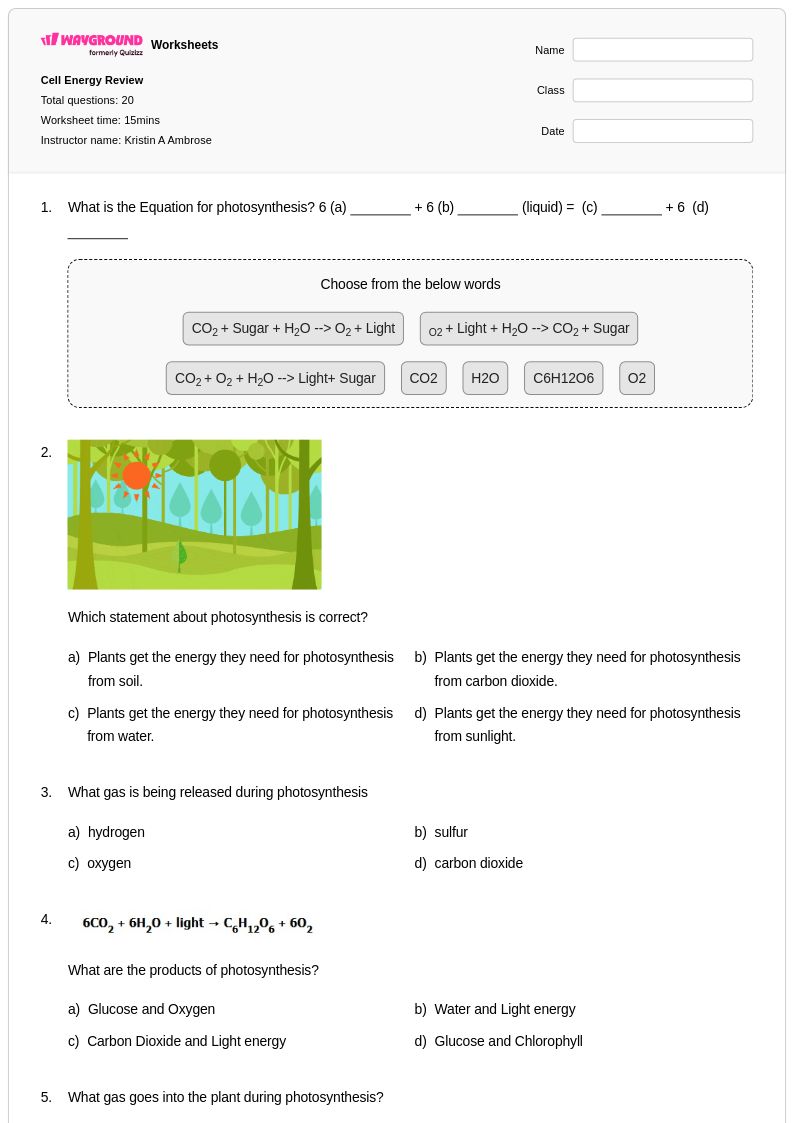
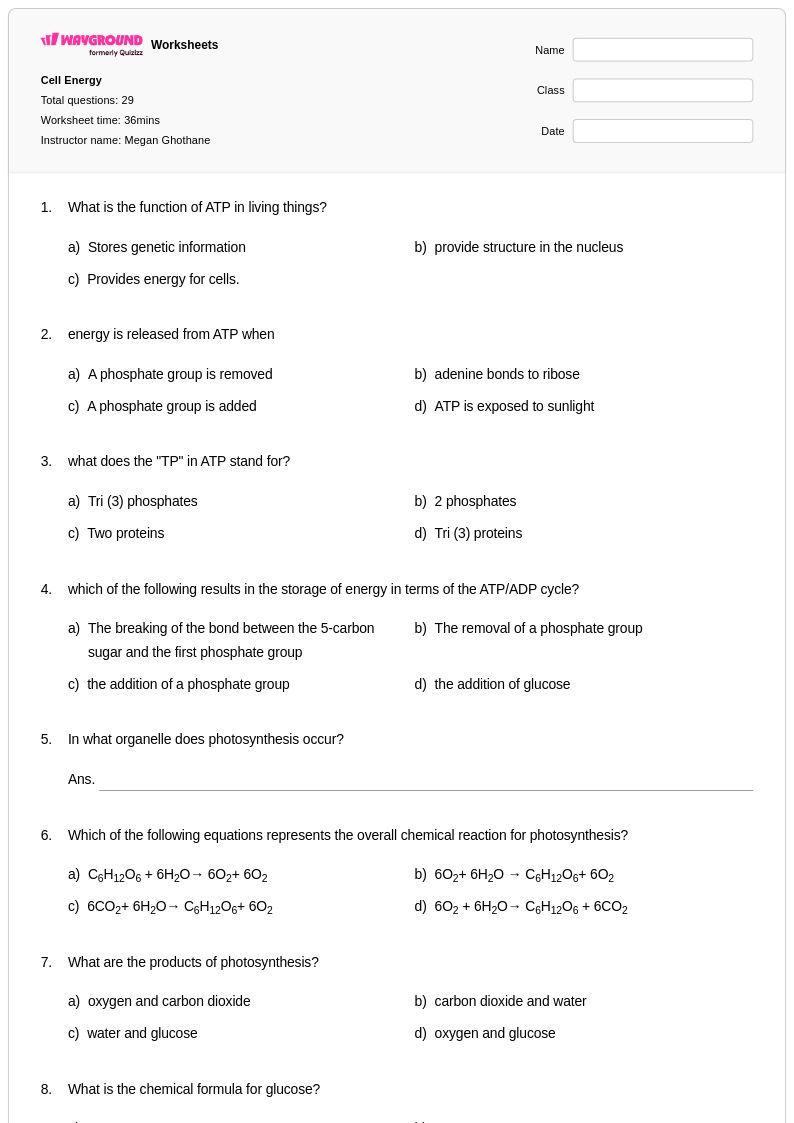
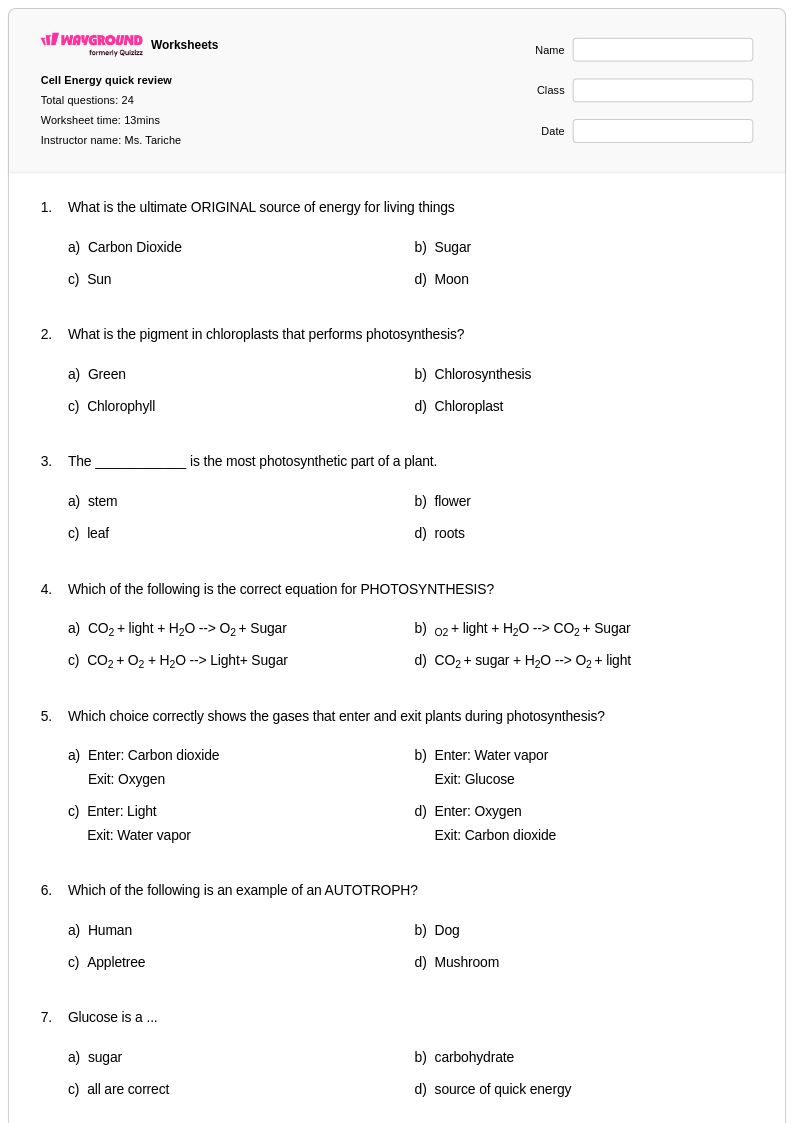
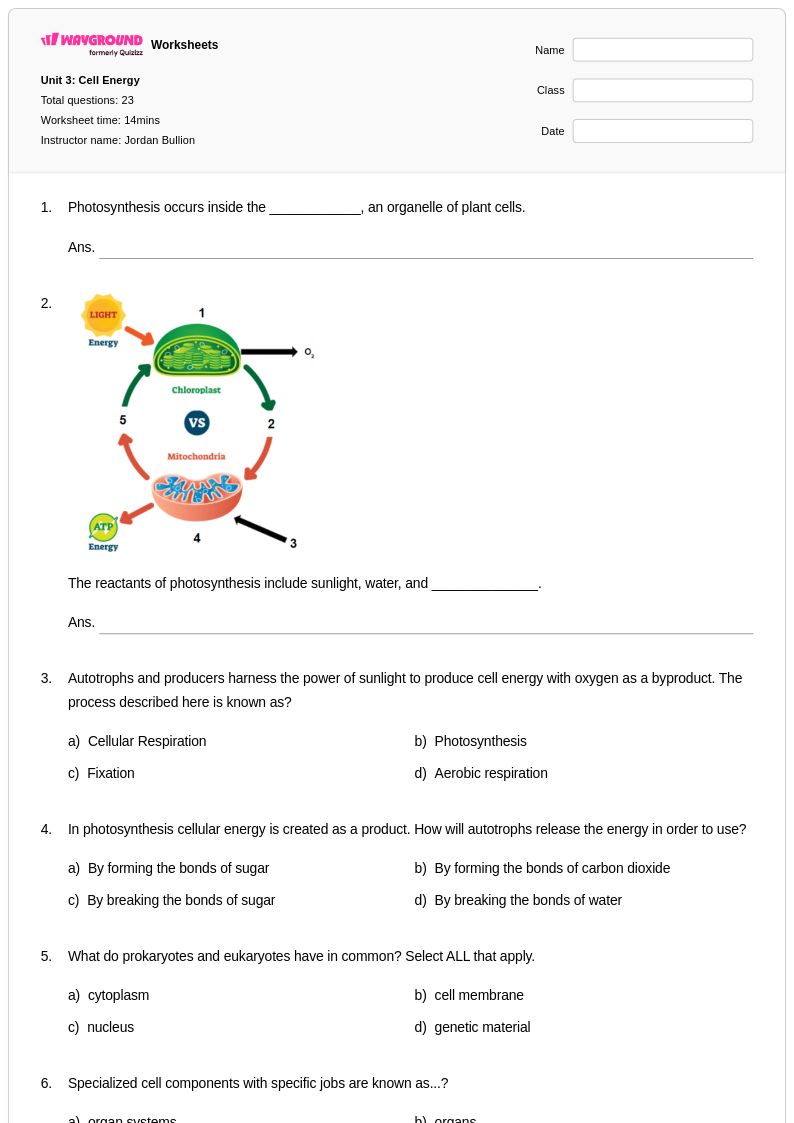
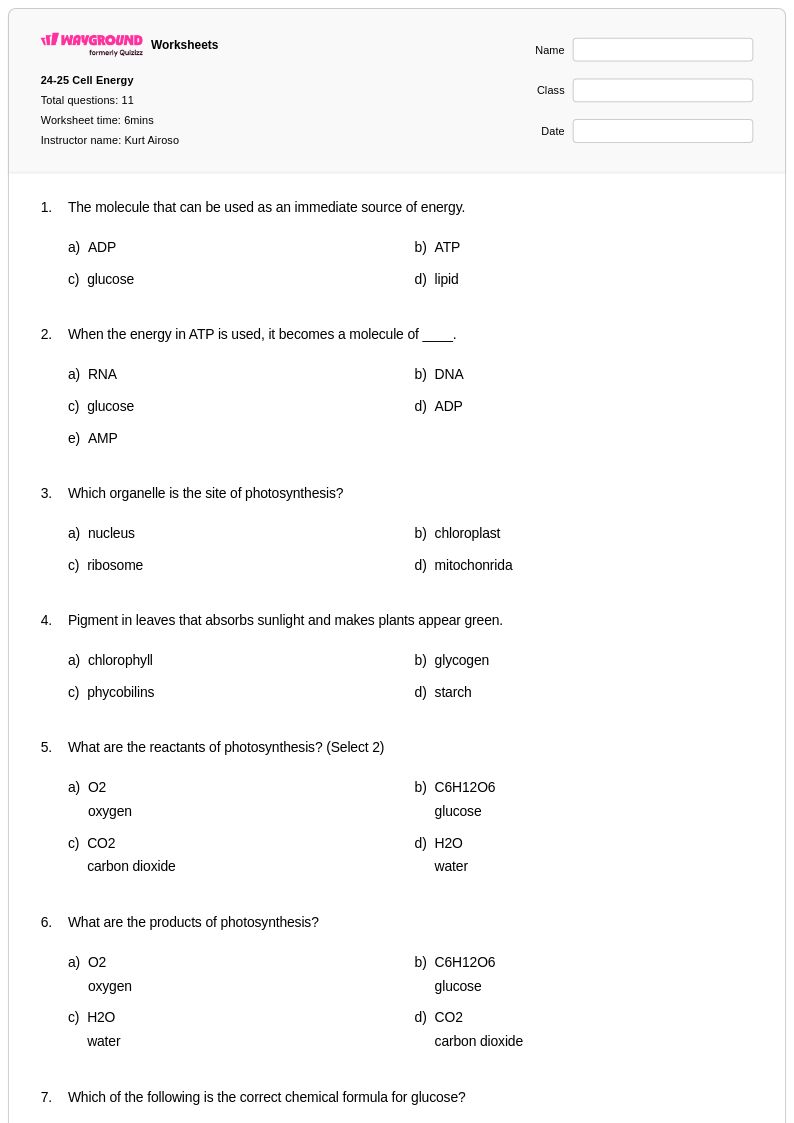
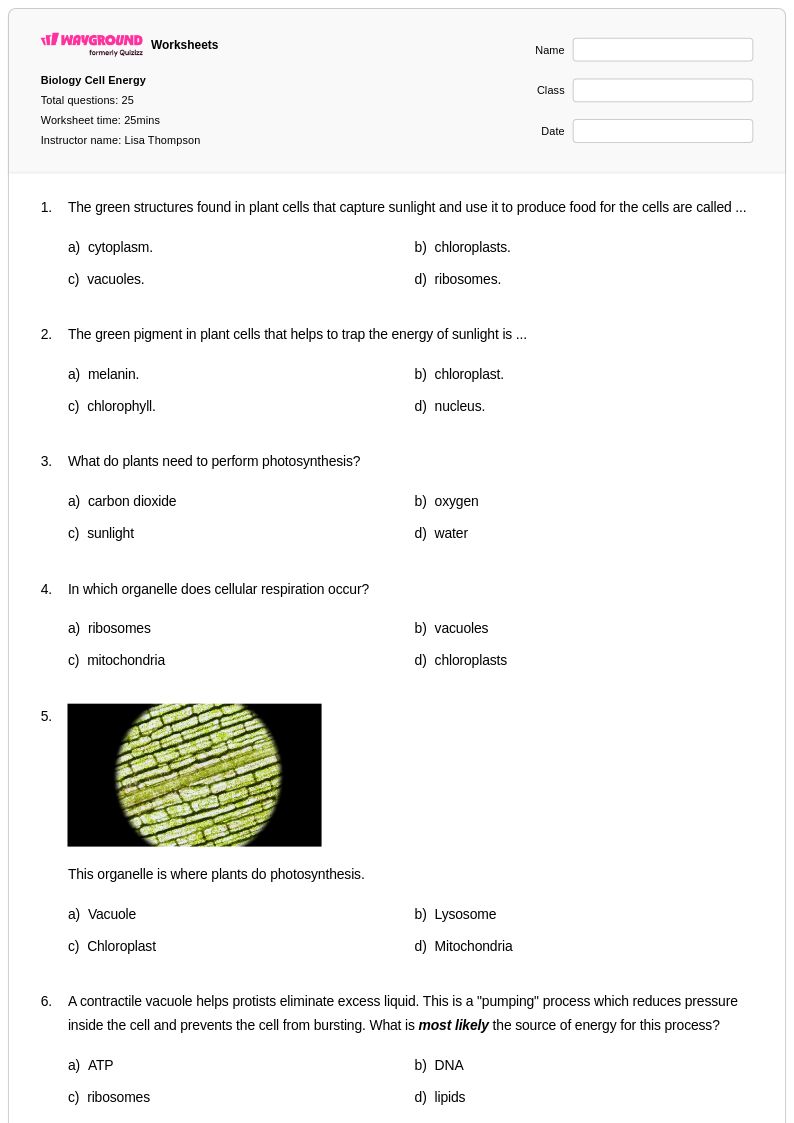
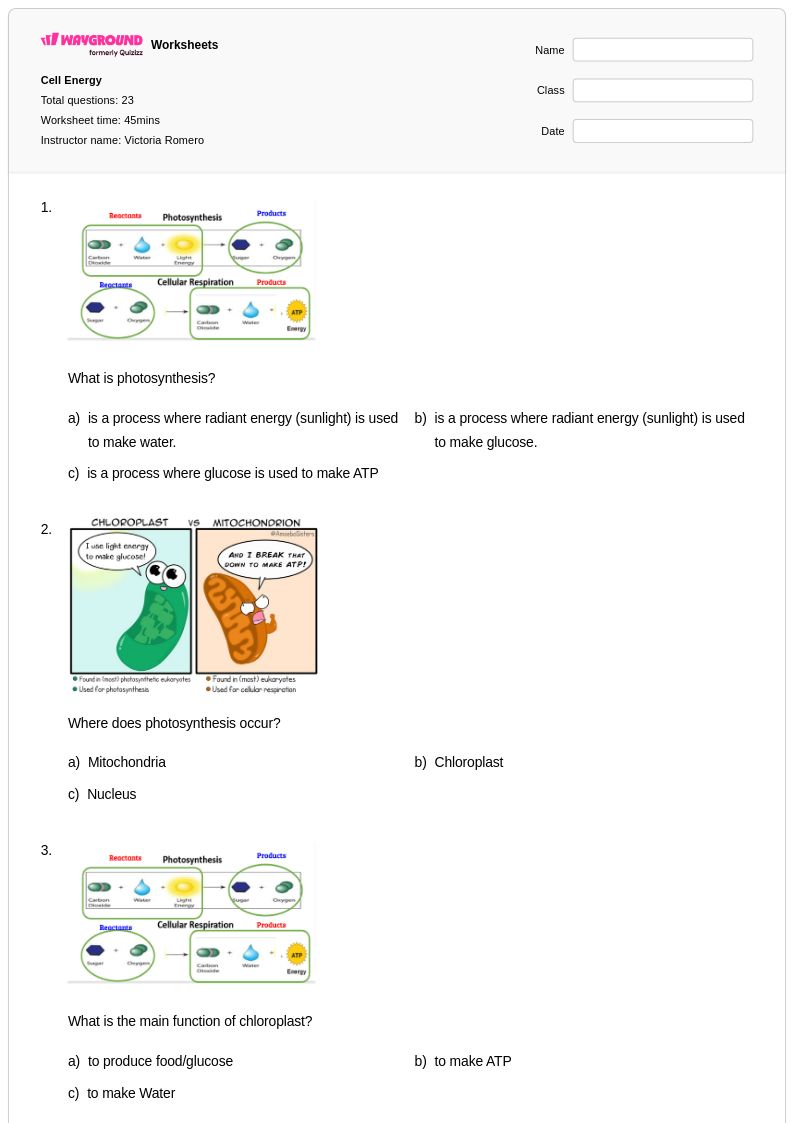
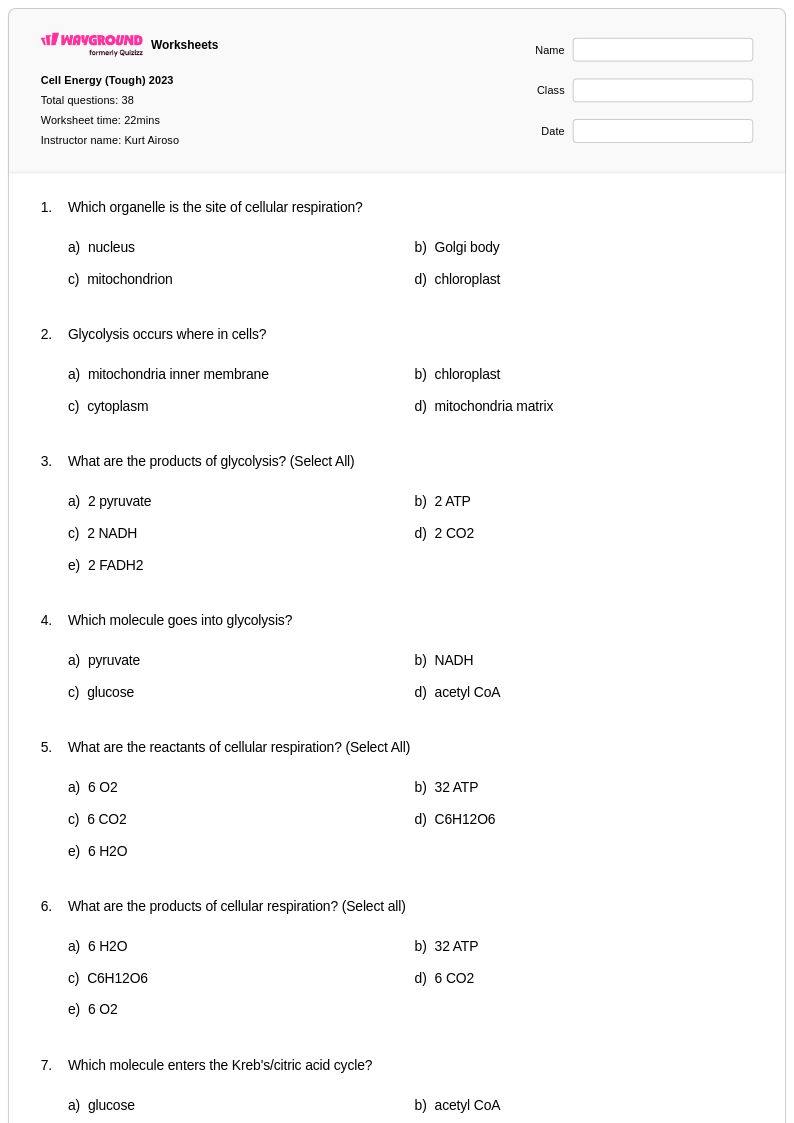
Cell energy worksheets for Grade 11 biology students available through Wayground (formerly Quizizz) provide comprehensive coverage of cellular respiration, photosynthesis, and ATP synthesis processes that form the foundation of advanced biological understanding. These expertly designed worksheets strengthen critical skills in analyzing metabolic pathways, interpreting energy transformation diagrams, and solving complex biochemical equations that demonstrate how cells capture, store, and utilize energy. Students engage with practice problems that explore glycolysis, the Krebs cycle, electron transport chains, and light-dependent and light-independent reactions of photosynthesis, while detailed answer keys support independent learning and self-assessment. The free printable resources include comparative analysis exercises, diagram labeling activities, and quantitative problems that challenge students to calculate energy yields and understand the interconnected nature of cellular metabolism in both plant and animal systems.
Wayground (formerly Quizizz) empowers educators with millions of teacher-created cell energy worksheets that can be easily discovered through robust search and filtering capabilities, ensuring alignment with state and national biology standards for Grade 11 coursework. The platform's differentiation tools allow teachers to customize worksheet difficulty levels and question types to meet diverse learning needs, while flexible formatting options provide both printable pdf versions for traditional classroom use and digital formats for interactive learning experiences. These comprehensive resource collections streamline lesson planning by offering ready-to-use materials for skill practice, targeted remediation of challenging concepts like chemiosmosis and carbon fixation, and enrichment activities that extend learning beyond basic curriculum requirements. Teachers can efficiently organize their cell energy instruction by accessing worksheets that progress from fundamental ATP structure and function to advanced topics including metabolic regulation and the integration of catabolic and anabolic pathways.
FAQs
How do I teach cellular respiration and photosynthesis together in the same unit?
Teaching cellular respiration and photosynthesis as complementary processes helps students see how energy flows through biological systems rather than treating them as isolated topics. Start by anchoring both processes to ATP production, then contrast where each occurs (mitochondria vs. chloroplasts), what inputs are required, and what outputs are produced. Using side-by-side comparison diagrams or graphic organizers reinforces the relationship between the two processes and prevents students from conflating their steps.
What exercises help students practice understanding ATP production and energy conversion?
Effective practice for ATP production includes labeling diagrams of the mitochondria and chloroplast, sequencing the stages of cellular respiration (glycolysis, Krebs cycle, electron transport chain), and completing fill-in-the-blank problems that track inputs and outputs at each stage. Practice problems that ask students to compare the ATP yield of aerobic versus anaerobic respiration are particularly useful for building conceptual depth. Scaffolded worksheets that begin with vocabulary and organelle identification before moving to biochemical pathway analysis help students build confidence progressively.
What mistakes do students commonly make when learning about cellular respiration?
One of the most common misconceptions is that cellular respiration and breathing are the same process — students often conflate the organismal act of breathing with the cellular mechanism of ATP production. Another frequent error is reversing the reactants and products of photosynthesis and respiration, especially under test conditions. Students also struggle with understanding that fermentation is not a separate energy source but rather an anaerobic extension of glycolysis that regenerates NAD+ to keep the process running.
How can I use cell energy worksheets to address different skill levels in my class?
Cell energy is a tiered topic that lends itself well to differentiation: foundational students can work on organelle identification and basic vocabulary, while advanced students analyze full metabolic pathways and evaluate energy transformation efficiency. On Wayground, teachers can apply accommodations such as reduced answer choices to lower cognitive load for students who need it, or enable Read Aloud to support students with reading challenges. These settings can be assigned to individual students without drawing attention, so the rest of the class receives standard worksheet experiences.
How do I use Wayground's cell energy worksheets in my classroom?
Wayground's cell energy worksheets are available as printable PDFs for traditional classroom use and in digital formats for technology-integrated learning environments, giving teachers flexibility depending on their setup. Teachers can also host worksheets directly as a quiz on Wayground, enabling real-time tracking of student responses and easier identification of gaps in understanding. All worksheets include complete answer keys, so they work equally well for in-class instruction, independent practice, homework, or targeted remediation.
What topics should a comprehensive cell energy unit cover?
A thorough cell energy unit should cover ATP structure and function, the stages of cellular respiration (glycolysis, pyruvate oxidation, the Krebs cycle, and oxidative phosphorylation), the light-dependent and light-independent reactions of photosynthesis, and a comparison of aerobic and anaerobic pathways. Students should also examine the roles of mitochondria and chloroplasts as the primary organelles involved in energy conversion. Connecting these concepts to real-world examples, such as why muscle cells switch to fermentation during intense exercise, helps students apply abstract biochemistry to observable biology.