Free Printable Fossil Dating Worksheets for Grade 11
Explore Wayground's comprehensive Grade 11 fossil dating worksheets featuring printable PDFs and practice problems that help students master radiometric dating techniques, geological time scales, and paleontological evidence analysis with detailed answer keys.
Explore printable Fossil Dating worksheets for Grade 11
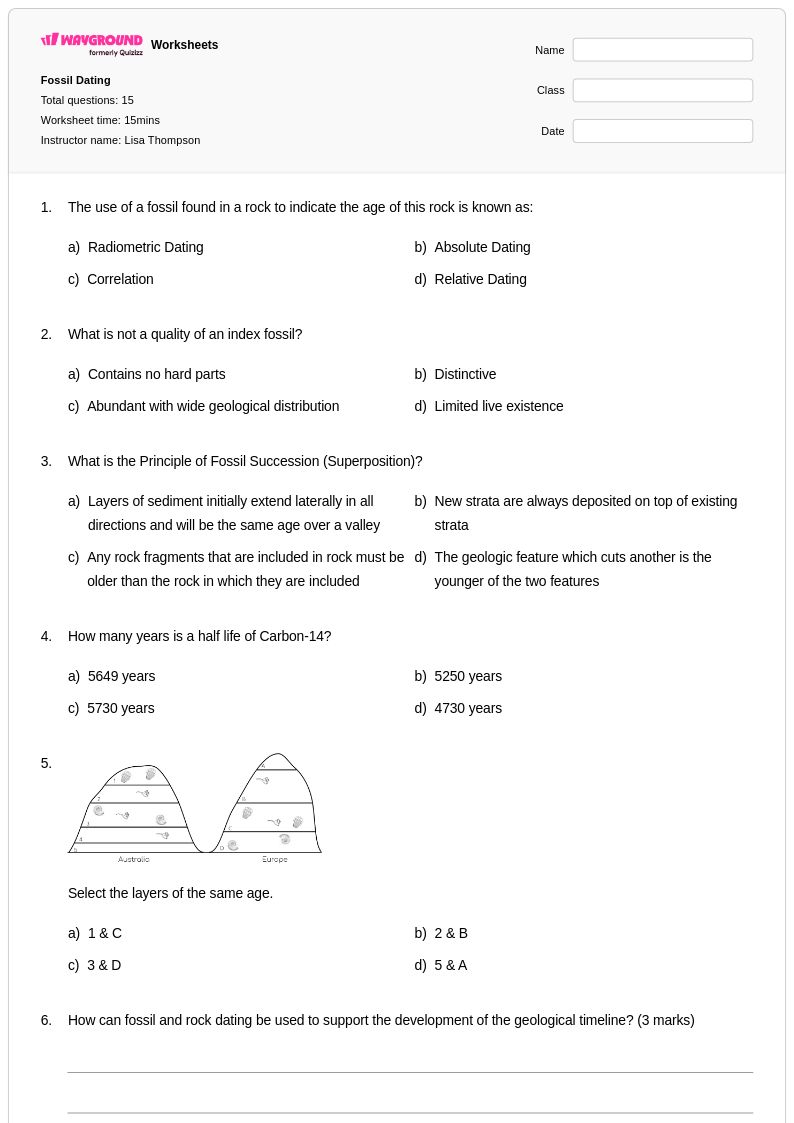
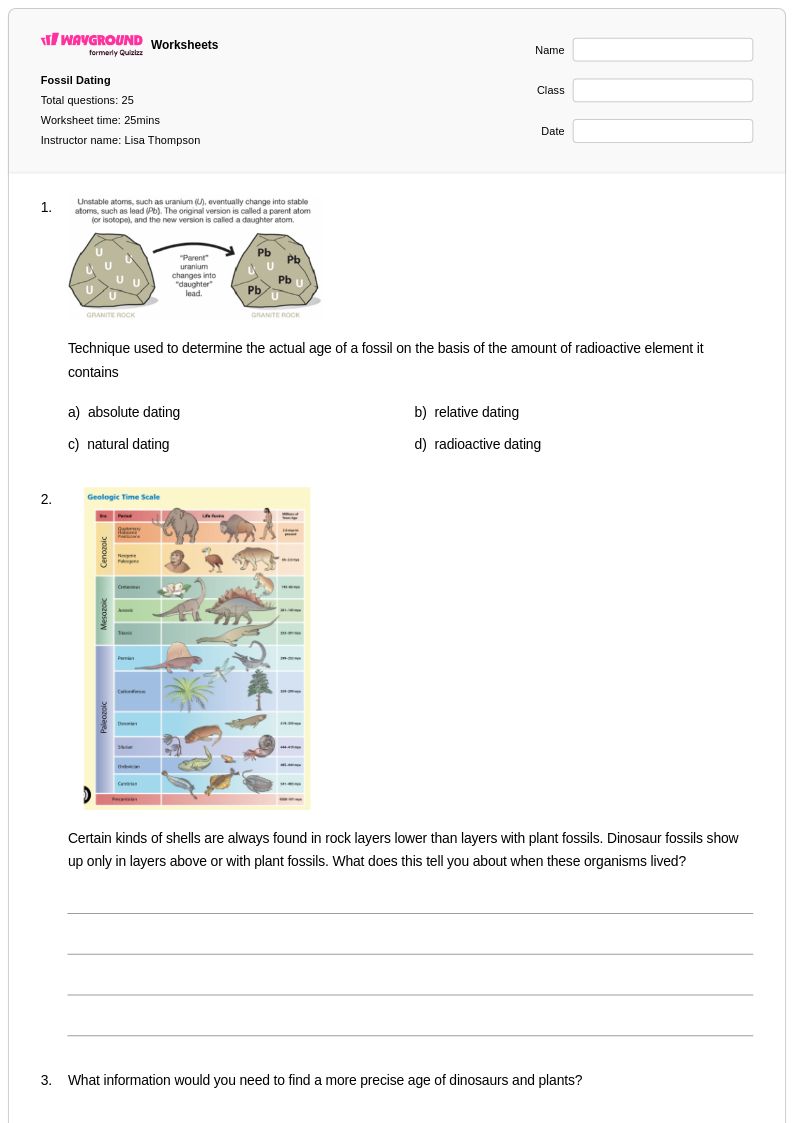
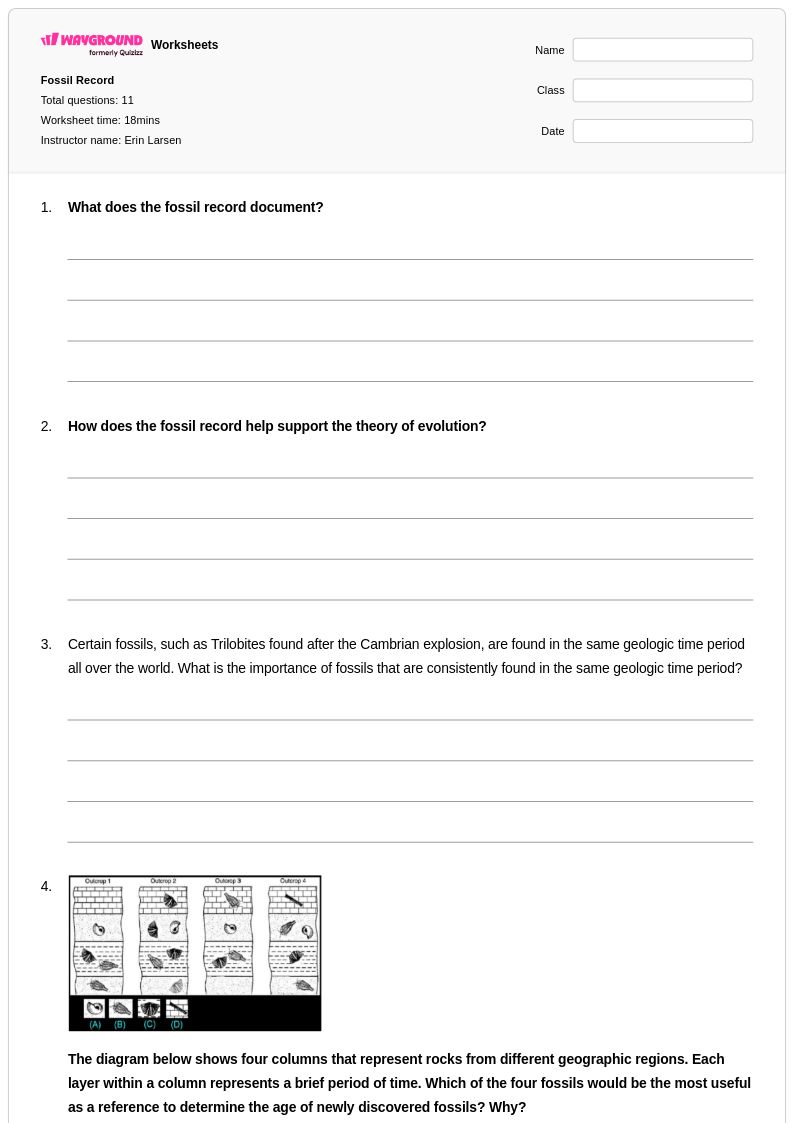
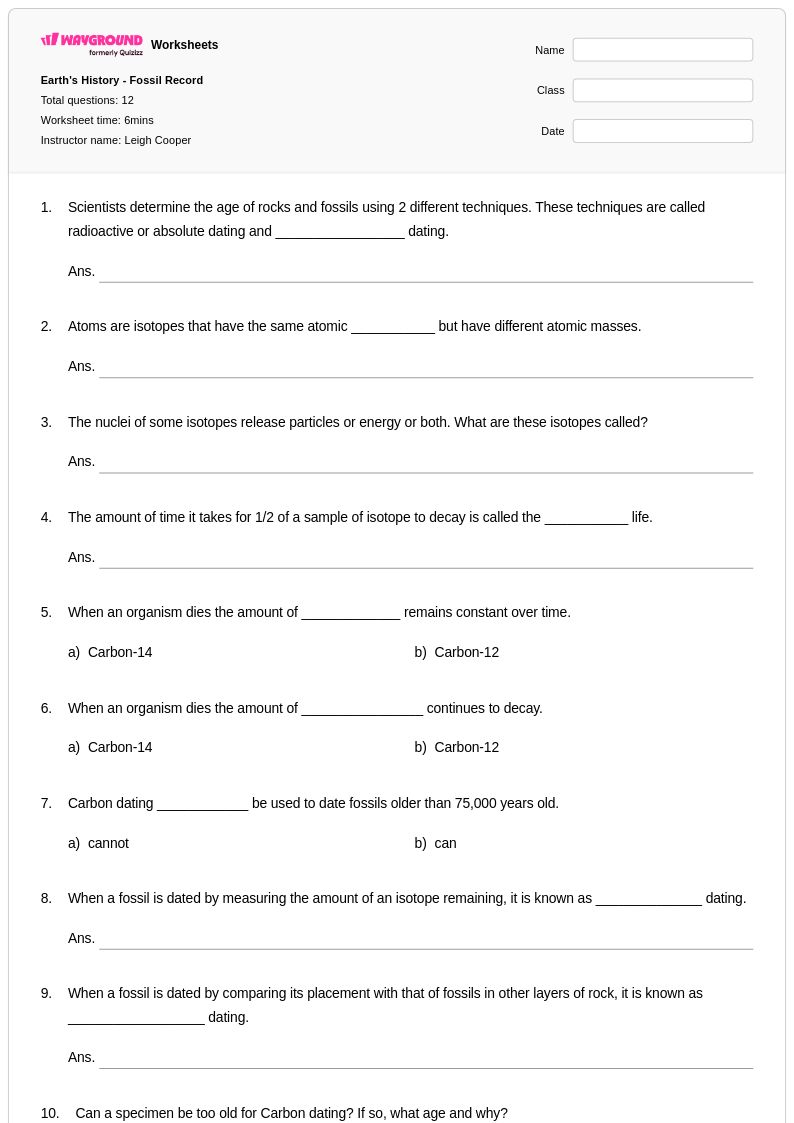
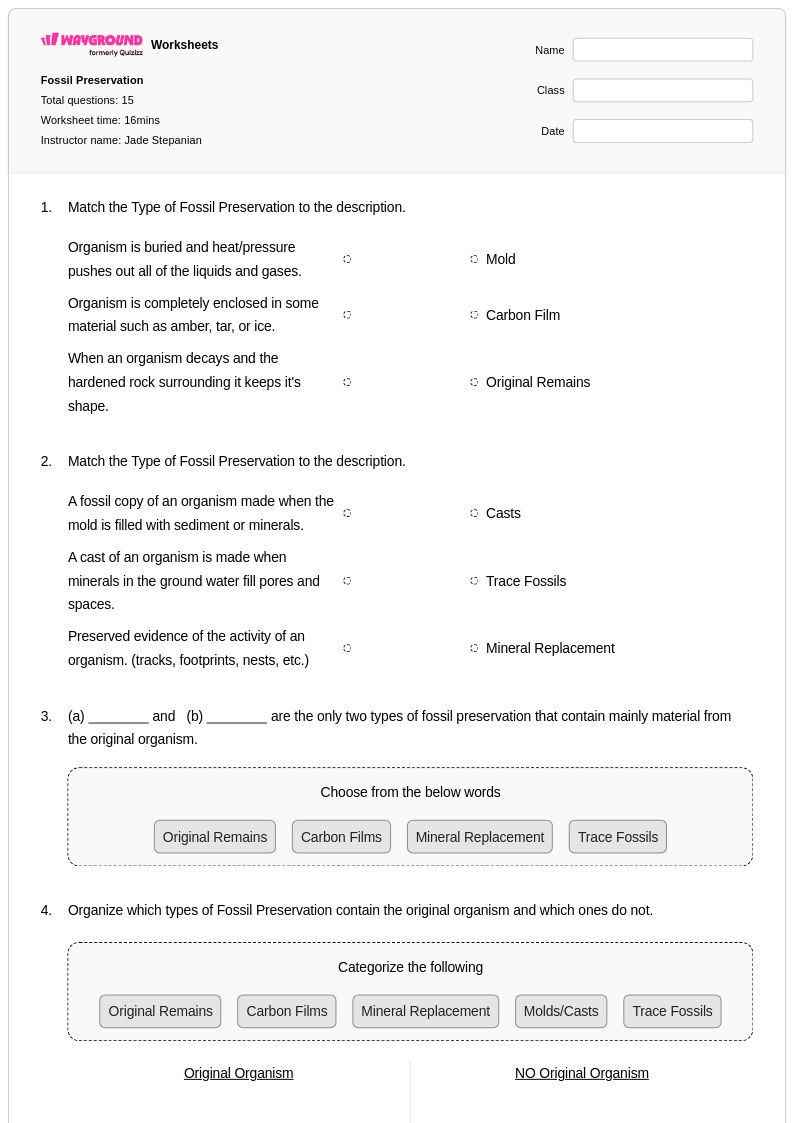
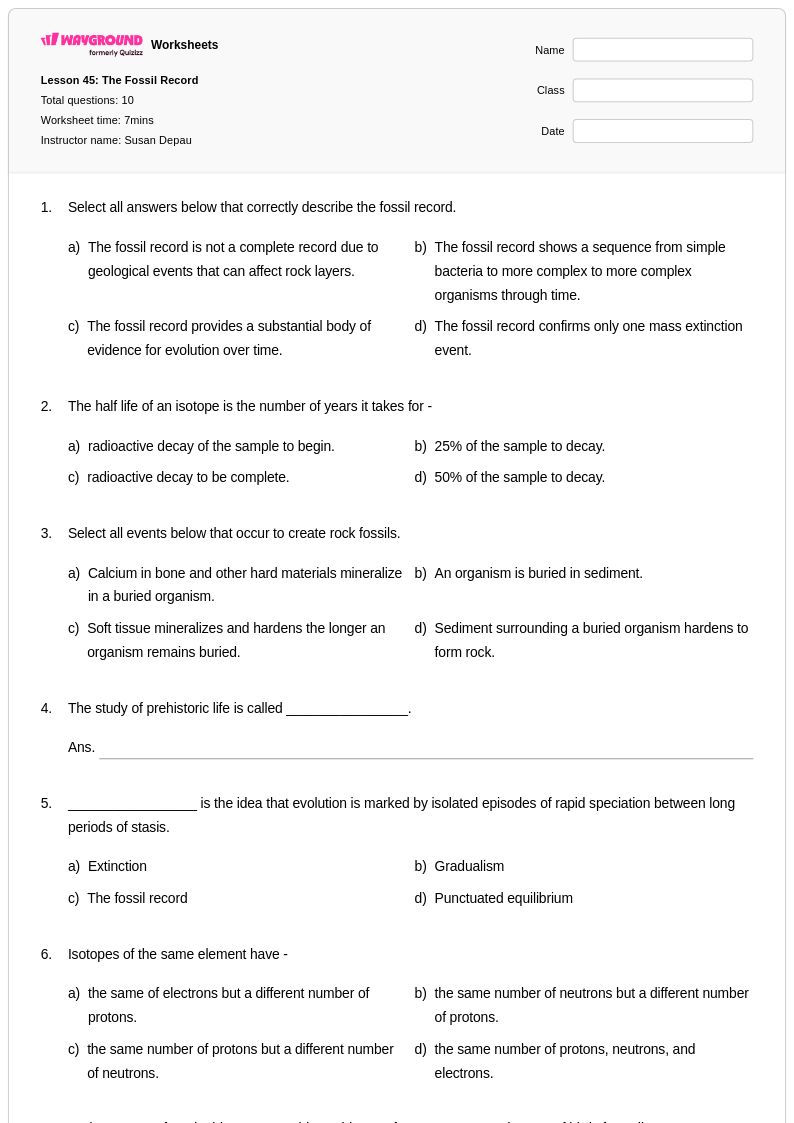
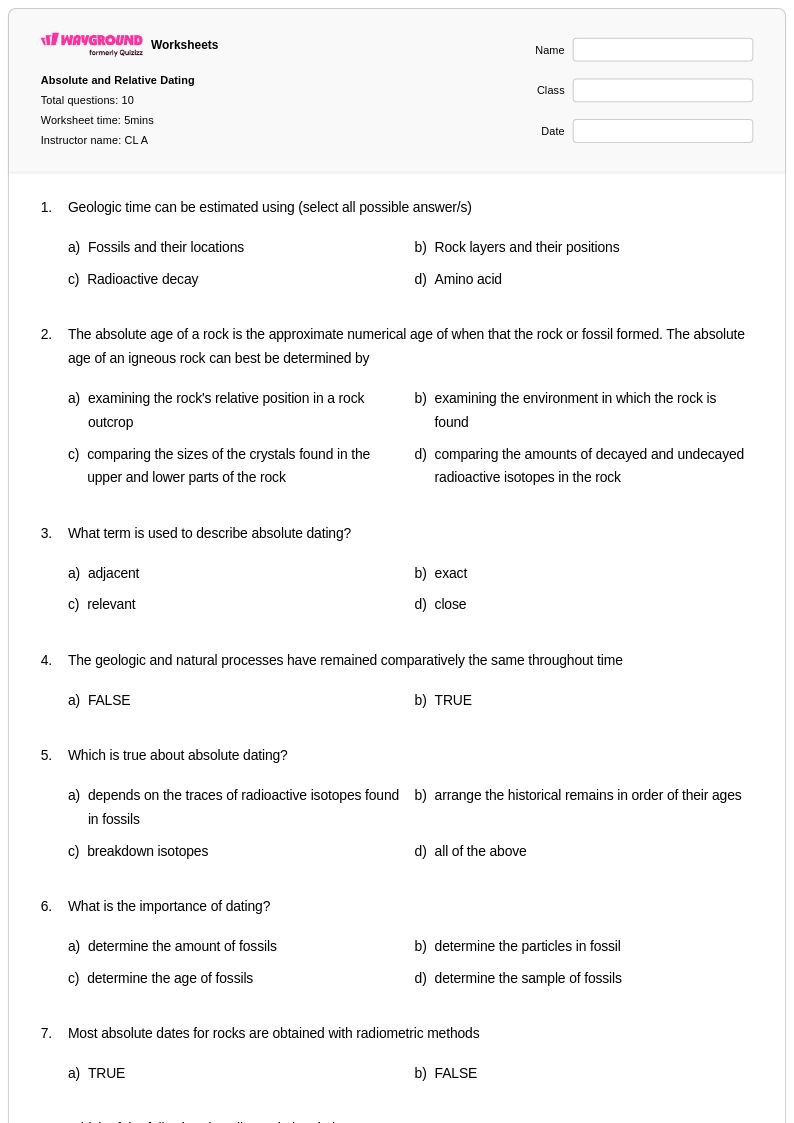
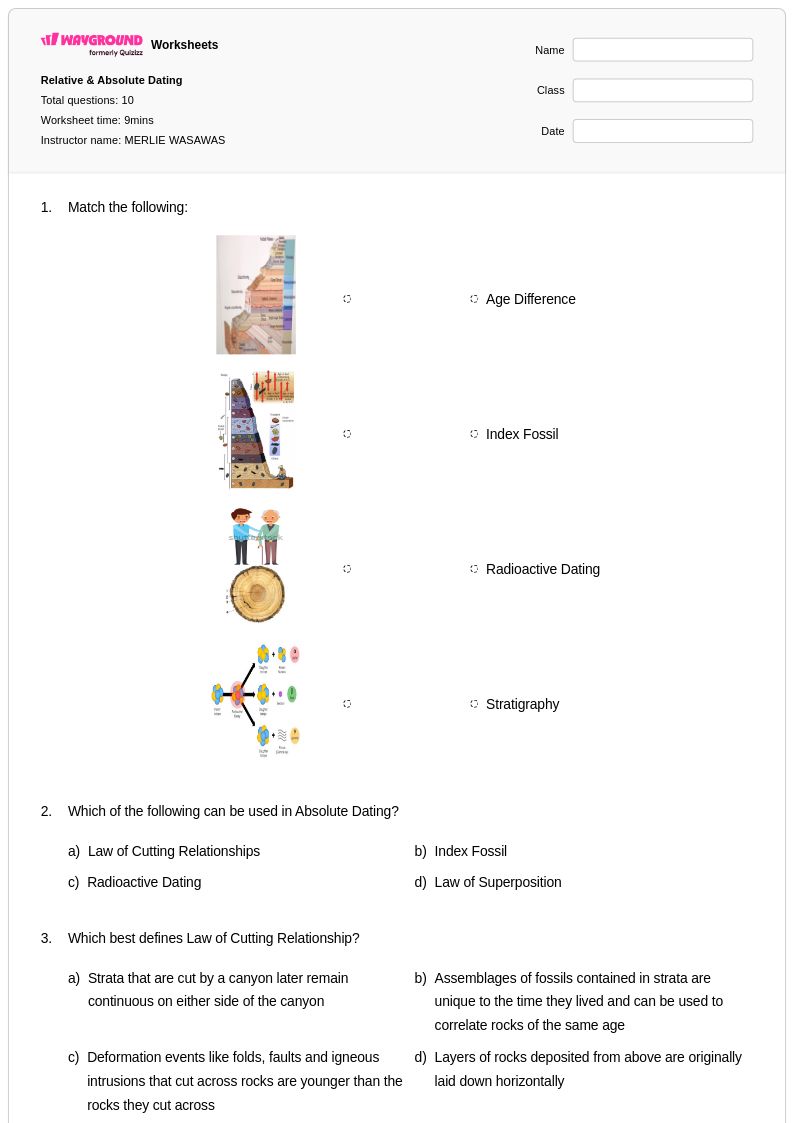
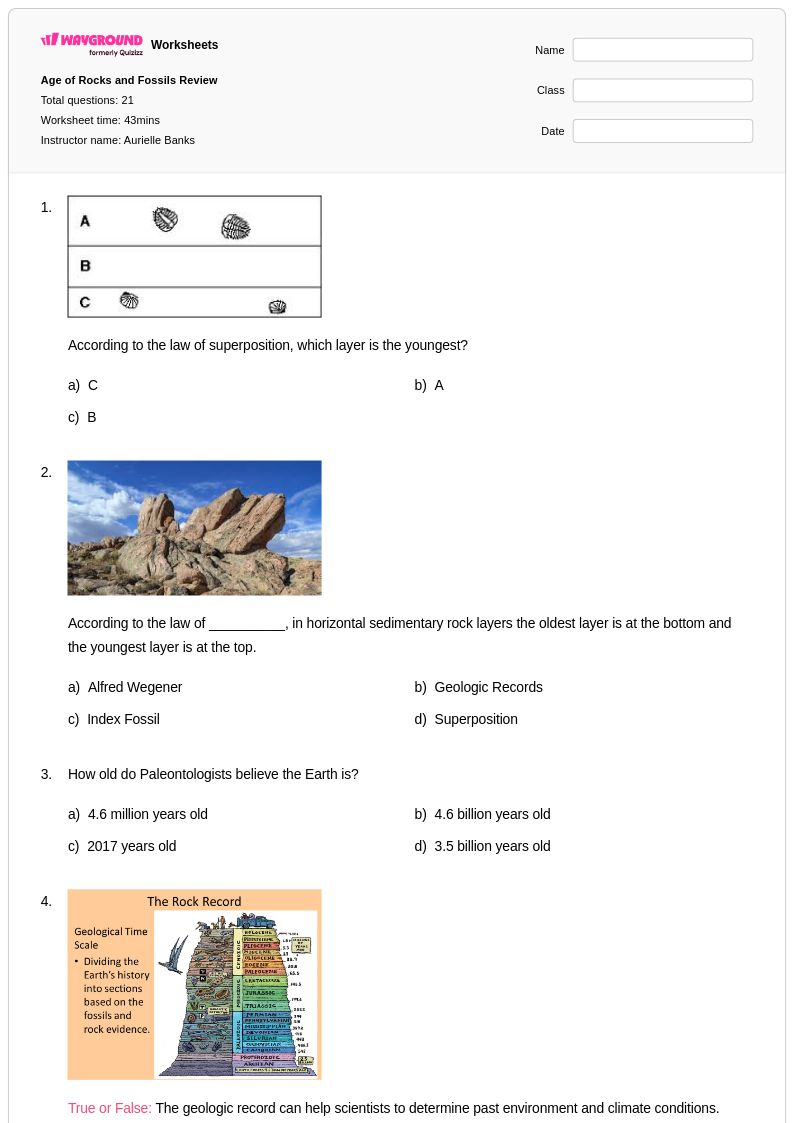
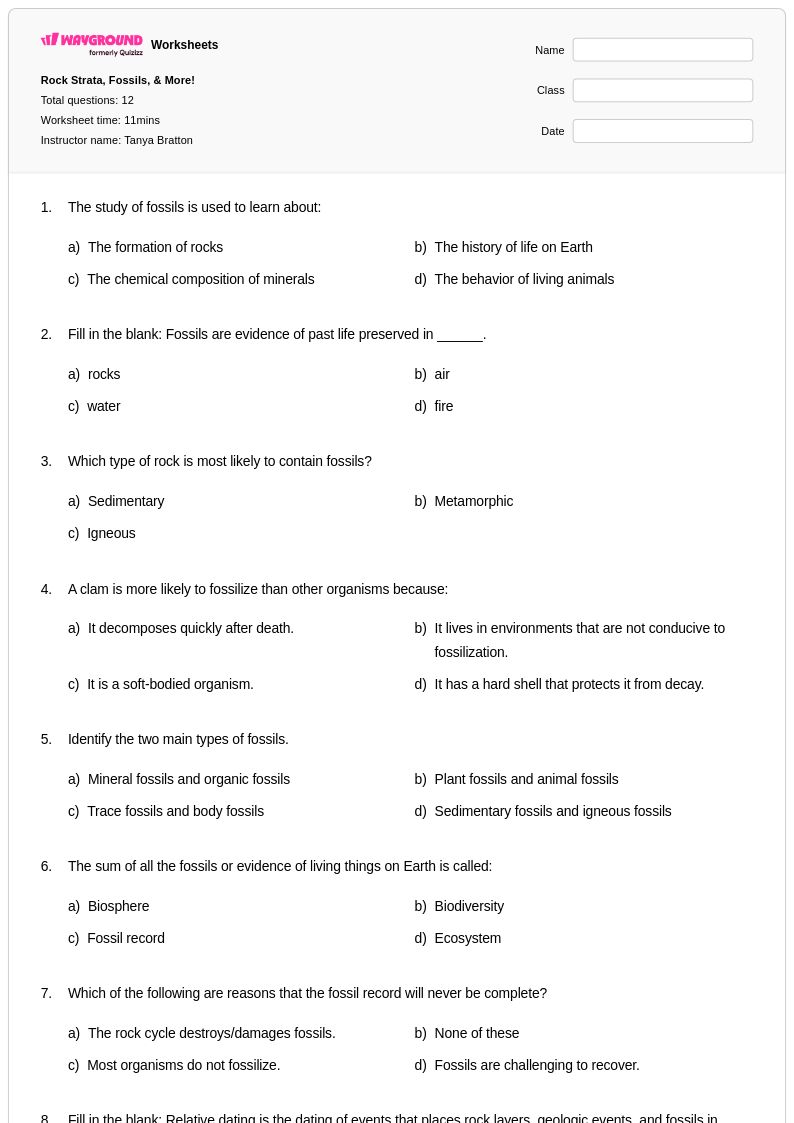
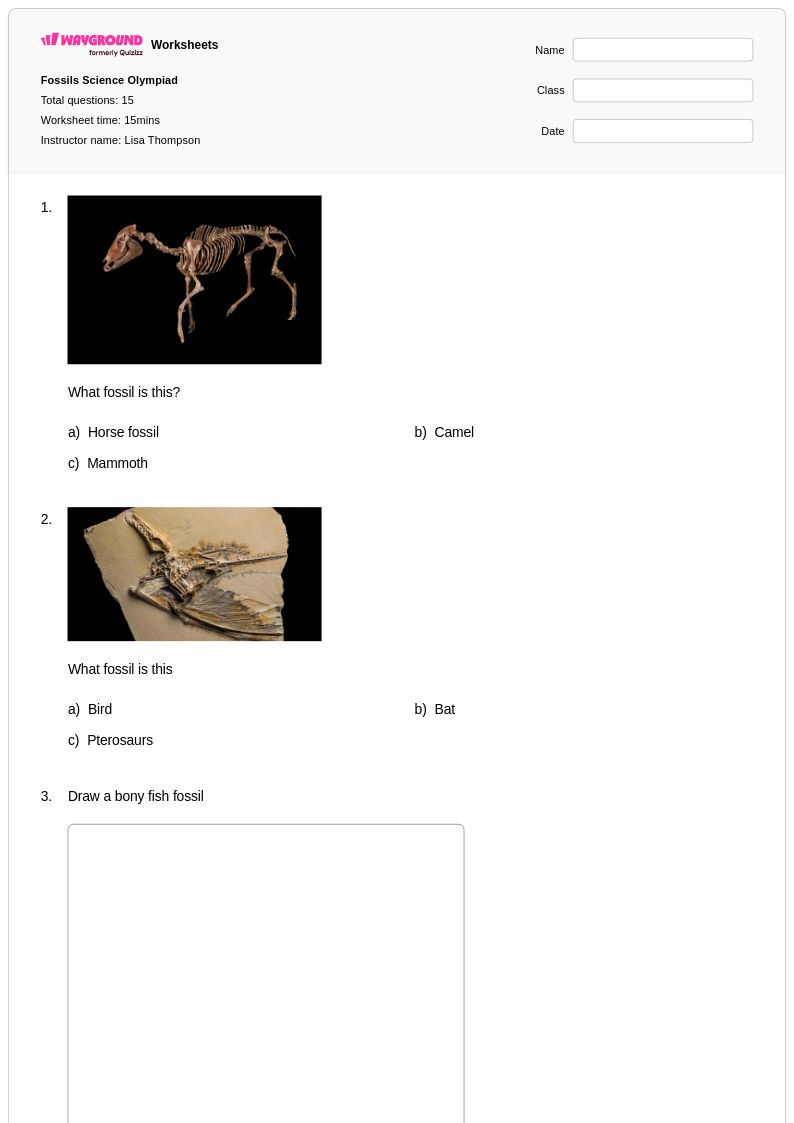
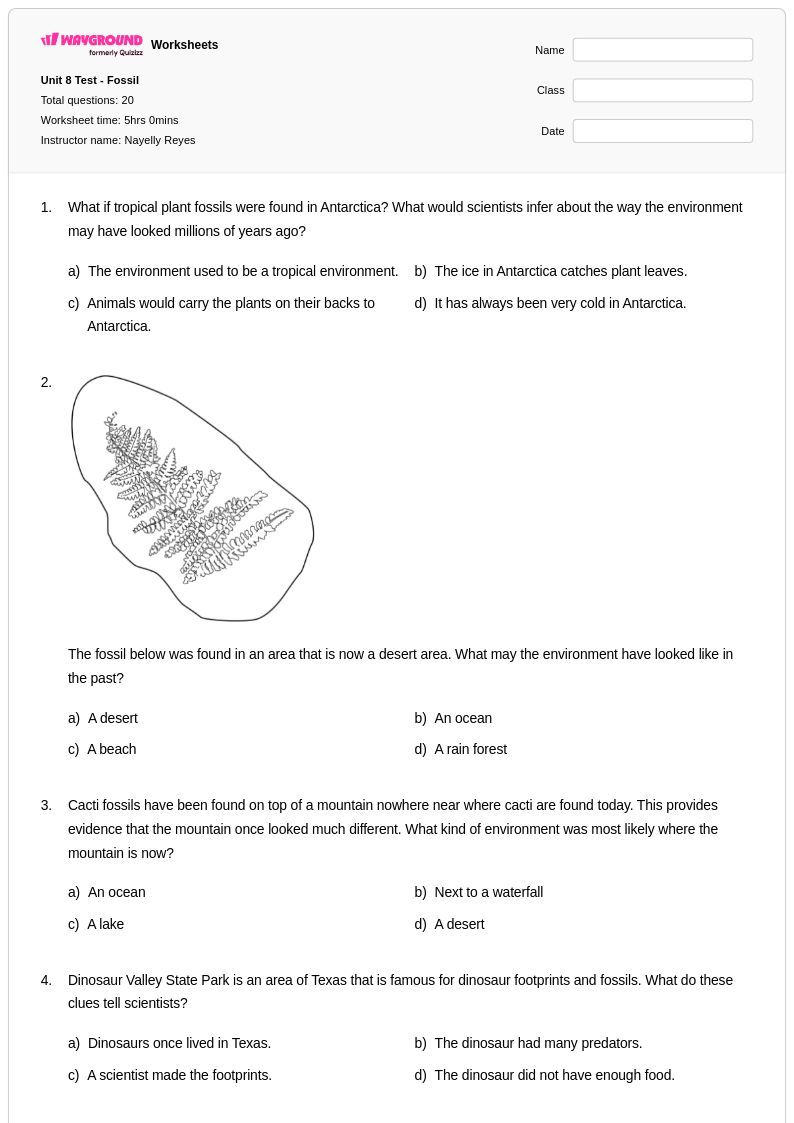
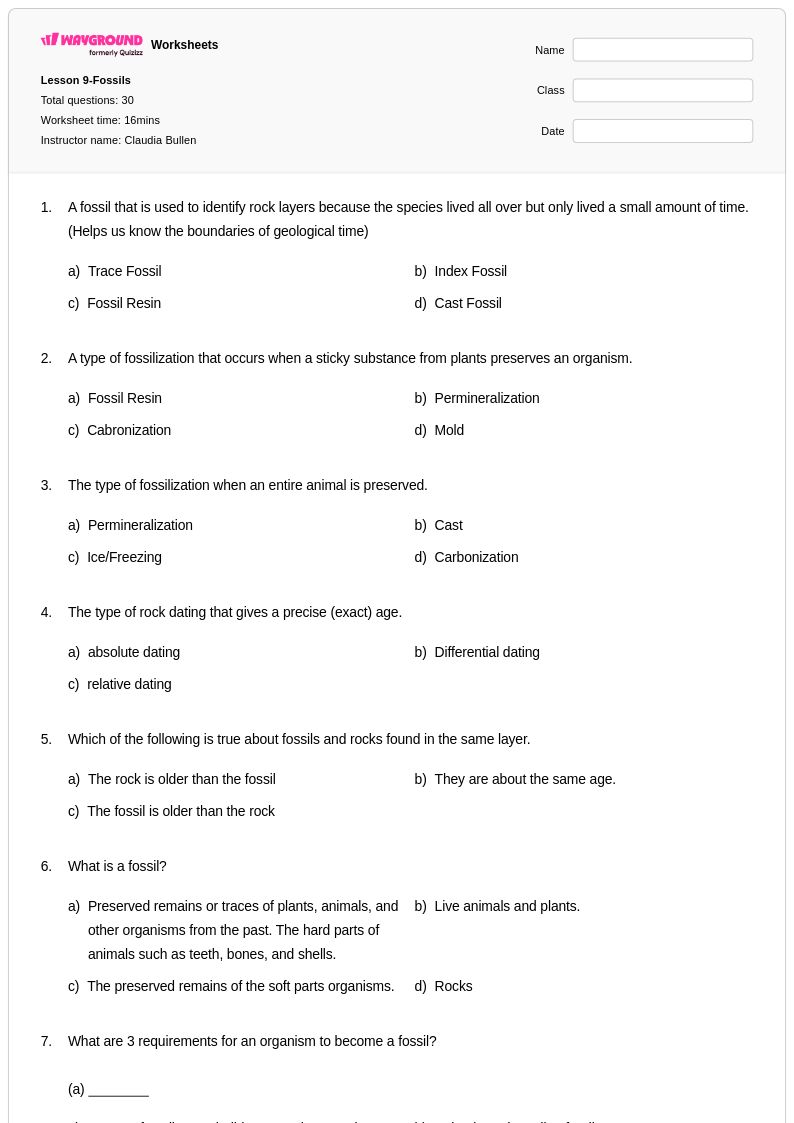
Fossil dating worksheets for Grade 11 biology students available through Wayground (formerly Quizizz) provide comprehensive practice with the scientific methods used to determine the age of fossils and geological formations. These expertly designed worksheets strengthen critical analytical skills by guiding students through relative dating techniques, radiometric dating principles, and the interpretation of stratigraphic evidence. Students work through practice problems that challenge them to apply concepts such as half-life calculations, carbon-14 dating limitations, and the use of index fossils for chronological analysis. Each worksheet comes with a detailed answer key to support independent learning and includes free printables in pdf format that cover essential topics from basic geological time scales to advanced isotopic dating methods.
Wayground (formerly Quizizz) empowers Grade 11 biology teachers with access to millions of teacher-created fossil dating resources that can be easily searched and filtered by specific learning objectives and curriculum standards. The platform's robust differentiation tools allow educators to customize worksheet difficulty levels, accommodating students with varying analytical abilities while maintaining alignment with state and national science standards. Teachers can seamlessly transition between printable pdf worksheets for traditional classroom use and digital formats for interactive learning environments. These flexible resources prove invaluable for lesson planning, targeted remediation of complex dating concepts, enrichment activities for advanced learners, and regular skill practice that builds student confidence in paleontological analysis and geological time interpretation.
FAQs
How do I teach fossil dating to my science students?
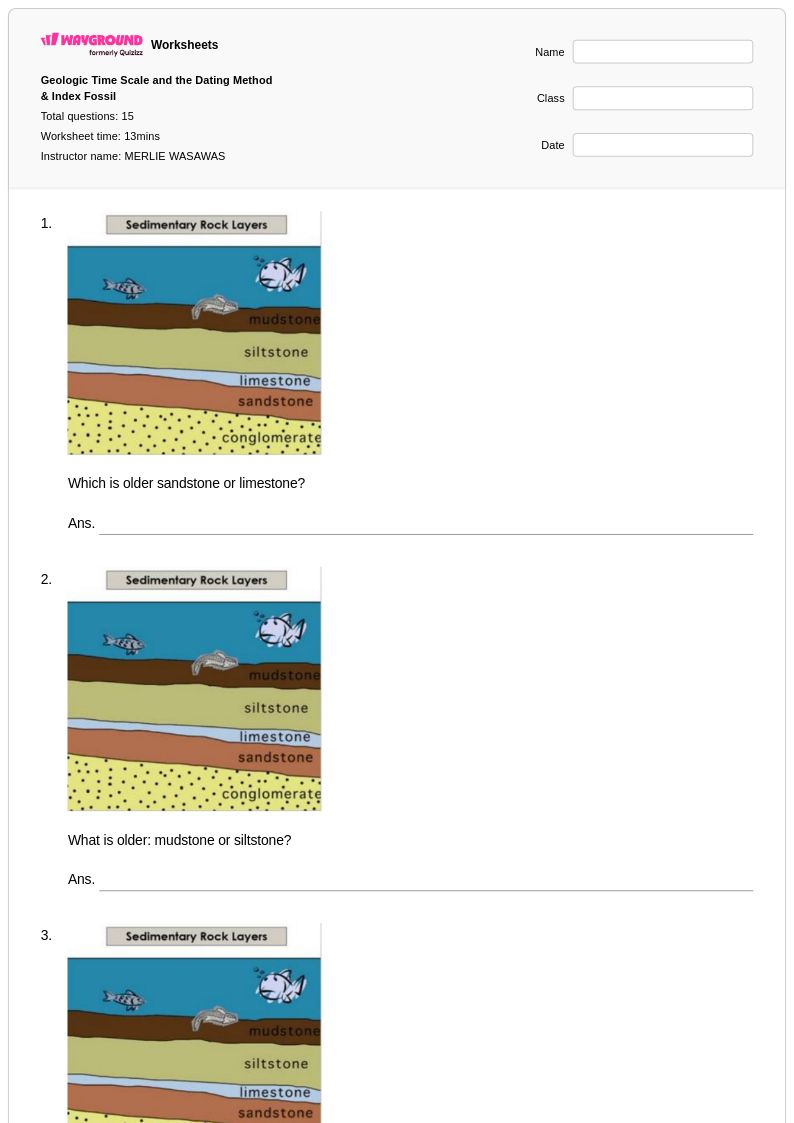
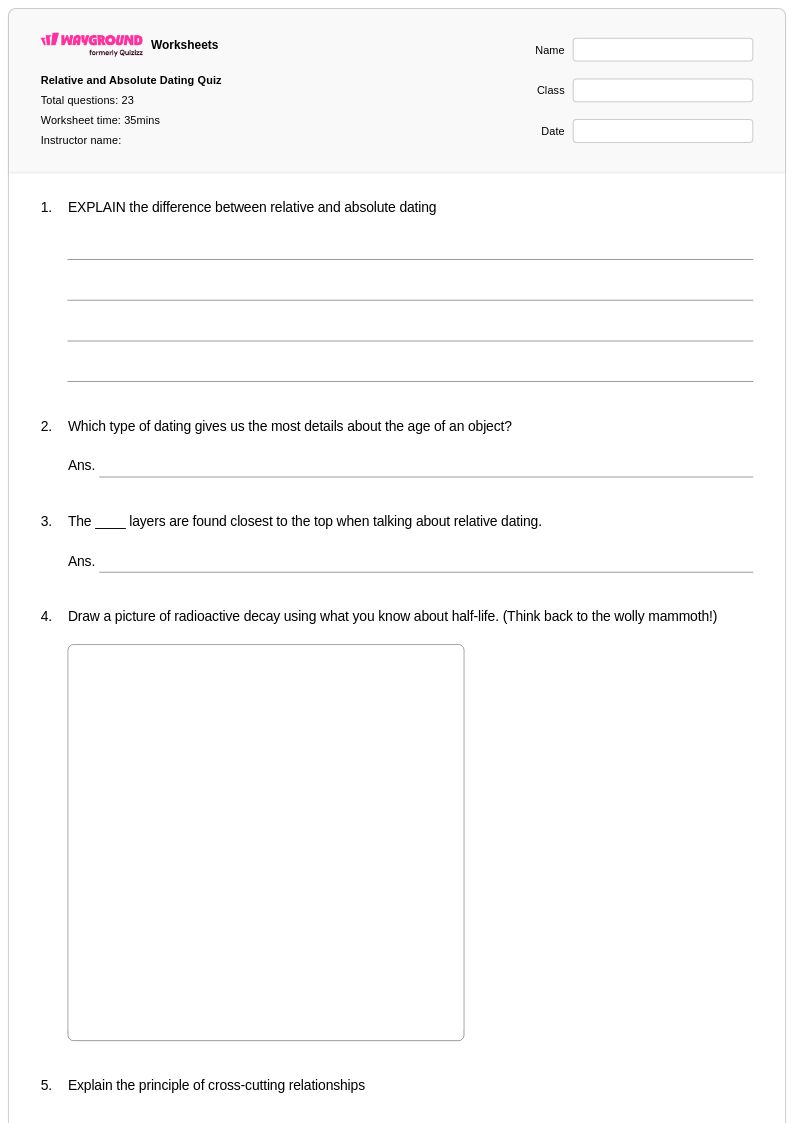
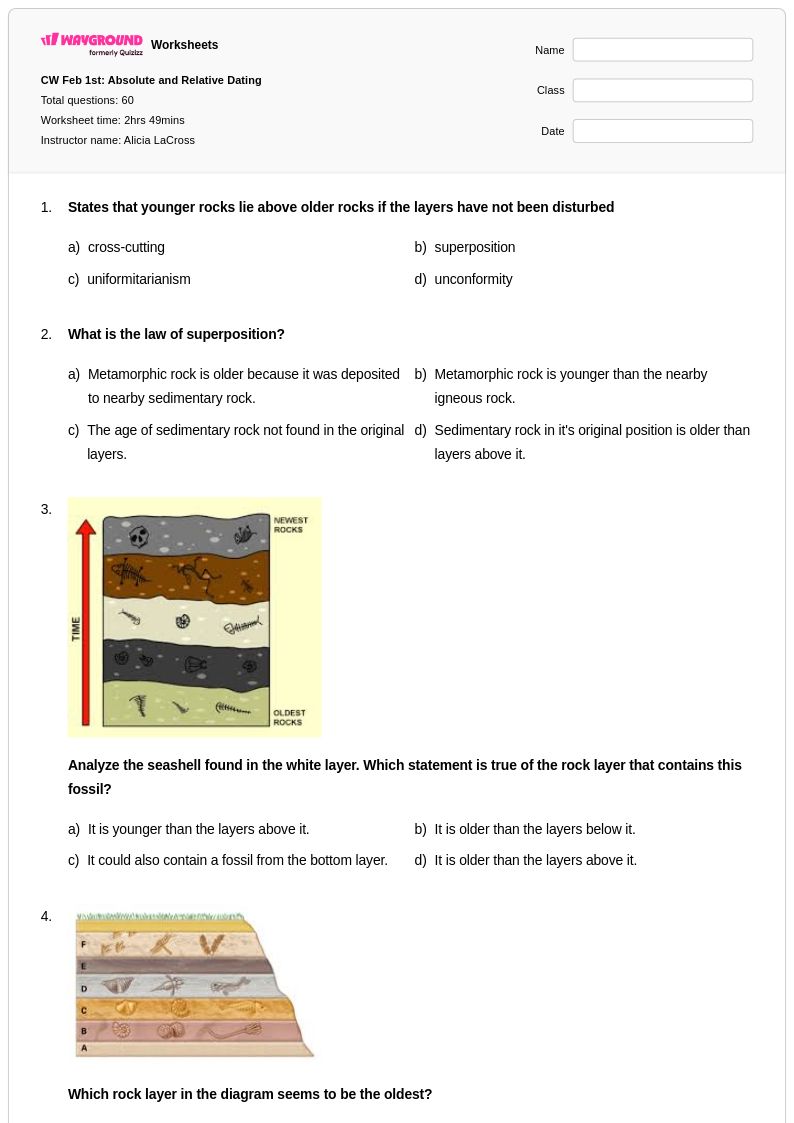
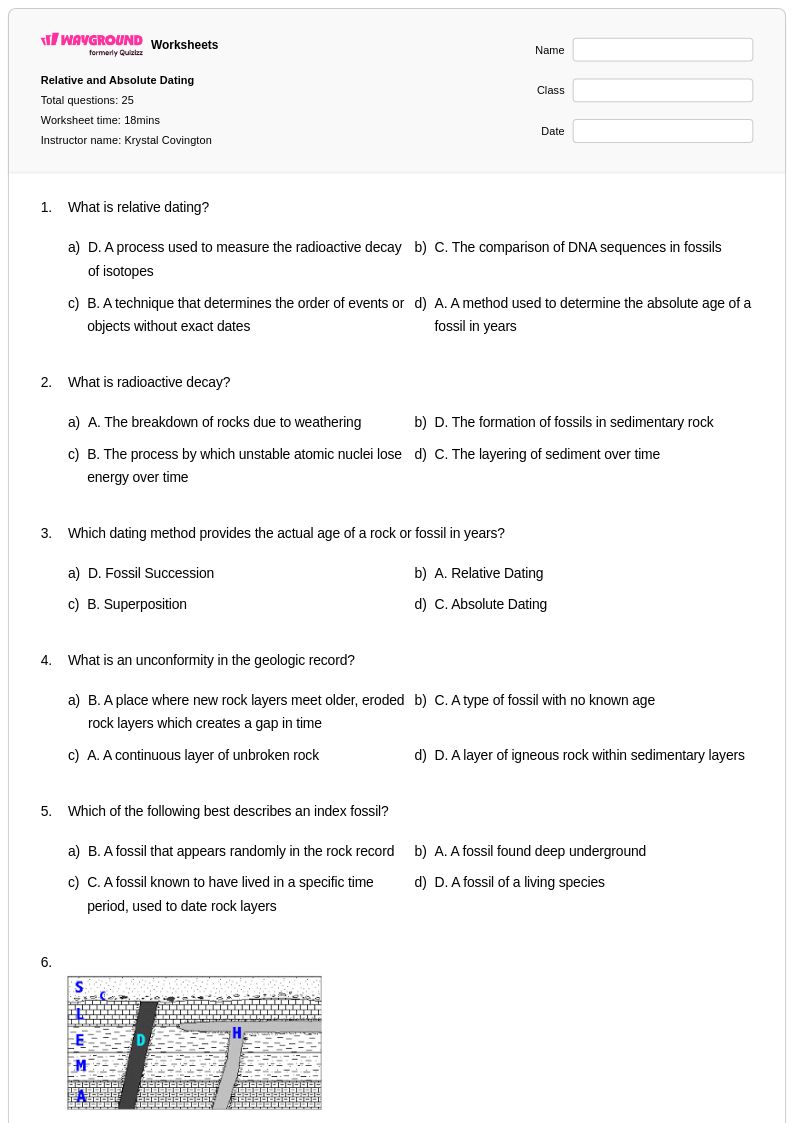
Start by establishing the difference between relative dating and absolute dating before introducing specific techniques. Relative dating methods like stratigraphy and the law of superposition help students understand how rock layer position indicates age, while absolute dating methods like radiometric dating and carbon-14 analysis give students tools for calculating numerical ages. Using real or simulated fossil layer diagrams alongside half-life calculation problems helps students connect abstract concepts to physical evidence in the rock record.
What exercises help students practice fossil dating skills?
The most effective practice combines stratigraphic sequencing exercises, where students order rock layers and identify relative ages, with half-life calculation problems that require applying radiometric dating formulas. Geological time scale activities that ask students to place events or organisms in chronological order reinforce the broader context of fossil dating. Structured practice problems that move from simpler relative dating tasks to more complex radiometric calculations build student confidence progressively.
What mistakes do students commonly make with radiometric dating and half-life calculations?
A frequent error is confusing the age of a fossil with the age of the surrounding rock, which requires clear instruction on what each dating method actually measures. Students also commonly miscalculate half-lives by dividing or multiplying incorrectly when working through multiple decay intervals, so scaffolded step-by-step problems help catch this early. Another persistent misconception is assuming carbon-14 dating works for all fossils regardless of age, when in practice it is only reliable for organic material up to roughly 50,000 years old.
What is the difference between relative dating and absolute dating in paleontology?
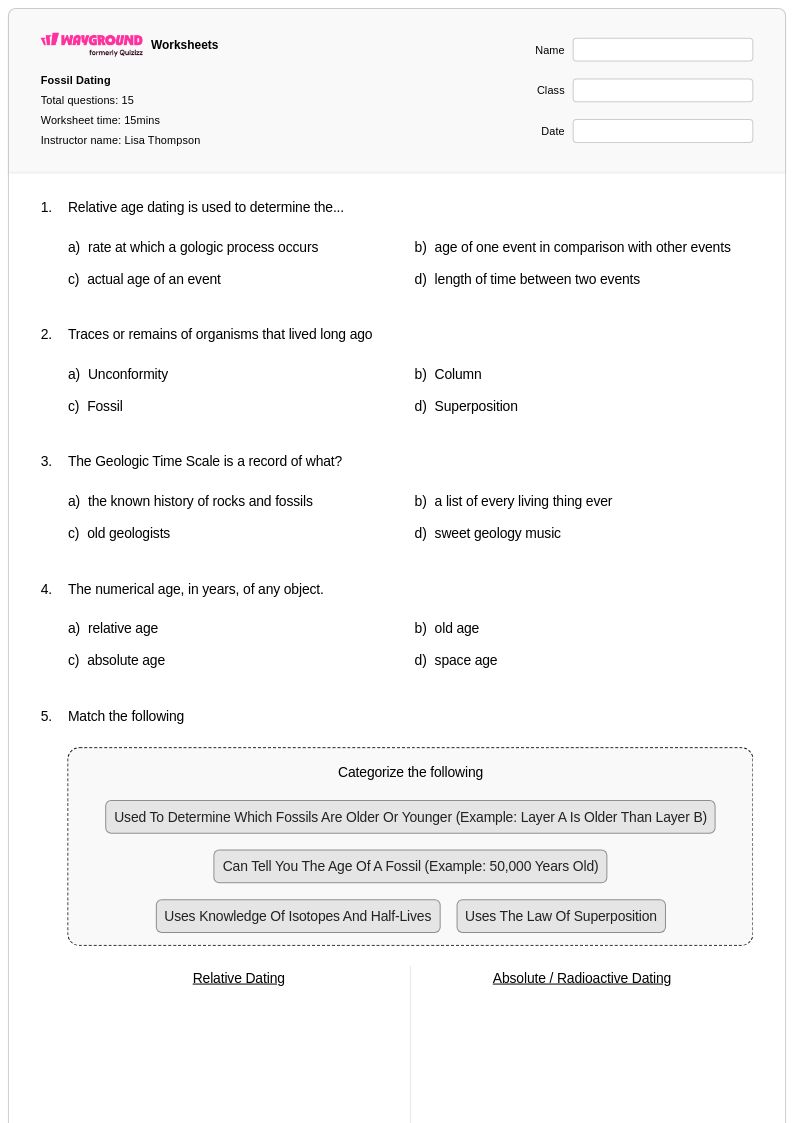
Relative dating determines the age of a fossil in comparison to surrounding rock layers or other fossils without assigning a specific numerical age, using principles like stratigraphy and the law of superposition. Absolute dating, by contrast, uses measurable physical properties such as radioactive isotope decay rates to calculate a specific numerical age in years. Both methods are used together in paleontology because relative dating establishes sequence while absolute dating provides quantitative age estimates.
How can I use Wayground's fossil dating worksheets in my classroom?
Wayground's fossil dating worksheets are available as printable PDFs for traditional classroom use and in digital formats for technology-integrated learning environments, giving teachers flexibility in how they assign and collect work. Teachers can also host worksheets as a quiz directly on Wayground, which supports formative assessment and immediate feedback. Each worksheet includes a complete answer key, reducing prep time and making the resources practical for both direct instruction and independent student practice.
How do I differentiate fossil dating instruction for students at different skill levels?
For students who need additional support, begin with visual stratigraphic diagrams and guided relative dating tasks before introducing numerical calculations. For more advanced students, enrichment problems involving multiple isotopes or complex geological sequences push deeper analytical thinking. Wayground's differentiation tools allow teachers to customize worksheets for remediation or enrichment purposes, and accommodations such as read aloud and reduced answer choices can be applied to individual students to meet diverse learning needs without disrupting the rest of the class.