Free Printable Bone Markings Worksheets for Grade 11
Discover comprehensive Grade 11 bone markings worksheets and printables from Wayground that help students master anatomical terminology through targeted practice problems, free PDF resources, and detailed answer keys.
Explore printable Bone Markings worksheets for Grade 11
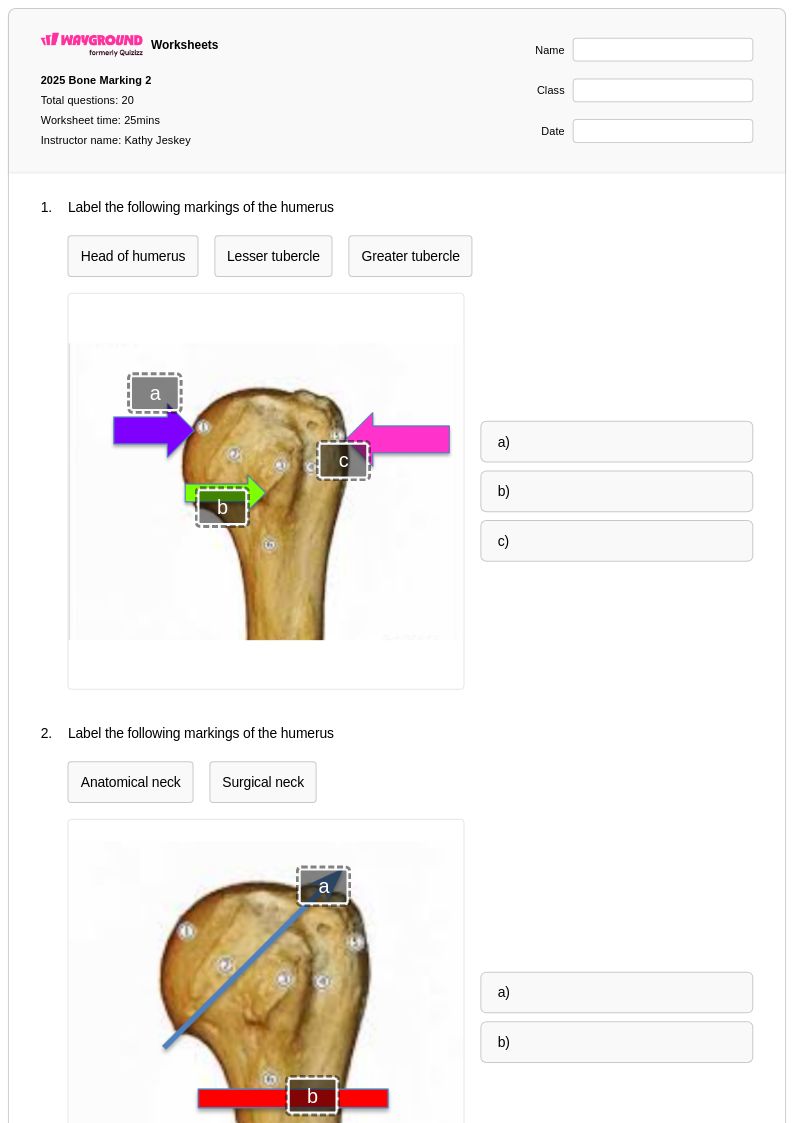
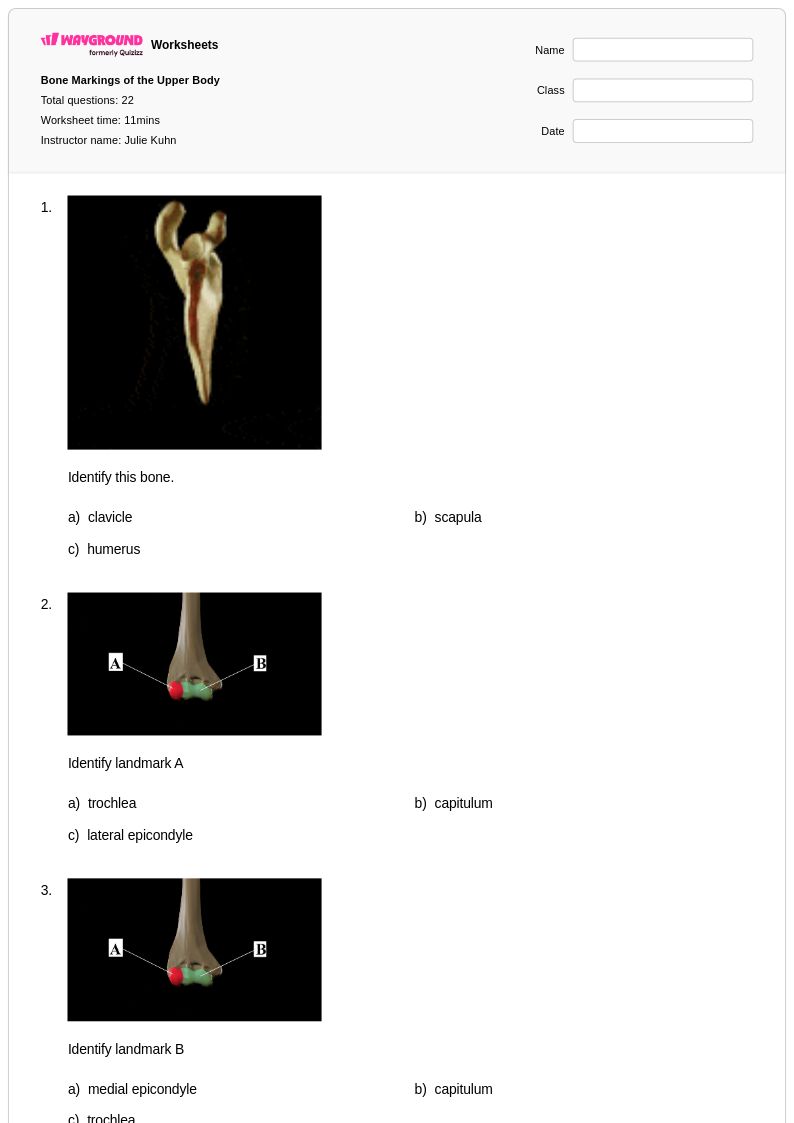
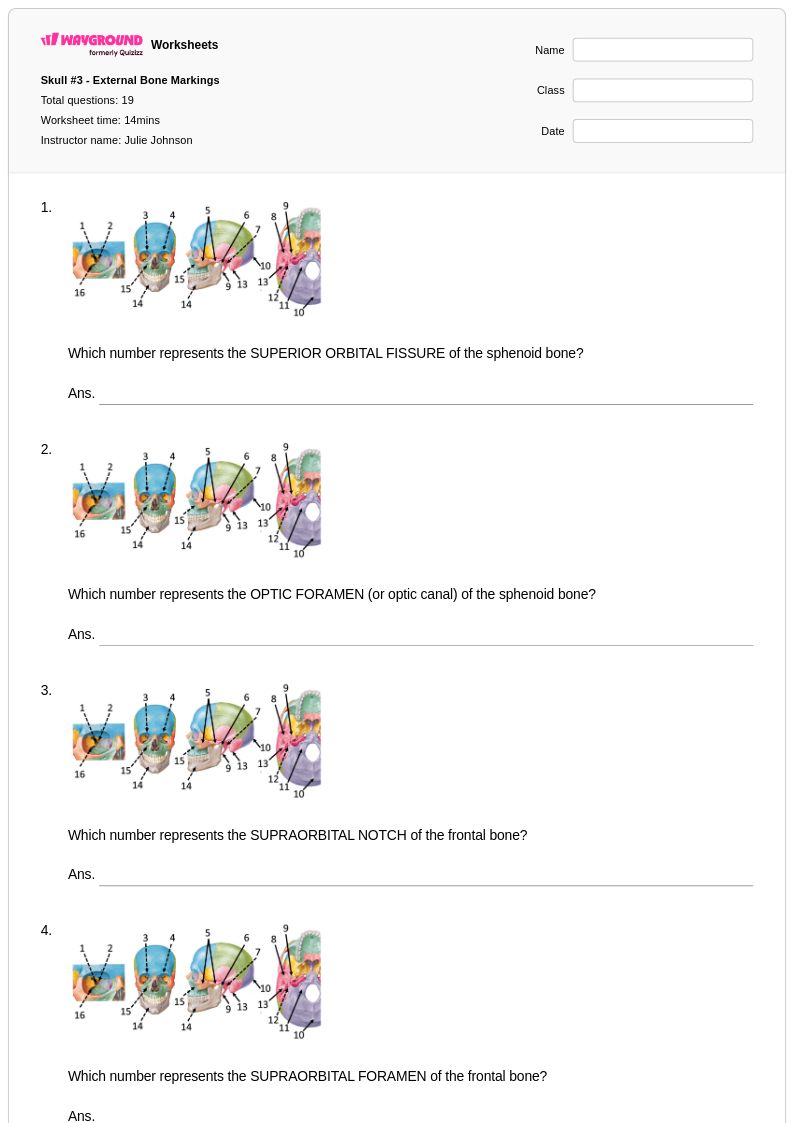
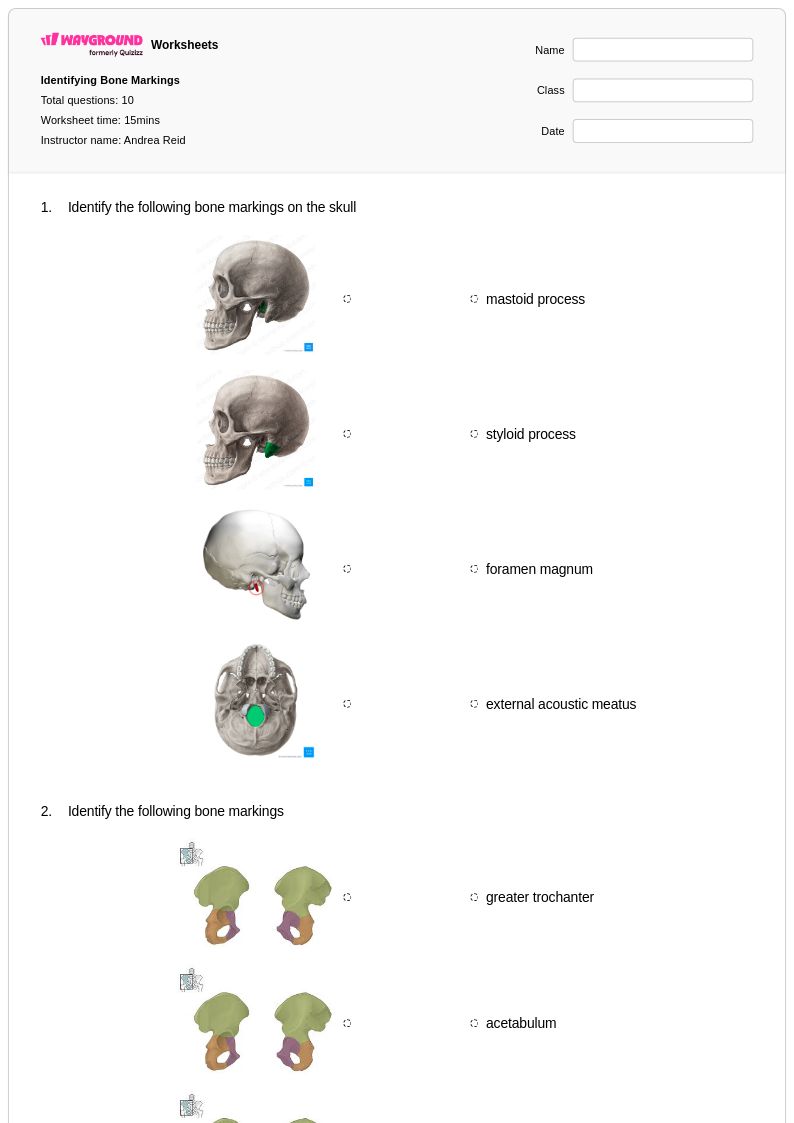
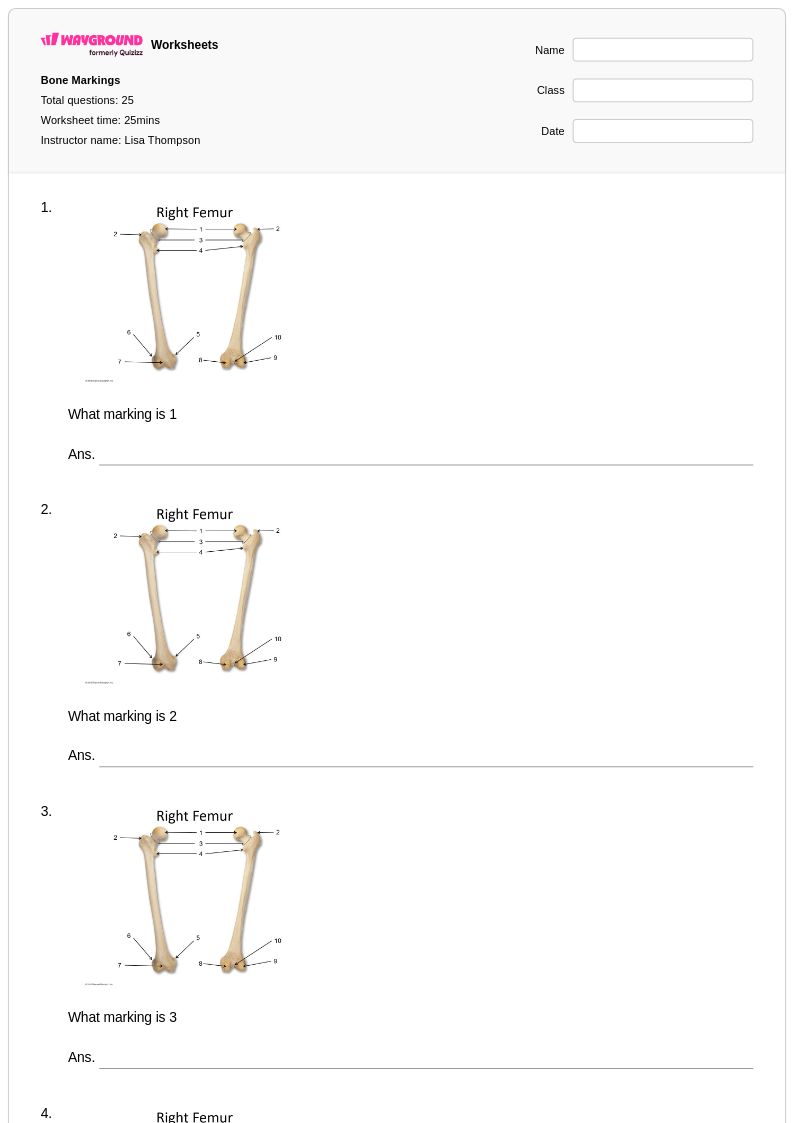
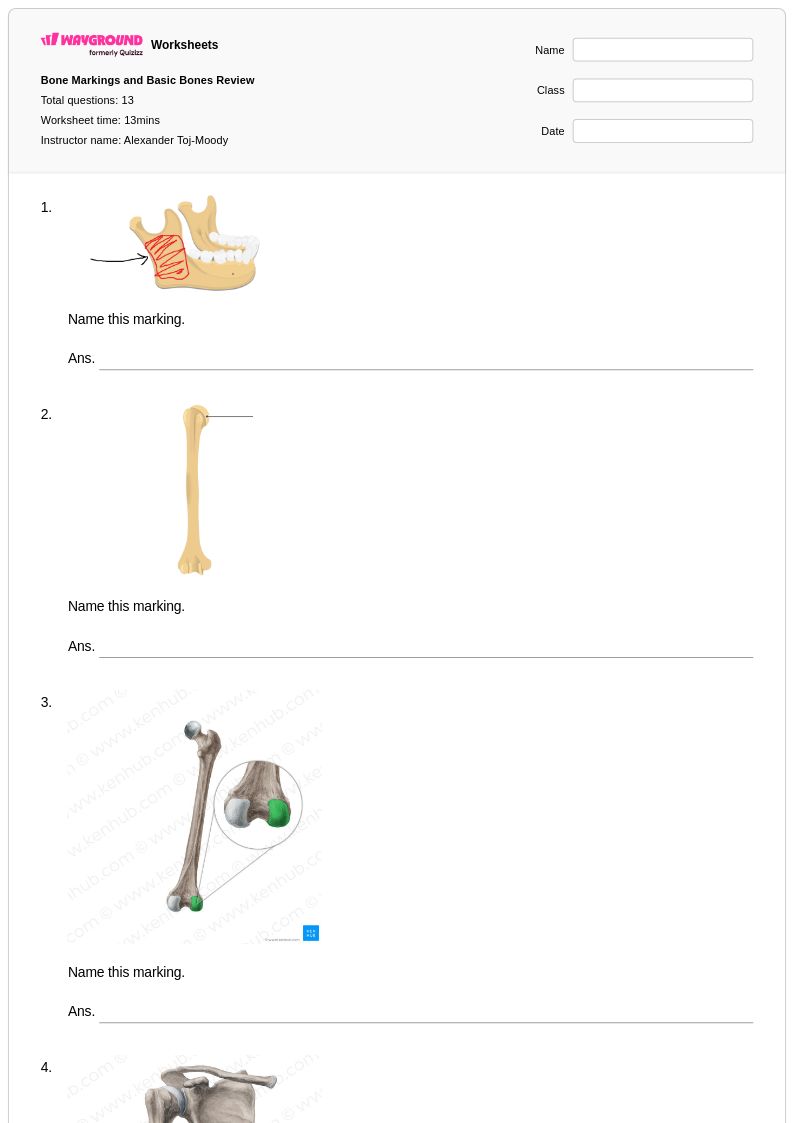
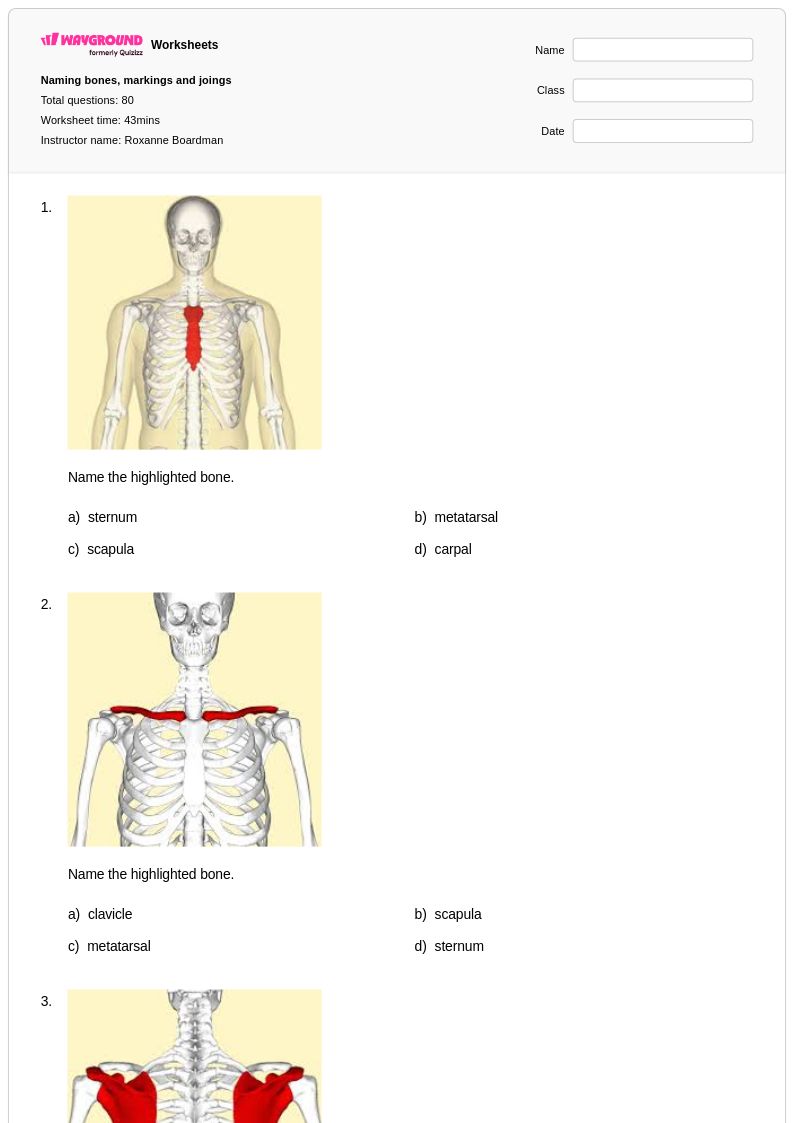
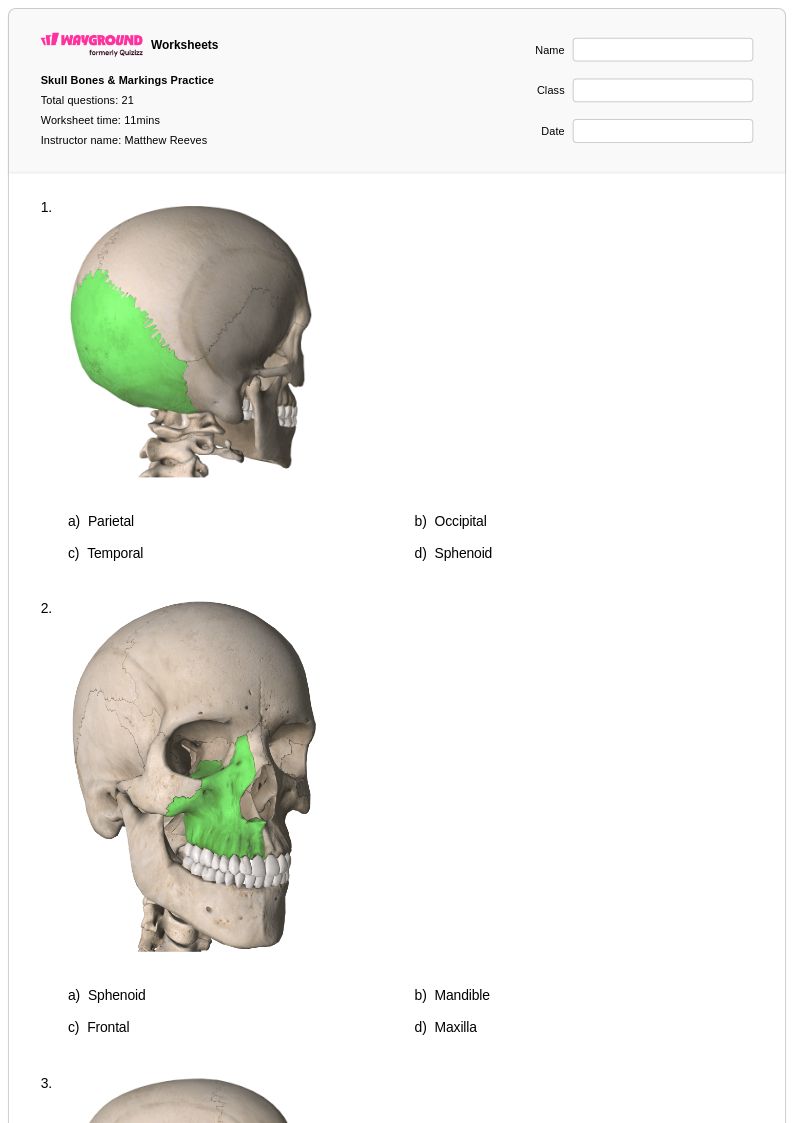
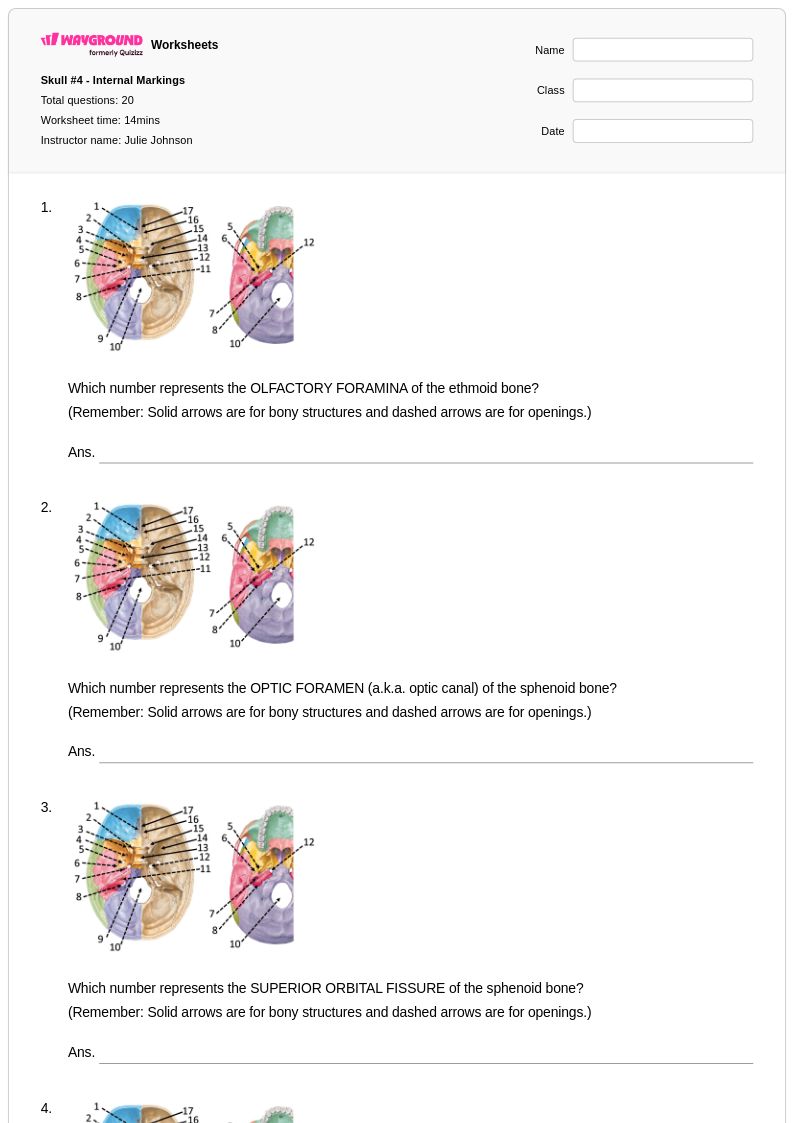
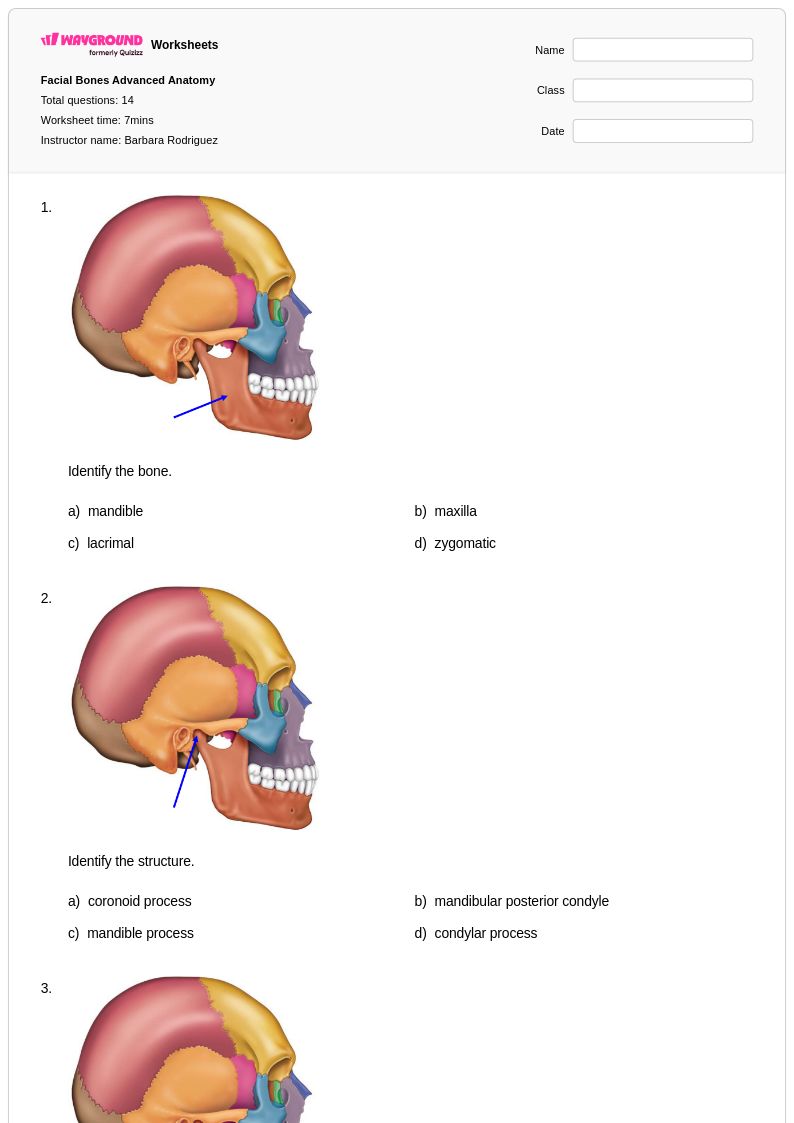
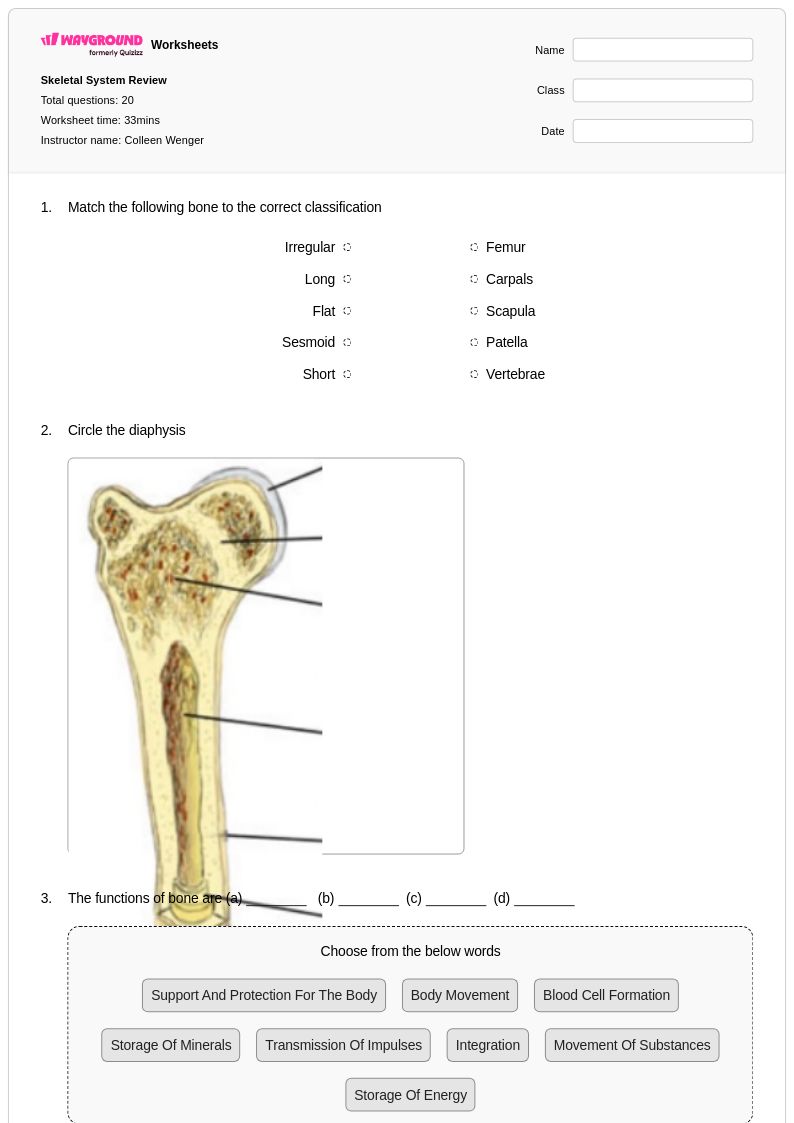
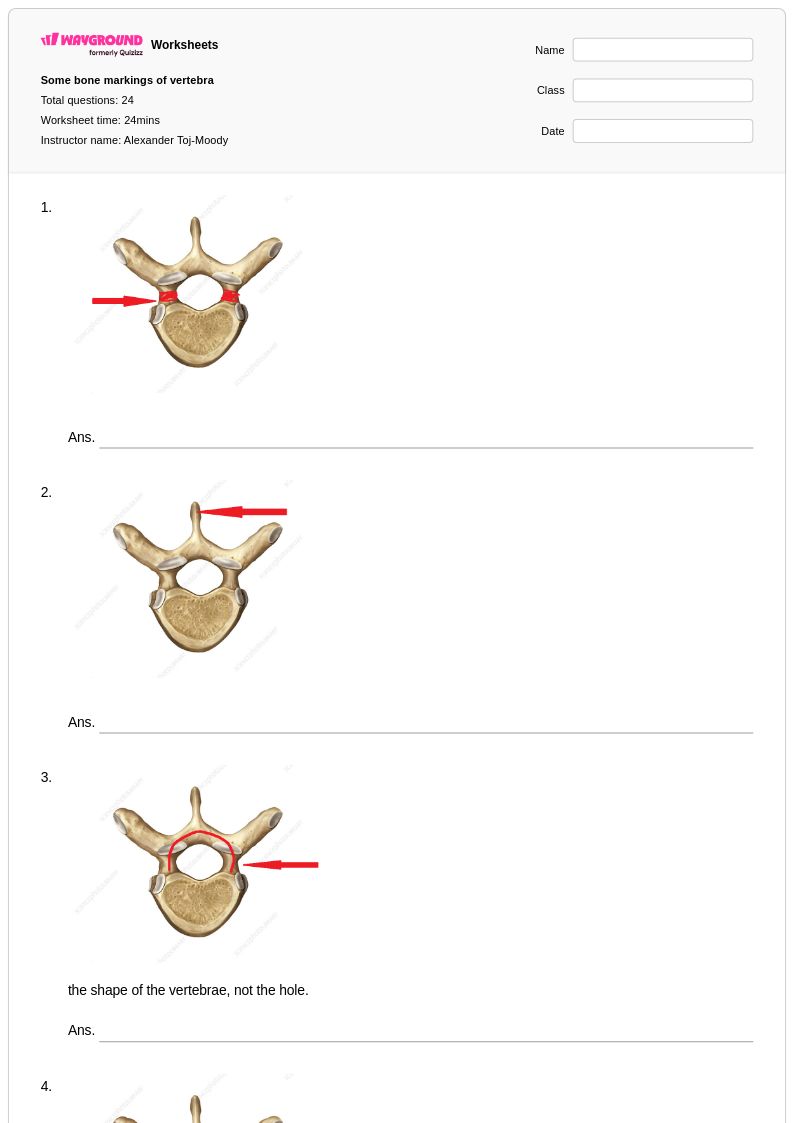
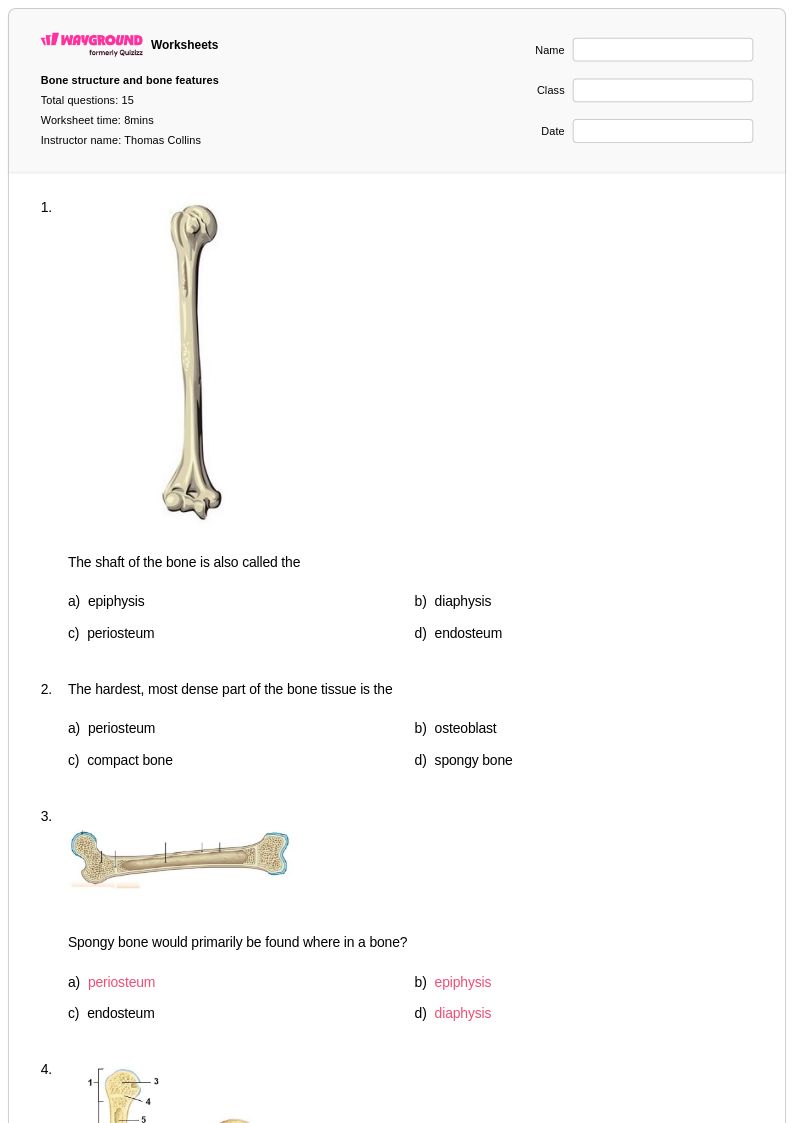
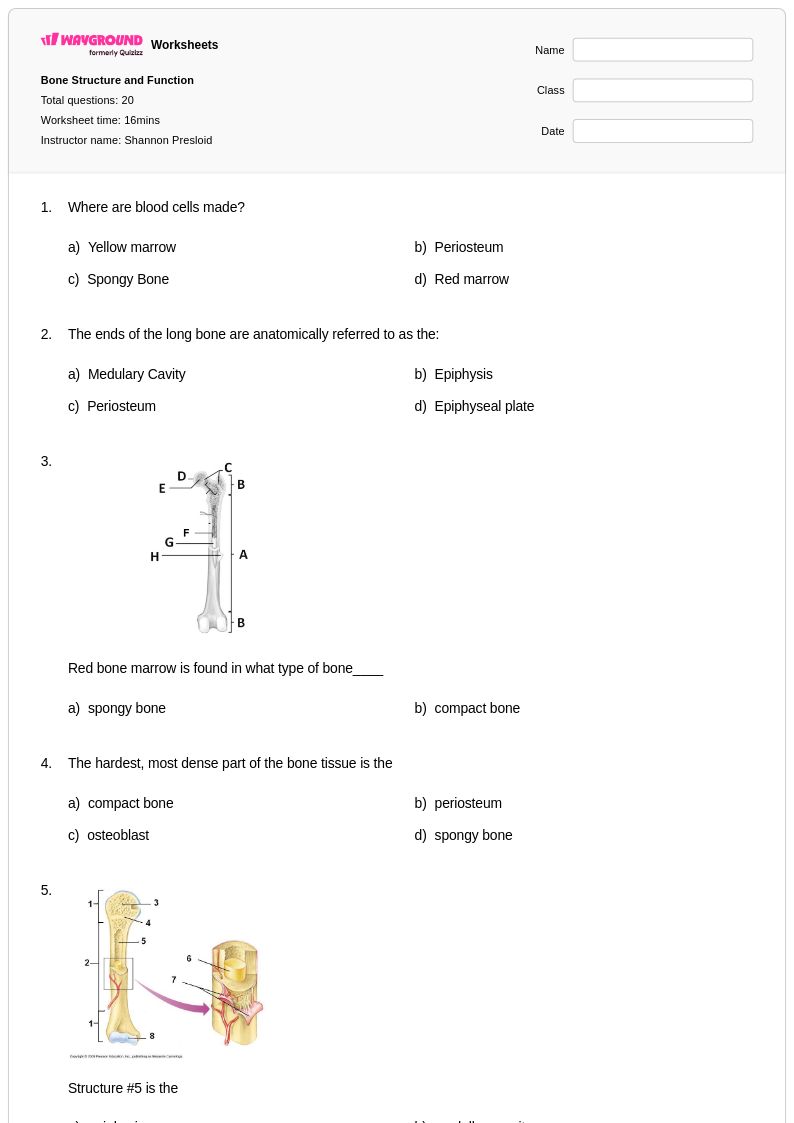
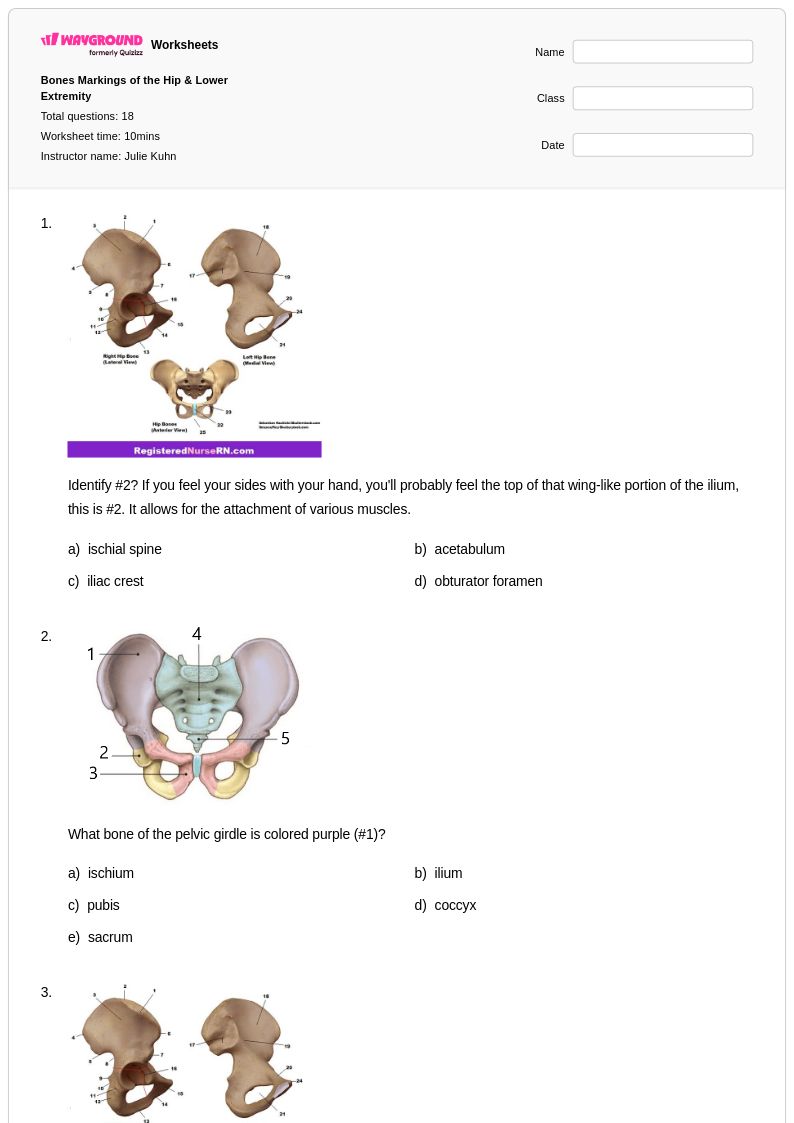
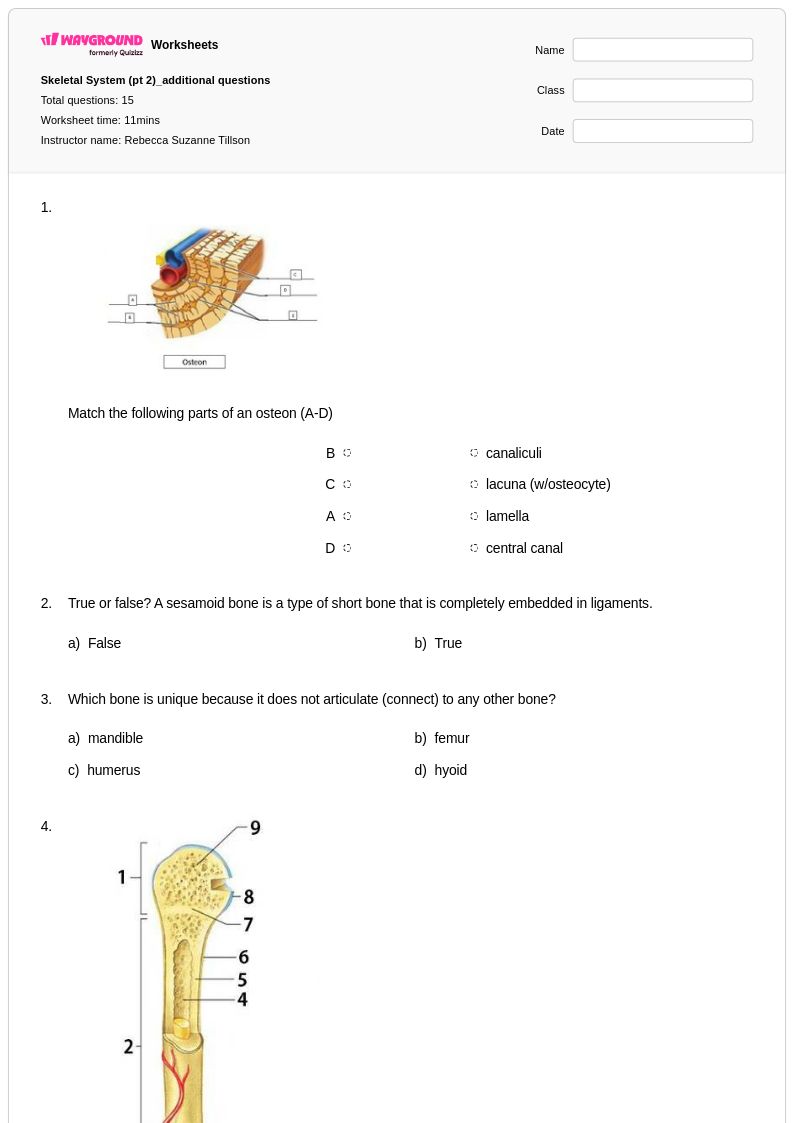
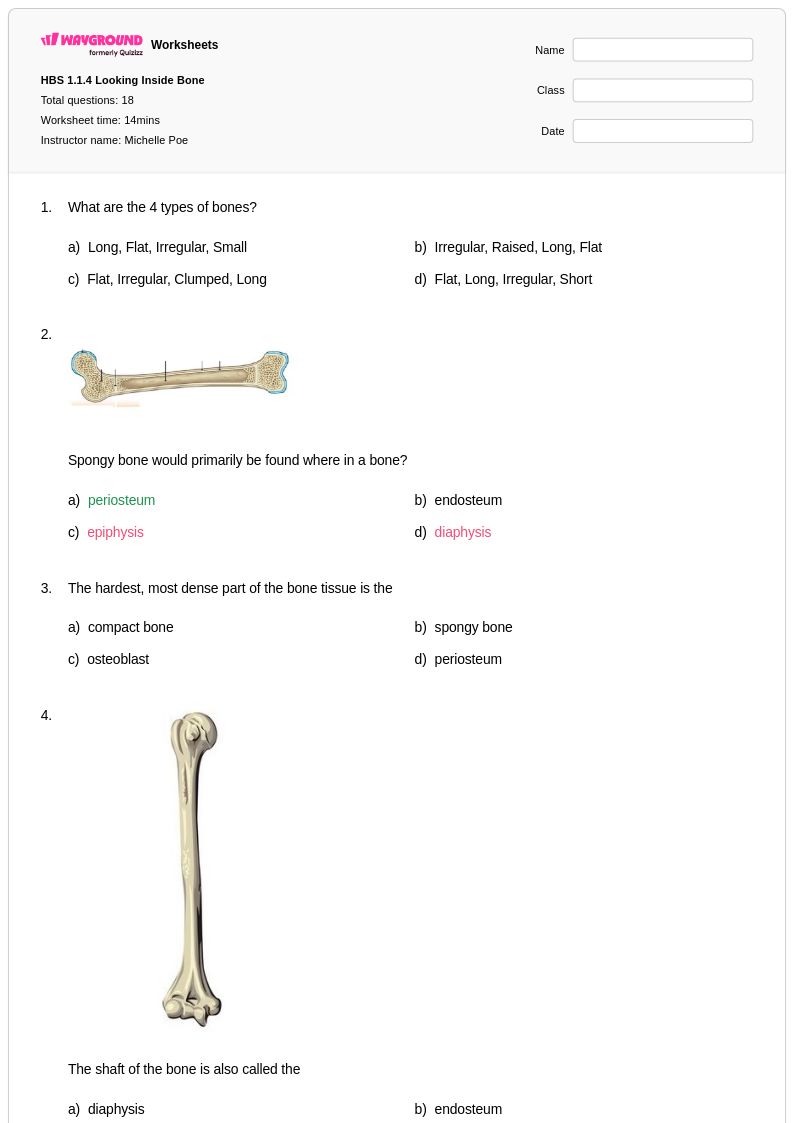
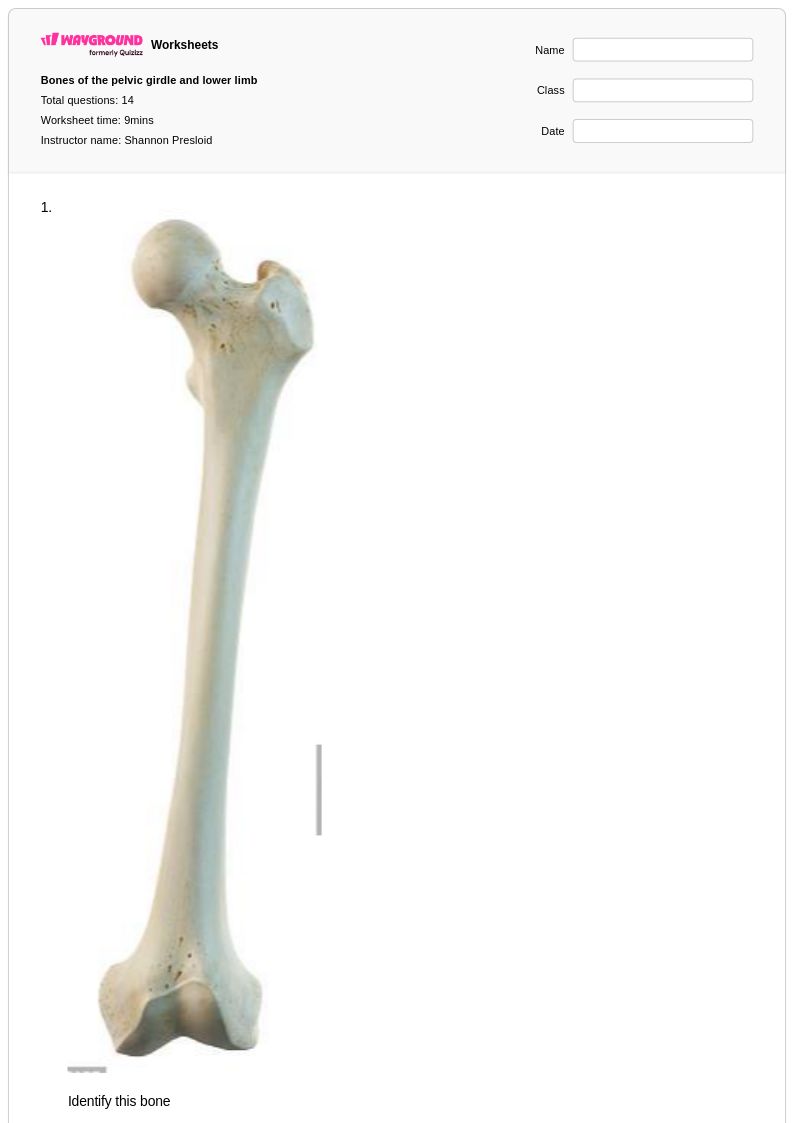
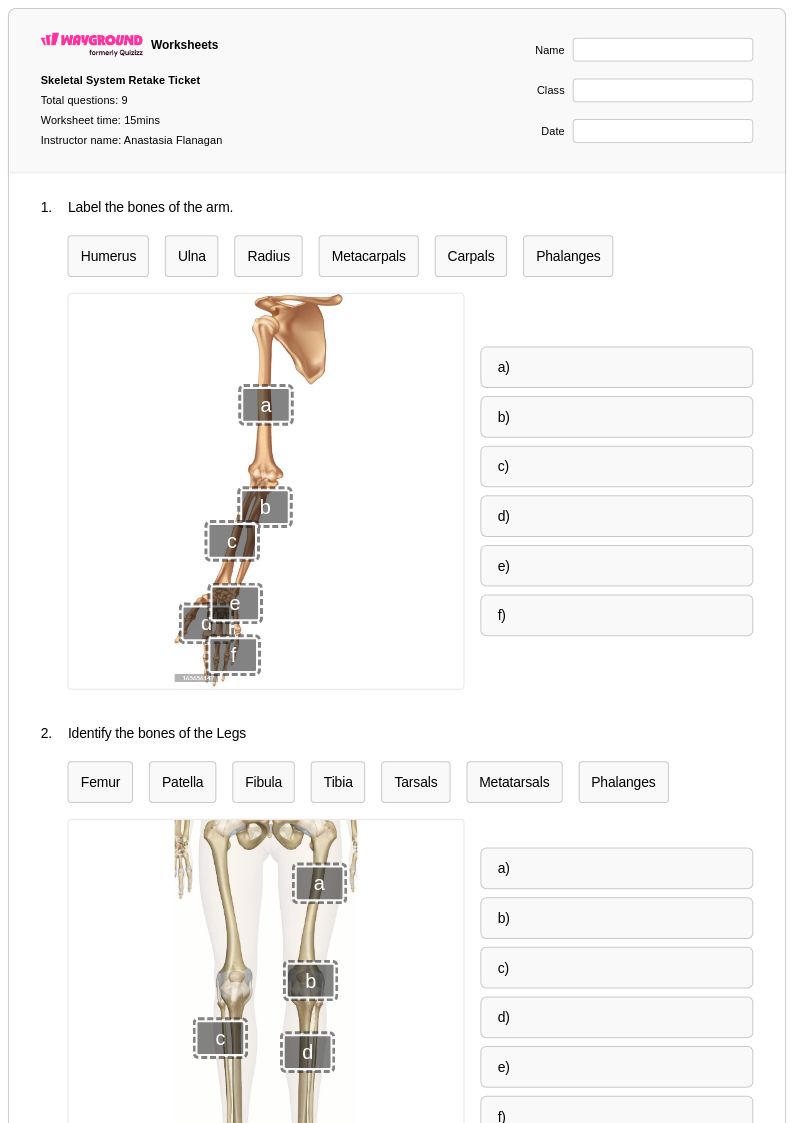
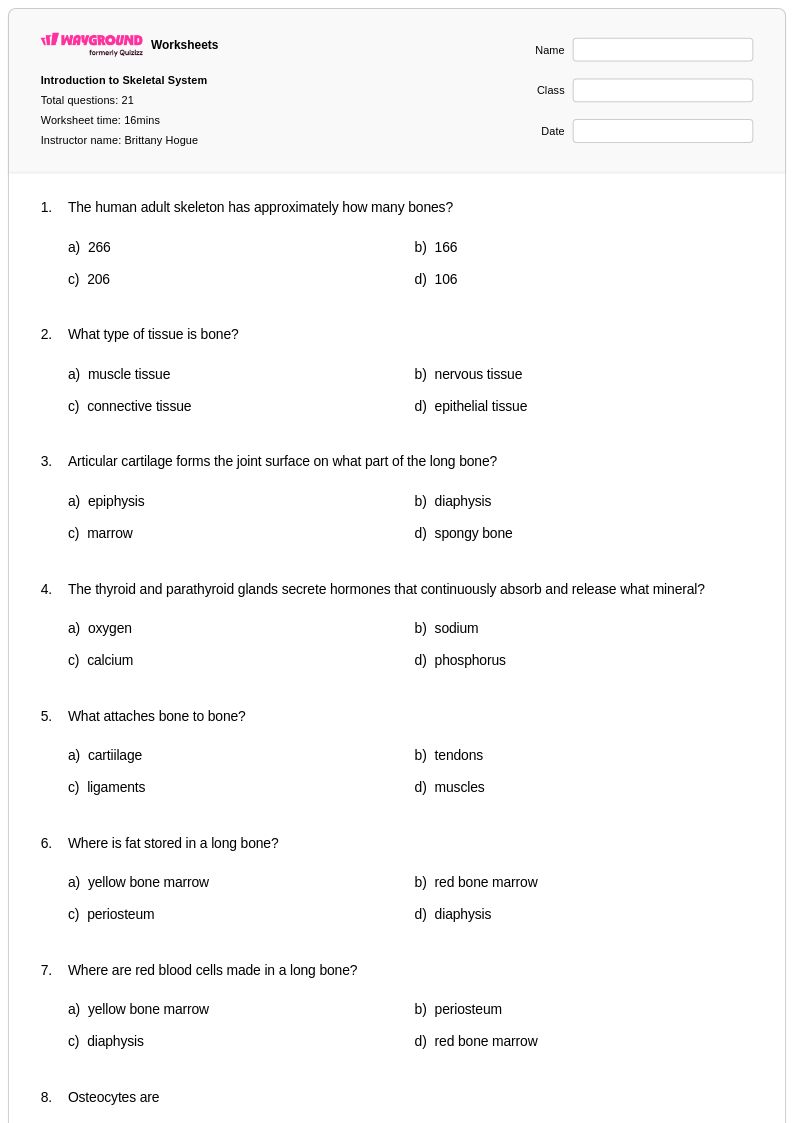
Bone markings worksheets for Grade 11 biology students available through Wayground (formerly Quizizz) provide comprehensive practice in identifying and understanding the structural features of skeletal anatomy. These educational resources focus on developing students' ability to recognize and classify the various projections, depressions, and openings found on bones throughout the human body, including processes, tubercles, fossae, foramina, and condyles. The worksheets strengthen critical anatomical vocabulary, spatial reasoning skills, and the connection between bone structure and function that forms the foundation for advanced studies in human anatomy and physiology. Students benefit from systematic practice problems that reinforce their understanding of how bone markings serve as attachment sites for muscles, tendons, and ligaments, while also providing pathways for blood vessels and nerves. Each worksheet includes detailed answer keys and is available as free printables in convenient pdf format for both classroom instruction and independent study.
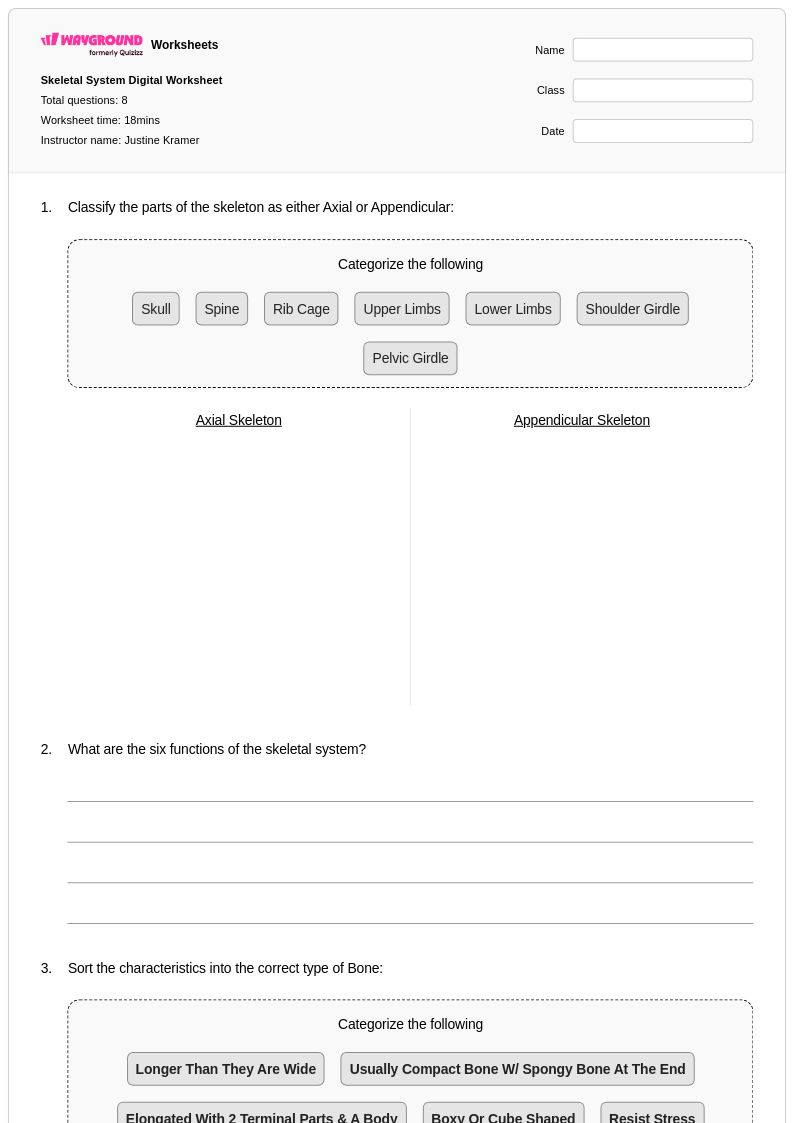
Wayground (formerly Quizizz) supports biology educators with an extensive collection of millions of teacher-created bone markings worksheets specifically designed for Grade 11 curriculum requirements. The platform's robust search and filtering capabilities allow instructors to quickly locate resources that align with specific educational standards and learning objectives, while differentiation tools enable teachers to customize content difficulty and format to meet diverse student needs. These bone markings materials are available in both printable pdf versions and interactive digital formats, providing flexibility for various teaching environments and learning preferences. Teachers can efficiently plan lessons, design targeted remediation activities for struggling students, and create enrichment opportunities for advanced learners through the platform's comprehensive worksheet library. The systematic organization of these resources streamlines lesson preparation while ensuring students receive consistent, high-quality practice in mastering the complex terminology and spatial relationships essential to understanding skeletal anatomy.
FAQs
How do I teach bone markings to anatomy students?
Effective bone marking instruction begins with grouping landmarks by category — projections (tubercles, trochanters, condyles), depressions (fossae, grooves), and openings (foramina, canals) — before asking students to connect each feature to its function, such as muscle attachment or nerve passage. Visual labeling exercises using skeletal diagrams help students build spatial recognition alongside vocabulary. Reinforcing terminology through repeated low-stakes practice problems accelerates retention before moving to applied identification on full skeletal models.
What exercises help students practice identifying bone markings?
Labeling diagrams of individual bones, matching terminology to definitions, and completing fill-in-the-blank identification tasks are among the most effective practice formats for bone markings. Students benefit from exercises that require them to distinguish between similar features — such as a tubercle versus a tuberosity, or a fossa versus a groove — since these close comparisons sharpen precise anatomical vocabulary. Repeated exposure across different skeletal elements, rather than memorizing one bone at a time, builds transferable recognition skills.
What mistakes do students commonly make when learning bone markings?
The most common error is conflating similarly named or visually similar landmarks, such as confusing the medial and lateral epicondyles or misidentifying a trochanter as a tubercle. Students also frequently struggle to connect the physical feature to its functional role — for example, not recognizing that a foramen serves as a passageway for nerves or blood vessels rather than a structural attachment point. Targeted practice problems that explicitly ask students to name the feature and state its function help address both types of errors simultaneously.
How can I differentiate bone markings instruction for students at different skill levels?
For students who need additional support, reducing the number of answer choices on identification questions lowers cognitive load while still building recognition skills. Students who require more processing time benefit from extended time settings, which can be configured individually without disrupting the experience of other students. On Wayground, these accommodations — including read aloud for students who struggle with dense anatomical terminology — can be assigned per student and saved for reuse across future sessions, making differentiation sustainable rather than session-by-session.
How do I use bone markings worksheets from Wayground in my classroom?
Wayground's bone markings worksheets are available as printable PDFs for traditional classroom use and in digital formats for technology-integrated or remote learning environments. Teachers can also host worksheets directly as a quiz on Wayground, enabling interactive digital practice with automatic grading. The platform allows educators to modify existing content or combine resources to focus instruction on specific landmark categories, making it straightforward to target exactly what your students need.
What anatomical vocabulary should students know before starting bone markings worksheets?
Students should have a working understanding of basic directional terms (medial, lateral, proximal, distal) and a general familiarity with the major bones of the axial and appendicular skeleton before engaging with bone marking worksheets. Without this foundation, students often misplace landmarks spatially even when they can recite the correct terminology. A brief vocabulary pre-check or warm-up activity reviewing directional language can significantly improve performance on bone marking identification tasks.