Free Printable Axial Skeleton Worksheets for Grade 11
Explore Grade 11 axial skeleton worksheets and printables that help students master the structure and function of the skull, vertebral column, and ribcage through comprehensive practice problems with answer keys.
Explore printable Axial Skeleton worksheets for Grade 11
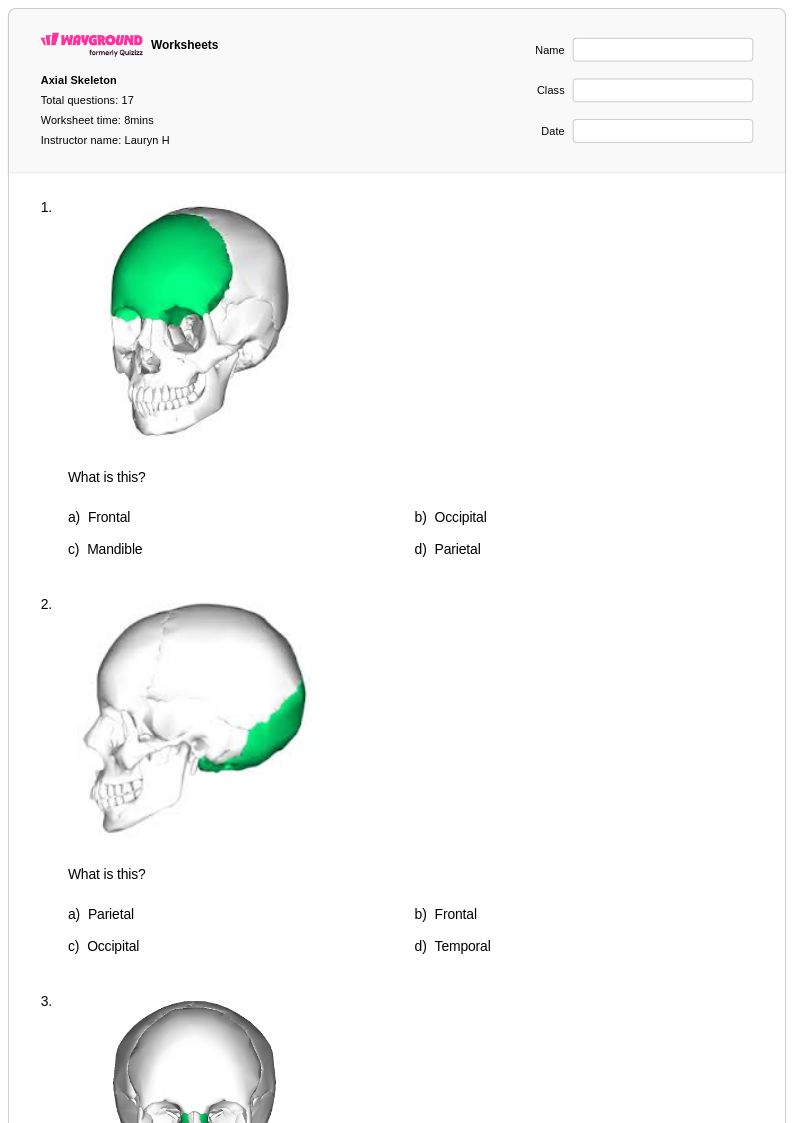
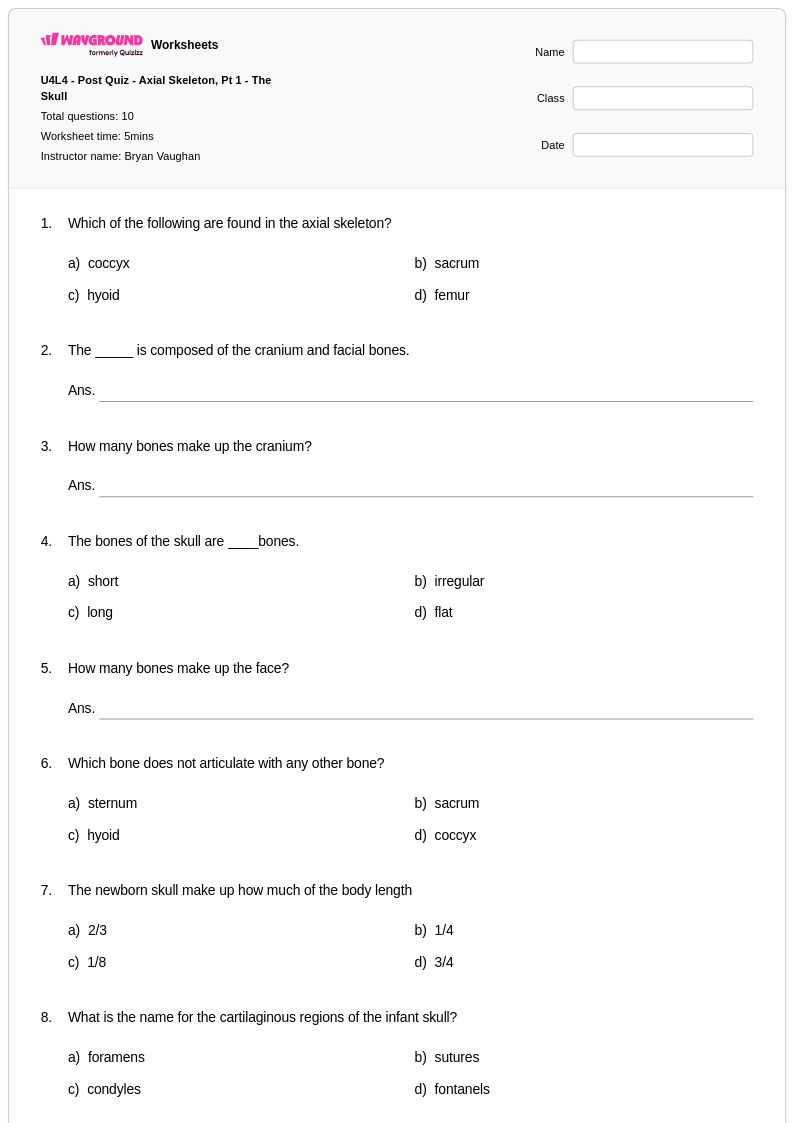
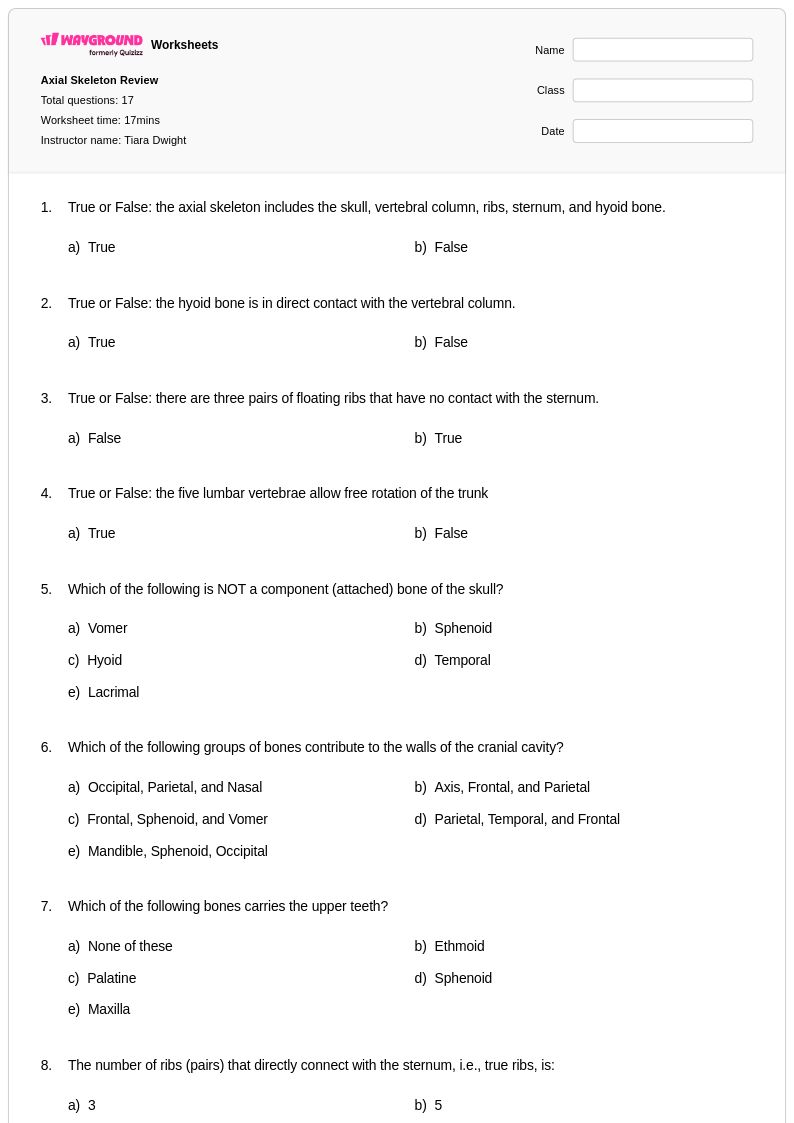
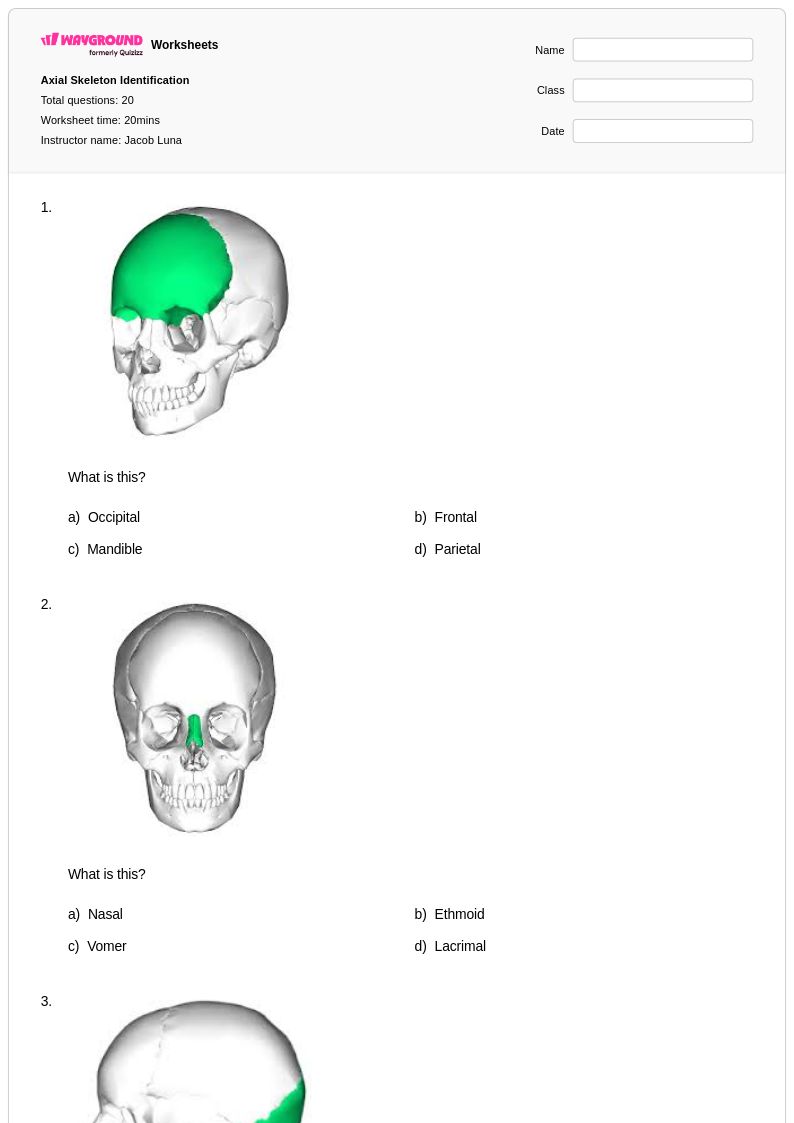
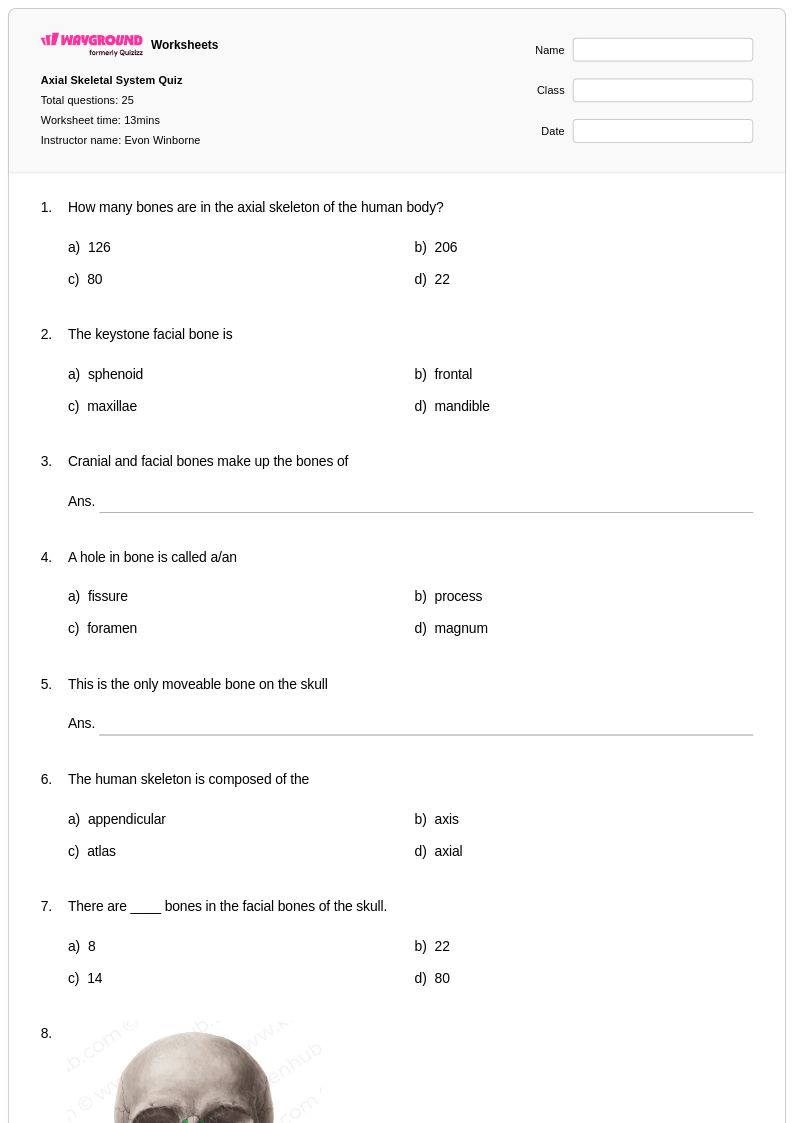
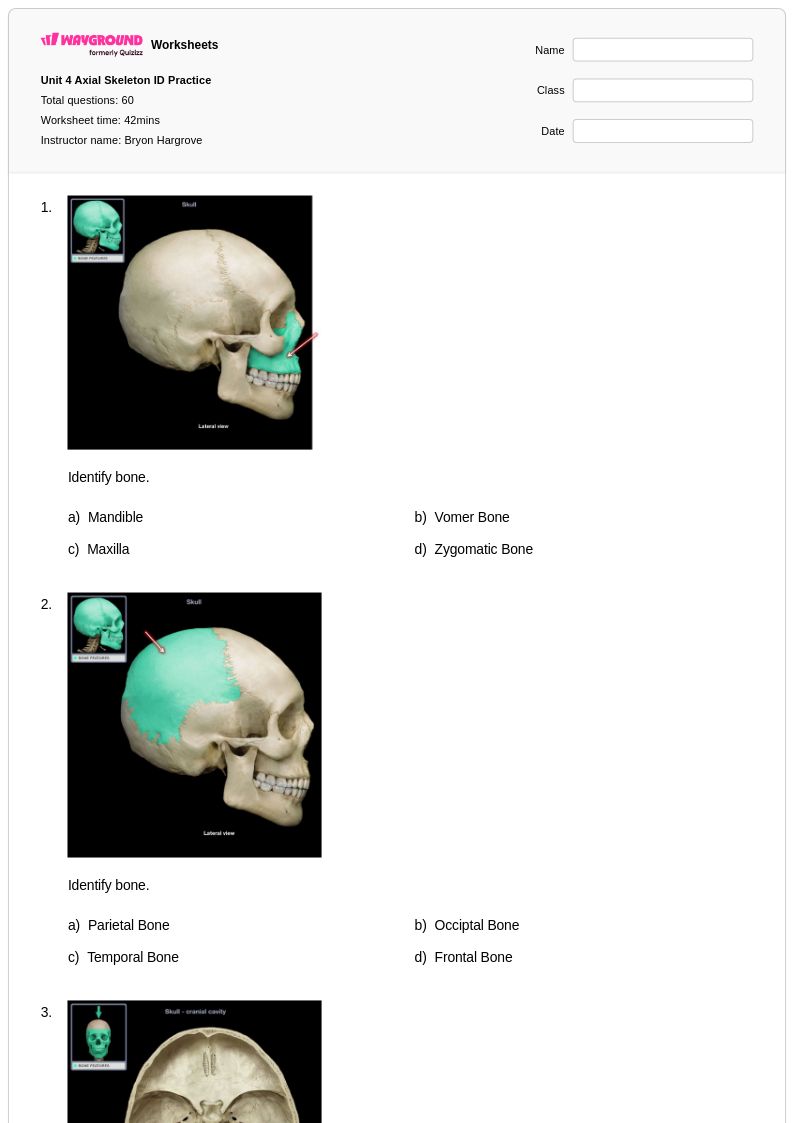
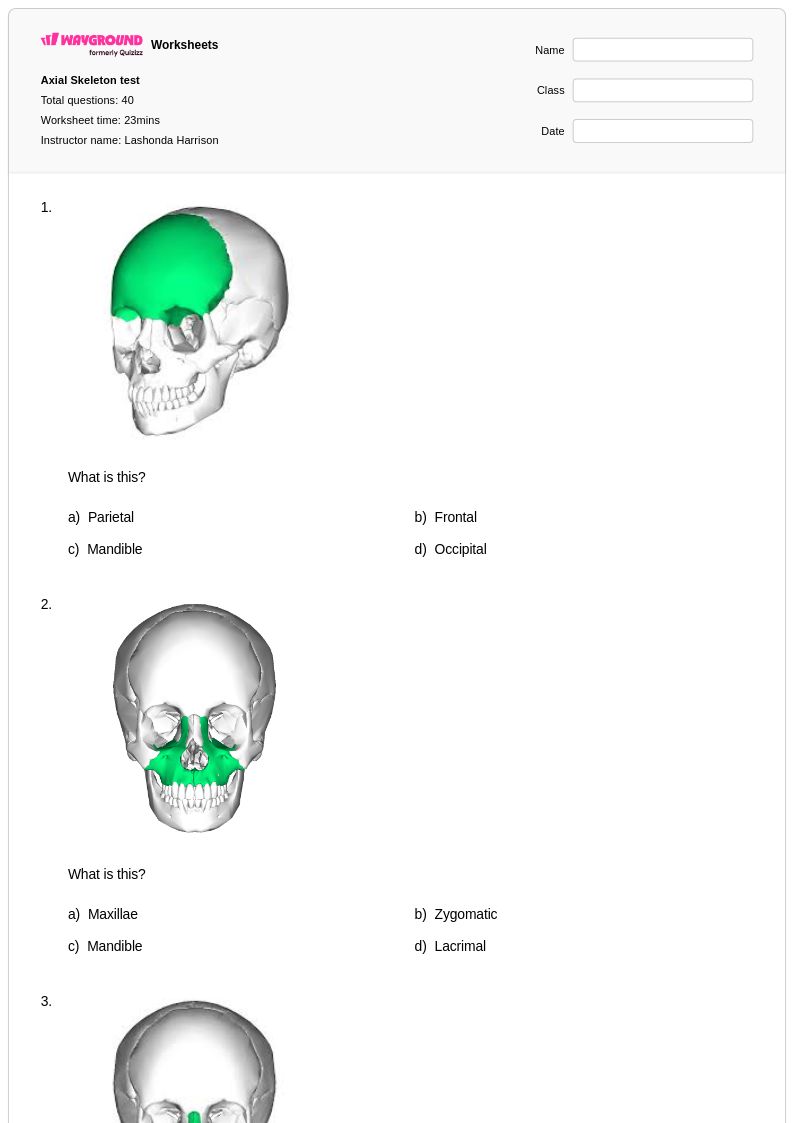
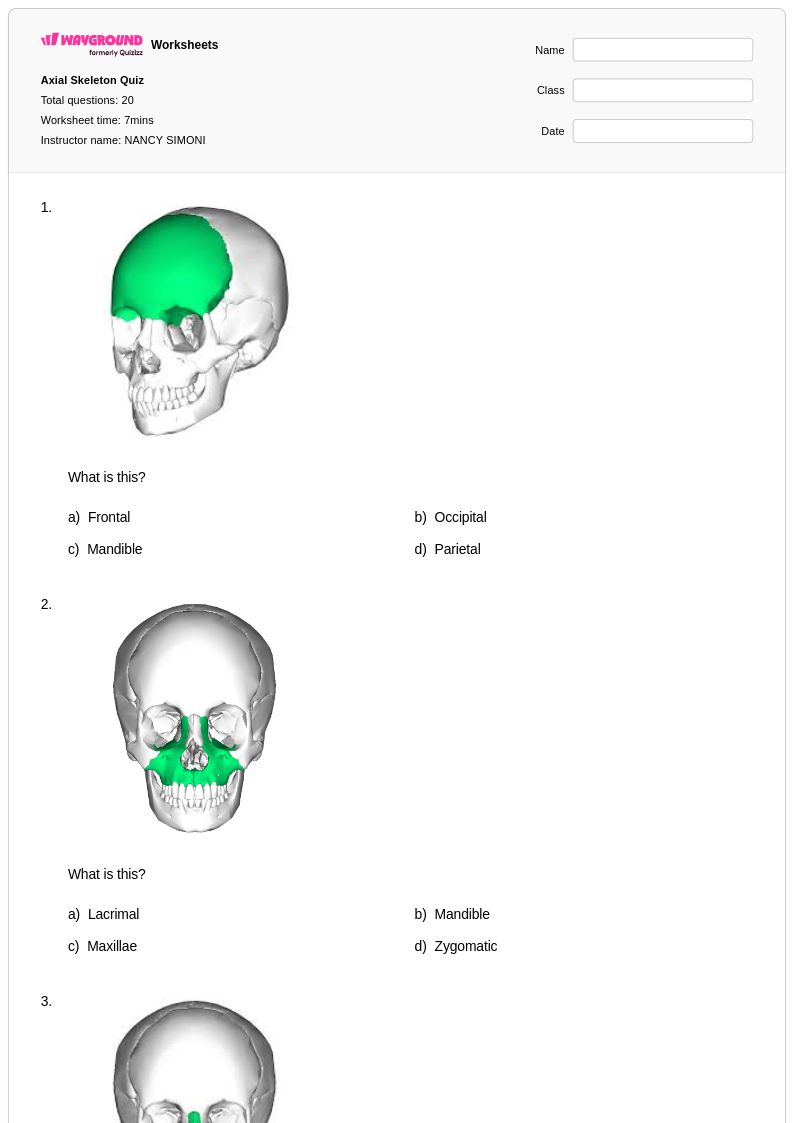
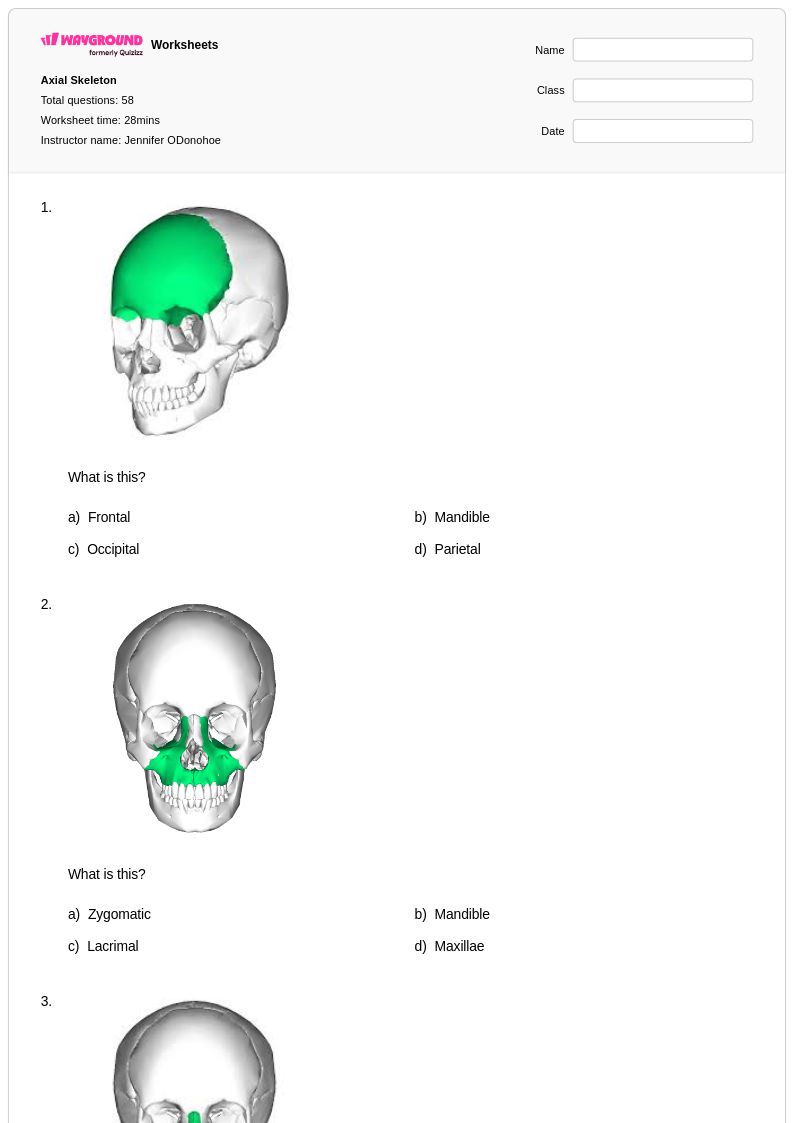
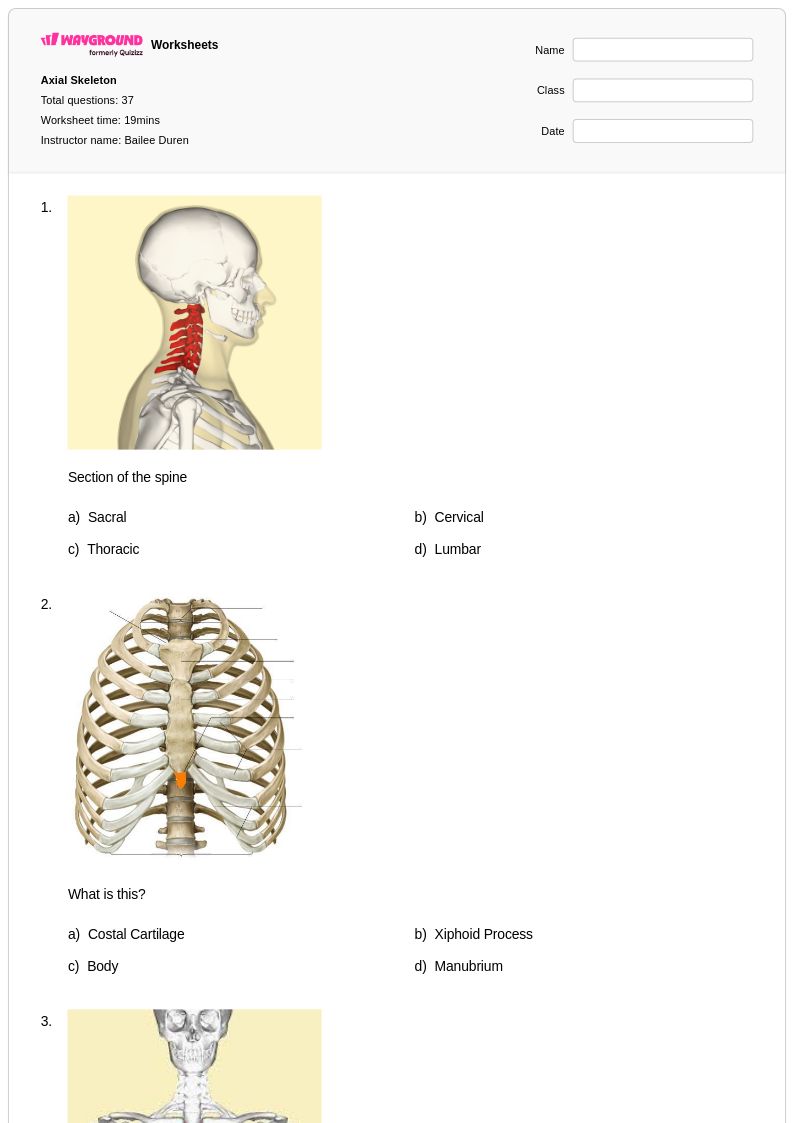
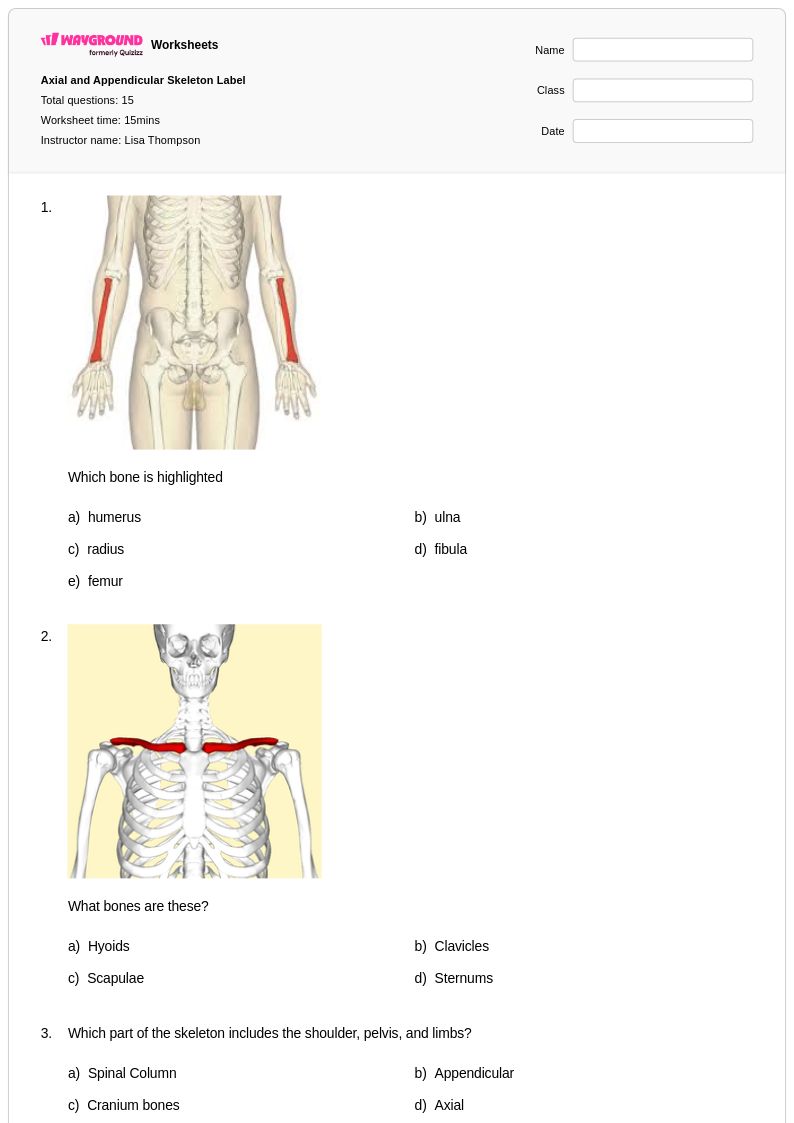
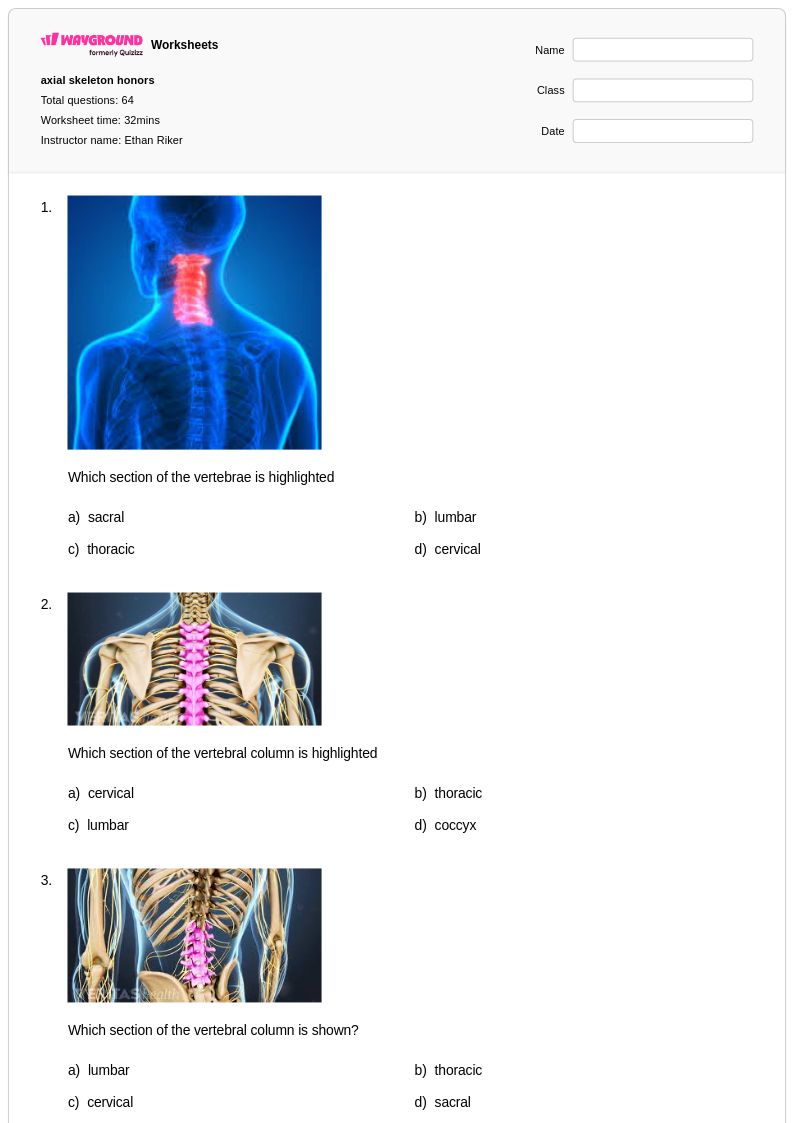
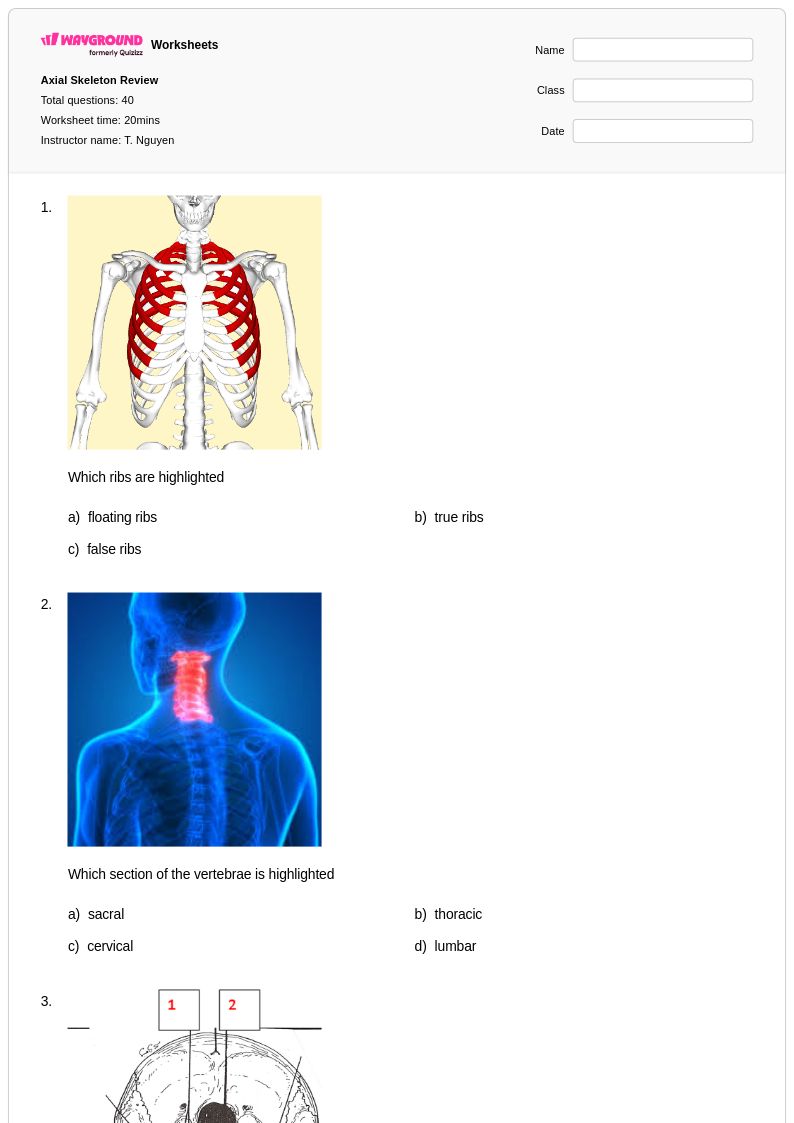
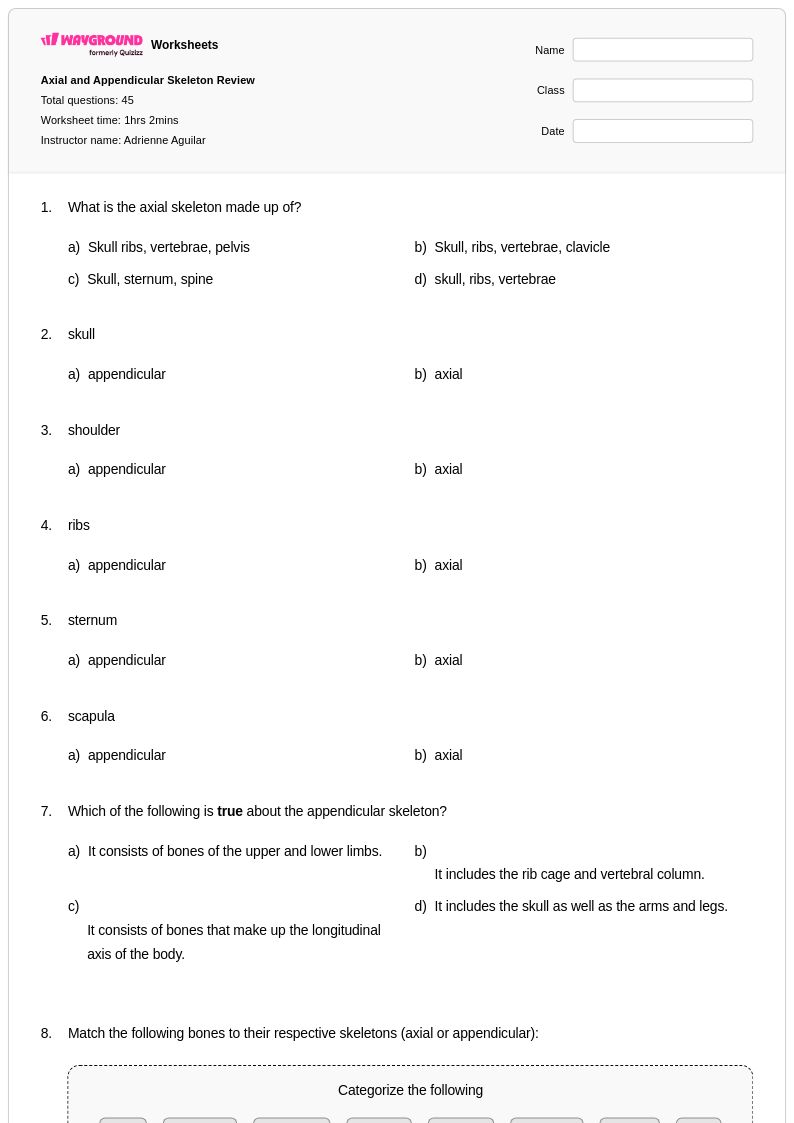
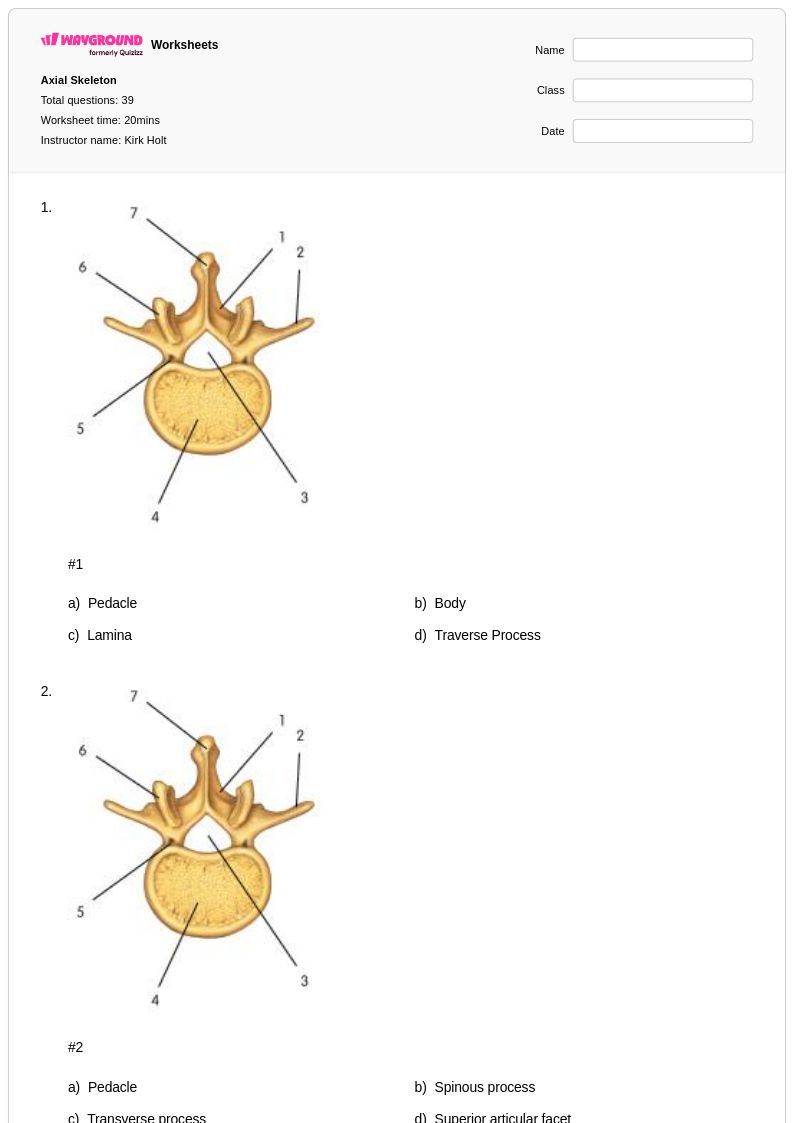
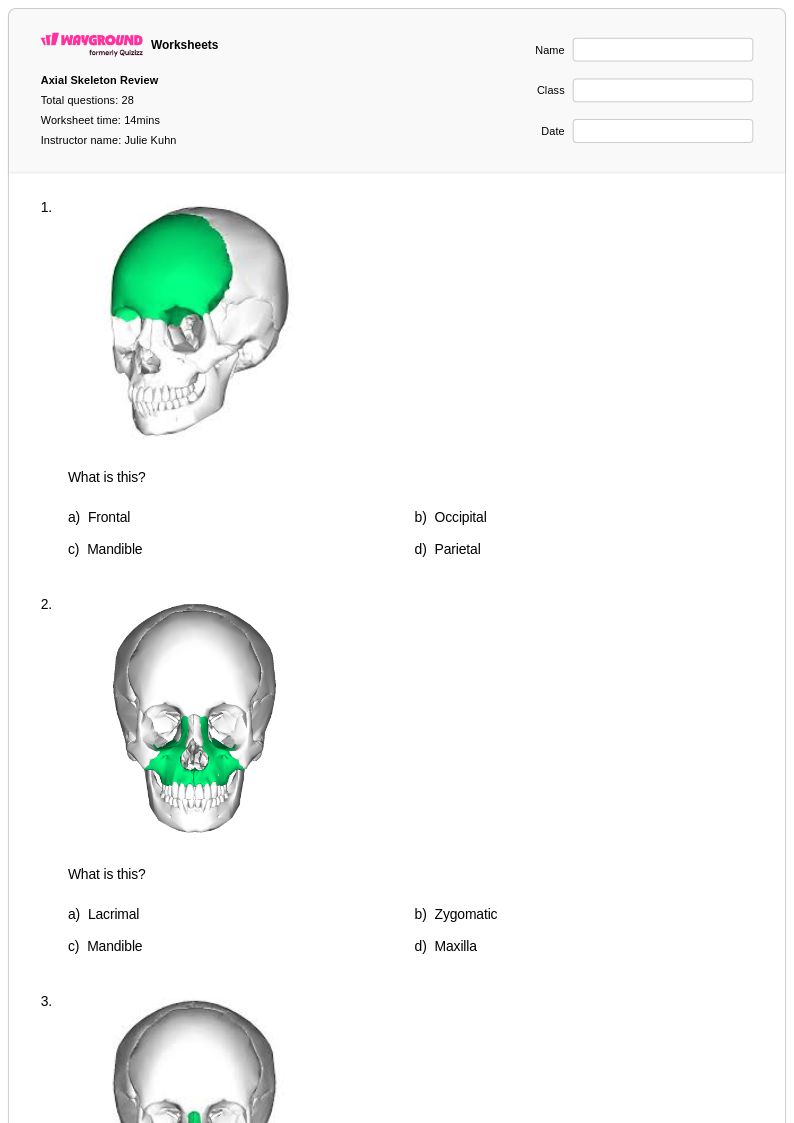
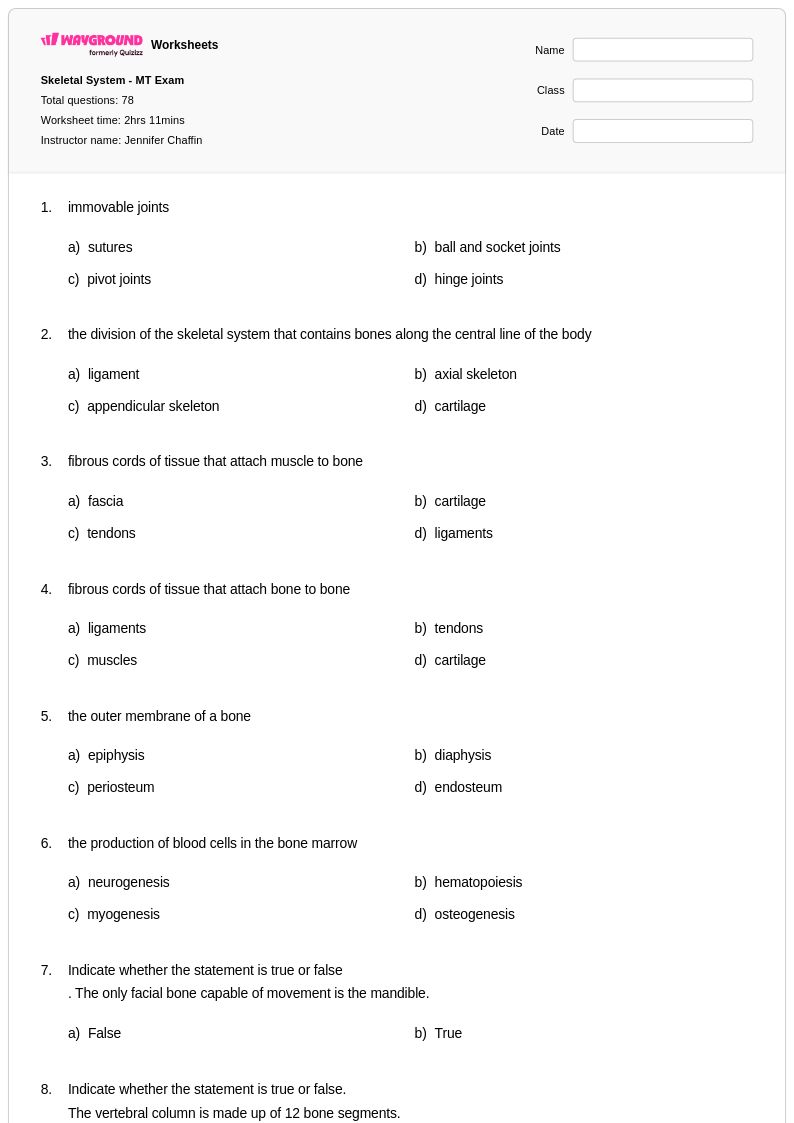
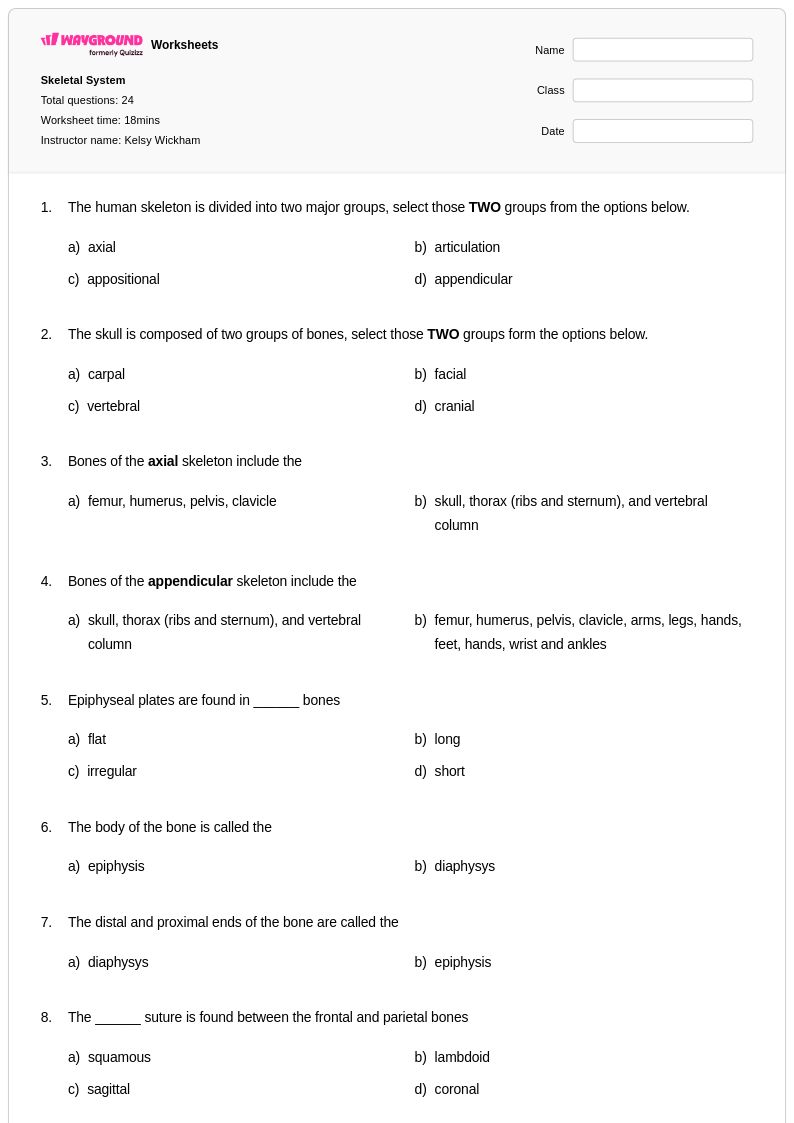
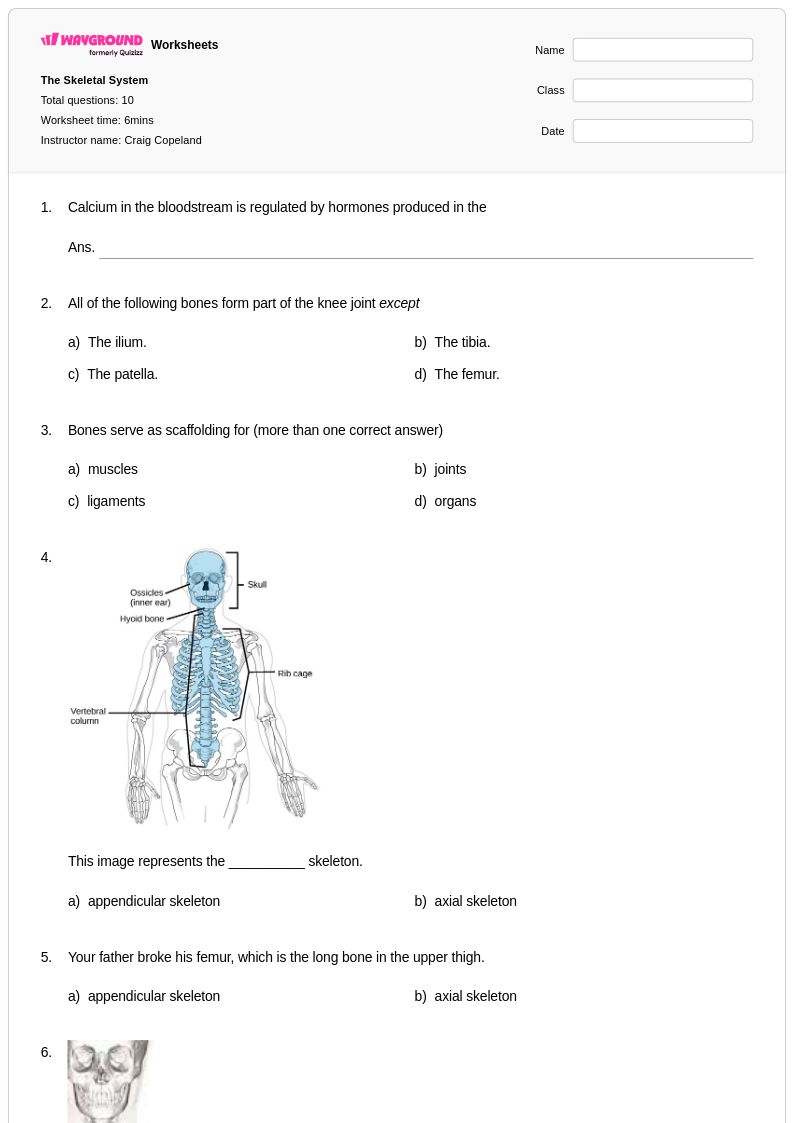
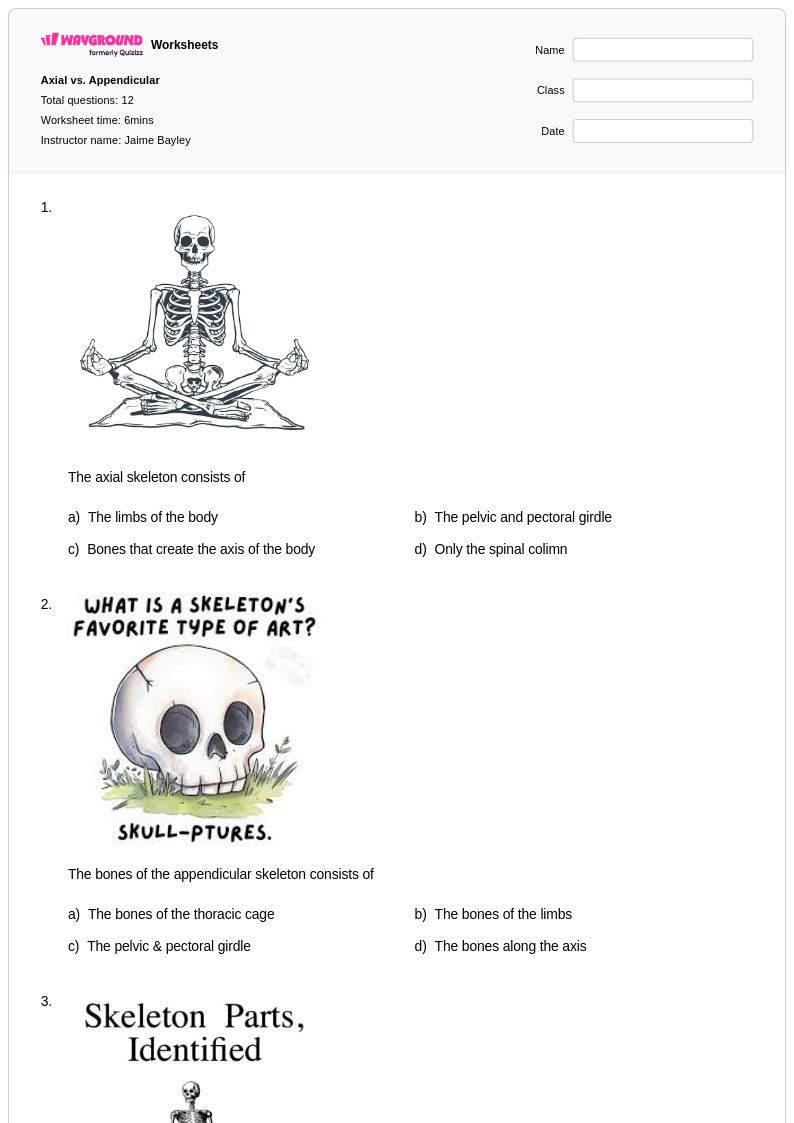
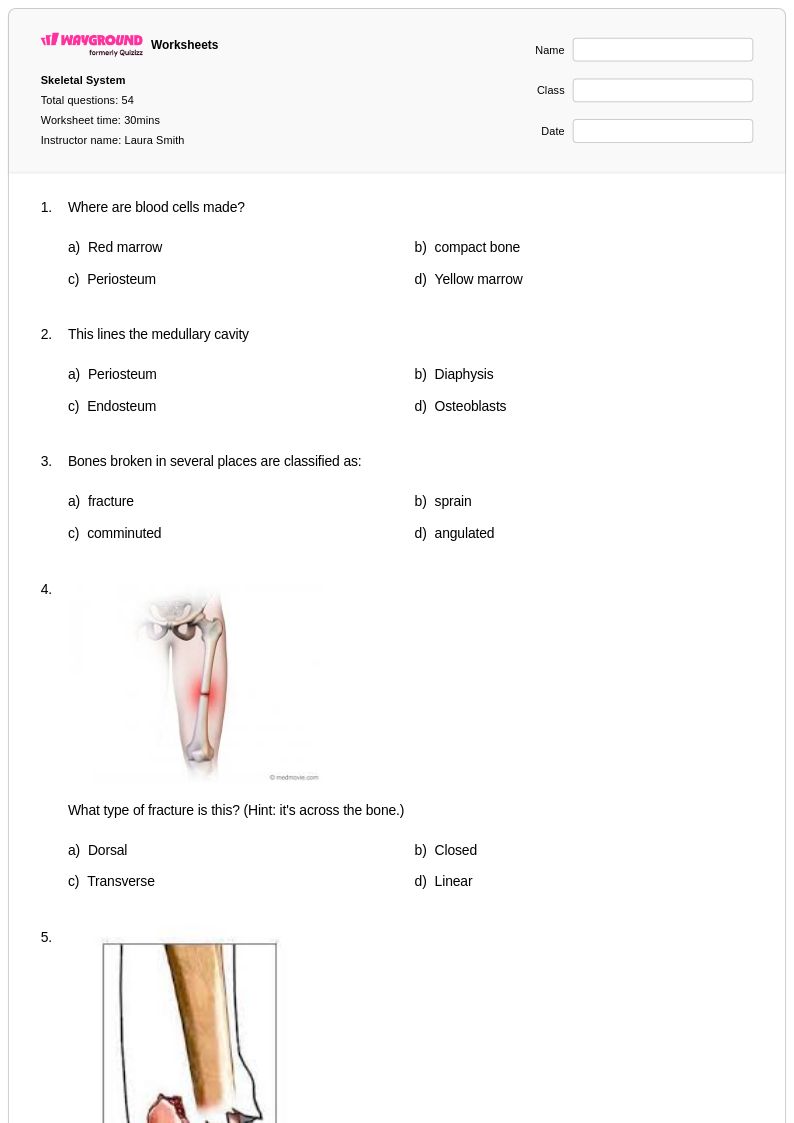
Grade 11 axial skeleton worksheets available through Wayground (formerly Quizizz) provide comprehensive coverage of the central supporting structure of the human body, focusing on the skull, vertebral column, and rib cage. These educational resources strengthen students' understanding of bone classification, anatomical terminology, and the protective functions of axial skeletal components. The worksheets incorporate detailed practice problems that challenge students to identify specific bones, analyze structural adaptations, and explain the relationship between form and function in skeletal anatomy. Each resource includes answer keys for efficient grading and assessment, with free printables available in pdf format to support both classroom instruction and independent study sessions.
Wayground (formerly Quizizz) empowers educators with millions of teacher-created axial skeleton resources that feature robust search and filtering capabilities aligned with state and national science standards. The platform's differentiation tools allow instructors to customize worksheets based on individual student needs, offering flexible options for remediation of foundational concepts or enrichment activities for advanced learners. Teachers can access materials in both printable and digital formats, including downloadable pdf versions that facilitate seamless lesson planning and homework assignments. These comprehensive resources support systematic skill practice in bone identification, anatomical drawing, and comparative analysis, enabling educators to effectively address diverse learning objectives while maintaining rigorous academic standards in Grade 11 biology instruction.
FAQs
How do I teach the axial skeleton to high school biology students?
Start by distinguishing the axial skeleton from the appendicular skeleton, so students understand the axial division includes the skull, vertebral column, and rib cage. From there, move into the functional logic: these bones protect the brain, spinal cord, and thoracic organs, which gives students a reason to learn the structures rather than just memorize them. Labeling diagrams of the cranial bones, spinal regions, and thoracic cage as a sequence helps students build spatial understanding before moving to analysis questions.
What are good practice exercises for students learning axial skeleton structures?
Labeling diagrams of the skull, vertebral column, and rib cage are foundational exercises because they require students to recall and place specific bone names in anatomical context. Identification problems that ask students to distinguish between, for example, cervical and lumbar vertebrae, or cranial and facial bones, push beyond simple memorization. Analysis questions that connect structure to function, such as explaining how the thoracic cage protects the lungs, deepen comprehension and prepare students for exam-style responses.
What mistakes do students commonly make when learning the axial skeleton?
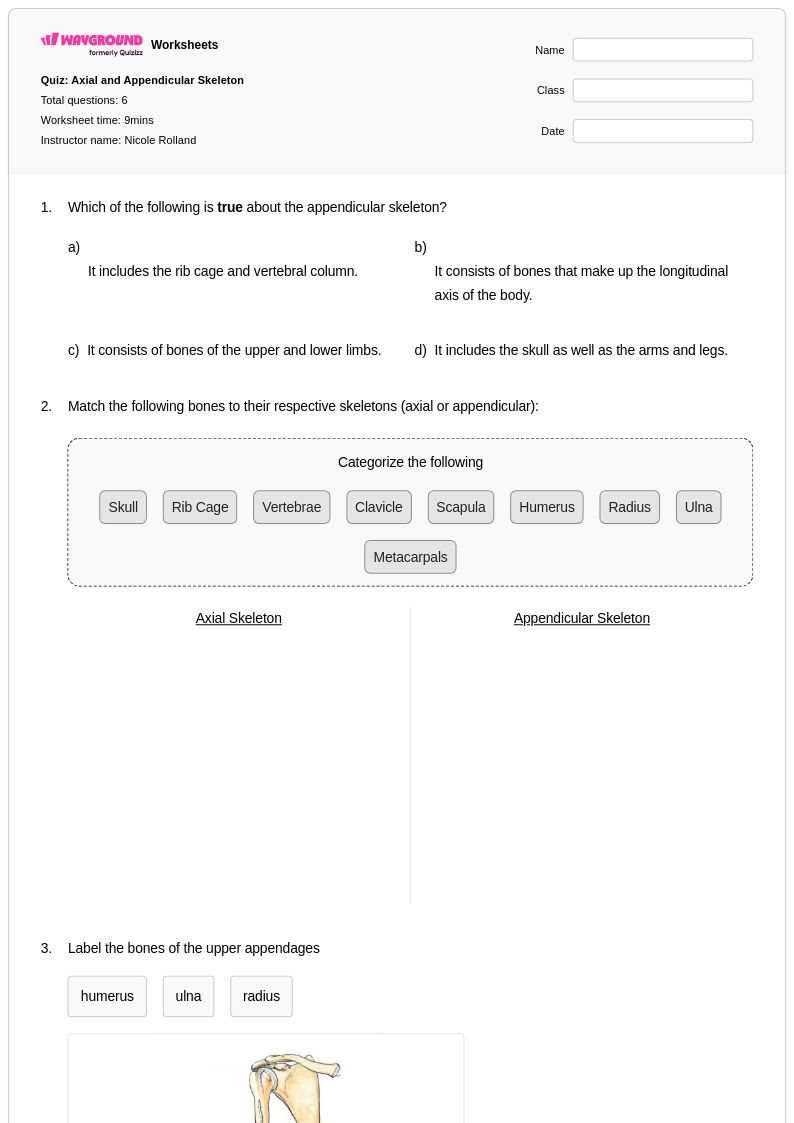
A frequent error is conflating the axial and appendicular skeletons, particularly misclassifying bones like the clavicle or scapula as axial when they belong to the appendicular division. Students also struggle to distinguish the five spinal regions (cervical, thoracic, lumbar, sacral, coccygeal) and often confuse the number of vertebrae in each. When labeling the skull, many students mix up cranial bones with facial bones, treating the mandible or nasal bones as part of the cranium rather than the facial skeleton.
How can I use axial skeleton worksheets effectively in my classroom?
Axial skeleton worksheets on Wayground are available as printable PDFs, making them easy to distribute for in-class labeling activities, homework, or anatomy lab reinforcement. They are also available in digital formats, so teachers can assign them for remote learning or technology-integrated instruction, and can be hosted as a quiz directly on Wayground. Answer keys are included, which allows students to self-assess after independent practice and helps teachers quickly identify which structures need additional review.
How do I differentiate axial skeleton instruction for students at different ability levels?
For students who need support, reduce the cognitive load by focusing first on major structures like the three main divisions of the axial skeleton before introducing individual bone names. Advanced learners can be challenged with questions about structural relationships, such as how intervertebral discs function within the vertebral column or how the thoracic cage mechanics relate to respiration. On Wayground, teachers can apply accommodations such as reduced answer choices or read-aloud settings for individual students, so differentiation happens at the assignment level without disrupting the rest of the class.
How does the axial skeleton differ from the appendicular skeleton?
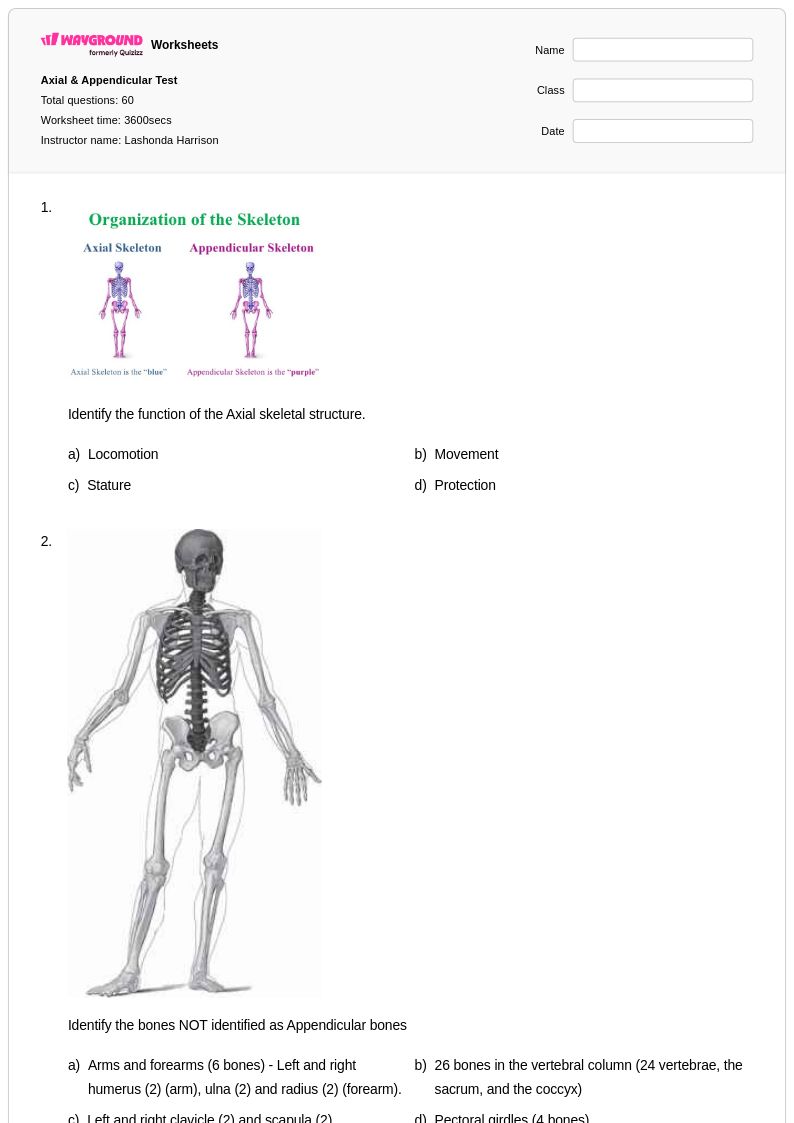
The axial skeleton forms the central axis of the body and consists of 80 bones, including the skull, vertebral column, and rib cage, all of which protect the brain, spinal cord, and thoracic organs. The appendicular skeleton includes the bones of the limbs and their girdles, which attach to the axial skeleton and enable movement. Understanding this distinction is a prerequisite for any deeper study of skeletal anatomy, and students should be able to classify any major bone correctly before moving on to regional or functional analysis.