
12 Q
9th - 12th
20 Q
8th - 12th
20 Q
7th - 12th
18 Q
11th
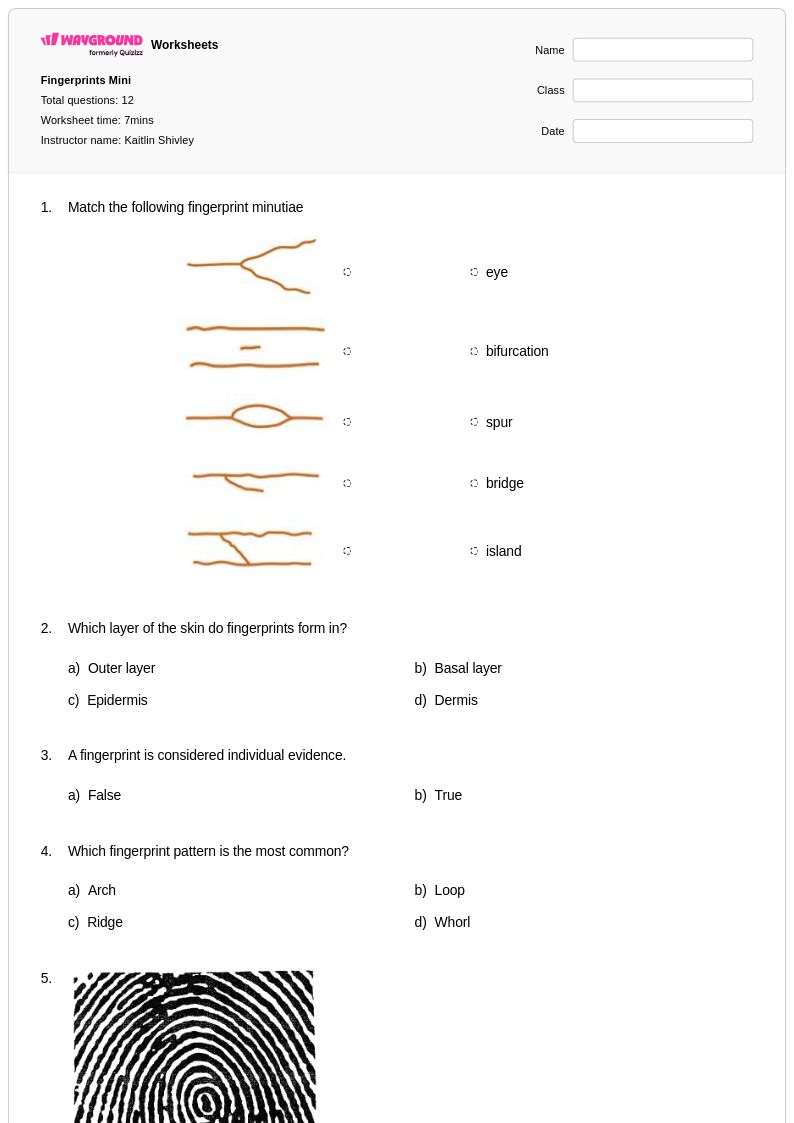
12 Q
9th - 12th
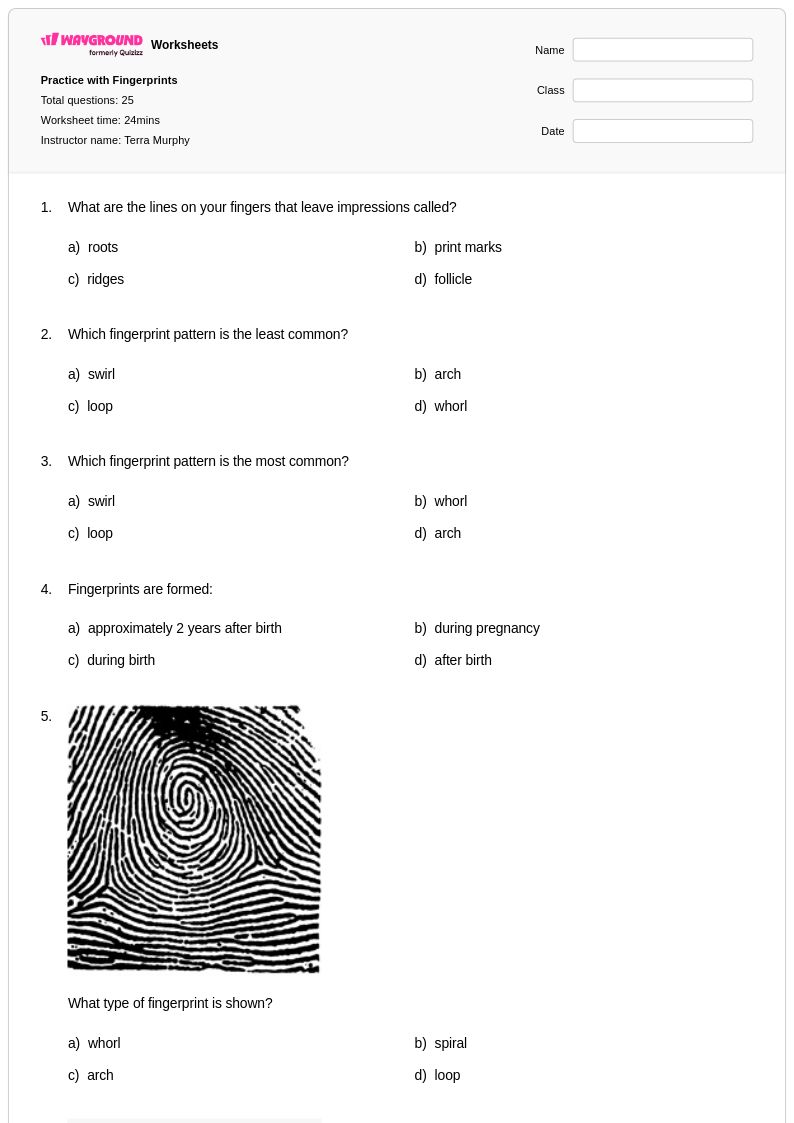
25 Q
11th - 12th
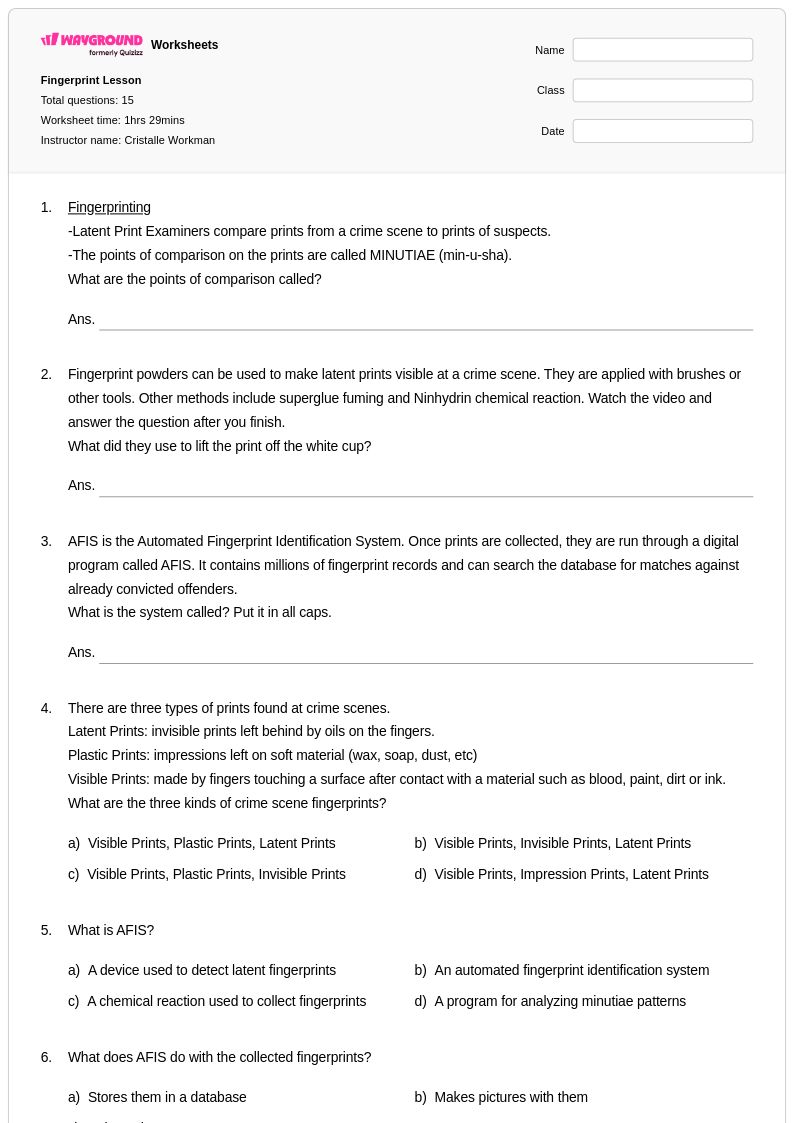
15 Q
11th
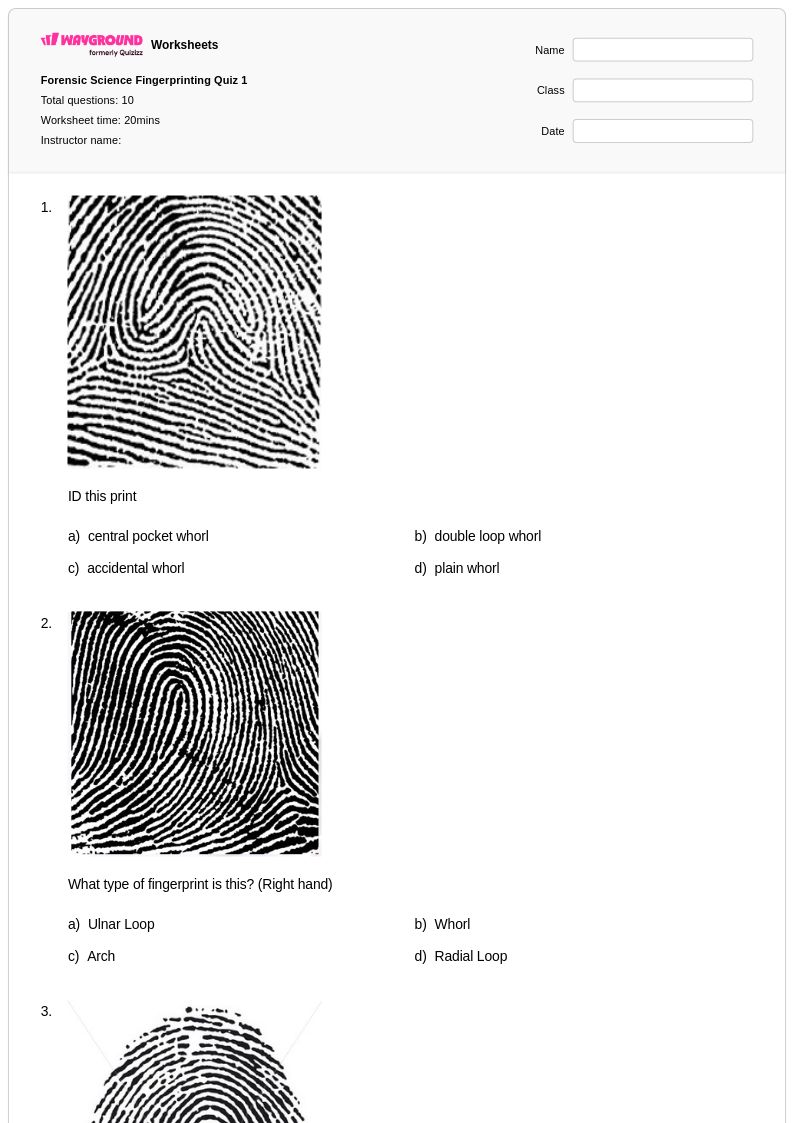
10 Q
9th - 12th
17 Q
11th - 12th
13 Q
9th - 12th
20 Q
11th
24 Q
10th - 12th
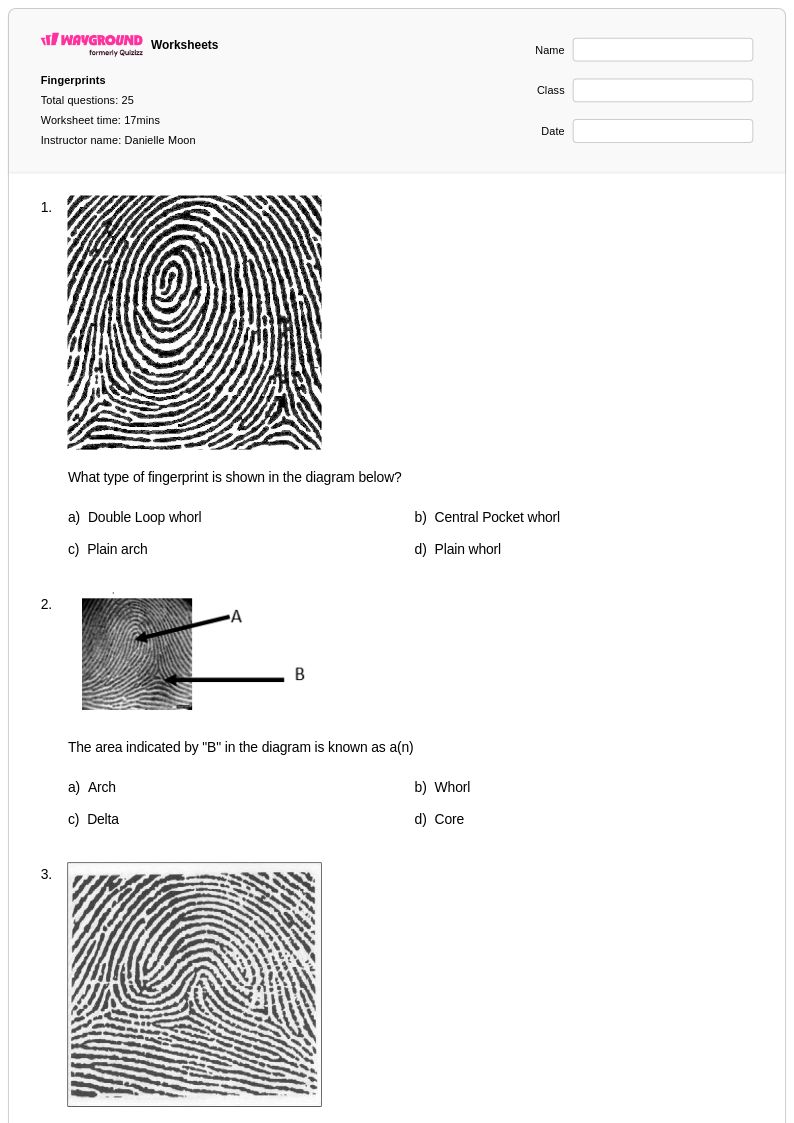
25 Q
9th - 12th
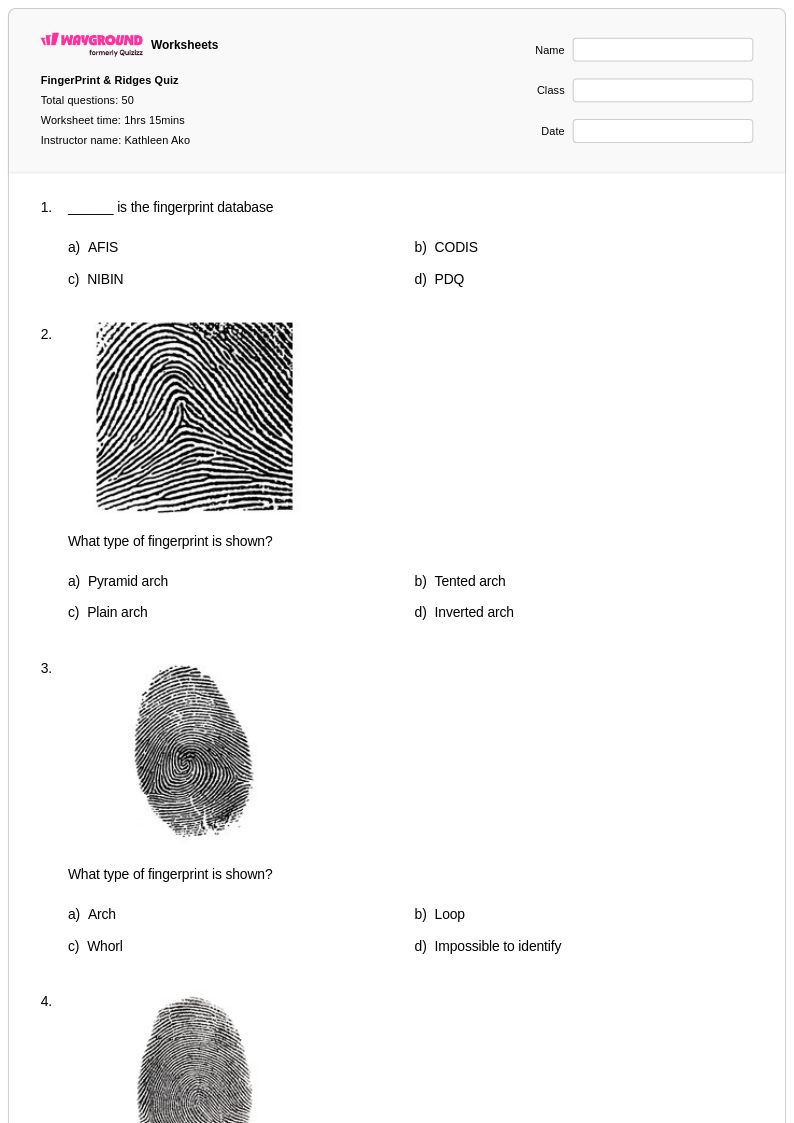
50 Q
9th - 12th
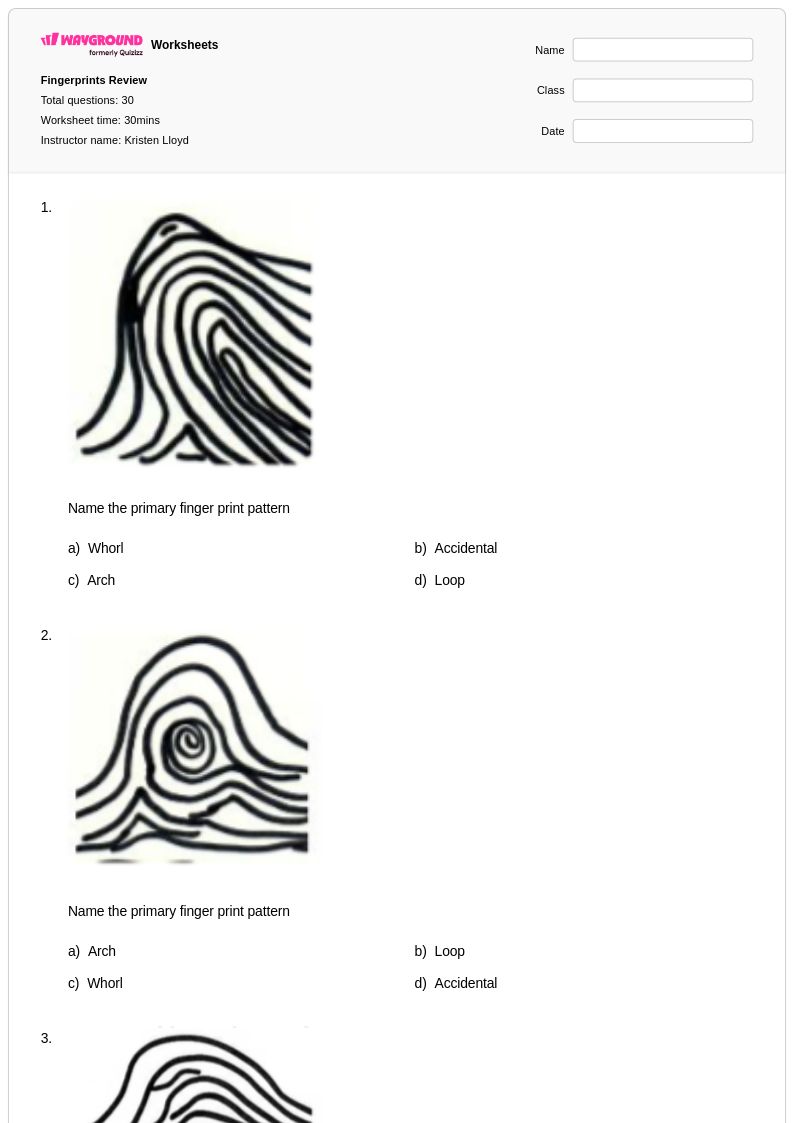
30 Q
9th - 12th
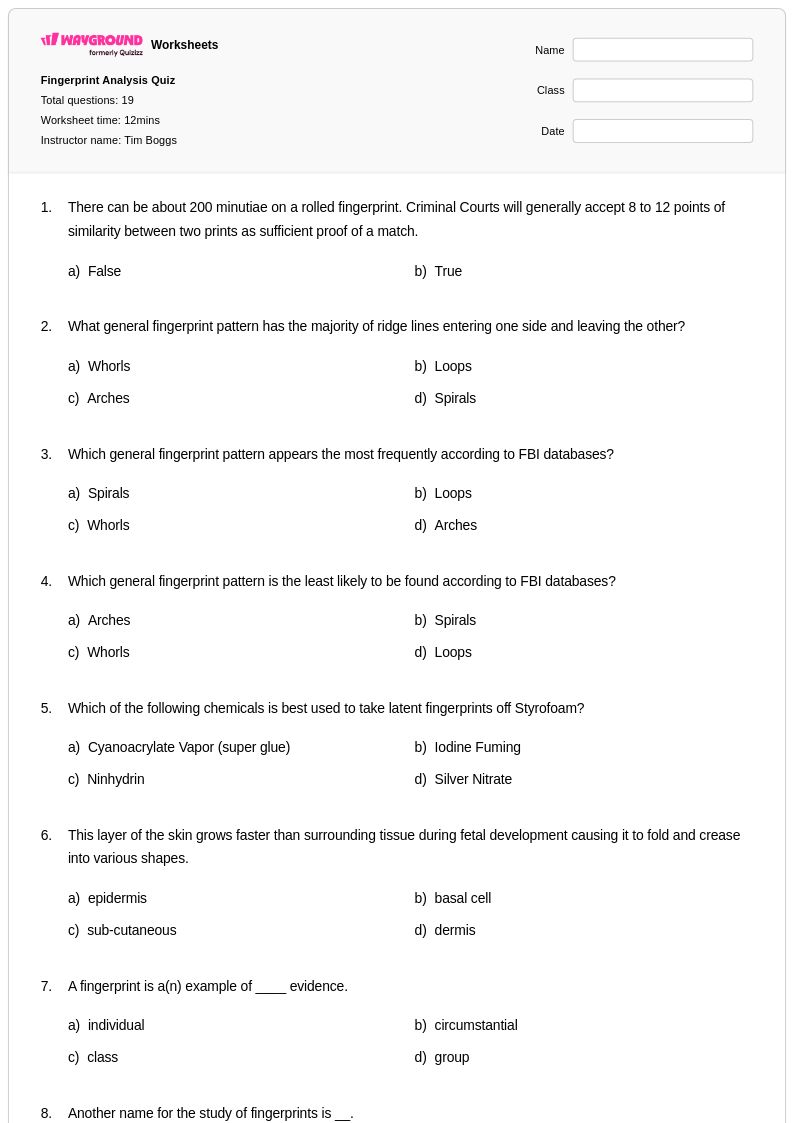
19 Q
11th
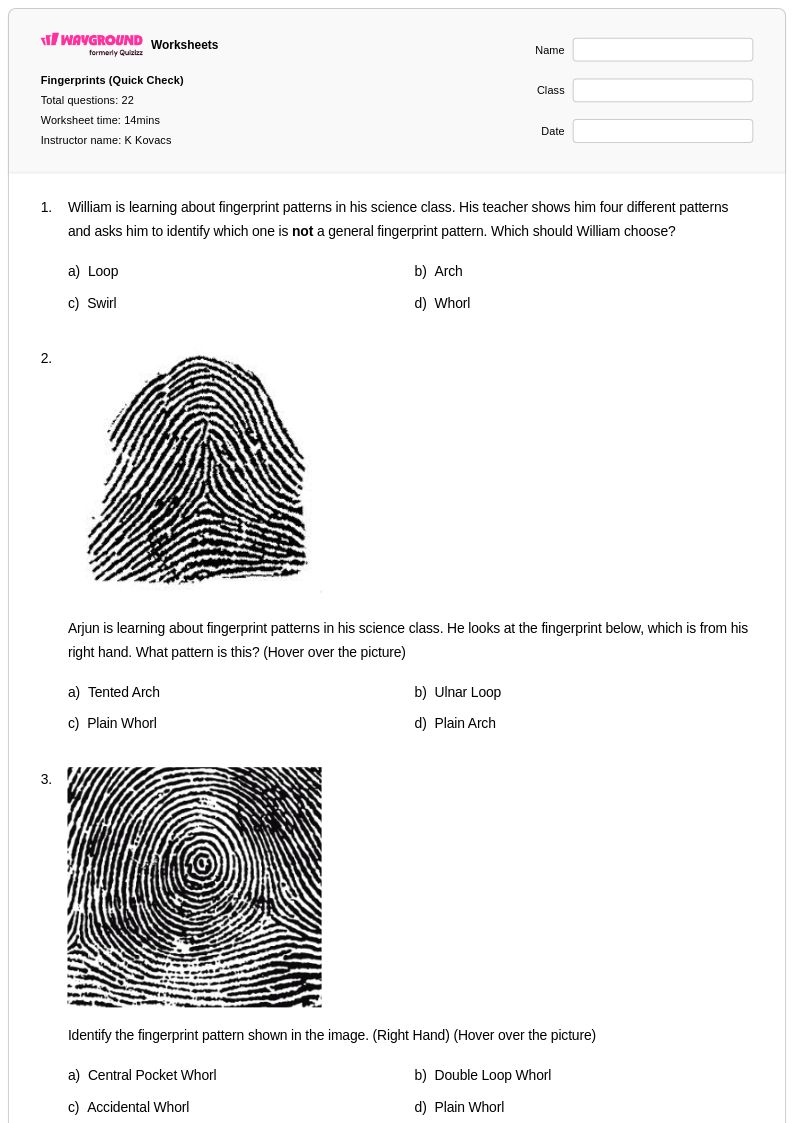
22 Q
11th - 12th
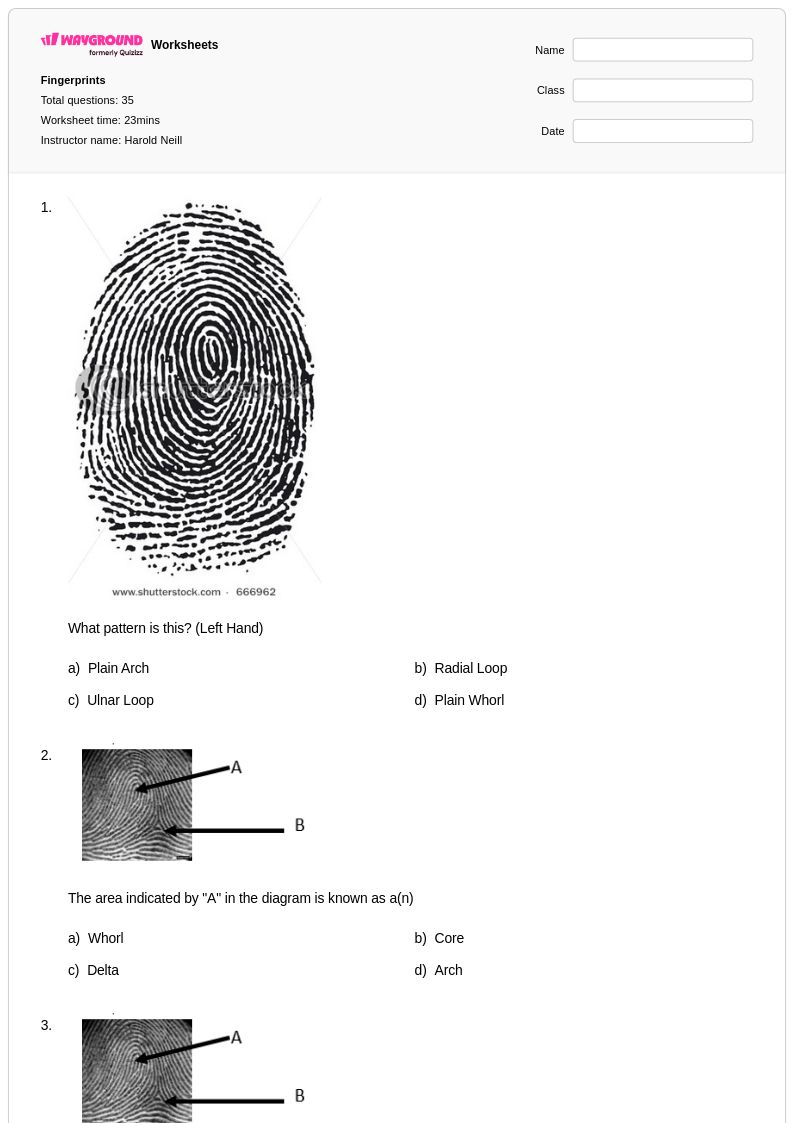
35 Q
9th - 12th
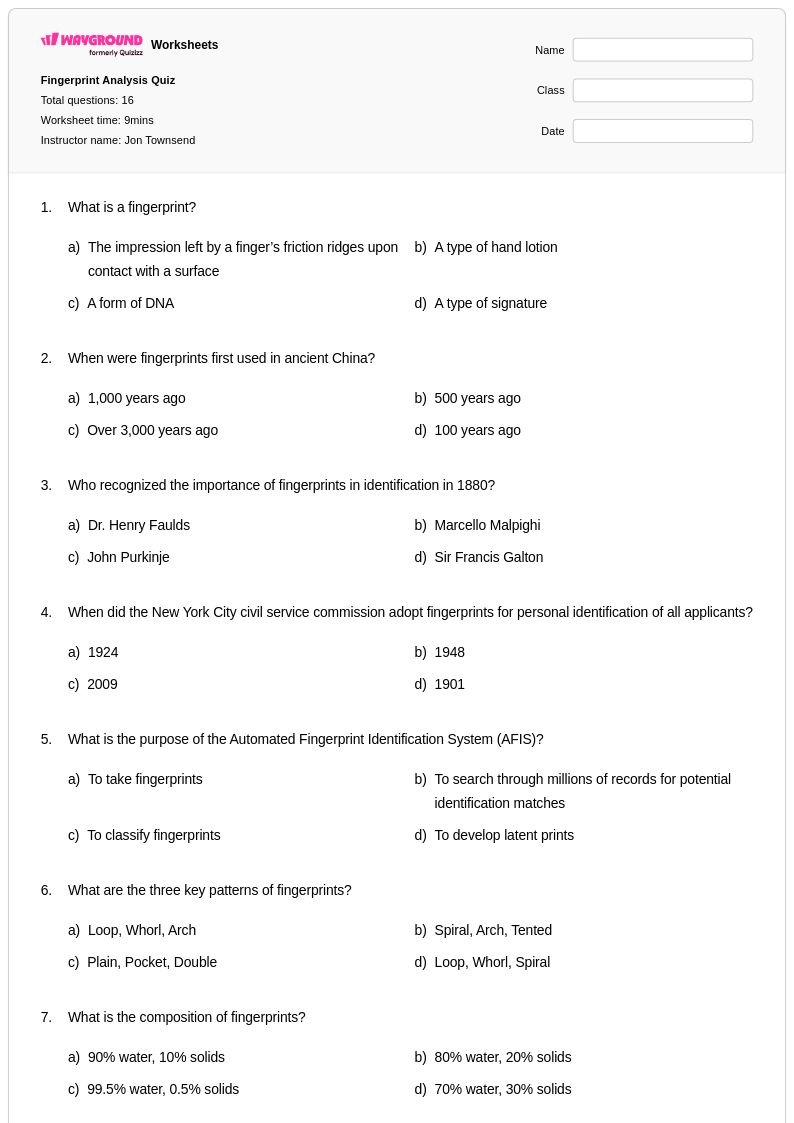
16 Q
11th
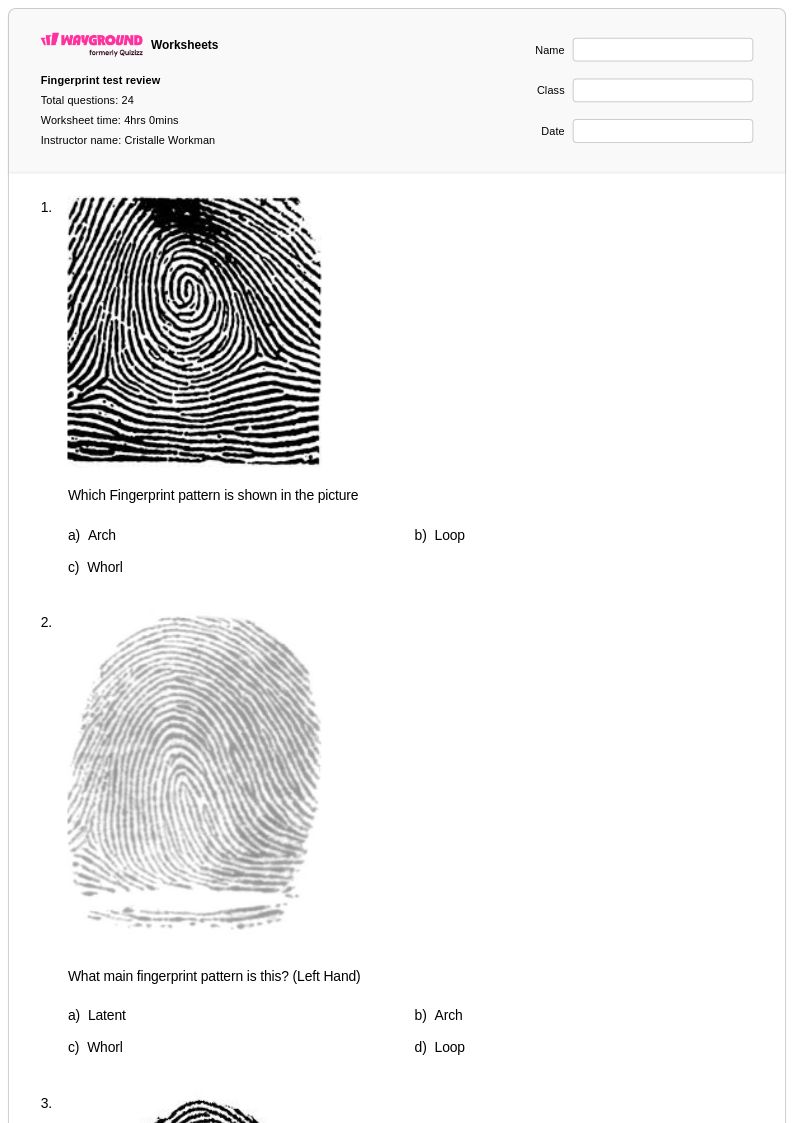
24 Q
11th
33 Q
9th - 12th
17 Q
11th - 12th
10 Q
11th
30 Q
9th - 12th
Explore Other Subject Worksheets for grade 11
Explore printable Fingerprints worksheets for Grade 11
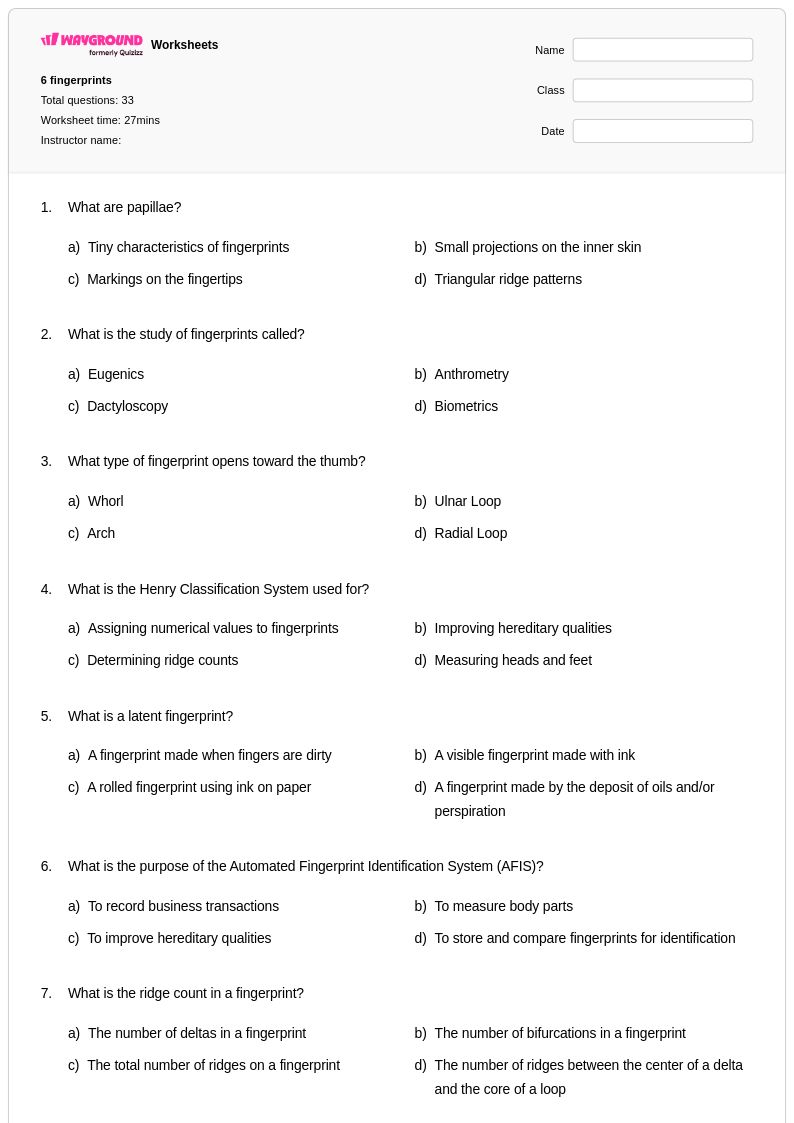
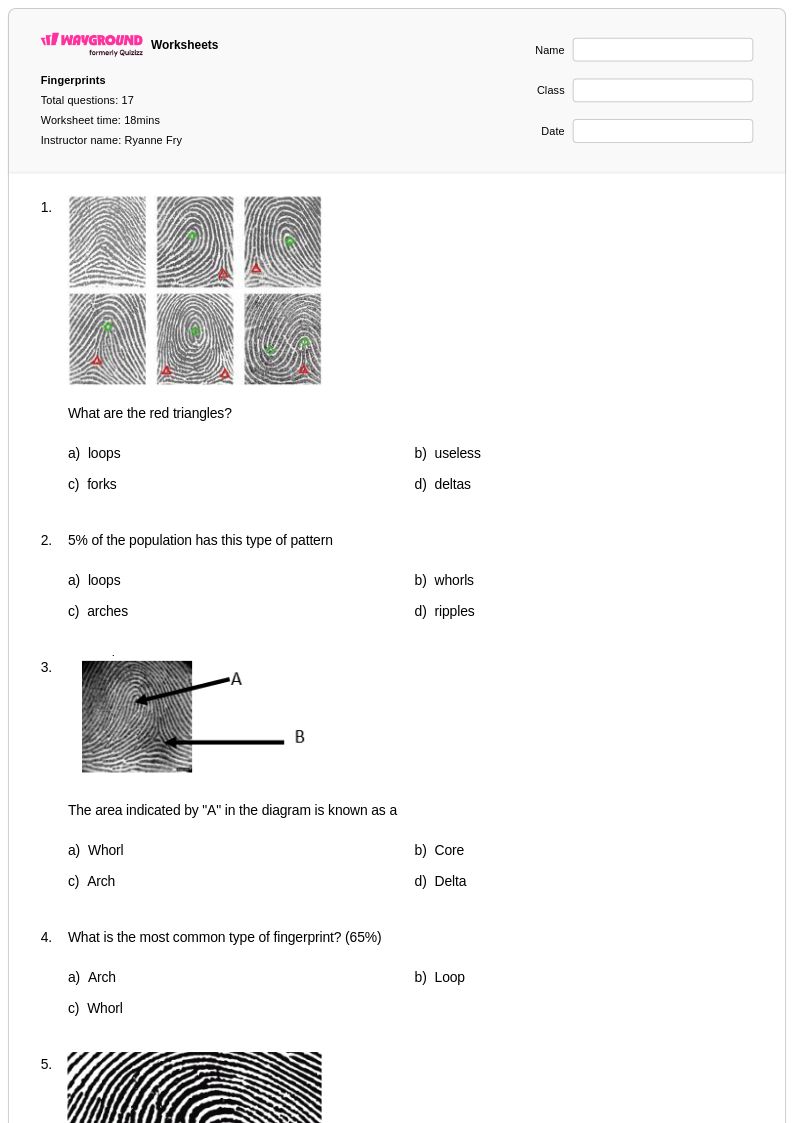
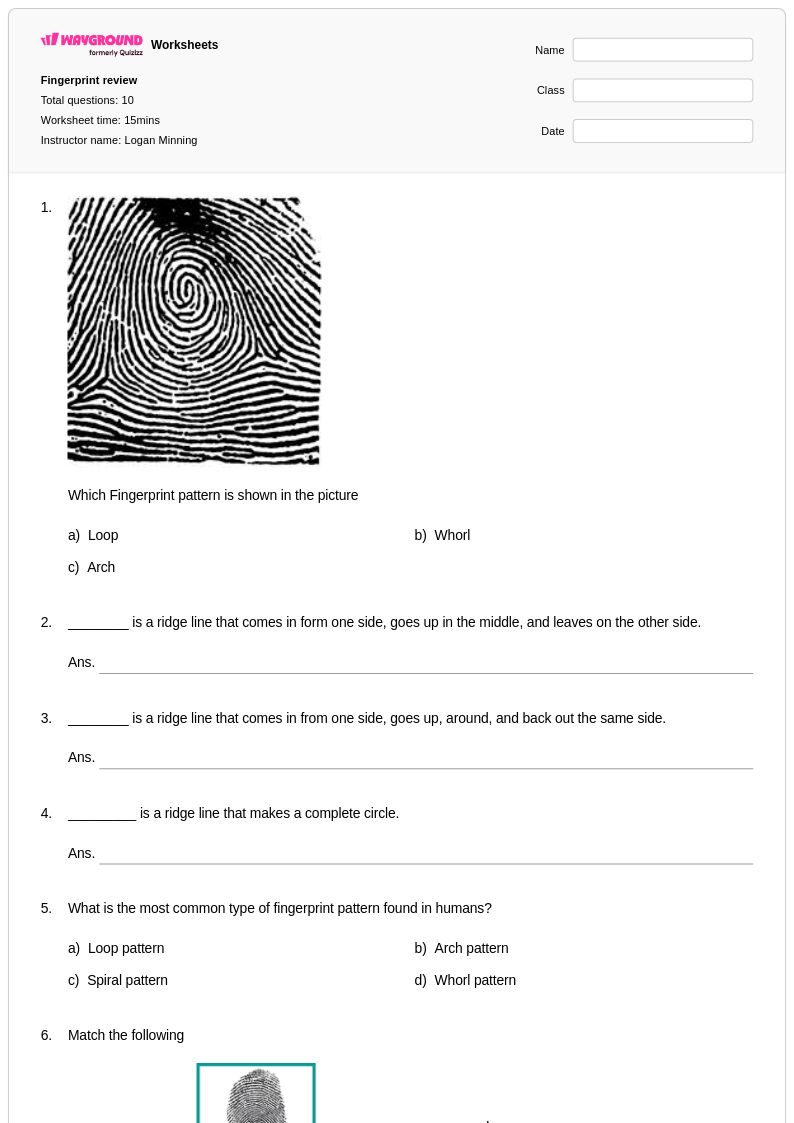
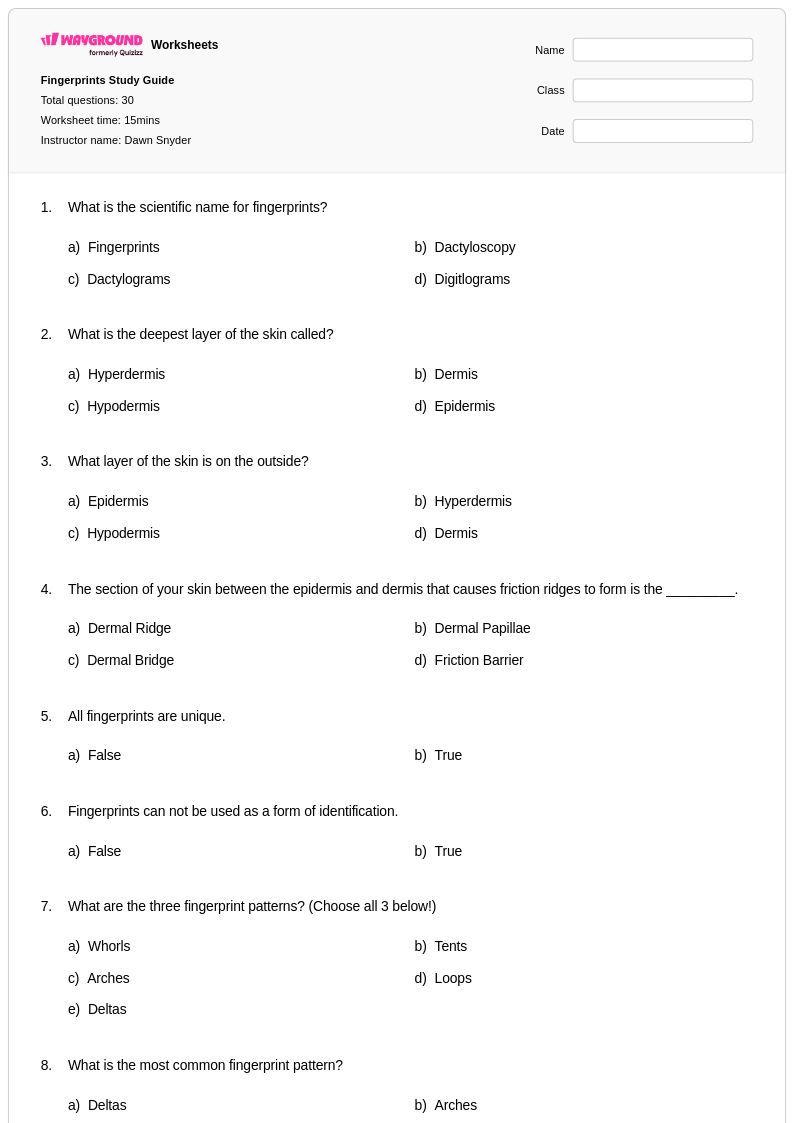
Fingerprints worksheets for Grade 11 biology students available through Wayground (formerly Quizizz) provide comprehensive exploration of dermatoglyphics, the scientific study of fingerprint patterns and their biological significance. These educational resources strengthen students' understanding of genetic inheritance patterns, anatomical structure of friction ridge skin, and the forensic applications of fingerprint analysis in criminal investigations. The worksheet collection includes detailed practice problems examining whorl, loop, and arch patterns, alongside answer key materials that guide students through the classification systems used by law enforcement agencies. Free printable resources cover the embryological development of fingerprint ridges, the role of environmental factors during fetal development, and statistical analysis of fingerprint characteristics across populations, ensuring students grasp both the biological foundations and practical applications of this unique human identification system.
Wayground (formerly Quizizz) supports biology educators with an extensive collection of teacher-created fingerprint resources drawn from millions of educational materials developed by classroom professionals worldwide. The platform's advanced search and filtering capabilities enable instructors to locate worksheets that align with specific curriculum standards while offering differentiation tools to accommodate diverse learning needs within Grade 11 classrooms. Teachers can access flexible customization options to modify existing materials or create targeted assignments for remediation and enrichment purposes, with all resources available in both printable pdf formats for traditional classroom use and digital formats for technology-integrated learning environments. This comprehensive approach to skill practice allows educators to seamlessly incorporate fingerprint analysis into broader units on genetics, human anatomy, or forensic science while providing students with varied opportunities to master complex biological concepts through hands-on investigation and critical thinking exercises.
FAQs
How do I teach fingerprint classification to students?
What hands-on activities help students practice fingerprint analysis?
What common mistakes do students make when classifying fingerprints?
How can fingerprint worksheets support a forensic science unit?
How do I use Wayground's fingerprint worksheets in my classroom?
How do I differentiate fingerprint activities for students with different ability levels?