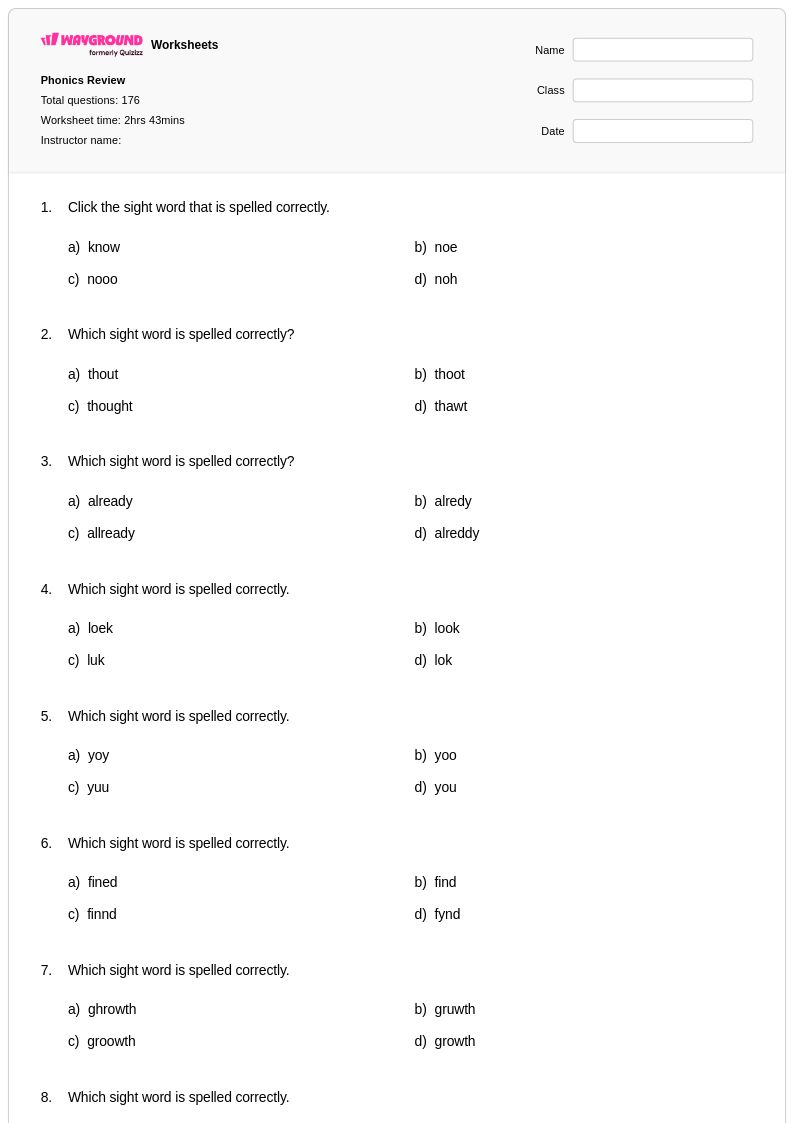
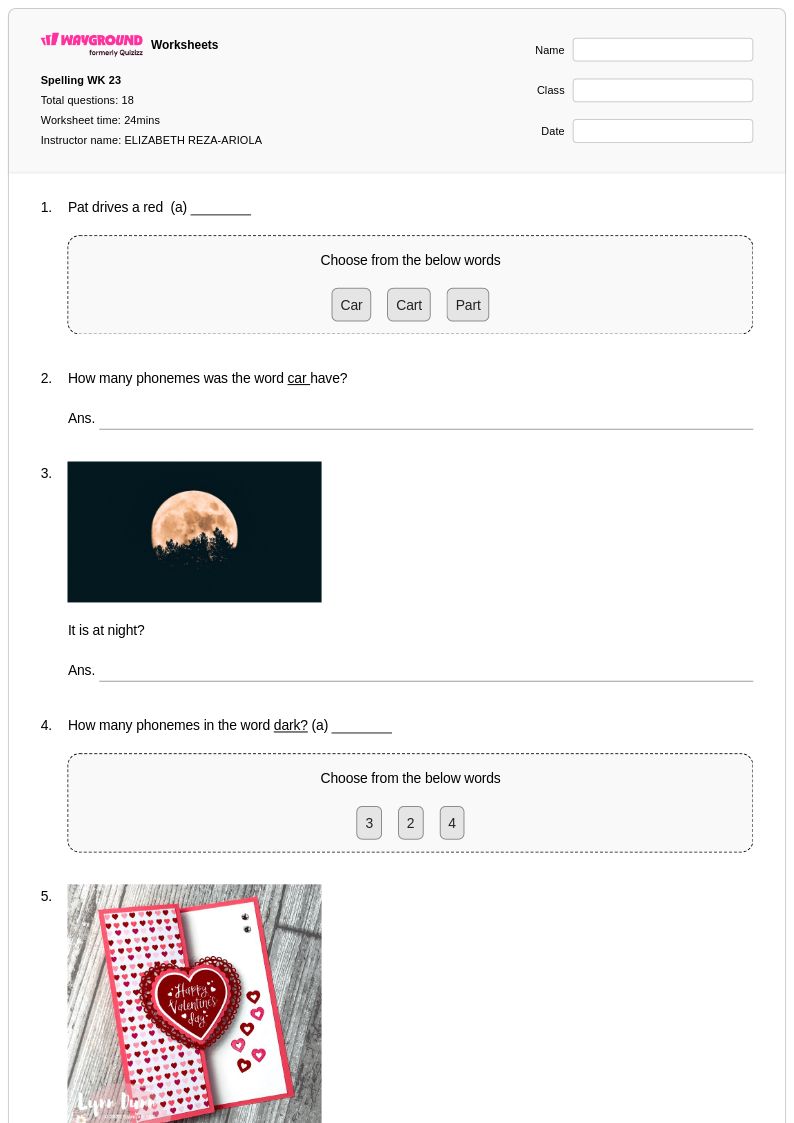
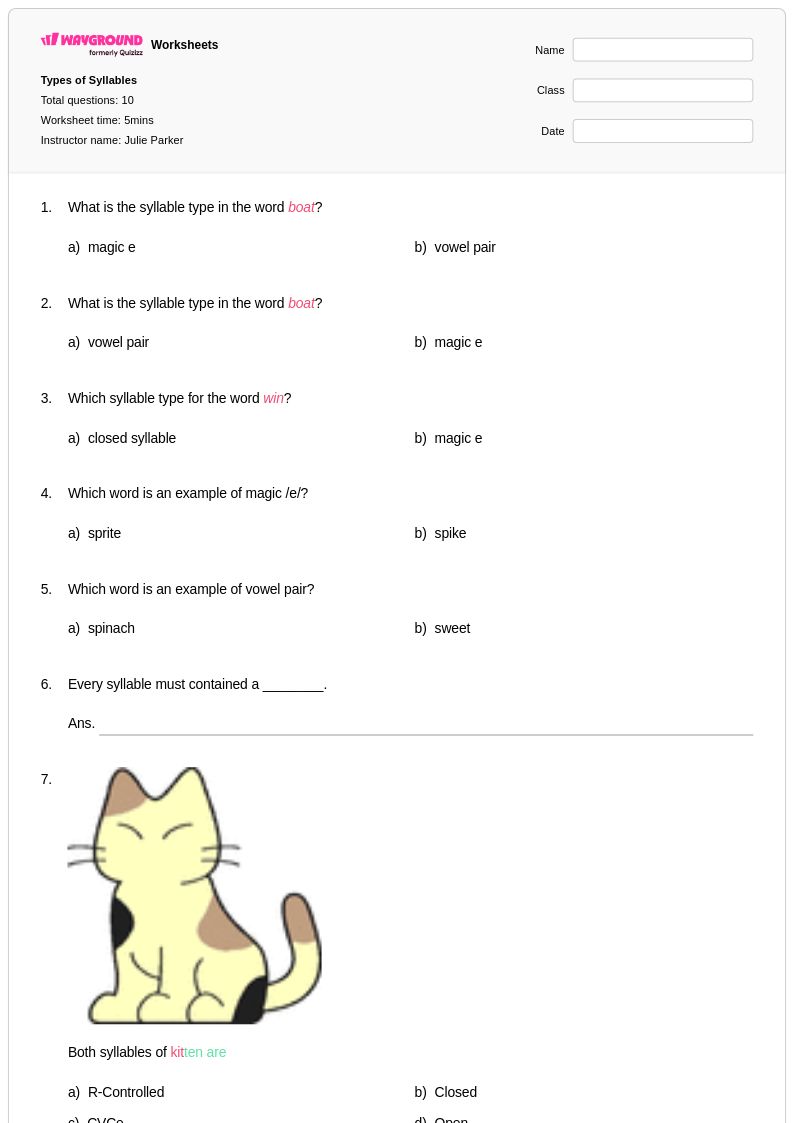
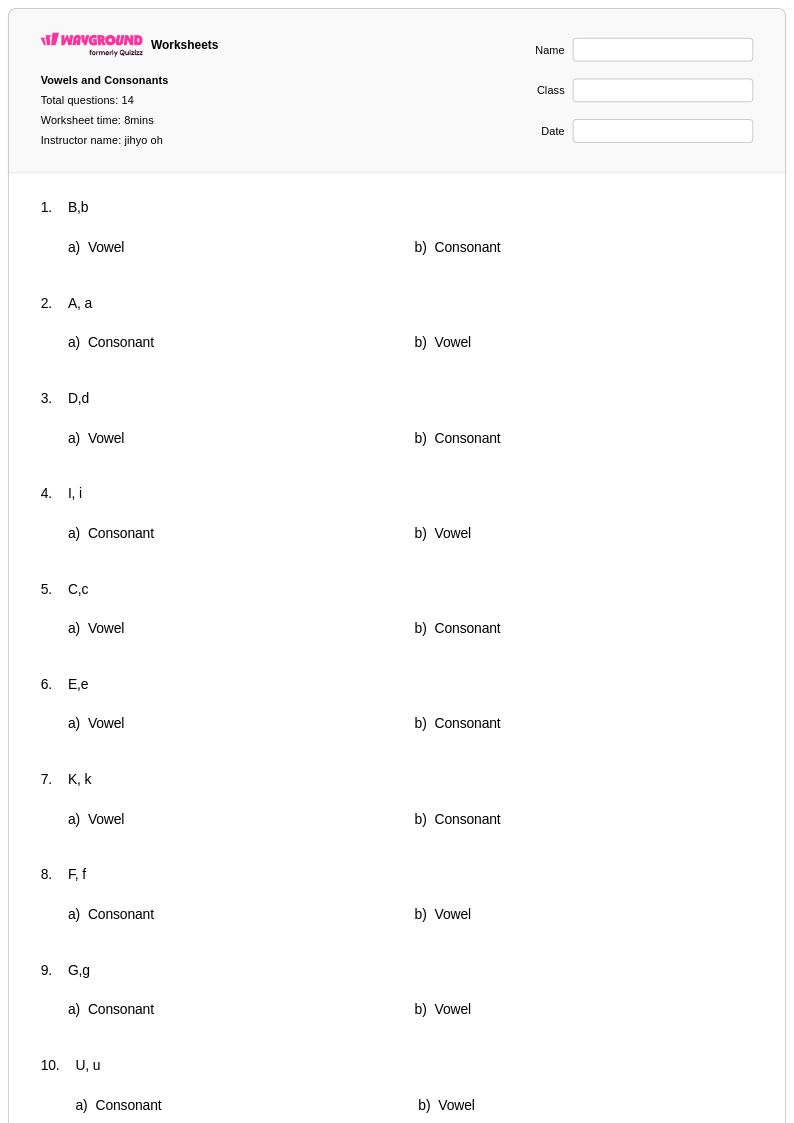
Free Printable Consonant -le Worksheets for Grade 2
Wayground's free Grade 2 consonant -le phonics worksheets provide engaging printables and practice problems with answer keys to help students master final syllable patterns and improve their reading skills.
Explore printable Consonant -le worksheets for Grade 2
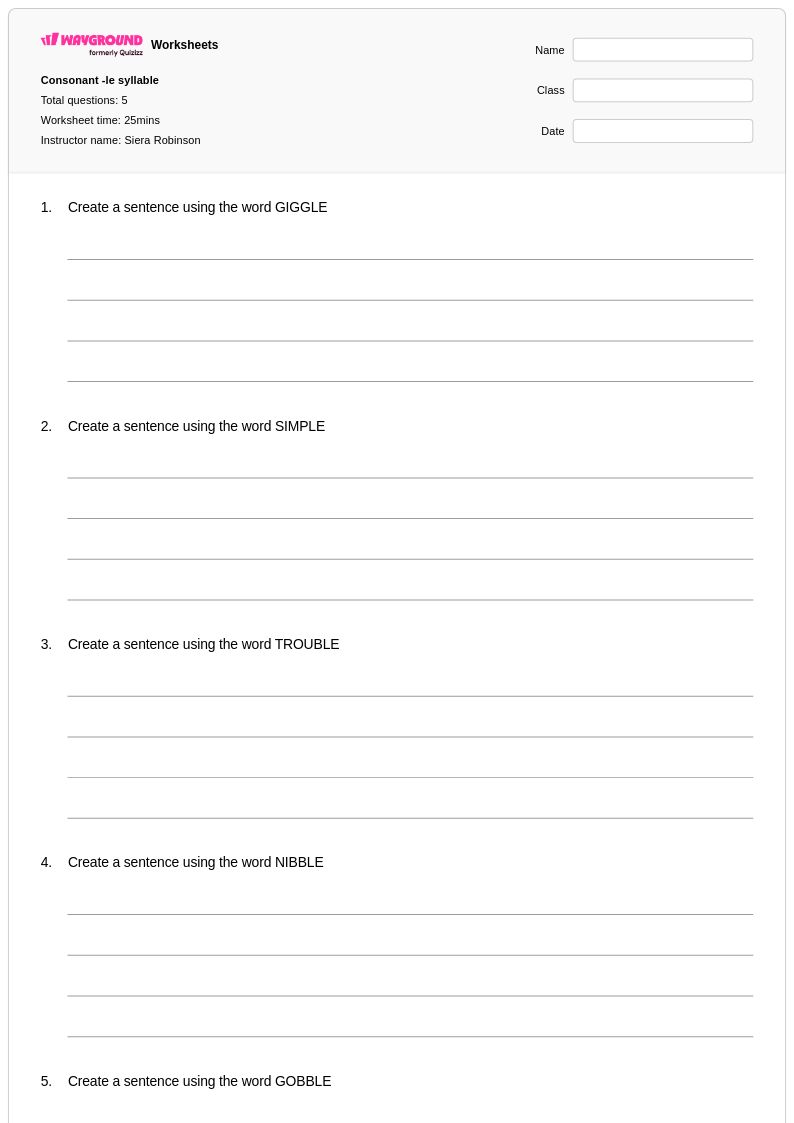
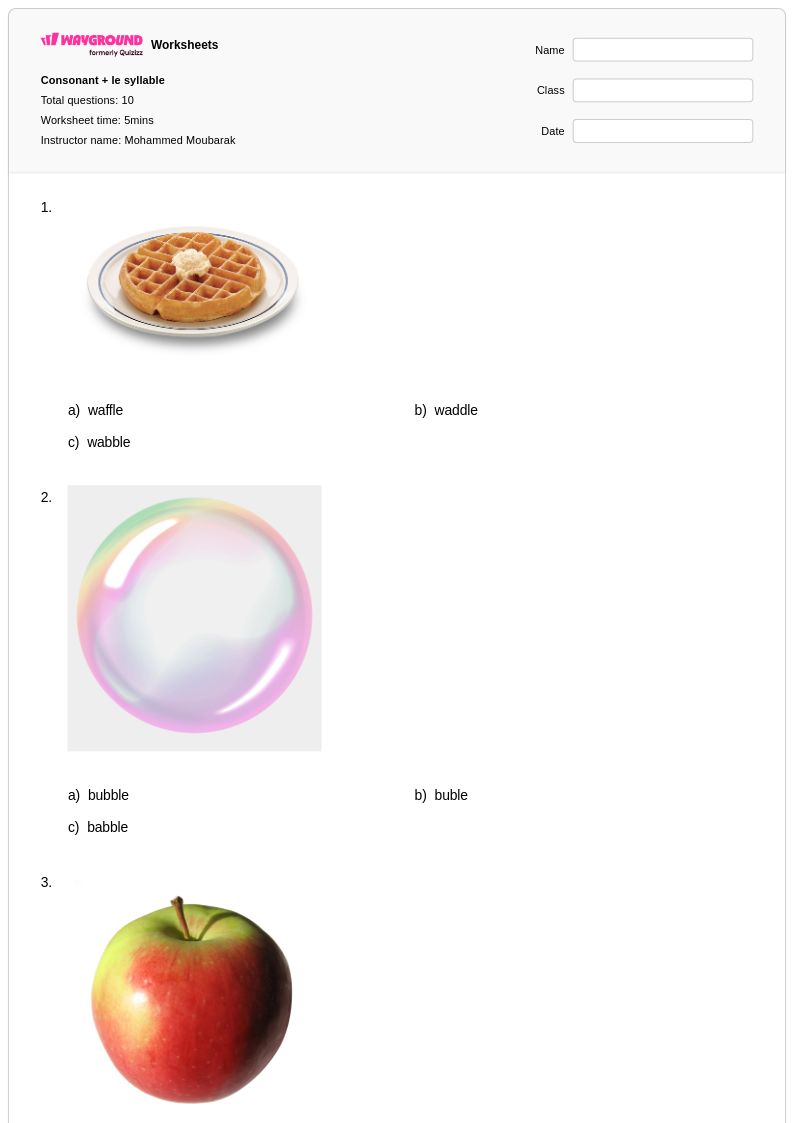
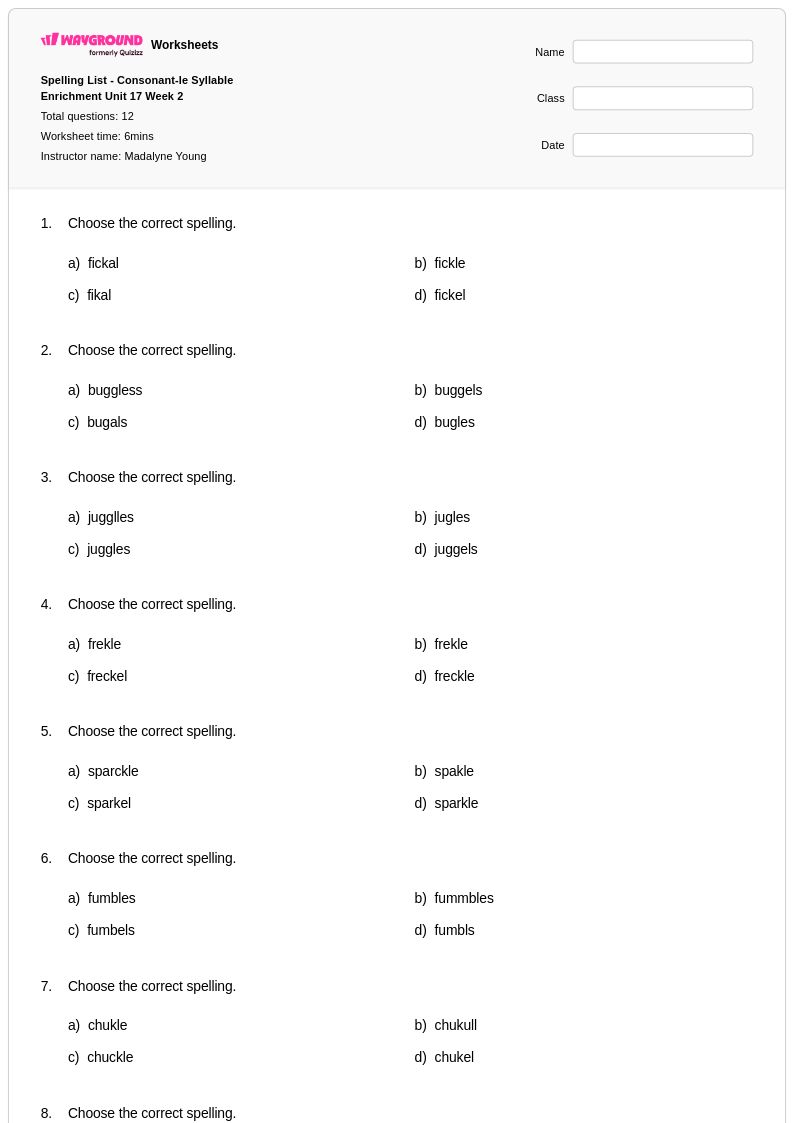
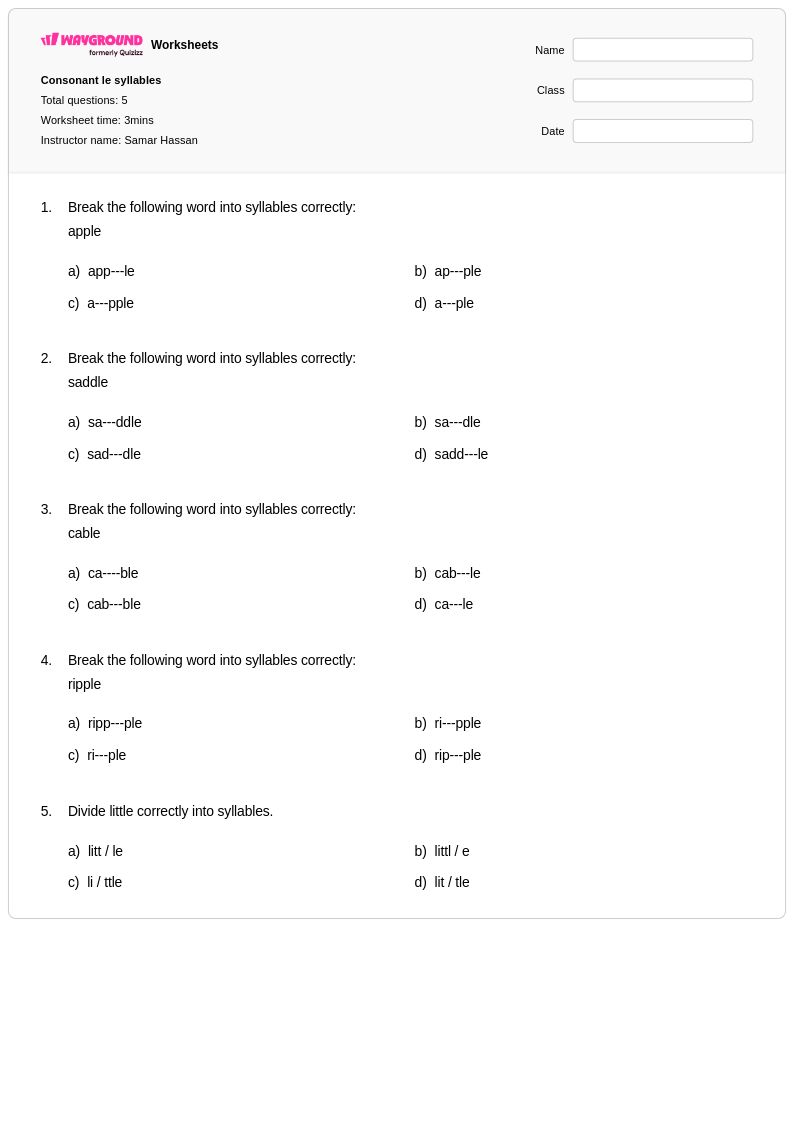
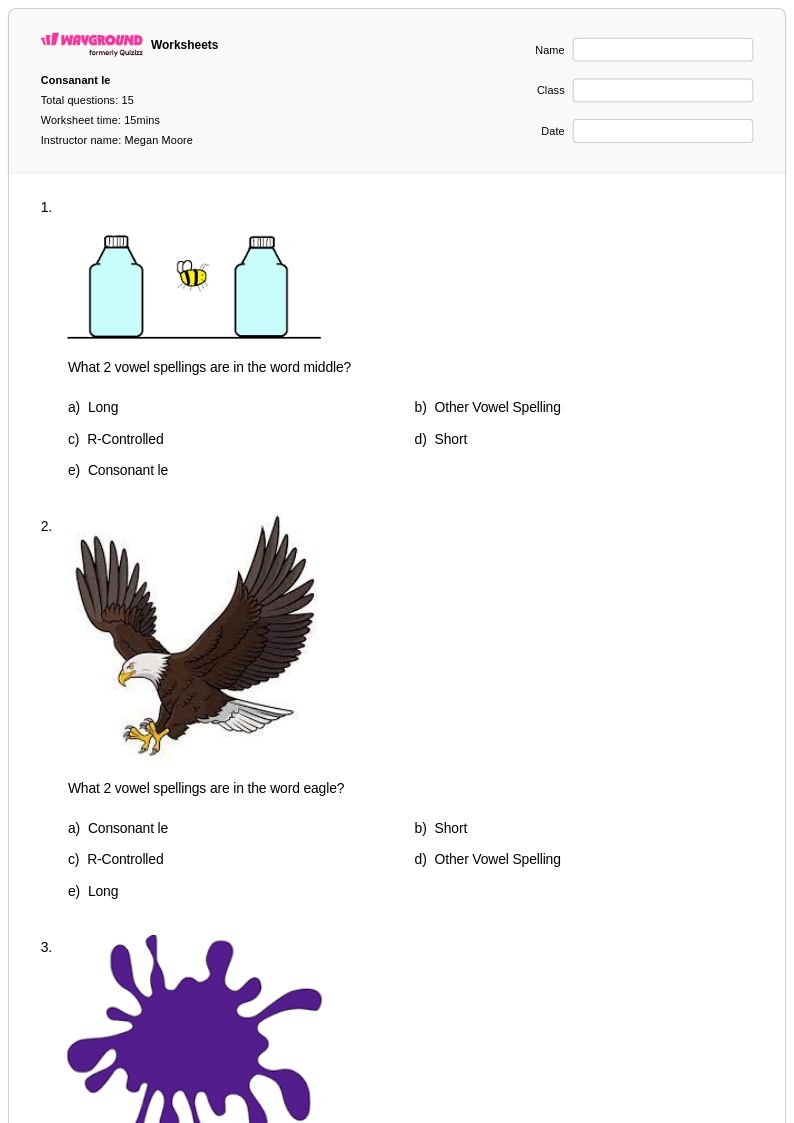
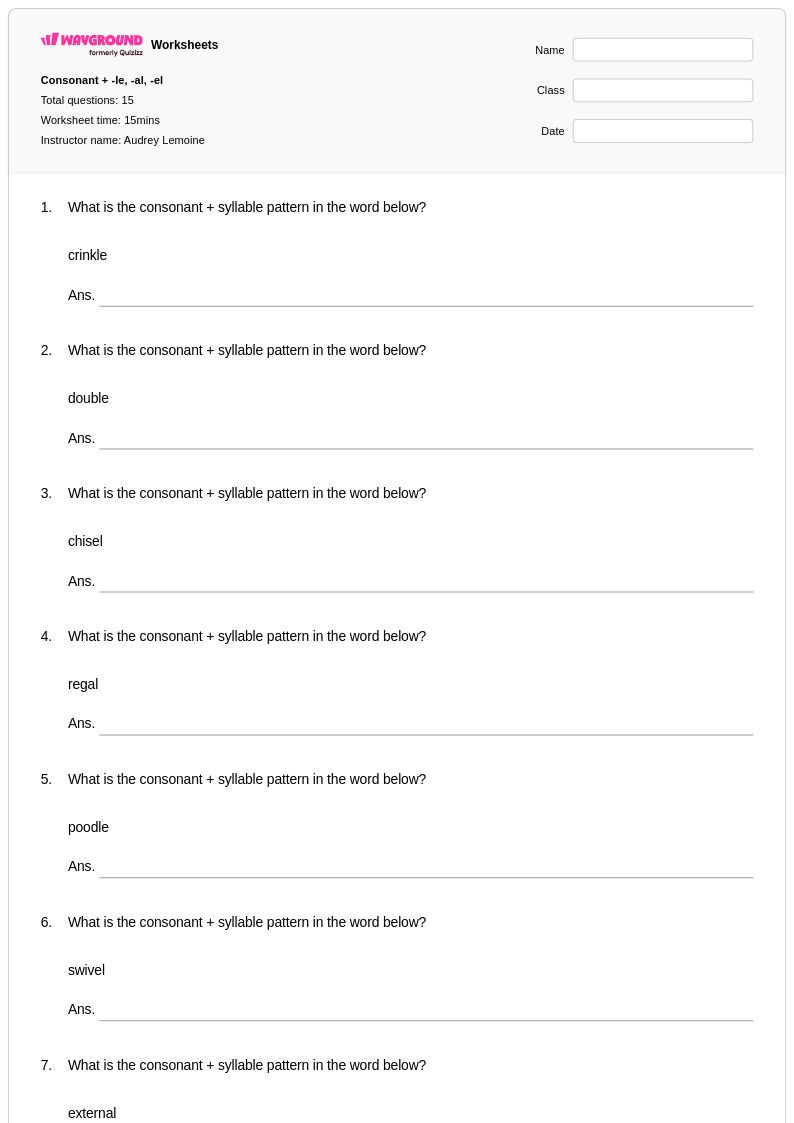
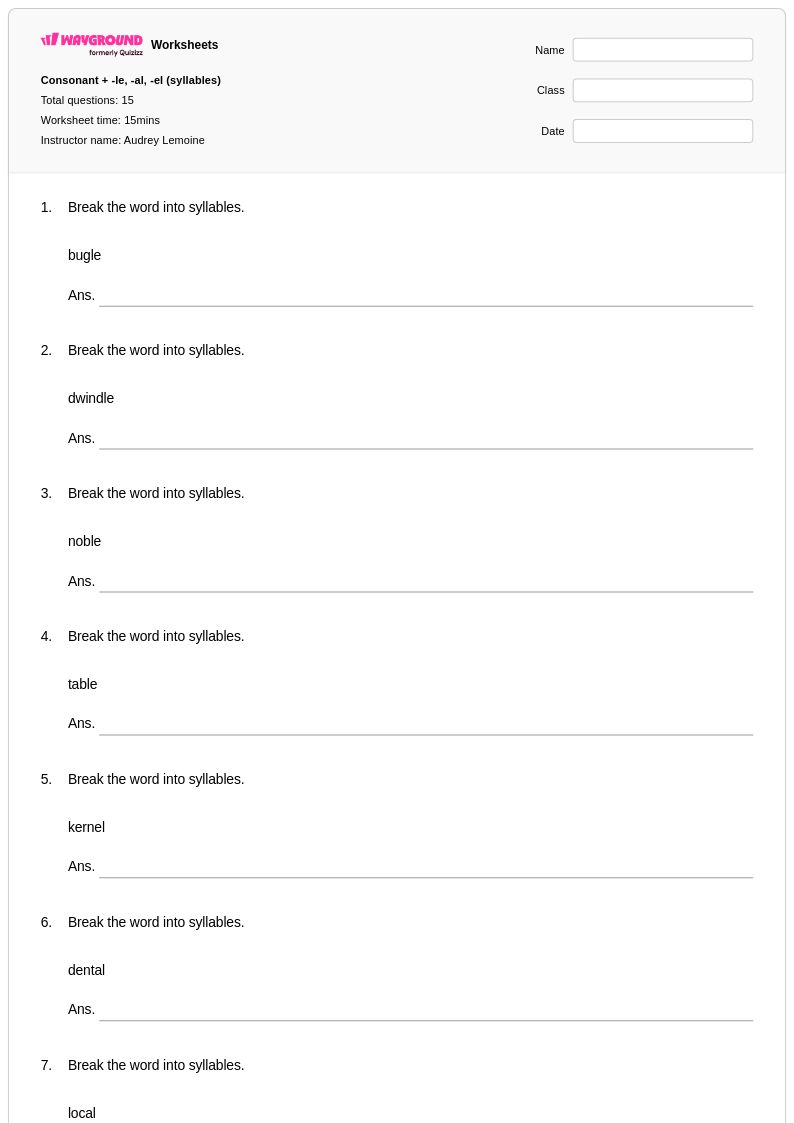
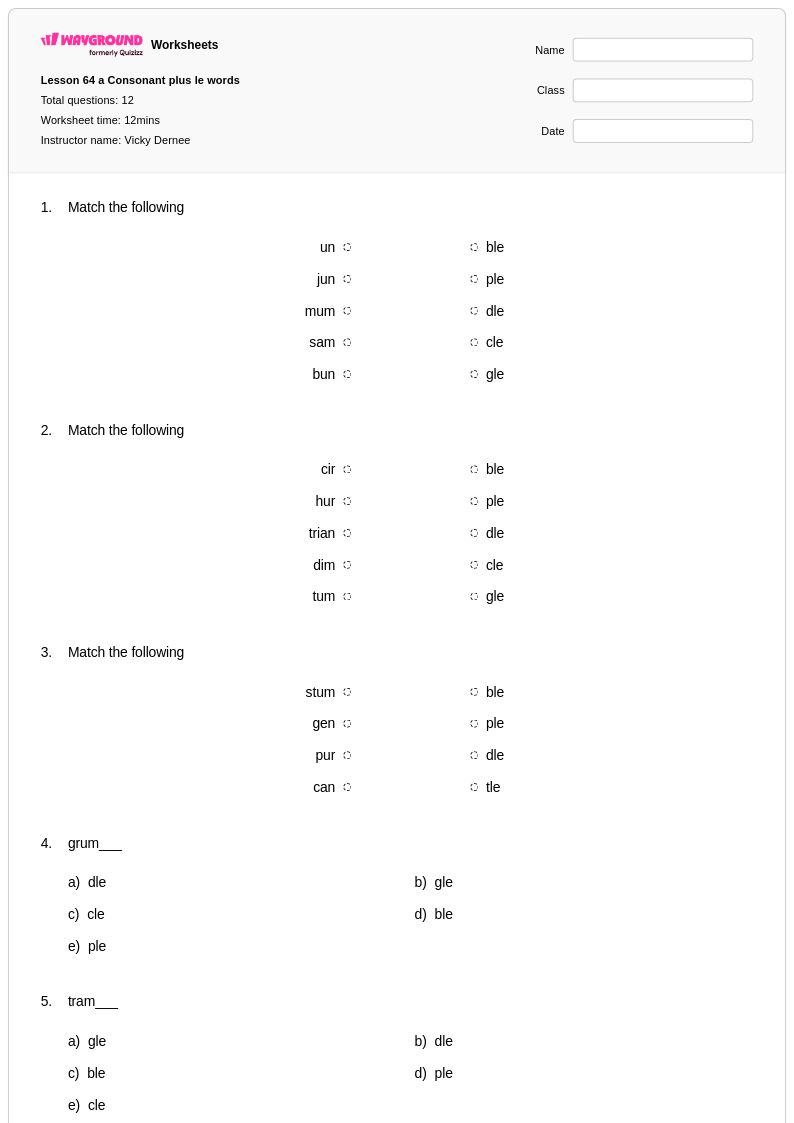
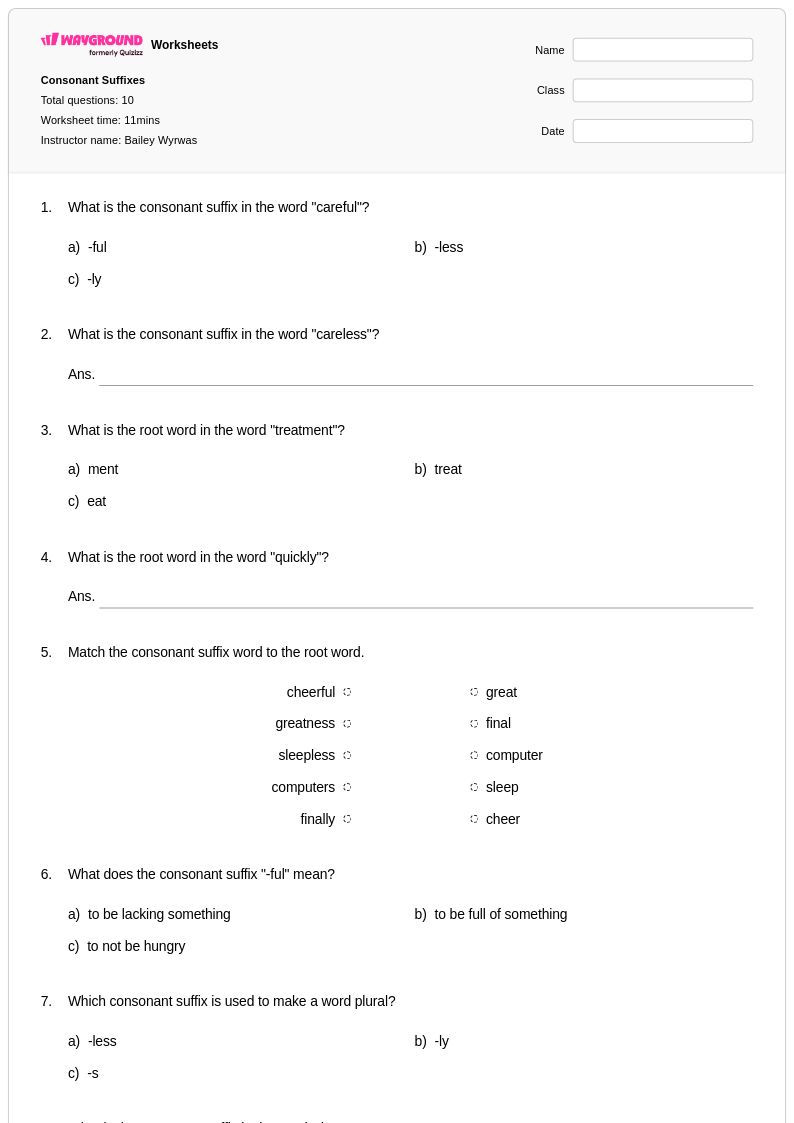
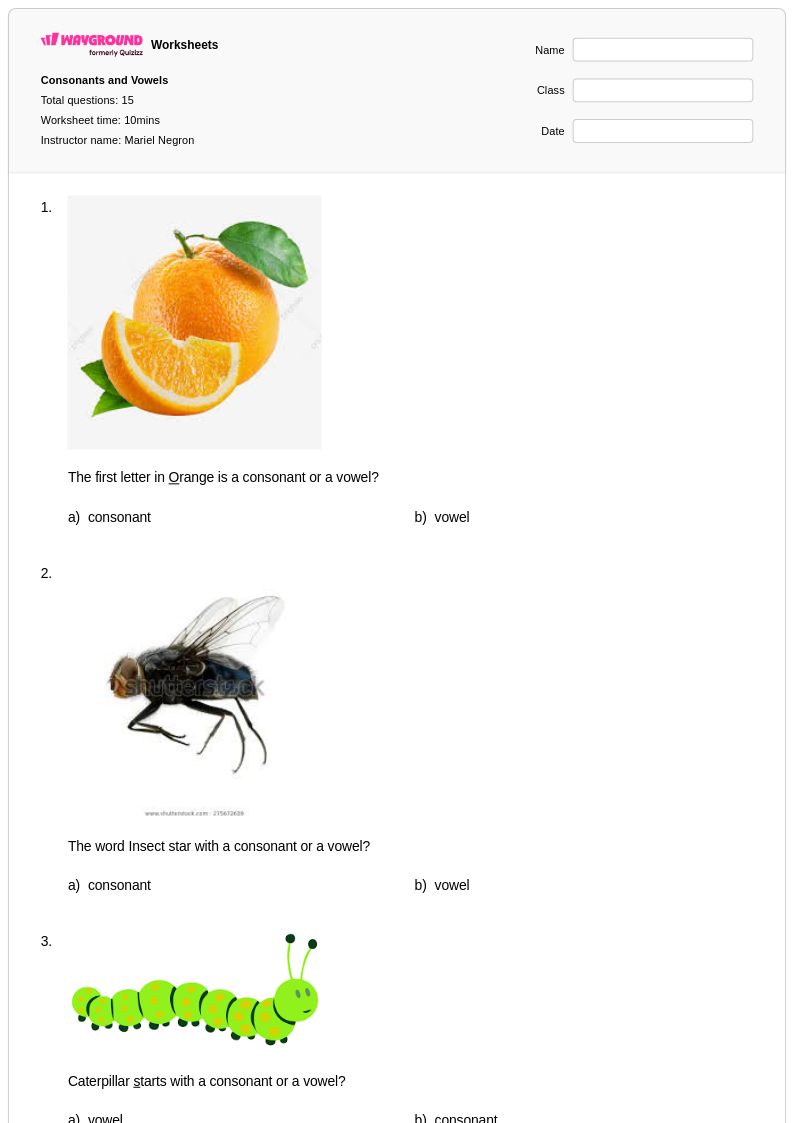
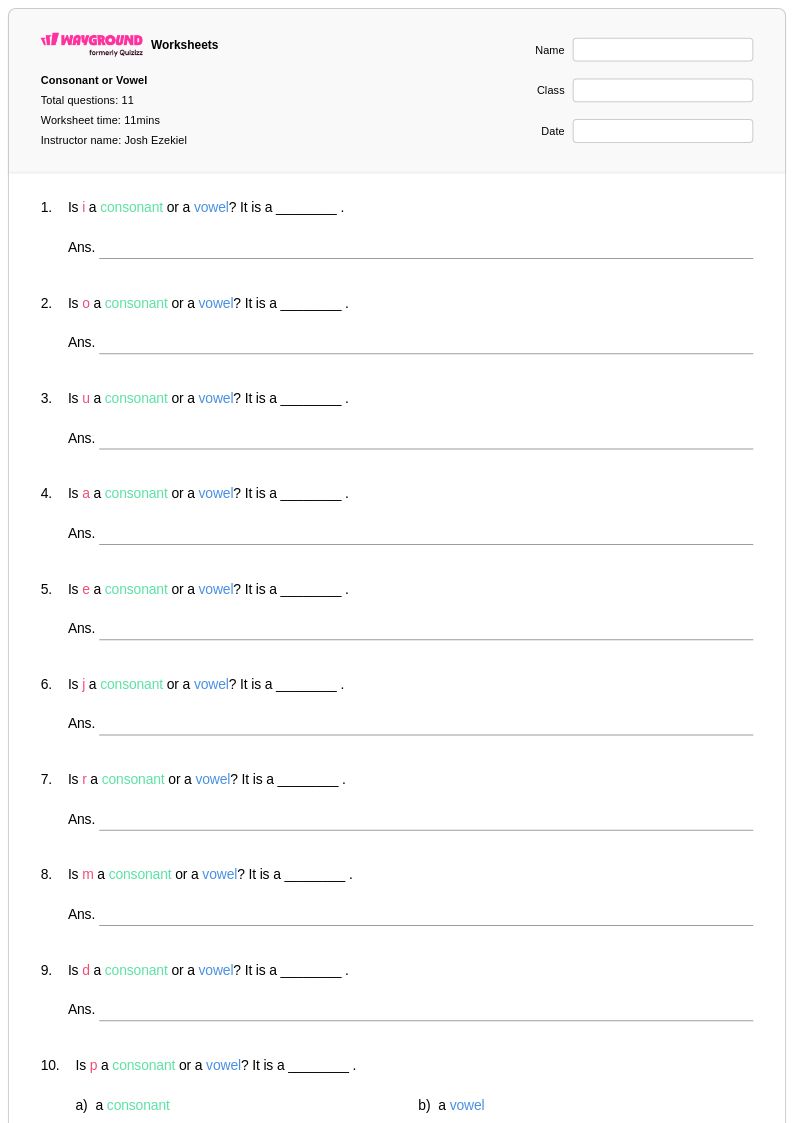
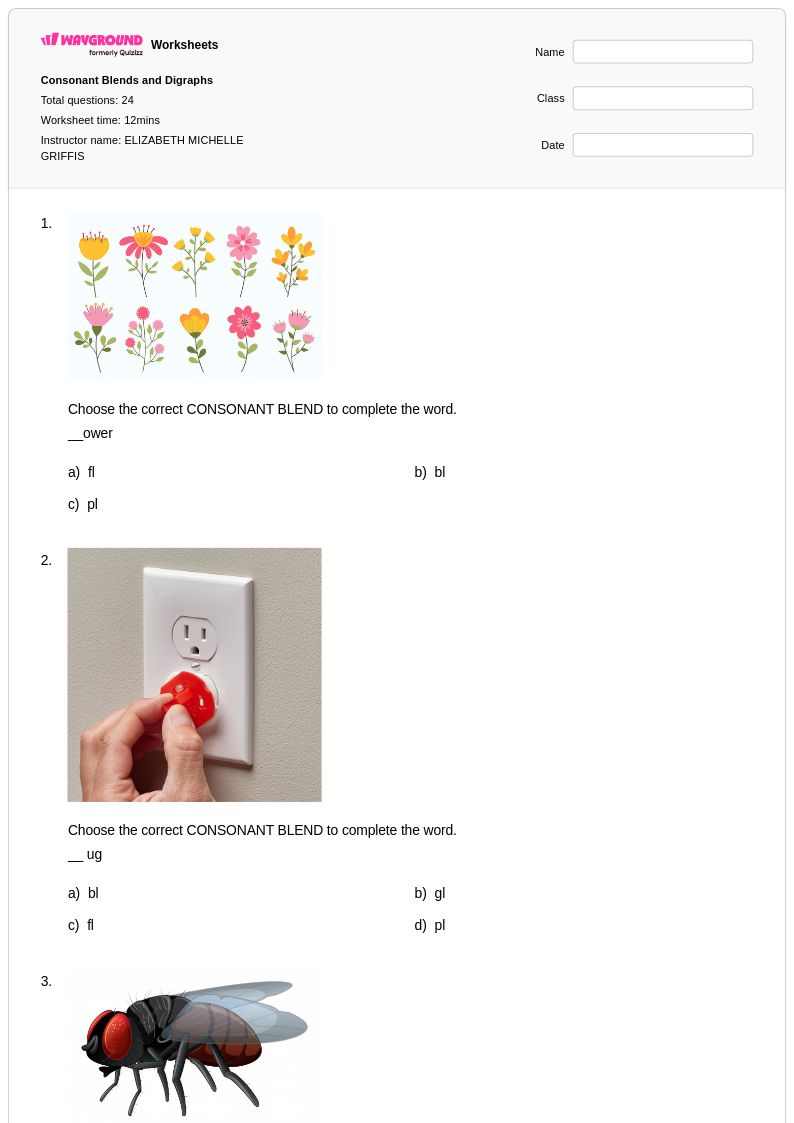
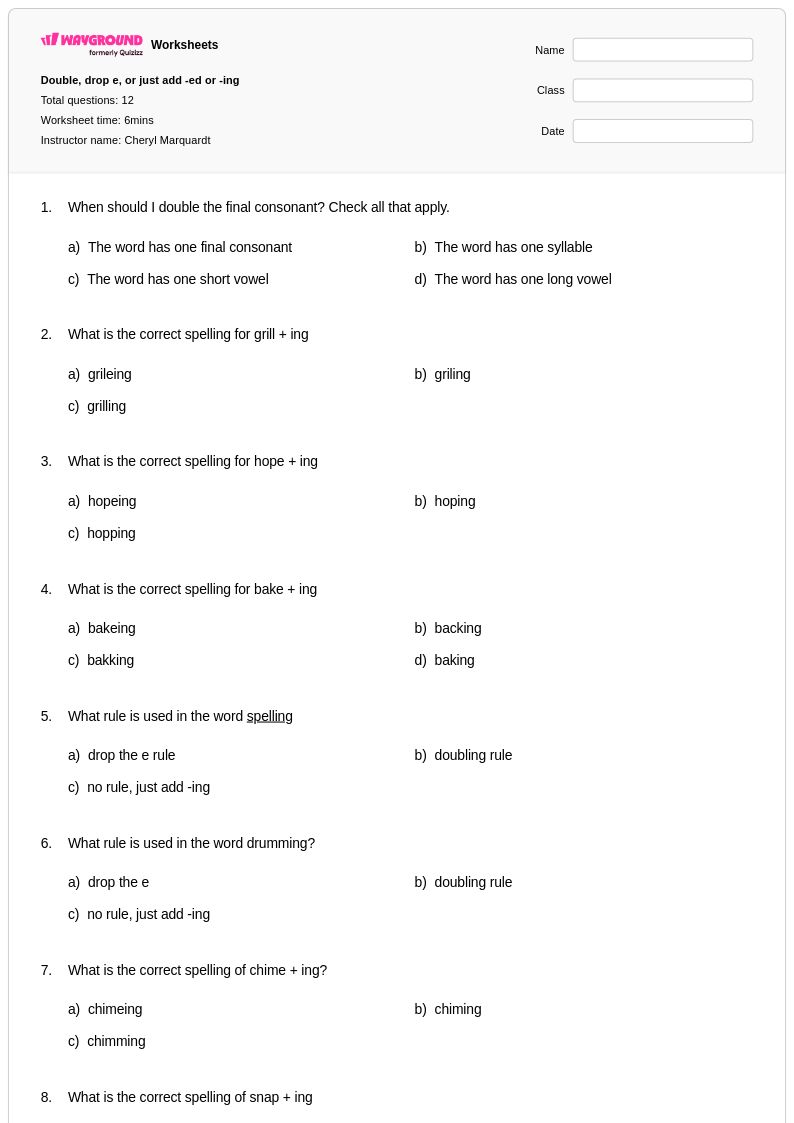
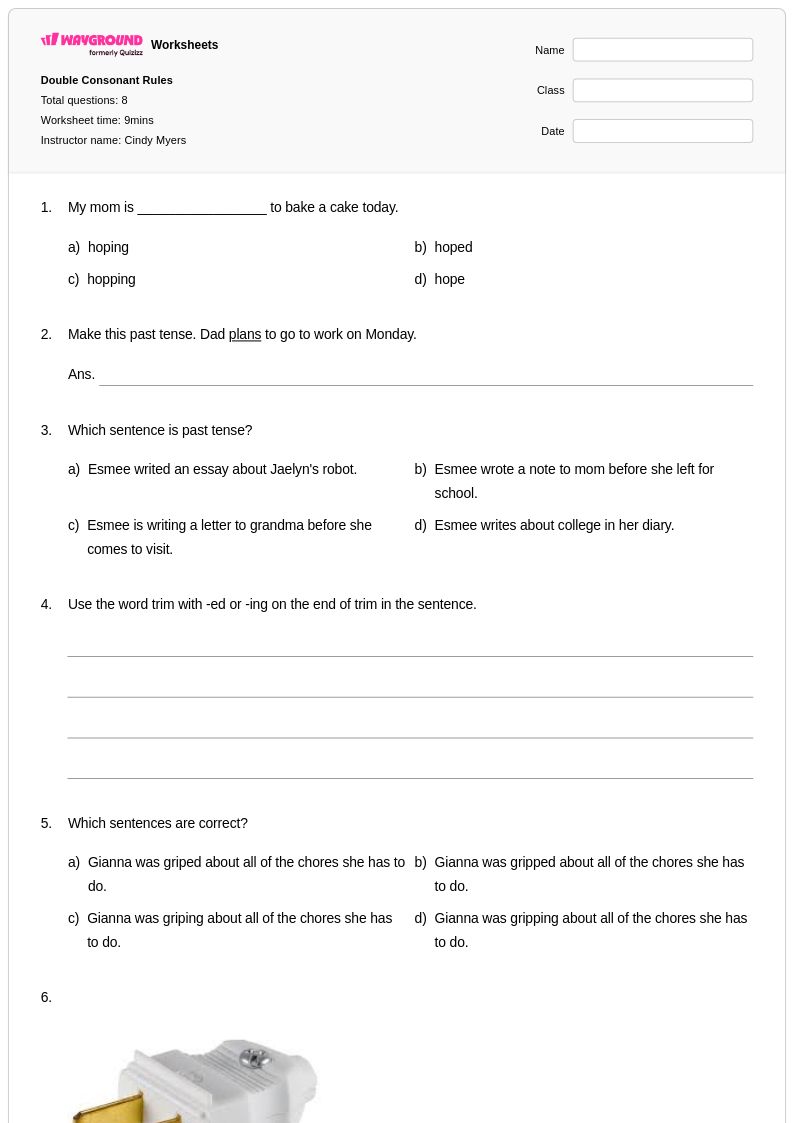
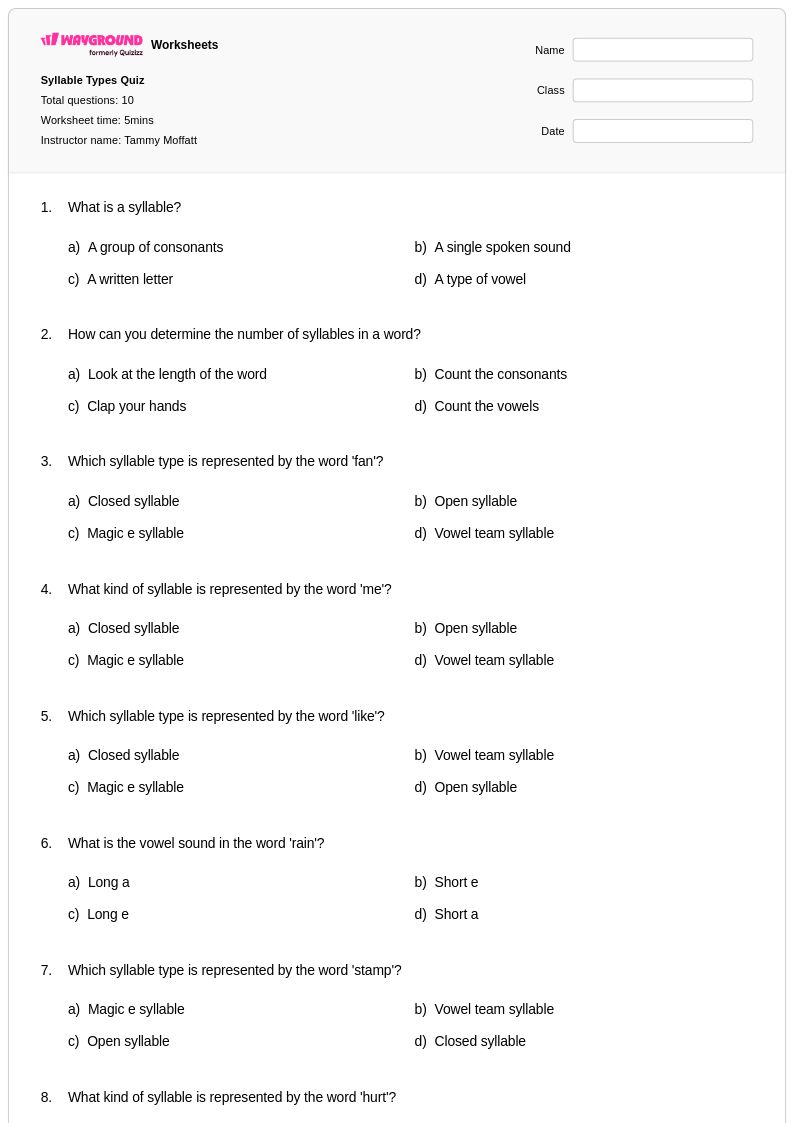
Consonant -le worksheets available through Wayground (formerly Quizizz) provide Grade 2 students with comprehensive practice in recognizing and decoding words that end with this common syllable pattern. These carefully designed printables focus on developing students' understanding of how consonants combine with the letters "le" to form stable ending sounds in multisyllabic words like "table," "simple," and "turtle." Each worksheet strengthens essential phonics skills by guiding young learners through systematic practice problems that build automaticity in reading consonant -le words, while corresponding answer keys allow teachers and parents to provide immediate feedback and support. These free resources emphasize both visual recognition and phonetic awareness, helping second graders transition from single-syllable decoding to more complex word structures through engaging pdf materials that can be used for independent practice, small group instruction, or homework assignments.
Wayground (formerly Quizizz) supports educators with an extensive collection of teacher-created consonant -le worksheets that align with Grade 2 phonics standards and accommodate diverse learning needs in the classroom. The platform's millions of educational resources include robust search and filtering capabilities that allow teachers to quickly locate materials suited to their students' specific skill levels, from introductory consonant -le recognition to advanced multisyllabic word analysis. These versatile tools support effective lesson planning through differentiation features that enable customization for remediation and enrichment activities, while the availability of both printable and digital formats ensures seamless integration into various instructional settings. Teachers can efficiently address individual student needs by selecting from worksheets that progress systematically through consonant -le patterns, providing targeted skill practice that builds confidence and fluency in second-grade phonics development.
FAQs
How do I teach consonant -le syllables to early readers?
Teach consonant -le as a stable syllable unit by explaining that the final 'e' is silent and the consonant before it pairs with 'le' to form a closed ending syllable, as in 'ta-ble' or 'puz-zle'. Introduce common patterns one at a time — starting with -ble and -tle before moving to less frequent endings like -zle — and use syllable-splitting practice to help students isolate and blend each part. Connecting the pattern to words students already know builds recognition speed and supports fluent decoding.
What are the most common consonant -le patterns students need to learn?
The most frequently encountered consonant -le patterns are -ble (table, fable), -dle (candle, middle), -gle (jungle, eagle), -kle (sparkle, tickle), -ple (simple, purple), -tle (bottle, turtle), and -zle (puzzle, drizzle). Students who can reliably recognize and decode all seven of these endings have a strong foundation for reading multi-syllabic words. Systematic exposure to each pattern, rather than treating them as a single group, leads to more durable learning.
What practice activities help students master consonant -le words?
Effective practice for consonant -le includes word sorts by ending pattern, sentence completion tasks that require students to select or produce the correct word, and reading short passages where the target pattern appears in context. These varied activity types move students from isolated recognition toward applying the pattern during authentic reading, which is where the skill becomes functional. Mixing activities across a week of practice — rather than repeating the same format — strengthens retention.
What mistakes do students commonly make with consonant -le words?
The most common error is treating the final 'e' as a vowel-consonant-e (silent e) pattern and attempting to lengthen the preceding vowel — for example, reading 'table' as 'taybel' with a long vowel in the second syllable. Students also frequently misdivide syllables, either keeping the consonant with the first syllable or failing to recognize the -le unit altogether. Explicitly teaching that the consonant always belongs with the 'le' ending, and practicing syllable division with two-syllable words, directly addresses both error types.
How can I use consonant -le worksheets in my classroom?
Consonant -le worksheets on Wayground are available as printable PDFs for whole-class or small-group instruction and in digital formats that work in technology-integrated settings, including the option to host them as a quiz on Wayground. Teachers can use the printable versions for guided reading groups or independent seat work, while the digital format supports homework assignments or intervention sessions on devices. Each worksheet includes a complete answer key, making it straightforward to provide fast, accurate feedback.
How do I support struggling readers who can't decode consonant -le words?
Struggling readers often need explicit syllable-division instruction before they can apply the consonant -le pattern independently — start by having students physically mark the syllable break before the -le ending in written words. Reducing the number of answer choices on practice activities can lower cognitive load while students build confidence with the pattern. On Wayground, teachers can apply accommodations such as reduced answer choices and read-aloud support to individual students, allowing targeted scaffolding without disrupting the rest of the class.