
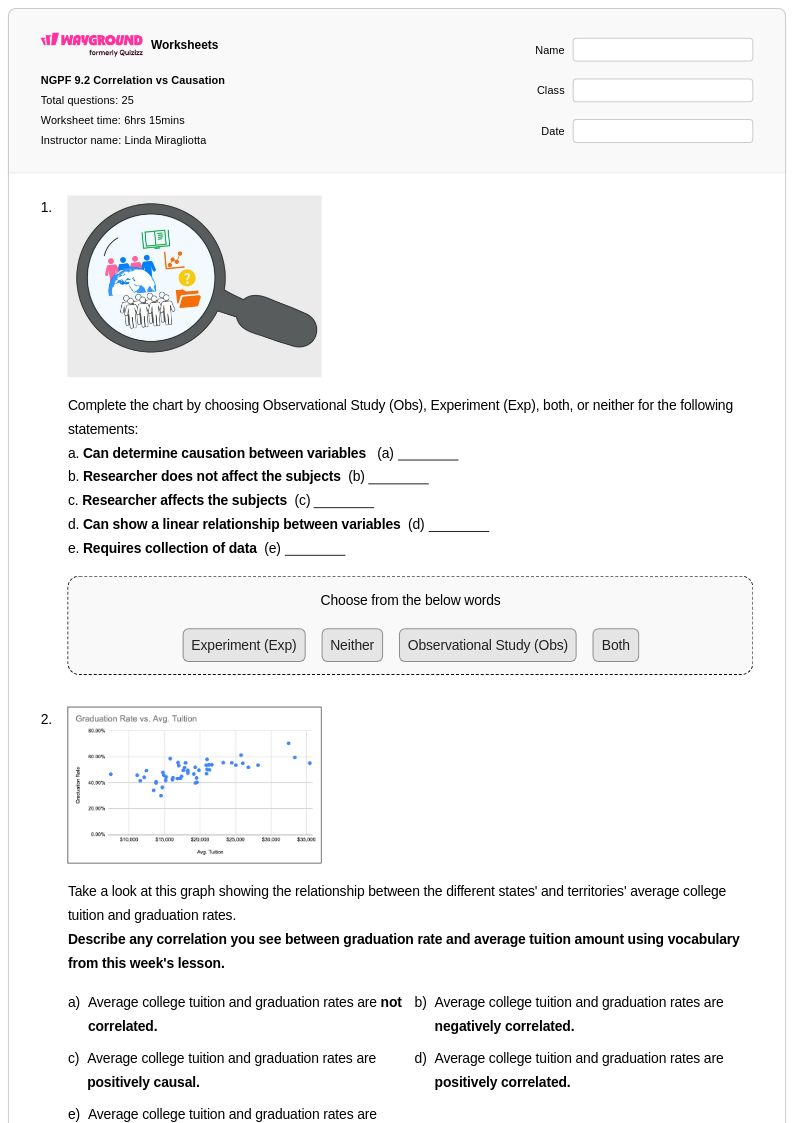
25 Q
9th - 12th
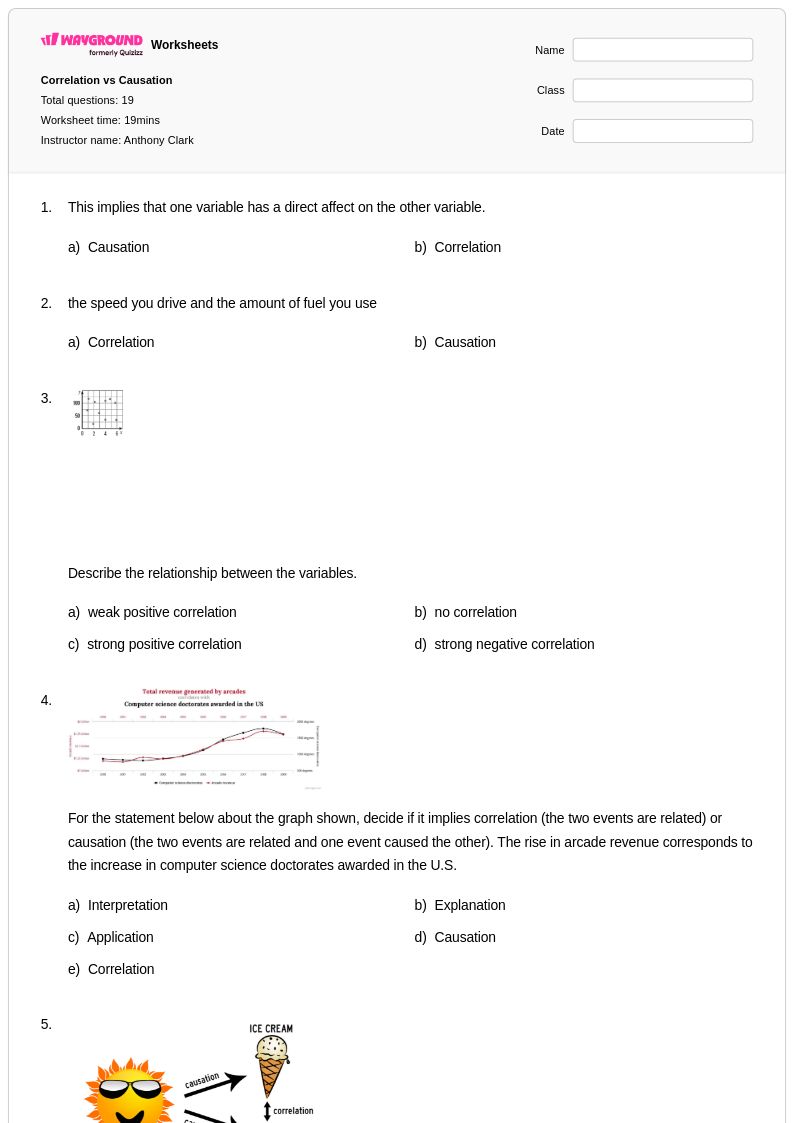
19 Q
9th - Uni
16 Q
9th
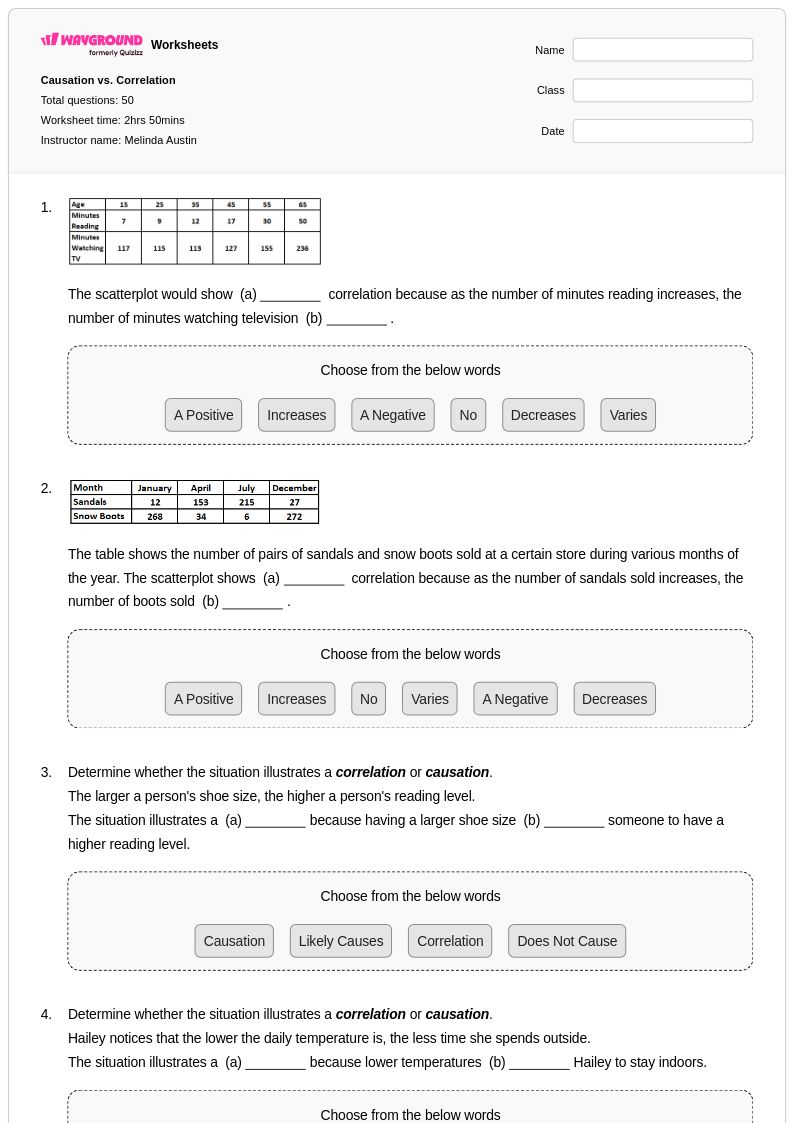
50 Q
9th - 12th
19 Q
9th - Uni
10 Q
8th
20 Q
9th
13 Q
9th - Uni
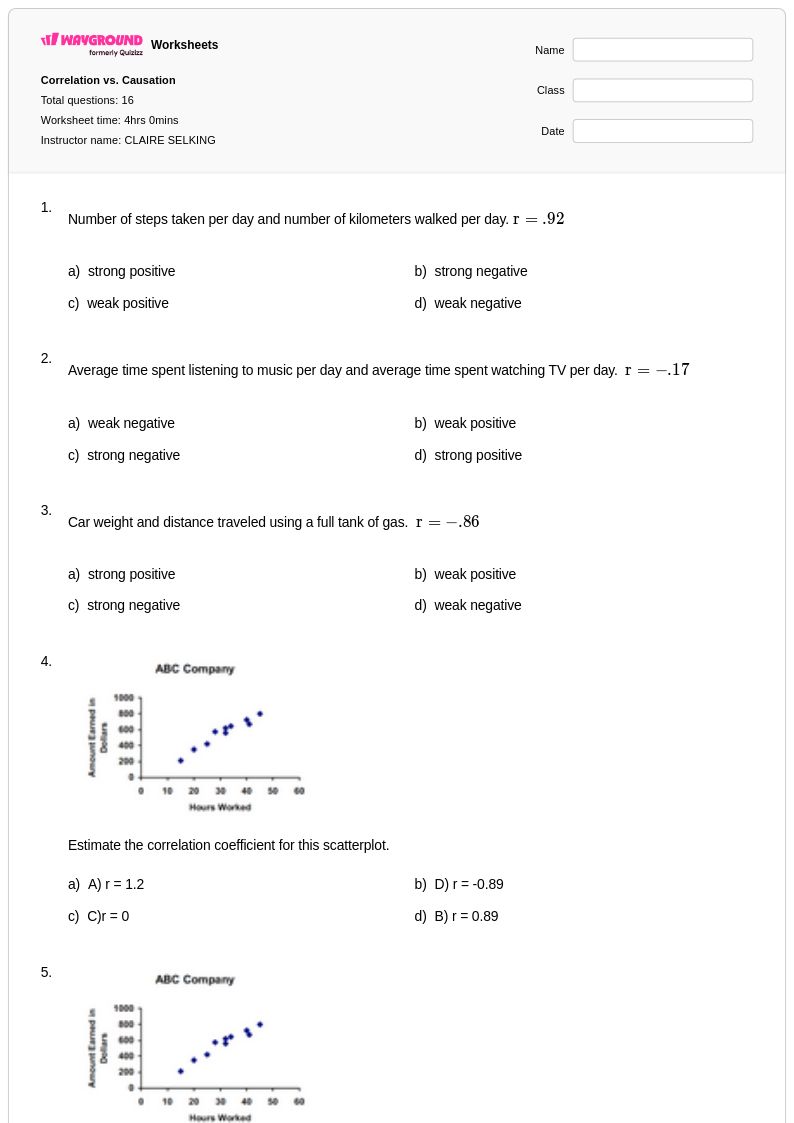
16 Q
9th
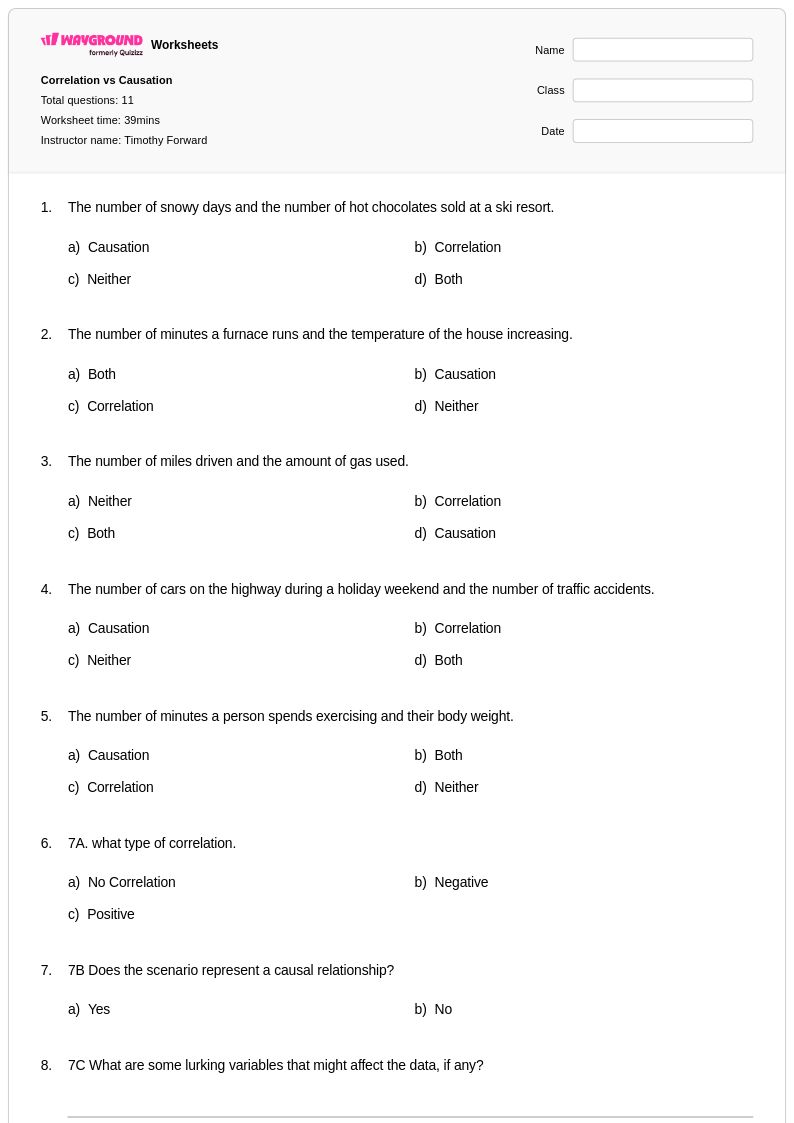
11 Q
9th
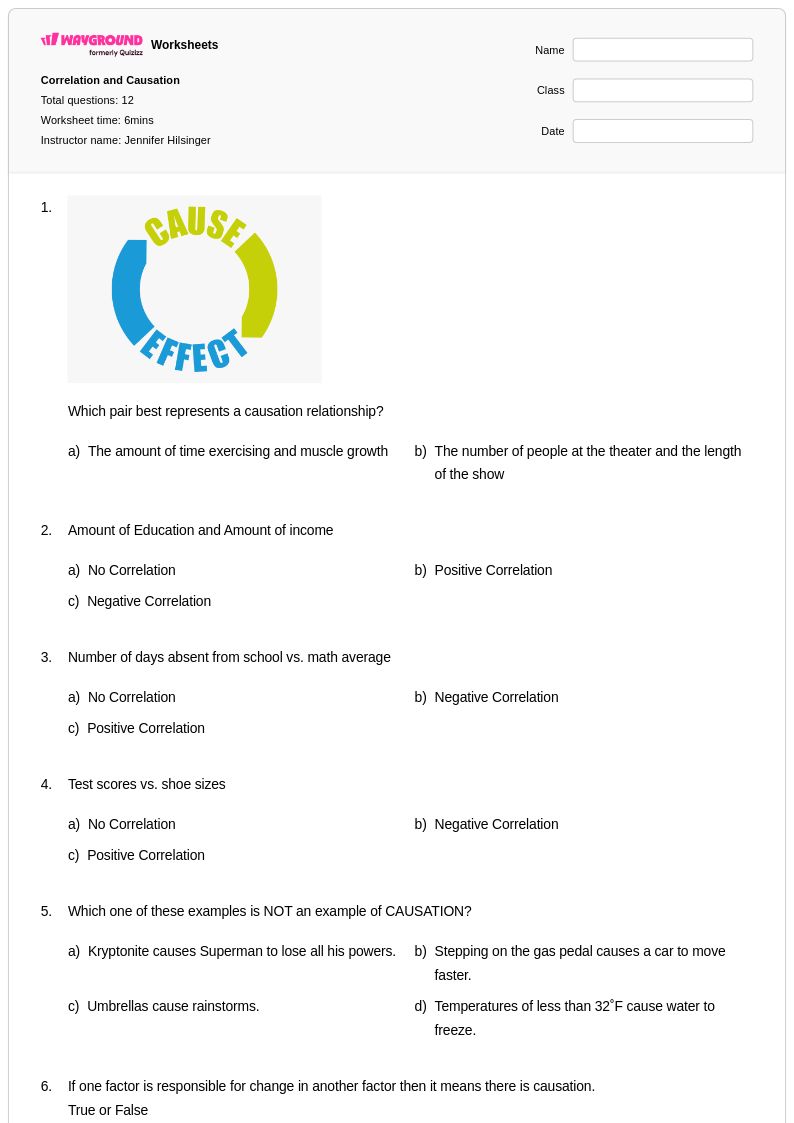
12 Q
9th
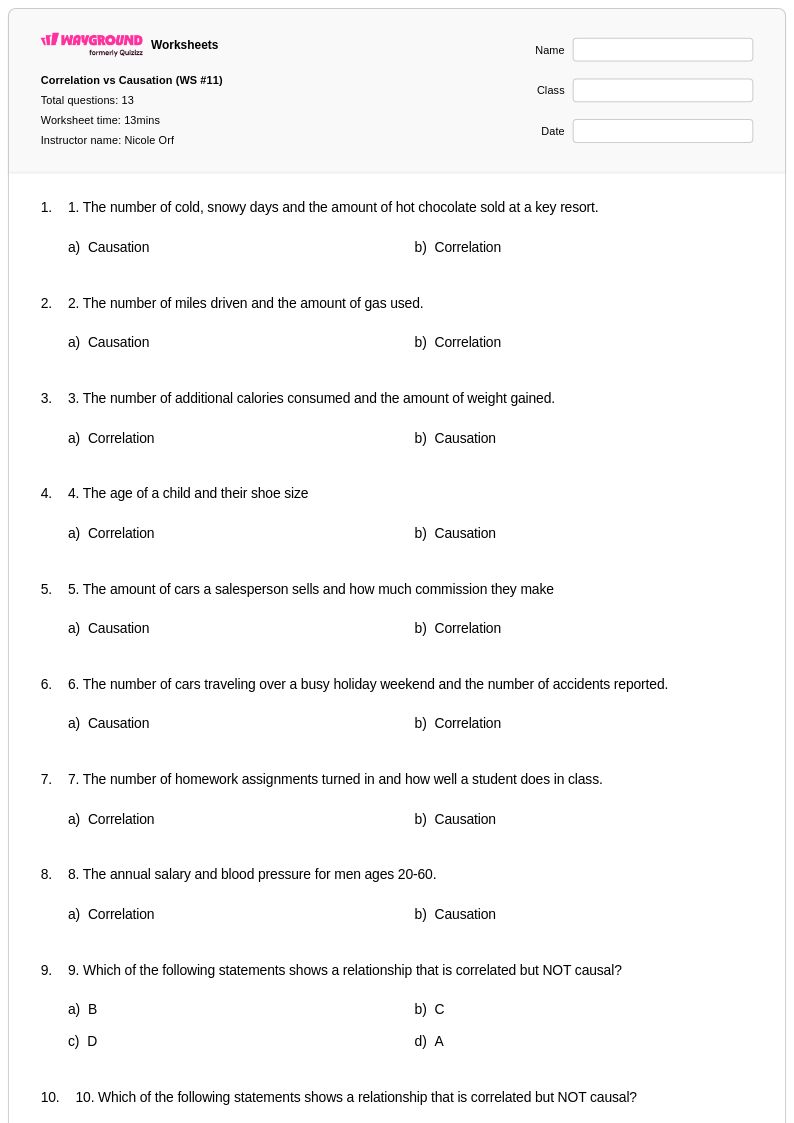
13 Q
9th
20 Q
9th - Uni
10 Q
8th - 9th
5 Q
9th
12 Q
9th
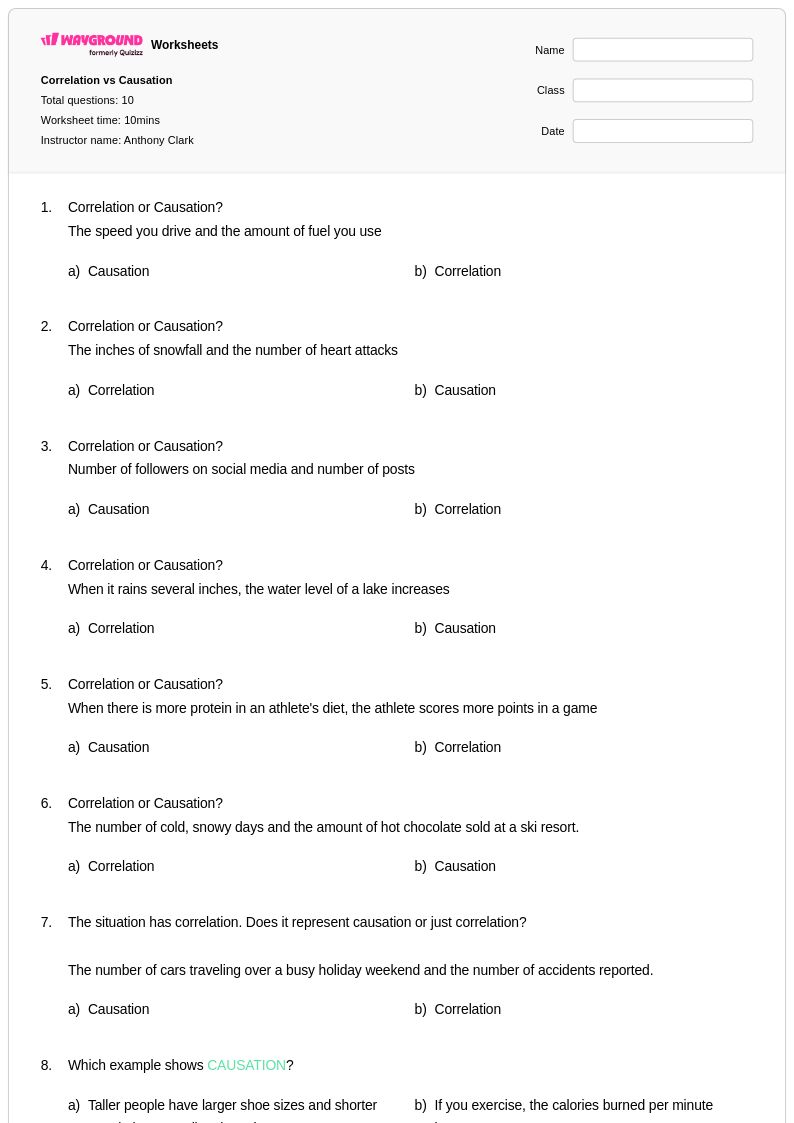
10 Q
9th - Uni
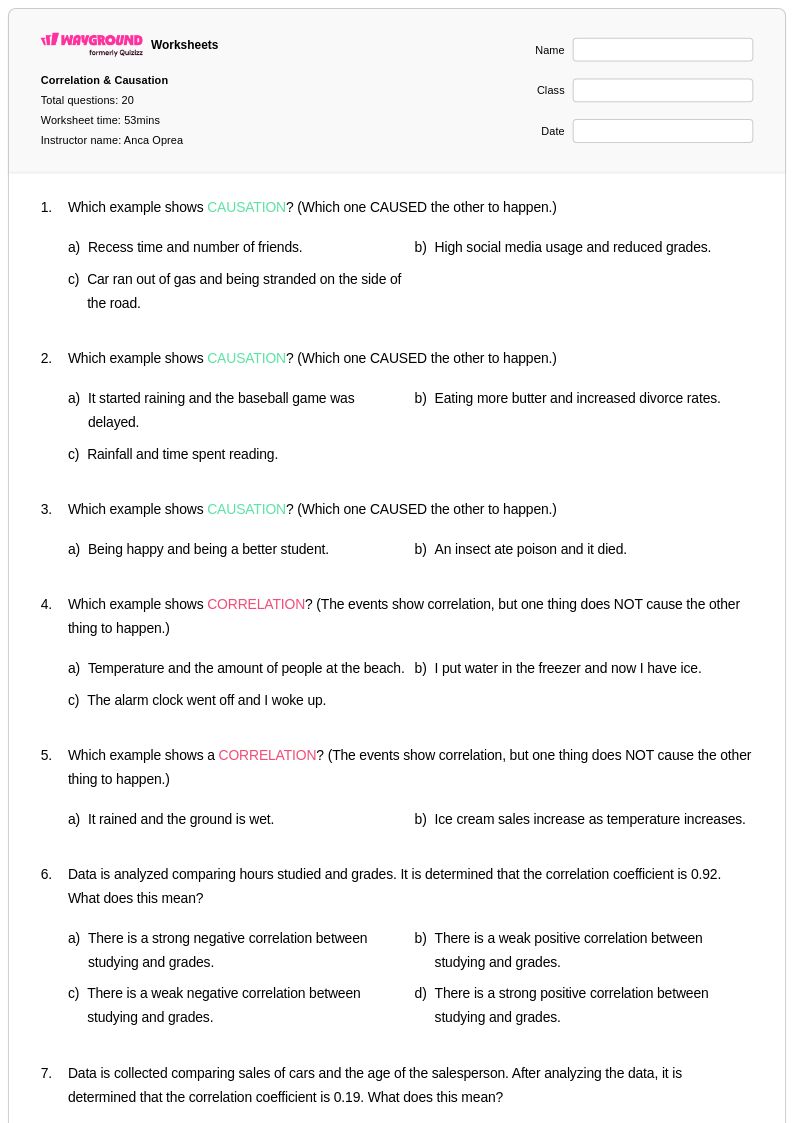
20 Q
9th
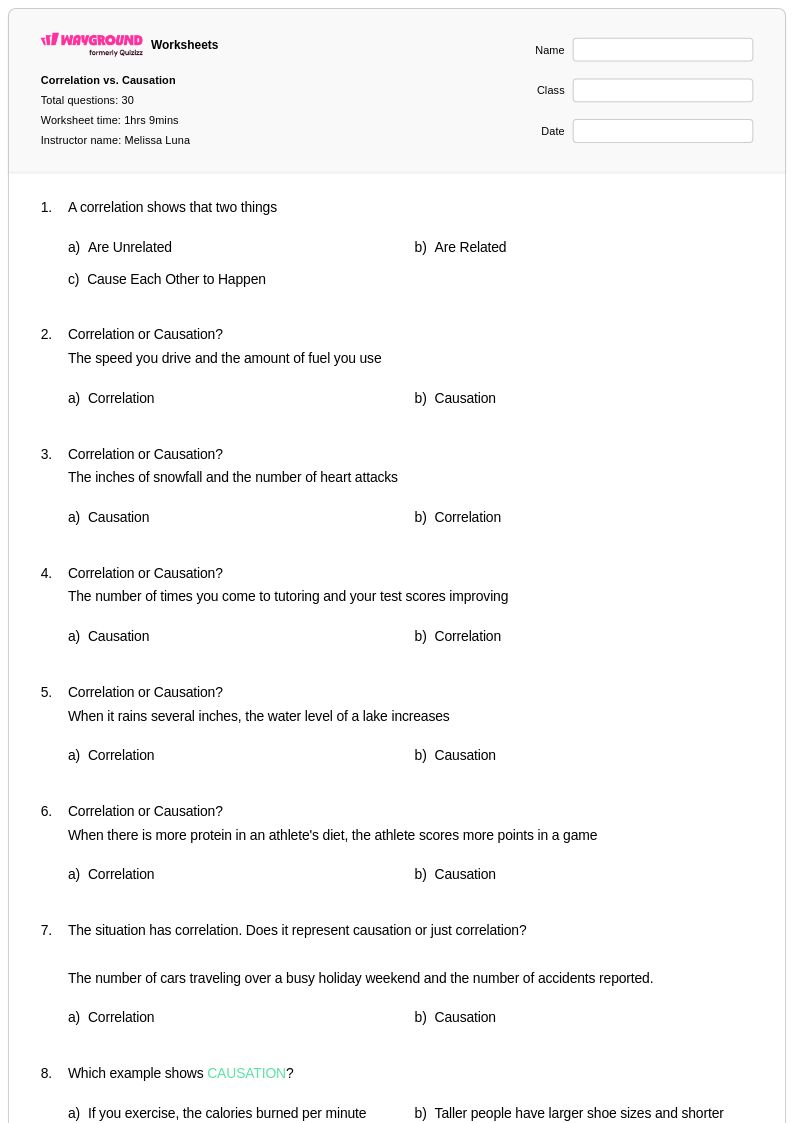
30 Q
9th
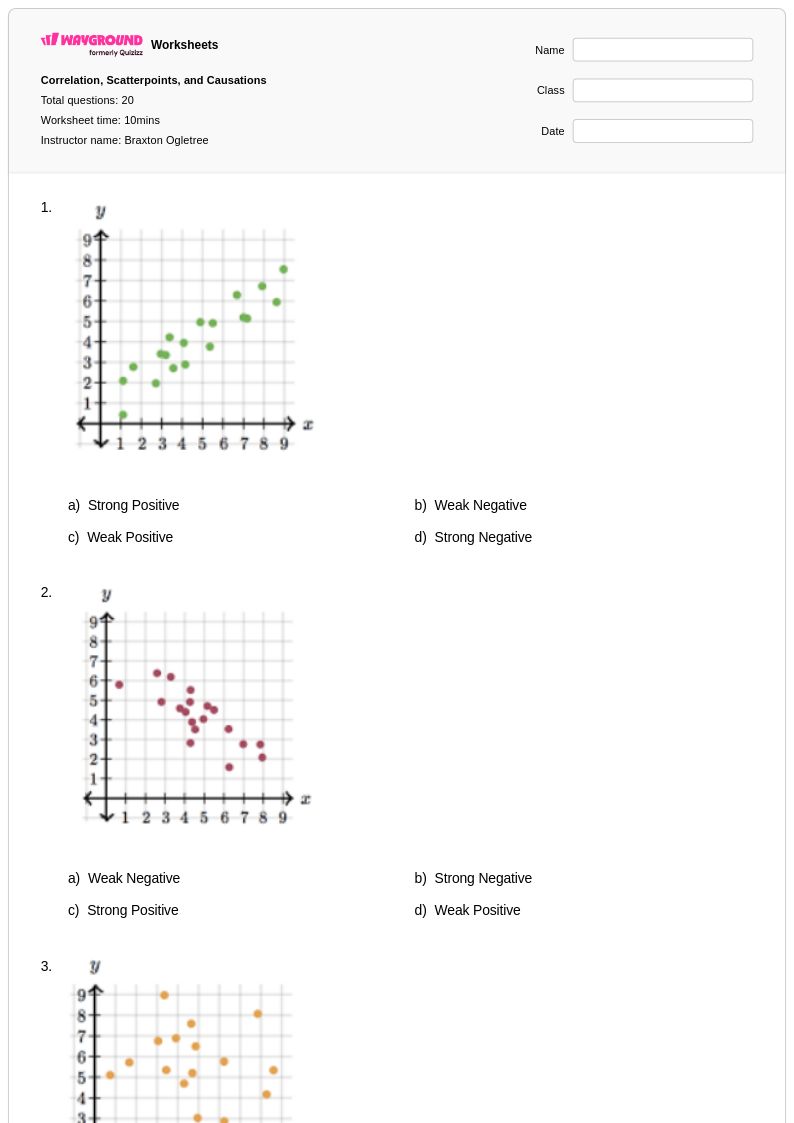
20 Q
9th
20 Q
9th - Uni
10 Q
9th
15 Q
9th - 11th
20 Q
8th - 10th
Explore Worksheets by Subjects
Explore printable Correlation vs Causation worksheets
Correlation vs causation worksheets available through Wayground (formerly Quizizz) provide students with essential practice in distinguishing between statistical relationships and true cause-and-effect connections. These comprehensive resources strengthen critical thinking skills by presenting real-world scenarios where students must analyze data patterns, identify spurious correlations, and evaluate evidence for causal relationships. The worksheets include diverse practice problems ranging from interpreting scatter plots and correlation coefficients to examining research studies and identifying confounding variables. Each printable resource comes with detailed answer keys that explain the reasoning behind correct responses, helping students understand why correlation does not imply causation and how to apply this fundamental statistical principle across various contexts. These free educational materials cover topics such as lurking variables, experimental design, and the difference between observational and experimental studies.
Wayground (formerly Quizizz) supports mathematics educators with an extensive collection of teacher-created correlation vs causation resources, drawing from millions of high-quality worksheets and activities developed by experienced practitioners. The platform's robust search and filtering capabilities allow teachers to quickly locate materials that align with specific curriculum standards and match their students' skill levels. Educators can customize existing worksheets or create differentiated versions to support remediation for struggling learners or provide enrichment for advanced students. These resources are available in both printable pdf format for traditional classroom use and digital formats for interactive learning experiences. The comprehensive collection facilitates effective lesson planning by offering varied approaches to teaching this challenging statistical concept, while the answer keys and detailed explanations support teachers in providing targeted feedback during skill practice sessions and formative assessments.
FAQs
How do I teach students the difference between correlation and causation?
What exercises help students practice correlation vs causation?
What mistakes do students commonly make when analyzing correlation and causation?
How can I use a correlation vs causation worksheet in my classroom?
How does correlation vs causation fit into the Common Core statistics progression?
How can I differentiate correlation vs causation practice for mixed-ability classes?