
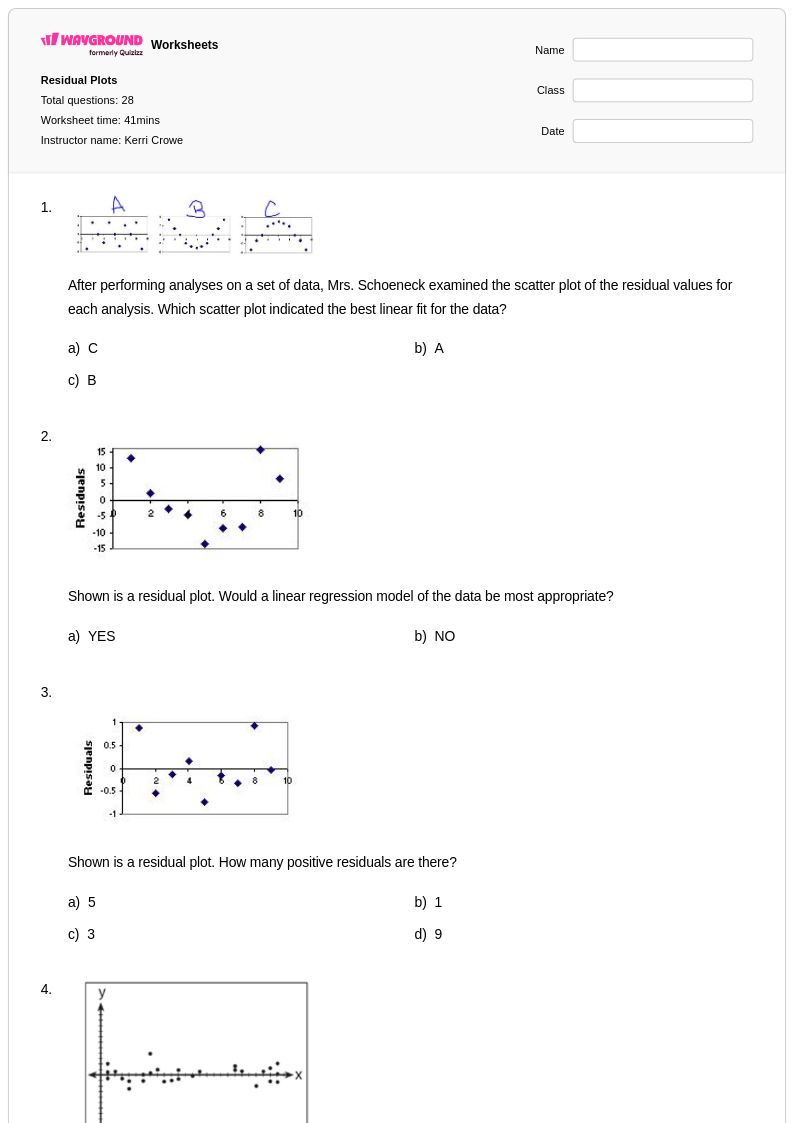
28 Q
9th - 12th
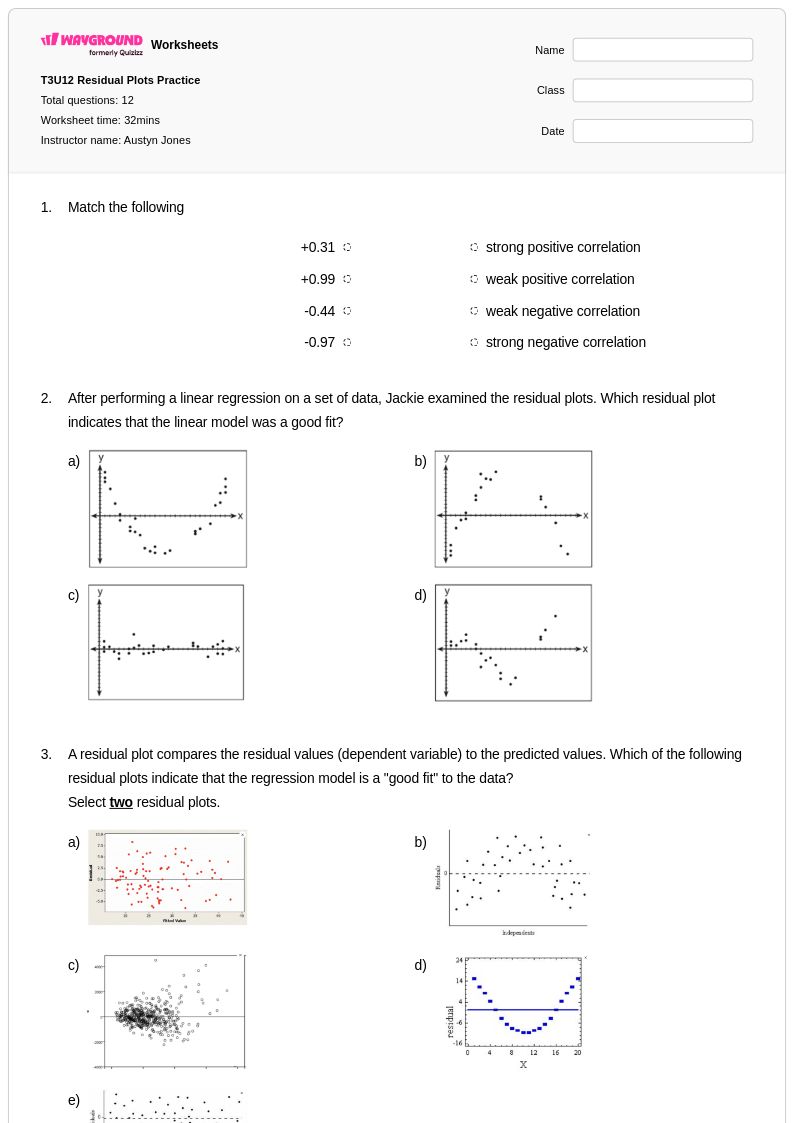
12 Q
12th
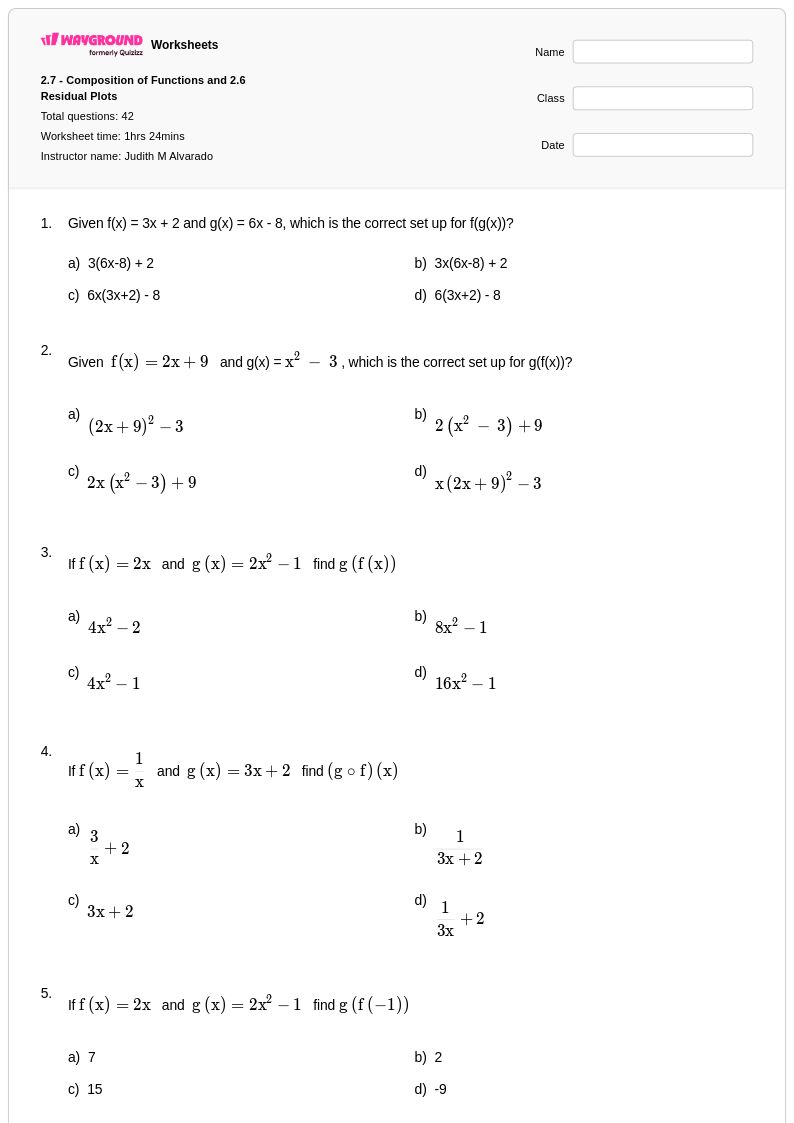
42 Q
Uni
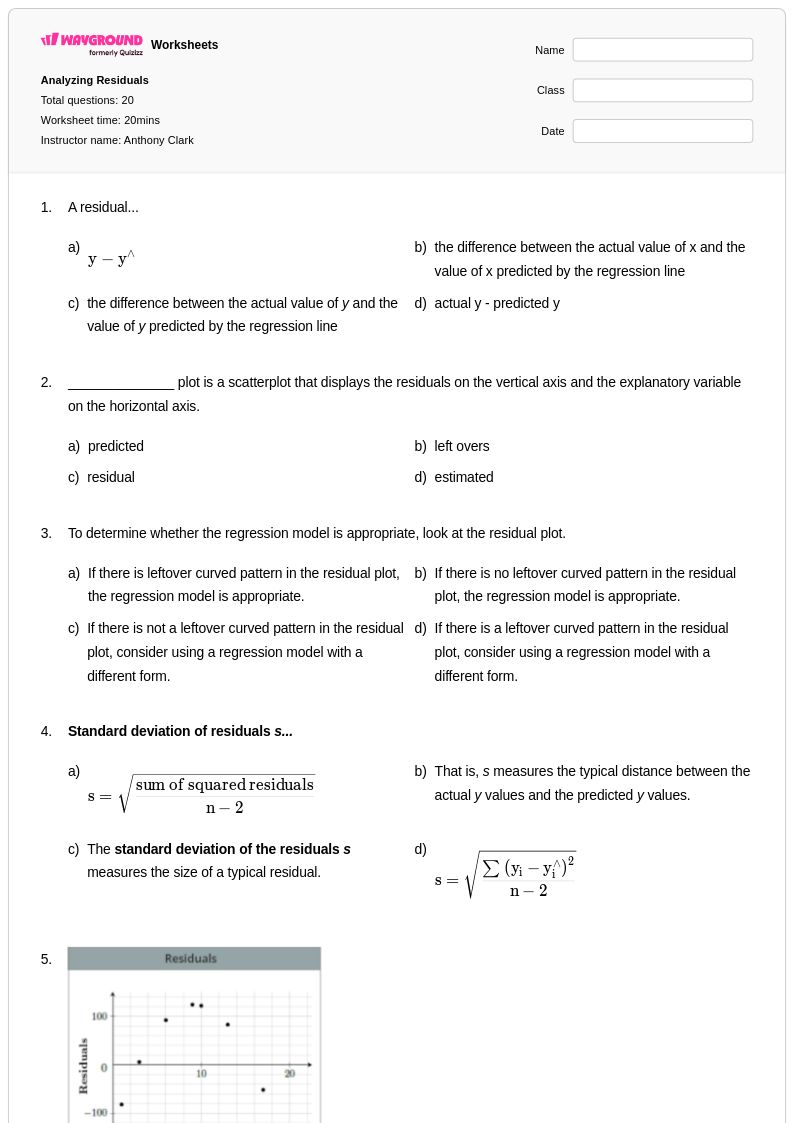
20 Q
11th - Uni
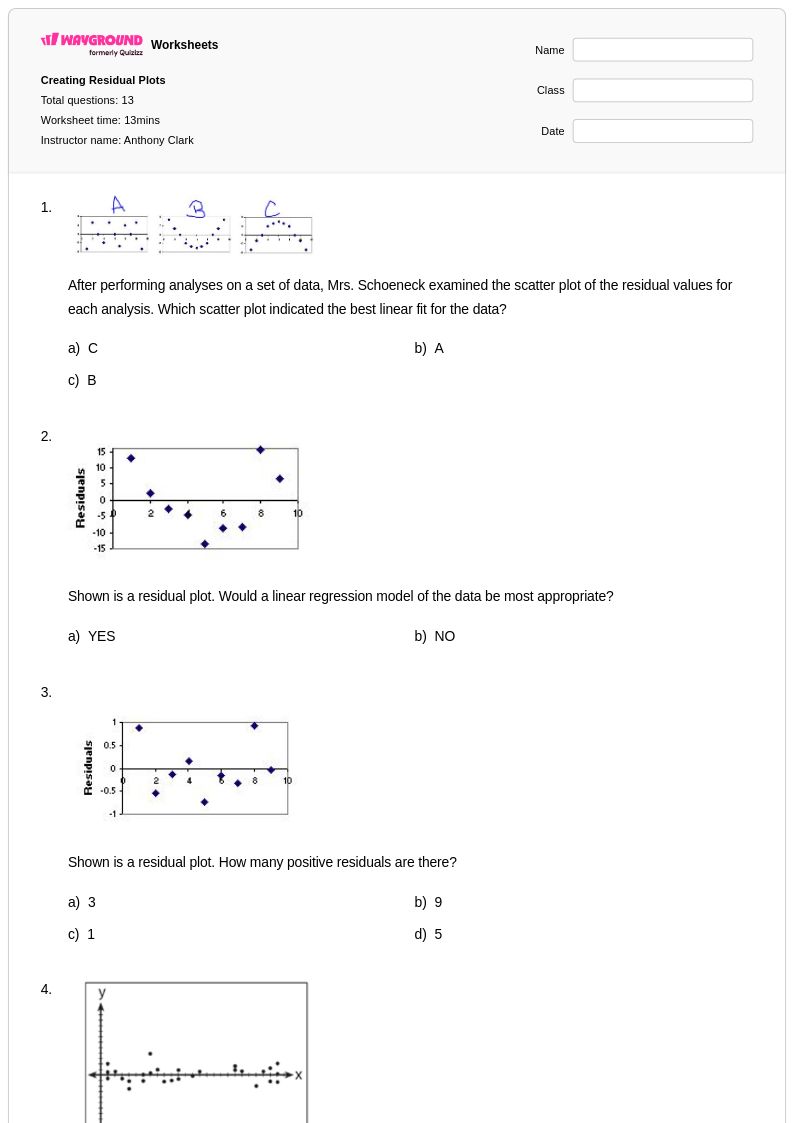
13 Q
12th - Uni
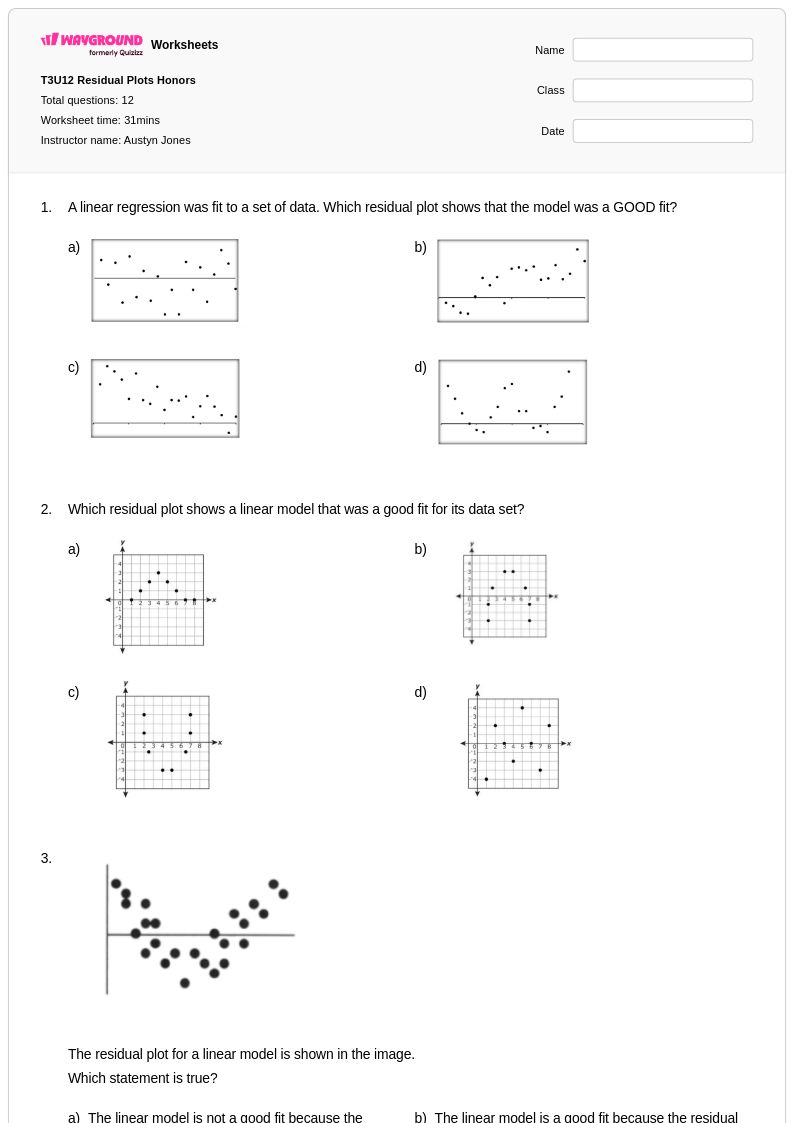
12 Q
9th
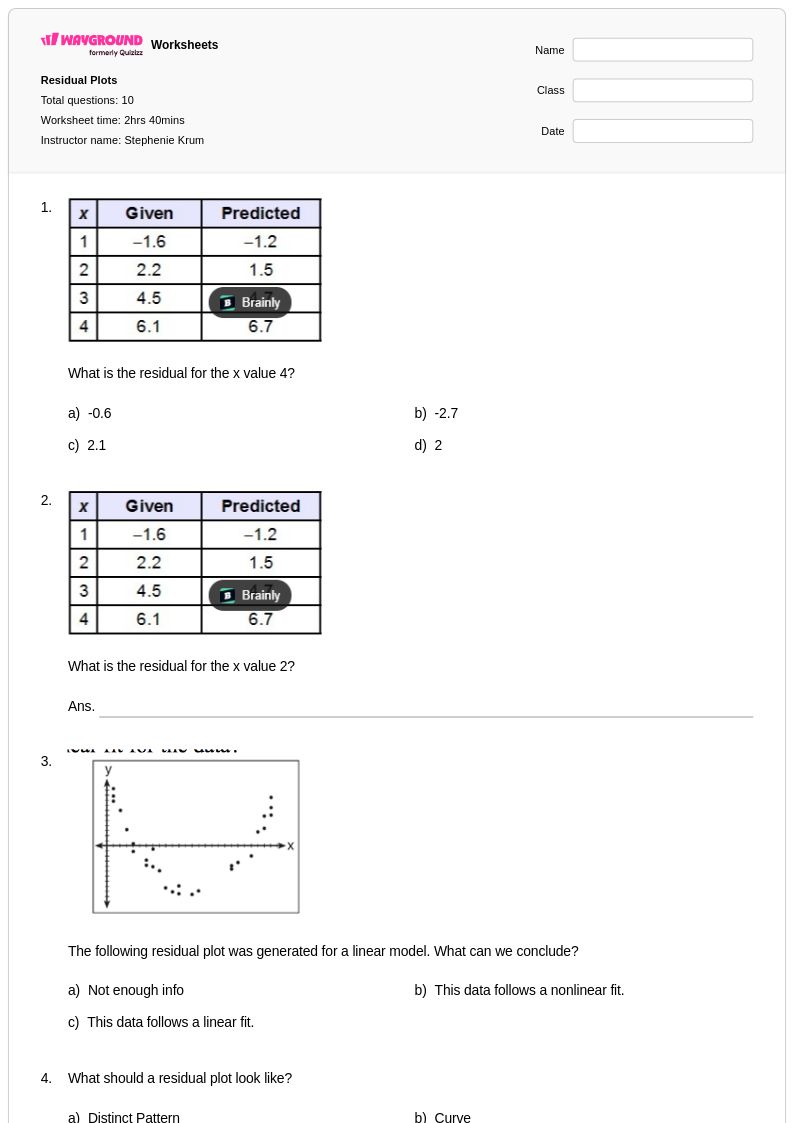
10 Q
12th
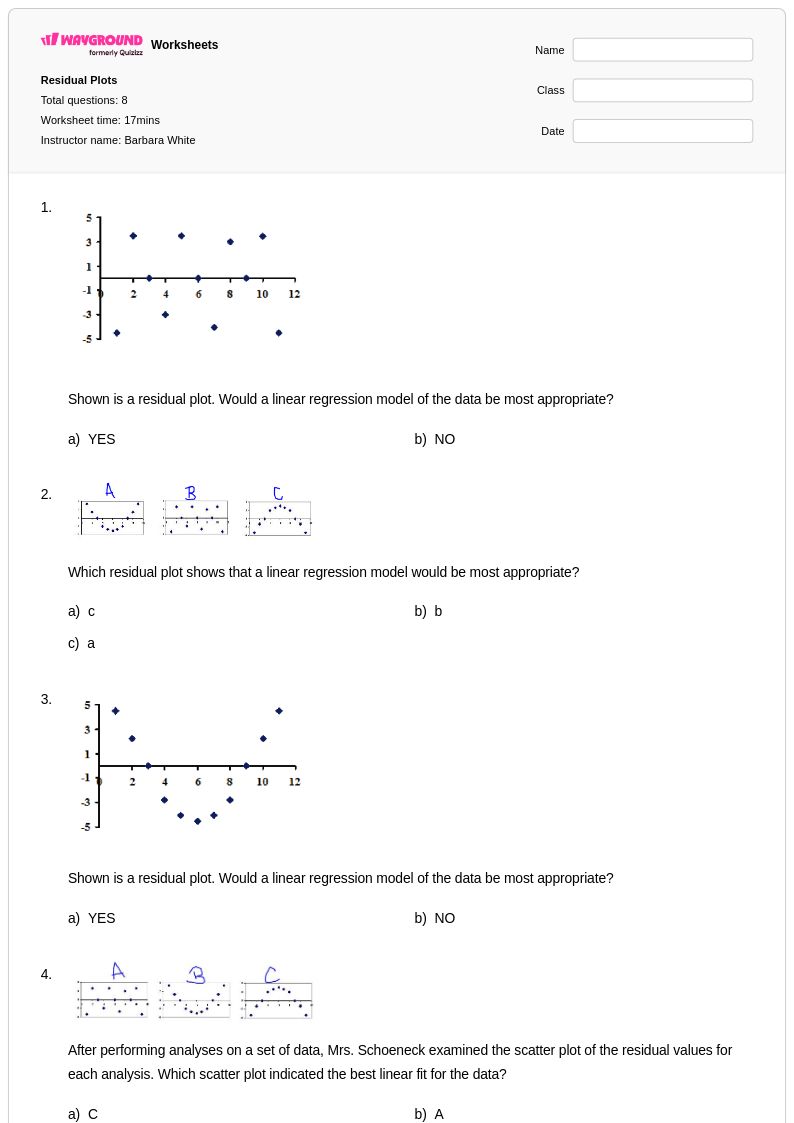
8 Q
9th
15 Q
9th
8 Q
9th
10 Q
9th - 12th
16 Q
9th - 12th
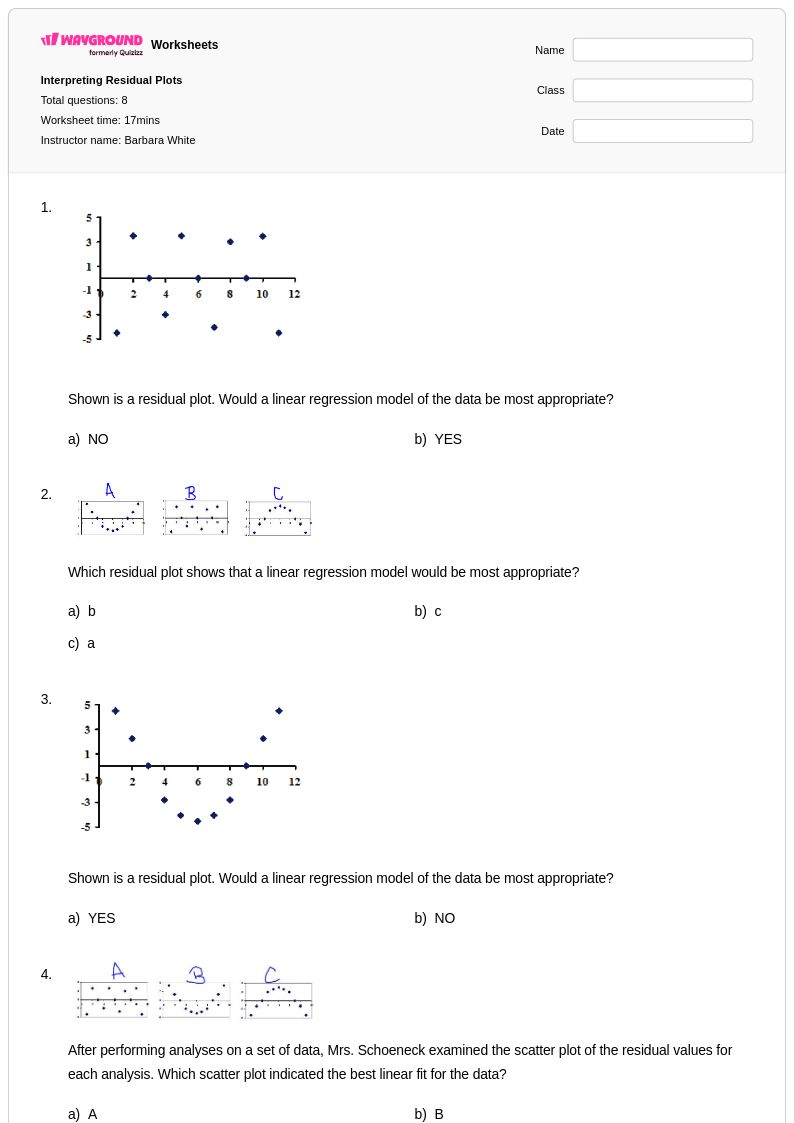
8 Q
9th
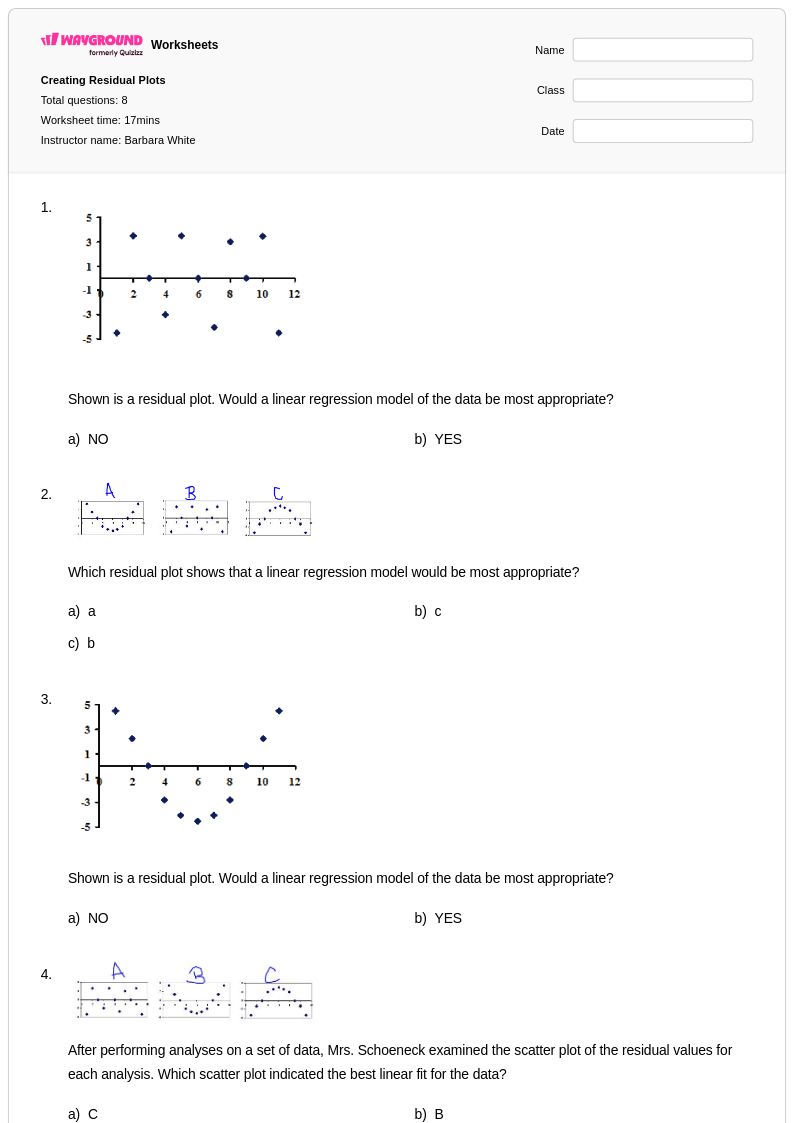
8 Q
9th
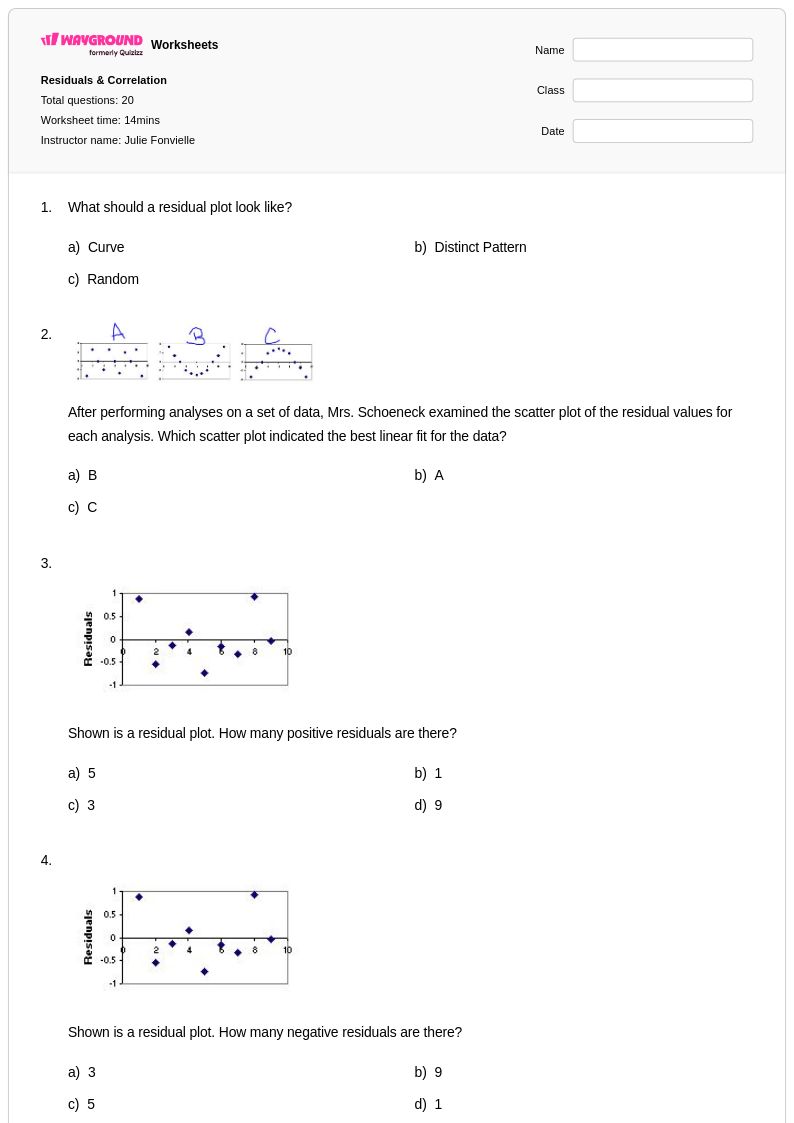
20 Q
11th
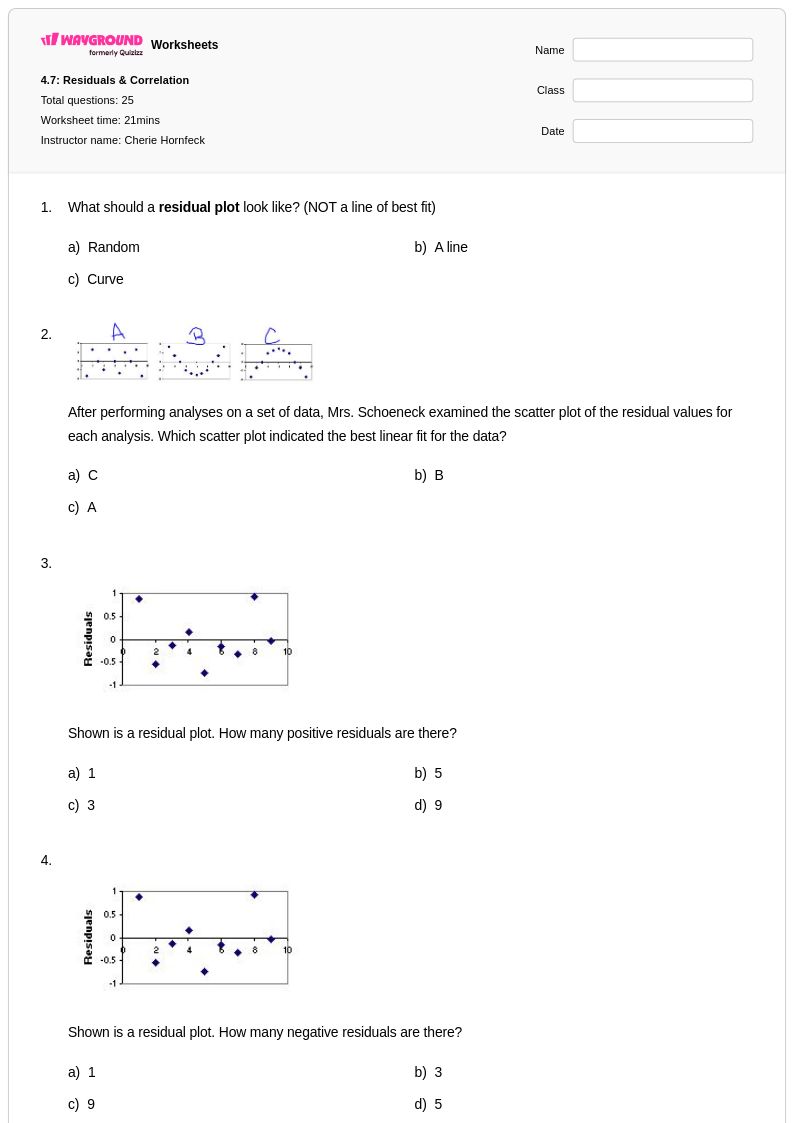
25 Q
8th
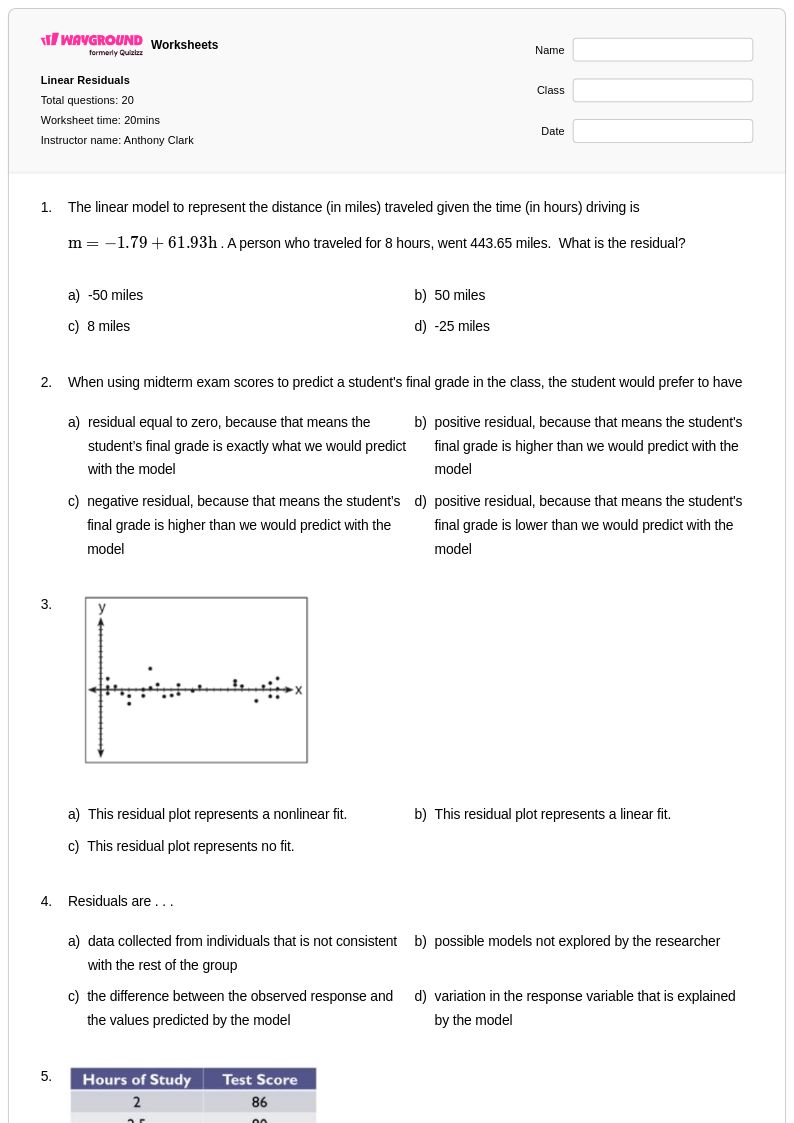
20 Q
11th - Uni
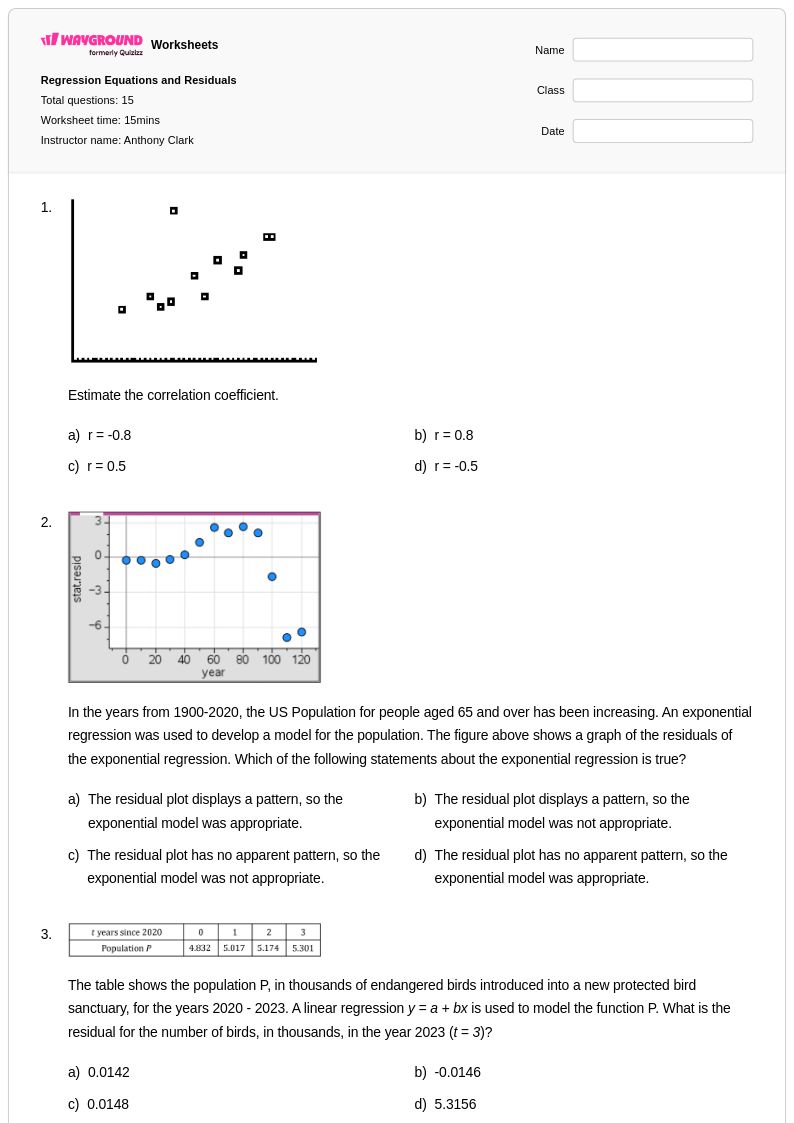
15 Q
12th - Uni
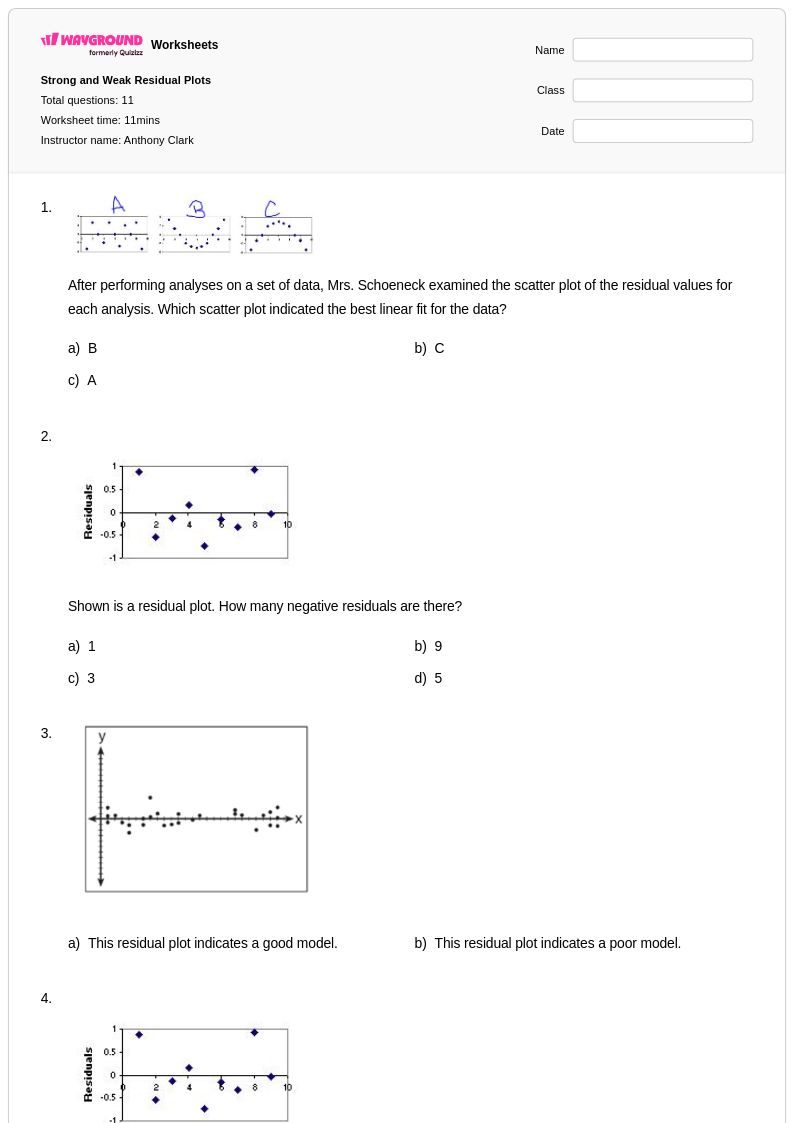
11 Q
11th - Uni
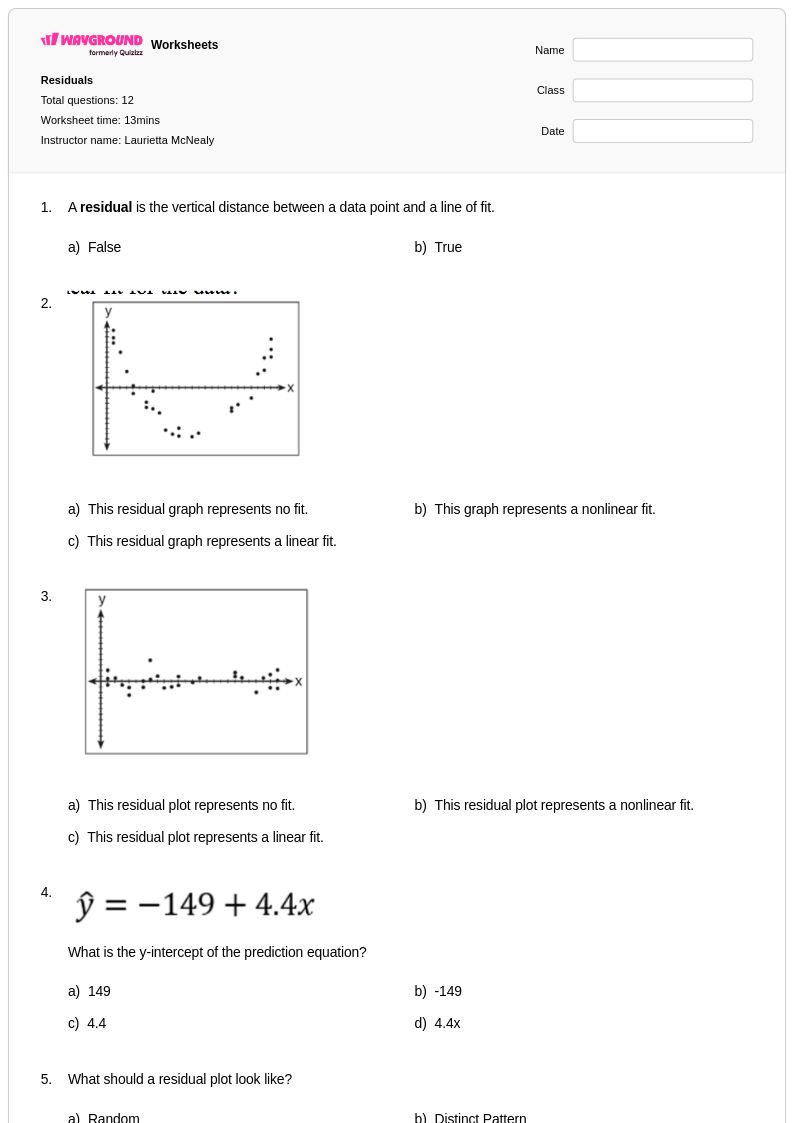
12 Q
8th
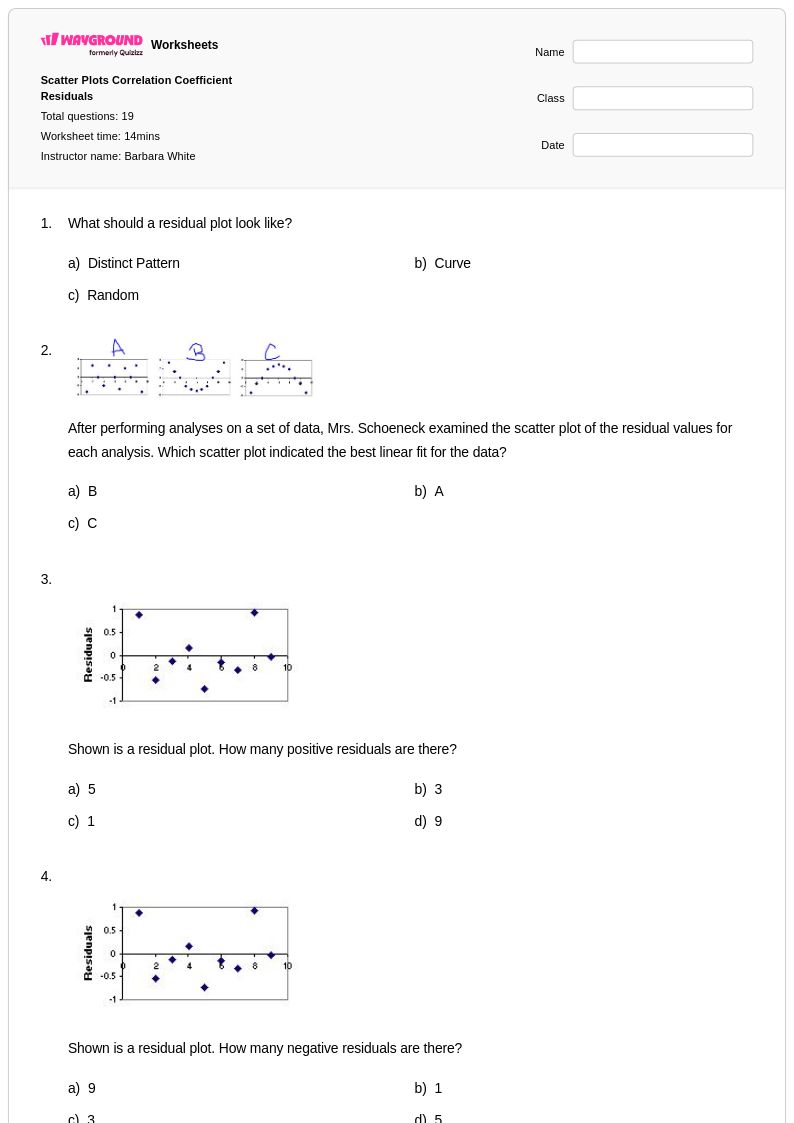
19 Q
11th
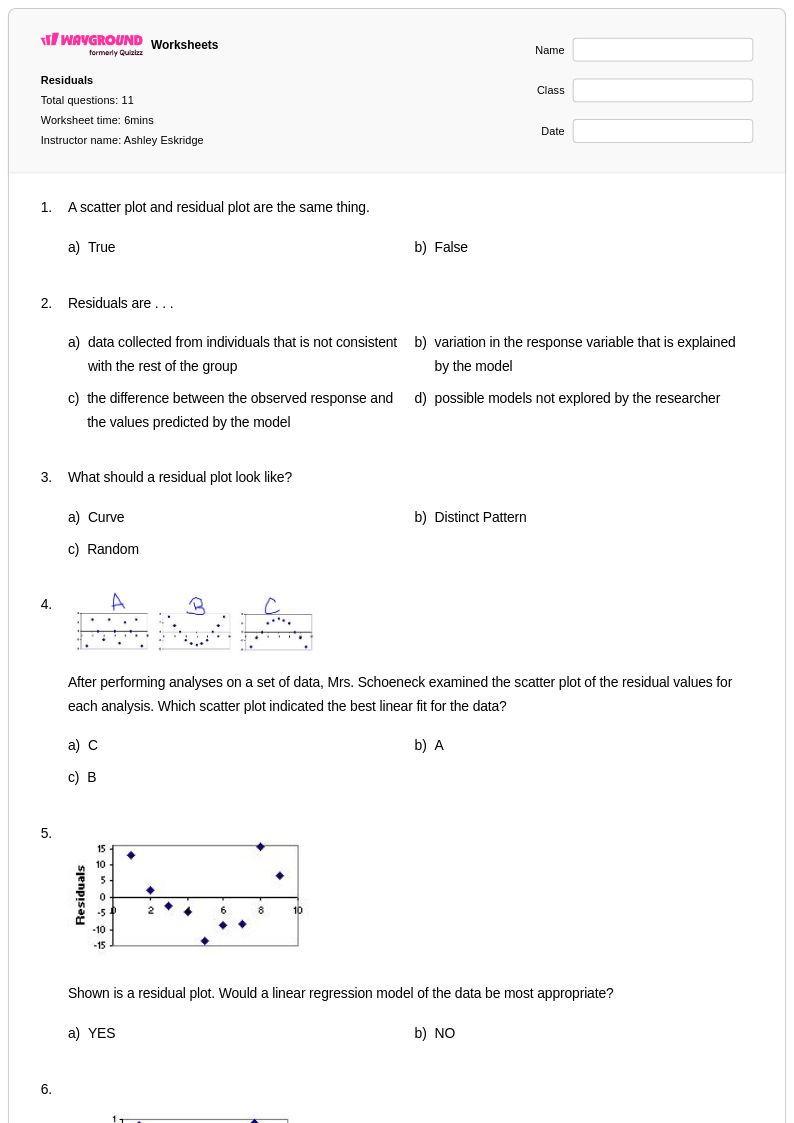
11 Q
11th
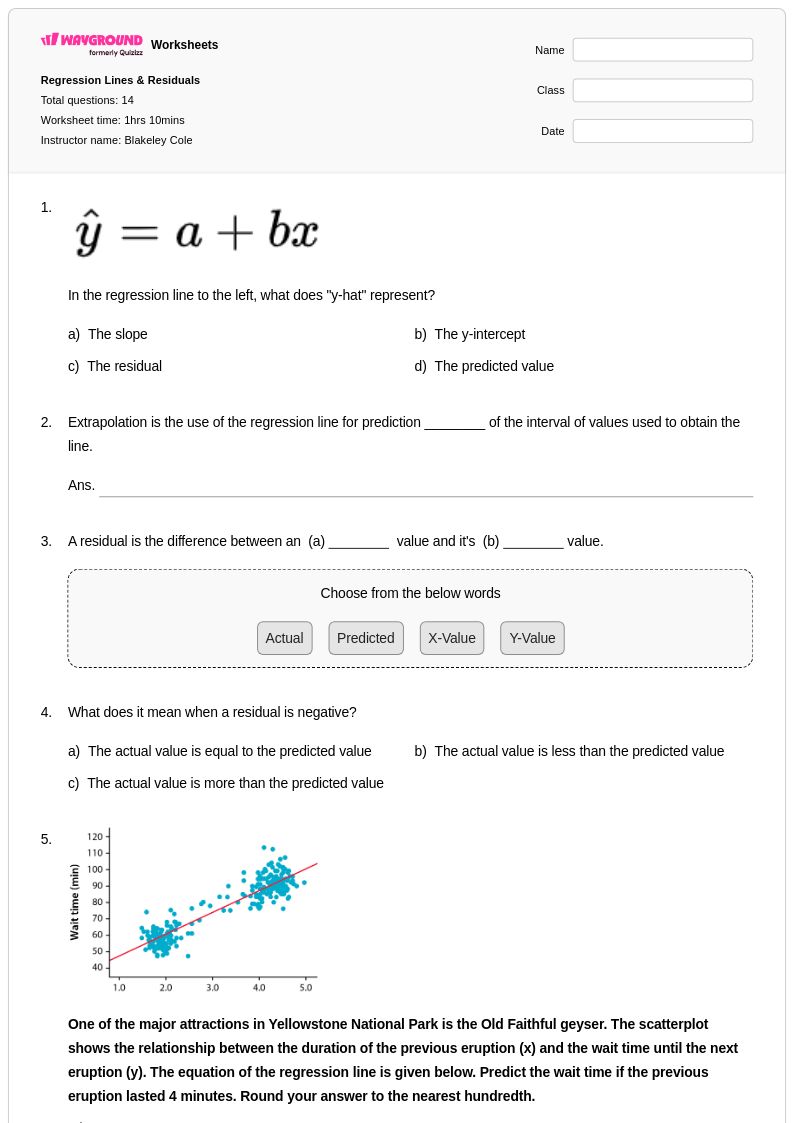
14 Q
12th
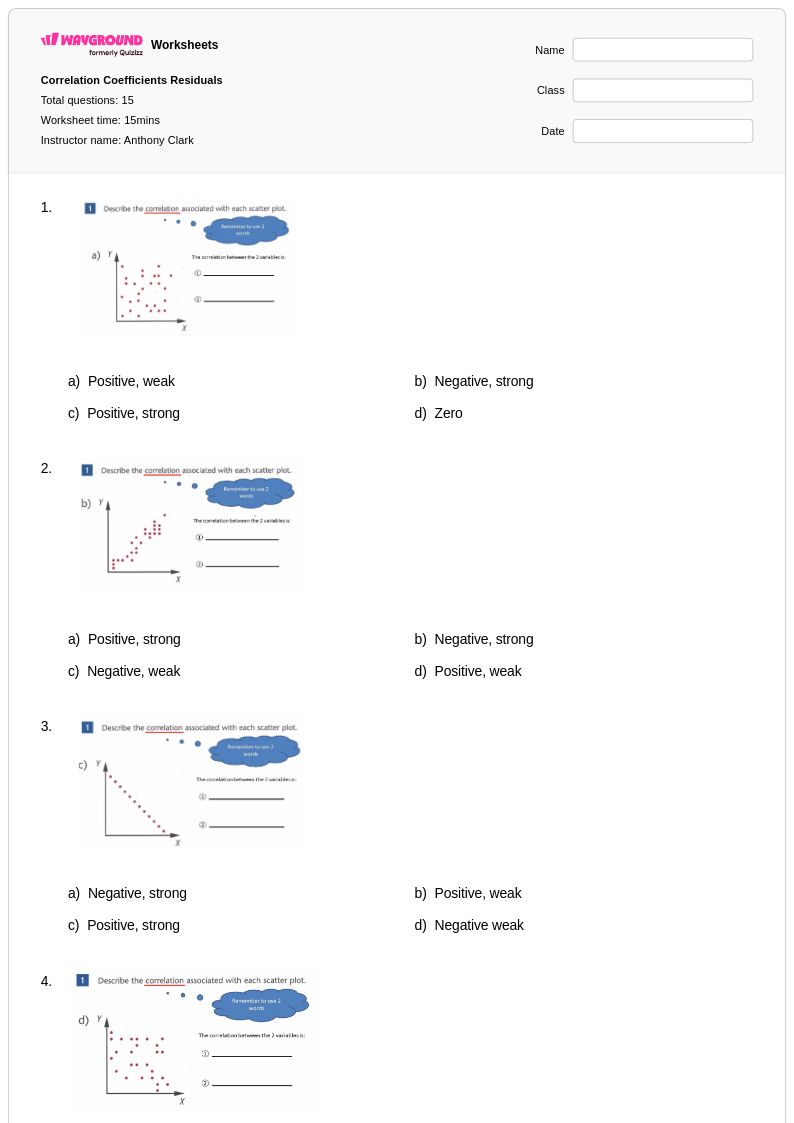
15 Q
11th - Uni
Explore Worksheets by Subjects
Explore printable Residual Plots worksheets
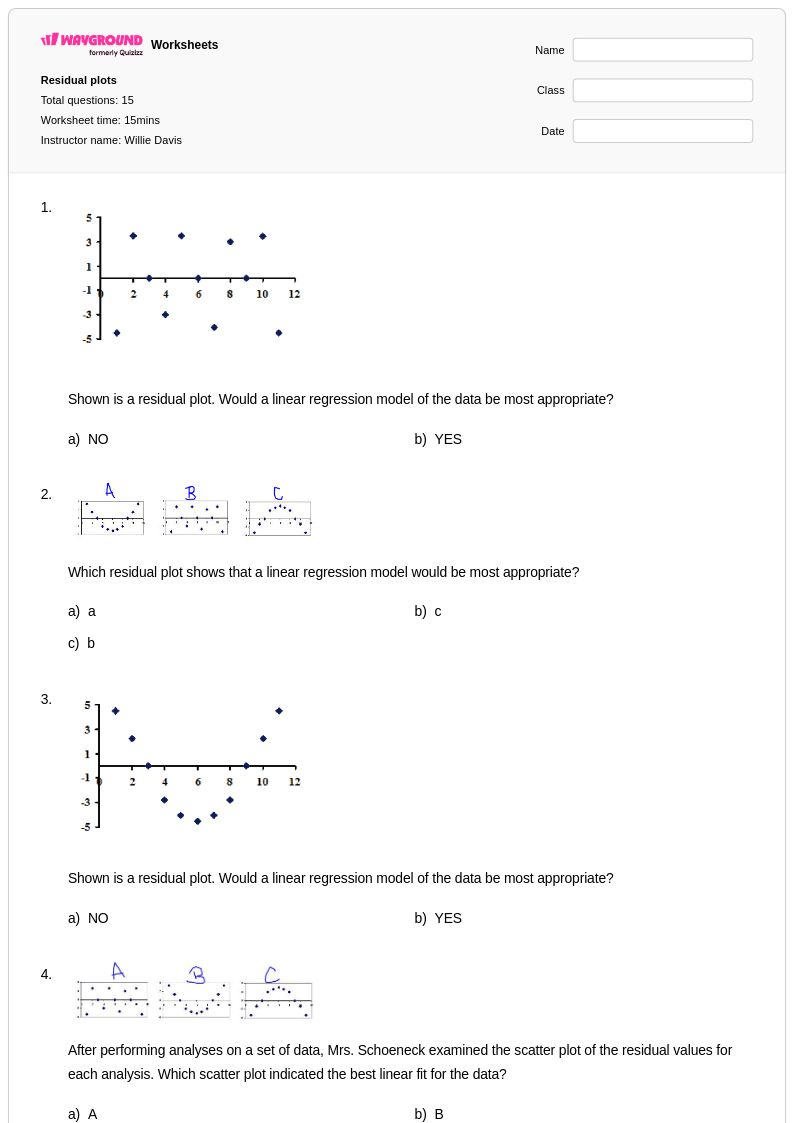
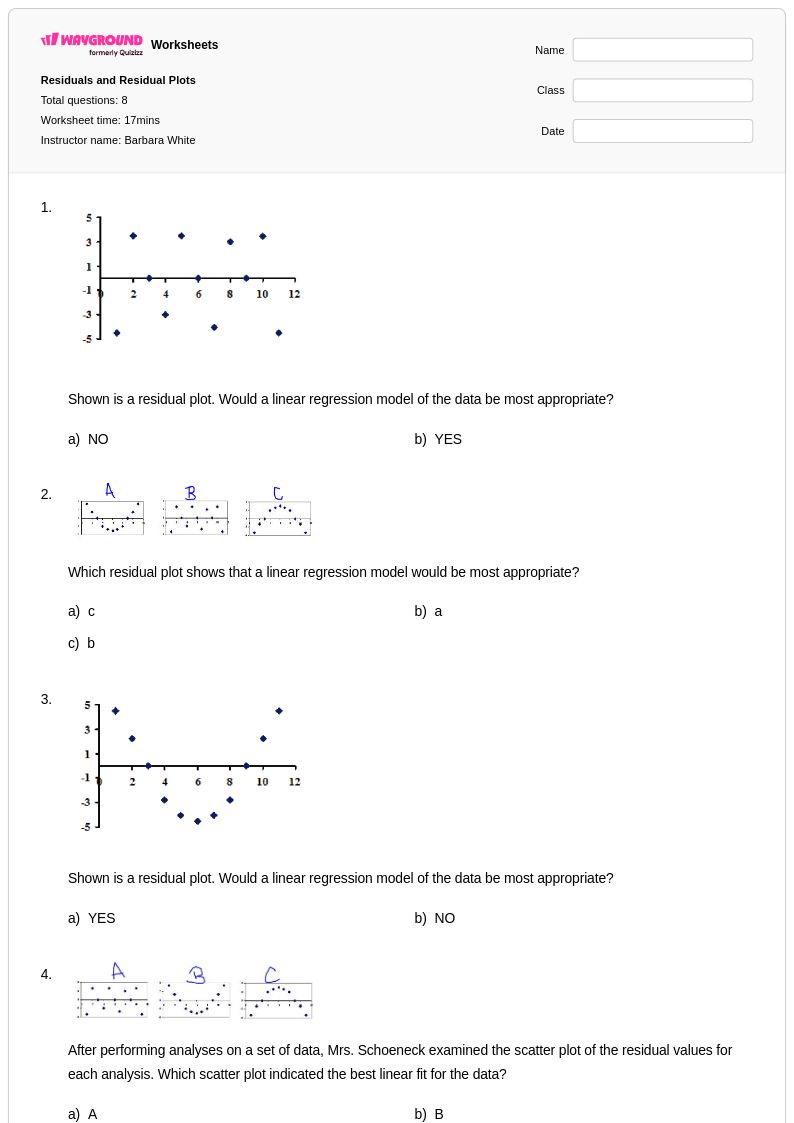
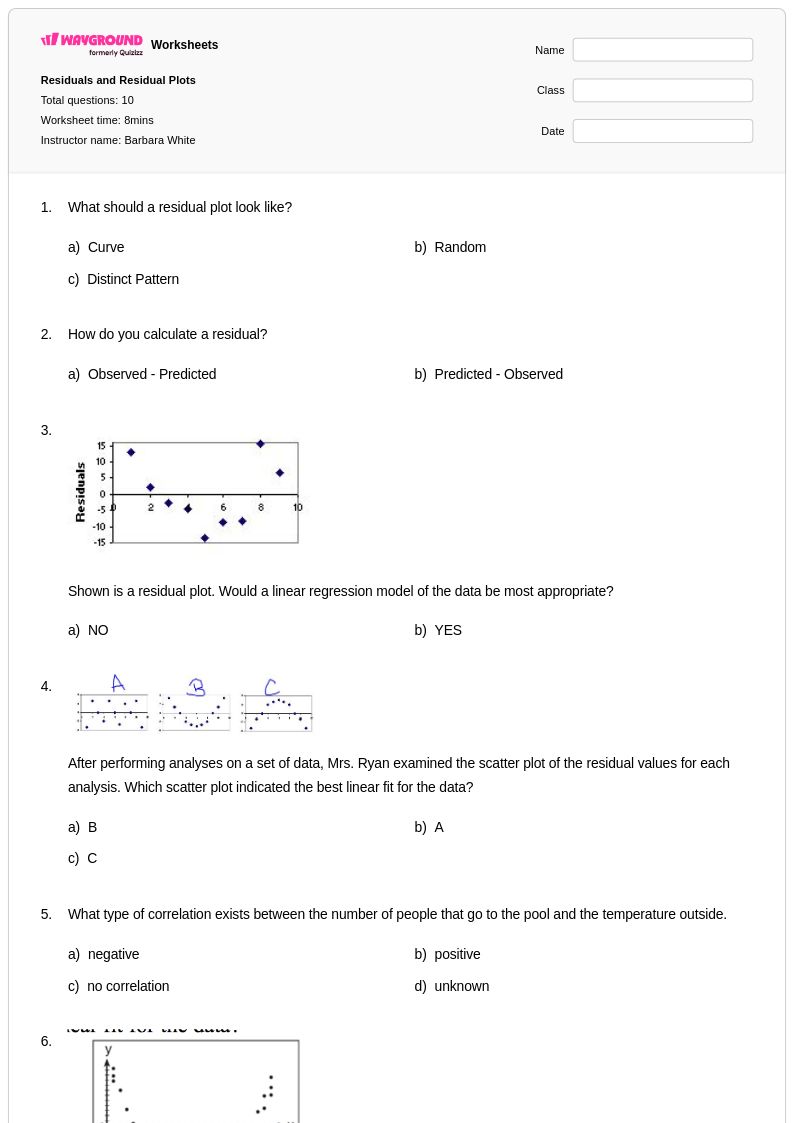
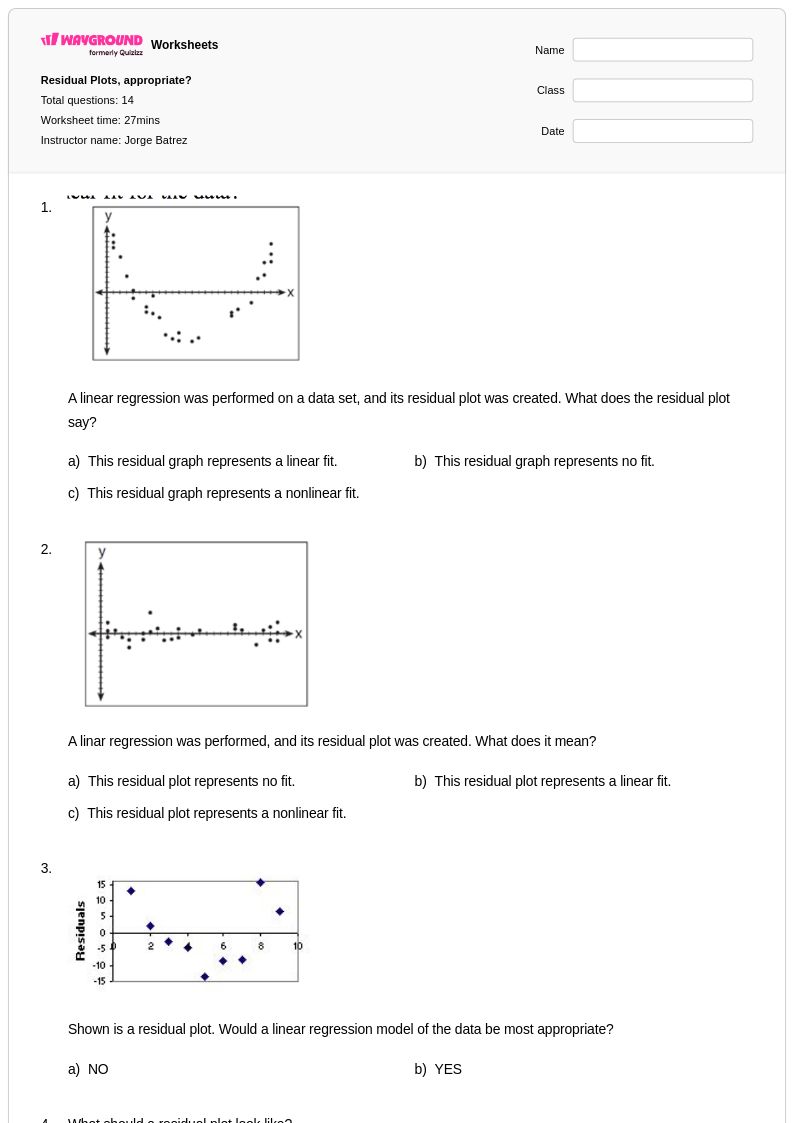
Residual plots worksheets available through Wayground (formerly Quizizz) provide comprehensive practice materials designed to strengthen students' understanding of regression analysis and statistical modeling. These carefully crafted printables focus on developing critical skills in interpreting scatter plots of residuals, identifying patterns that indicate model appropriateness, and recognizing violations of regression assumptions such as non-linearity, heteroscedasticity, and outliers. Students work through practice problems that require them to analyze residual versus fitted value plots, assess randomness in residual distributions, and draw conclusions about model validity. Each worksheet includes detailed answer keys that guide learners through proper interpretation techniques, while the free pdf format ensures accessibility for both classroom instruction and independent study.
Wayground (formerly Quizizz) supports mathematics educators with millions of teacher-created resources specifically targeting residual plot analysis and broader statistical concepts. The platform's robust search and filtering capabilities enable instructors to locate worksheets aligned with specific curriculum standards, while differentiation tools allow for seamless customization based on student proficiency levels. Teachers can access materials in both printable and digital pdf formats, facilitating flexible implementation across various learning environments. These comprehensive worksheet collections prove invaluable for lesson planning, targeted remediation of statistical reasoning gaps, enrichment activities for advanced learners, and systematic skill practice that builds confidence in interpreting complex statistical graphics and drawing appropriate conclusions from regression analyses.
FAQs
How do I teach residual plots for the first time?
What skills do students practice with these residual plot worksheets?
What are the most common mistakes students make when learning about residual plots?
How do I use this residual plots worksheet with my class?
How do residual plots fit into the high school math curriculum?
What grade level are residual plots typically taught?