
20 Q
5th - 9th
20 Q
7th - Uni
20 Q
6th - Uni
14 Q
7th
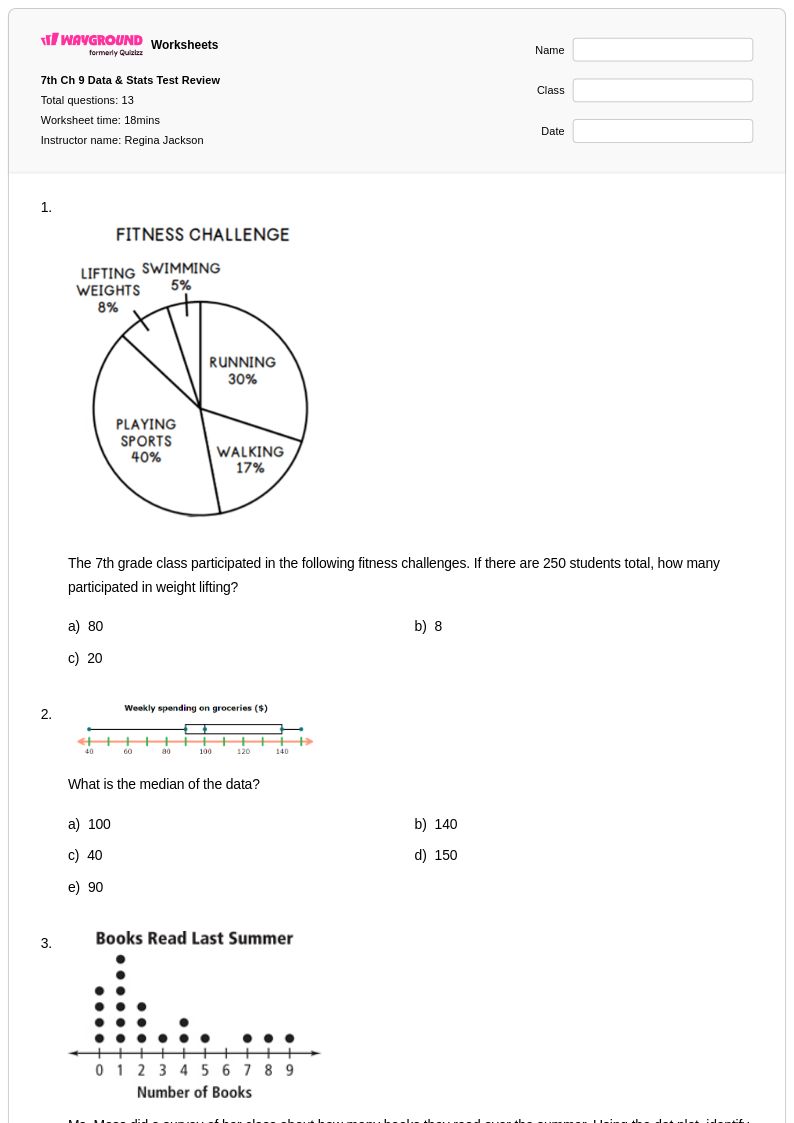
13 Q
7th
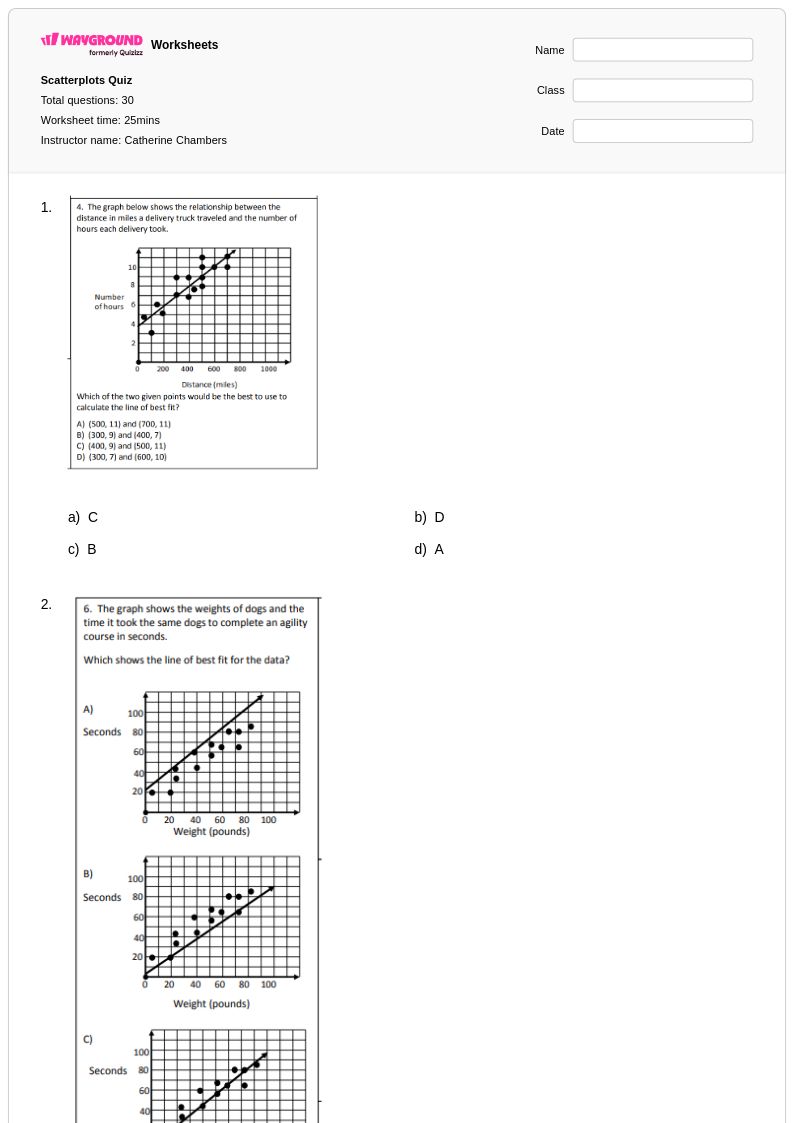
30 Q
6th - 8th

10 Q
7th
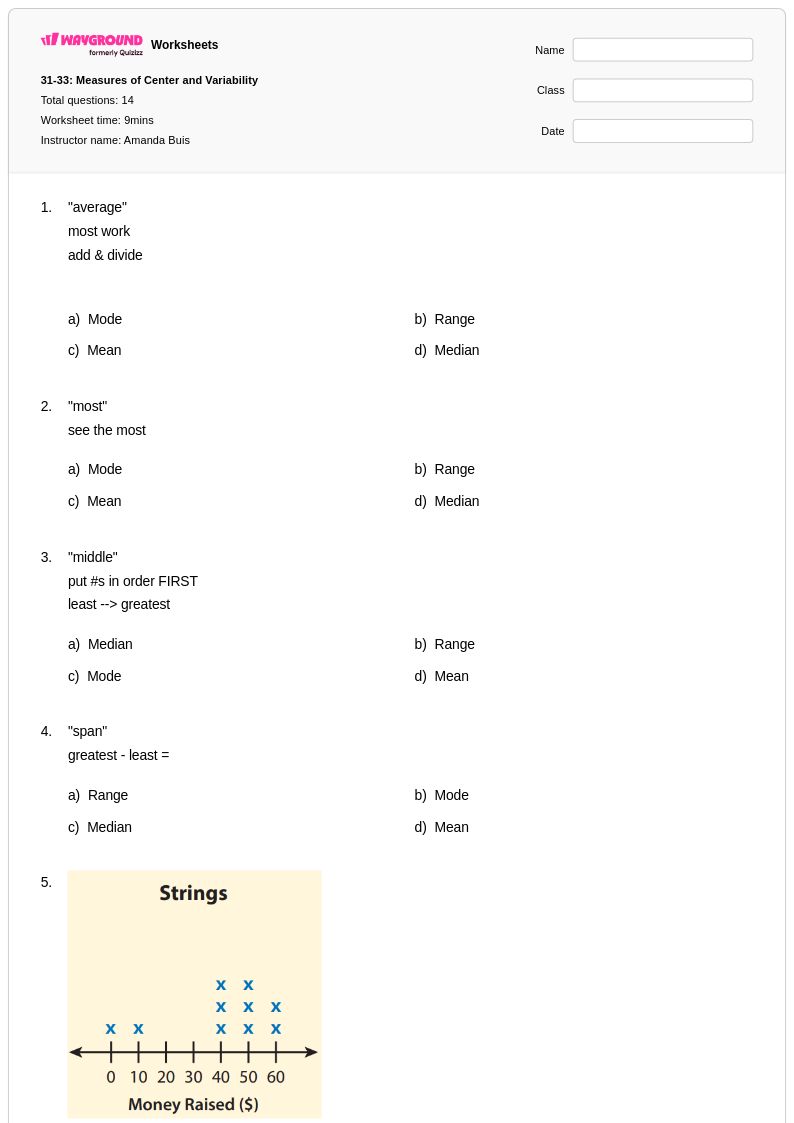
14 Q
6th - 8th
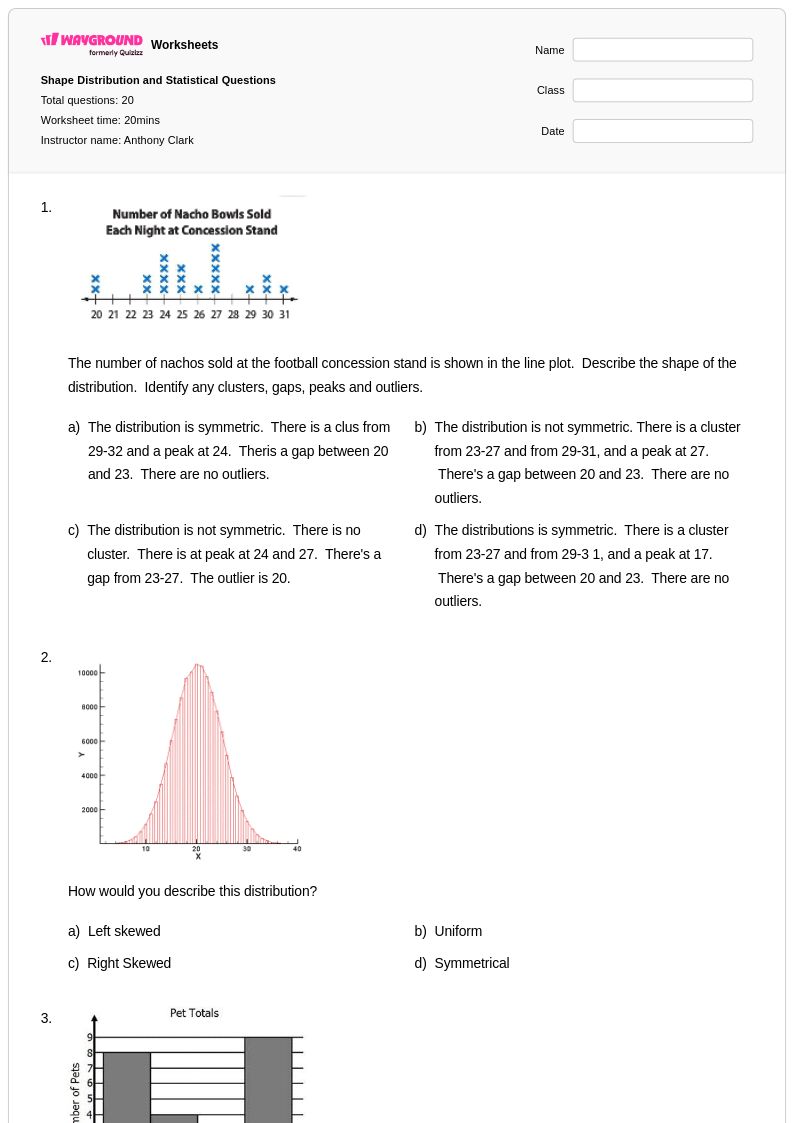
20 Q
6th - Uni
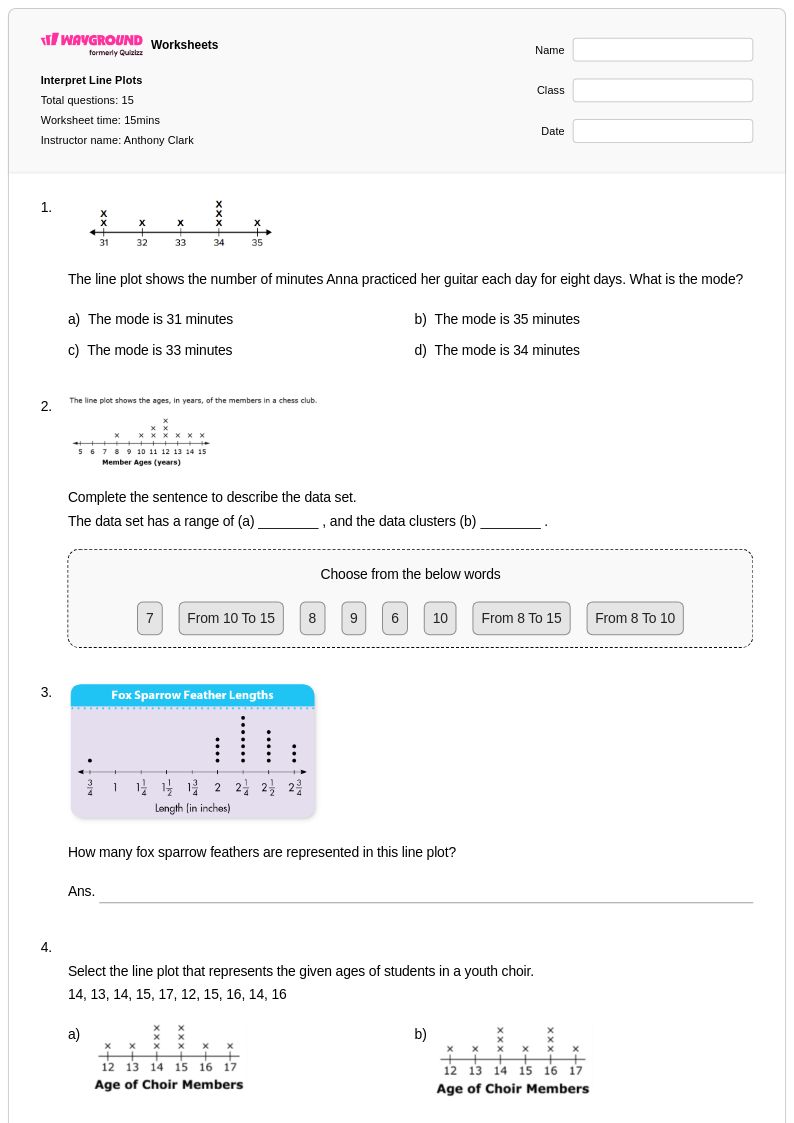
15 Q
5th - Uni
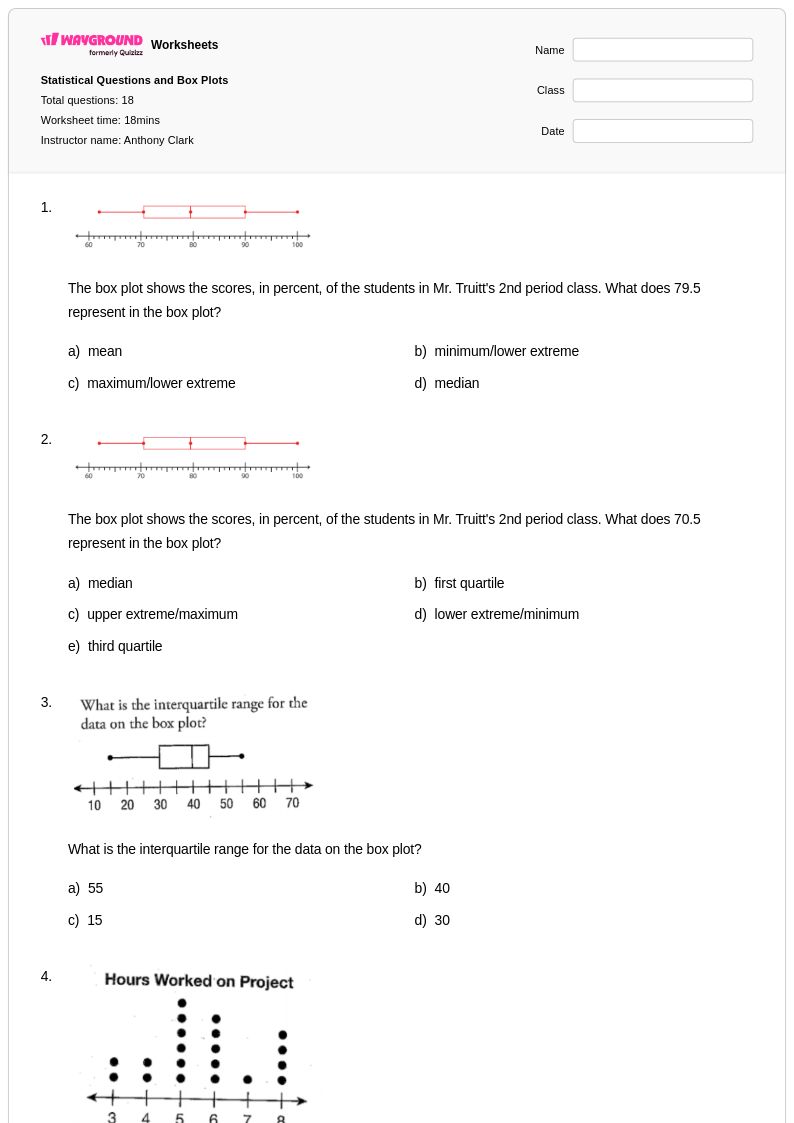
18 Q
6th - Uni
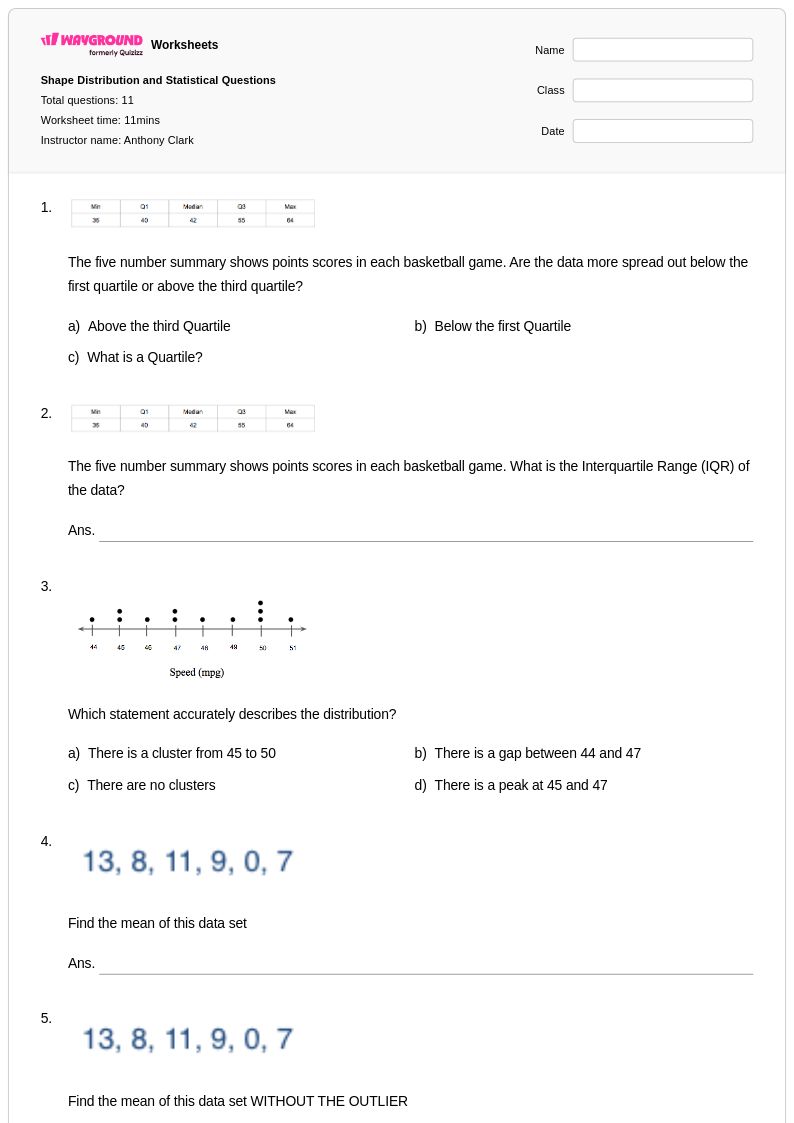
11 Q
6th - Uni
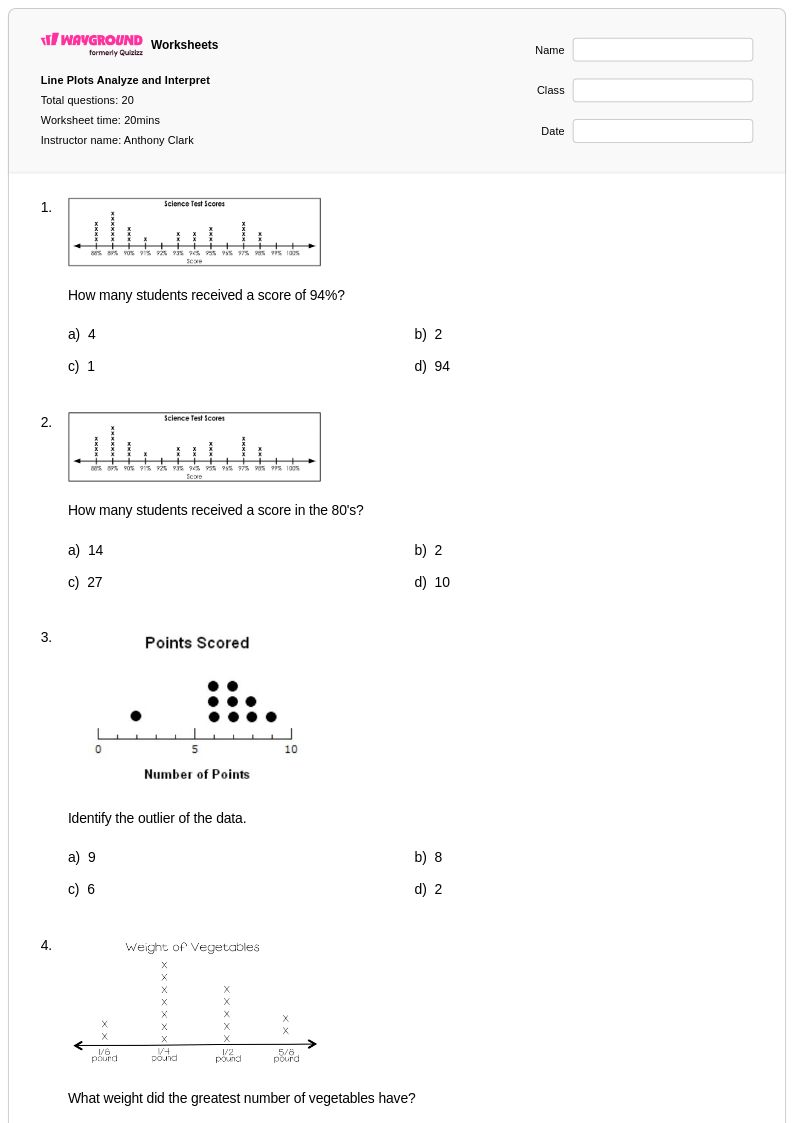
20 Q
7th - Uni
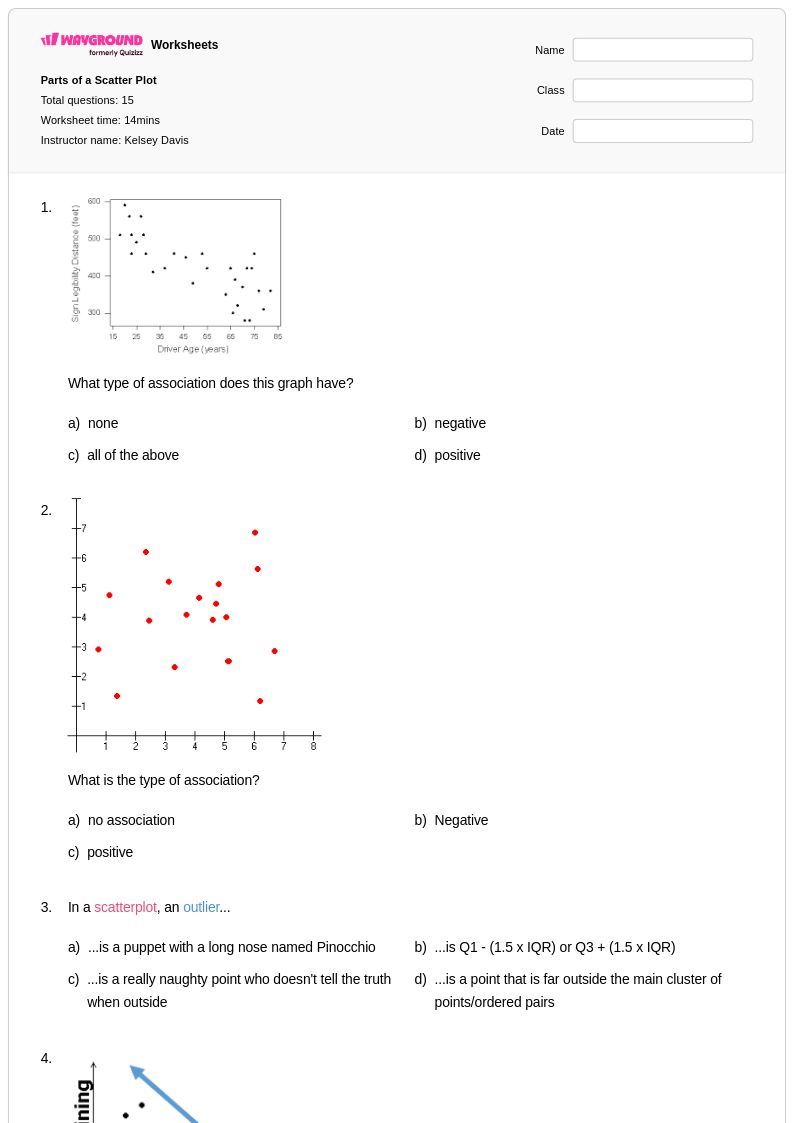
15 Q
6th - 8th
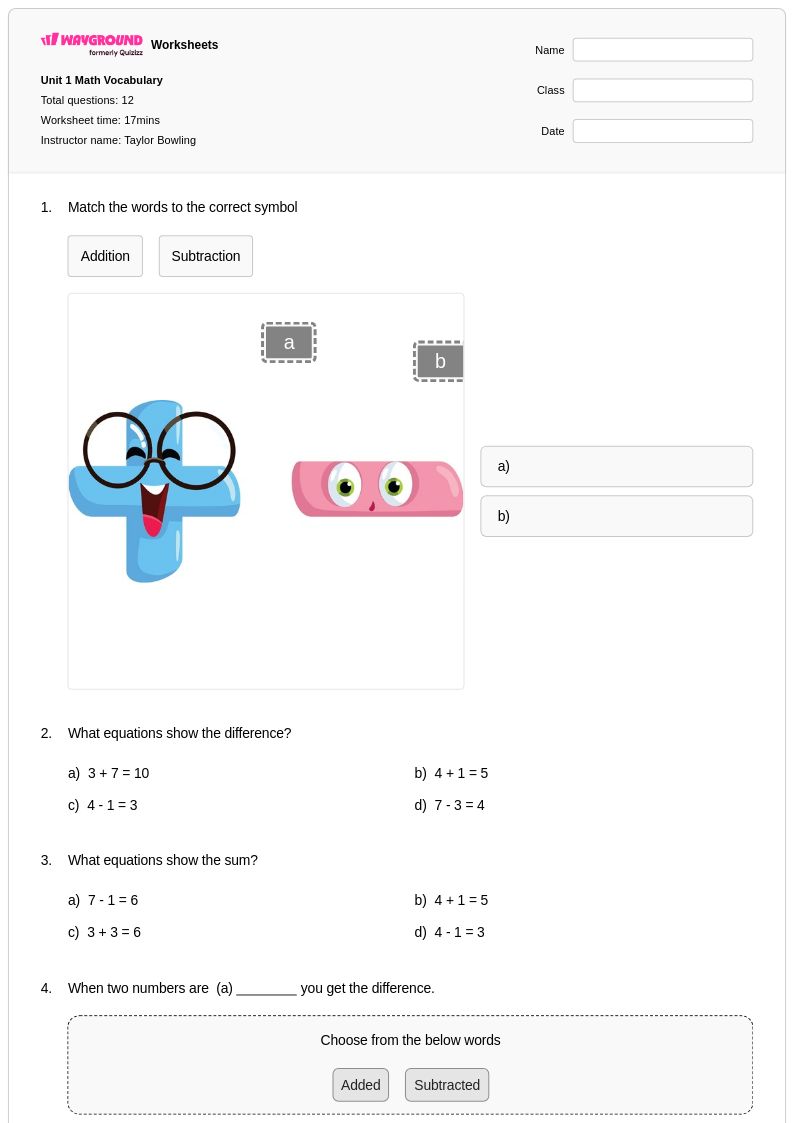
12 Q
1st - Uni
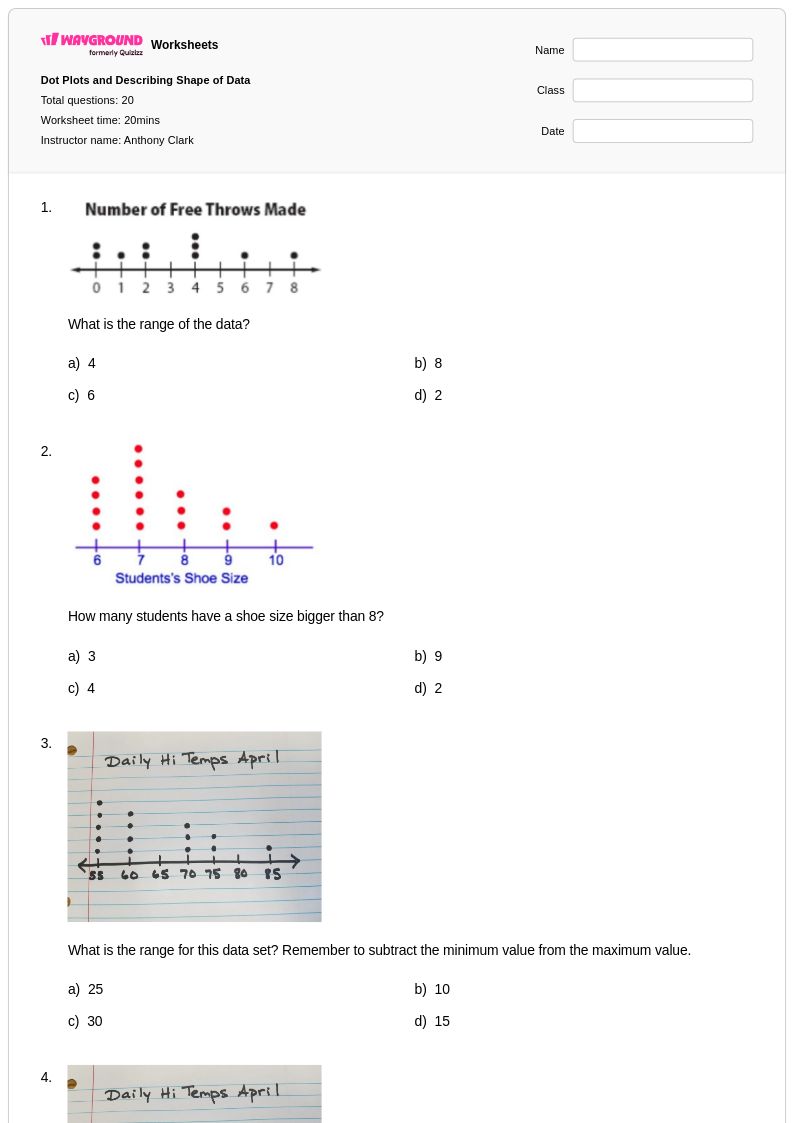
20 Q
6th - Uni
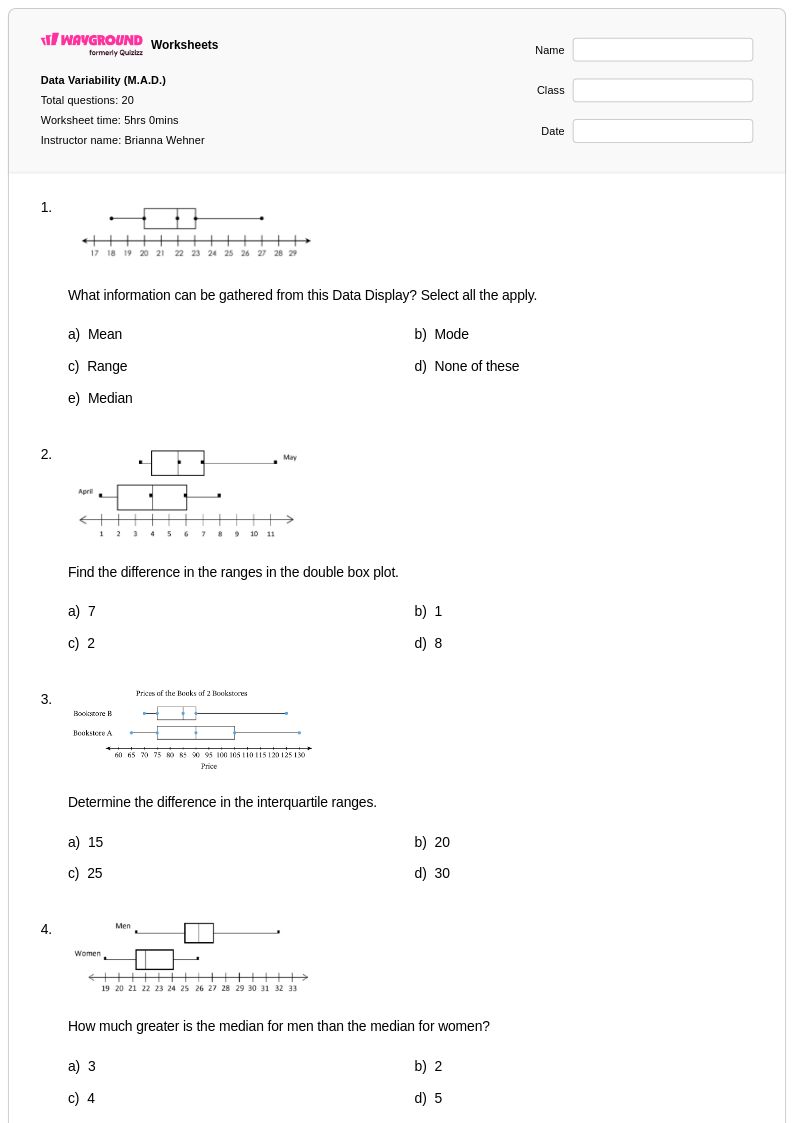
20 Q
7th
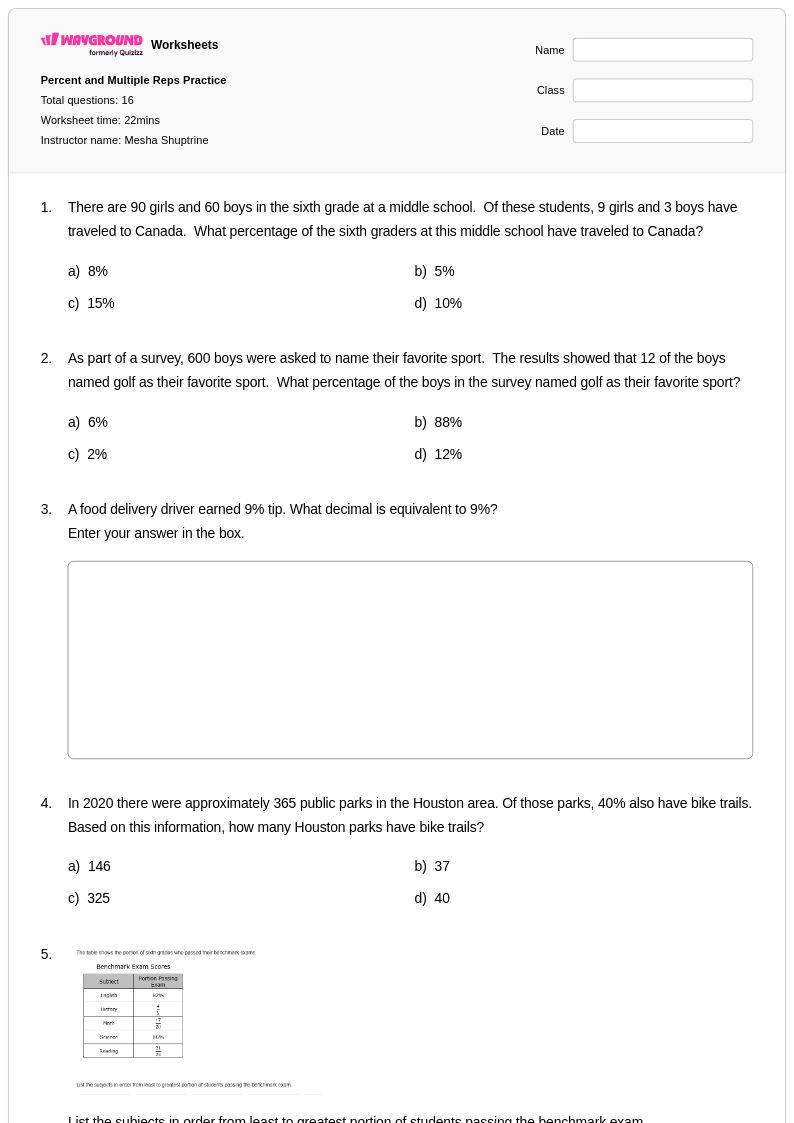
16 Q
6th - Uni
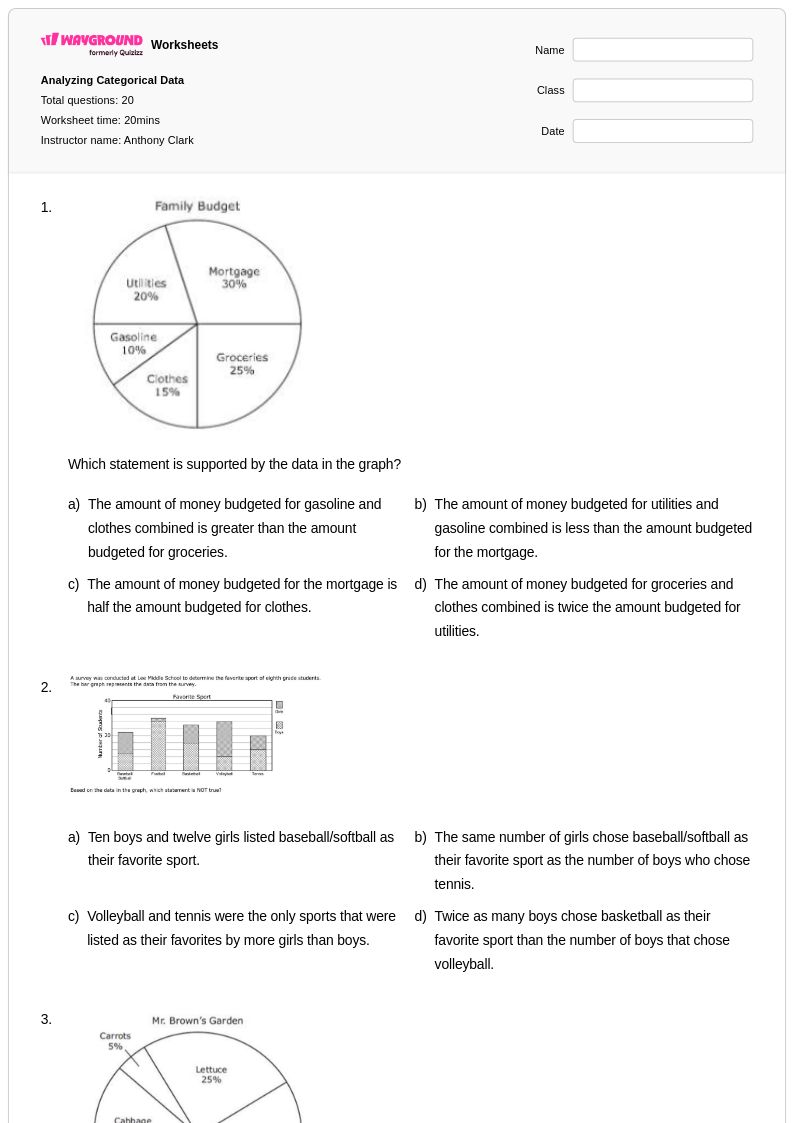
20 Q
7th - Uni
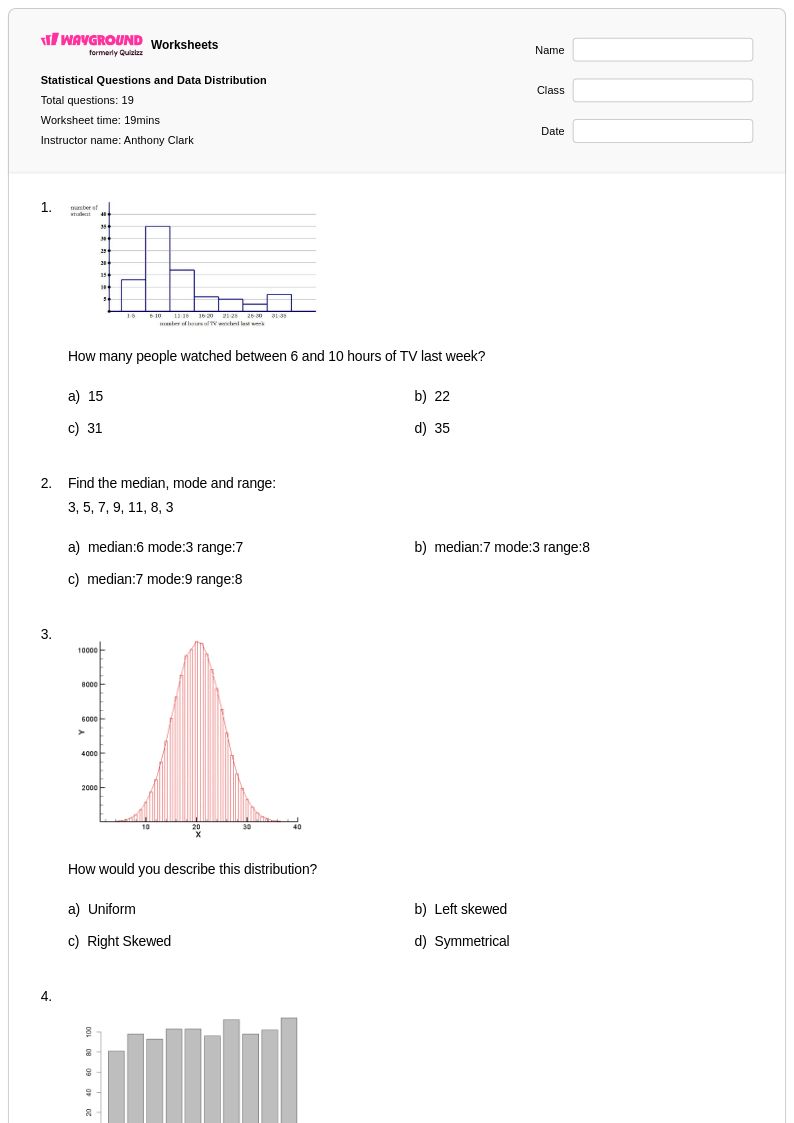
19 Q
6th - Uni

11 Q
6th - 10th
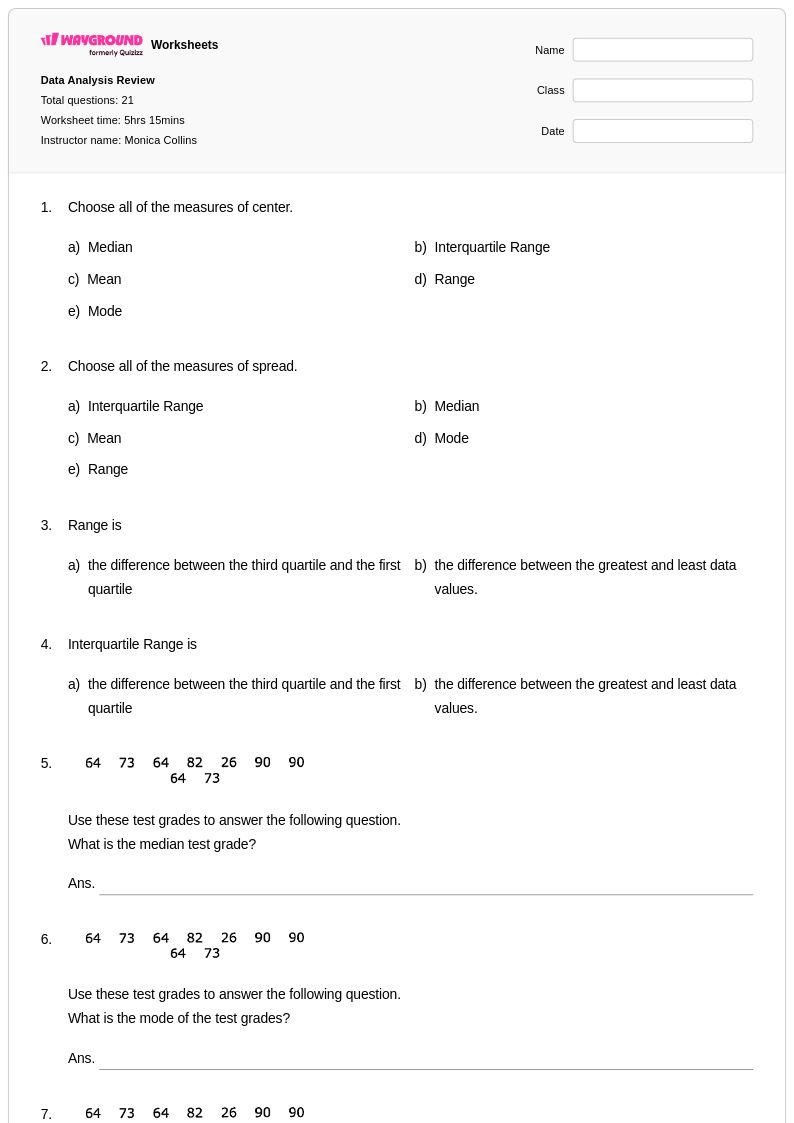
21 Q
7th
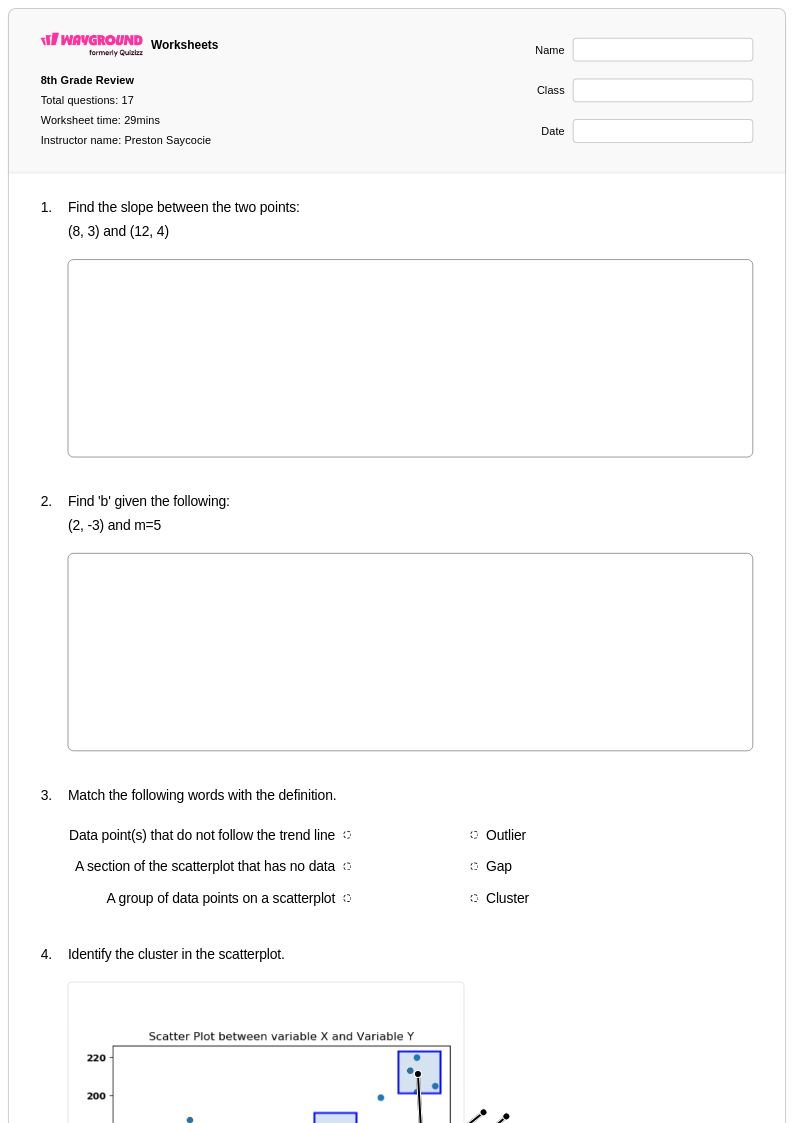
17 Q
7th
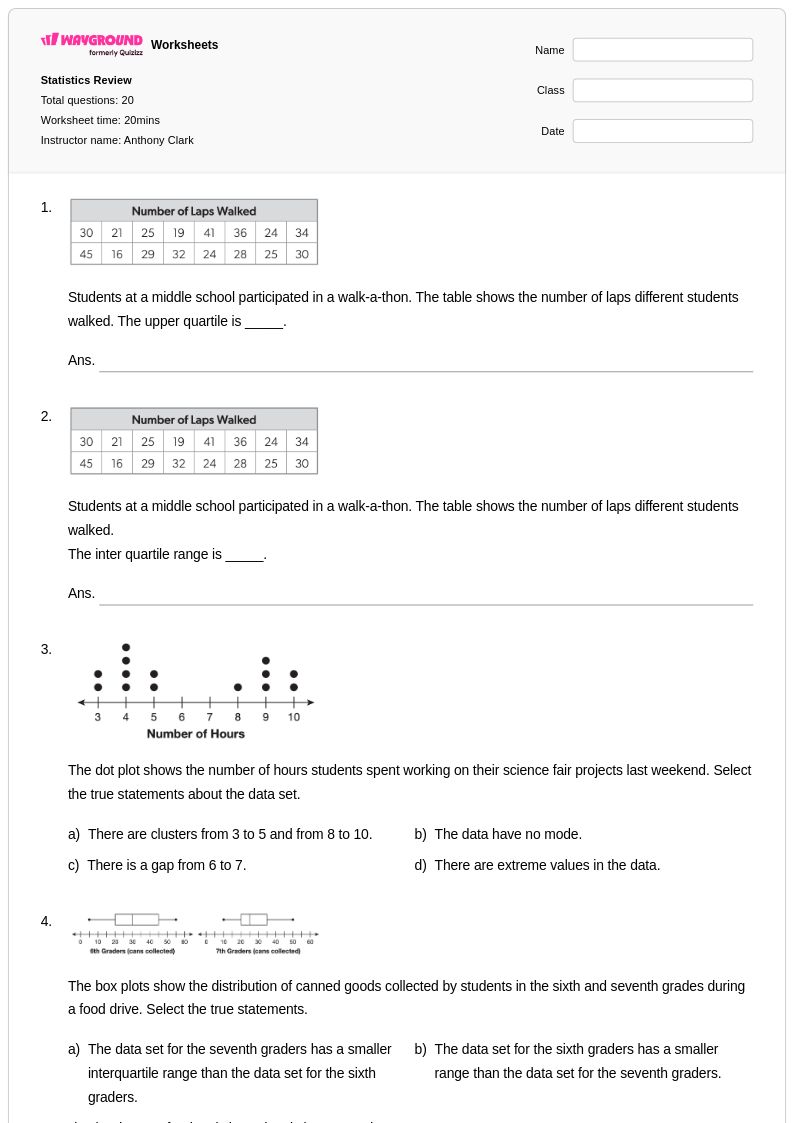
20 Q
7th - Uni
Explore Other Subject Worksheets for grade 7
Explore printable Data Clusters worksheets for Grade 7
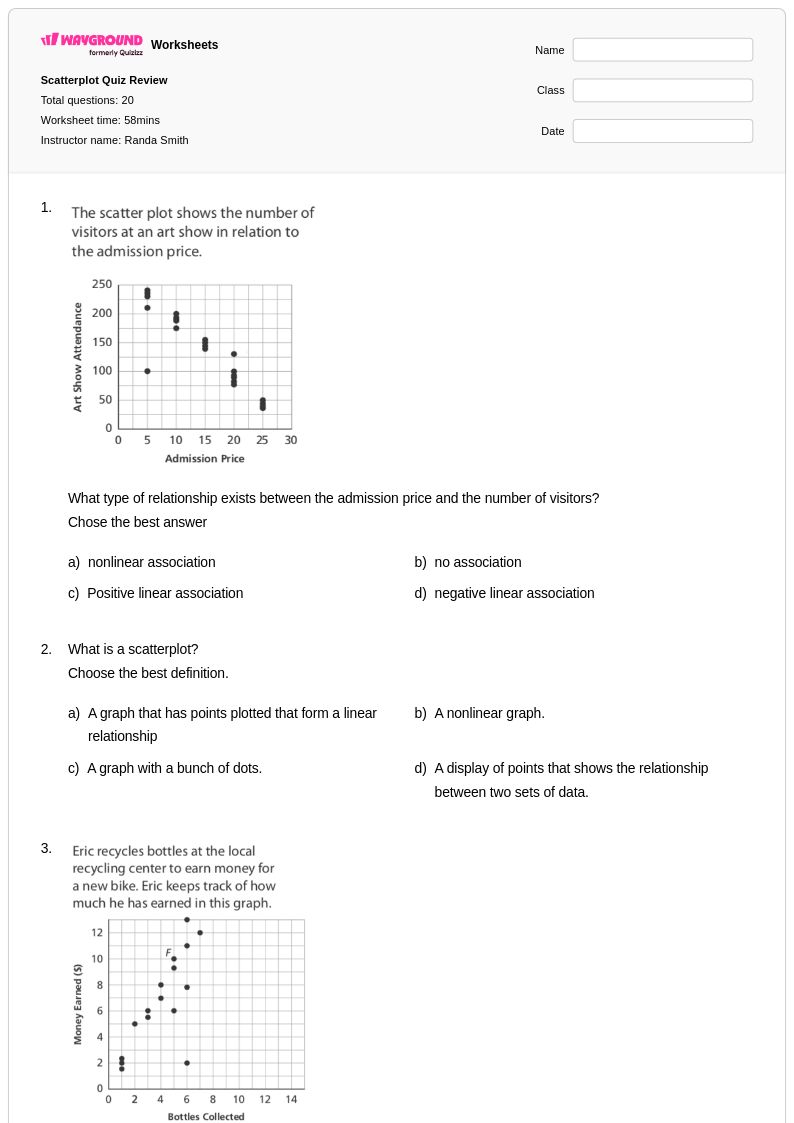
Data clusters worksheets for Grade 7 students available through Wayground (formerly Quizizz) provide comprehensive practice in identifying, analyzing, and interpreting clustered data points within various graphical representations. These educational resources strengthen students' ability to recognize patterns where data values group together, understand the significance of clustering in real-world datasets, and develop critical thinking skills essential for advanced statistical analysis. The worksheets feature diverse practice problems that challenge seventh graders to examine scatter plots, dot plots, and other visual displays to locate clusters, gaps, and outliers, while comprehensive answer keys enable immediate feedback and self-assessment. These free printables offer structured exercises that build foundational skills in data interpretation, helping students understand how clustering reveals meaningful information about collected data and supports evidence-based conclusions.
Wayground (formerly Quizizz) empowers educators with millions of teacher-created data cluster resources specifically designed to meet Grade 7 mathematics standards and diverse classroom needs. The platform's robust search and filtering capabilities allow teachers to quickly locate worksheets that align with specific learning objectives and curriculum requirements, while built-in differentiation tools enable customization for students with varying skill levels and learning styles. These comprehensive worksheet collections are available in both printable PDF format for traditional classroom use and digital formats for interactive learning experiences, providing flexibility for lesson planning, targeted remediation, and enrichment activities. Teachers can seamlessly integrate these resources into their instruction to provide systematic skill practice, assess student understanding of data clustering concepts, and support individualized learning pathways that ensure all seventh-grade students develop proficiency in analyzing and interpreting clustered data patterns.
FAQs
How do I teach data clusters in Grade 7?
What exercises help seventh graders practice interpreting clustered data?
What mistakes do Grade 7 students make when analyzing data clusters?
How can I use Grade 7 data clusters worksheets on Wayground?
How do data clusters fit into the Grade 7 Common Core math progression?
How can I support different learners with Grade 7 data-clusters practice?
Is data-cluster analysis appropriate for Grade 7?