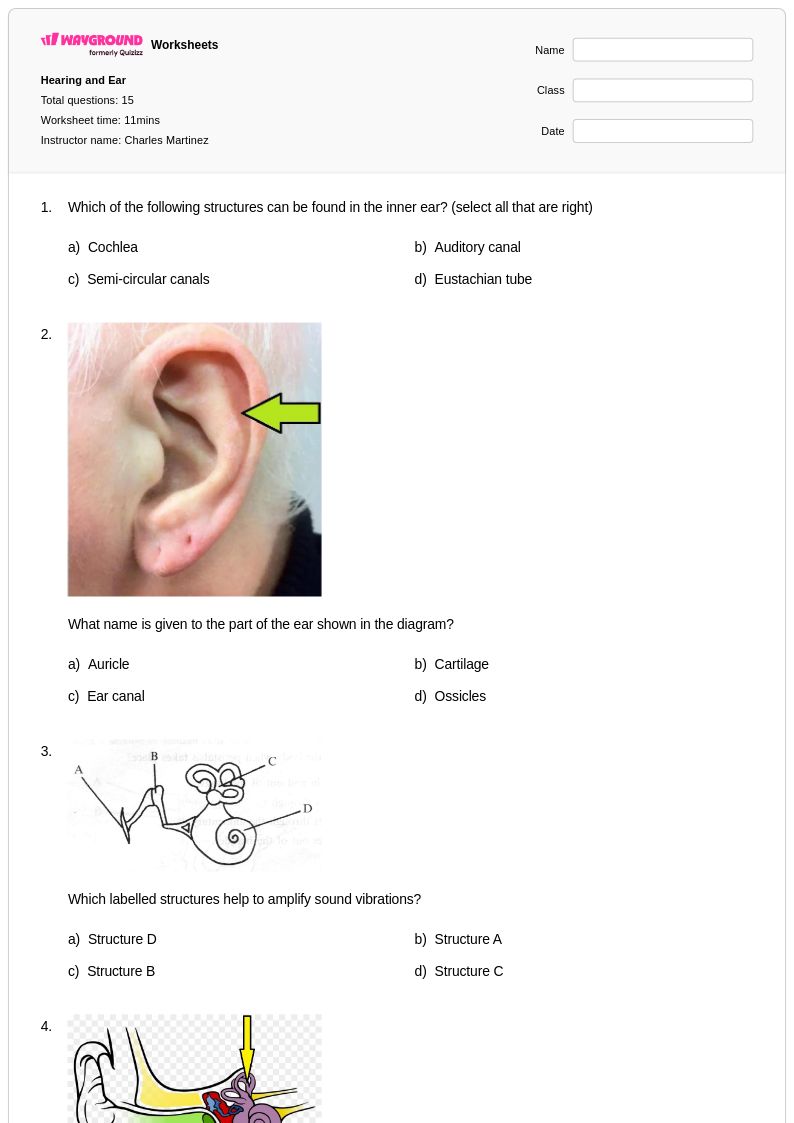
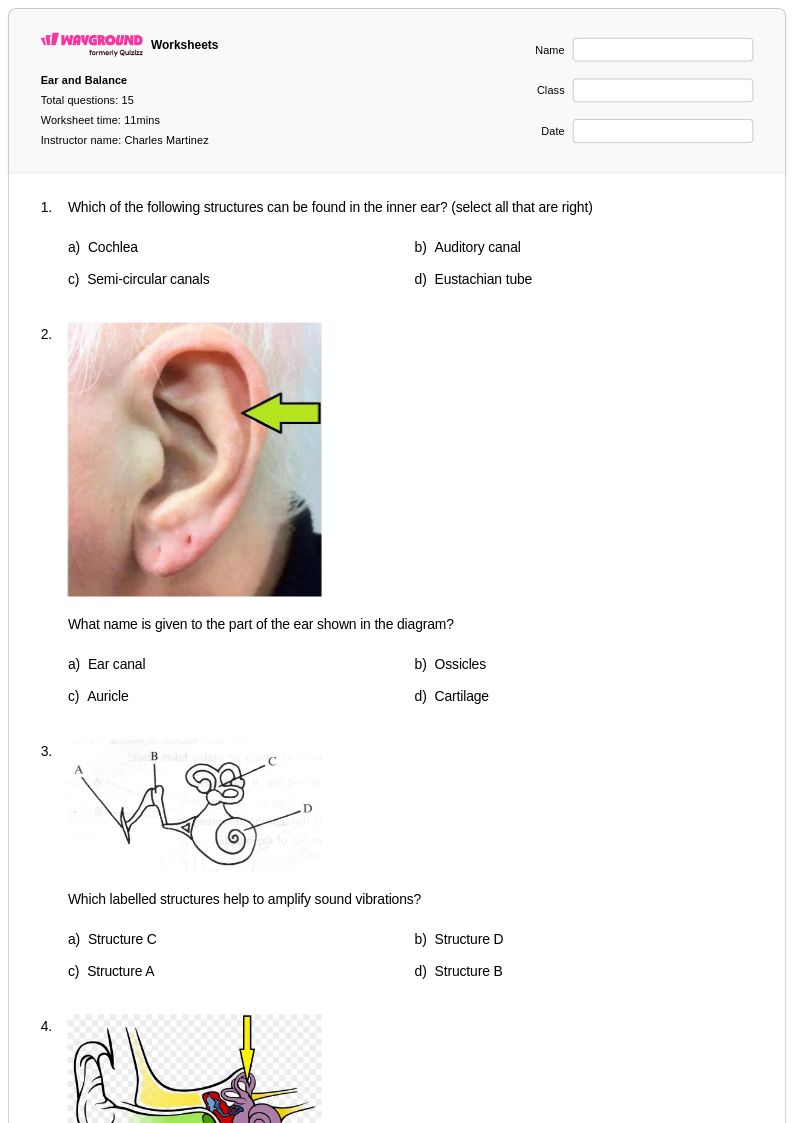
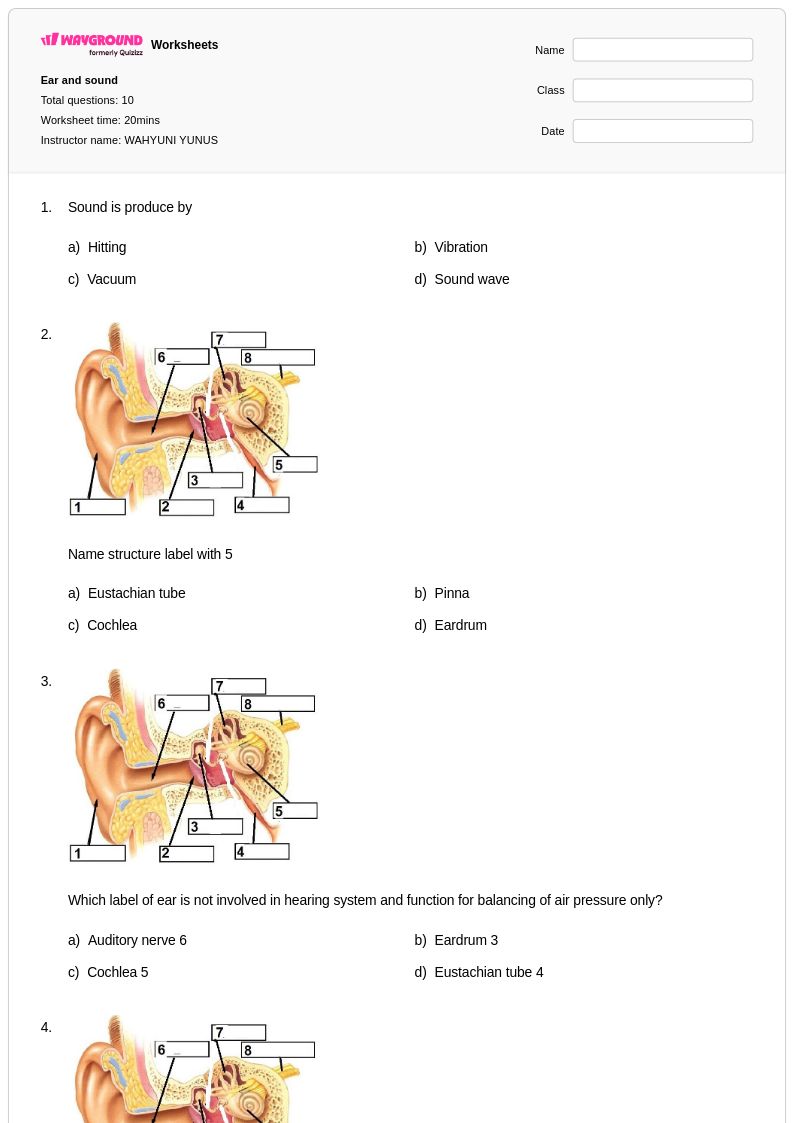
Enhance Grade 12 students' understanding of ear anatomy and function with Wayground's comprehensive collection of free biology worksheets, featuring detailed printables, practice problems, and complete answer keys in PDF format.
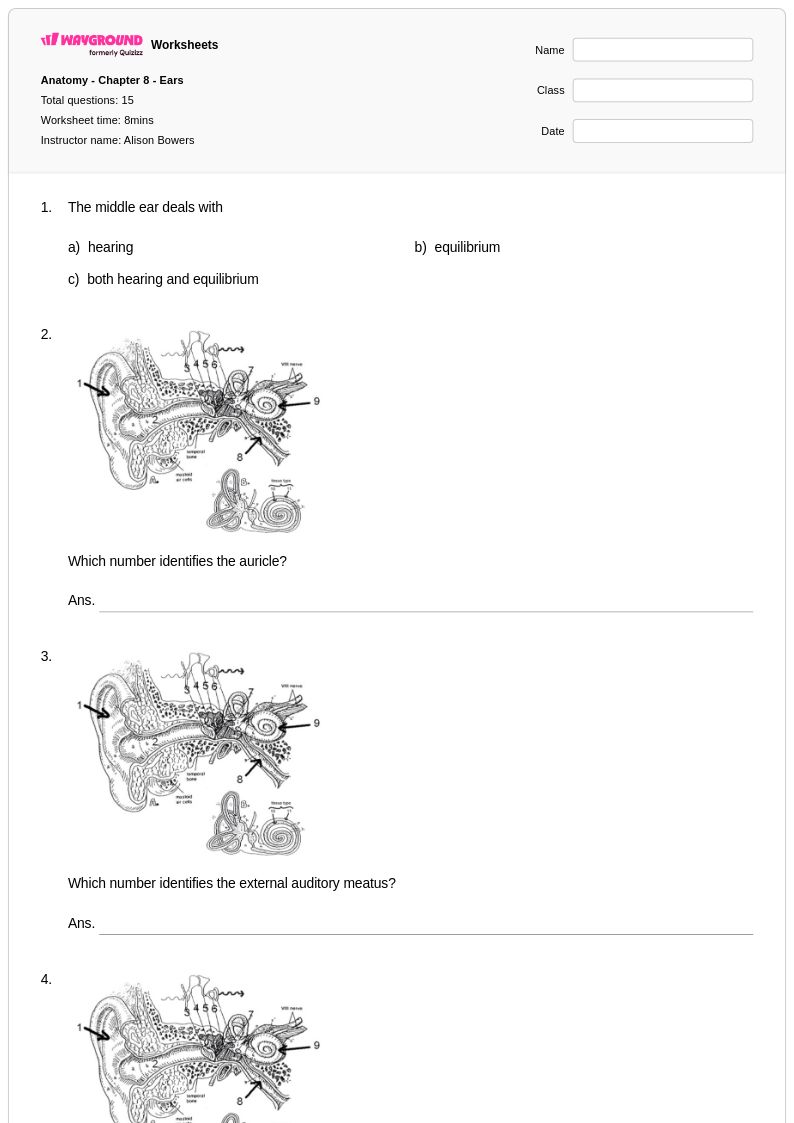
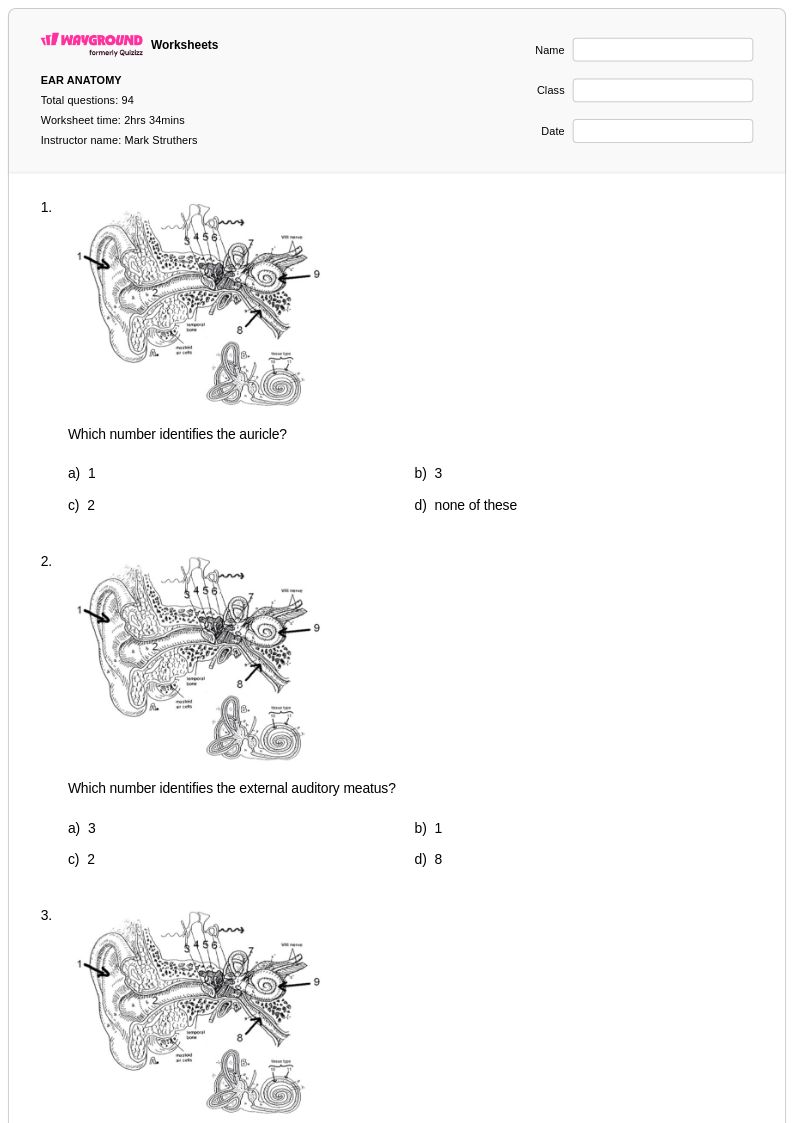
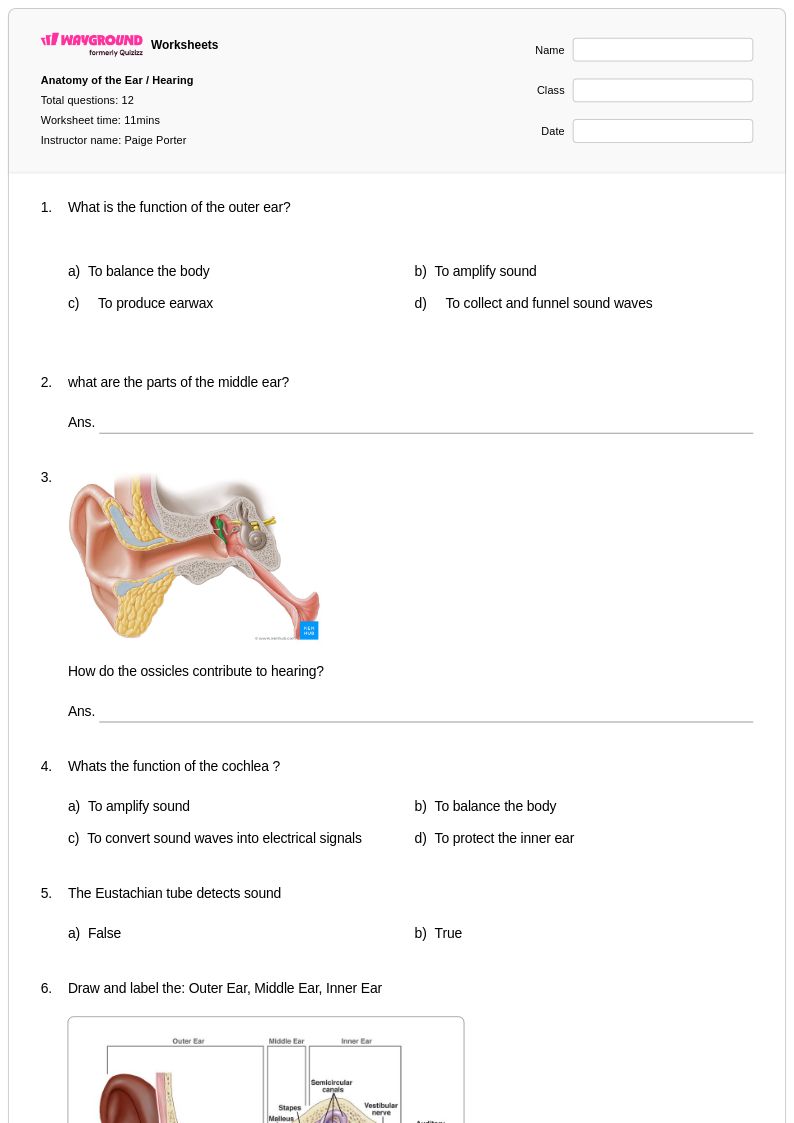
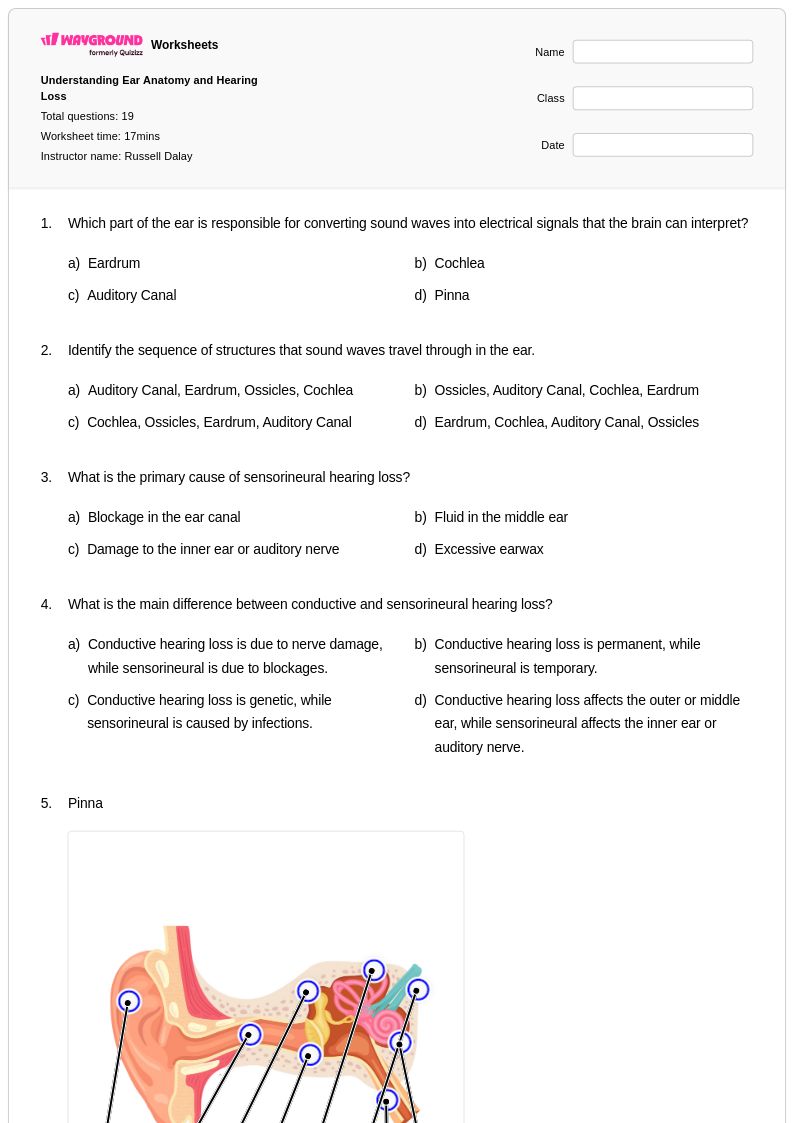
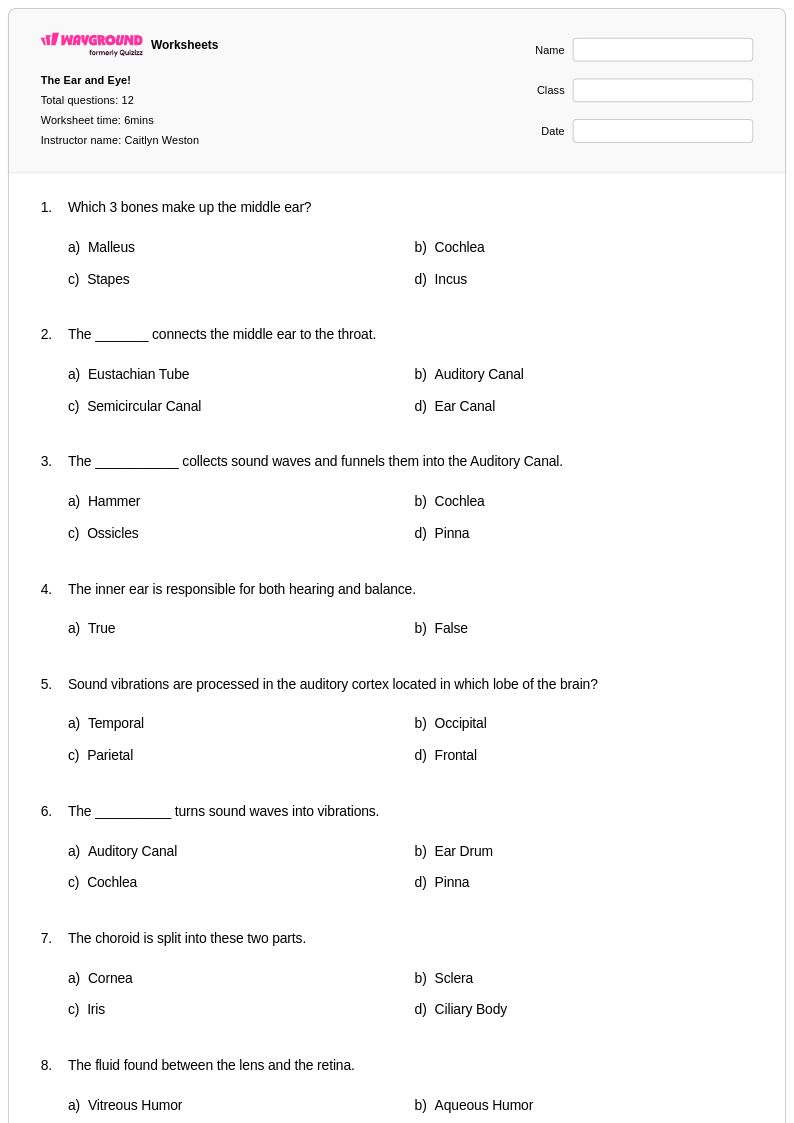
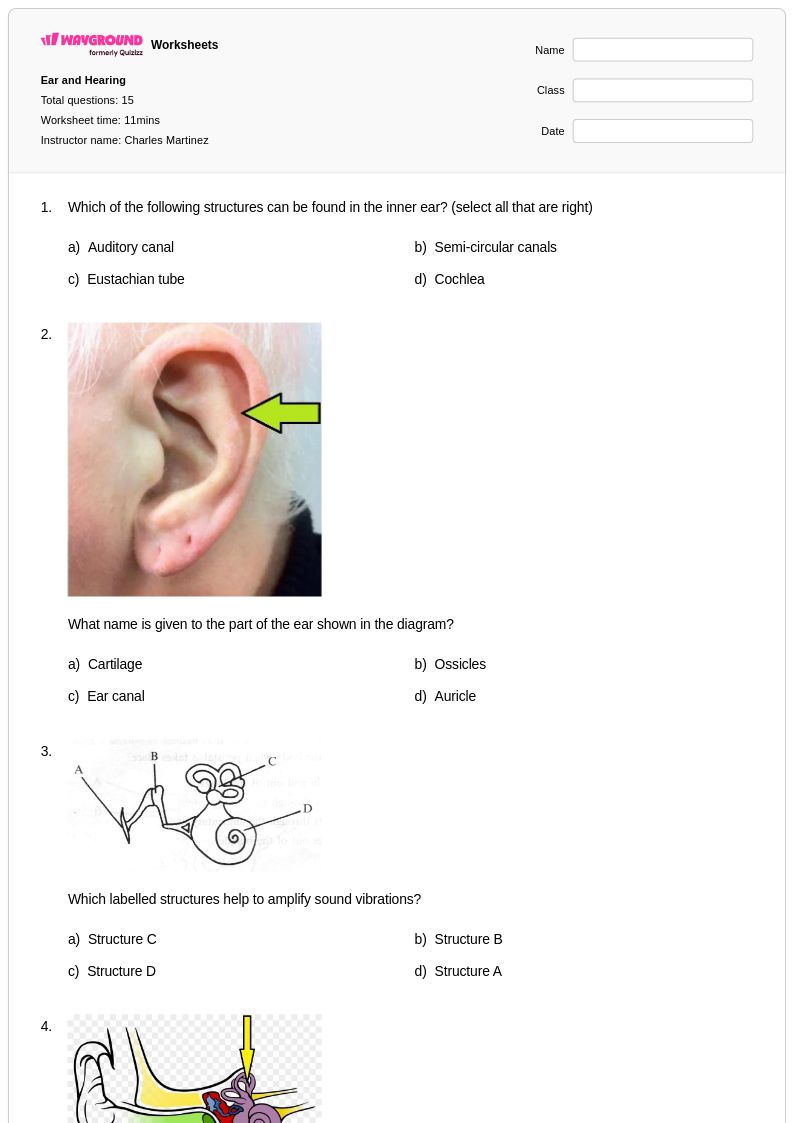
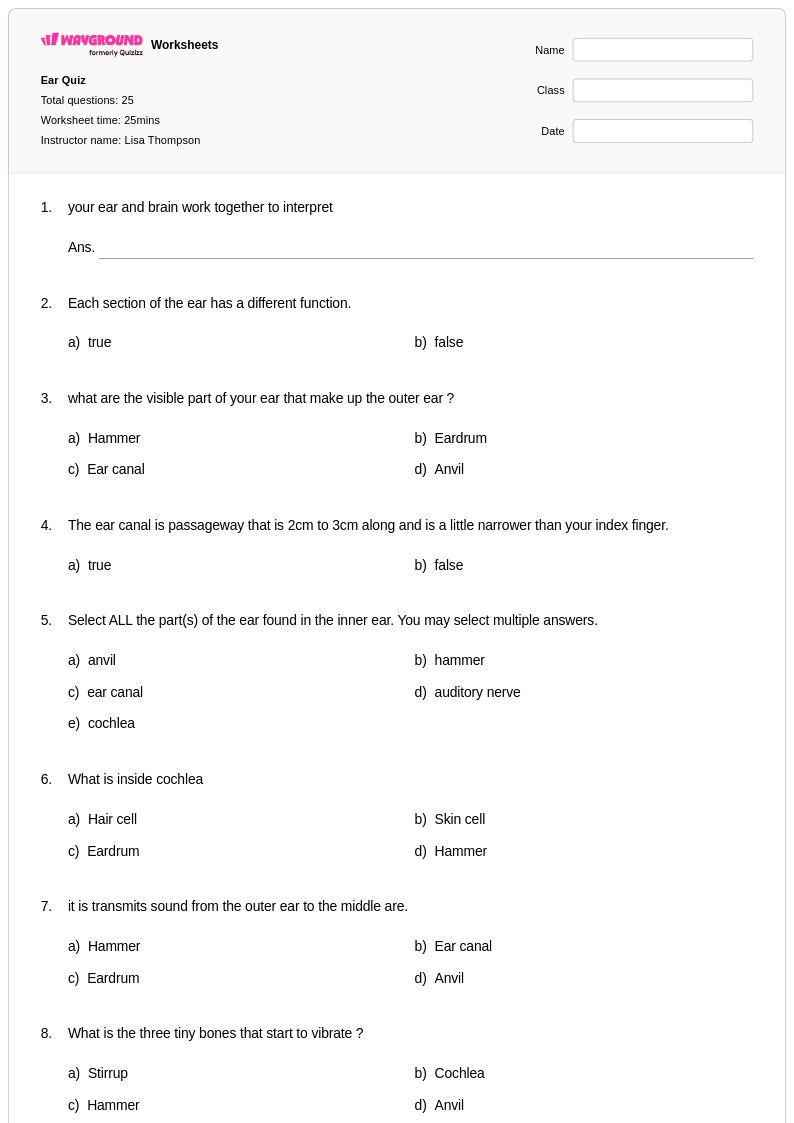
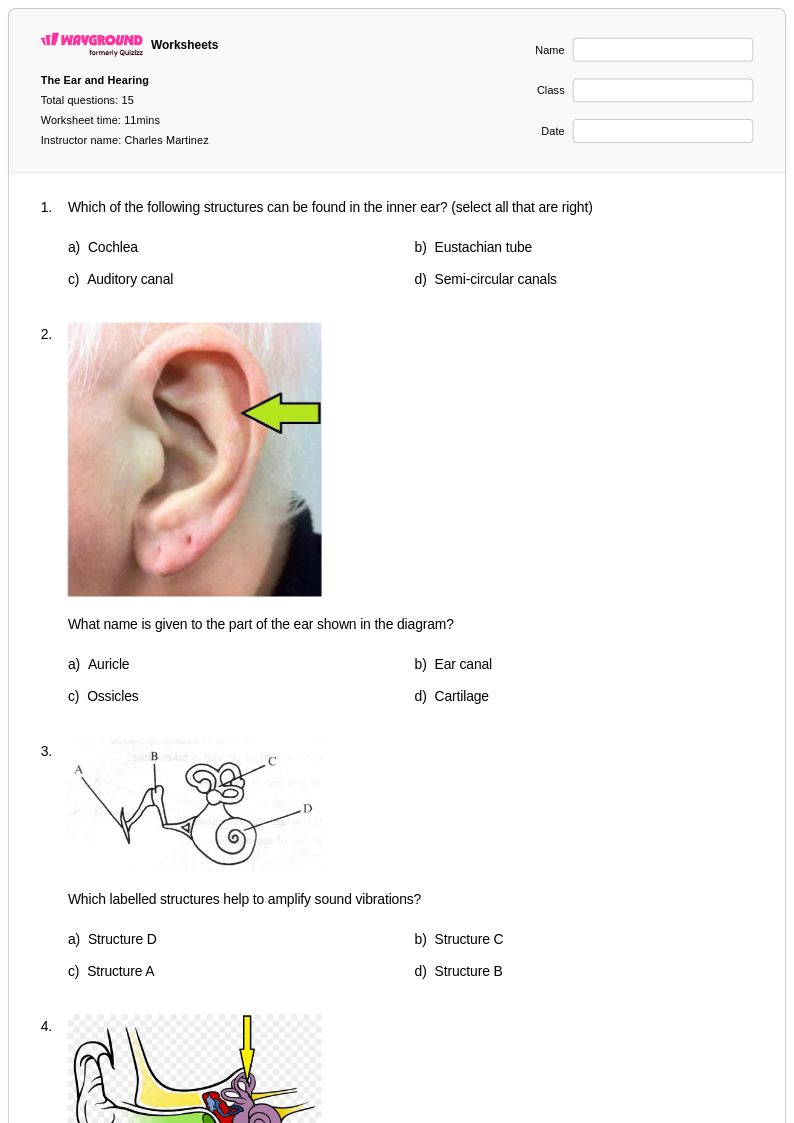
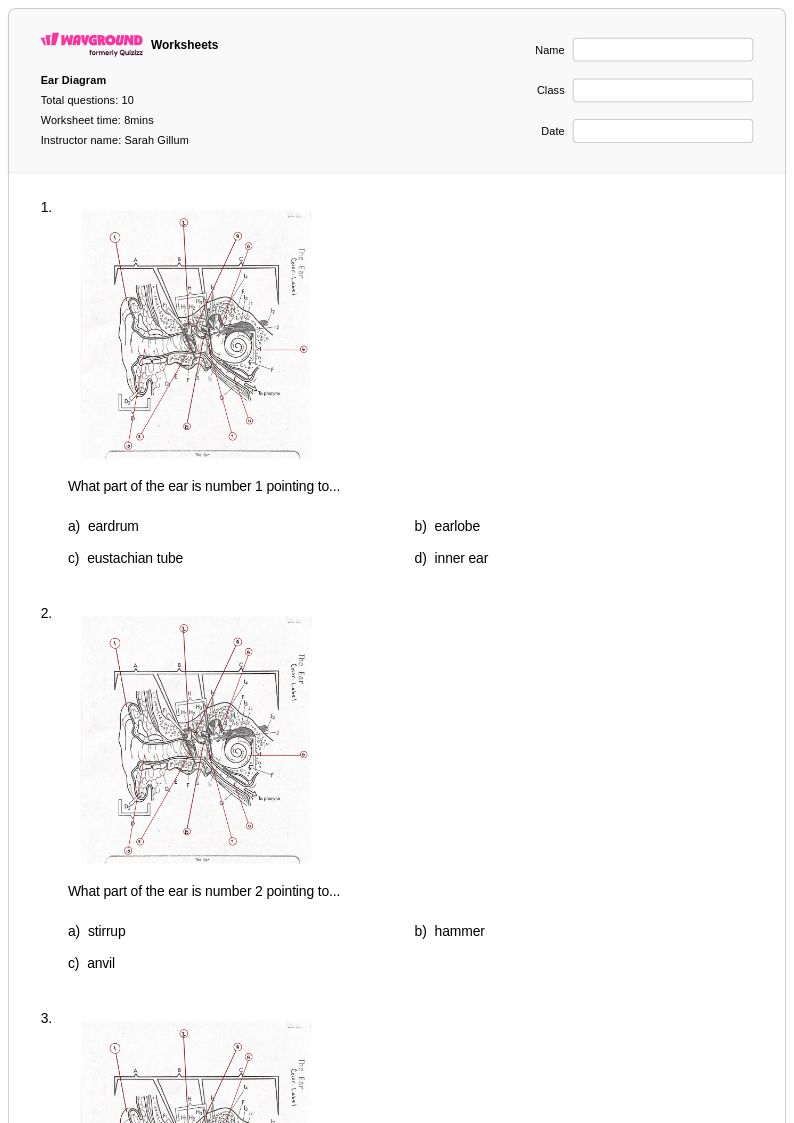
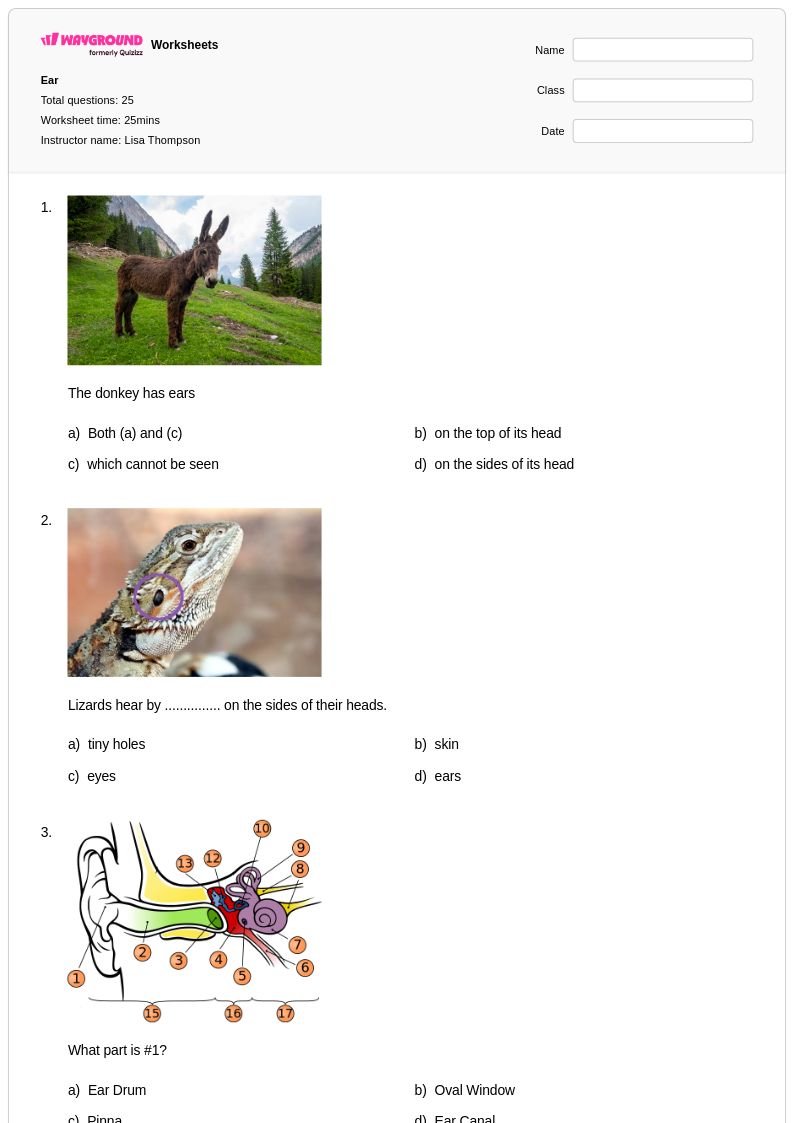
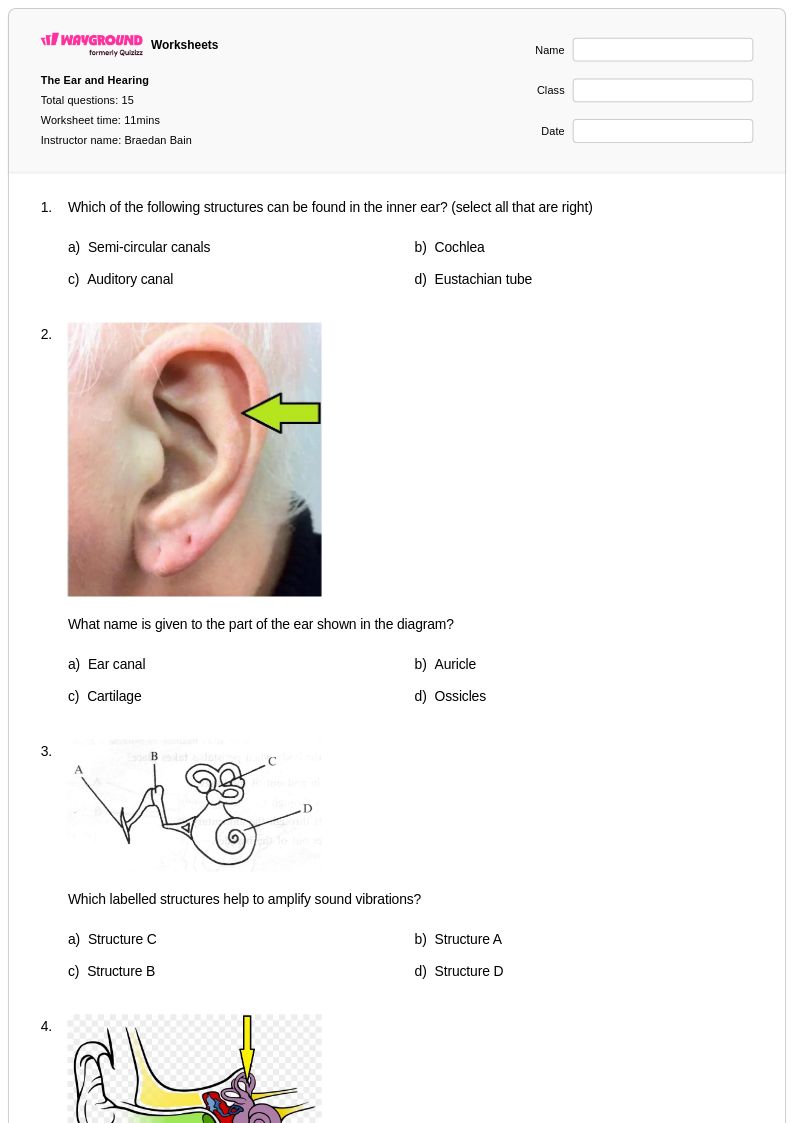
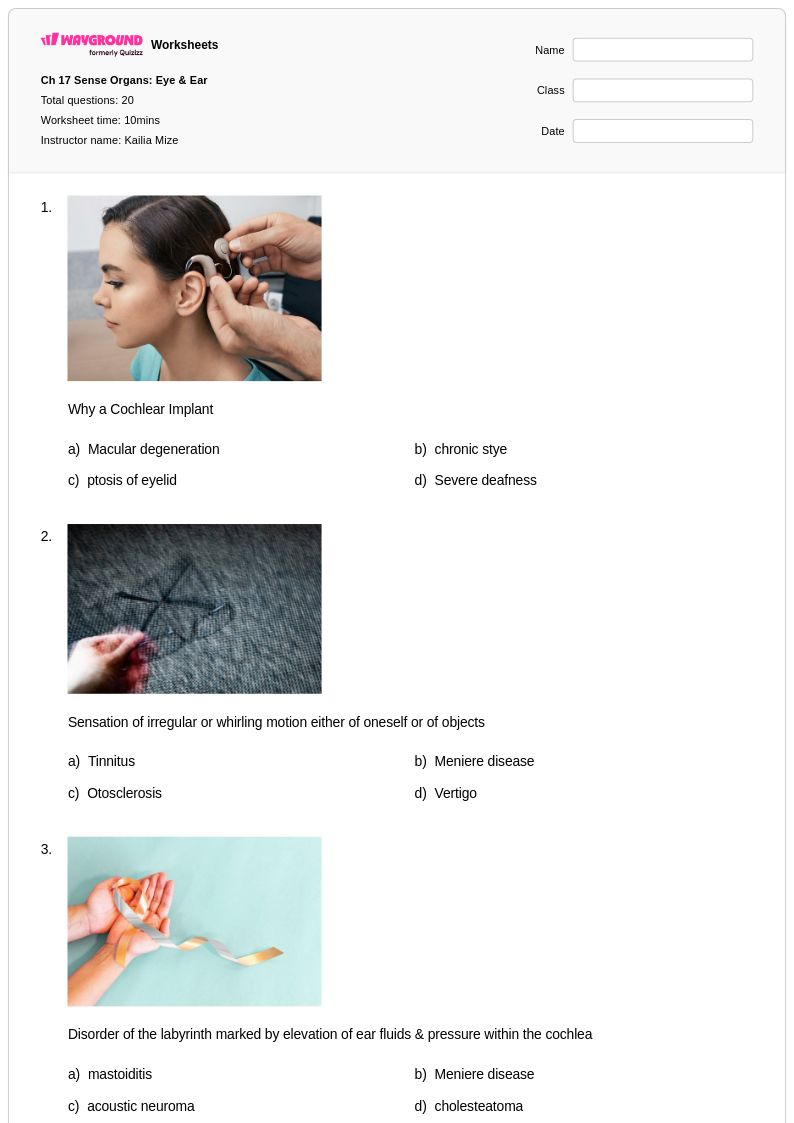
Grade 12 ear anatomy and physiology worksheets available through Wayground (formerly Quizizz) provide comprehensive coverage of the complex structures and functions of the human auditory system. These advanced biology resources challenge students to master intricate concepts including the mechanical transmission of sound waves through the outer, middle, and inner ear, the neurological pathways of hearing, and the role of the vestibular system in balance and spatial orientation. The worksheets strengthen critical analytical skills through detailed labeling exercises of cochlear structures, practice problems involving sound wave frequency and amplitude calculations, and comparative studies of hearing mechanisms across different species. Each worksheet includes a corresponding answer key and is available as a free printable pdf, enabling students to engage with topics such as hair cell transduction, auditory nerve signal processing, and common hearing disorders like otosclerosis and presbycusis.
Wayground (formerly Quizizz) supports biology educators with an extensive collection of millions of teacher-created ear-focused resources that streamline lesson planning and enhance student understanding of this sophisticated sensory system. The platform's robust search and filtering capabilities allow teachers to quickly locate materials aligned with specific curriculum standards, while differentiation tools enable customization for varying student ability levels within the same Grade 12 classroom. These worksheets are available in both printable pdf format and interactive digital versions, providing flexibility for in-class activities, homework assignments, and laboratory exercises. Teachers utilize these comprehensive resources for targeted skill practice in anatomical identification, remediation of challenging concepts like sound localization and frequency discrimination, and enrichment activities that explore cutting-edge research in auditory neuroscience and hearing restoration technologies.
FAQs
How do I teach ear anatomy to biology students?
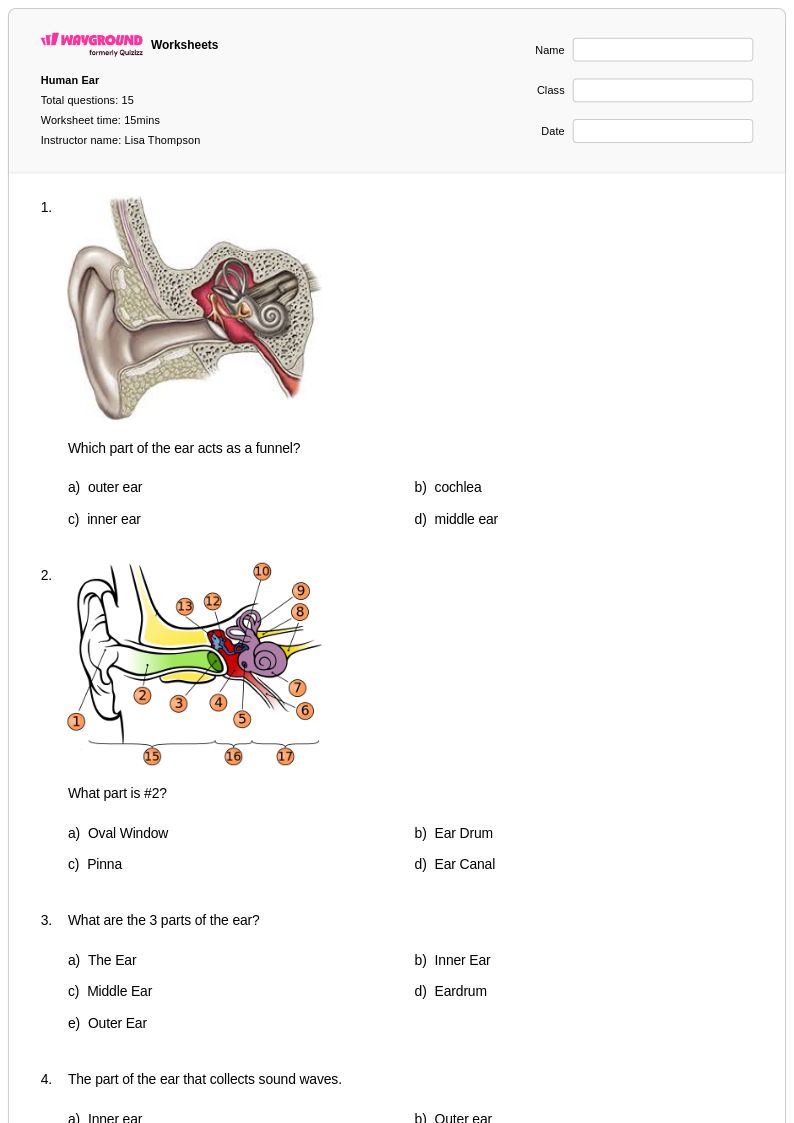
Start by introducing the three structural regions of the ear — outer, middle, and inner — before moving into the specific components within each region, such as the pinna, ossicles, cochlea, and semicircular canals. Use labeled diagrams to anchor students to spatial relationships before asking them to reproduce those labels independently. Connecting each structure to its specific function (for example, how the ossicles amplify vibrations before they reach the cochlea) helps students retain both anatomy and physiology simultaneously rather than memorizing them as separate sets of facts.
What are the best exercises for students to practice ear anatomy and auditory function?
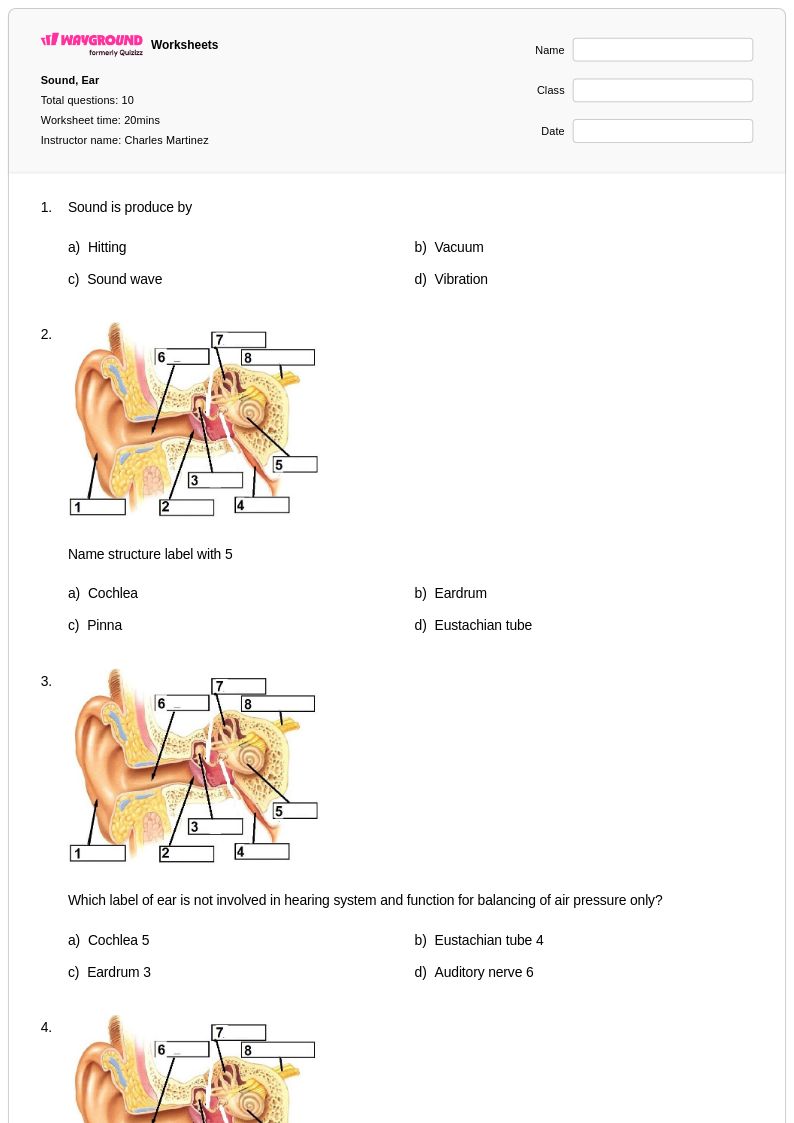
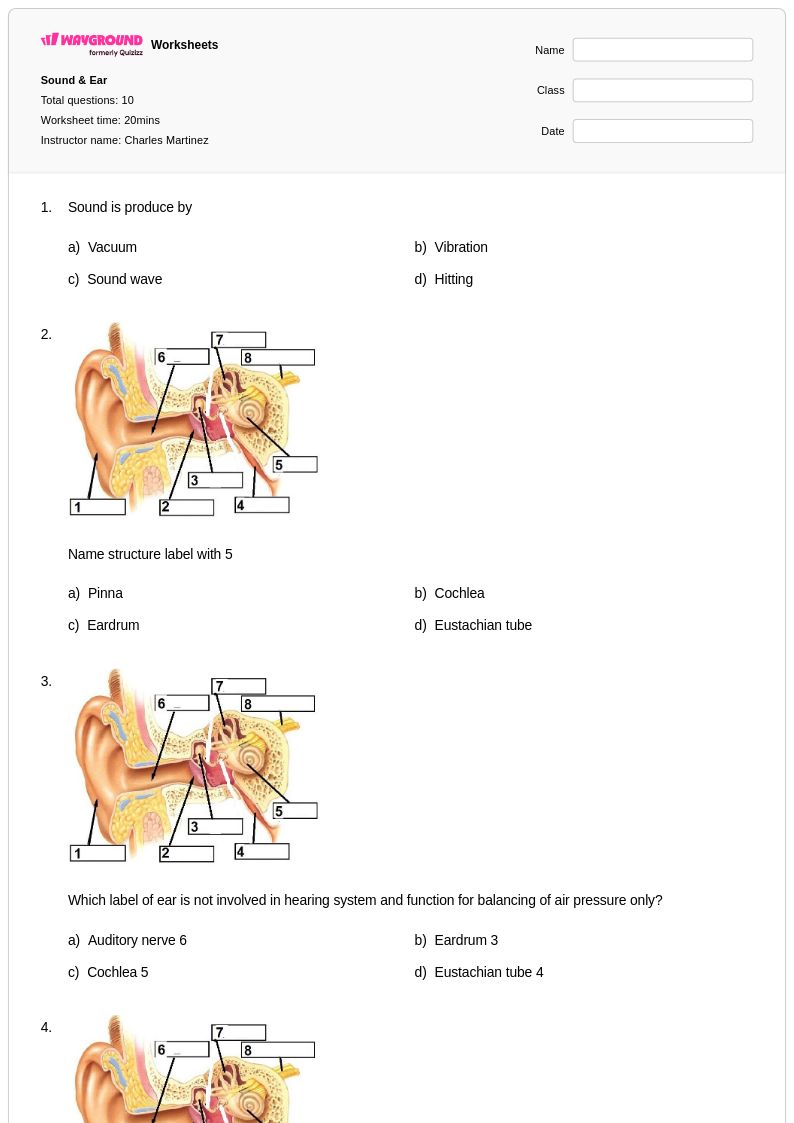
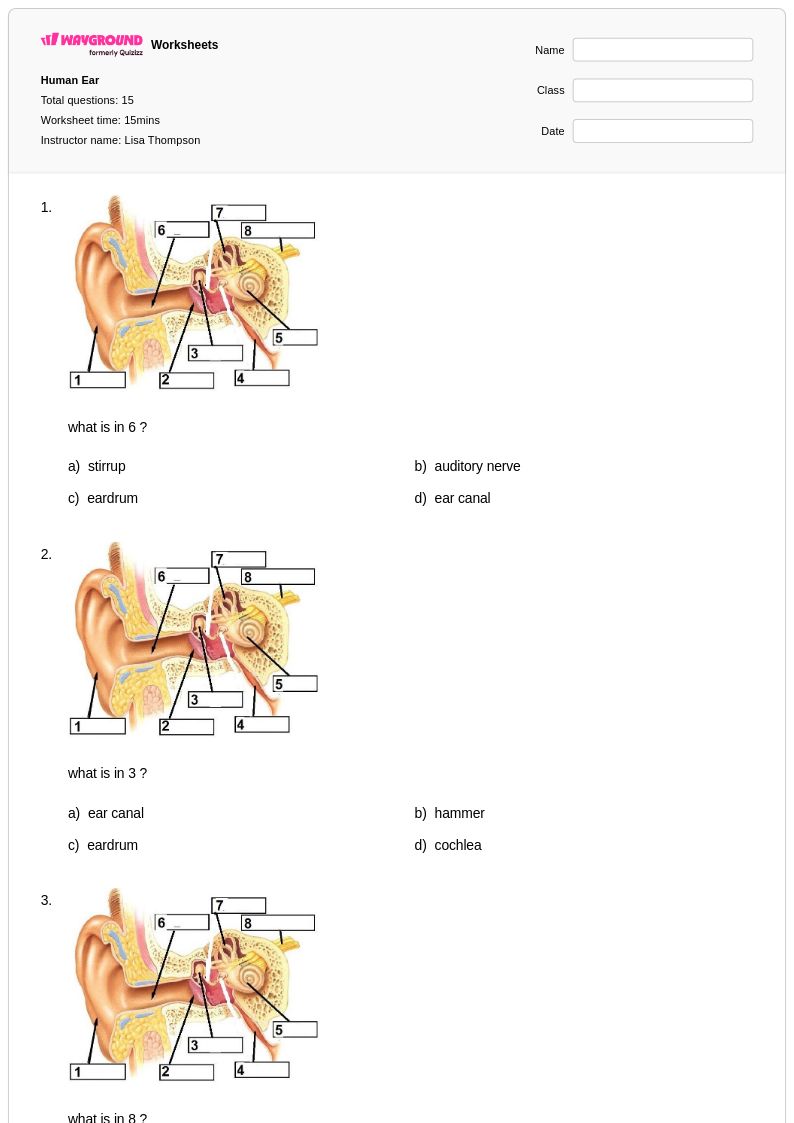
Diagram labeling exercises are foundational — students should practice identifying and labeling structures like the tympanic membrane, cochlea, Eustachian tube, and semicircular canals from unlabeled diagrams. Paired with these, tracing the pathway of sound from the outer ear canal through to neural signal conversion reinforces the physiological sequence students are most commonly assessed on. Matching exercises that connect structure names to functions are also effective for consolidating vocabulary and conceptual understanding.
What mistakes do students commonly make when learning about ear anatomy?
Students frequently confuse the roles of the cochlea and semicircular canals, mistakenly attributing balance functions to the cochlea or hearing functions to the semicircular canals. Another common error is missequencing the path of sound transmission — for example, skipping the role of the ossicles or failing to articulate how vibrations are converted into neural signals at the hair cells of the organ of Corti. Students also tend to conflate the Eustachian tube's pressure-equalizing role with a direct role in hearing, which warrants explicit correction.
How can I differentiate ear anatomy instruction for students with different learning needs?
For students who struggle with dense anatomical vocabulary, reducing the number of structures introduced at once and providing partially completed diagrams lowers cognitive load without removing rigor. On Wayground, teachers can apply accommodations such as Read Aloud for students who benefit from audio support, reduced answer choices to decrease decision fatigue on labeling tasks, and extended time for students who need additional processing time. These settings can be assigned to individual students while the rest of the class works under standard conditions.
How do I use Wayground's ear anatomy worksheets in my classroom?
Wayground's ear anatomy worksheets are available as printable PDFs for traditional classroom use and in digital formats for technology-integrated learning environments, and they can also be hosted as a quiz directly on Wayground. Each worksheet includes a complete answer key, making them suitable for in-class practice, homework, independent study, or self-assessment. Teachers can use the platform's search and filtering tools to quickly identify worksheets aligned to specific learning standards, whether the focus is structural labeling, sound wave transmission, or auditory physiology.
How do I assess whether students understand how sound travels through the ear?
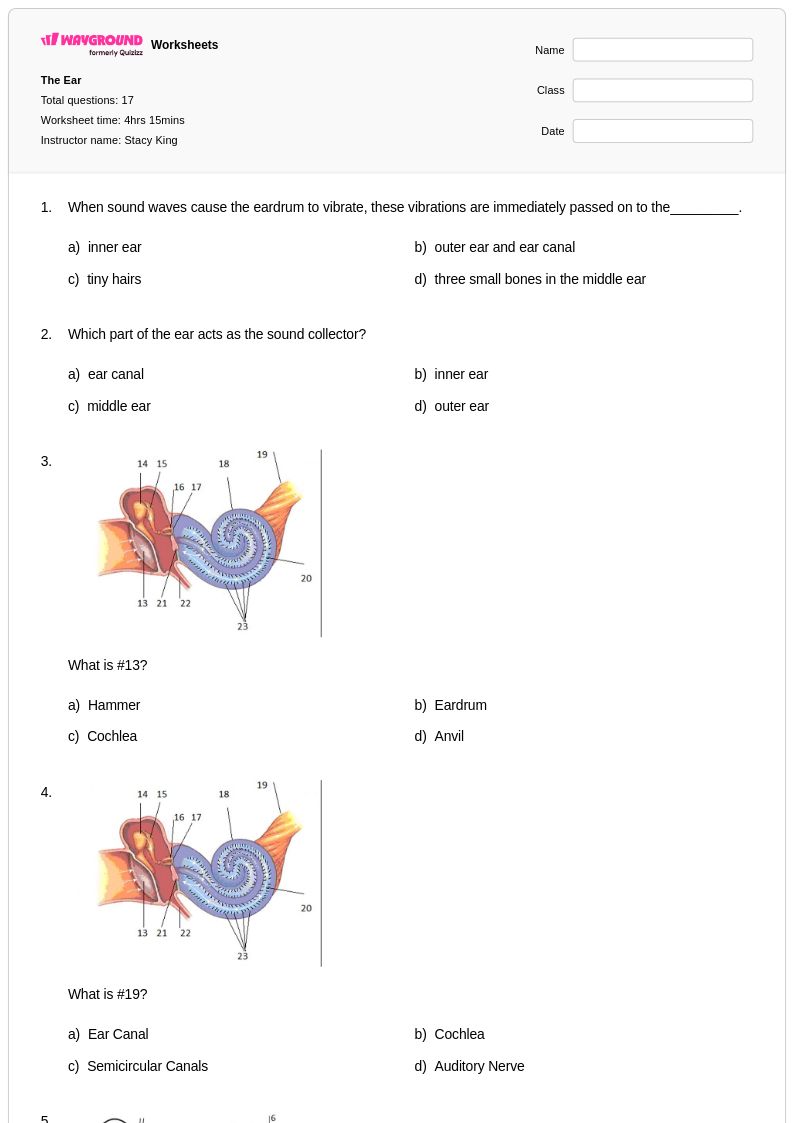
Ask students to describe or sequence the path of a sound wave from the moment it enters the ear canal to the point at which it becomes a neural signal — this task reveals whether they understand not just the names of structures but the causal chain connecting them. Common gaps include inability to explain how the ossicles amplify vibrations or how the cochlea converts mechanical motion into electrical signals. Short answer and diagram annotation tasks are more diagnostic than multiple choice for this concept because they surface incomplete mental models rather than allowing students to eliminate wrong answers.