Grade 12 embryology worksheets and printables help students master developmental biology concepts through comprehensive practice problems, free PDF resources, and detailed answer keys for effective learning.
Explore printable Embryology worksheets for Grade 12
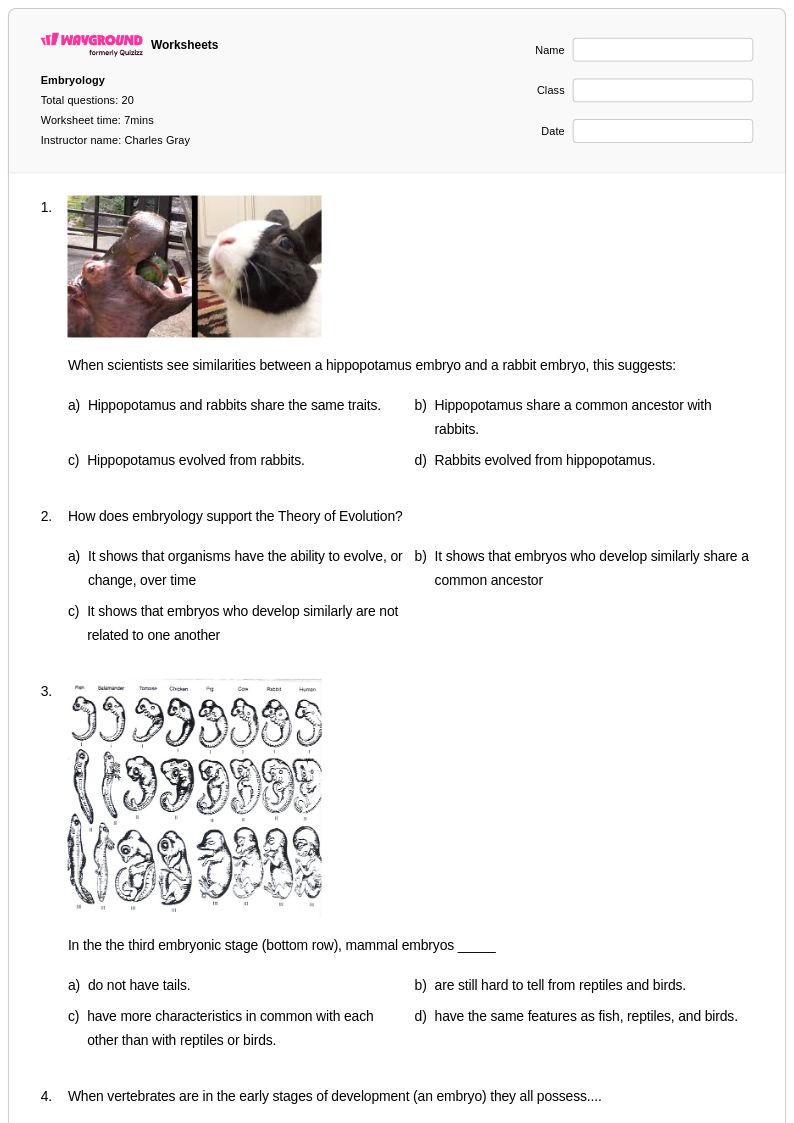
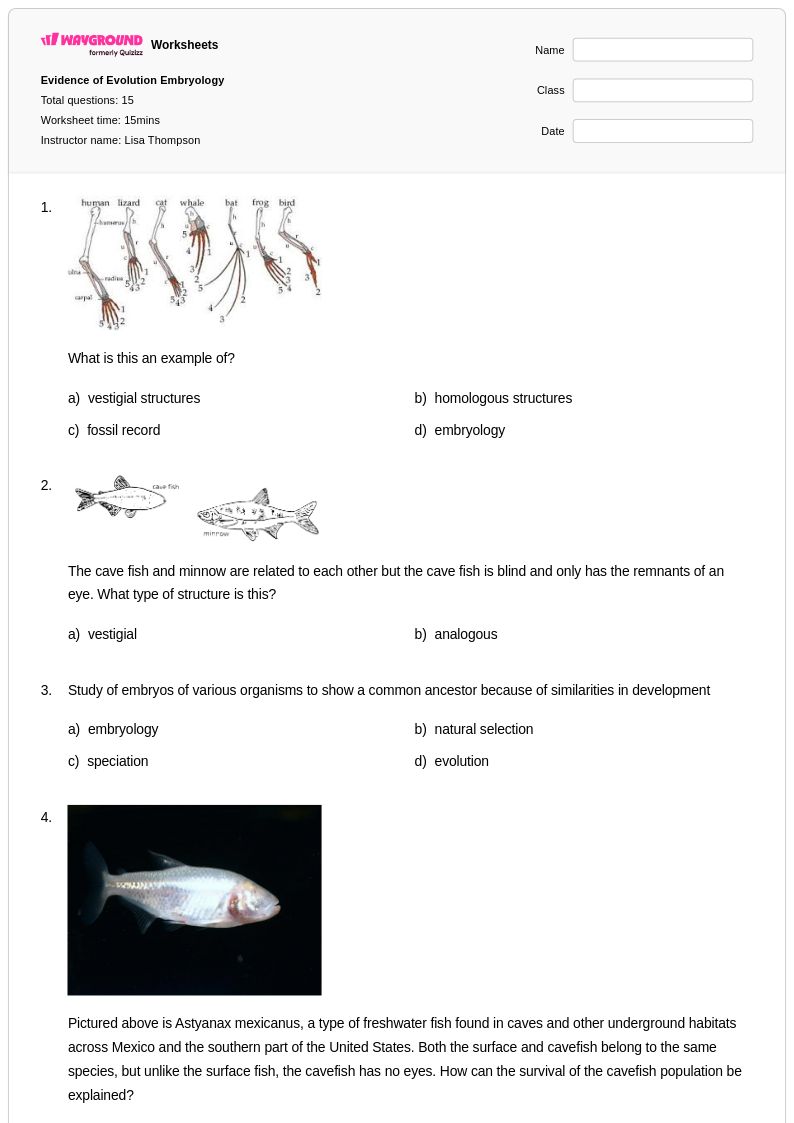
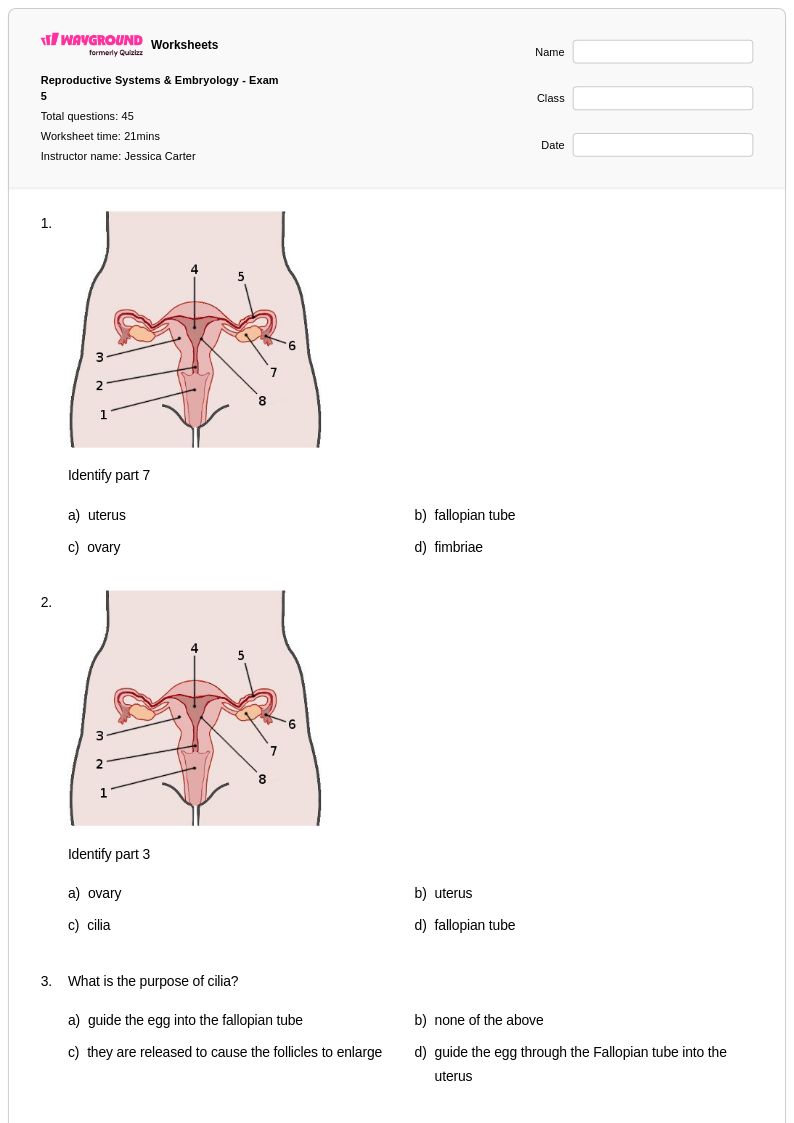
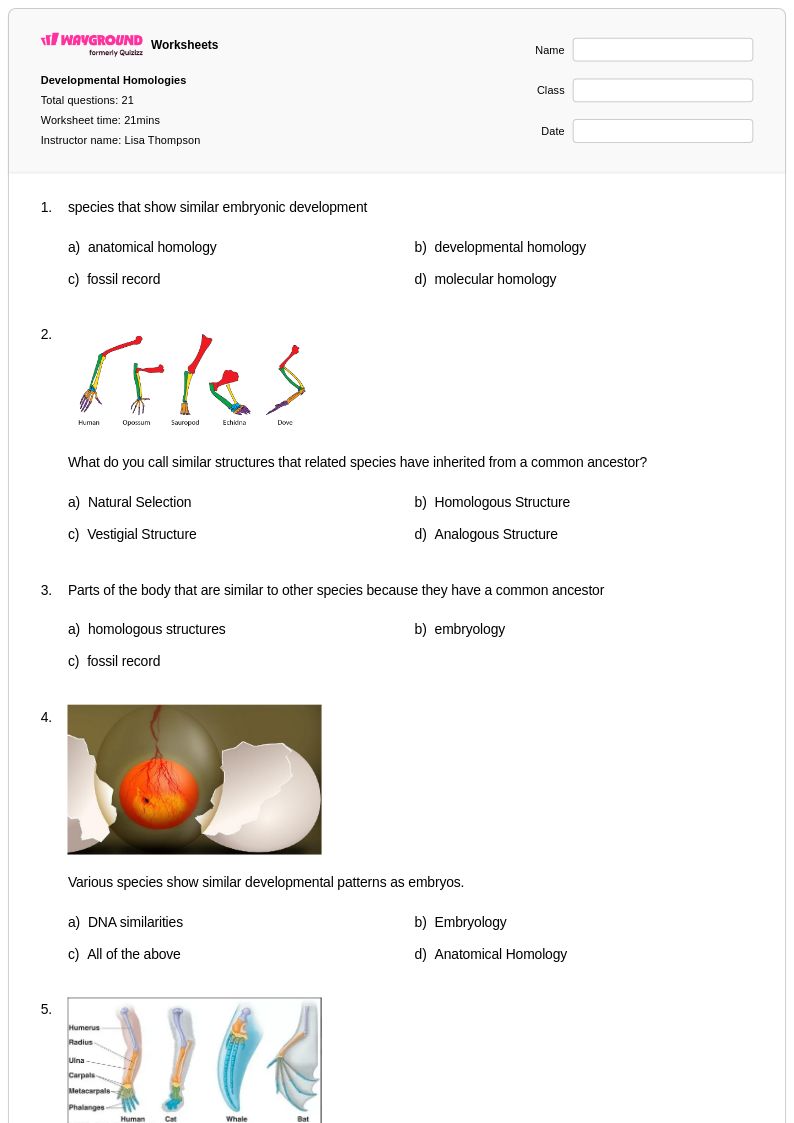
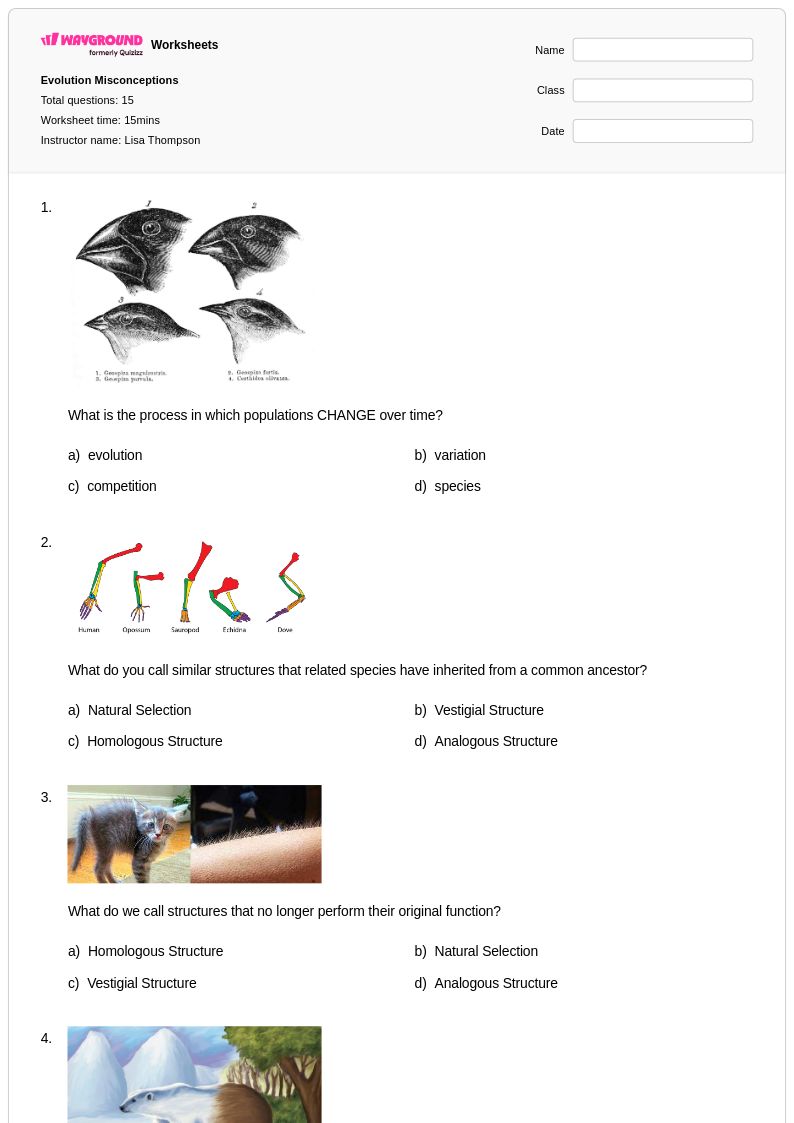
Embryology worksheets for Grade 12 students available through Wayground (formerly Quizizz) provide comprehensive coverage of developmental biology concepts essential for advanced high school science courses. These expertly crafted resources guide students through the intricate processes of fertilization, gastrulation, organogenesis, and morphogenesis across various animal species, strengthening critical analytical skills needed to understand how multicellular organisms develop from single fertilized cells. The collection includes detailed practice problems that challenge students to trace embryonic development stages, compare vertebrate and invertebrate developmental patterns, and analyze the molecular mechanisms controlling cell differentiation and tissue formation. Each worksheet comes with a complete answer key and is available as free printables in convenient pdf format, allowing students to master complex embryological terminology, developmental timelines, and the regulatory genes that orchestrate embryonic development.
Wayground (formerly Quizizz) empowers educators with access to millions of teacher-created embryology resources specifically designed to meet the rigorous demands of Grade 12 biology instruction. The platform's sophisticated search and filtering capabilities enable teachers to quickly locate worksheets aligned with specific curriculum standards, whether focusing on mammalian development, comparative embryology, or developmental genetics. Advanced differentiation tools allow instructors to customize content difficulty levels and modify practice problems to accommodate diverse learning needs, supporting both remediation for struggling students and enrichment opportunities for advanced learners. These embryology worksheets are available in both printable and digital formats, including downloadable pdf versions, giving teachers the flexibility to seamlessly integrate developmental biology practice into lesson planning, formative assessments, and targeted skill-building activities that prepare students for college-level coursework and standardized examinations.
FAQs
How do I teach embryology to high school biology students?
Start with fertilization and early cleavage patterns before progressing to gastrulation, neurulation, and organogenesis, building conceptual complexity incrementally. Using labeled diagrams of embryonic stages alongside comparative embryology examples across species helps students visualize abstract developmental processes. Connecting each stage to its functional outcome — for instance, linking gastrulation to the formation of the three germ layers — gives students a framework for understanding why each phase matters.
What exercises help students practice embryology concepts?
Effective embryology practice includes labeling embryonic stage diagrams, sequencing developmental events in order, and analyzing comparative embryology across animal species to identify shared and divergent patterns. Practice problems that ask students to identify structures at specific developmental phases — such as distinguishing the blastula from the gastrula — build precision and reinforce terminology. Exercises that connect developmental mechanisms to outcomes, such as explaining what failure at neurulation would produce, develop higher-order thinking alongside factual recall.
What are the most common mistakes students make when learning embryology?
Students frequently confuse the sequence of developmental stages, particularly gastrulation and neurulation, and struggle to distinguish between terms like blastocyst, blastula, and blastomere. A common misconception is treating embryonic development as a linear checklist rather than a set of coordinated, overlapping processes driven by cell signaling. Students also often conflate the three germ layers with the organs they ultimately produce, rather than understanding the inductive relationships between them.
How can I use embryology worksheets to support students with different learning needs?
Embryology worksheets on Wayground can be hosted as digital quizzes, which allows teachers to apply individualized accommodations directly to the activity. Options include Read Aloud for students who benefit from audio support when interpreting complex terminology, reduced answer choices to lower cognitive load for students who need scaffolding, and extended time for assessments. These accommodations are saved per student and apply automatically in future sessions, so teachers set them once rather than reconfiguring each time.
How do I use Wayground's embryology worksheets in my classroom?
Wayground's embryology worksheets are available as printable PDF downloads for traditional classroom use and as interactive digital versions for technology-integrated environments. Teachers can also host them as quizzes directly on Wayground, enabling real-time data collection and student-level feedback. Both formats include comprehensive answer keys, making them practical for guided instruction, independent practice, and formative assessment without additional prep work.
How does comparative embryology help students understand evolutionary biology?
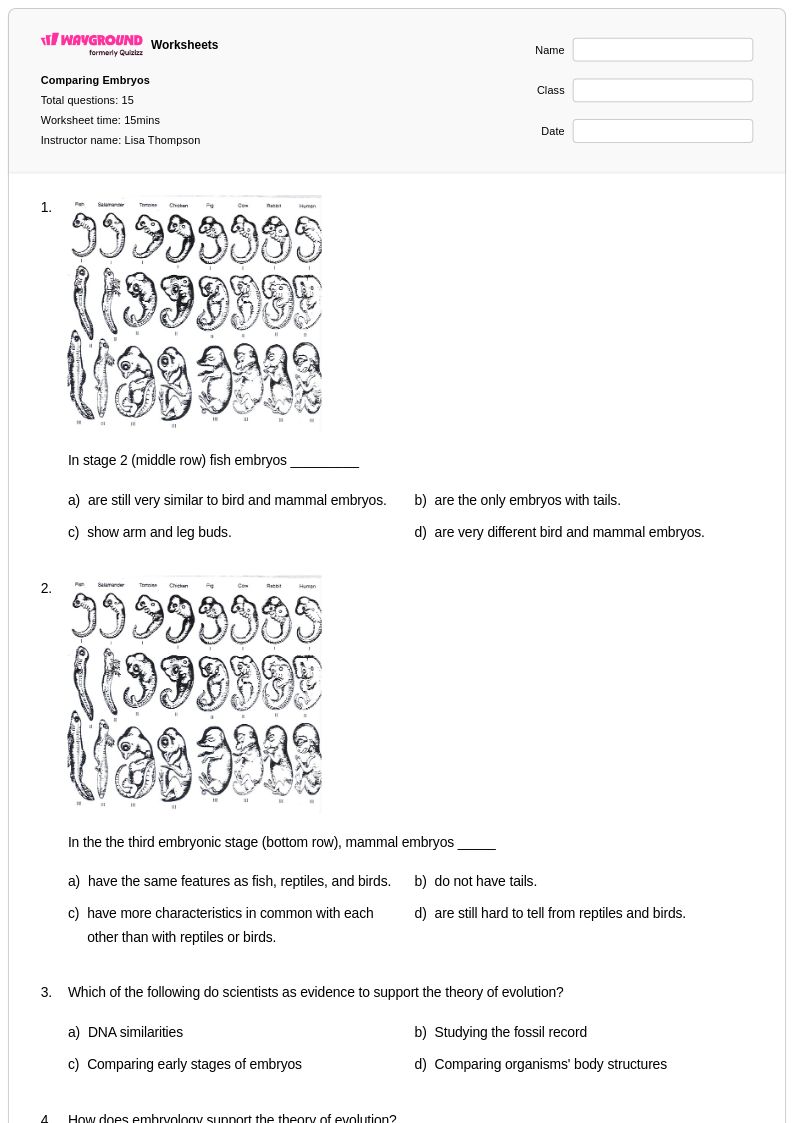
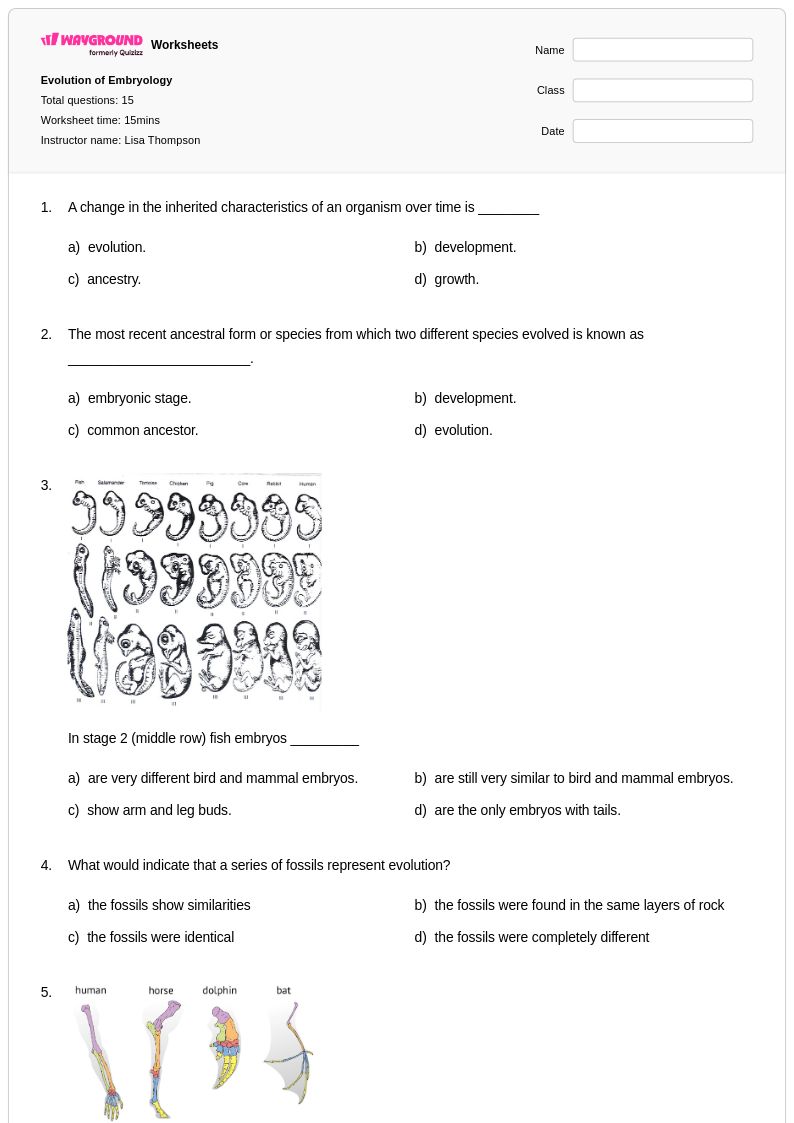
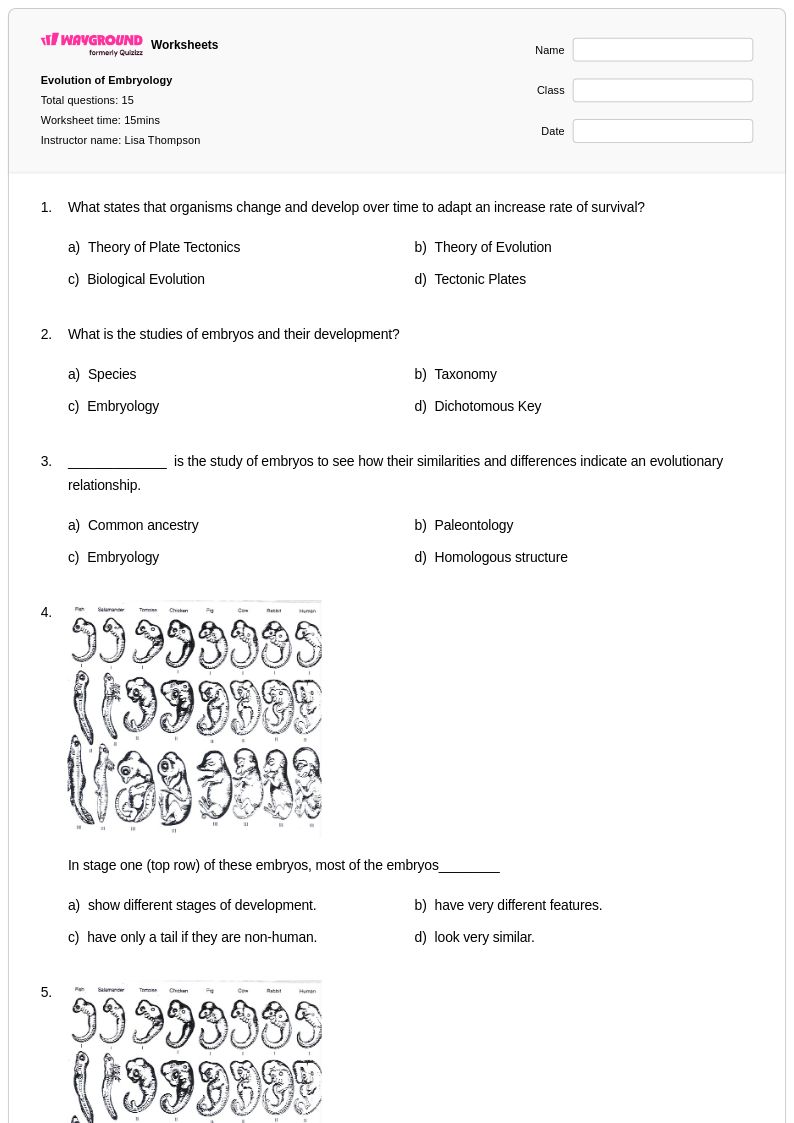
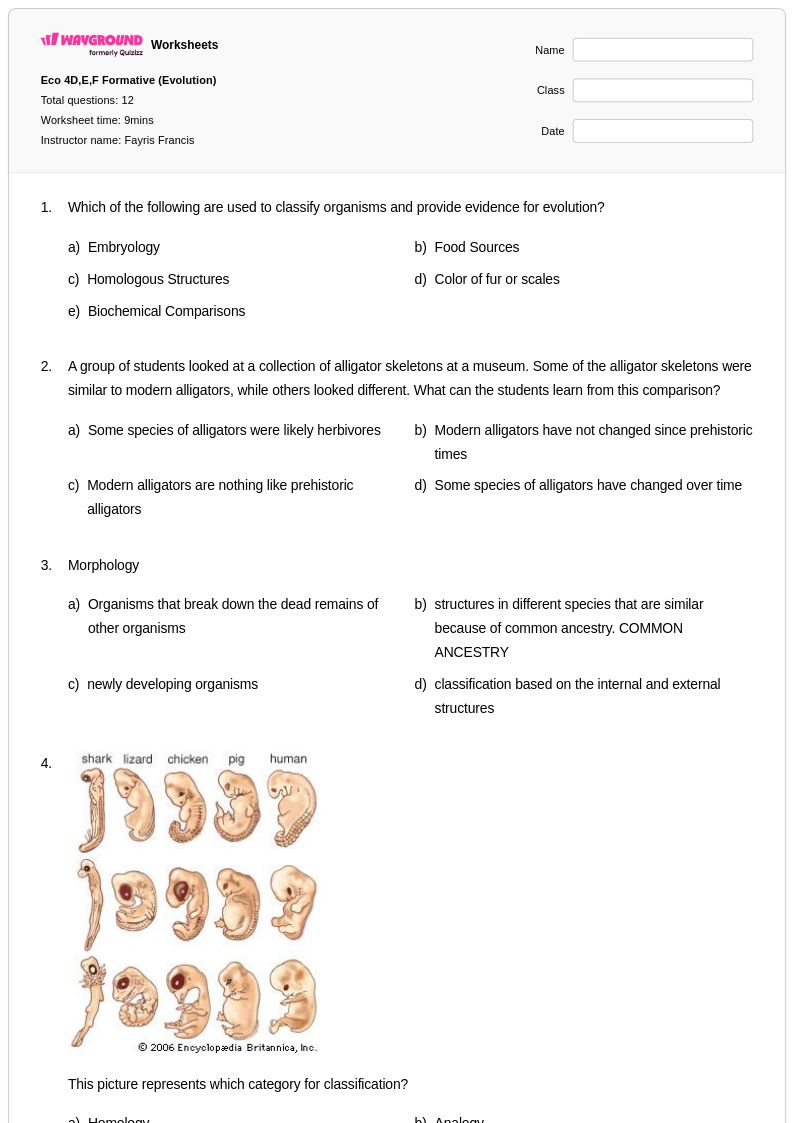
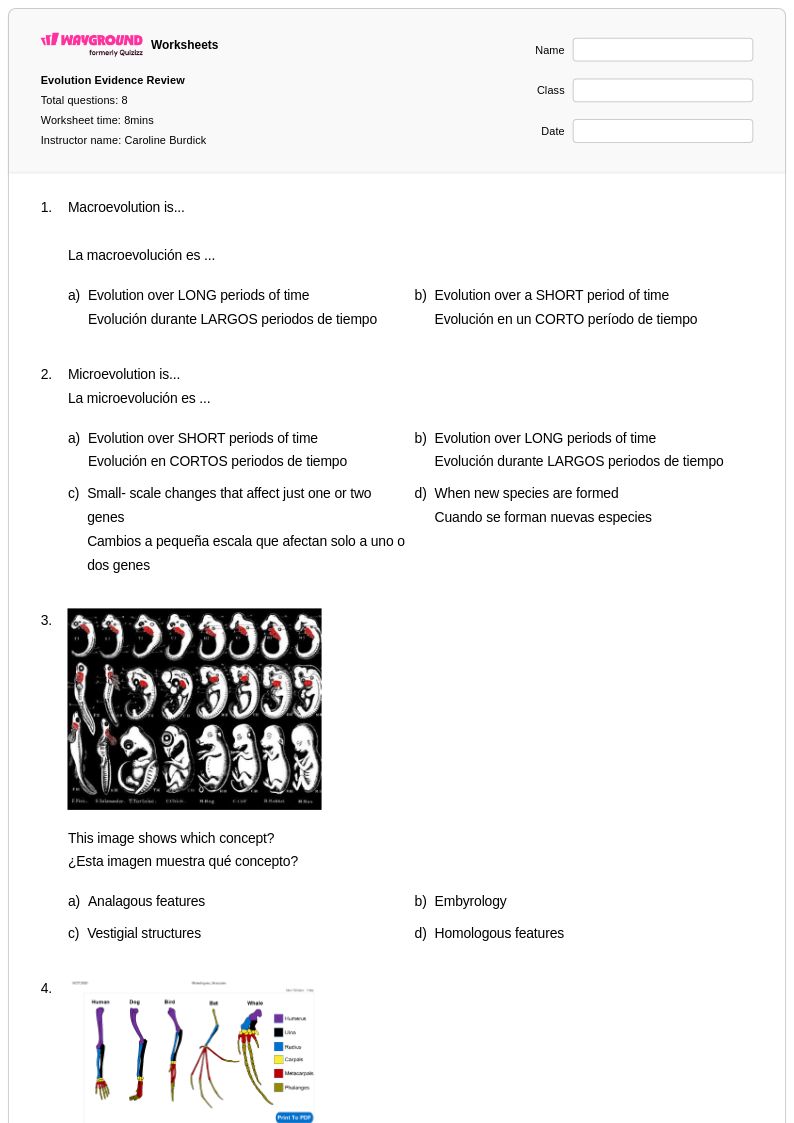
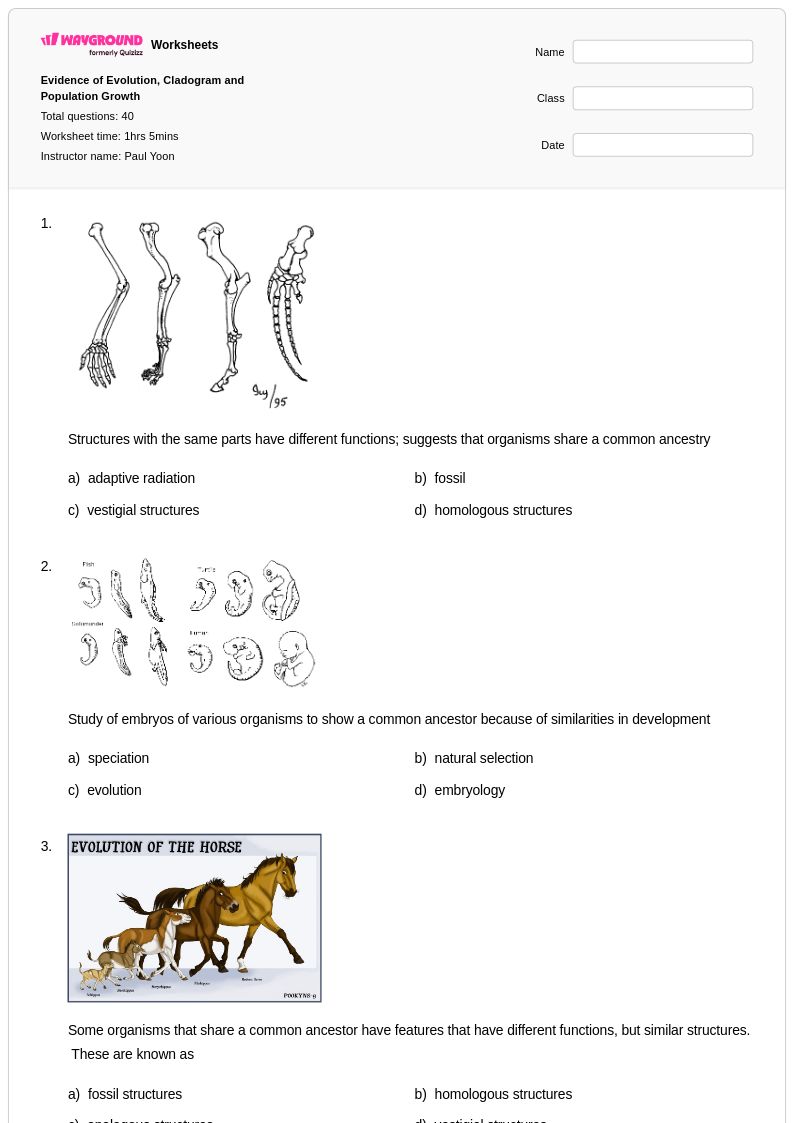
Comparative embryology reveals conserved developmental patterns across species — such as shared pharyngeal arches in vertebrate embryos — that serve as evidence for common ancestry and homologous structures. Having students analyze side-by-side embryonic diagrams of different animal species makes abstract evolutionary relationships concrete and observable. This approach directly supports understanding of macroevolution and is commonly assessed in AP Biology and college-prep life science courses.