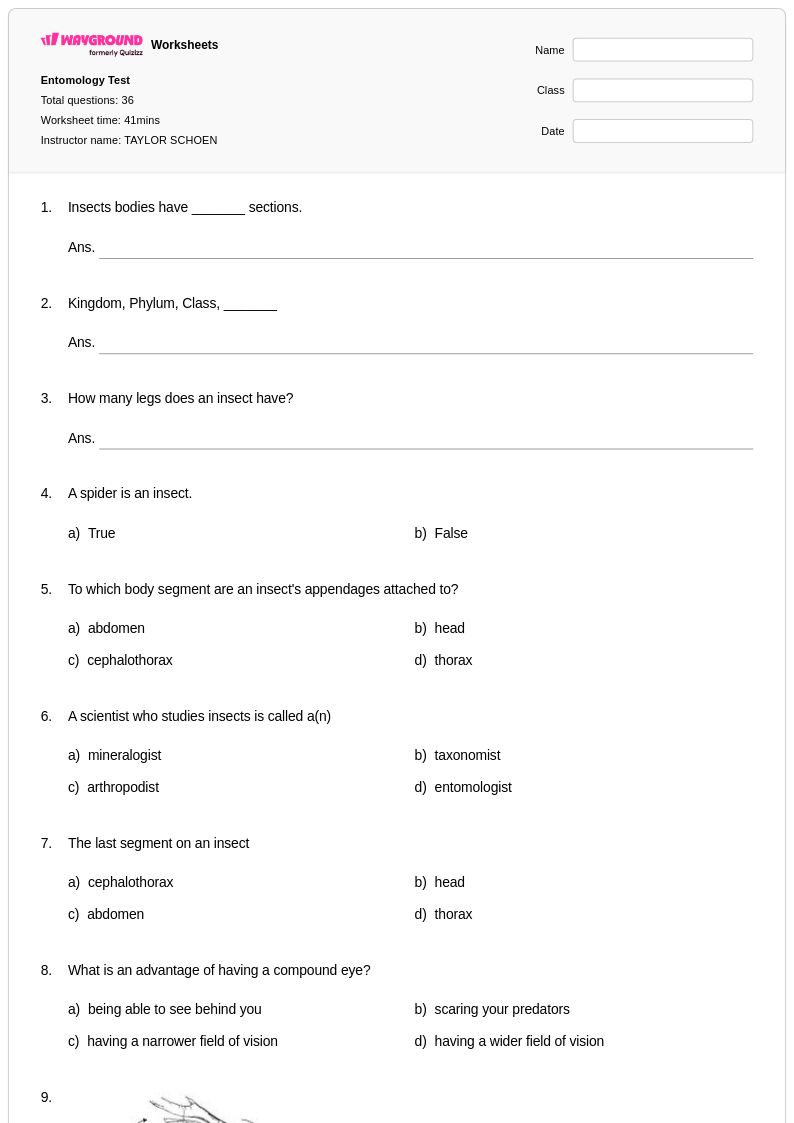
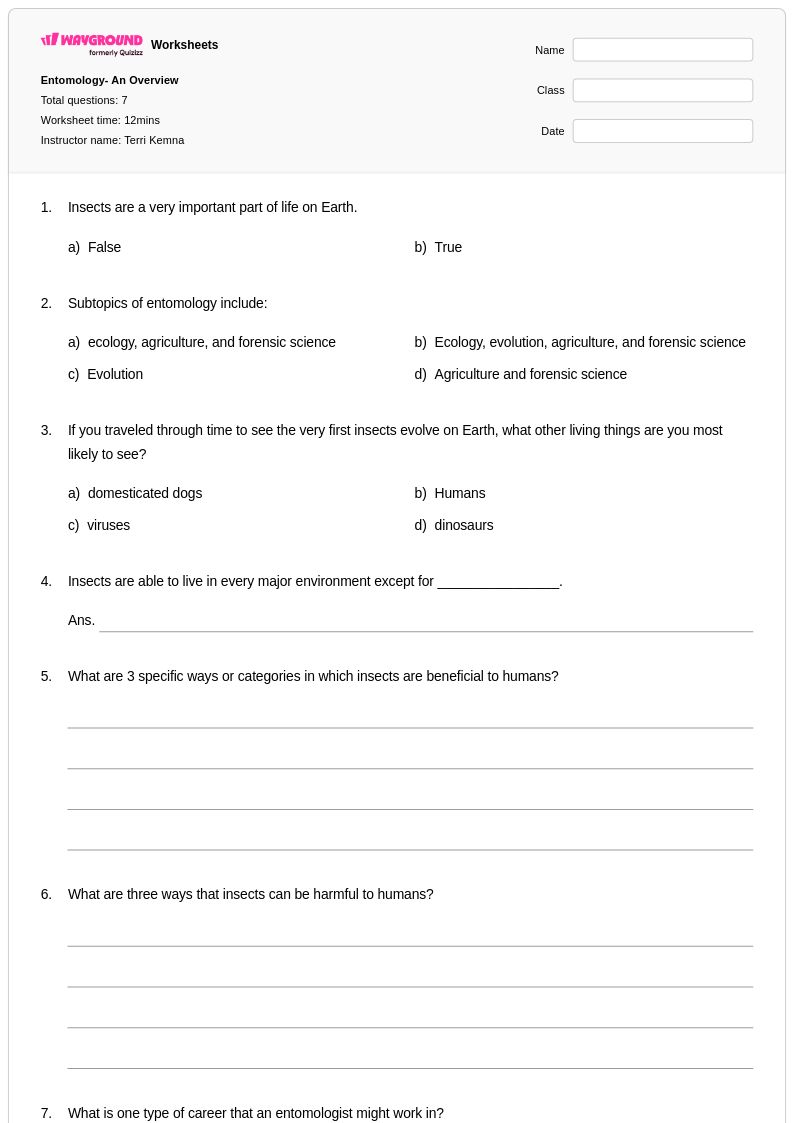
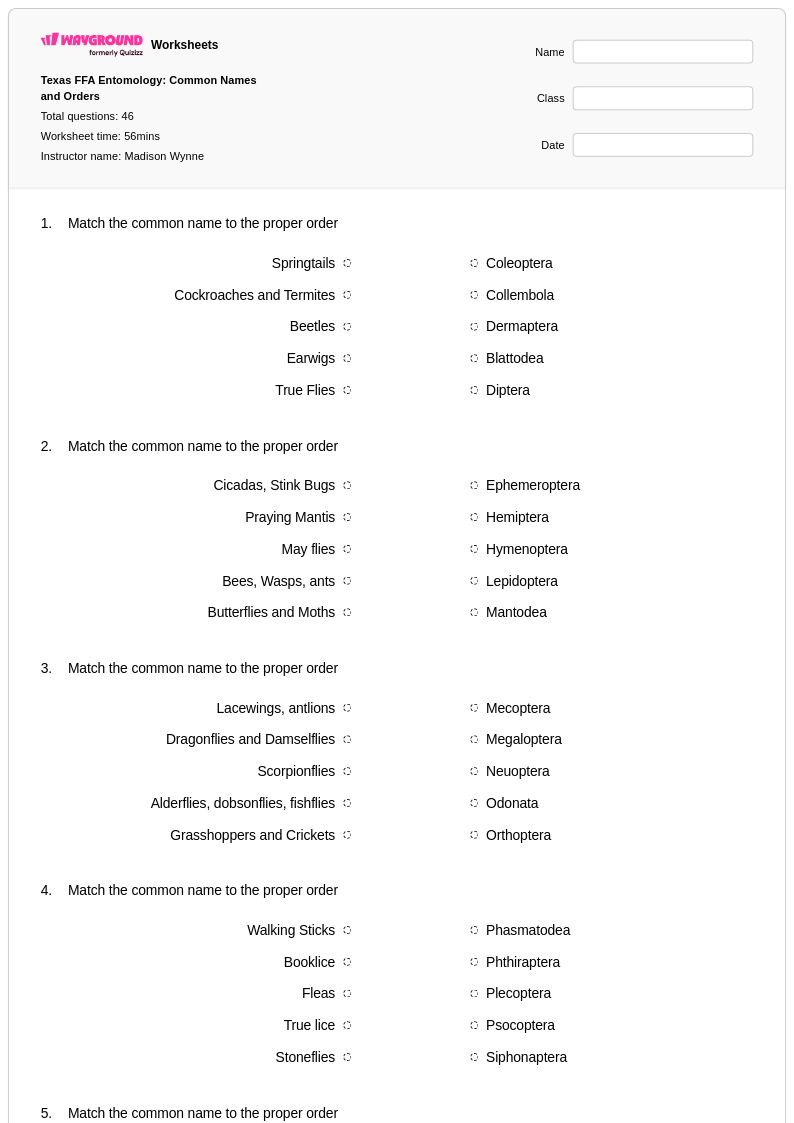
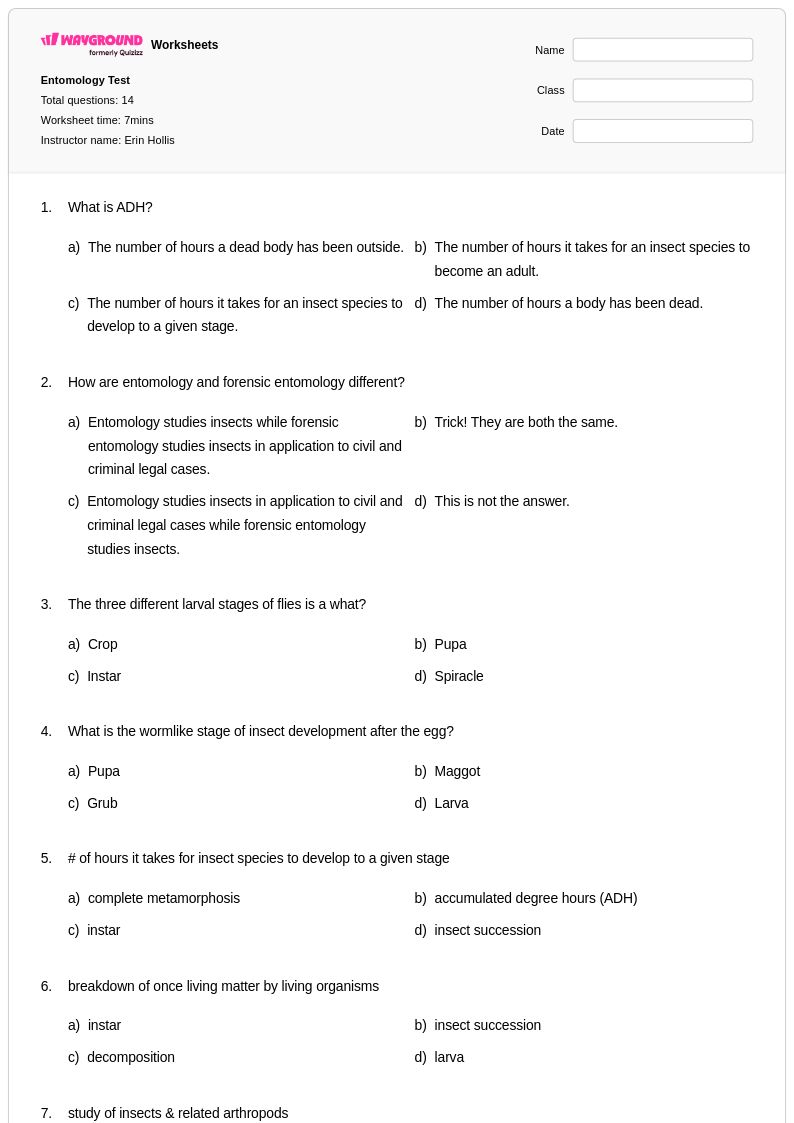
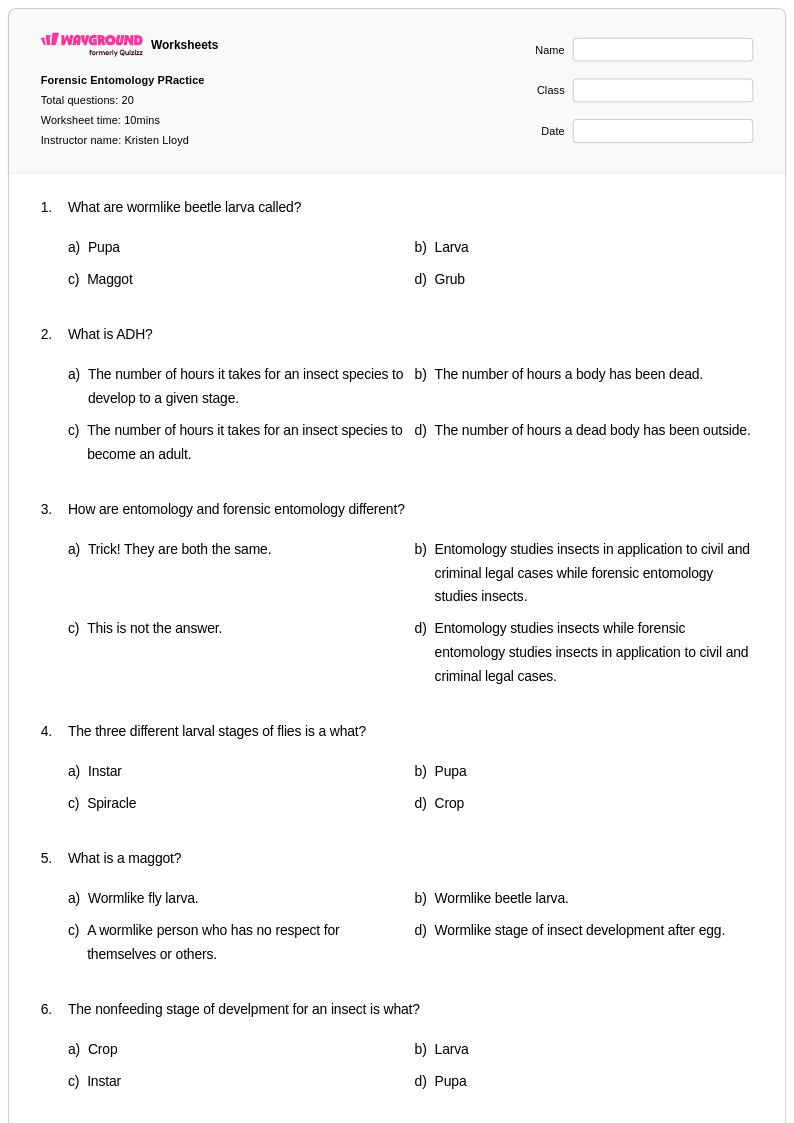
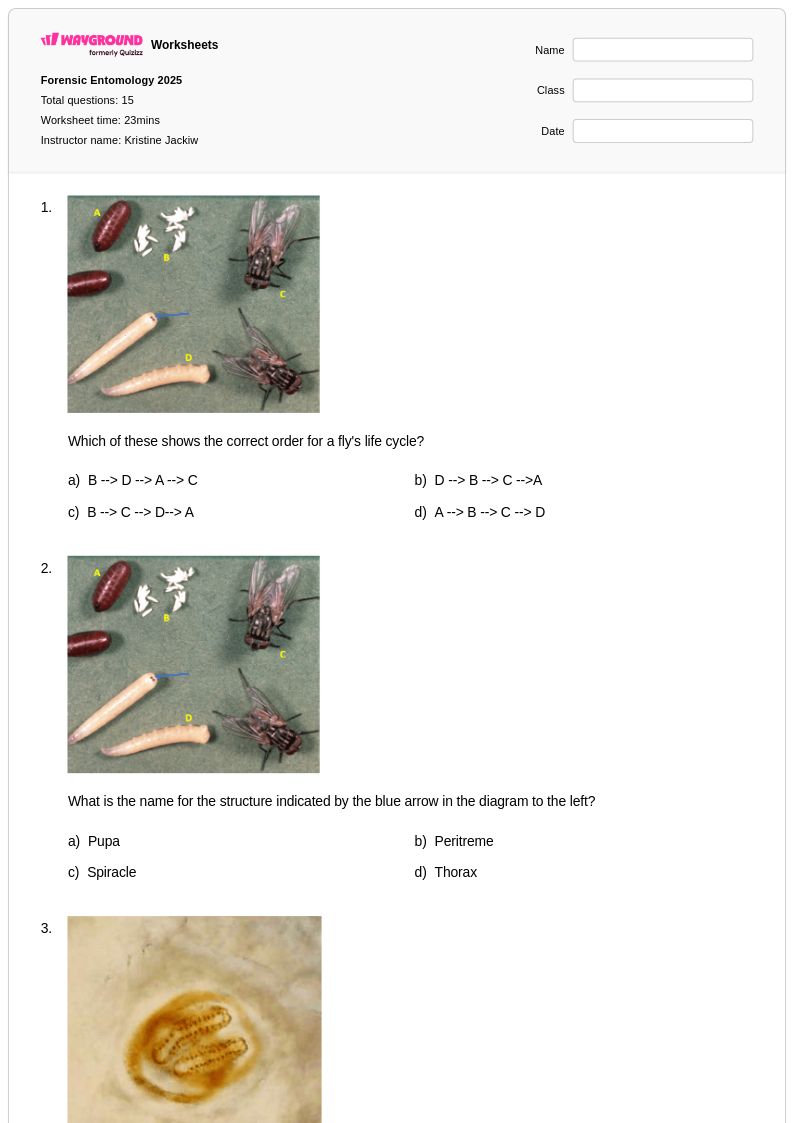
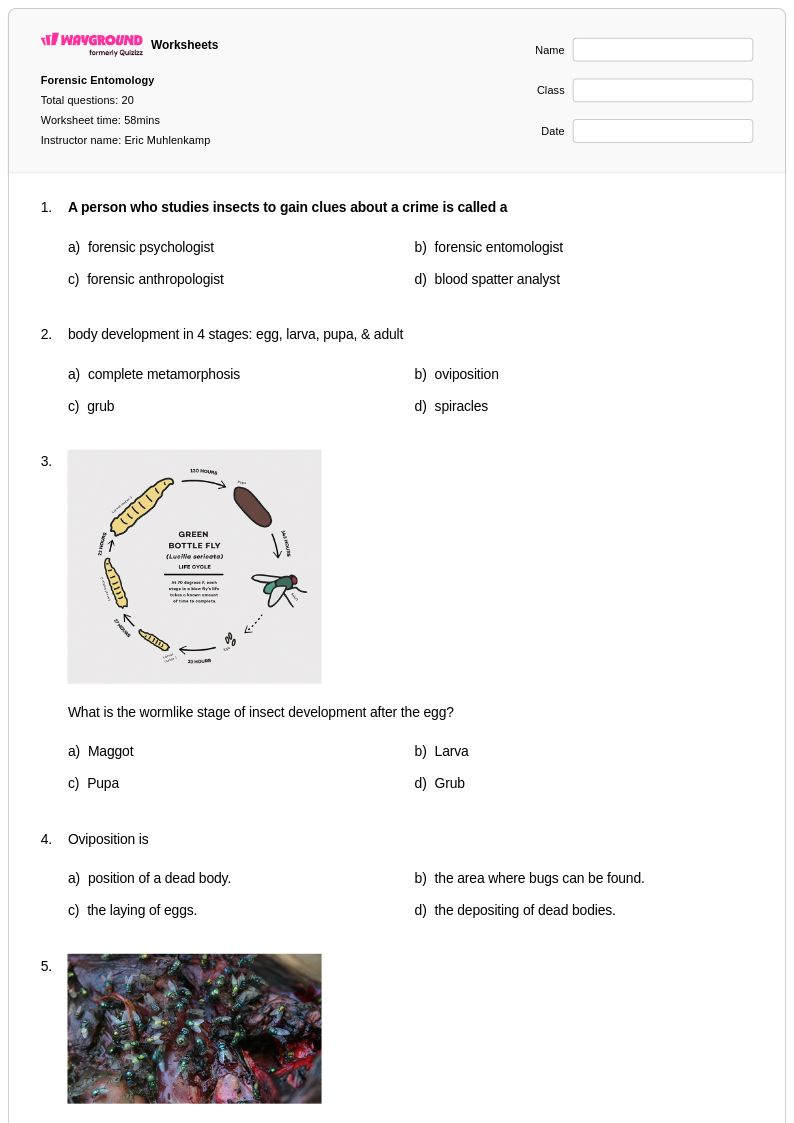
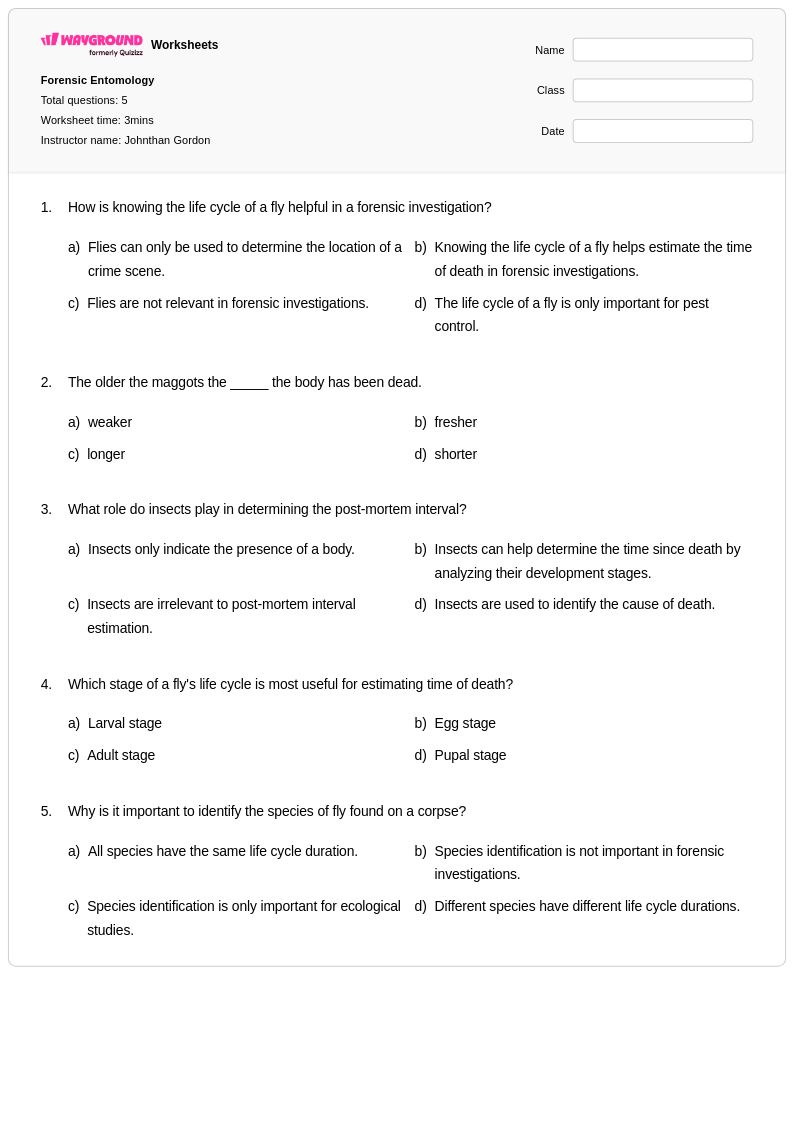
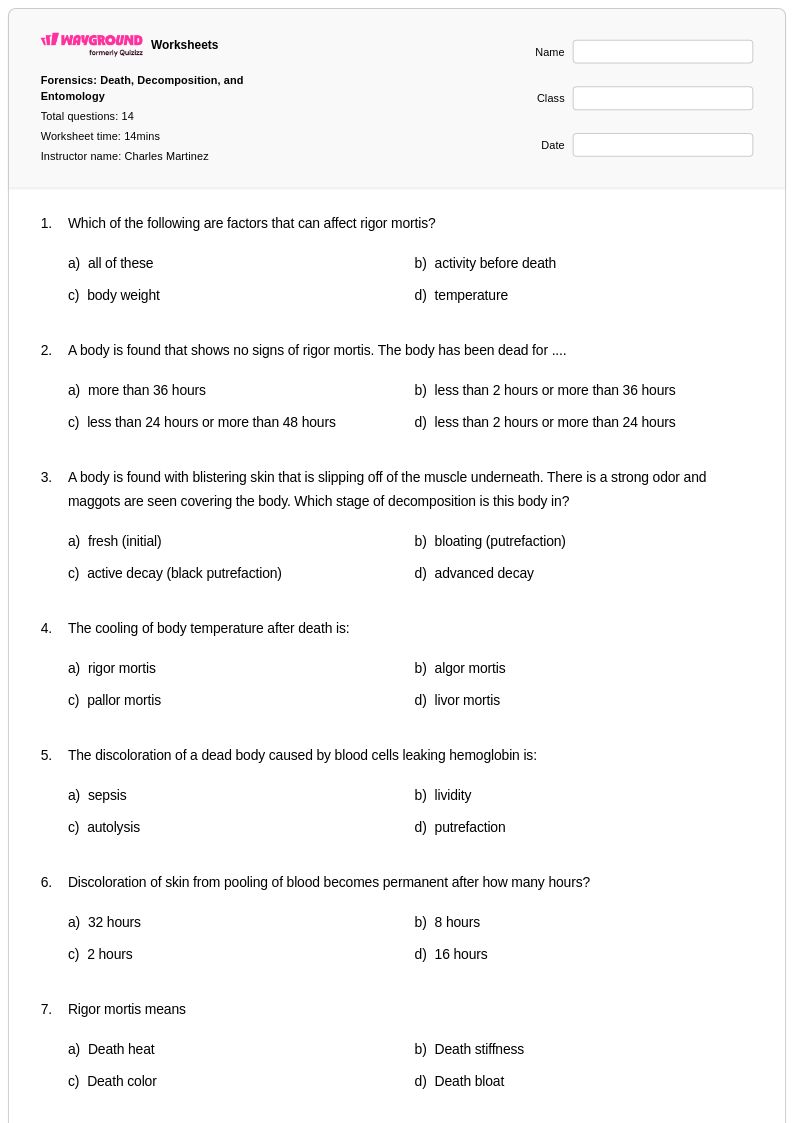
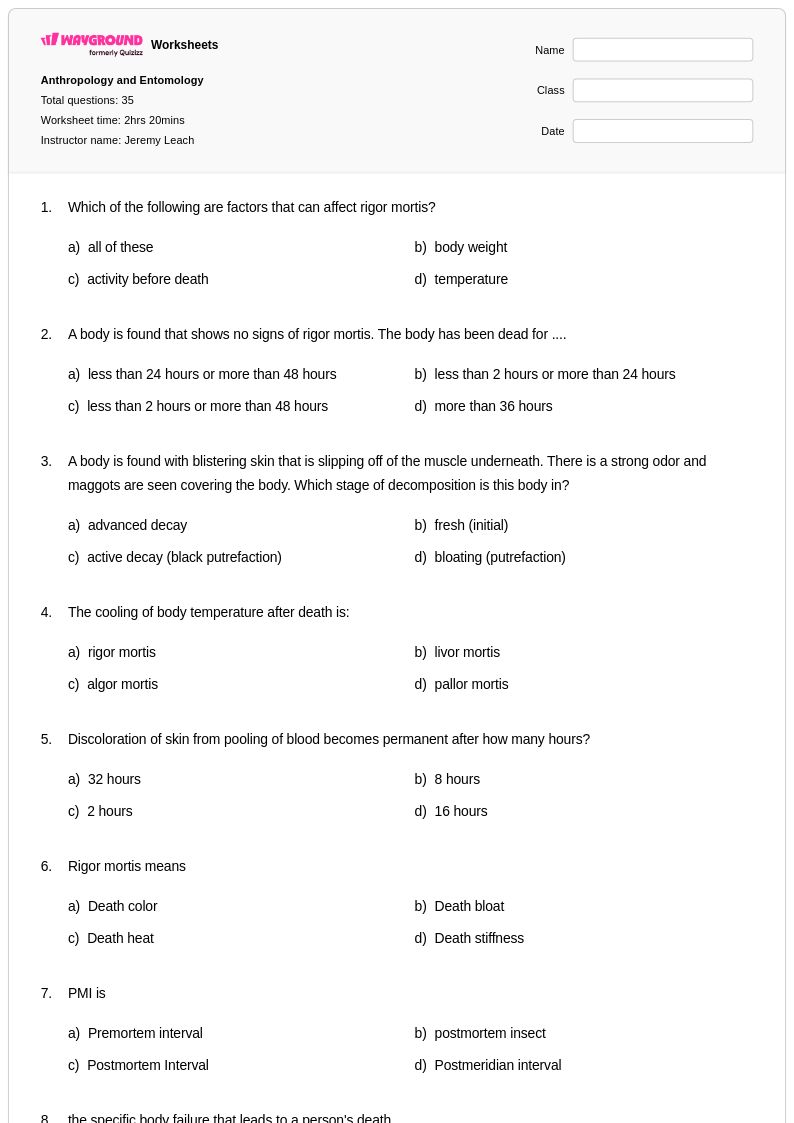
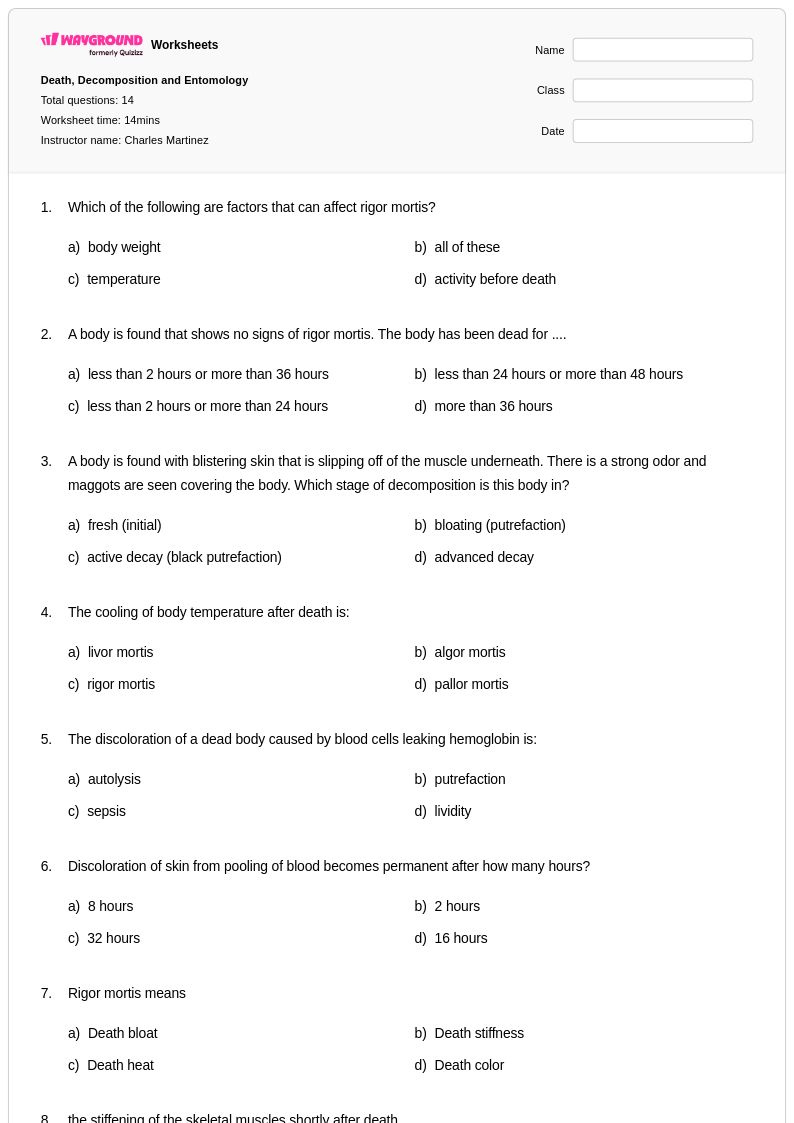
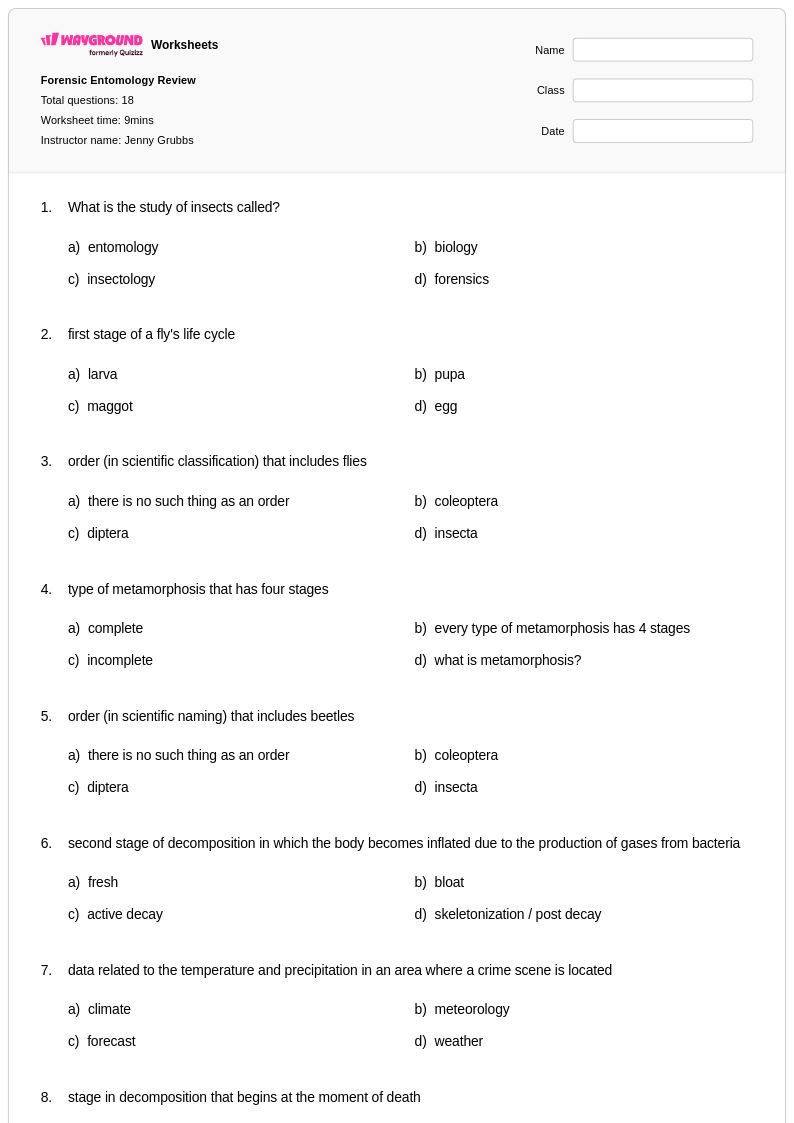
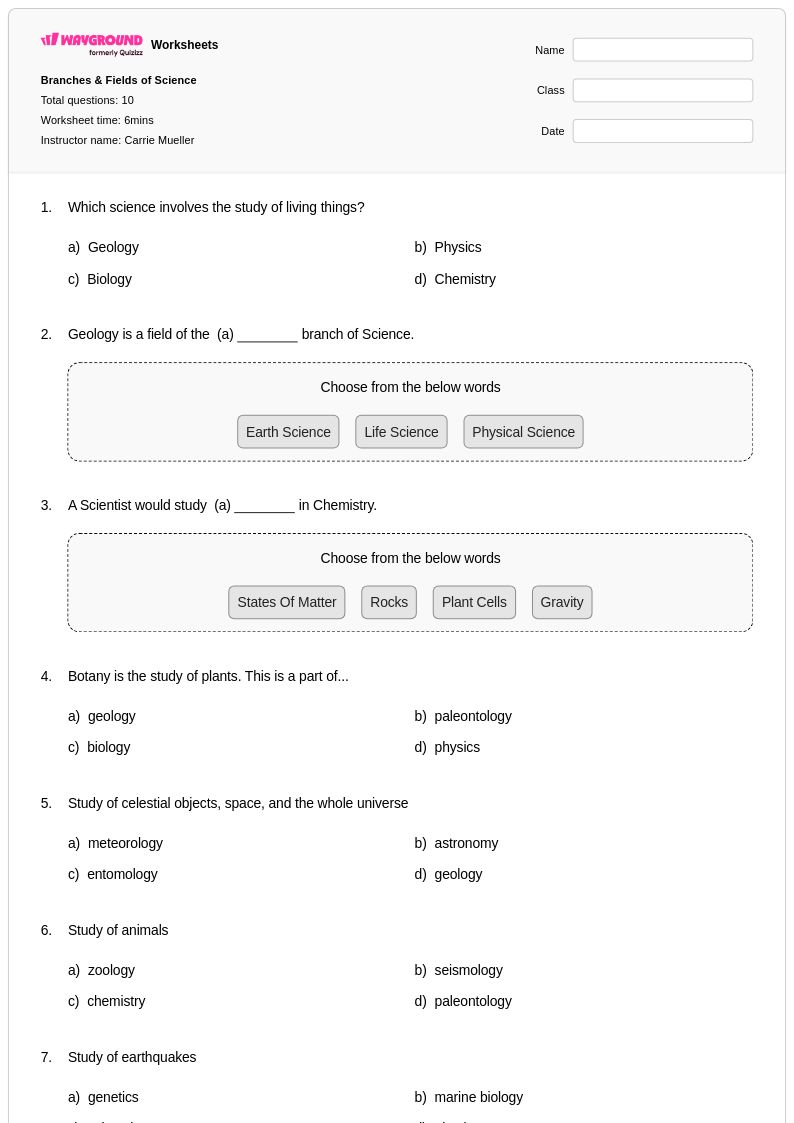
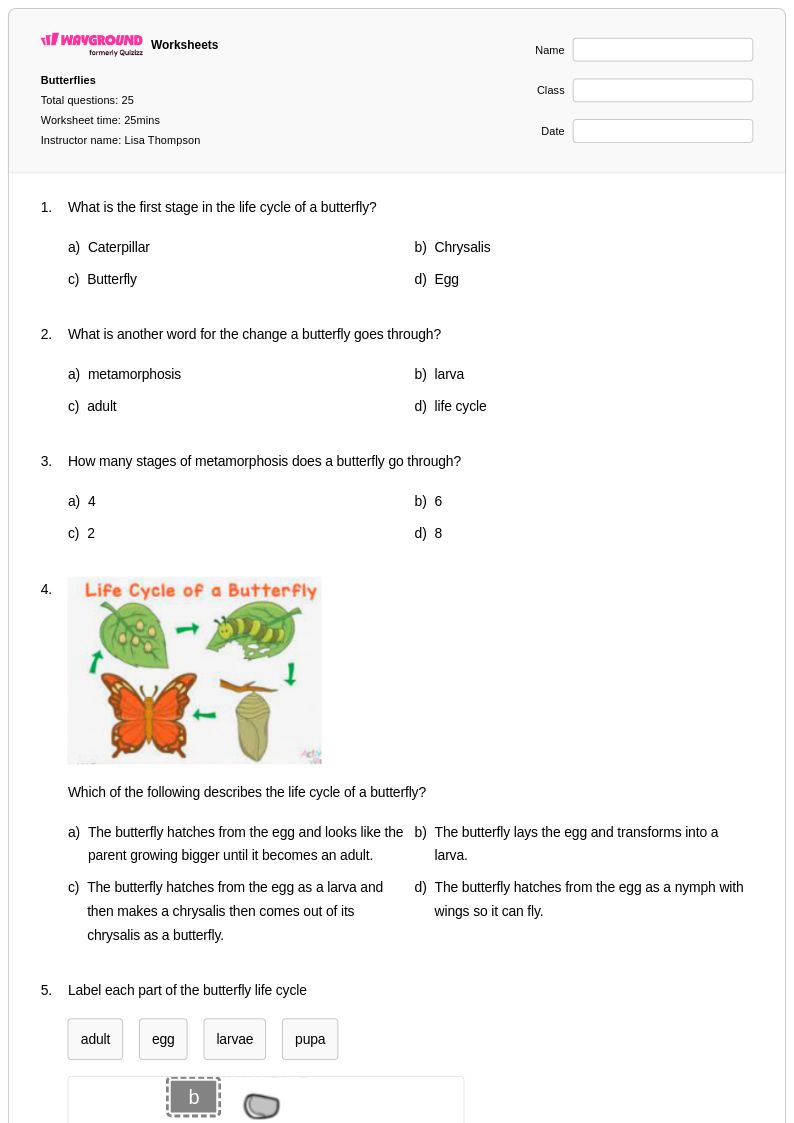
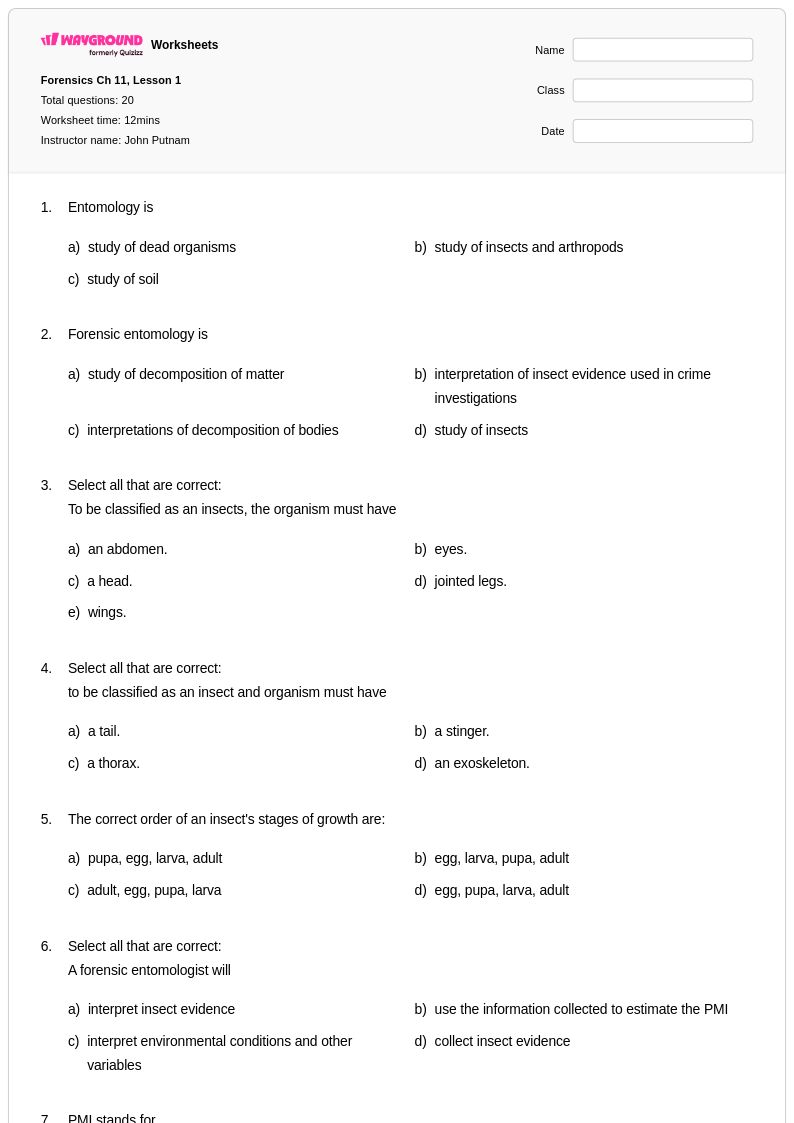
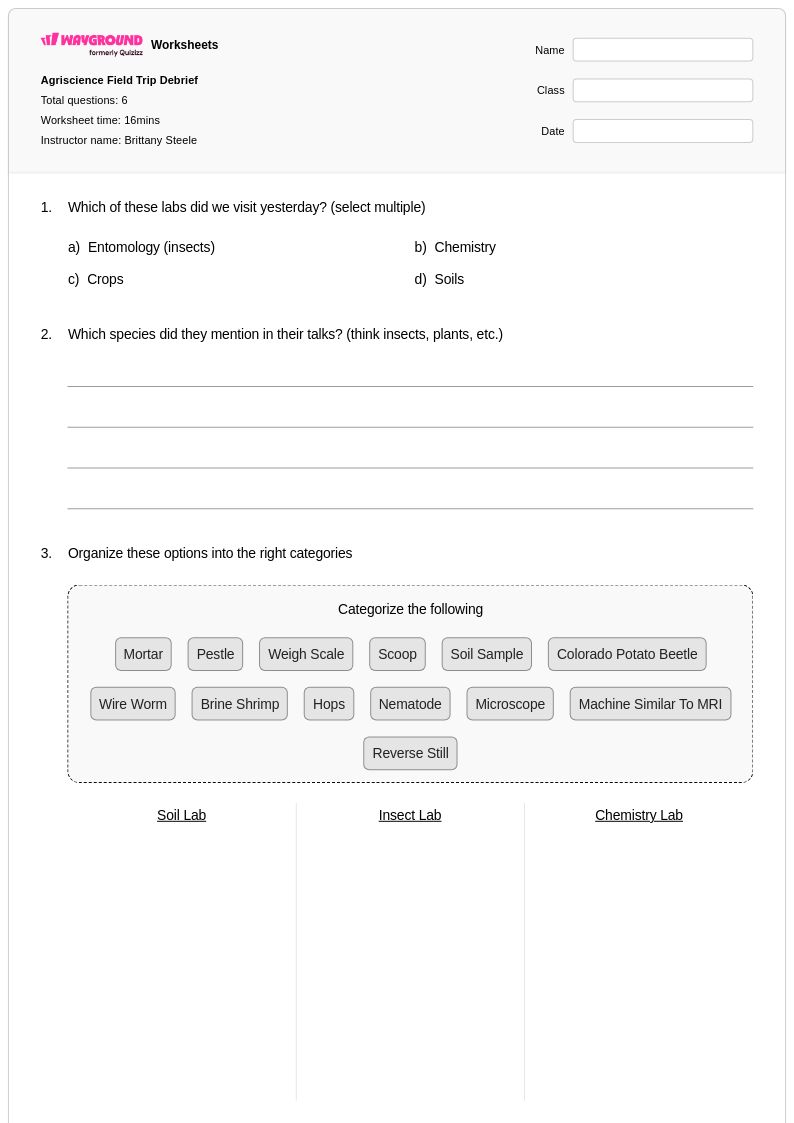
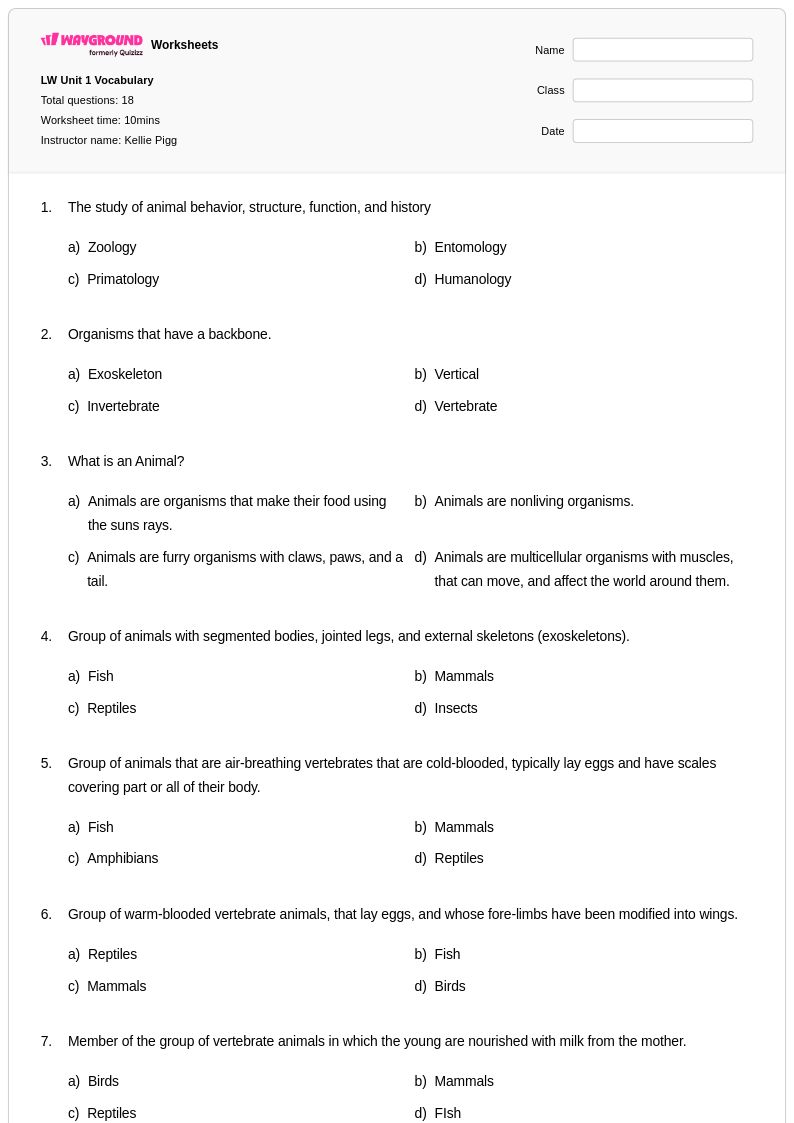
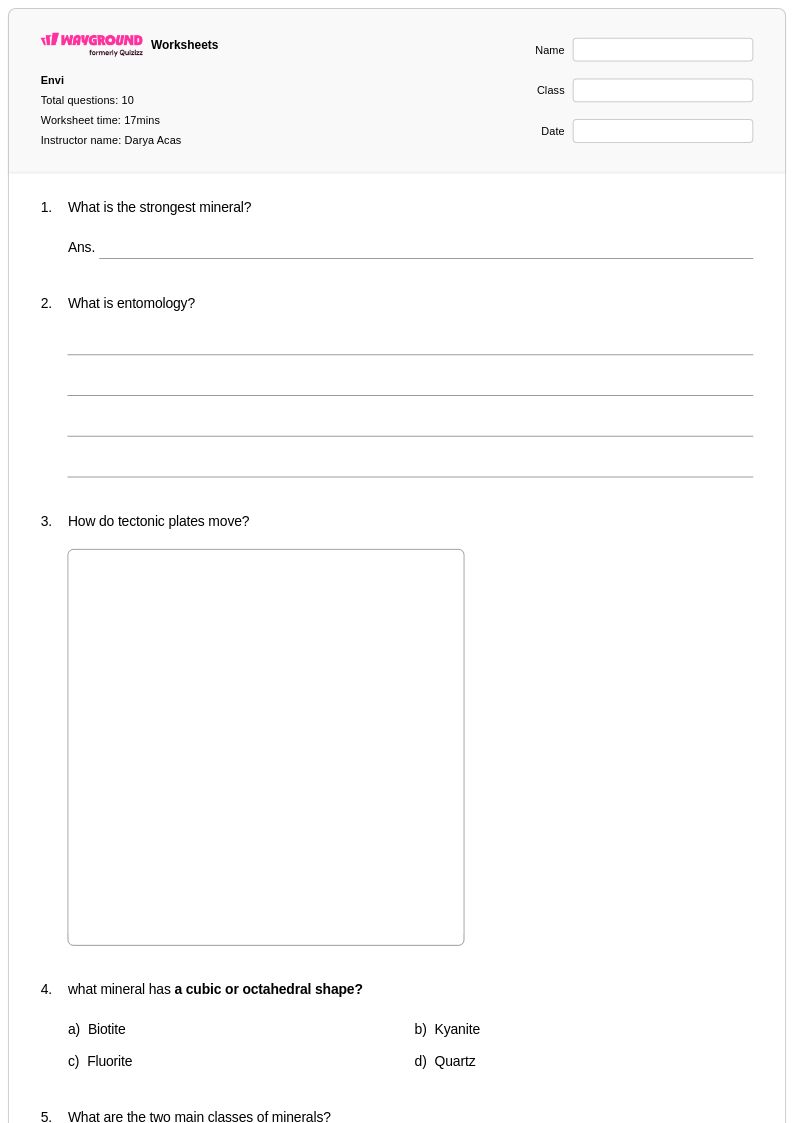
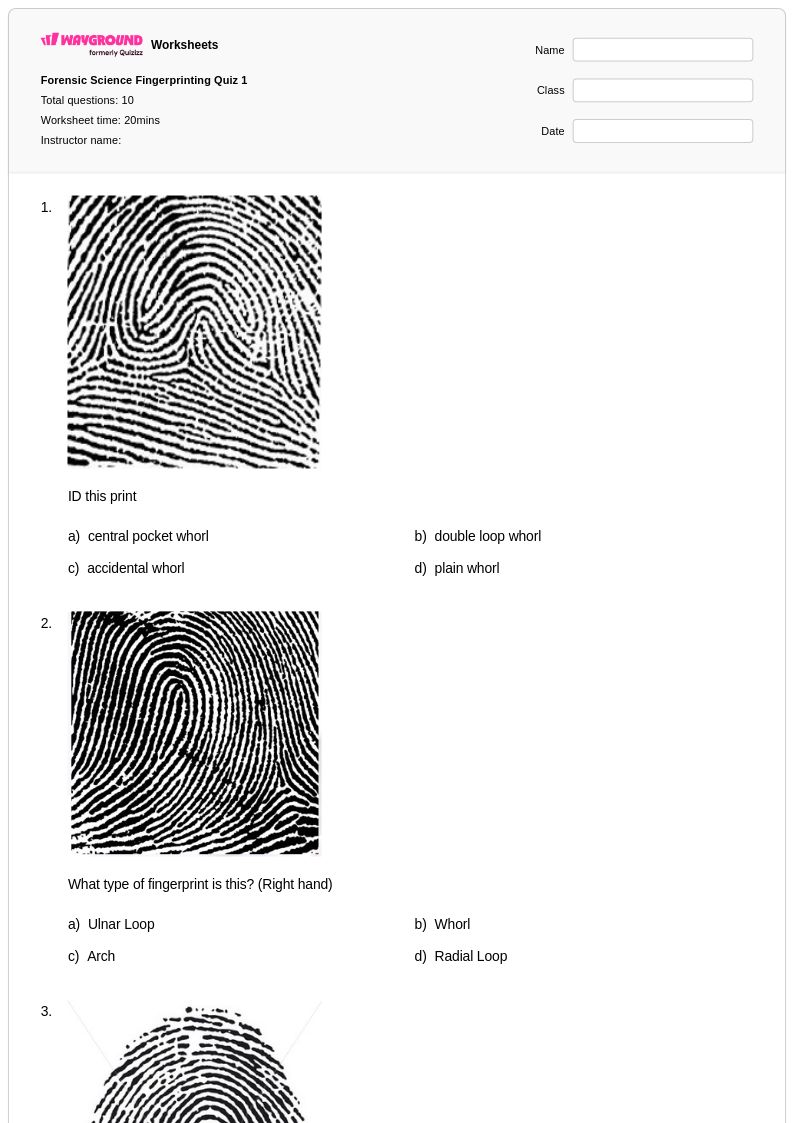
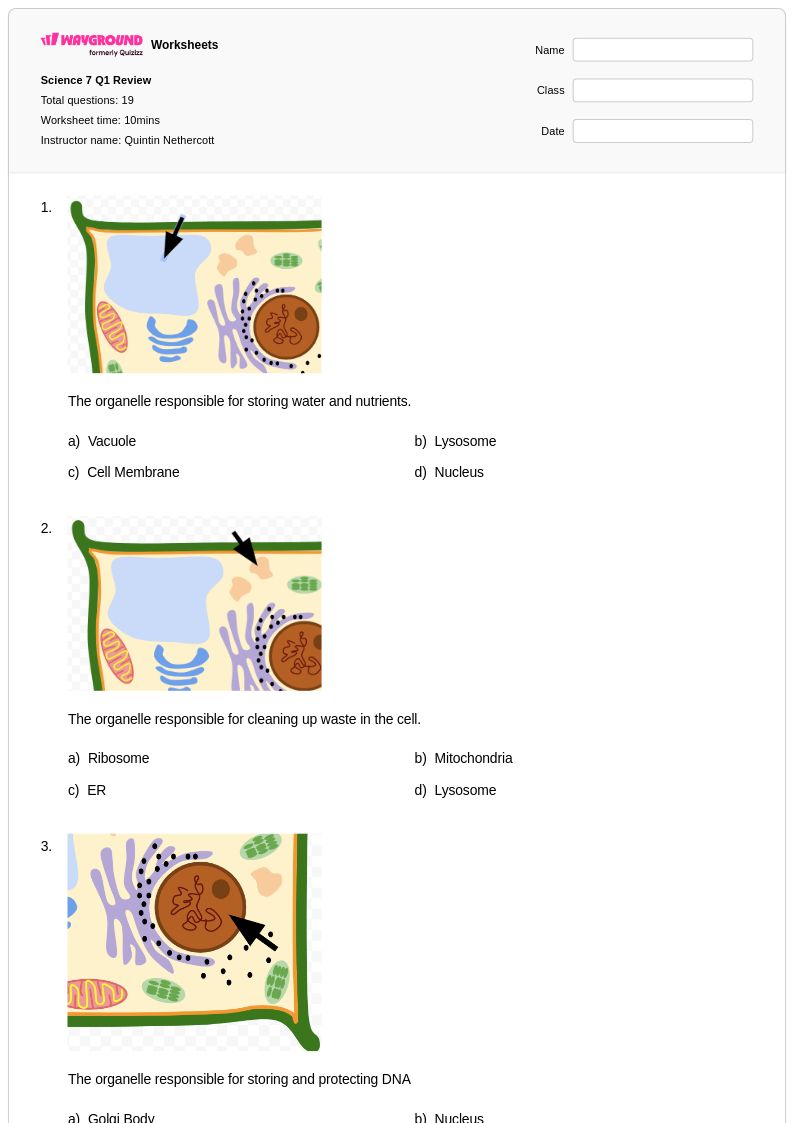
Grade 9 entomology worksheets and printables help students explore insect biology through engaging practice problems, free PDF resources, and comprehensive answer keys for effective learning.
Explore printable Entomology worksheets for Grade 9
Grade 9 entomology worksheets available through Wayground (formerly Quizizz) provide comprehensive coverage of insect biology, taxonomy, and ecological relationships that form the foundation of arthropod studies. These expertly designed resources strengthen students' understanding of insect anatomy, metamorphosis cycles, classification systems, and the critical roles insects play in ecosystems and human society. Students engage with practice problems that explore topics ranging from basic insect identification and morphology to complex concepts like adaptive behaviors, pollination relationships, and integrated pest management strategies. Each worksheet collection includes detailed answer keys that support independent learning and self-assessment, while the availability of free printables in pdf format ensures accessibility for diverse classroom environments and home study situations.
Wayground (formerly Quizizz) empowers educators with an extensive library of millions of teacher-created entomology resources that streamline lesson planning and support differentiated instruction for Grade 9 biology courses. The platform's robust search and filtering capabilities allow teachers to quickly locate worksheets aligned with specific curriculum standards, whether focusing on insect physiology, behavioral ecology, or applied entomology concepts. Flexible customization tools enable educators to modify existing materials or create tailored assessments that address individual student needs, supporting both remediation for struggling learners and enrichment opportunities for advanced students. With resources available in both printable and digital formats including downloadable pdfs, teachers can seamlessly integrate these entomology worksheets into various instructional models while providing consistent skill practice that reinforces key biological concepts and scientific thinking processes.
FAQs
How do I teach entomology in the classroom?
Effective entomology instruction typically begins with insect anatomy and moves into classification using dichotomous keys, followed by life cycle stages and ecological roles. Hands-on observation activities, such as examining preserved or live specimens, reinforce taxonomic vocabulary and scientific inquiry skills. Pairing these activities with structured worksheets helps students organize observations and apply classification criteria consistently.
What topics should entomology worksheets cover?
Strong entomology worksheets should address insect anatomy (head, thorax, abdomen, appendages), complete and incomplete metamorphosis, insect identification using dichotomous keys, and the ecological roles insects play as pollinators, decomposers, and prey. Coverage of major insect orders, such as Lepidoptera, Coleoptera, and Hymenoptera, helps students build systematic classification skills grounded in observable traits.
What mistakes do students commonly make when classifying insects?
Students frequently confuse insects with other arthropods, such as spiders and centipedes, because they rely on superficial features rather than the defining characteristics of six legs, three body segments, and (typically) two pairs of wings. Another common error is misidentifying metamorphosis type, particularly conflating the pupal stage of complete metamorphosis with the nymph stage of incomplete metamorphosis. Targeted practice with labeled diagrams and identification keys helps correct these misconceptions directly.
How can I use entomology worksheets to practice insect identification?
Insect identification worksheets that include dichotomous key exercises are especially effective for building systematic observation habits, as students must evaluate specific physical traits at each decision point rather than guessing from appearance alone. Pairing these with classification charts that organize insects by order reinforces the hierarchical structure of taxonomy. Regular practice with varied specimen examples helps students transfer identification skills independently.
How do I use Wayground's entomology worksheets in my class?
Wayground's entomology worksheets are available as printable PDFs for traditional classroom distribution and in digital formats for technology-integrated or remote learning environments, and teachers can also host them as a quiz directly on Wayground. Each worksheet includes a complete answer key, supporting both self-paced independent study and teacher-led instruction. The platform's search and filtering tools allow teachers to target specific insect groups, developmental concepts, or skill levels quickly.
How can I differentiate entomology instruction for students at different skill levels?
For students who need additional support, reducing answer choices on identification questions lowers cognitive load while still requiring engagement with key traits. Wayground's Read Aloud feature can help students who struggle with scientific vocabulary access question content independently. For advanced learners, teachers can assign more complex identification keys or ecological relationship scenarios to extend thinking beyond basic classification.