Free Printable Genetics Vocabulary Genotype and Phenotype Worksheets for Grade 9
Explore Wayground's free Grade 9 genetics vocabulary worksheets focusing on genotype and phenotype concepts, featuring printable PDFs with practice problems and answer keys to help students master essential biology terminology.
Explore printable Genetics Vocabulary Genotype and Phenotype worksheets for Grade 9
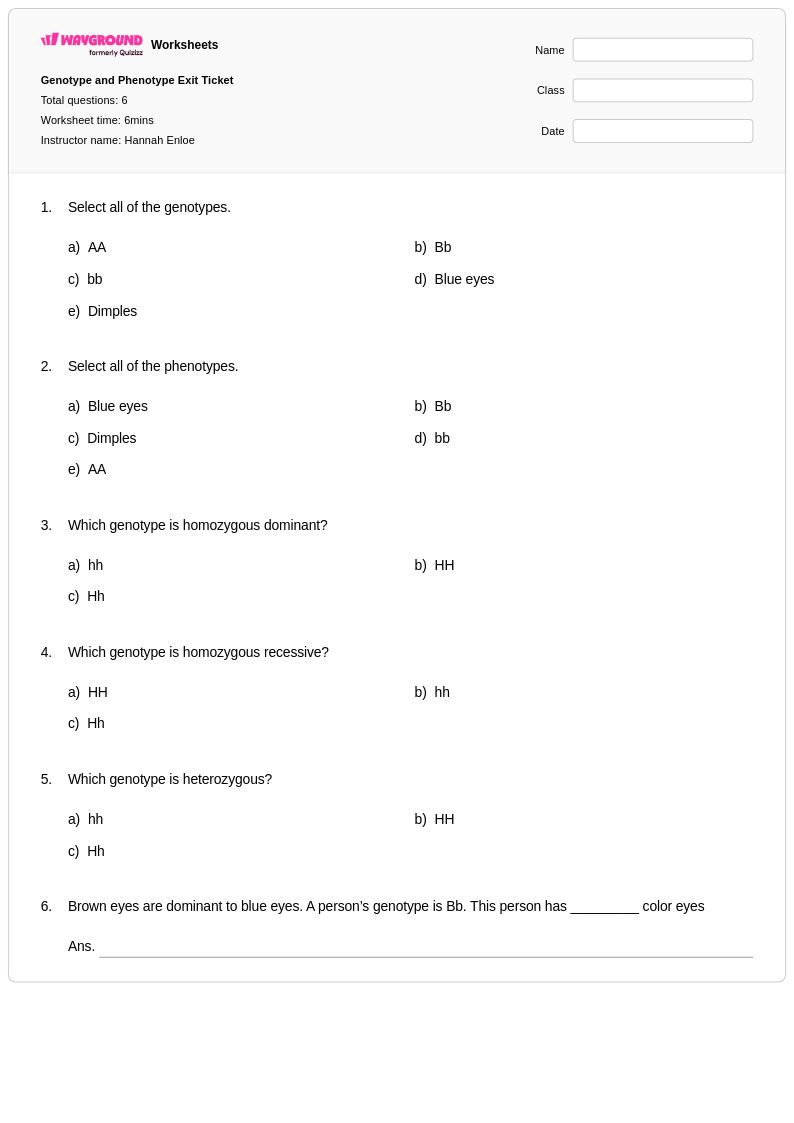
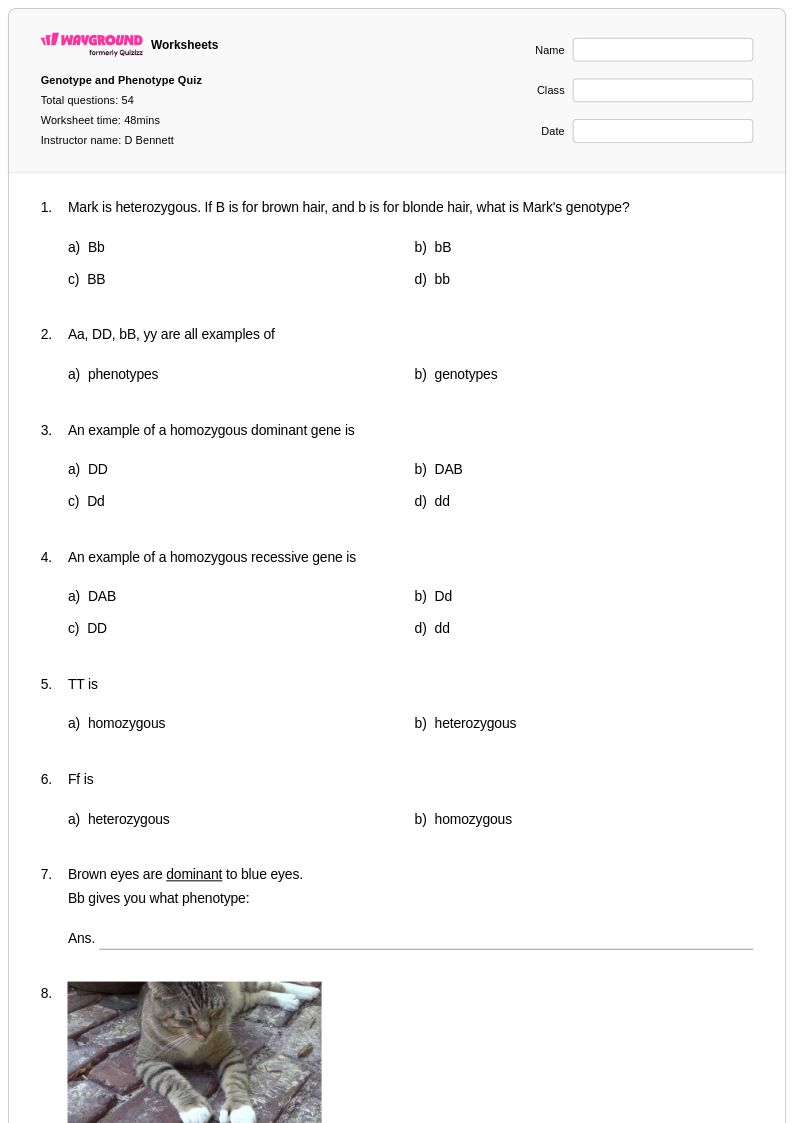
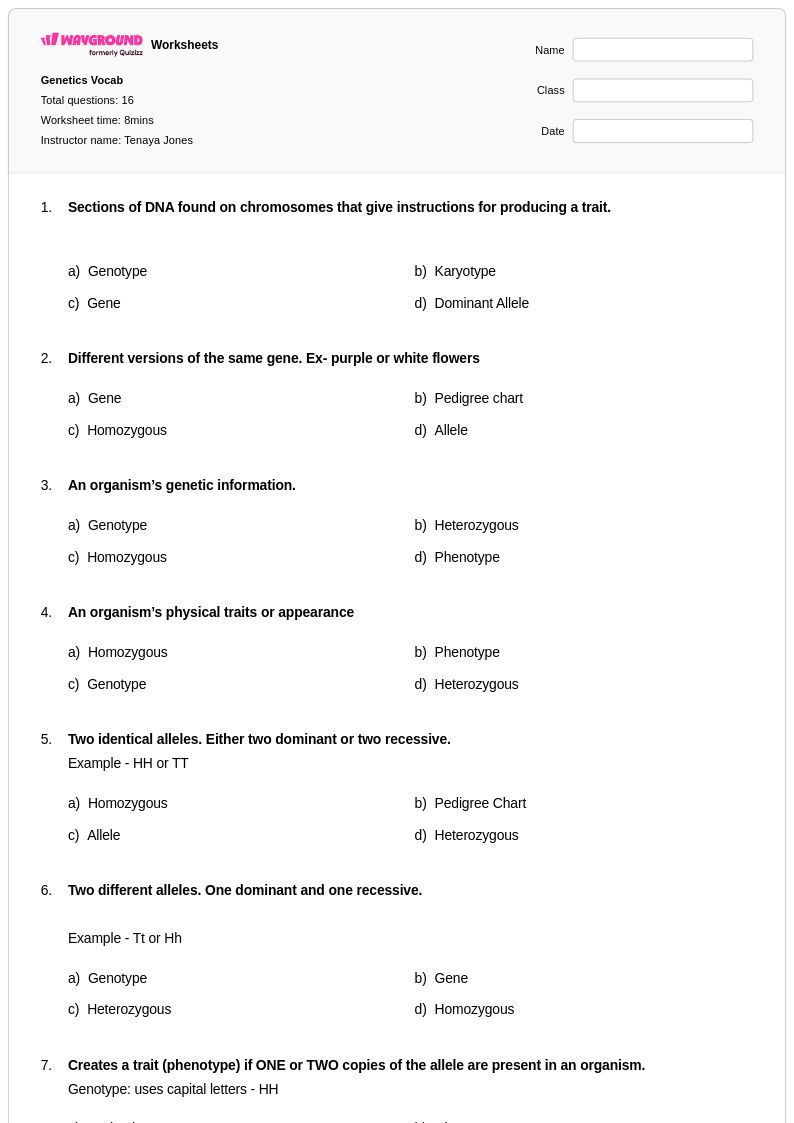
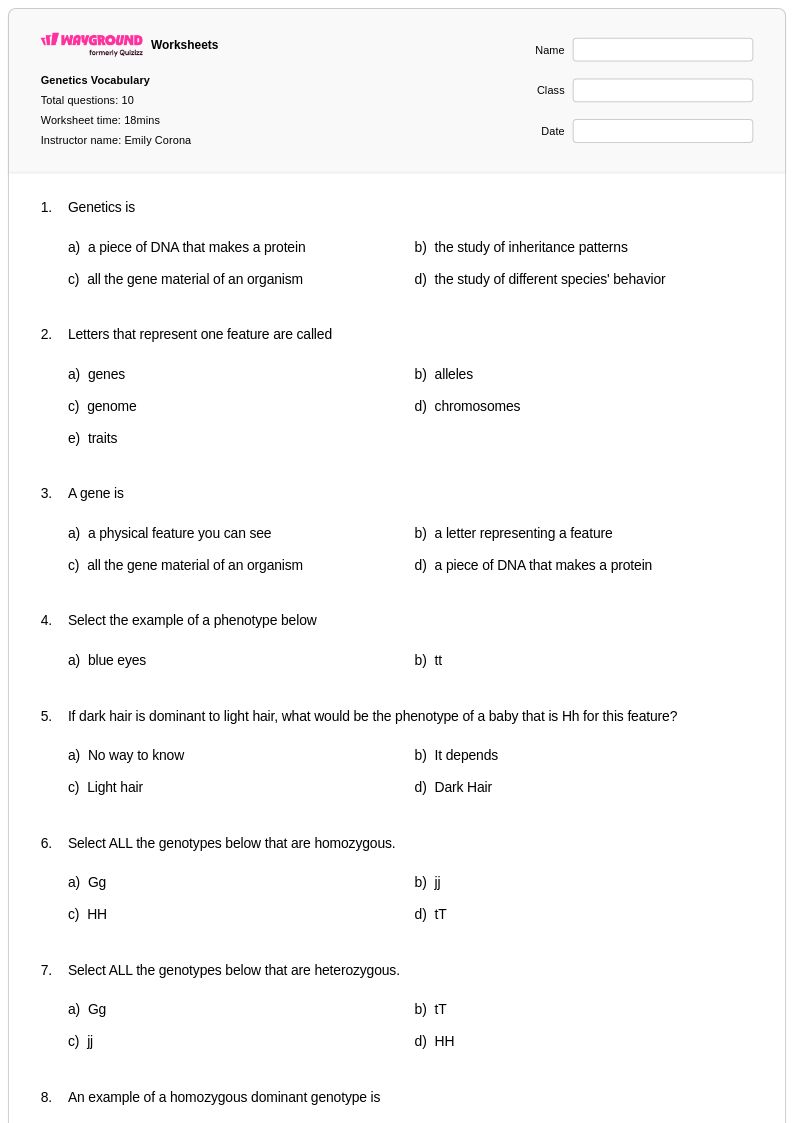
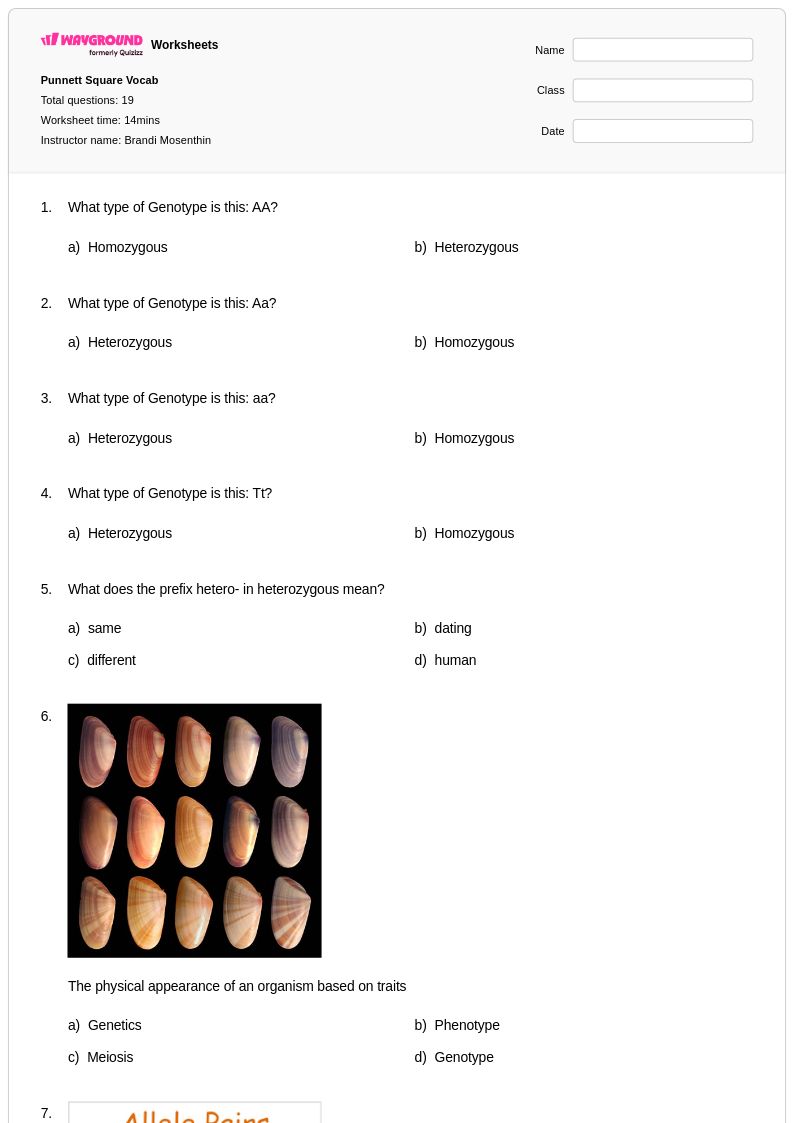
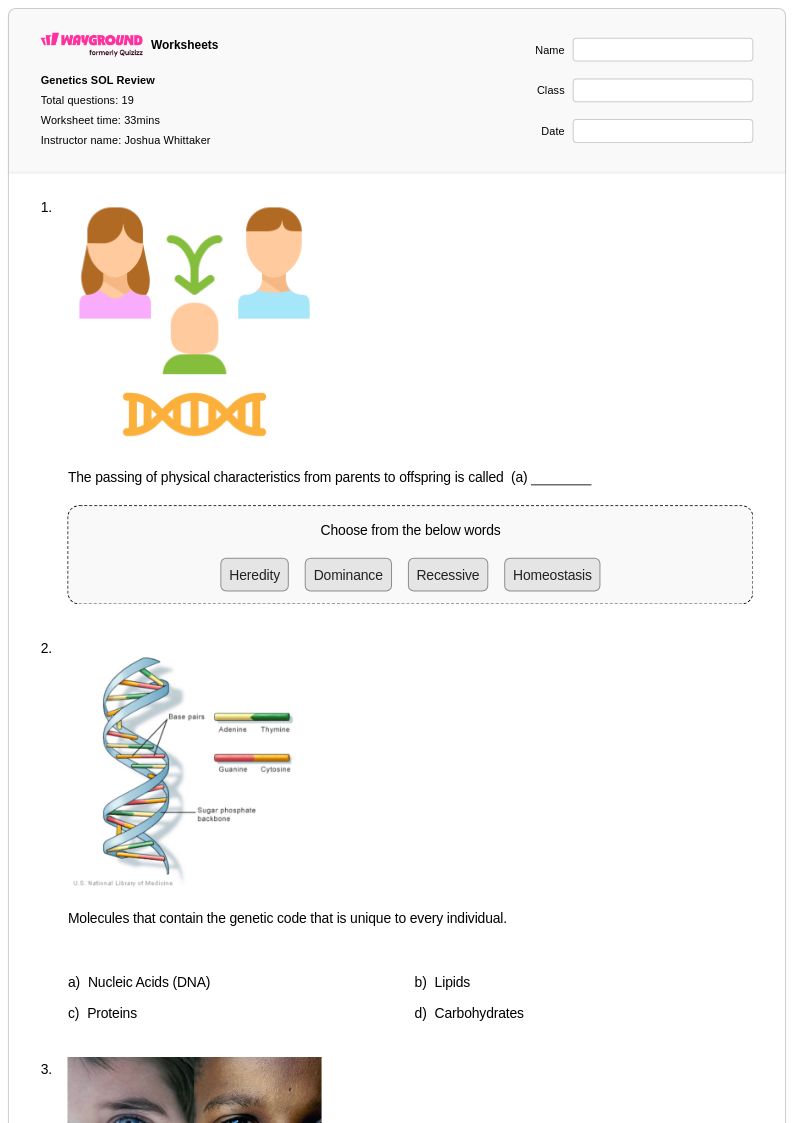
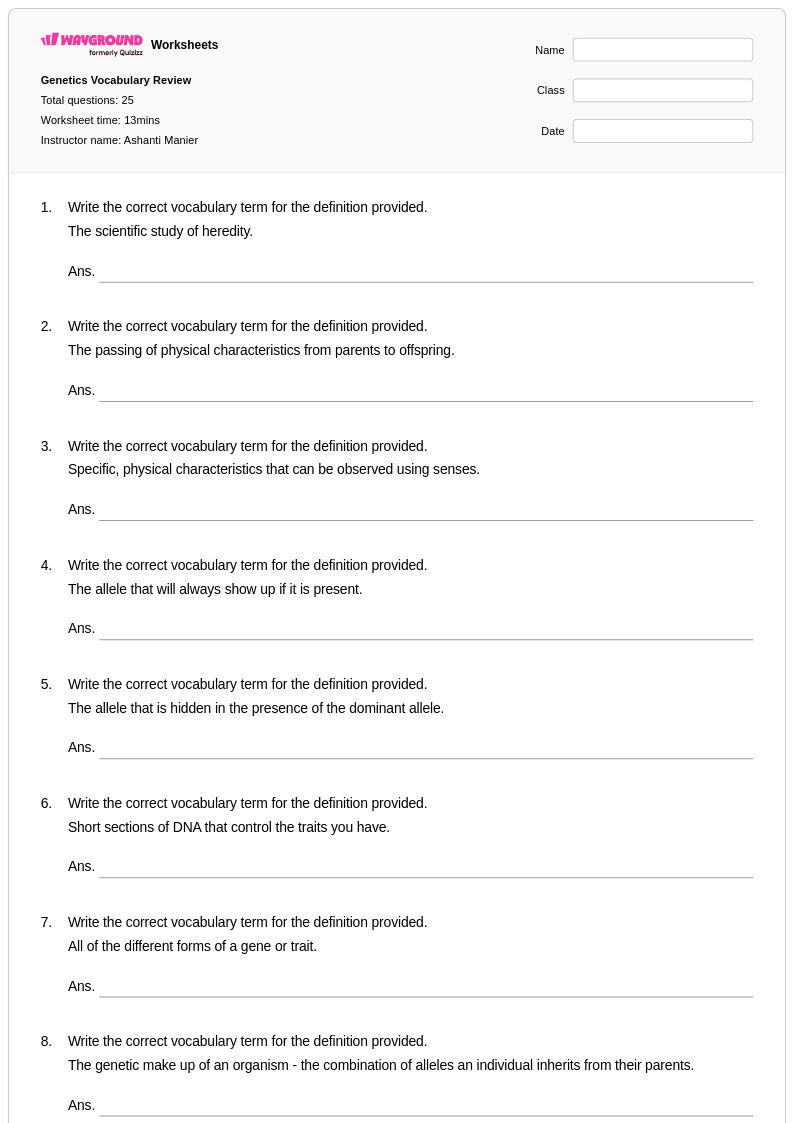
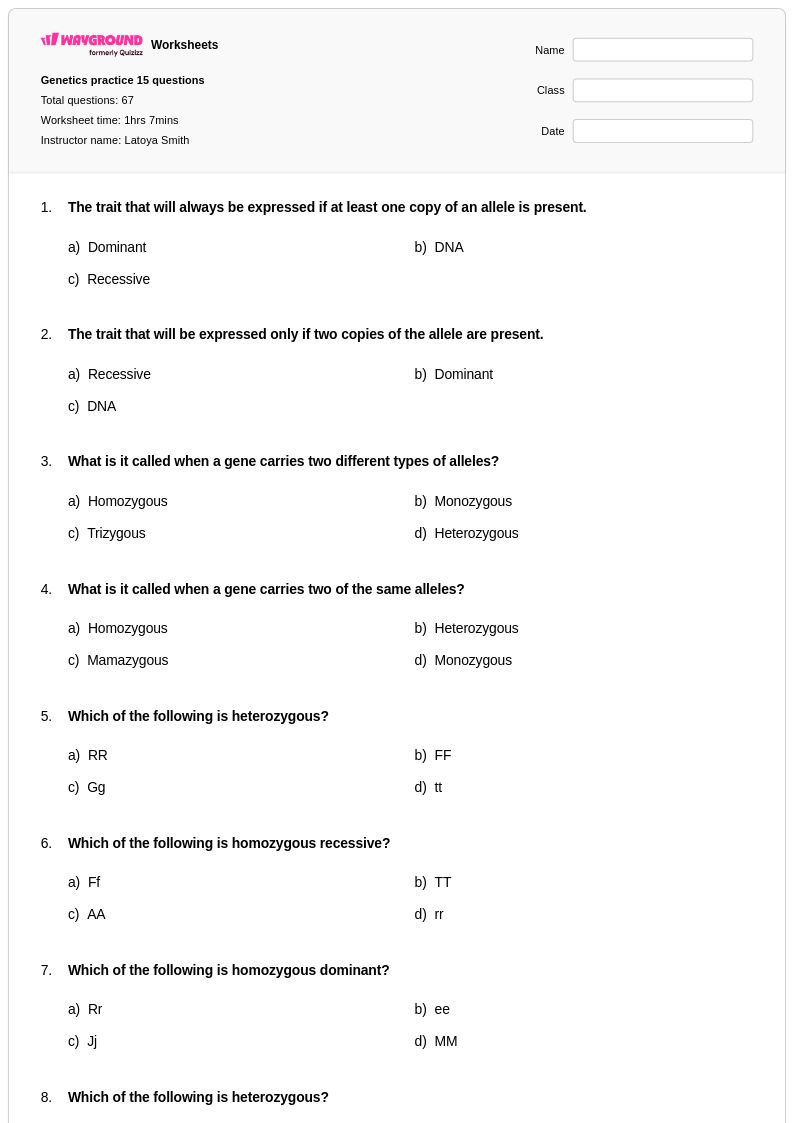
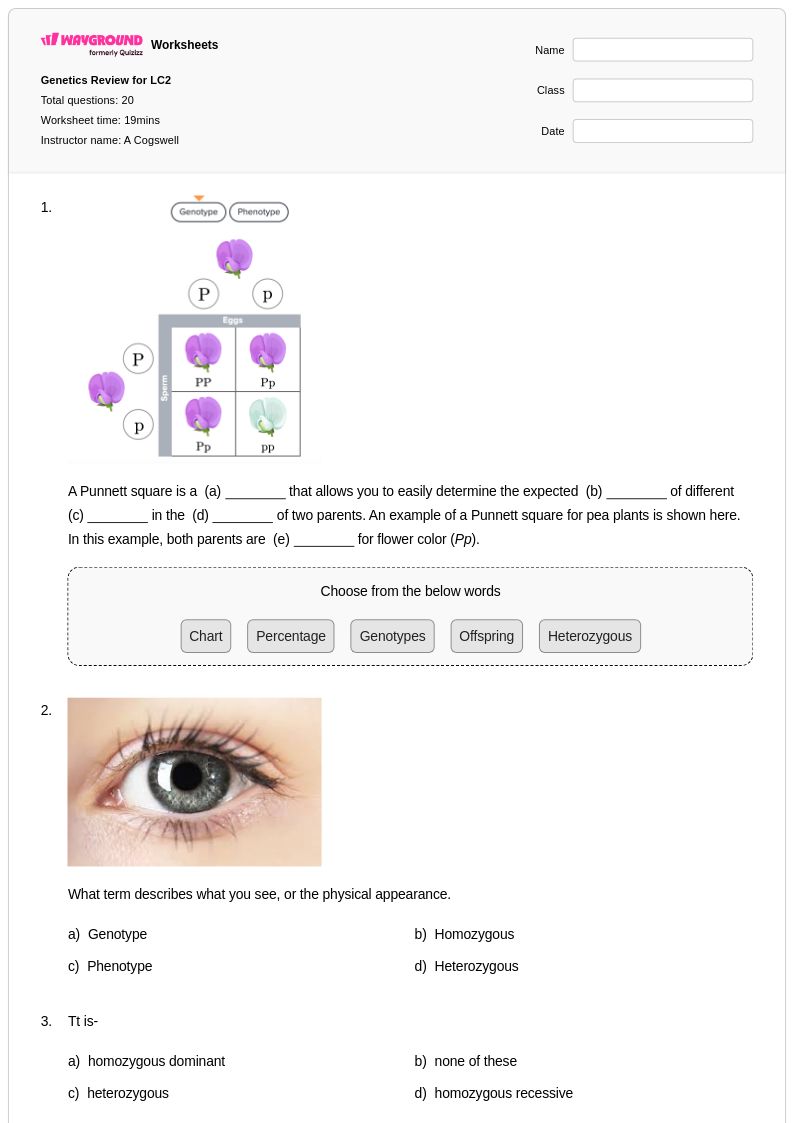
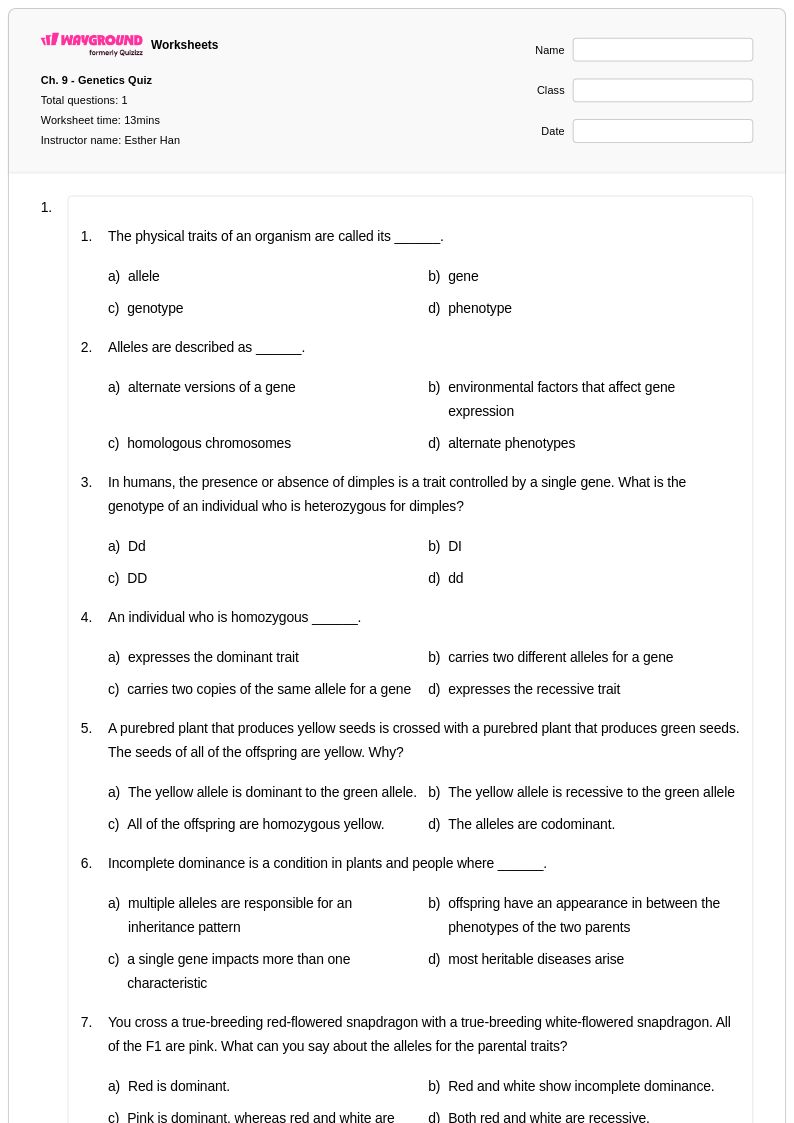
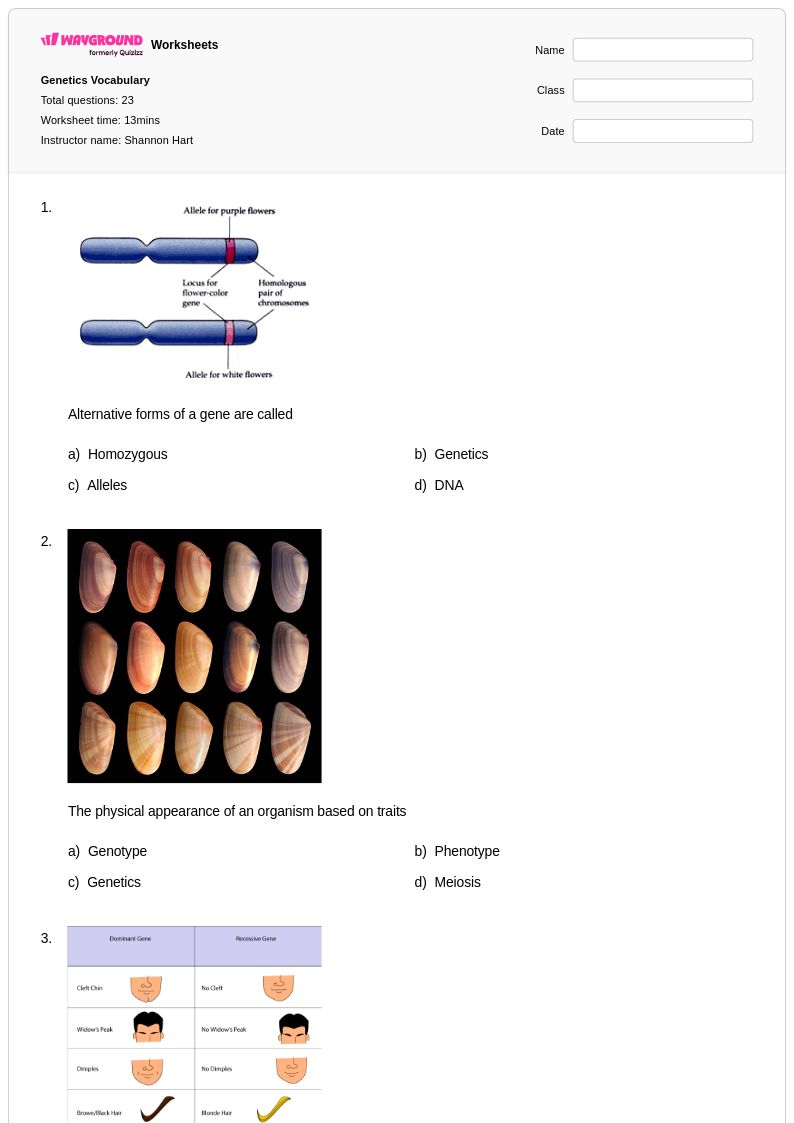
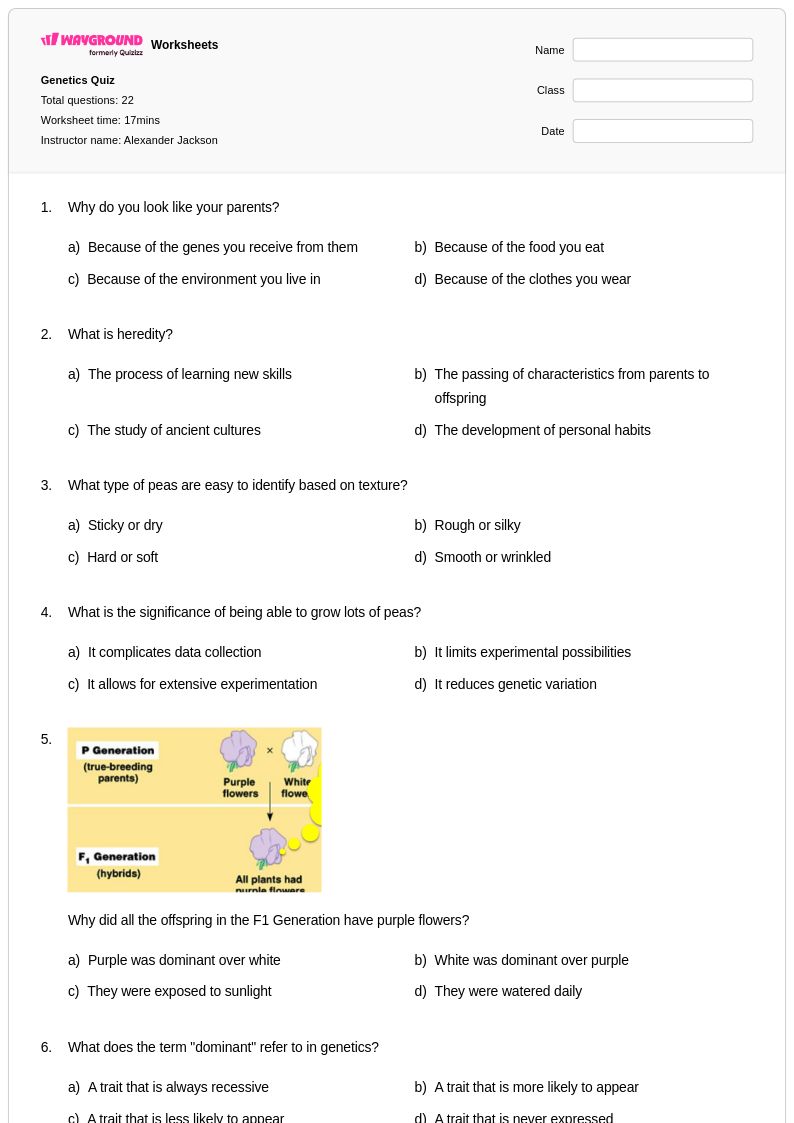
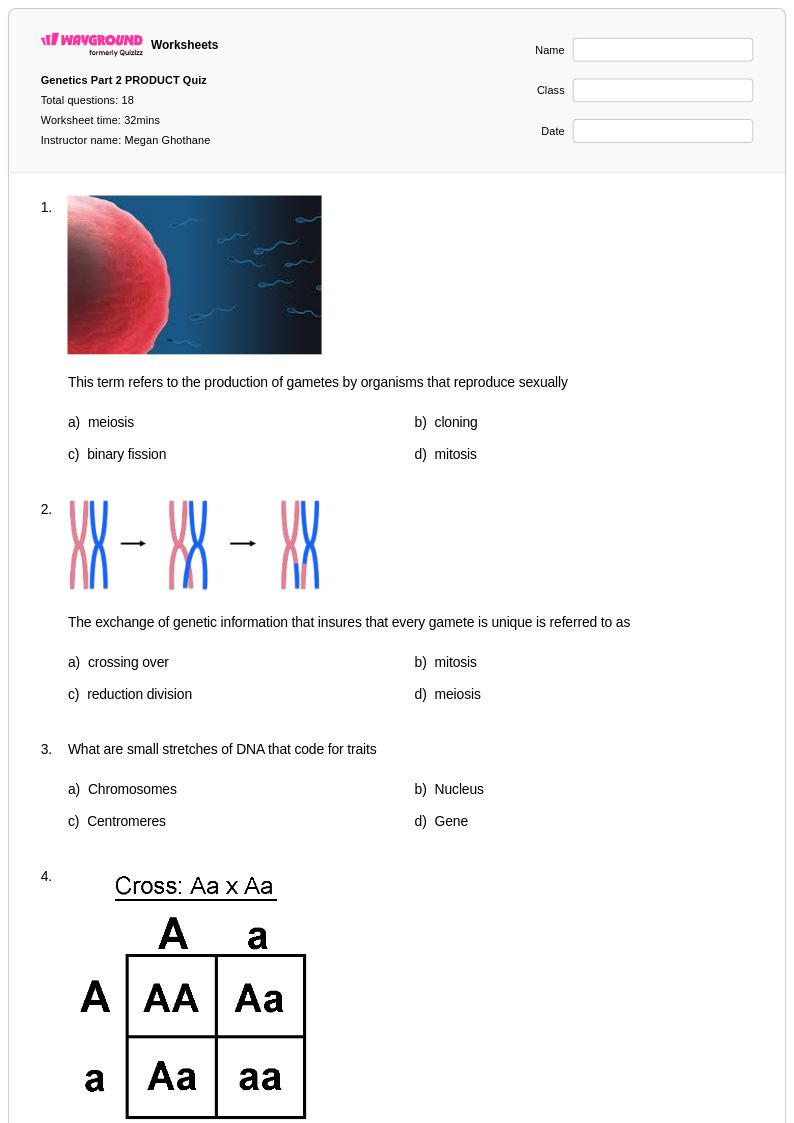
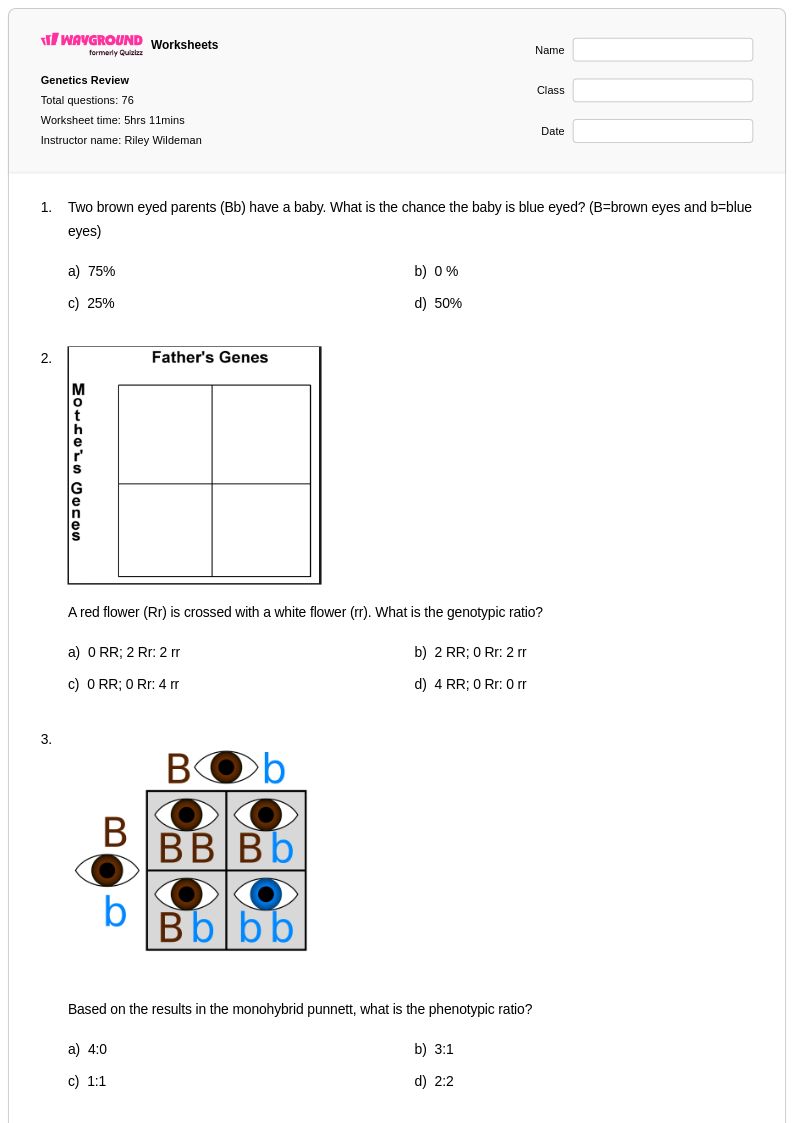
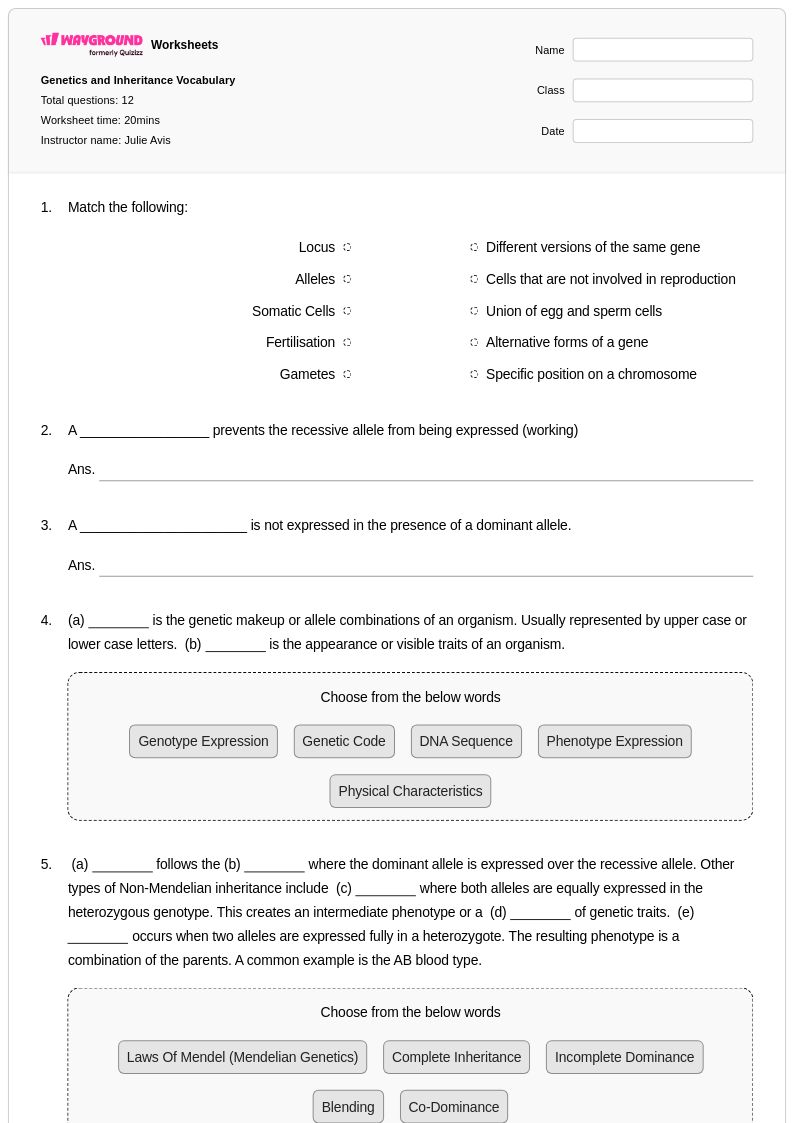
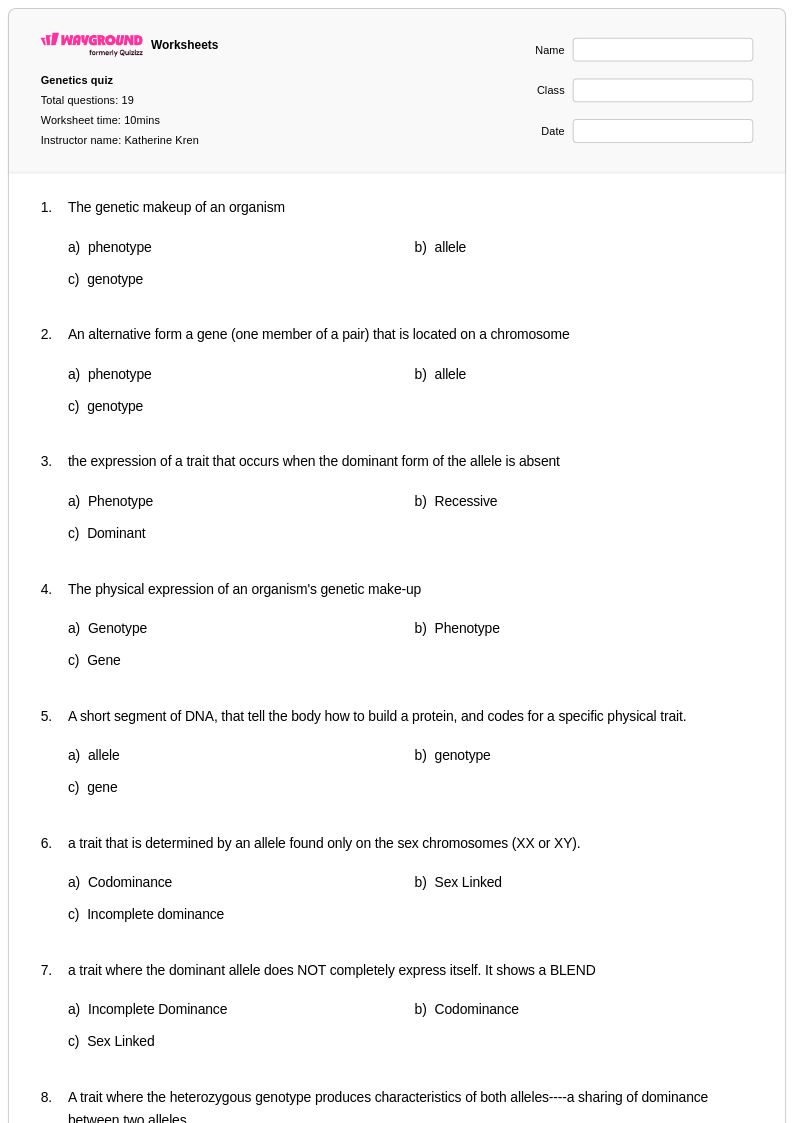
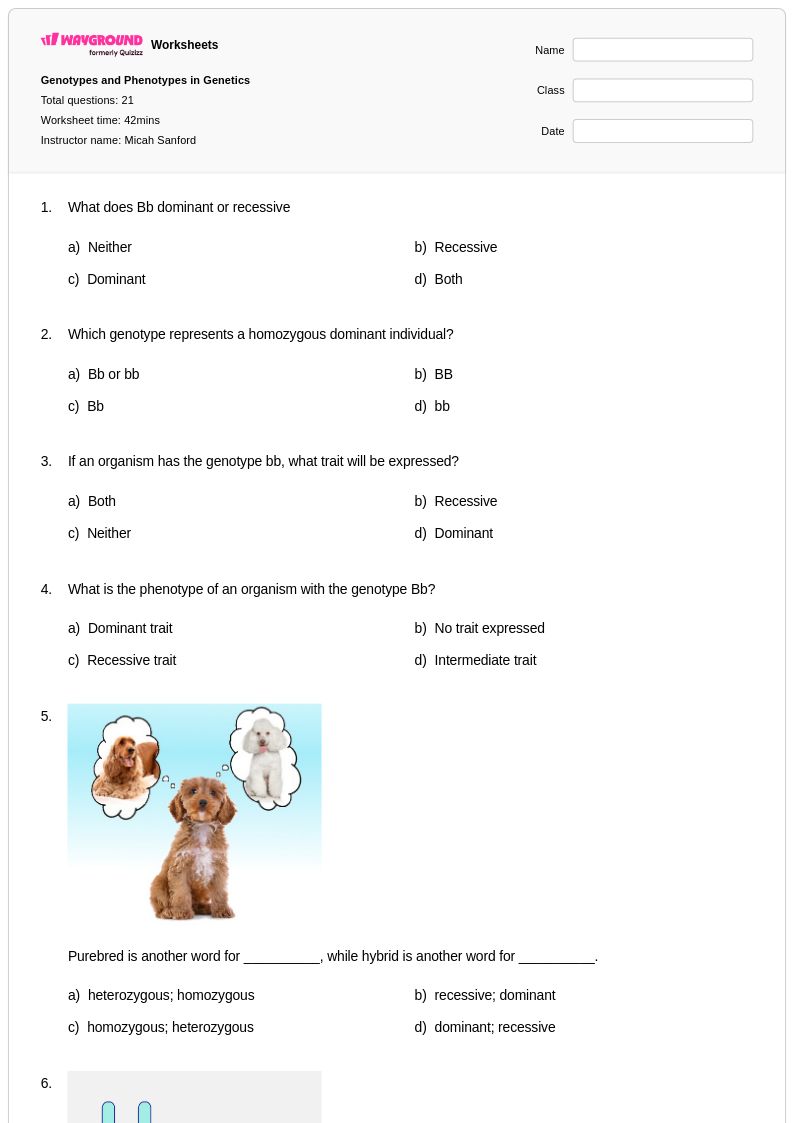
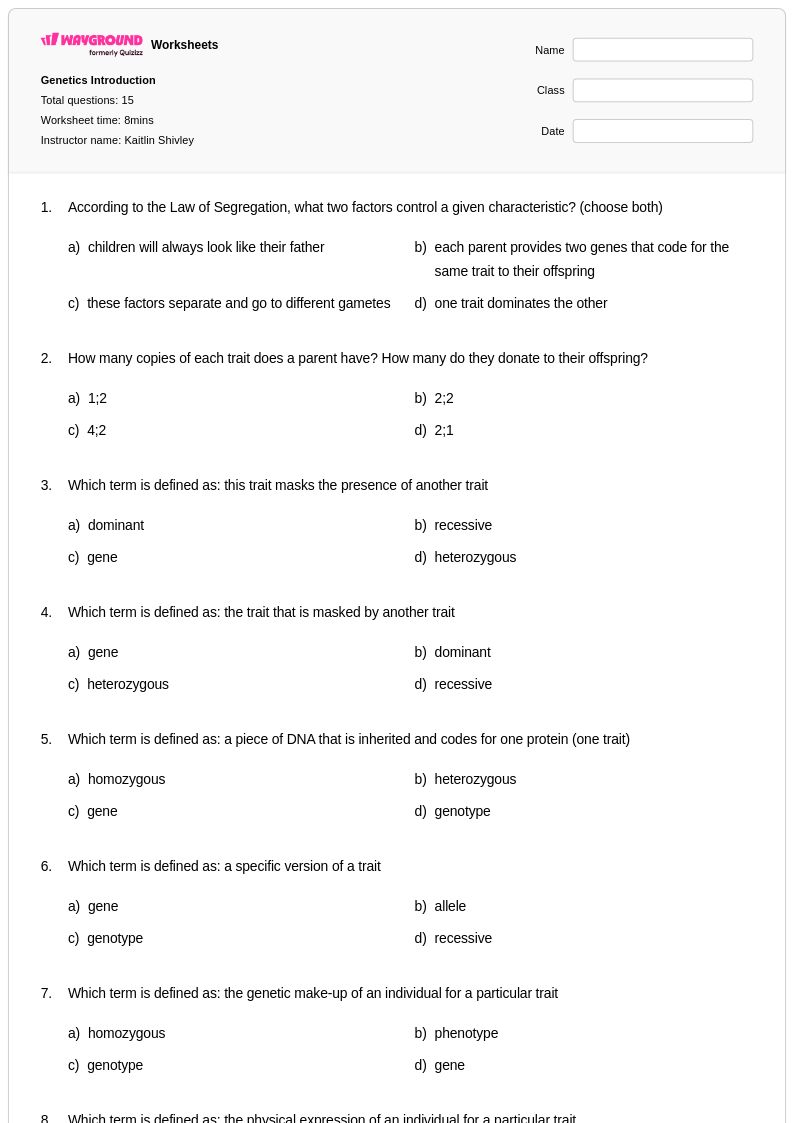
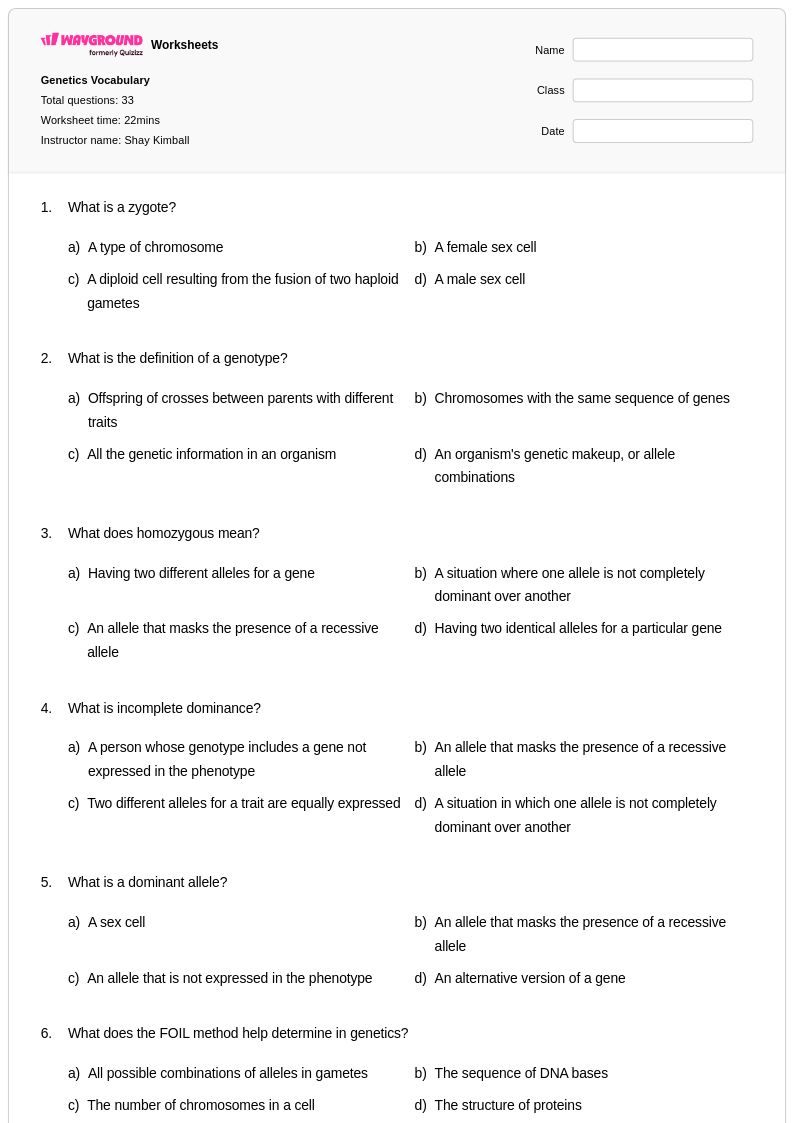
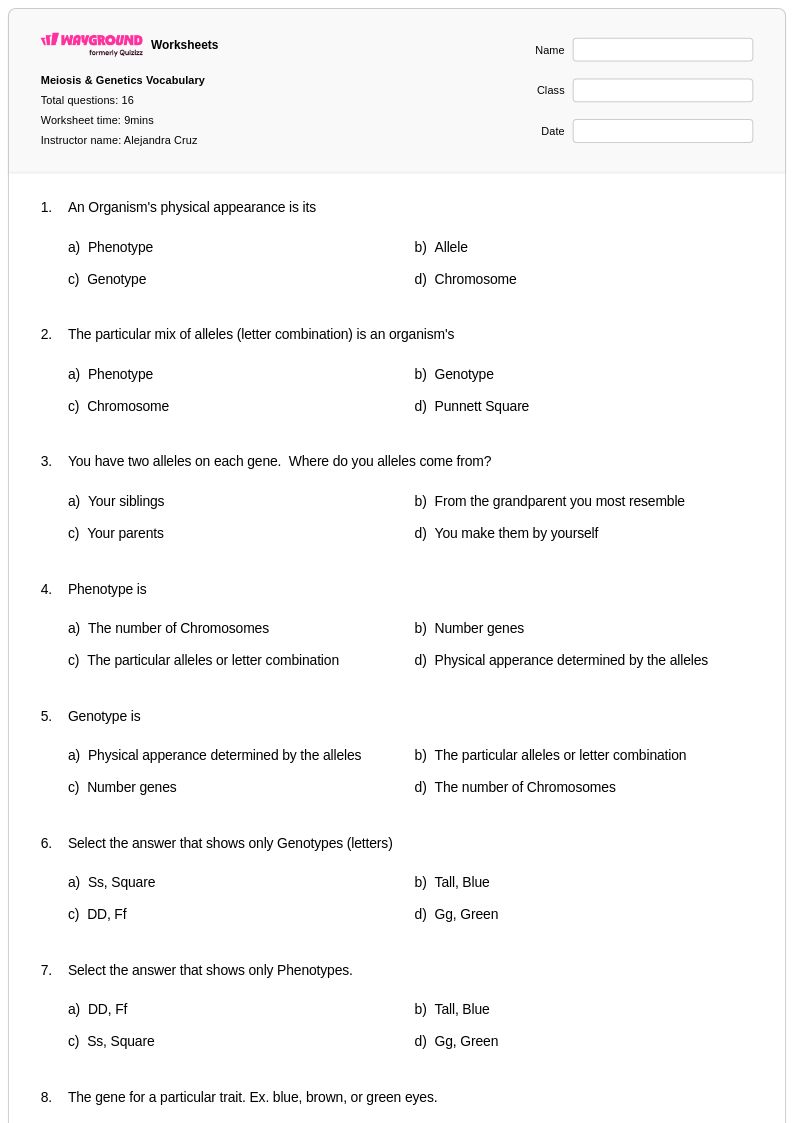
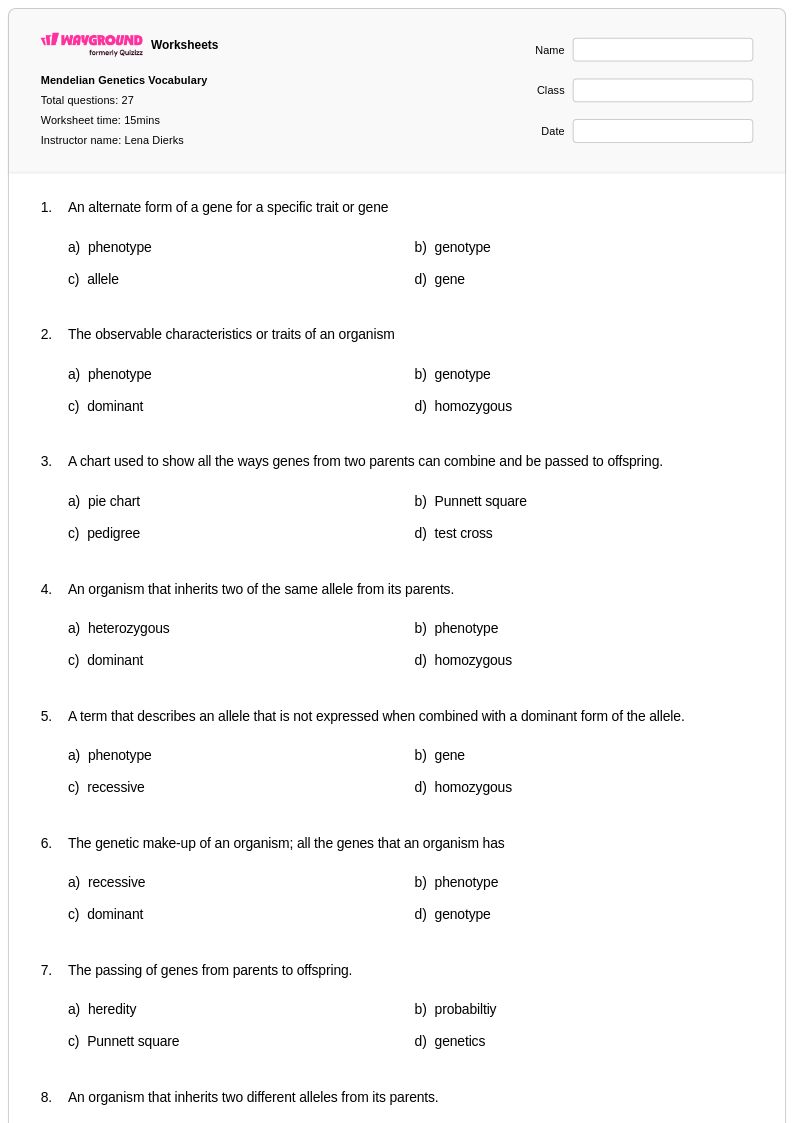
Genetics vocabulary worksheets focusing on genotype and phenotype concepts provide Grade 9 biology students with essential foundation-building practice in understanding heredity and genetic expression. These comprehensive worksheet collections available through Wayground (formerly Quizizz) strengthen students' ability to distinguish between an organism's genetic makeup and its observable characteristics, while reinforcing critical terminology used throughout genetics studies. Students engage with practice problems that require them to identify genotypes from given scenarios, predict phenotypes based on genetic crosses, and apply vocabulary terms accurately in biological contexts. Each worksheet comes with detailed answer keys that support independent learning and self-assessment, and the free printable PDF format ensures easy classroom distribution and homework assignments.
Wayground (formerly Quizizz) empowers teachers with millions of educator-created genetics vocabulary resources that streamline lesson planning and differentiated instruction for Grade 9 biology classrooms. The platform's robust search and filtering capabilities allow teachers to quickly locate worksheets aligned with specific curriculum standards and student proficiency levels, while customization tools enable modifications to match diverse learning needs. Teachers can seamlessly switch between printable PDF formats for traditional paper-based activities and digital versions for technology-integrated lessons, providing flexibility for various classroom environments. These genetics vocabulary collections support targeted remediation for students struggling with genotype and phenotype distinctions, offer enrichment opportunities for advanced learners ready to explore complex inheritance patterns, and provide consistent skill practice that reinforces understanding of fundamental genetic principles throughout the unit.
FAQs
How do I teach students the difference between genotype and phenotype?
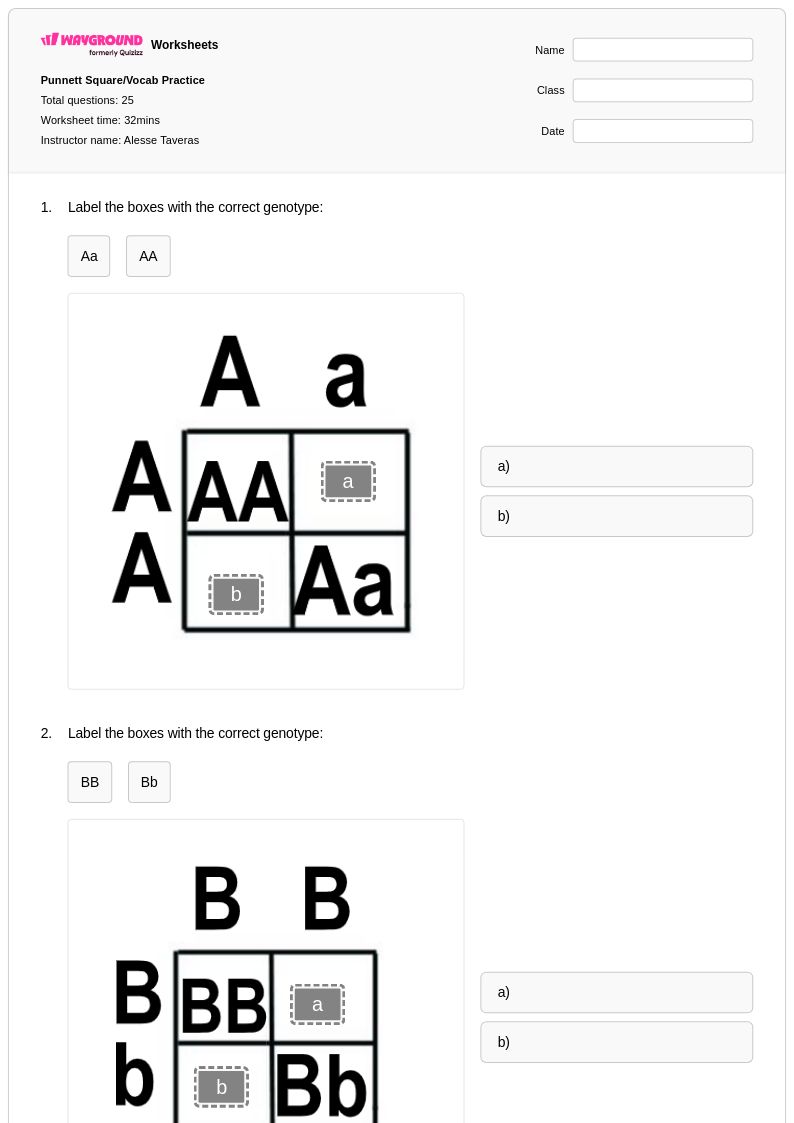
Start by grounding students in concrete examples: a dog's genotype is the allele combination it carries (e.g., Bb), while its phenotype is the coat color you actually see. Use Punnett squares early so students can trace how genetic code translates into observable traits. Reinforce with examples where two organisms share the same phenotype but have different genotypes, such as homozygous dominant and heterozygous individuals expressing the same dominant trait — this distinction is where real conceptual understanding forms.
What vocabulary terms should students know before working on genotype and phenotype worksheets?
Students should be comfortable with alleles, dominant and recessive traits, homozygous, heterozygous, and genetic expression before tackling genotype and phenotype problems. Without fluency in these terms, students struggle to accurately complete Punnett squares or interpret genetic crosses. Pre-teaching this vocabulary through direct instruction or a matching activity before assigning practice problems significantly improves worksheet performance.
What exercises help students practice genotype and phenotype concepts?
Effective practice includes completing Punnett squares for monohybrid crosses, labeling genotypes and phenotypes from given scenarios, and predicting offspring ratios for dominant and recessive trait pairings. Students also benefit from exercises that require them to work backwards — identifying a likely genotype from a described phenotype and known parental crosses. Mixing vocabulary identification questions with applied genetic analysis problems reinforces both terminology and conceptual reasoning.
What mistakes do students commonly make when working with genotype and phenotype?
The most frequent error is conflating genotype with phenotype — students often assume that knowing an organism's visible trait tells them its exact genetic makeup, ignoring the possibility of heterozygosity. Another common mistake is treating dominant as synonymous with 'more common' or 'stronger,' which leads to systematic misinterpretation of genetic ratios. Students also frequently forget that environmental factors can influence phenotype, making phenotype not a direct readout of genotype alone.
How can I use genotype and phenotype worksheets to differentiate instruction in my science class?
Differentiation works well when you tier tasks by complexity: assign vocabulary matching and basic genotype labeling to students still building foundational understanding, while directing advanced learners toward Punnett square analysis and multi-trait interpretation problems. On Wayground, teachers can apply individual accommodations such as read aloud support, reduced answer choices, or extended time to specific students without disrupting the experience for the rest of the class. These settings are reusable across sessions, making differentiation manageable at scale.
How do I use Wayground's genotype and phenotype worksheets in my classroom?
Wayground's genetics vocabulary worksheets are available as printable PDFs for traditional classroom use and in digital formats for technology-integrated learning environments. Teachers can assign them as independent practice, use them as formative assessment tools, or host them as a live quiz directly on Wayground. All worksheets include answer keys, so grading and review are straightforward whether students are working on paper or on a device.