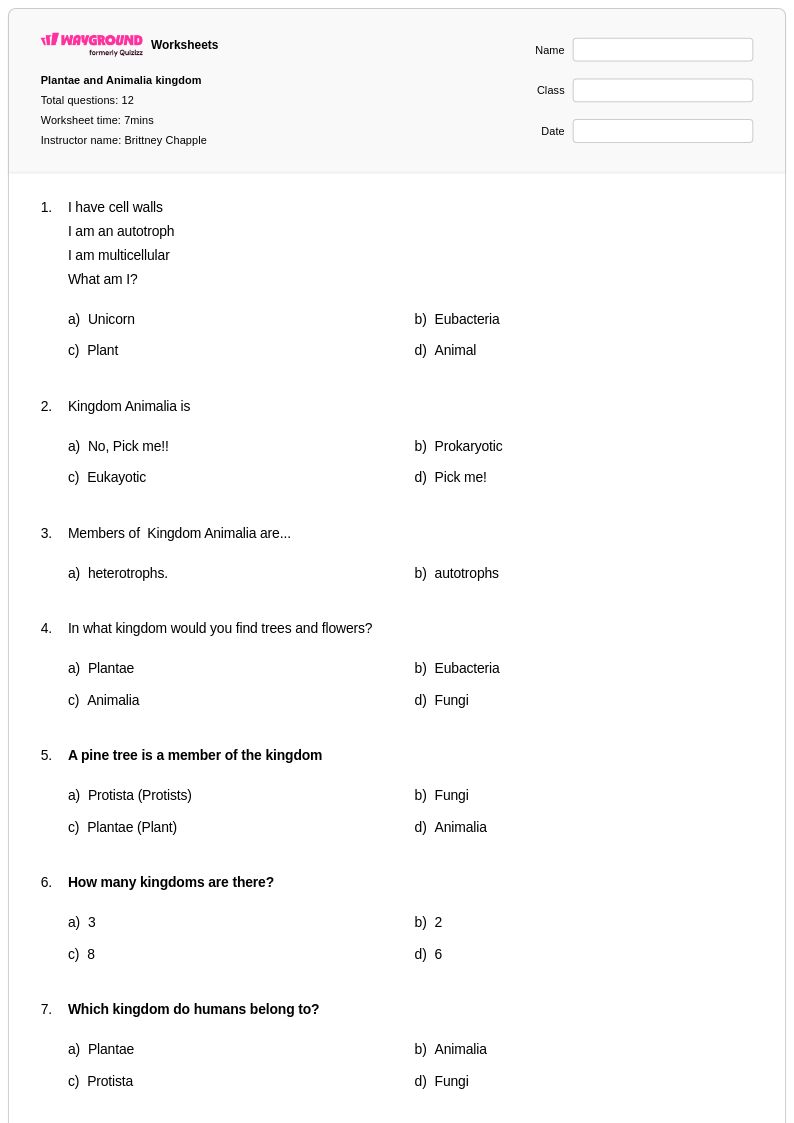
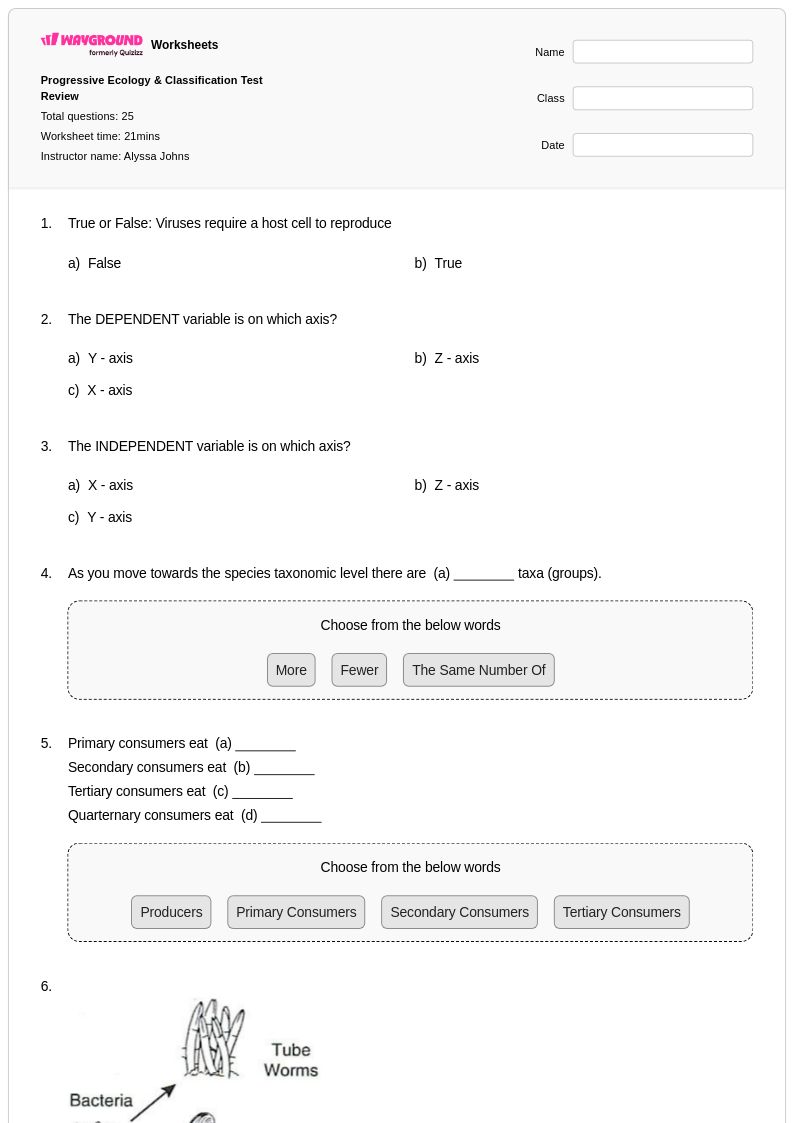
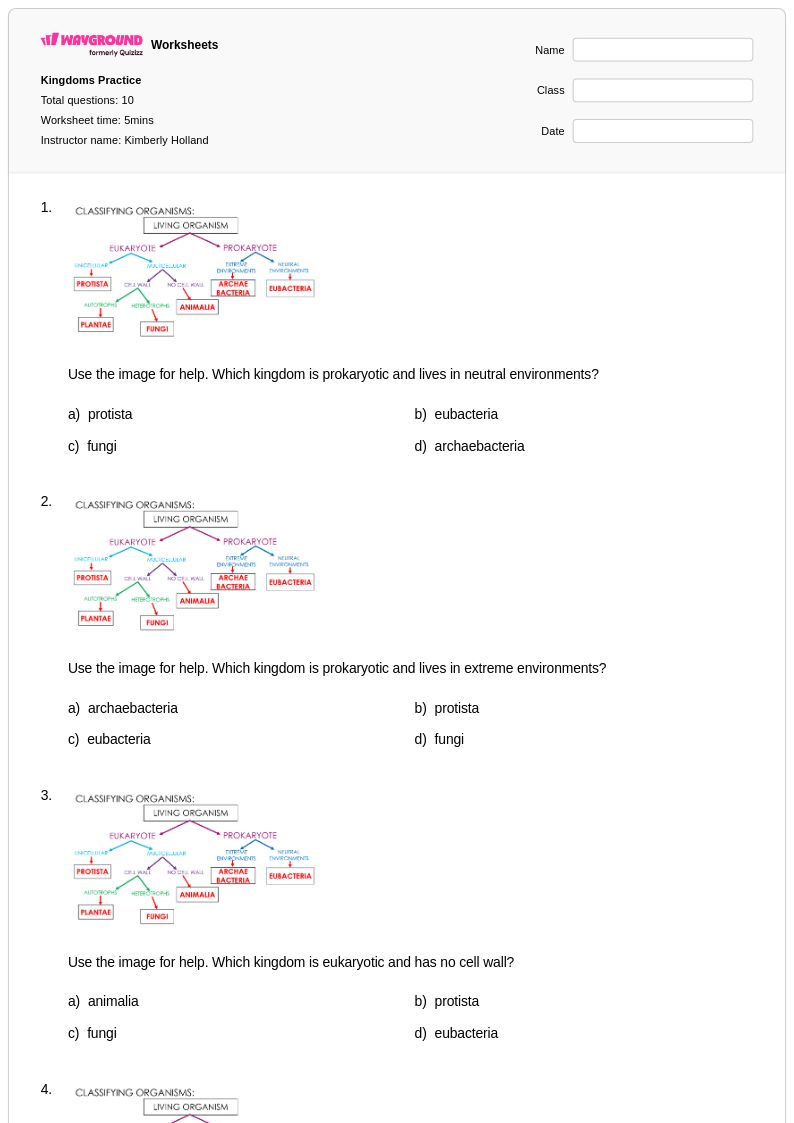
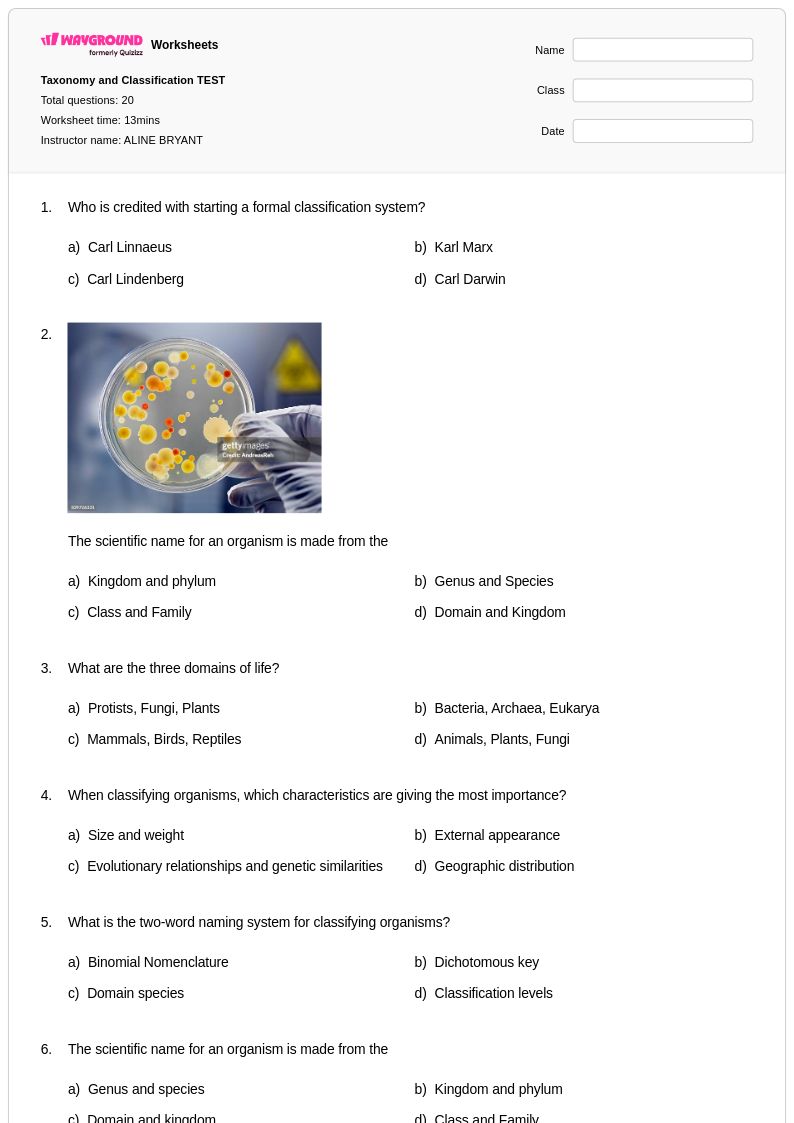
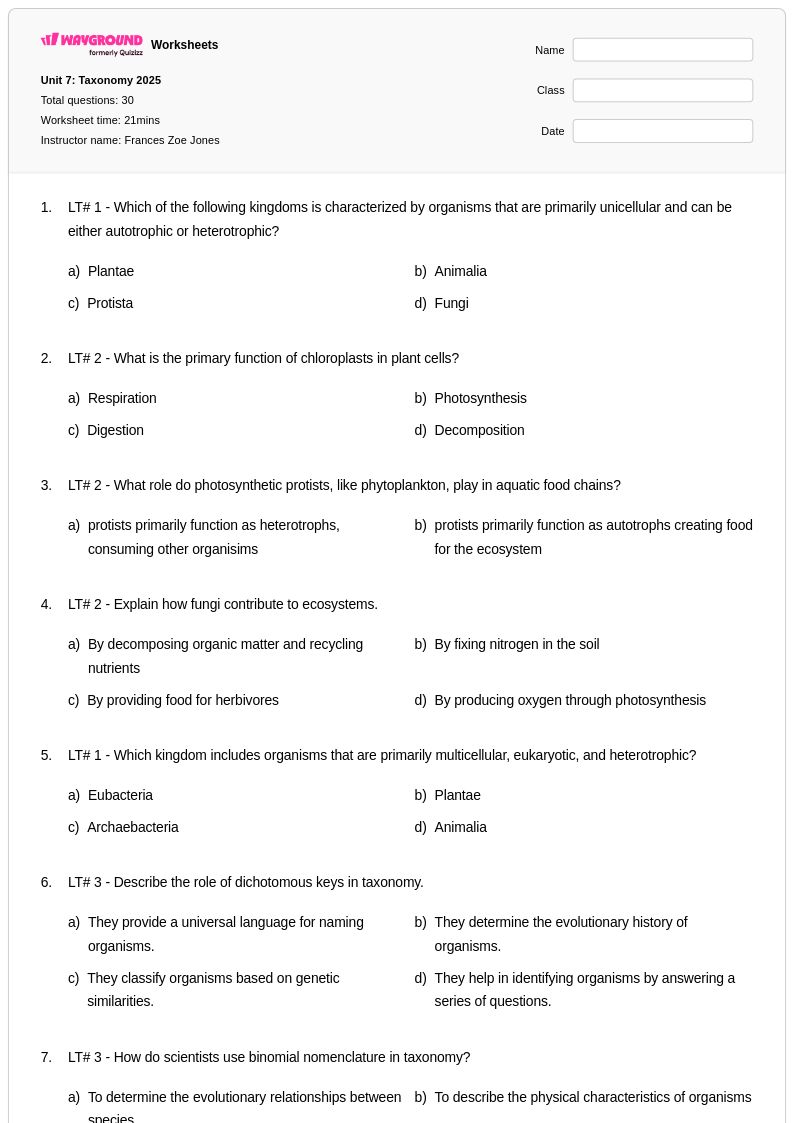
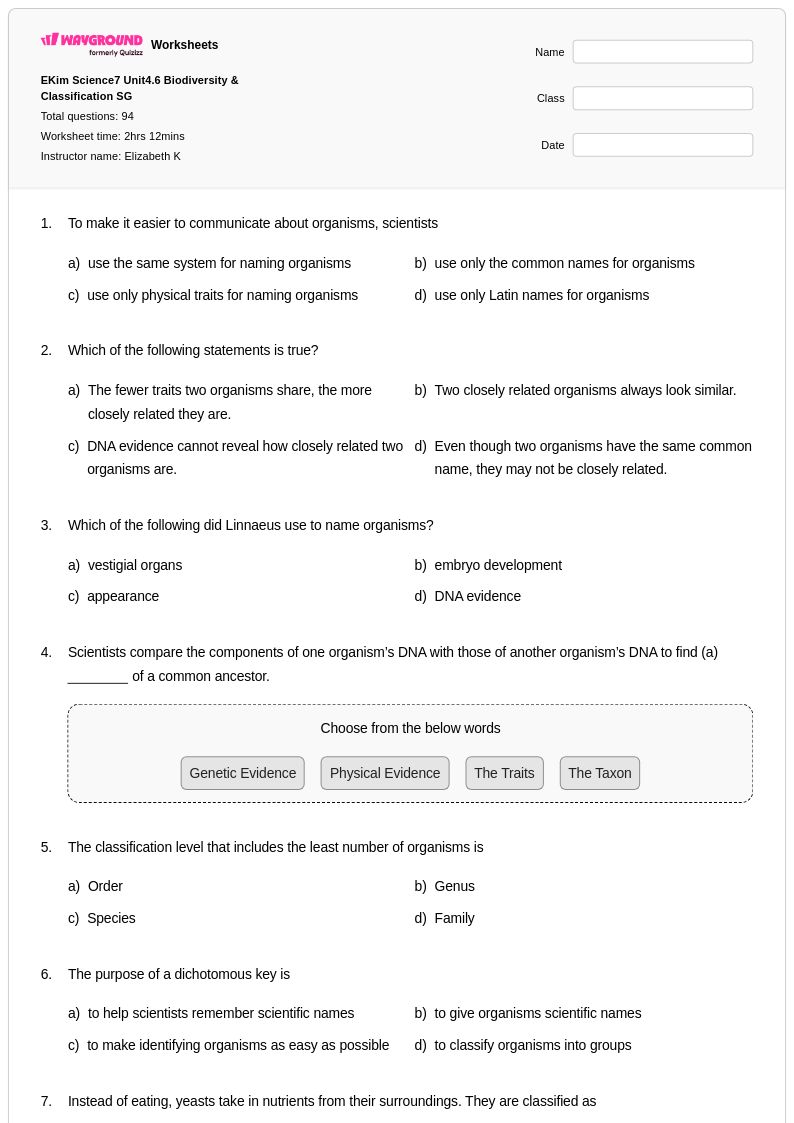
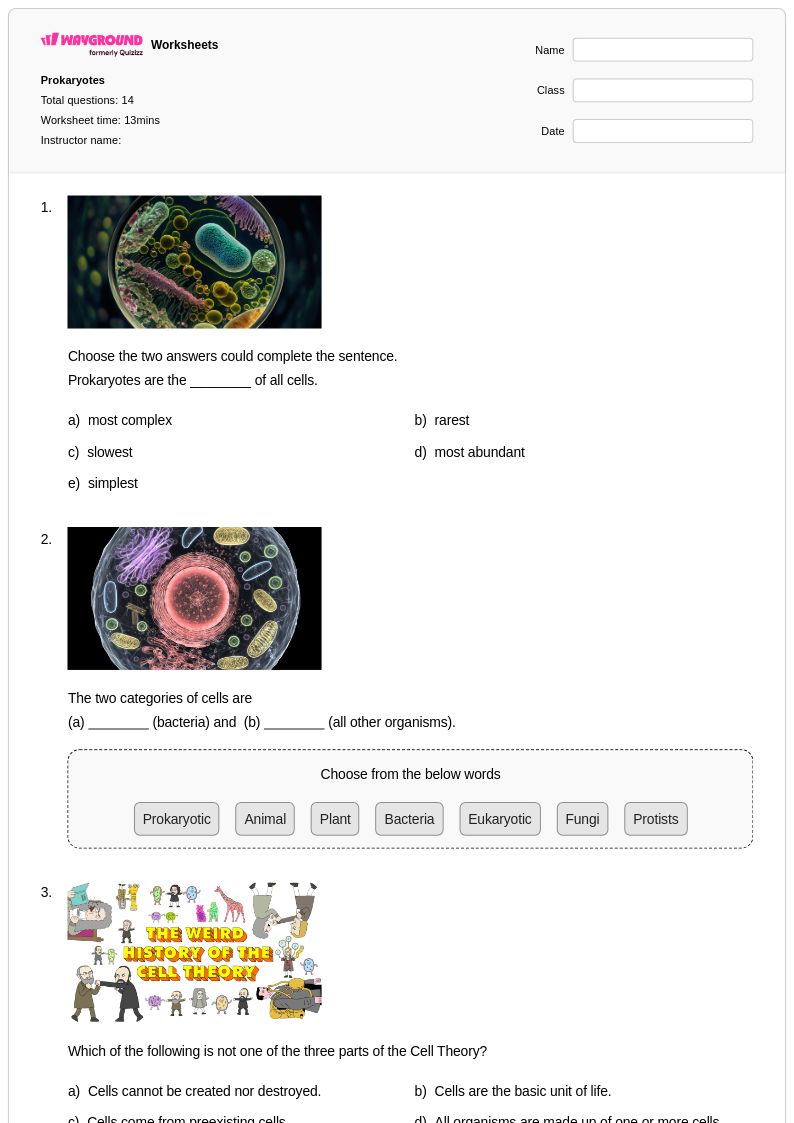
Free Printable Kingdom Fungi Worksheets for Grade 9
Explore Grade 9 Kingdom Fungi worksheets and printables through Wayground that help students master fungal characteristics, classification, and life cycles with comprehensive practice problems, free PDF downloads, and detailed answer keys.
Explore printable Kingdom Fungi worksheets for Grade 9
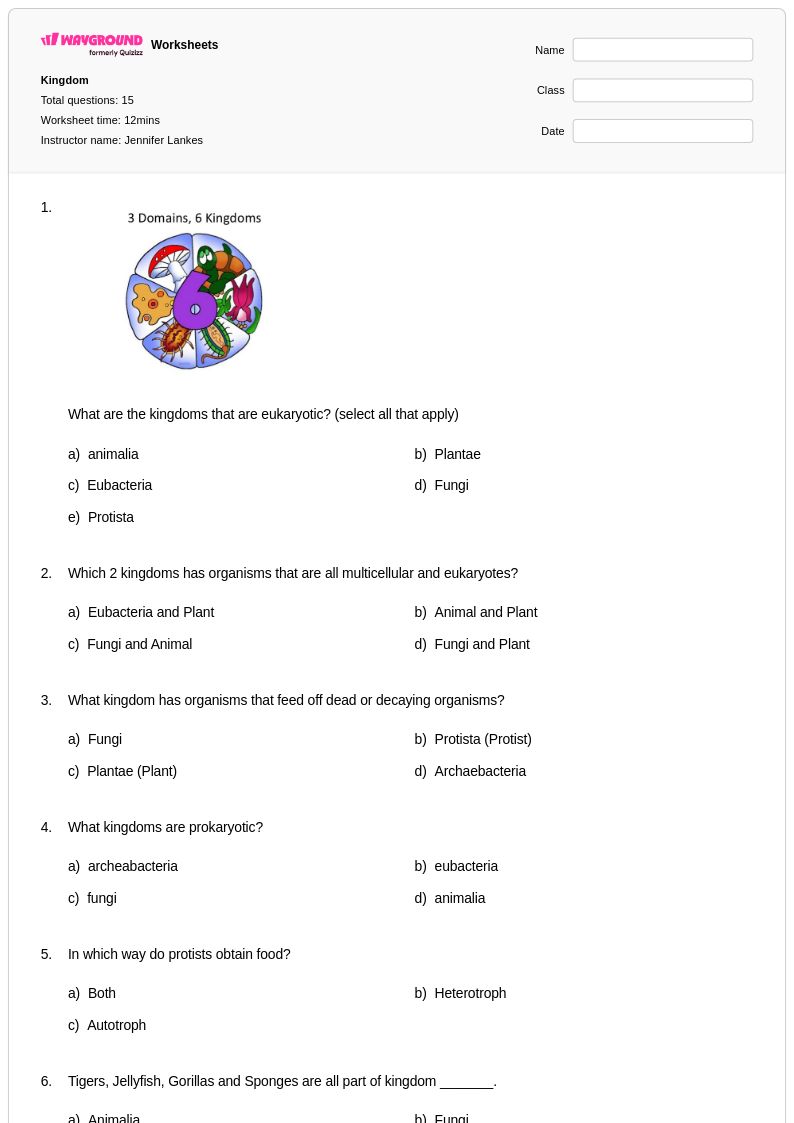
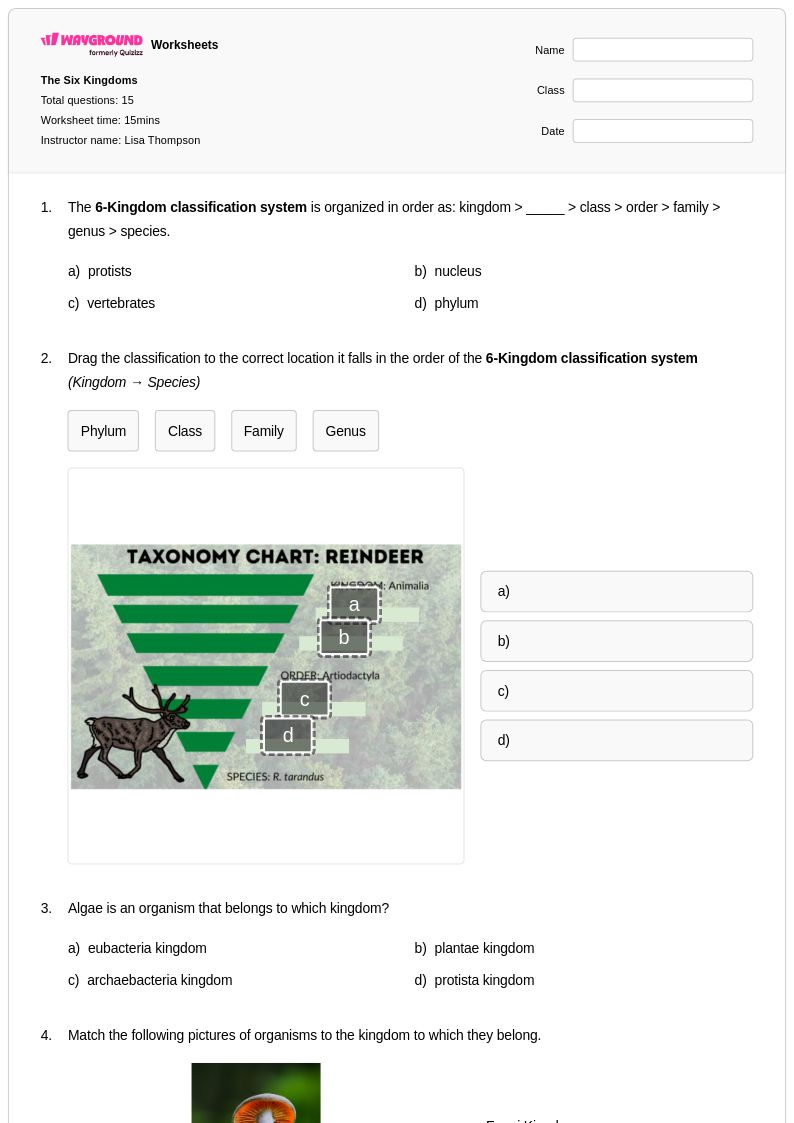
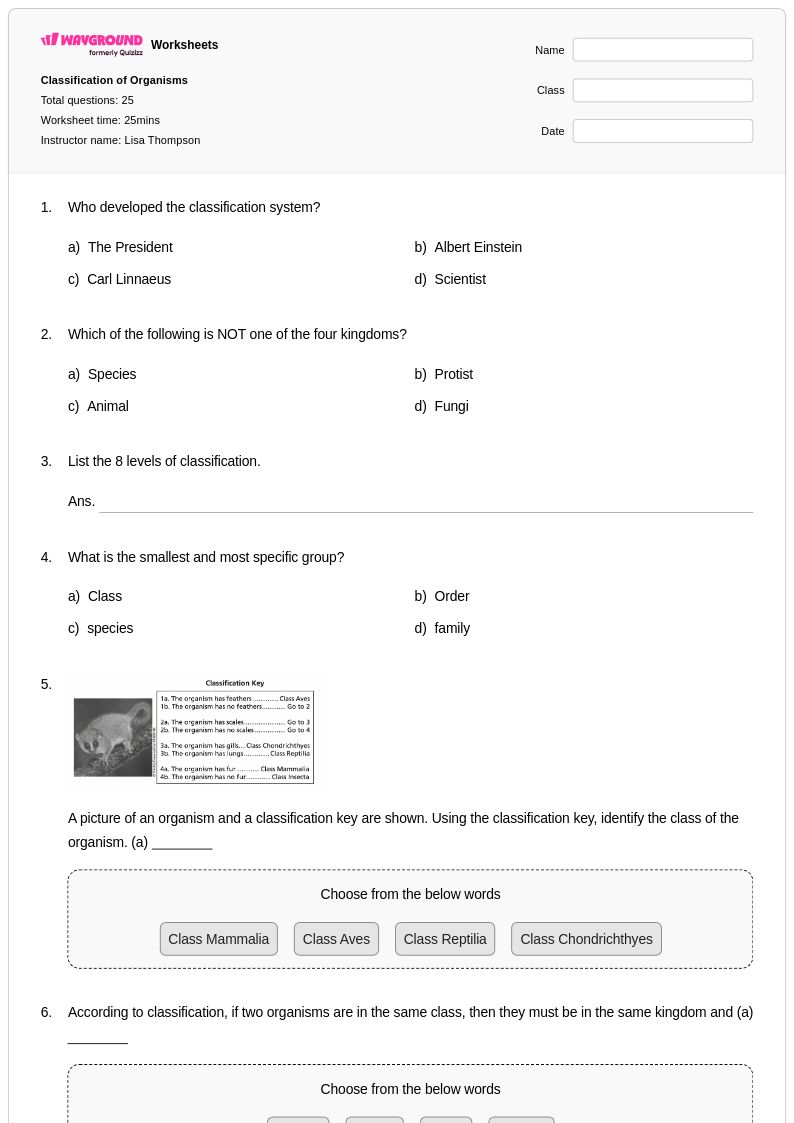
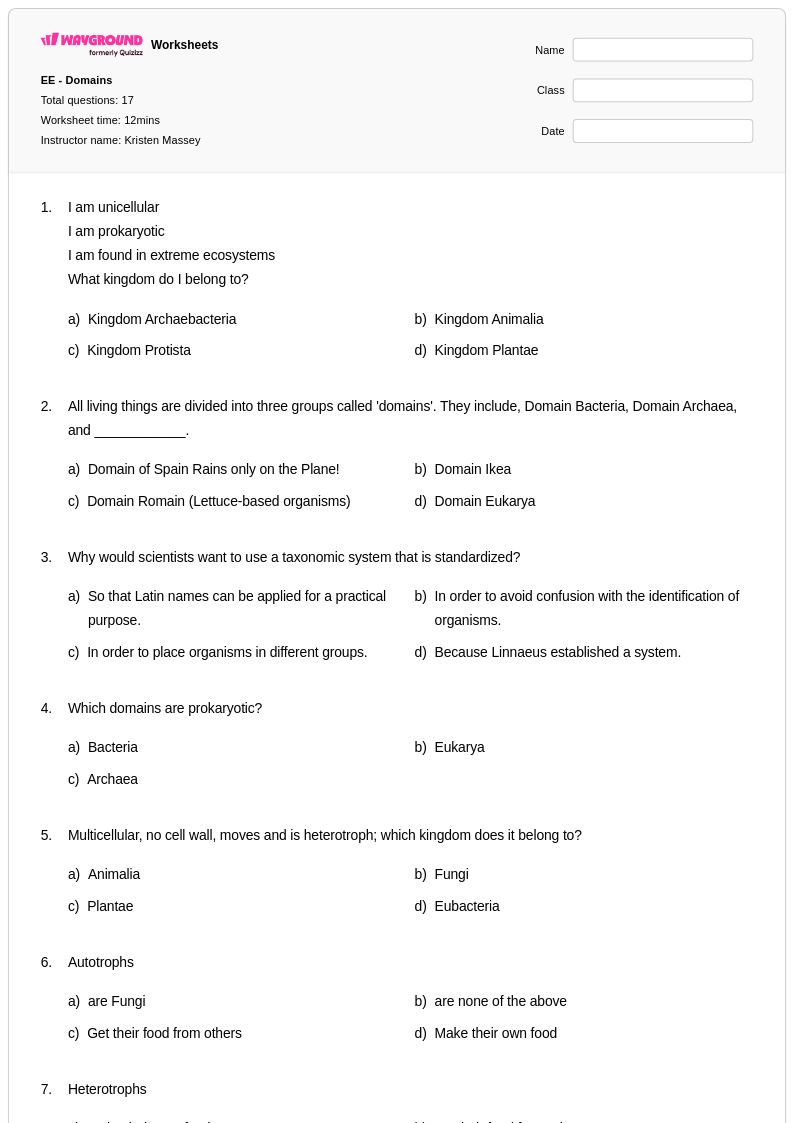
Kingdom Fungi worksheets available through Wayground (formerly Quizizz) provide Grade 9 students with comprehensive practice materials that explore the fascinating world of fungal organisms and their essential ecological roles. These expertly designed worksheets strengthen critical biology skills including cellular structure analysis, reproductive cycle identification, classification techniques, and ecological relationship understanding as students examine mushrooms, yeasts, molds, and other fungal species. The collection features detailed practice problems covering fungal cell wall composition, spore formation mechanisms, symbiotic relationships like mycorrhizae, and the economic importance of fungi in food production and medicine. Each worksheet includes a complete answer key and is available as a free printable pdf, allowing students to master complex concepts such as heterotrophic nutrition, decomposer functions, and the distinguishing characteristics that separate Kingdom Fungi from plants, animals, and other biological kingdoms.
Wayground (formerly Quizizz) empowers teachers with millions of teacher-created Kingdom Fungi resources that support effective Grade 9 biology instruction through powerful search and filtering capabilities aligned to educational standards. The platform's differentiation tools enable educators to customize worksheets for diverse learning needs, while flexible formatting options provide both printable pdf versions for traditional classroom use and interactive digital formats for modern learning environments. These comprehensive worksheet collections facilitate strategic lesson planning by offering varied difficulty levels for skill practice, targeted remediation materials for struggling students, and enrichment activities for advanced learners exploring topics like fungal biotechnology and evolutionary relationships. Teachers can efficiently locate specific resources covering everything from basic fungal characteristics to complex life cycles, ensuring students develop a thorough understanding of how fungi contribute to nutrient cycling, symbiotic partnerships, and ecosystem stability while building essential scientific observation and analysis skills.
FAQs
How do I teach Kingdom Fungi to biology students?
Teaching Kingdom Fungi effectively starts with distinguishing fungi from plants and animals by emphasizing their heterotrophic nutrition, chitin-based cell walls, and reproduction via spores rather than seeds. Use visual comparisons of fungal phyla (Ascomycota, Basidiomycota, Zygomycota) to build classification fluency before moving into ecological roles such as decomposition and mycorrhizal relationships. Grounding lessons in real-world examples like bread mold, athlete's foot, and lichens helps students connect abstract biology to observable phenomena.
What exercises help students practice identifying fungal structures and life cycles?
Labeling diagrams of fungal structures such as hyphae, mycelium, sporangia, and fruiting bodies gives students repeated exposure to vocabulary in context. Practice problems that ask students to trace spore formation through asexual and sexual reproductive cycles reinforce process understanding rather than rote memorization. Worksheets that require students to match fungal phyla to their defining characteristics and reproductive strategies are particularly effective for building classification skills.
What are the most common misconceptions students have about fungi?
The most persistent misconception is that fungi are a type of plant because mushrooms grow from the ground and appear stationary. Students frequently conflate photosynthesis with all non-animal organisms, so explicitly addressing that fungi are heterotrophs that absorb nutrients from their environment is essential. Another common error is treating 'mushroom' as synonymous with 'fungus' when mushrooms are just the fruiting body of certain species, not representative of fungal diversity as a whole.
How do I use Kingdom Fungi worksheets in my classroom?
Kingdom Fungi worksheets from Wayground are available as printable PDFs for traditional classroom use and in digital formats for technology-integrated environments, including the option to host them as a quiz directly on Wayground. Printable versions work well for guided notes, homework, or lab reinforcement, while digital formats allow for self-paced review and immediate feedback. Each worksheet includes a complete answer key, making them equally useful for independent student study or teacher-led instruction.
How do symbiotic relationships involving fungi fit into a biology curriculum?
Fungal symbioses are a high-value teaching point because they bridge mycology with broader ecology concepts. Mycorrhizal relationships, where fungi colonize plant roots to exchange nutrients, and lichens, which are stable symbioses between fungi and photosynthetic organisms, illustrate mutualism in concrete terms. Including these relationships in fungi worksheets helps students see fungi not as isolated organisms but as ecological connectors that shape plant communities and nutrient cycles.
How can I differentiate Kingdom Fungi worksheets for students with varying skill levels?
On Wayground, teachers can apply individual student accommodations such as reduced answer choices to lower cognitive load for struggling learners, extended time per question, and read-aloud support for students who benefit from audio delivery of content. These settings can be assigned to specific students without notifying the rest of the class, so differentiation happens seamlessly within a single assignment. For advanced students, selecting problems that require analysis of spore formation processes or evaluation of symbiotic relationships adds appropriate challenge without requiring separate materials.

![Quiz: Taxonomy [Domains & Kingdoms] - Imprimible Kingdom-fungi Worksheets Grade 9 - Wayground](https://quizizz-static.s3.amazonaws.com/_media/worksheets-new/605d60ec3388a6001c8cd67f-quiz-taxonomy-domains-kingdoms)