
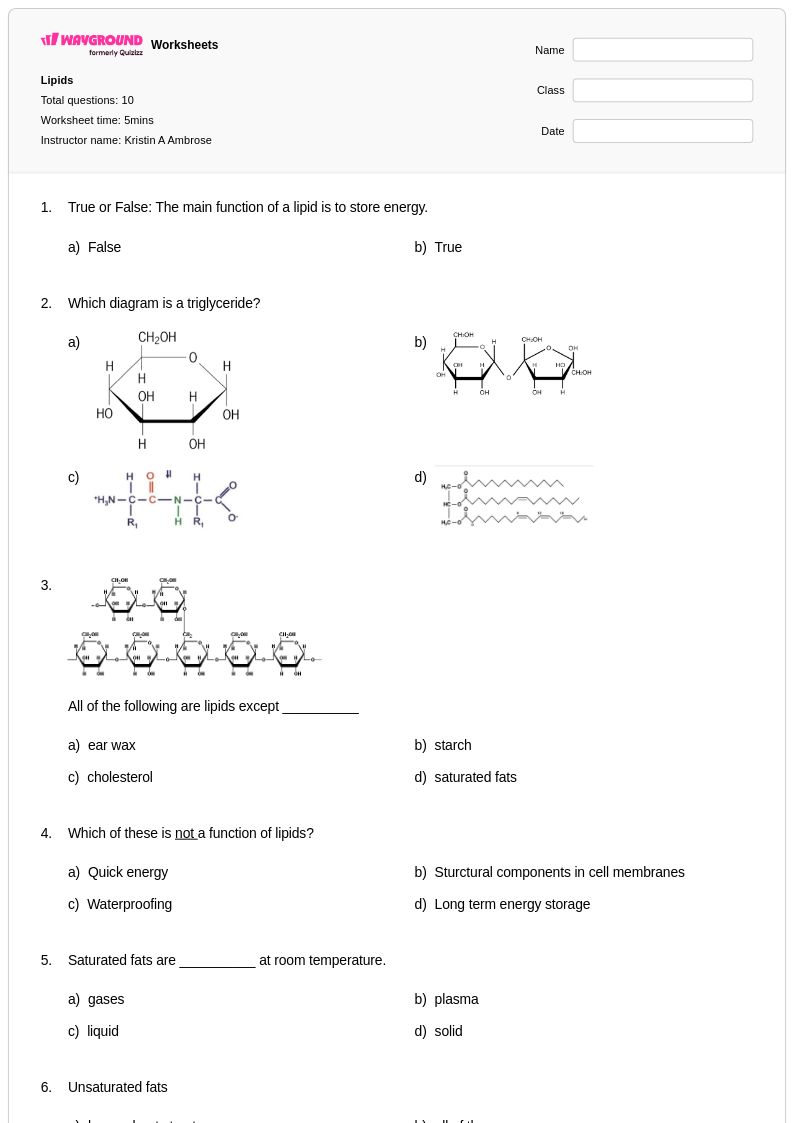
10 Q
9th - 10th
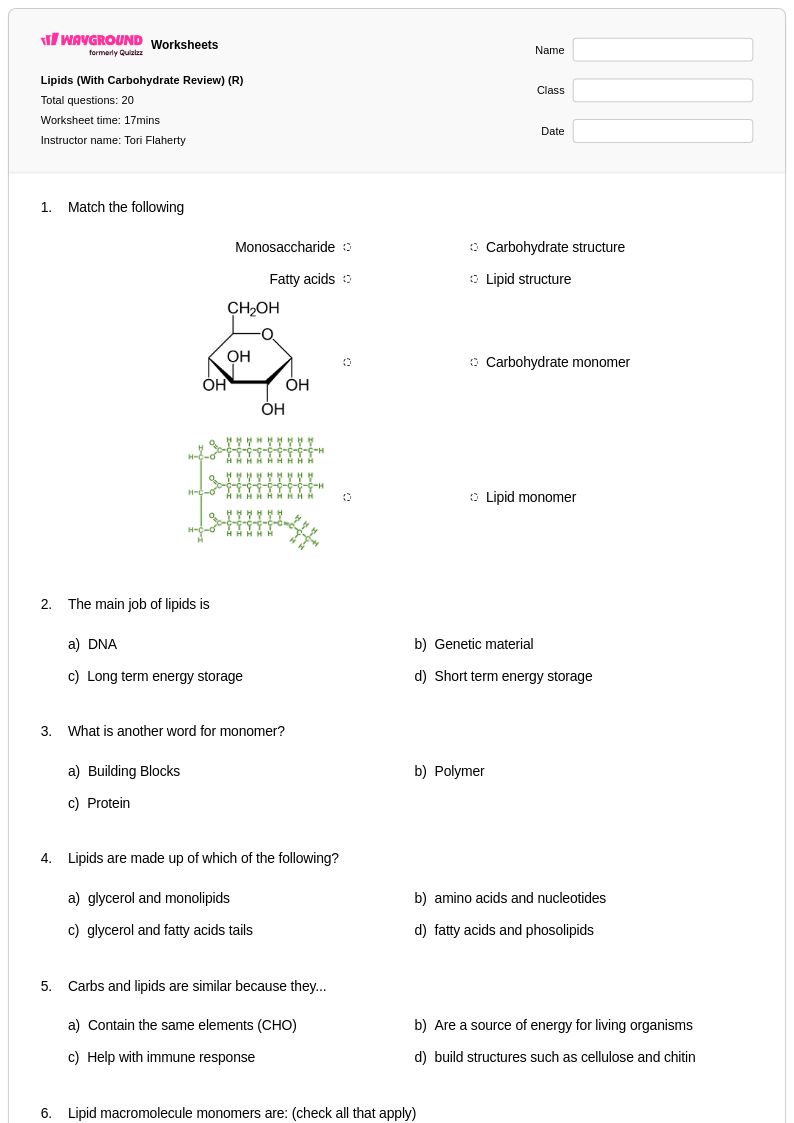
20 Q
9th - 12th
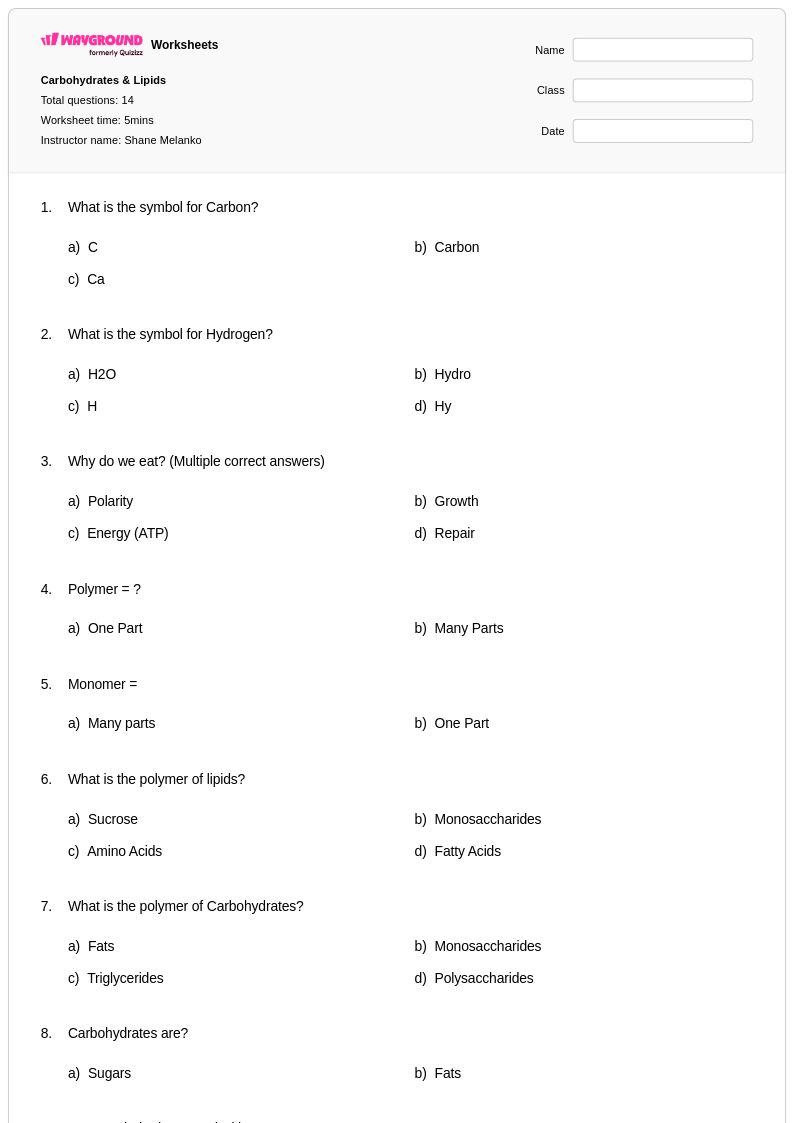
14 Q
9th - 12th
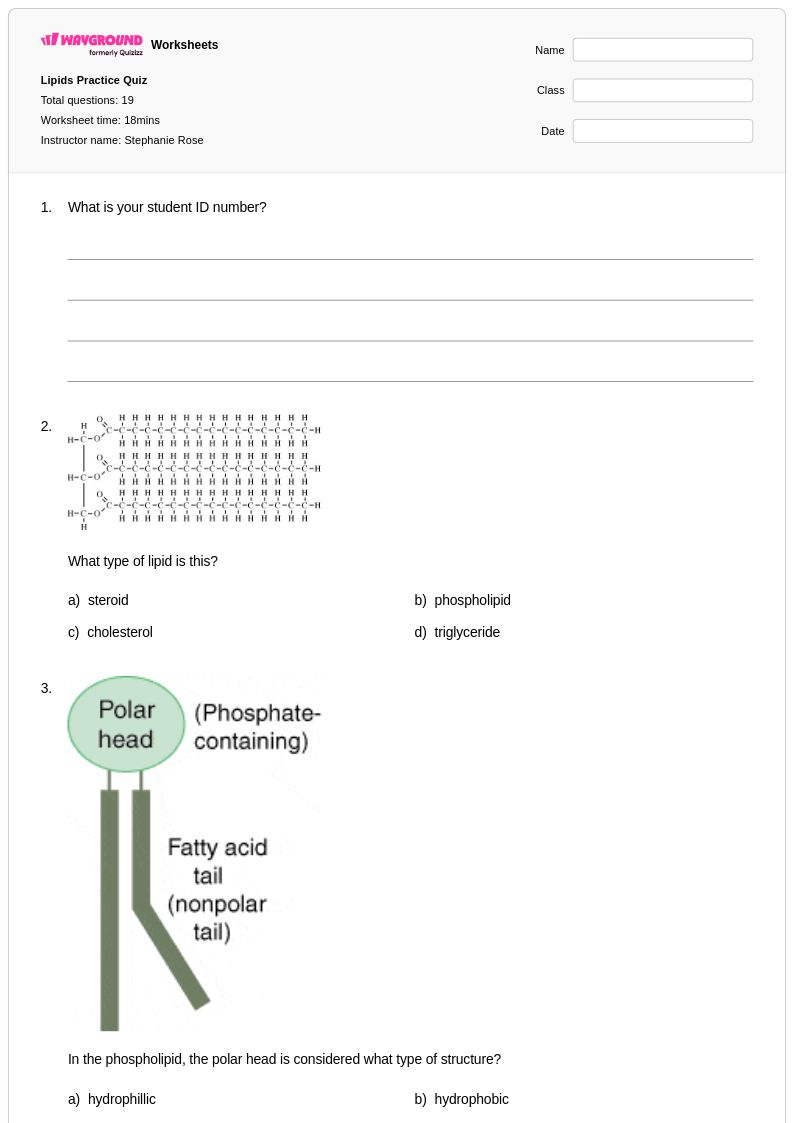
19 Q
9th
10 Q
9th - 12th
10 Q
9th
20 Q
9th - Uni
20 Q
9th
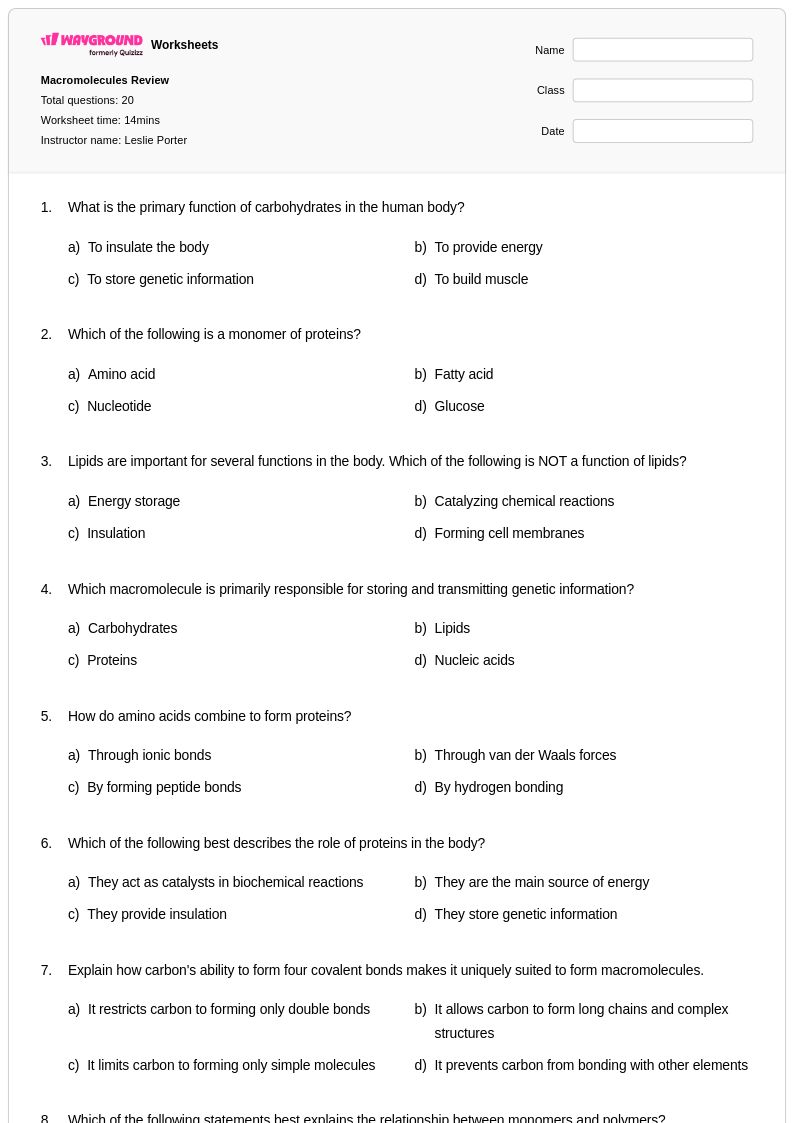
20 Q
9th
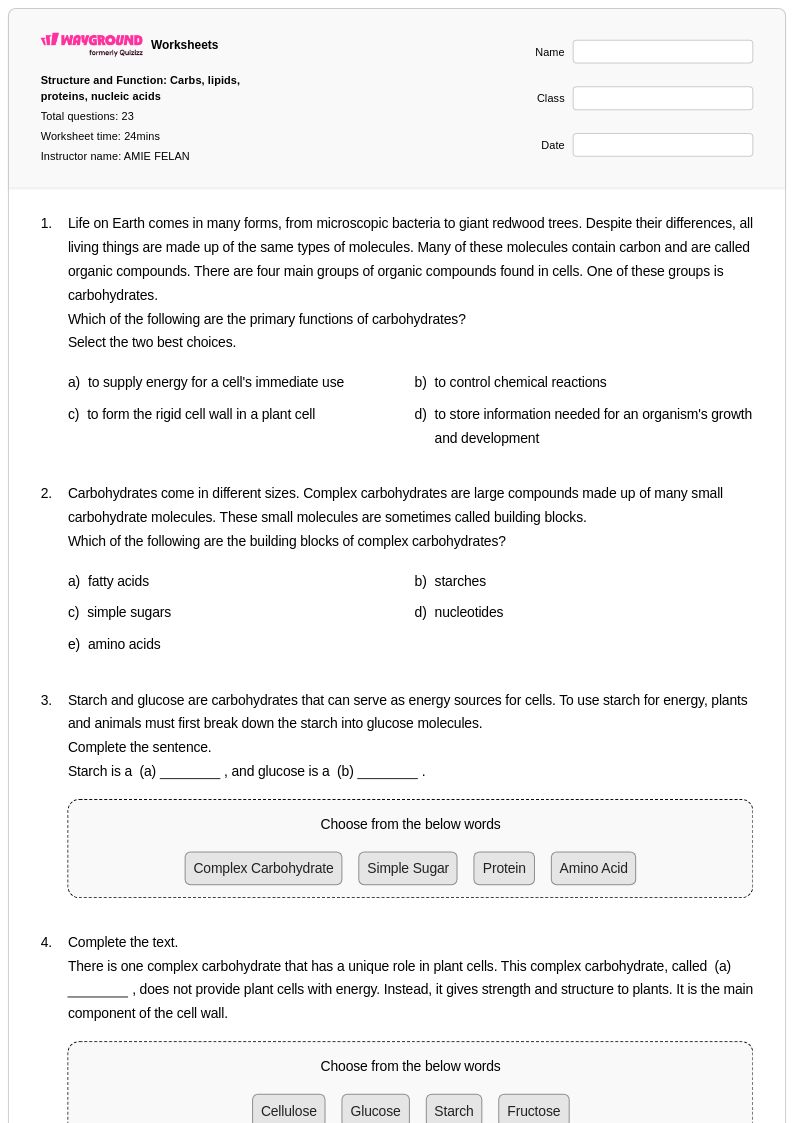
23 Q
9th - 12th
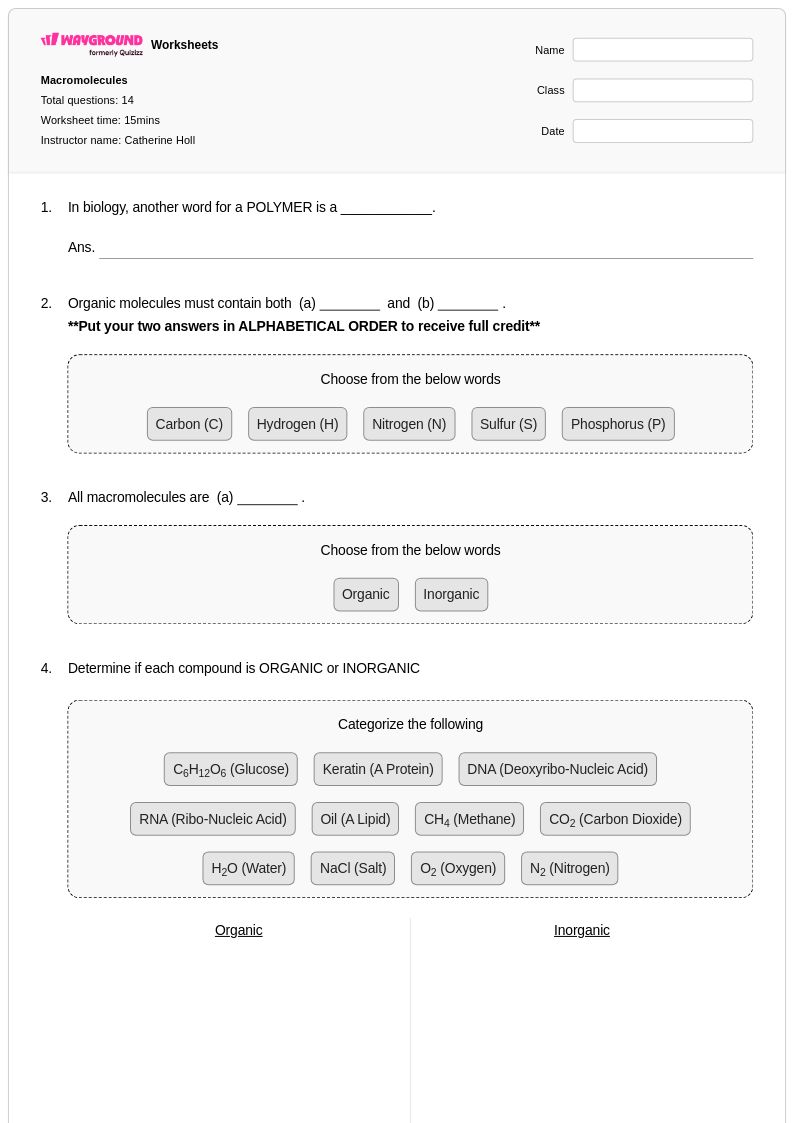
14 Q
9th - Uni
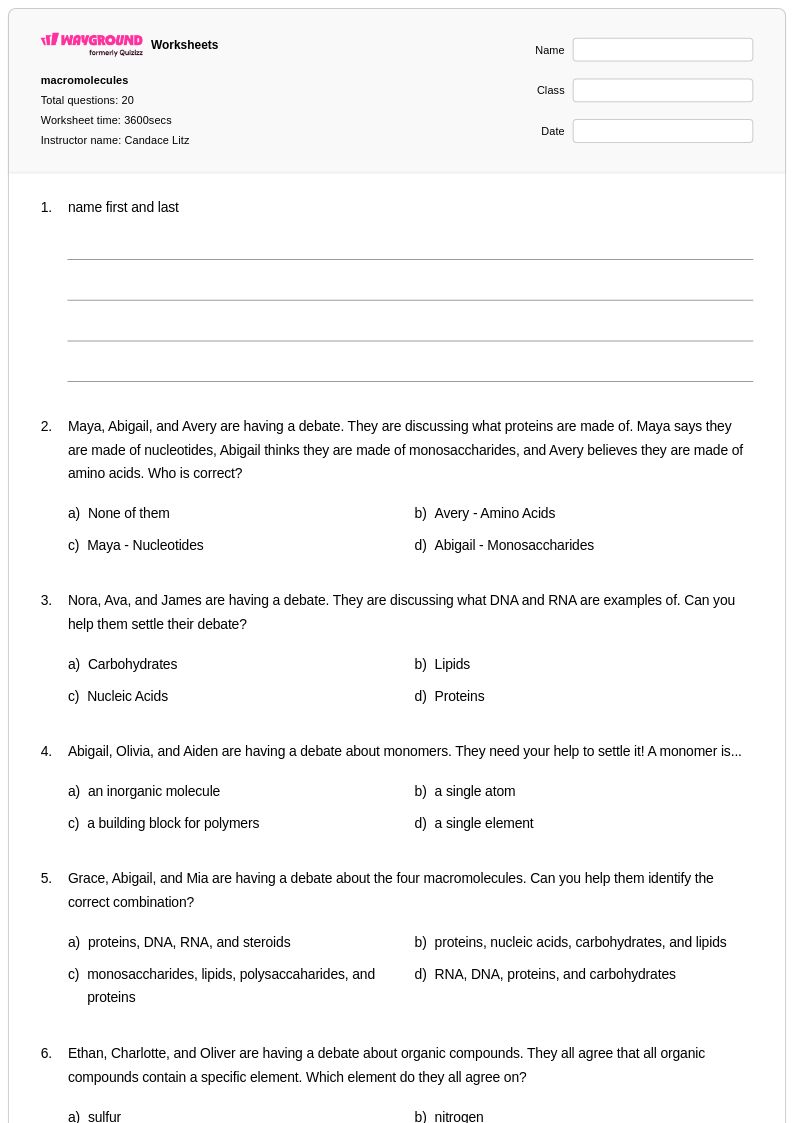
50 Q
9th - 12th
20 Q
9th
21 Q
9th - 12th
35 Q
9th
40 Q
9th - 12th
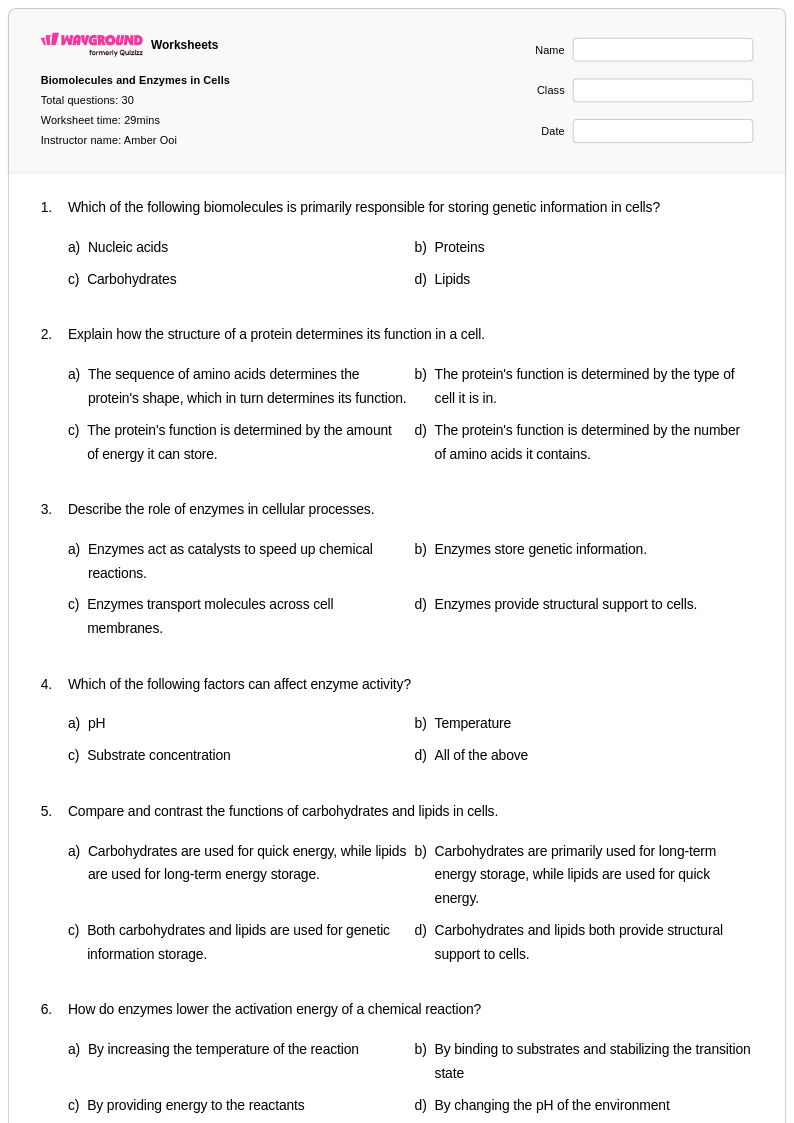
30 Q
9th
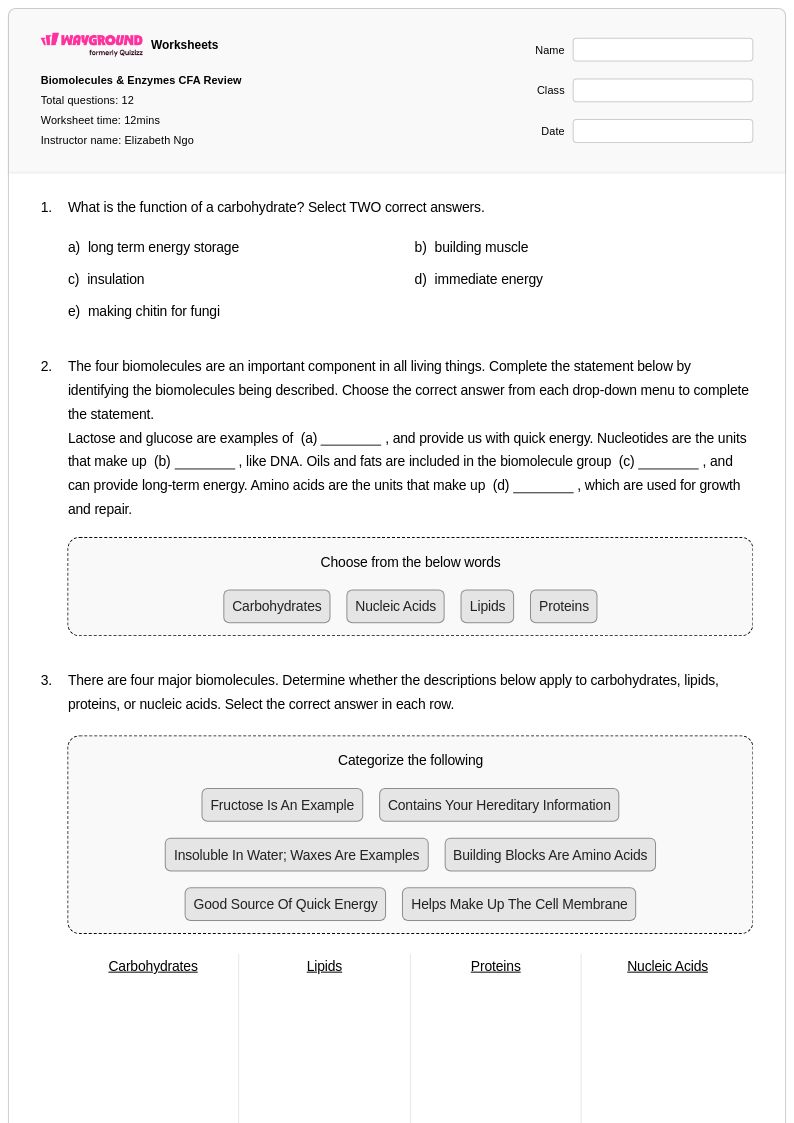
12 Q
9th - Uni
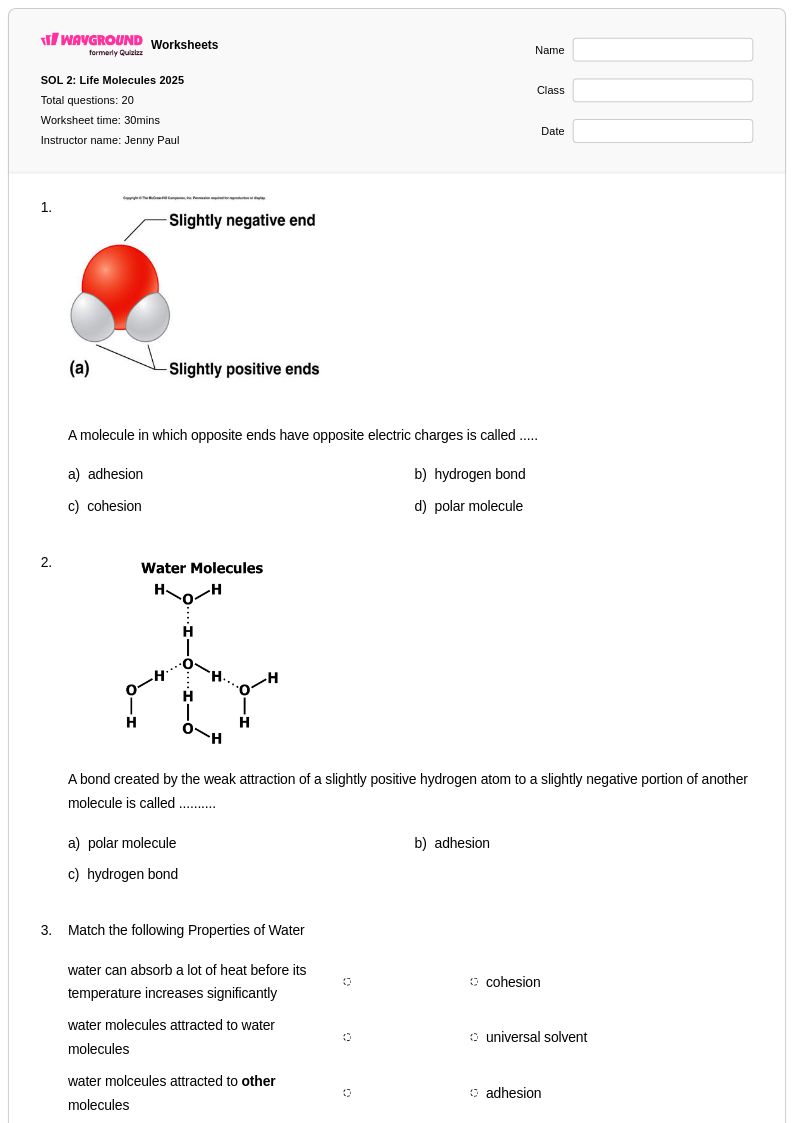
20 Q
9th - 12th
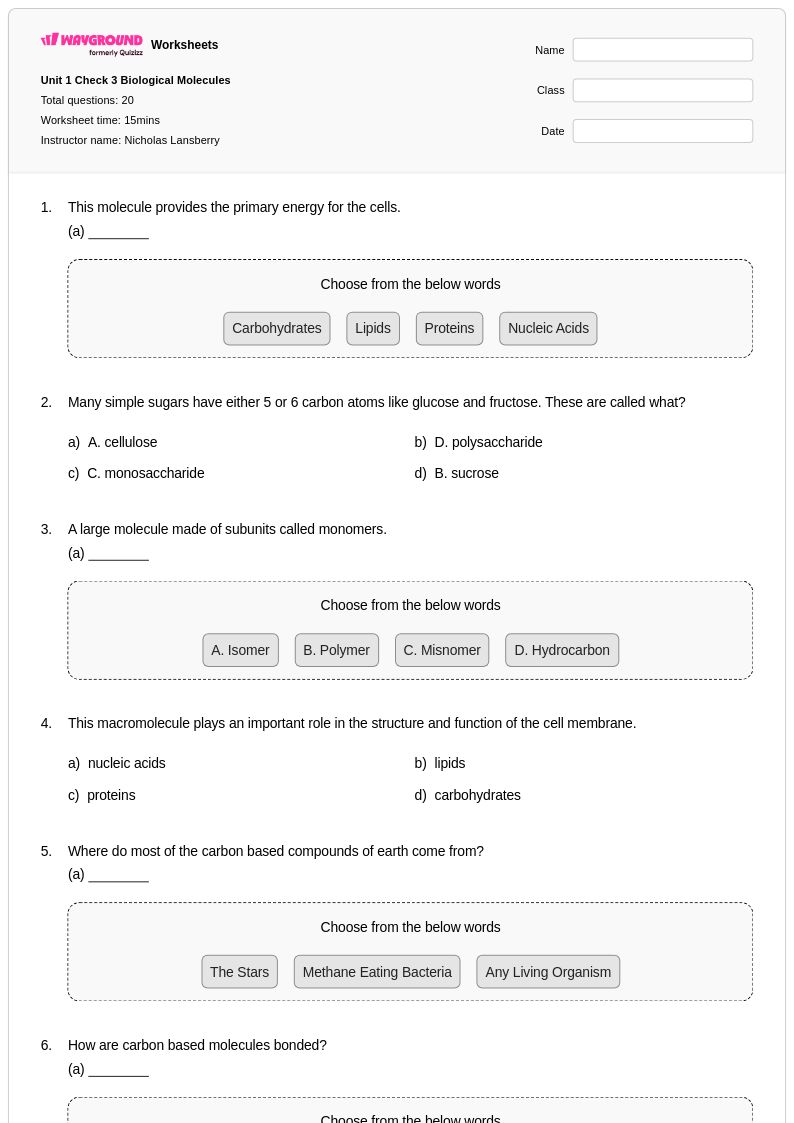
20 Q
9th - 10th
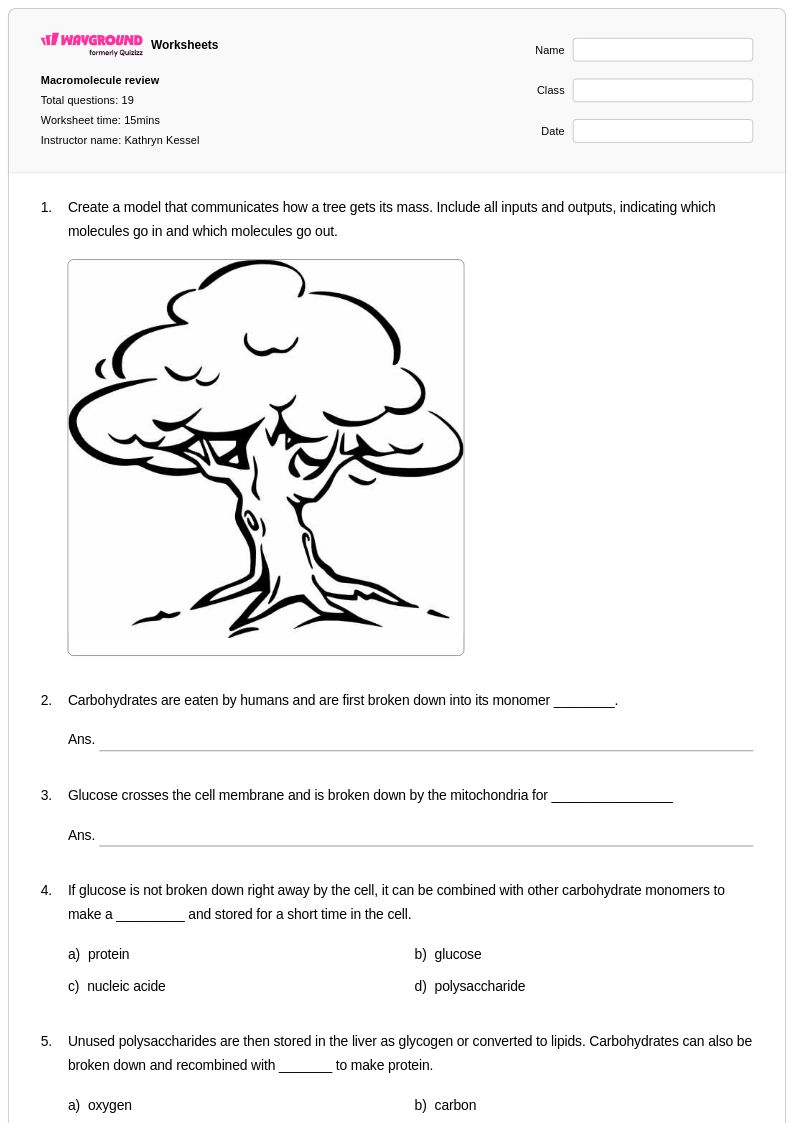
19 Q
9th
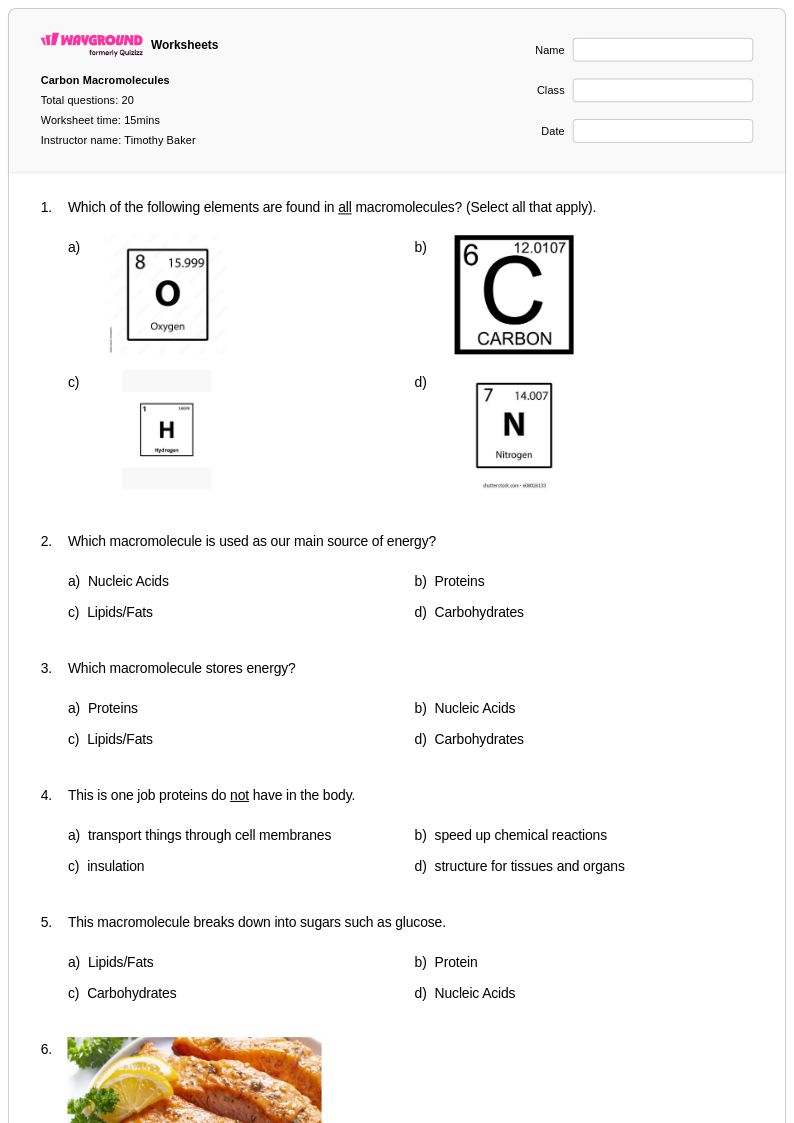
20 Q
9th
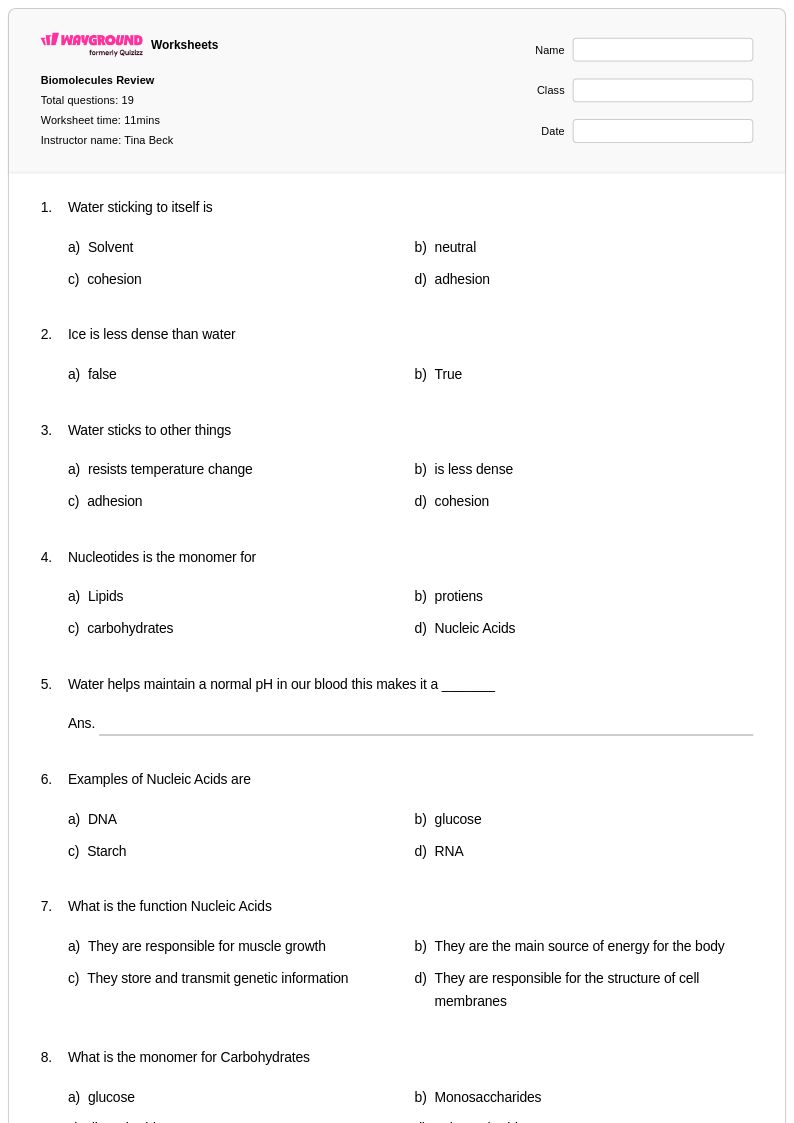
19 Q
9th
Explore Other Subject Worksheets for grade 9
Explore printable Lipids worksheets for Grade 9
Grade 9 lipids worksheets available through Wayground (formerly Quizizz) provide comprehensive coverage of these essential biological macromolecules, helping students master the structure, function, and importance of fats, oils, phospholipids, and steroids in living organisms. These expertly designed worksheets strengthen critical analytical skills by guiding students through the molecular composition of lipids, their role in cell membrane structure, energy storage mechanisms, and signaling pathways. Practice problems challenge students to identify different lipid types, compare saturated and unsaturated fatty acids, and analyze how lipid structure relates to biological function. Each worksheet includes detailed answer keys that support independent learning and self-assessment, while the free printables in PDF format ensure easy classroom distribution and home study access.
Wayground (formerly Quizizz) supports biology educators with an extensive collection of teacher-created lipids worksheets, drawn from millions of high-quality resources that undergo continuous refinement by classroom professionals. The platform's robust search and filtering capabilities allow teachers to quickly locate materials aligned with specific curriculum standards and learning objectives, while differentiation tools enable customization for diverse student needs and ability levels. These flexible resources are available in both printable PDF format and interactive digital versions, making them ideal for traditional classroom instruction, remote learning environments, and hybrid teaching models. Teachers can seamlessly integrate these worksheets into lesson planning for initial concept introduction, targeted skill practice, remediation support for struggling students, and enrichment activities for advanced learners exploring biochemistry connections.