
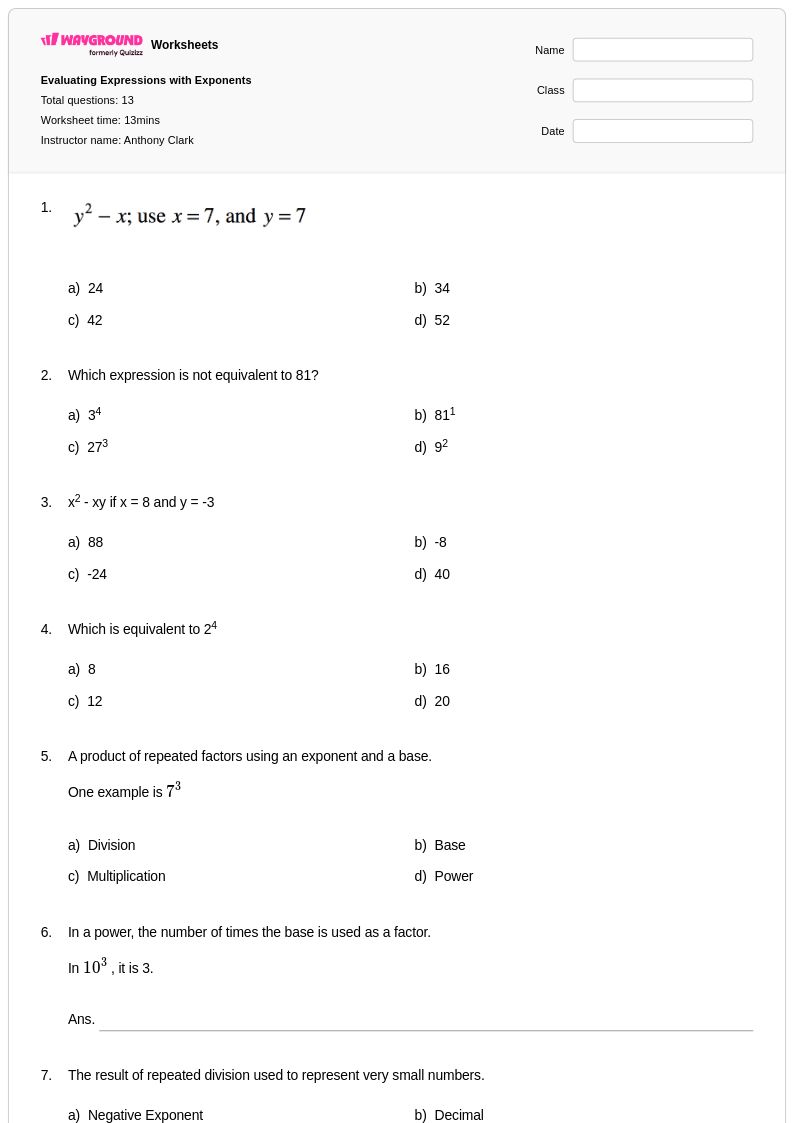
13 Q
6th - Uni
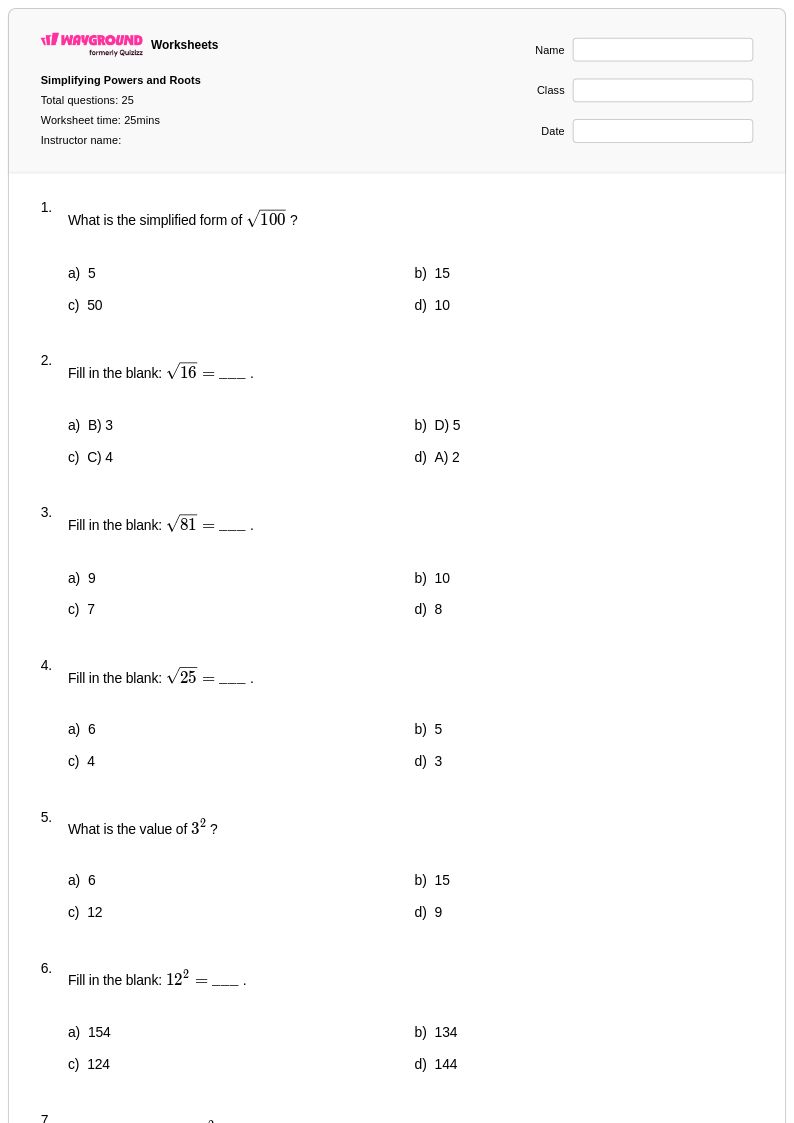
25 Q
6th
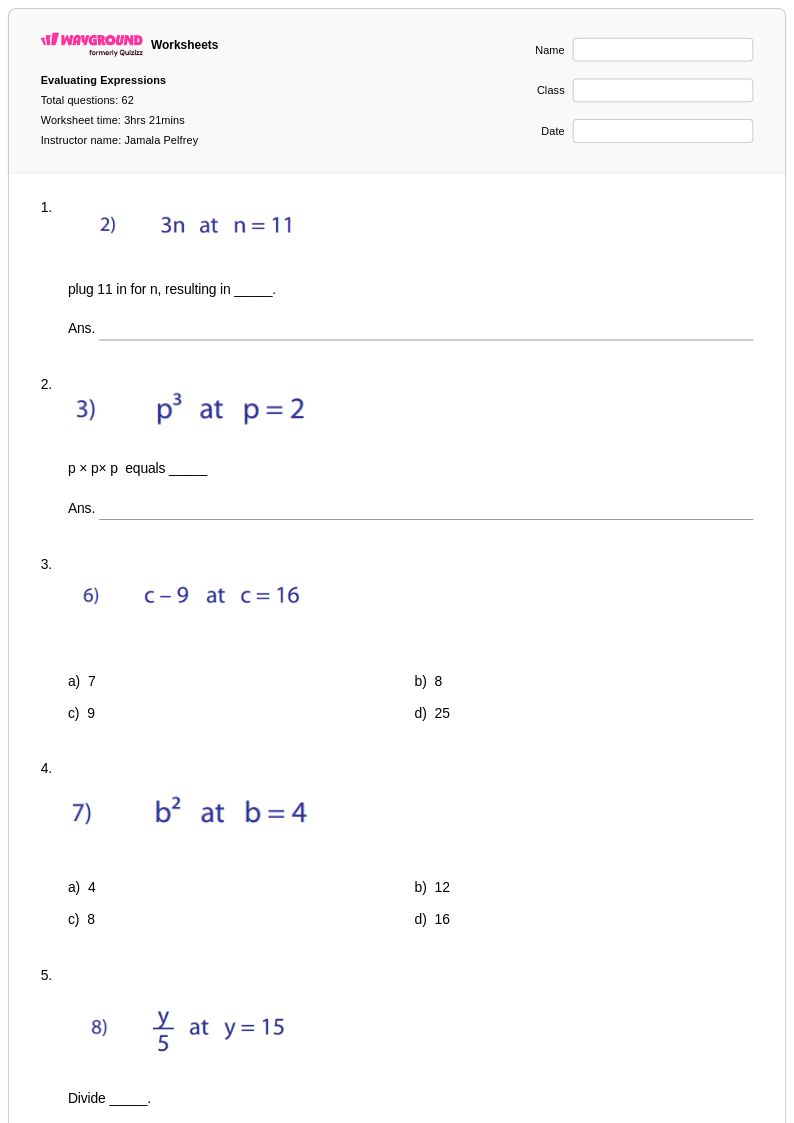
62 Q
6th - 8th
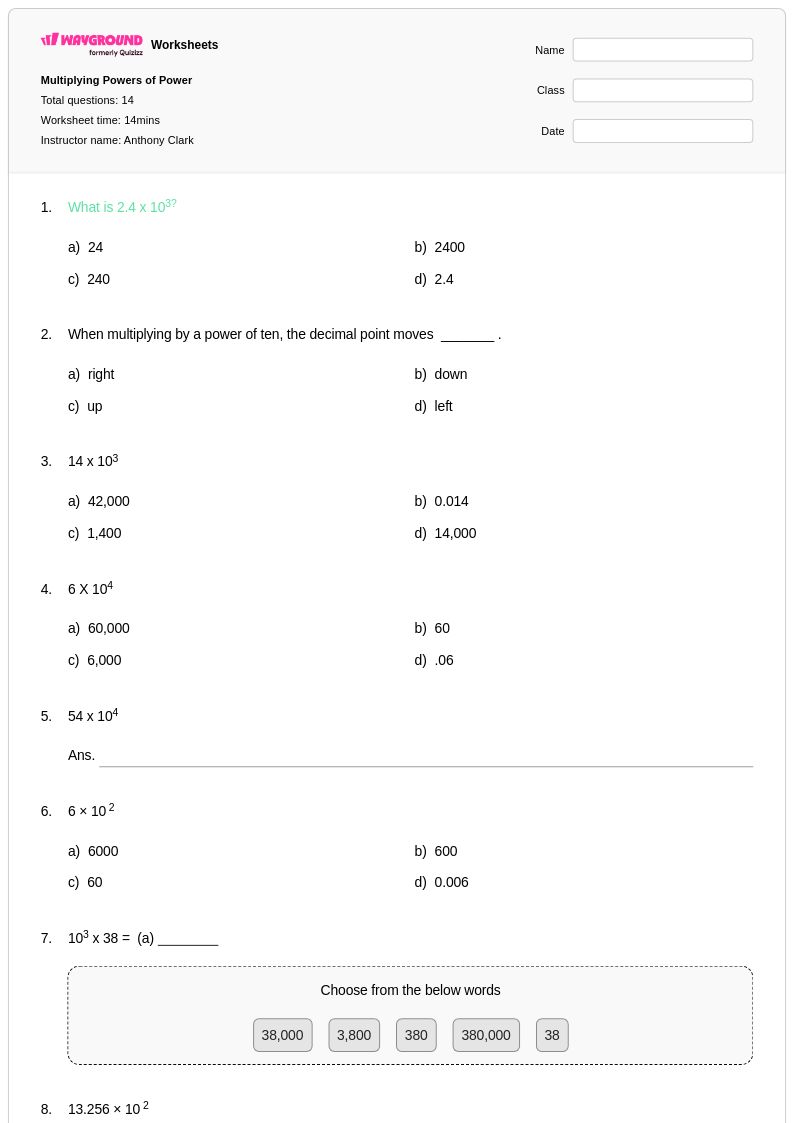
14 Q
5th - Uni
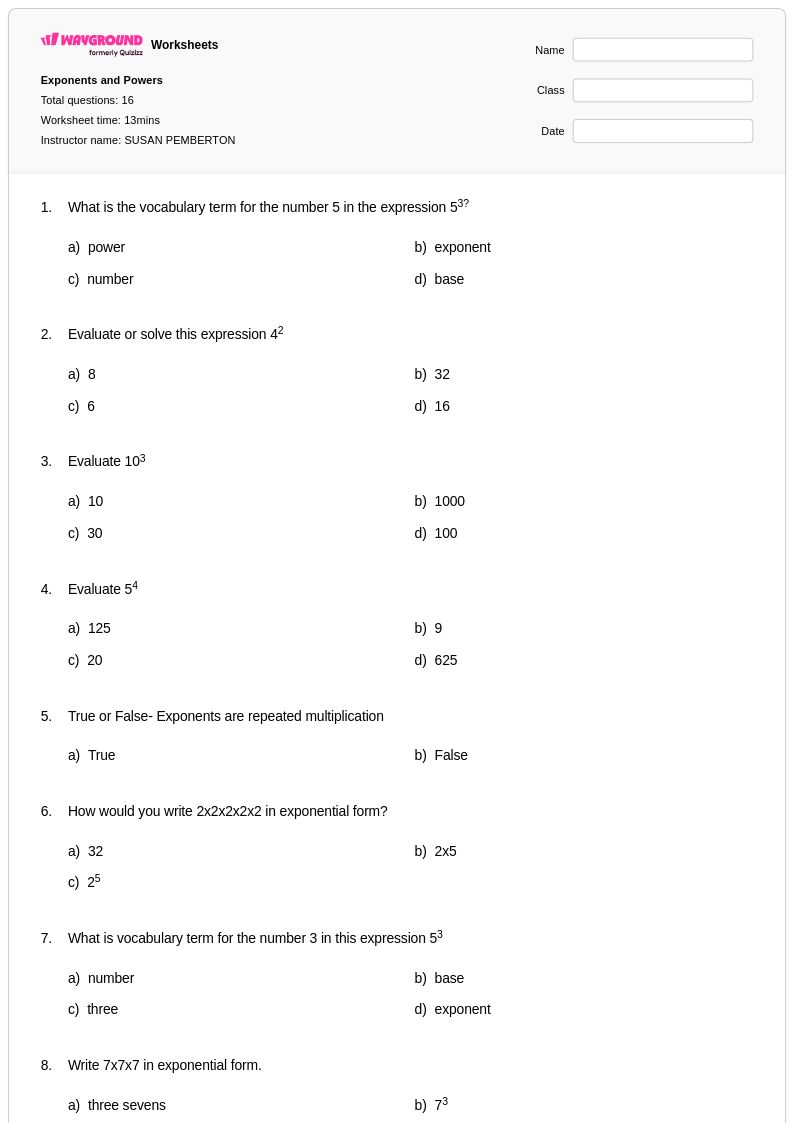
16 Q
6th
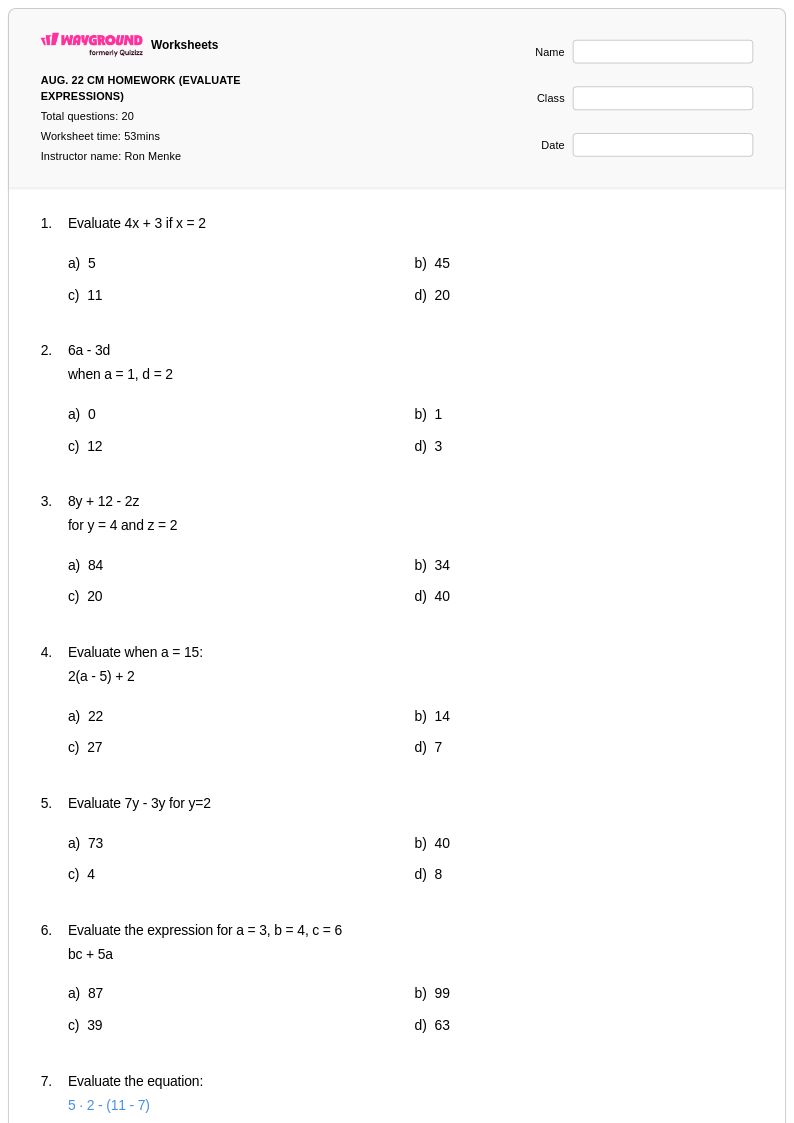
20 Q
6th - 7th
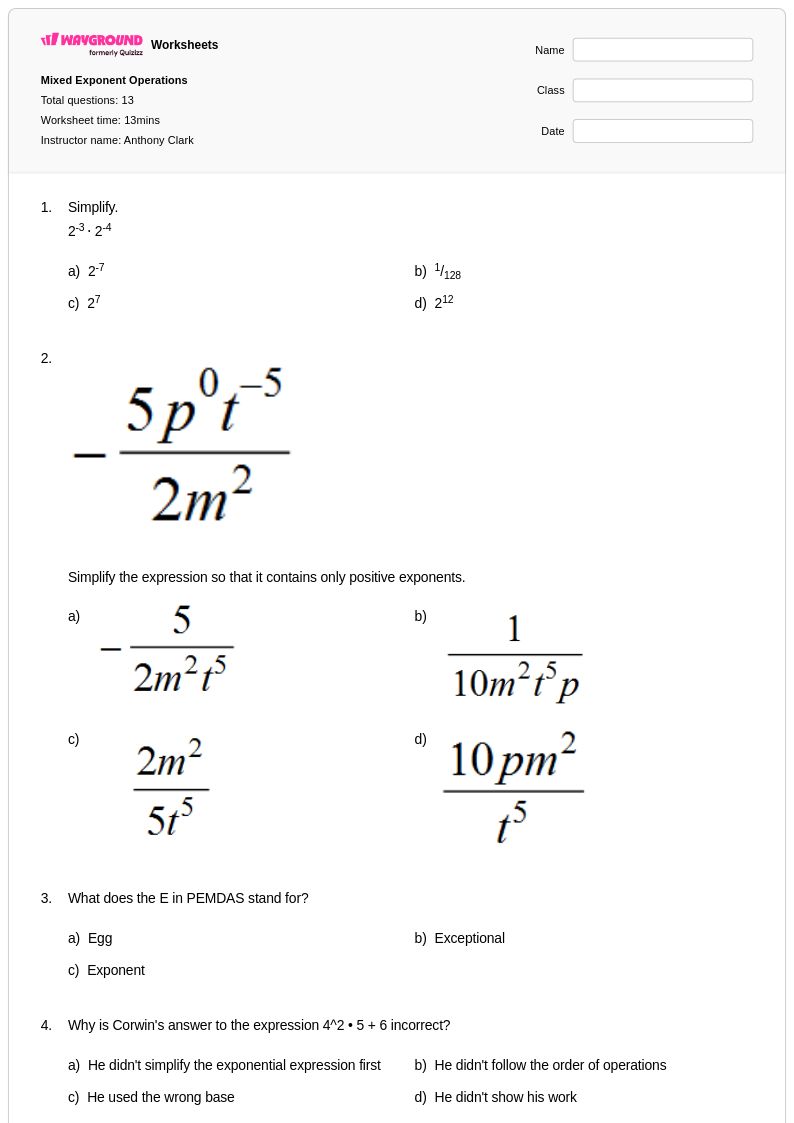
13 Q
6th - Uni
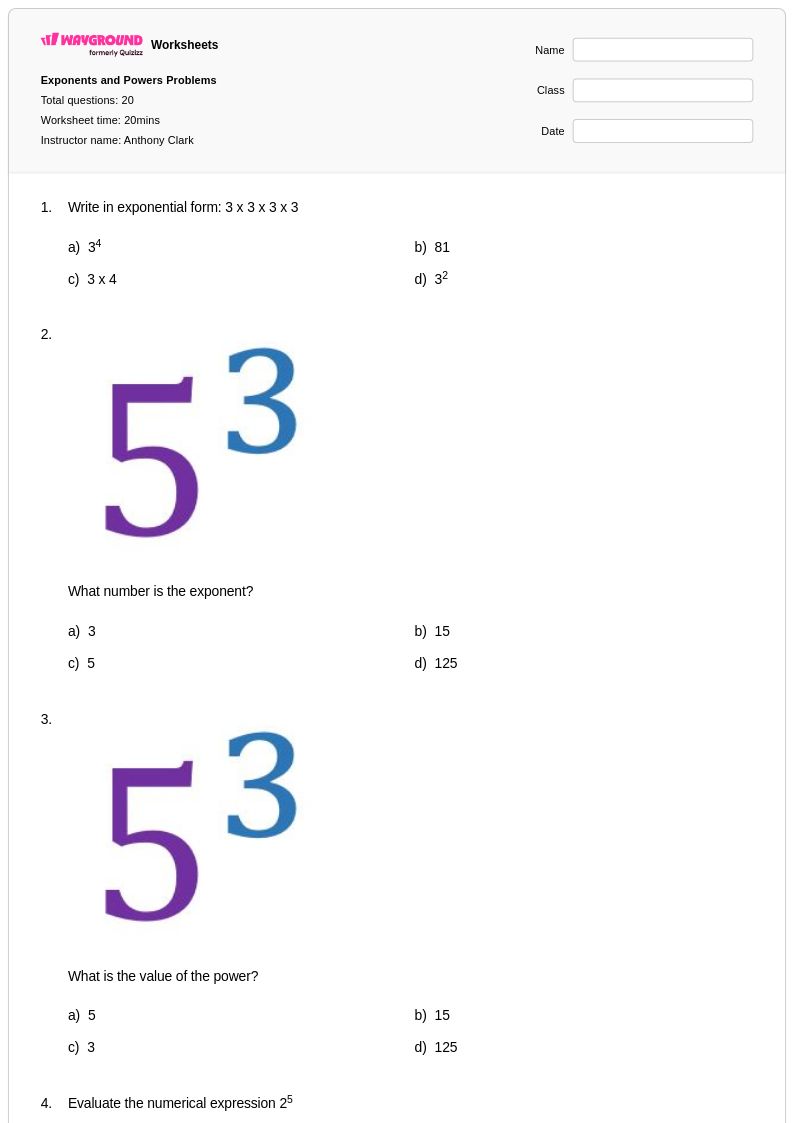
20 Q
6th - Uni
20 Q
5th - Uni
20 Q
6th - Uni
11 Q
6th - 7th
14 Q
6th
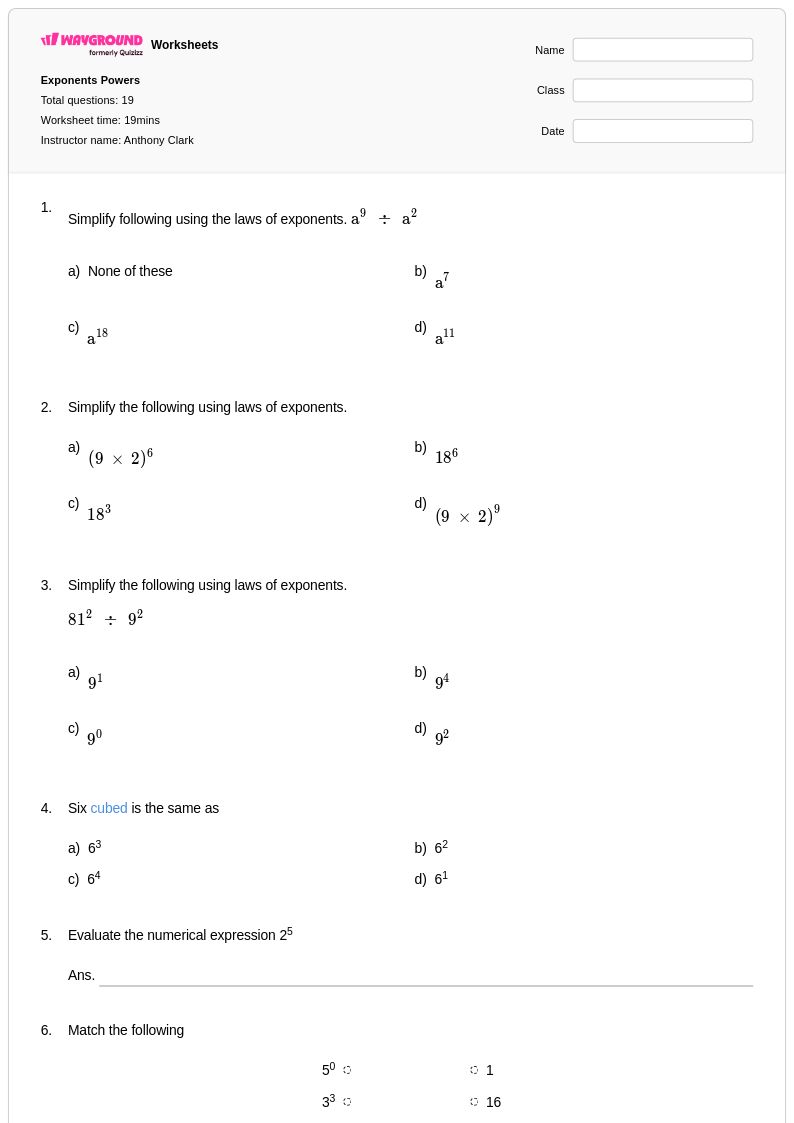
19 Q
5th - Uni
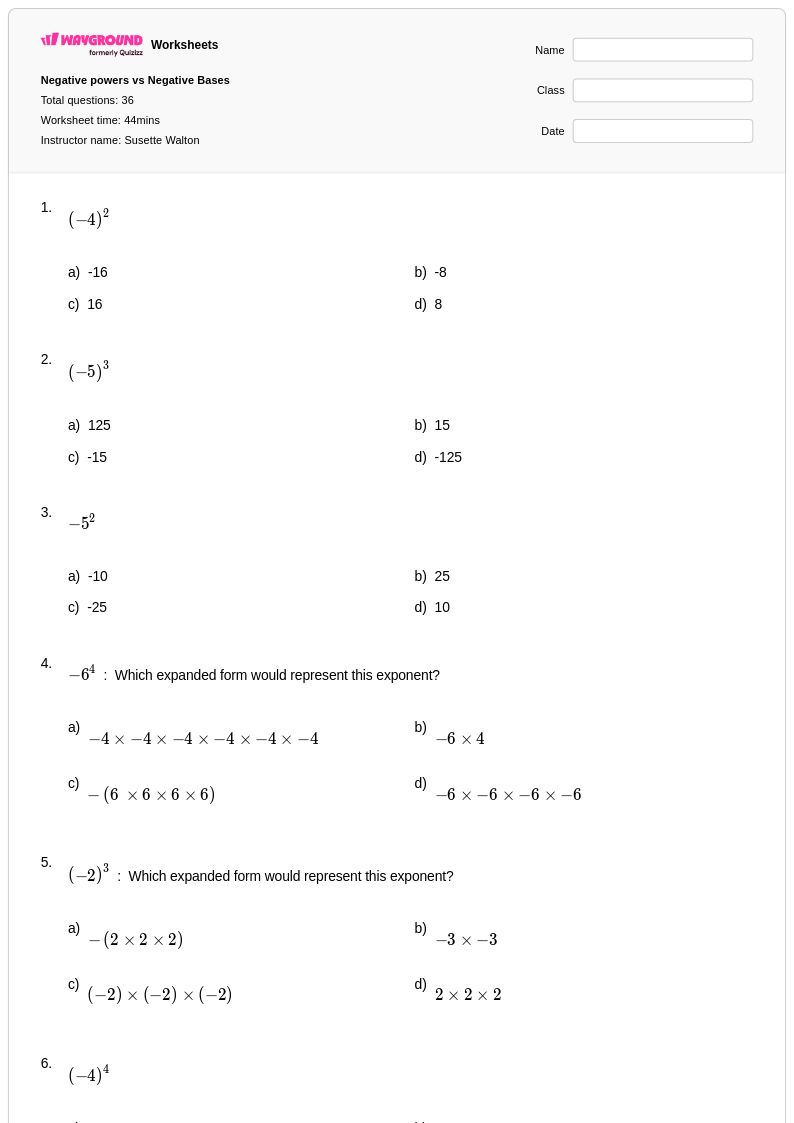
36 Q
6th - 9th
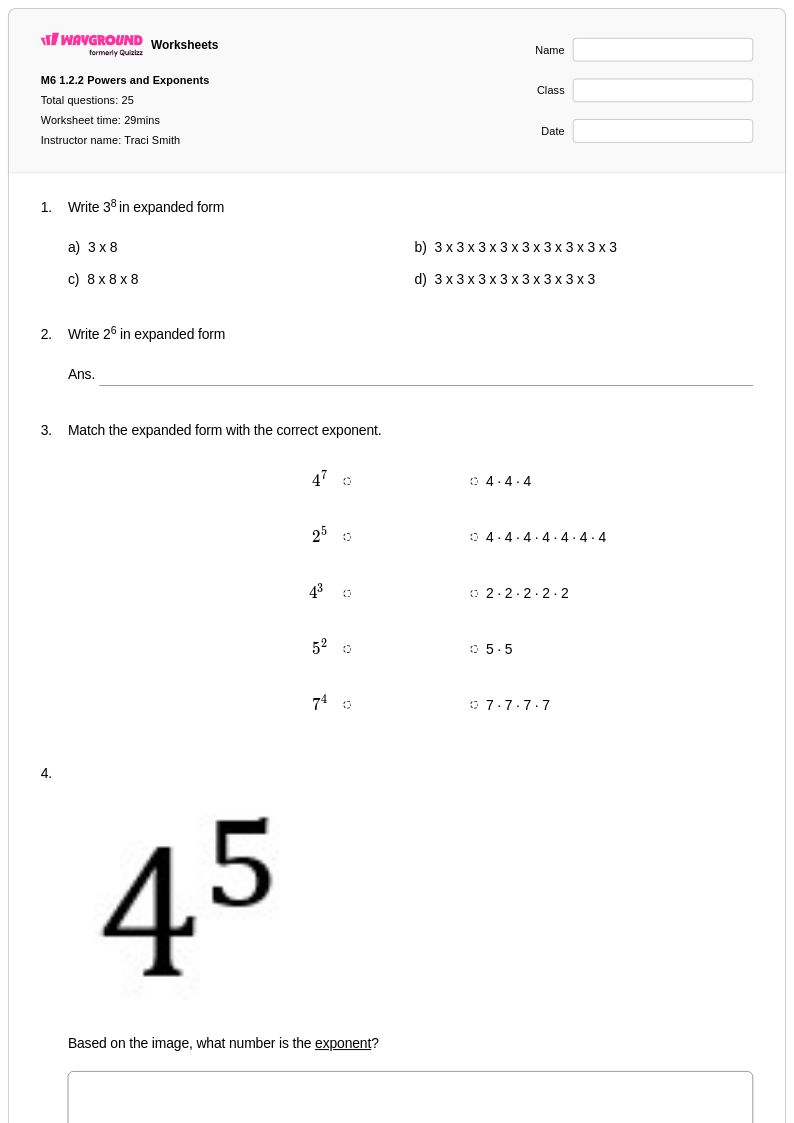
25 Q
6th - 8th
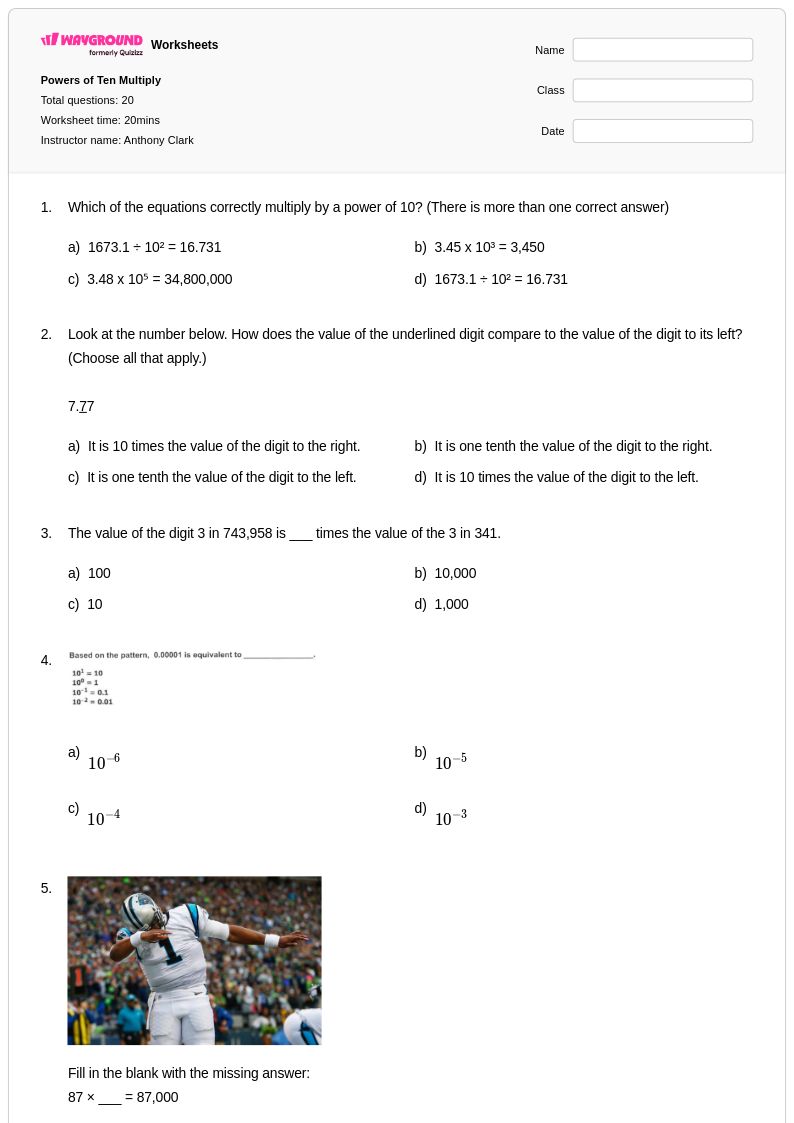
20 Q
5th - Uni
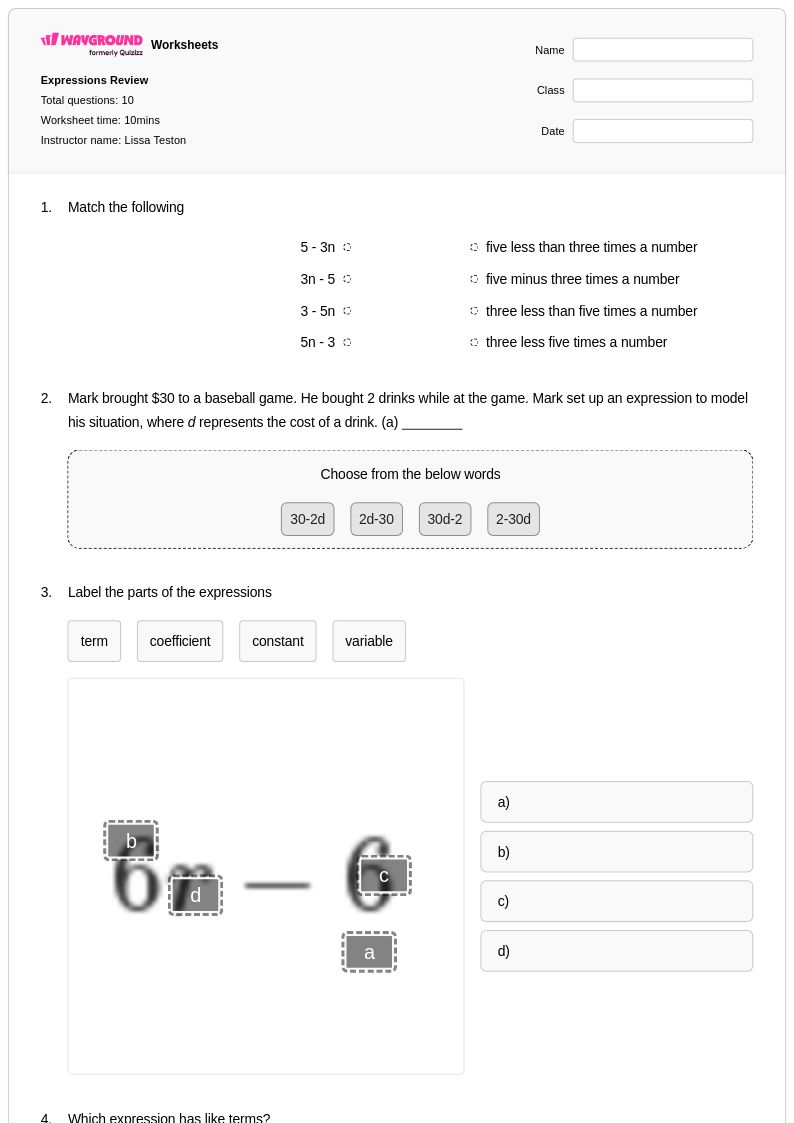
10 Q
6th
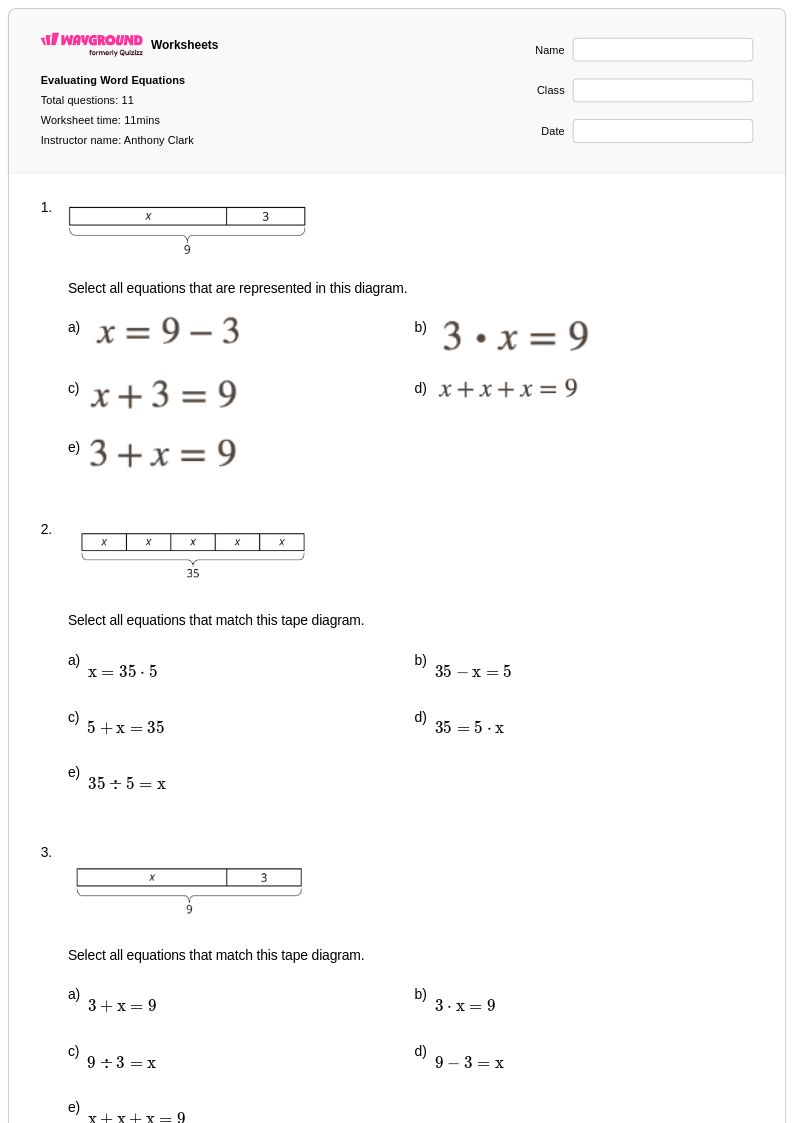
11 Q
6th - Uni
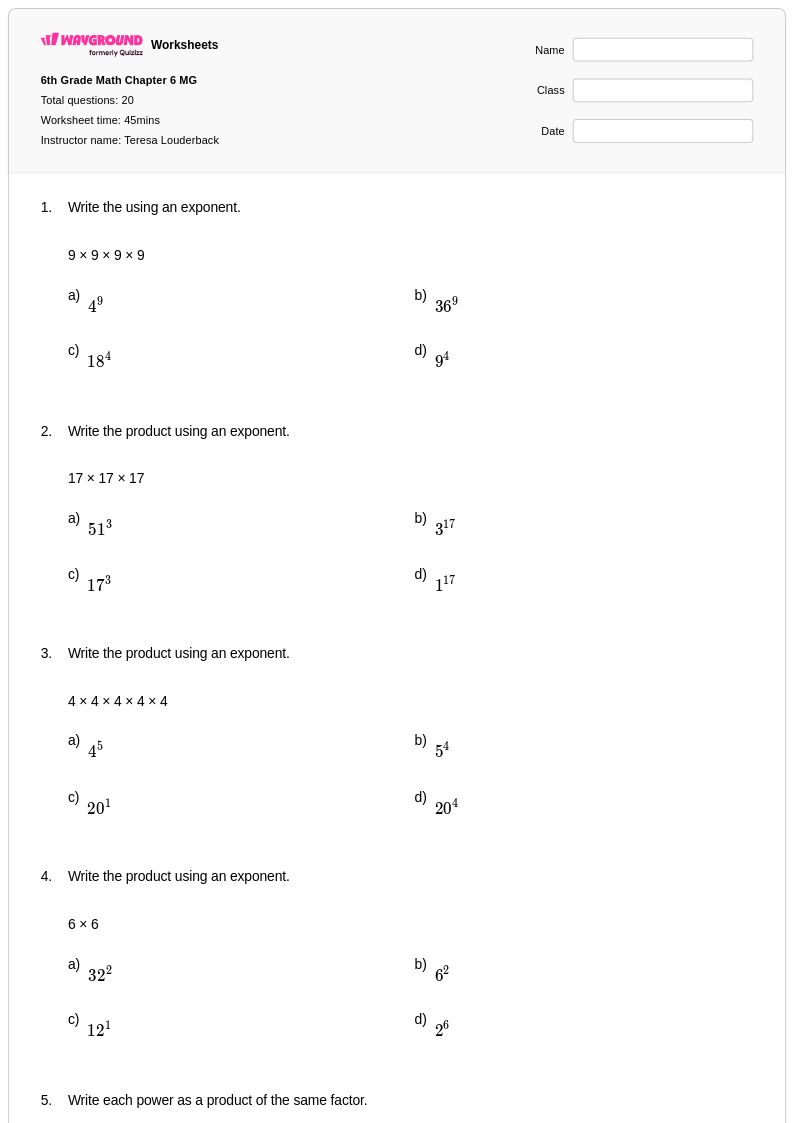
20 Q
6th
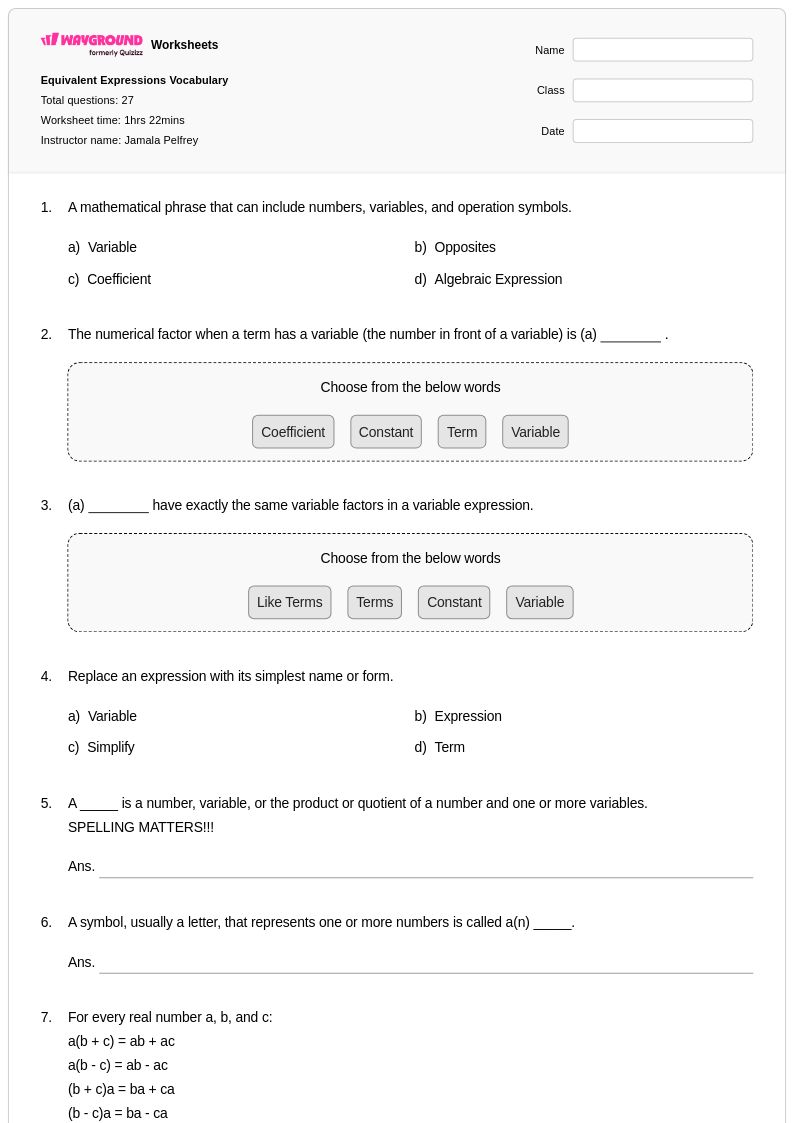
27 Q
6th
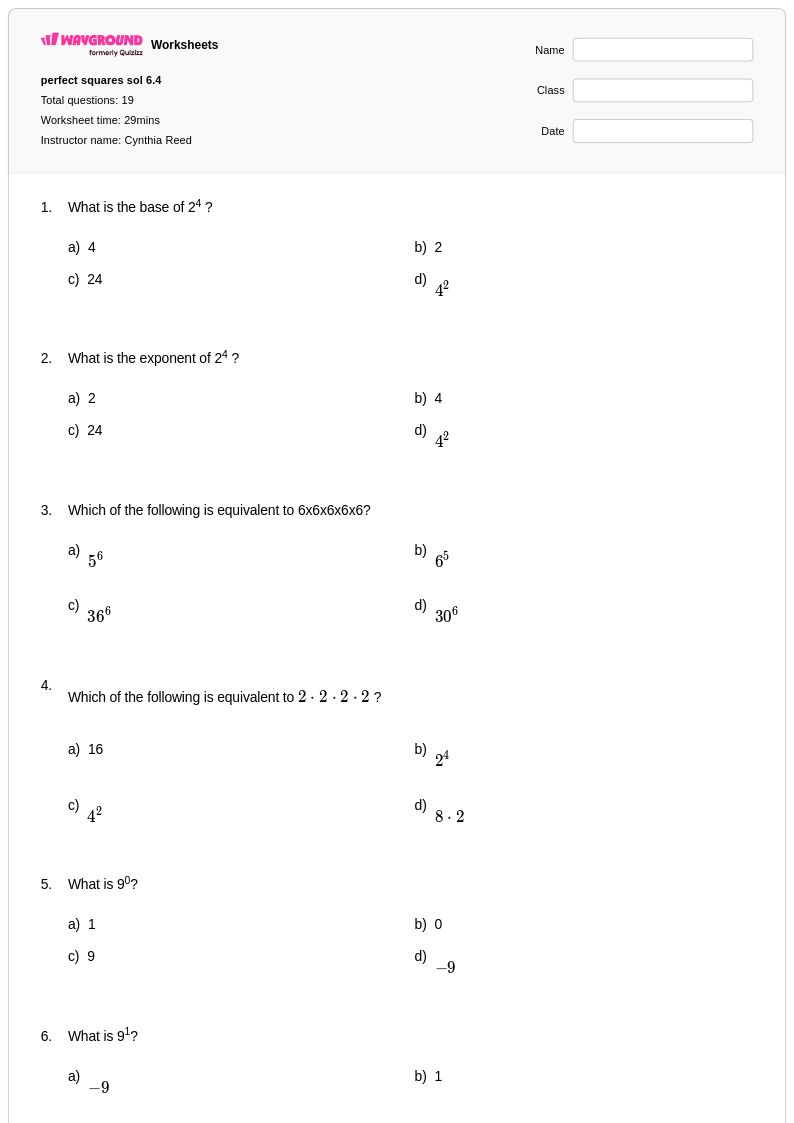
19 Q
6th - 8th
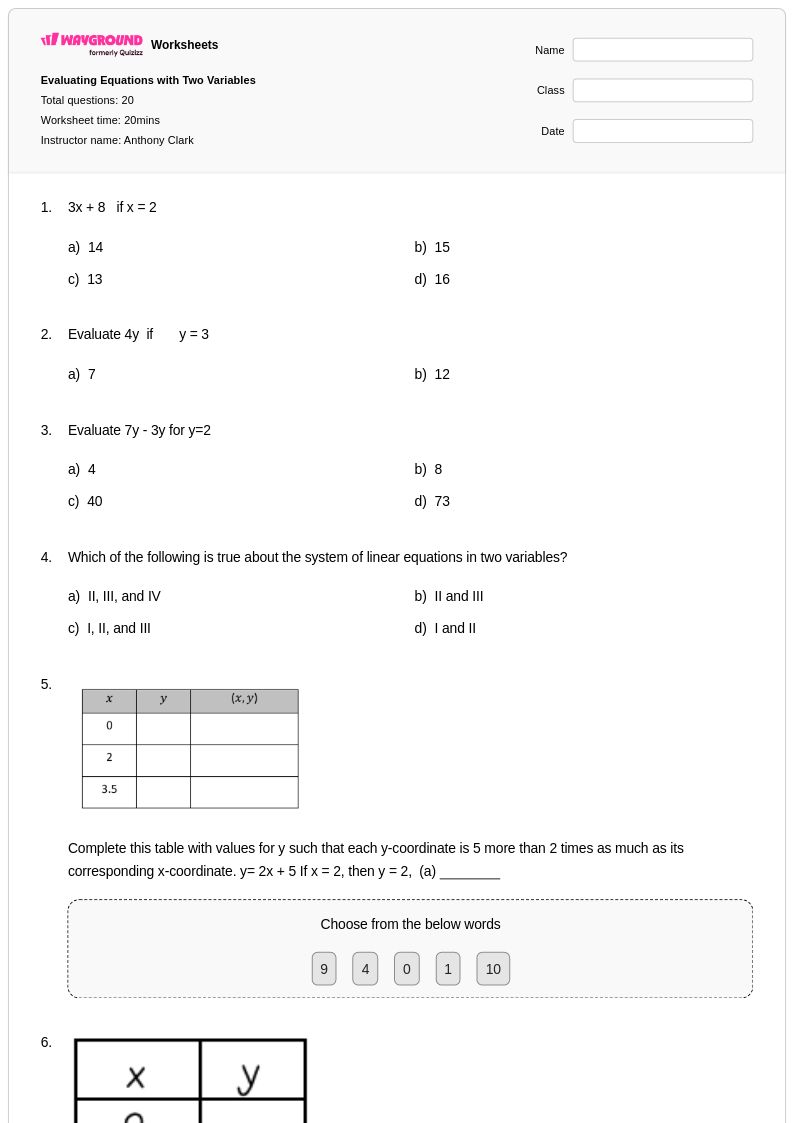
20 Q
6th - Uni
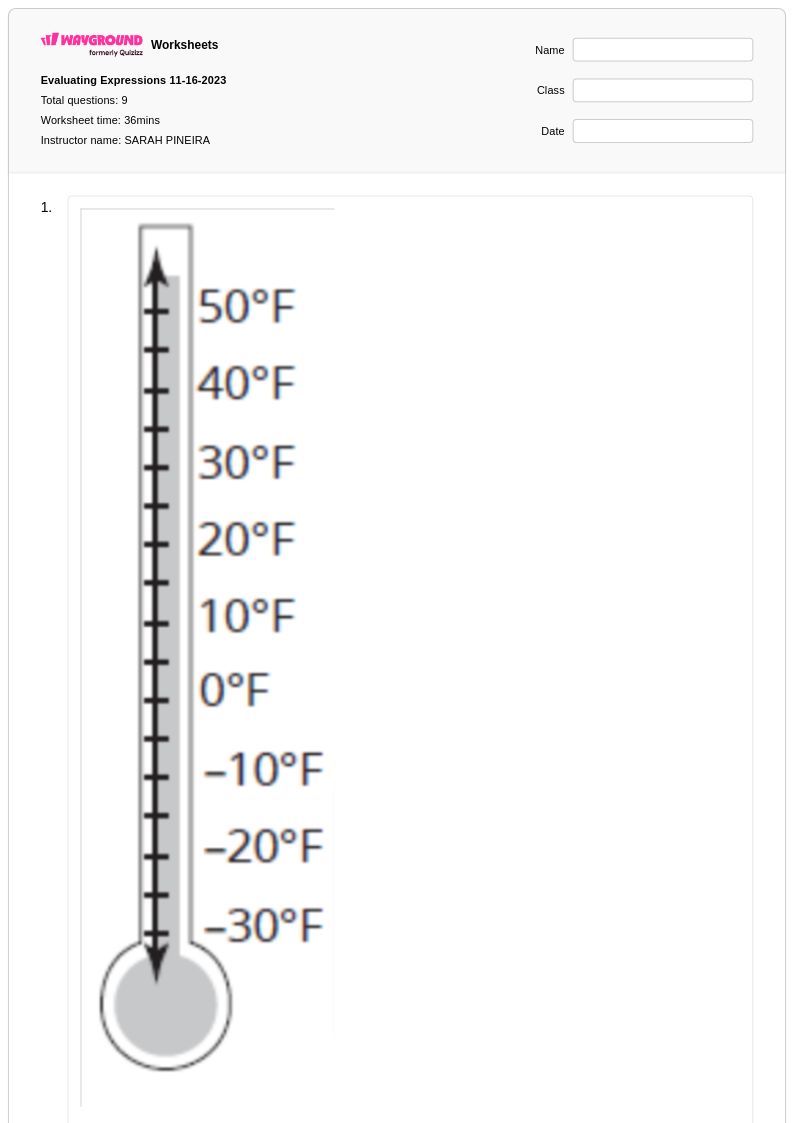
22 Q
6th
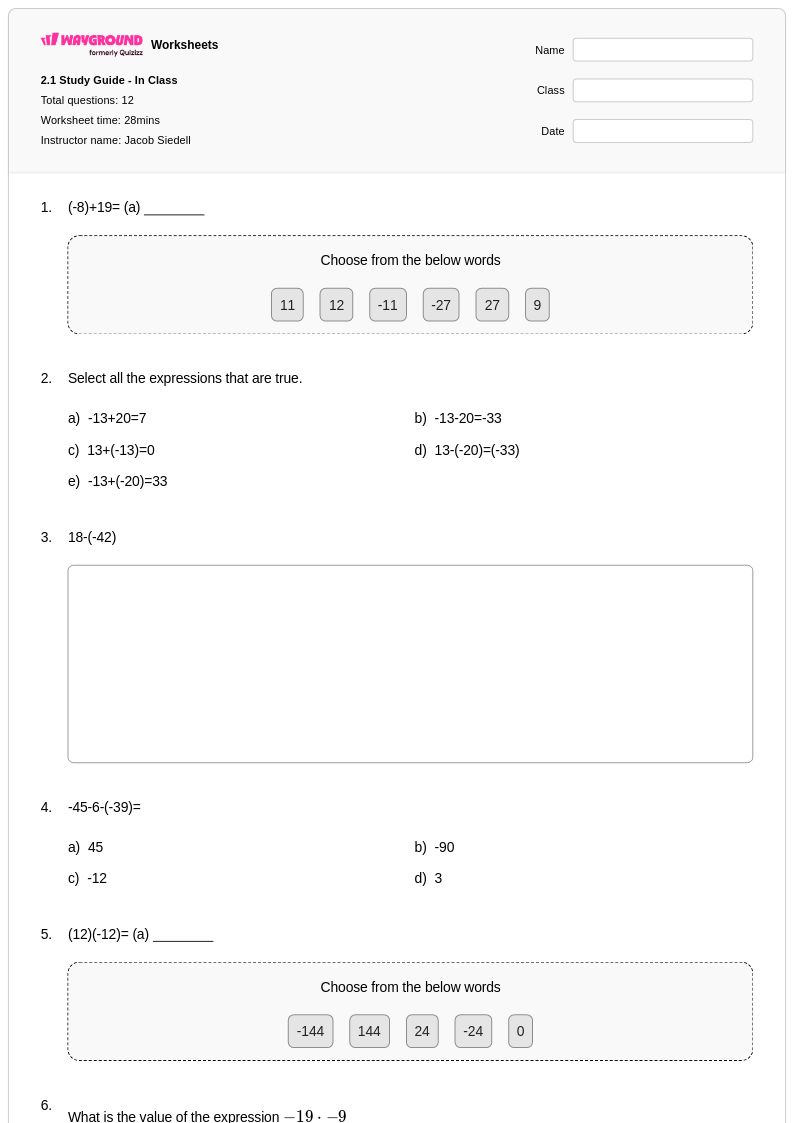
12 Q
6th
Explore Other Subject Worksheets for grade 6
Explore printable Evaluating Powers worksheets for Grade 6
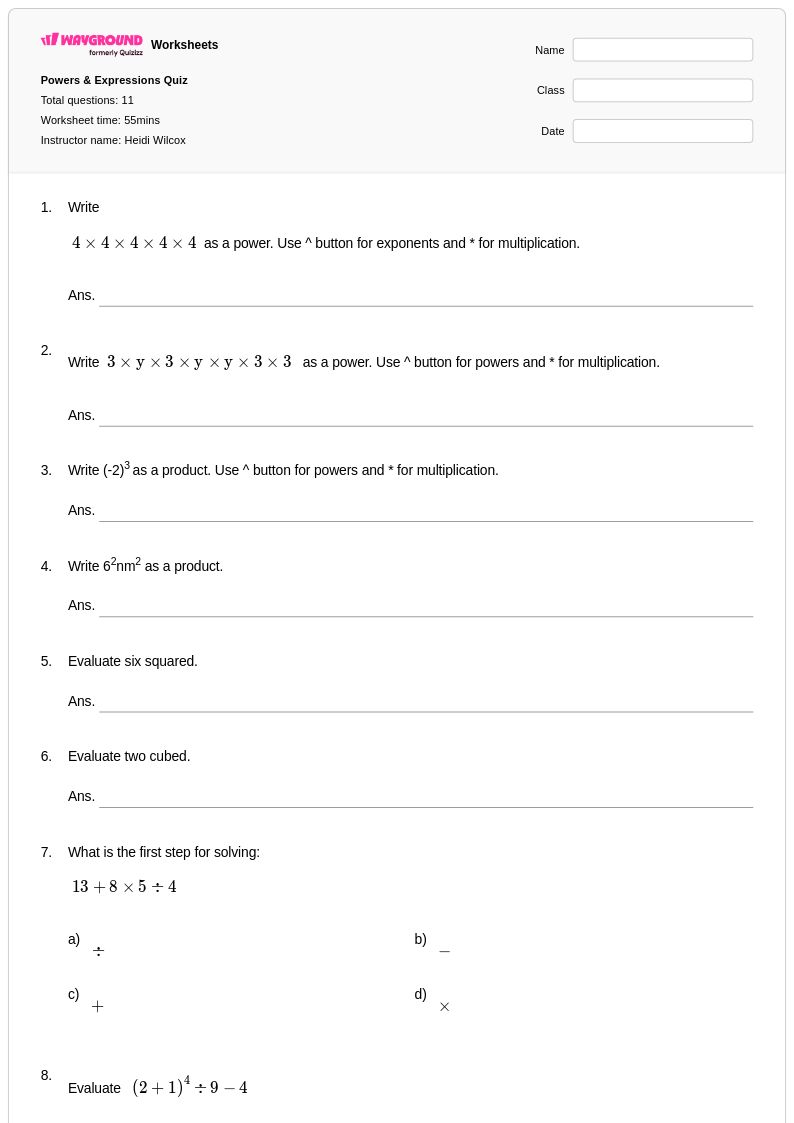
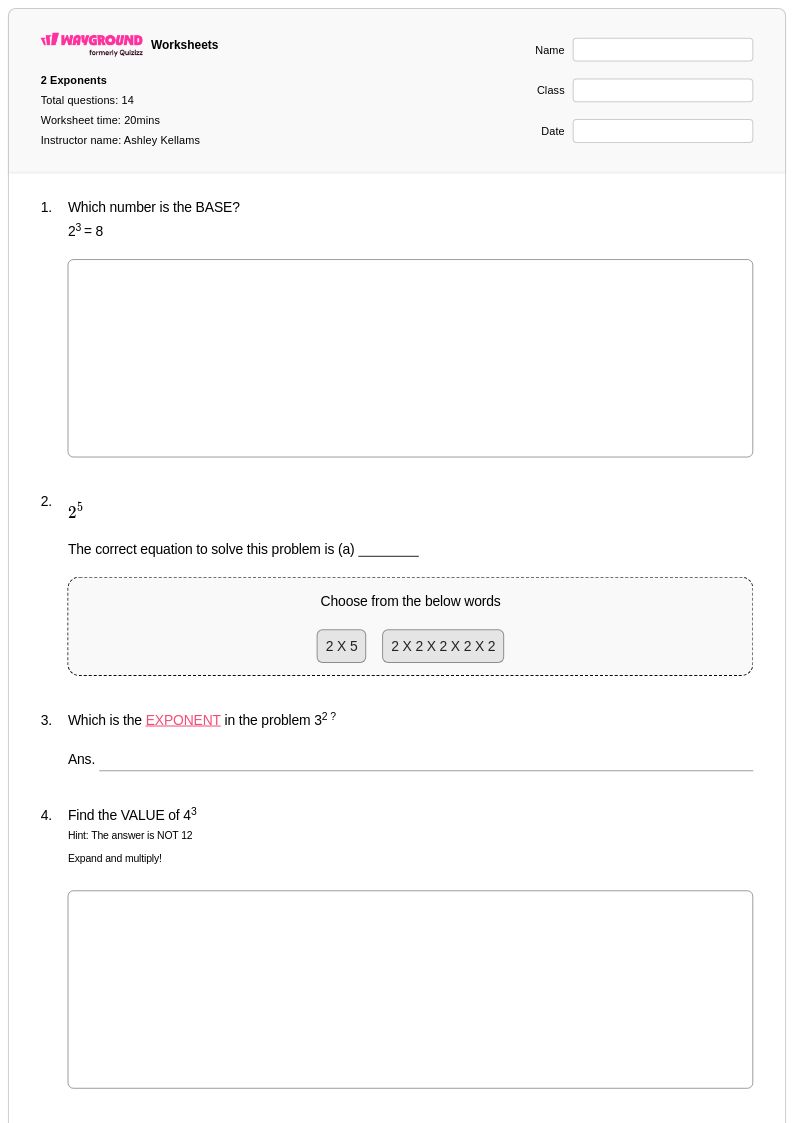
Evaluating Powers worksheets for Grade 6 students available through Wayground (formerly Quizizz) provide comprehensive practice with exponential notation and computational skills essential for middle school mathematics. These carefully designed worksheets help students master the fundamental concept of expressing repeated multiplication through exponential form, calculating the value of powers with various bases and exponents, and understanding the relationship between powers and their numerical equivalents. Students work through systematic practice problems that build confidence in evaluating expressions like 2⁴, 5³, and 10², while developing mental math strategies for common powers. Each worksheet collection includes detailed answer keys and is available as free printables in convenient PDF format, allowing students to work independently while teachers can quickly assess understanding and identify areas needing additional support.
Wayground (formerly Quizizz) empowers educators with millions of teacher-created resources specifically focused on evaluating powers and related Grade 6 number sense concepts. The platform's robust search and filtering capabilities enable teachers to quickly locate worksheets aligned with state and national mathematics standards, while built-in differentiation tools support diverse learning needs within the classroom. Teachers can customize existing worksheets or create new ones, adjusting difficulty levels and problem types to match their students' current skill levels. Available in both printable PDF format and interactive digital versions, these resources streamline lesson planning and provide flexible options for skill practice, targeted remediation for struggling learners, and enrichment opportunities for advanced students ready to explore more complex exponential relationships.