Free Printable Experimental Probability Worksheets for Grade 8
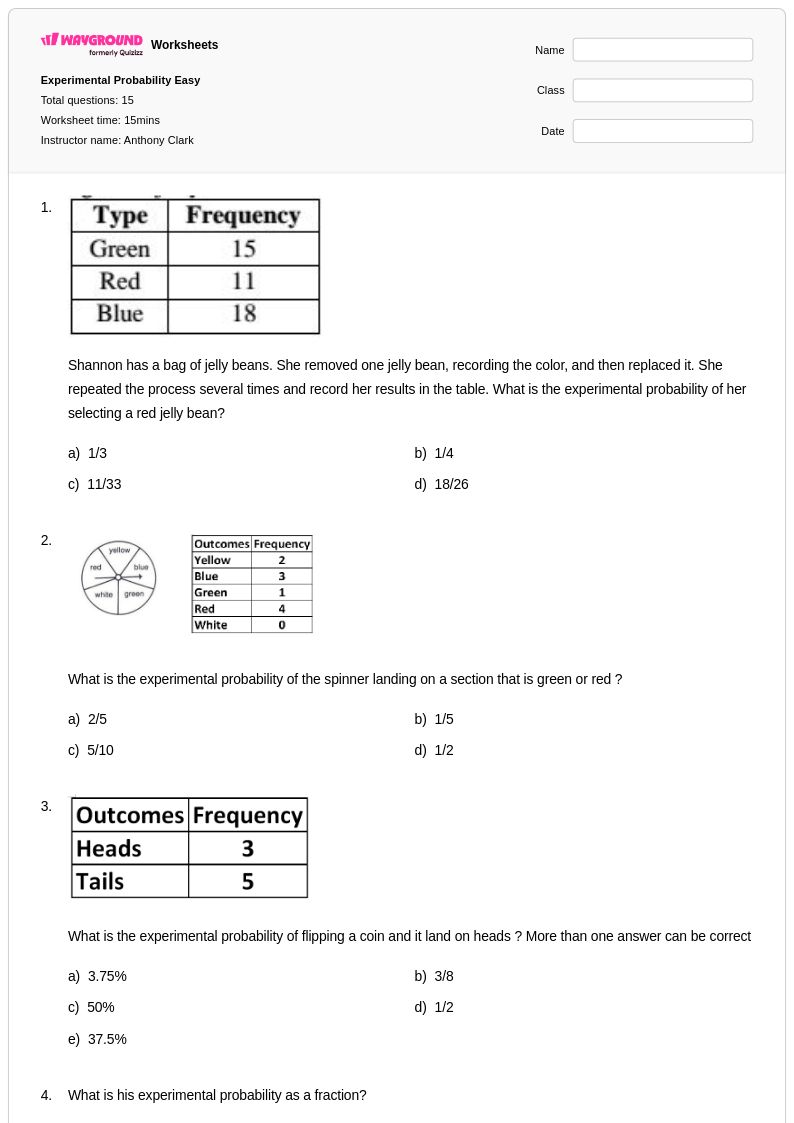
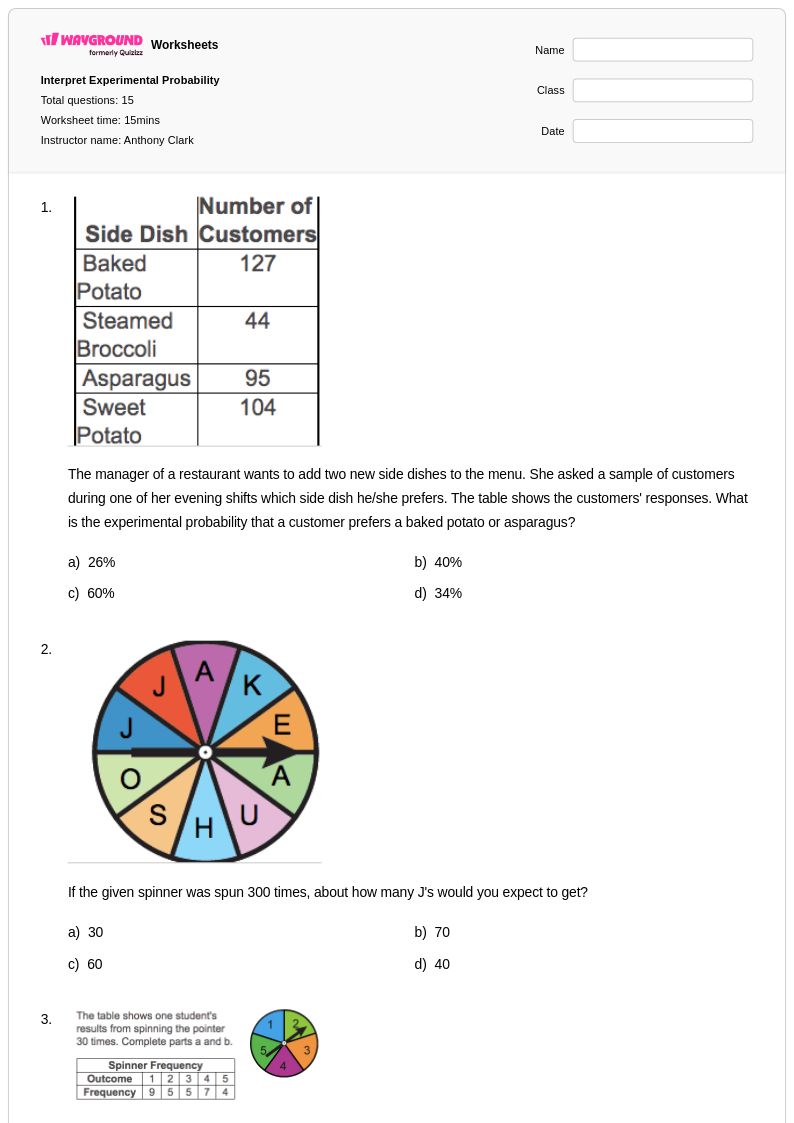
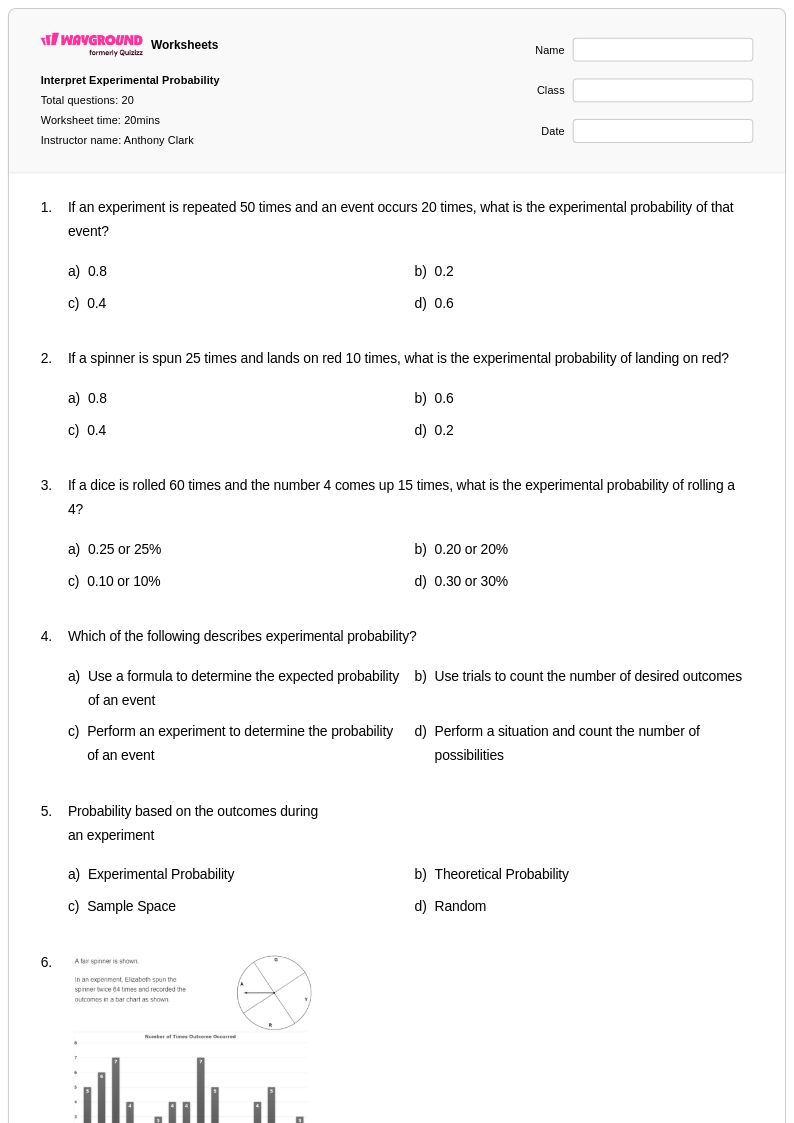
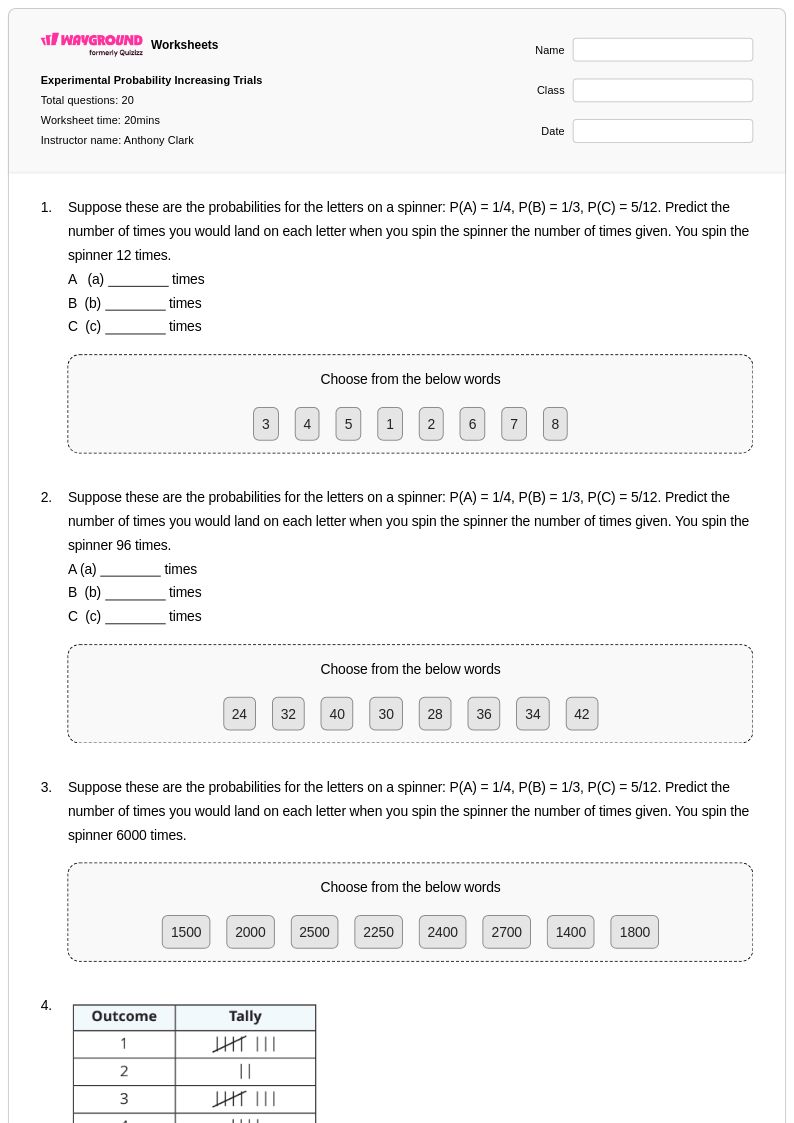
Grade 8 experimental probability worksheets from Wayground help students master calculating probabilities through hands-on trials and data collection with free printables, practice problems, and comprehensive answer keys.
Explore printable Experimental Probability worksheets for Grade 8
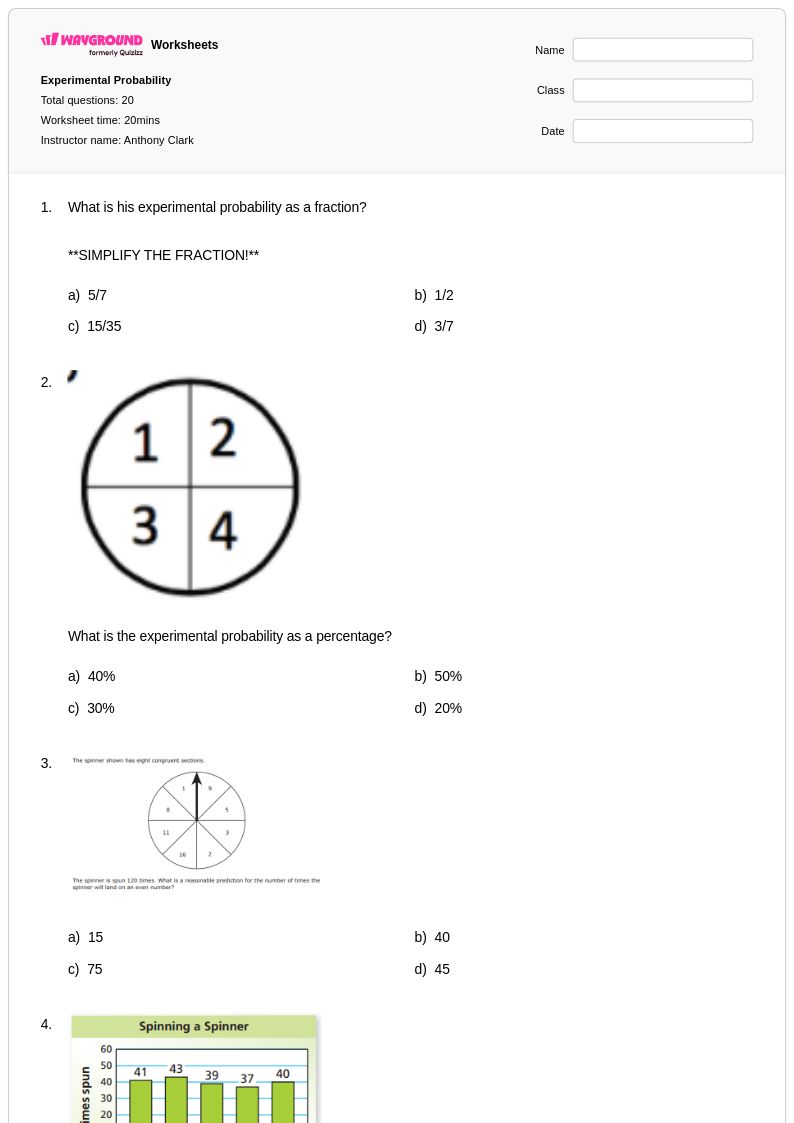
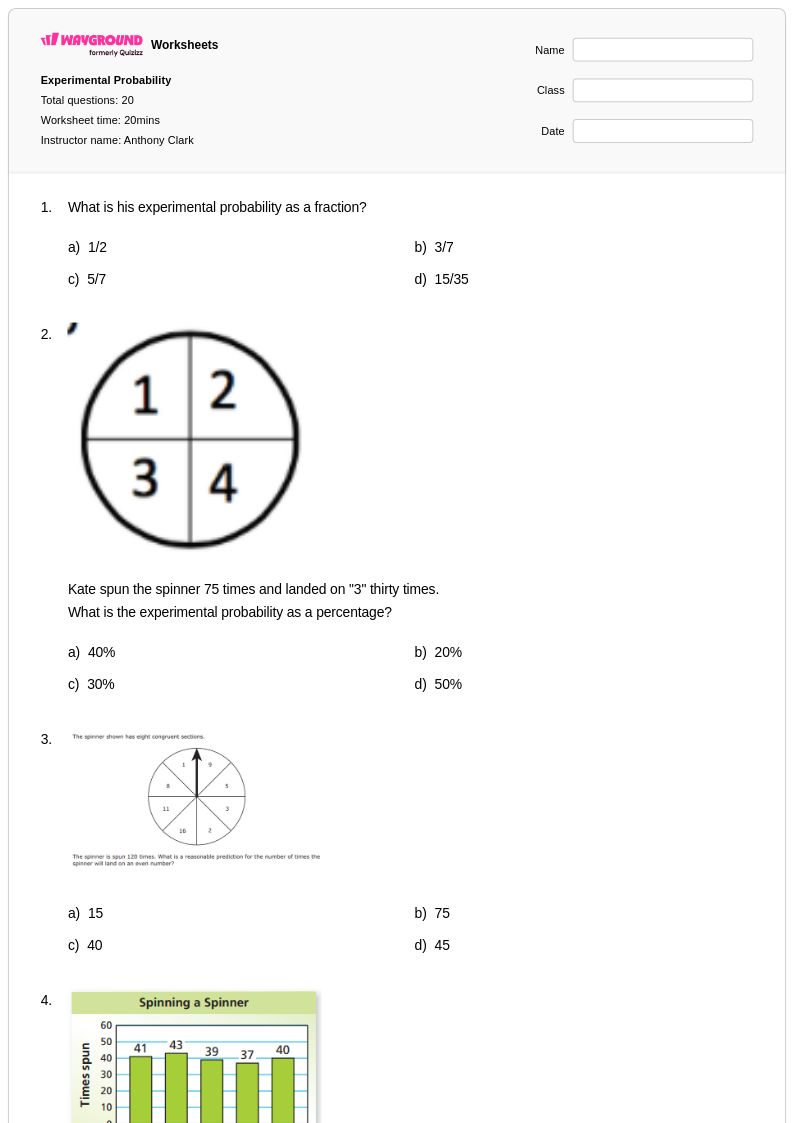
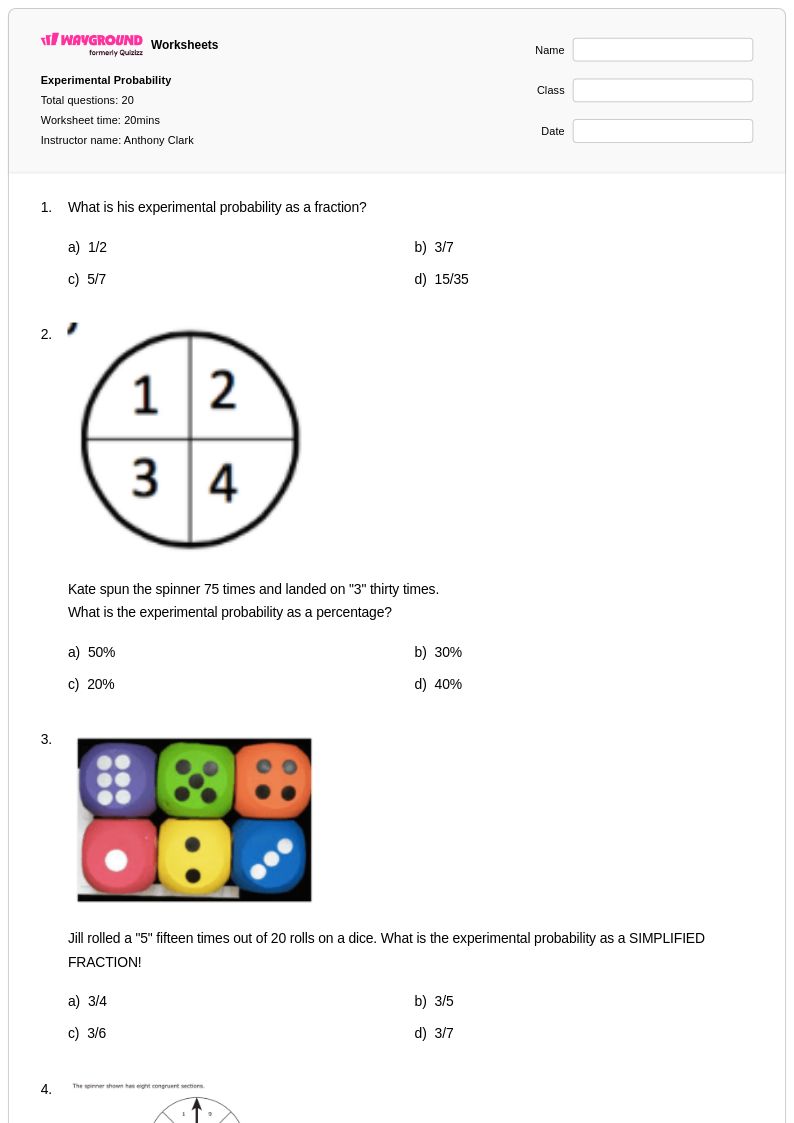
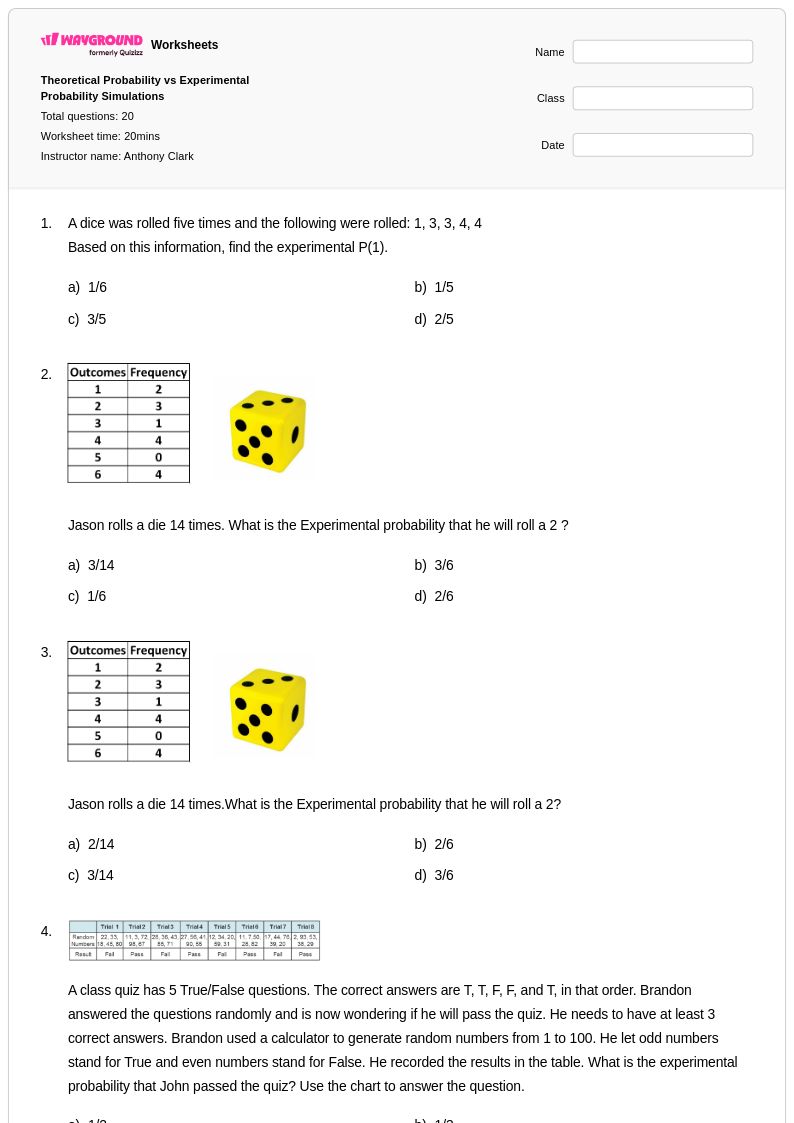
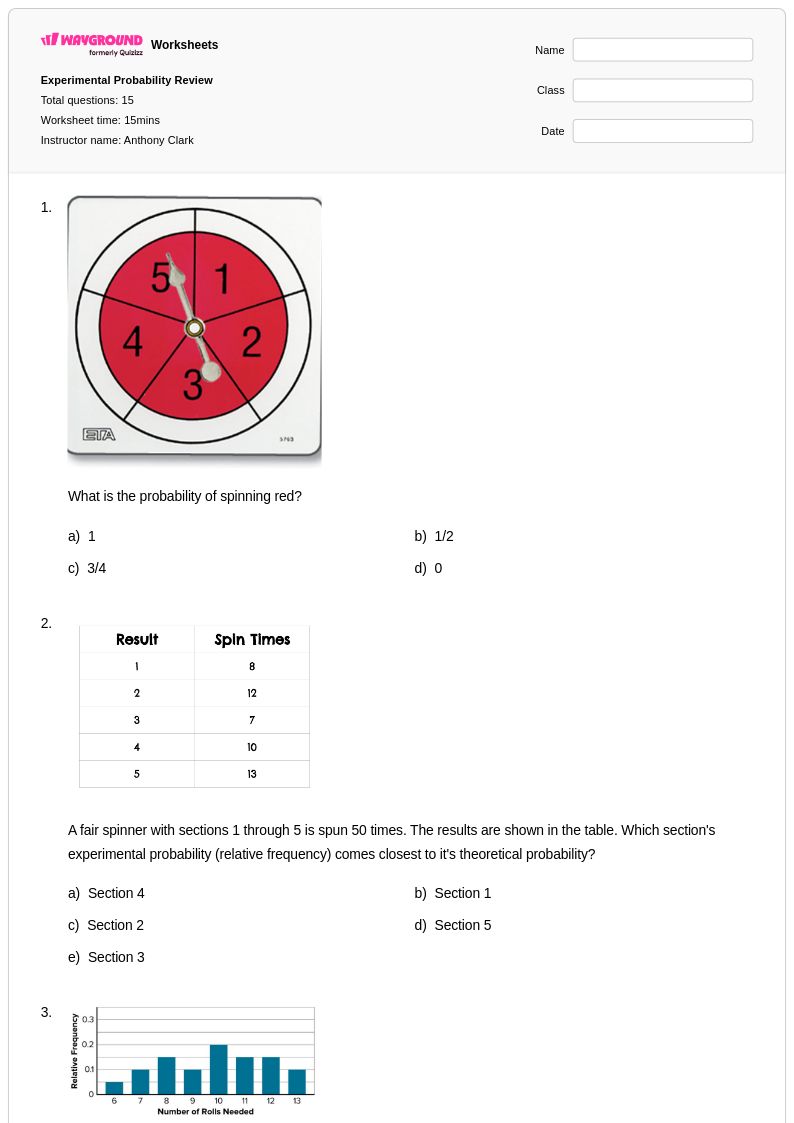
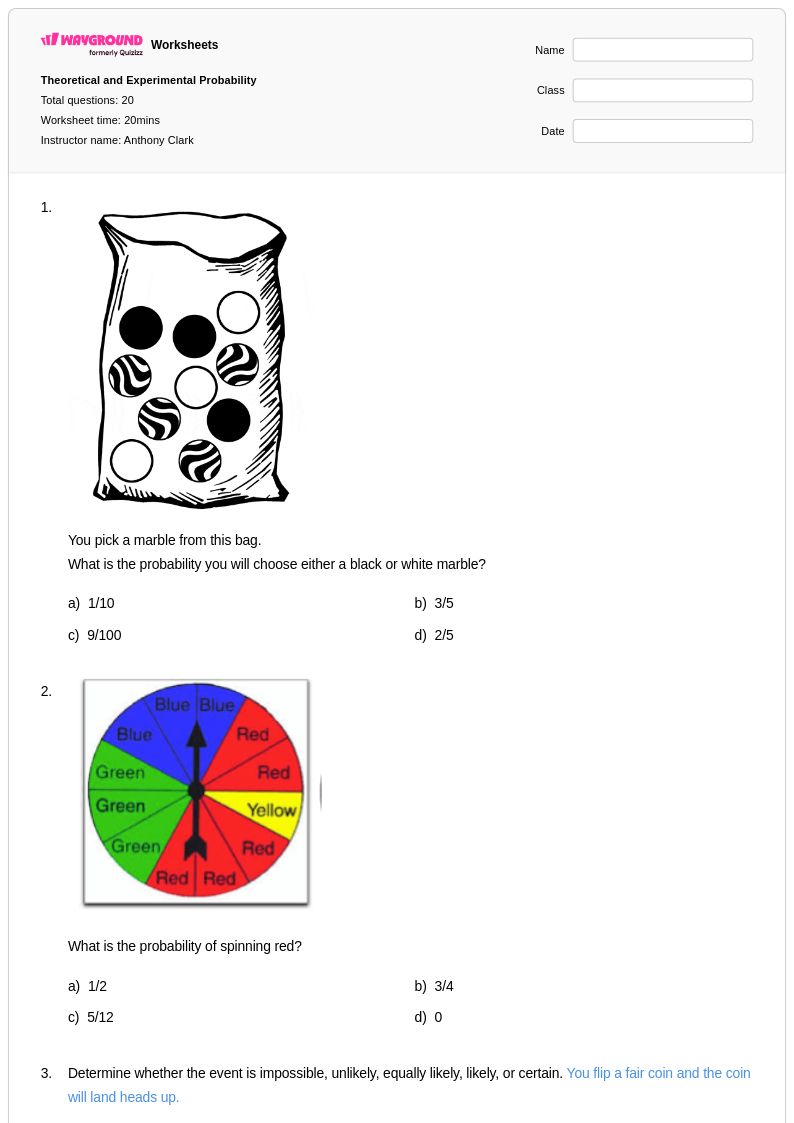
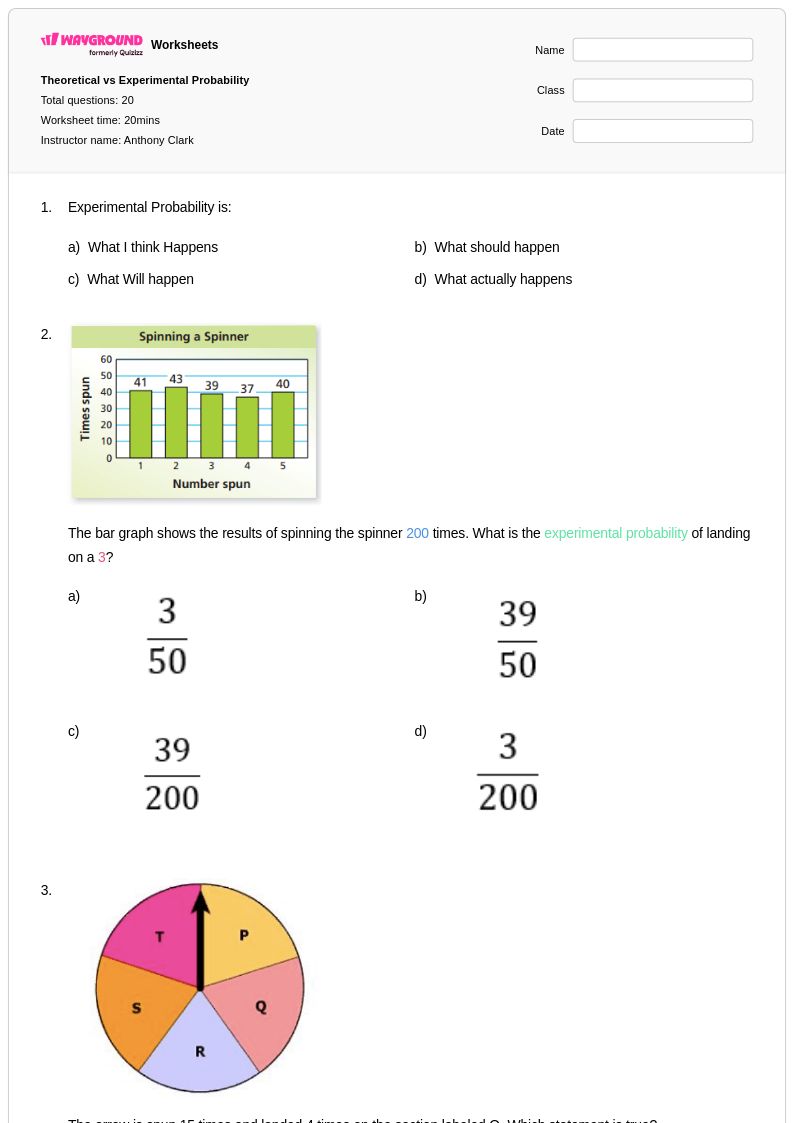
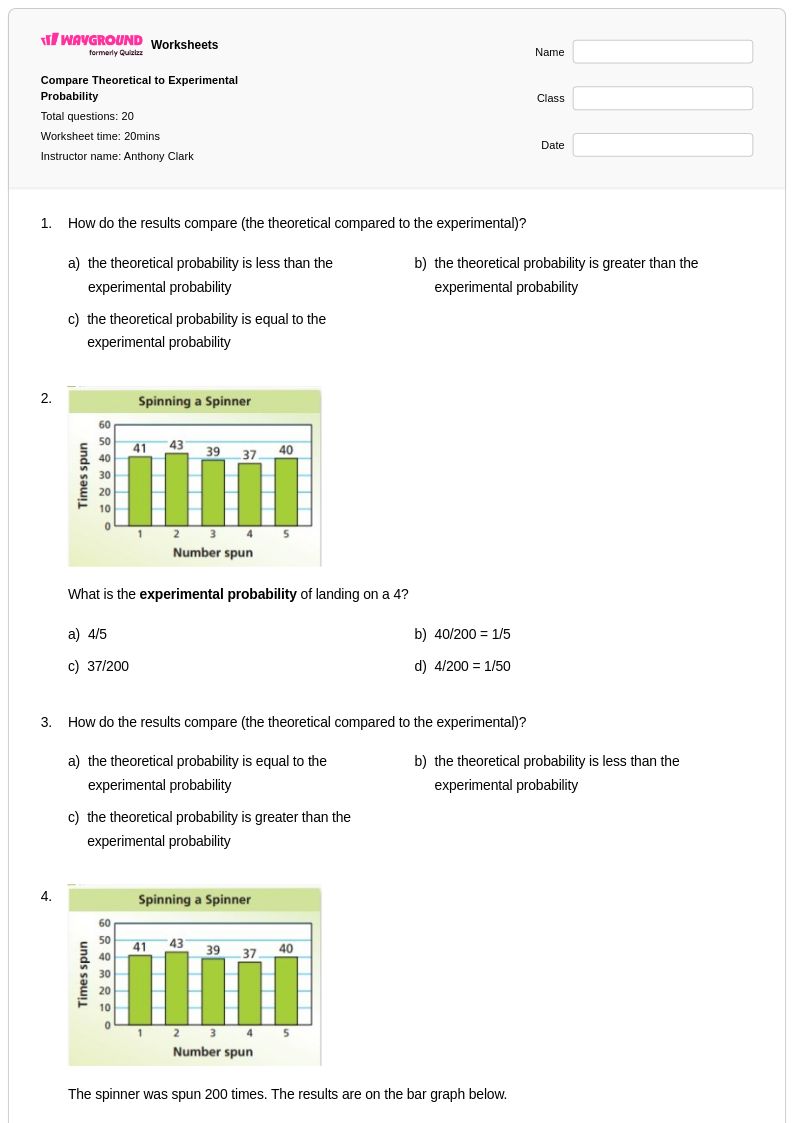
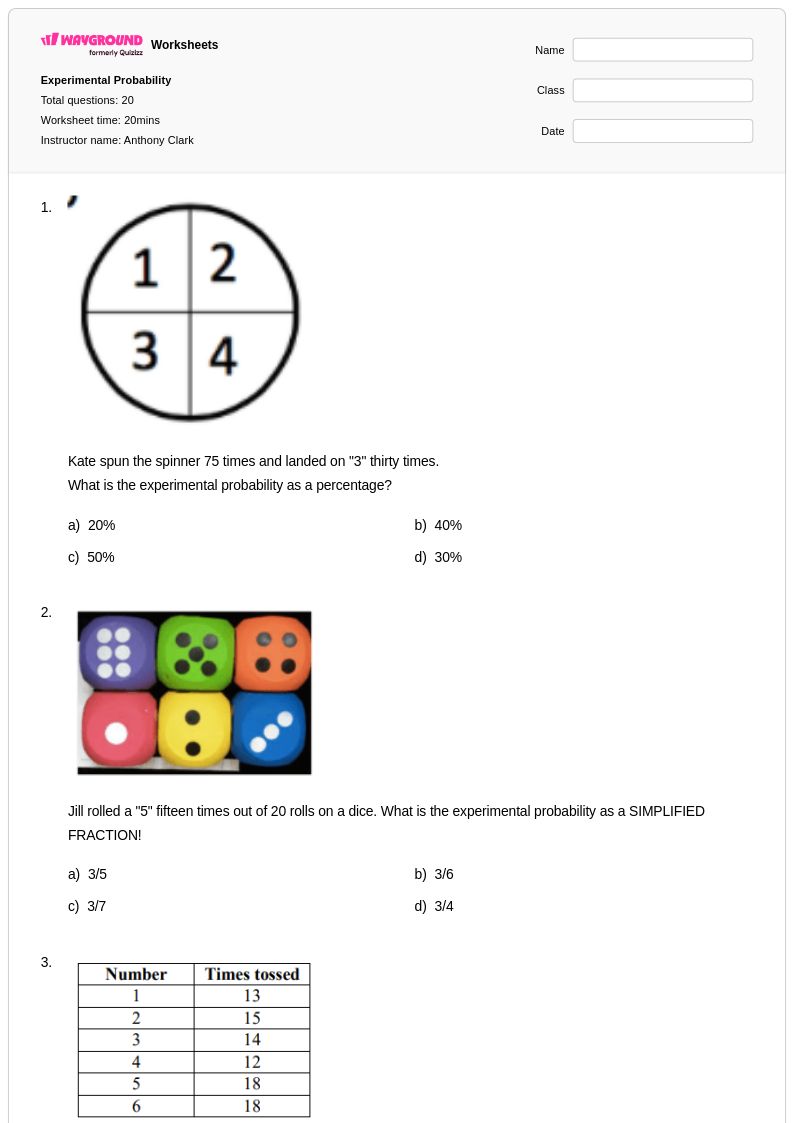
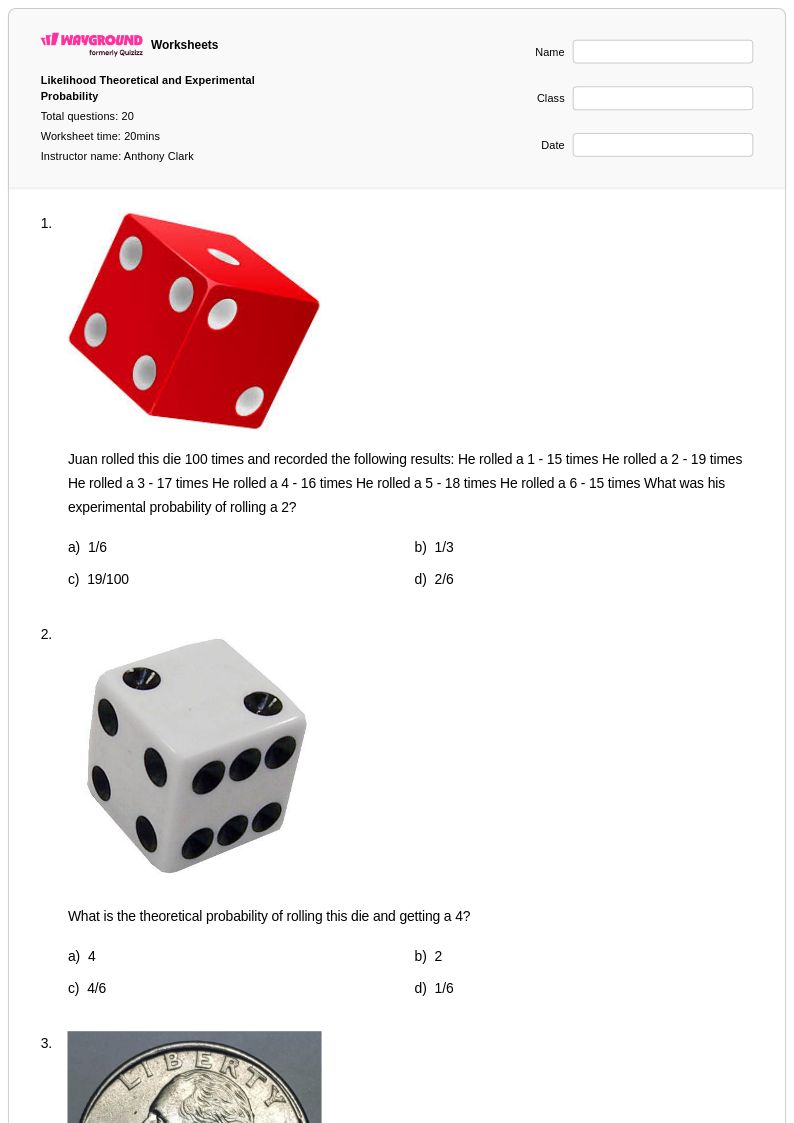
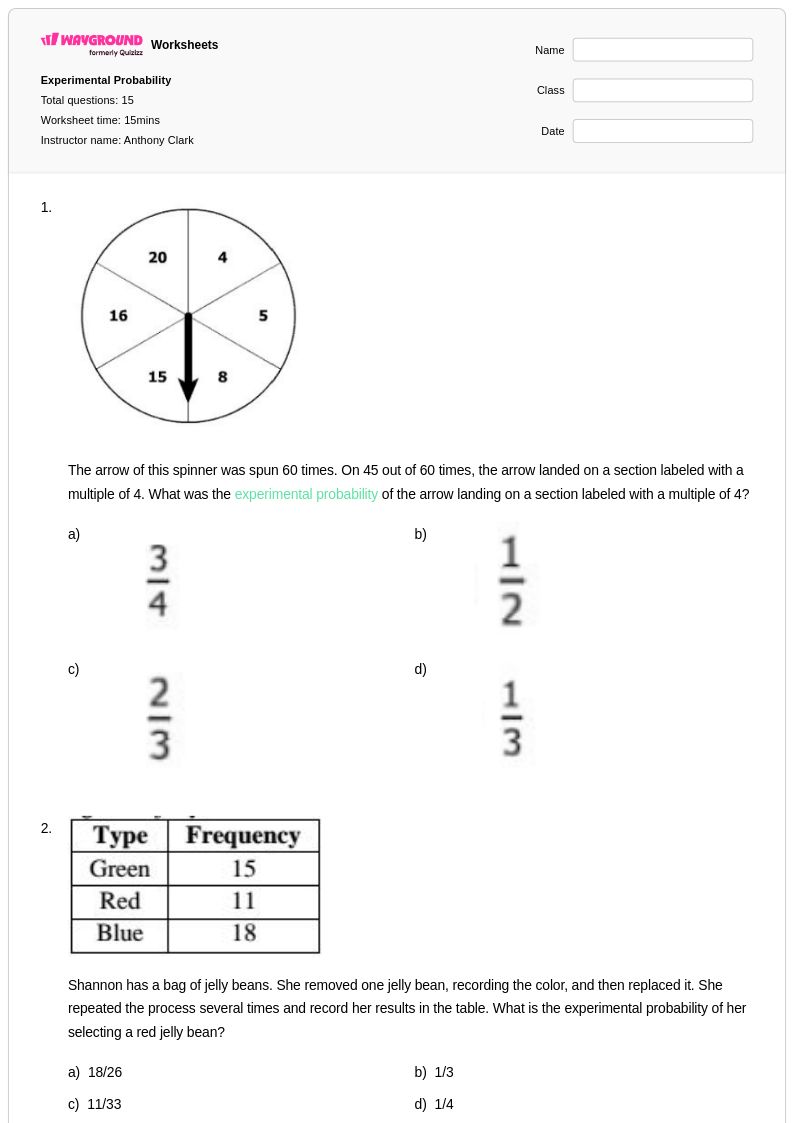
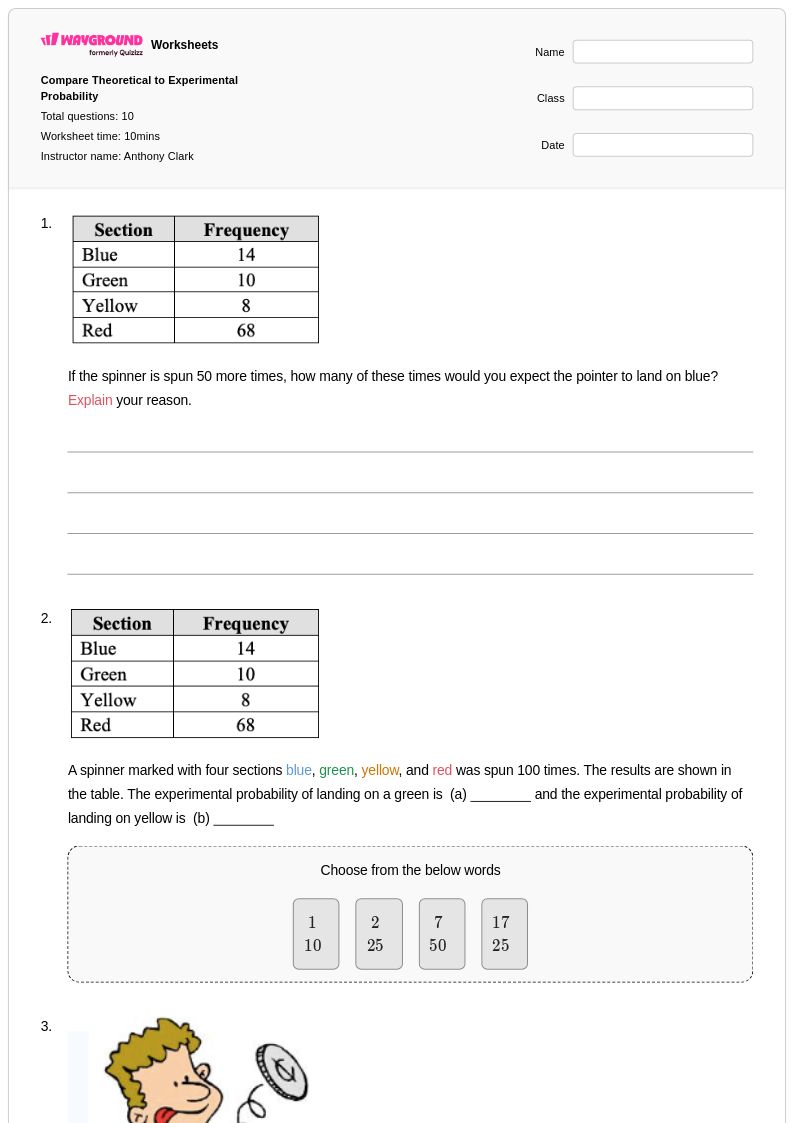
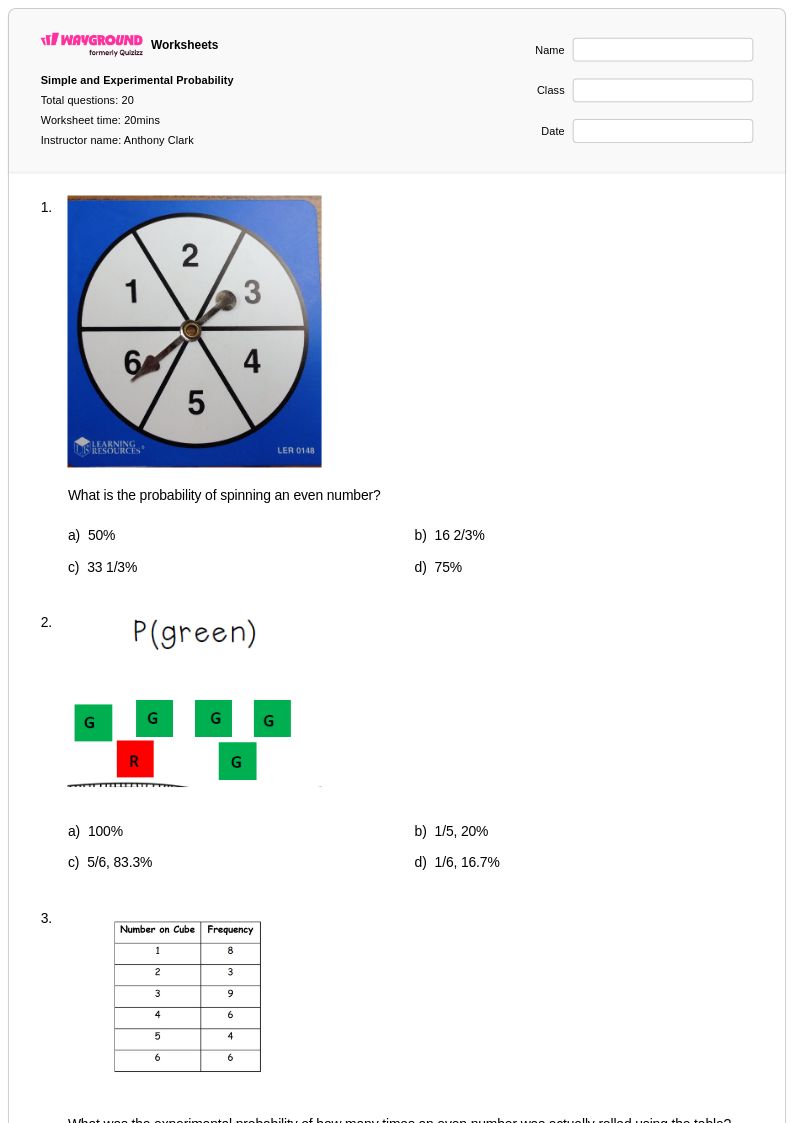
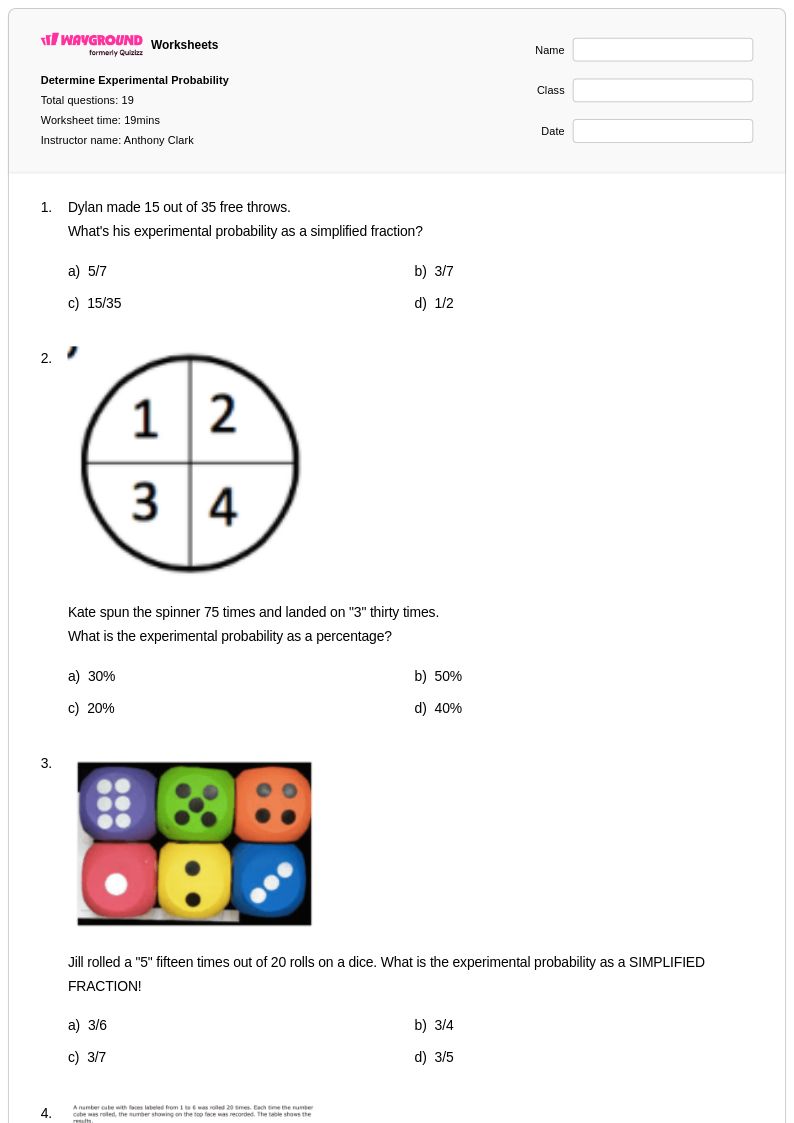
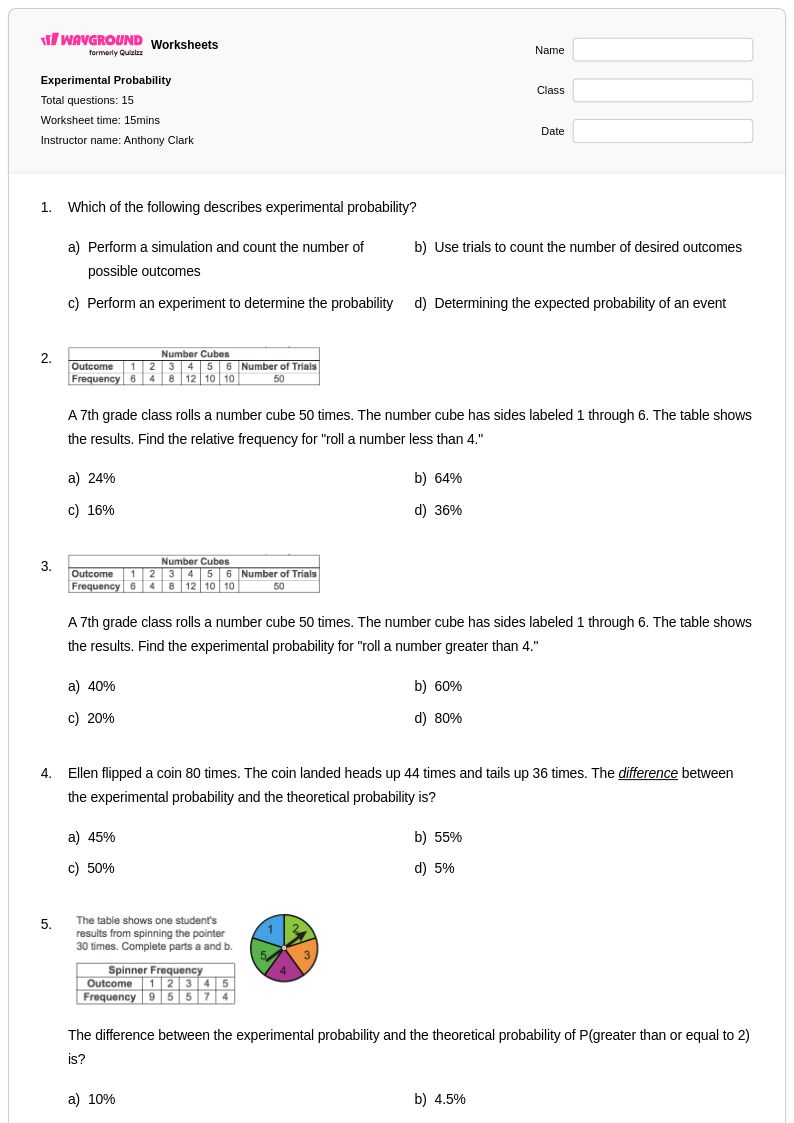
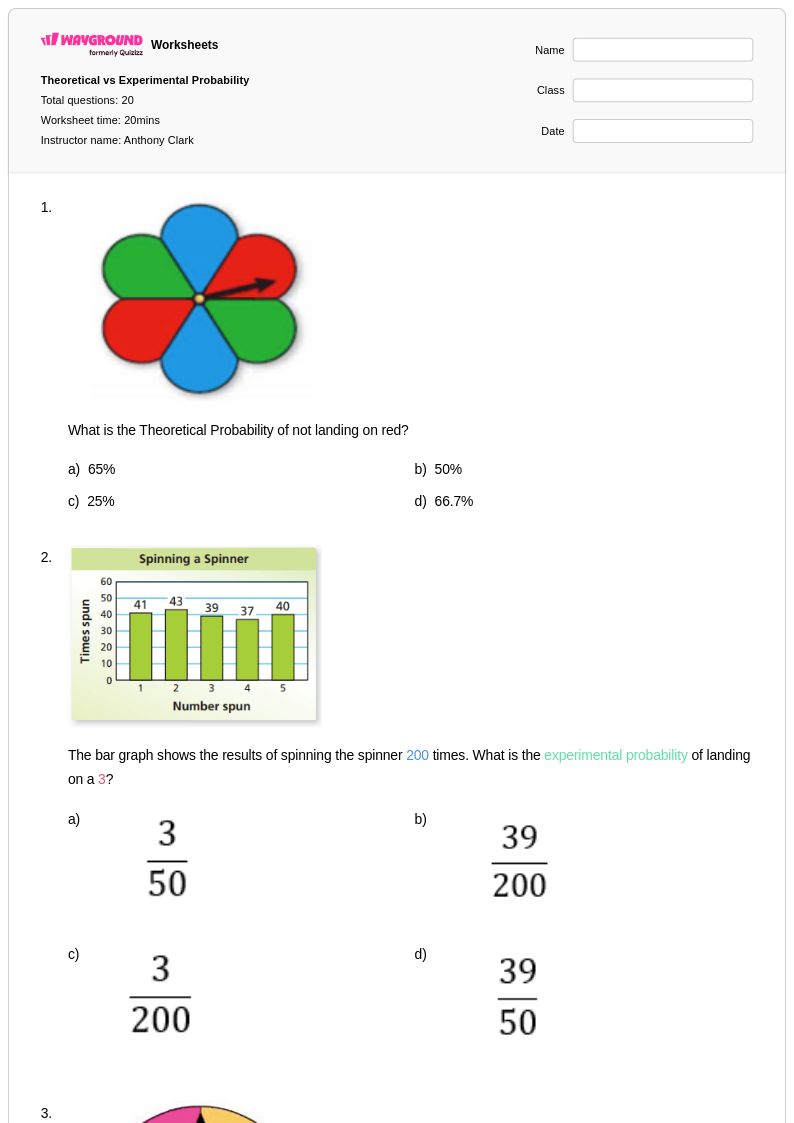
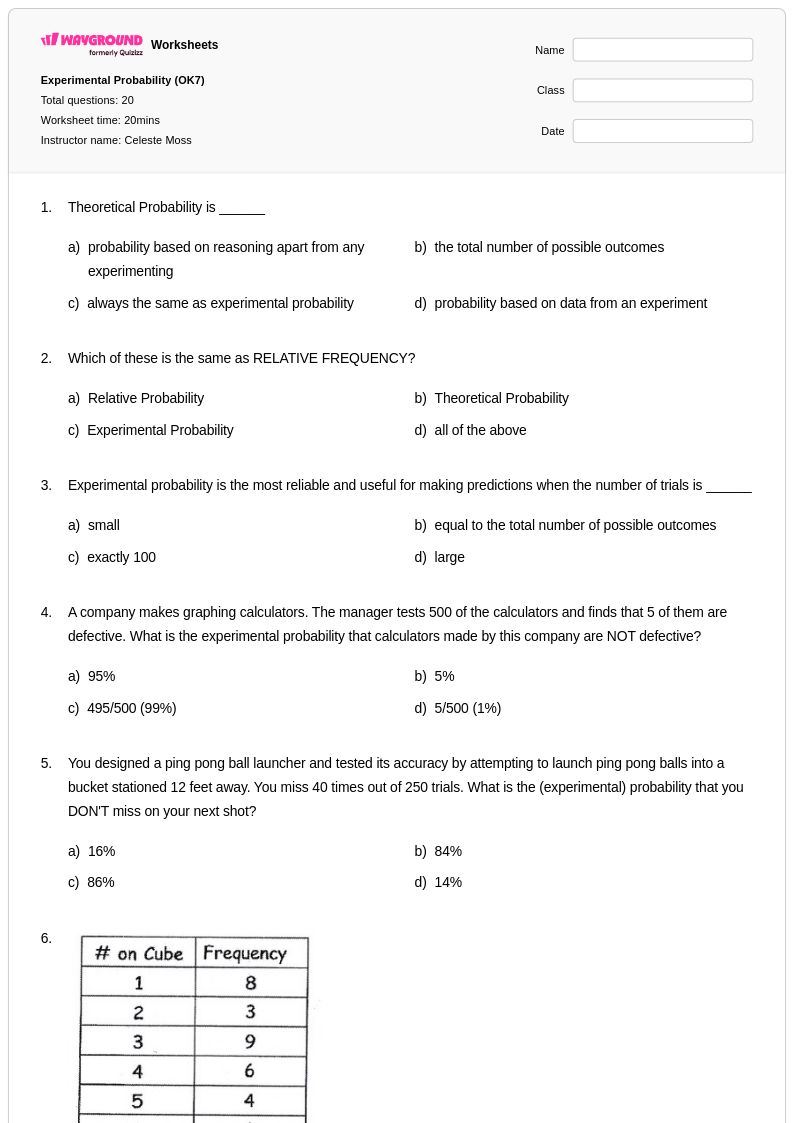
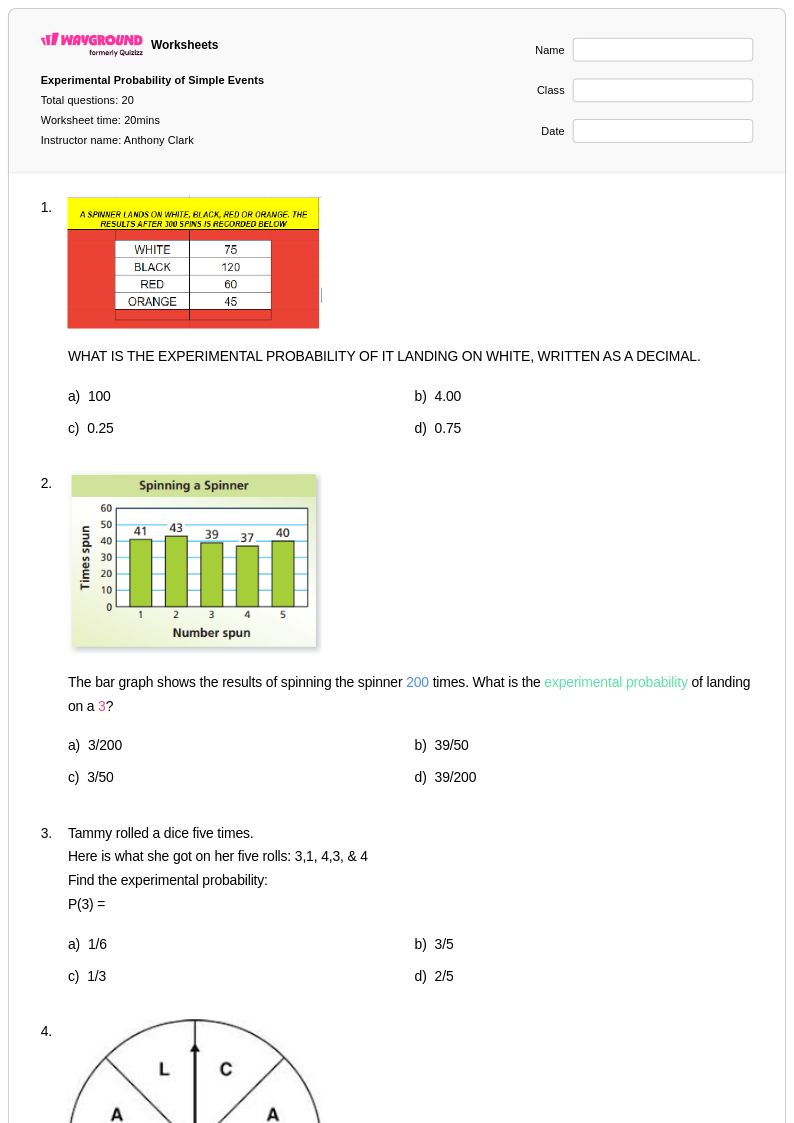
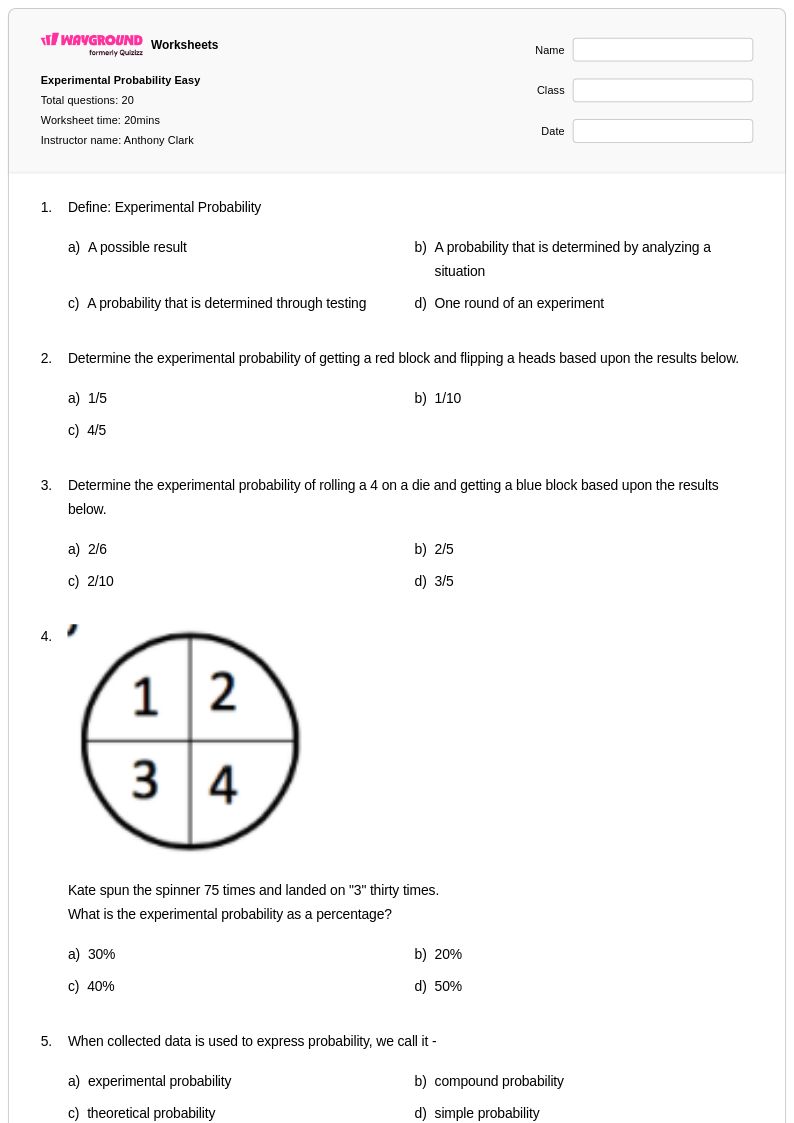
Experimental probability worksheets for Grade 8 students available through Wayground (formerly Quizizz) provide comprehensive practice in conducting probability experiments and analyzing real-world data outcomes. These carefully designed resources help students develop critical statistical reasoning skills by engaging with hands-on activities that involve coin flips, dice rolls, spinner experiments, and other probability scenarios where students collect actual data rather than relying solely on theoretical calculations. Each worksheet collection includes detailed answer keys and step-by-step solutions that guide students through the process of calculating experimental probability ratios, comparing experimental results to theoretical predictions, and understanding how sample size affects the reliability of probability estimates. These free printables and pdf resources strengthen students' ability to organize data, interpret results, and make predictions based on experimental evidence while building foundational concepts essential for advanced statistical analysis.
Wayground (formerly Quizizz) empowers educators with access to millions of teacher-created experimental probability worksheet collections that feature robust search and filtering capabilities, enabling quick identification of resources aligned with specific Grade 8 mathematics standards and learning objectives. The platform's sophisticated differentiation tools allow teachers to customize worksheet difficulty levels, problem types, and complexity to meet diverse student needs, whether for remediation support or enrichment challenges. Teachers can seamlessly access these resources in both printable and digital pdf formats, facilitating flexible implementation across various learning environments and instructional approaches. These comprehensive worksheet collections support strategic lesson planning by providing structured practice opportunities that help students master experimental probability concepts through systematic skill development, data collection exercises, and analytical thinking activities that prepare them for more advanced probability and statistics coursework.
FAQs
How do I teach experimental probability to 8th graders?
At grade 8, the goal is for students to treat experimental probability as a tool for modeling real-world uncertainty, not just a classroom exercise. Push beyond coin flips: use scenarios where the theoretical probability isn't obvious — like estimating the probability that a thumbtack lands point-up — so students have to rely entirely on experimental data. From there, the conversation about sample size becomes more meaningful: how many trials do you need before you'd trust your estimate enough to make a decision?
What exercises help 8th graders practice experimental probability?
Effective grade 8 practice problems ask students to work with larger data sets, calculate relative frequency, and evaluate the reliability of an experimental result based on sample size. Problems that present pre-collected data — rather than asking students to simulate a trial — are valuable at this level because they mirror how probability is actually used in statistics. Asking students to compare two experiments with different sample sizes and explain which result is more trustworthy is a strong higher-order task.
What mistakes do 8th graders commonly make with experimental probability?
The most persistent error at grade 8 is overgeneralizing from small samples — students calculate an experimental probability from 20 trials and treat it as a reliable estimate without questioning the sample size. A second issue: students conflate relative frequency with theoretical probability, especially when the experimental result happens to be close to the theoretical value. It's worth being explicit that agreement between the two doesn't mean they're the same thing — one is calculated, one is observed.
How do I use Wayground's Grade 8 experimental probability worksheets?
Each worksheet comes with a complete answer key and is available as both a printable PDF and a digital assignment. For classes where you want immediate feedback, host the worksheet as a digital quiz on Wayground — students complete it online and results are available as soon as they submit. For paper-based practice, print the PDF; you can then use the Wayground for Teachers app to scan student work and grade it without manually entering every response.
How does experimental probability connect to the broader 8th grade statistics curriculum?
By grade 8, experimental probability connects directly to the study of data distributions and statistical inference. Students who understand that experimental probability is a relative frequency — and that it stabilizes as sample size grows — are better prepared to reason about sampling variability and why larger samples produce more reliable conclusions. Common Core's grade 8 statistics work emphasizes using data to draw inferences about populations, and experimental probability is the conceptual bridge between counting outcomes and making evidence-based predictions.
How can I accommodate diverse learners in my 8th grade probability class?
For students who need more processing time on multi-step problems, Wayground's extended time accommodation adds configurable extra seconds per question without affecting other students' experience. The Read Aloud feature is useful for students who struggle with the dense language in data-interpretation problems. At the worksheet level, applying a dyslexia-friendly font or larger text size takes seconds and can meaningfully reduce the visual friction for students who find standard formatting hard to parse.