
12 Q
7th - Uni
15 Q
7th - Uni
10 Q
7th - Uni
16 Q
7th - Uni
20 Q
8th - 9th
10 Q
6th - 8th
20 Q
7th - Uni
15 Q
7th - Uni
16 Q
6th - 8th
13 Q
7th - Uni
10 Q
6th - 12th
20 Q
7th - Uni
10 Q
6th - 8th
20 Q
6th - 8th
10 Q
8th
20 Q
7th - 8th
10 Q
7th - Uni
20 Q
8th
43 Q
6th - 8th
50 Q
8th
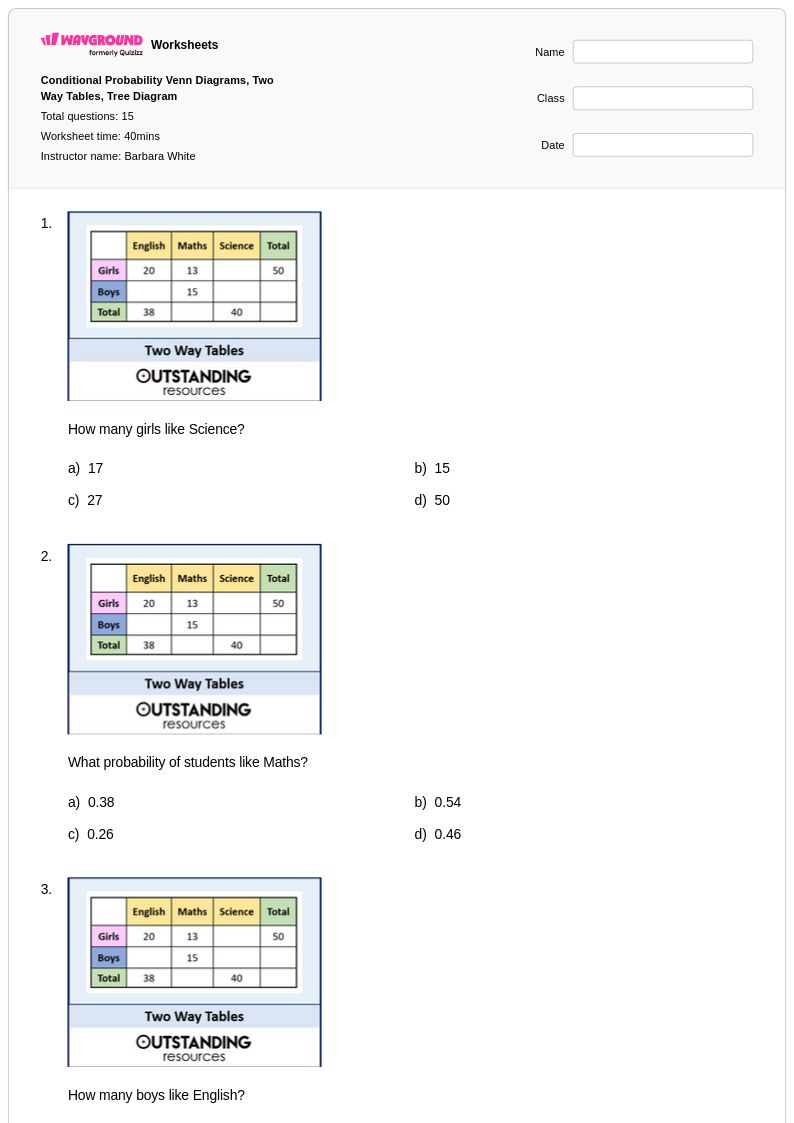
15 Q
8th
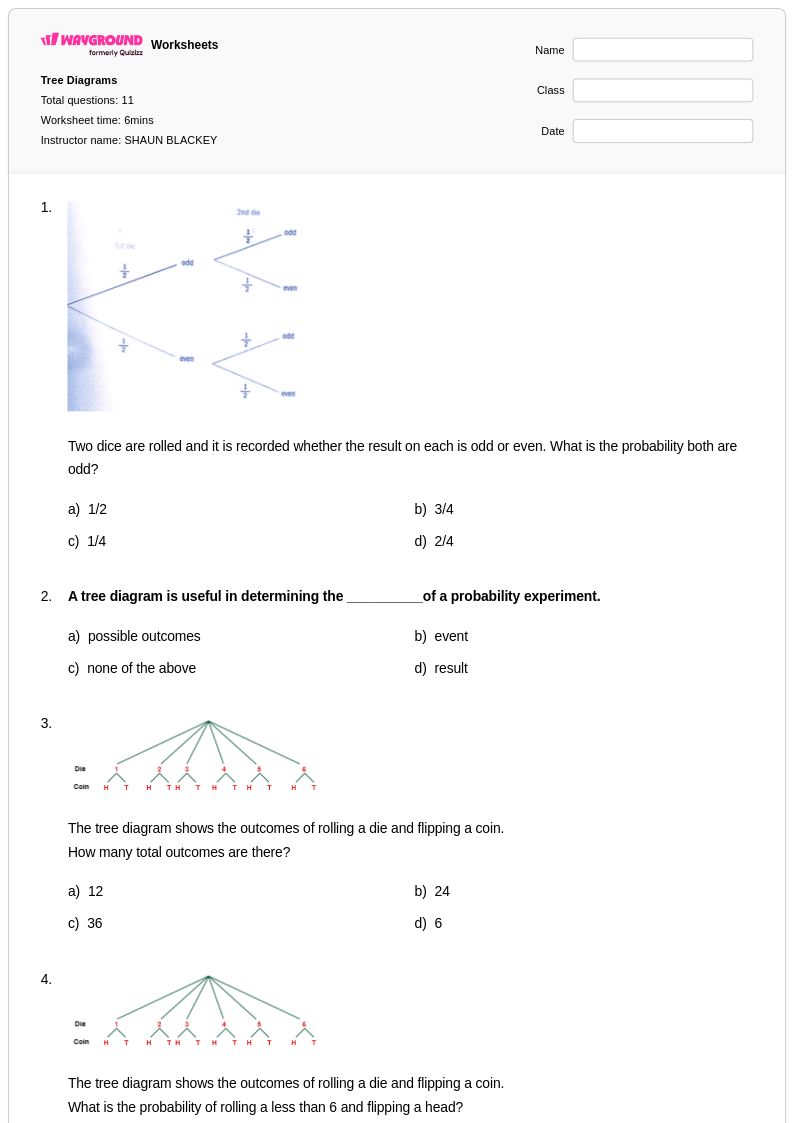
11 Q
7th - 8th
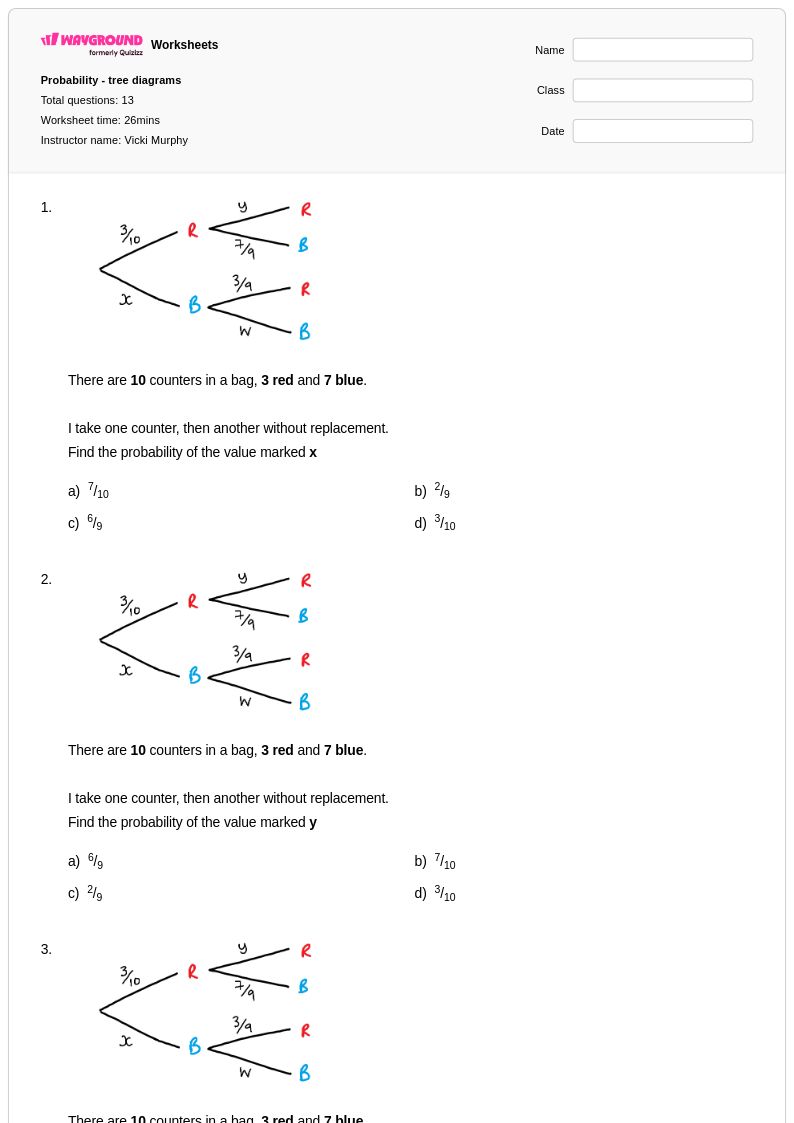
13 Q
6th - 10th
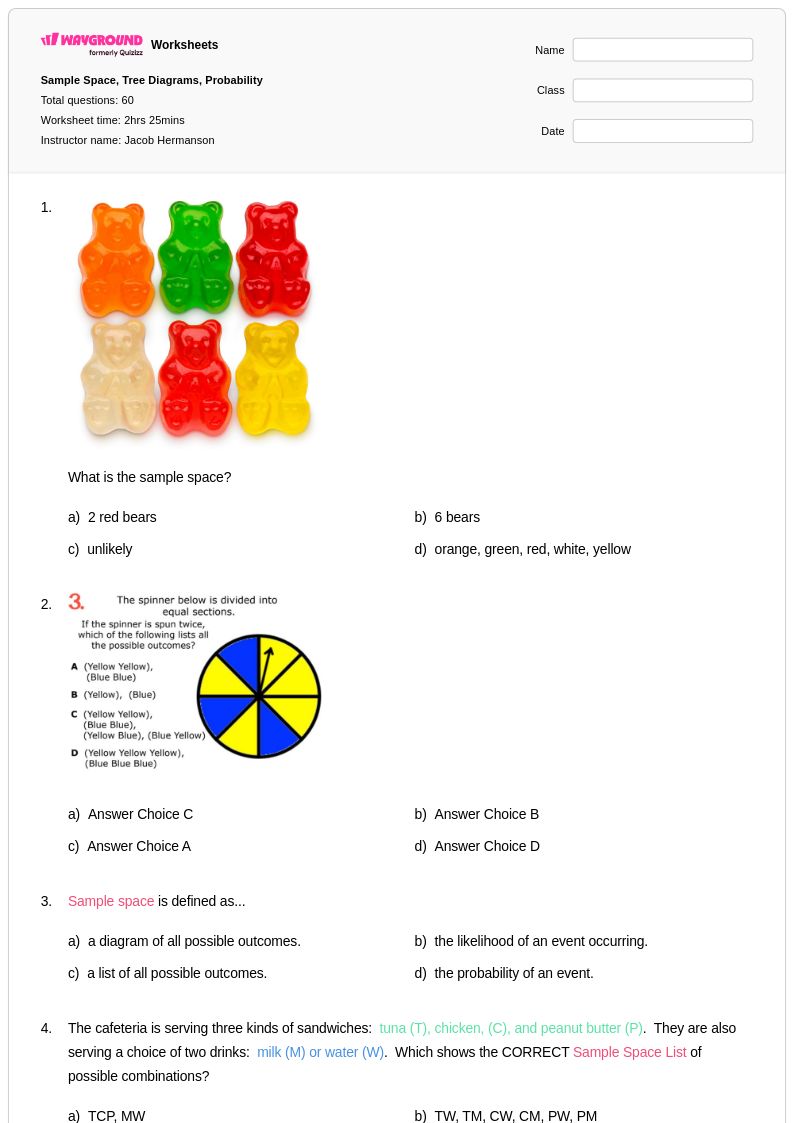
60 Q
7th - Uni
Explore Other Subject Worksheets for grade 8
Explore printable Tree Diagrams worksheets for Grade 8
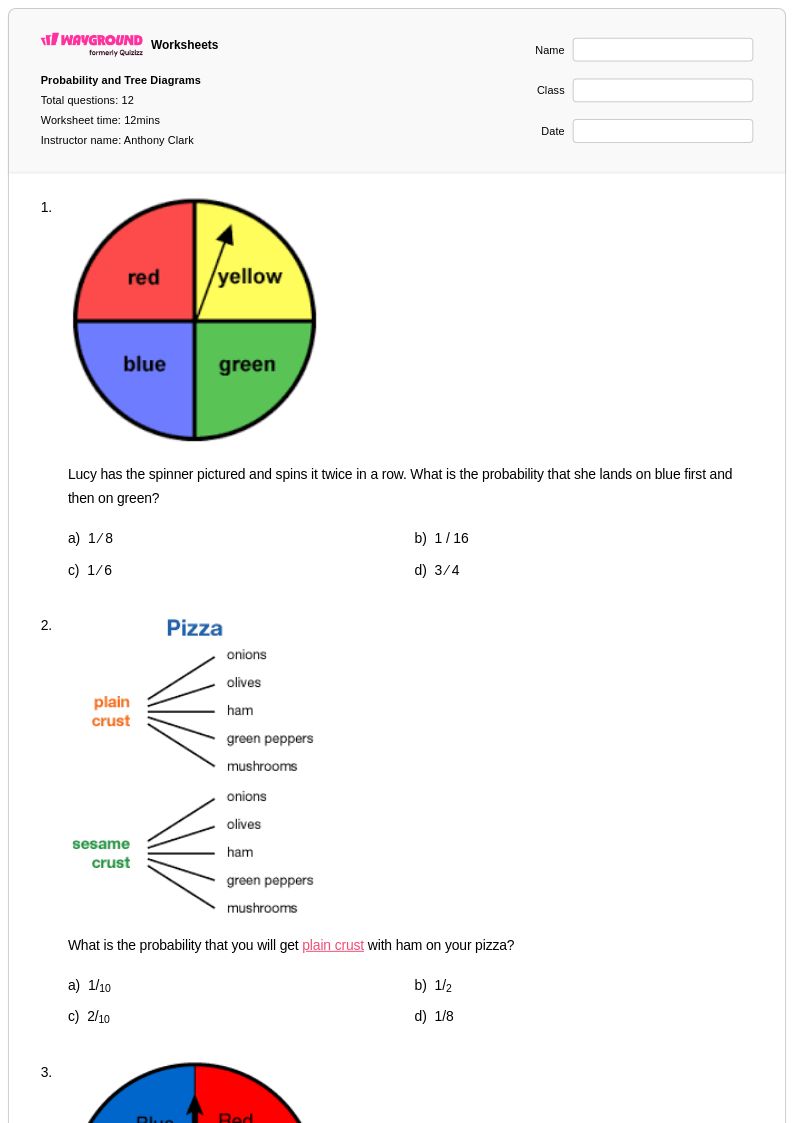
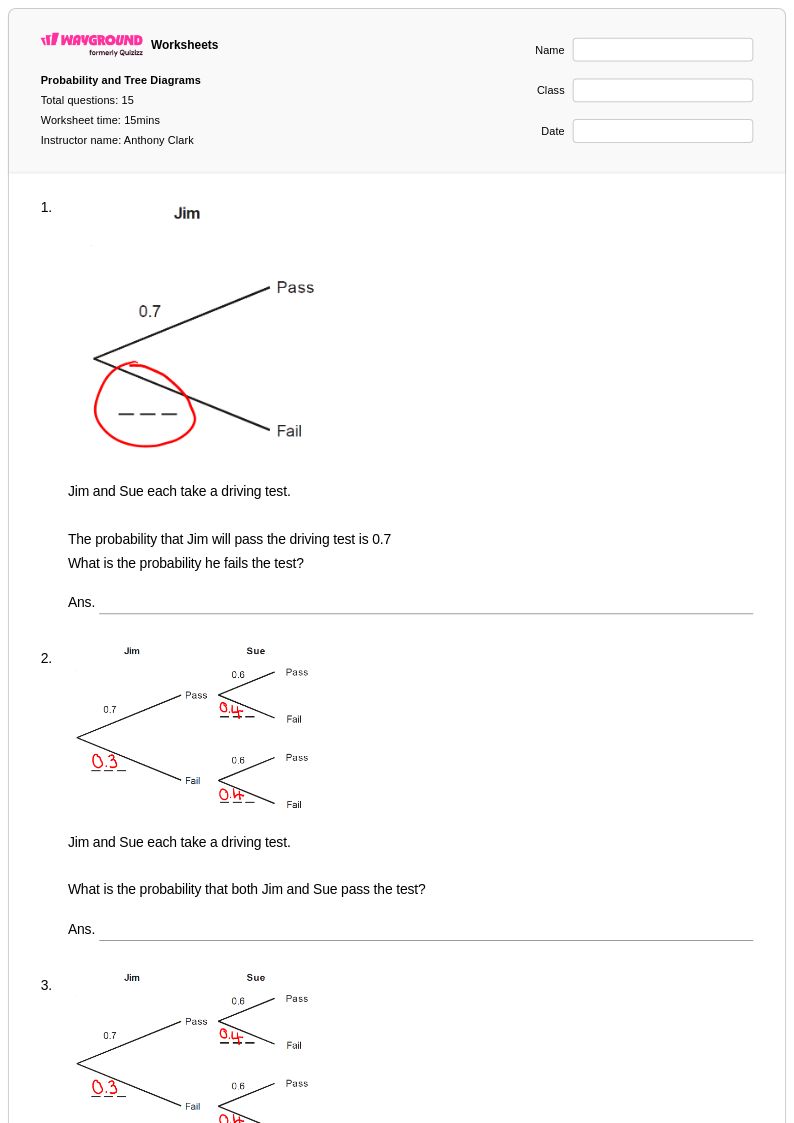
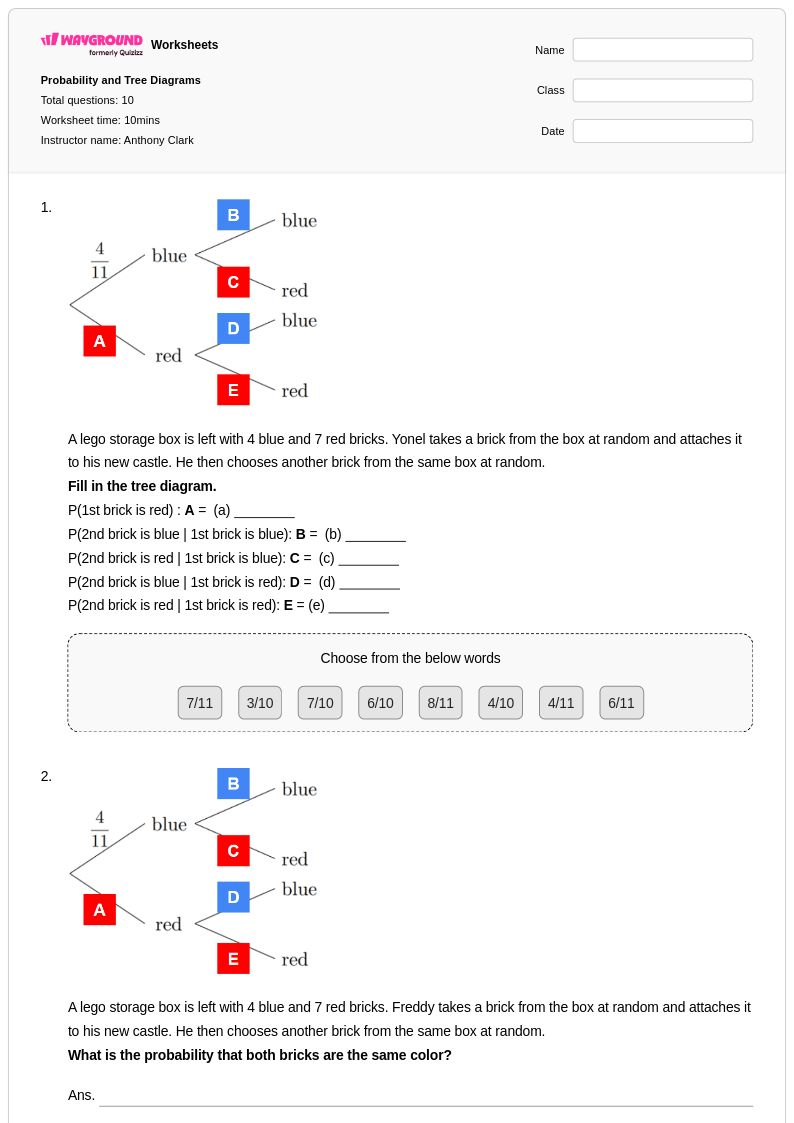
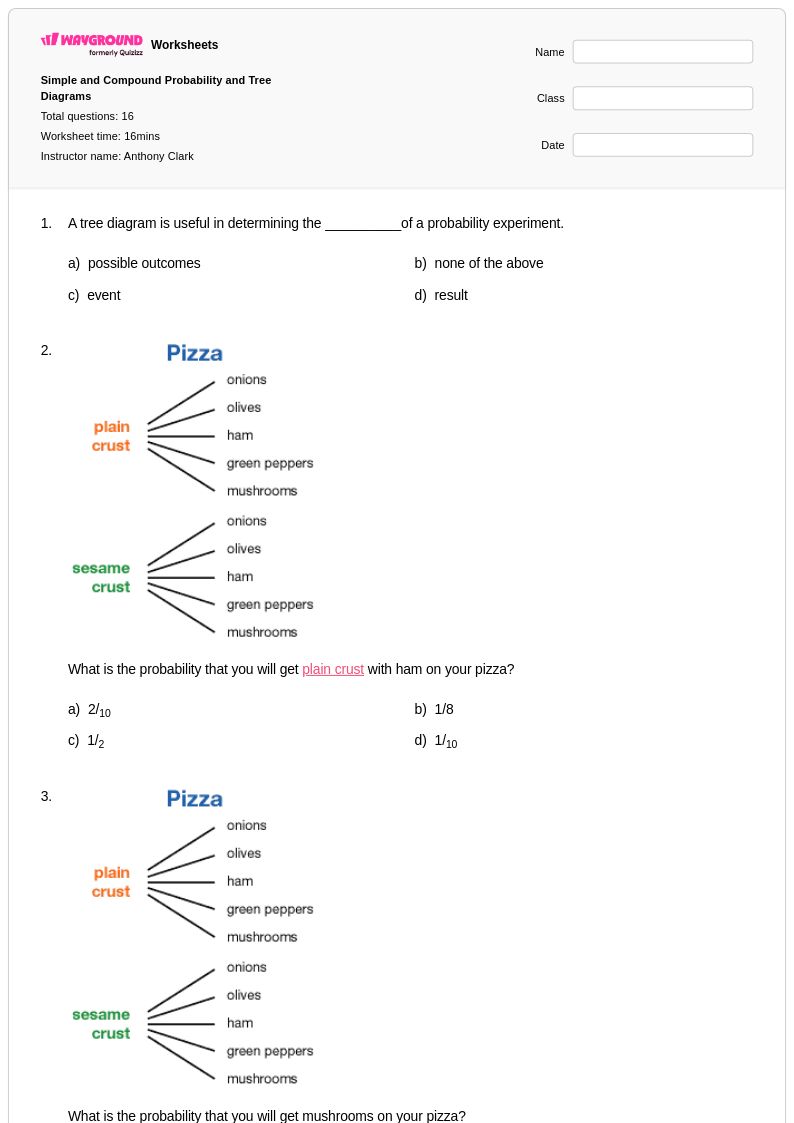
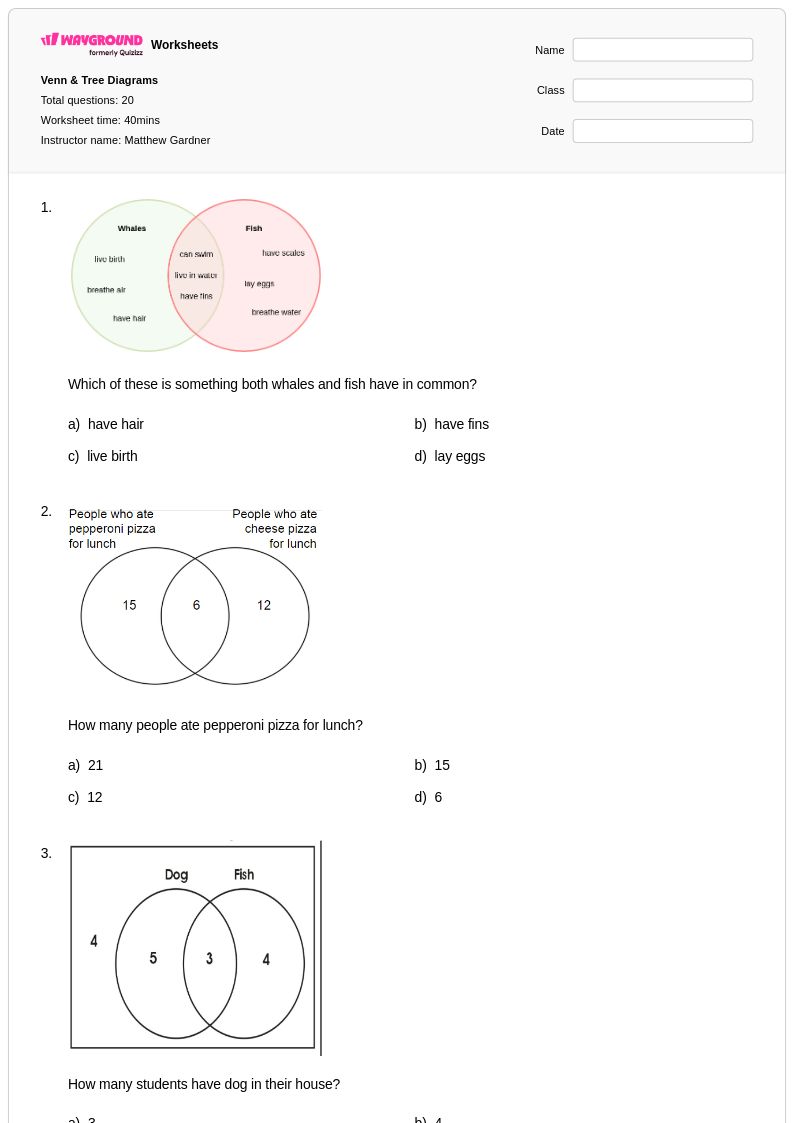
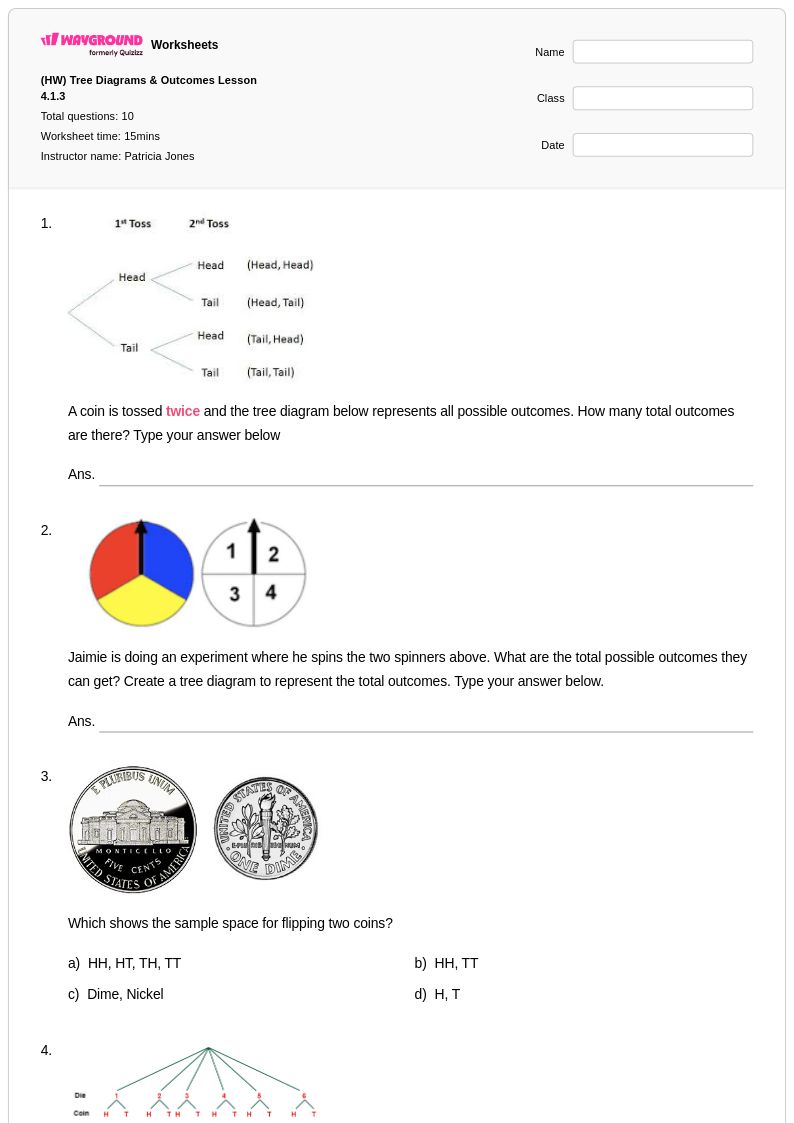
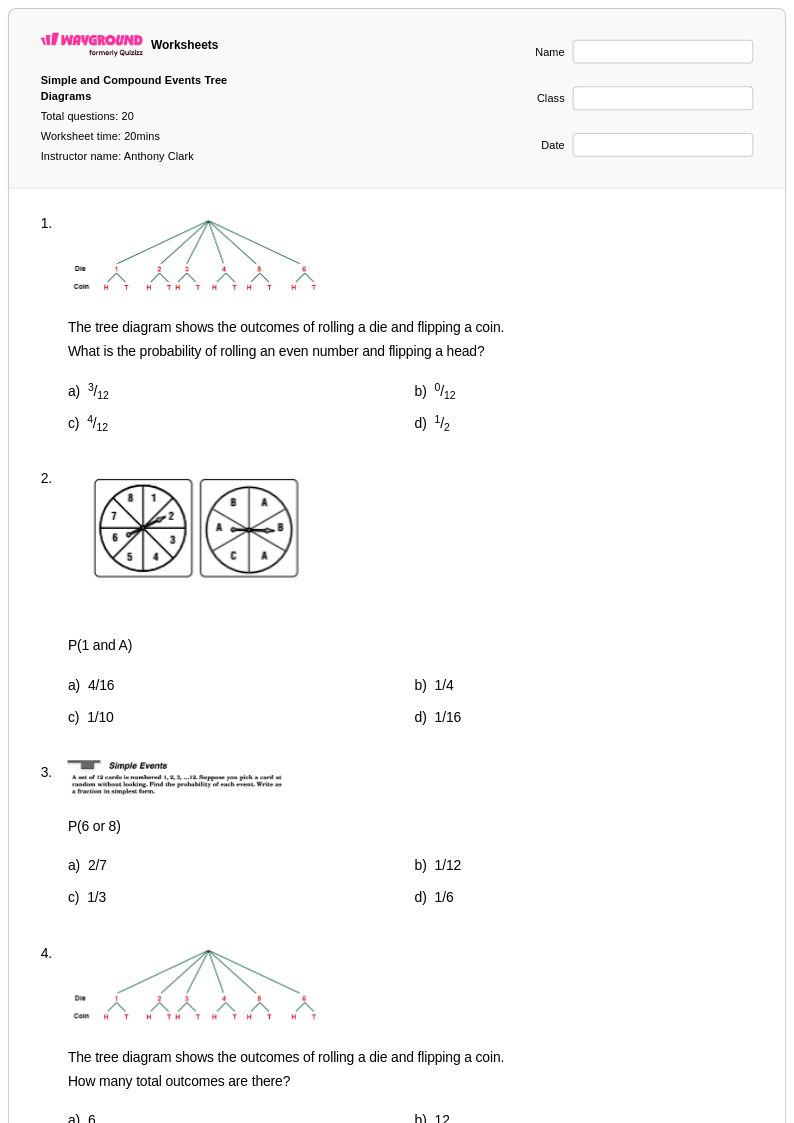
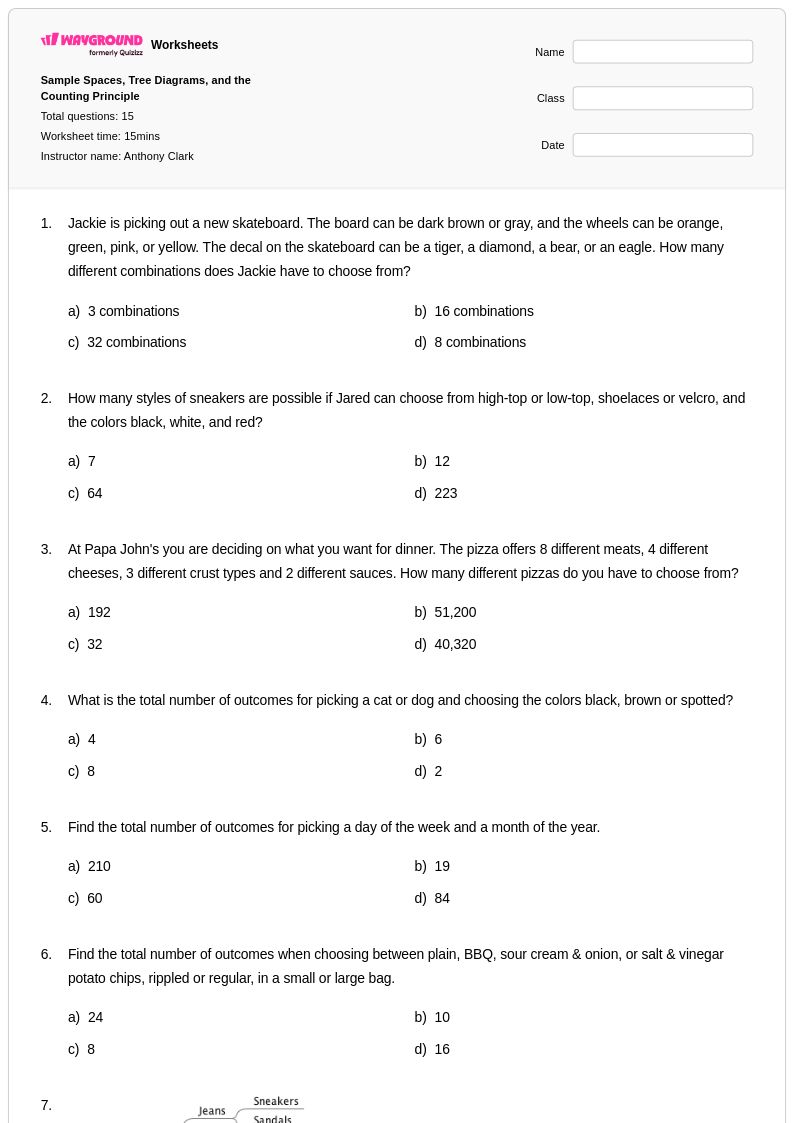
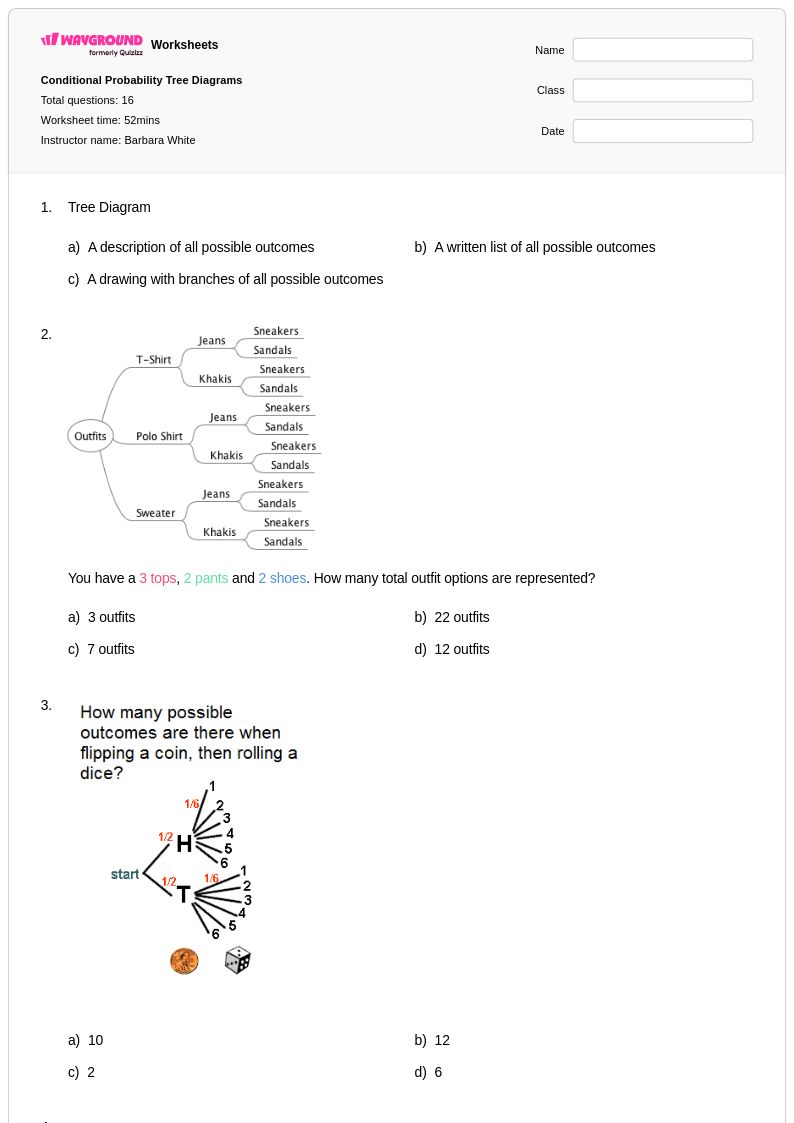
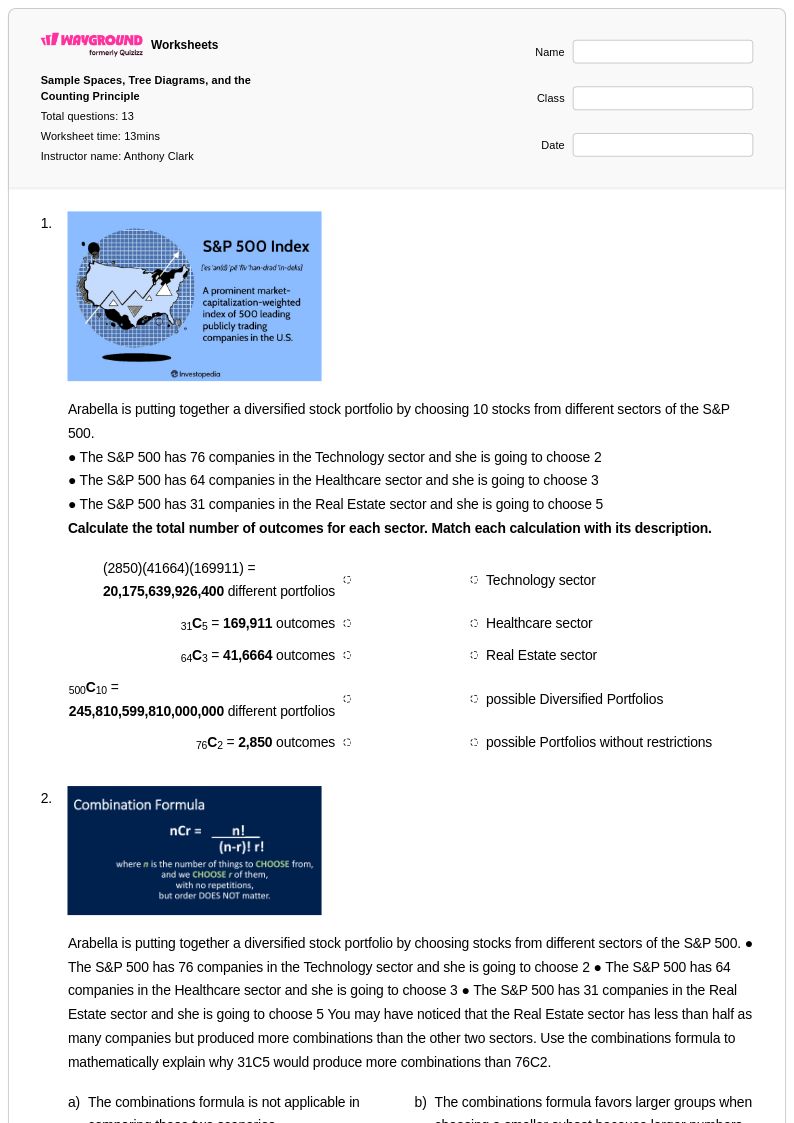
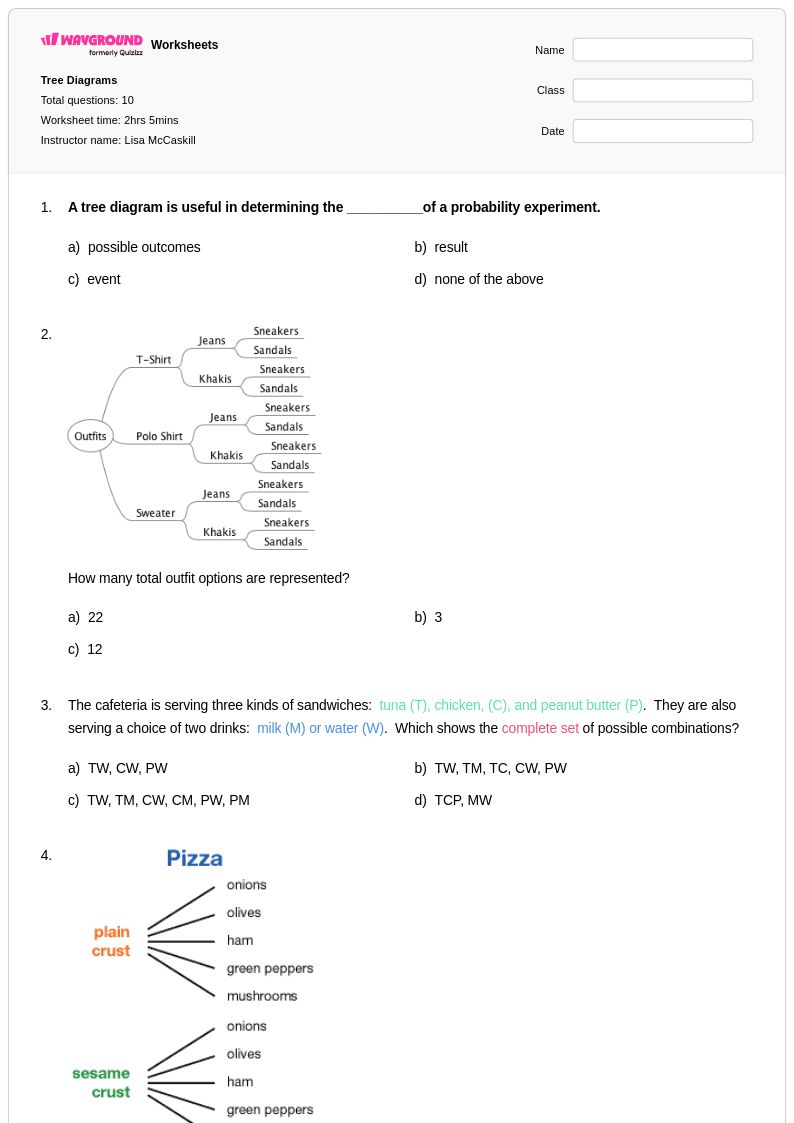
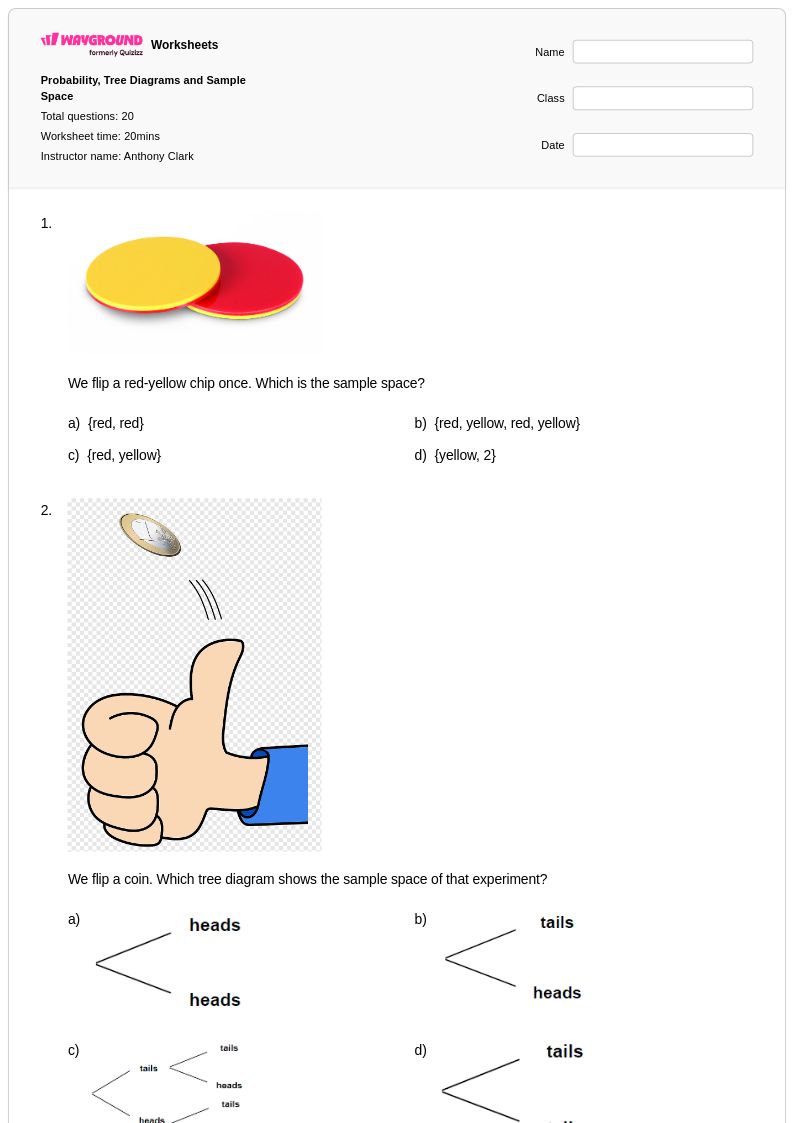
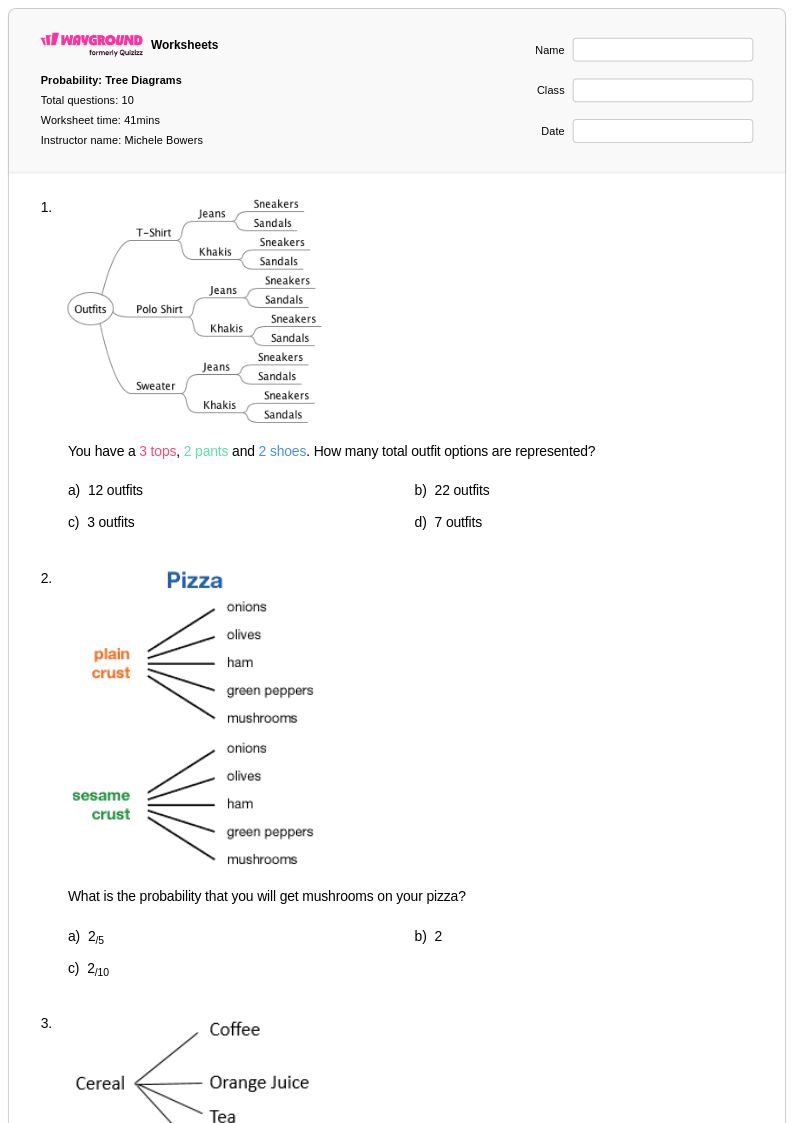
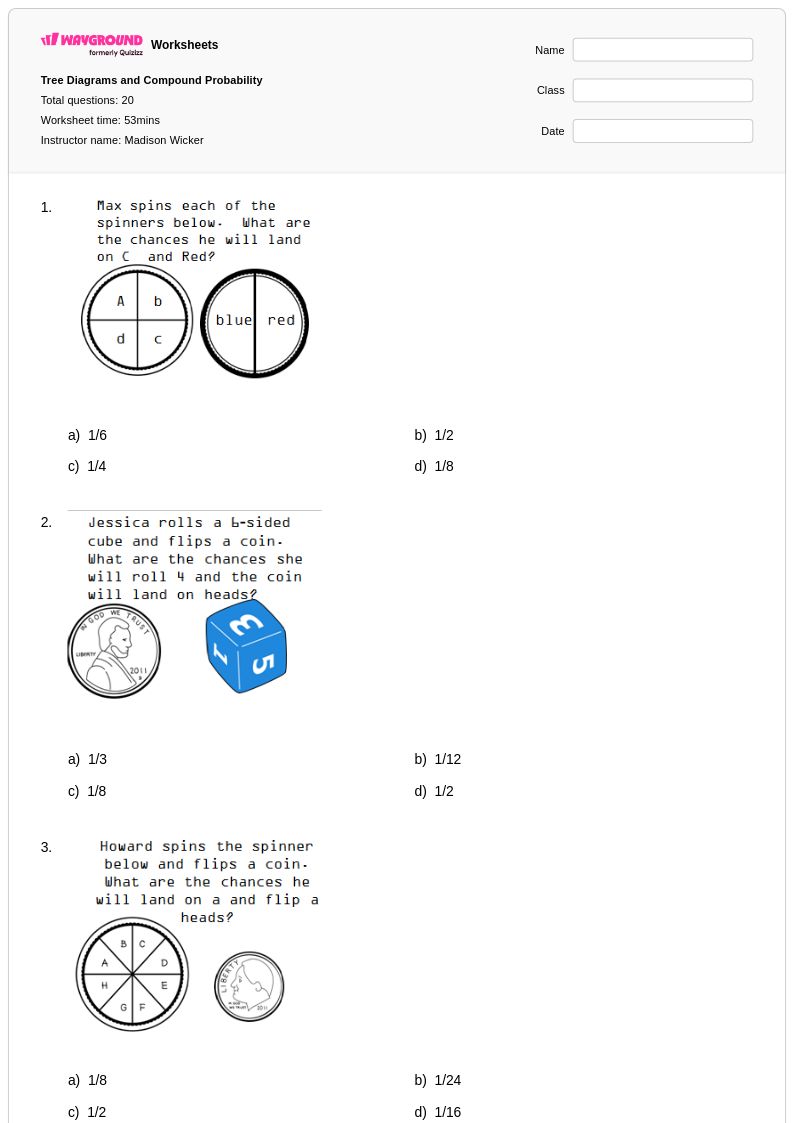
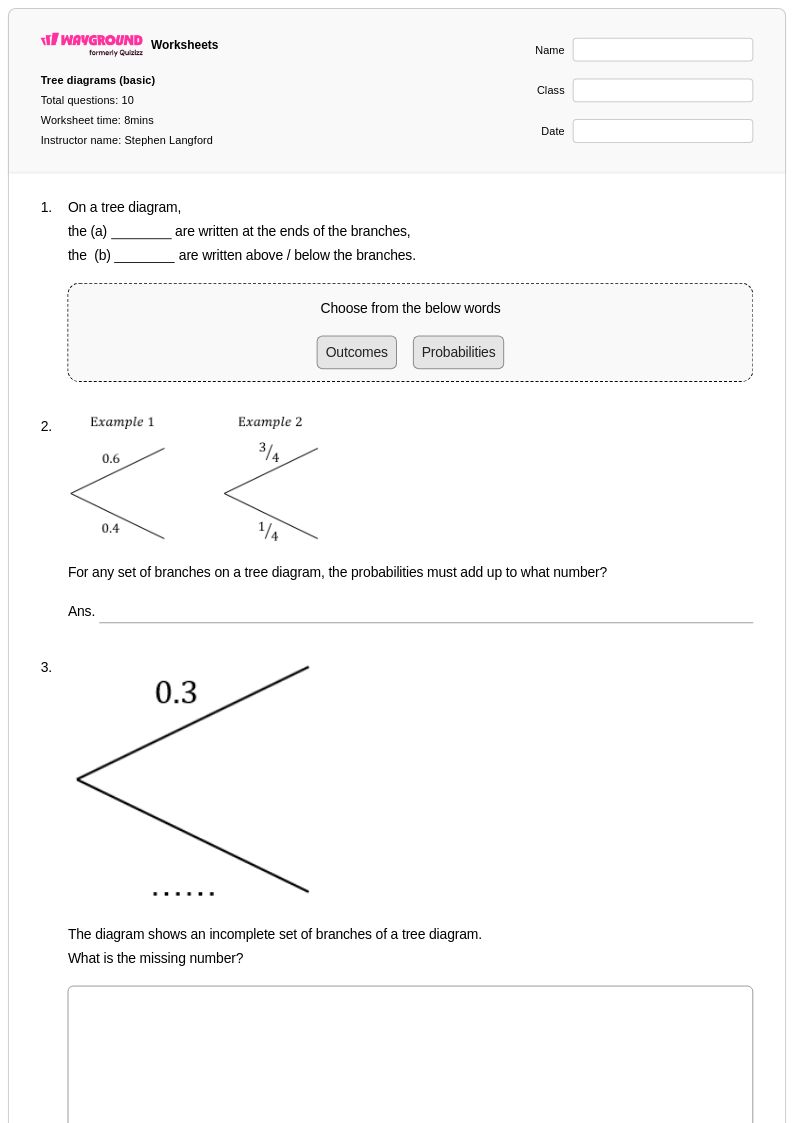
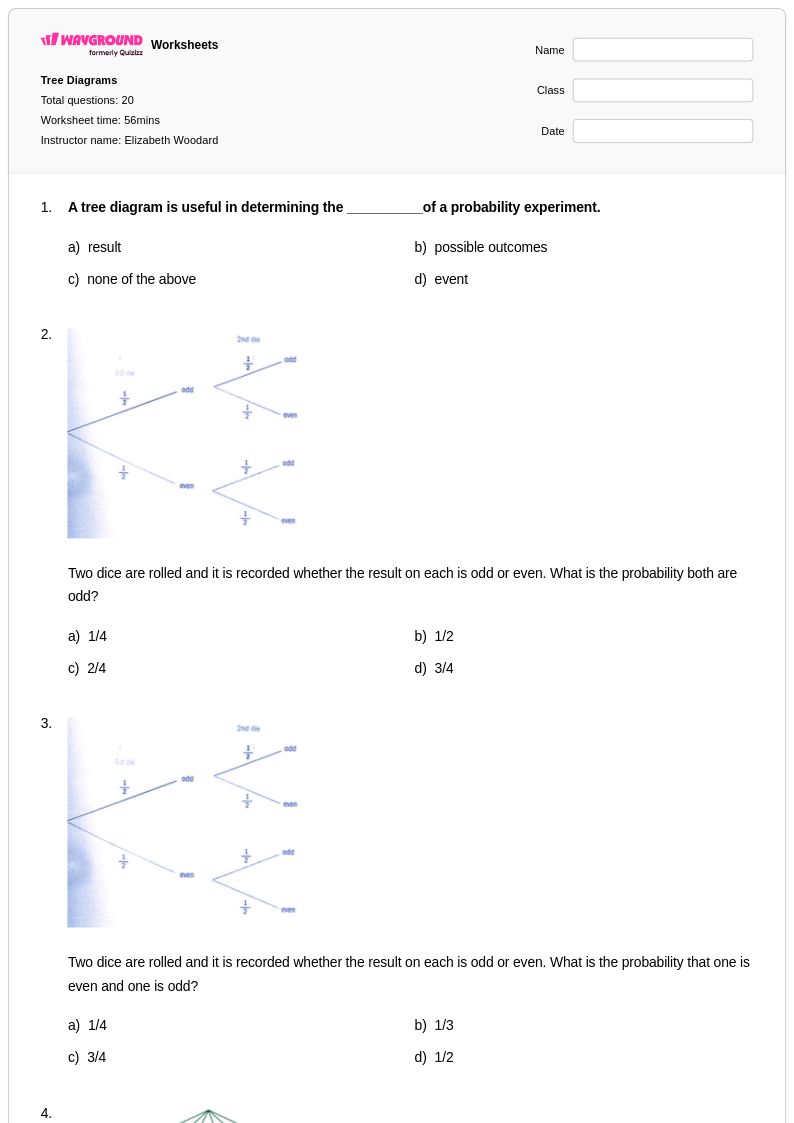
Tree diagrams serve as a fundamental visual tool in Grade 8 probability and statistics, helping students systematically organize and calculate probabilities for multi-step events. Wayground's comprehensive collection of tree diagram worksheets provides students with structured practice problems that build essential skills in mapping sequential outcomes, determining sample spaces, and computing compound probabilities. These carefully crafted printables guide eighth-graders through the step-by-step process of constructing tree diagrams for various scenarios, from simple two-stage experiments to more complex multi-stage probability situations. Each worksheet includes detailed answer keys that allow students to verify their work and understand the logical progression from initial events through final probability calculations, making these free resources invaluable for both classroom instruction and independent practice.
Wayground's extensive library of millions of teacher-created resources ensures educators have access to diverse, high-quality tree diagram materials that align with Grade 8 mathematics standards. The platform's robust search and filtering capabilities enable teachers to quickly locate worksheets that match their specific instructional needs, whether targeting foundational tree diagram construction or advanced probability applications. These versatile materials are available in both printable pdf format and interactive digital versions, allowing for seamless integration into any learning environment. Teachers can customize these resources to provide targeted remediation for struggling students, offer enrichment opportunities for advanced learners, or deliver differentiated instruction that meets diverse classroom needs, making lesson planning more efficient while ensuring all students develop strong conceptual understanding of probability through tree diagram analysis.