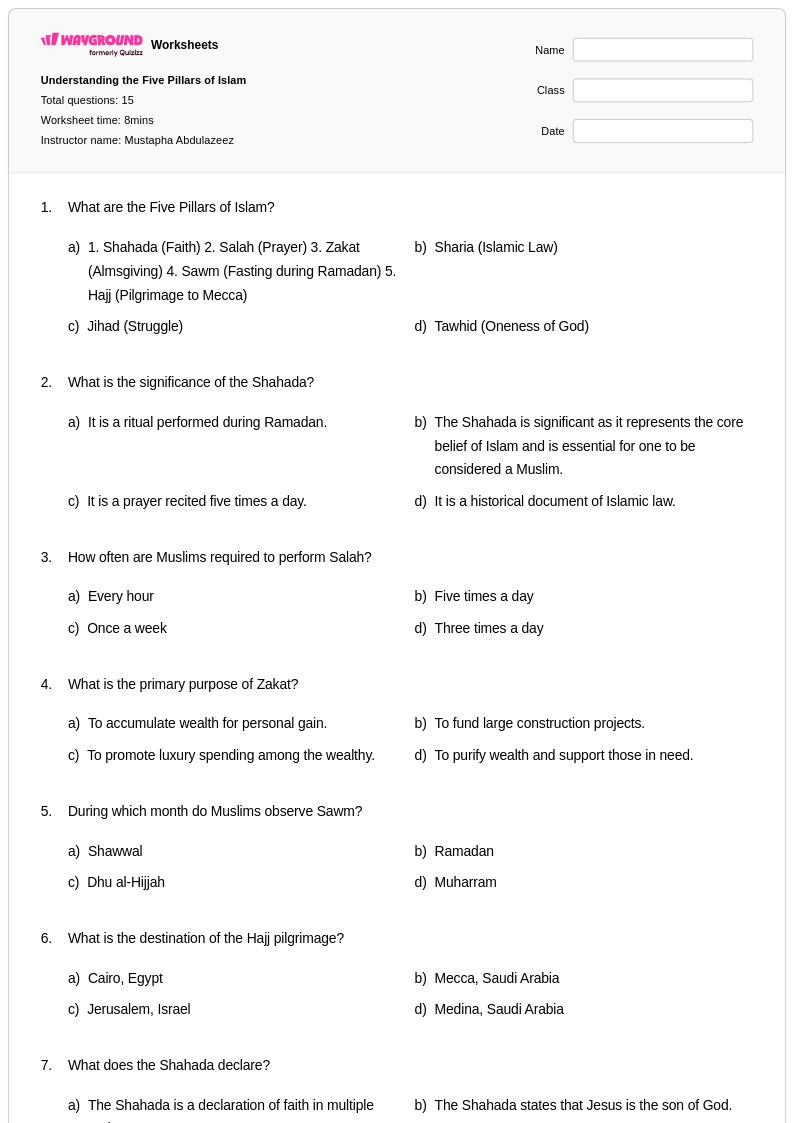
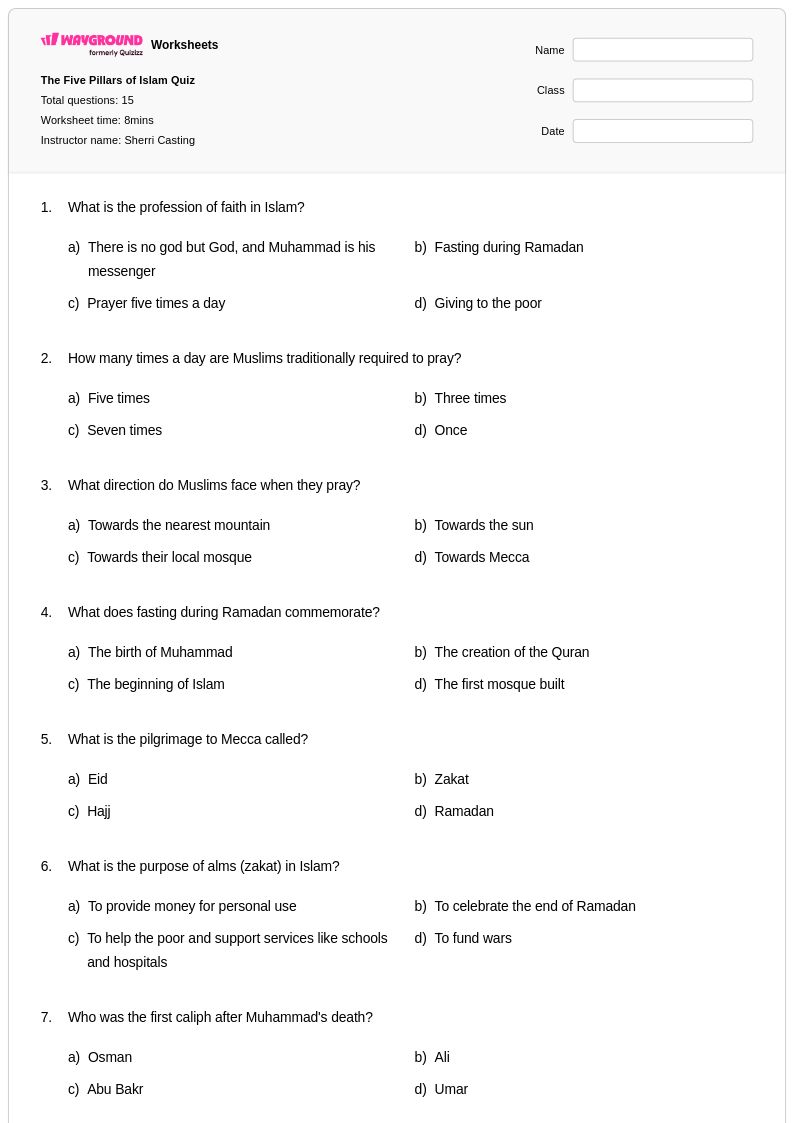
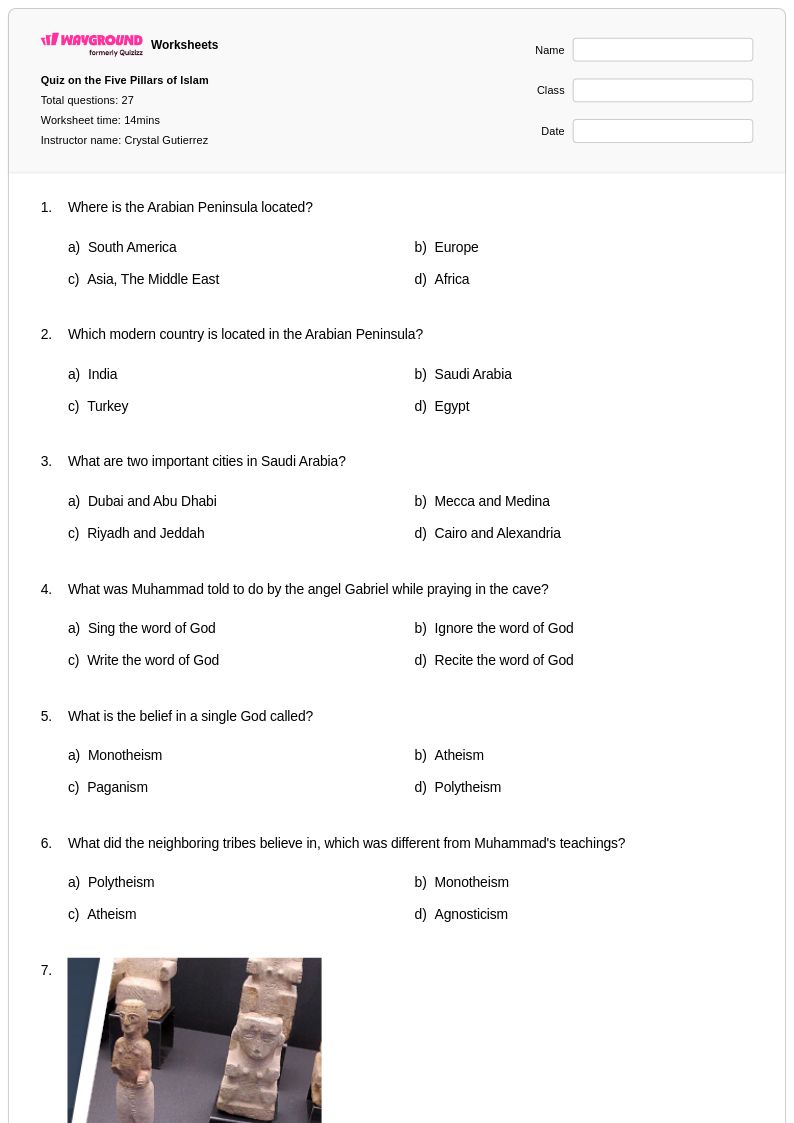
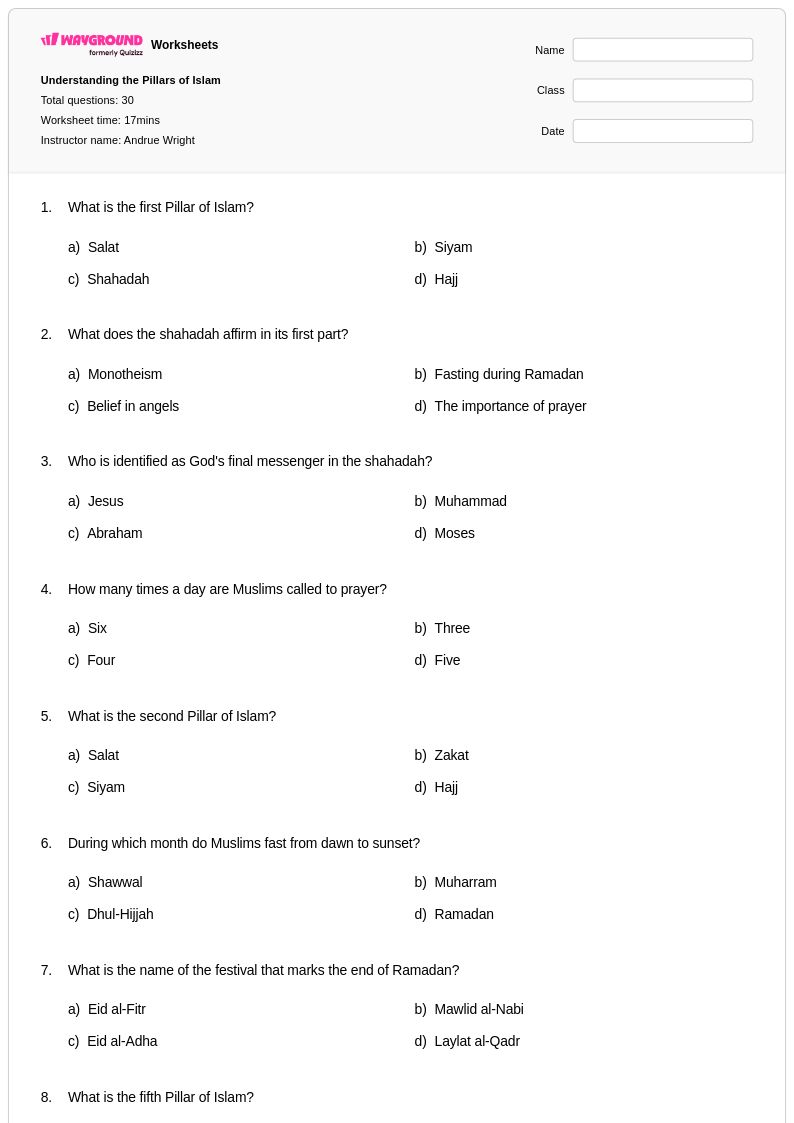
Explore Wayground's free Five Pillars of Islam worksheets and printables that help students understand the fundamental practices of Islamic faith through engaging practice problems and comprehensive answer keys.
Explore printable Five Pillars of Islam worksheets
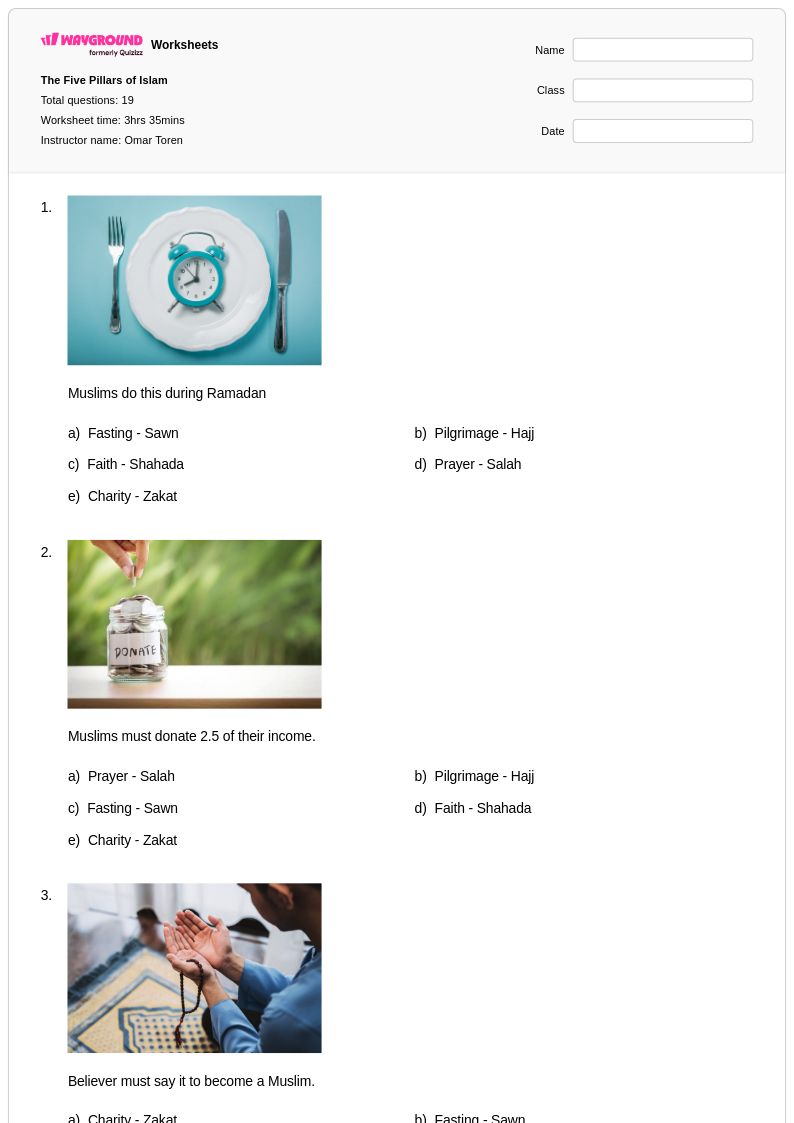
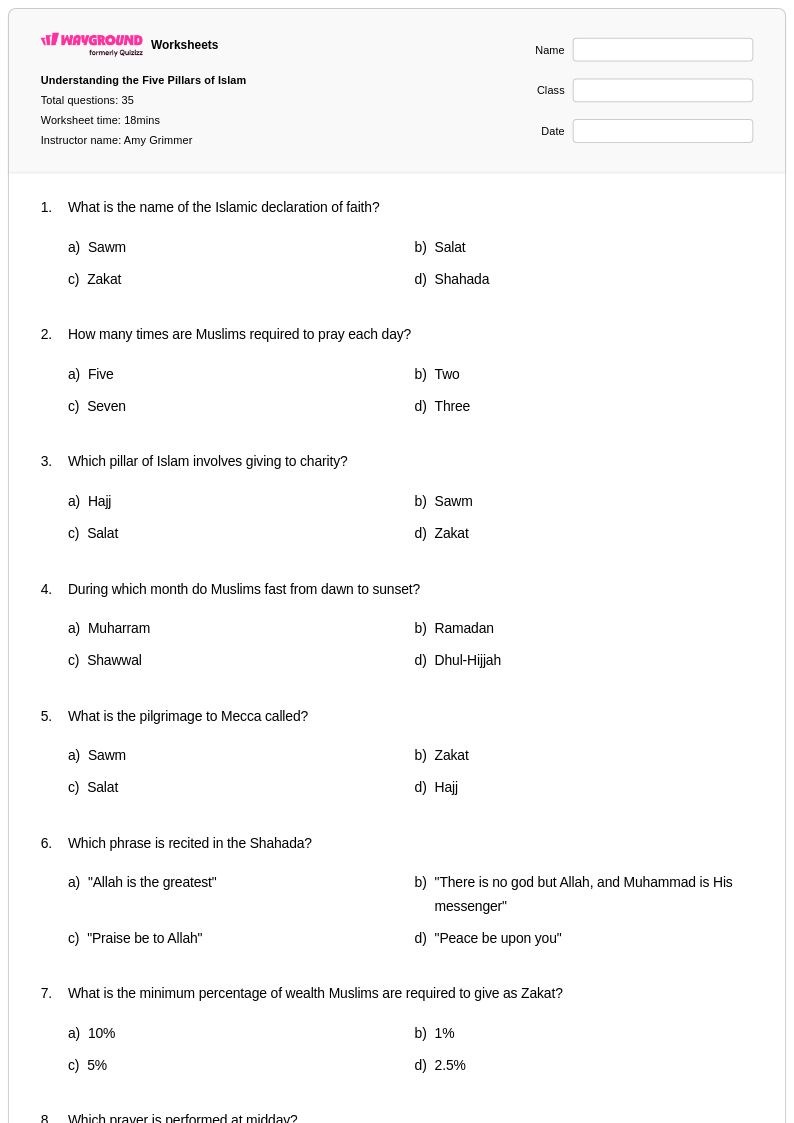
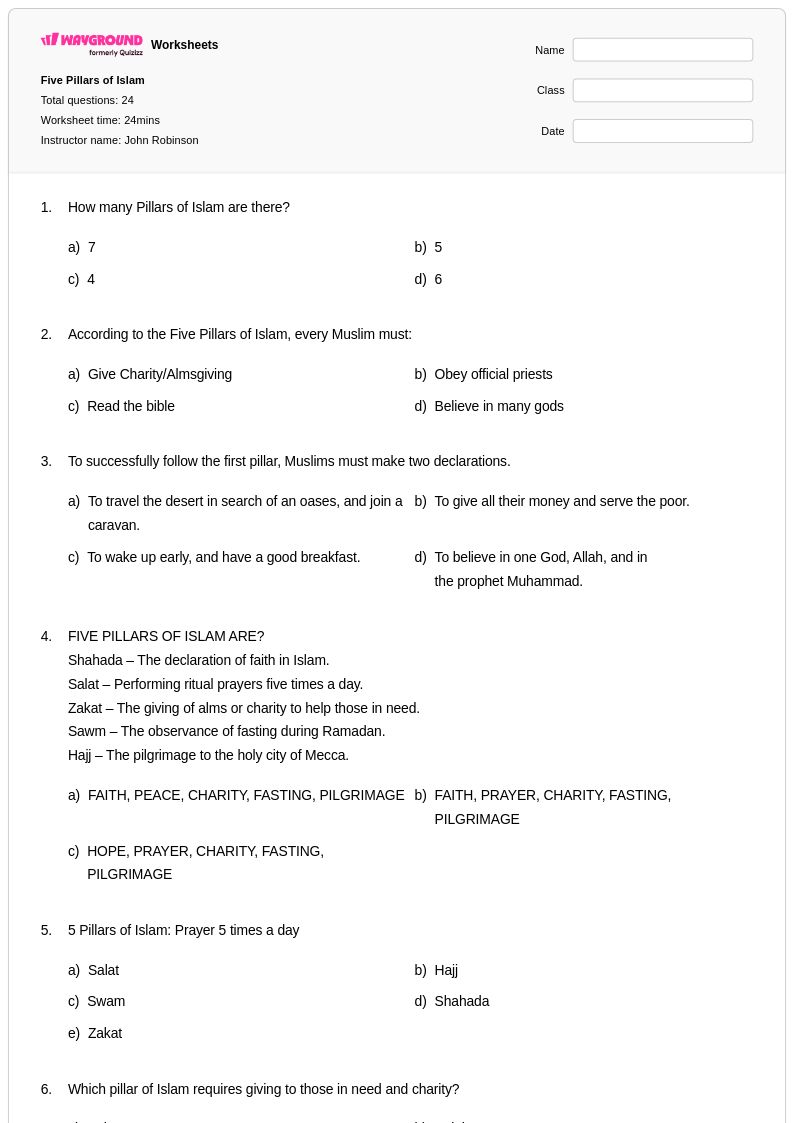
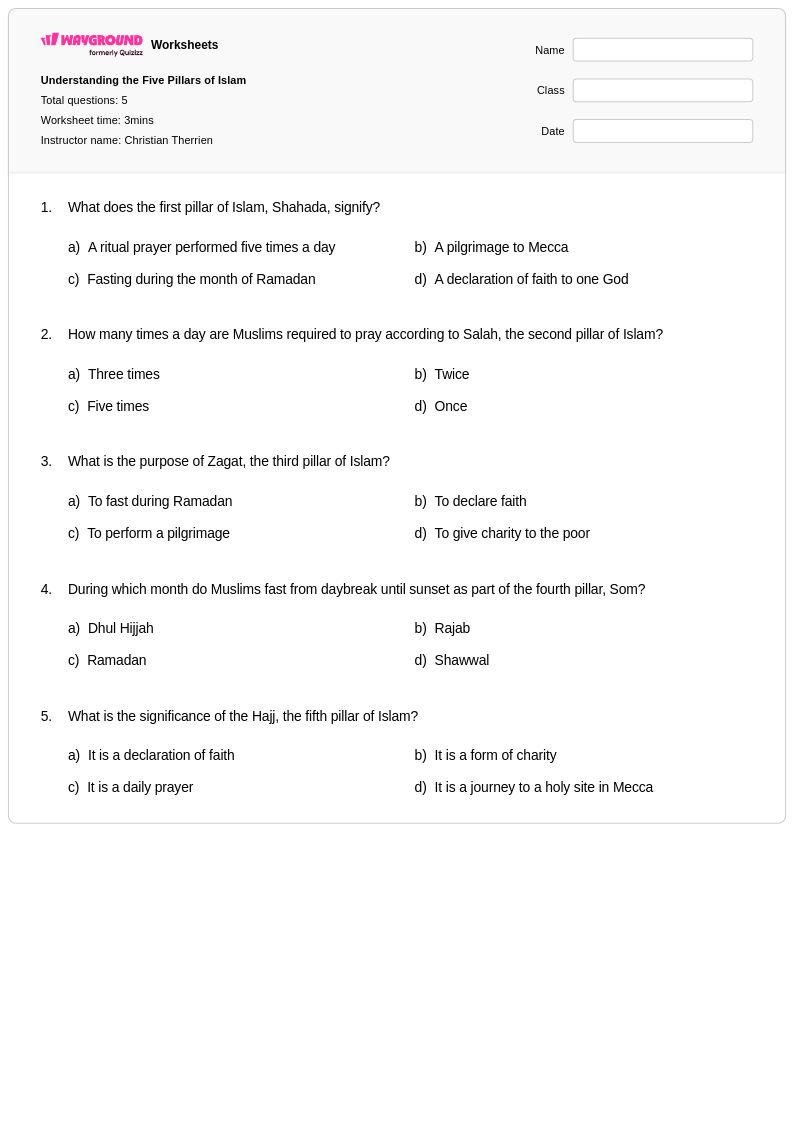
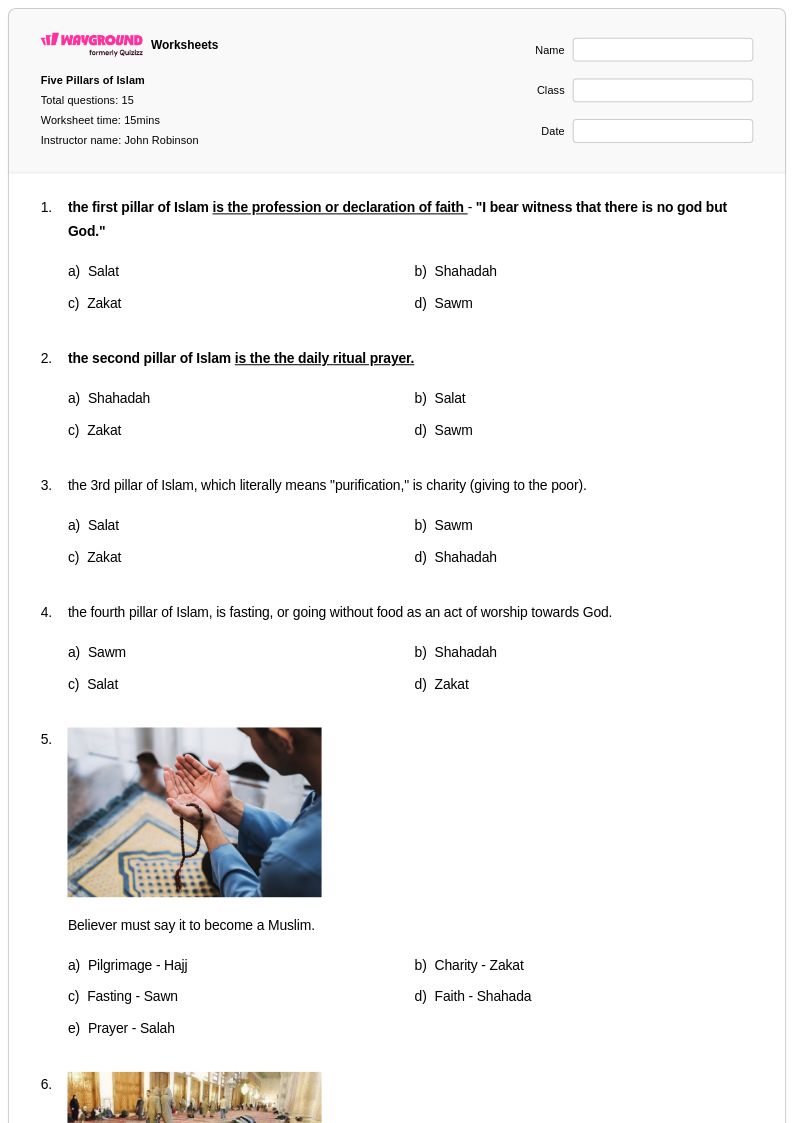
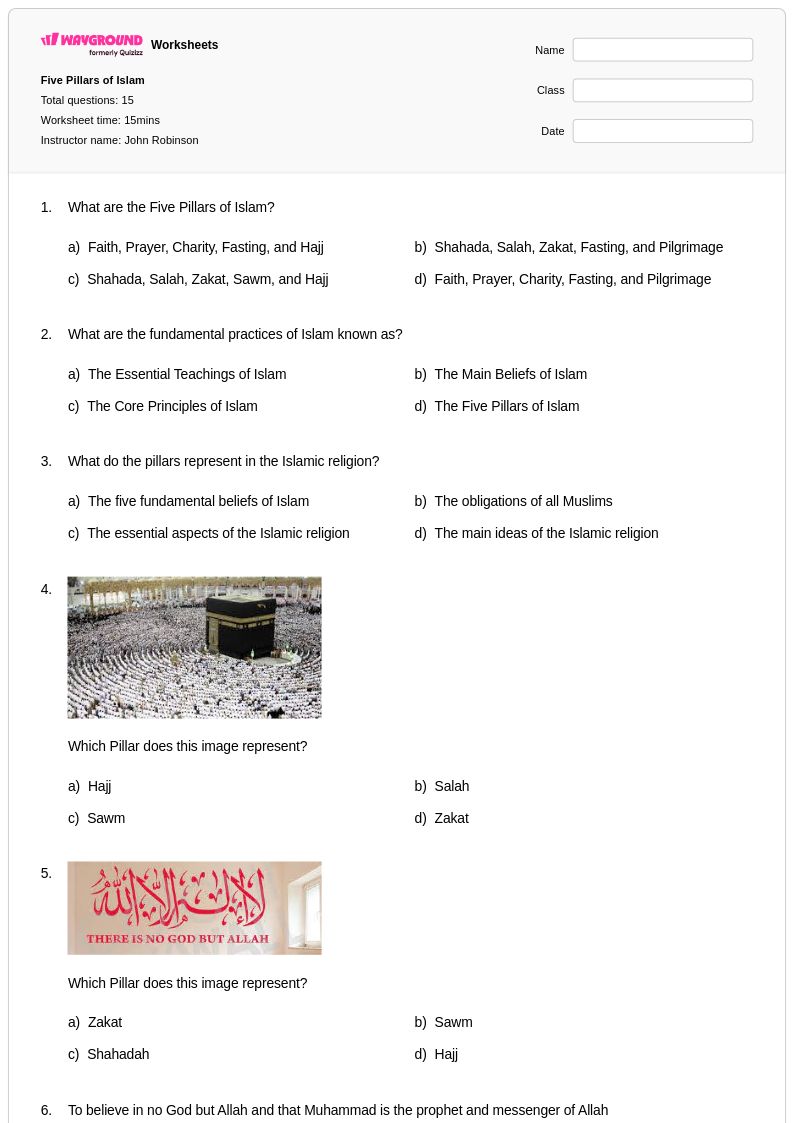
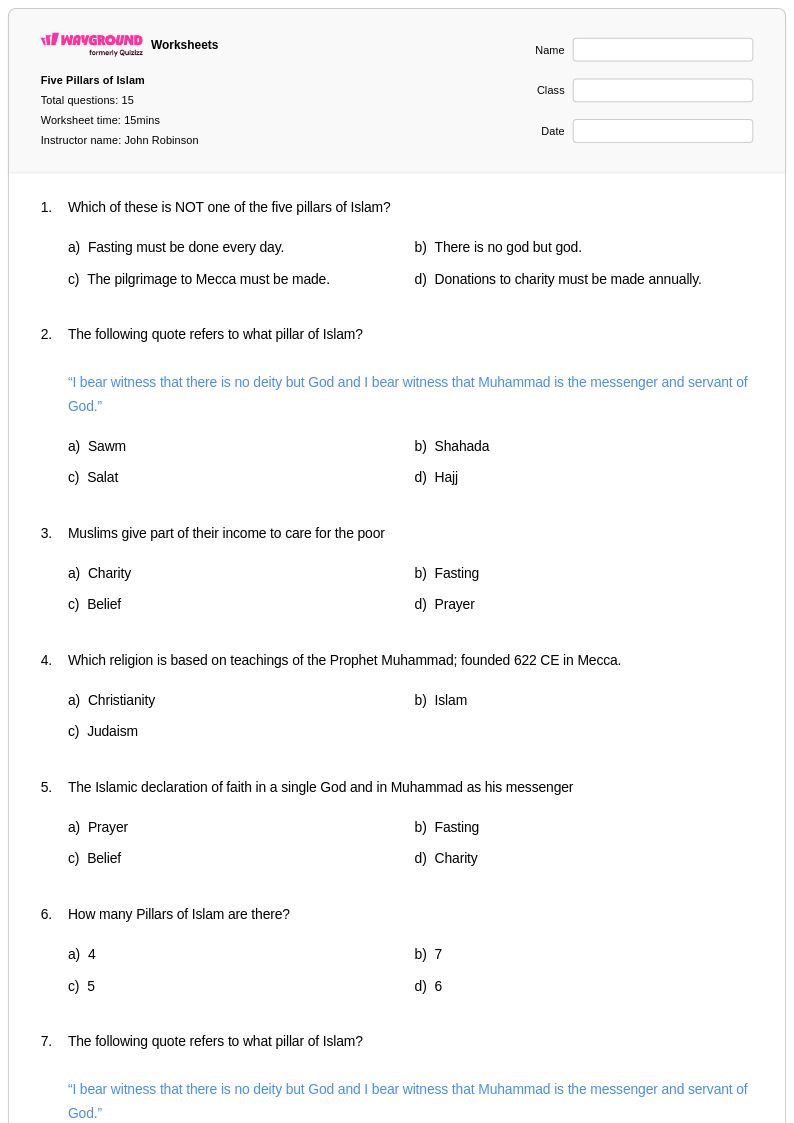
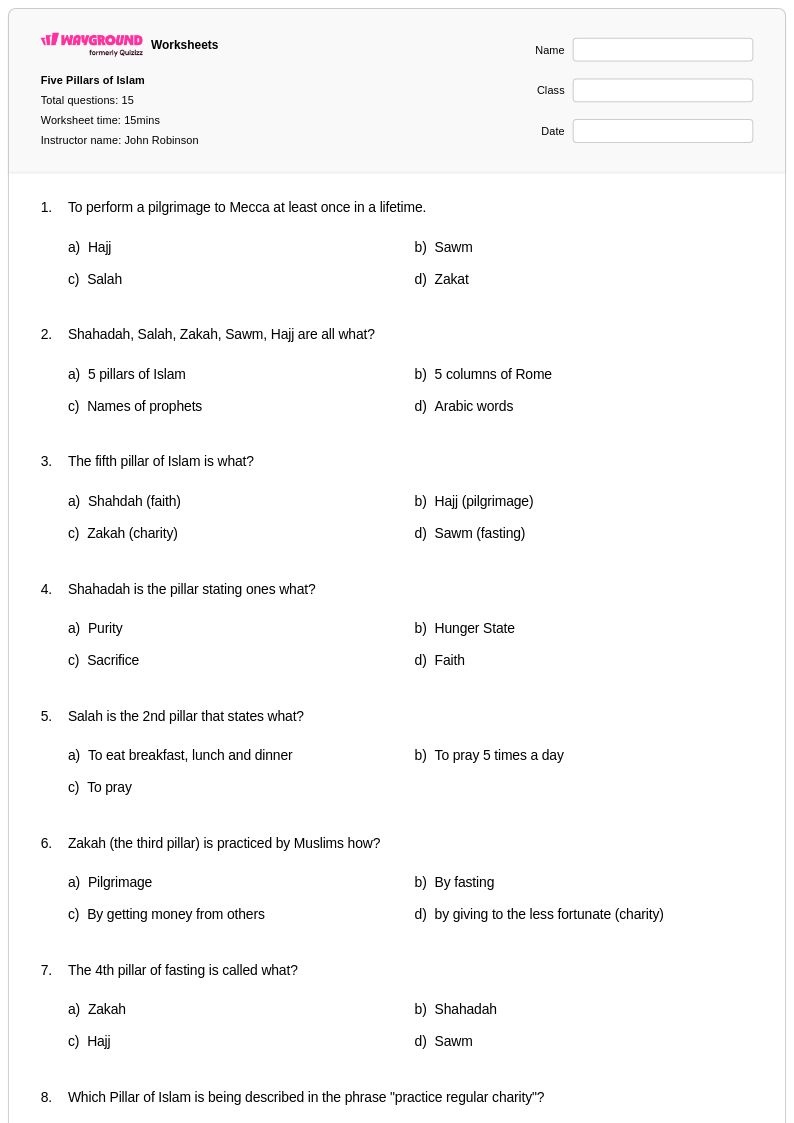
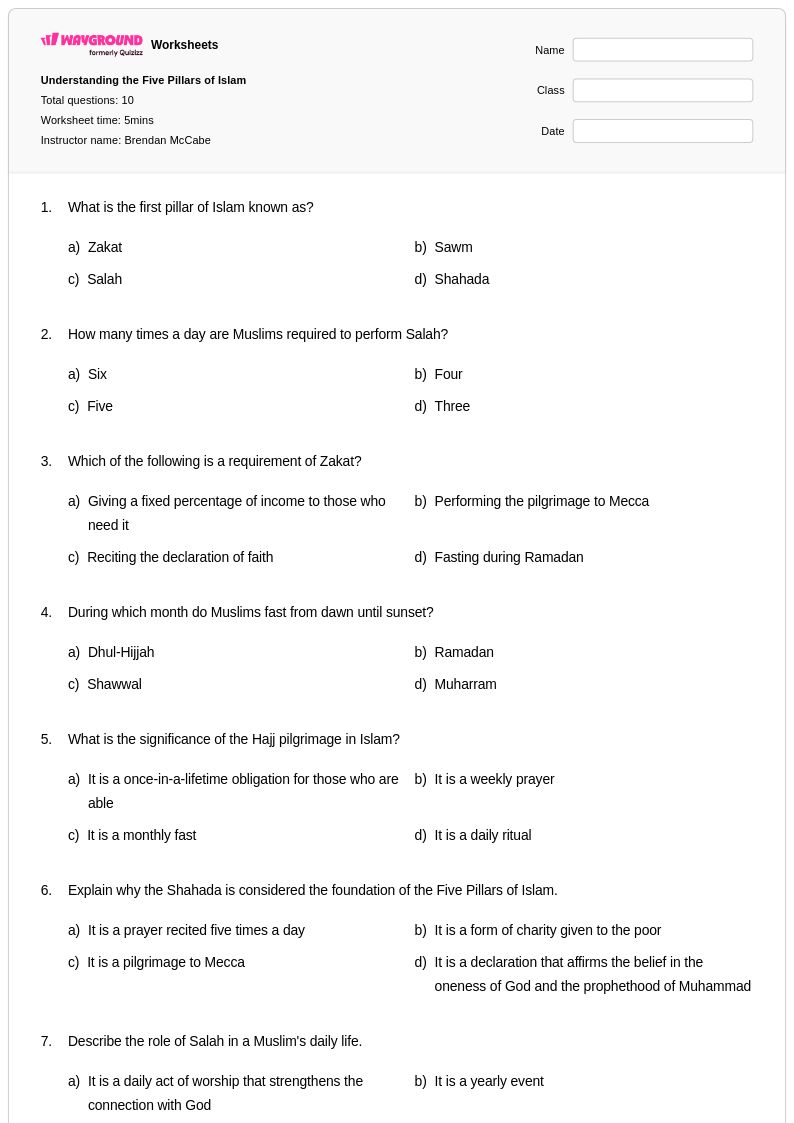
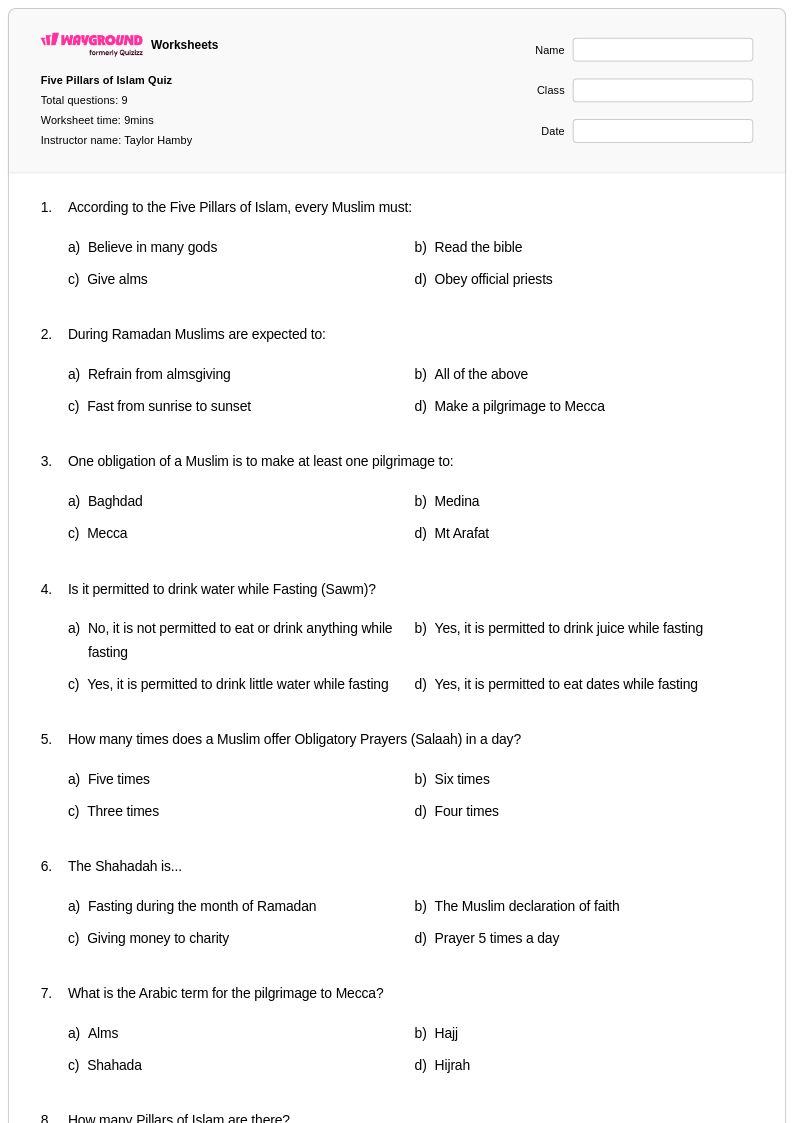
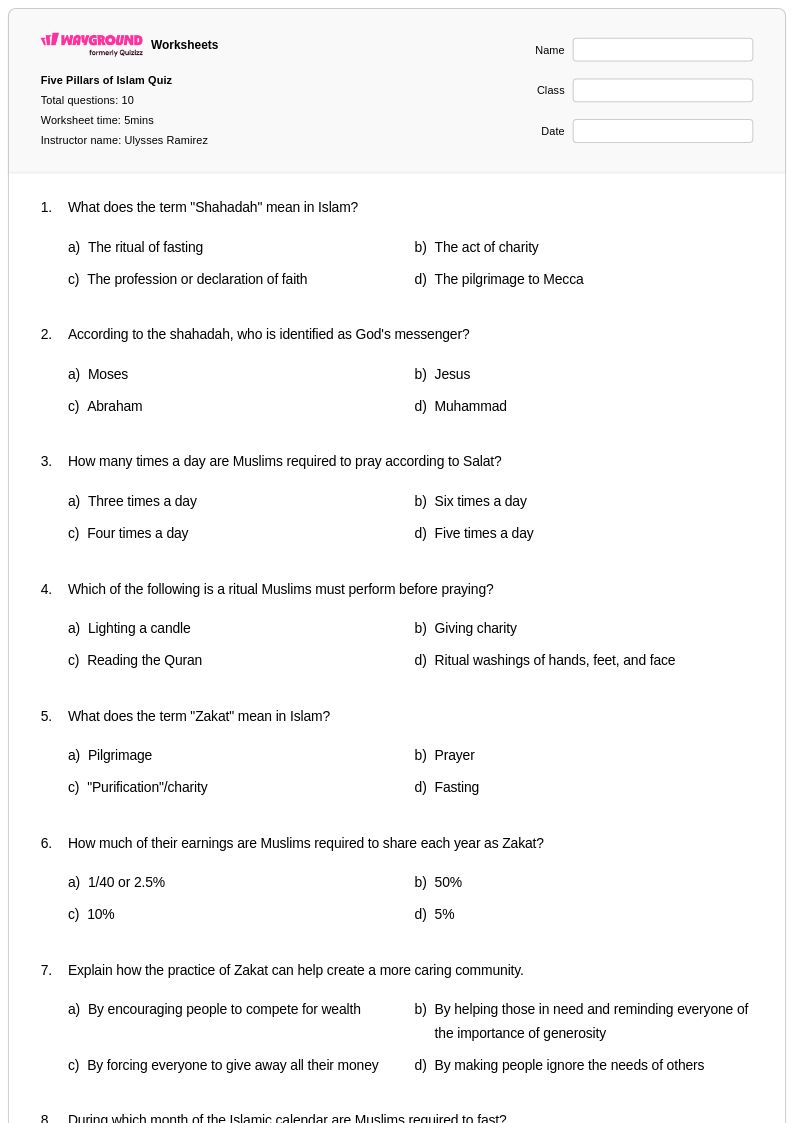
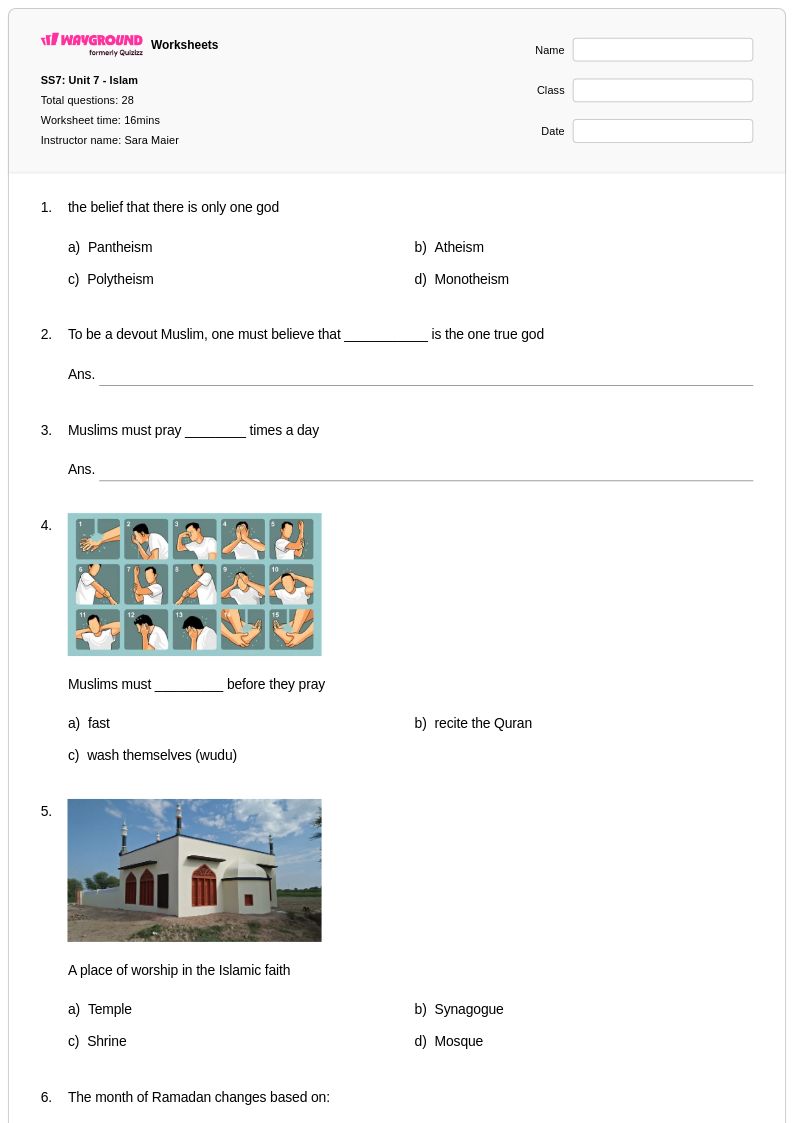
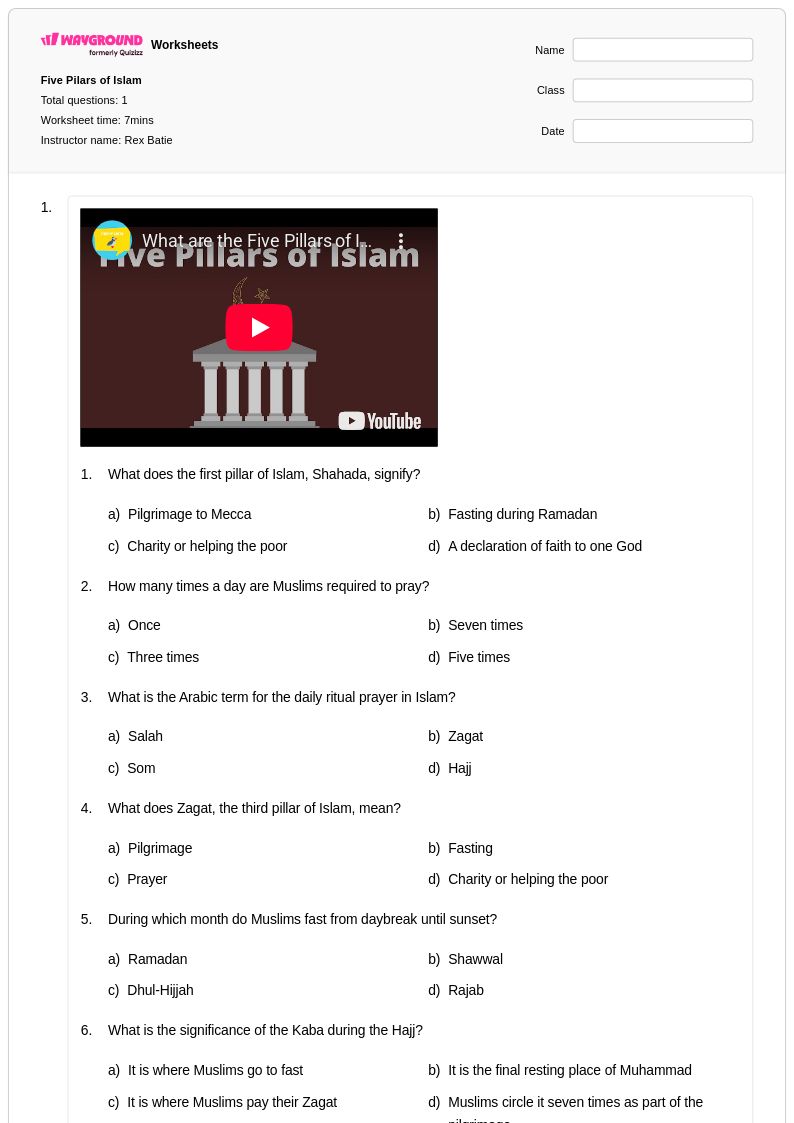
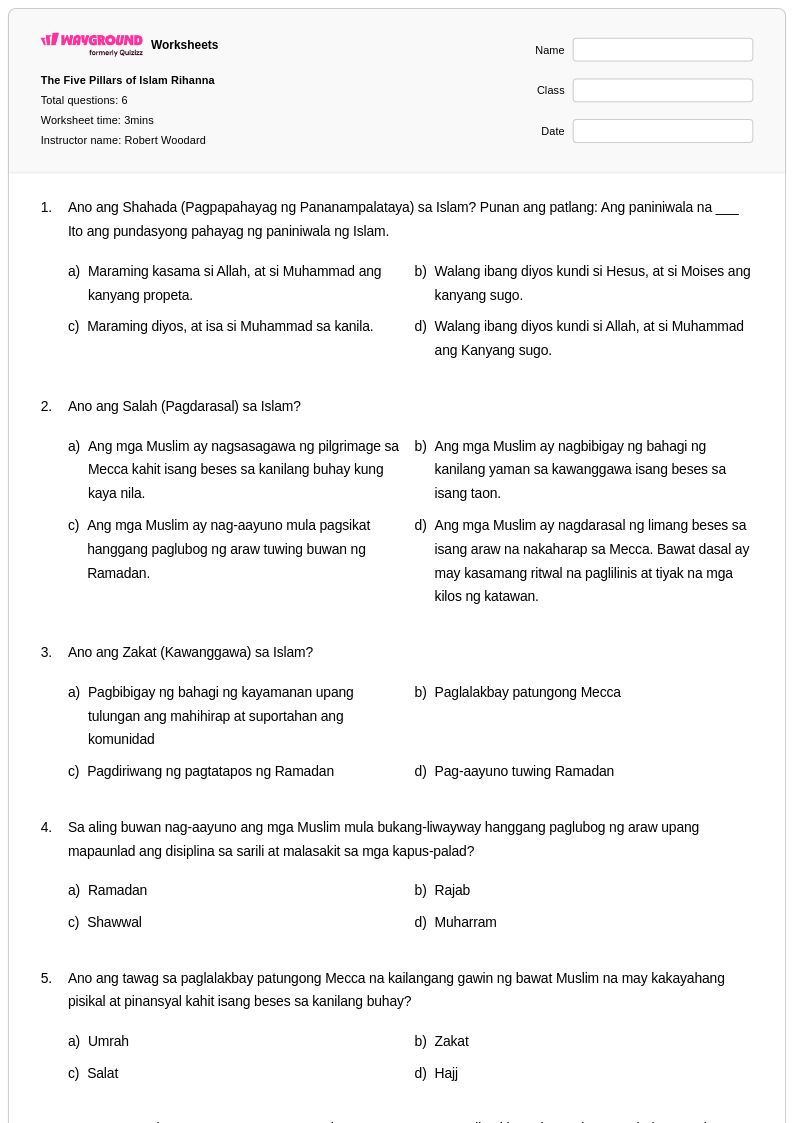
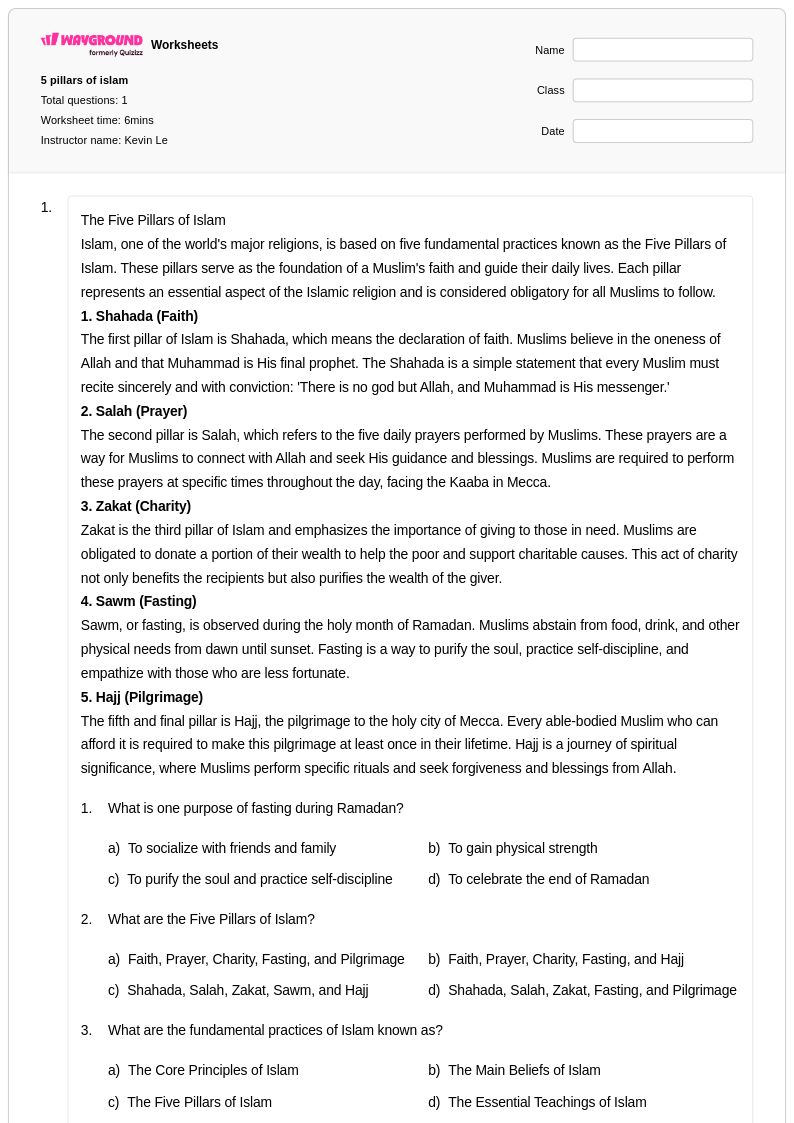
Five Pillars of Islam worksheets available through Wayground (formerly Quizizz) provide students with comprehensive resources to explore the foundational practices that define Islamic faith and culture. These educational materials guide learners through detailed examinations of Shahada (declaration of faith), Salah (prayer), Zakat (charitable giving), Sawm (fasting during Ramadan), and Hajj (pilgrimage to Mecca), helping students understand both the spiritual significance and practical applications of each pillar. The worksheets strengthen critical thinking skills through comparative analysis activities, reading comprehension exercises focused on religious texts and historical contexts, and reflective writing prompts that encourage respectful inquiry into Islamic traditions. Students engage with practice problems that require them to identify key characteristics of each pillar, analyze their role in Muslim daily life, and connect these practices to broader themes of community, devotion, and social responsibility. Answer key materials support independent learning, while free printable pdf formats ensure accessibility for diverse classroom settings.
Wayground (formerly Quizizz) empowers educators with millions of teacher-created resources specifically designed to support comprehensive instruction about the Five Pillars of Islam and related religious studies topics. The platform's robust search and filtering capabilities enable teachers to quickly locate materials that align with curriculum standards and match their students' specific learning needs, whether for introductory exploration or advanced cultural analysis. Differentiation tools allow instructors to customize worksheet content for various skill levels, ensuring that both struggling learners and advanced students can engage meaningfully with complex religious concepts. The availability of resources in both printable and digital pdf formats provides flexibility for traditional classroom instruction, remote learning environments, and hybrid educational models. These comprehensive worksheet collections support teachers in planning sequential lessons that build understanding progressively, while also serving as valuable tools for remediation when students need additional practice with specific concepts, enrichment activities for deeper exploration, and ongoing skill practice that reinforces respectful cross-cultural understanding and religious literacy.
FAQs
How do I teach the Five Pillars of Islam in a classroom setting?
Teaching the Five Pillars of Islam effectively begins with grounding students in the spiritual and communal significance of each pillar before moving into comparative or analytical work. A strong sequence introduces Shahada, Salah, Zakat, Sawm, and Hajj individually, then asks students to connect each practice to broader themes like devotion, social responsibility, and community. Reflective writing prompts and reading comprehension activities centered on religious texts and historical contexts help students engage respectfully with the material. Framing discussions around cultural understanding rather than evaluation supports a more inclusive and academically rigorous classroom environment.
What activities help students practice identifying and understanding the Five Pillars of Islam?
Effective practice activities include having students identify the key characteristics of each pillar, match each pillar to its Arabic name and English meaning, and analyze how each practice functions in Muslim daily life. Comparative analysis tasks that ask students to examine similarities and differences across the five pillars build deeper comprehension beyond simple recall. Connecting each pillar to broader themes such as charity, prayer, and pilgrimage helps students retain the material in a meaningful context rather than as isolated facts.
What misconceptions do students commonly have about the Five Pillars of Islam?
A frequent misconception is that the Five Pillars are merely ritual obligations rather than practices with deep spiritual and social dimensions. Students often confuse Zakat (structured charitable giving) with voluntary charity, not recognizing it as one of the five core obligations. Another common error is treating Hajj as an optional trip rather than a required pilgrimage for Muslims who are physically and financially able. Addressing these misconceptions early, through comprehension exercises and reflective discussion, helps students build accurate and respectful understanding.
How can I use Five Pillars of Islam worksheets in my classroom?
Five Pillars of Islam worksheets can be used to introduce the topic, reinforce content after direct instruction, or serve as independent practice and assessment. They work equally well as whole-class activities, small group tasks, or individual assignments. Wayground's Five Pillars of Islam worksheets are available as printable PDFs for traditional classroom use and in digital formats for technology-integrated or remote learning environments, and teachers can also host them as a quiz directly on Wayground to streamline assessment and review.
How do I differentiate Five Pillars of Islam instruction for students at different skill levels?
For students who need additional support, simplified reading passages and reduced answer choices can lower cognitive load while still engaging them with core content about each pillar. Advanced students benefit from analytical tasks that ask them to evaluate the role of each pillar in shaping Muslim identity and community life, or to draw connections to religious practices in other traditions. On Wayground, teachers can apply individual accommodations such as read aloud support, extended time, and reduced answer choices to specific students, so every learner engages with the same material at an appropriate level of challenge.
How do I connect the Five Pillars of Islam to broader world religions or social studies curriculum?
The Five Pillars offer natural connections to comparative religion units, as each pillar parallels practices found in other major world religions, such as prayer, fasting, and pilgrimage. Zakat connects directly to social studies themes around community responsibility and economic justice, while Hajj can anchor lessons on religious geography and cultural identity. Structuring worksheets around these cross-curricular connections helps students develop religious literacy alongside broader critical thinking skills about culture, belief, and global citizenship.