
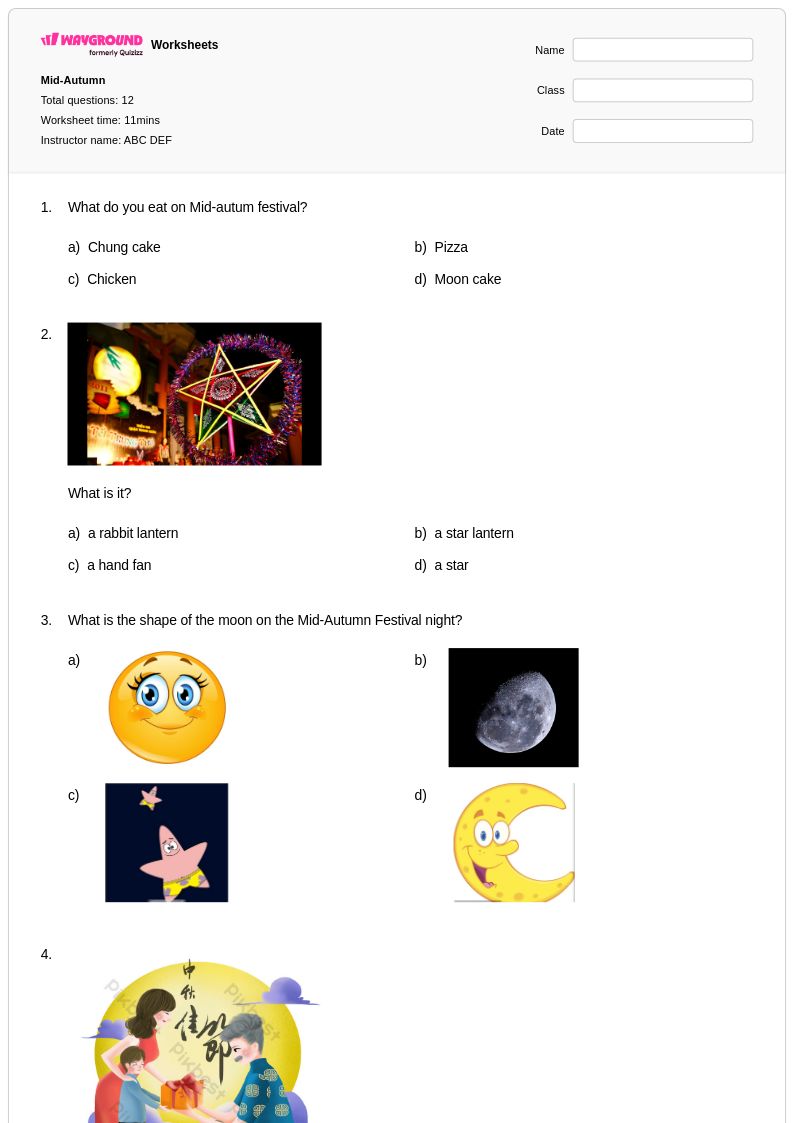
12 T
3rd
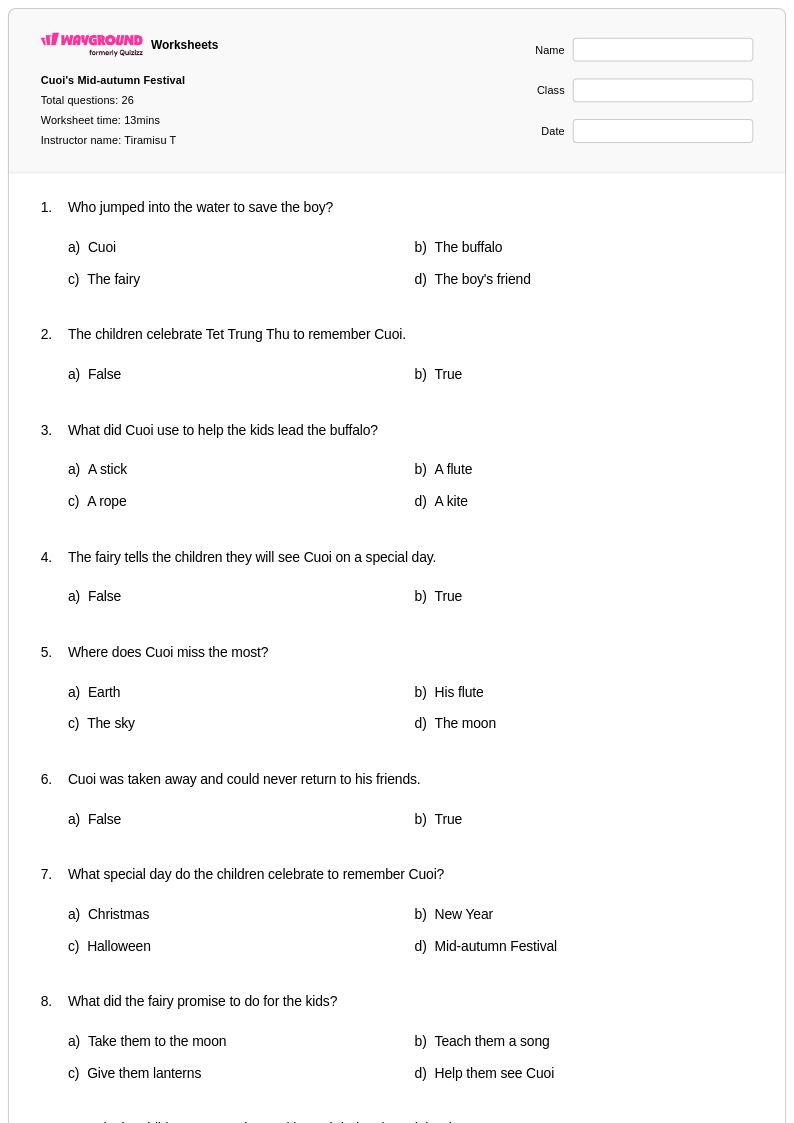
26 T
2nd
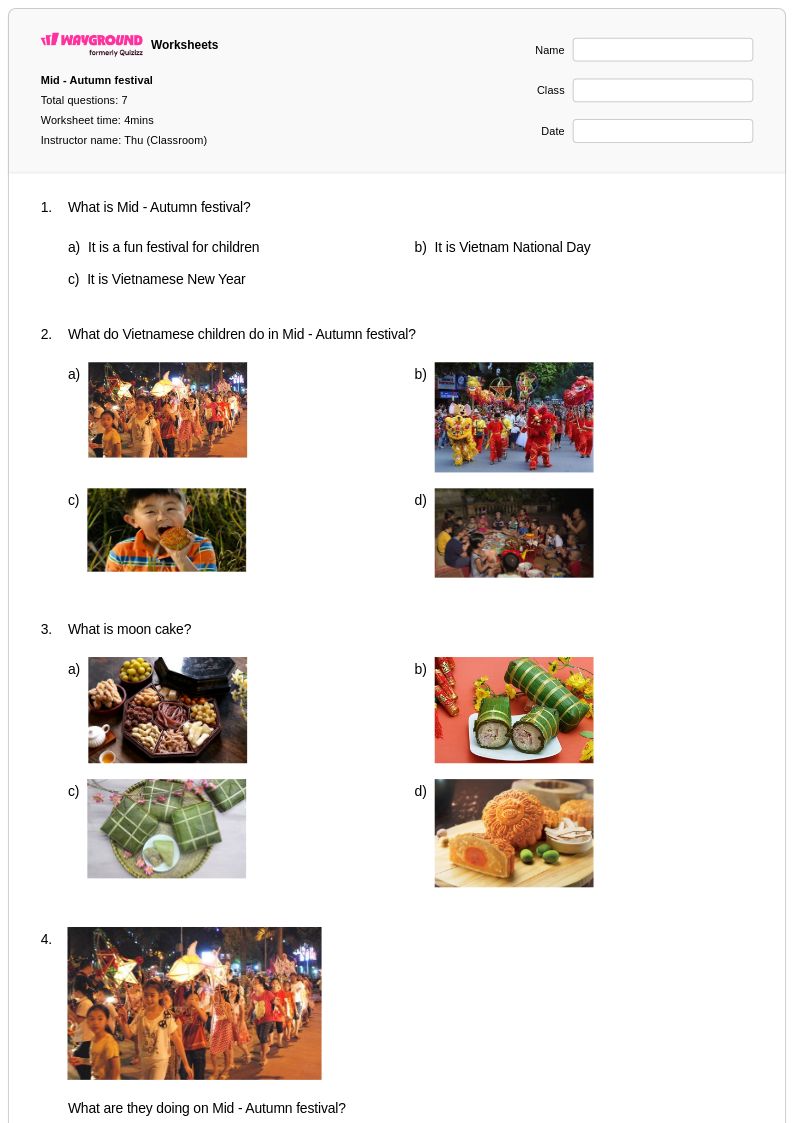
7 T
2nd
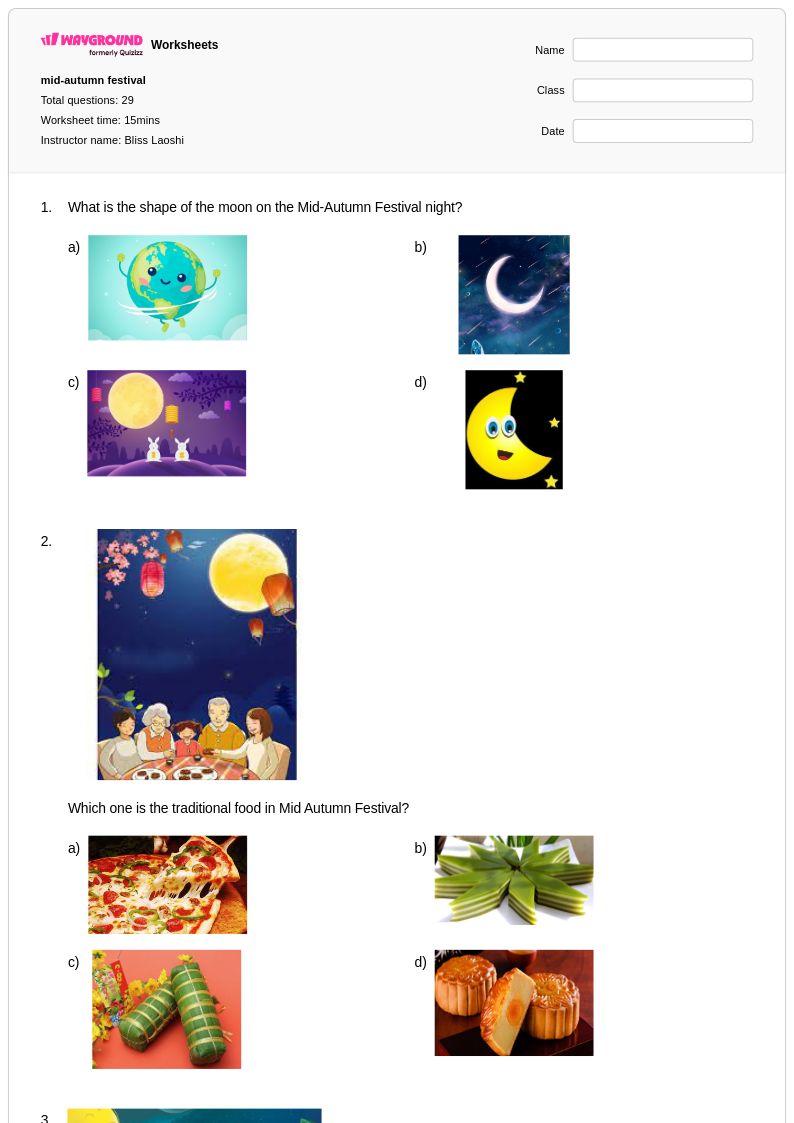
29 T
3rd - 4th
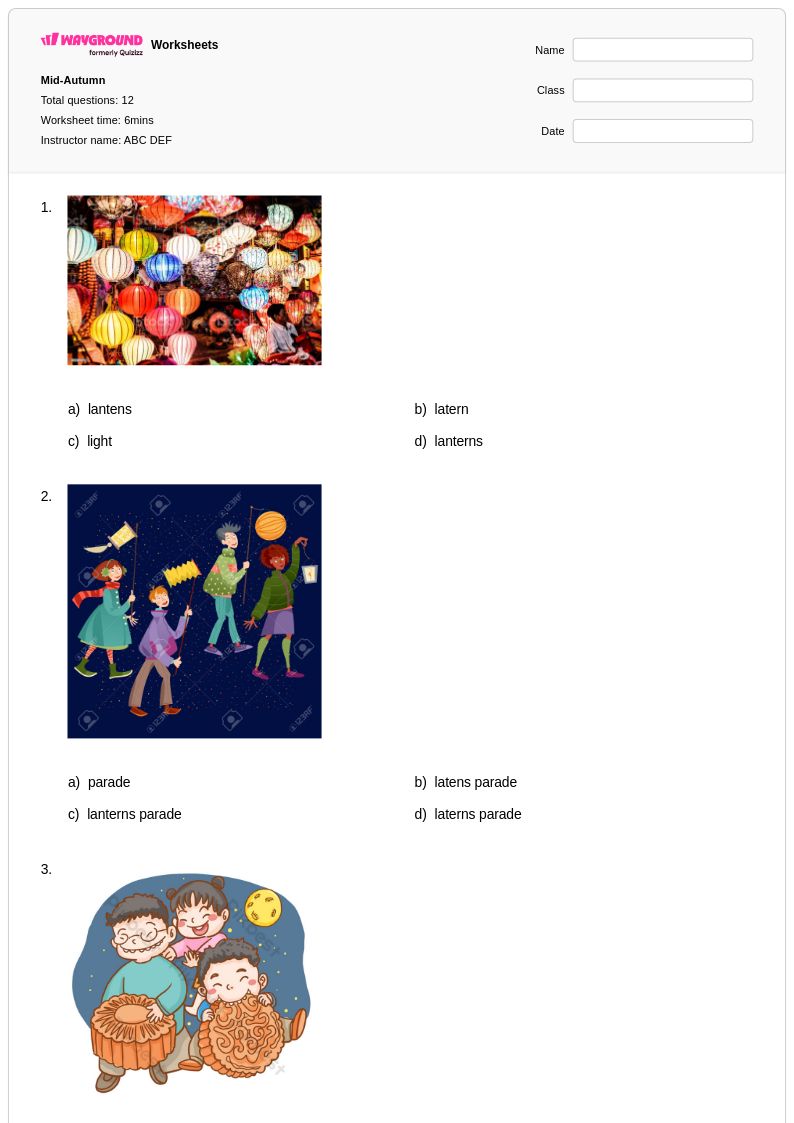
12 T
2nd - 3rd
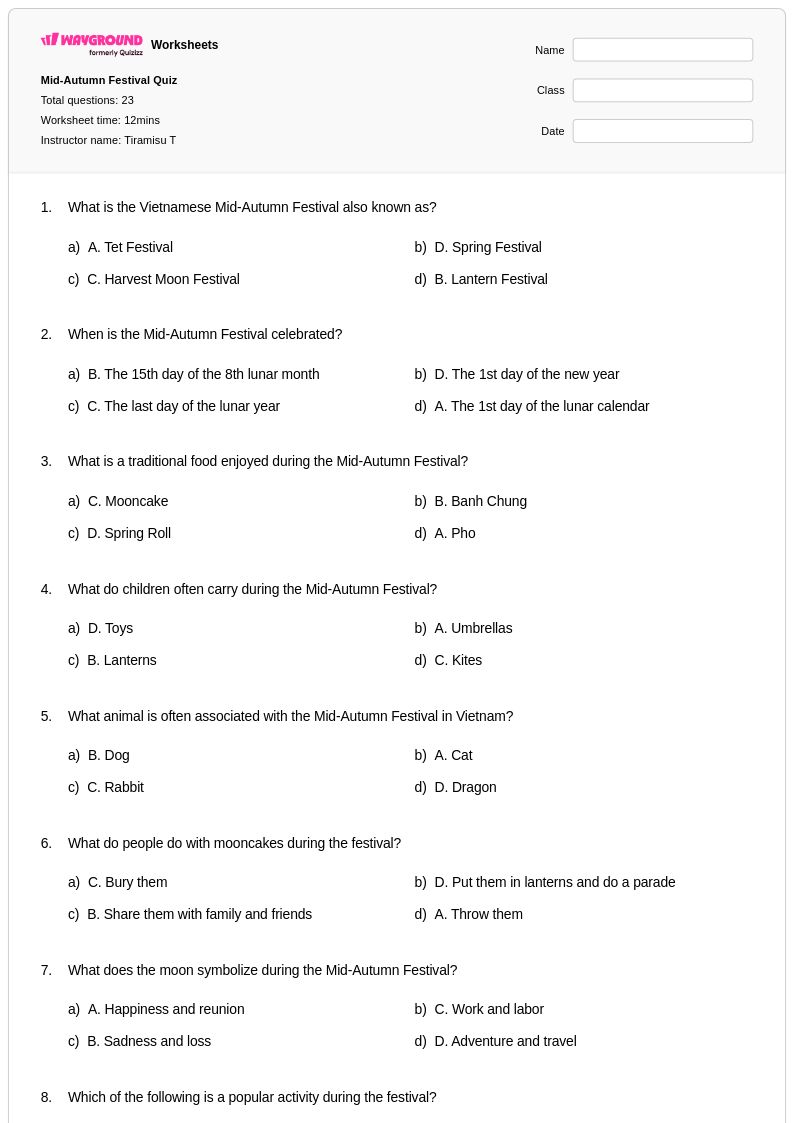
23 T
2nd
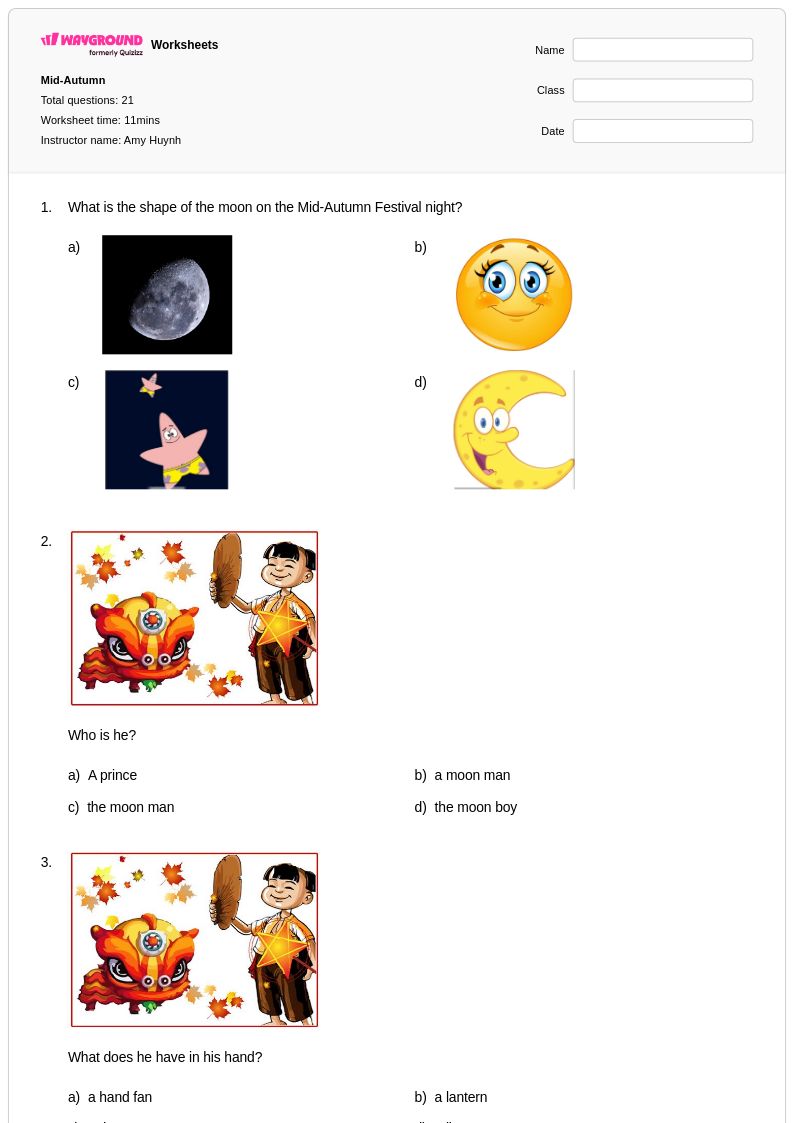
21 T
3rd - 4th
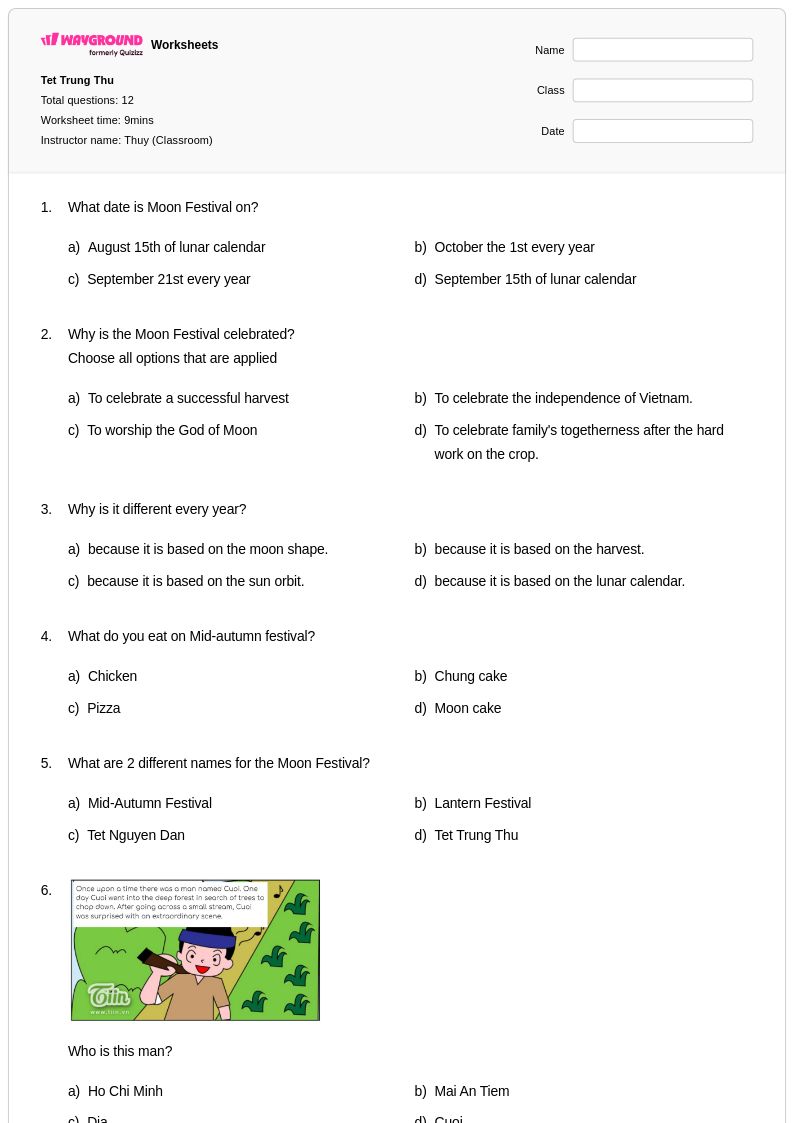
12 T
3rd - 5th
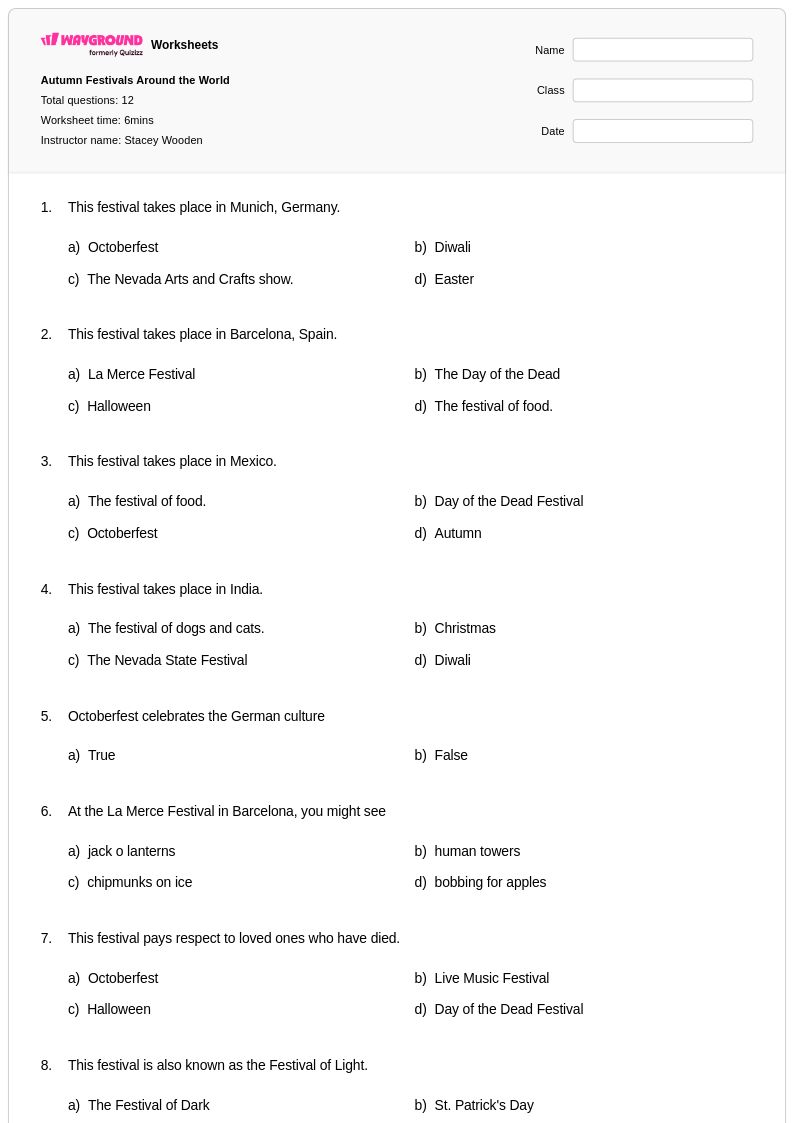
12 T
3rd - 6th
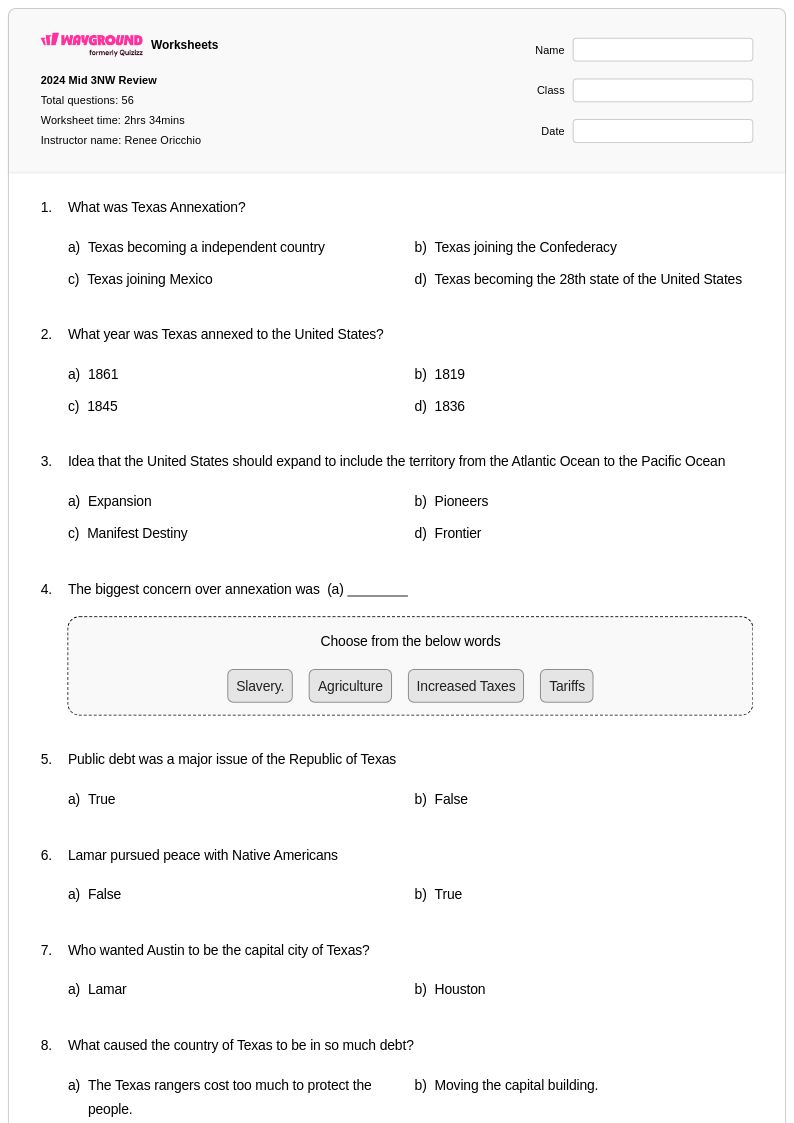
56 T
7th
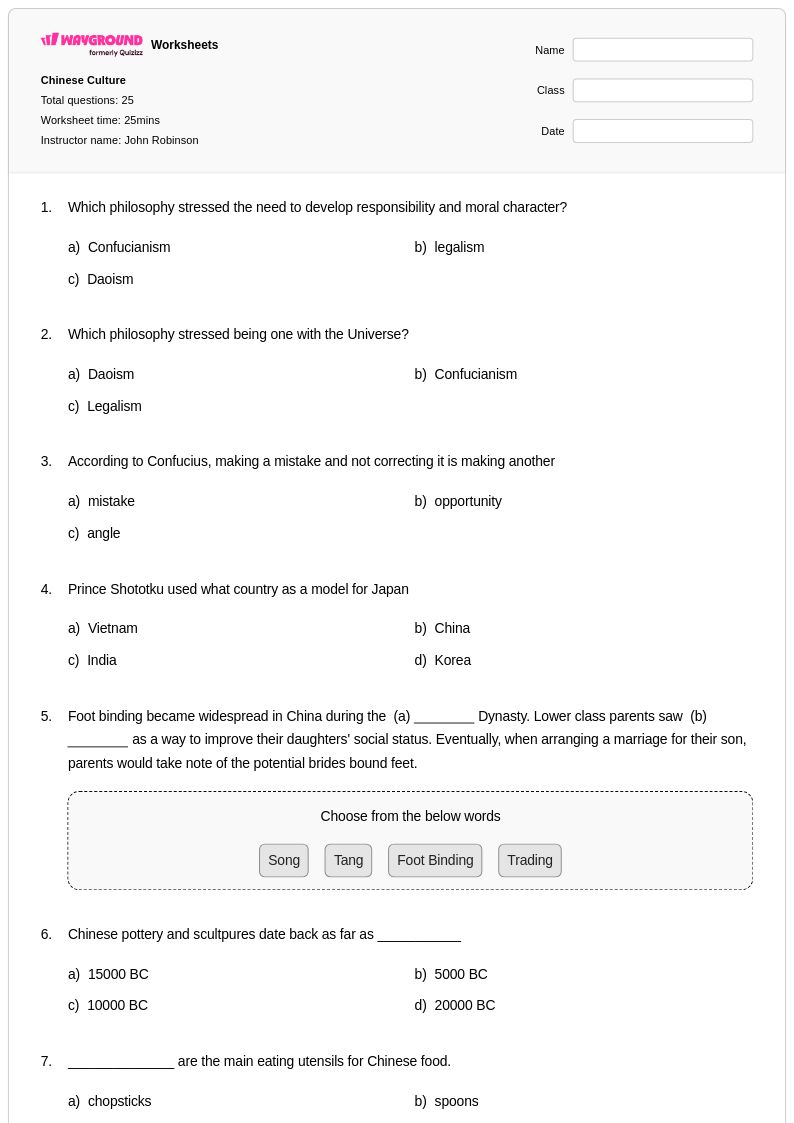
25 T
7th - Uni
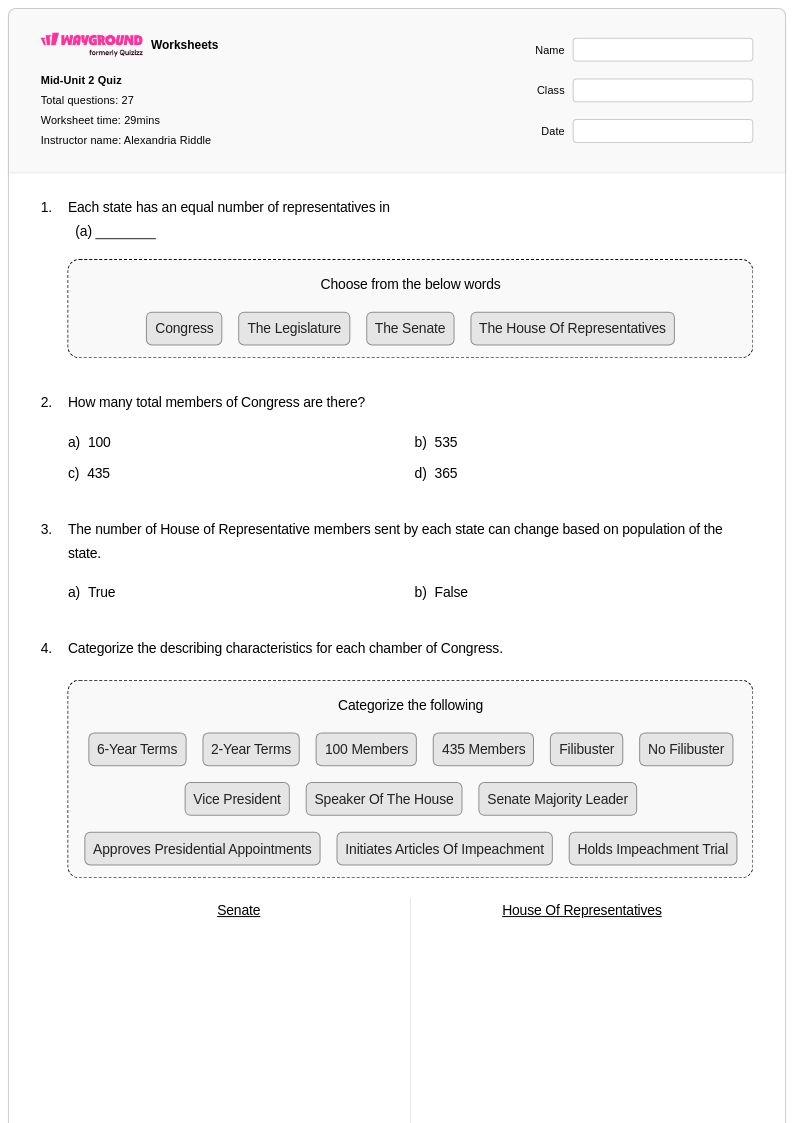
27 T
10th
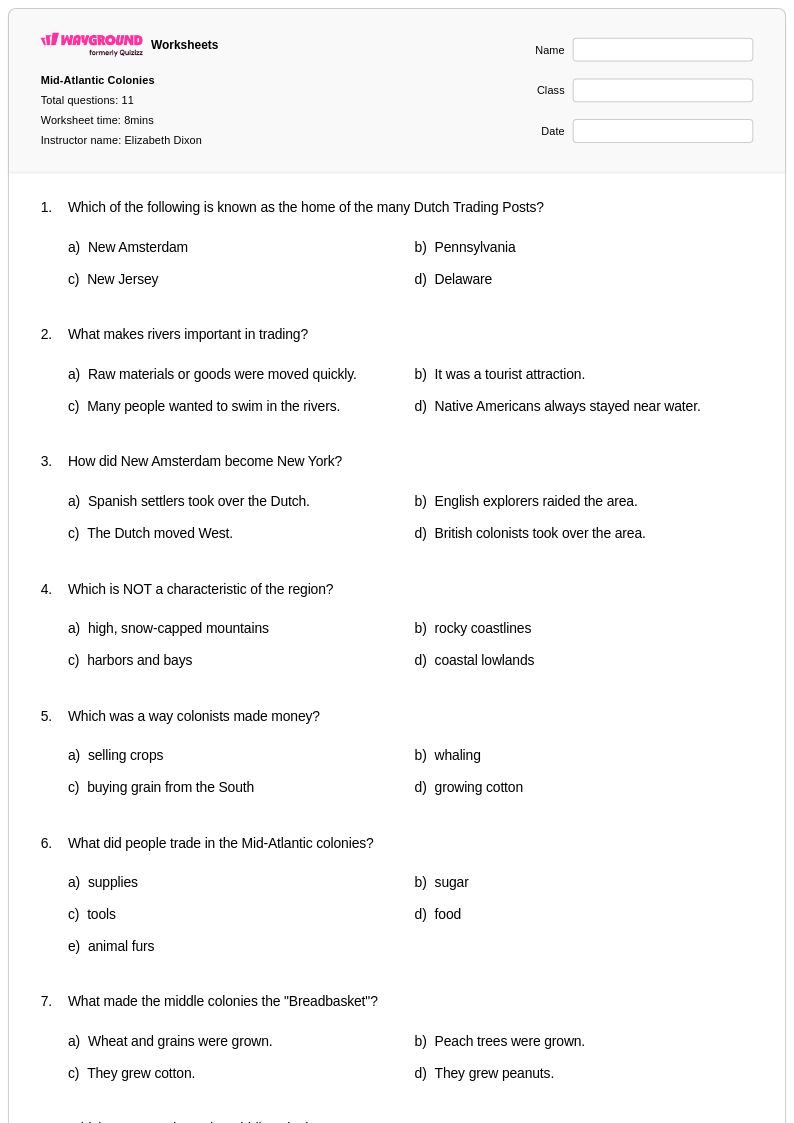
11 T
3rd
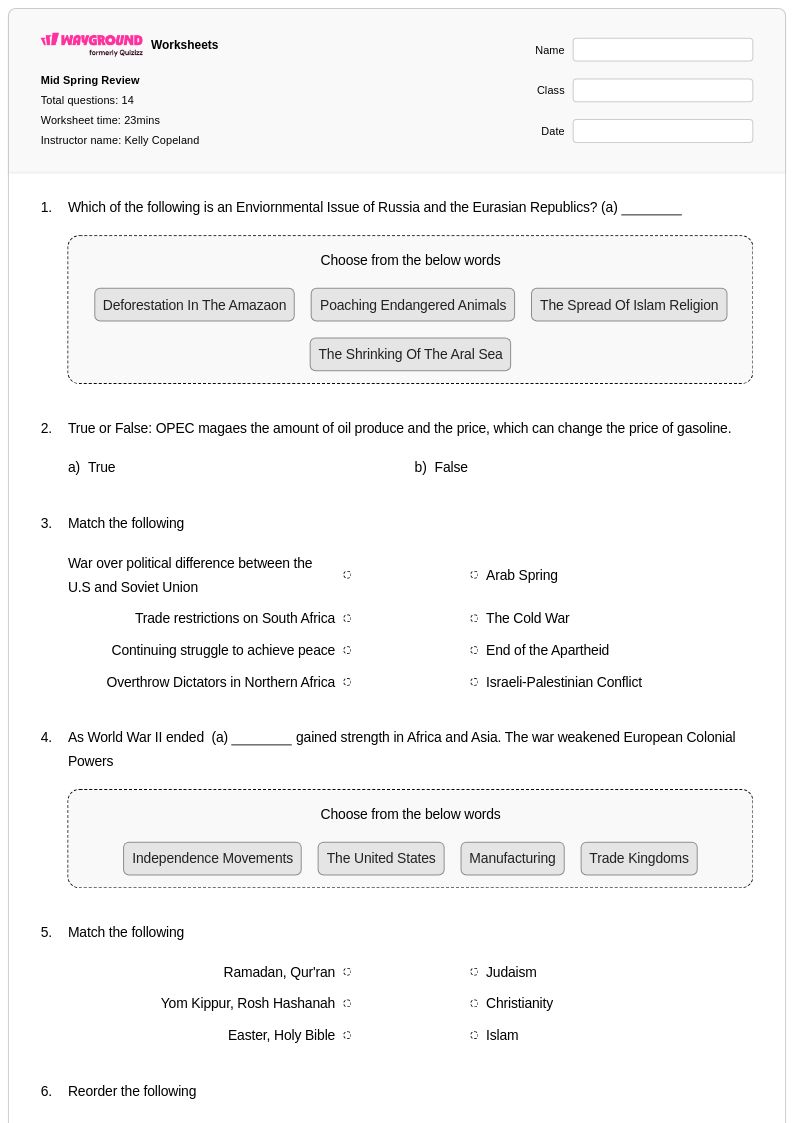
14 T
6th - 8th
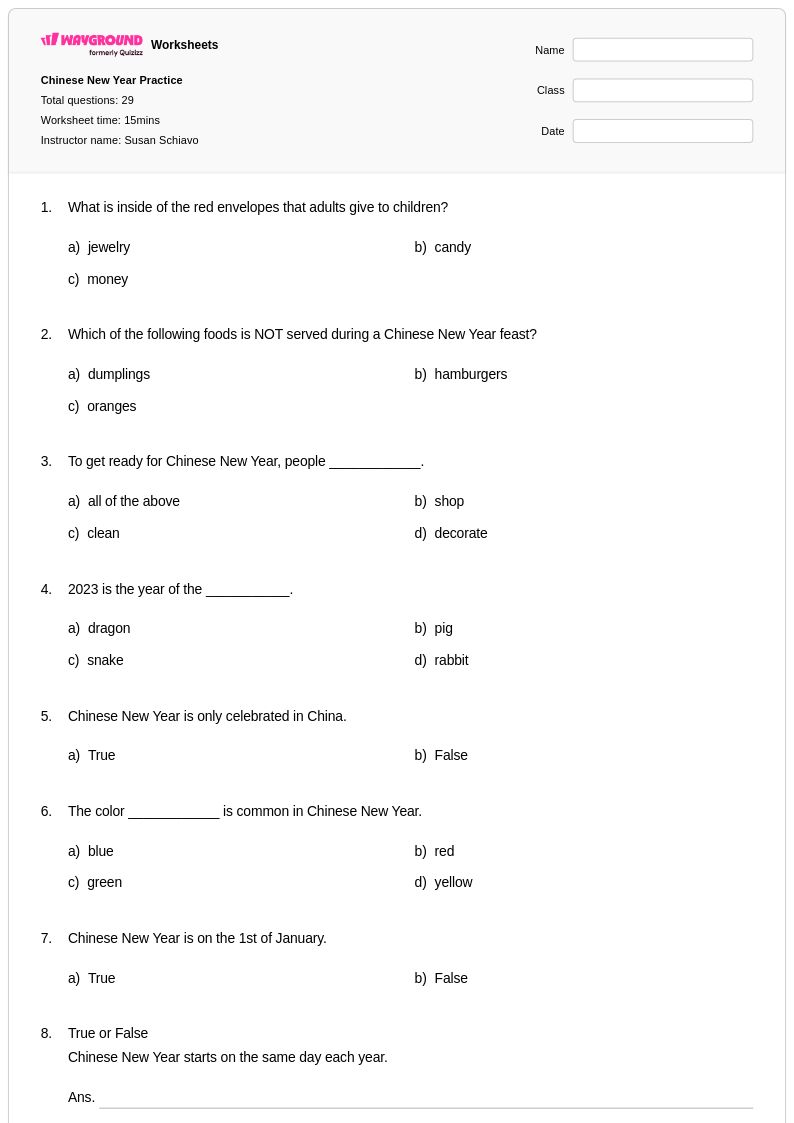
29 T
3rd
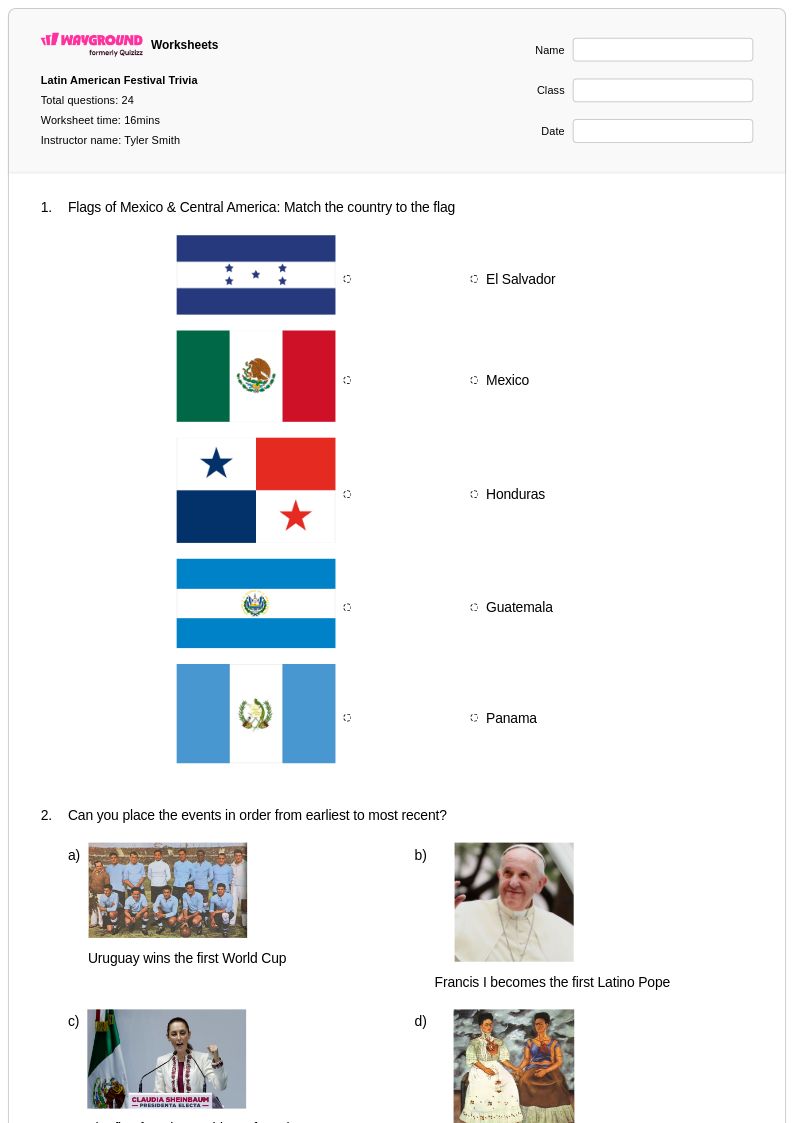
24 T
12th
25 T
11th
10 T
3rd
13 T
1st - 3rd
10 T
1st
10 T
6th - 8th
8 T
3rd
10 T
8th
20 T
12th
Jelajahi Lembar Kerja berdasarkan Kelas
Jelajahi Lembar Kerja berdasarkan Subjek
Explore printable Mid-autumn Festival worksheets
Mid-Autumn Festival worksheets available through Wayground (formerly Quizizz) provide students with comprehensive educational resources to explore this significant cultural celebration observed across many Asian communities. These expertly crafted materials strengthen critical thinking skills, cultural awareness, and global citizenship competencies by engaging learners with authentic content about the festival's history, traditions, and contemporary significance. Students develop research and analysis abilities through practice problems that examine the lunar calendar, traditional foods like mooncakes, family reunion customs, and the festival's variations across different countries including China, Vietnam, and Korea. The collection includes detailed answer key materials and free printables that guide educators through culturally sensitive instruction while helping students connect this harvest celebration to broader themes of community, gratitude, and cultural identity.
Wayground (formerly Quizizz) empowers educators with access to millions of teacher-created Mid-Autumn Festival resources that feature robust search and filtering capabilities to locate age-appropriate materials for diverse learning needs. The platform's standards alignment tools ensure worksheets connect to social studies benchmarks for cultural understanding and global awareness, while differentiation features allow teachers to customize content complexity and presentation format. These flexible resources are available in both printable pdf formats for traditional classroom use and digital formats for interactive learning experiences, supporting comprehensive lesson planning that addresses varied learning styles and technological preferences. Teachers utilize these materials for targeted skill practice, cultural enrichment activities, and remediation support, creating meaningful learning experiences that help students appreciate the rich traditions and community values embodied in this important cultural observance.
FAQs
How do I teach the Mid-Autumn Festival in a culturally sensitive way?
What topics are typically covered in Mid-Autumn Festival worksheets?
What misconceptions do students often have about the Mid-Autumn Festival?
How can Mid-Autumn Festival activities build global citizenship skills?
How do I use Mid-Autumn Festival worksheets in my classroom?