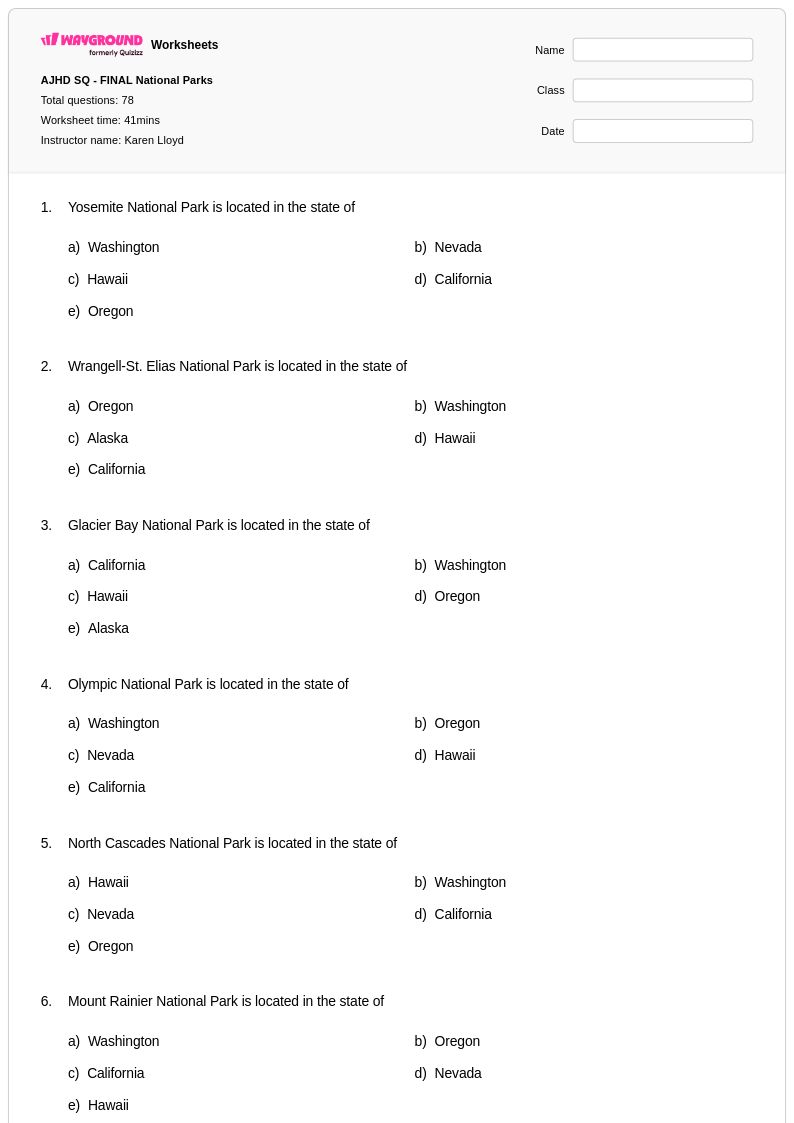
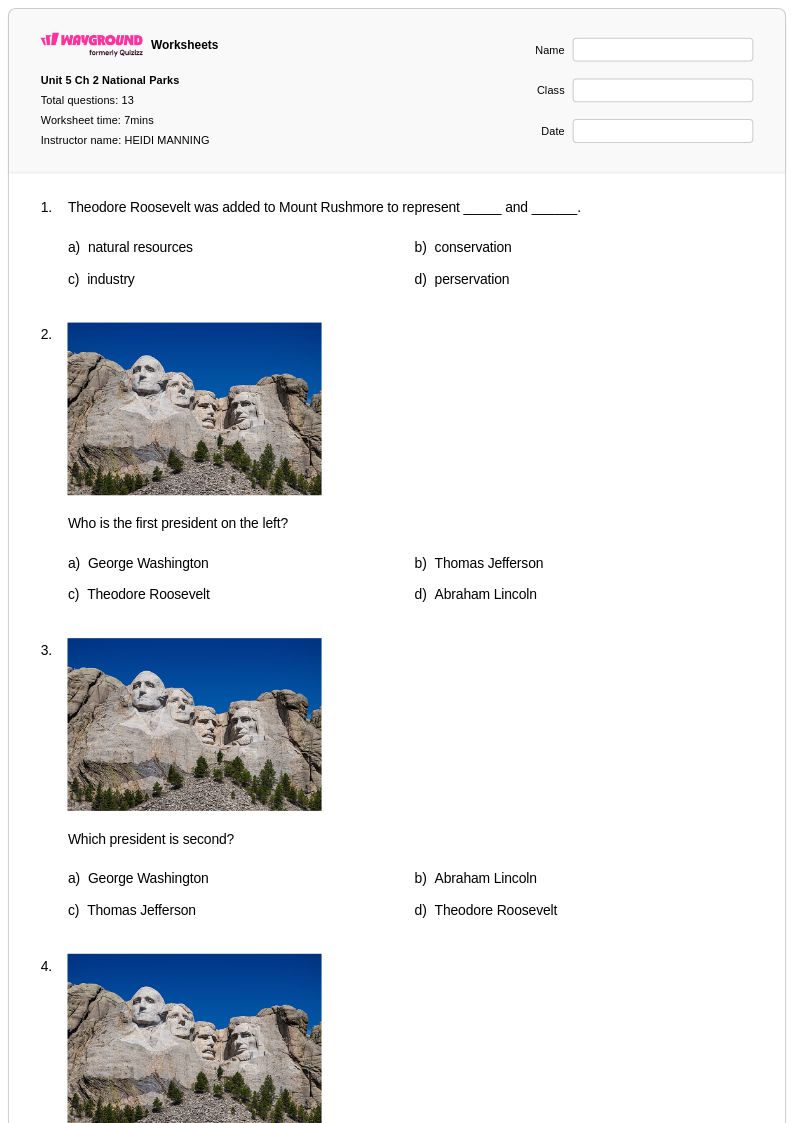
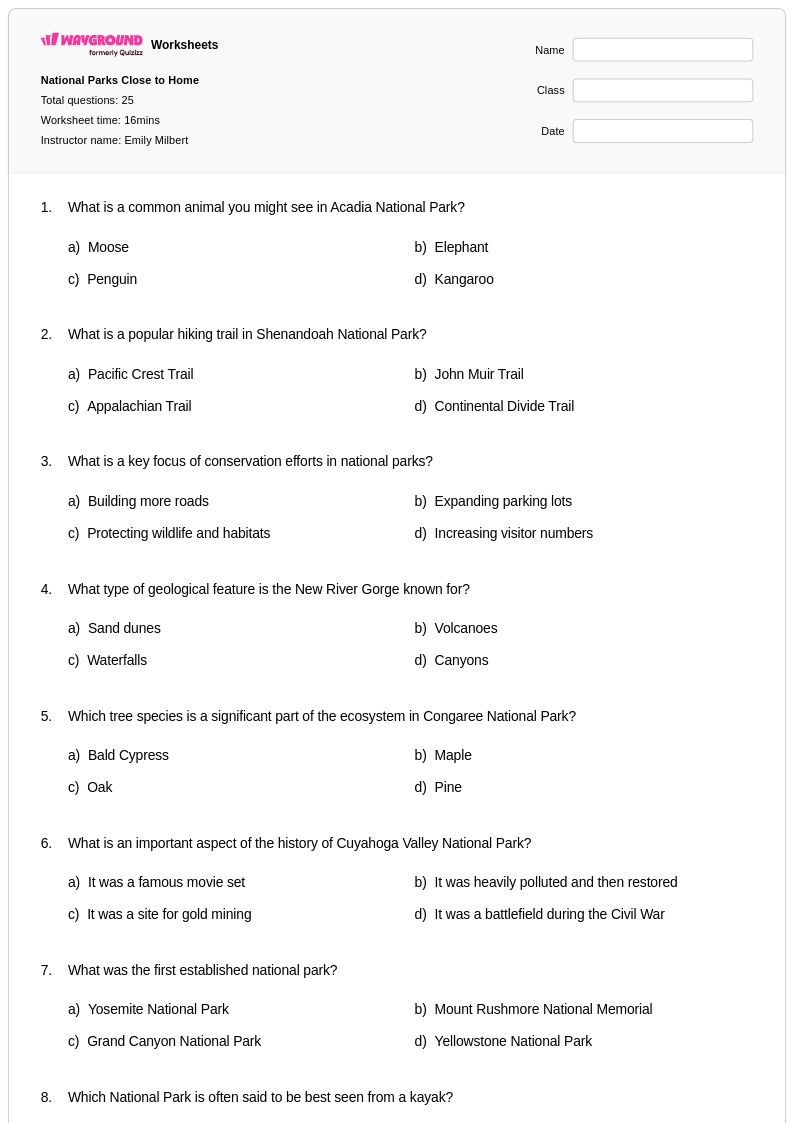
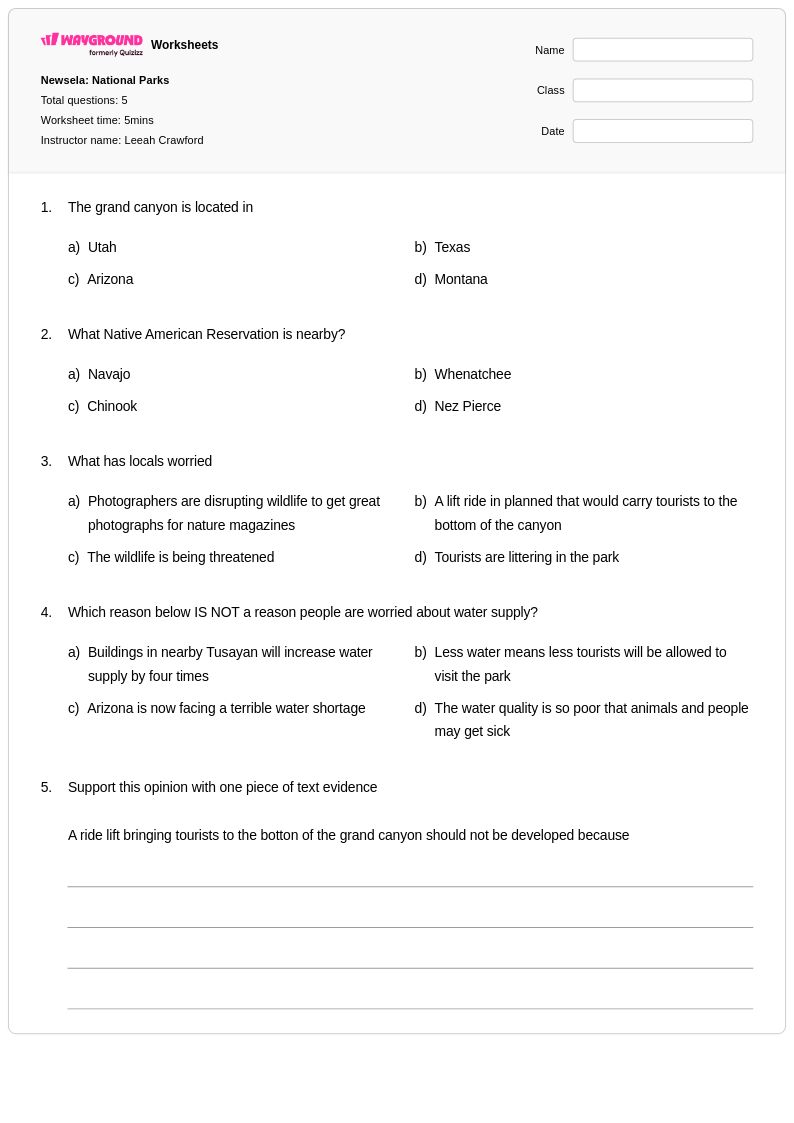
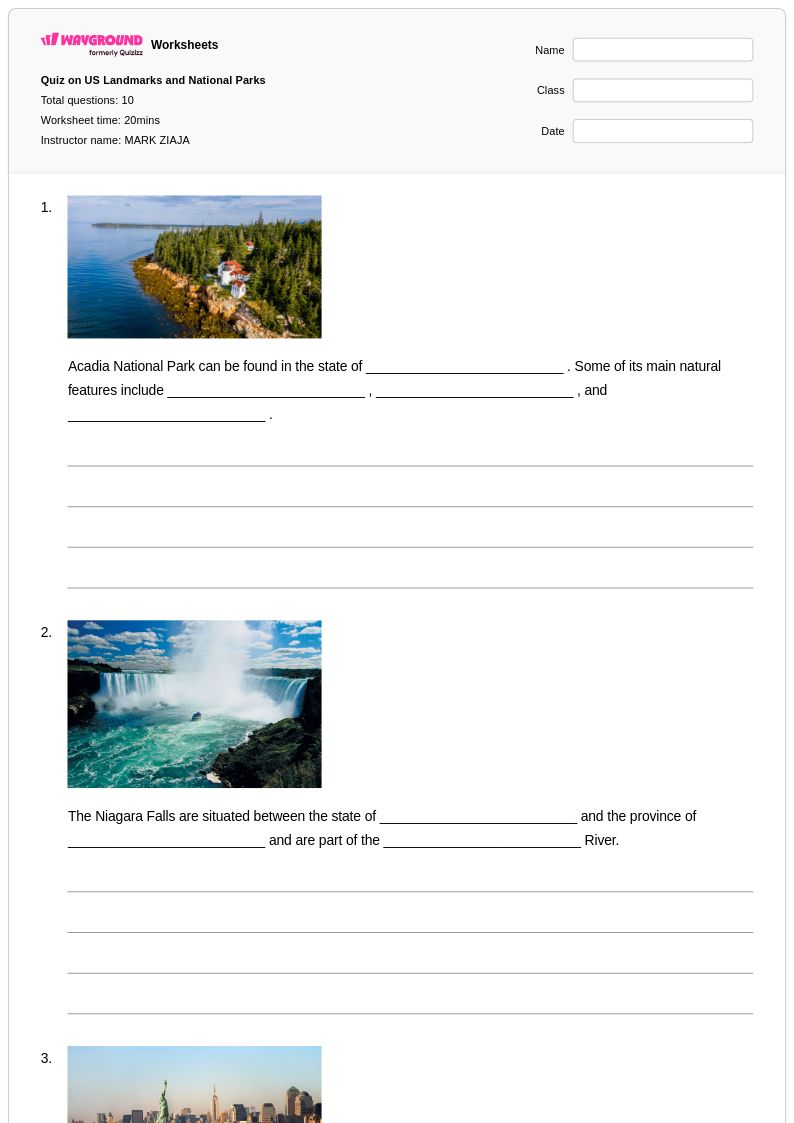
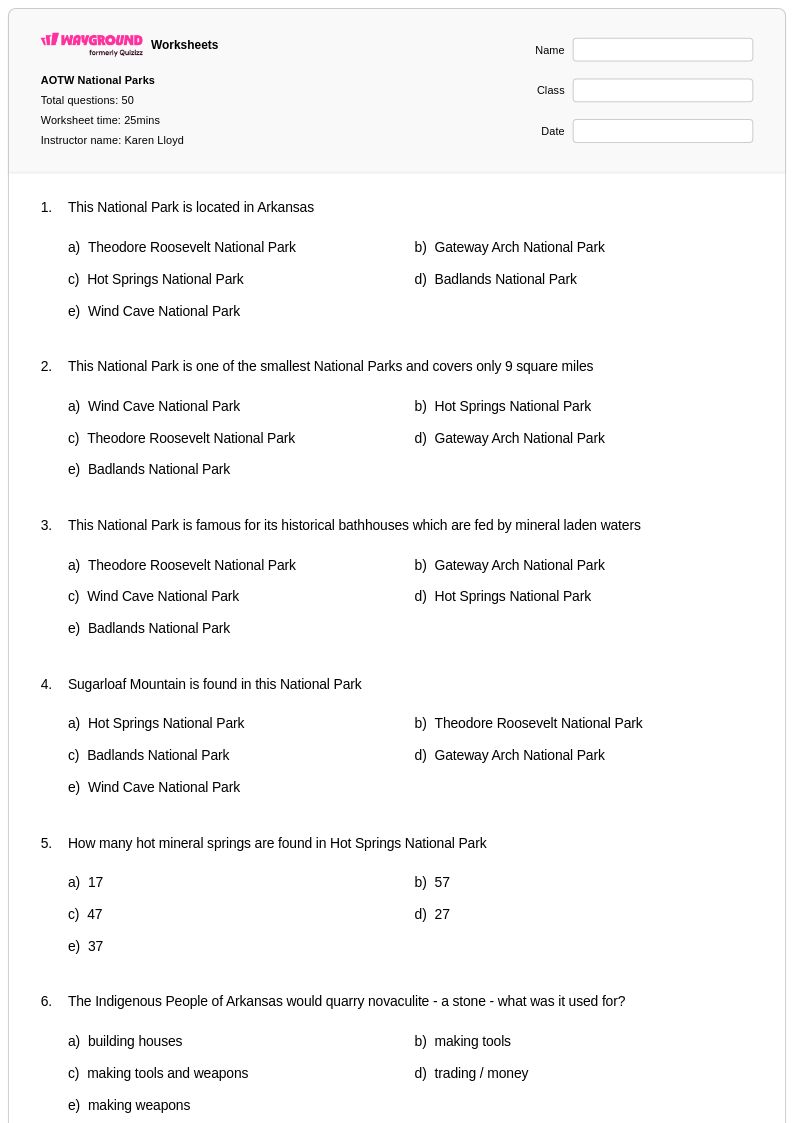
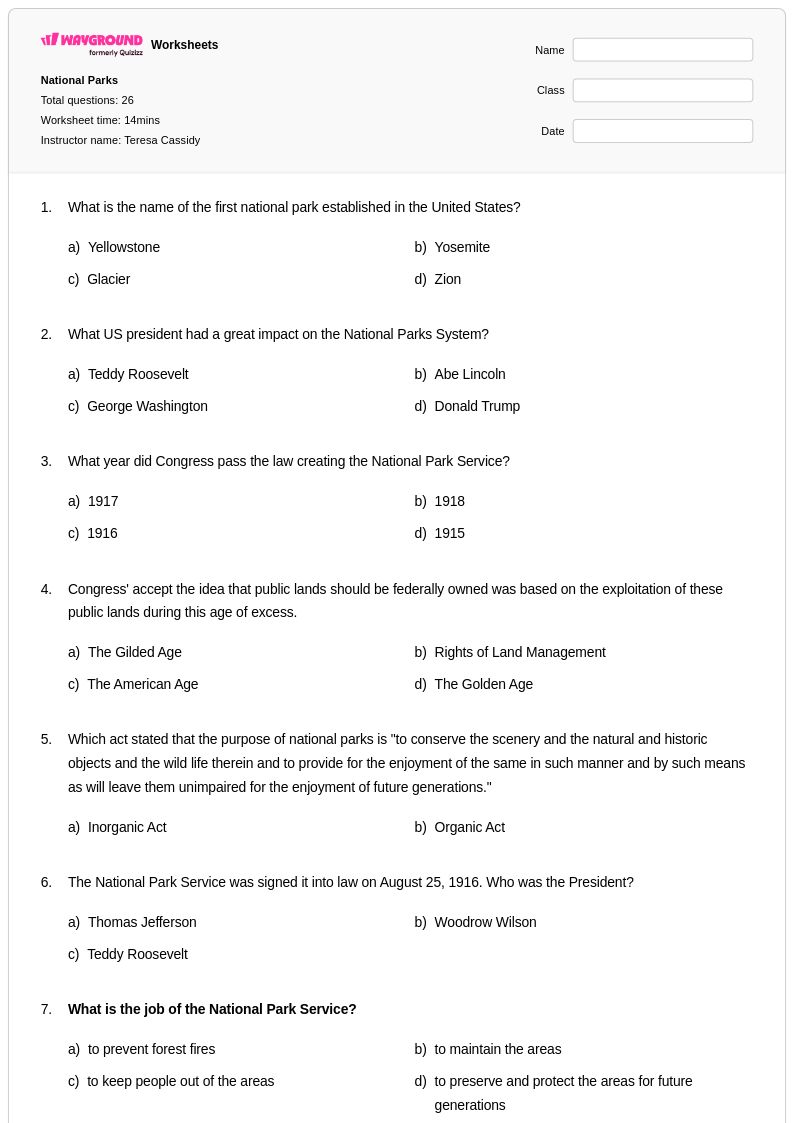
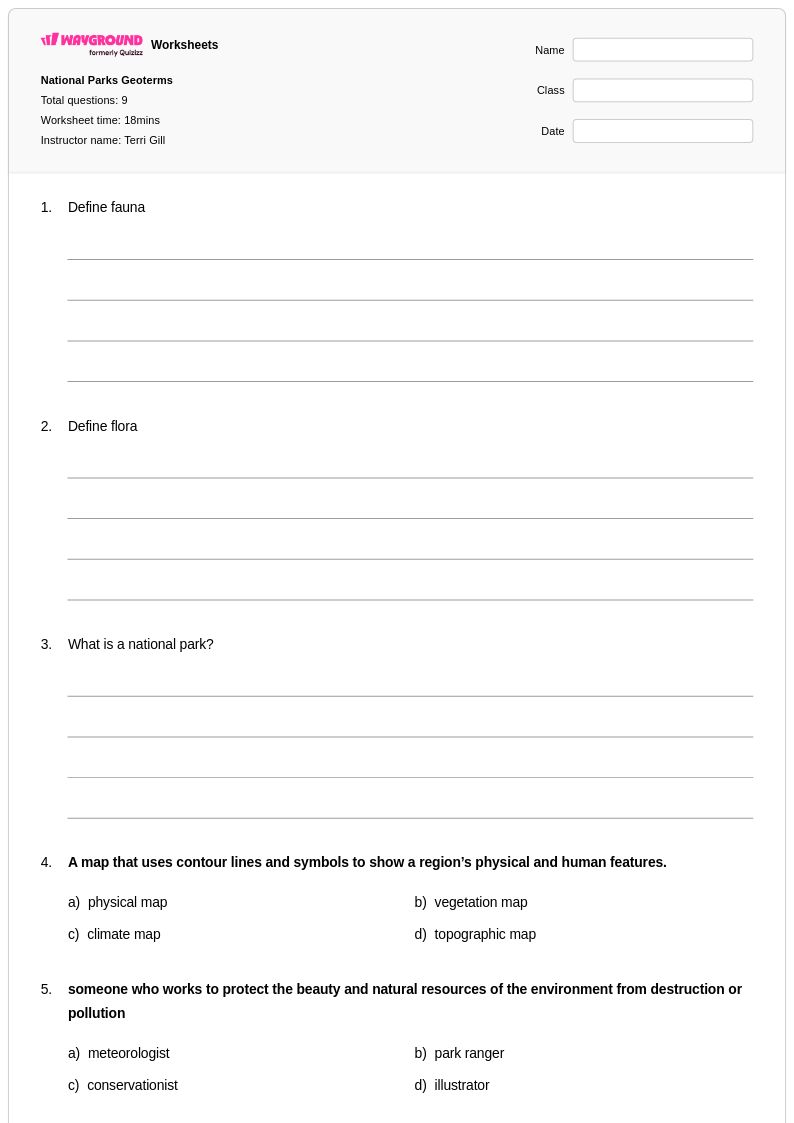
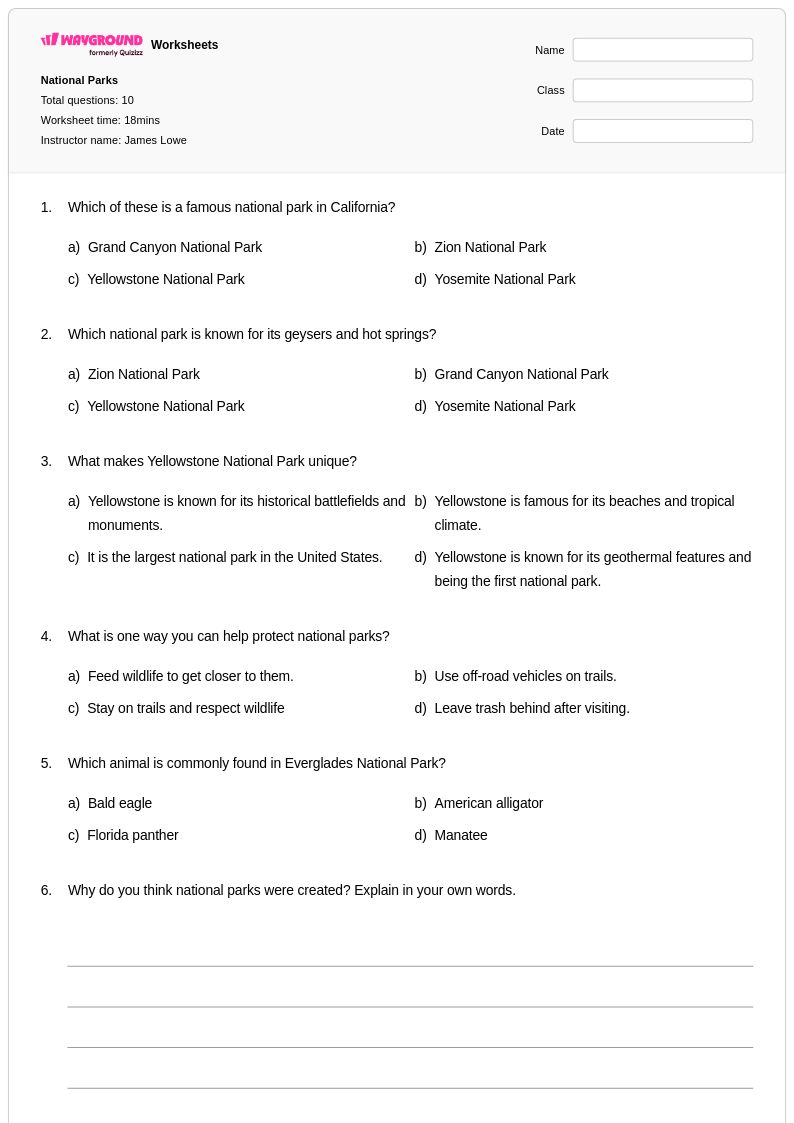
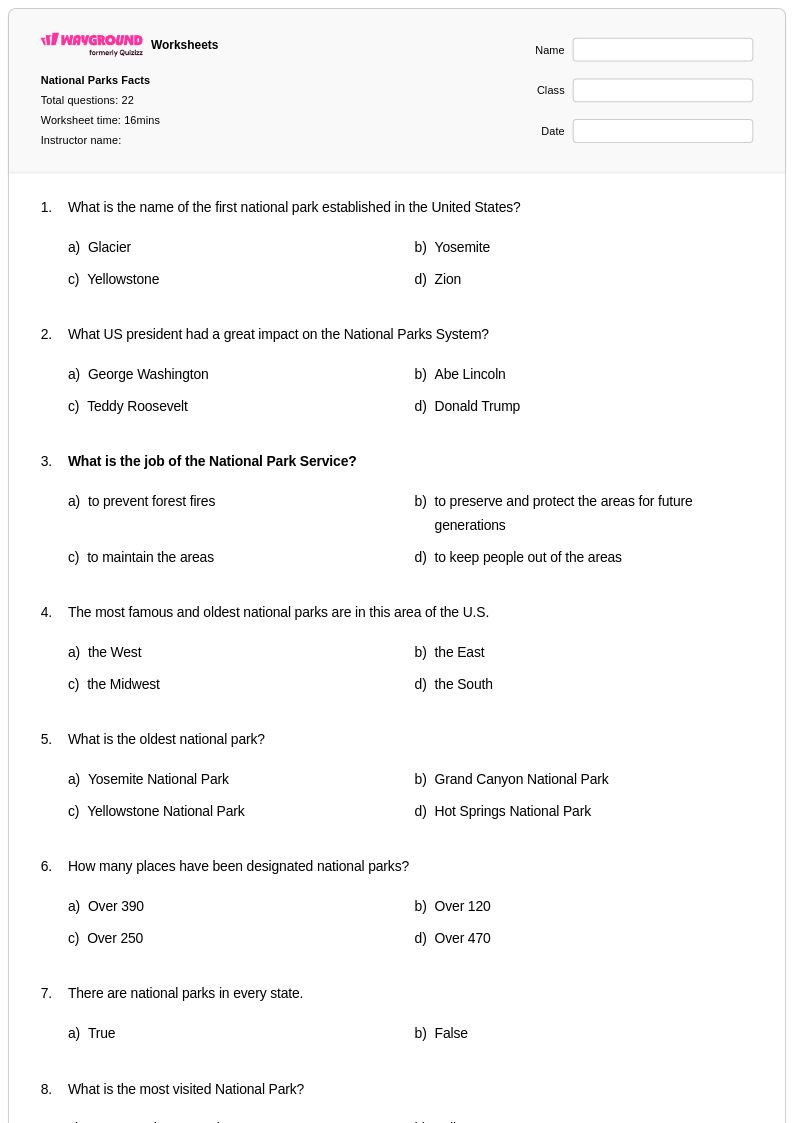
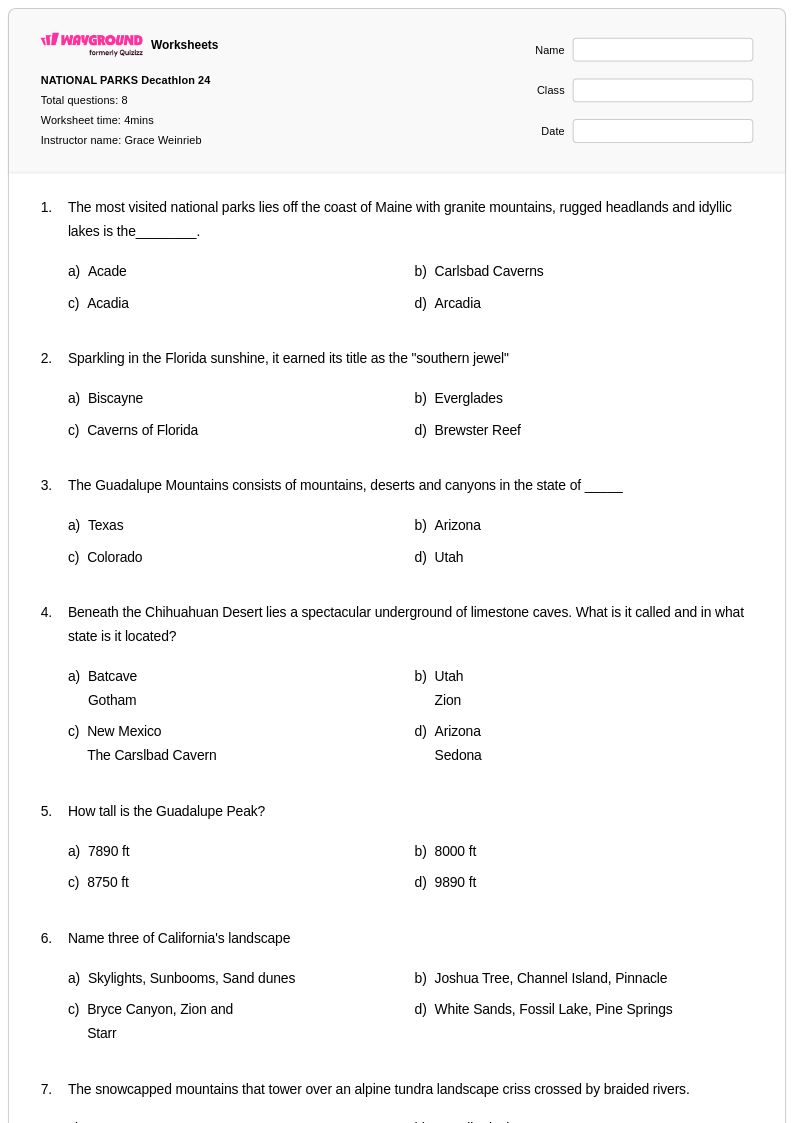
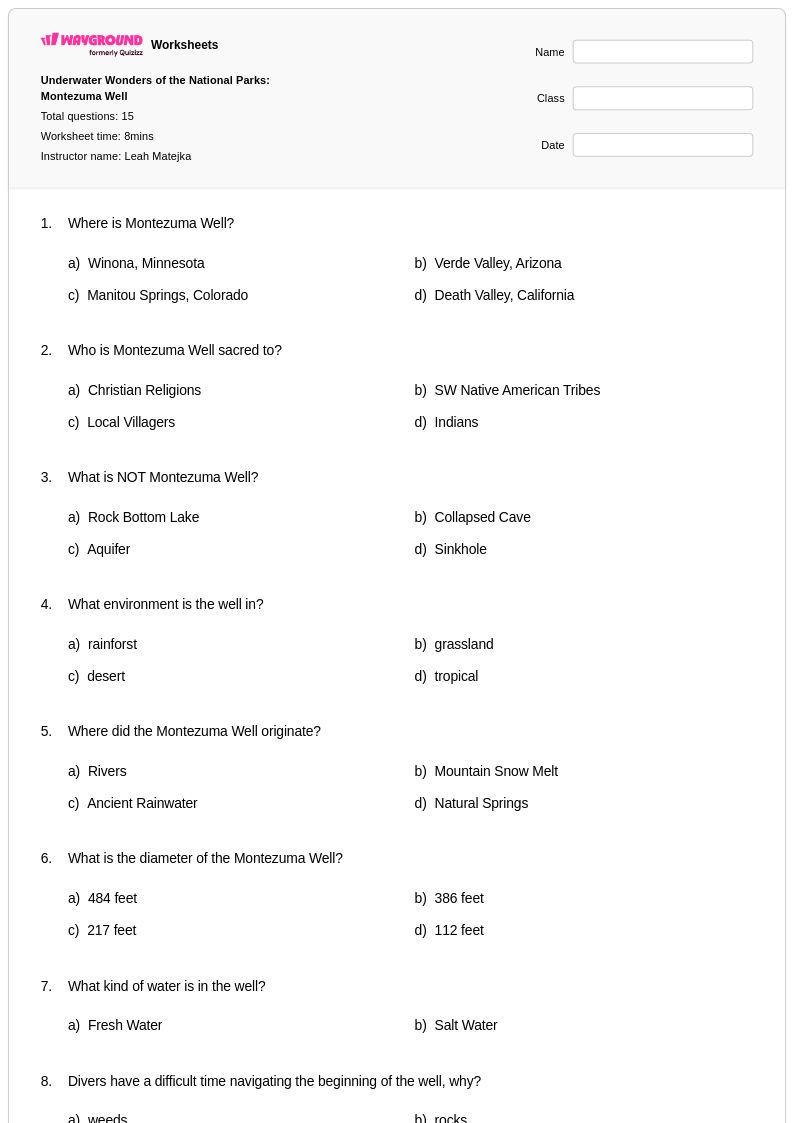
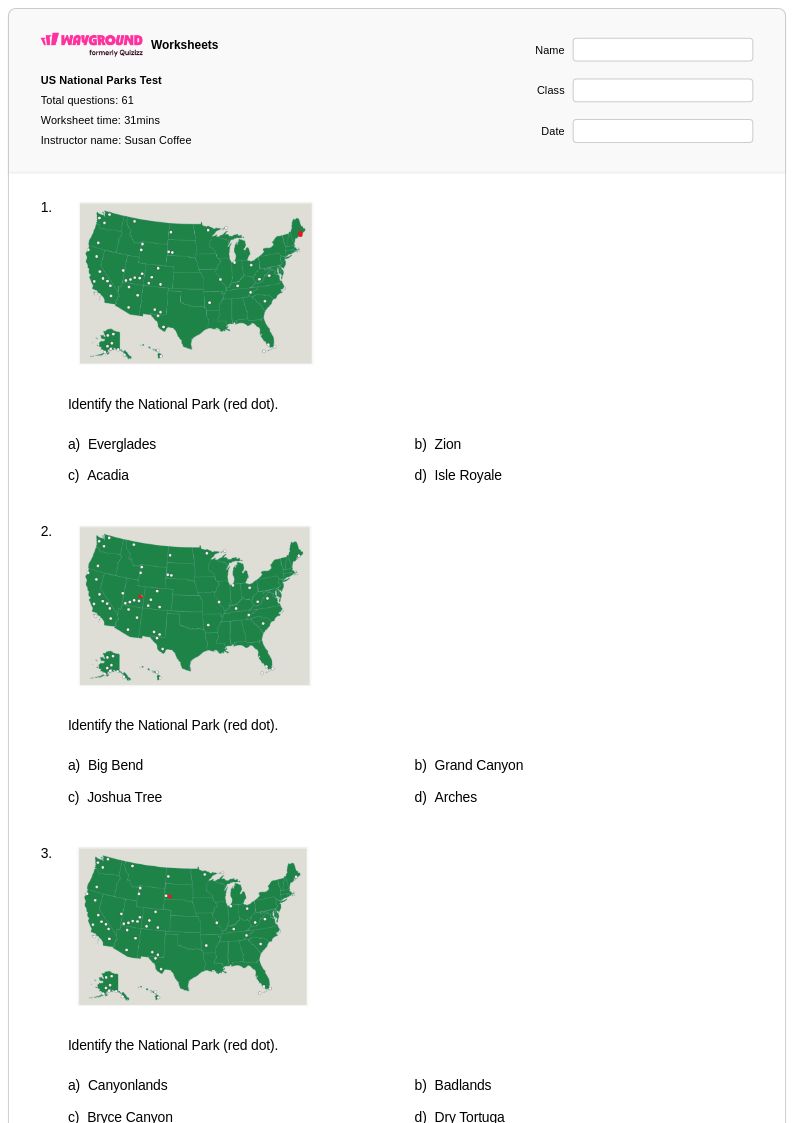
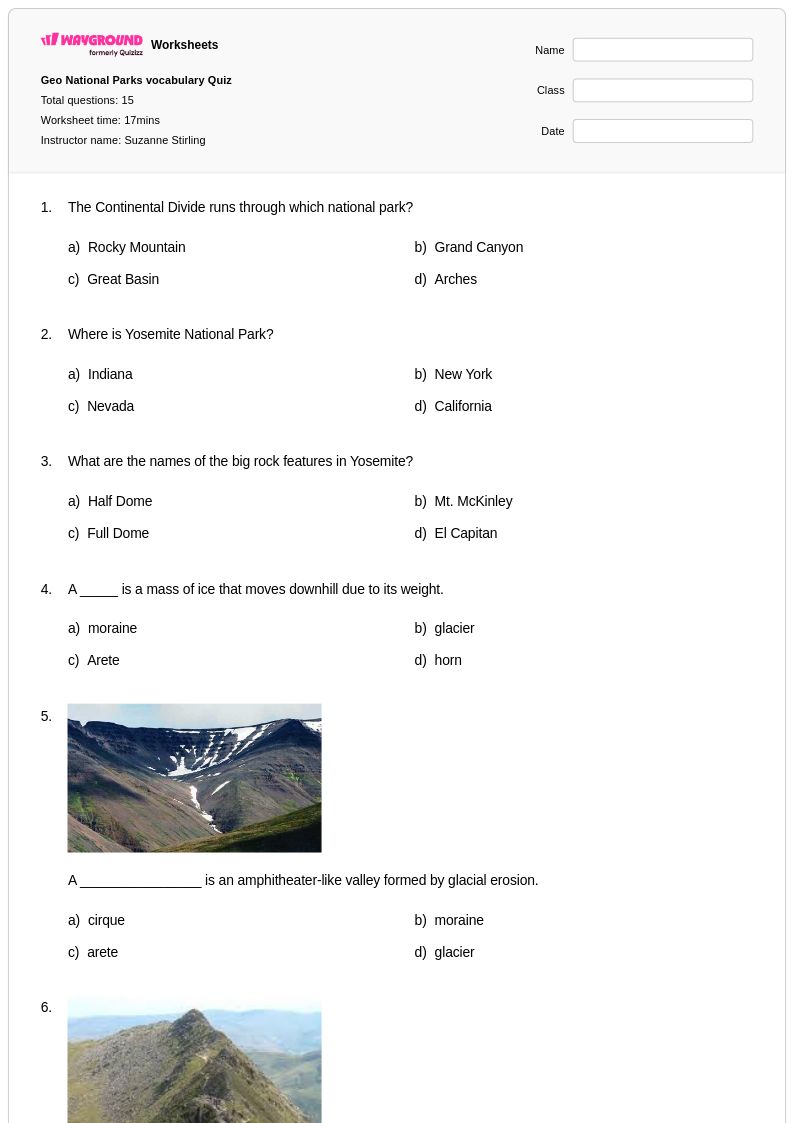
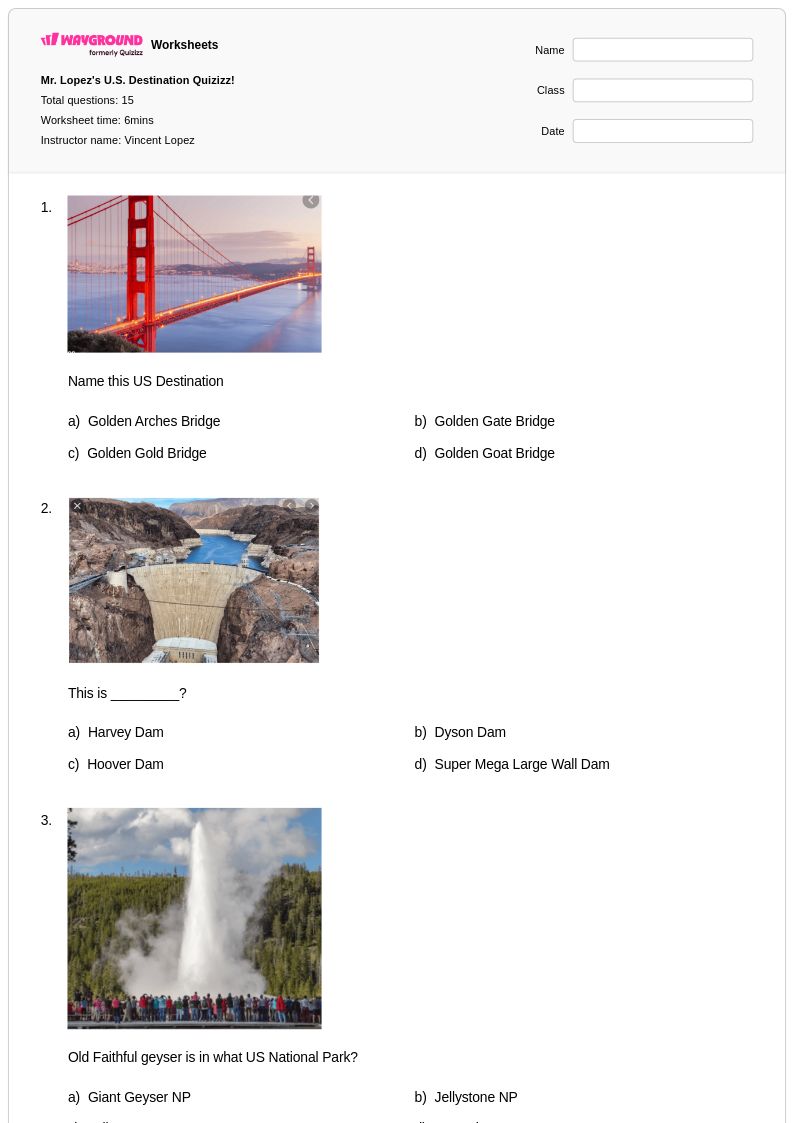
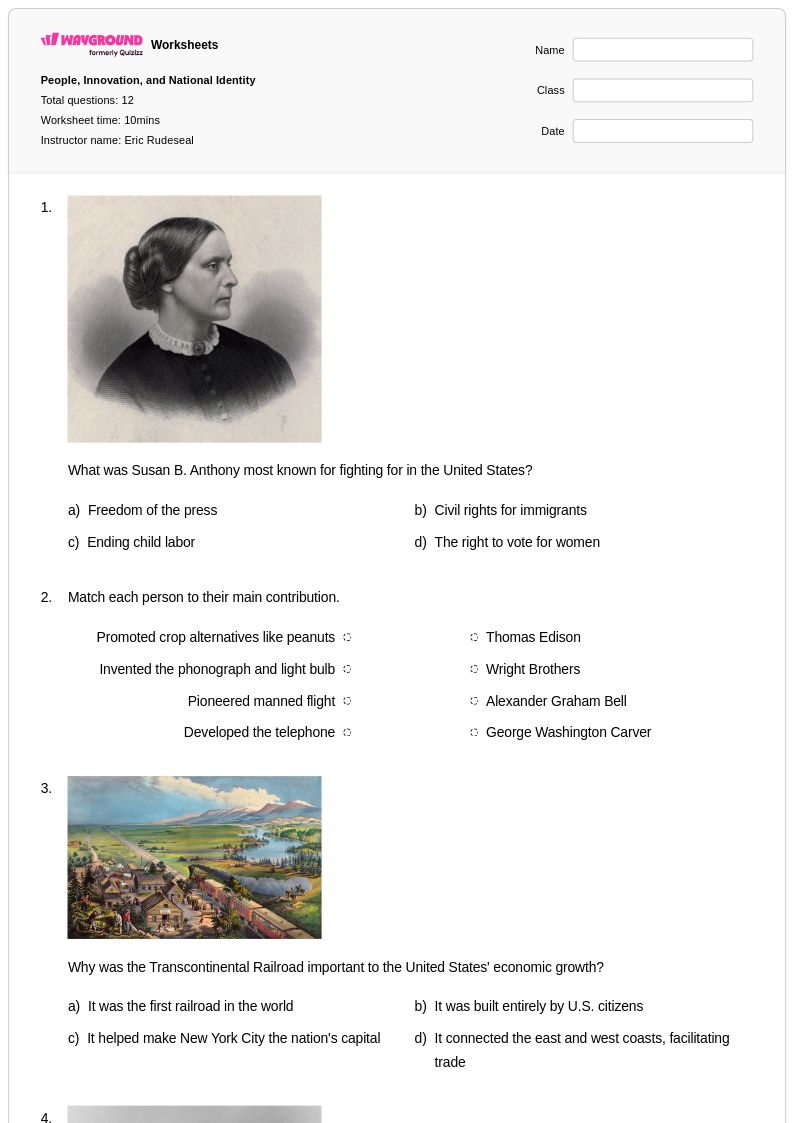
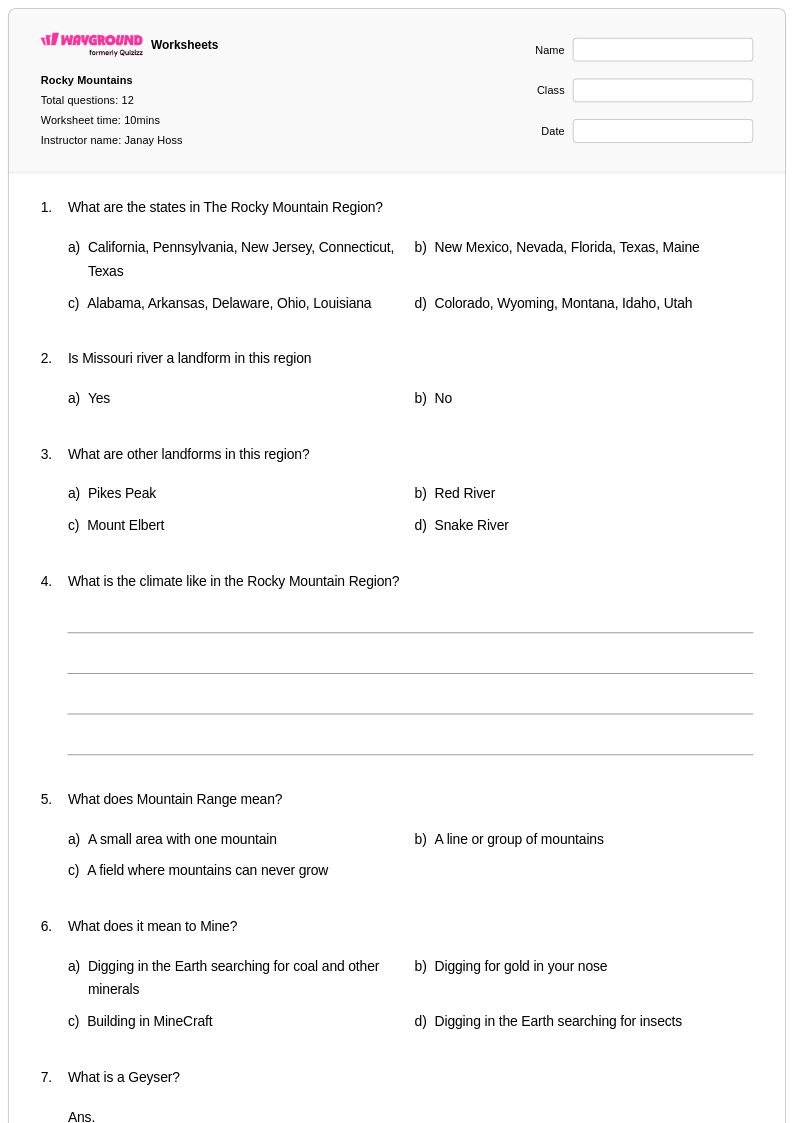
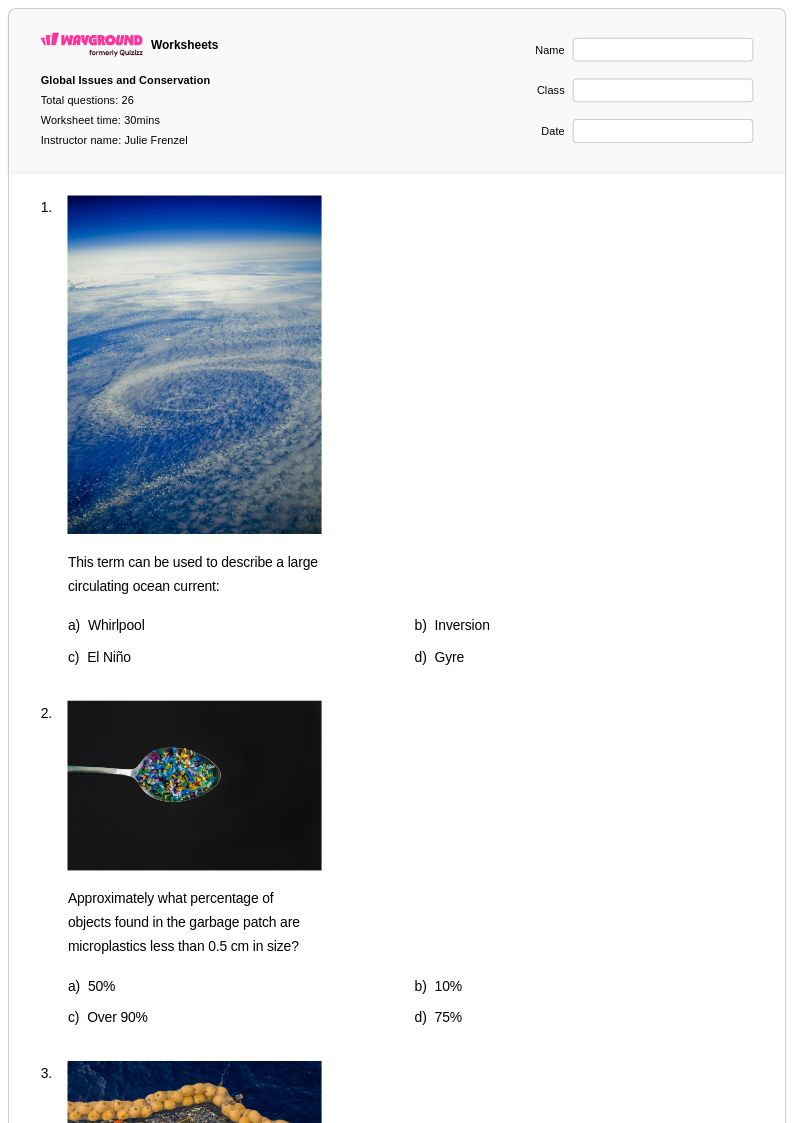
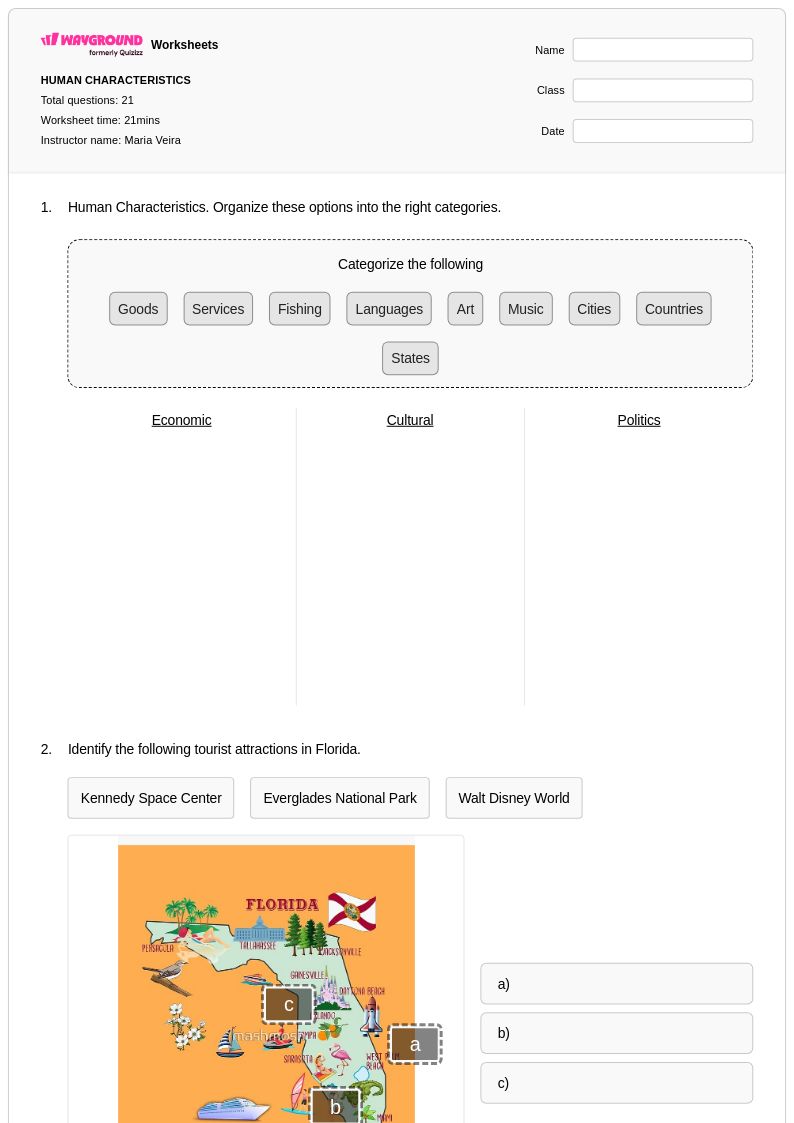
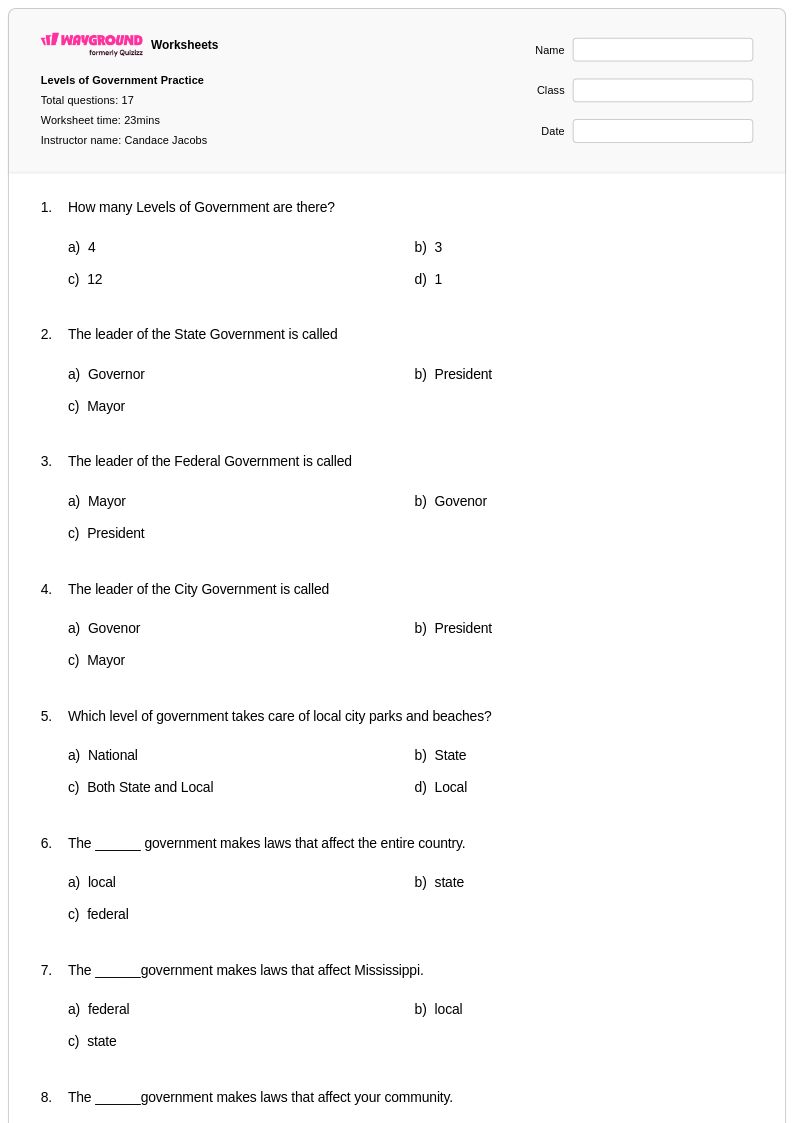
Explore free National Parks printable worksheets and practice problems that help students discover America's protected landscapes, wildlife conservation, and cultural heritage through engaging Social Studies activities with answer keys.
National Parks worksheets available through Wayground (formerly Quizizz) provide students with comprehensive exploration of America's protected natural and cultural treasures within the broader context of community and cultures studies. These educational resources strengthen critical thinking skills as students analyze the historical significance, geographic features, and cultural importance of iconic parks like Yellowstone, Grand Canyon, and Great Smoky Mountains. The worksheets incorporate primary source documents, maps, and visual materials that help students understand how national parks reflect American values of conservation and preservation while serving diverse communities. Each printable resource includes detailed answer keys and practice problems that guide students through complex concepts such as environmental stewardship, tourism economics, and the balance between public access and resource protection, with free pdf formats ensuring accessibility for all learners.
Wayground (formerly Quizizz) supports educators with an extensive collection of teacher-created national parks resources drawn from millions of contributions that address diverse learning needs and curricular goals. The platform's robust search and filtering capabilities enable teachers to quickly locate materials aligned with specific standards and learning objectives, while differentiation tools allow for seamless customization to meet varied student abilities and interests. Whether accessed as printable pdf worksheets for traditional classroom use or interactive digital formats for modern learning environments, these resources facilitate comprehensive lesson planning that spans from introductory park exploration to advanced analysis of conservation policies. Teachers can effectively use these materials for targeted skill practice, remediation of geographical and historical concepts, and enrichment activities that deepen students' understanding of how national parks function as living laboratories for studying American culture, environmental science, and civic responsibility.
FAQs
How do I teach national parks in a Social Studies class?
Teaching national parks works best when you connect geographic features to broader themes like conservation history, civic responsibility, and cultural heritage. Start with iconic parks such as Yellowstone or the Grand Canyon to anchor student understanding, then expand to how the national parks system reflects American values around environmental stewardship. Incorporating primary source documents, maps, and visual materials helps students move beyond surface-level recognition toward analysis of why these places matter historically and culturally.
What kinds of worksheets help students practice national parks concepts?
Effective national parks practice activities include map-based exercises that build geographic literacy, reading comprehension tasks using primary source documents, and structured analysis of topics like conservation policy and tourism economics. Worksheets that ask students to compare parks by region, ecosystem, or cultural significance reinforce both content knowledge and critical thinking. Practice problems tied to real park data, such as visitor statistics or protected species counts, make abstract conservation concepts concrete and classroom-ready.
What common mistakes do students make when learning about national parks?
A frequent misconception is that national parks exist solely for recreation, when in fact they serve as protected sites for conservation, cultural preservation, and scientific research. Students also tend to conflate national parks with other federal land designations like national monuments or national forests, which have different governance structures and purposes. Another common error is underestimating the tension between public access and resource protection, which is one of the defining policy challenges in parks management.
How can I differentiate national parks worksheets for students with different learning needs?
On Wayground, teachers can apply student-level accommodations directly to national parks digital worksheets, including Read Aloud for students who need audio support with complex geographic or historical vocabulary, and reduced answer choices to lower cognitive load for struggling learners. Extended time can be configured per student, and reading mode offers adjustable font sizes and themes for accessibility. These settings are saved and reusable across future sessions, so differentiation requires minimal setup after the first use.
How do I use Wayground's national parks worksheets in my classroom?
Wayground's national parks worksheets are available as printable PDFs for traditional classroom use and in digital formats for technology-integrated learning environments, giving teachers flexibility depending on their setup. Teachers can also host the worksheets as a quiz directly on Wayground, enabling real-time student interaction and automatic grading. All worksheets include complete answer keys, which supports both independent student practice and teacher-led review sessions.
How do national parks connect to conservation and environmental science concepts?
National parks are a natural entry point for teaching environmental stewardship because they represent active, real-world examples of conservation policy in practice. Students can explore how parks function as protected ecosystems, examine the role of wildlife management, and analyze the economic dimensions of environmental tourism. These connections make national parks a strong cross-curricular topic that bridges Social Studies, environmental science, and civics.