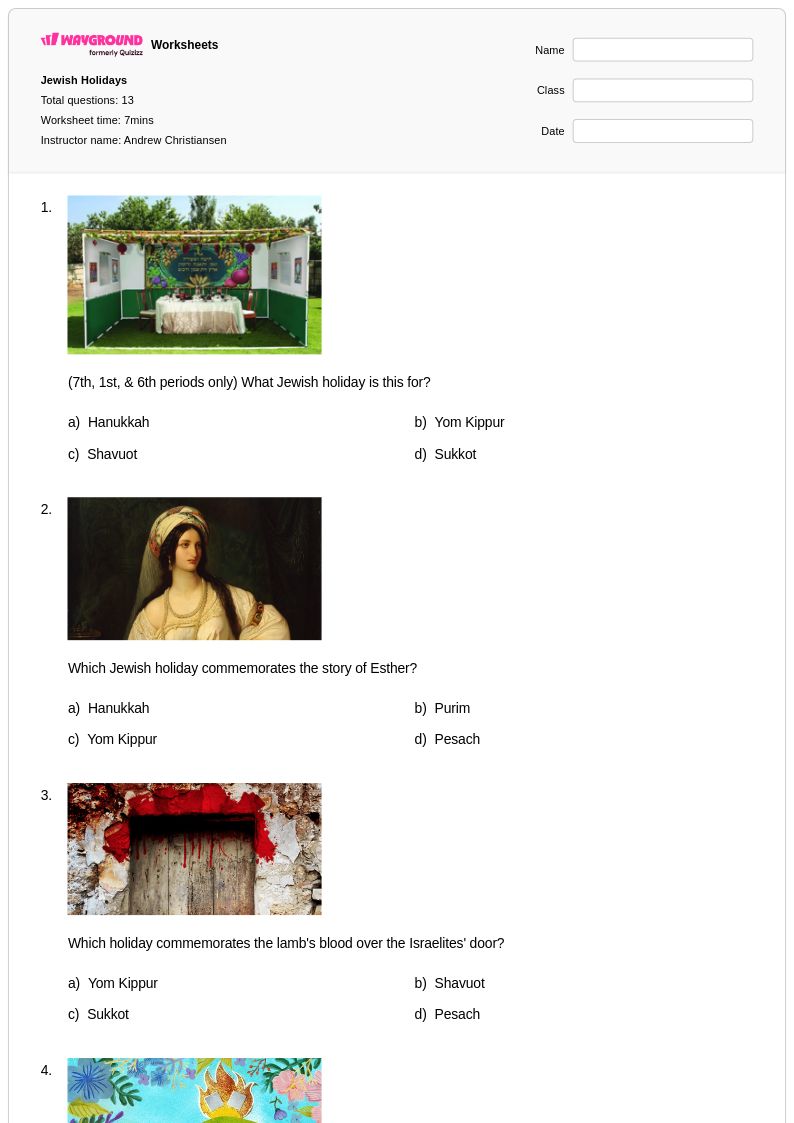
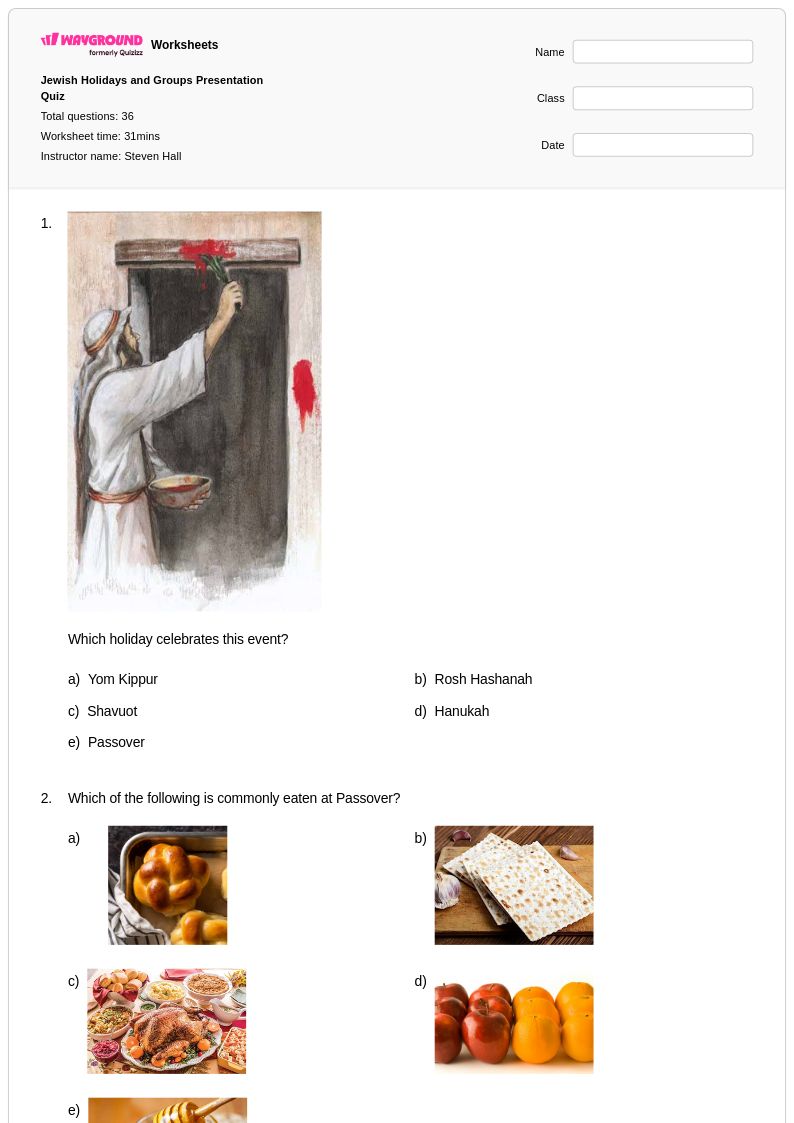
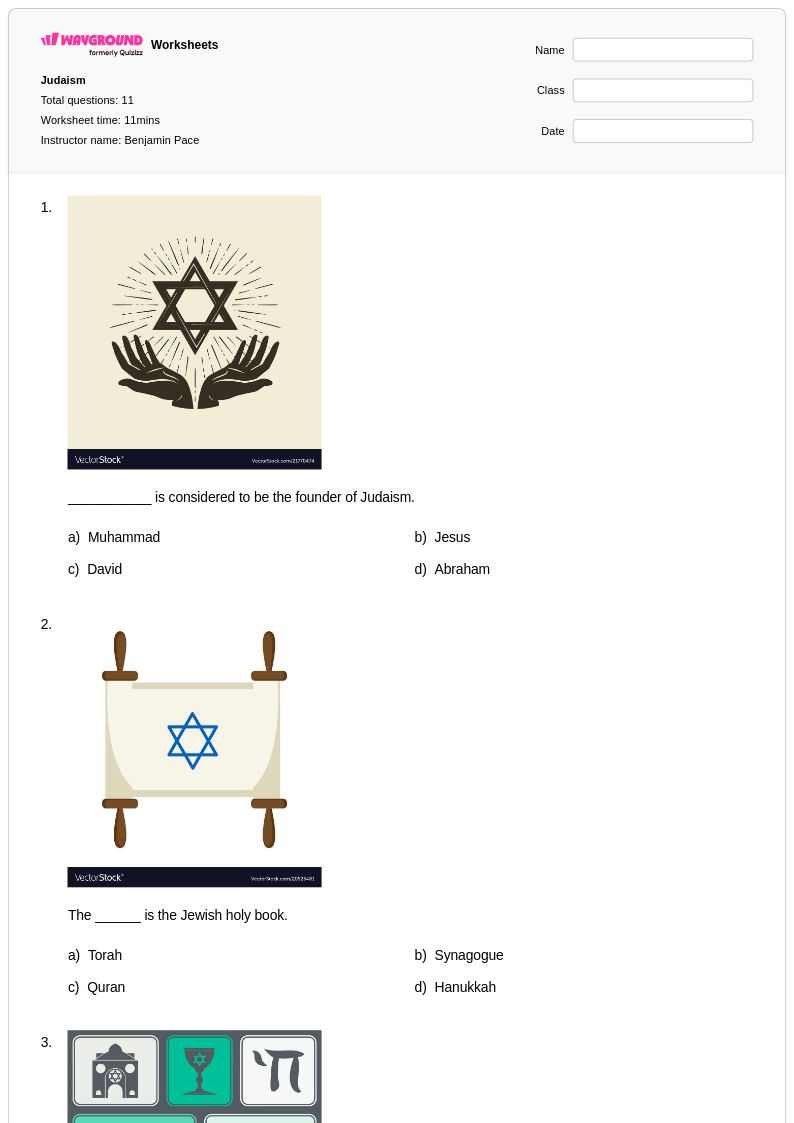
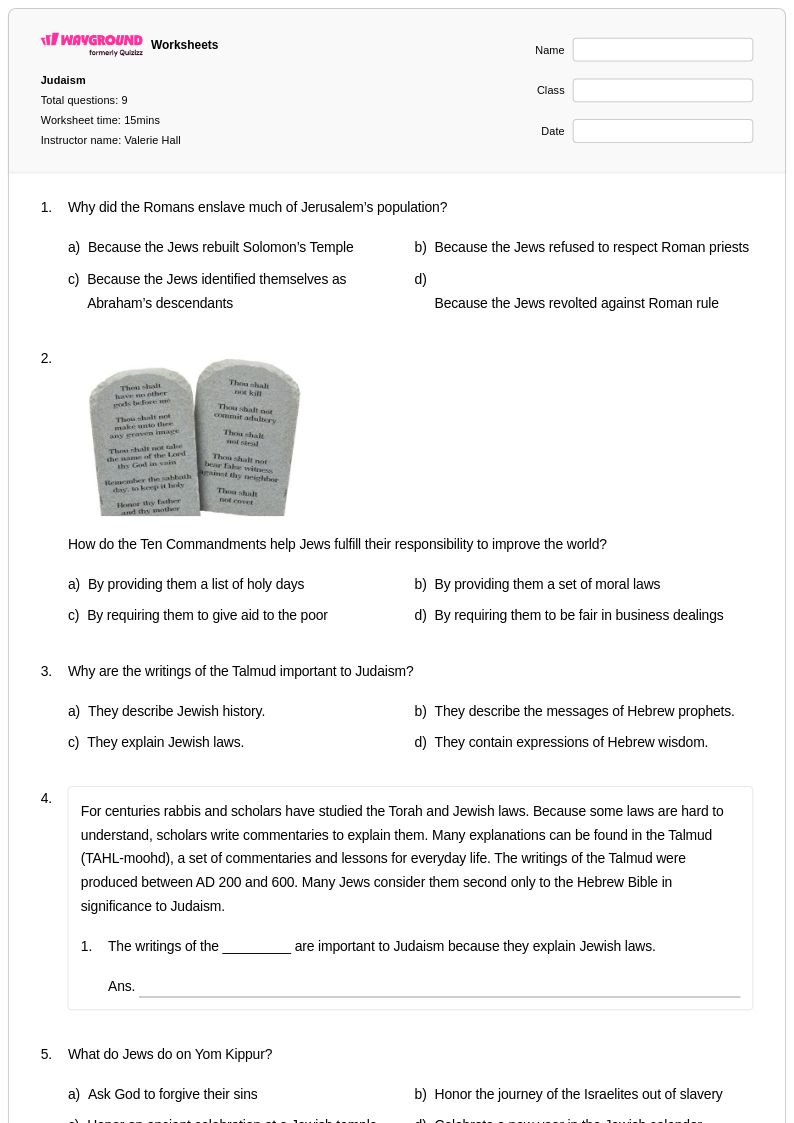
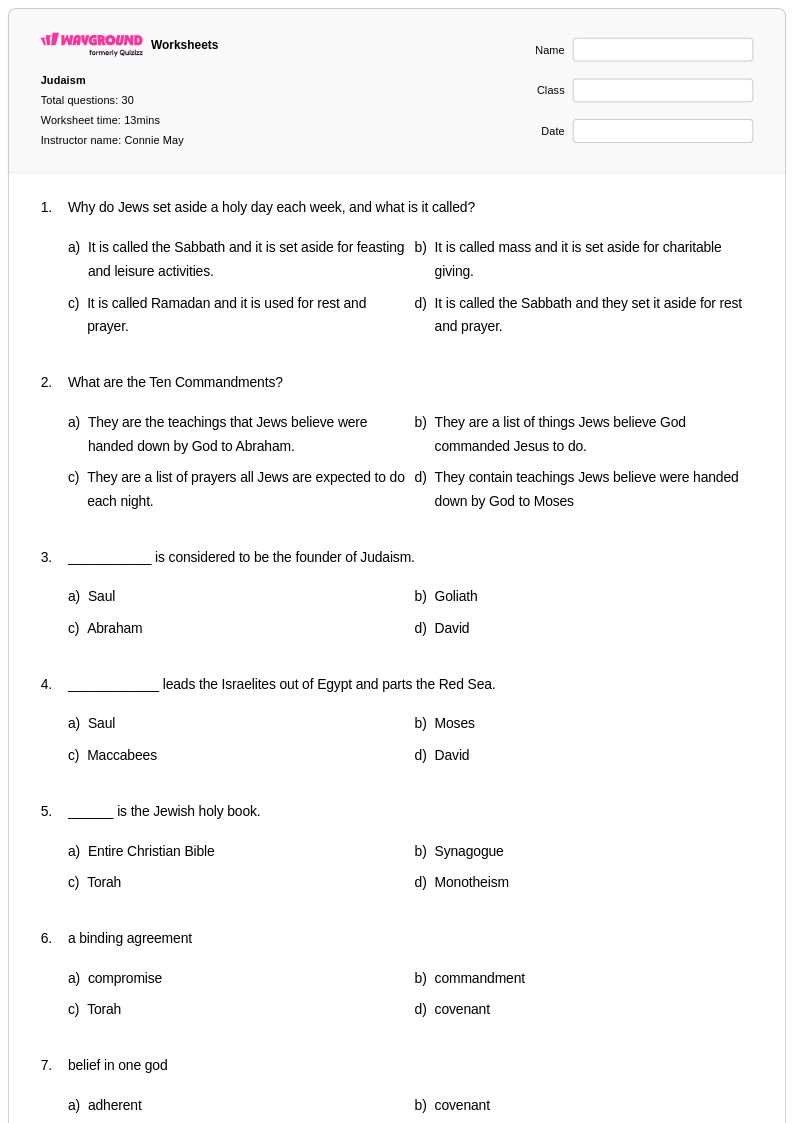
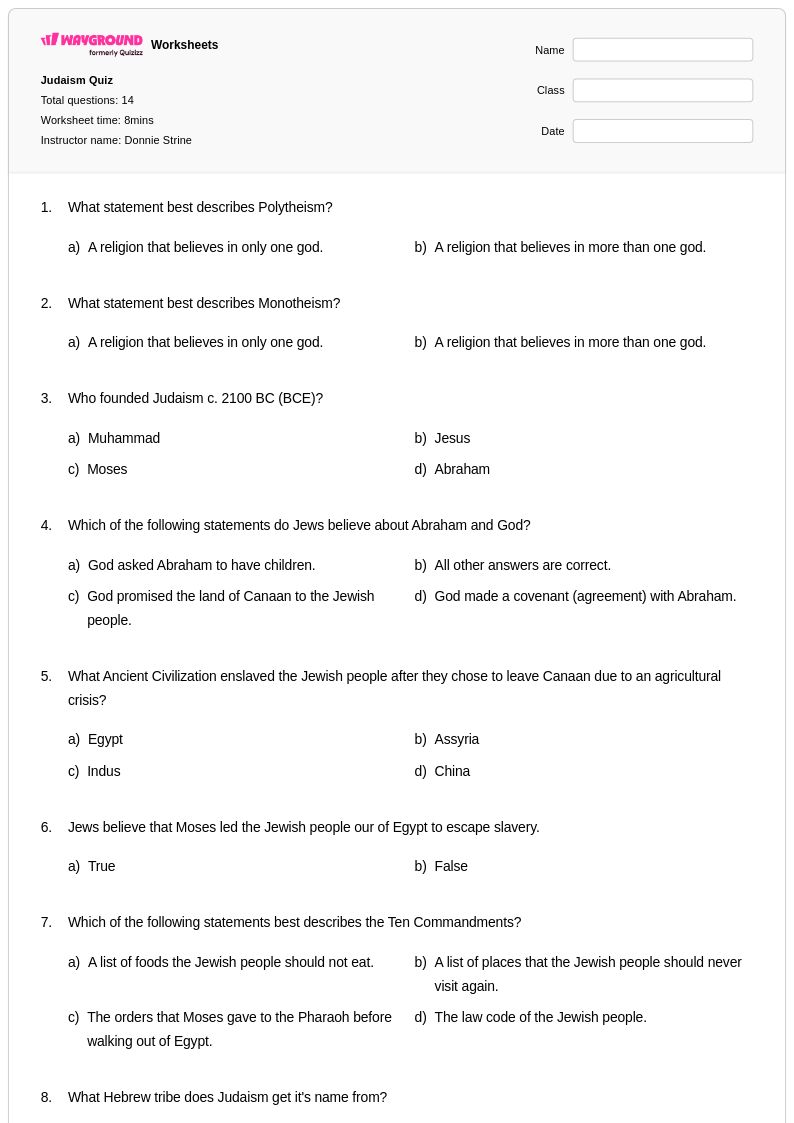
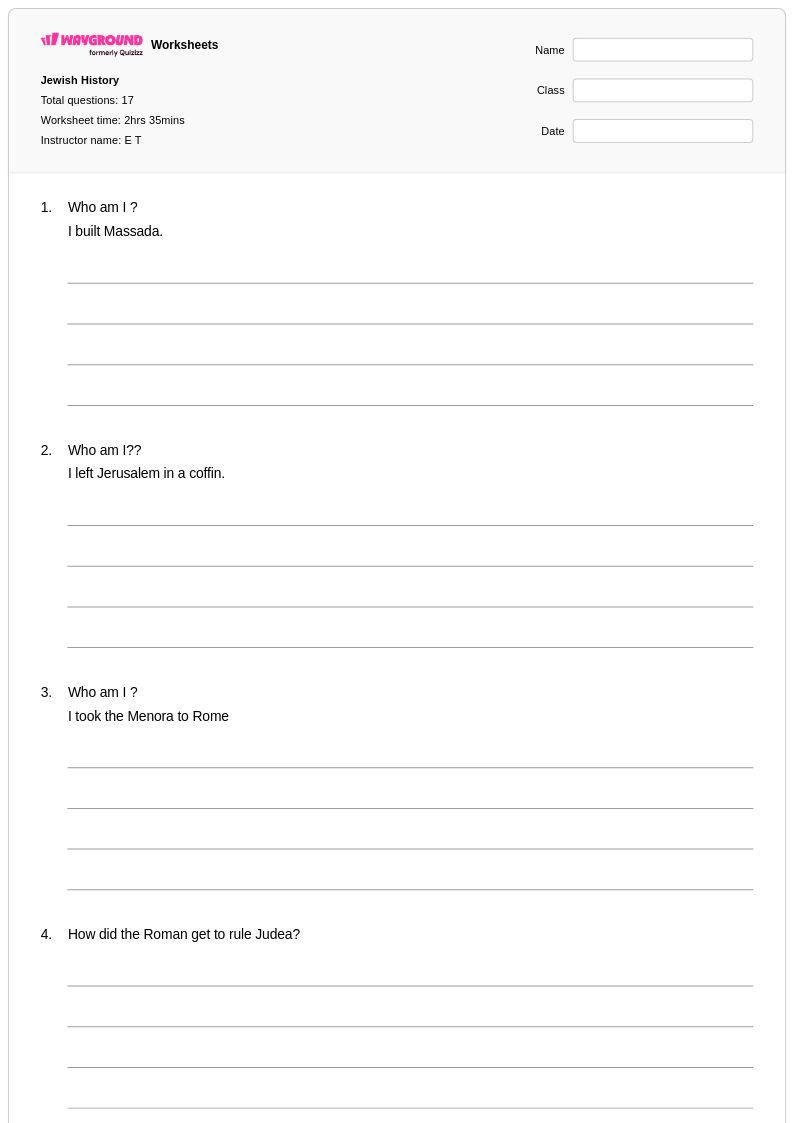
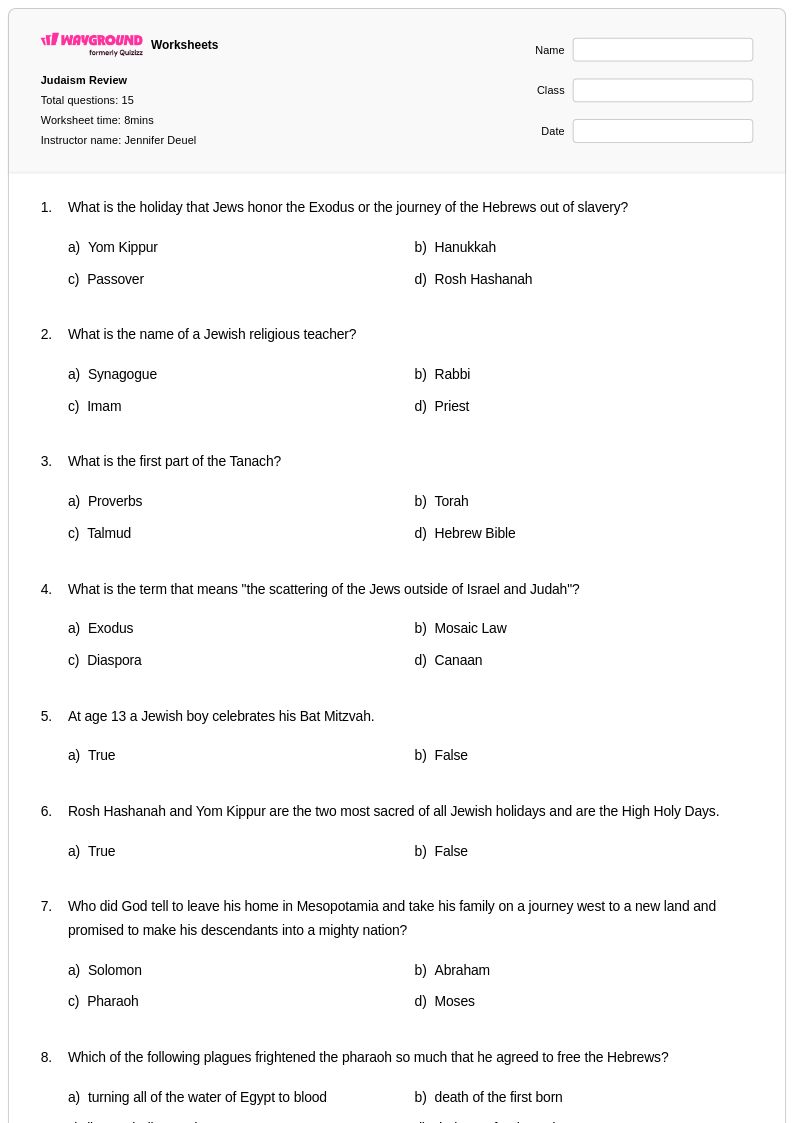
Explore Wayground's comprehensive collection of free Jewish Holidays worksheets and printables that help students discover traditions, customs, and cultural significance through engaging practice problems with answer keys.
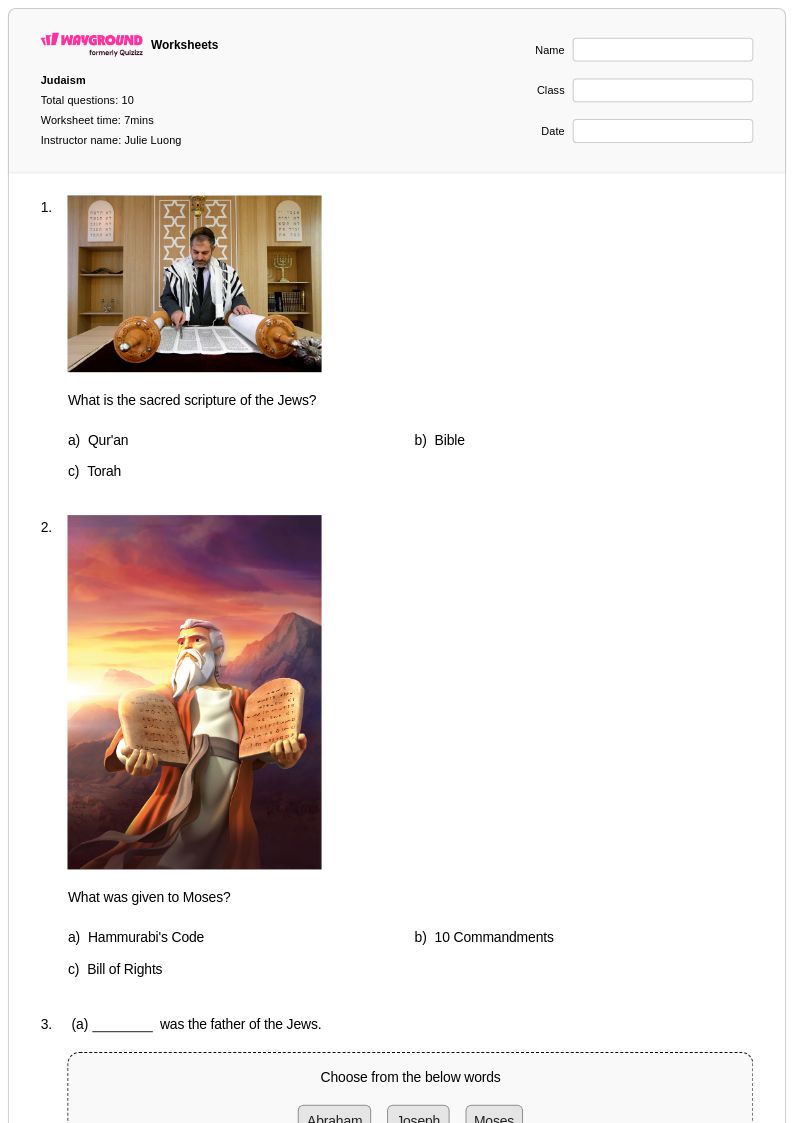
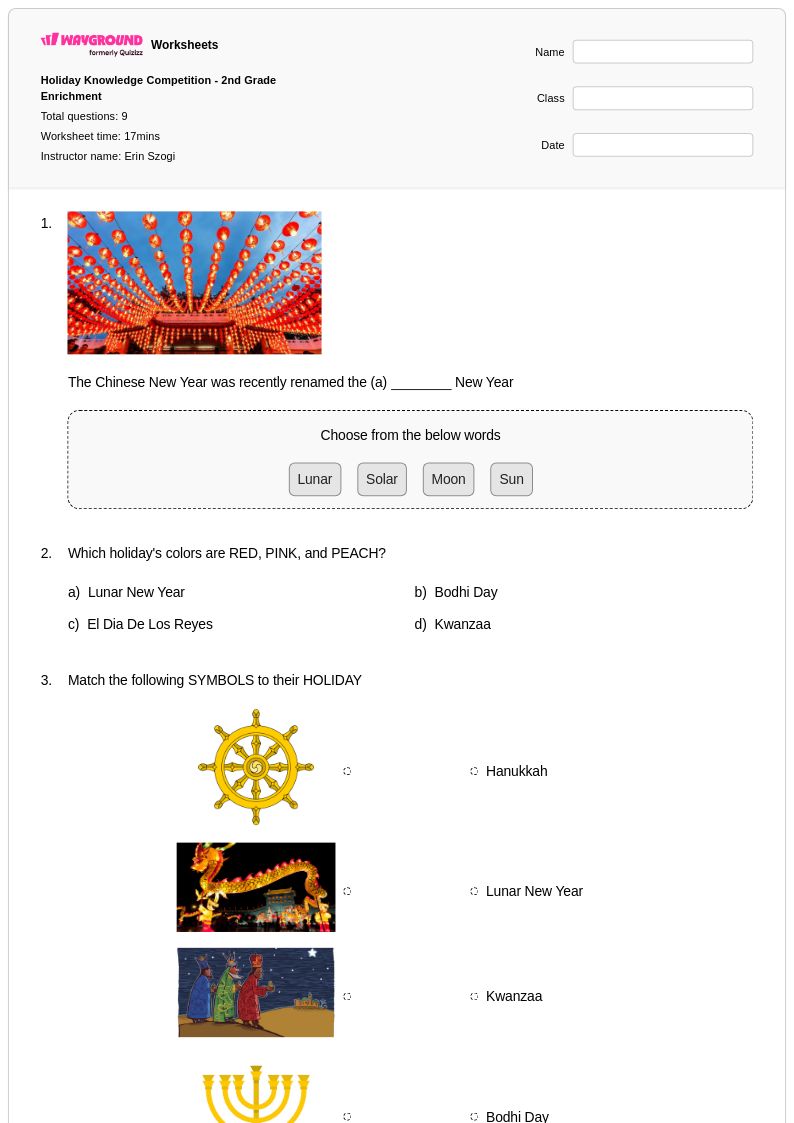
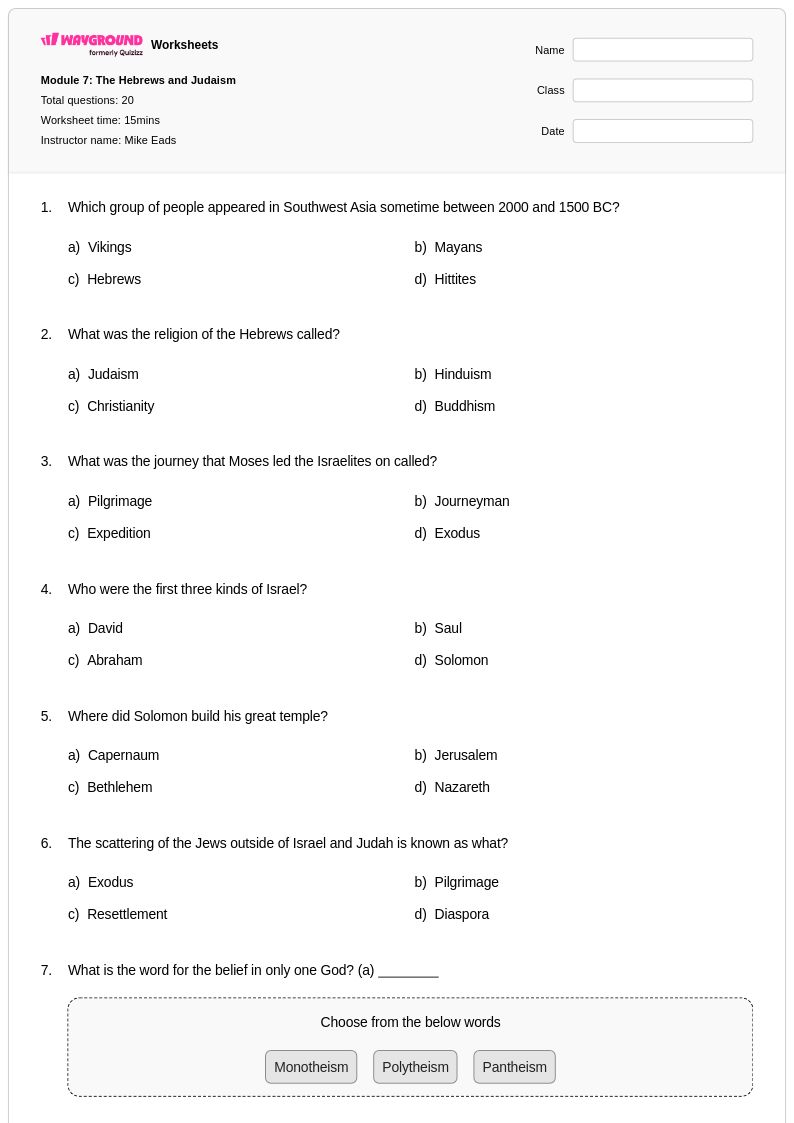
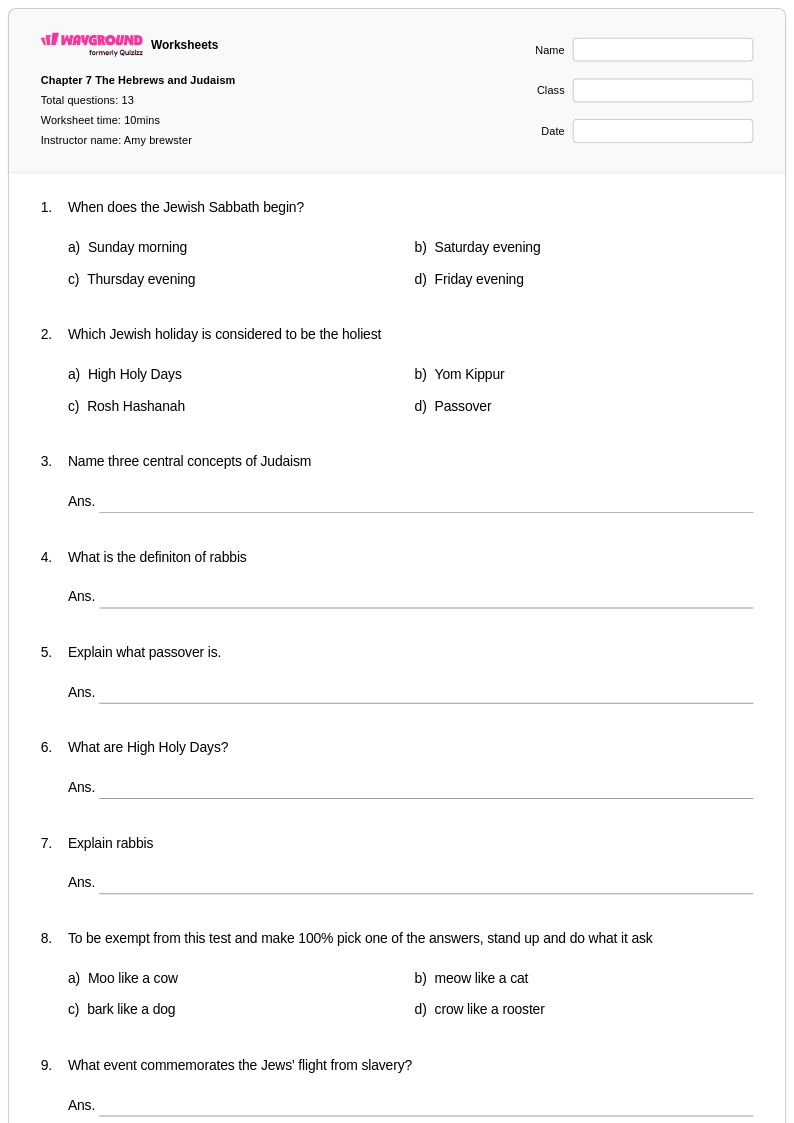
Jewish Holidays worksheets available through Wayground (formerly Quizizz) provide comprehensive educational resources that help students explore the rich traditions, customs, and cultural significance of Jewish religious observances throughout the year. These thoughtfully designed materials strengthen students' understanding of diverse cultural practices while developing critical thinking skills about how religious traditions shape community identity and values. The worksheet collections cover major celebrations such as Rosh Hashanah, Yom Kippur, Passover, Hanukkah, and Sukkot, offering practice problems that encourage students to analyze the historical origins, symbolic meanings, and contemporary observances of each holiday. Teachers can access complete answer keys and free printables that support various learning objectives, from basic vocabulary acquisition to deeper comparative analysis of how Jewish holidays reflect broader themes of remembrance, renewal, and community celebration.
Wayground (formerly Quizizz) supports educators with an extensive collection of teacher-created Jewish Holidays resources, drawing from millions of high-quality materials that have been developed and refined by classroom professionals. The platform's robust search and filtering capabilities allow teachers to quickly locate worksheets that align with specific curriculum standards and match their students' developmental needs, whether for introductory cultural awareness lessons or more advanced comparative religion studies. The differentiation tools enable seamless customization of content complexity, while the flexible format options including printable pdf versions ensure accessibility across diverse classroom environments and technology configurations. These comprehensive features streamline lesson planning while providing targeted resources for remediation, enrichment activities, and structured skill practice that helps students develop cultural competency and appreciation for religious diversity within their broader community studies curriculum.
FAQs
How do I teach Jewish holidays in an elementary or middle school classroom?
Teaching Jewish holidays effectively means grounding students in the historical and religious context of each observance before exploring its symbols and customs. Start with major holidays like Rosh Hashanah, Yom Kippur, Passover, and Hanukkah, connecting each to themes of remembrance, renewal, and community. Using structured worksheets helps students organize their learning around vocabulary, symbolic meaning, and cultural significance in a way that builds genuine understanding rather than surface familiarity.
What exercises help students practice and retain knowledge of Jewish holidays?
Effective practice activities for Jewish holidays include vocabulary matching, short-answer questions about the historical origins of each observance, and comparative exercises that ask students to identify shared themes across holidays such as Passover, Sukkot, and Yom Kippur. Worksheets that prompt students to analyze symbolic objects or rituals, like the seder plate or the shofar, reinforce both factual recall and deeper conceptual understanding. These practice formats also build cultural competency skills that transfer to broader social studies and world religions curricula.
What common misconceptions do students have about Jewish holidays?
A frequent misconception is that Hanukkah is the most important Jewish holiday simply because of its proximity to Christmas on the calendar, when in fact Rosh Hashanah and Yom Kippur hold greater religious significance. Students also often conflate the purpose and tone of different holidays, assuming all are celebratory, when holidays like Yom Kippur are centered on fasting, reflection, and atonement. Worksheets that explicitly address the distinct origins and observances of each holiday help students correct these misunderstandings early.
How can I use Jewish Holidays worksheets to support students with different learning needs?
Jewish Holidays worksheets on Wayground are available as printable PDFs and in digital formats, making them accessible across both traditional and technology-integrated classrooms. For students who need additional support, Wayground offers built-in accommodations including Read Aloud, which audio-reads questions and content, reduced answer choices to lower cognitive load, extended time per question, and adjustable font sizes through reading mode. These settings can be assigned to individual students without notifying the rest of the class, allowing seamless differentiation during the same lesson.
How do Jewish Holidays worksheets connect to broader social studies or world religions curriculum standards?
Jewish Holidays worksheets naturally support social studies standards around cultural diversity, community identity, and historical traditions, as well as world religions units that ask students to compare belief systems and ritual practices. Because Jewish holidays like Passover and Rosh Hashanah carry both historical narratives and contemporary relevance, they serve as strong anchor points for teaching students how religious traditions shape values and community life across generations. This makes them a practical fit for units on culture, heritage, and comparative religious studies at multiple grade levels.
Are there Jewish Holidays worksheets that include answer keys for teacher use?
Yes, Jewish Holidays worksheets on Wayground include complete answer keys, which allows teachers to use them efficiently for independent practice, homework, or structured class activities without needing to prepare a separate key. This is particularly useful for topics like Jewish holidays where factual accuracy about religious customs, dates, and symbolic meanings matters. Having a ready-made key also makes it easier to provide students with immediate feedback or use worksheets as self-checking review tools.