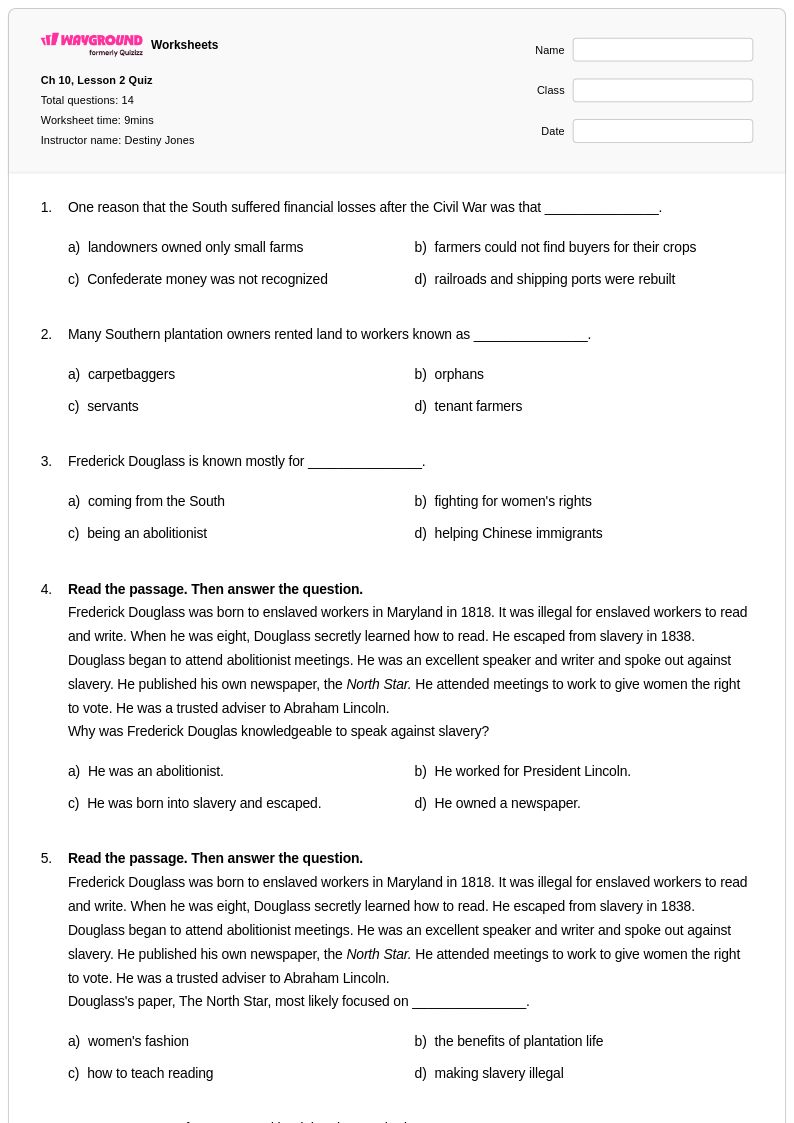
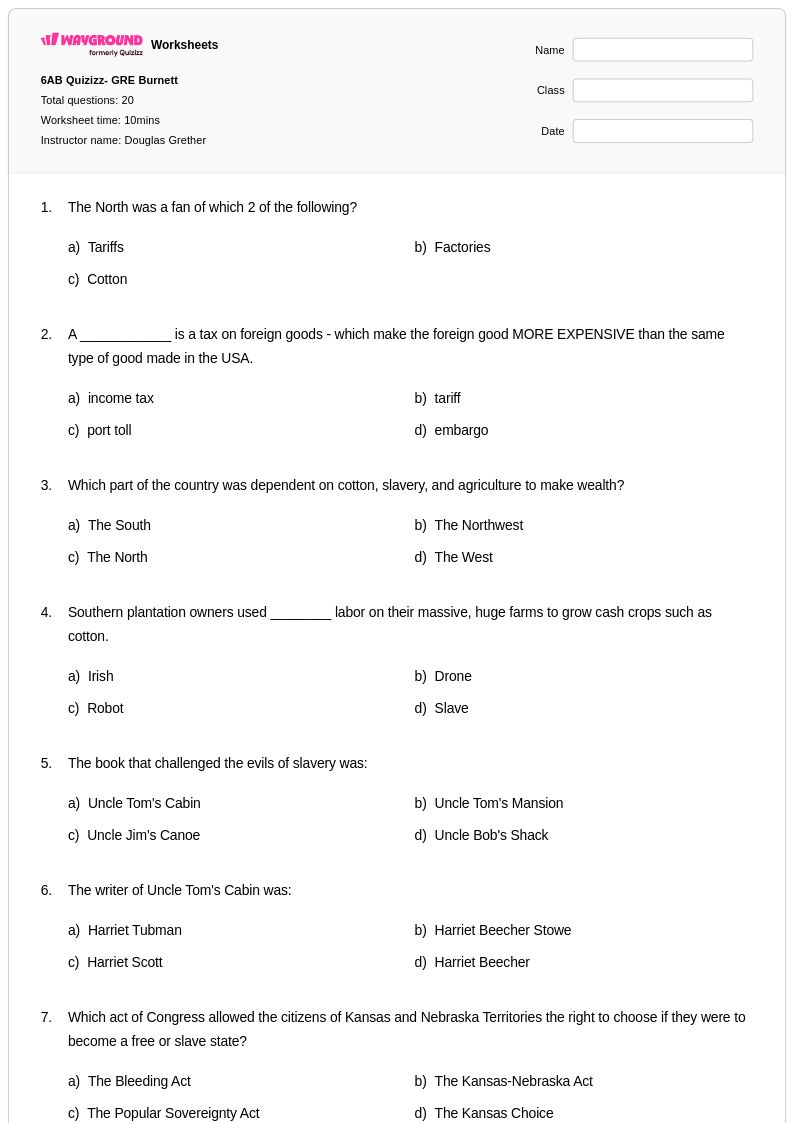
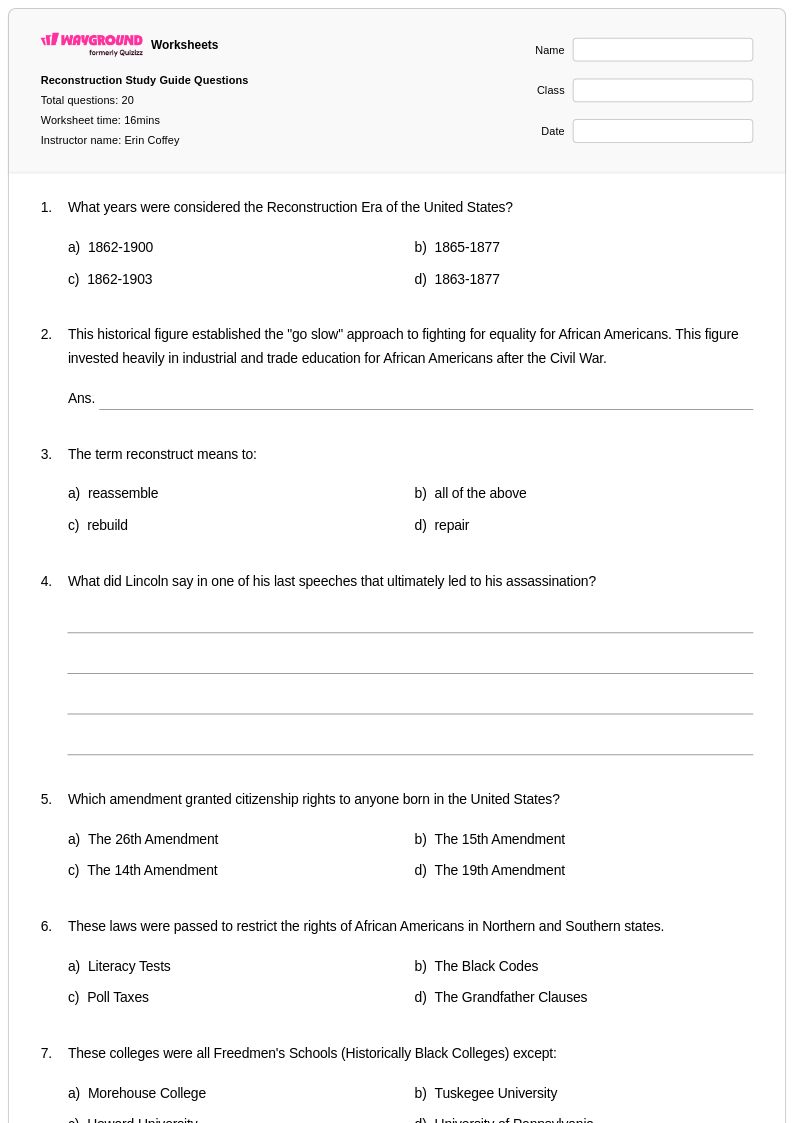
Free Printable Frederick Douglass Worksheets for Grade 7
Grade 7 students can explore Frederick Douglass's remarkable life and impact on American history through our comprehensive collection of free worksheets, printables, and practice problems with detailed answer keys.
Explore printable Frederick Douglass worksheets for Grade 7
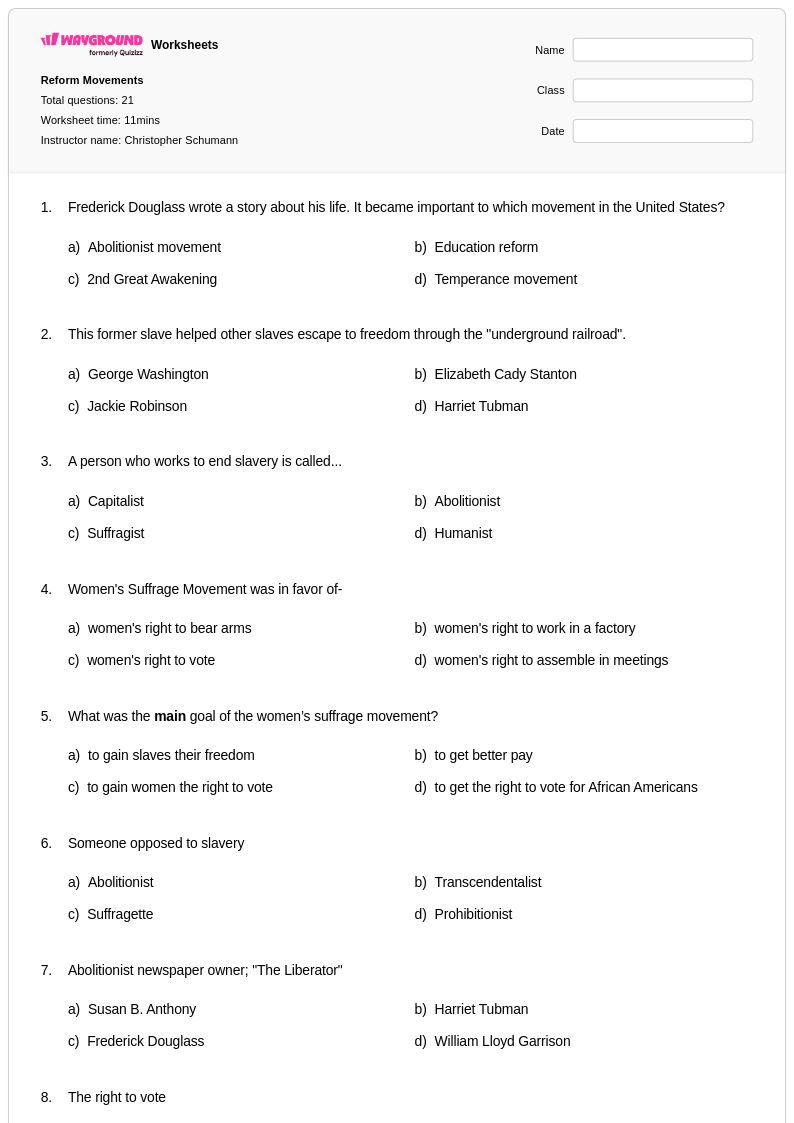
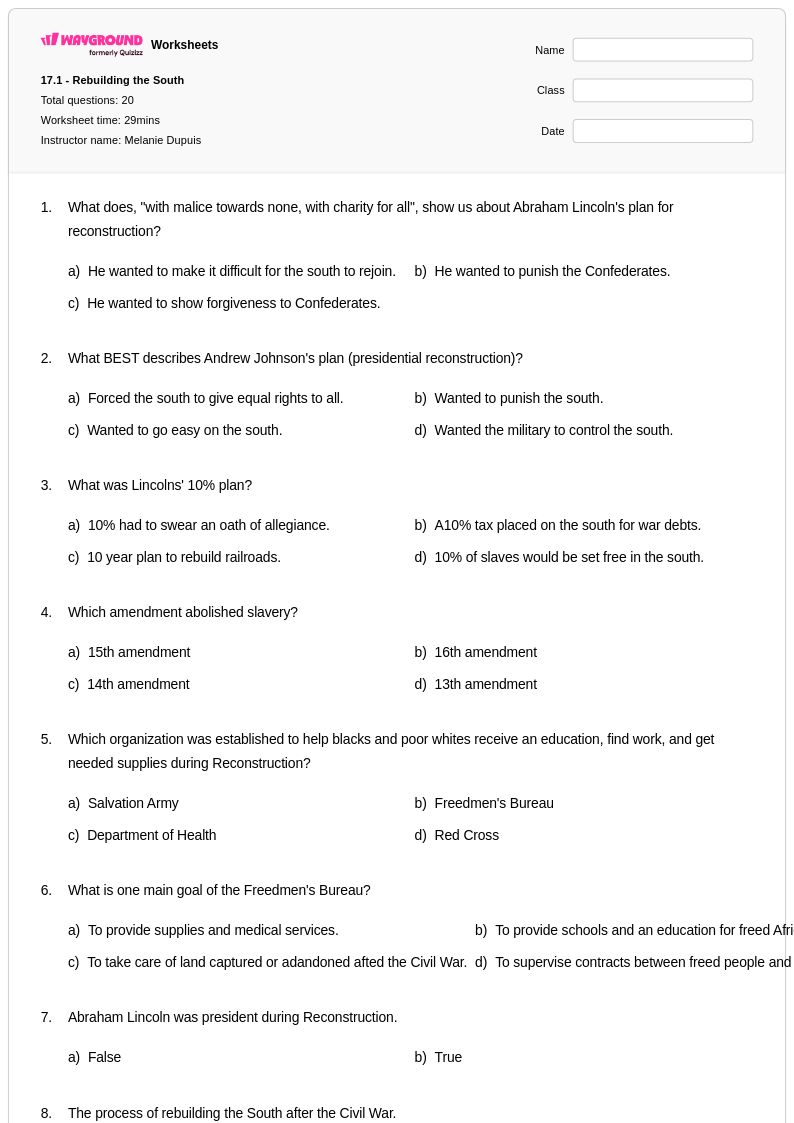
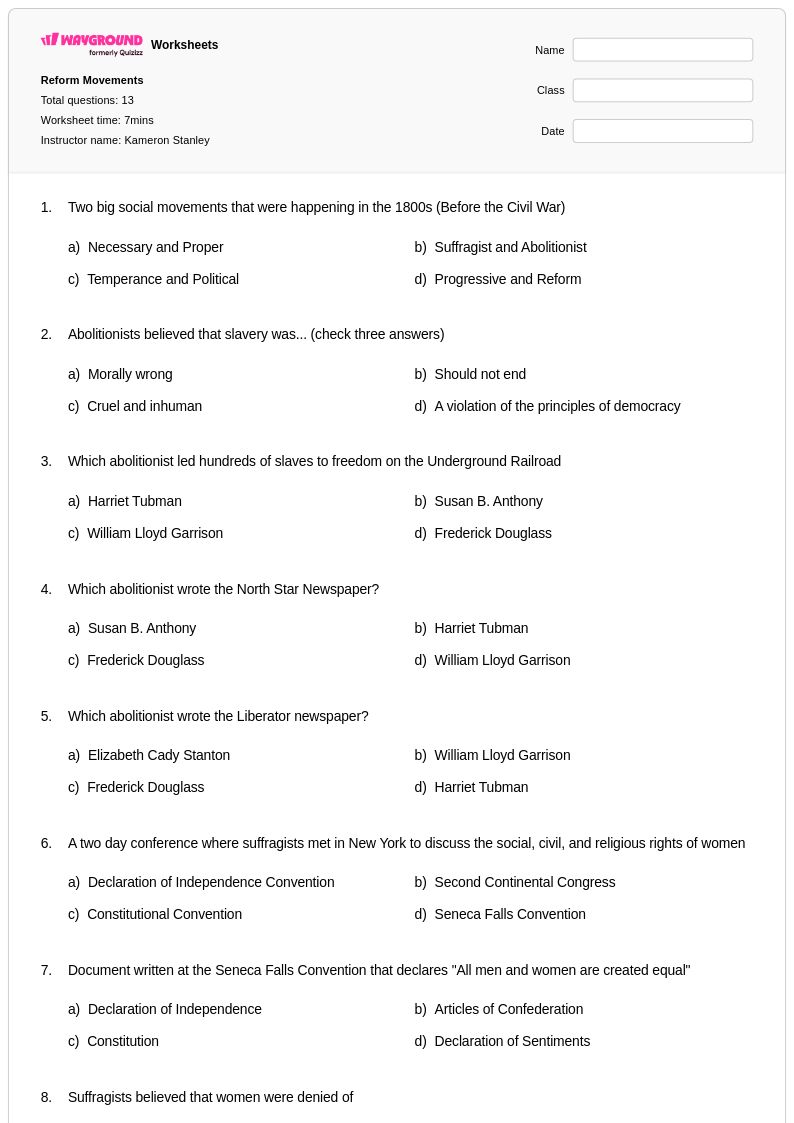
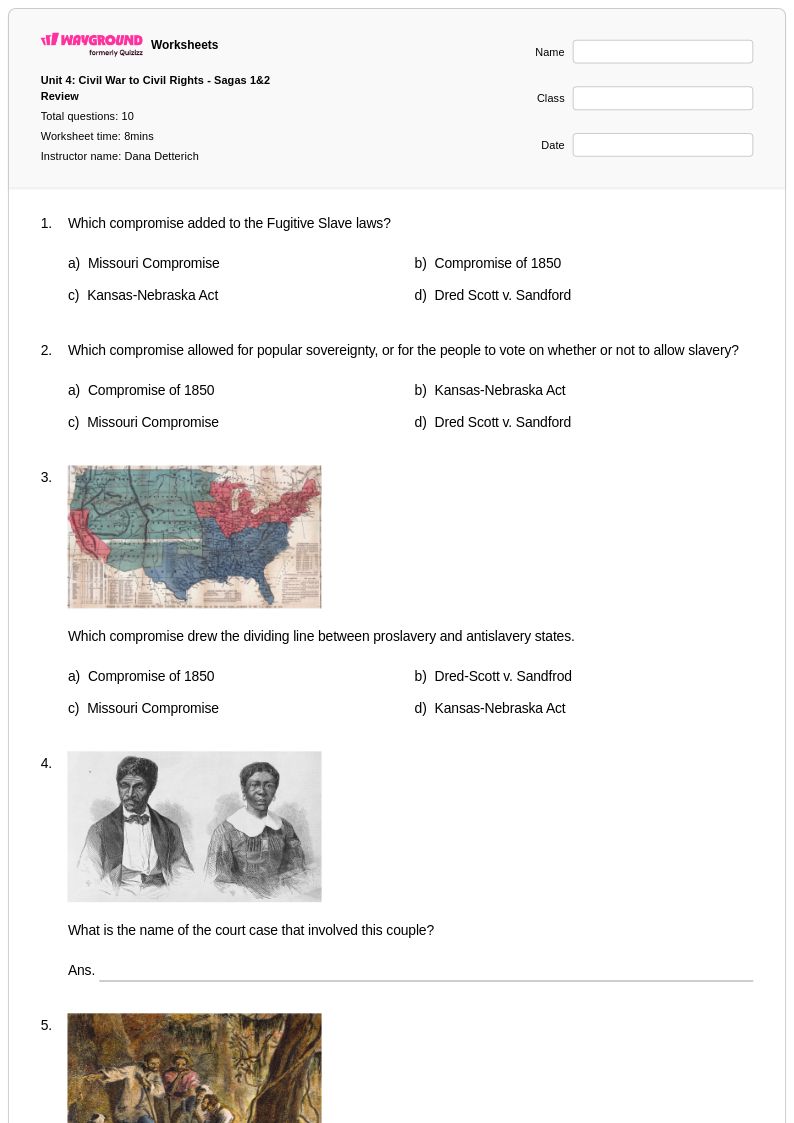
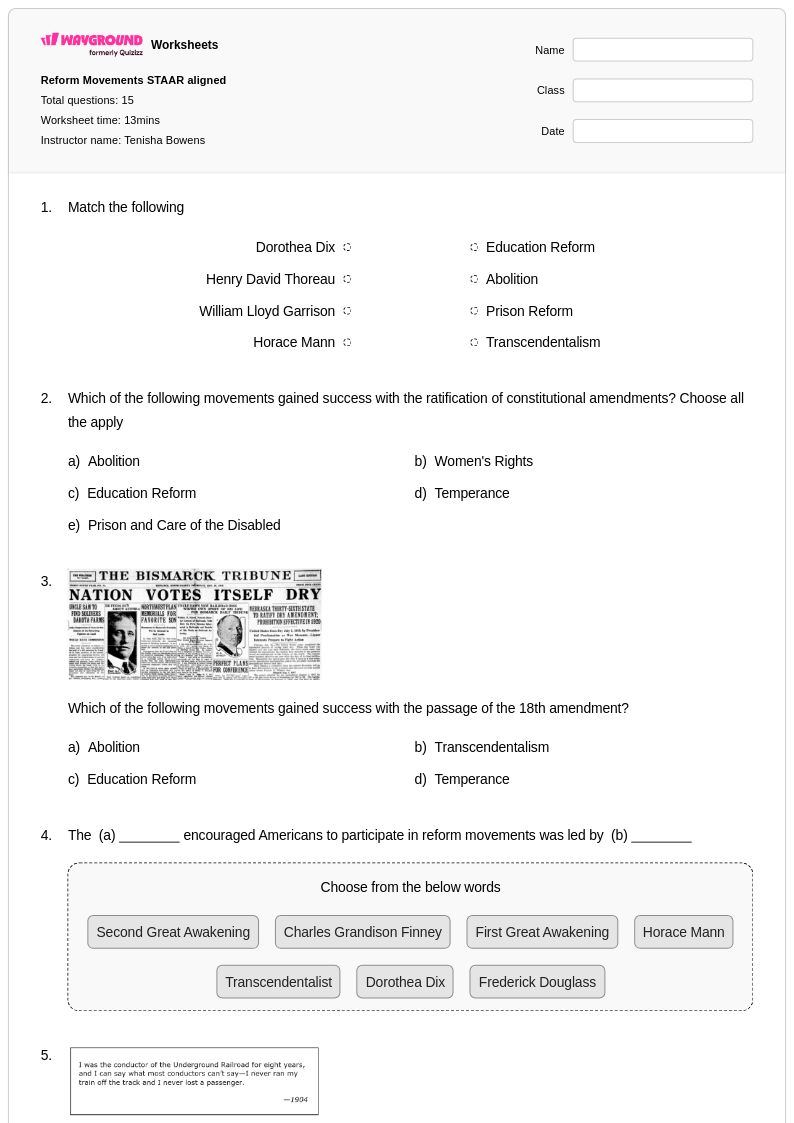
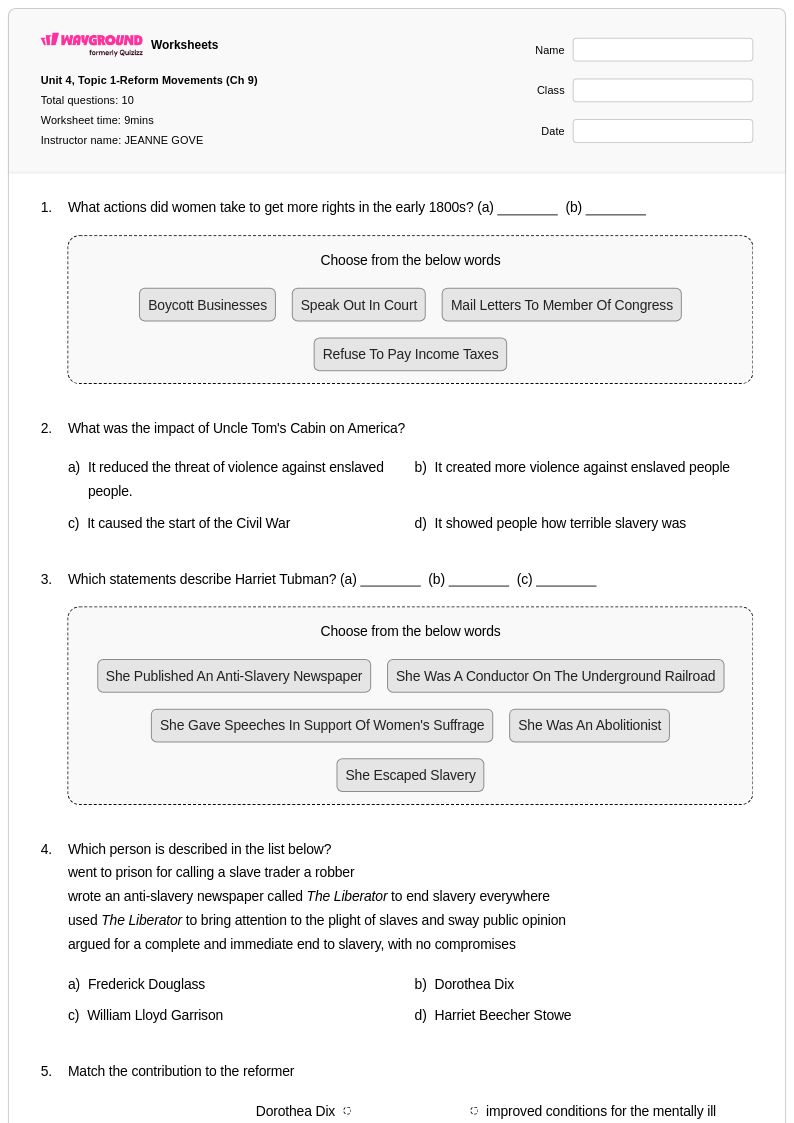
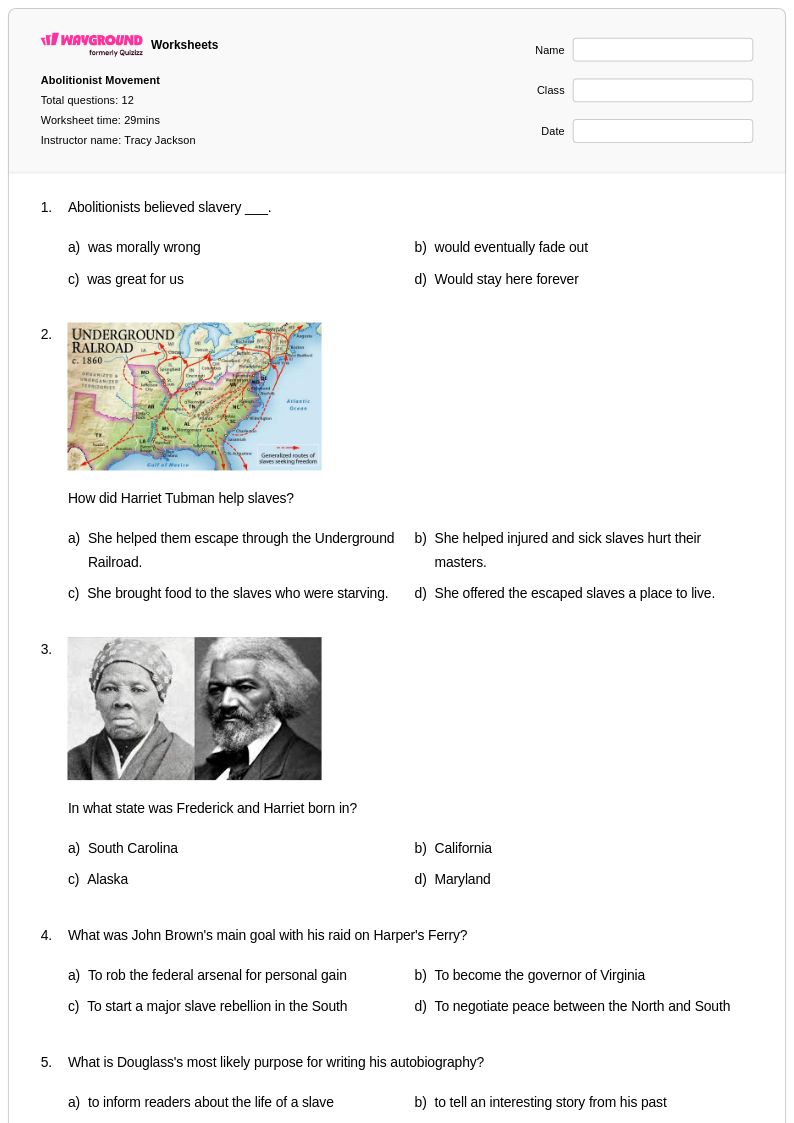
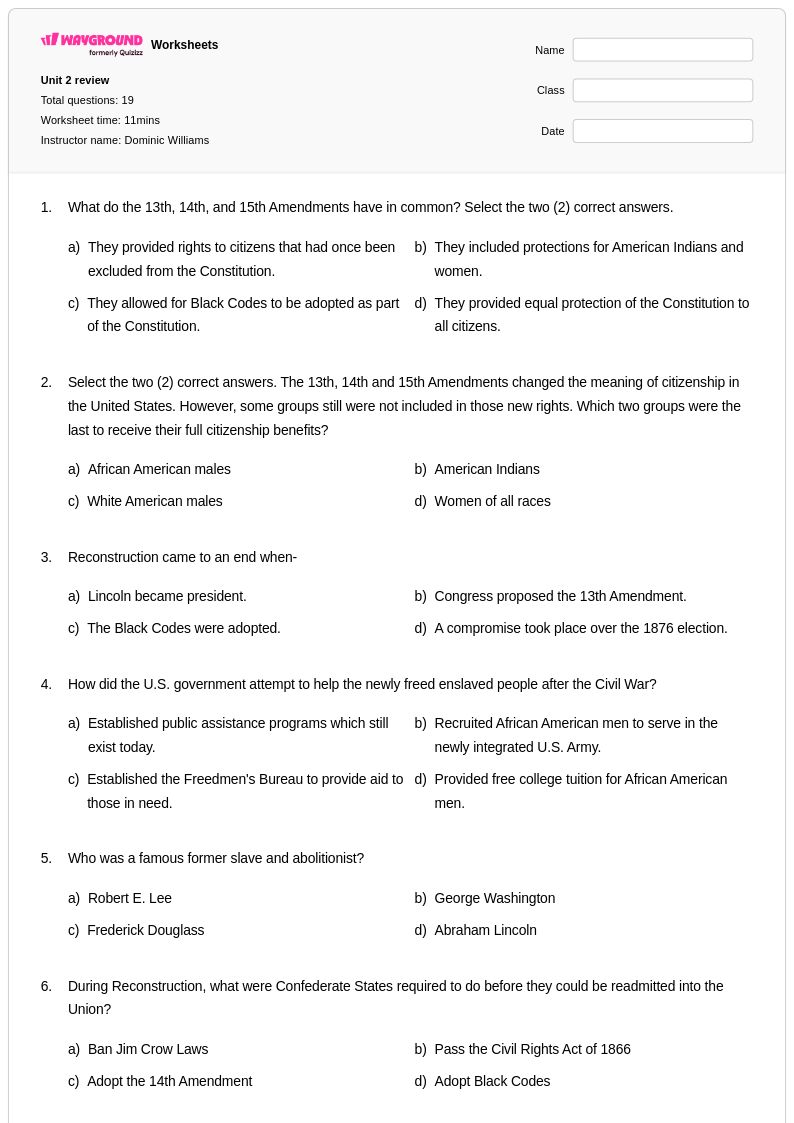
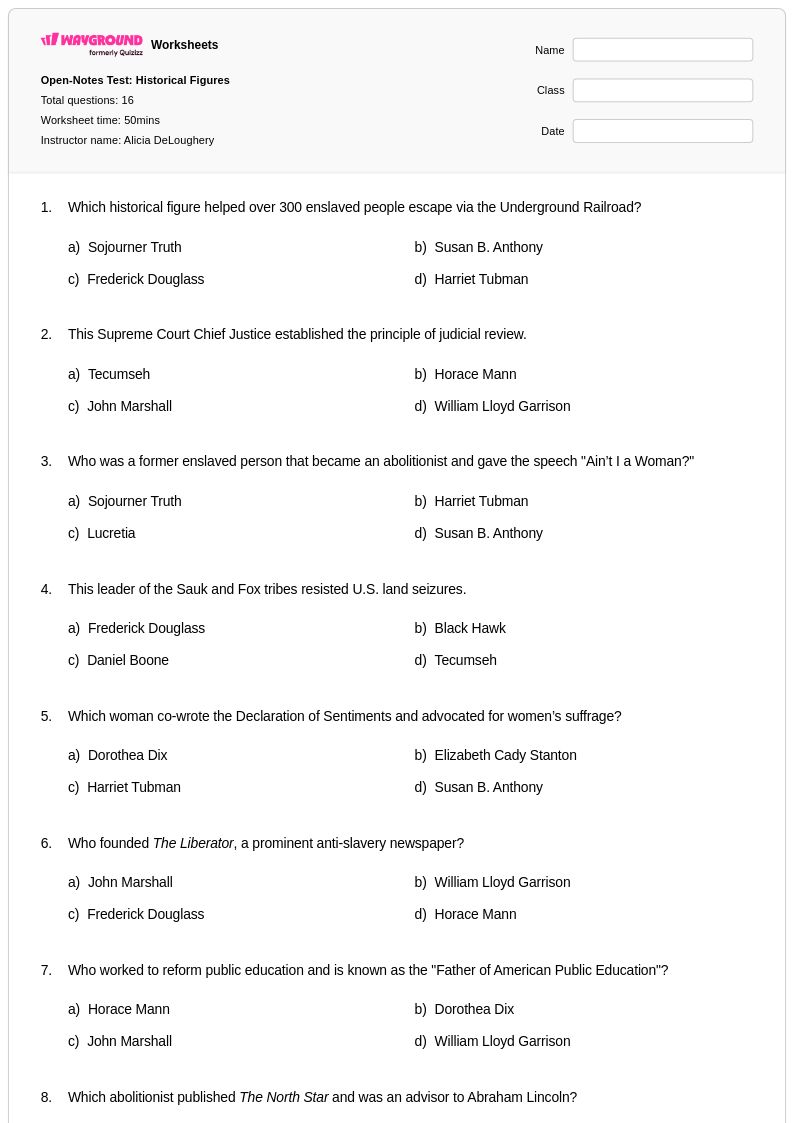
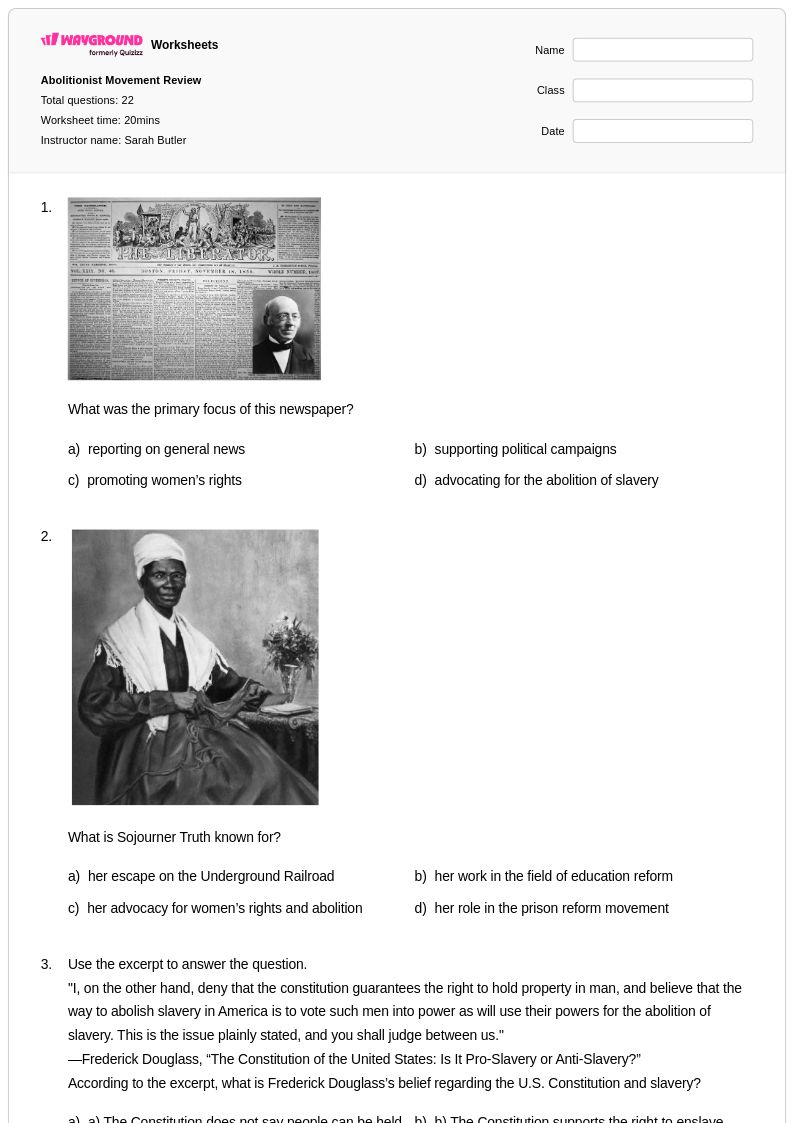
Frederick Douglass worksheets for Grade 7 students available through Wayground (formerly Quizizz) provide comprehensive learning materials that explore the life, writings, and lasting impact of America's most influential abolitionist and civil rights leader. These carefully crafted educational resources help seventh-grade students develop critical thinking skills as they analyze primary source excerpts from Douglass's autobiographical works, examine his powerful speeches advocating for human rights, and understand his role in the Underground Railroad and women's suffrage movement. Each worksheet collection includes detailed answer keys that support both independent study and classroom instruction, with free printables offering practice problems that challenge students to connect Douglass's experiences as an enslaved person to broader themes of freedom, literacy, and social justice in 19th-century America.
Wayground (formerly Quizizz) empowers educators with millions of teacher-created Frederick Douglass resources that streamline lesson planning and enhance student engagement across diverse learning environments. The platform's robust search and filtering capabilities allow teachers to quickly locate materials aligned with state and national social studies standards, while built-in differentiation tools enable customization based on individual student needs and reading levels. These versatile worksheet collections are available in both printable pdf formats for traditional classroom use and interactive digital versions that facilitate remote learning, making them ideal for skill practice, targeted remediation of historical thinking concepts, and enrichment activities that deepen students' understanding of Douglass's contributions to American democracy and the ongoing struggle for civil rights.
FAQs
How do I teach Frederick Douglass in a way that connects to students today?
Anchor instruction in Douglass's own words by using primary source excerpts from his autobiography and speeches, then explicitly connect his arguments about freedom and justice to contemporary civil rights conversations. Have students analyze the rhetorical strategies Douglass used — such as narrative voice, irony, and moral appeal — so they engage with the text as argument, not just biography. Pairing close reading with discussion questions about systemic injustice helps students see Douglass's relevance beyond the 19th century.
What are the best exercises for practicing analysis of Frederick Douglass's writing?
The most effective practice exercises ask students to annotate excerpts from the 'Narrative of the Life of Frederick Douglass, an American Slave' for rhetorical devices, author's purpose, and tone. Graphic organizers that map cause-and-effect relationships between events in Douglass's life and his developing beliefs about freedom build both comprehension and analytical skills. Timed written responses asking students to evaluate how Douglass uses specific evidence to build his argument are also strong preparation for standardized assessments.
What mistakes do students commonly make when studying Frederick Douglass?
A frequent error is treating Douglass's narrative as a straightforward memoir rather than a carefully crafted persuasive text written for a specific abolitionist audience. Students also tend to underestimate the legal and social risks Douglass took by publishing his story while still legally considered property, which is essential context for understanding his courage. Another common gap is conflating Douglass's early views with his later ones — his positions on political strategy and women's suffrage evolved significantly over decades, and students should be taught to date the sources they are analyzing.
How do I use Frederick Douglass worksheets effectively in my classroom?
Wayground's Frederick Douglass worksheets are available as printable PDFs for traditional classroom use and in digital formats for technology-integrated environments, including the option to host them as a quiz directly on Wayground. This flexibility makes them practical for whole-class instruction, small-group analysis, independent practice, or remote learning. Each worksheet includes a complete answer key, so teachers can use them for formative checks or as structured assessment tools without additional preparation.
How do I differentiate Frederick Douglass instruction for students reading below grade level?
For students who struggle with 19th-century prose, pre-teaching vocabulary from the 'Narrative' — words like 'chattel,' 'subjugation,' and 'temperance' — before reading reduces cognitive overload and keeps comprehension on track. Providing sentence frames for written responses allows students to engage with higher-order analysis without being blocked by academic language production. On Wayground, teachers can also enable Read Aloud support and reduced answer choices for individual students, giving targeted accommodations without disrupting the experience for the rest of the class.
What primary sources should I pair with Frederick Douglass worksheets?
The most impactful pairings include excerpts from Douglass's 'What to the Slave is the Fourth of July?' speech alongside the Declaration of Independence, which makes his critique of American hypocrisy immediate and concrete for students. His three autobiographies — written in 1845, 1855, and 1881 — also offer a rare opportunity to teach students how a single author's self-presentation and political analysis shifts over time. These pairings work well with worksheets focused on sourcing, contextualization, and corroboration as historical thinking skills.