Free Printable Genetic Variation Worksheets for Grade 7
Explore Wayground's free Grade 7 genetic variation worksheets and printables that help students understand heredity, DNA differences, and population diversity through engaging practice problems with complete answer keys.
Explore printable Genetic Variation worksheets for Grade 7
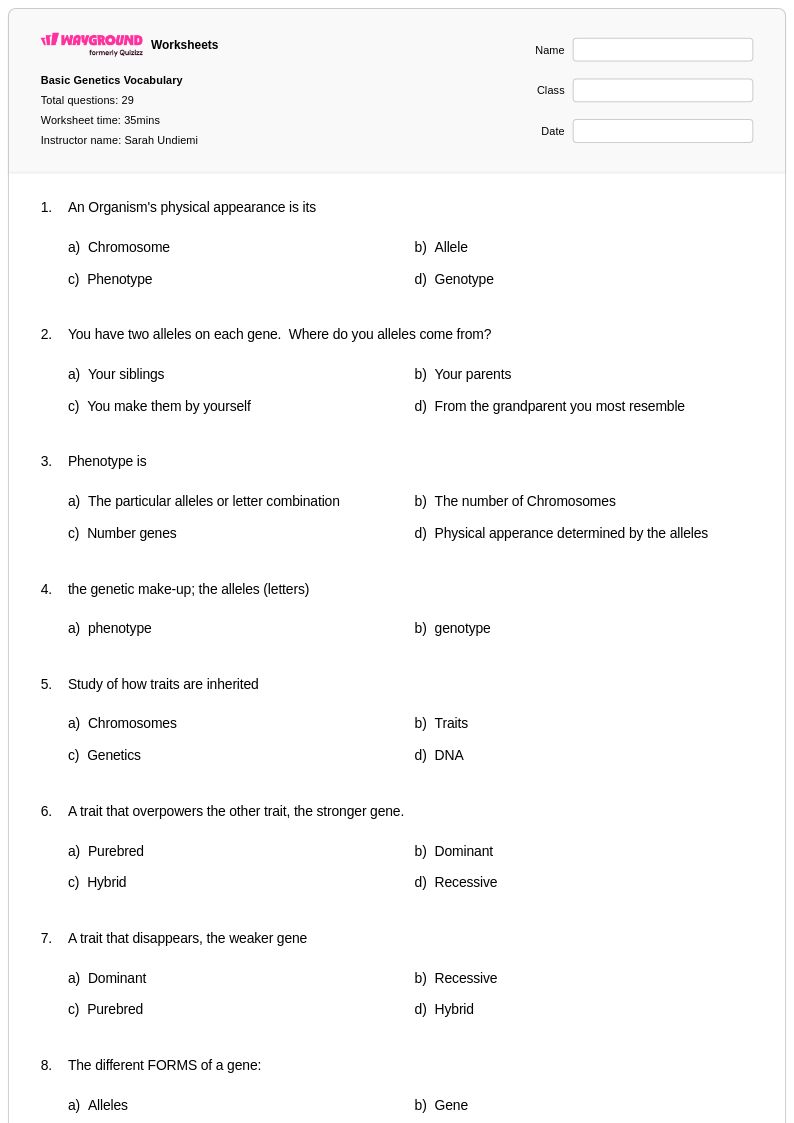
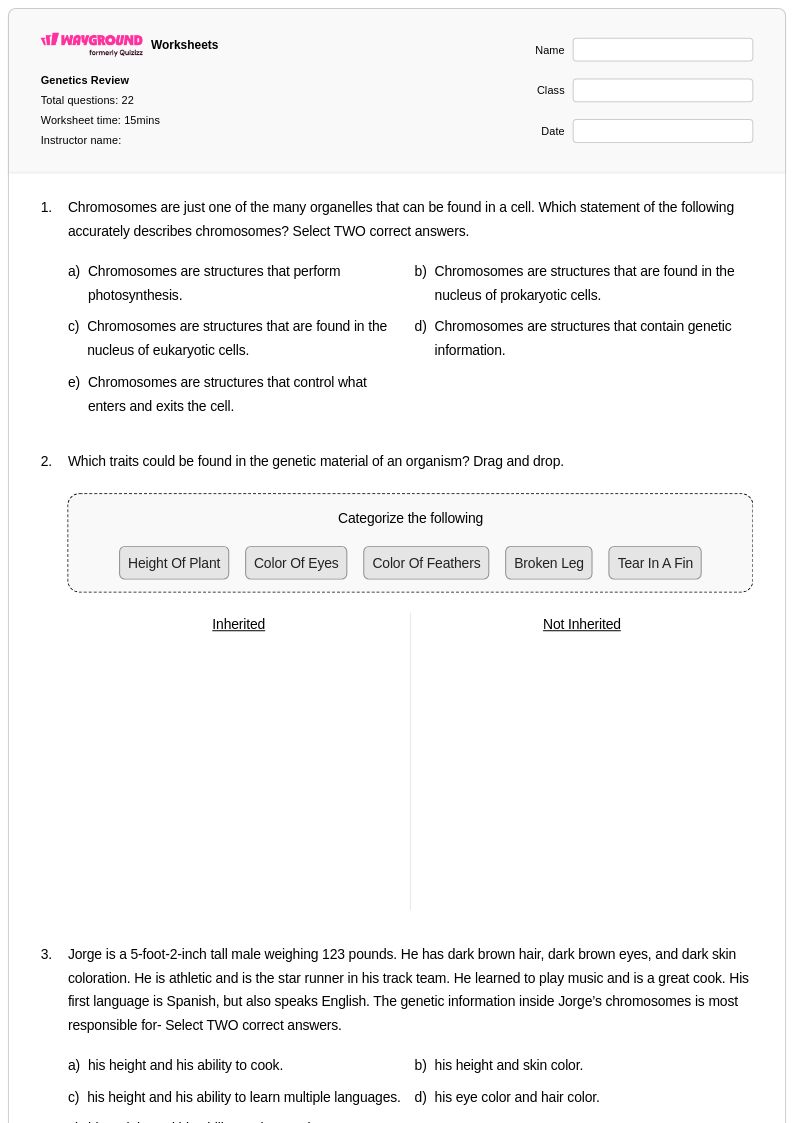
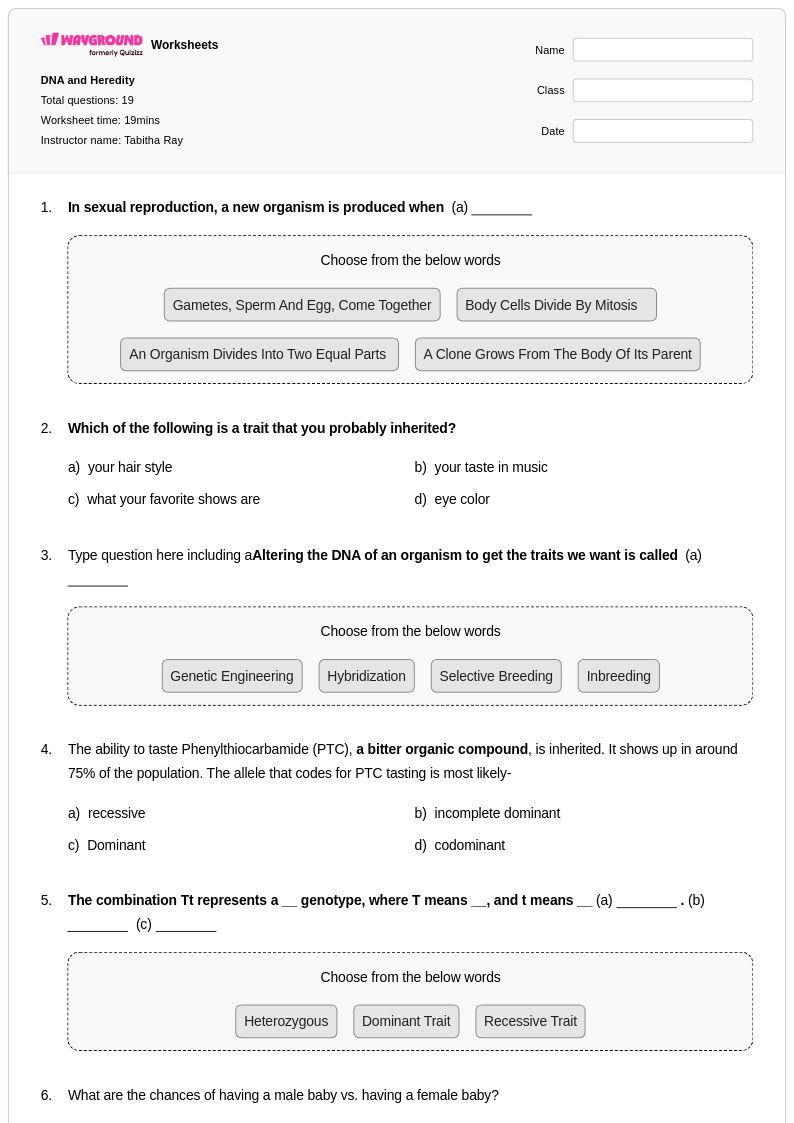
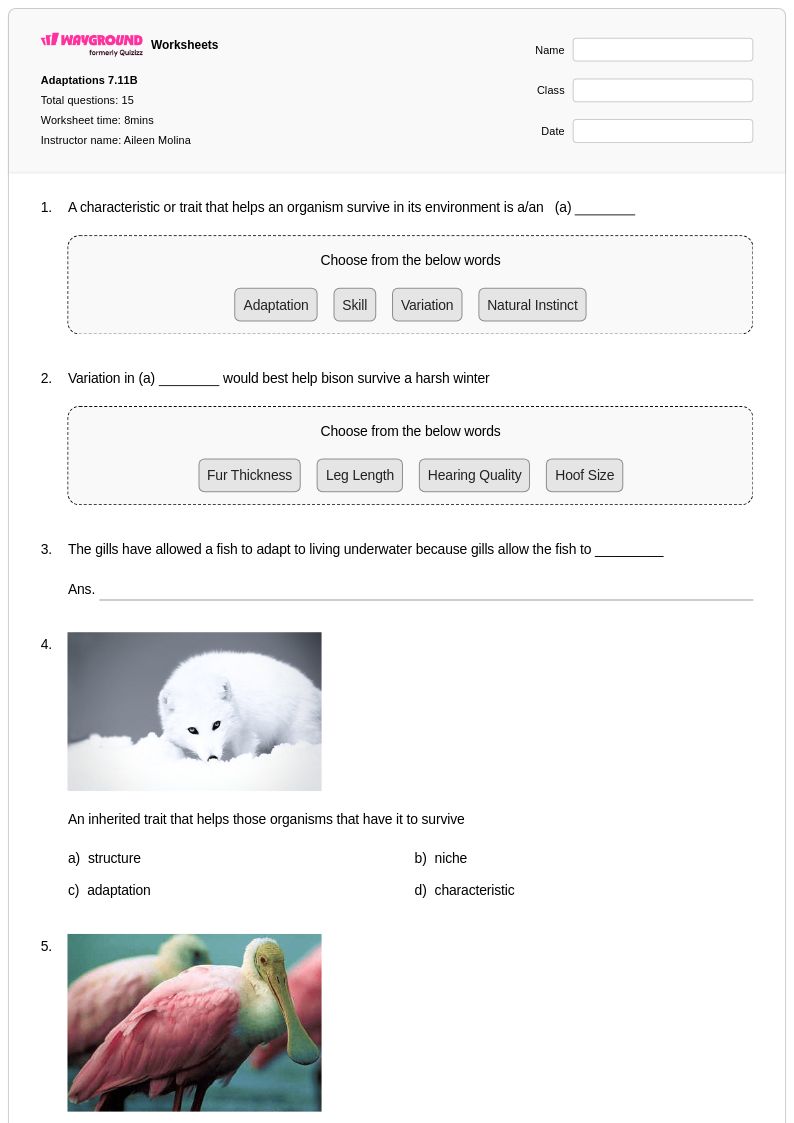
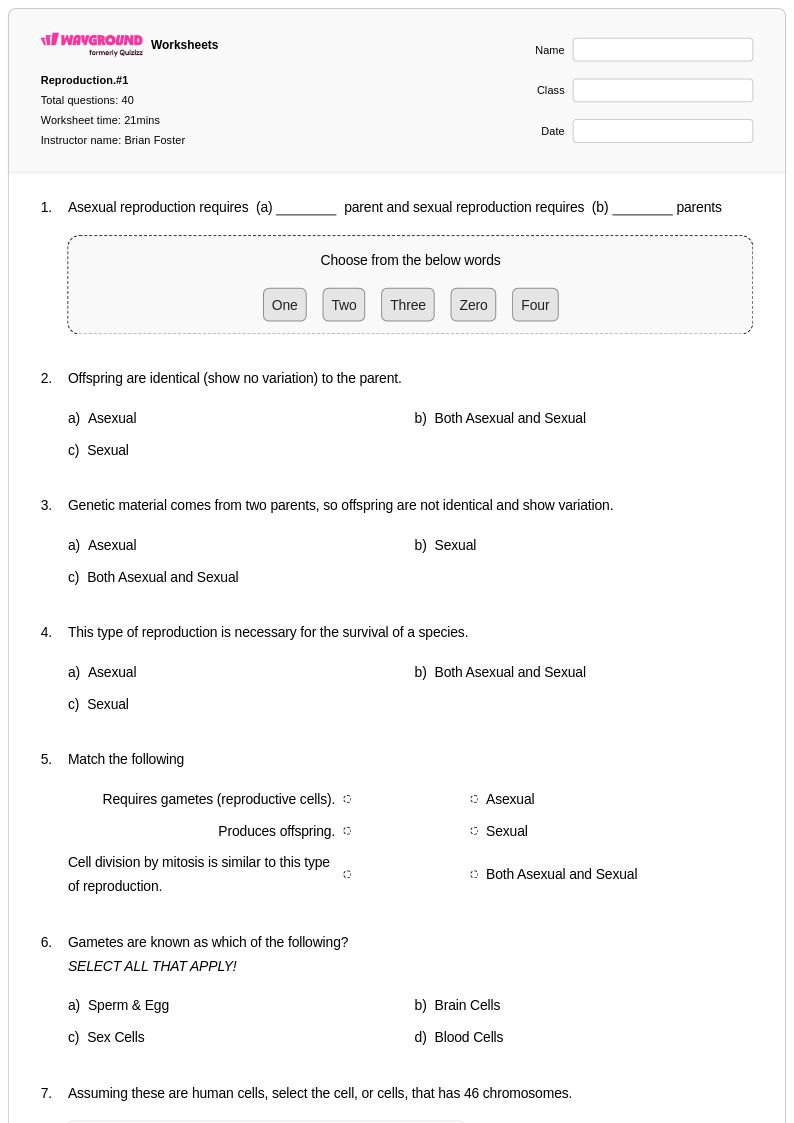
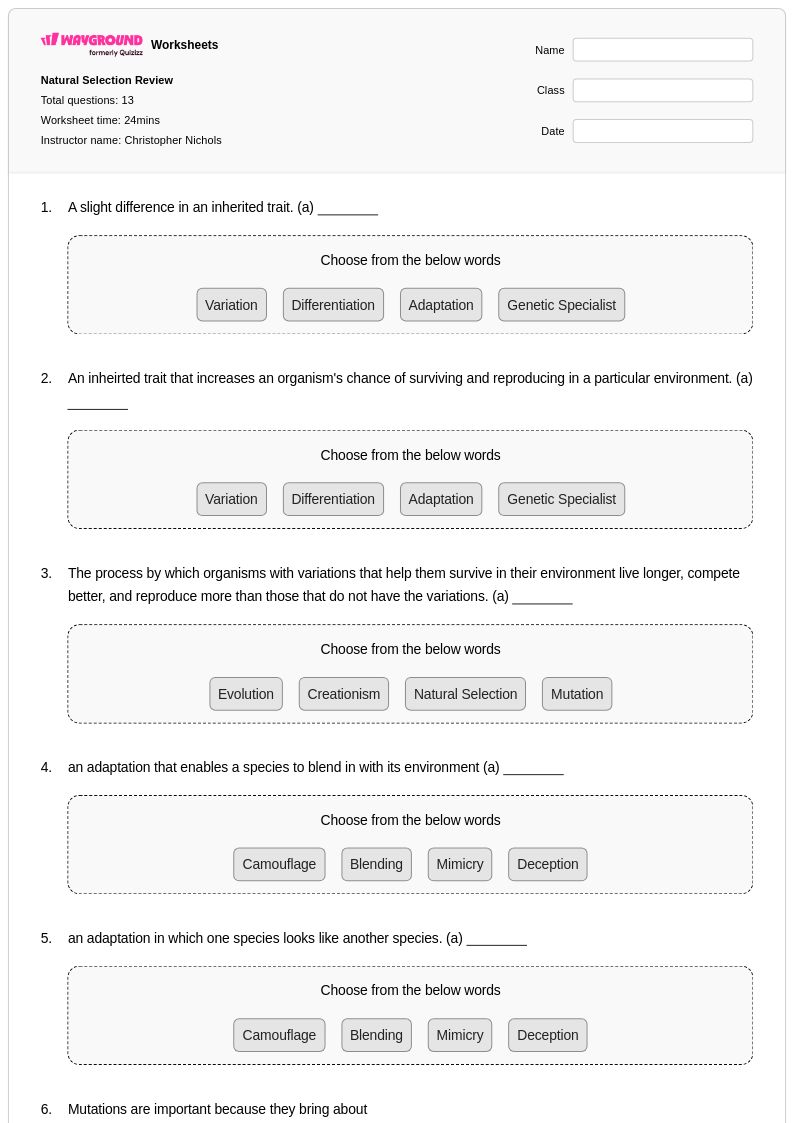
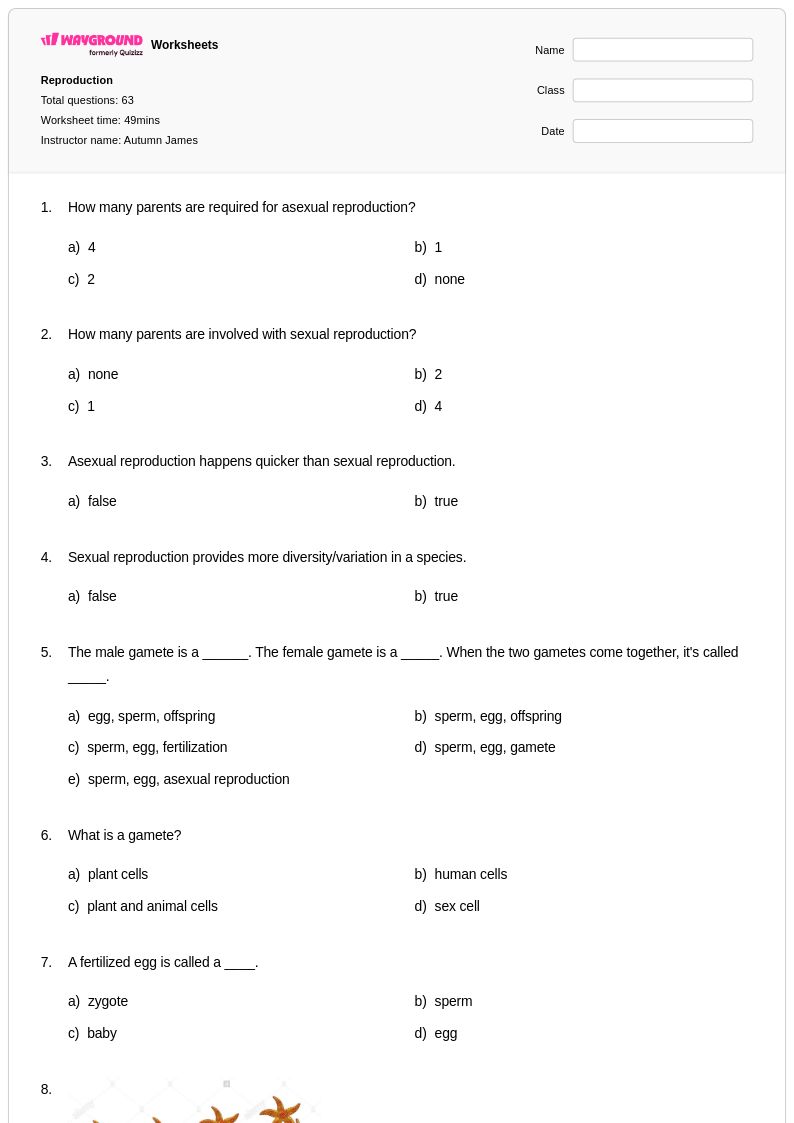
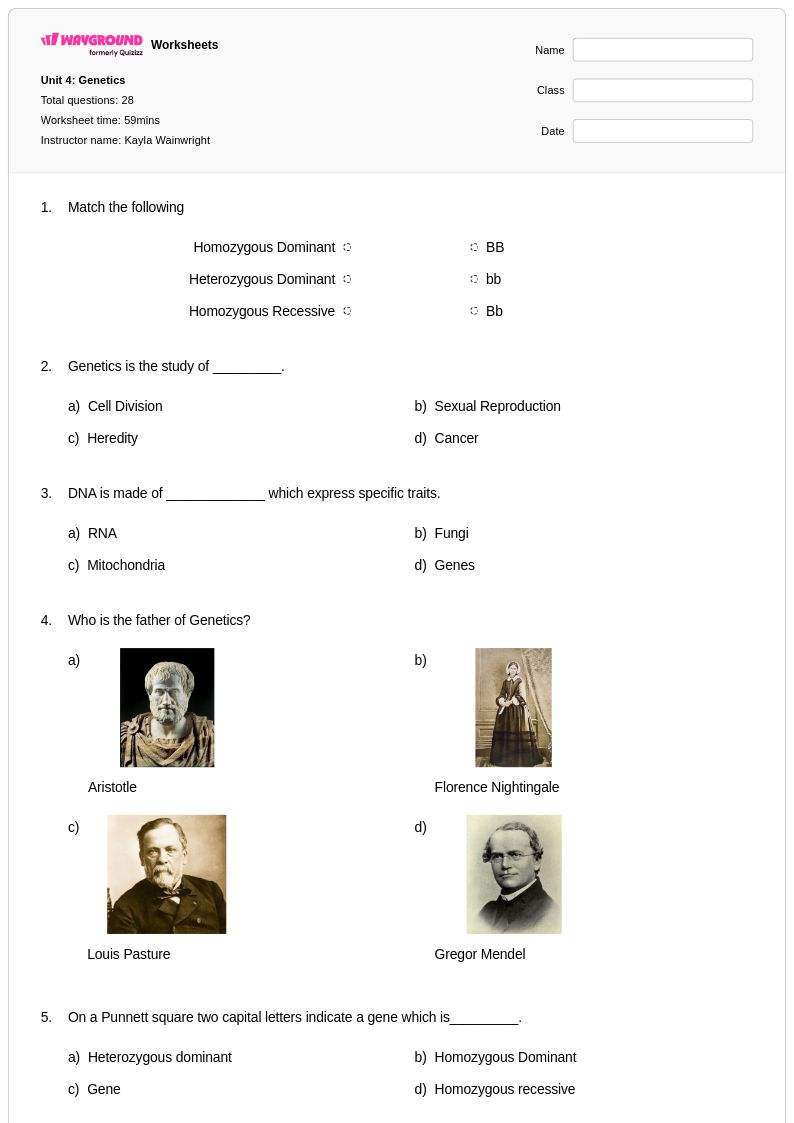
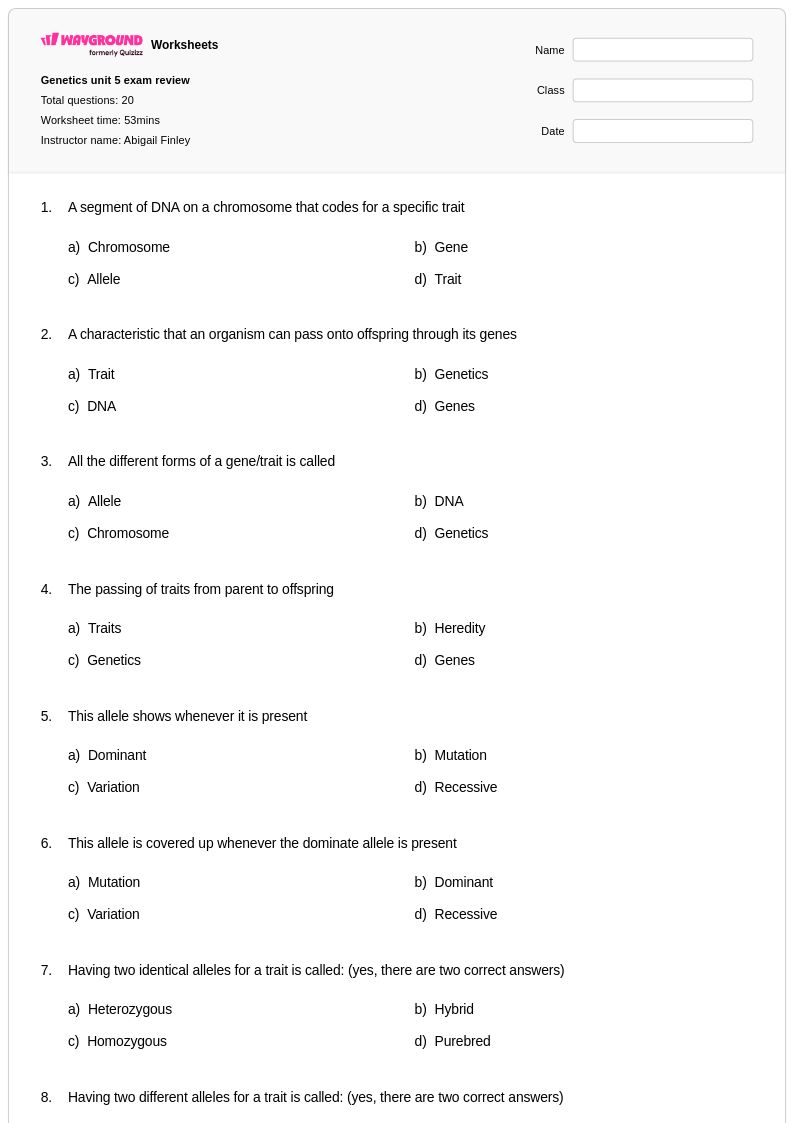
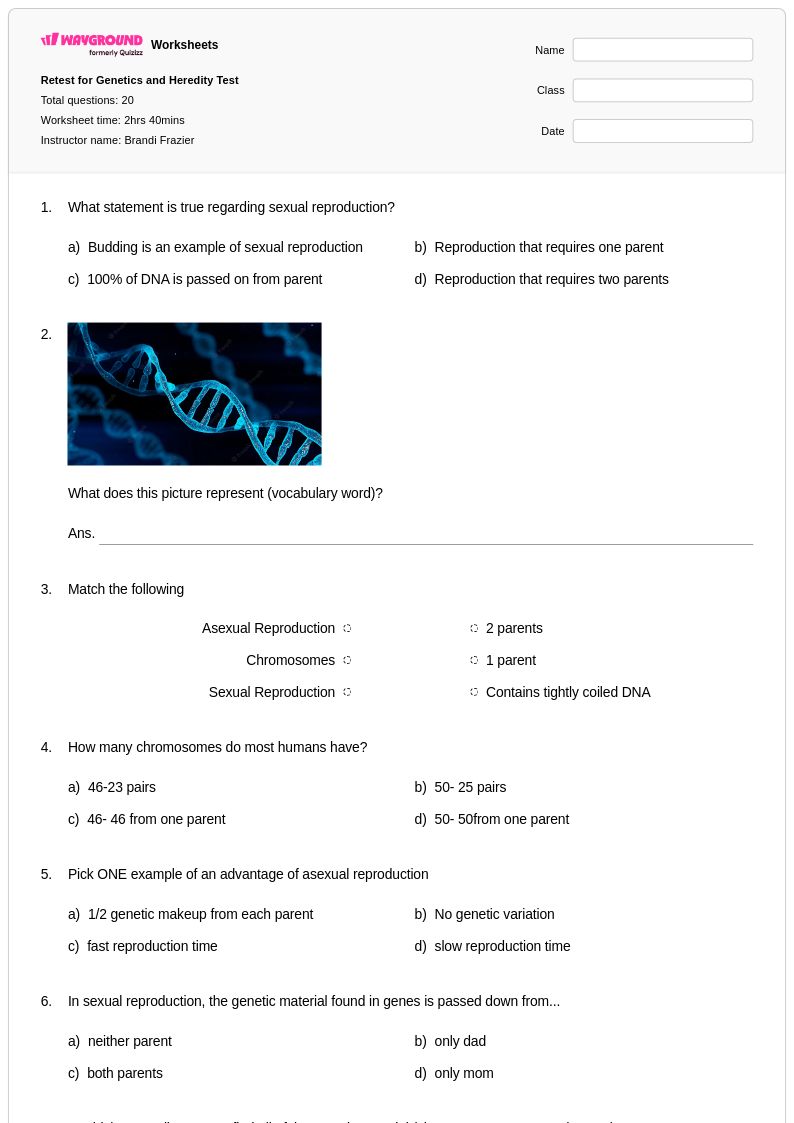
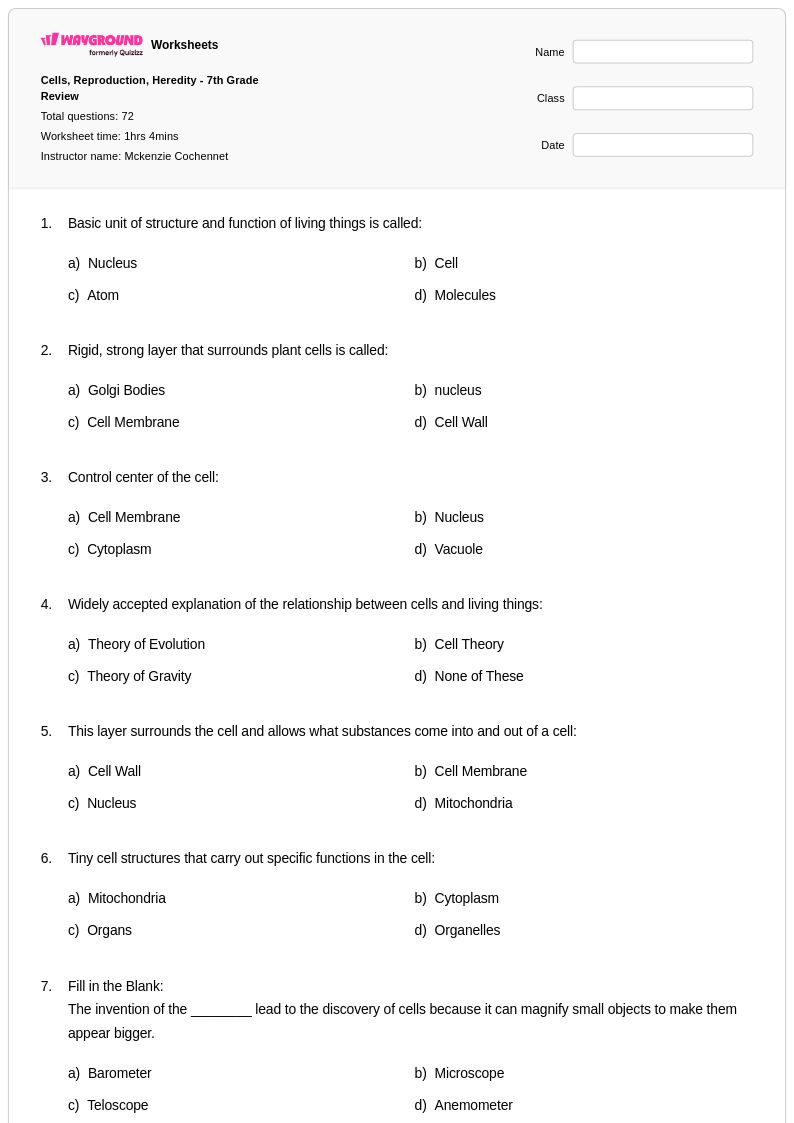
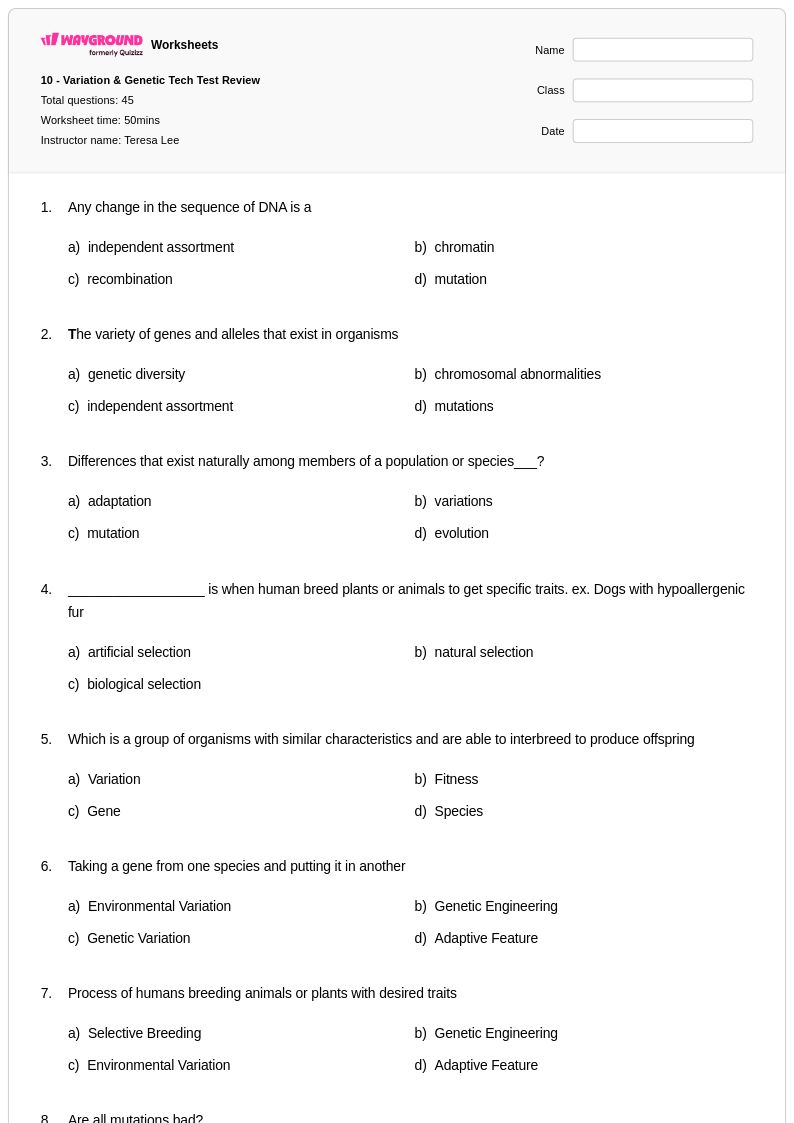
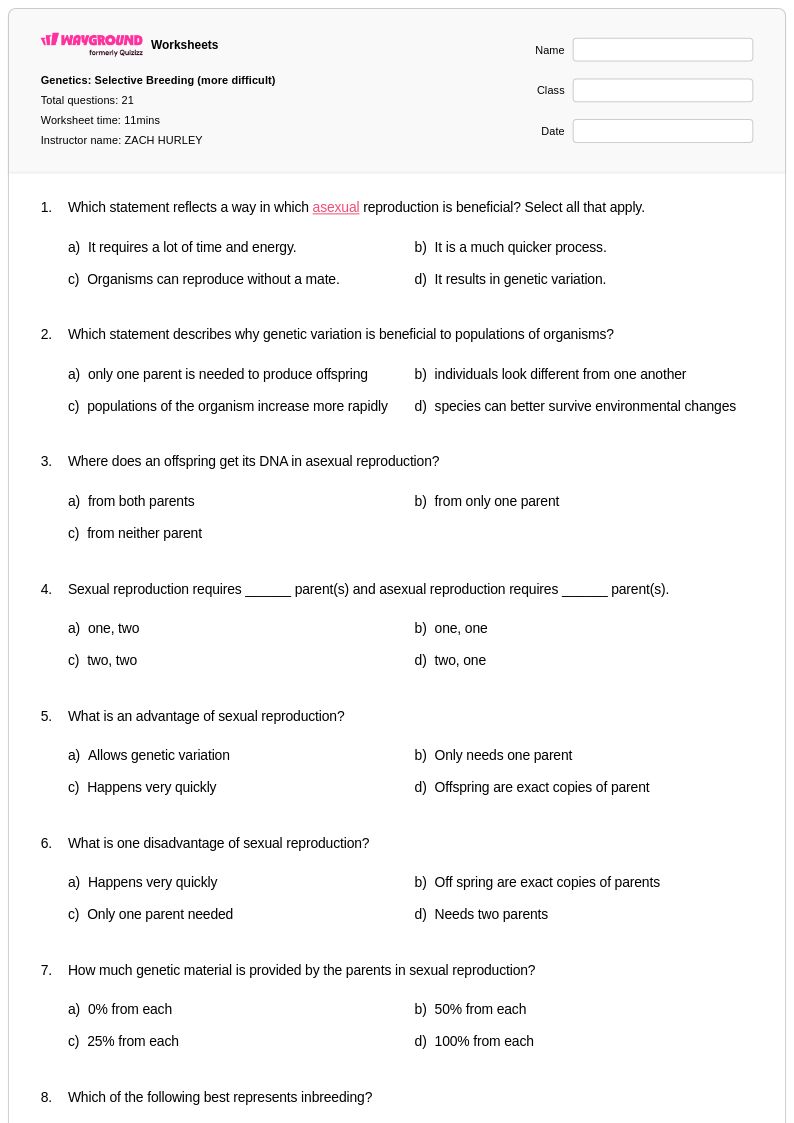
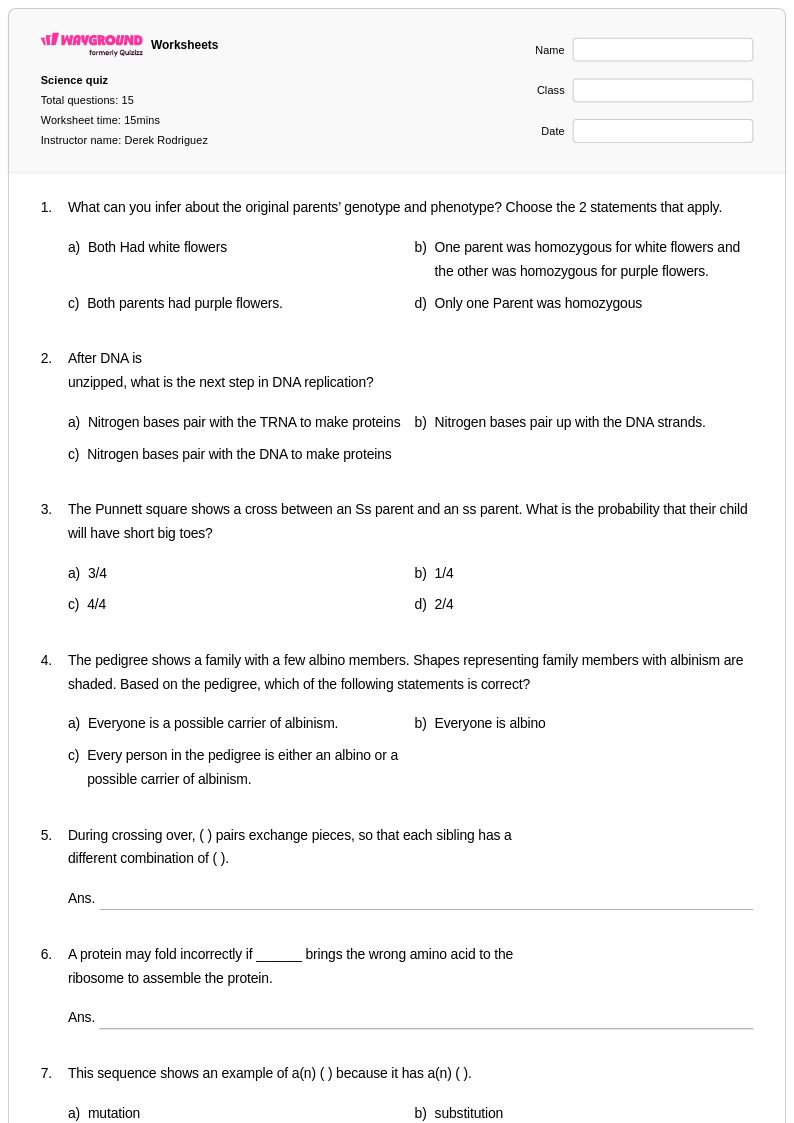
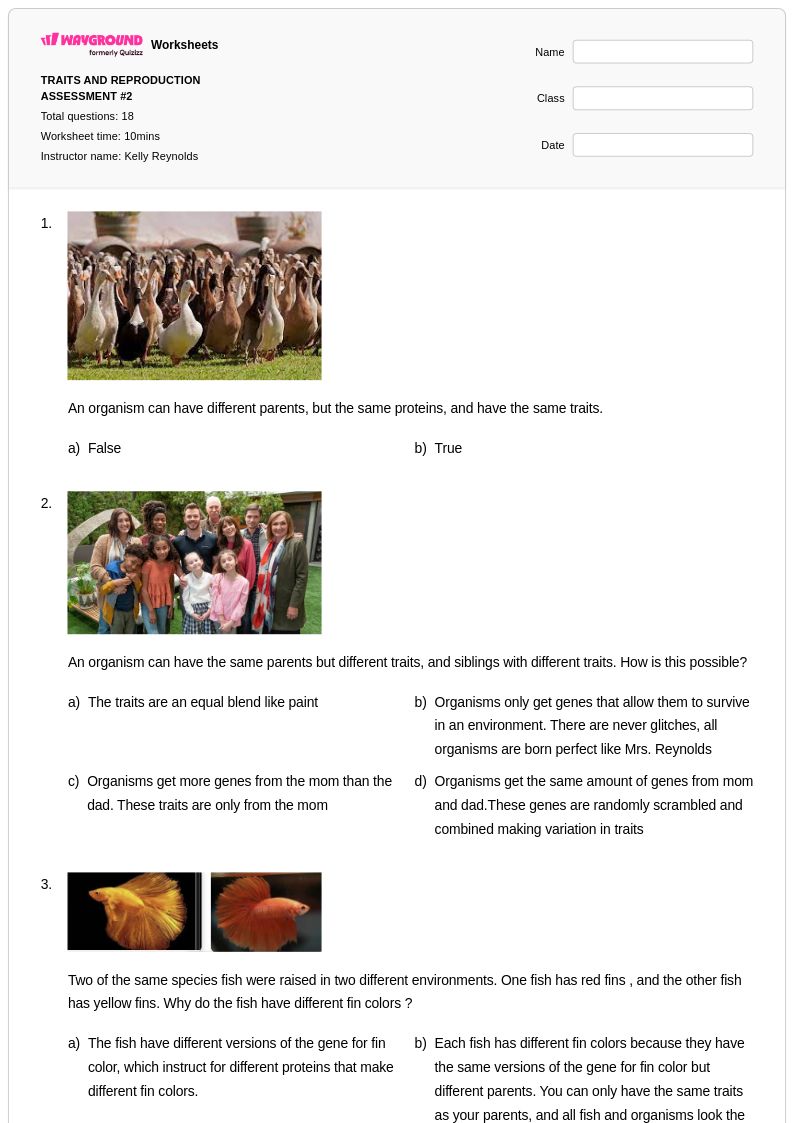
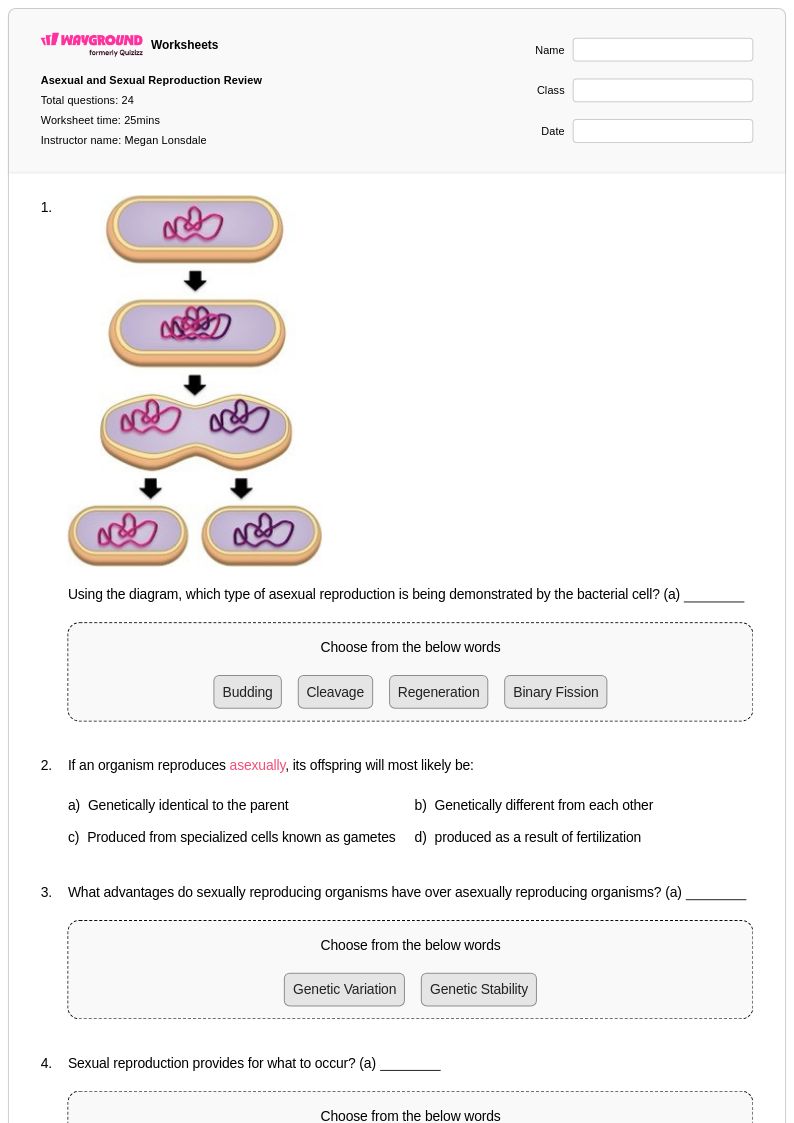
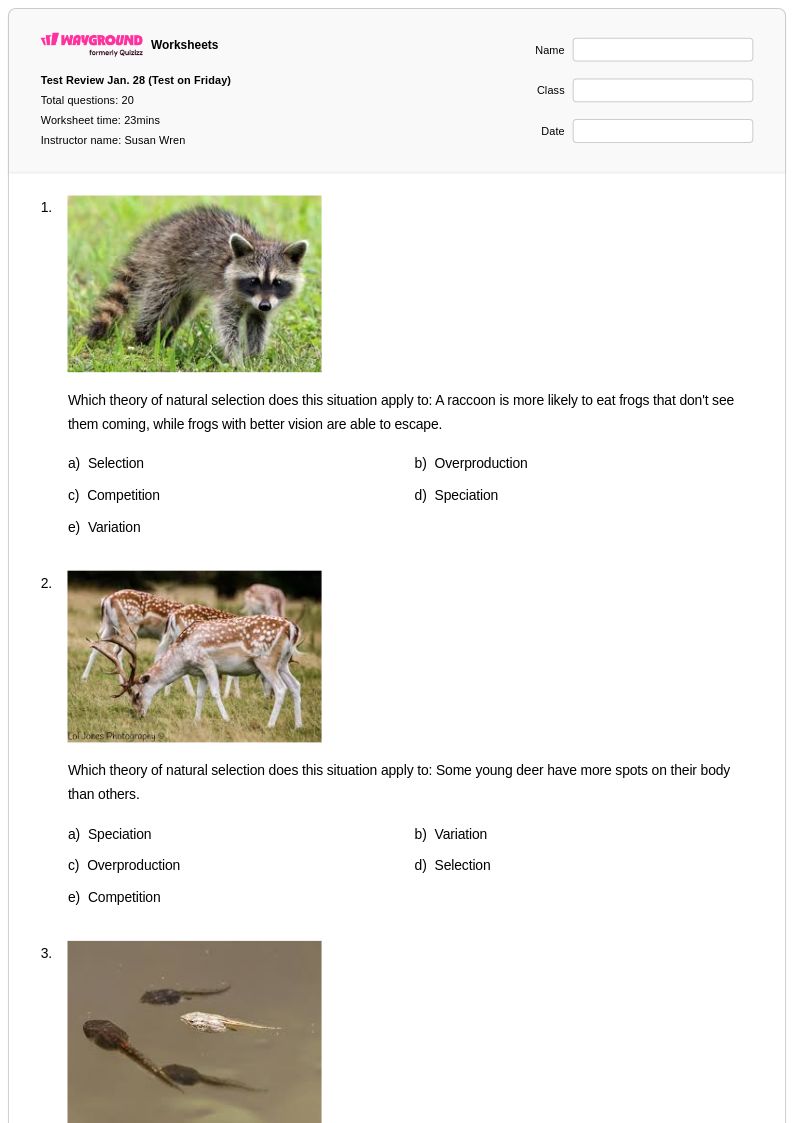
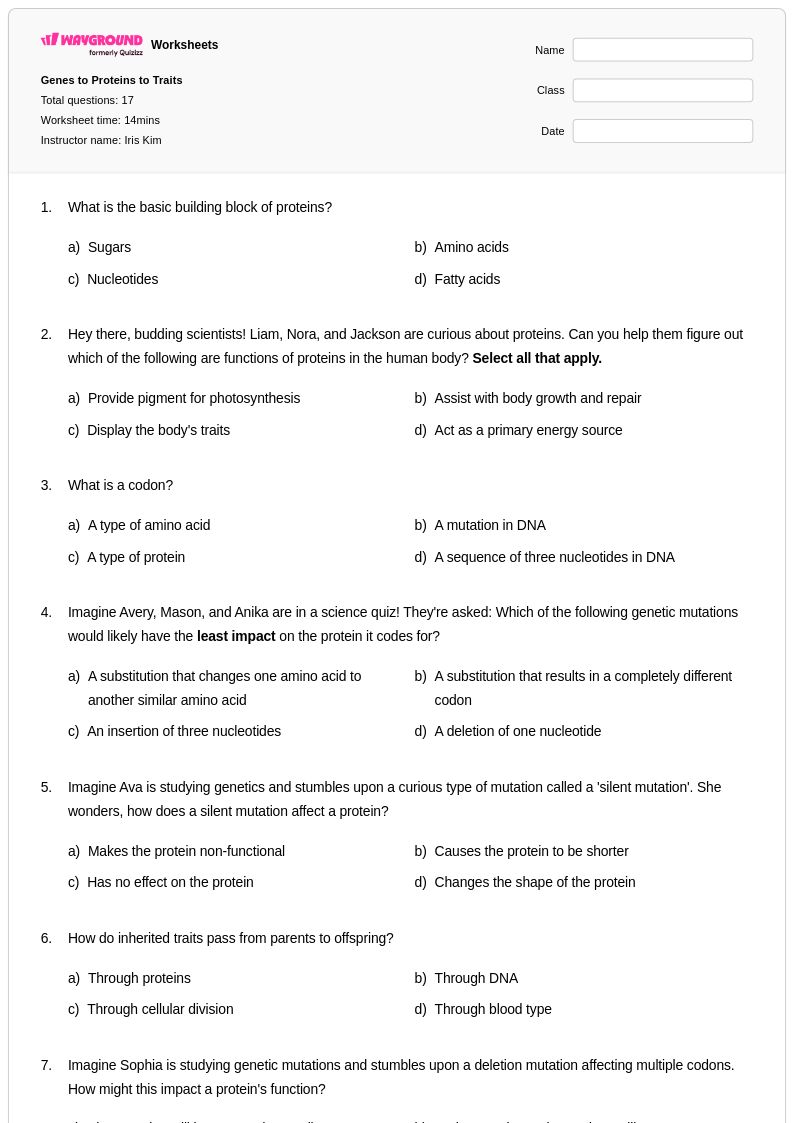
Genetic variation worksheets for Grade 7 students available through Wayground (formerly Quizizz) provide comprehensive coverage of how organisms within species differ from one another and the mechanisms that create these differences. These educational resources strengthen students' understanding of key concepts including inherited traits, environmental influences on phenotypes, sexual reproduction's role in creating diversity, and the relationship between genetic variation and natural selection. The worksheets feature practice problems that challenge students to analyze pedigree charts, compare offspring characteristics, and examine how mutations contribute to population diversity. Each worksheet collection includes detailed answer keys to support both independent study and classroom instruction, with materials available as free printables in convenient pdf format for seamless integration into lesson plans.
Wayground (formerly Quizizz) supports science educators with an extensive library of millions of teacher-created genetic variation resources specifically designed for Grade 7 biology instruction. The platform's robust search and filtering capabilities allow teachers to quickly locate worksheets aligned with specific curriculum standards while offering differentiation tools that accommodate diverse learning needs within the classroom. These customizable materials are available in both printable and digital formats, including downloadable pdf versions that facilitate flexible lesson planning and homework assignments. Teachers can effectively use these resources for targeted skill practice, remediation of challenging concepts like dominant and recessive alleles, and enrichment activities that explore advanced topics such as chromosomal inheritance patterns, making genetic variation accessible and engaging for middle school students at varying ability levels.
FAQs
How do I teach genetic variation to high school biology students?
Effective genetic variation instruction builds from mechanisms to consequences: start with sources of variation such as mutations, crossing over, and independent assortment, then connect those mechanisms to inheritance patterns and population-level effects. Using pedigree analysis and allele frequency problems gives students concrete practice with abstract concepts. Anchoring each mechanism to a real-world example, such as sickle cell disease for point mutations or ABO blood types for codominance, helps students retain the distinctions between variation types.
What practice problems help students understand genetic variation?
The most effective practice problems for genetic variation require students to do more than recall definitions: interpreting pedigrees, calculating allele frequencies using Hardy-Weinberg equations, and analyzing inheritance patterns across generations all build the analytical reasoning the topic demands. Problems that ask students to evaluate the evolutionary significance of a variation type, such as why sexual reproduction generates more diversity than asexual reproduction, push thinking beyond mechanics into conceptual understanding.
What mistakes do students commonly make when learning about genetic variation?
A persistent misconception is that mutations are always harmful; students need explicit instruction that most mutations are neutral and some are advantageous, depending on environmental context. Students also frequently conflate genotype and phenotype, struggling to explain why two organisms with different genotypes can share the same phenotype due to dominance or environmental influence. Another common error is treating independent assortment and crossing over as the same process rather than understanding them as distinct mechanisms that each independently increase variation.
How can I use genetic variation worksheets to differentiate instruction in my classroom?
Genetic variation spans a wide difficulty range, from basic Mendelian ratios to complex population genetics, which makes it well-suited for tiered assignments. On Wayground, teachers can assign the same worksheet digitally while applying individual accommodations such as read aloud for students who need audio support, reduced answer choices to lower cognitive load for struggling learners, and extended time for students with IEPs or 504 plans. These settings are saved per student and apply automatically in future sessions, so differentiation does not require rebuilding configurations each time.
How do I use Wayground's genetic variation worksheets in my class?
Wayground's genetic variation worksheets are available as printable PDFs for traditional classroom use and in digital formats for technology-integrated environments, including the option to host them as a quiz directly on Wayground. Teachers can assign worksheets for direct instruction, guided practice, homework, or independent review, and each resource includes a complete answer key so grading and feedback are straightforward. The digital format allows teachers to apply student-level accommodations and track performance without additional setup.
How does genetic variation relate to evolution, and how do I help students make that connection?
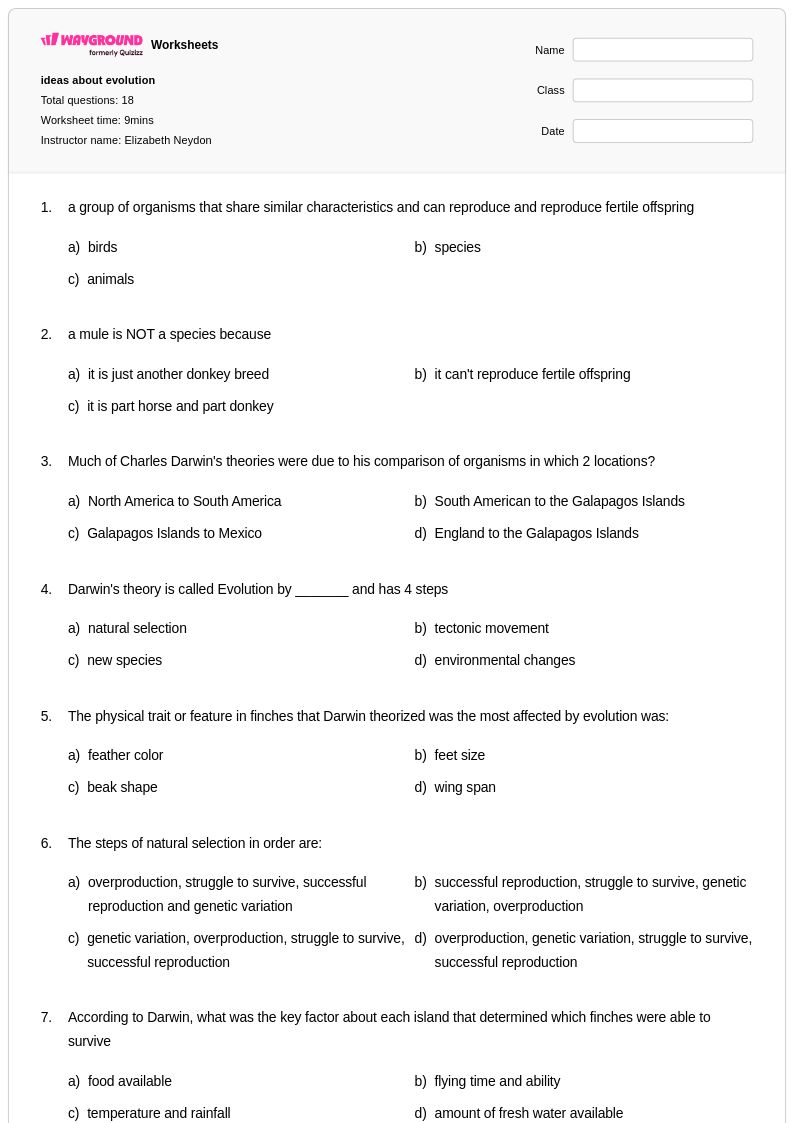
Genetic variation is the raw material for natural selection: without heritable differences among individuals, selection has nothing to act on and populations cannot adapt over time. Students often understand natural selection conceptually but fail to connect it back to the molecular and cellular mechanisms, such as mutations and recombination, that produce the variation selection works on. Structured problems that trace a variation from its source (a mutation event) through inheritance to population-level frequency changes can make this vertical connection explicit.