
20 Q
11th - 12th
20 Q
9th - 12th
182 Q
9th - 12th
25 Q
4th - Uni
10 Q
4th - 12th
25 Q
5th - Uni
19 Q
7th - 12th
19 Q
9th - 12th
20 Q
9th - 12th
8 Q
9th - 12th
10 Q
10th - 12th
20 Q
11th
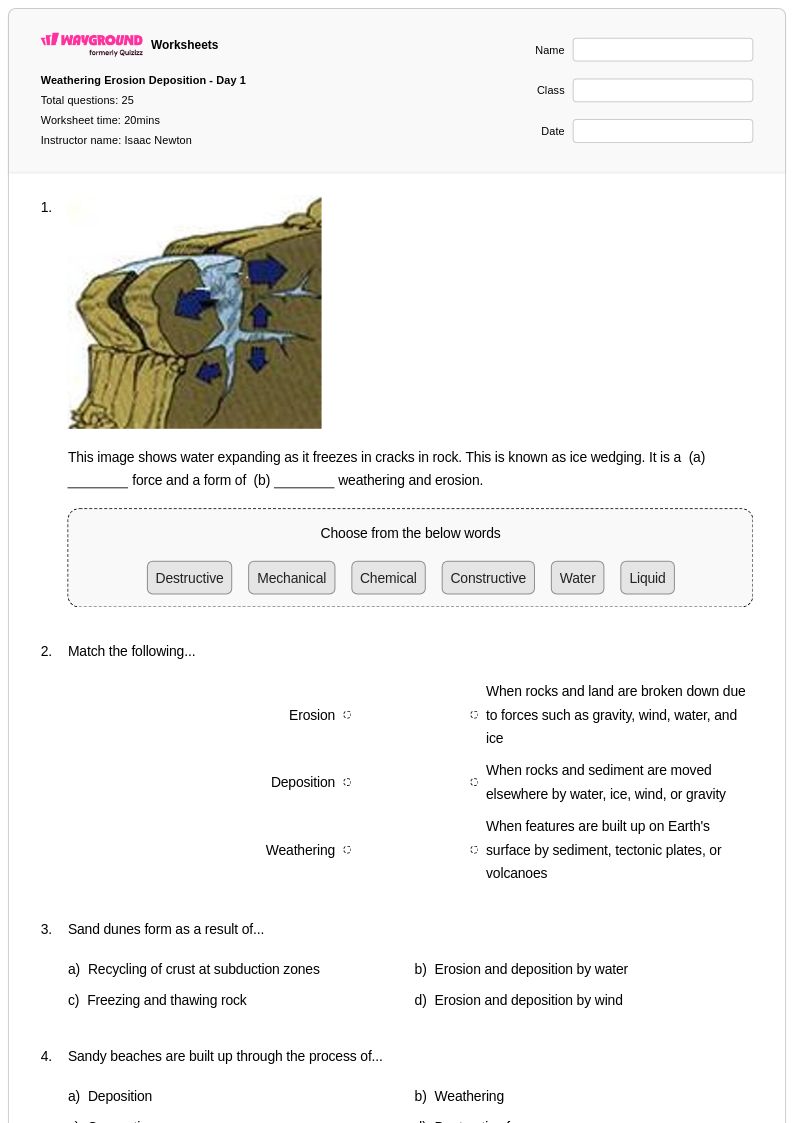
25 Q
9th - 12th
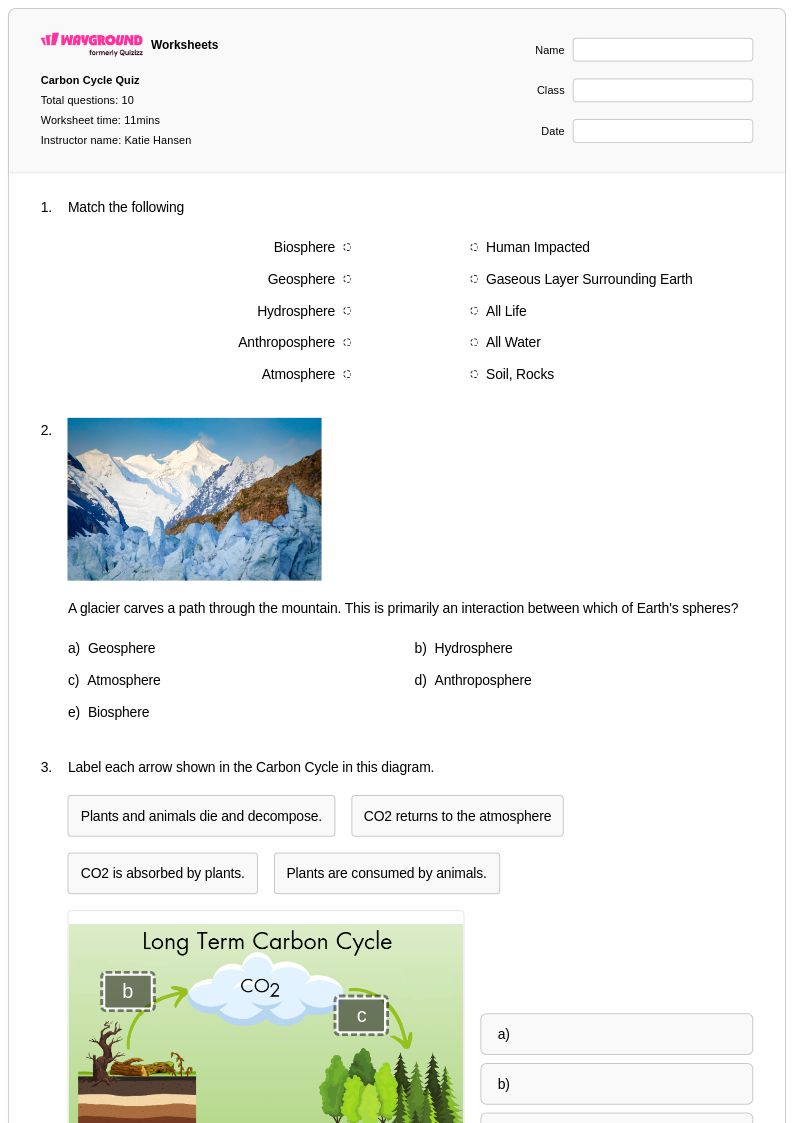
10 Q
9th - 12th
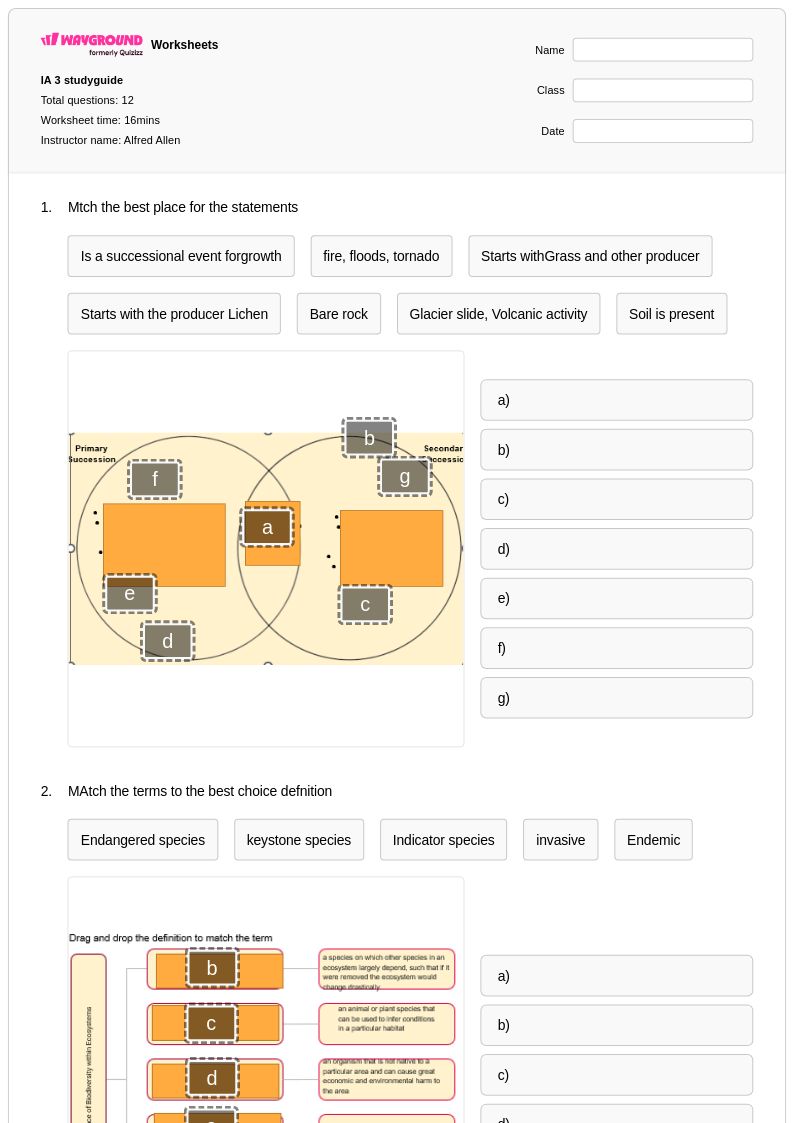
12 Q
9th - 12th
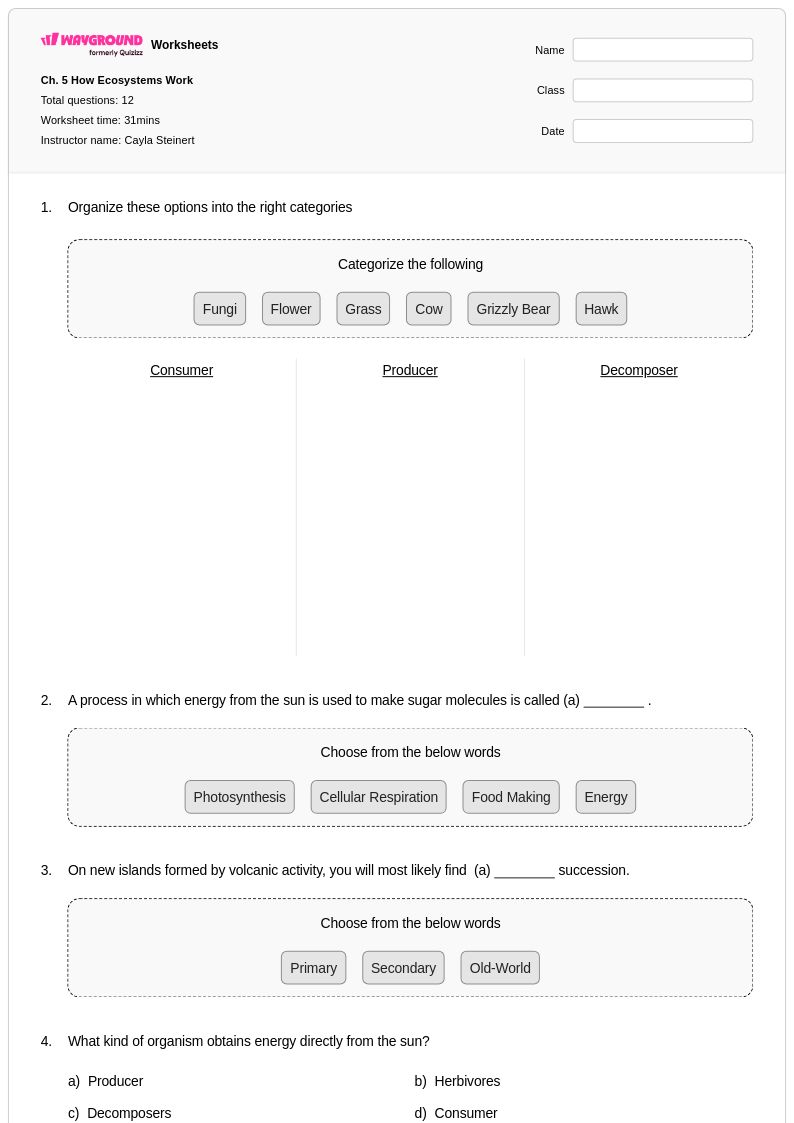
12 Q
9th - 12th
60 Q
8th - Uni
22 Q
9th - 12th
25 Q
9th - 12th
15 Q
5th - Uni
20 Q
11th
15 Q
8th - Uni
15 Q
8th - 12th
20 Q
9th - 12th
Explore Other Subject Worksheets for grade 11
Explore printable Glacier worksheets for Grade 11
Glacier worksheets for Grade 11 students available through Wayground (formerly Quizizz) provide comprehensive coverage of glacial processes, formation, and environmental impact within Earth and Space Science curricula. These educational resources strengthen critical thinking skills by challenging students to analyze glacial movement patterns, understand ice sheet dynamics, and evaluate the role of glaciers in global climate systems. The collection includes practice problems that explore glacial erosion and deposition, moraines and drumlins formation, and the relationship between glacial activity and sea level changes. Students engage with free printables that incorporate real-world data analysis, encouraging them to interpret glacial retreat measurements and connect glacial behavior to broader environmental changes. Each worksheet comes with a detailed answer key in pdf format, enabling students to verify their understanding of complex glacial processes and terminology while building proficiency in scientific reasoning and data interpretation.
Wayground (formerly Quizizz) supports educators with millions of teacher-created glacier resources that streamline lesson planning and enhance instructional effectiveness for Grade 11 Earth and Space Science courses. The platform's robust search and filtering capabilities allow teachers to quickly locate materials aligned with specific learning standards and differentiate instruction based on individual student needs. These glacier worksheet collections offer flexible customization options, enabling educators to modify content difficulty levels, add supplementary questions, or focus on particular aspects of glacial science such as paleoclimatology or glacial landforms. Available in both printable and digital pdf formats, these resources facilitate seamless integration into classroom instruction, homework assignments, and assessment preparation. Teachers utilize these comprehensive materials for targeted skill practice, remediation of challenging concepts like glacial mass balance, and enrichment activities that explore cutting-edge glaciological research, ultimately supporting diverse learning styles and academic goals within their Earth and Space Science programs.
FAQs
How do I teach glaciers to middle or high school students?
What exercises help students practice understanding glacial processes?
What misconceptions do students commonly have about glaciers?
How do glaciers affect sea level, and how do I help students understand this connection?
How can I use Wayground's glacier worksheets in my classroom?
How do I differentiate glacier instruction for students at different skill levels?